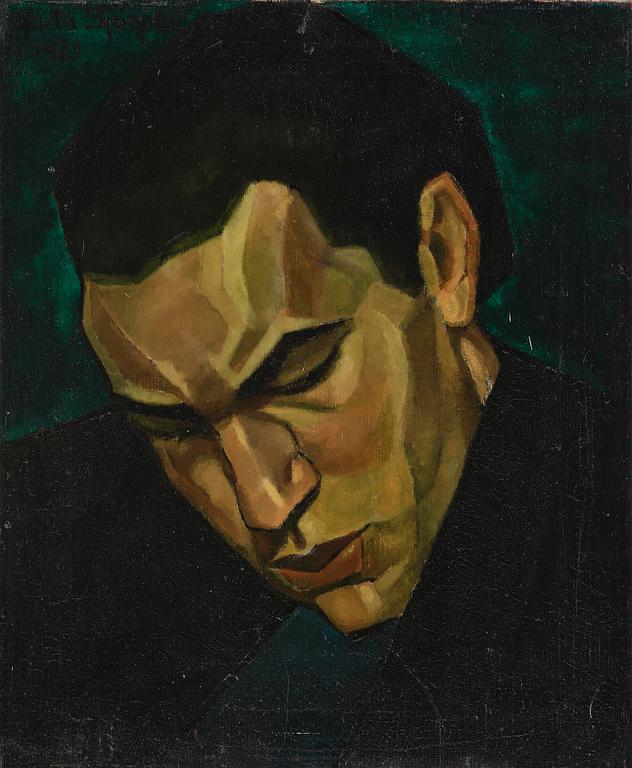
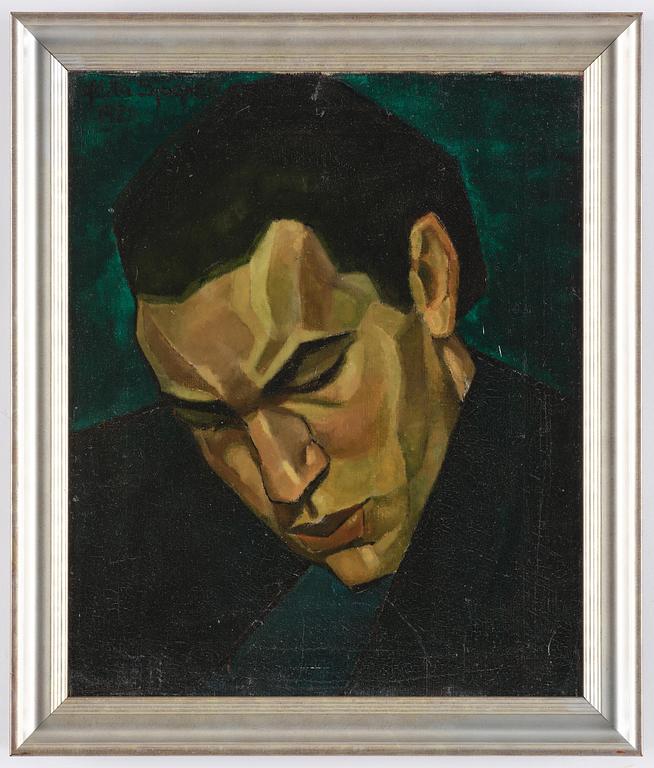
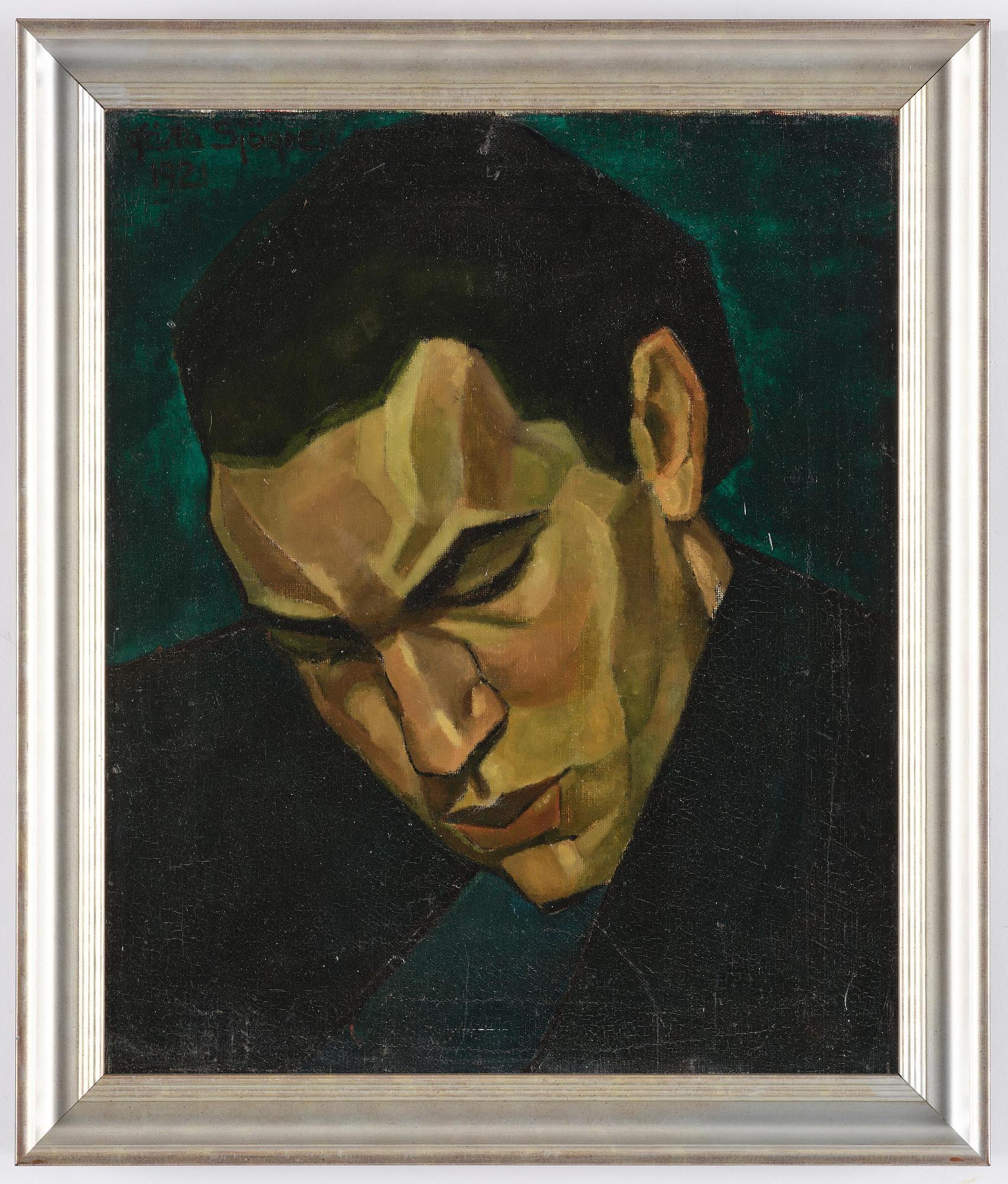
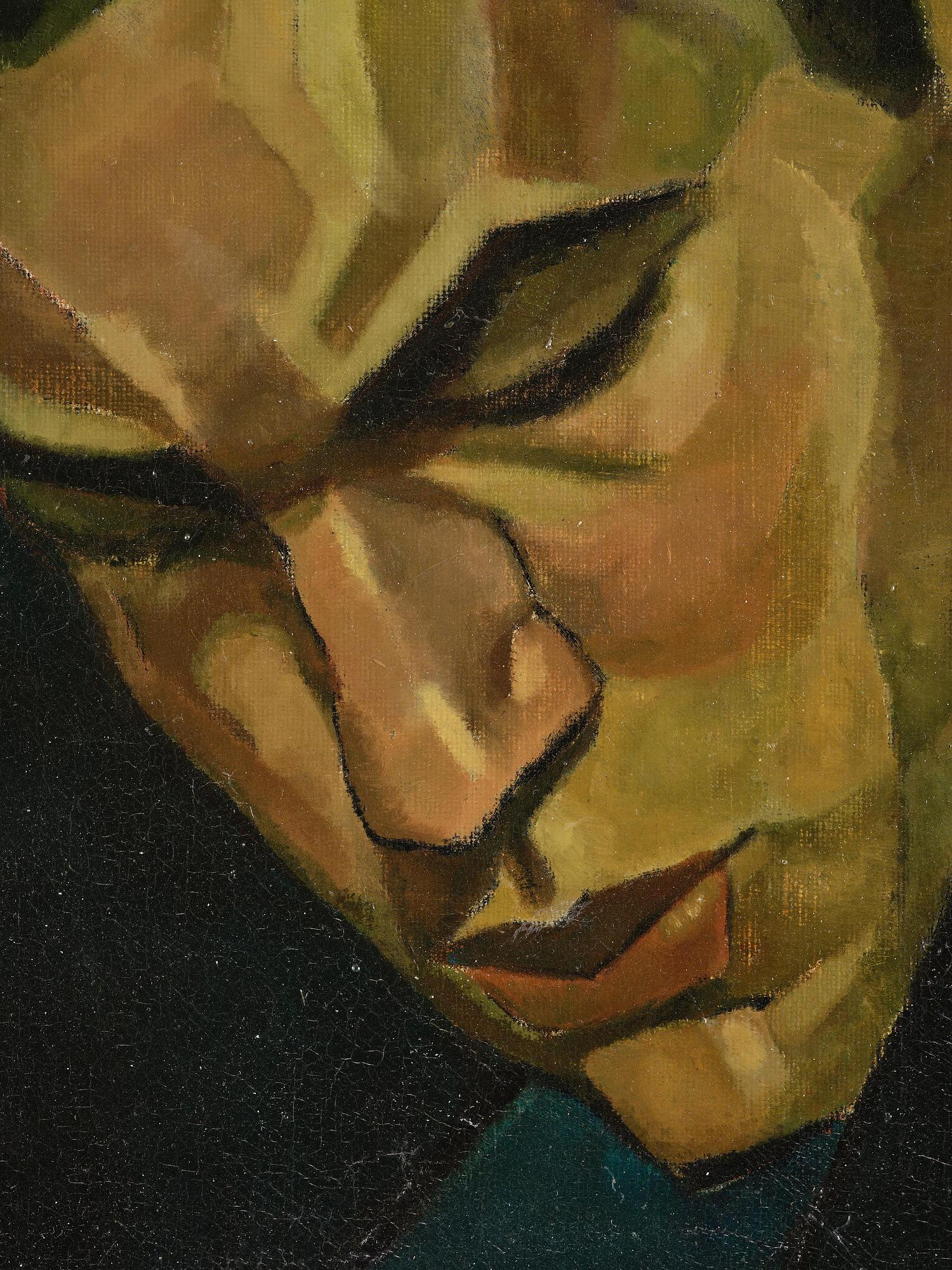
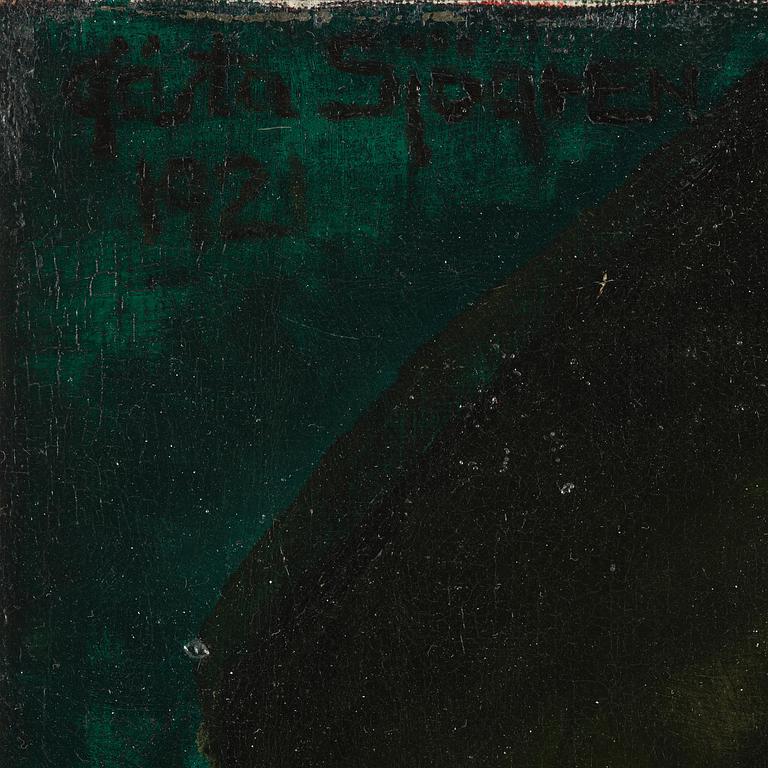
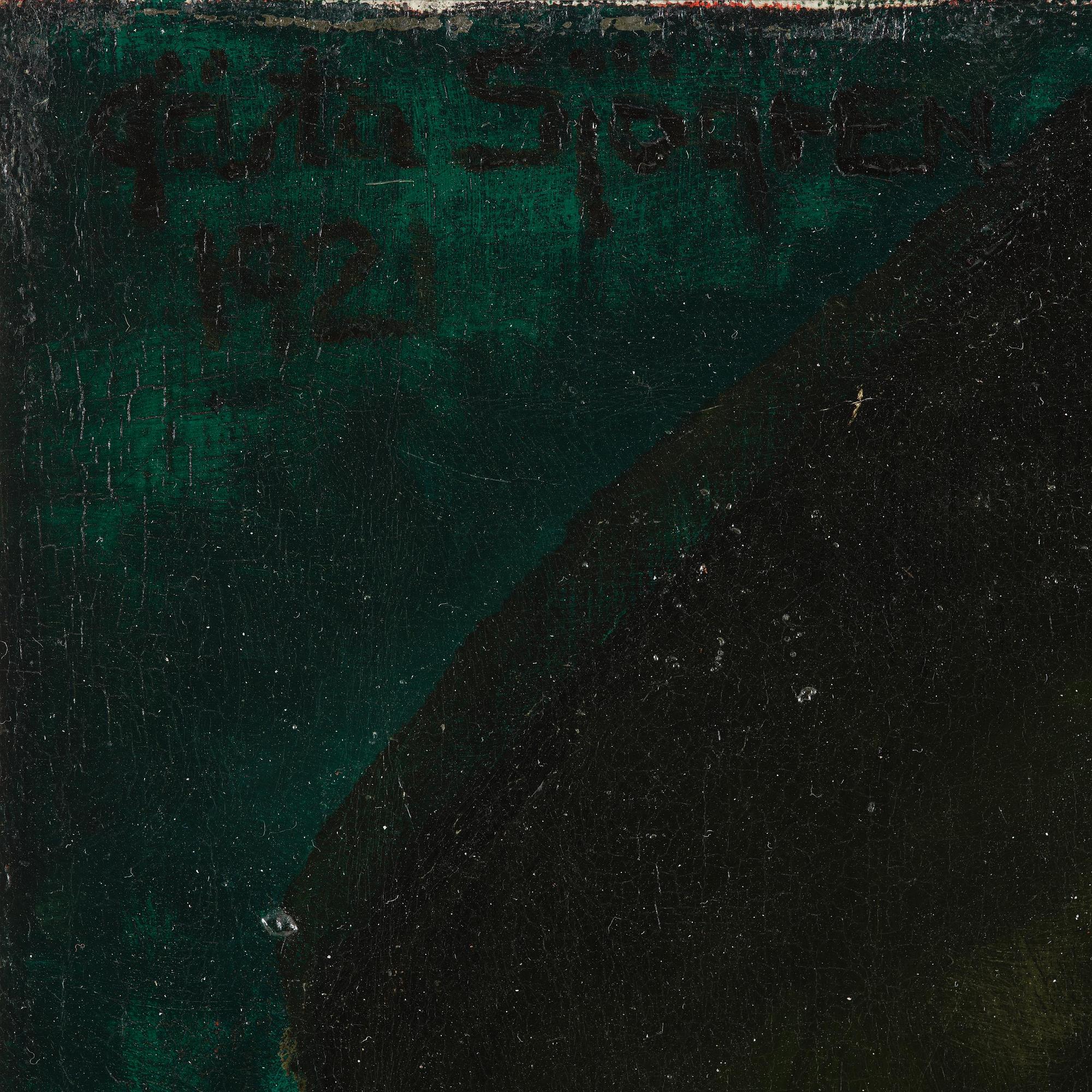
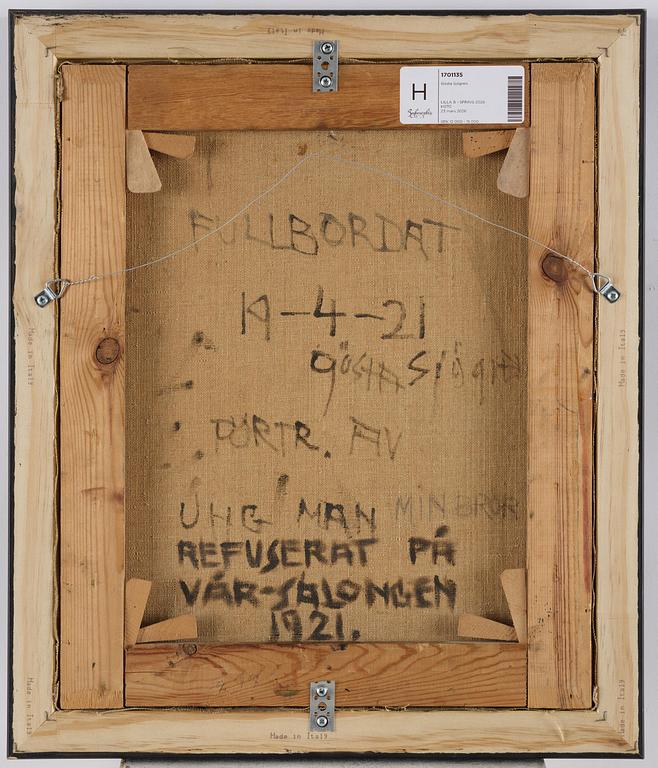
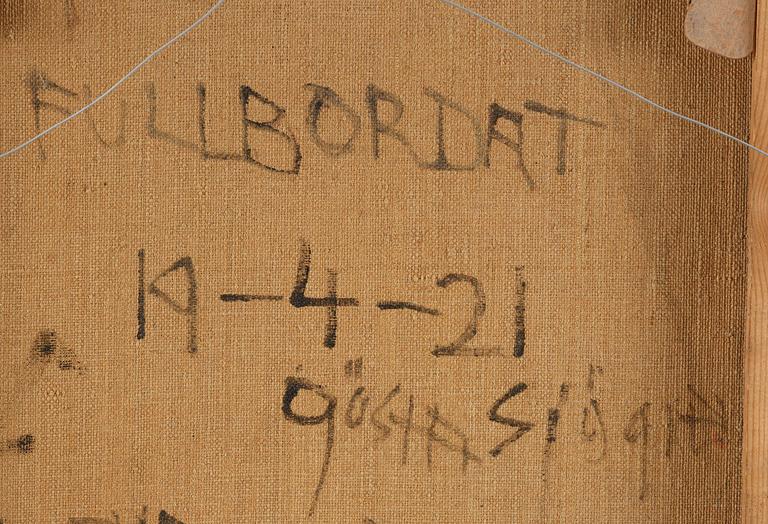
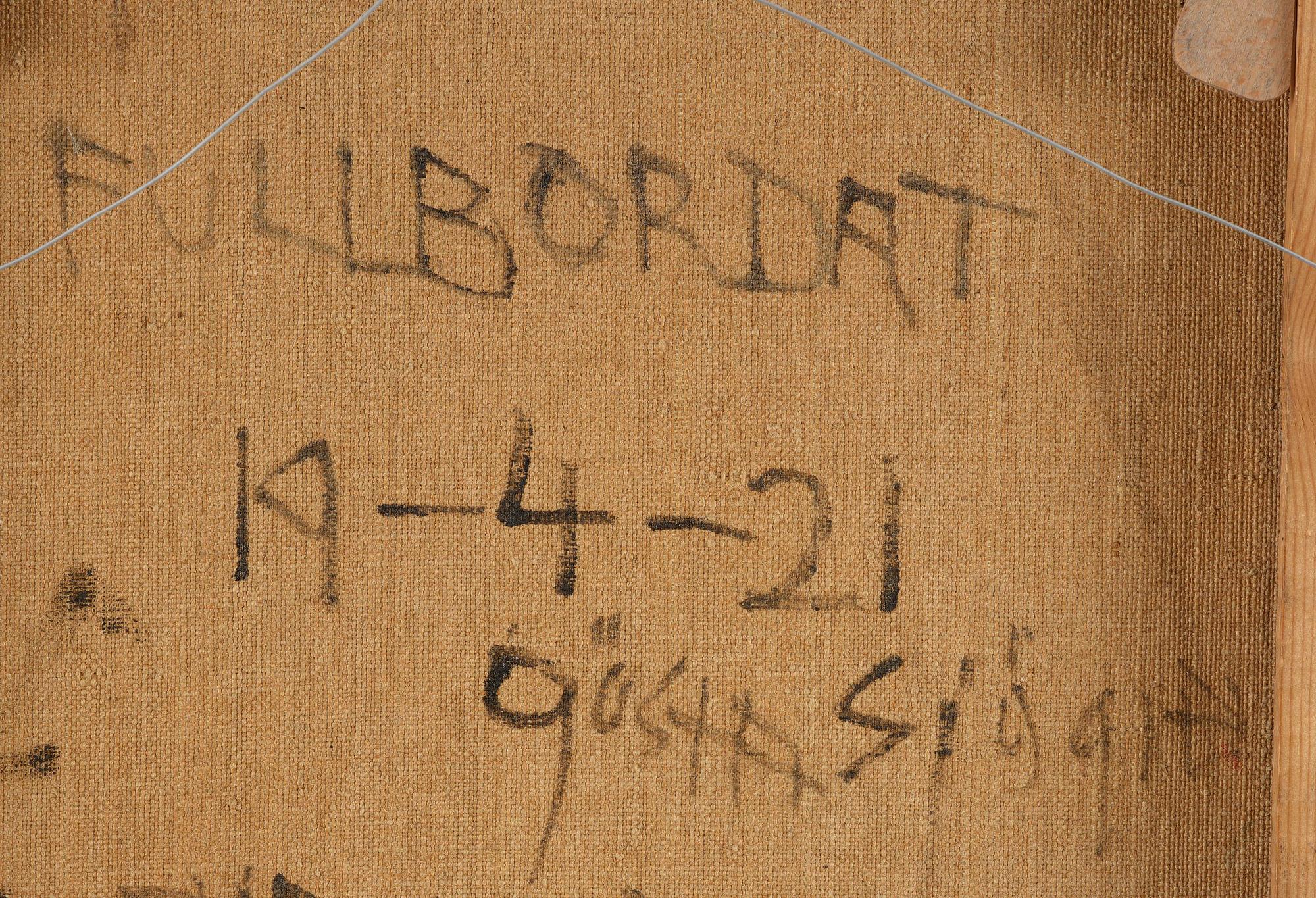
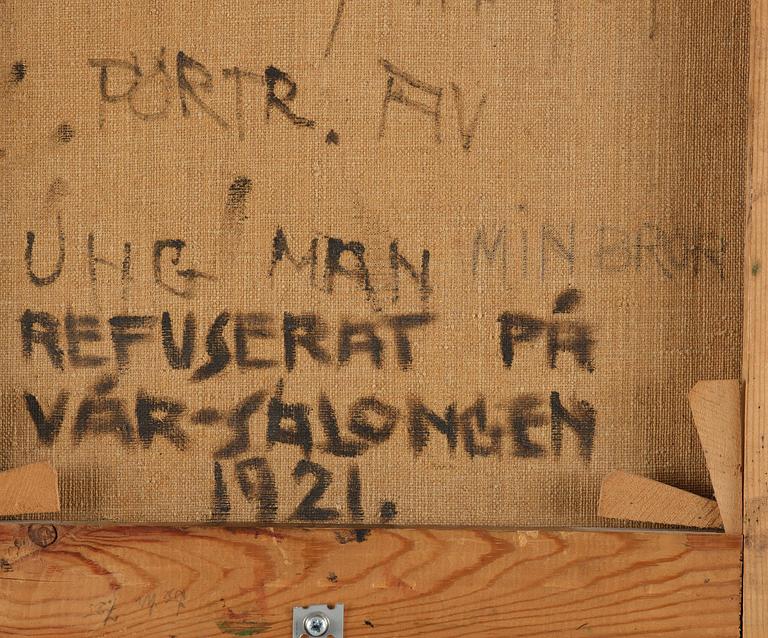
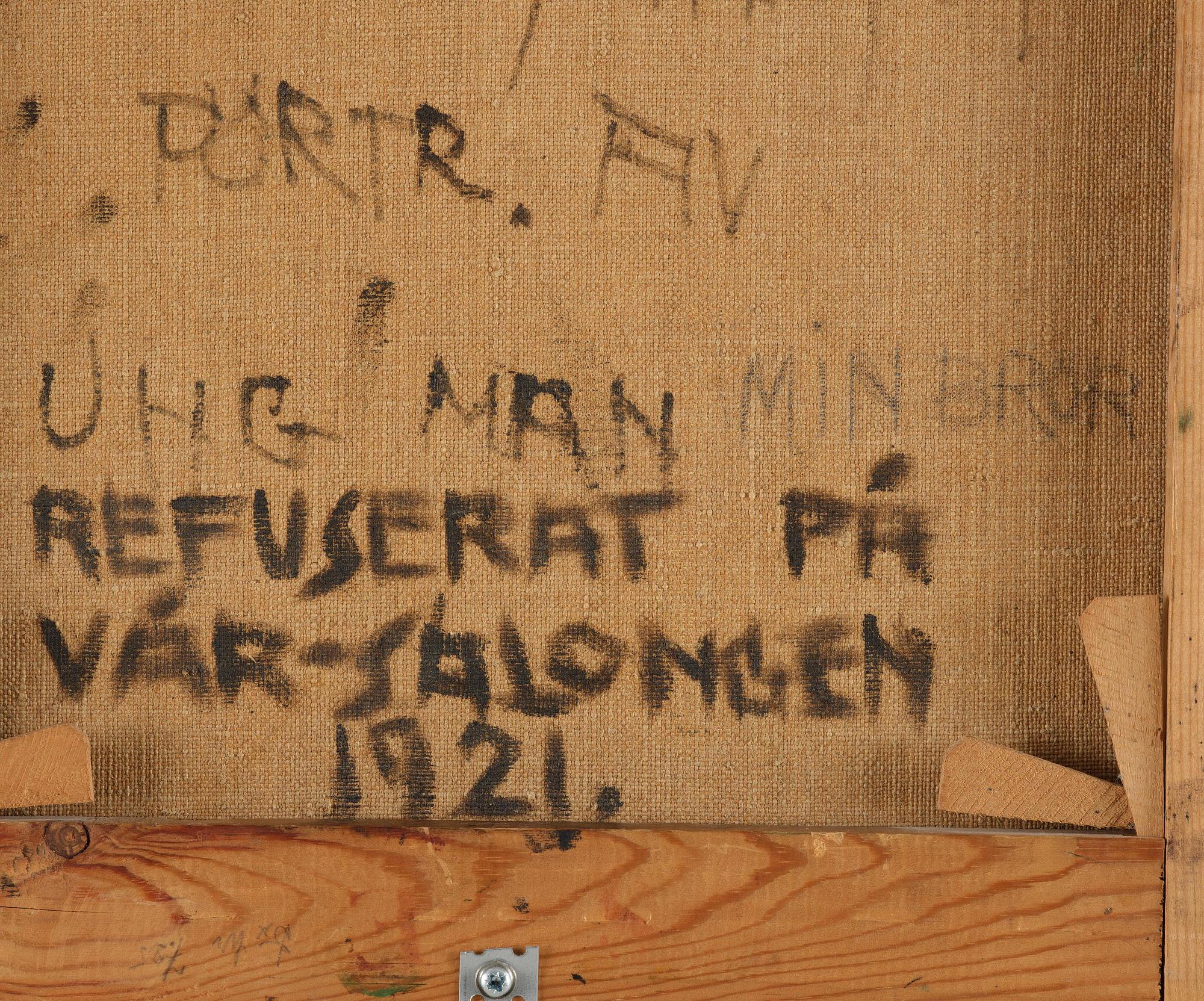
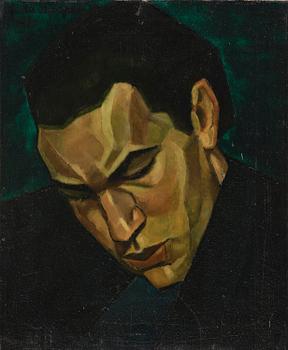
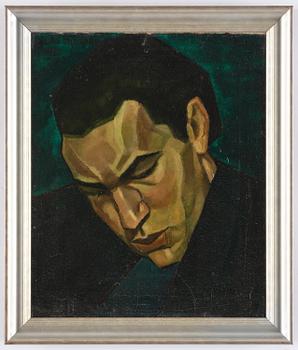
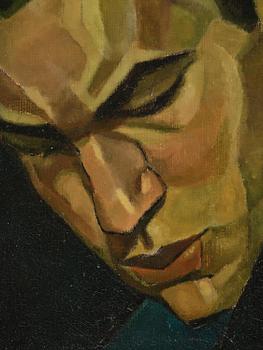
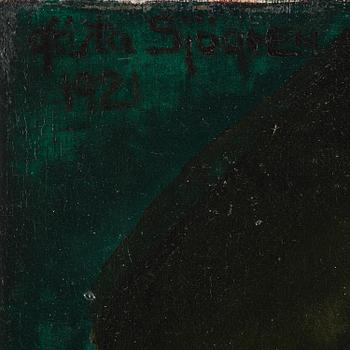
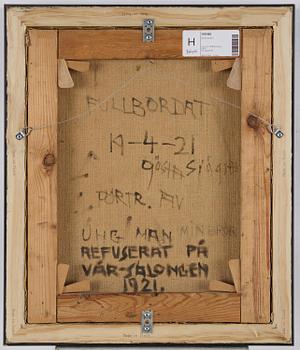
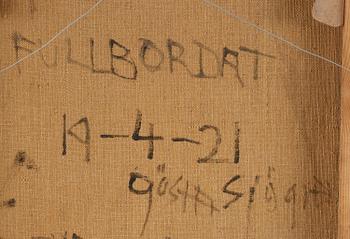
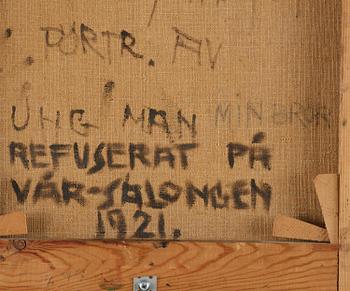
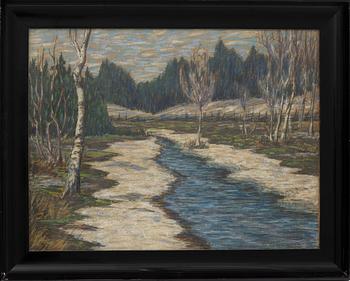
Signed Gösta Sjögren. Executed in 1921. Canvas 46 x 38 cm. With notes on the reverse: "Refuserat på Vår-salongen 1921."
Korjailuja.
Muut tiedot
In the spring of 1921, the artist Bernhard Neuman visits Liljevalchs to collect his works that had been rejected from the Spring Salon (then called the Spring Exhibition). Out of curiosity, Neuman makes his way down to the art hall's basement to take a look at the rejected works of others, and there he finds, among other things, Gösta Sjögren's current painting. He recounts this in a debate article on 31 May 1921 titled "The Spring Exhibition Jury Once Again - A Small Review of the Rejected Canvases." In the text, he expresses criticism of the jury's selection for the Liljevalchs Spring Exhibition, where he himself "perhaps had been the worst affected" by the jury's rejections.
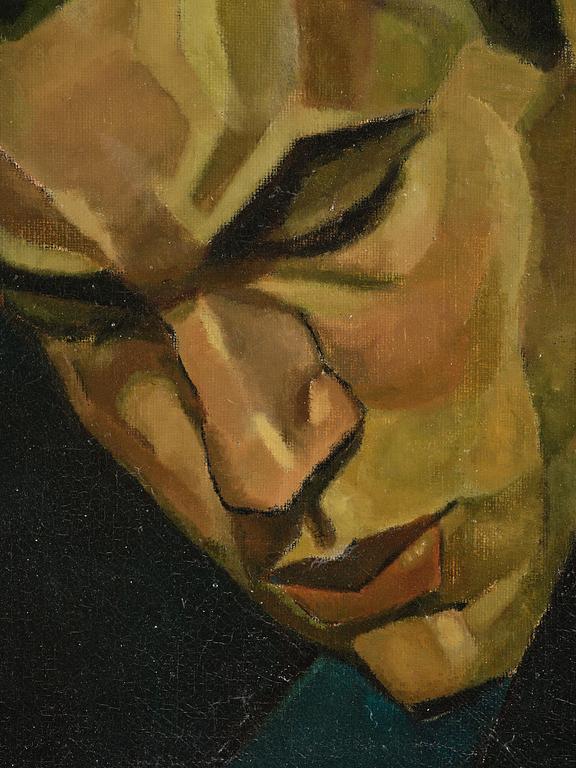
What Neuman discovers in the basement can be seen as a kind of shadow gallery of rejected works, and he writes that "a salon of the rejected would undoubtedly have been justified [...]" First, he notices half a dozen "excellent canvases" by an unknown artist to him, namely Edvard Stenberg. As he looks further, he spots the auction's current painting by Gösta Sjögren. He writes: "Furthermore, I saw a monumentally rendered head by Gösta Sjögren, also excluded [...]".
He concludes with a call to action: "But until next time! [...] May we gather in numbers, so that we can choose among ourselves a jury of men with an eye for truly good art."
Lisätietoja ja kuntoraportit

Tietoa ostamisesta