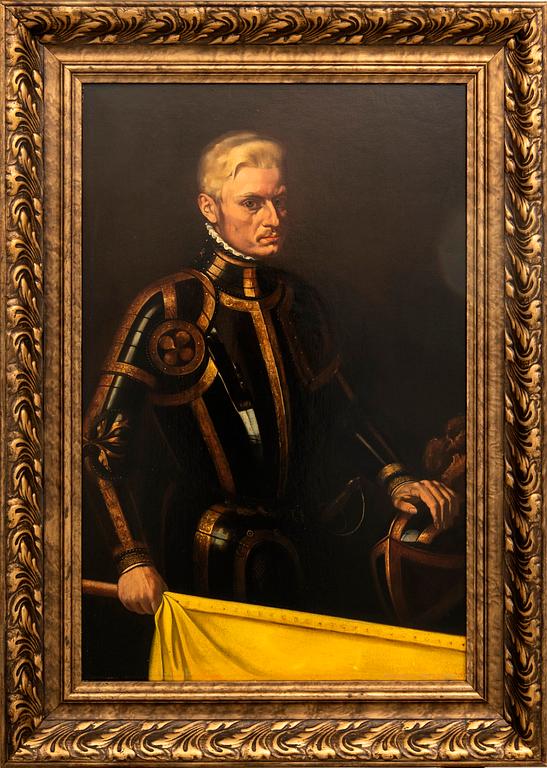
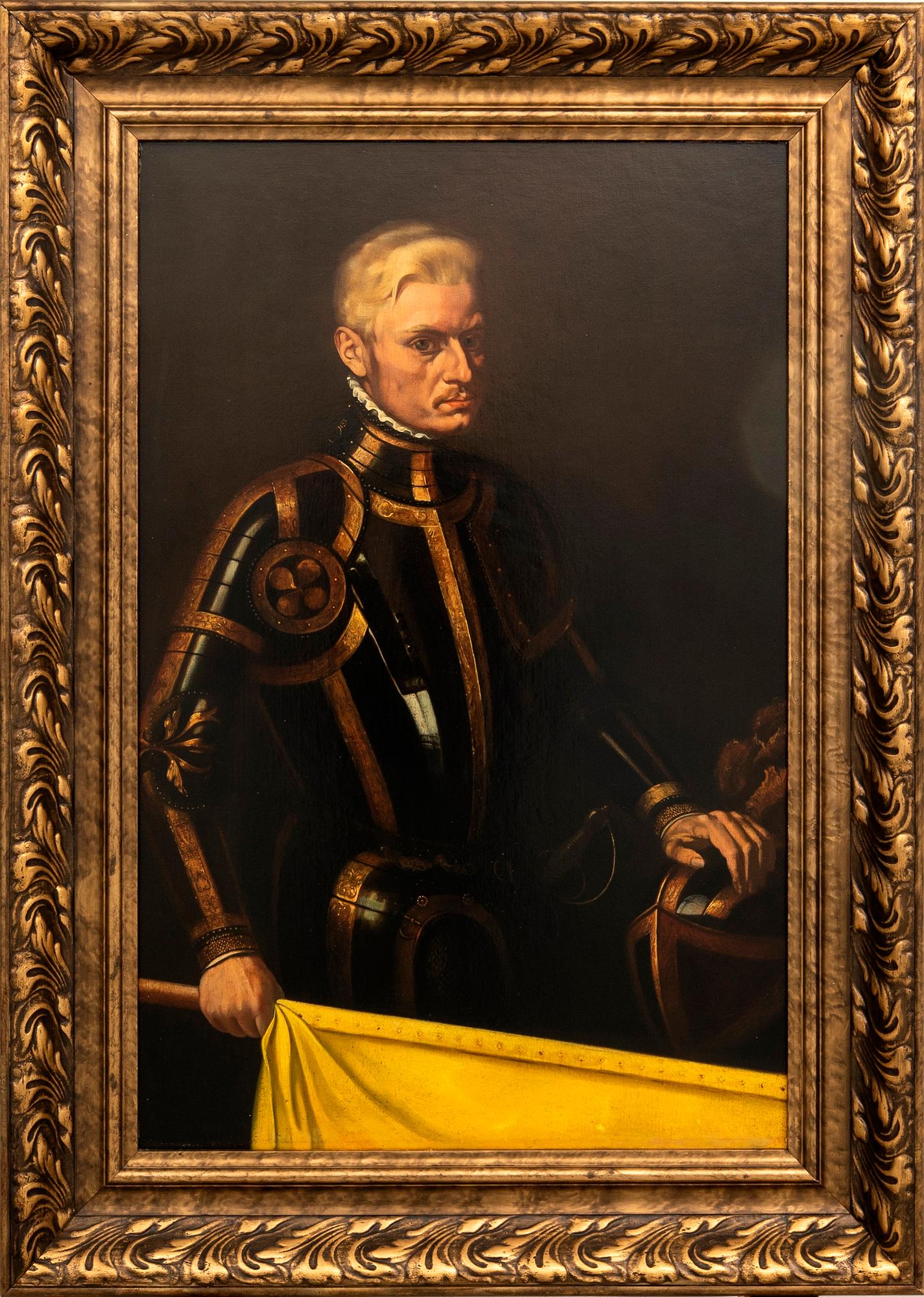
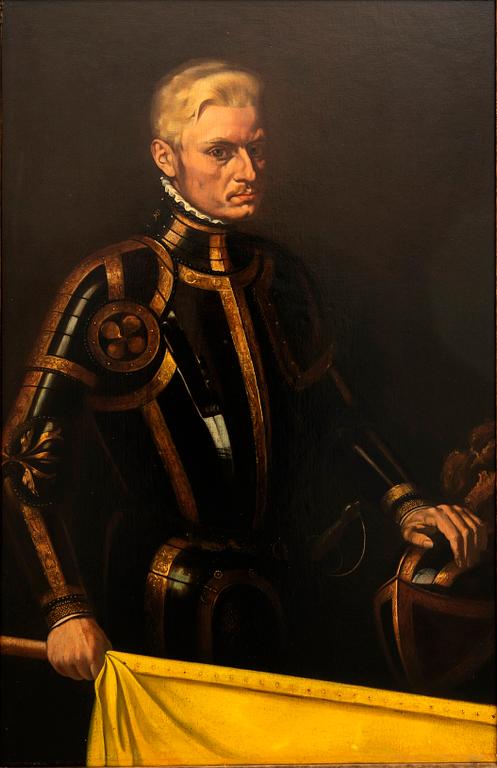
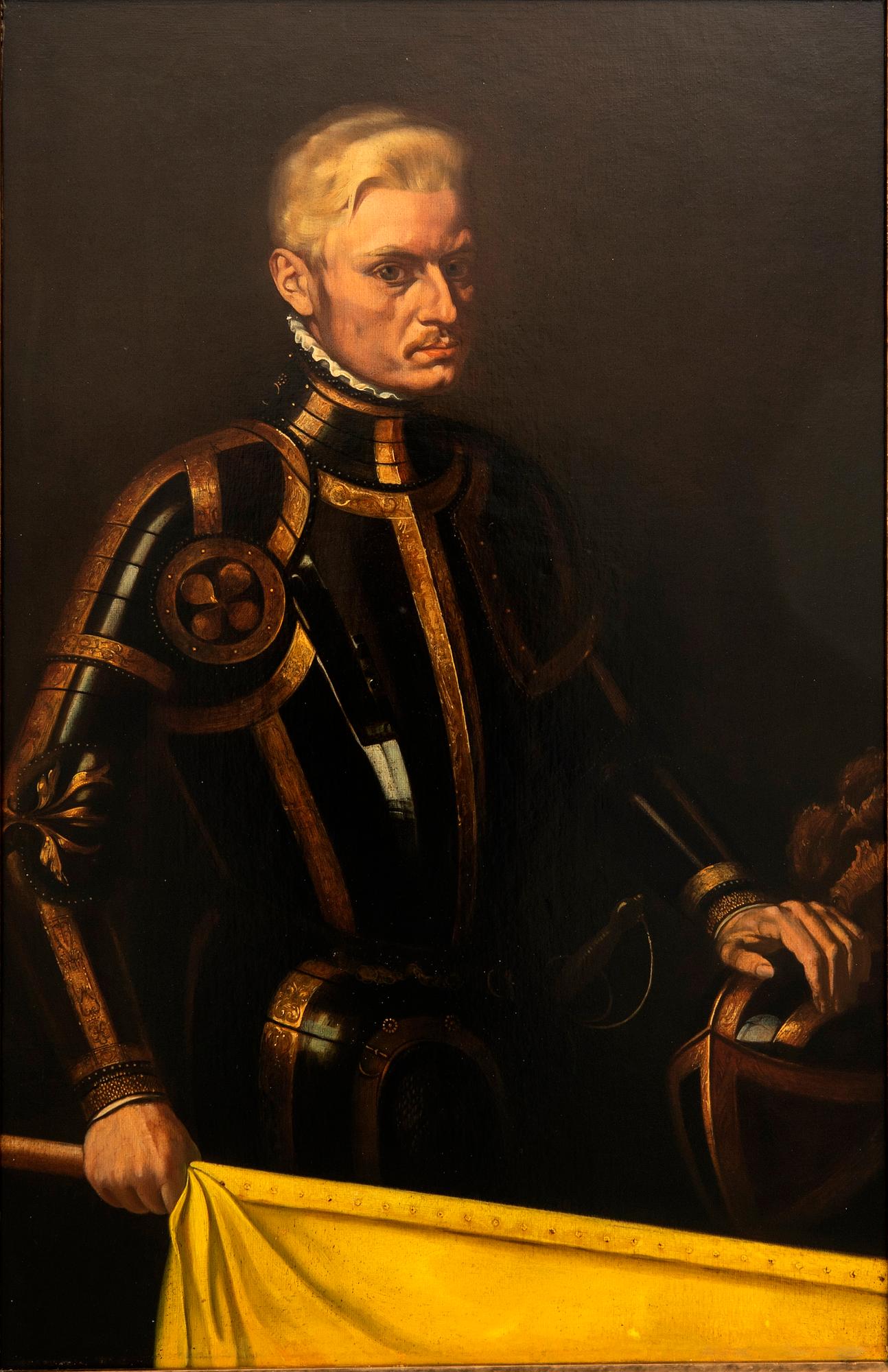
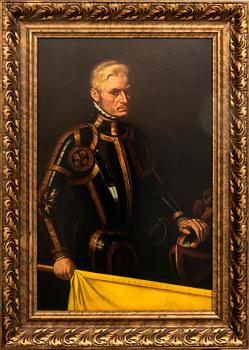
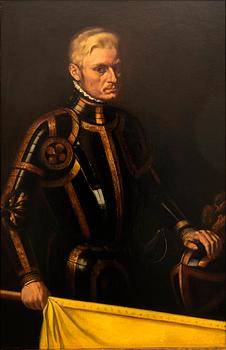
Oil on panel, approx. 99x68 cm
Merkityksetöntä pintakulumaa. Naarmuja.
Muut tiedot
The original painted in 1555.
Located at the city museum in Kessel.
A wealthy nobleman, William originally served at the court of the Spanish regent. Unhappy with the lack of political power for the local nobility and the Spanish persecution of Dutch Protestants, William joined the Dutch uprising and turned against his former masters. The most influential and politically capable of the rebels, he led the Dutch to several military successes in the fight against the Spanish. Declared an outlaw by the Spanish king in 1580, he was assassinated by Balthasar Gérard in Delft at a time when William's popularity was waning.
William of Orange is also widely known as William the Silent. There are several explanations for the origin of this nickname. The most common one is that he rarely spoke out clearly on controversial matters at the court or in public, or (by some accounts) even completely avoided speaking about such topics.
In the Netherlands, he is also known as the Vader des vaderlands, "Father of the fatherland", and the Dutch national anthem, the Wilhelmus, was written in his honour
William I, Prince of Orange, Count of Nassau (1533-1584) was the foremost leader of the Dutch revolt against the Spaniards that initiated the Eighty Years' War and resulted in the formal independence of the United Provinces in 1648.
William, a wealthy nobleman, originally served at the court of the Spanish regent. Discontented with the lack of political power for the local nobility and the Spanish persecution of Dutch Protestants, William joined the Dutch uprising and turned against his former masters. The most influential and politically capable of the rebels, he led the Dutch to several military successes in the struggle against the Spaniards. He was declared an outlaw by the Spanish king in 1580 and was assassinated by Balthasar Gérard in Delft at a time when William's popularity was waning.
William of Orange is also commonly known as William the Silent. There are several explanations for the origin of this nickname. The most common is that he rarely spoke out clearly on controversial issues at court or in public, or (according to some sources) even completely avoided discussing such topics.
In the Netherlands, he is also known as Vader des vaderlands, "Father of the Fatherland," and the Dutch national anthem, Wilhelmus, was written in his honour.
Ota yhteyttä

Asiakaspalvelu
Olethan yhteydessä asiakaspalveluumme, mikäli sinulla on kysymyksiä liittyen kuljetukseen, maksuun tai muihin asioihin.
Ruotsi
Puhelin maanantai – perjantai klo 9–12
+46 8-614 08 00
Suomi
Puhelin maanantai - perjantai klo 10–13
+358-9-668 91 10
Tietoa ostamisesta
Muiden katsomia kohteita