
Lena Cronqvist
On the Stage Between Childhood and Control
Ingela Lind writes in the book “Lena Cronqvist – Paintings 1964–1994” about Cronqvist’s range of motifs, and how she has questioned the artist as a unified creative subject while continually daring to examine the conditions surrounding family, society, and gender roles.
“On canvas, working in oil and tempera, she experiments with choreography and absurdist stage settings. Her art is akin to ritual theatre. She enters and exits the stage, directing, designing the set, and often performing herself in both comic and tragic roles. She constructs platforms, arranges lighting, changes scenery, tries out costumes, gestures, masks, and effects of empathy and distancing. […] It is also a question of power. The canvas is a stage on which she depicts the existential conditions of human life.”
Weekdays 11 AM – 6 PM
Weekends 11 AM – 4 PM
”Flicka med dockor”
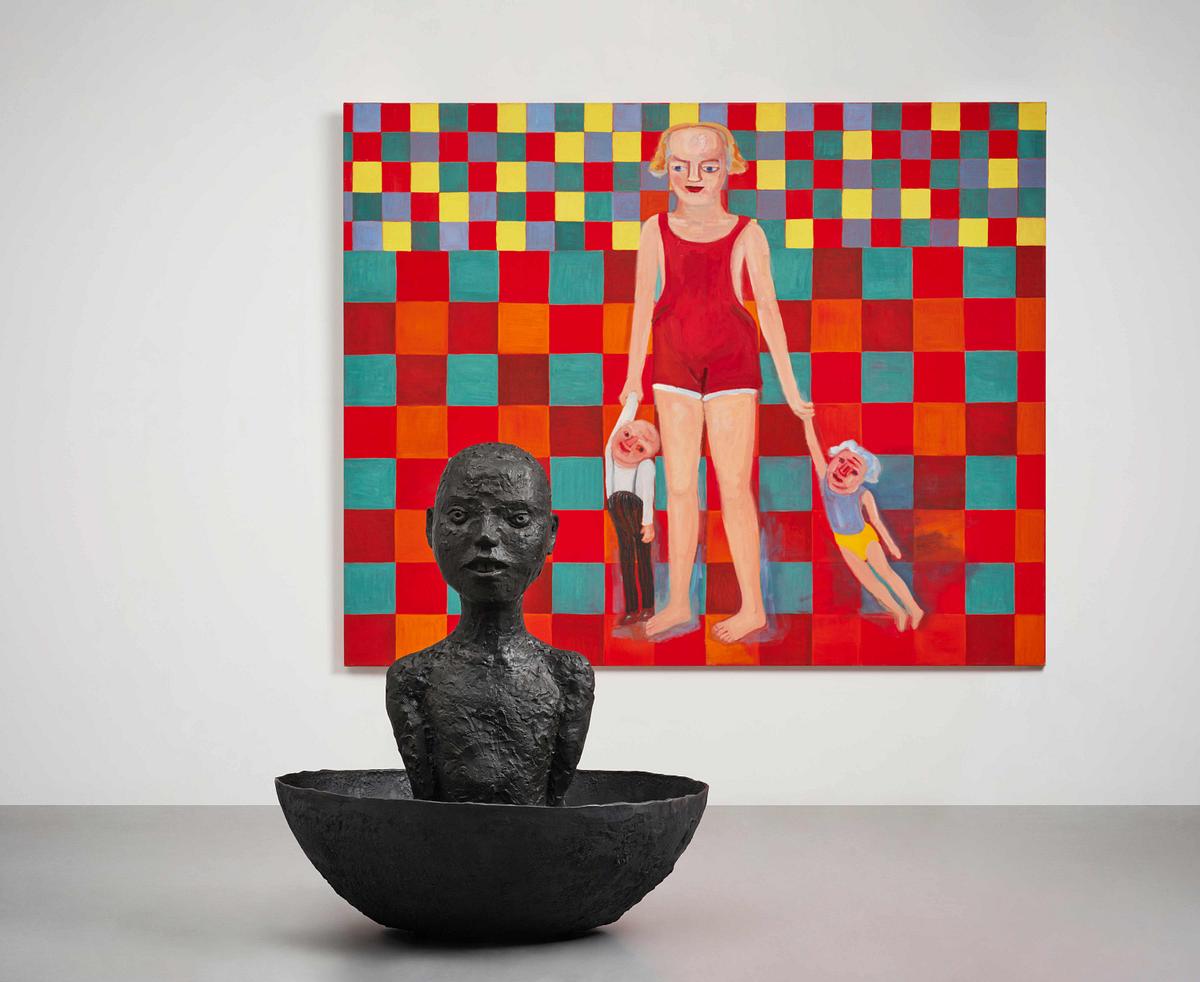
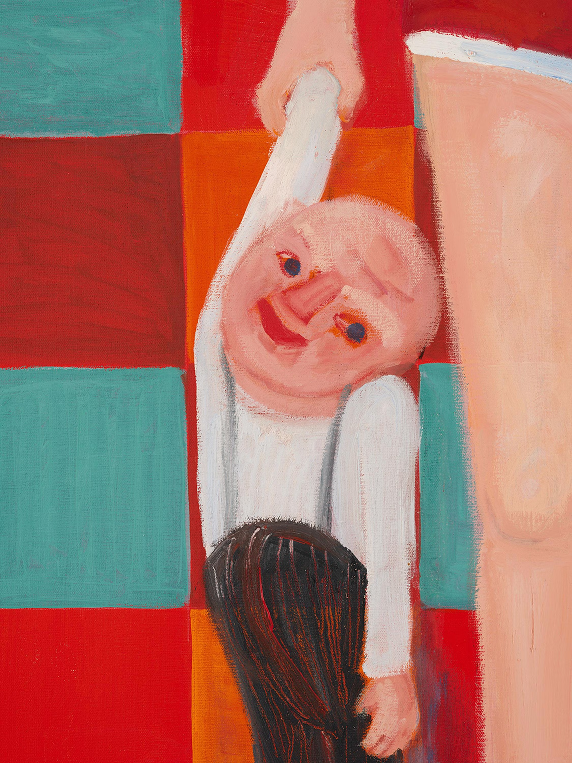
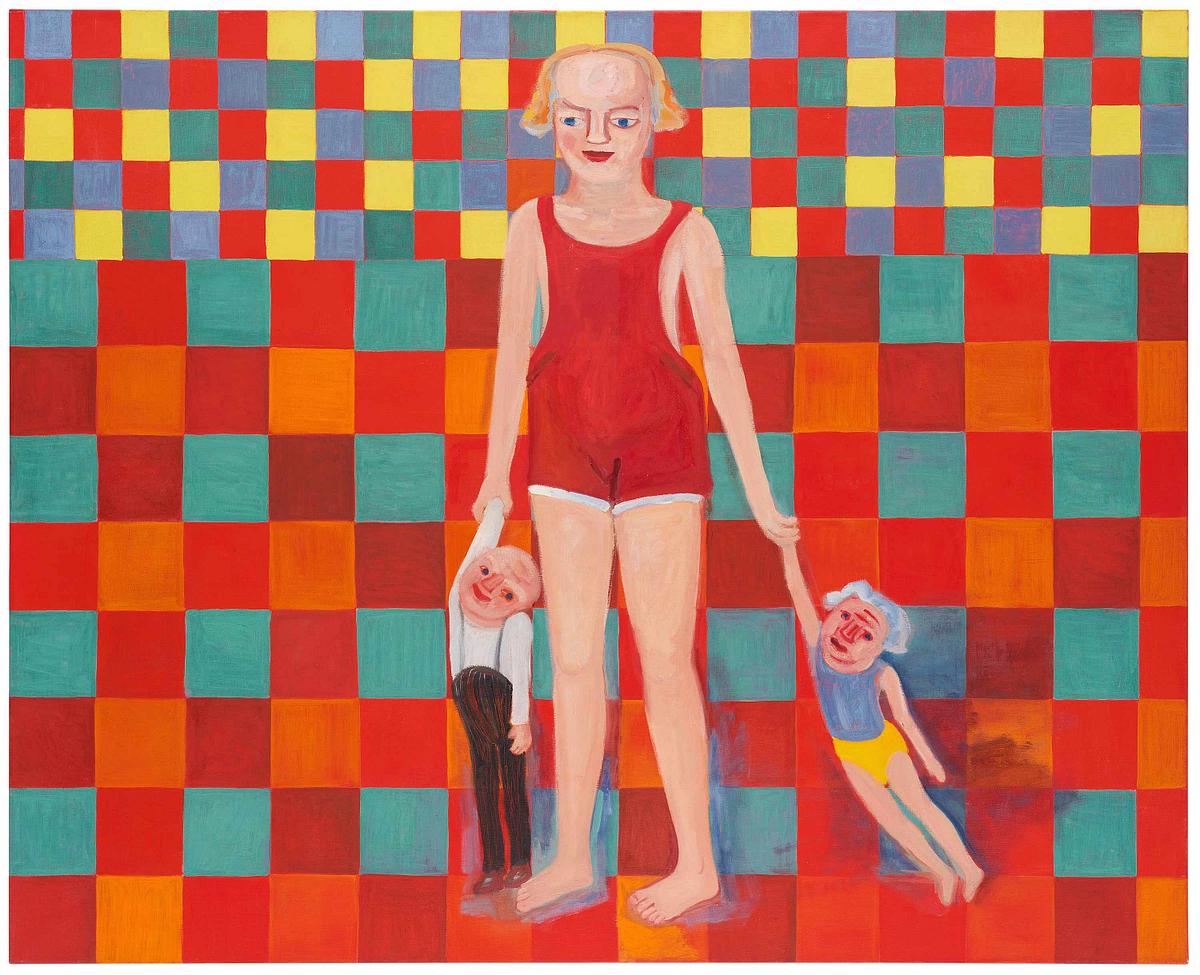
In the painting featured in this auction, the checked pattern so characteristic of Cronqvist at the time forms the backdrop of the scene. In front of it stands the girl, Cronqvist’s alter ego, holding a Mummy doll in one hand and a Daddy doll in the other. The child has assumed control within the family, in contrast to how conventional roles are usually performed. The child now holds power over the parents and can determine the rules of the game of “Mummy-Daddy-Child.” Lena Cronqvist once said, “It is not enough to paint a girl with two parents. They must be my parents for me to be able to go there.” For a sense of magic to arise during the process, the figures and situations must be something she herself has experienced—this is crucial to the painting. Her honesty is conveyed to the viewer, who absorbs the emotional states of the painting into their own interpretations. In this way, Cronqvist’s work always succeeds in moving us. She sets something in motion within us—we have all been children and experienced feelings of powerlessness, strength, anger, and tenderness.
Cronqvist’s stark, unvarnished style of painting has secured her a distinctive place in Swedish art history; since the 1970s she has been one of the most prominent artists of our time. In the early 1980s, girls began to appear as motifs in her imagery, but it was primarily during the years 1990–1995 that they came to dominate. Works from this body of motifs are represented in most Swedish museum collections, as well as in public commissions in cities such as Stockholm and Karlstad.
“…The girl’s time—this very brief existence between two moments at the beginning of life, in that exceedingly narrow land which will, all too soon, sink below the horizon.”
These are the words of Göran Tunström, the writer who was Lena Cronqvist’s life partner. They capture a group of motifs that the painter and sculptor Cronqvist portrayed time and again. Her passing nearly a year ago marks the loss of one of Sweden’s most notable and compelling artists. With a distinctive artistic assurance, great intimacy, and sensuous immediacy, she depicted her experiences of her own childhood, motherhood, and family life. Childhood in particular was a powerful theme that Cronqvist repeatedly explored in both painting and sculpture.
In the 1990s, Lena Cronqvist began to seriously explore sculpture as a form of expression, and in the past decade she increasingly emerged as one of the most fascinating sculptors of her time. Her early sculptures, created in part during stays in New York with her husband Göran Tunström, were small in scale. This later developed into increasingly large bronze sculptures, still centred on the same motifs: children, and above all young girls.
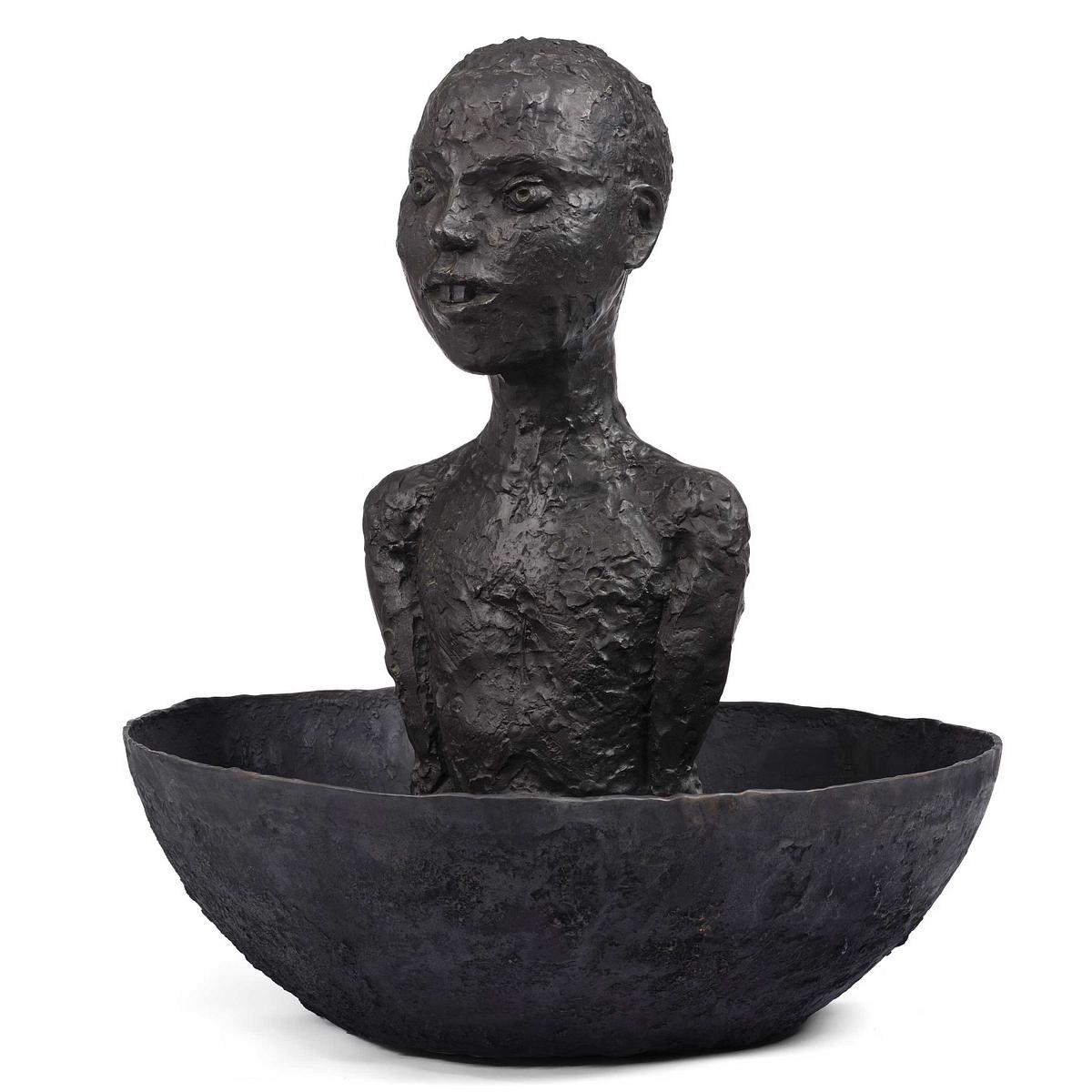
The young figure in this auction sits in a large bowl. The artist often places her figures in water—something that can simultaneously be perceived as safe and soothing, or as a place for purification and play, yet just as quickly transformed into something insecure and even dangerous.
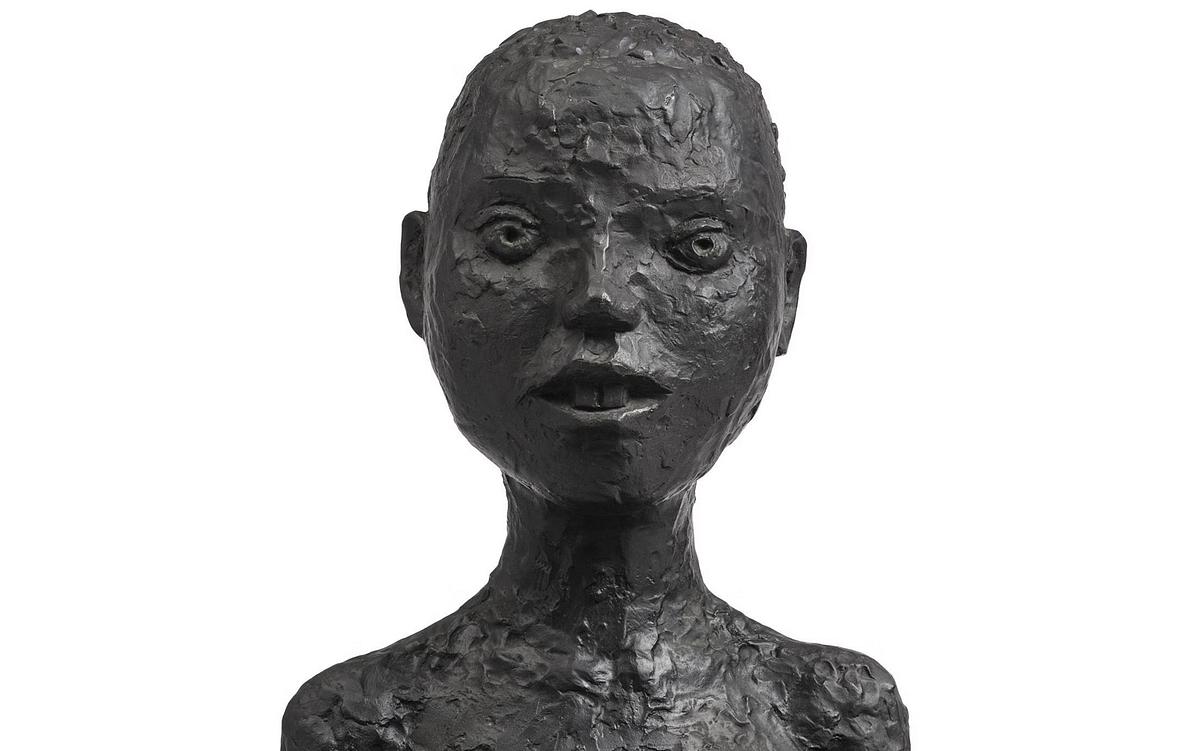
Sitting upright with a steady gaze, the sense of presence is striking. Lena Cronqvist’s sculptures can be found in many public collections; among them are “Hand in Hand”, located in the park of Rackstad Museum in Arvika; “Girl in a Tub” on Trefaldighetsallén in Norre Katt’s Park in Halmstad; and “Girl Sticking Out Her Tongue” outside the City of Stockholm’s Art Office. Karlstad Municipality, Cronqvist’s birthplace, acquired “Two Girls”, placed in the reflecting pool in front of Värmlands Museum. The sculpture formed part of the museum park’s major and widely attended Cronqvist exhibition in 2010. “Girl in a Tub” was acquired by the Sven-Harry Karlsson Museum of Art in 2010 and can be viewed near Vasaparken in Stockholm. Furthermore, the sculpture group “Five Girls” is located at Södermalmstorg.
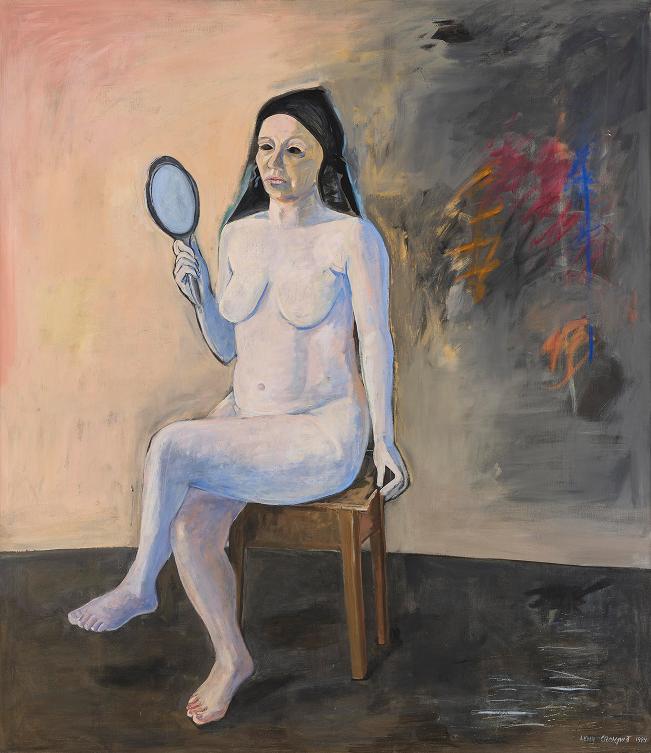
The painting exemplifies Cronqvist’s combination of carefully observed realism with subtle symbolism and a sensitive use of colour. Her recurring motifs—hand mirrors, brushes, and bodily expression—heighten the inner drama and invite the viewer to confront both the artist and themselves. Since her debut at Galerie Pierre in Stockholm in 1965, Cronqvist has consistently transformed personal experience into a visual language marked by immediacy and psychological acuity. During the 1980s, this expression deepened further, in dialogue with artists such as Francis Bacon and Edvard Munch. The auction painting stands as a clear example of the artist’s visual language and demonstrates why she holds a prominent place in Nordic art history.
The painting has long been part of the collection of Maj-Brit Wadell. Wadell (1931–2025) became, in 1979, the first woman to be appointed Professor of Art History at the University of Gothenburg. Prior to this, she had attracted attention as “Sweden’s most attractive museum director” during her tenure as acting head of the Gävleborg County Museum. Naturally, it was not her appearance that caused the museum to flourish and visitor numbers to soar, but rather her considerable expertise and drive. During the 1960s, she completed a Licentiate degree in Philosophy followed by a doctorate in Art History.
Maj-Brit Wadell is described as a formidable personality with a strong character. She supervised students at her kitchen table, often in the company of her entirely freely raised dogs. She primarily collected Scandinavian art, with a particular interest in unconventional artistic practices, and took an active interest in the work of individual artists. She also participated in art education as a model at the School of Crafts and at Valand Academy. She maintained that “a good art historian must understand how artists work and think”.
Lena Cronqvist was, from an early stage, one of her close artist friends, and Wadell wrote, among other things, about the motif “The Mother”. Wadell would have liked to own a painting from the Mother series, but for various reasons this was not possible; instead, she acquired “The Wicked Queen” from The Painter and Her Model. The relationship between the two friends, however, fluctuated, and on one occasion when Cronqvist wished to borrow the painting for an exhibition, Wadell declined.
Throughout her life, Maj-Brit Wadell maintained a complex relationship with the painting. Despite her great skill in writing about art, she never quite succeeded in fully describing or capturing the work’s inherent enigmatic quality.
Lena Cronqvist at Contemporary Art & Design
Enquiries and Condition Reports