


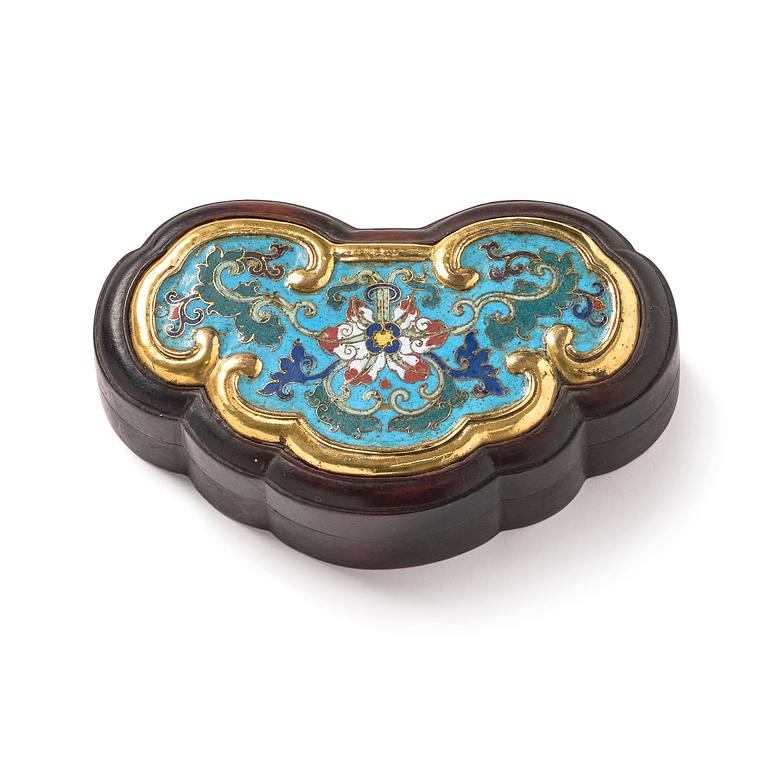
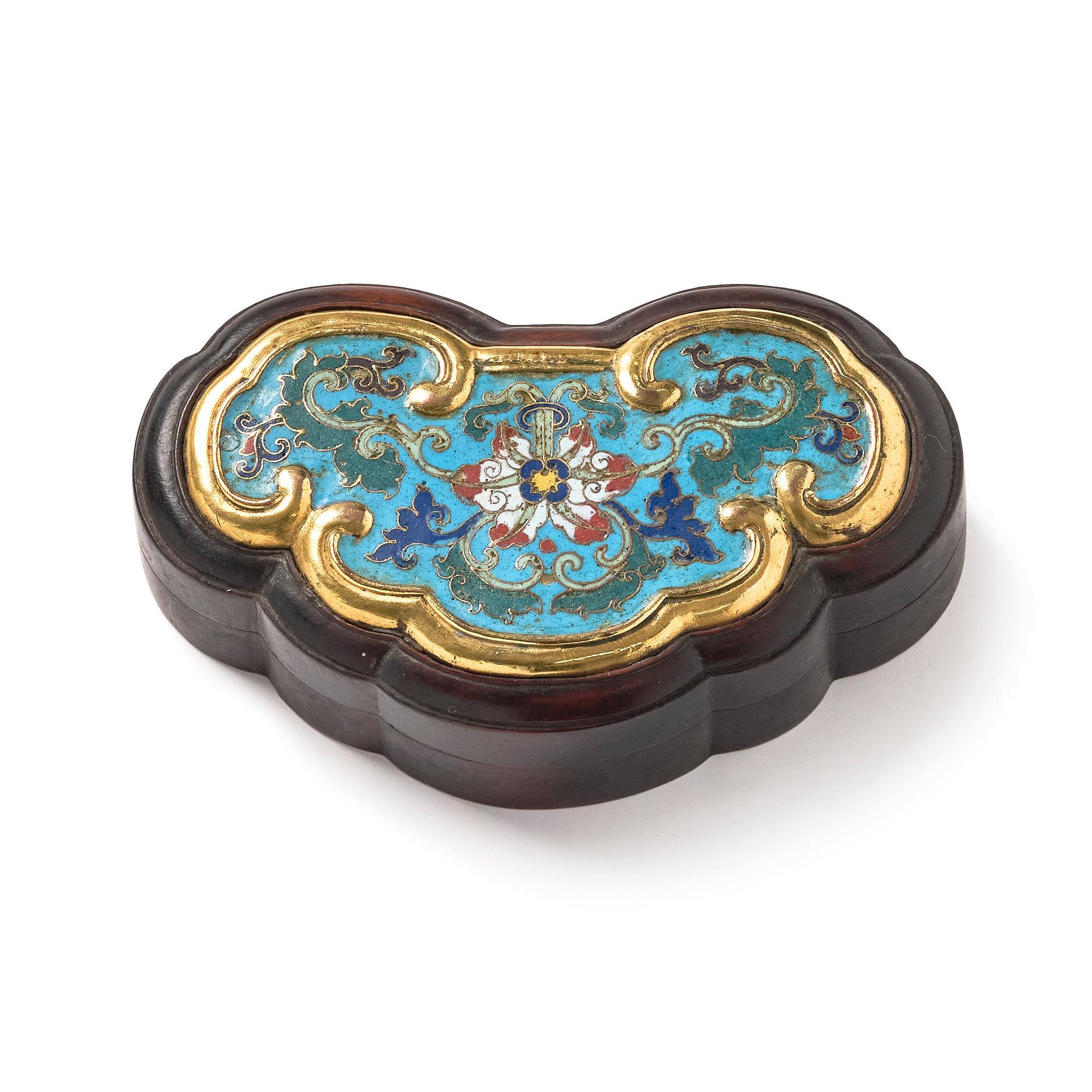
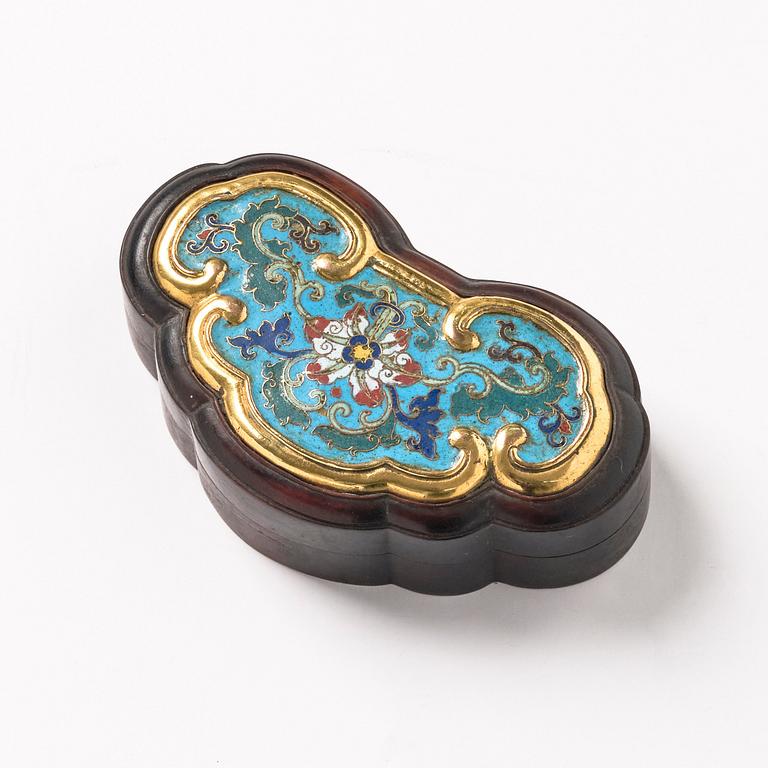
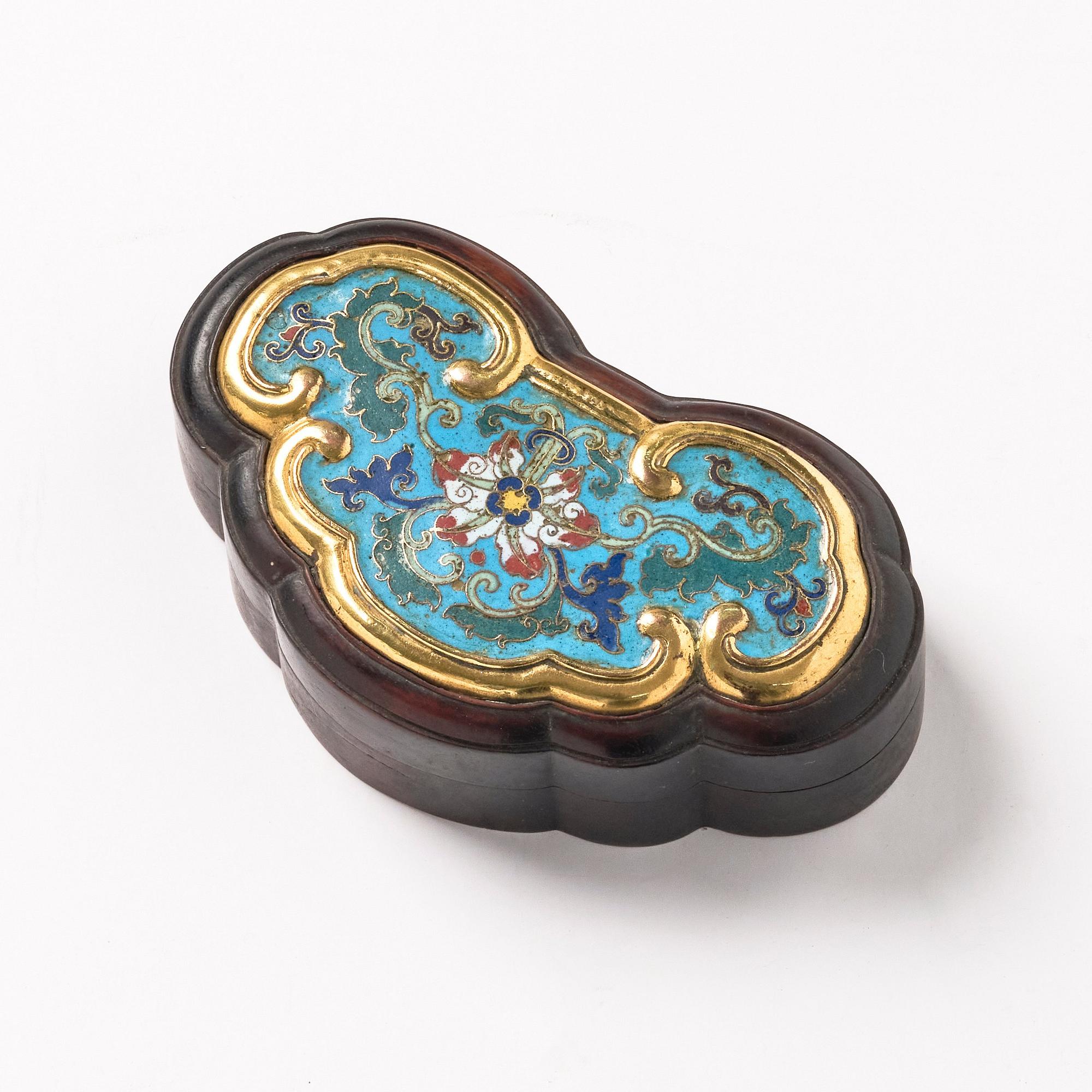
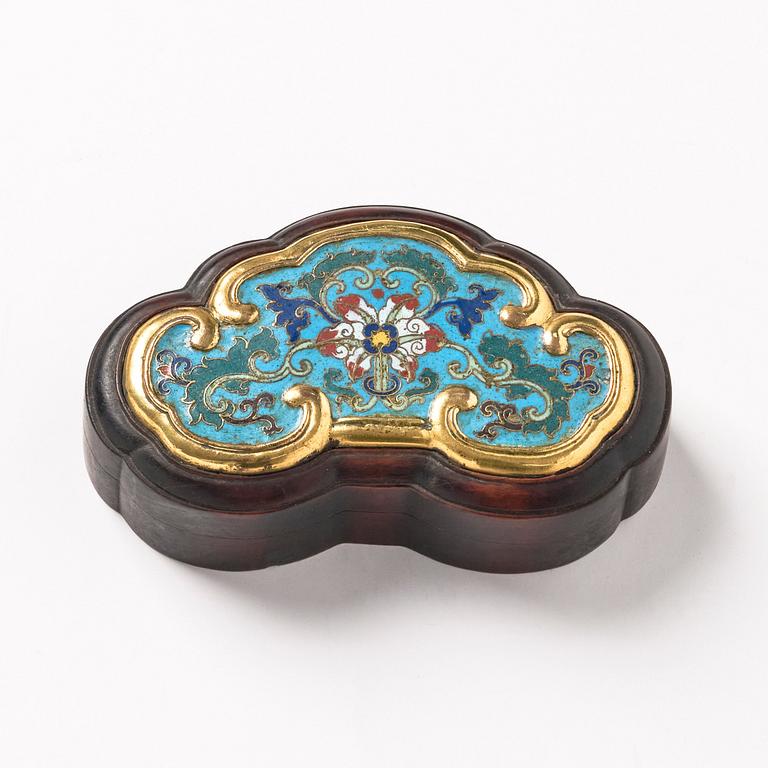
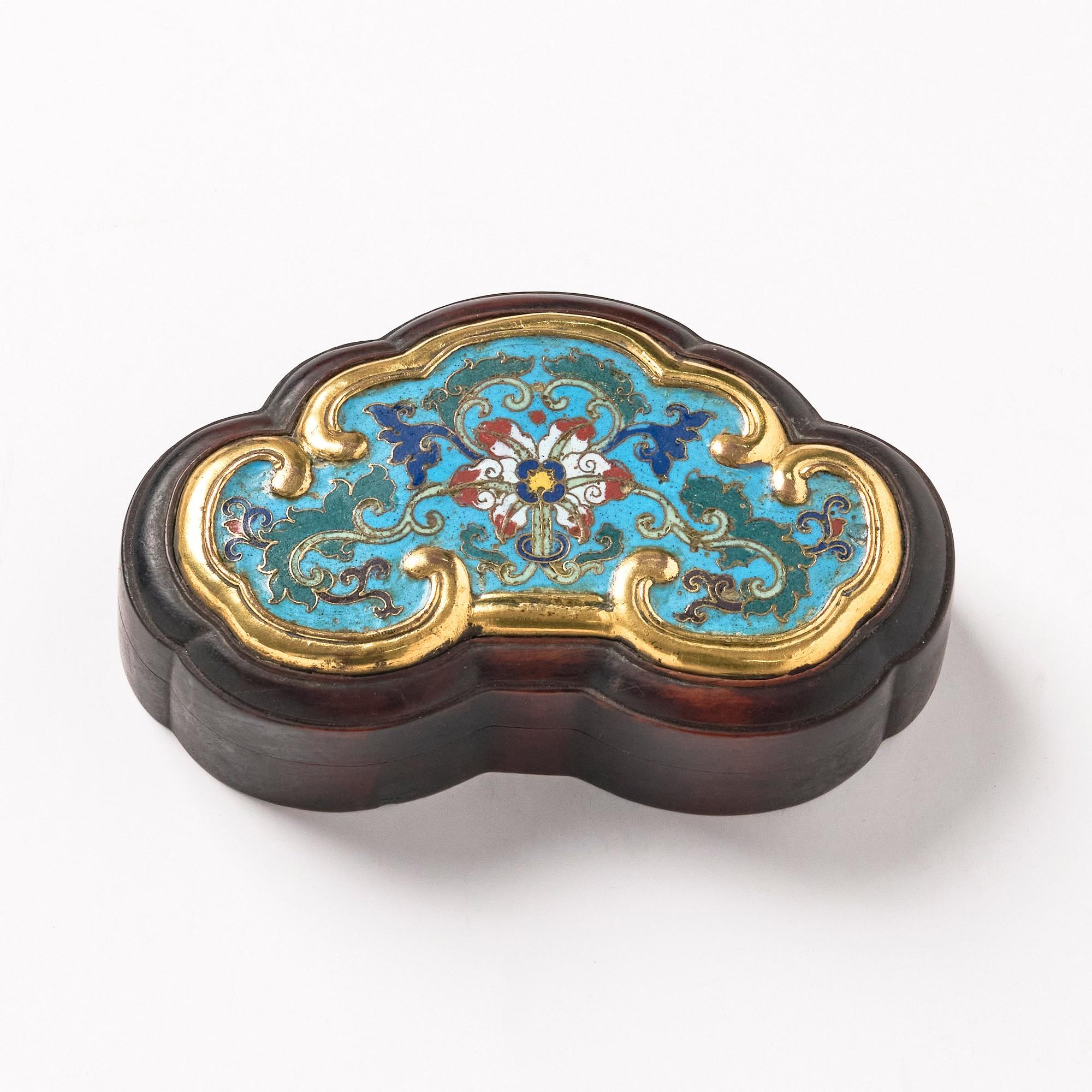
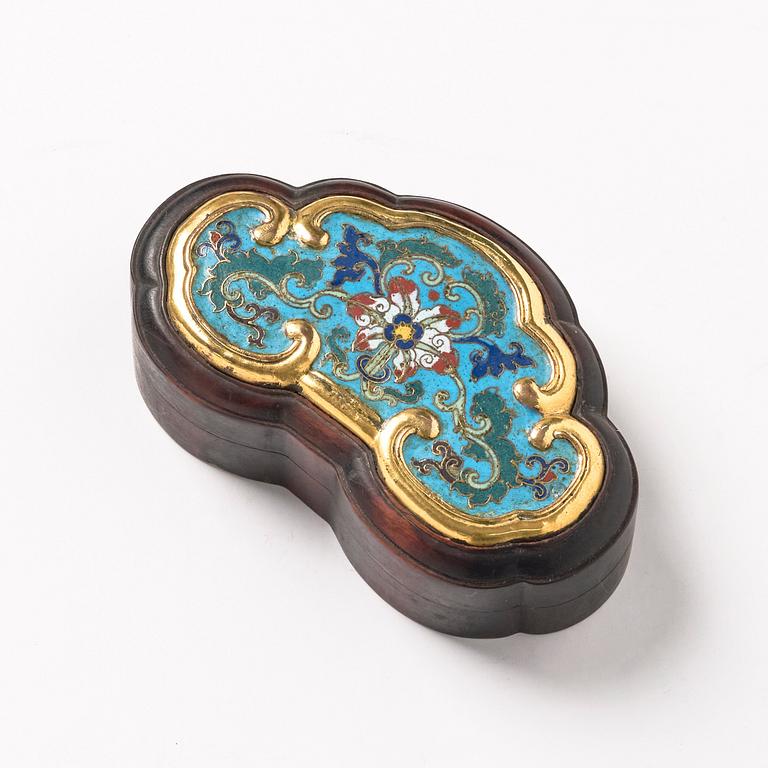
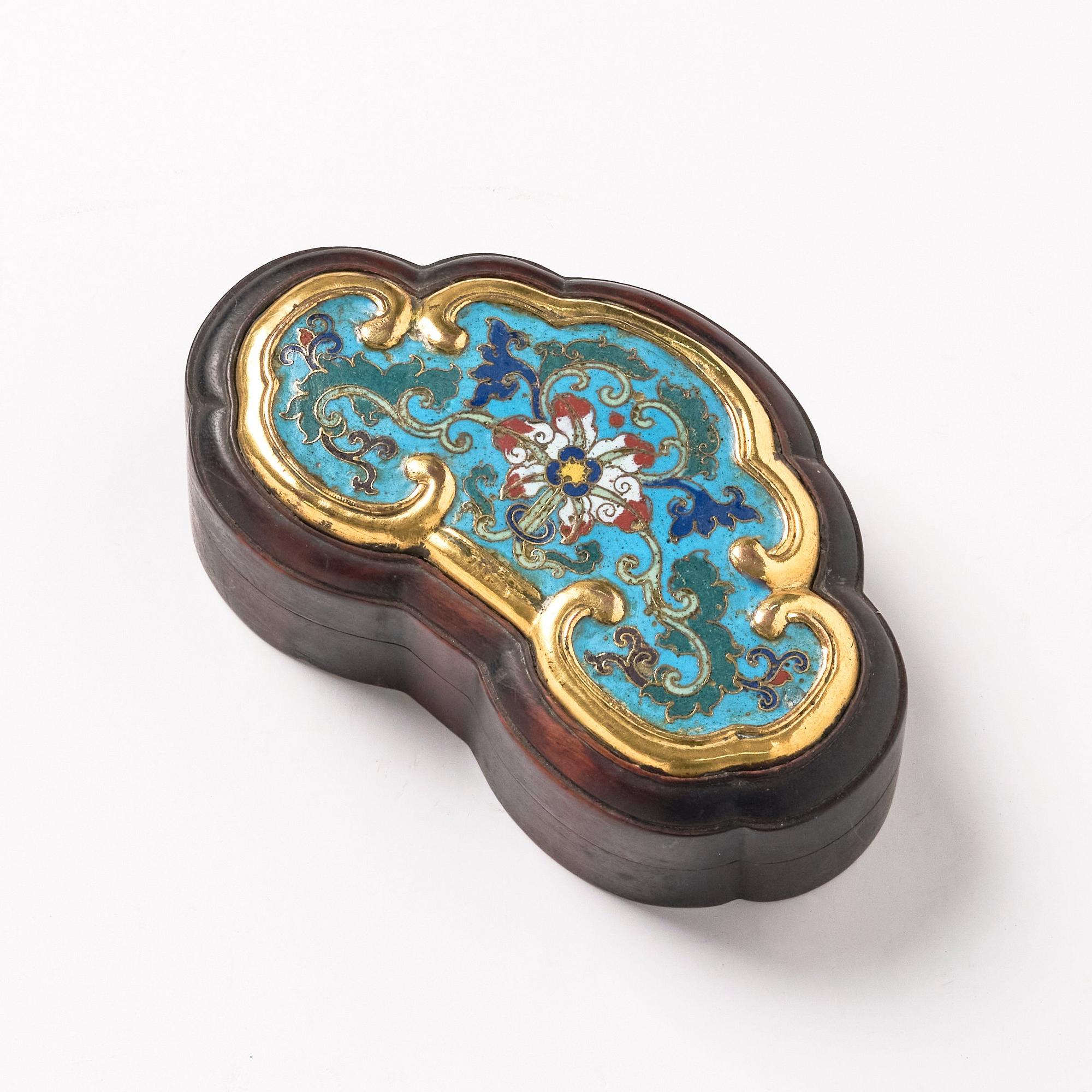
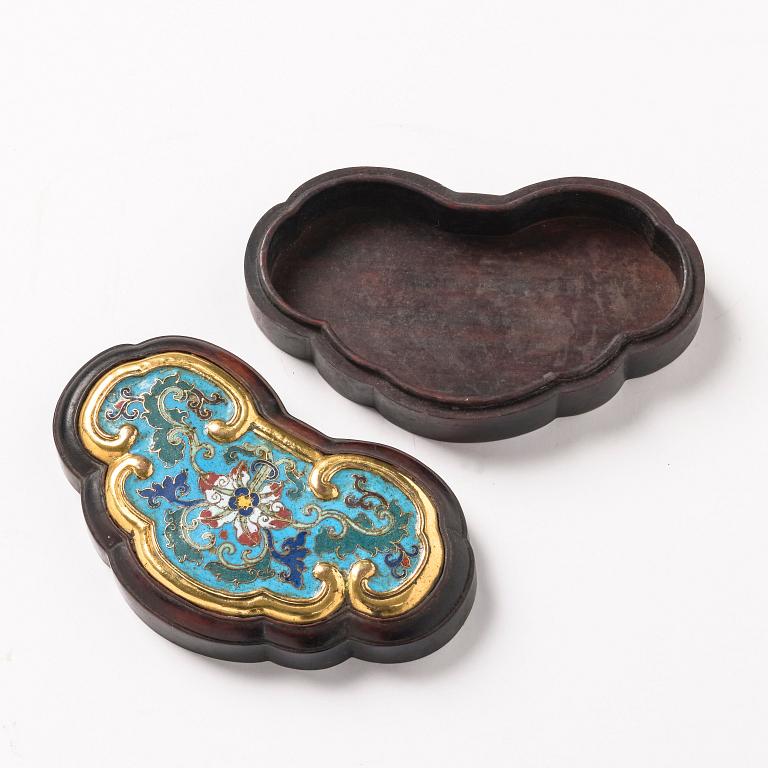
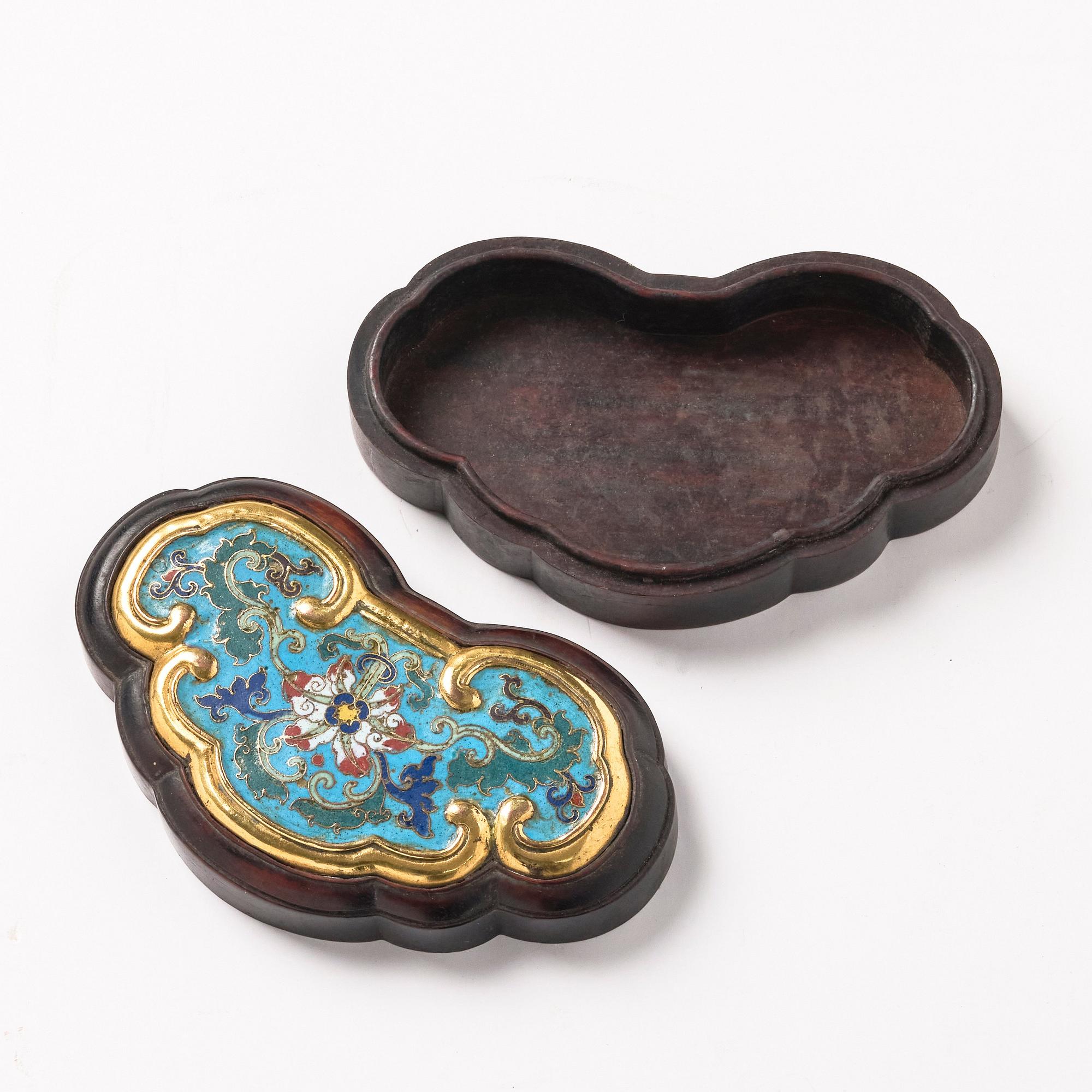
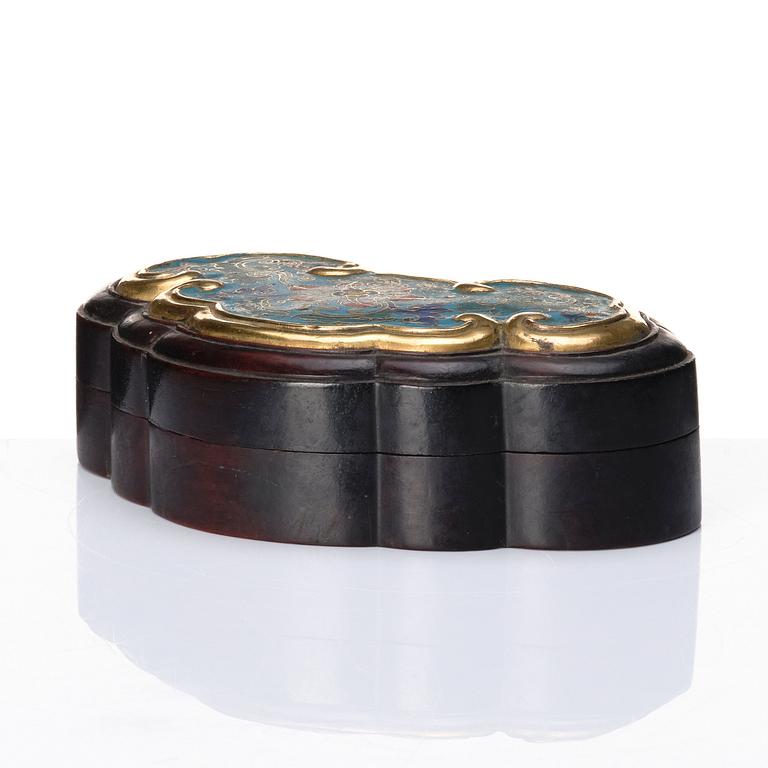
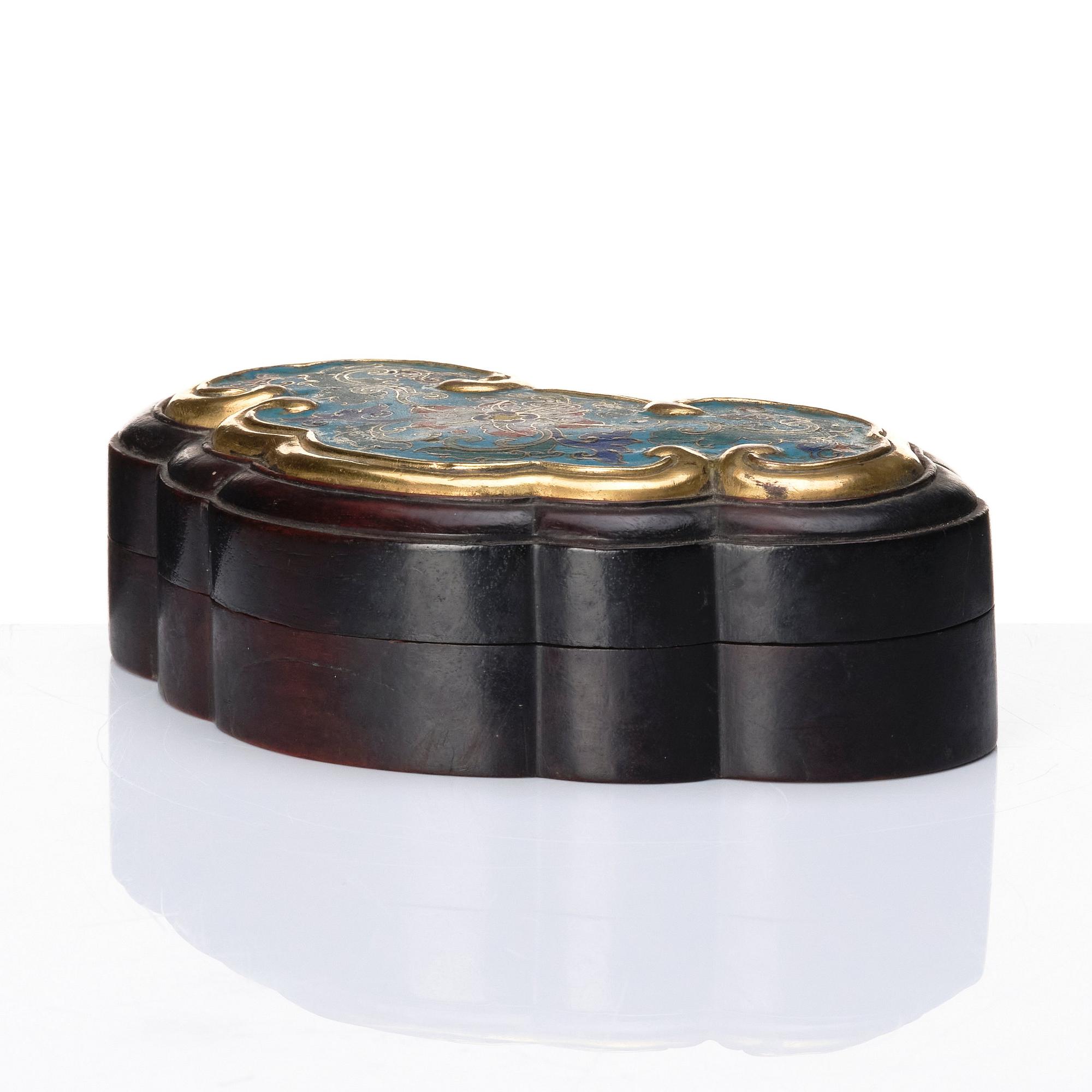
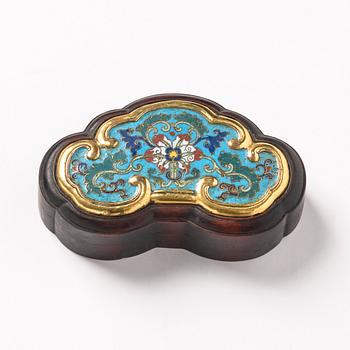
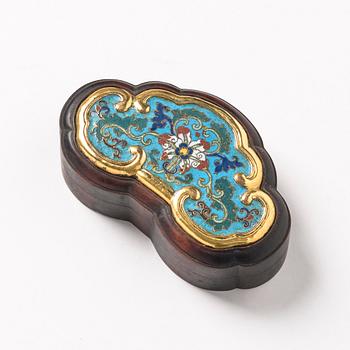
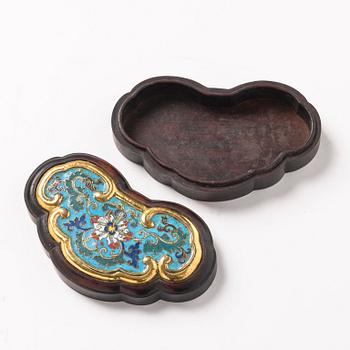
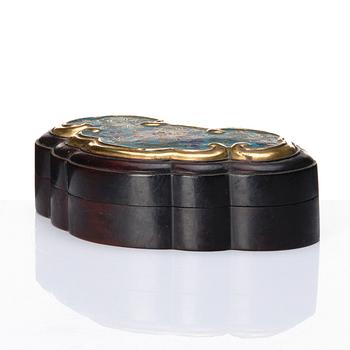
Ask med lock, cloisonné. Qingdynastin, 1700-tal.
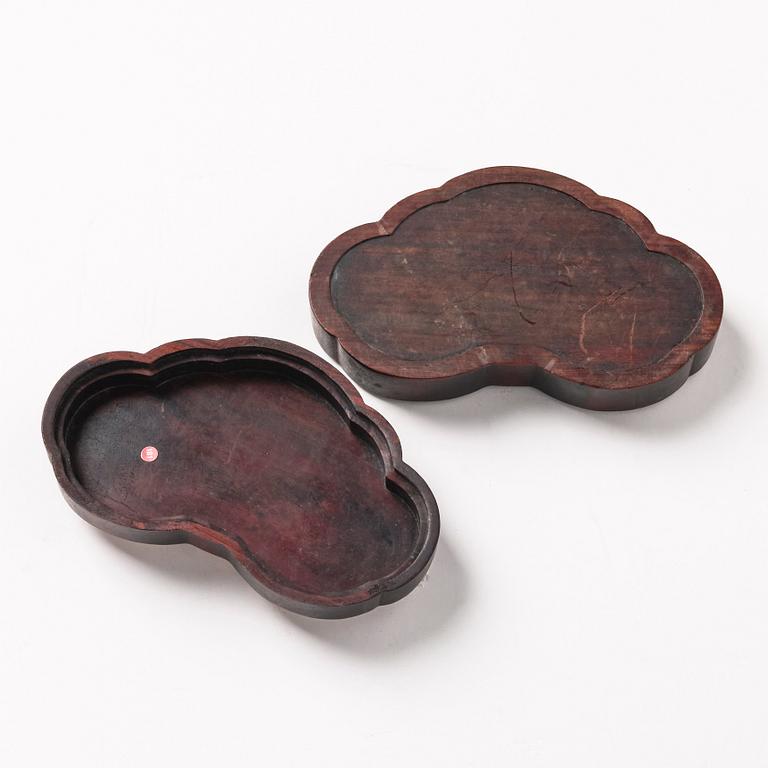
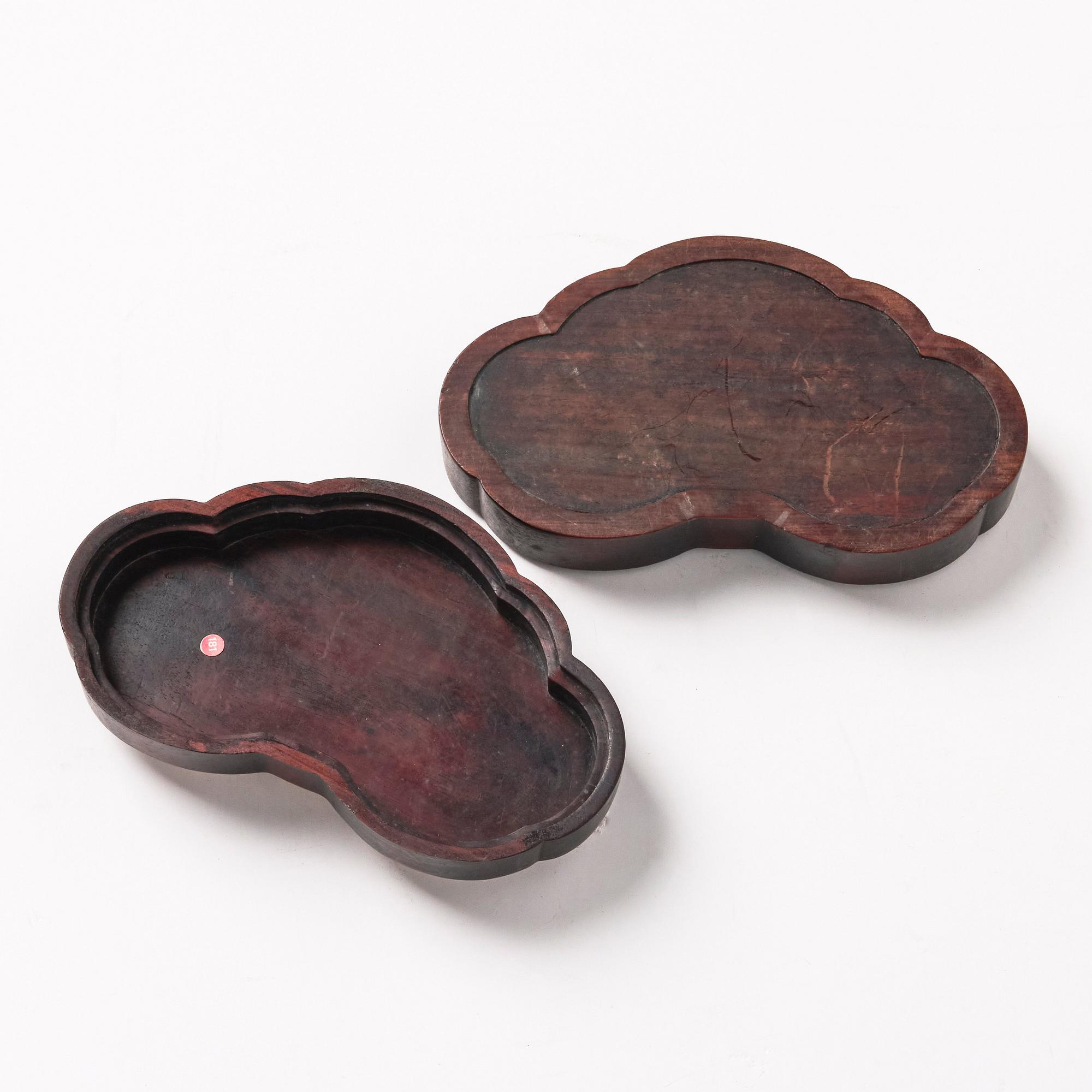
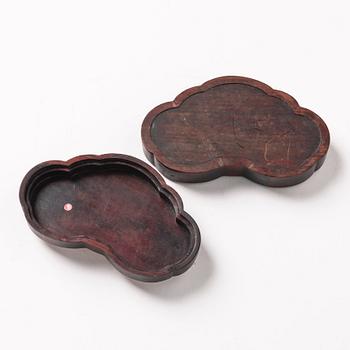
Ruyiformad cloisonné del monterad i hardwood. Delvis förgylld. Längd 16 cm.
Slitage.
Litteratur
Ruyi (Chinese: 如意; lit. 'as desired; as [you] wish') is a Chinese curved decorative object that serves as either a ceremonial scepter in Chinese Buddhism or a talisman symbolizing power and good fortune in Chinese folklore. The "ruyi" image frequently appears as a motif in Asian art.
A traditional ruyi has a long S-shaped handle and a head fashioned like a fist, cloud, or lingzhi mushroom. Ruyi are constructed from diverse materials. For example, the Palace Museum in Beijing has nearly 3,000 ruyi variously made of gold, silver, iron, bamboo, wood, ivory, coral, rhinoceros horn, lacquer, crystal, jade, and precious gems.
För konditionsrapport kontakta specialist

Andra har även tittat på

1745620
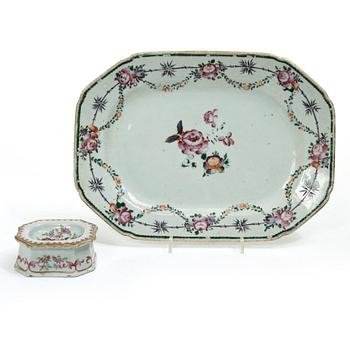
Saltkar och stekfat,
porslin, Kina, Qingdynastin, Qianlong (1736-95).
Inga bud
20 tim 32m
Utropspris
3 000 SEK


1725853
Gallerskål med fat,
porslin, Kina, Qingdynastin, 1800-tal.
Inga bud
3d 19 tim
Utropspris
2 000 SEK
