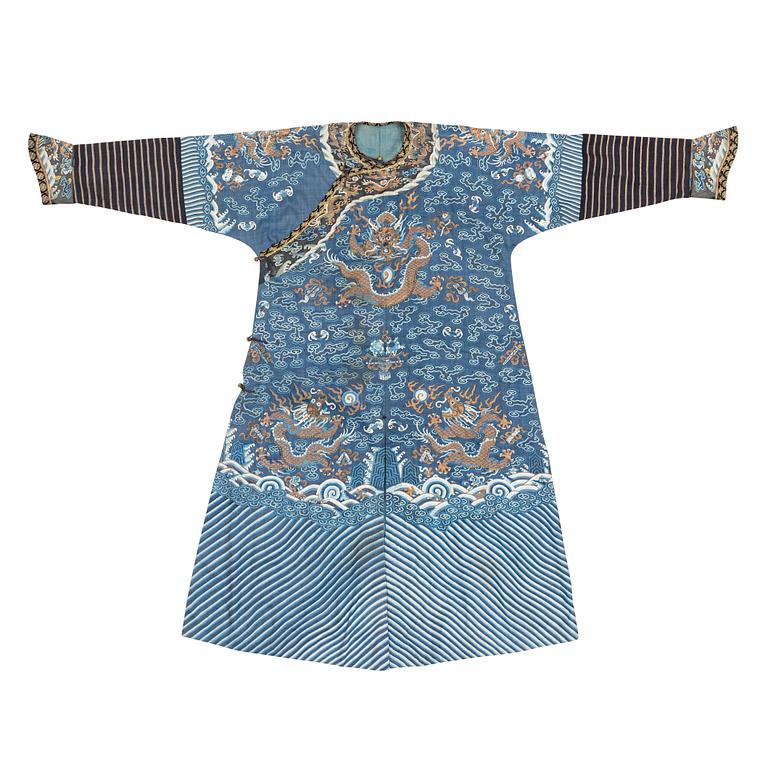
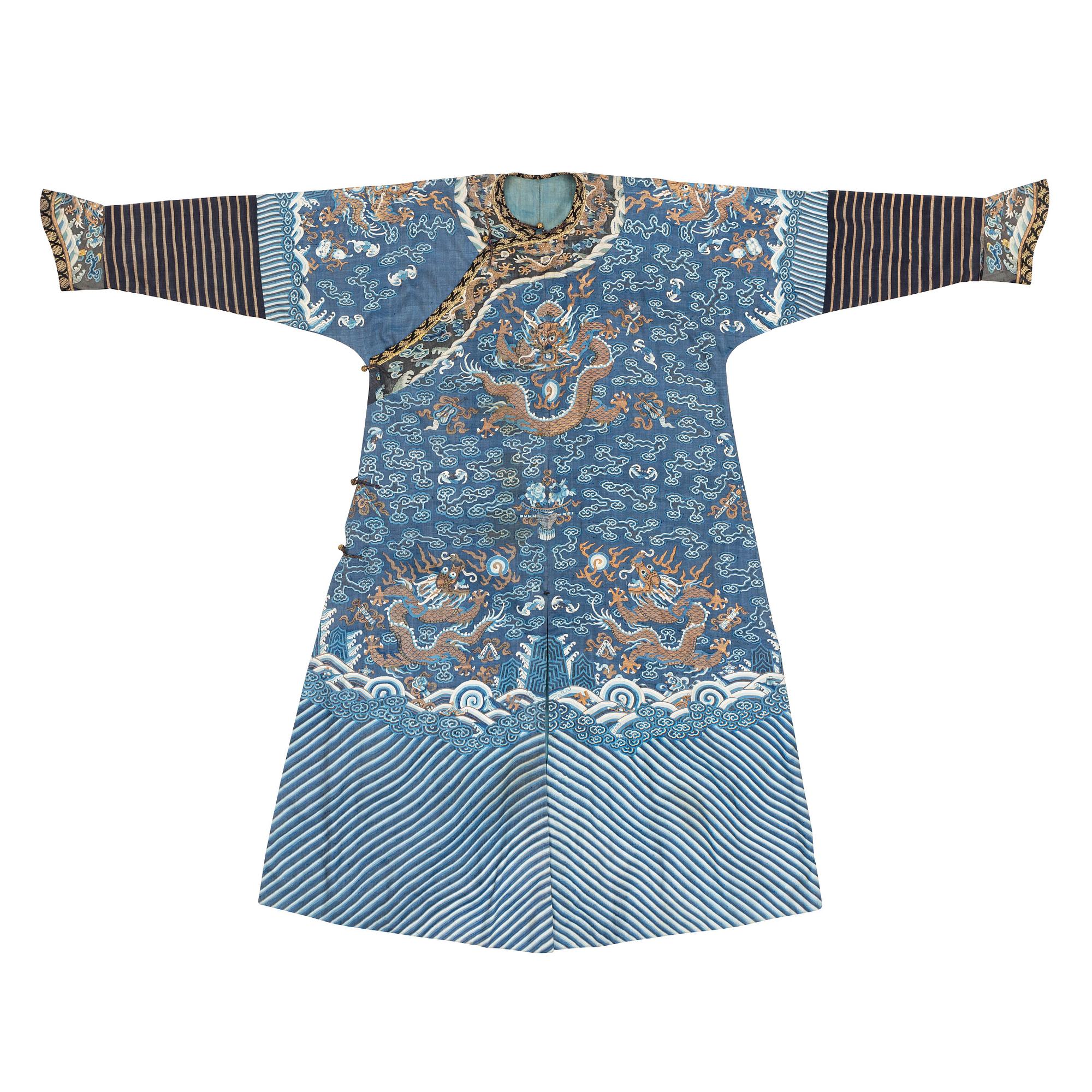
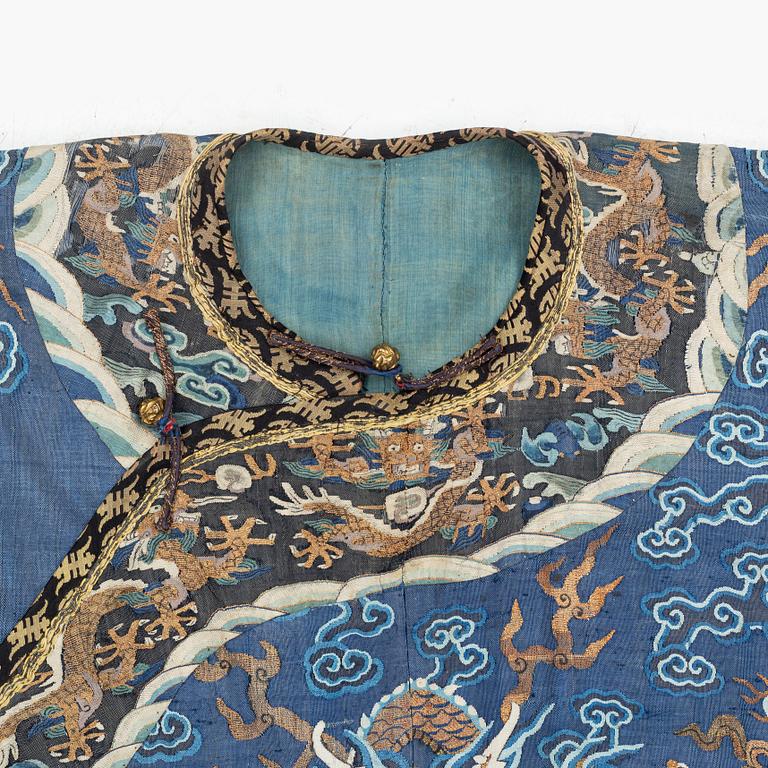
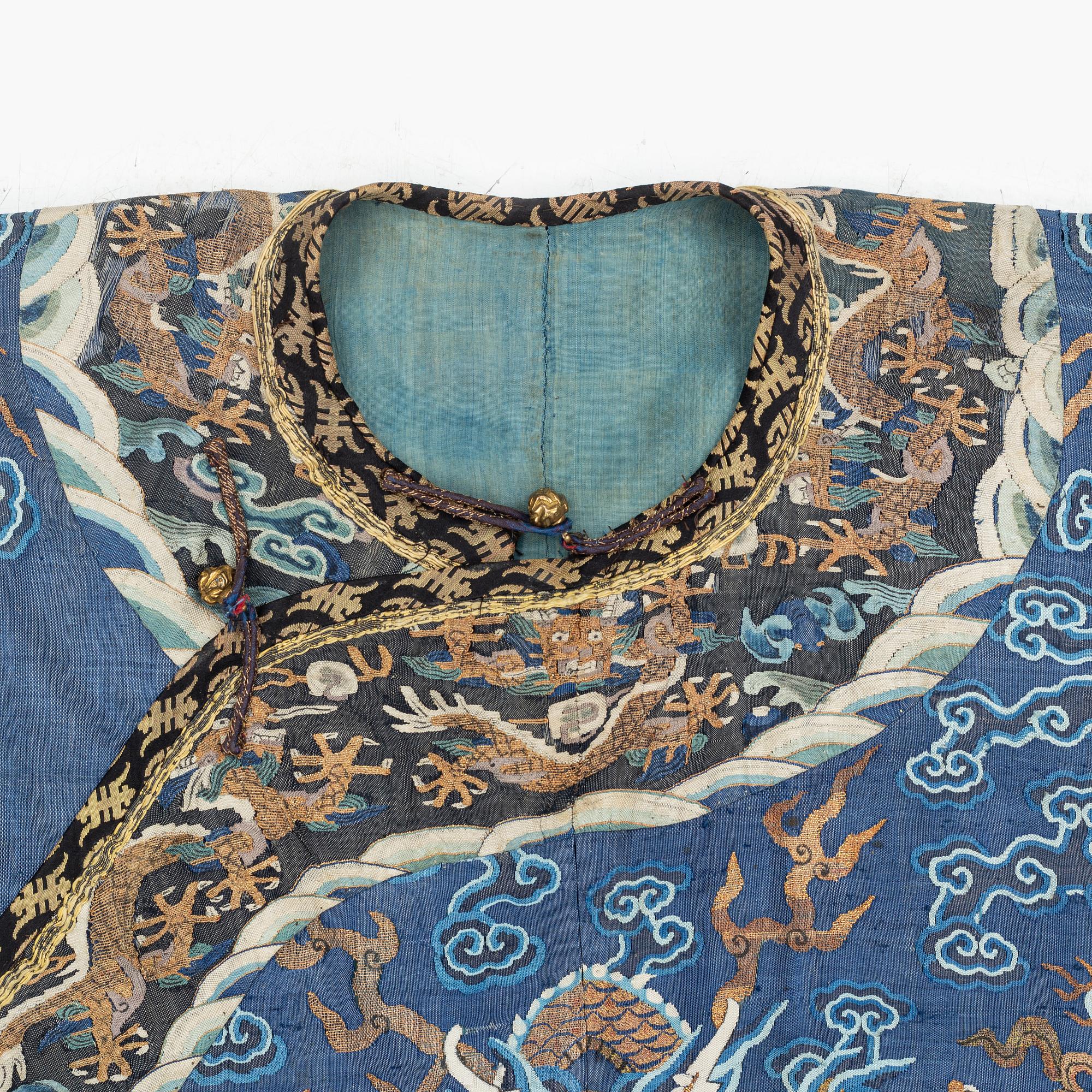
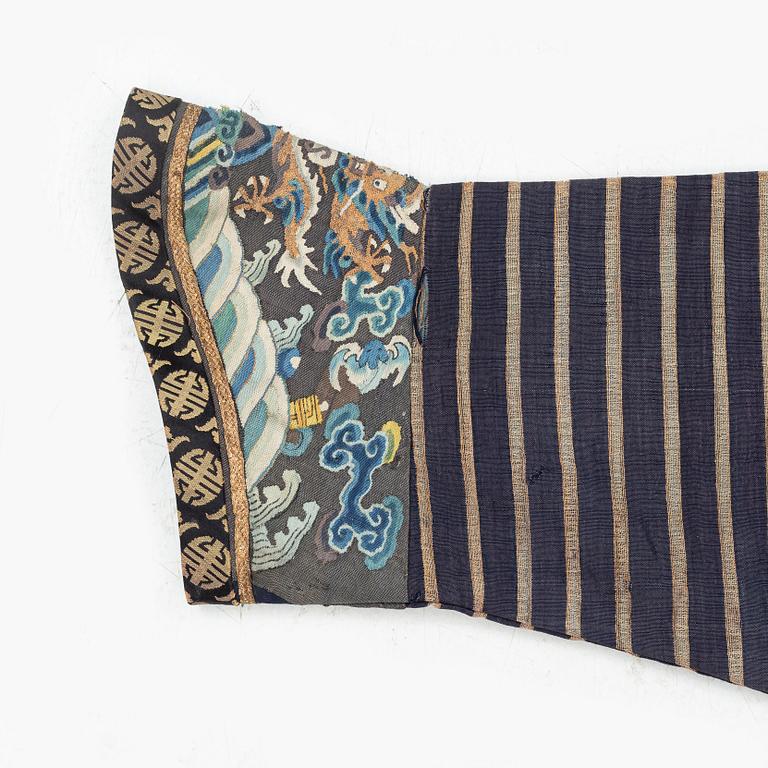
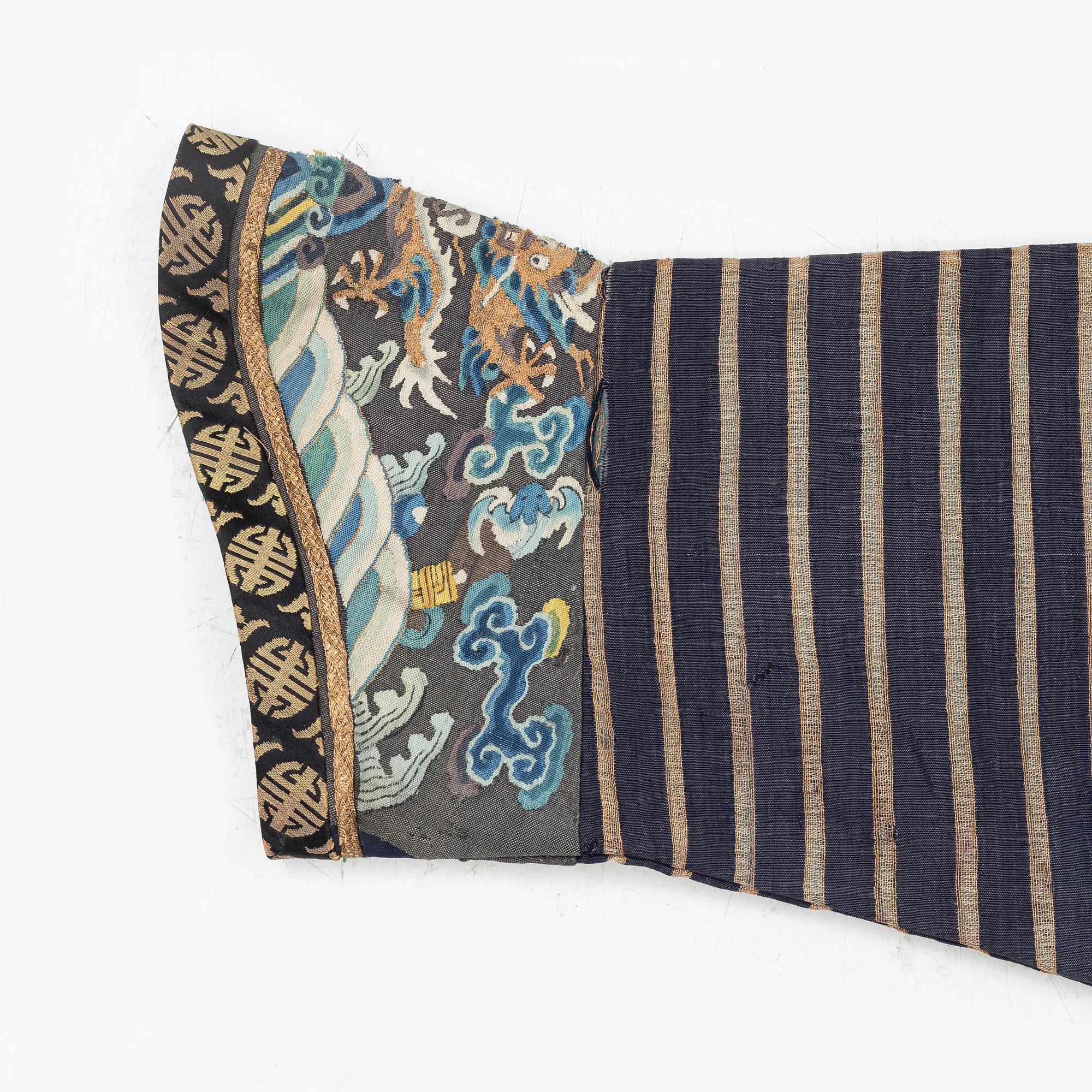
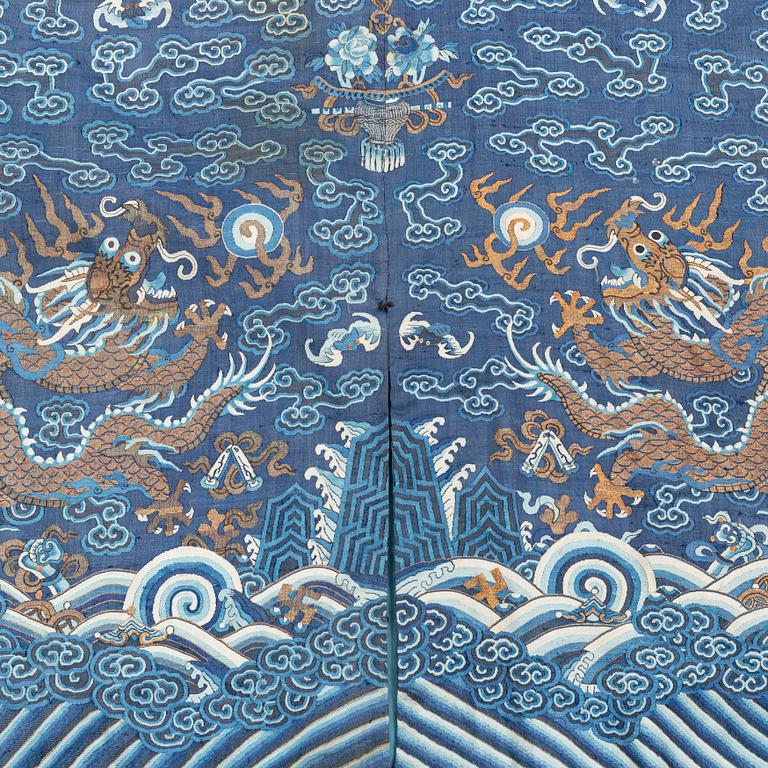
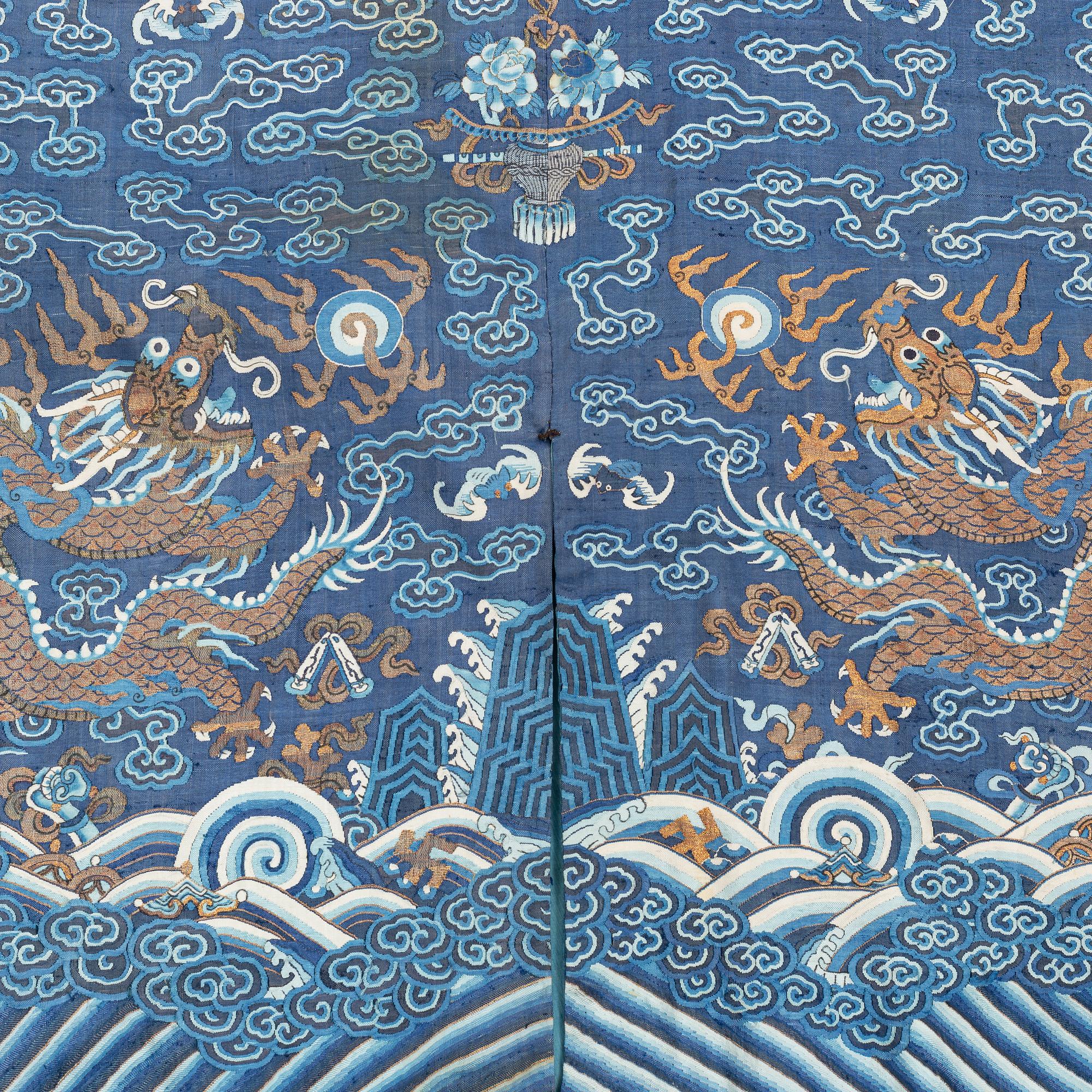
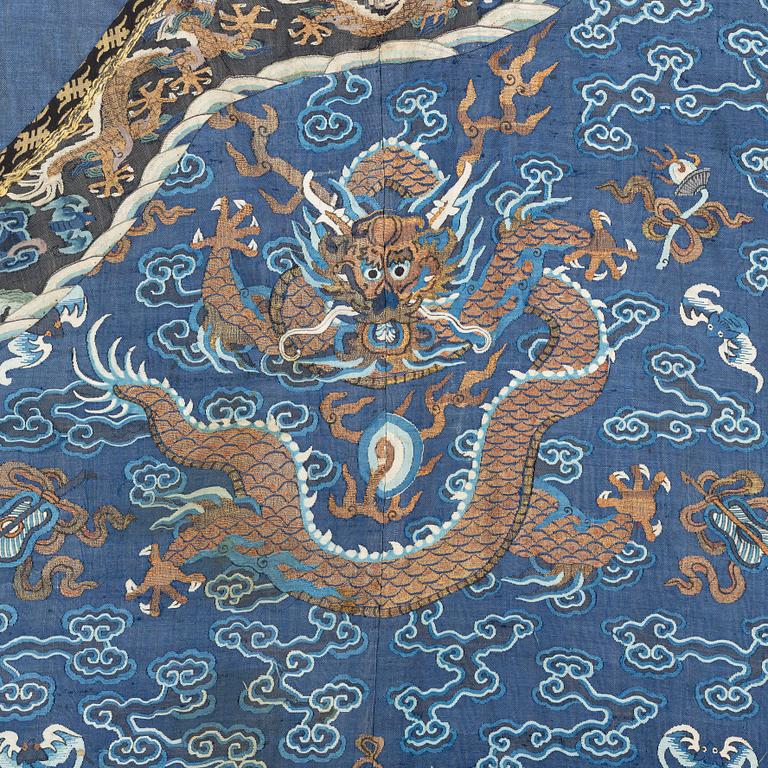
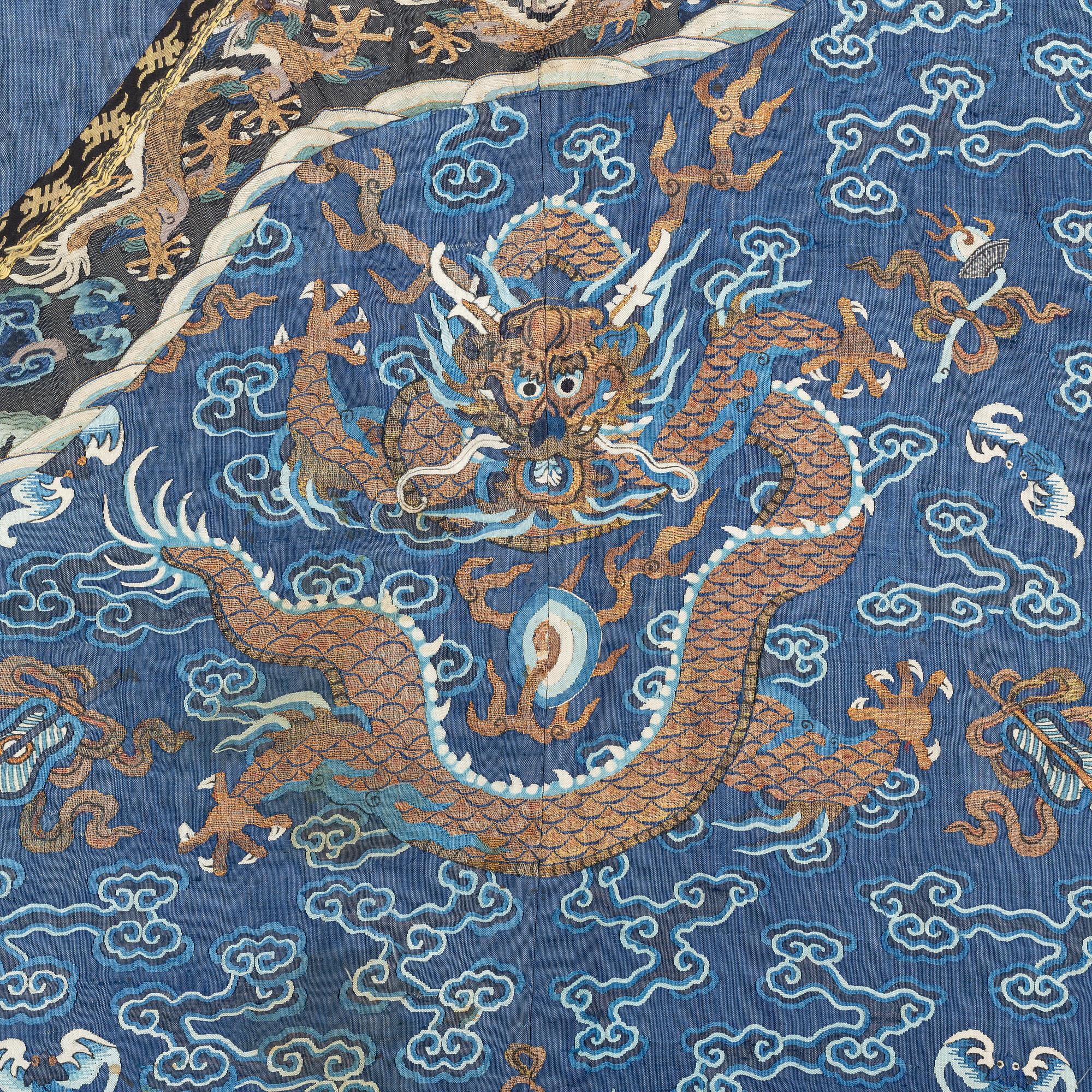
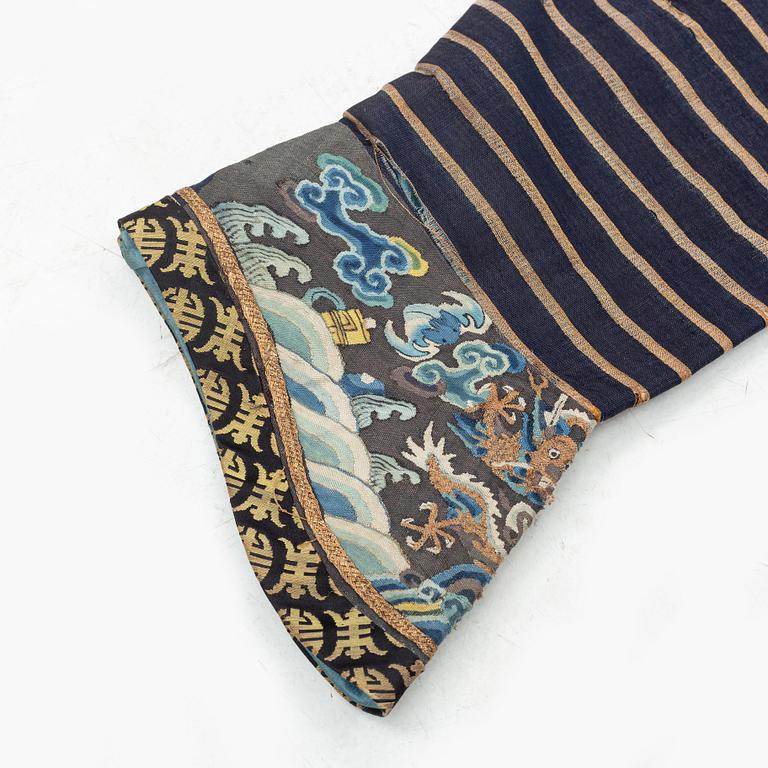
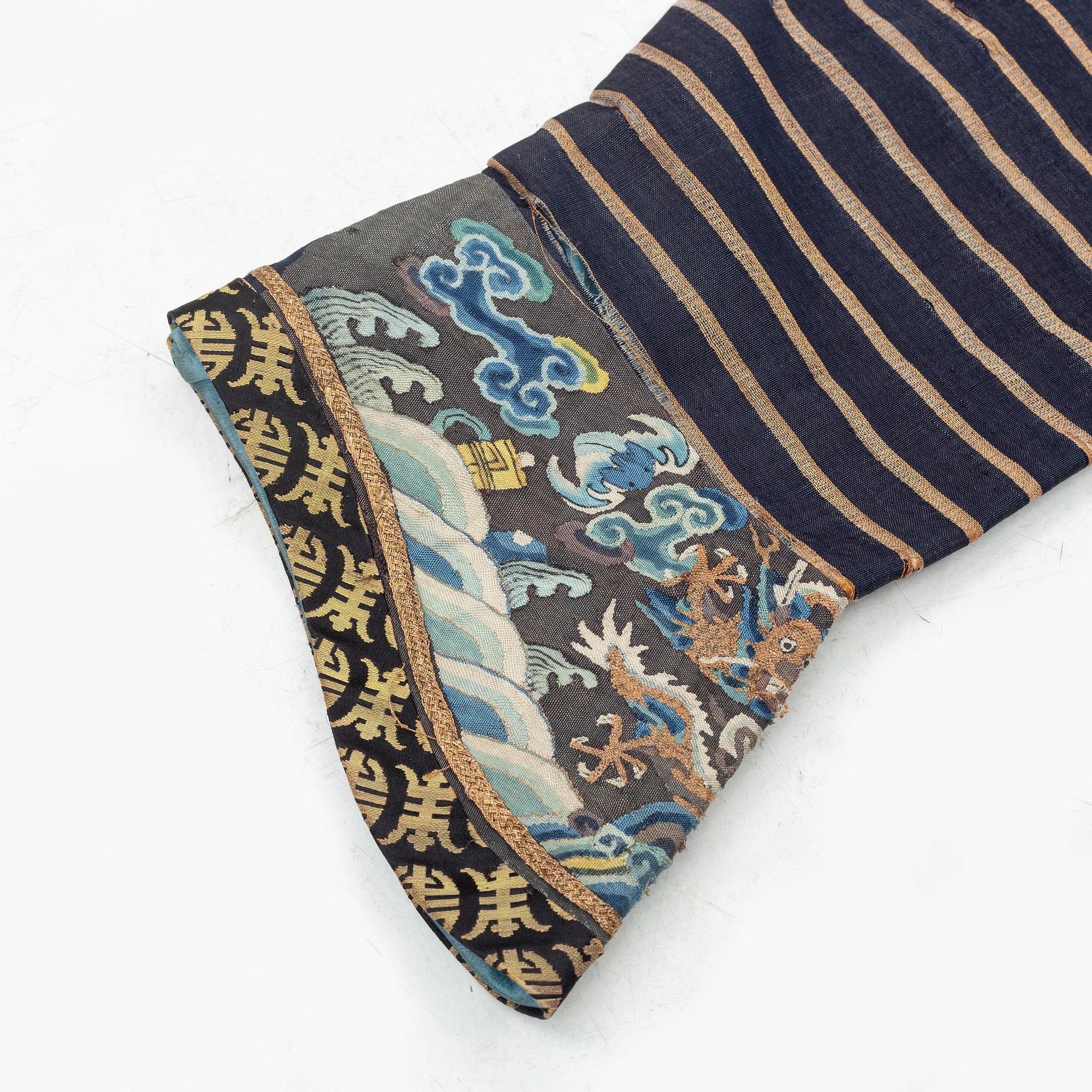
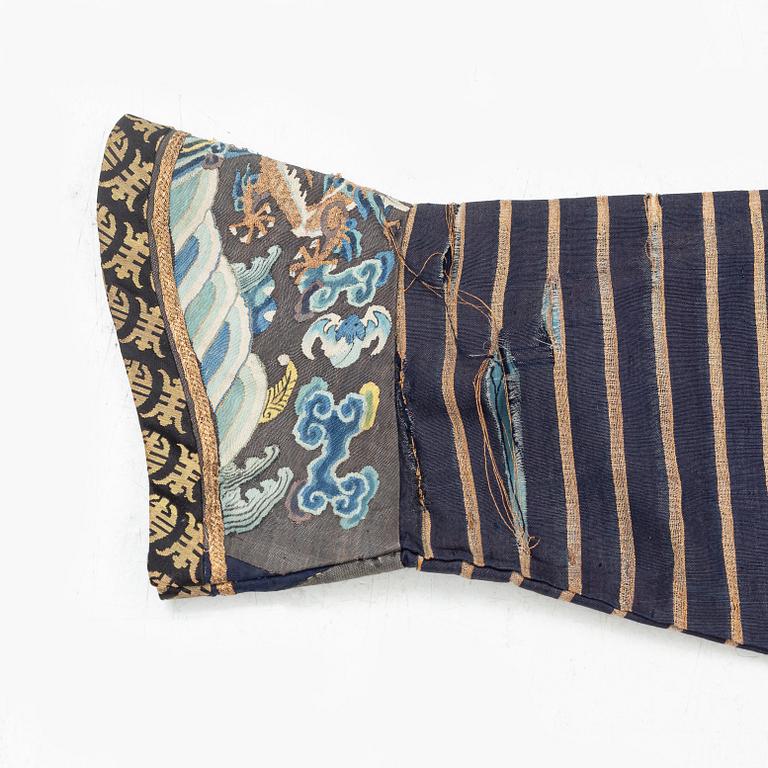
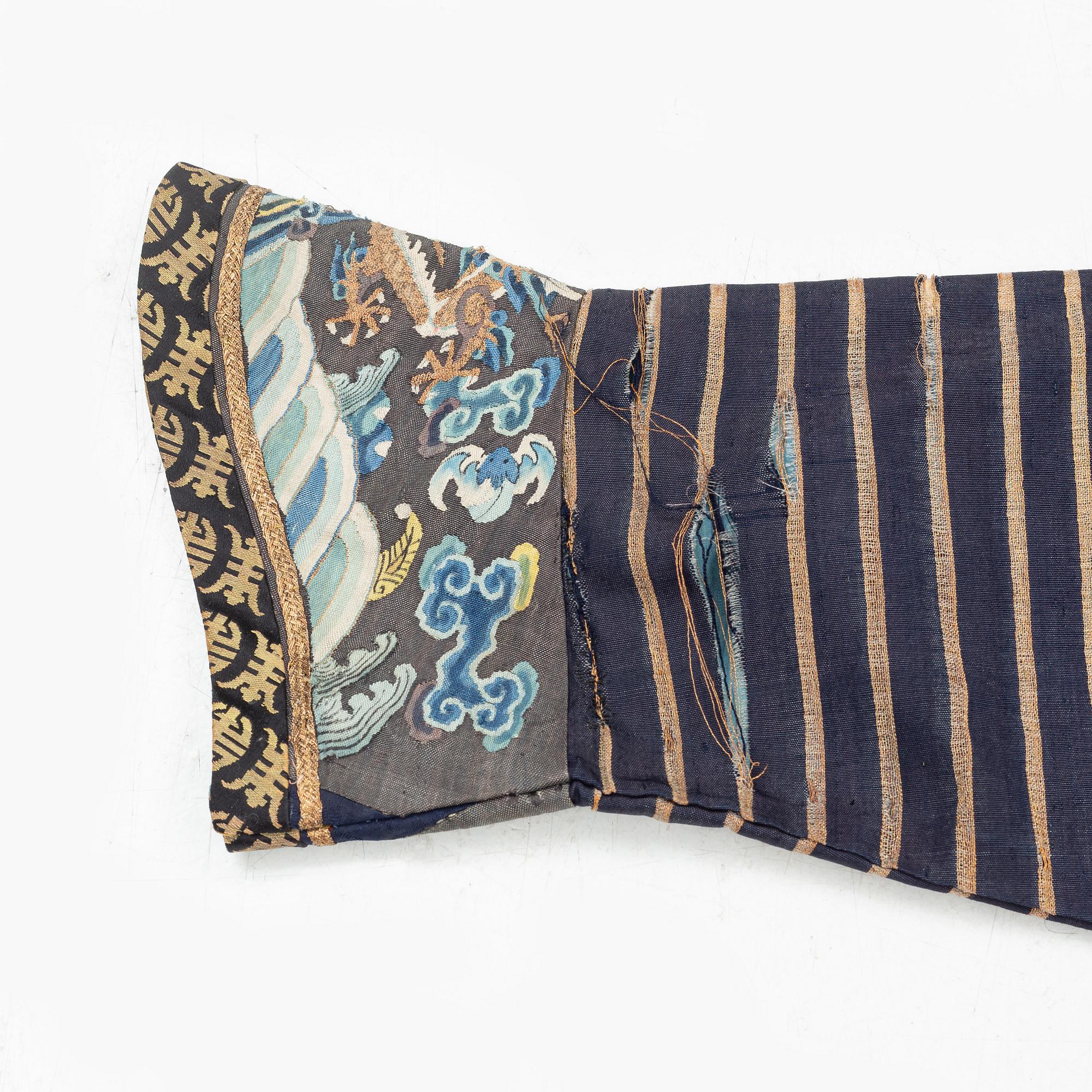
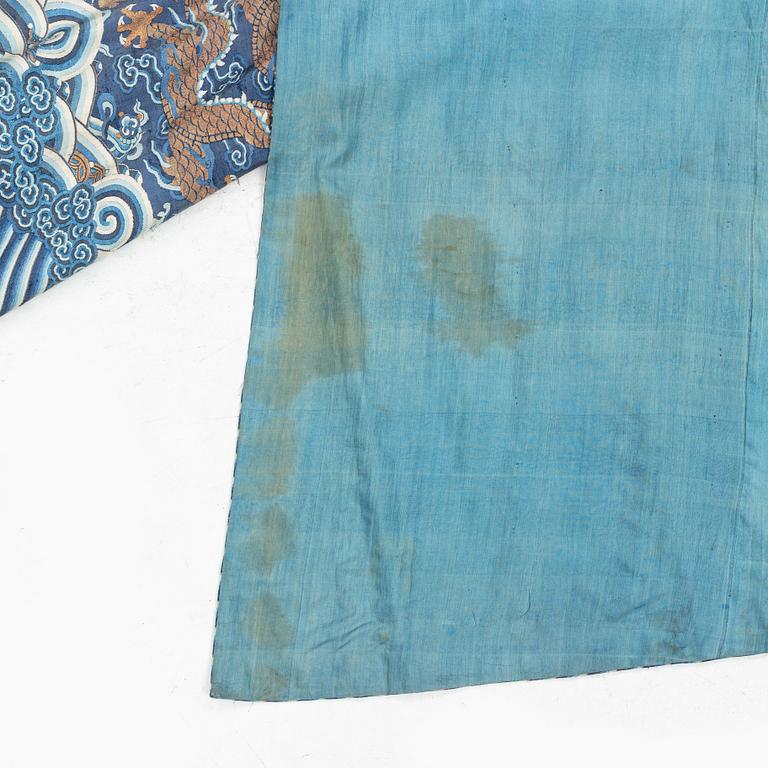
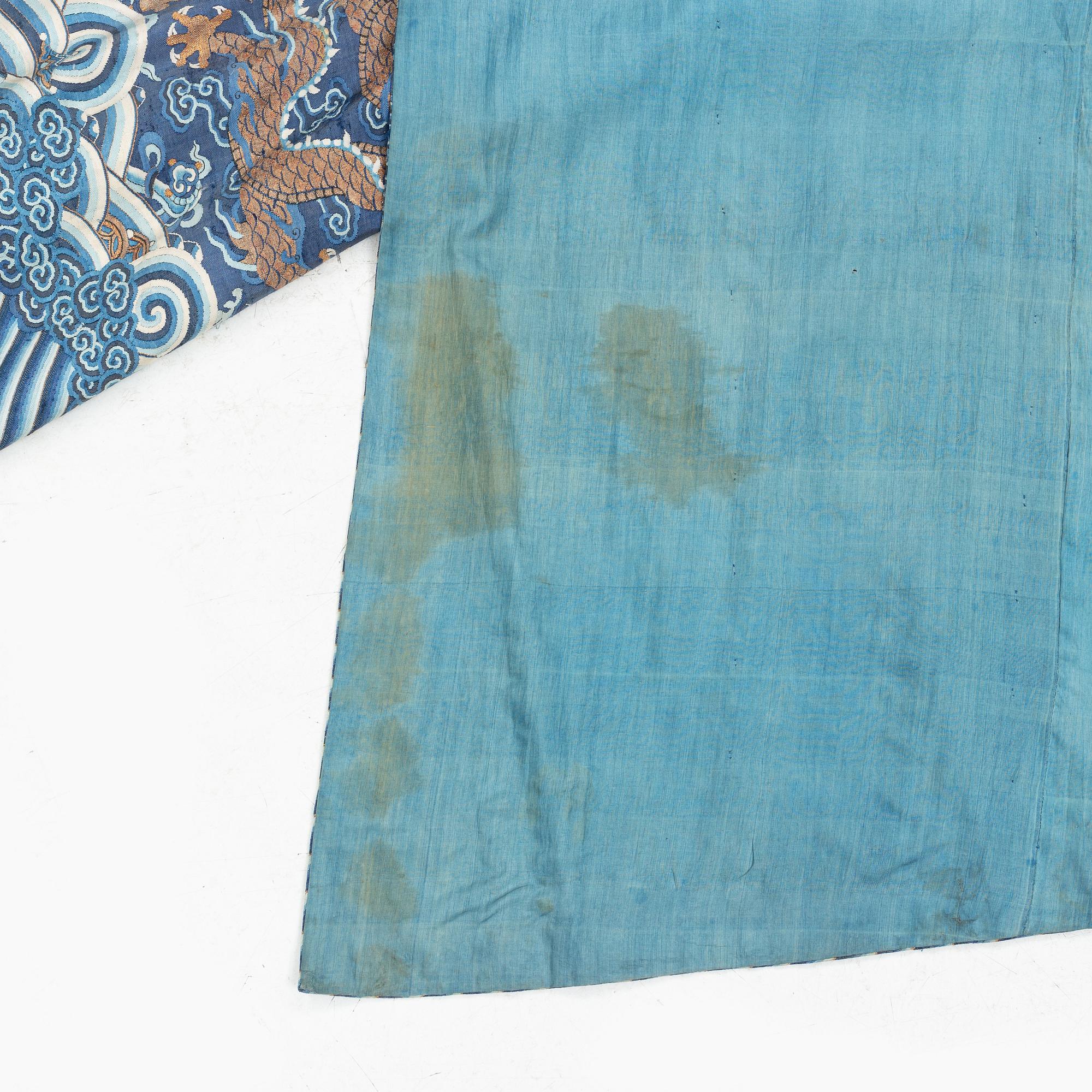
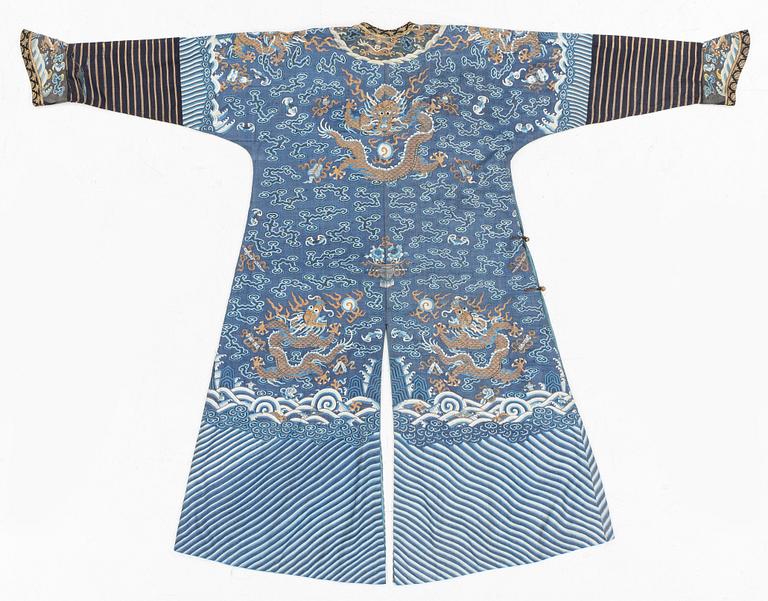
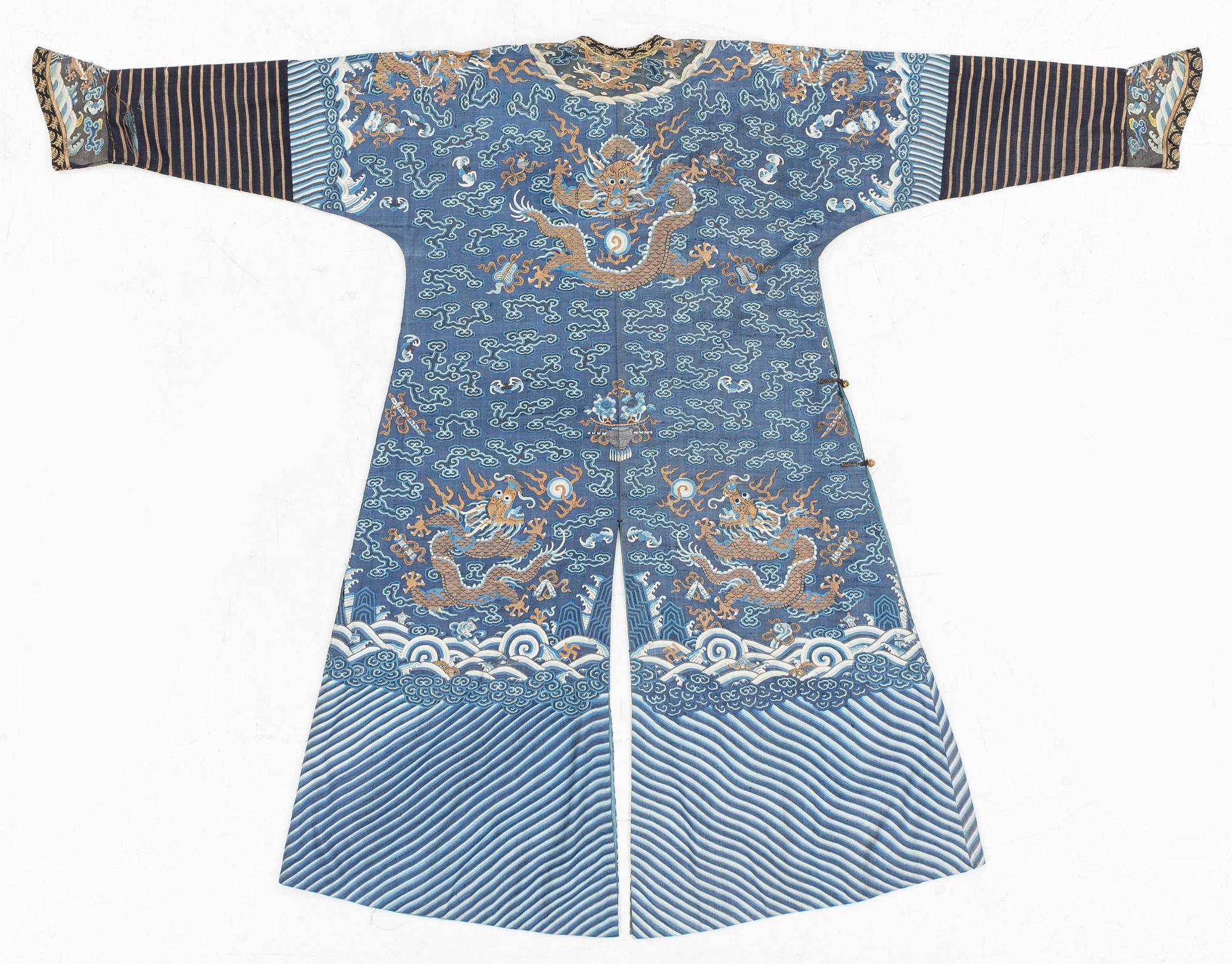
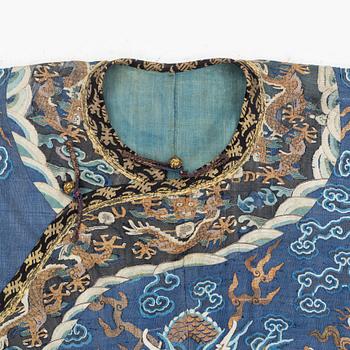
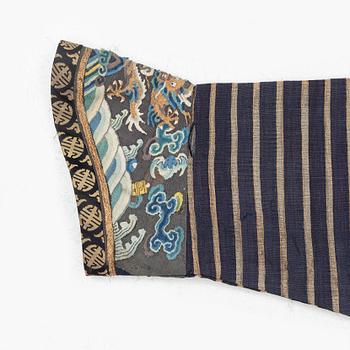
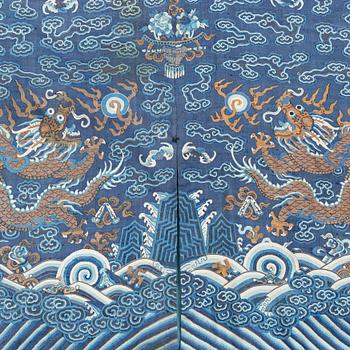
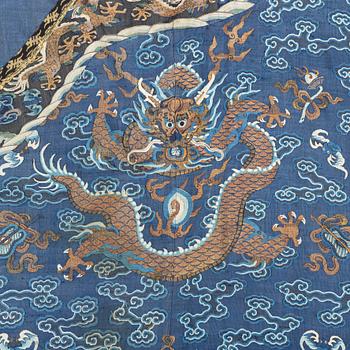
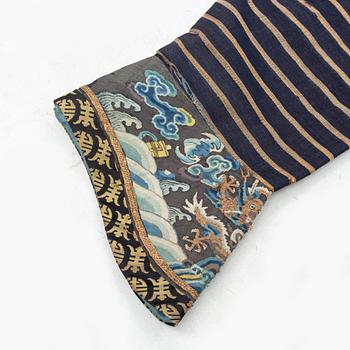
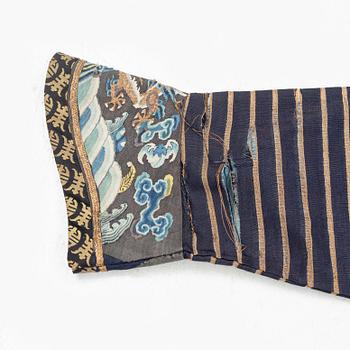
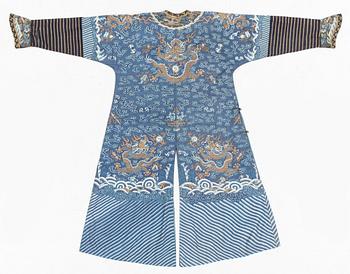
Vävd med nio femkloade drakar som jagar den flammande pärlan ovan de klassiska lishuiränderna, emblem, och olika lyckotecken. Längd 146 cm. Bredd arm till arm 192 cm.
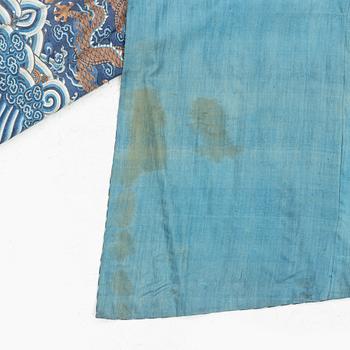
Skador, lagningar, slitage.
Proveniens
From Ericsbergs castle, thence by descent.
Robes decorated with dragons are the quintessential Qing dynasty garments. They were the dress of the imperial government, its civil administration. They were supreme significant social markers prepresenting access to power. The right to wear them depended on rank and status. From the very start of the reign of the Qing Manchus, they were are of image and used dress as an important tool to communicate legitimacy and heritage.
The early robes, has usually one or a pair of dragons, but from early 18th Century and onwards the design of nine dragons were the norm.
Utställningar
Compare robe in this style, Christies, The Imperial Wardrobe, Wednesday, March 19, 2008. Lot 10.
Compare; An Imperial Court Robe in the Collection of the Metropolitan Museum, Title: Imperial Court Robe, Accession Number: 57.28.3, from the Collection of Mrs. Willis Wood, 1957.
Litteratur
G. Gickinson and L. Wriggelsworth, the imperial wardrobe, London, 1999. Compare kesi, page 61.
Övrig information
The use of the blue colour was associated with the Temple of Heaven, south of the palace, where the Emperor offered sacrifice at the winter solstice and also prayed for rain during the summer months.
För konditionsrapport kontakta specialist

Andra har även tittat på