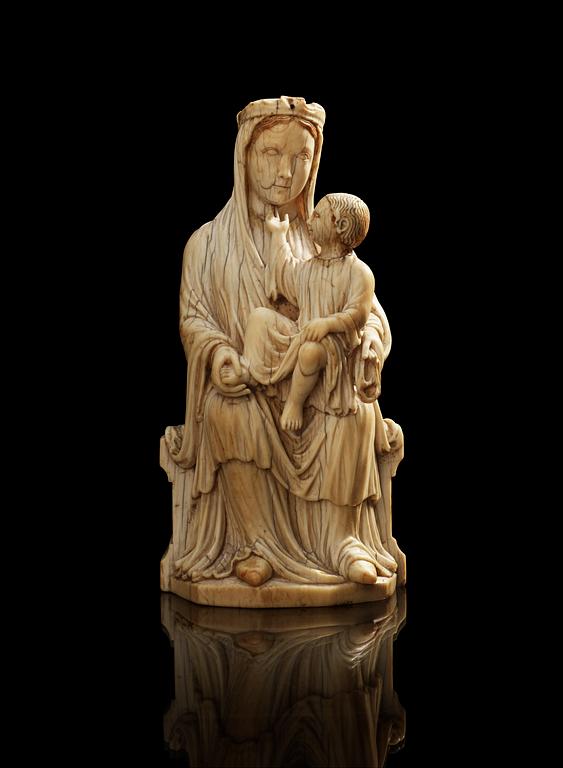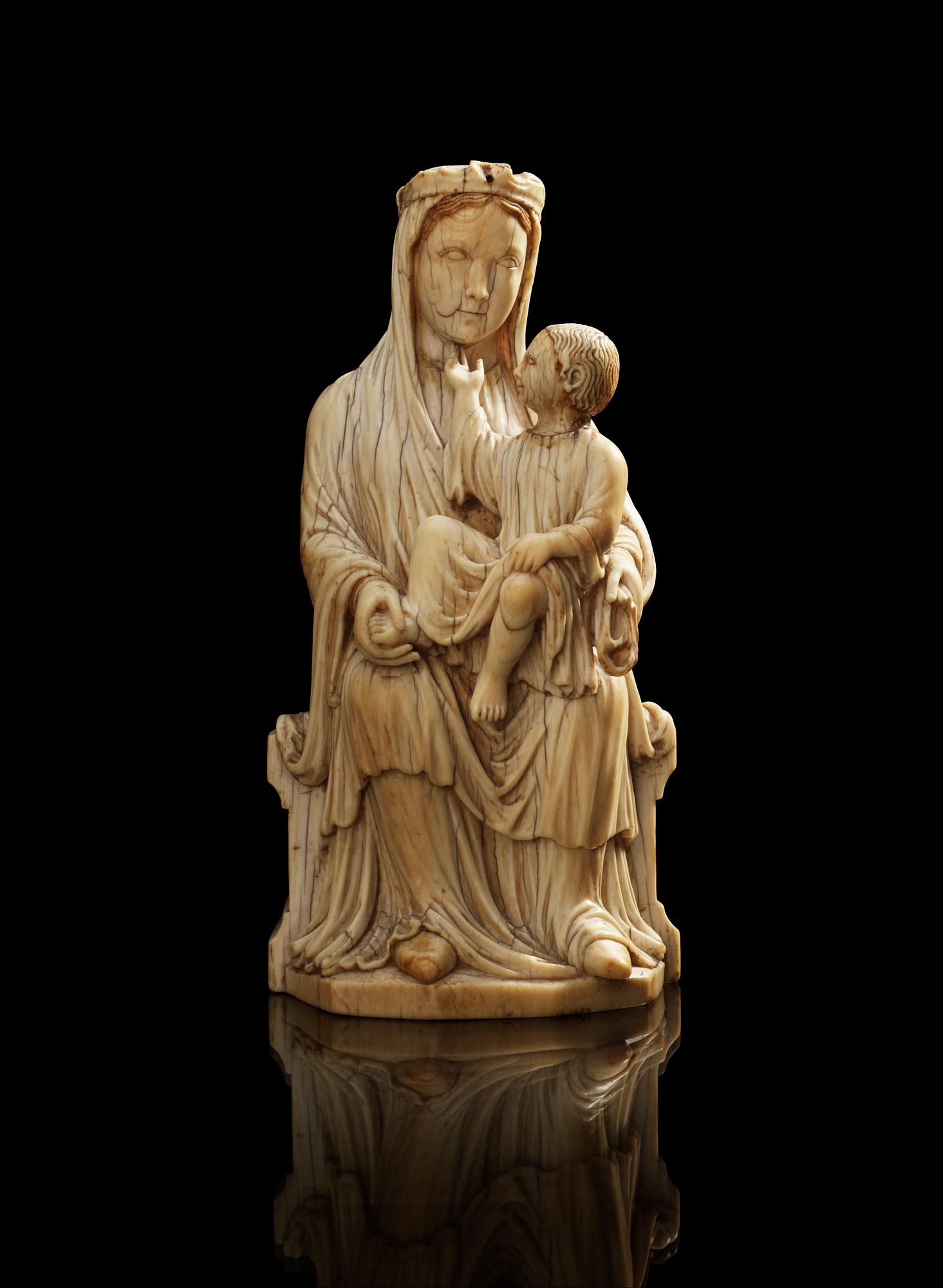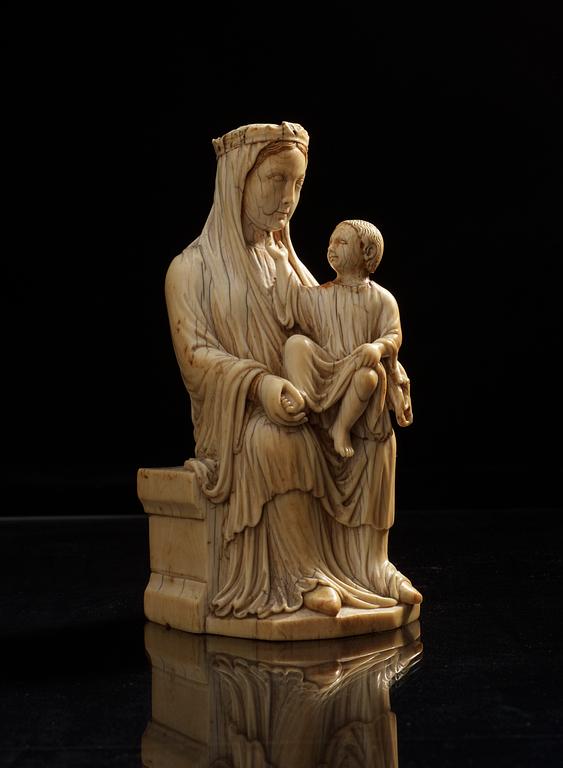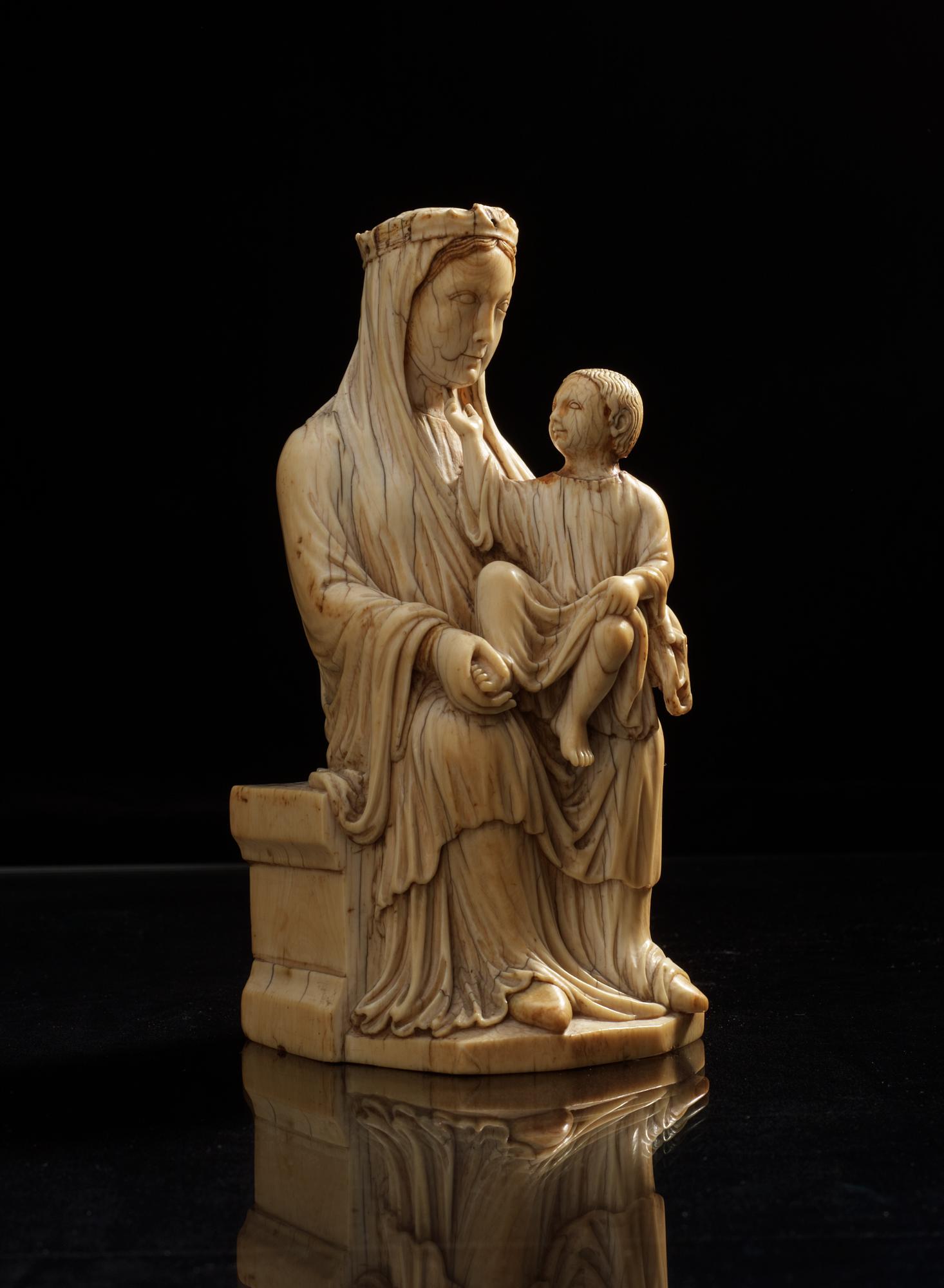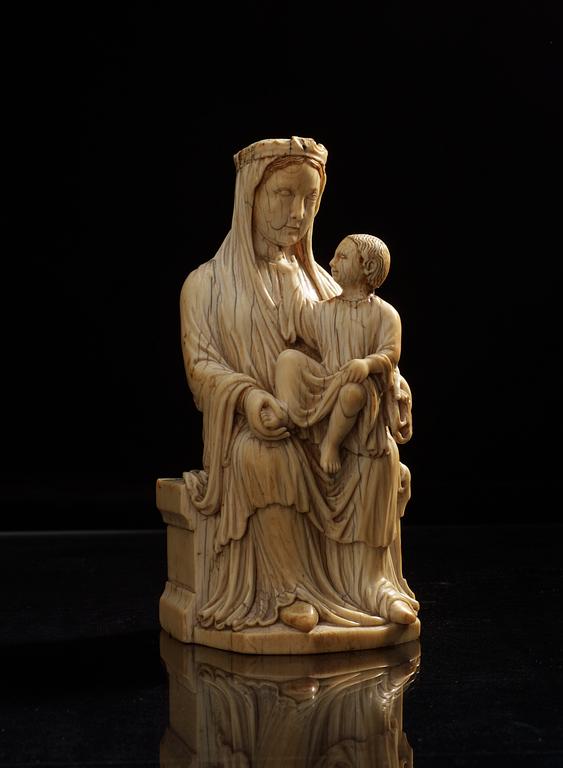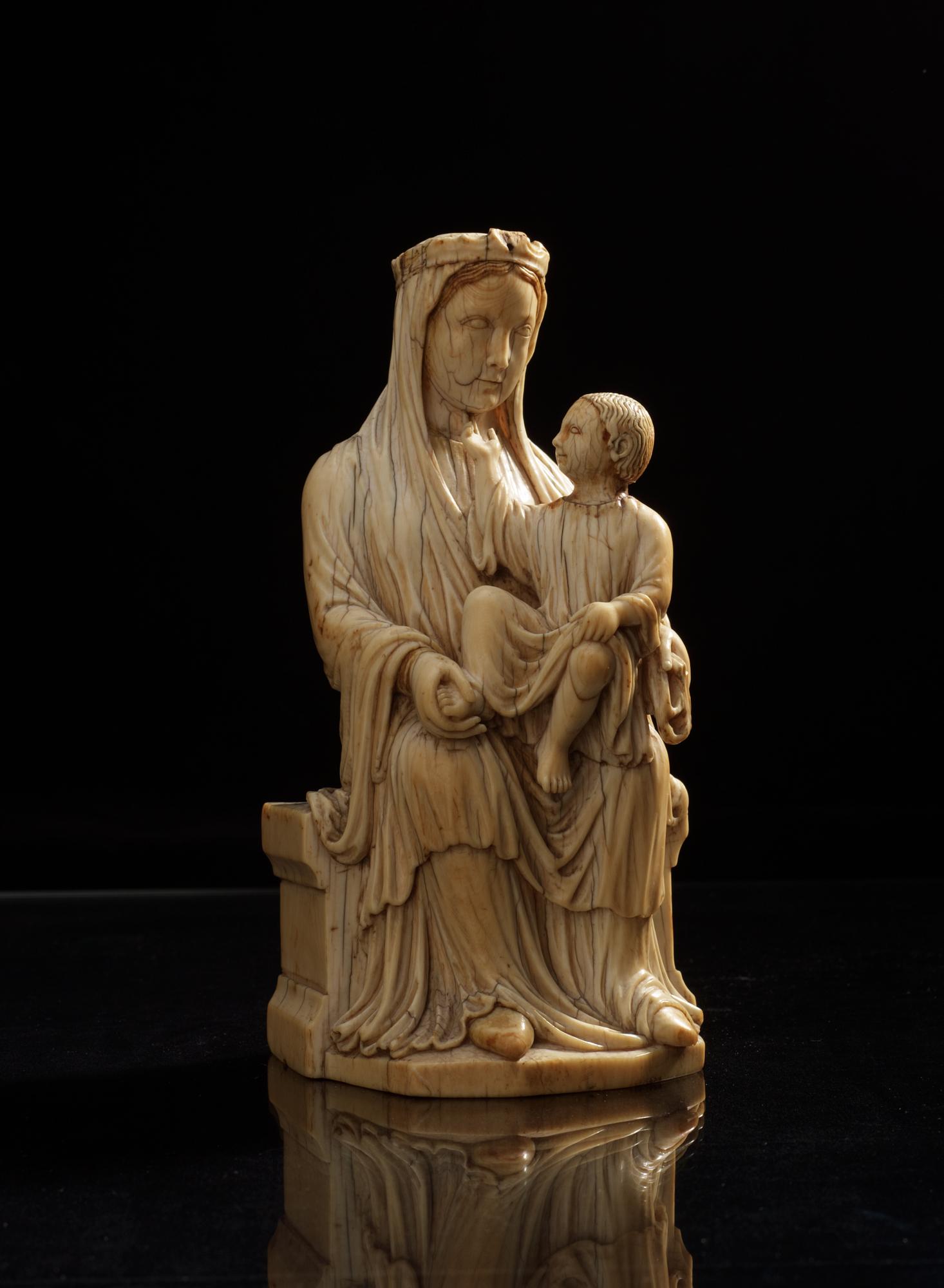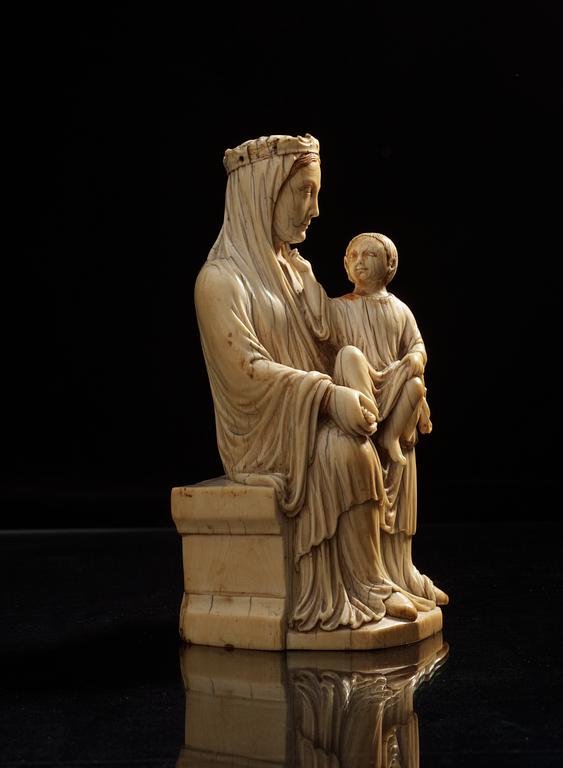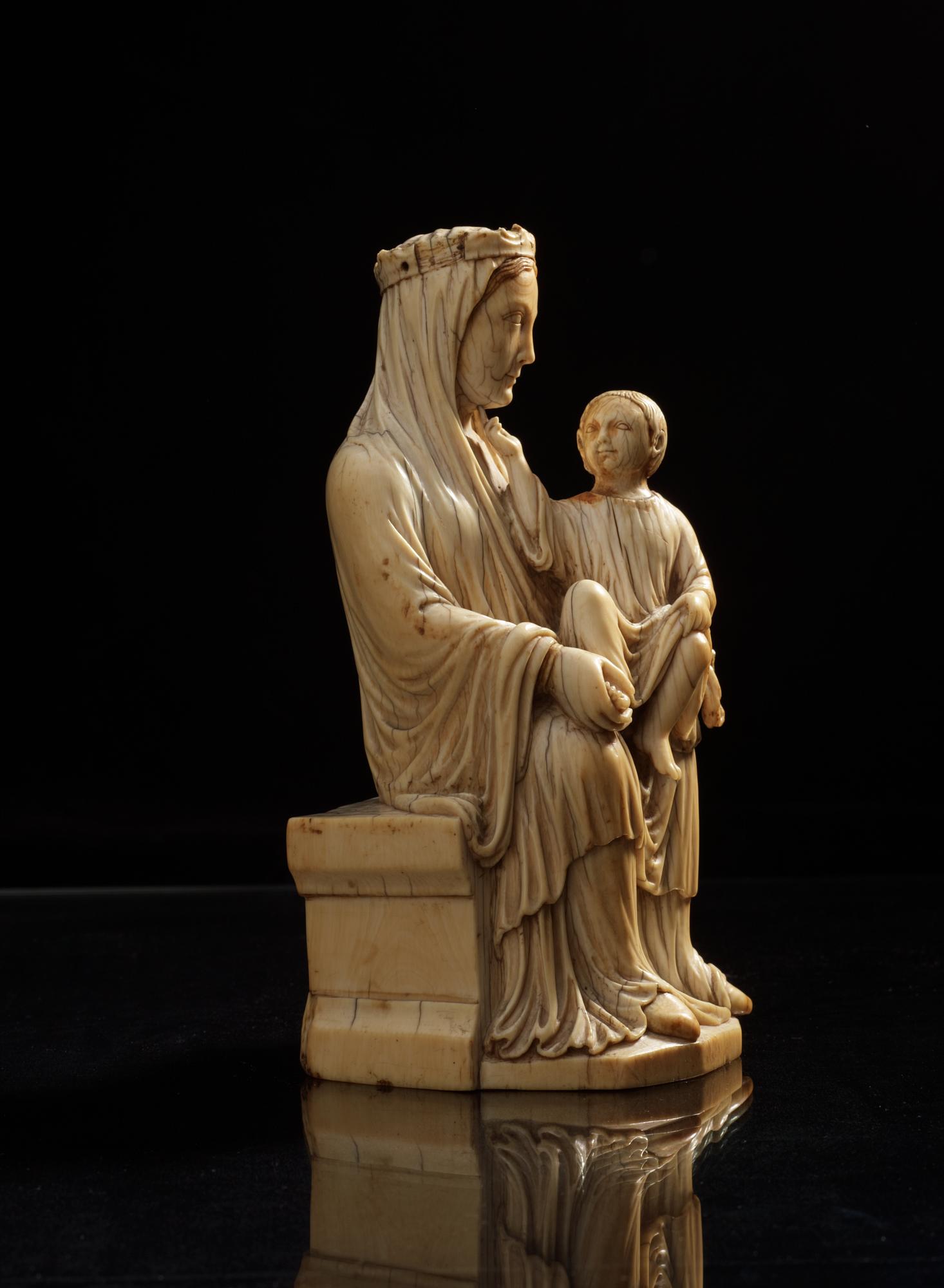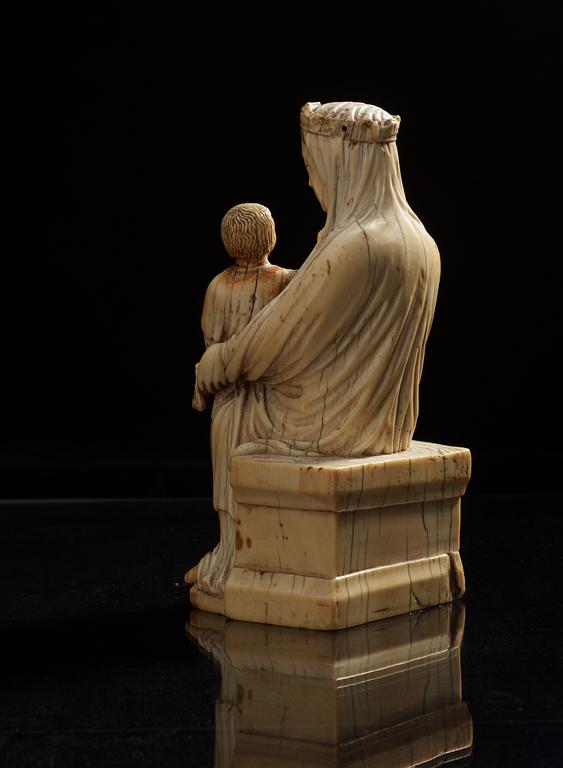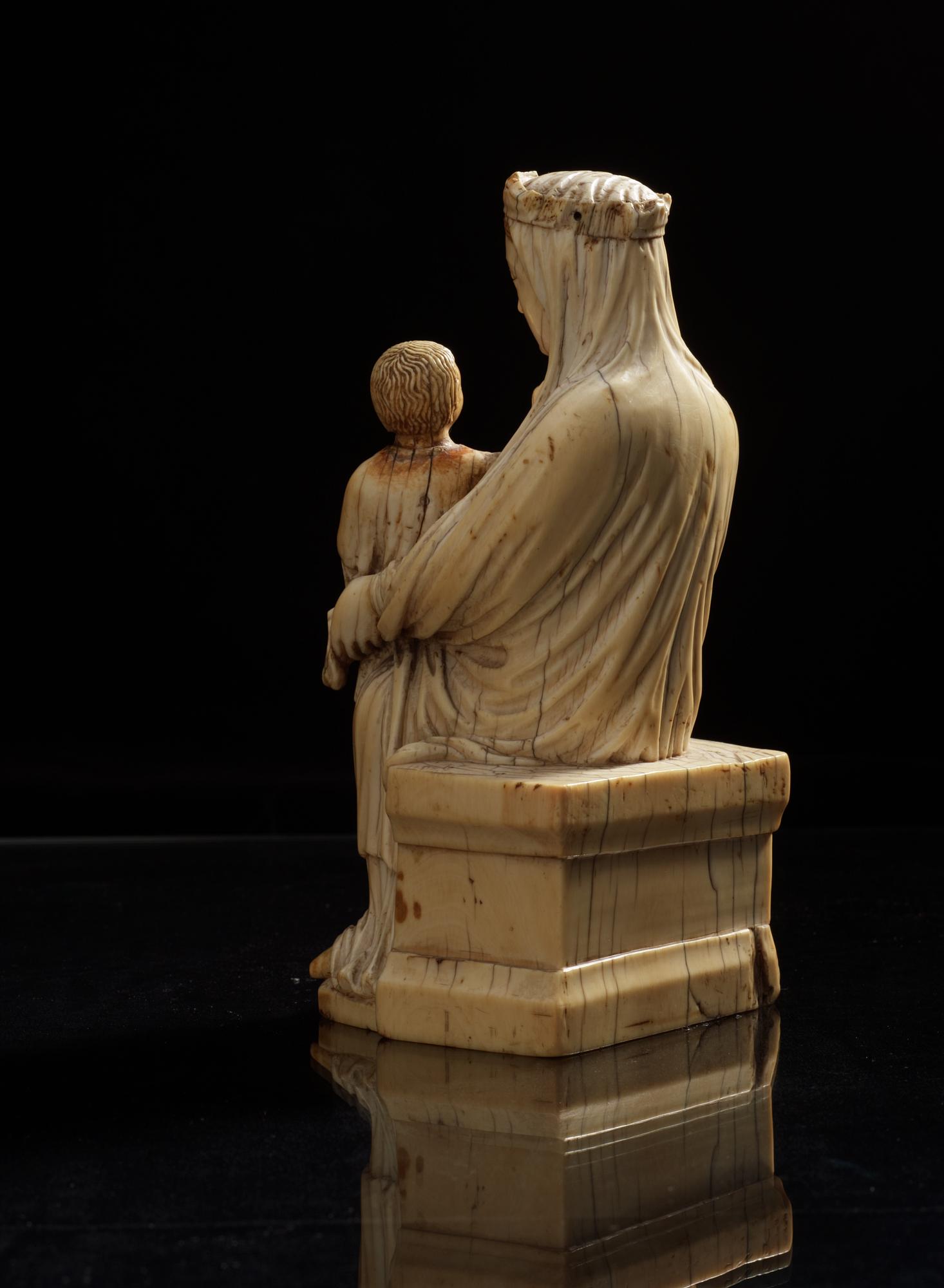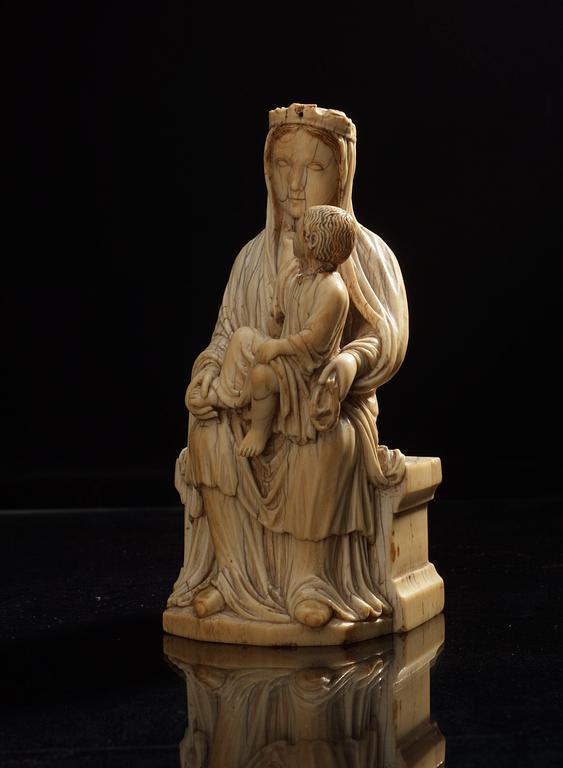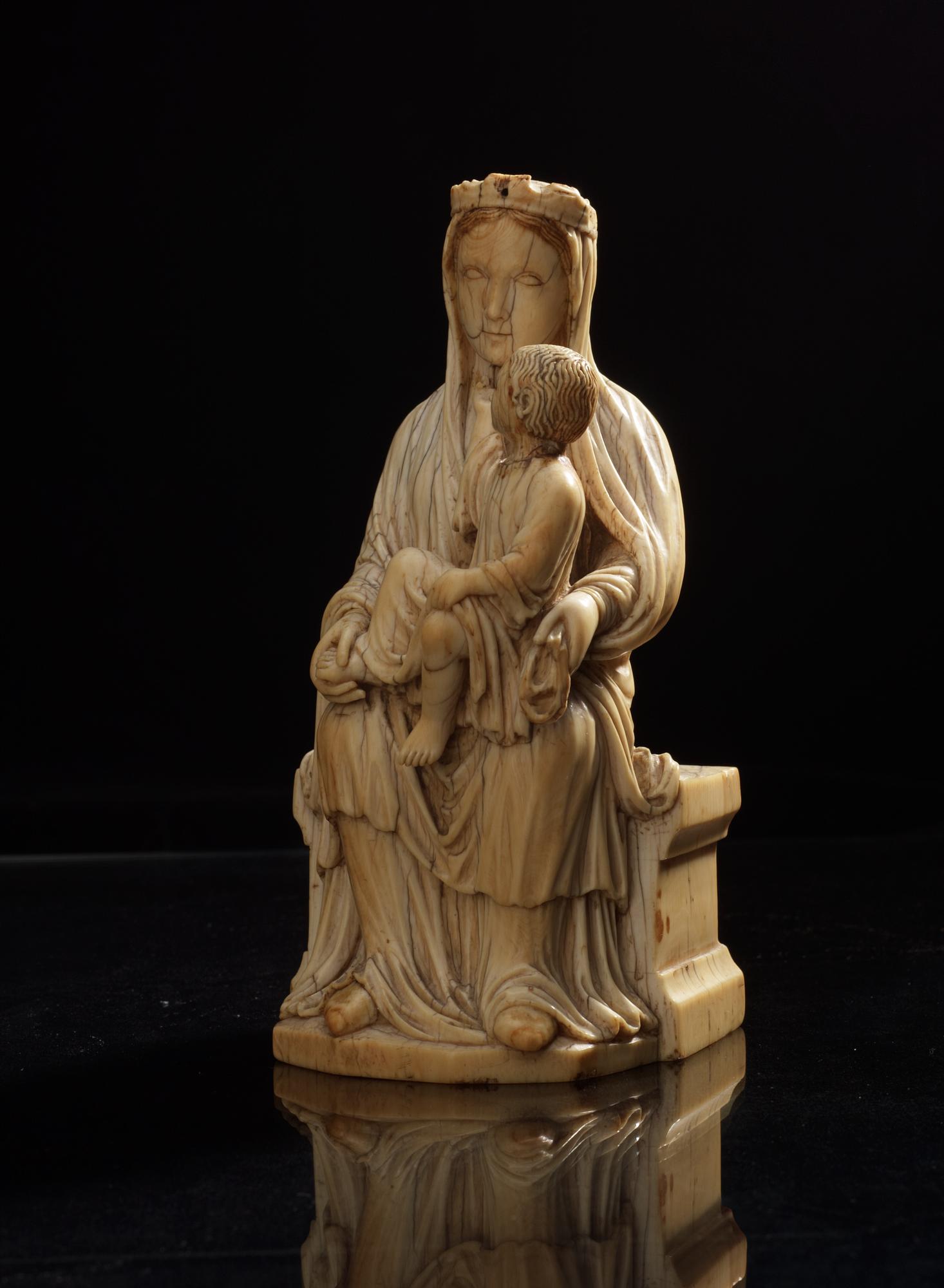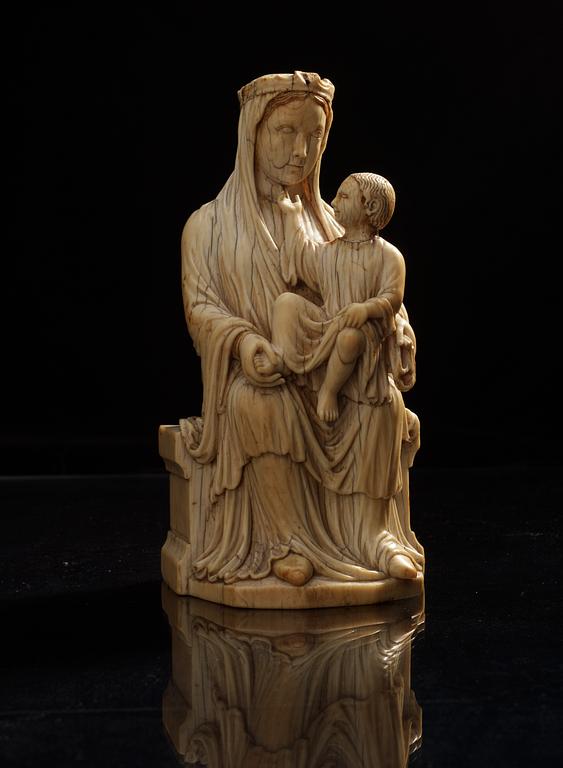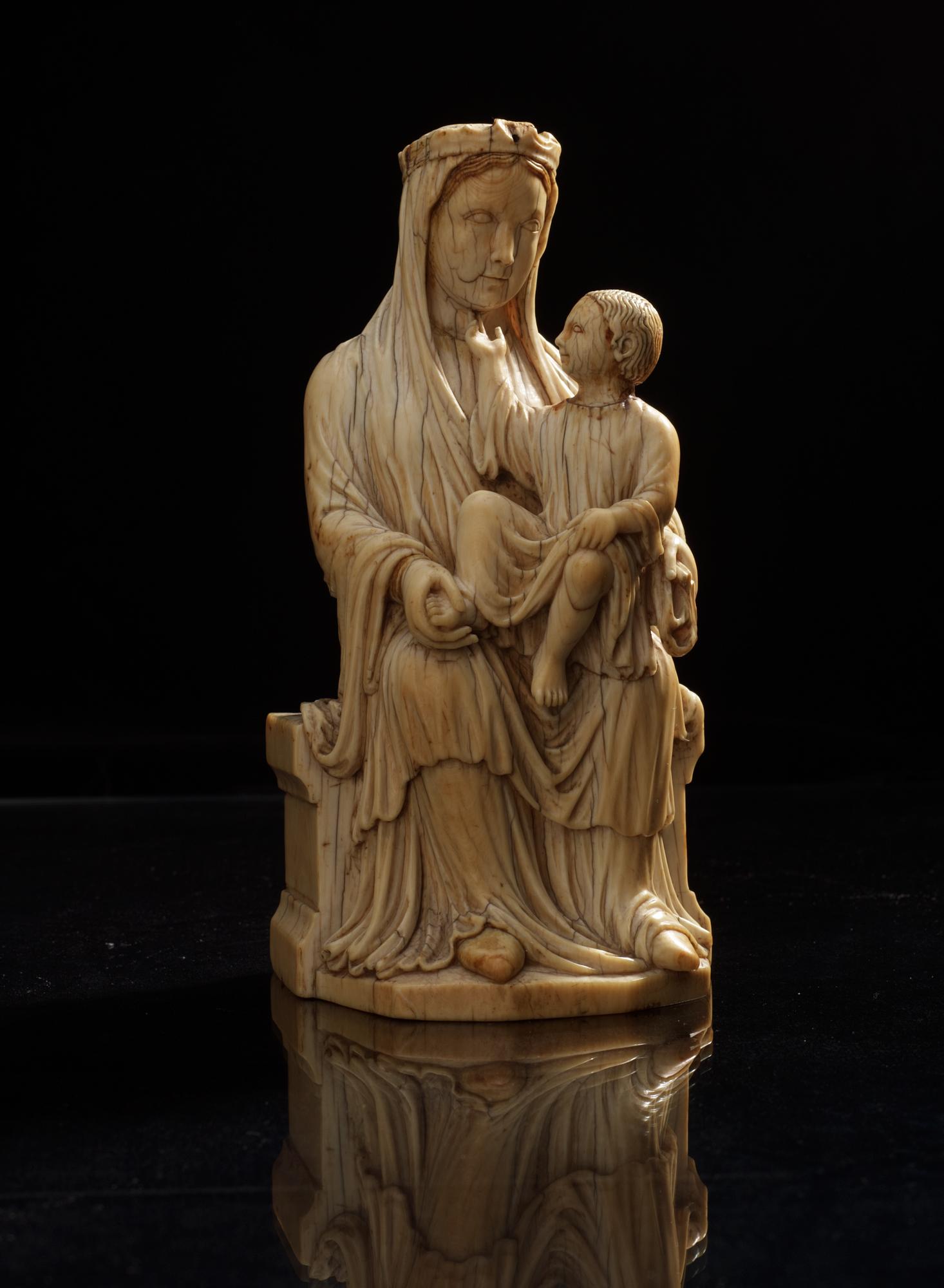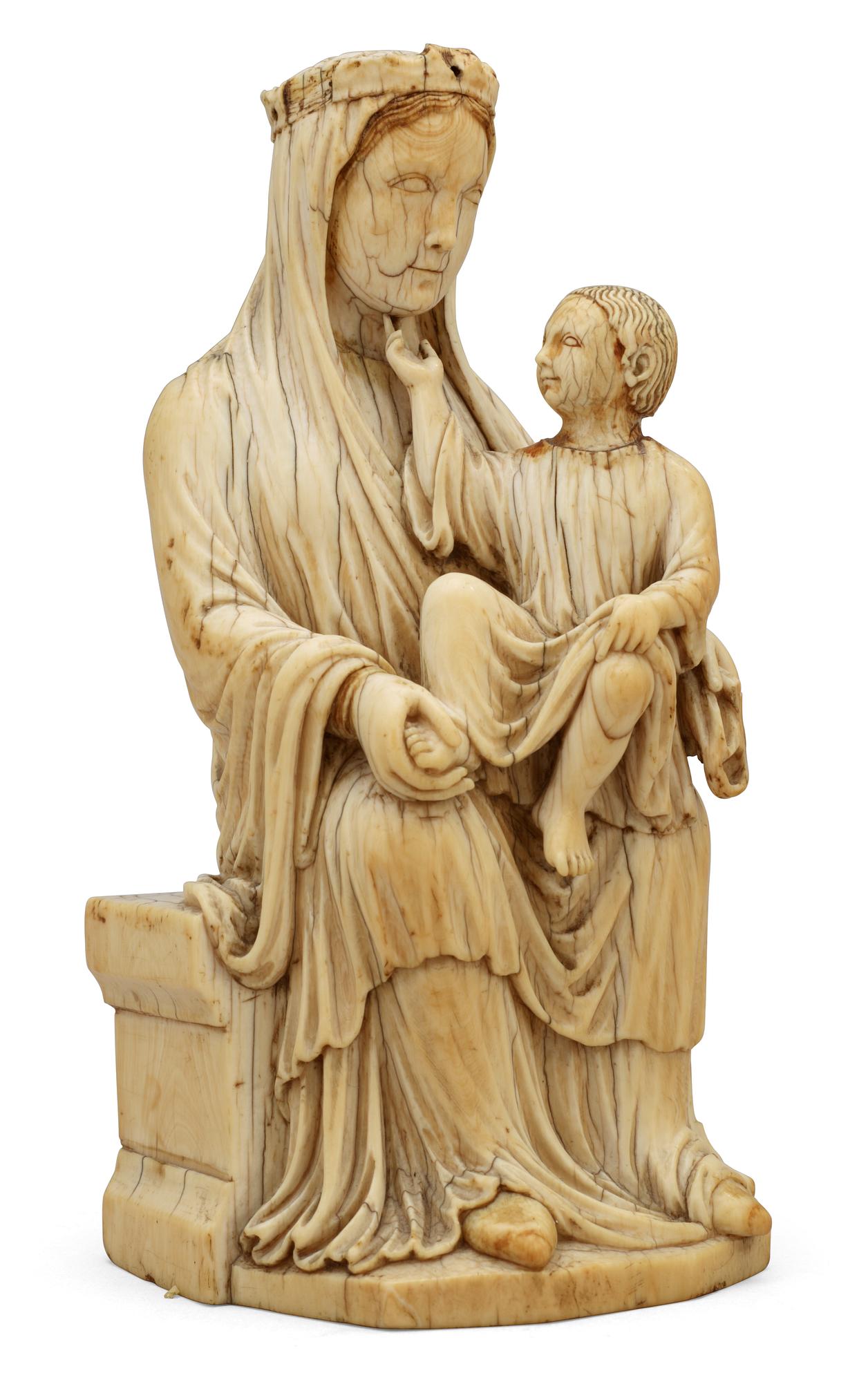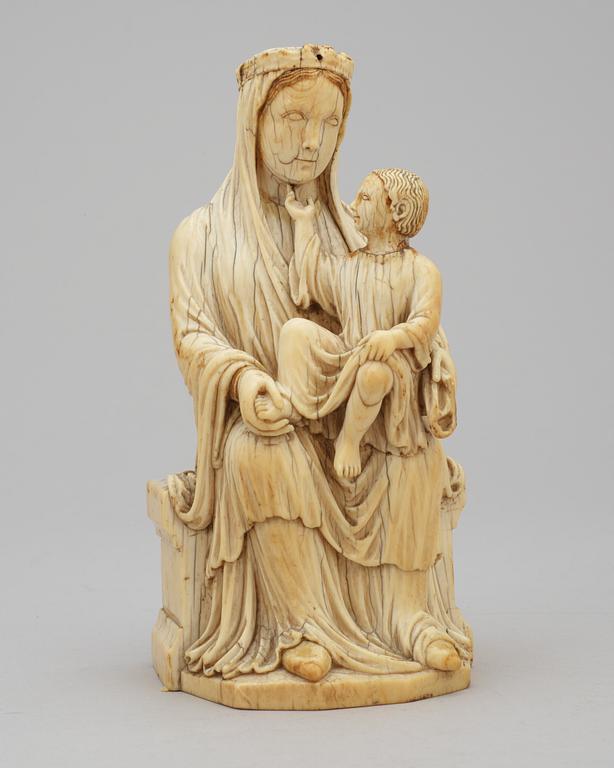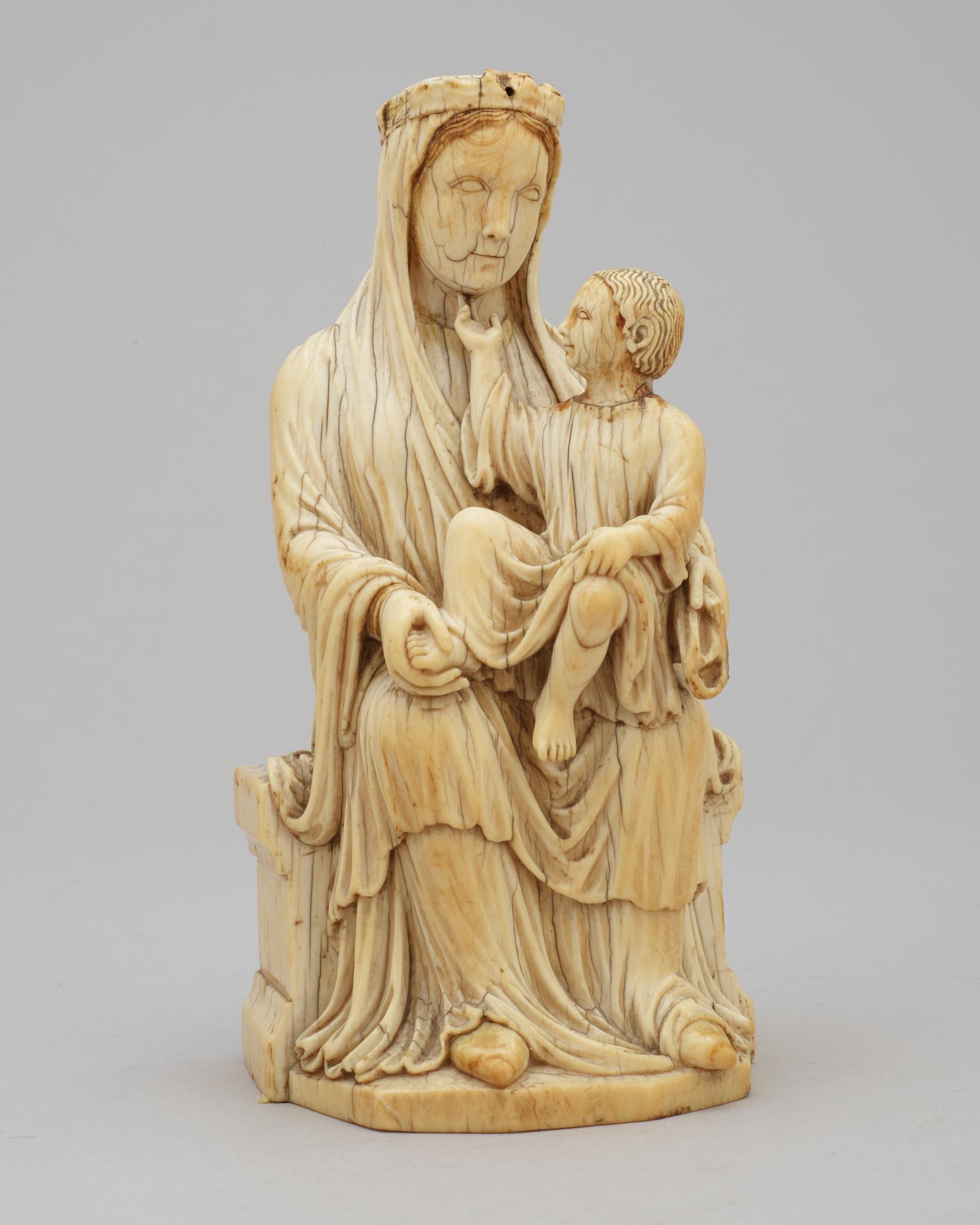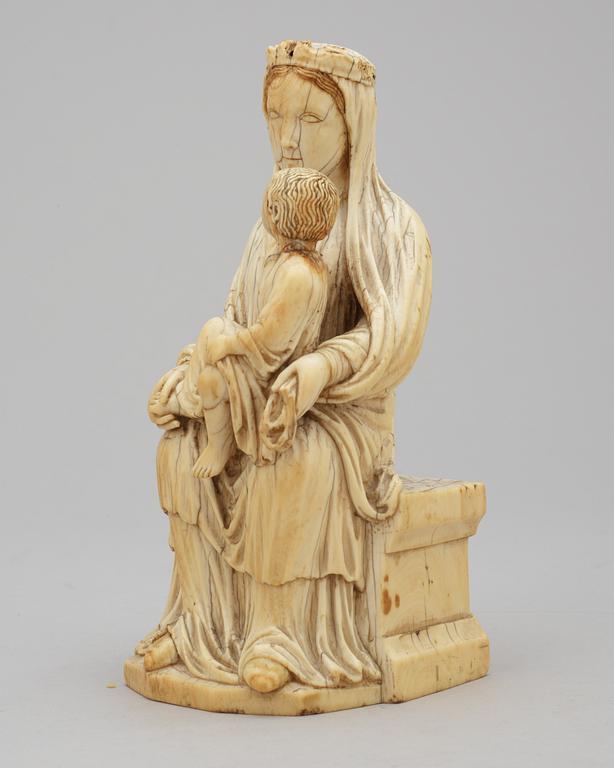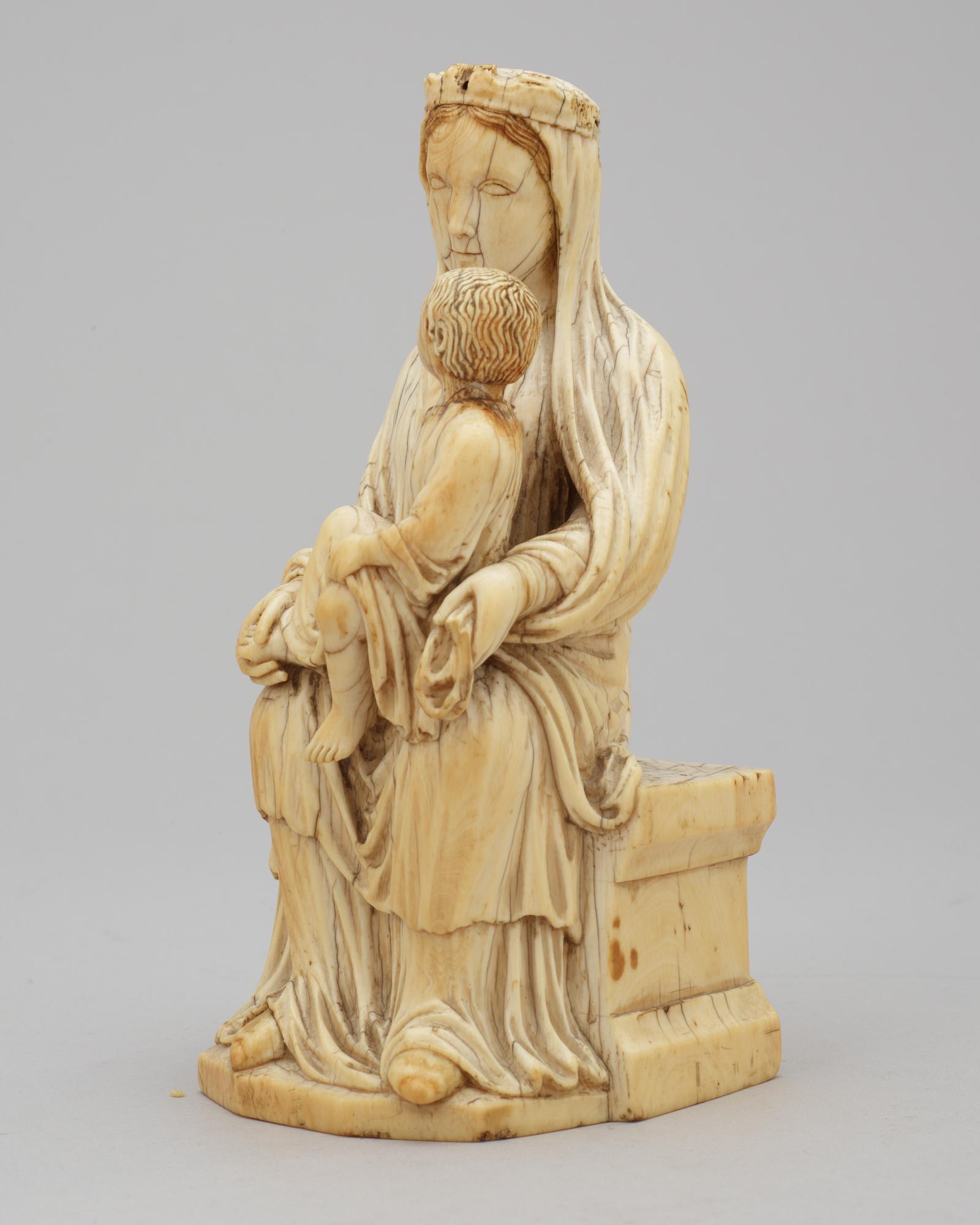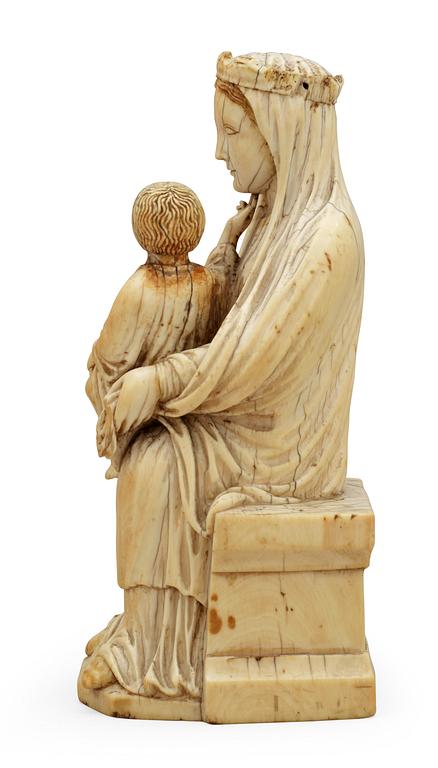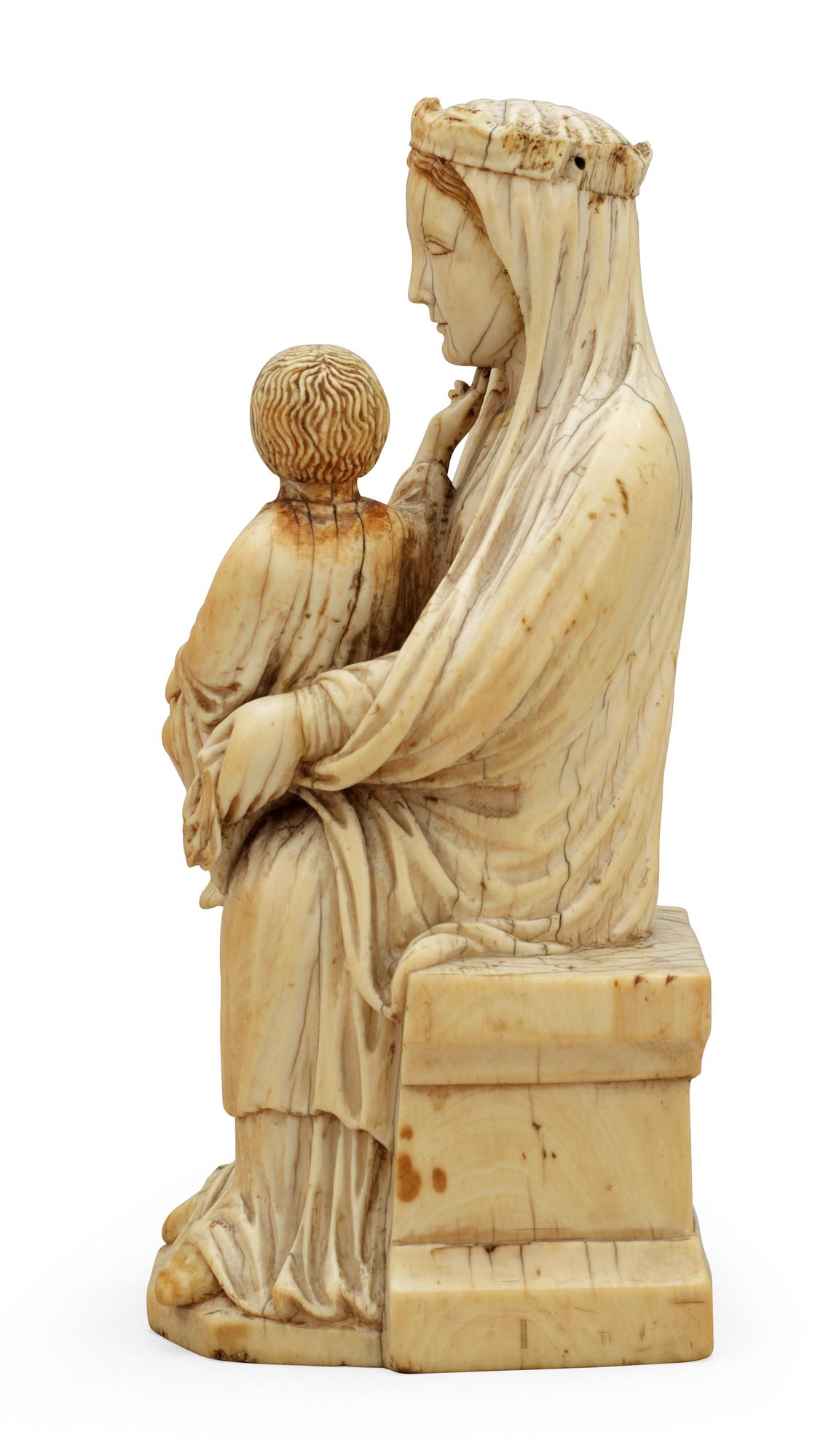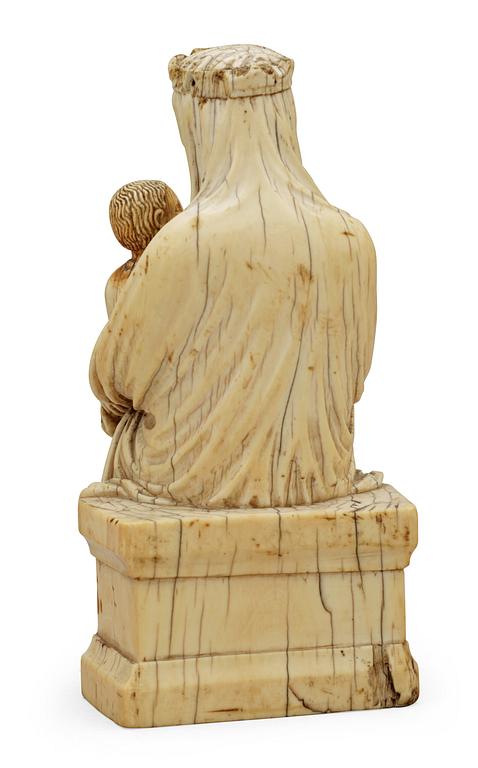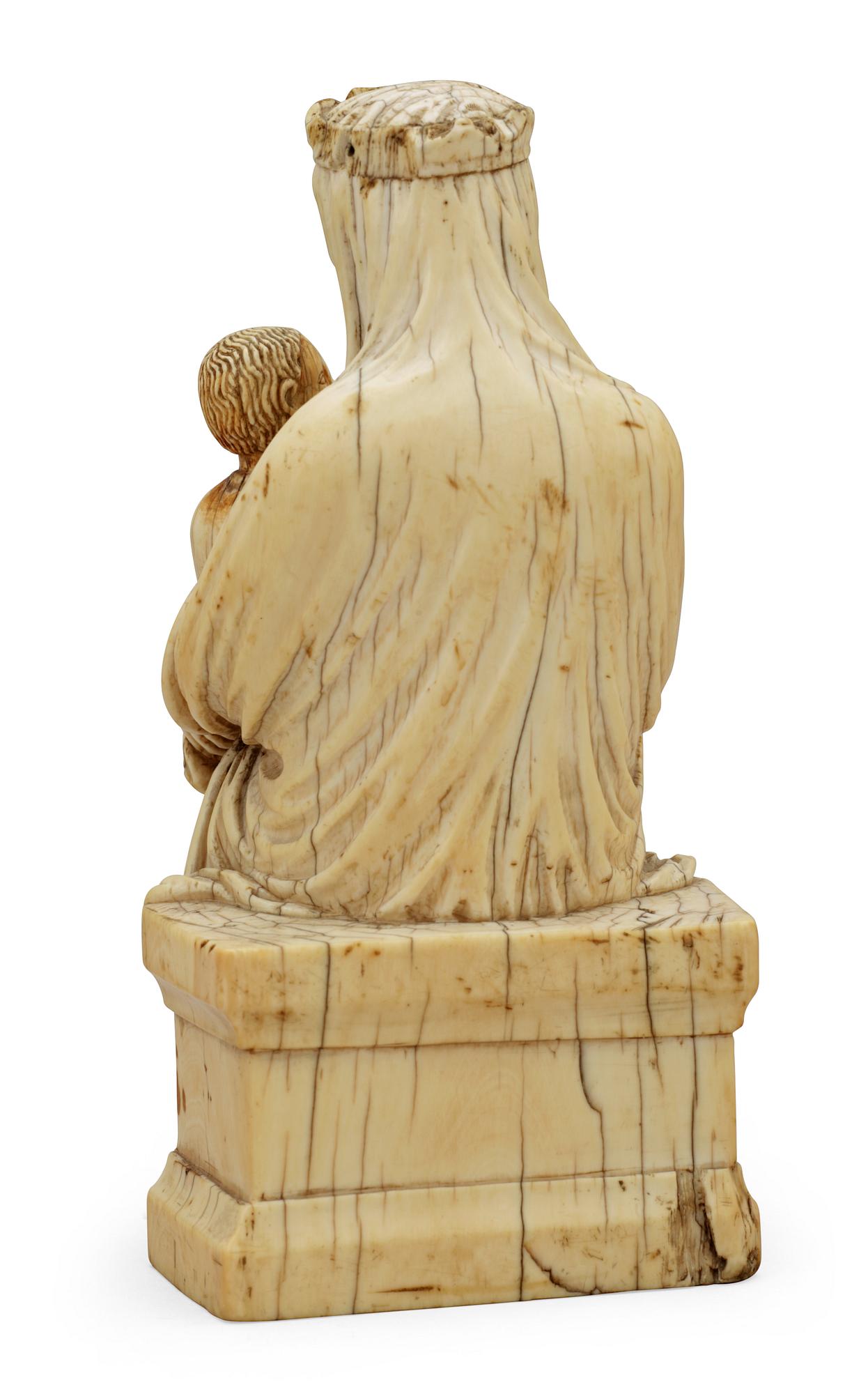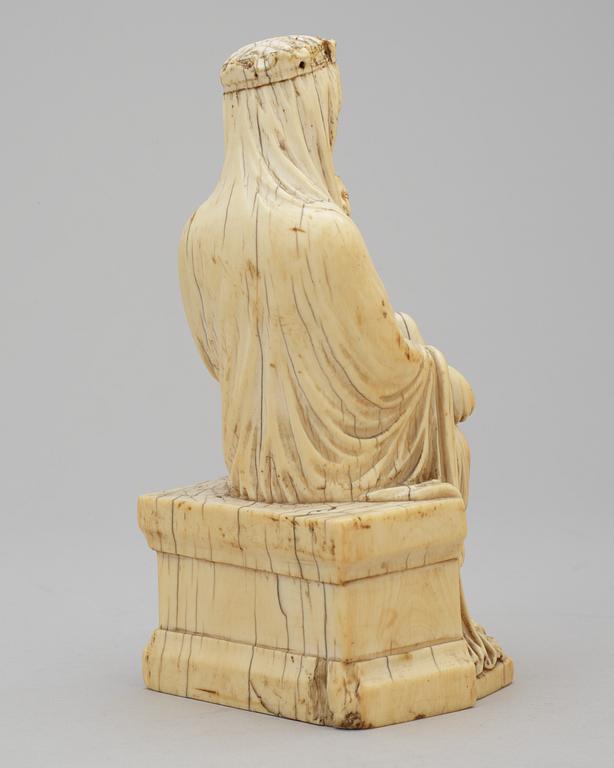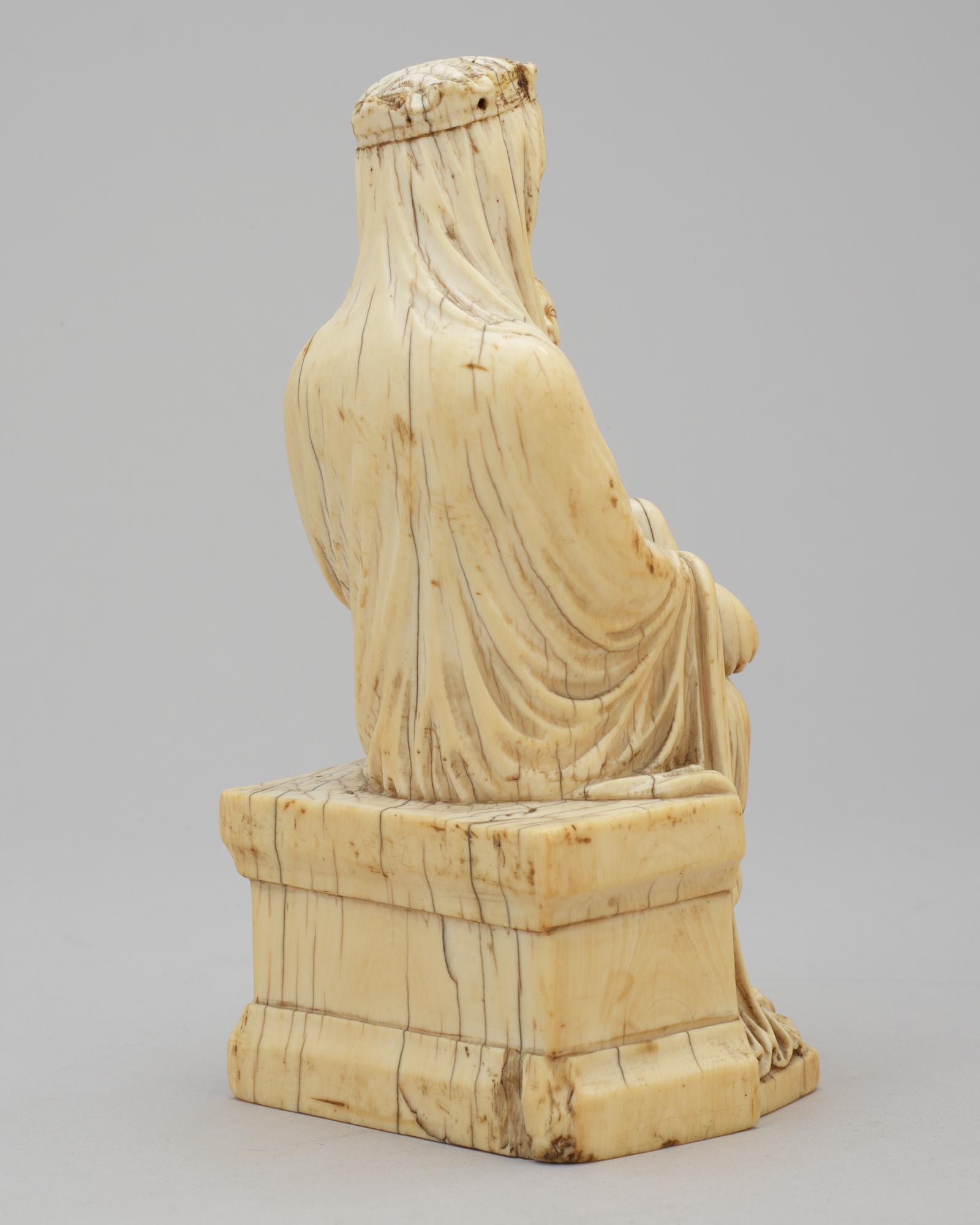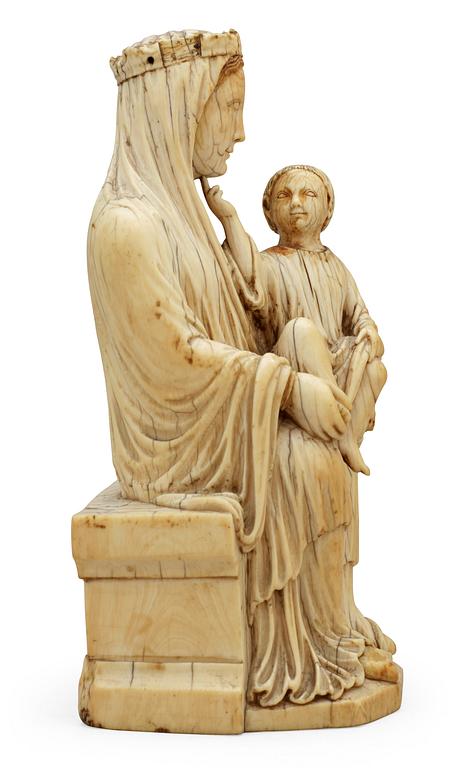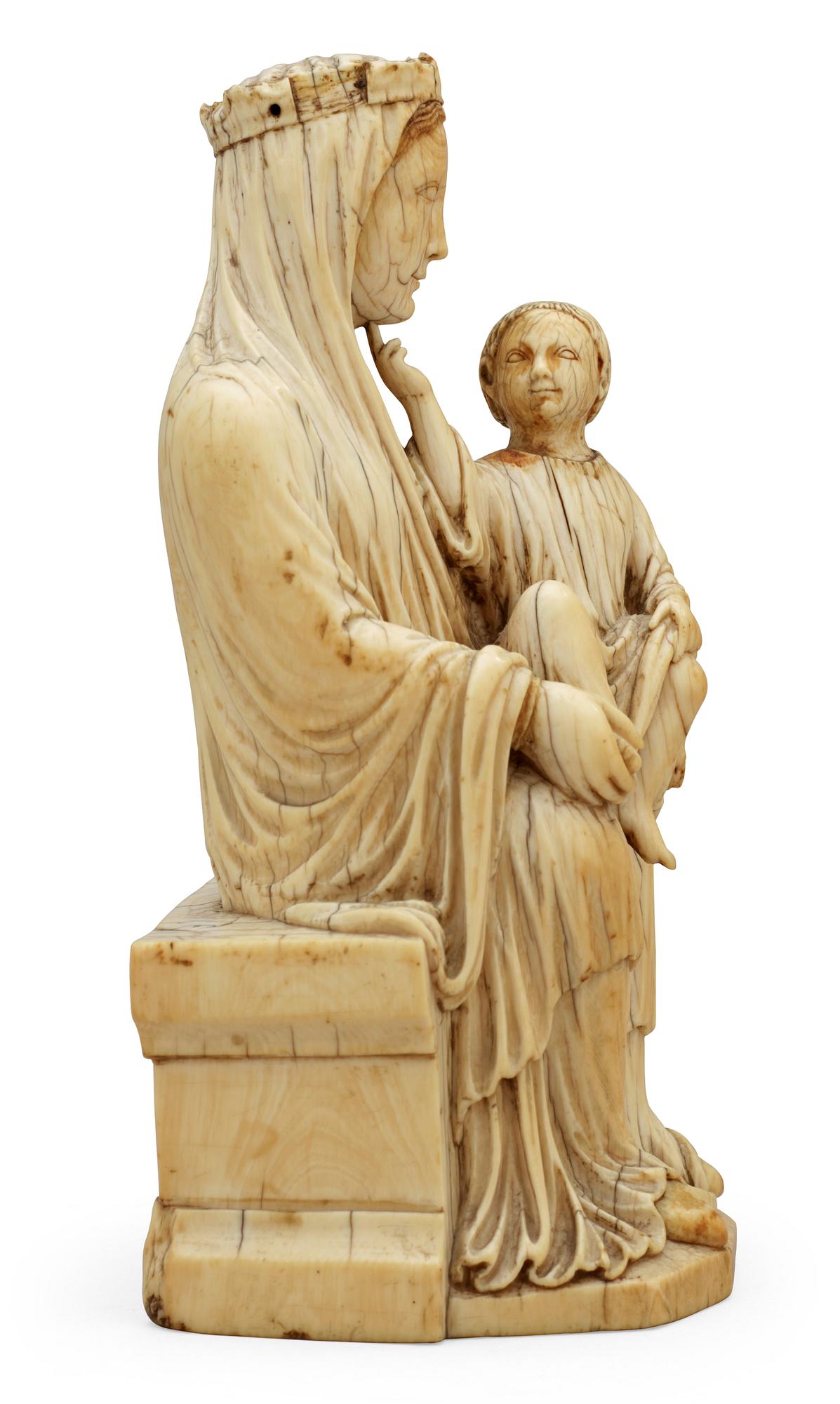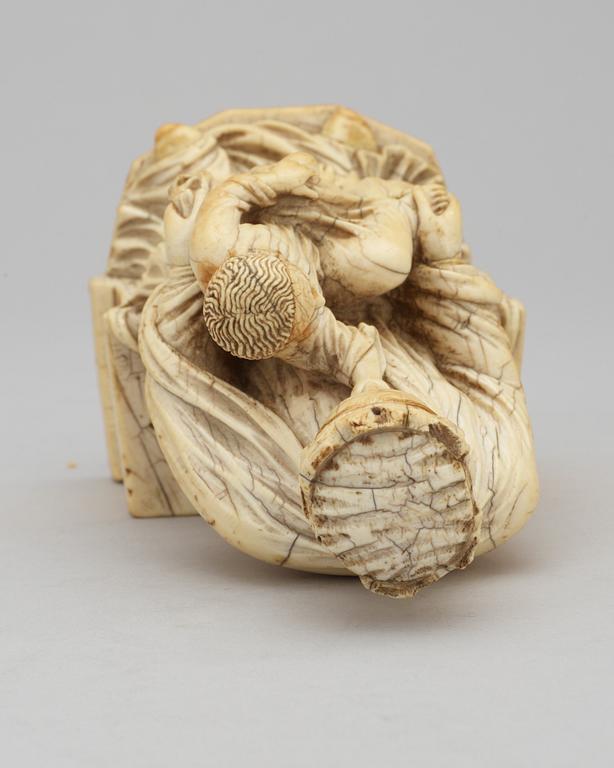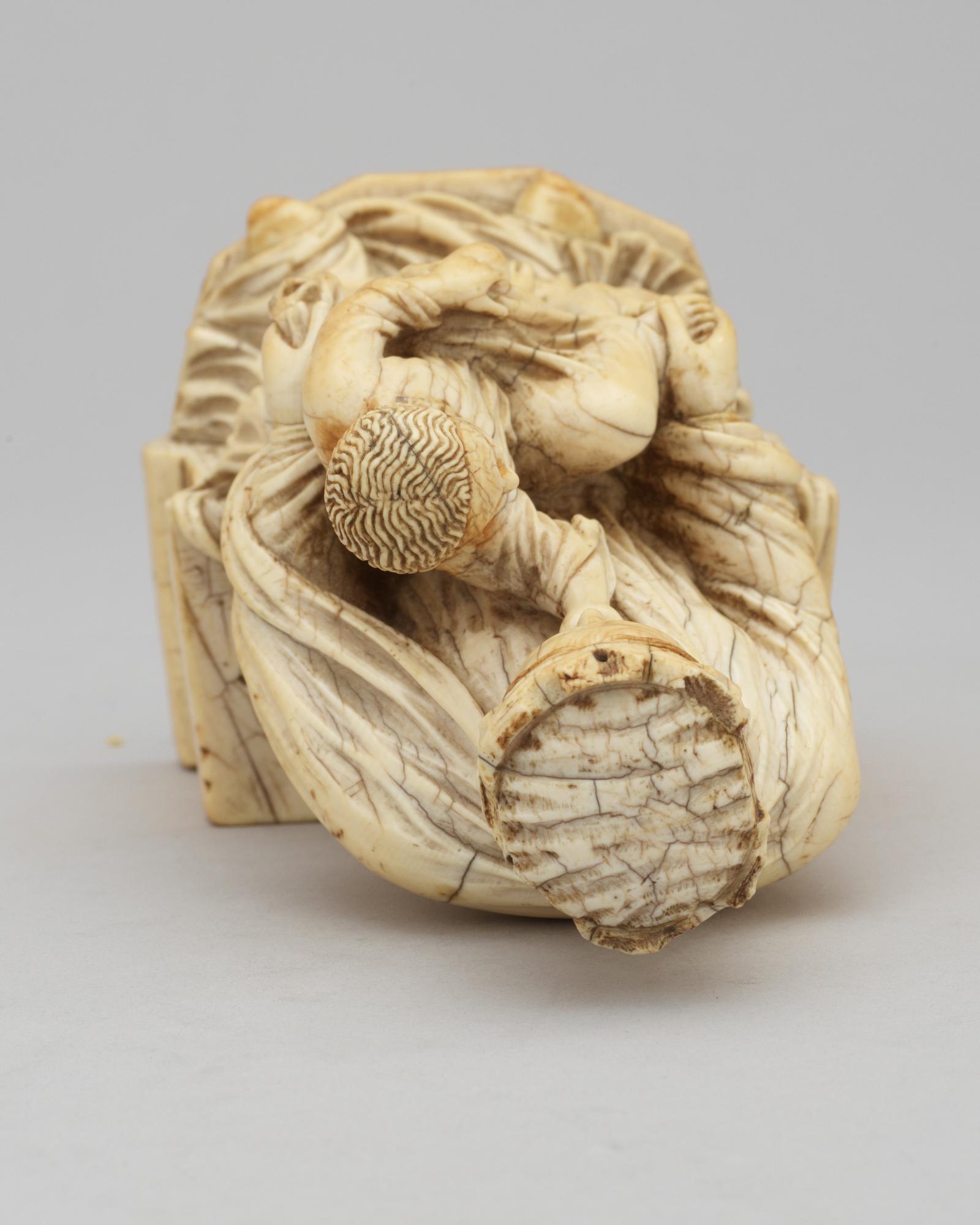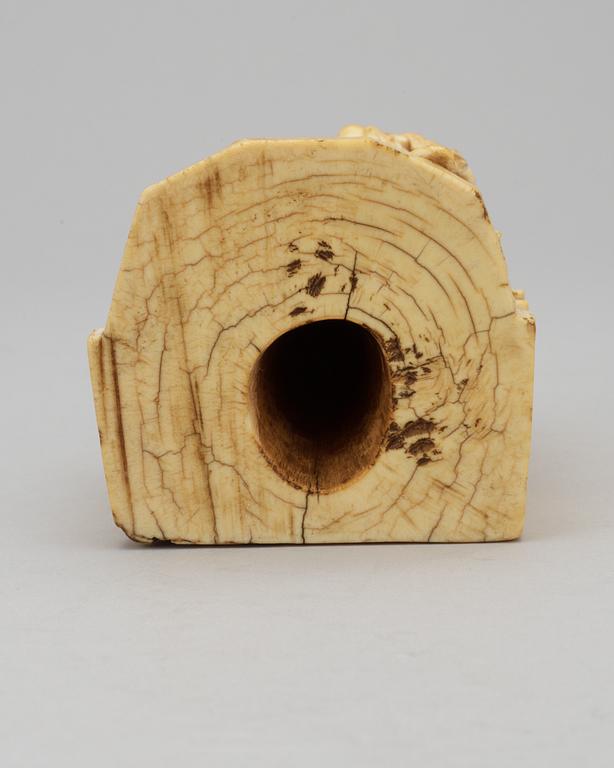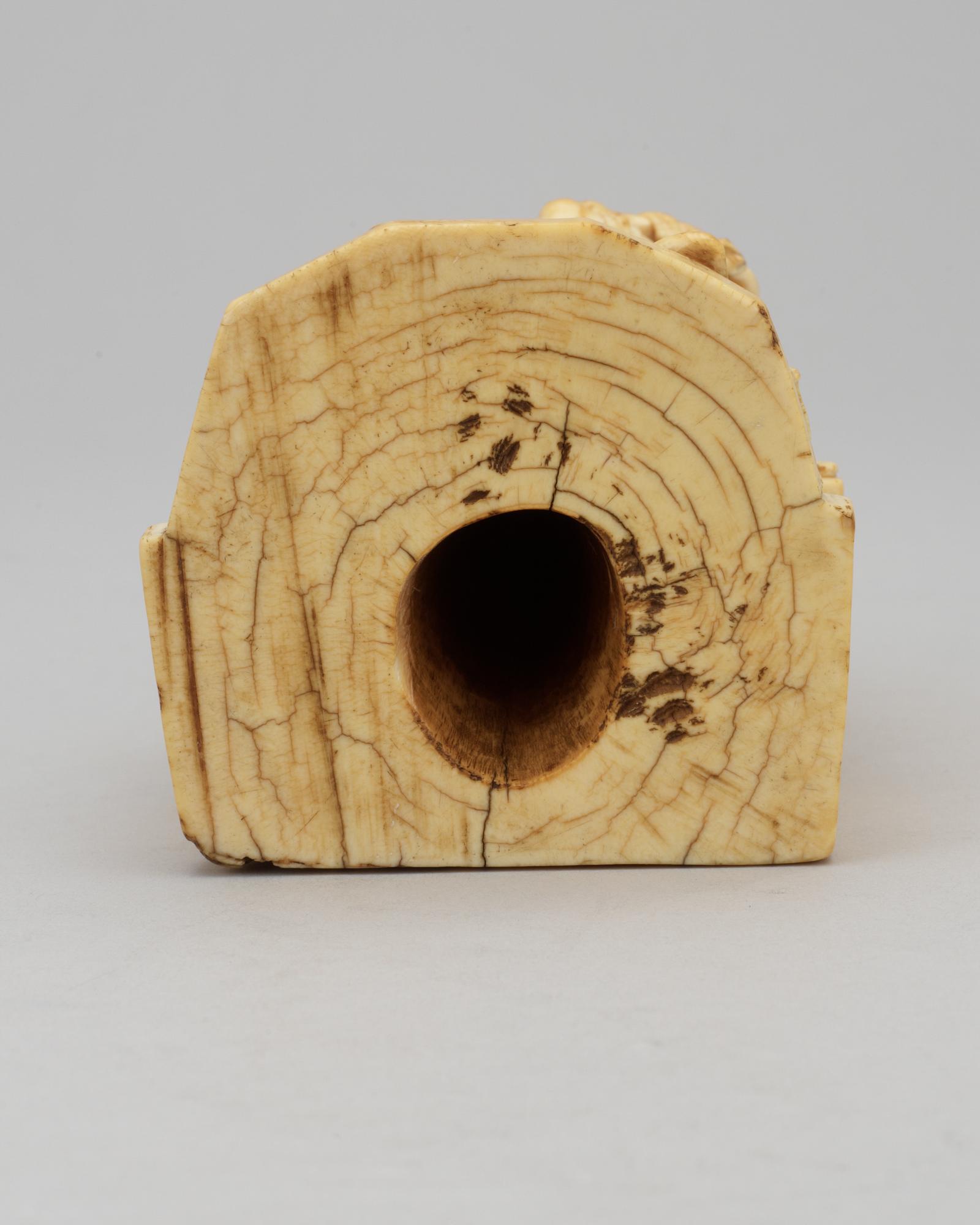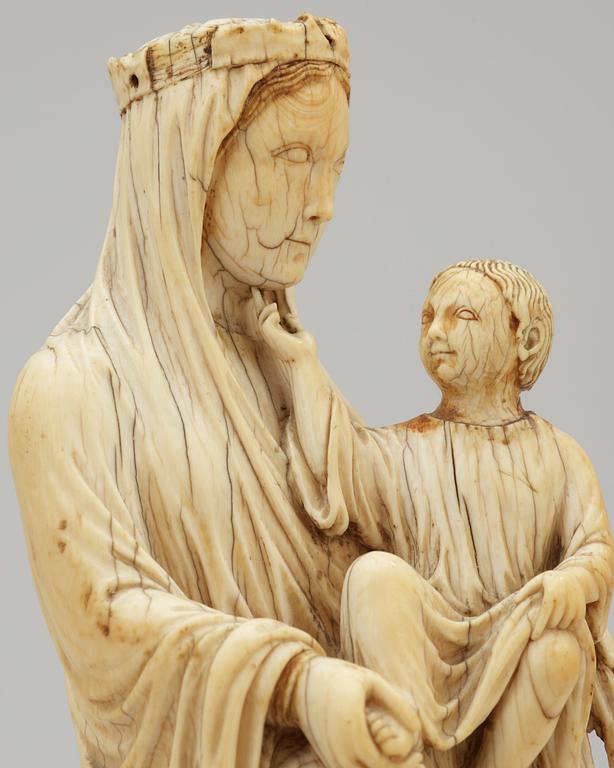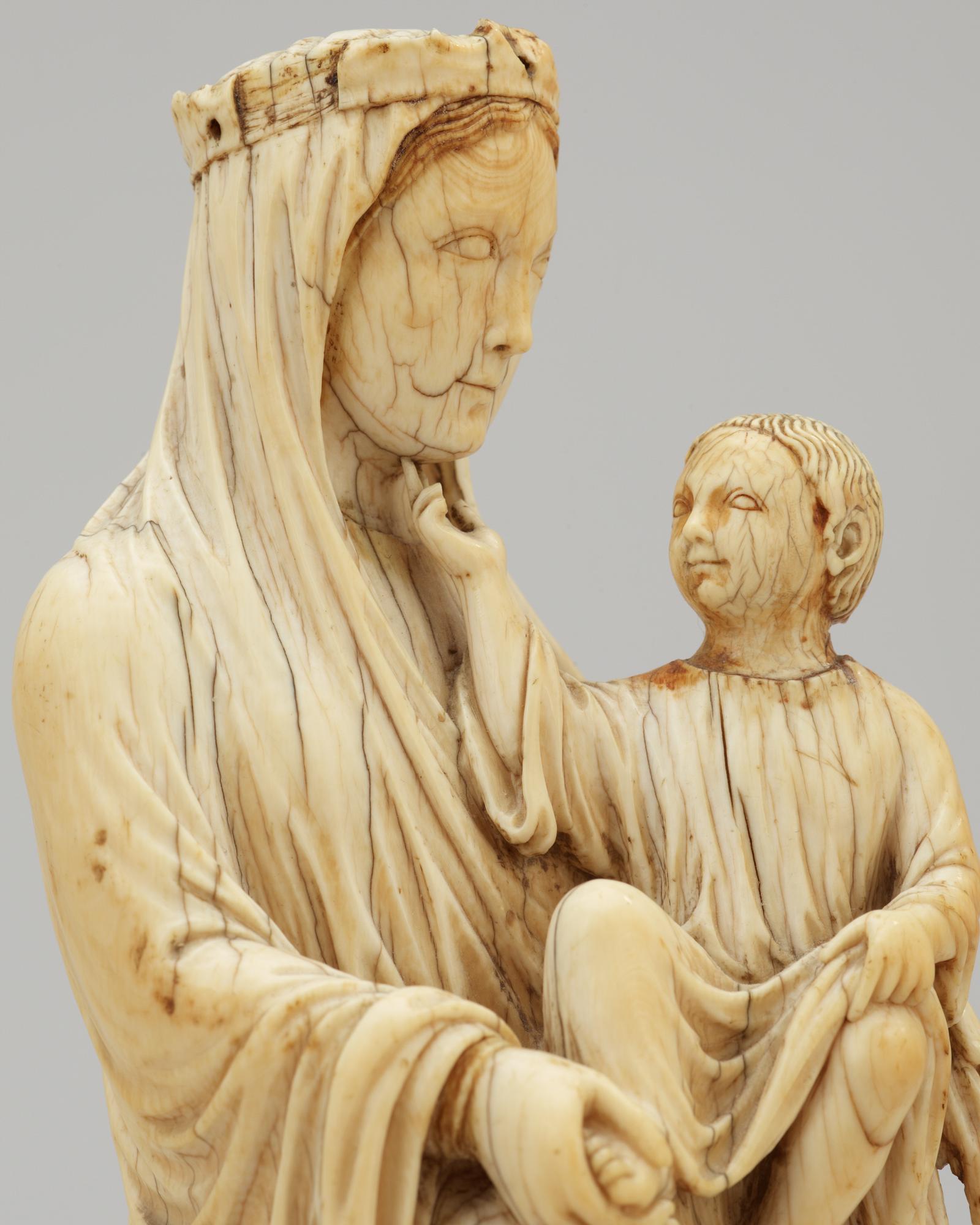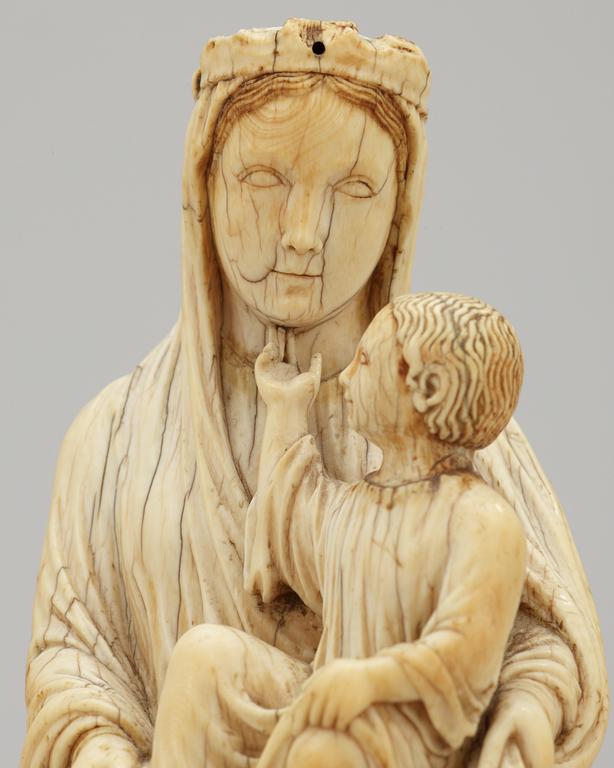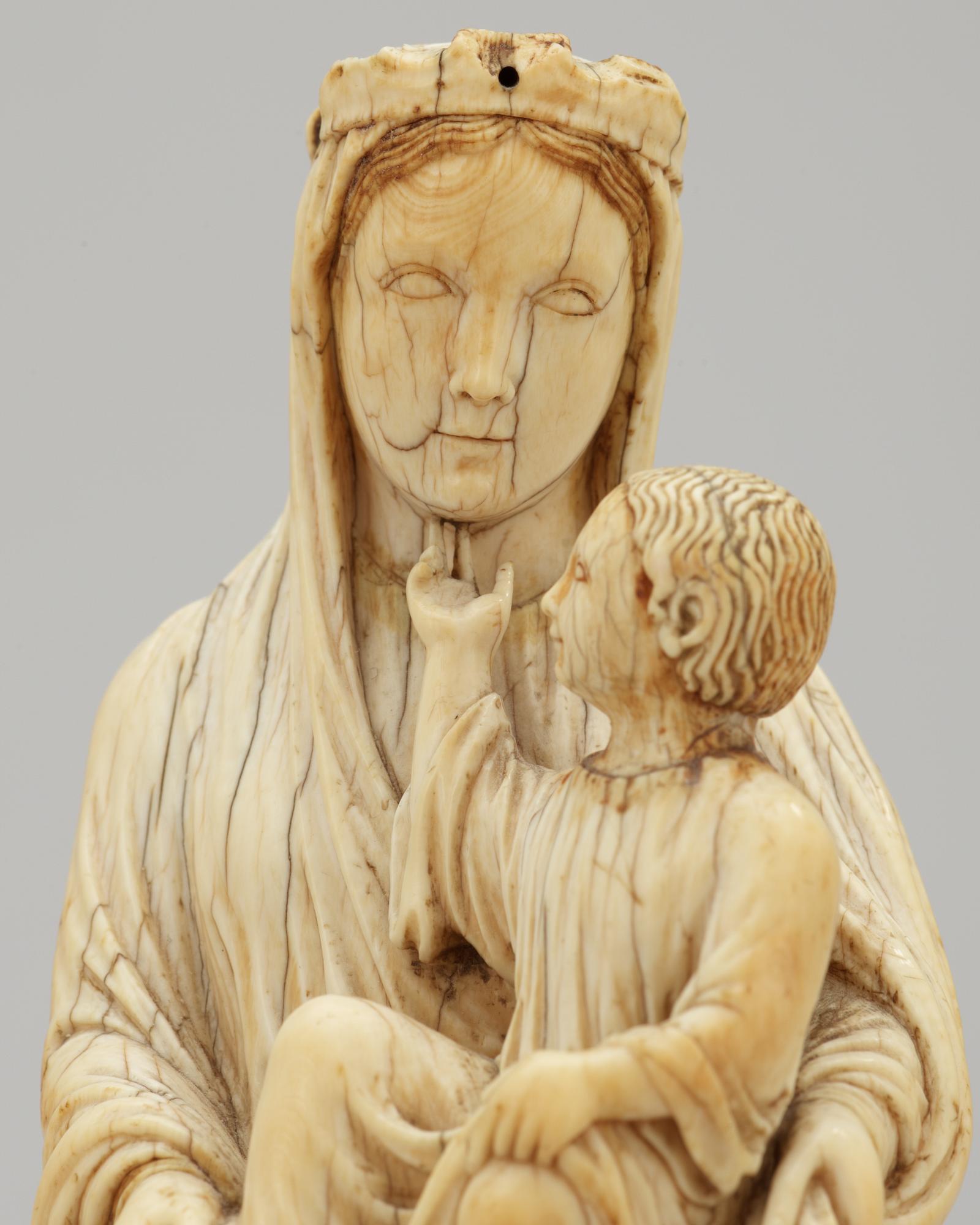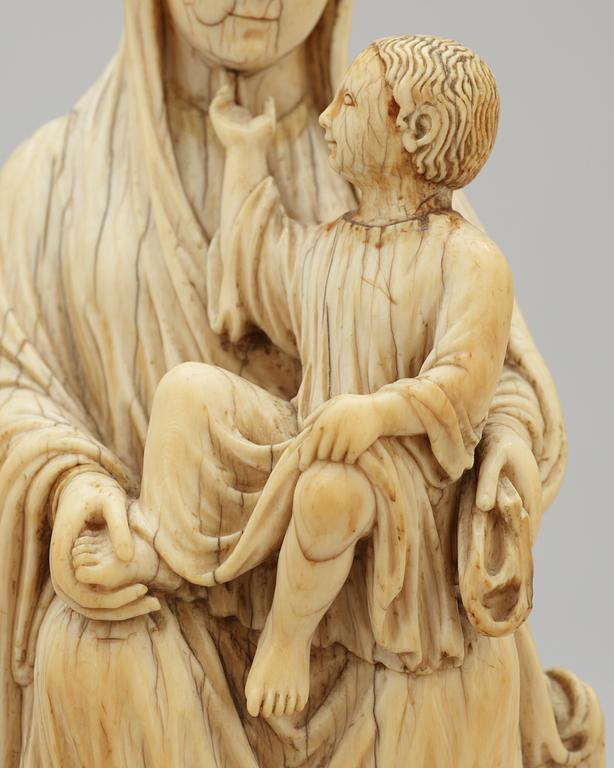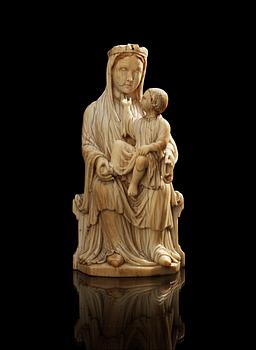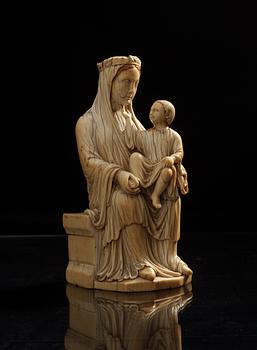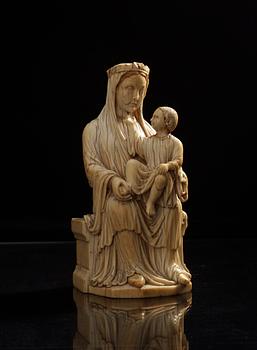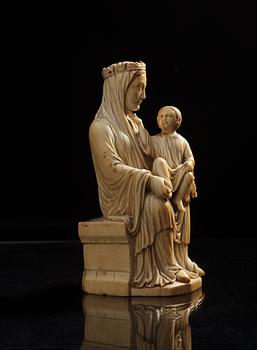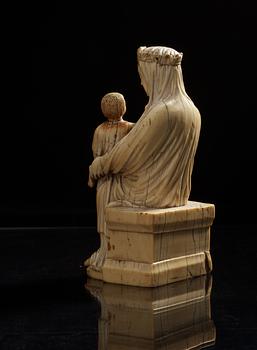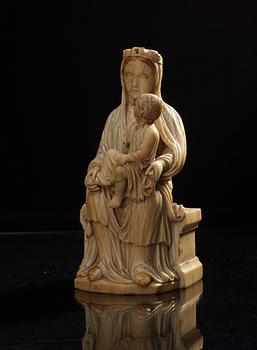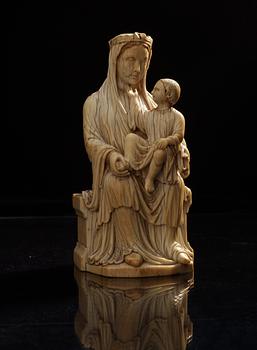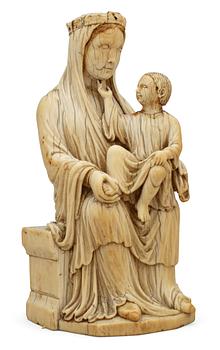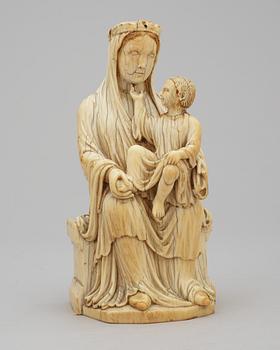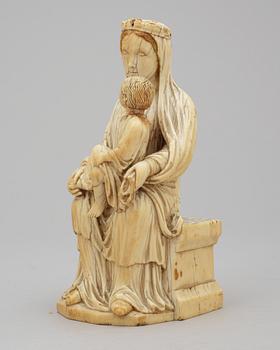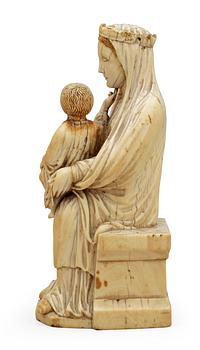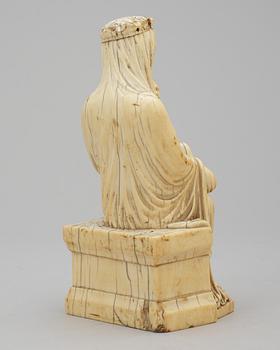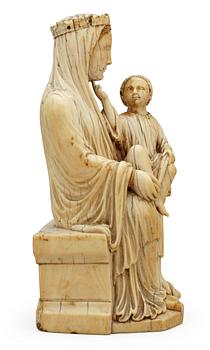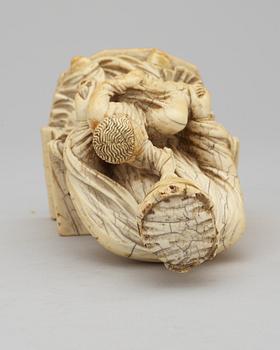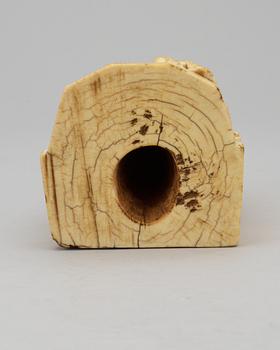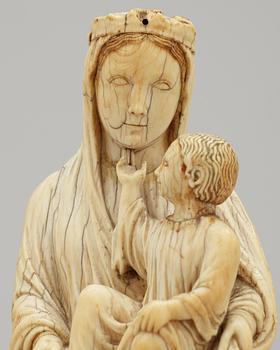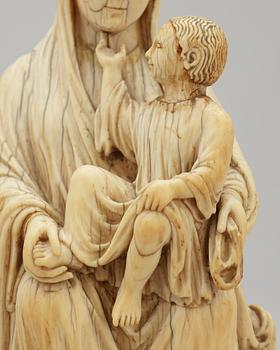
Height 18 cm.
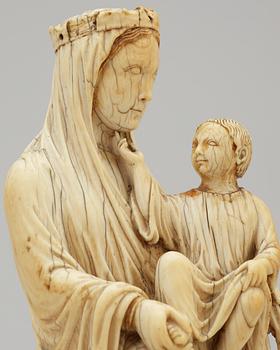
Damages, the Child's head with repair.
Provenance
Acquired by the present owner's grandmother from Beata Brummer, married to the art dealer and collector Joseph Brummer (1883-1947).
Literature
Gaborit-Chopin, Danielle, Ivoires médiévaux Ve-XVe siècle, Musée du Louvre, Paris 2003, compare fig. 92, page 274-276.
Carl F. Barnes Jr, The Portfolio of Villard de Honnecourt, A New Critical Edition and Color Facsimile, Ashgate 2009, compare the rich drapery, folio 3v, color plate 9.
More information
The earliest Gothic ivory objects were produced in the middle and second half of the 13th century. Paris and Île-de-France became the centre of ivory production. This dominance was to last more than a century. The earliest productions of the Paris ivory workers fall into two categories - three dimensional sculpture and diptychs/triptychs. The sculptures were often small in size (generally about 10 to 20 cm). The Book of Trades by Etienne Boileau from 1260 gives us important information about the ivory carvers guilds. They were divided into different corporations depending on their productions. The largest group carved ivory figures and plaques. Other groups specialized in the production of mirror-cases, combs, knife-handles etc.
The lot 758 has several similarities with an ivory sculpture “Vierge à l’Enfant trônant” (from Meuse around 1220-1230) in the Louvre Museum (OA 10925) - . The Virgin sits on a bench. She wears a crown and a mantle with rich folds over her dress. The Christ Child sits on her left knee. The Child pulls up his shirt and shows his bare knee, meanwhile she holds his bare right foot. The tenderness between them is a reminiscent of the Byzantine tradition called “eleousa”. The elegance of the drapery brings to mind the drawings of figures that can be found in Villard de Honnecourt’s sketch-book from 1225-1250.
The lot 758 comprises a document (2012-03-05) from Uppsala University, Ångströmlaboratoriet, with the result of a 14C dating with probability distribution 95,4%: 1210-1290 AD, 68,2%: 1225-1280 AD.