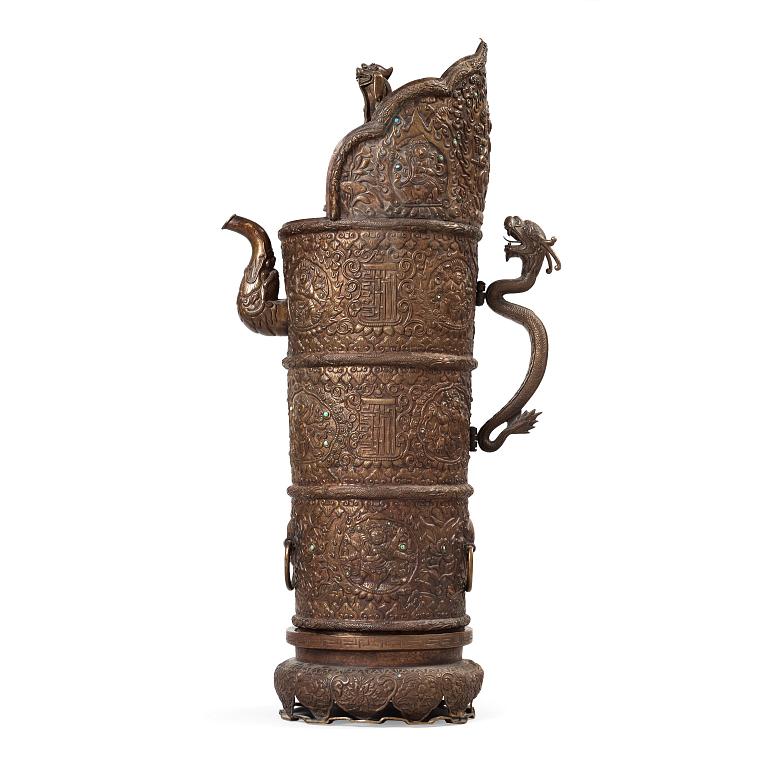
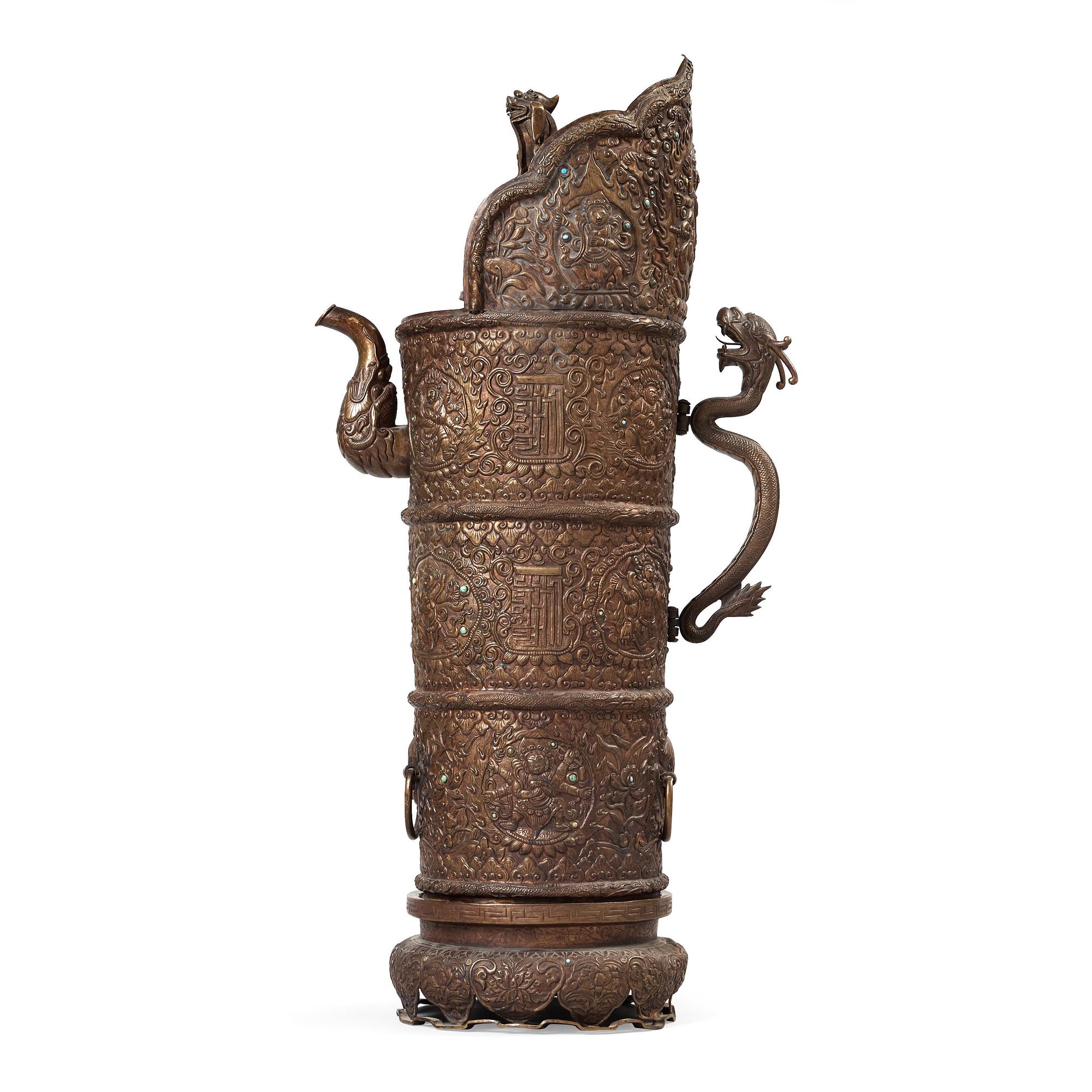
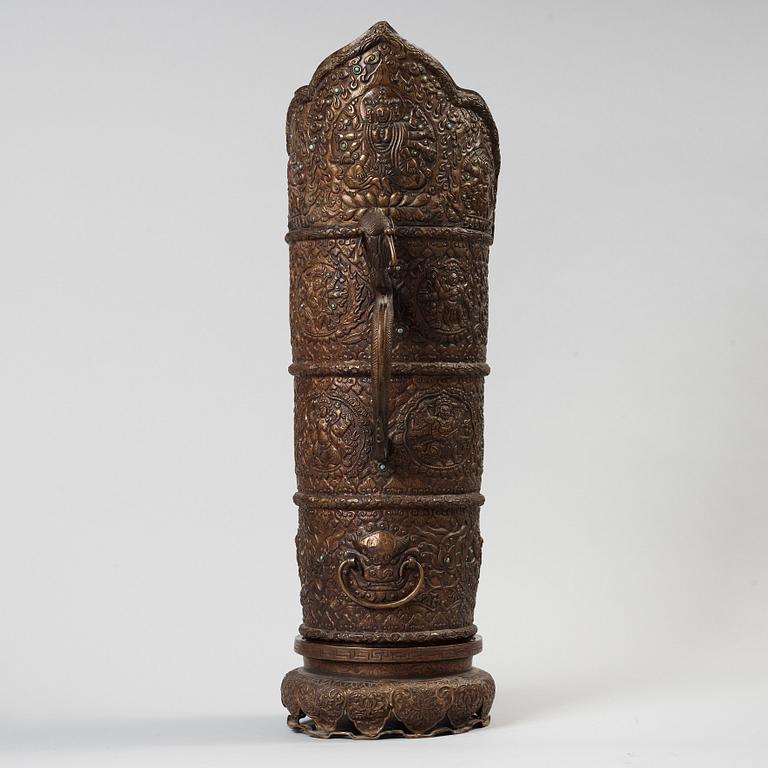
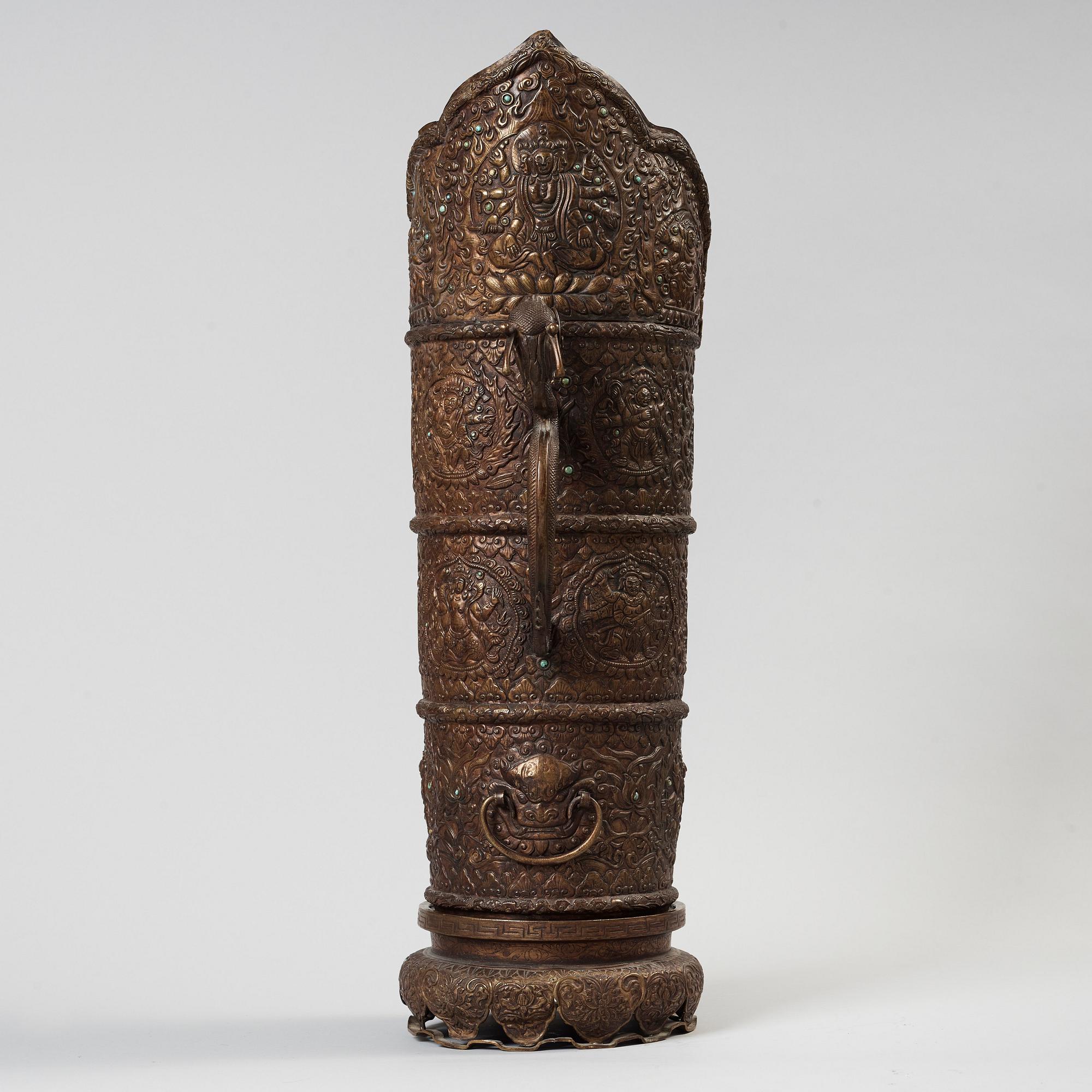
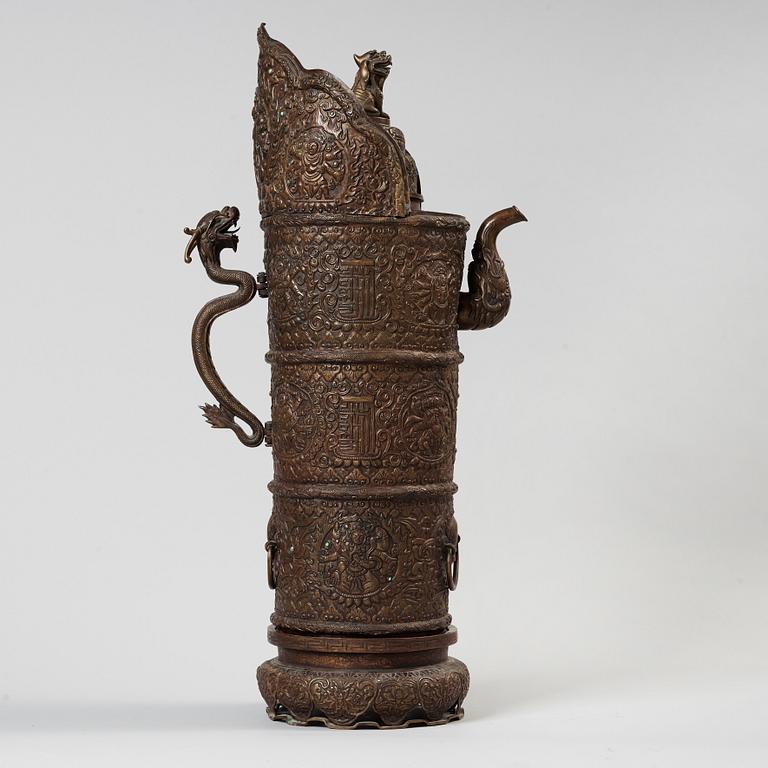
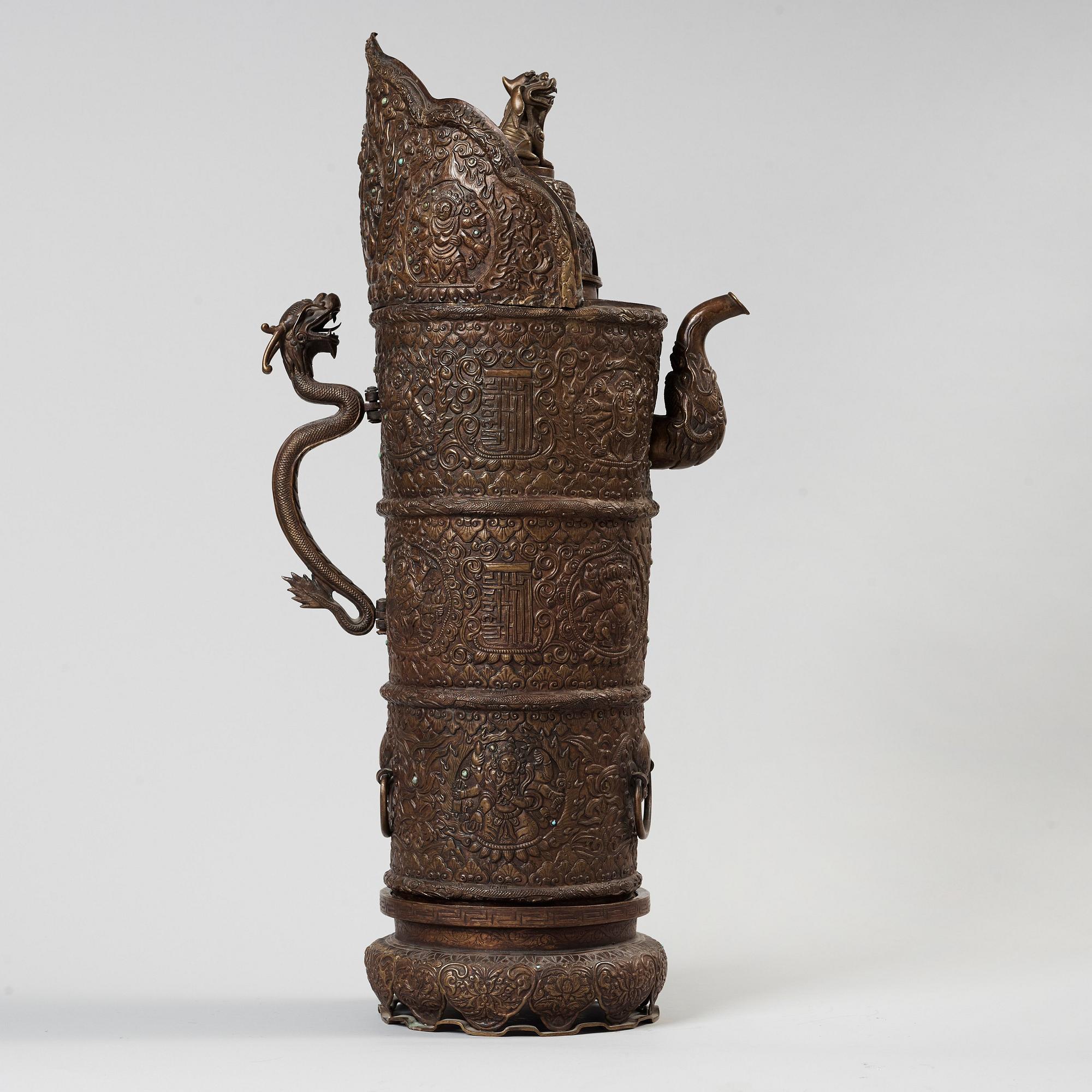
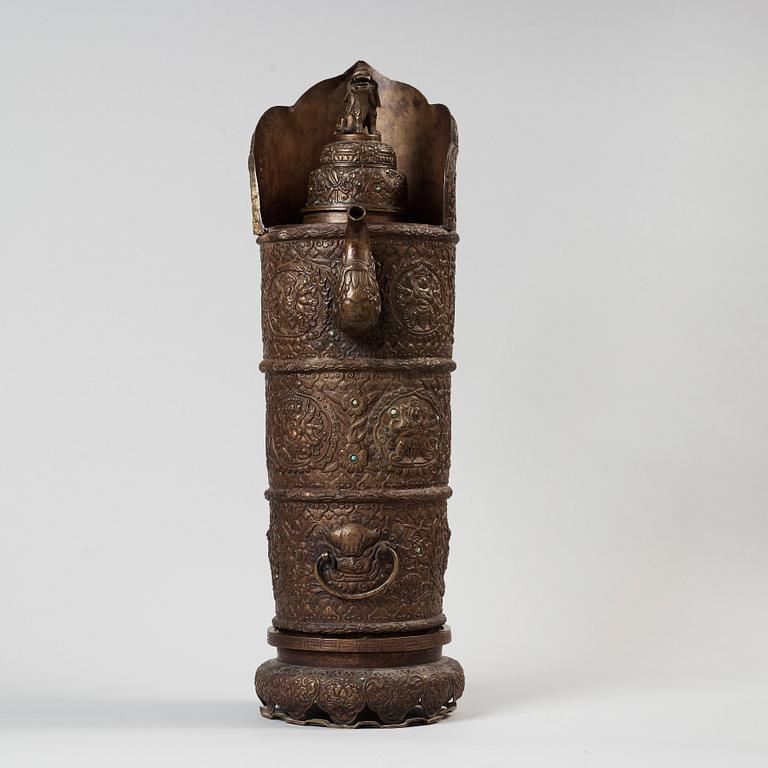
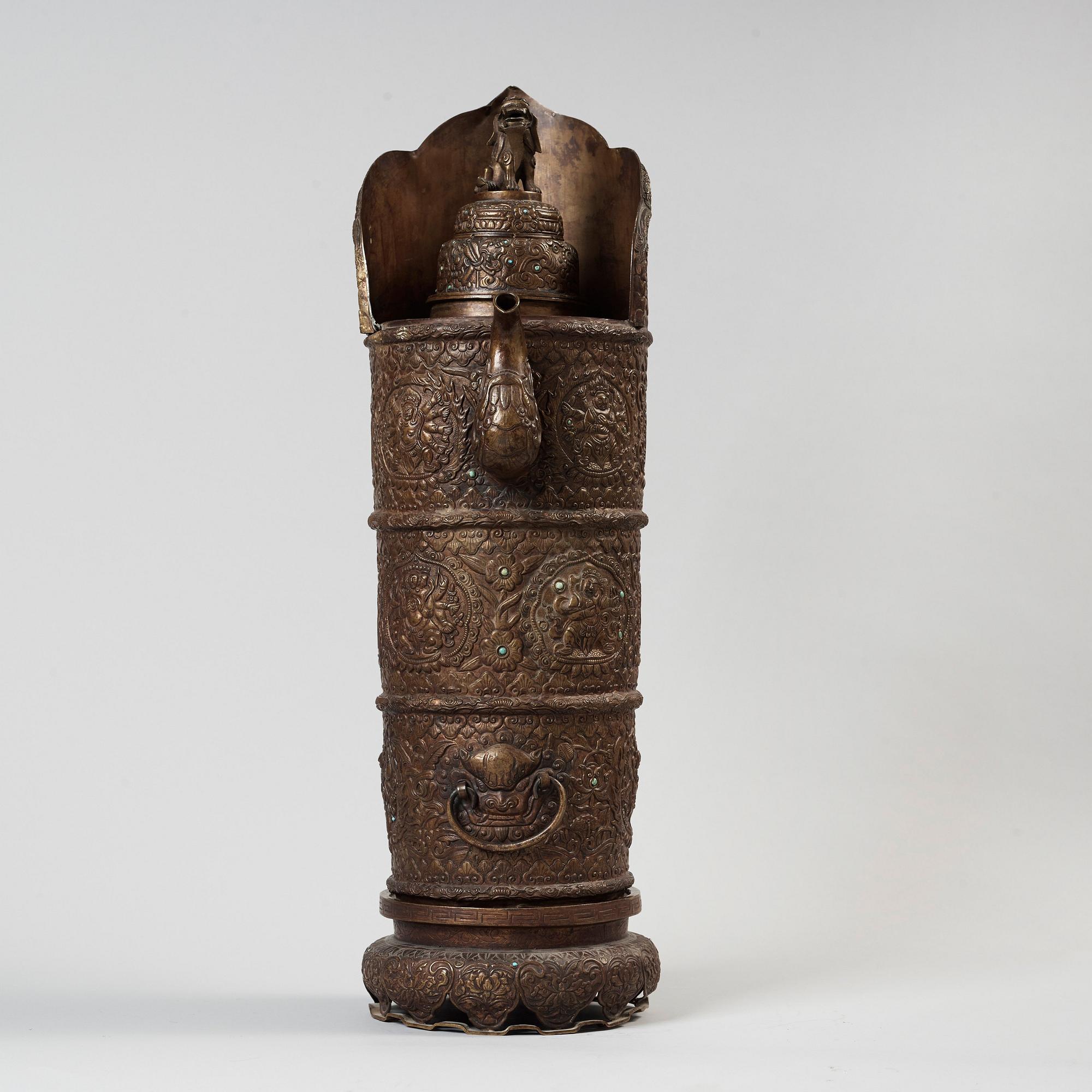
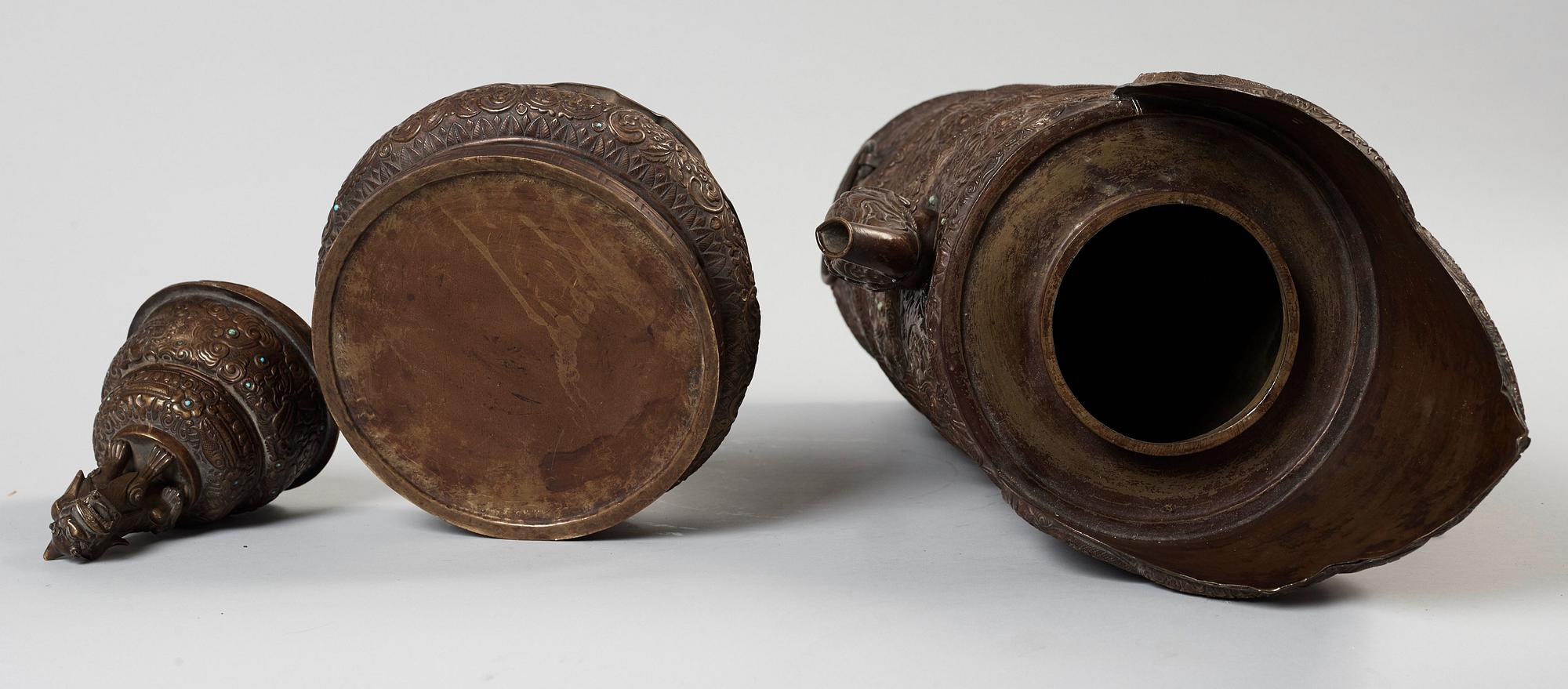
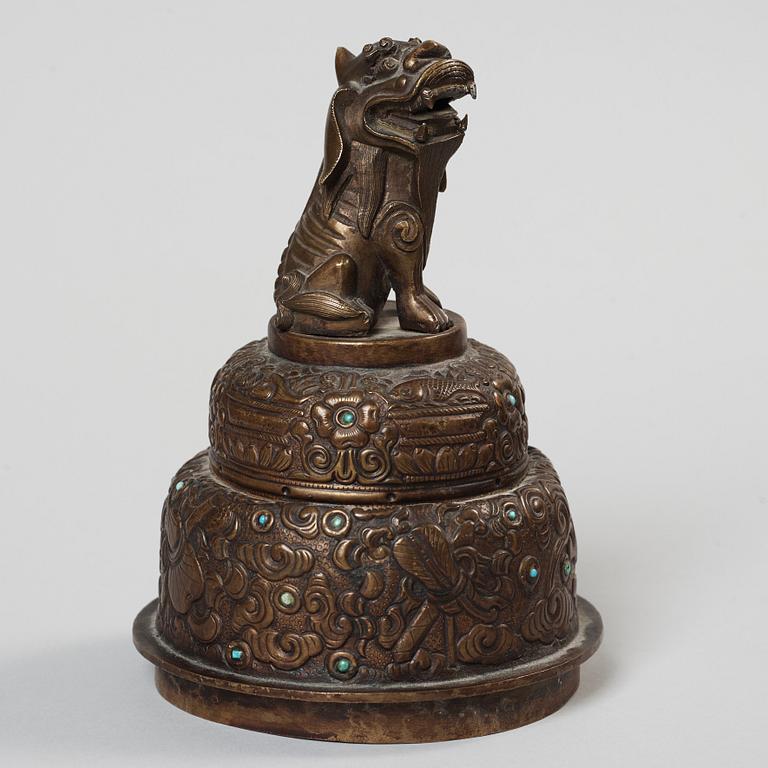
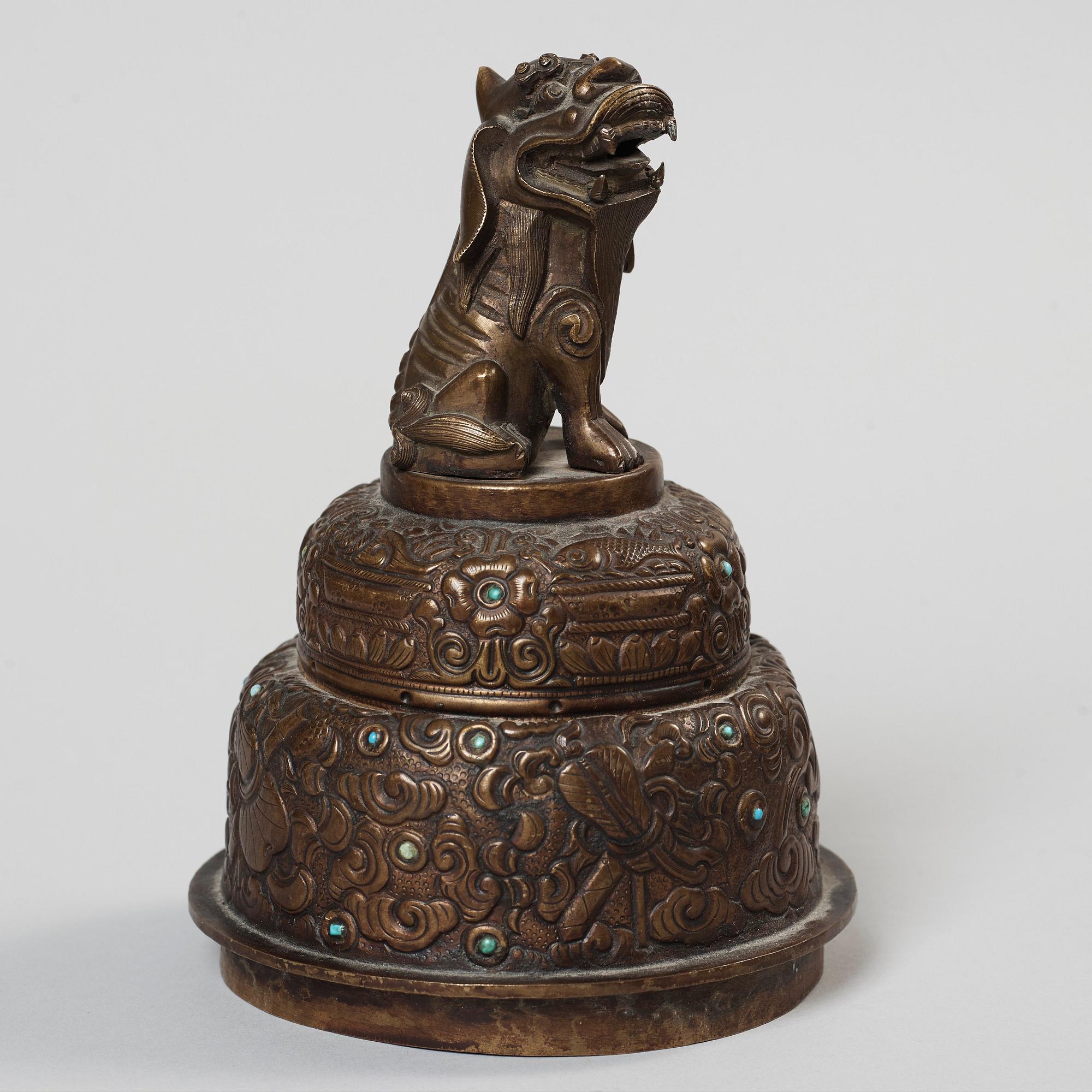
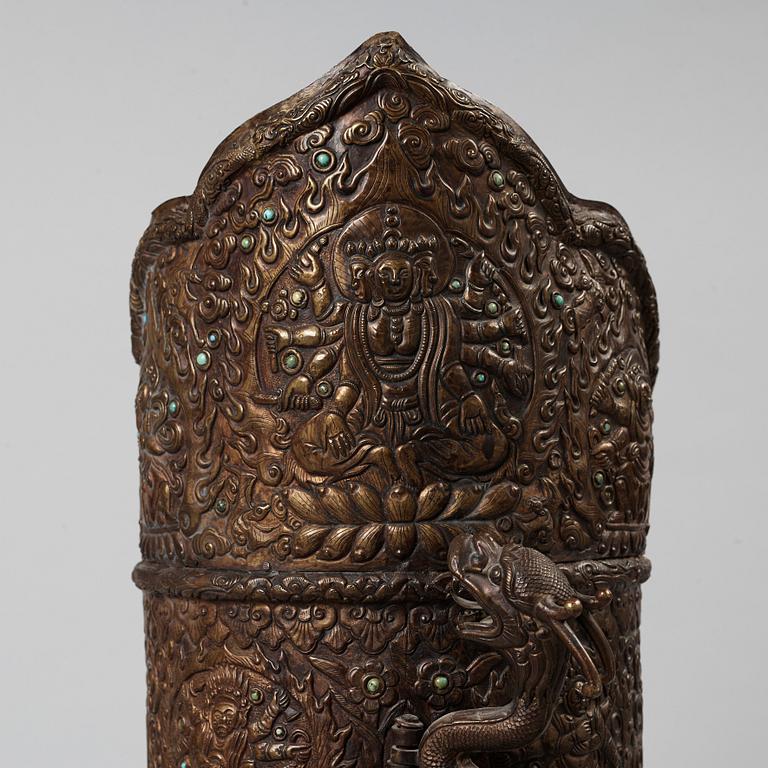
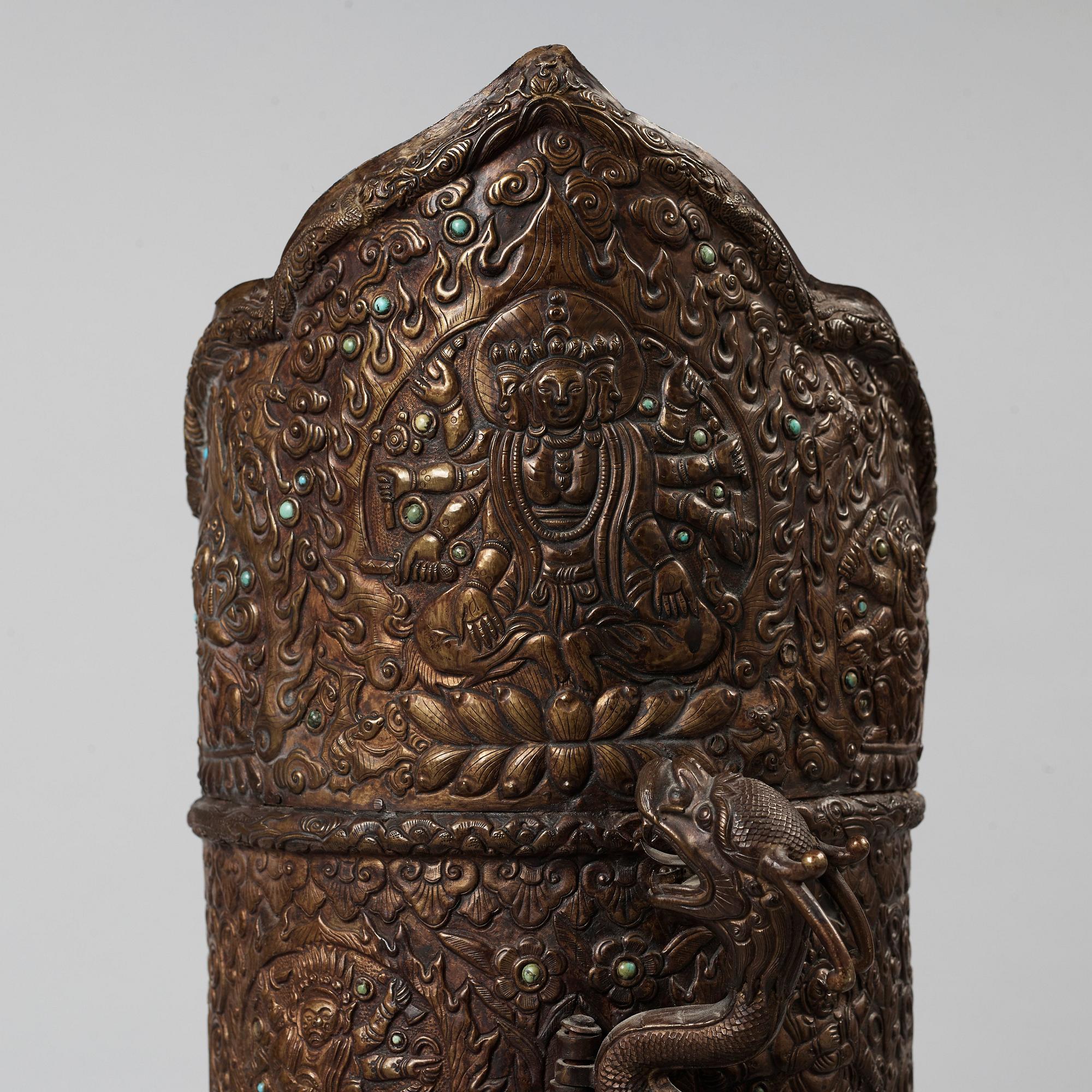
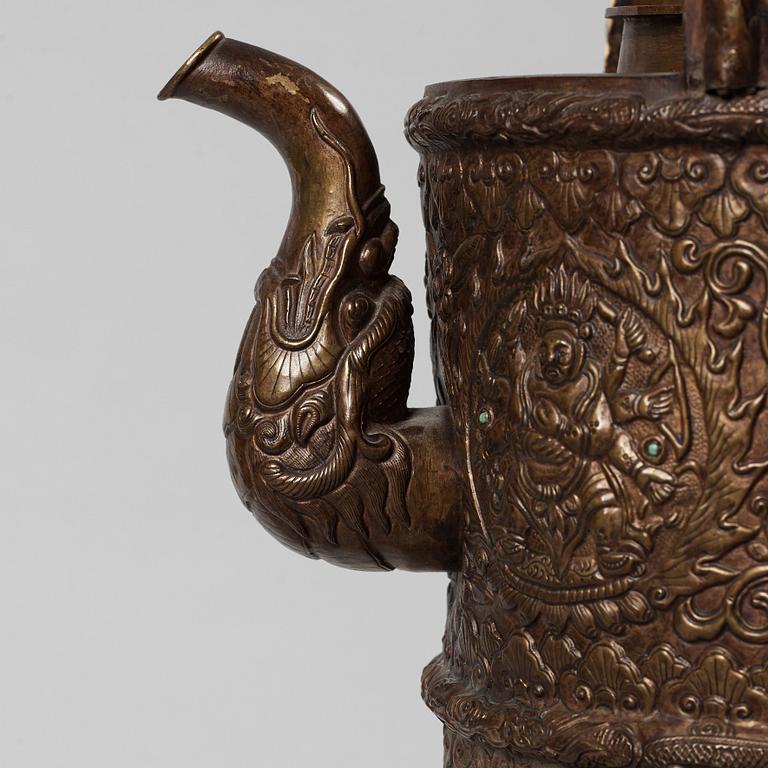
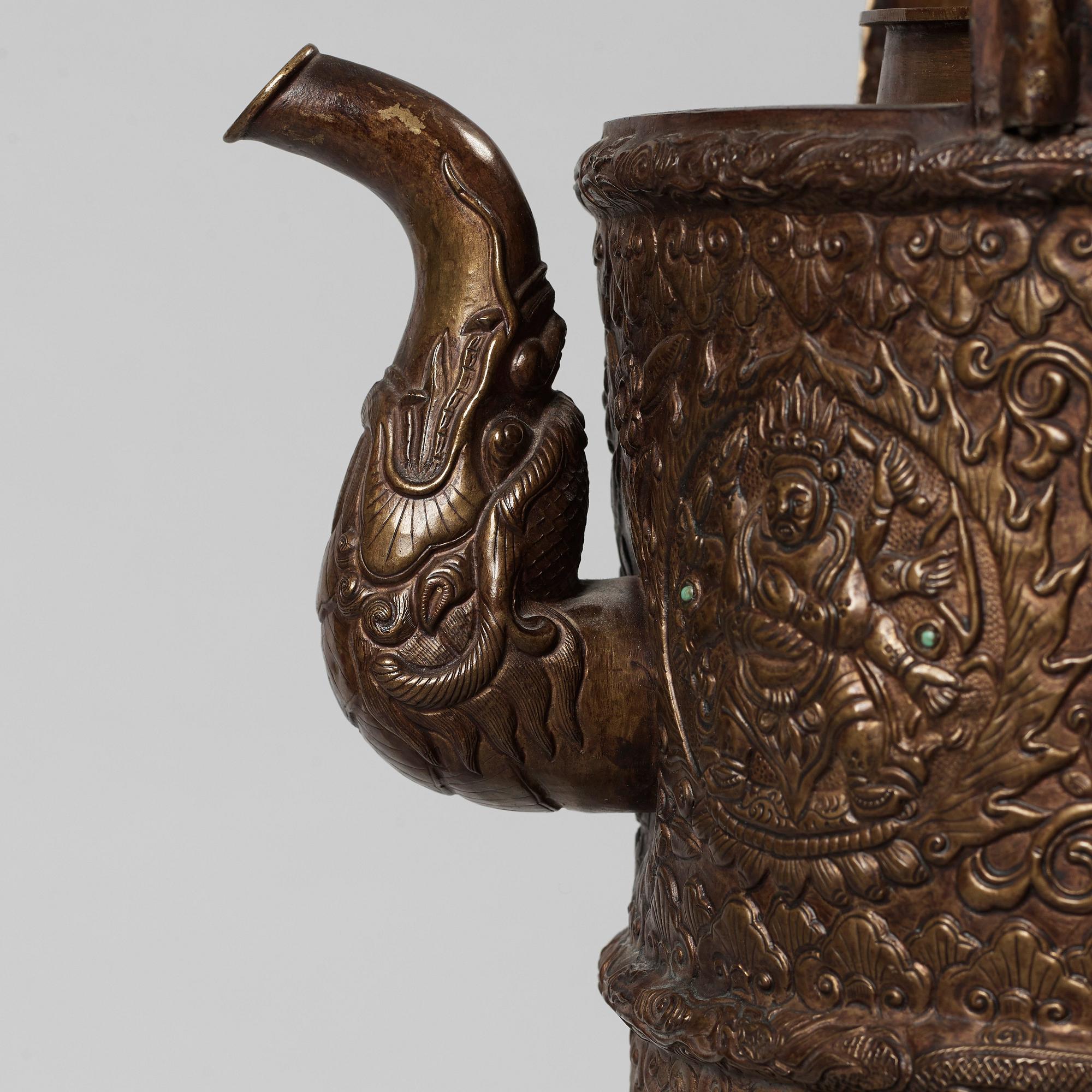
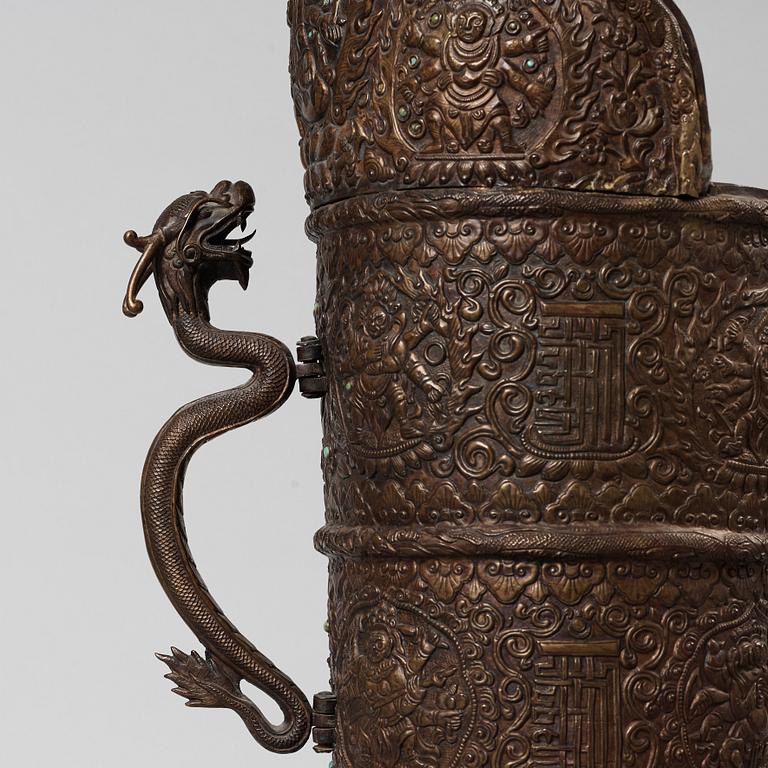
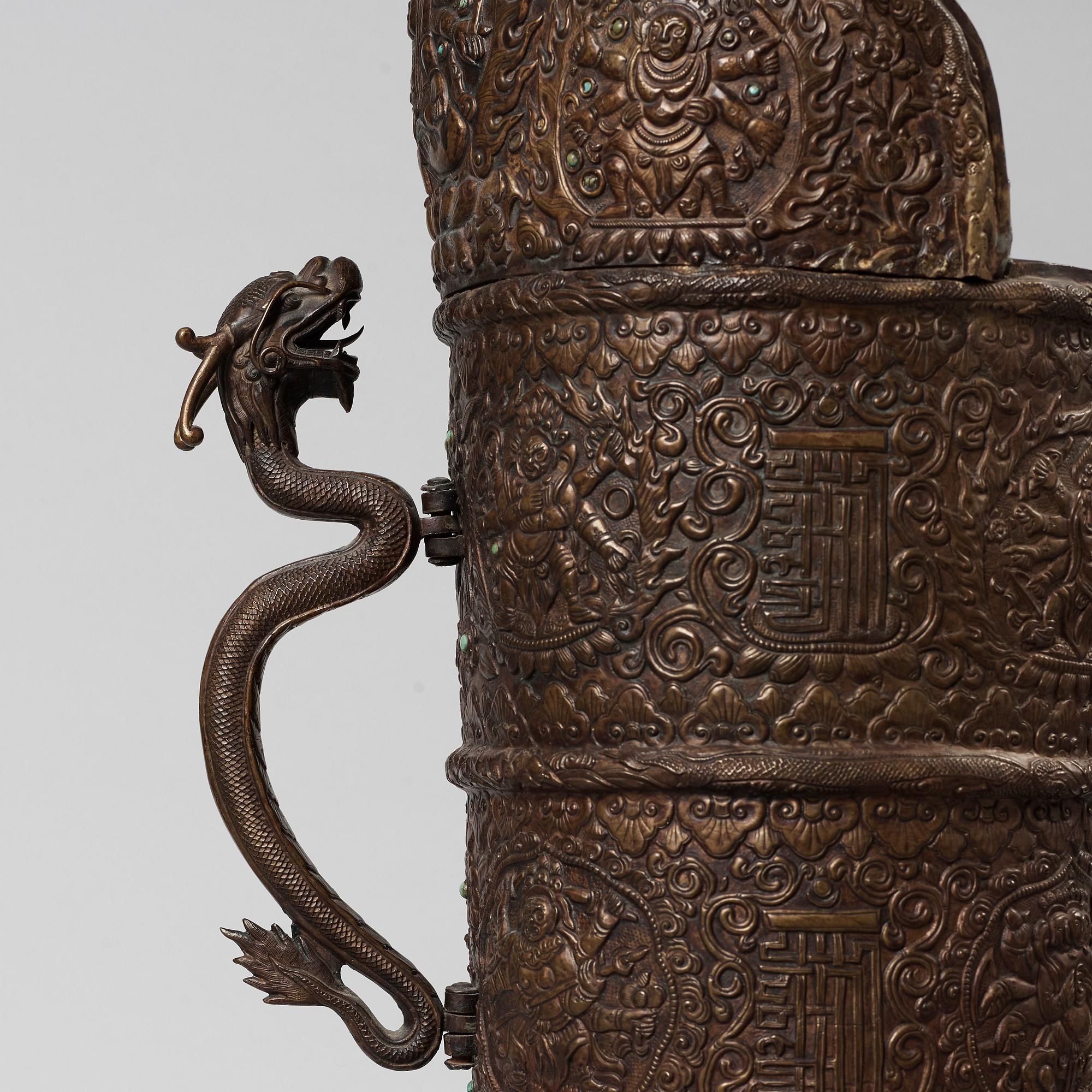
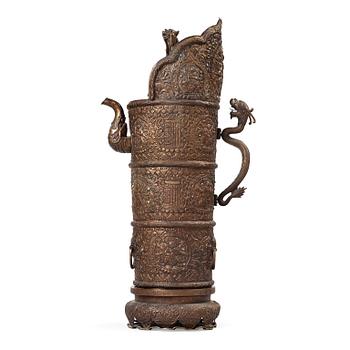
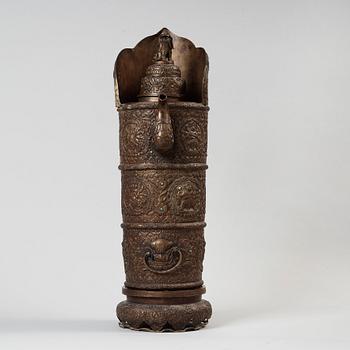
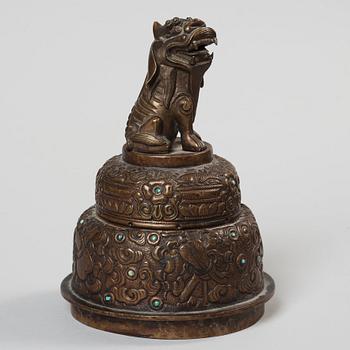
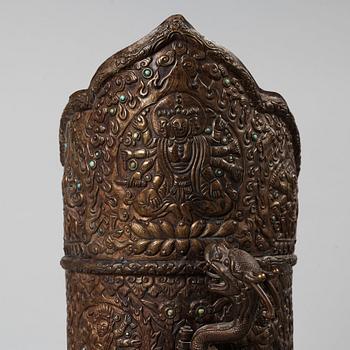
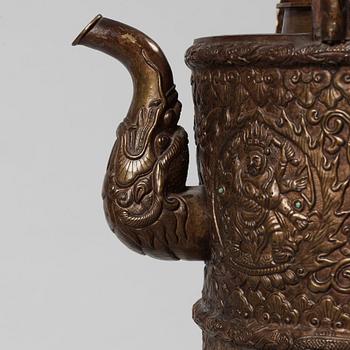
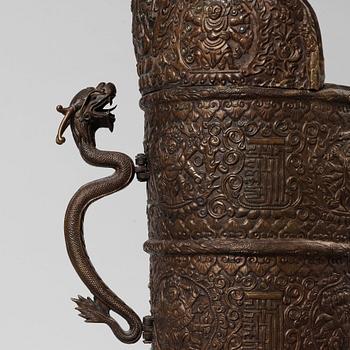
Cylindrical body divided into four sections by horizontal bands, all below a lobed crown rim resembling a monk’s cap, set with a curved spout issuing from the mouth of a gilded mythical beast, opposite an 'S'-curved dragon handle terminating with a scaly up-turned tail. Finial in the shape of a buddhist lion. Height 77 cm.
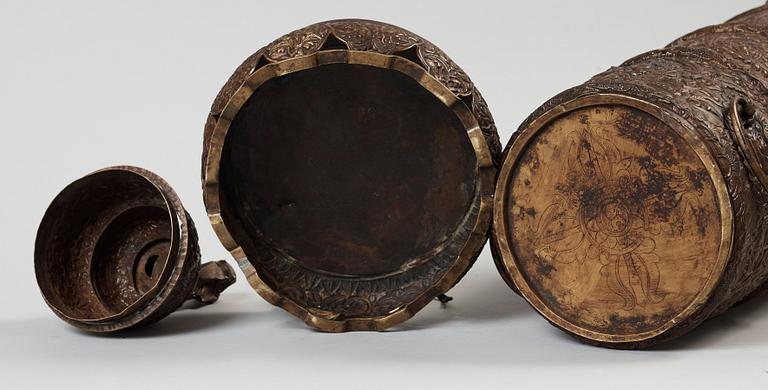
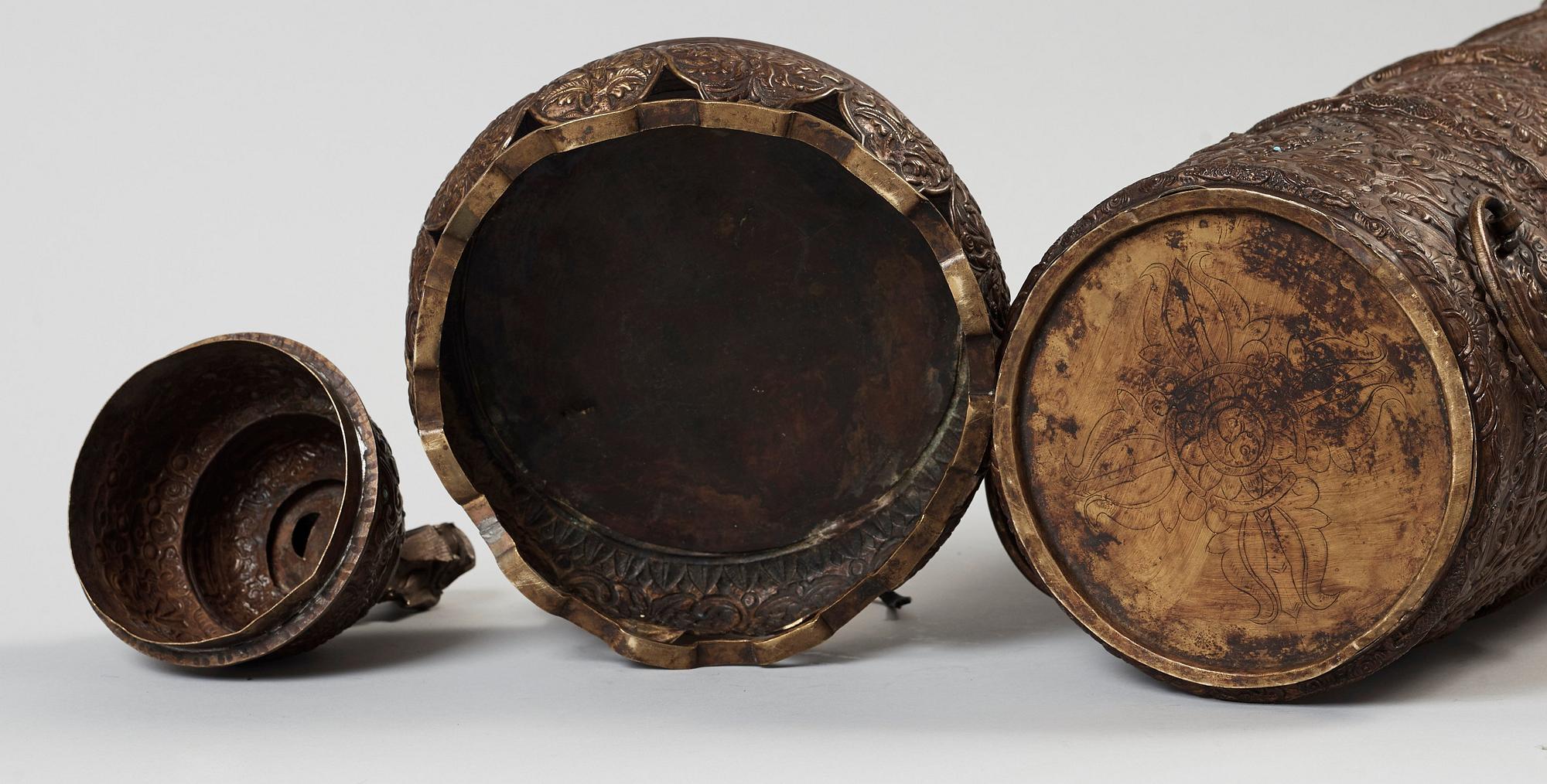
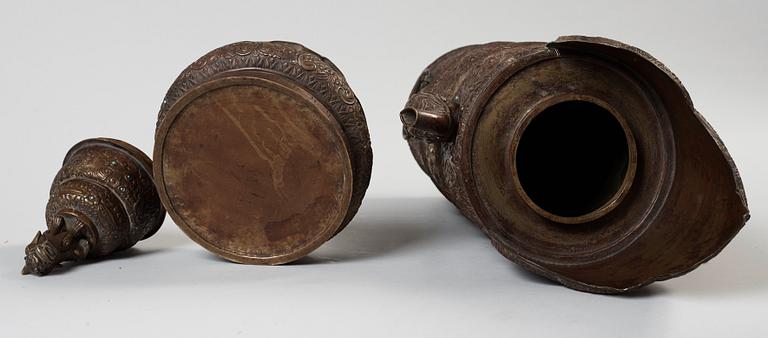
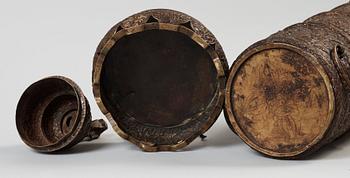
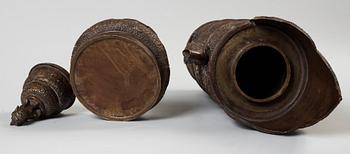
Loose parts. Wear.
Literature
Béatrice Quette [ed.], Cloisonné. Chinese Enamels from the Yuan, Ming, and Qing Dynasties, New York et al. 2011, p. 270).
More information
'Duomuhu' ewers derive from Tibetan Buddhism and became popular through the first Qing emperors. Duomuhu, meaning ‘bucket for snow’ in Tibetan, were used in Tibet for storing butter and making the traditional buttered tea for Buddhist ceremonies. Originally made of wood with metal bands. The formerly wooden vessels became prestigious works of art, made out of silver, gold, porcelain or cloisonné.
Transforming a humble wooden ritual utensil into a splendid imperial ceremonial vessel was a deliberate act on the part of the Kangxi emperor to express his utmost devotion and political commitment to the patronage of Tibetan Buddhism.
For condition report contact specialist

Others have also viewed