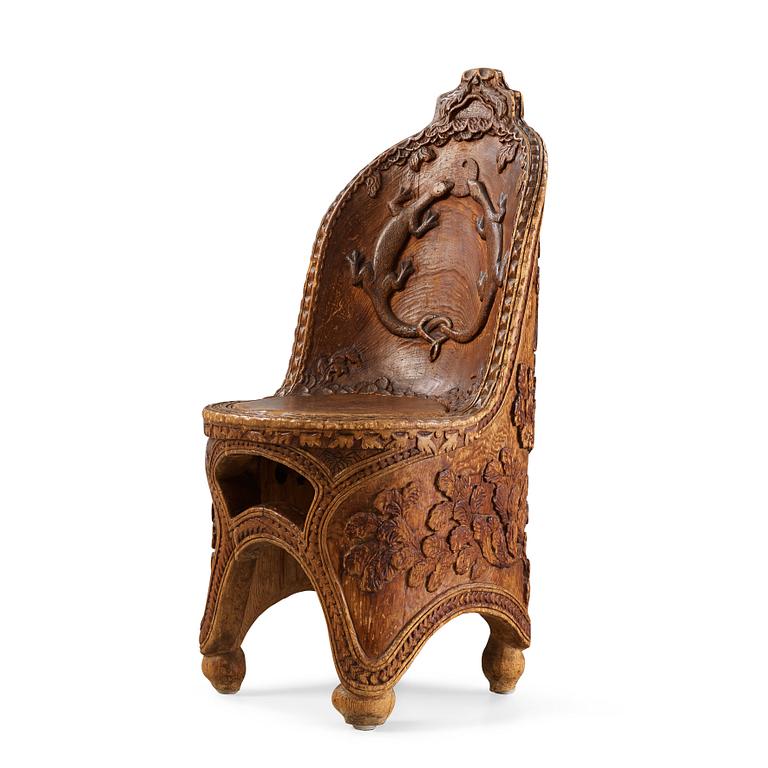
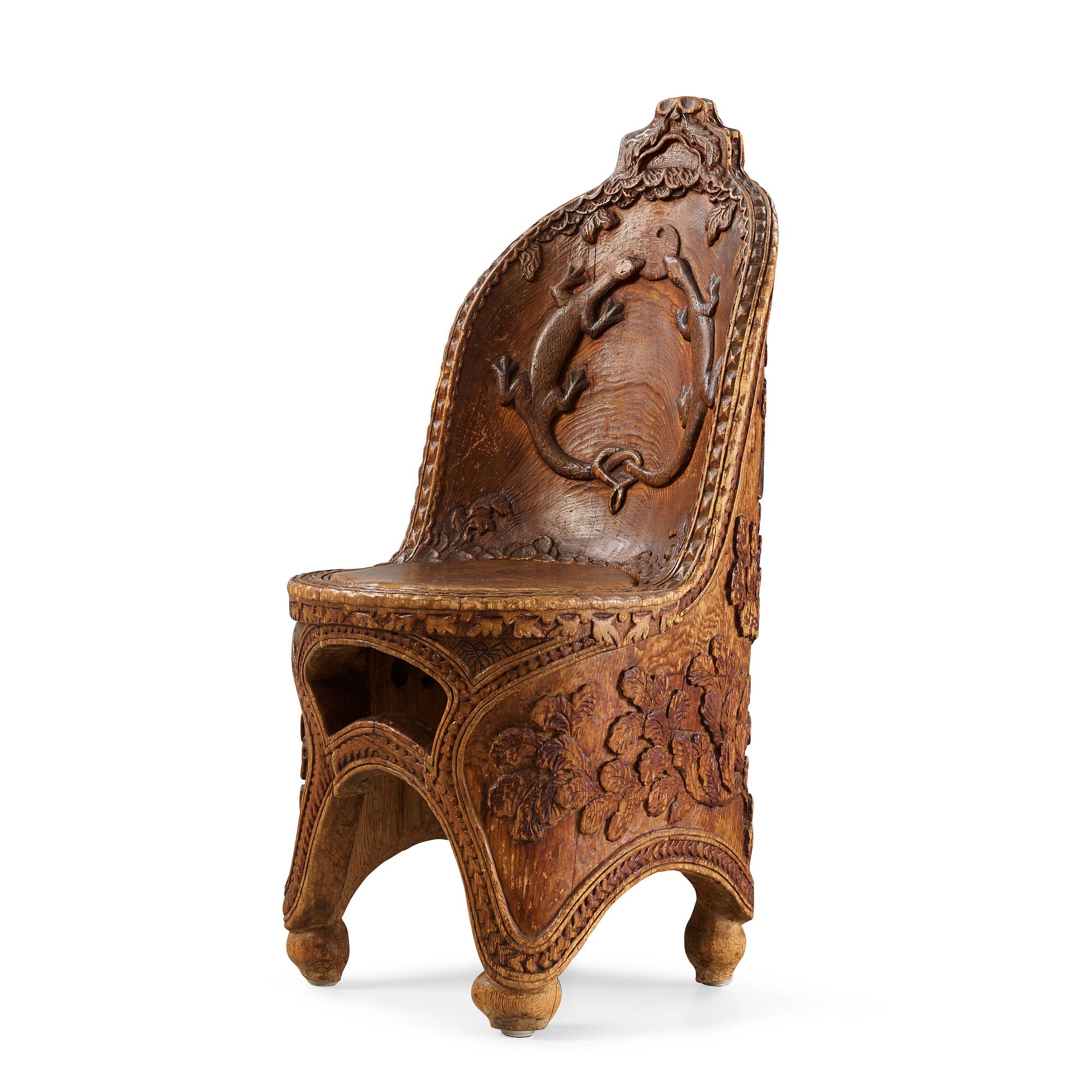
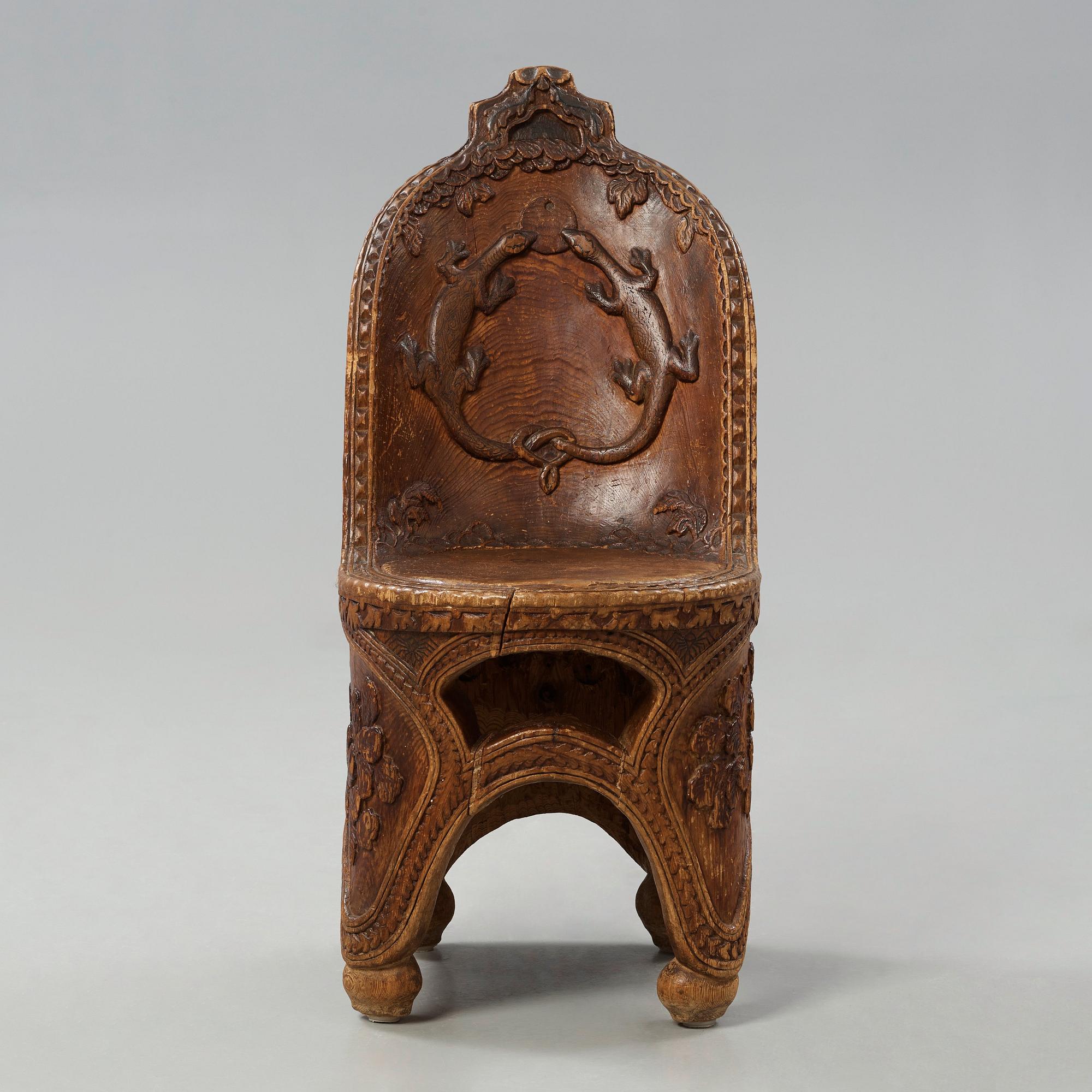
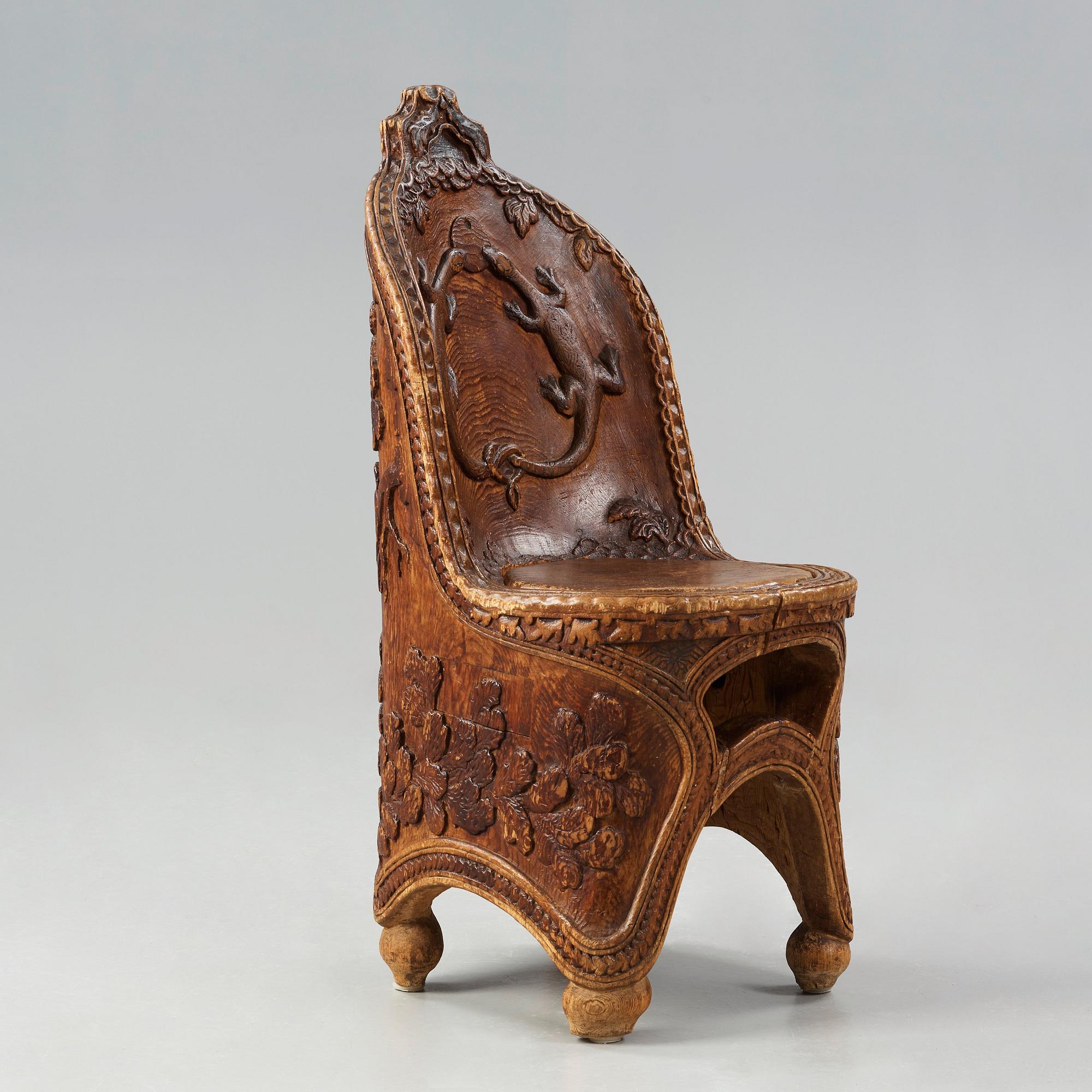
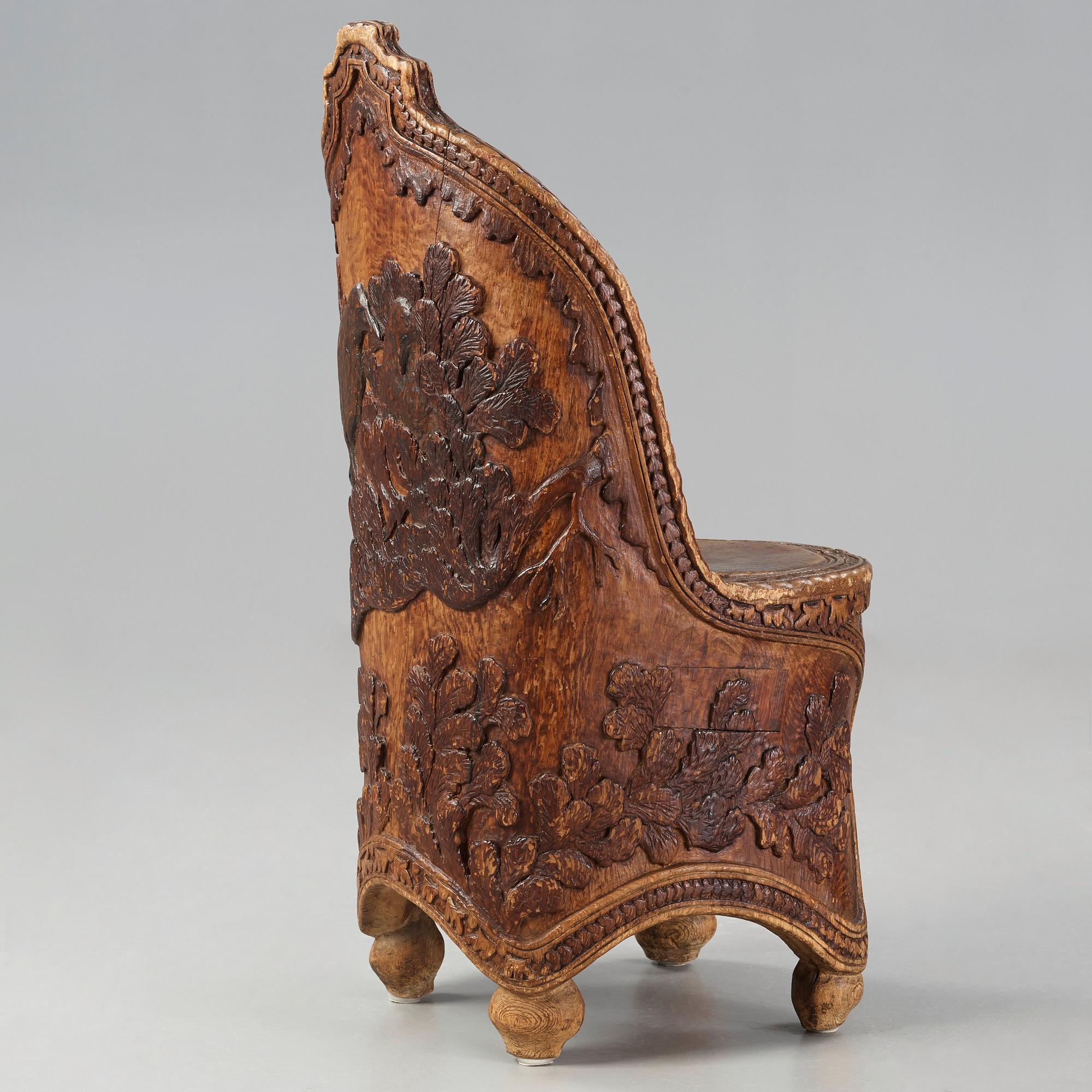
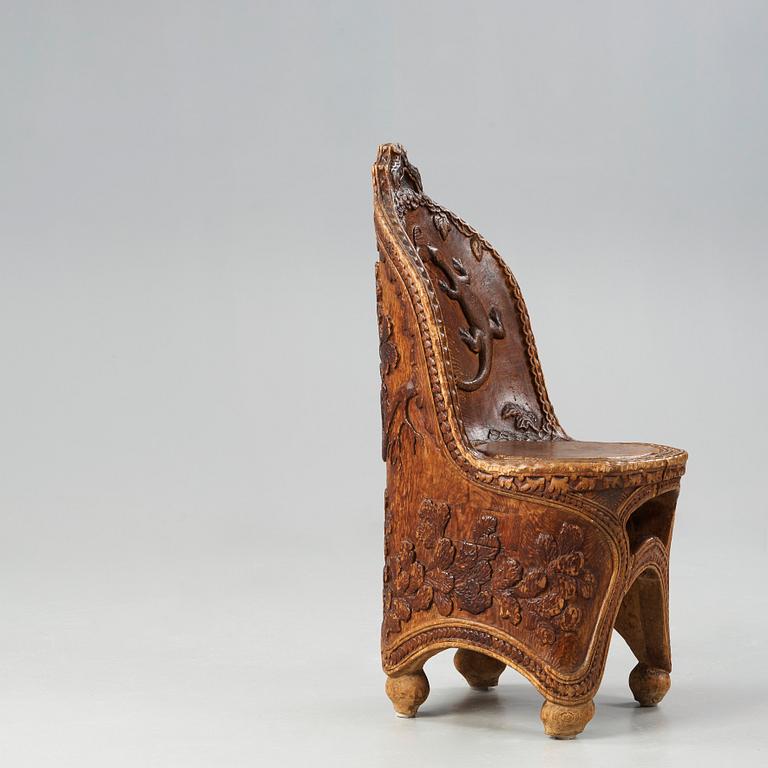
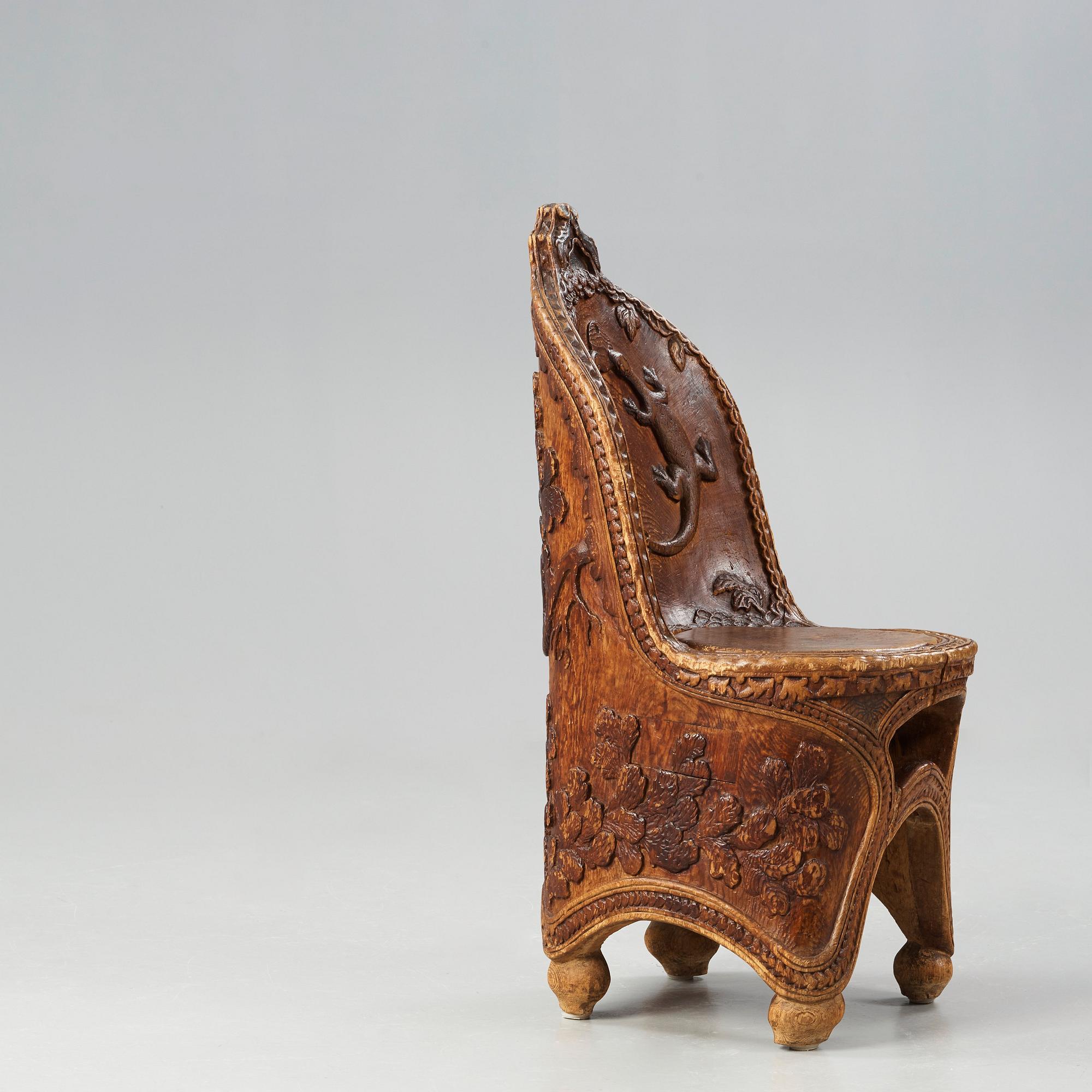
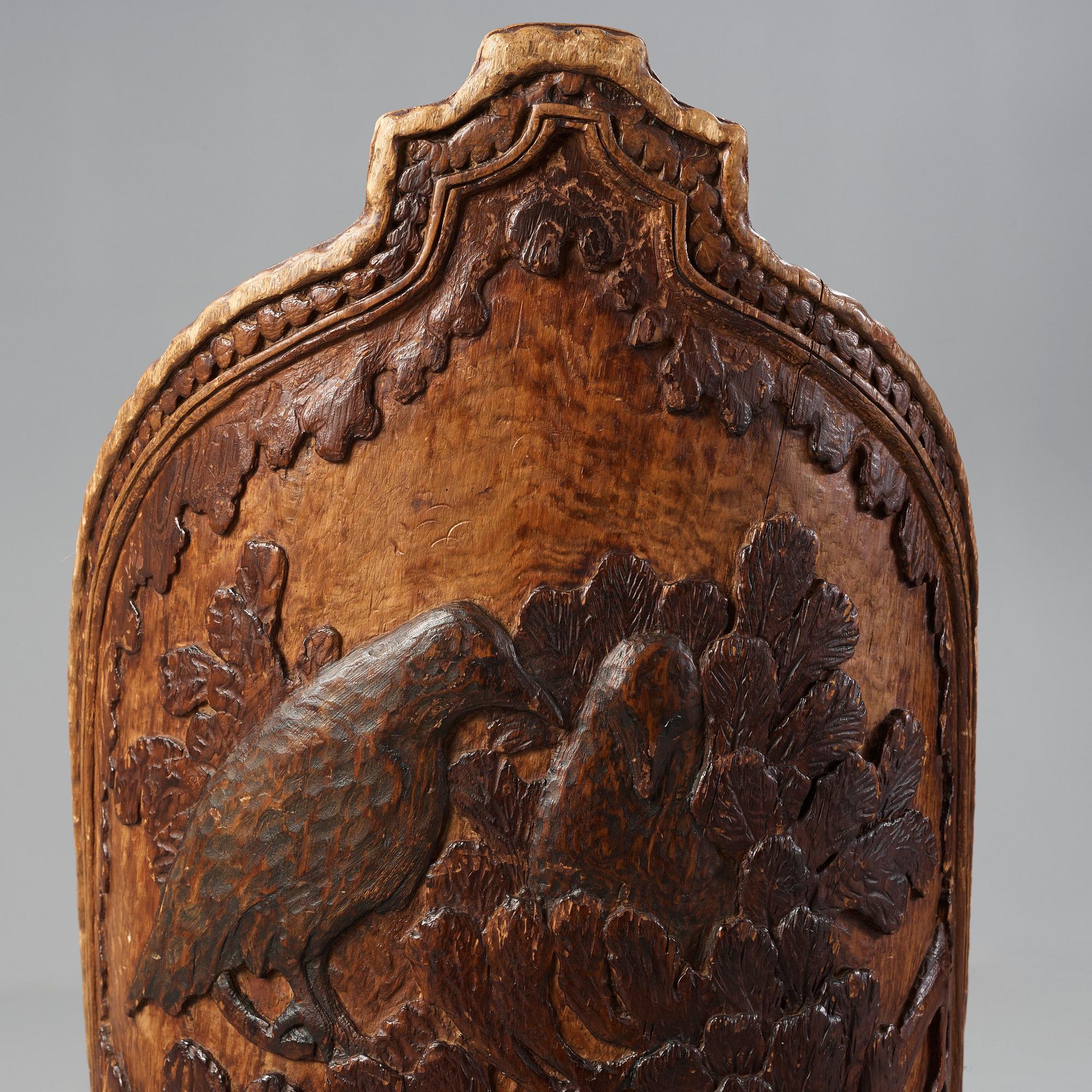
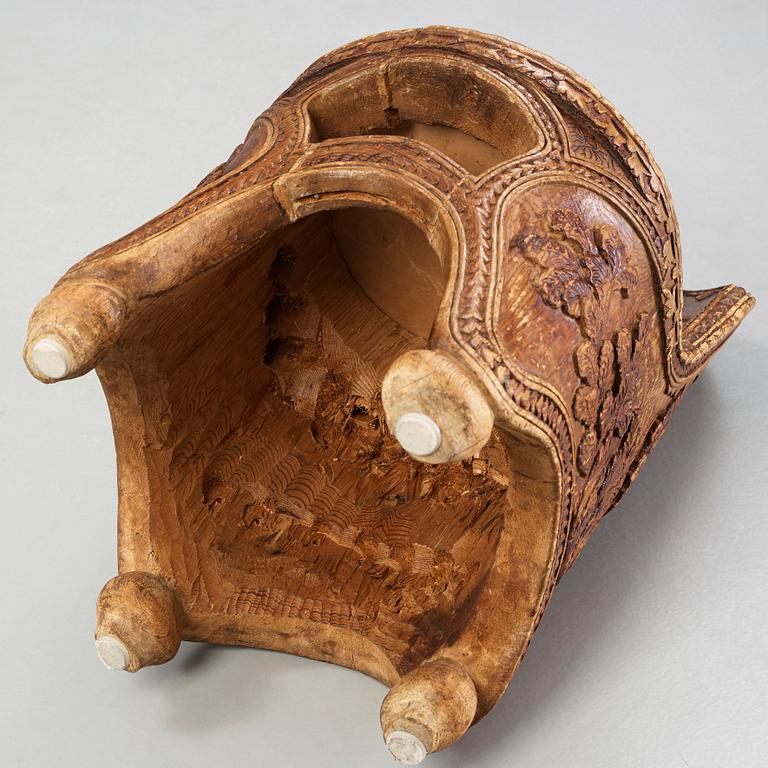
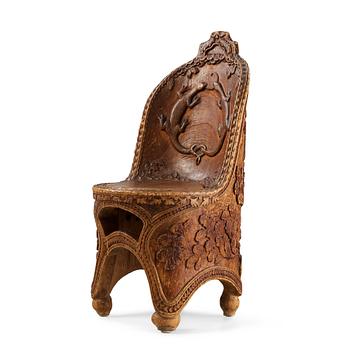
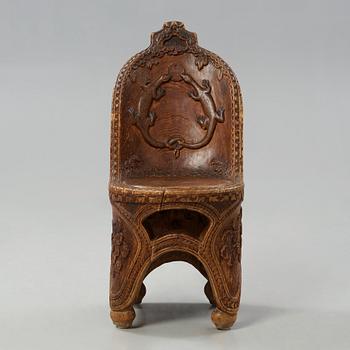
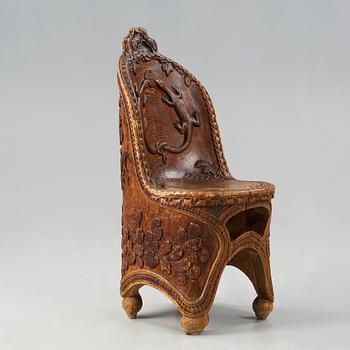
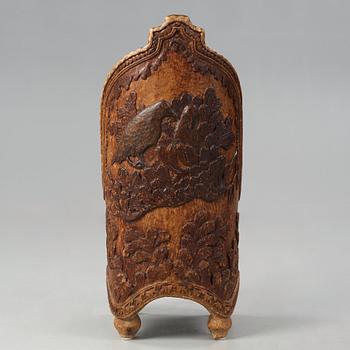
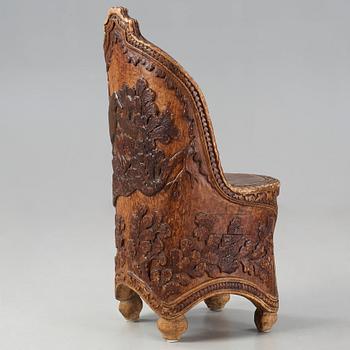
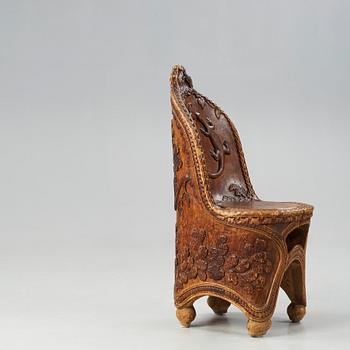
An Art Nouveau folk art sculptured pine chair, Sweden early 1900's.
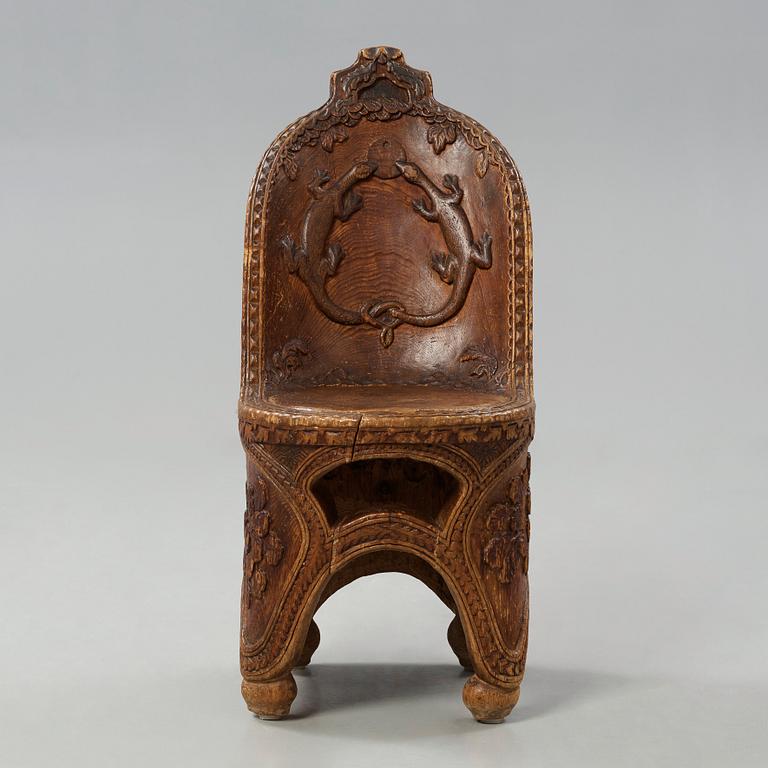
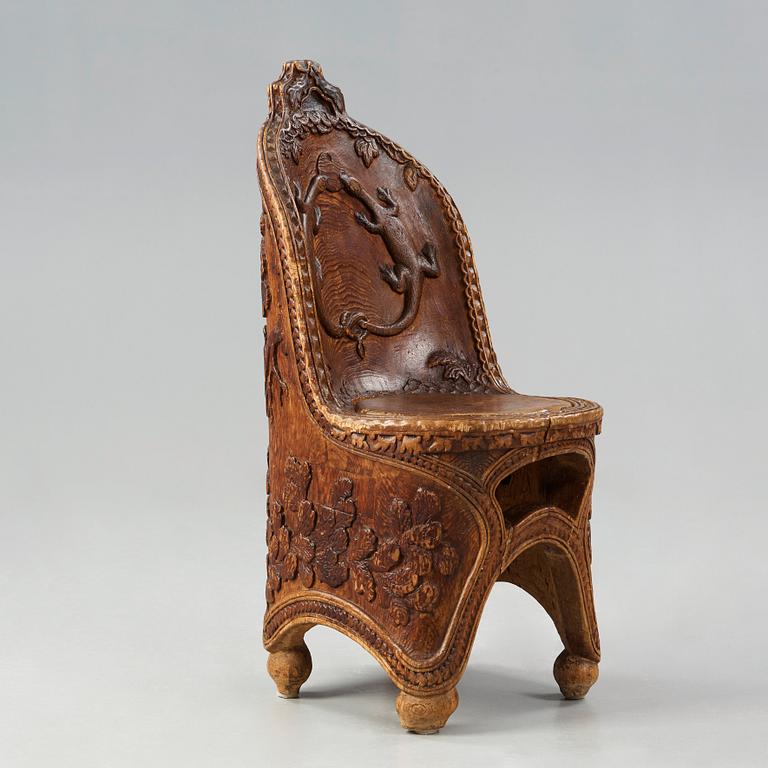
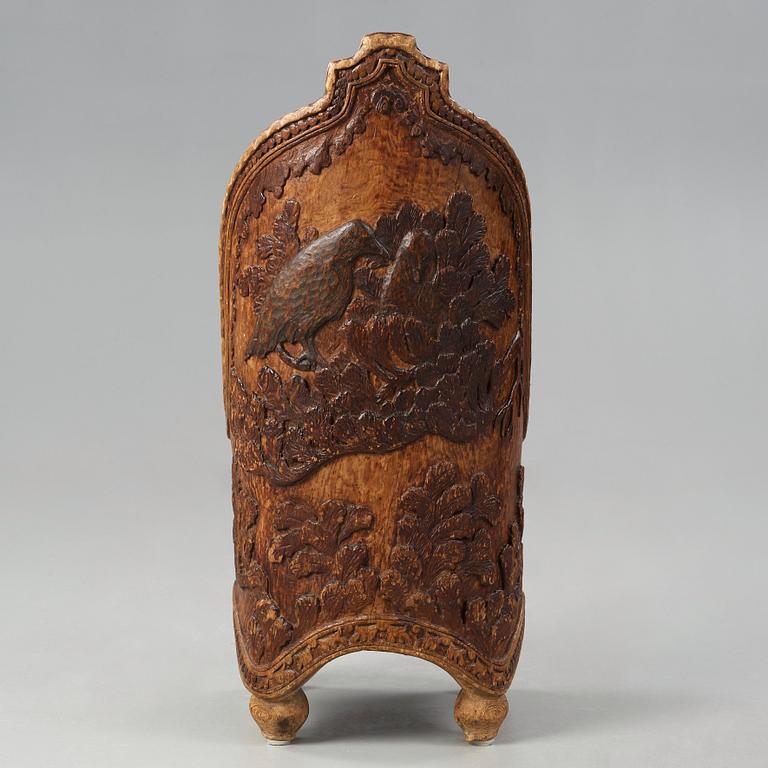
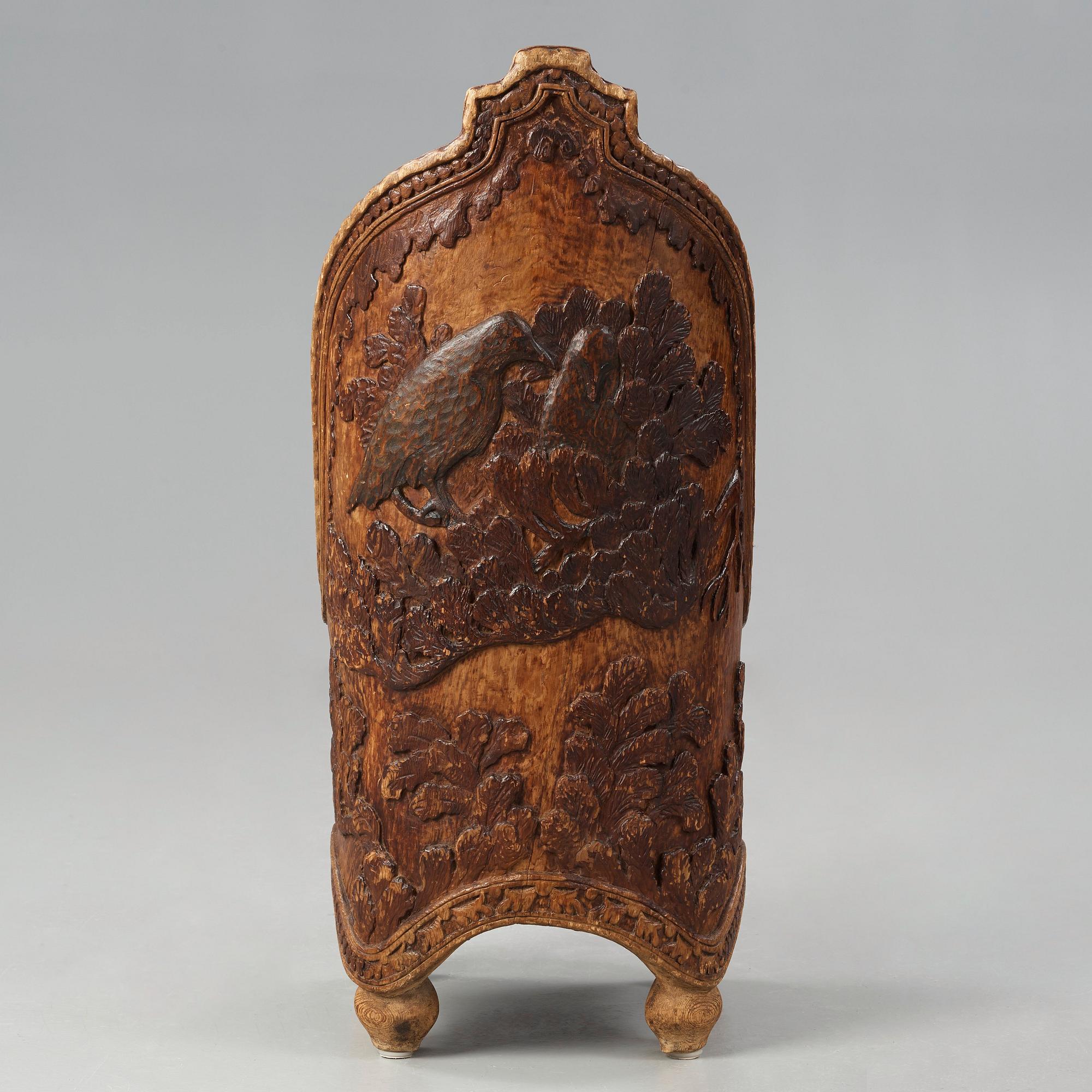
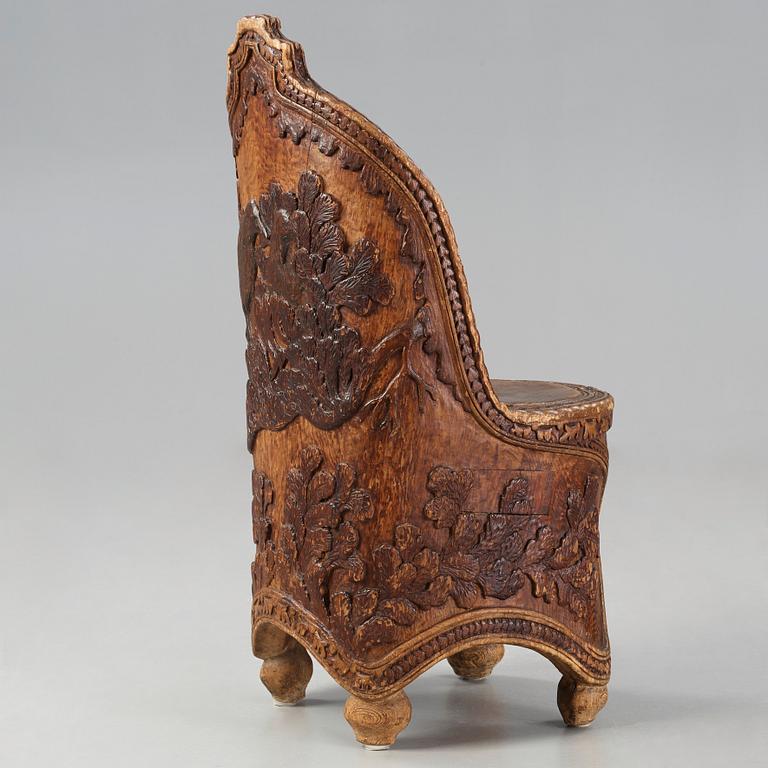
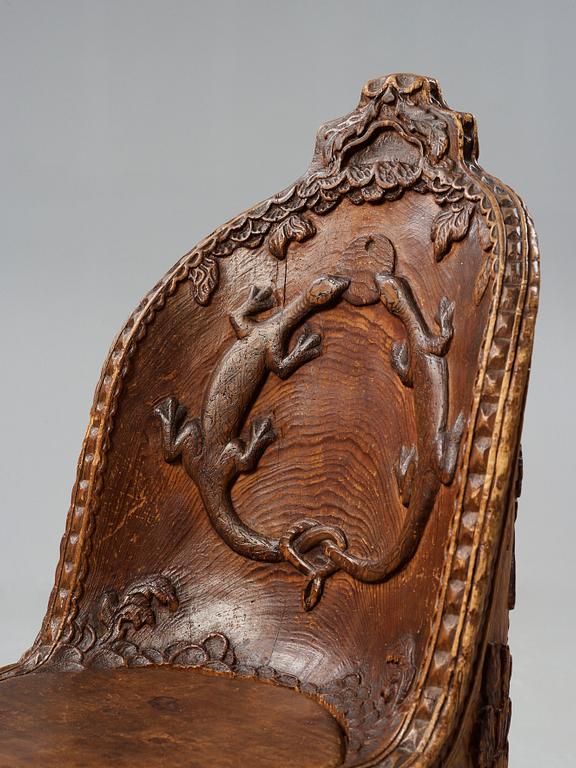
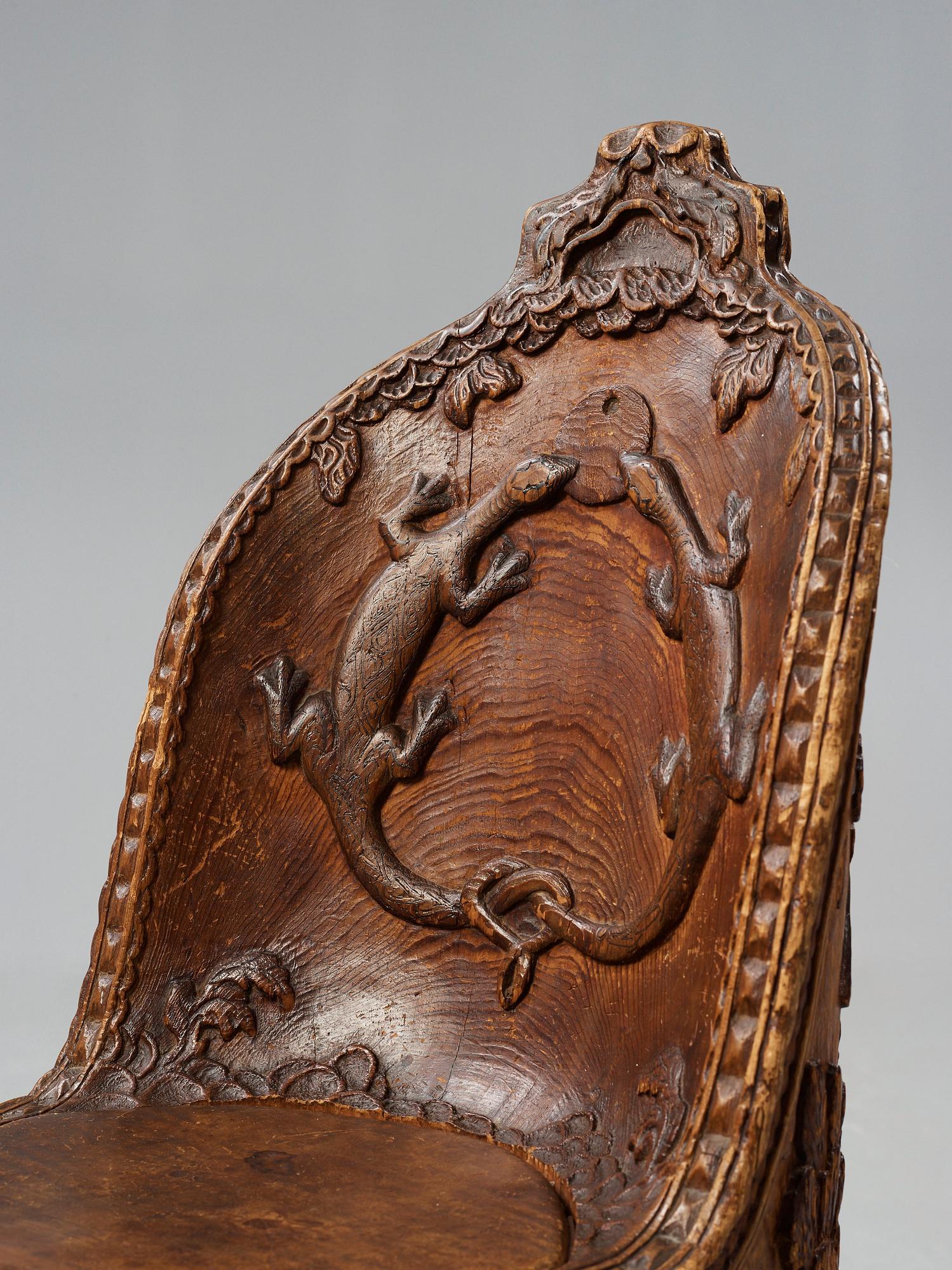
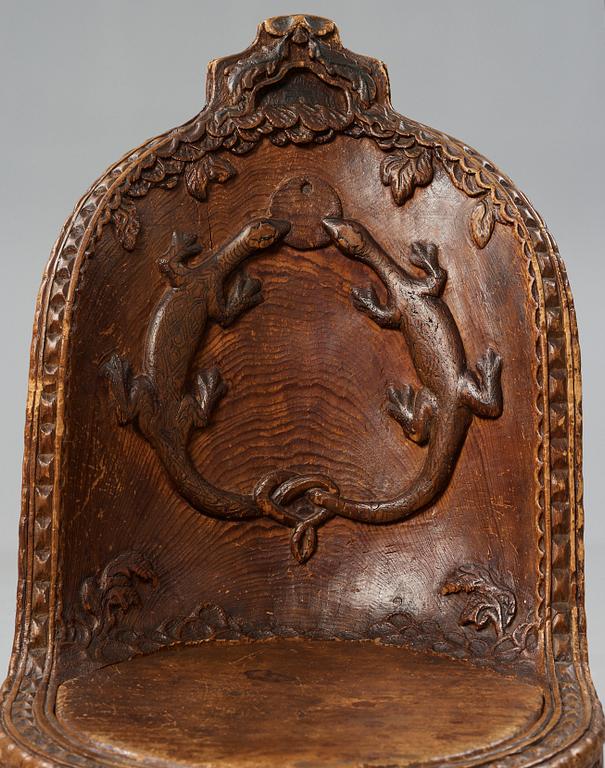
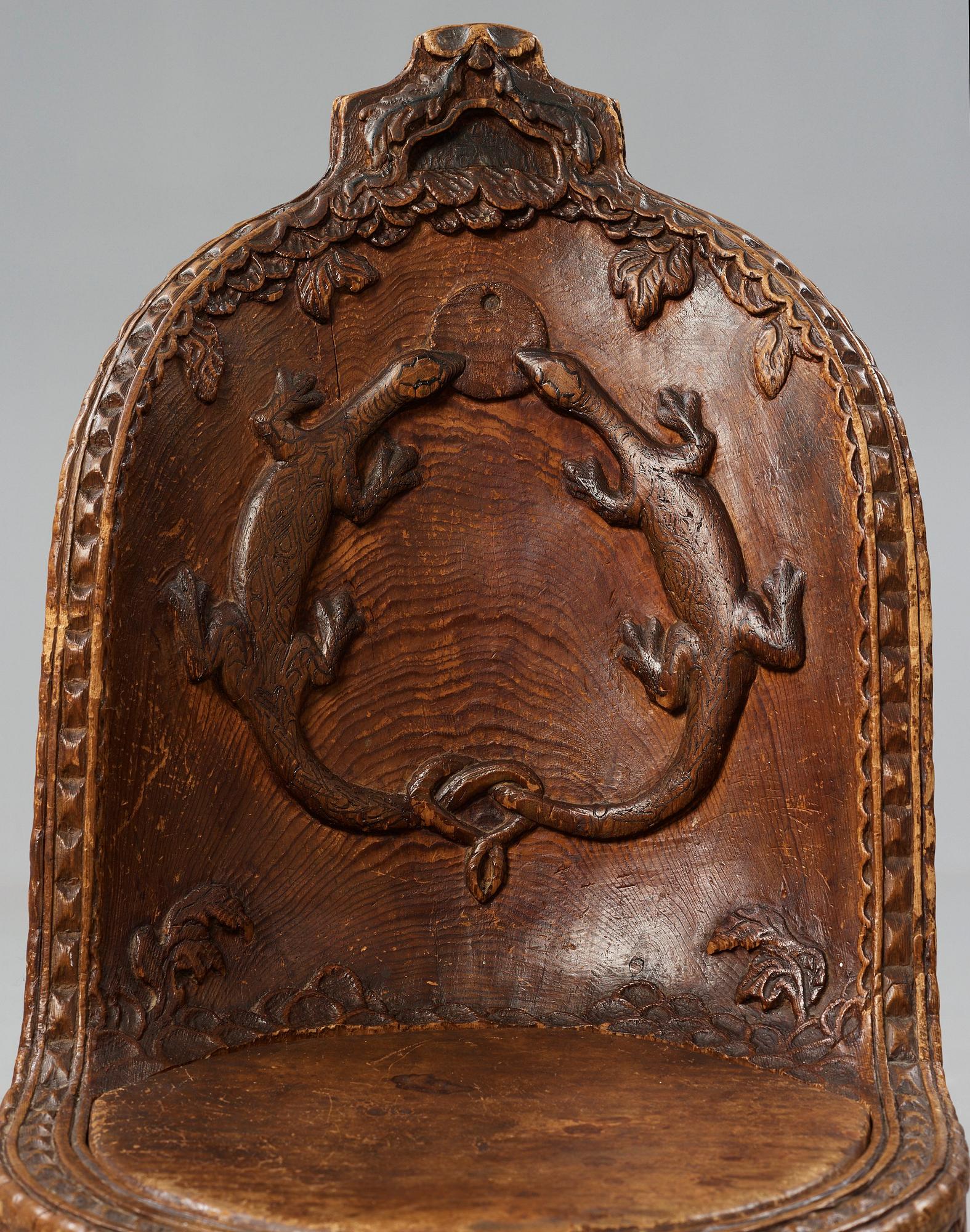
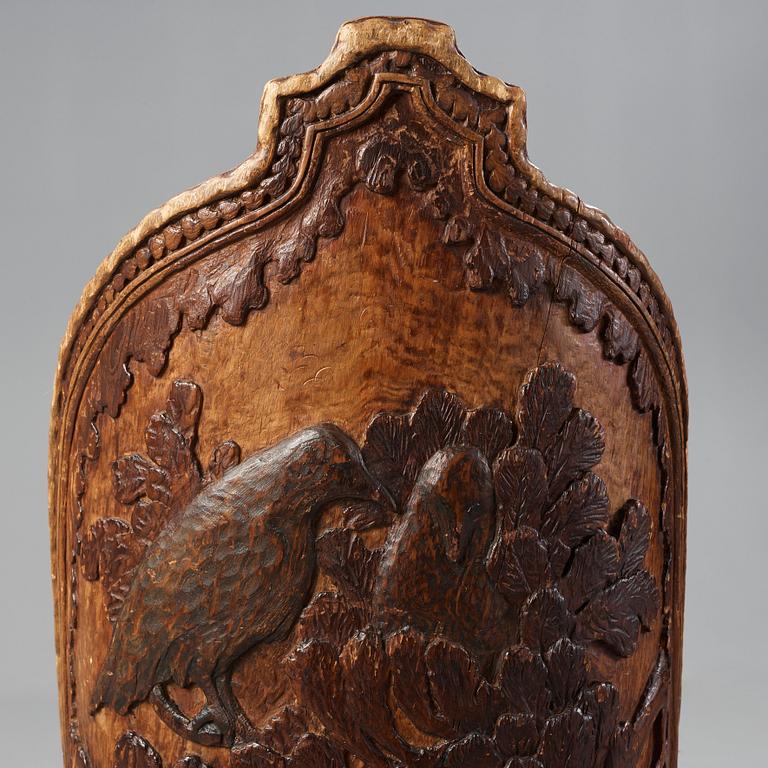
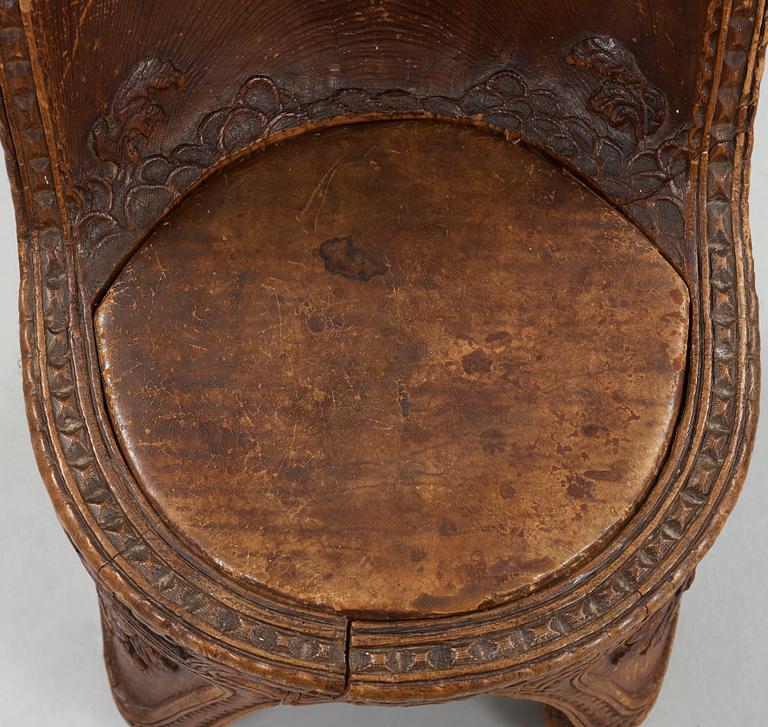
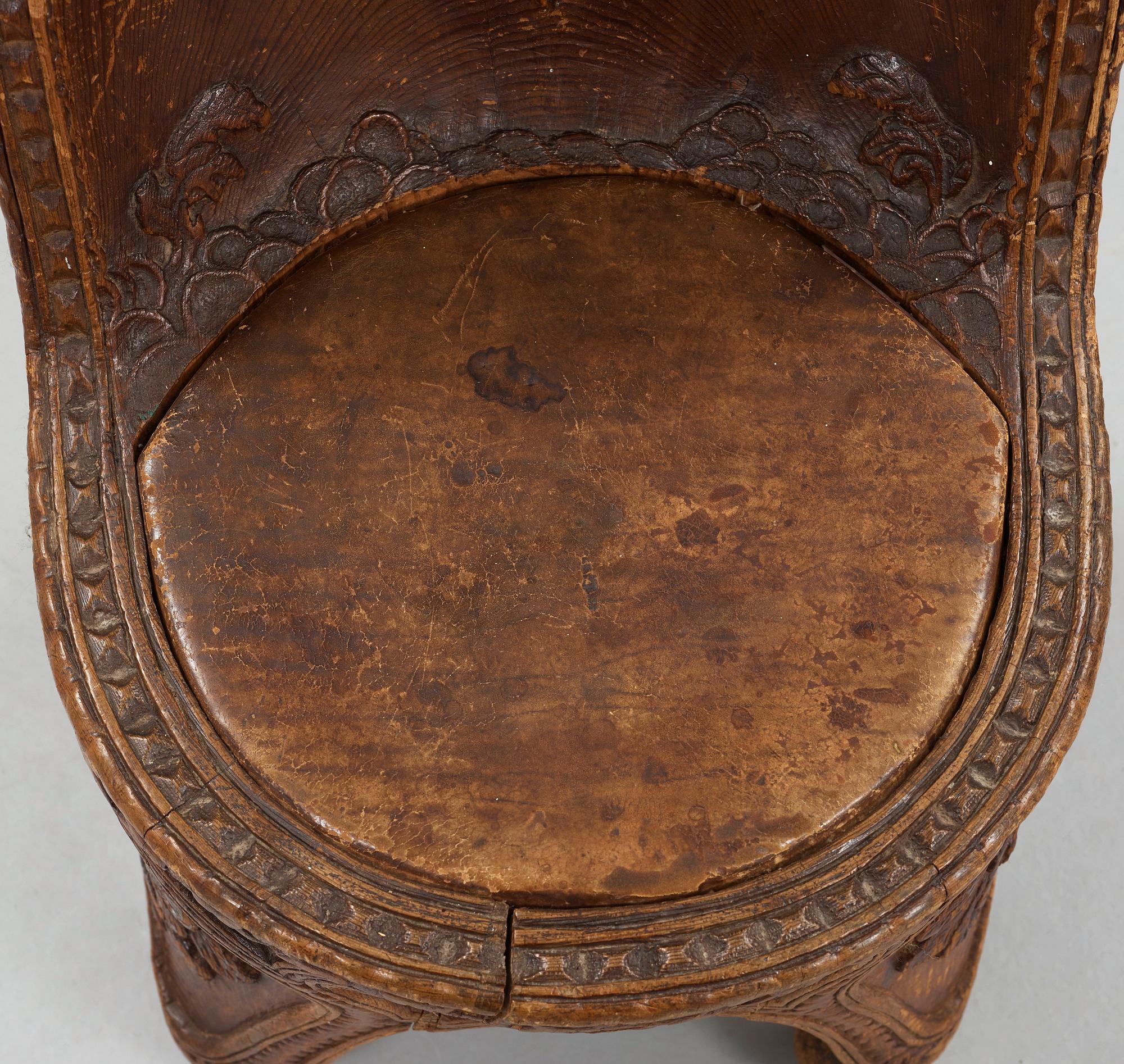
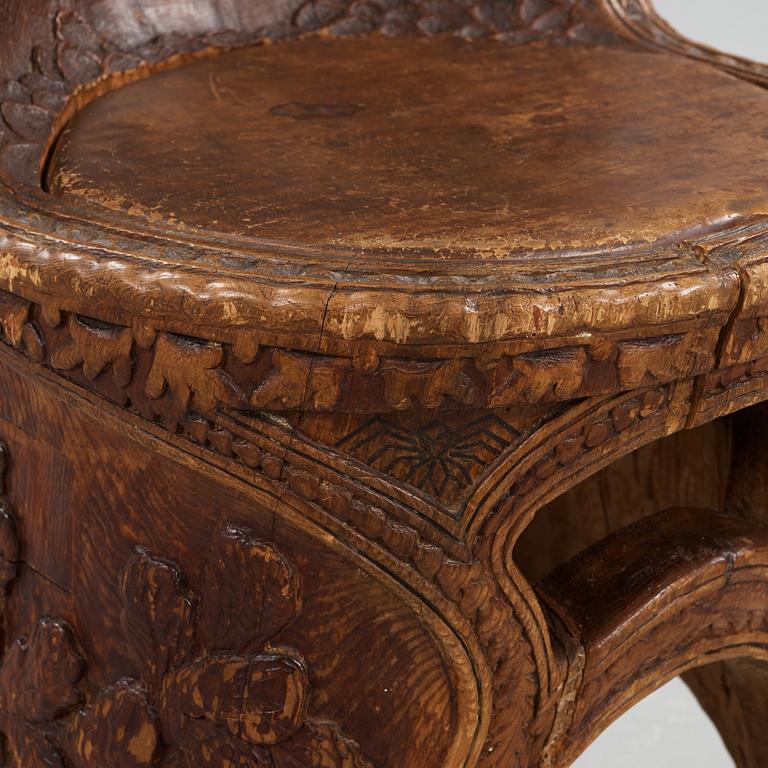
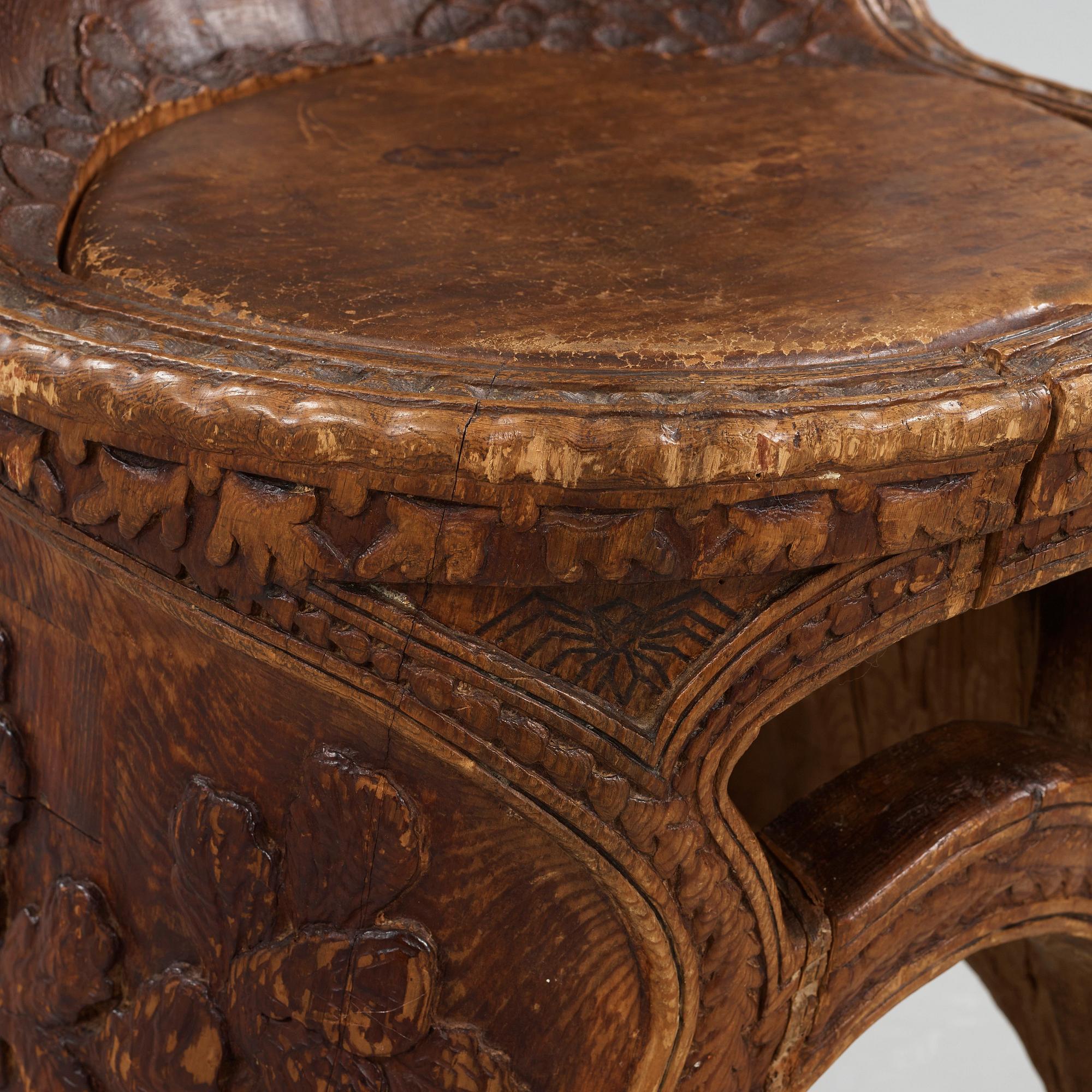
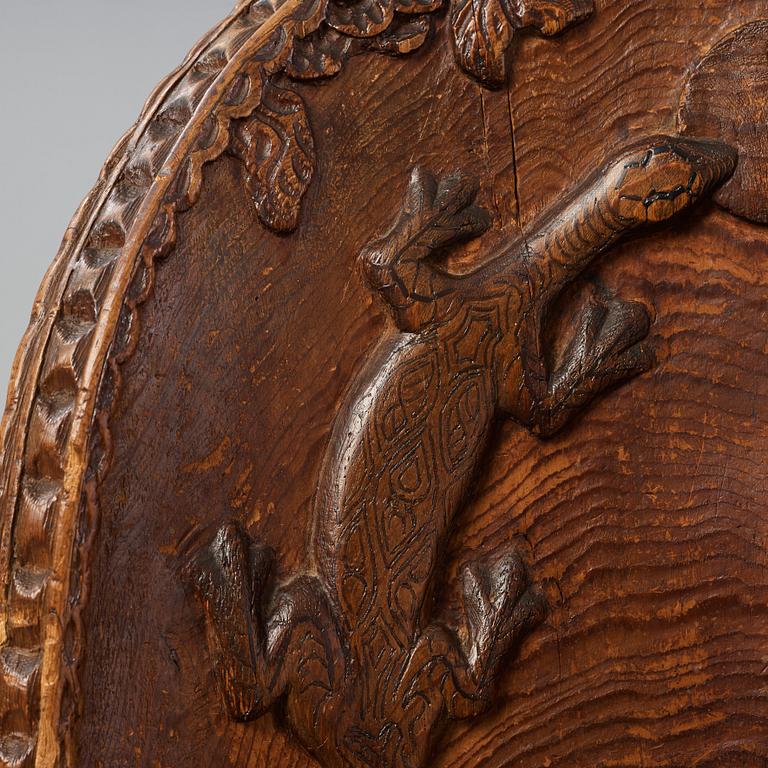
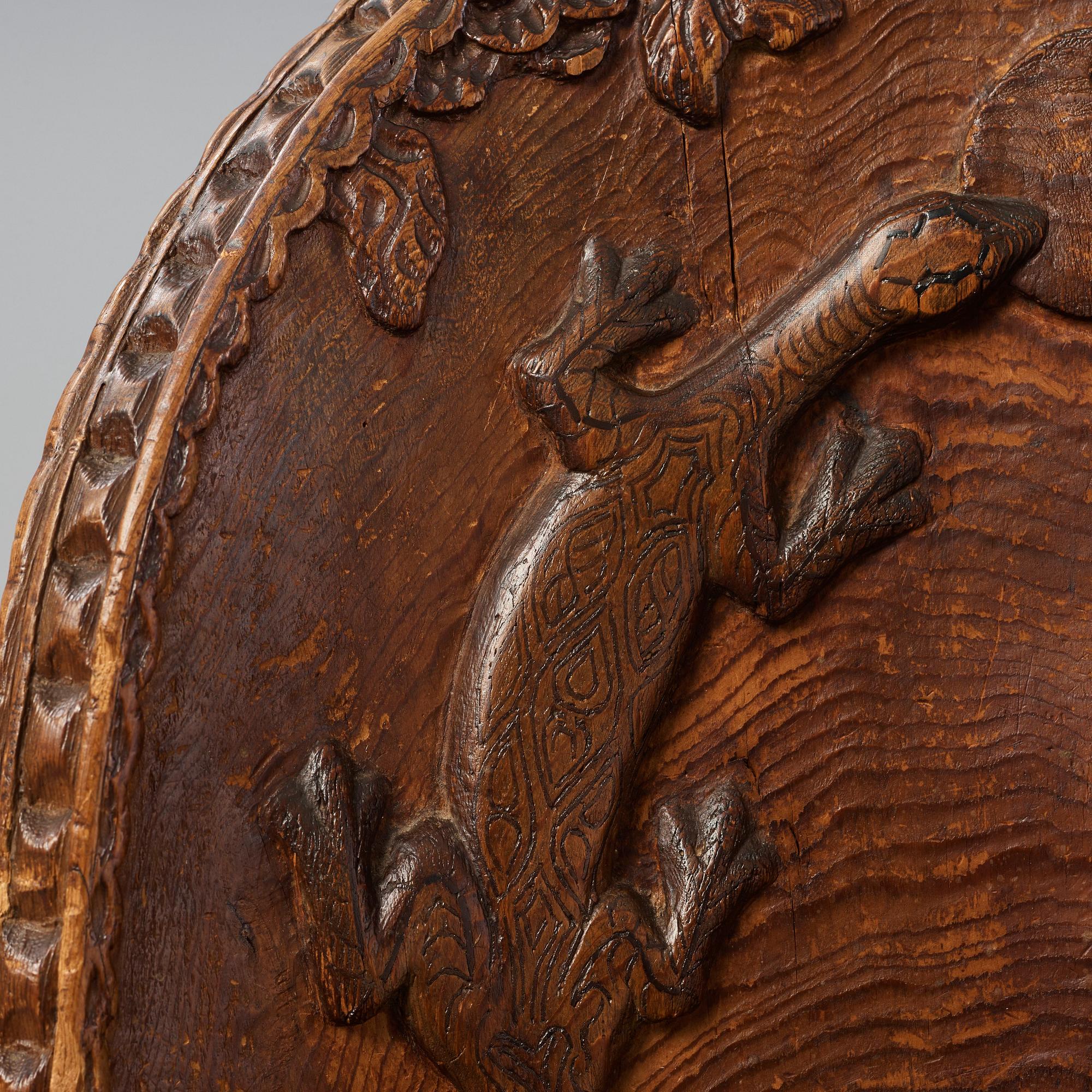
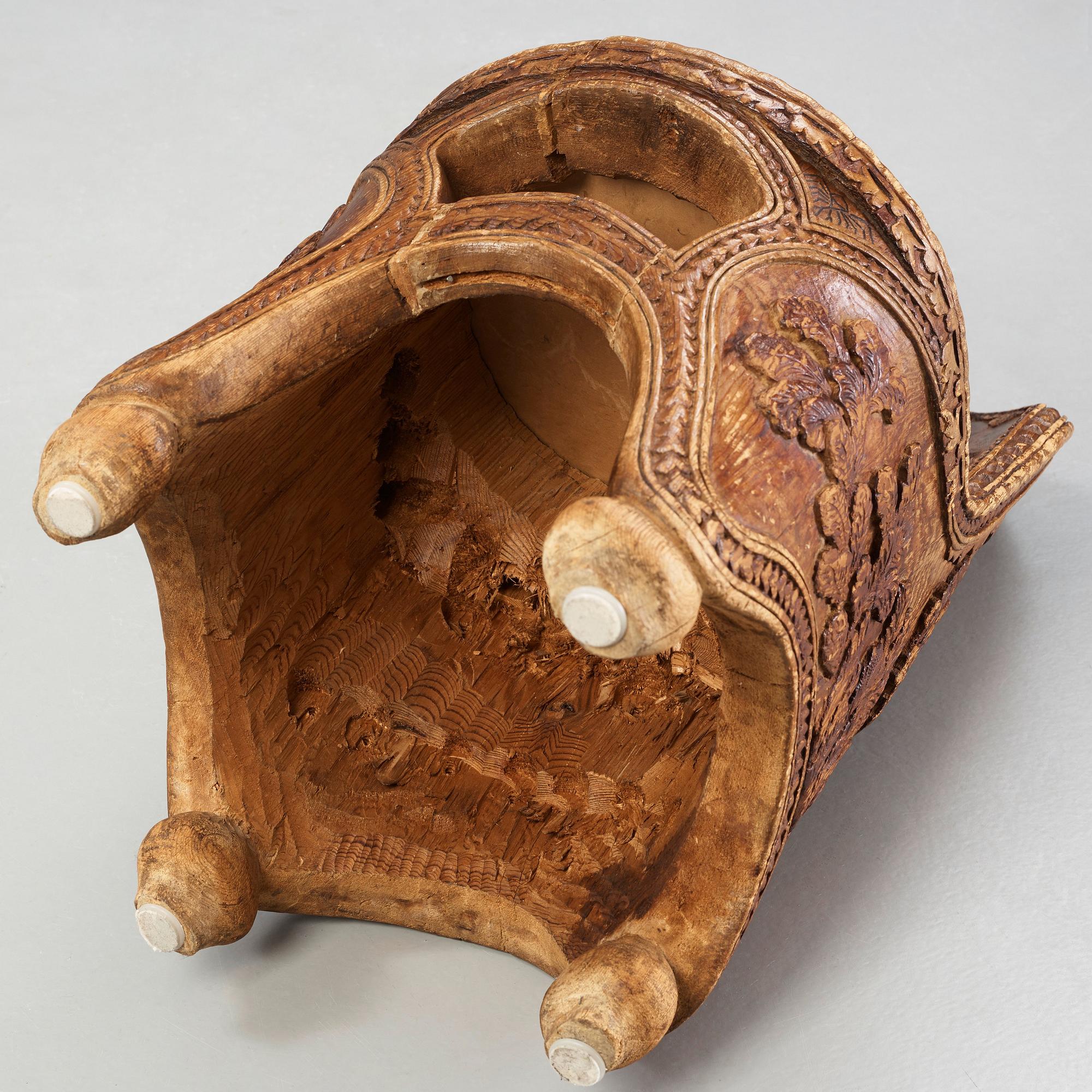
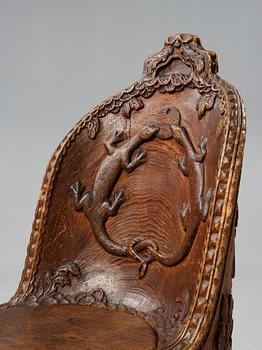
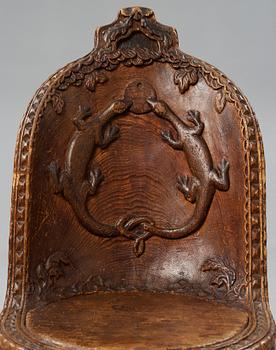
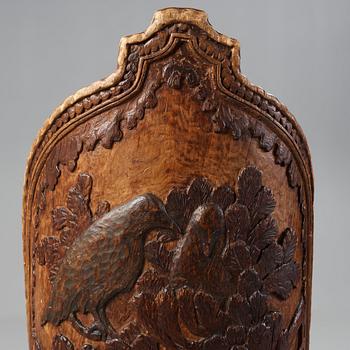
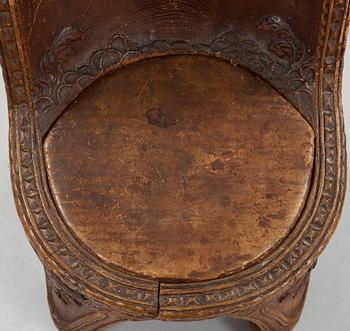
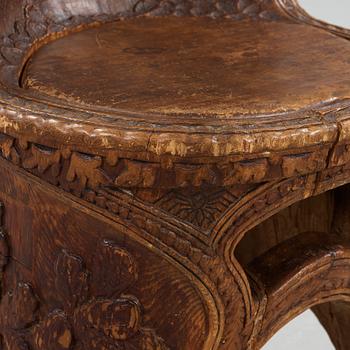
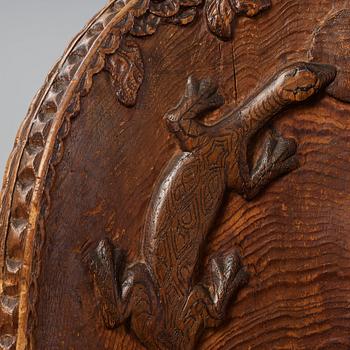
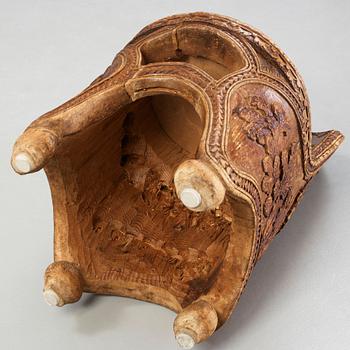
A so called 'stabbe' piece of furniture, sculptured out of one single piece of a tree trunk, richly carved decoration, the back rest with a pair of salamanders, the reverese with a raven branches and more, the seat with leather. Measurements height 104,5 cm, width 47 cm.
Dry cracks.
More information
Knut Fjaestad (1860-1937) was an older brother of Gustaf Fjaestad. Throughout his adult life he carved sculptures of wood in free moments, mainly different kinds of furniture in pine. His masterpiece, a richly carved Art Nouveau throne, took seven years to complete.
More about Knut Fjaestad
Inspired by his younger brother Gustaf's so-called "stabbestolar," Knut Fjaestad began to carve wooden furniture around 1907. He had then recently acquired the 18th-century house Bjälbo at Skärsätra farm on Lidingö, and had previously been active as a merchant in Gamla stan in Stockholm. His brother Gustaf Fjaestad had been carving furniture since 1894, when the earliest known "stabbestol" was made. This type of chair was produced and took its shape from a log (stabbe). Unlike his brother, who studied at the Royal Academy of Fine Arts, Knut was self-taught. Knut Fjaestad himself called his carved wooden furniture "works of imagination" and first showed them at an exhibition on Birger Jarlsgatan in Stockholm in 1923.
Read moreFor condition report contact specialist

Others have also viewed