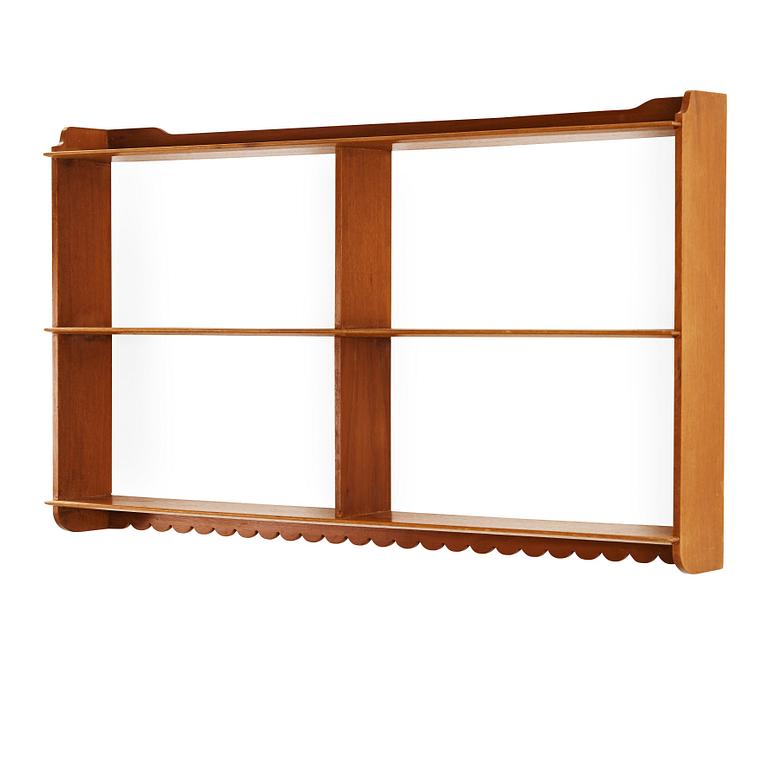
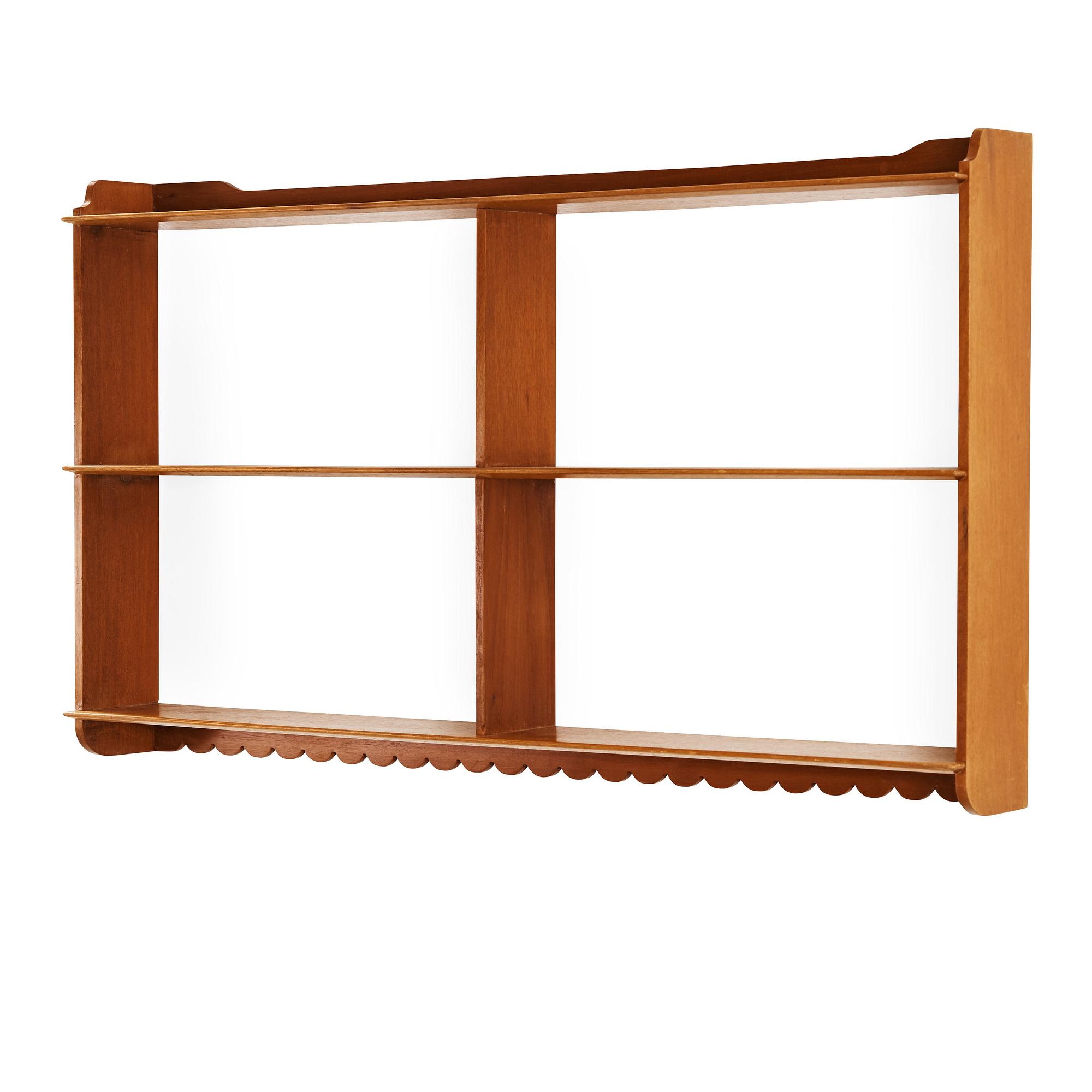
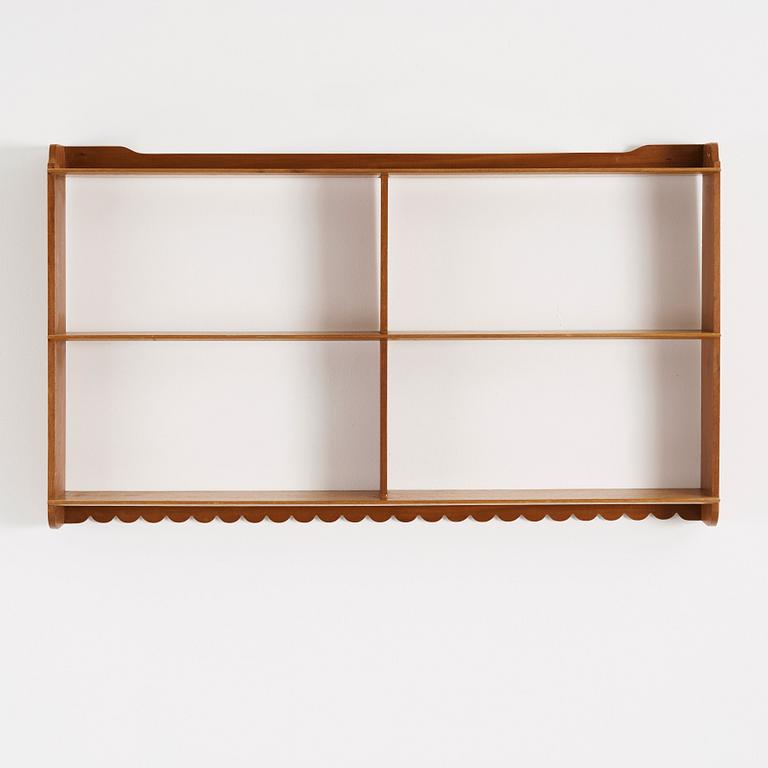
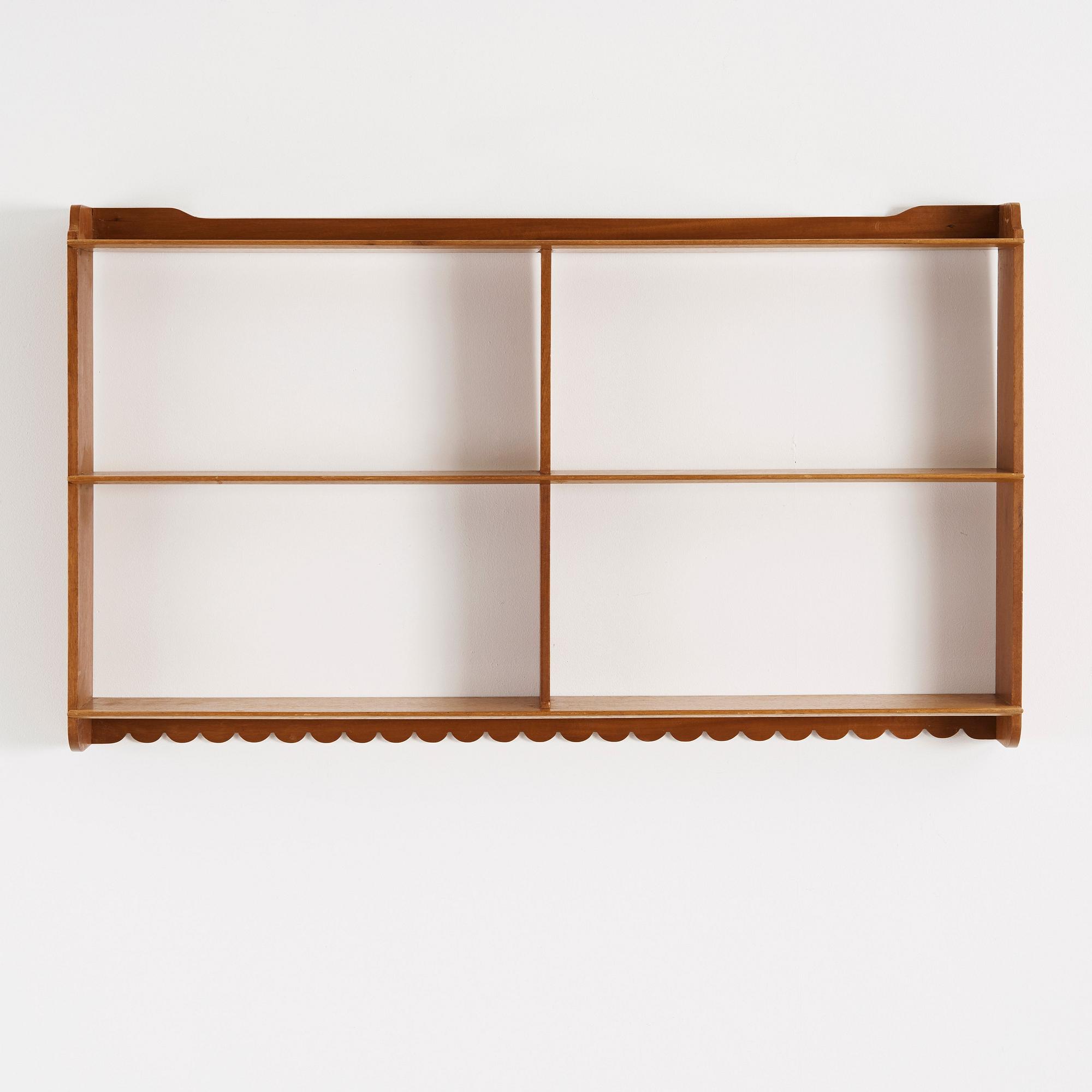
A mahogany wall shelf, Svenskt Tenn.
Width 102 cm, height 59,5 cm, depth 14 cm.
Some slight wear.
Provenance
The Collection of Hjalmar Olson (1902-1990), Gustavsberg. Acquired from Estrid Ericson, Svenskt Tenn, Stockholm.
Hjalmar Olson was president of Gustavsberg Porcelain Factory 1937-1968, and a Vice Chairman of LKAB 1962-1973. He was elected in 1942 as a member of the Academy of Engineering Sciences, where he was 2nd Vice Chairman from 1954 to 1956, and was appointed as the first honorary member in 1963. He received his degree in 1962 honorary doctor of technology at the Royal Institute of Technology in Stockholm.
As an engineer he studied modern porcelain industry in Germany. This took him to Gustavsberg porcelain factory already in 1929.
With his great interest in art and craft, he built up a private collection where quality was always of utmost importance. With help from close friends like Estrid Ericson, owner of Svenskt Tenn, he created his collection during the middle of the 1900's.
More about Josef Frank
Josef Frank was born in Austria and studied architecture in Vienna. As an architect, he worked with private home areas, villas and apartment buildings. In 1925 he started his own interior design firm Haus und Garten together with two architect colleagues. In connection with the advance of the Nazis, he emigrated to Sweden and was employed in 1934 at Svenskt Tenn. After the outbreak of World War II, Josef Frank, who came from a Jewish family, was forced into exile in New York. At Svenskt Tenn, he made an impact on the product range for four decades; especially when it comes to furniture and fabric prints.
Read moreImage rights
The artworks in this database are protected by copyright and may not be reproduced without the permission of the rights holders. The artworks are reproduced in this database with a license from Bildupphovsrätt.

Others have also viewed