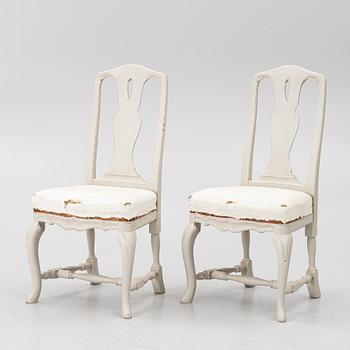
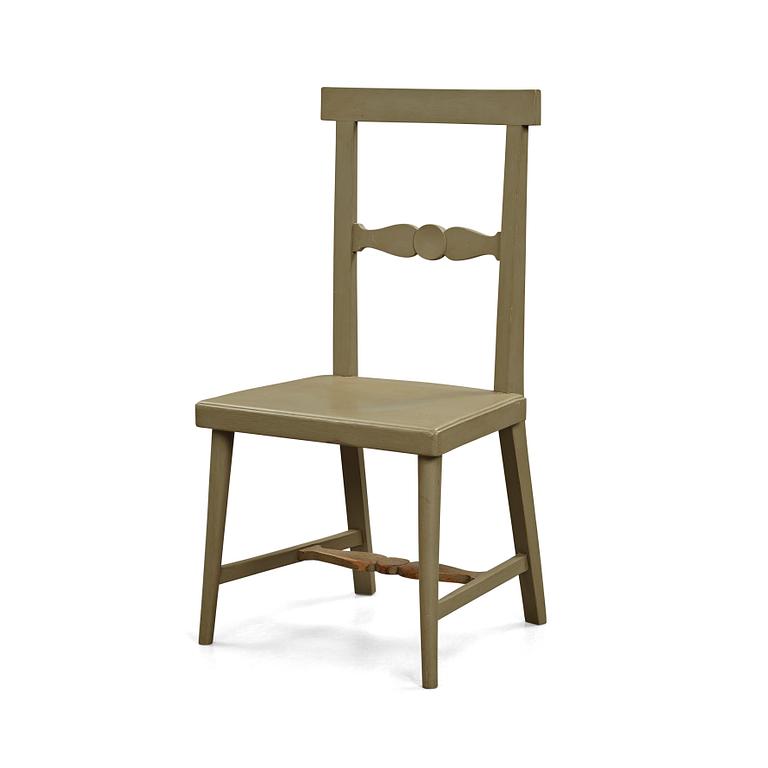
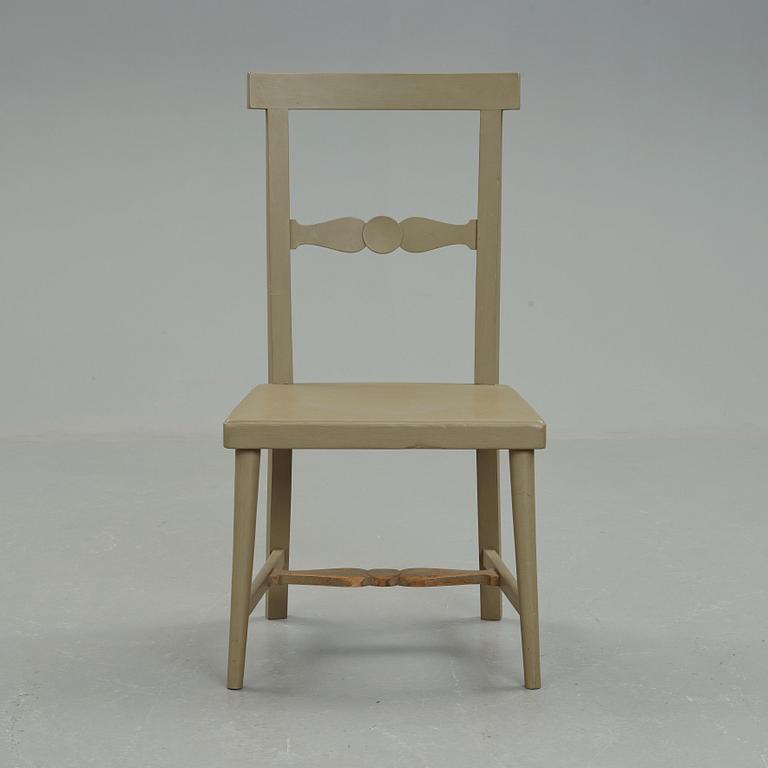
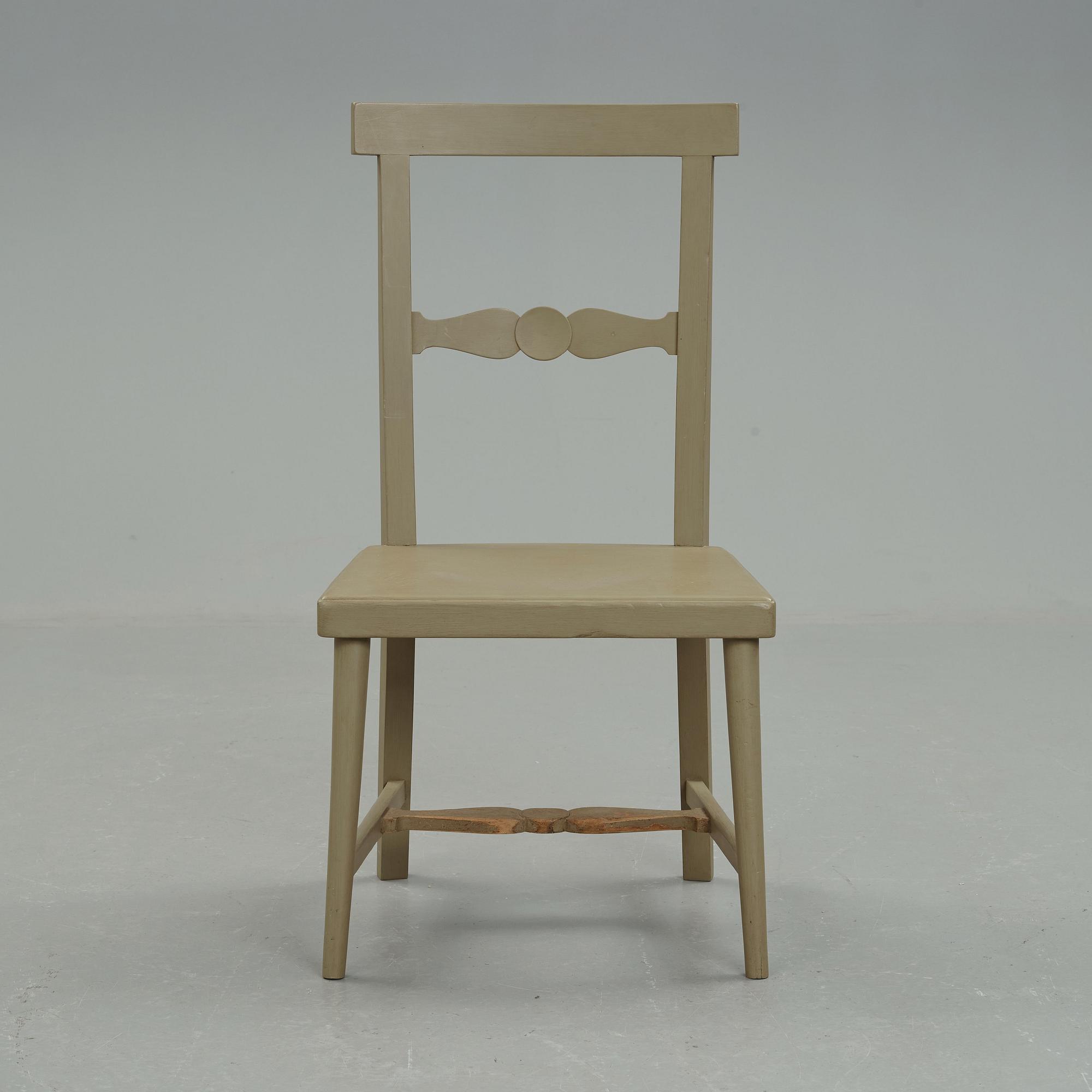
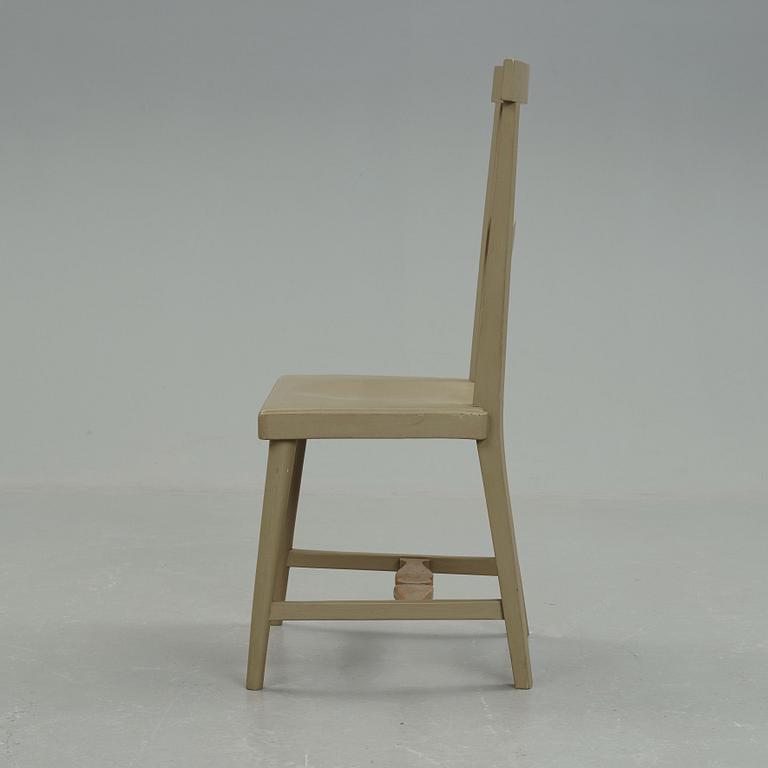
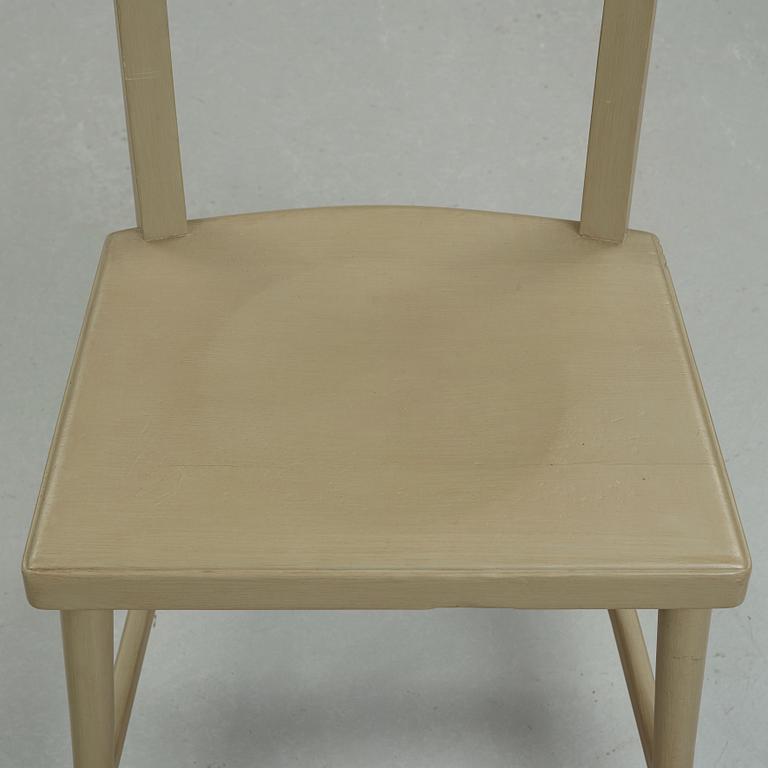
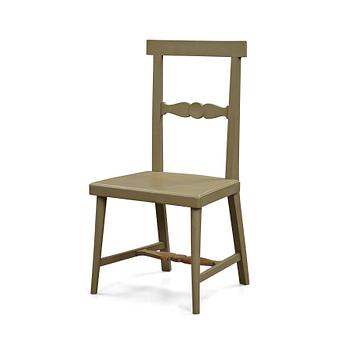
A school chair, lacquered in olive green, for Karlshamns Realskola, Sweden 1915-16.
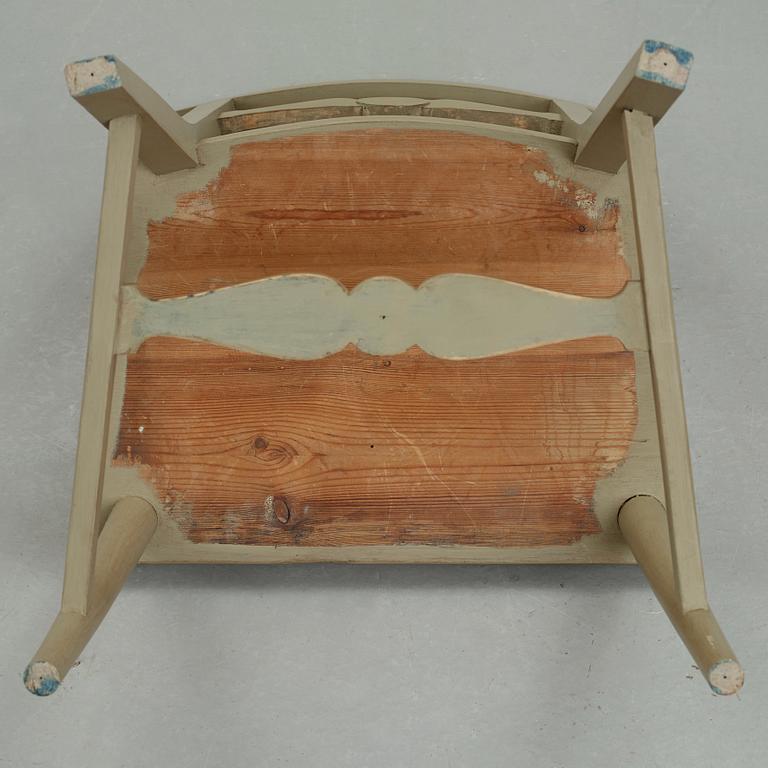
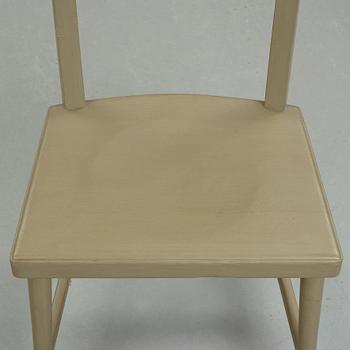
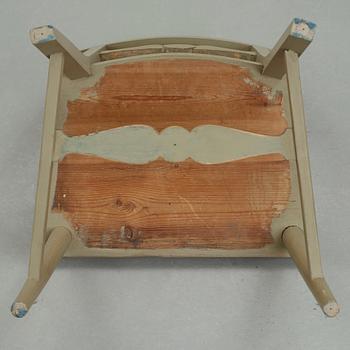
Restored surface with an olive green lacquer, height of the seat 44,5 cm, total height 97 cm.
Restored, minor wear.
Provenance
Karlshamns Realskola, Sweden 1915-16.
Literature
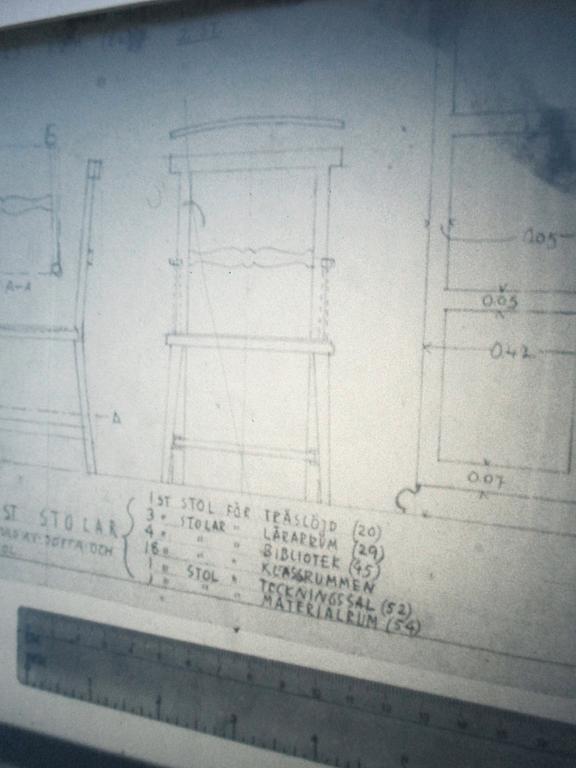
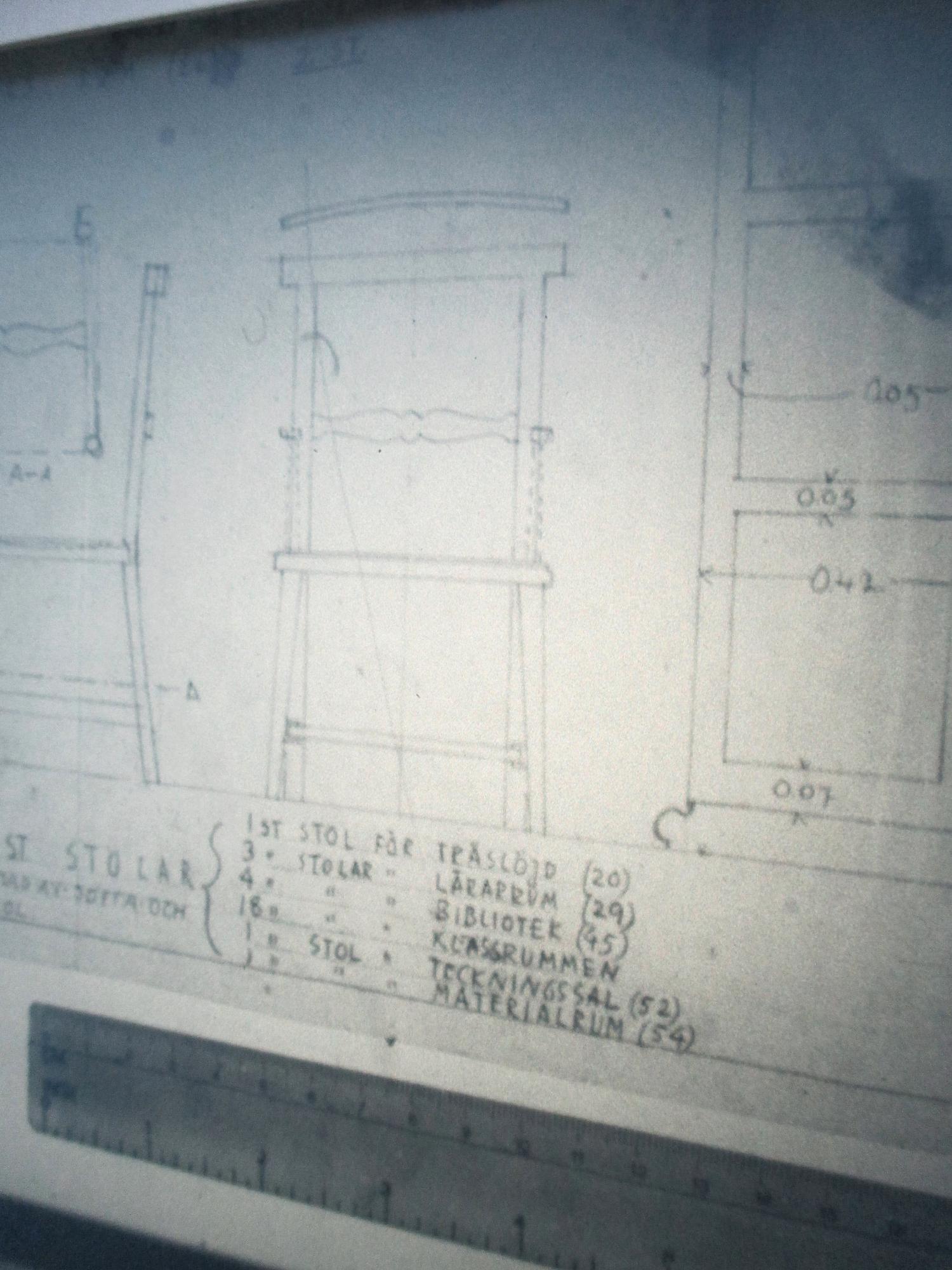
Picture from Gunnar Asplunds drawing archive.
More information
The school called "Realskolan" in Karlshamn, Blekinge, was Gunnar Asplund's first major architectural project, it was built in 1912-18. Asplund created an entity with precision to the details, thus he also designed the interiors.
In a letter filed, dated August 24, 1915, he offered to design furniture and fixtures for the school to a cost of 600 kronor.
A total of 29 chairs of this model were manufactured by three different local carpenters and then they were painted by a fourth craftsman.
In the 1960s-70s, the school was renovated and the furniture was sorted out, only a few seem to have survived until today.
More about Gunnar Asplund
Gunnar Asplund is considered one of the most significant and leading architects during the interwar period, both in Sweden and internationally. Asplund is seen as one of the foremost representatives of 1920s Nordic classicism, with the Skandia Theatre (1922) and the Stockholm Public Library (1928) as prominent examples. He was also one of the pioneers of functionalism, which he introduced in Sweden with the Stockholm Exhibition in 1930, where he was the chief architect.
Read moreFor condition report contact specialist










Others have also viewed