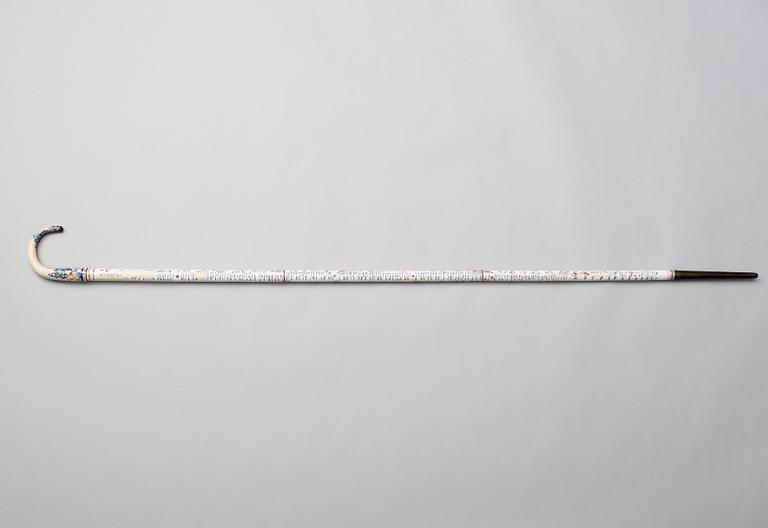
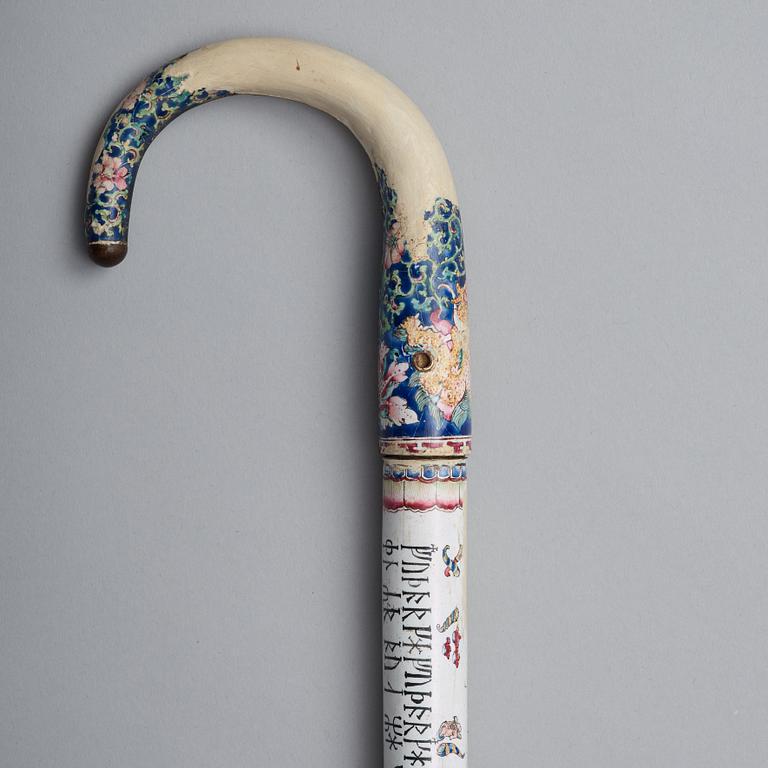
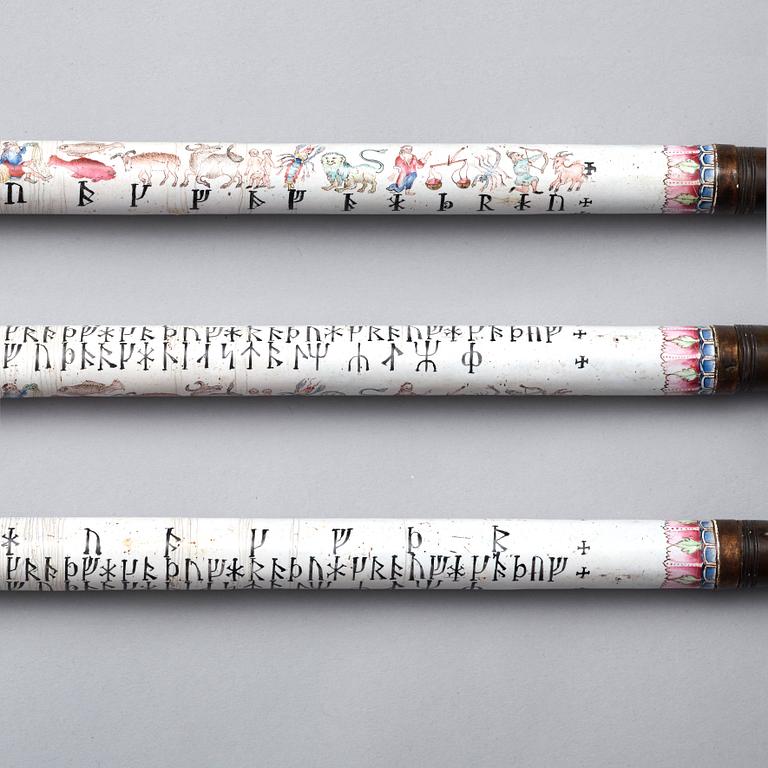
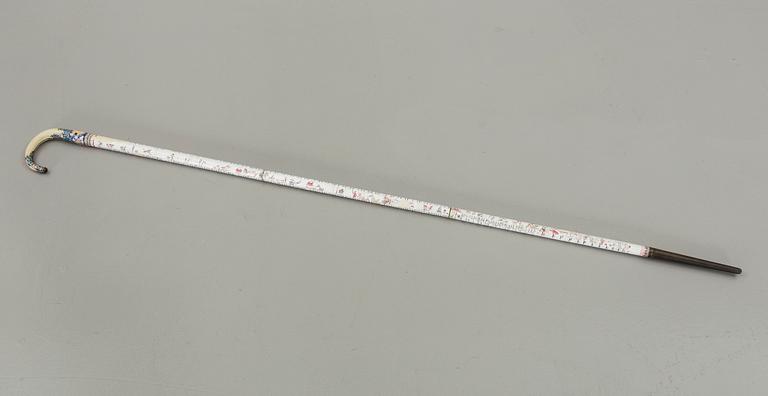
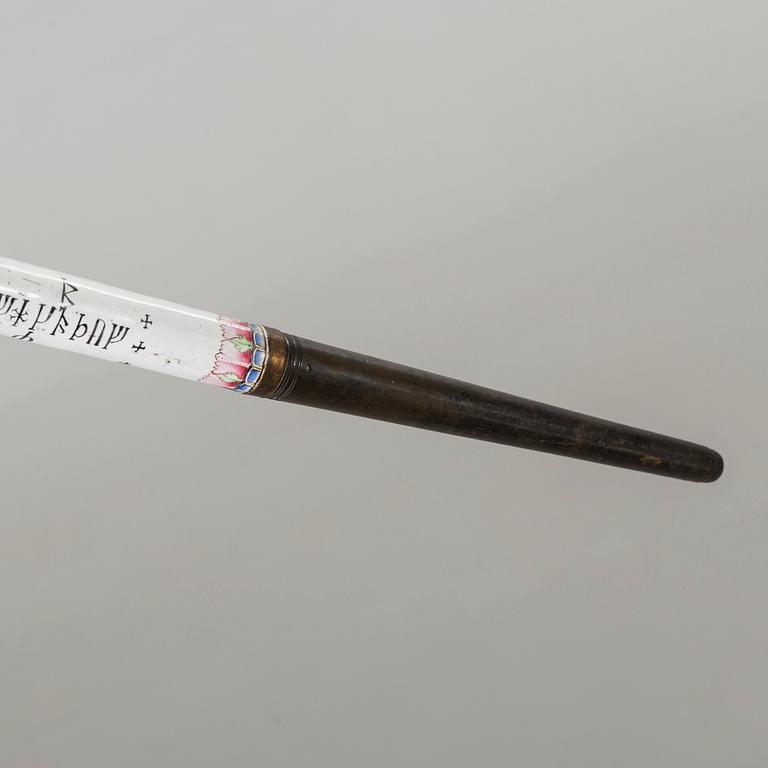
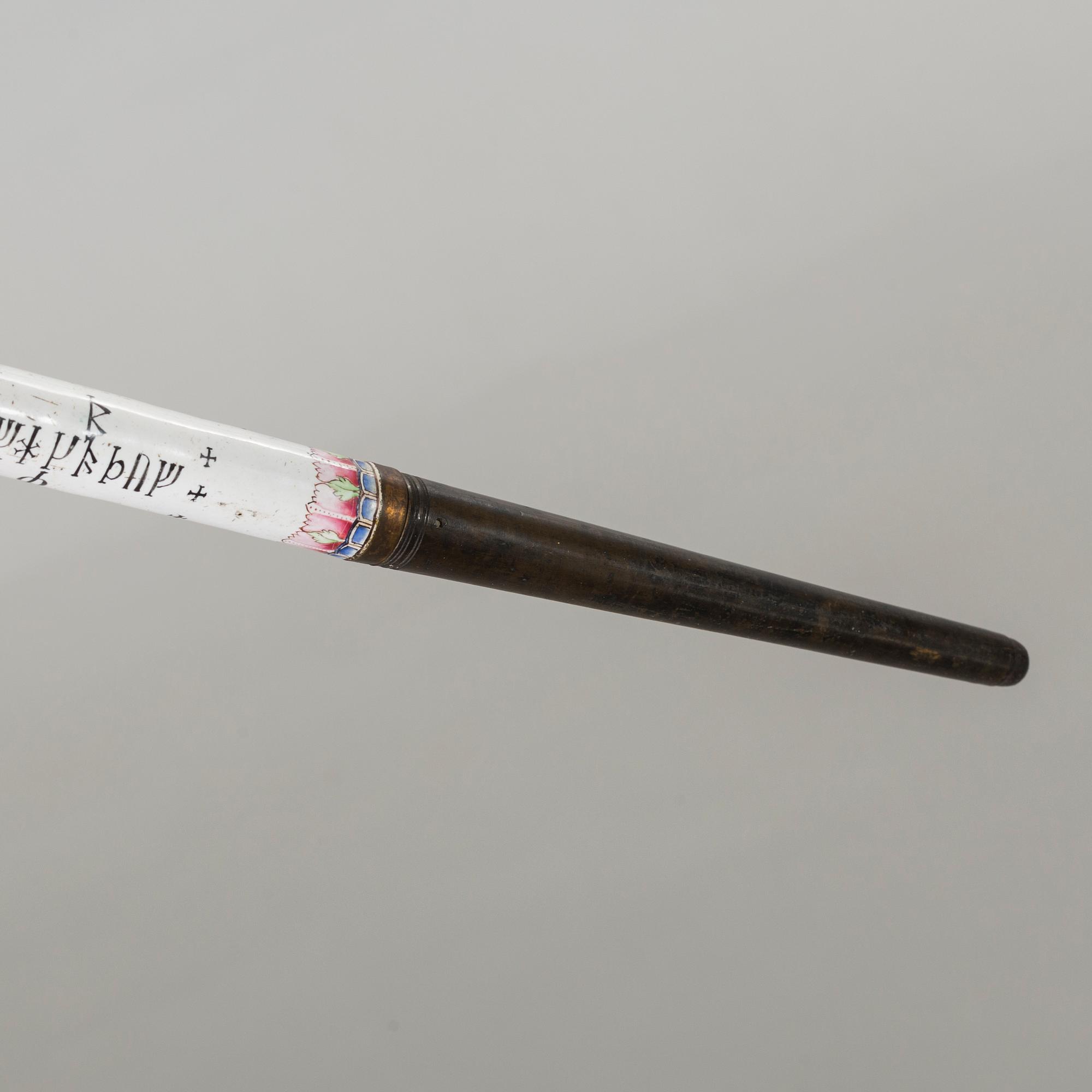
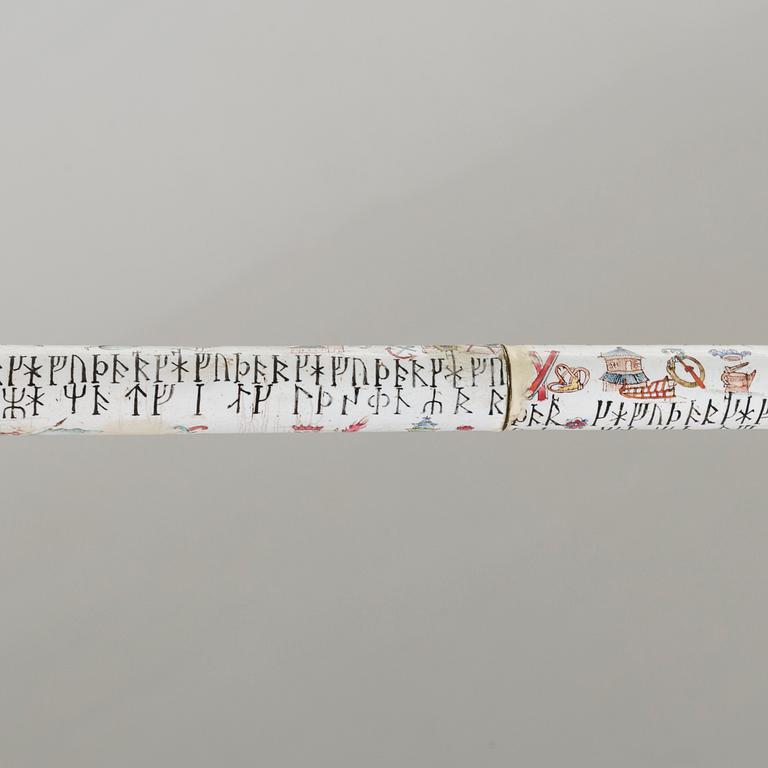
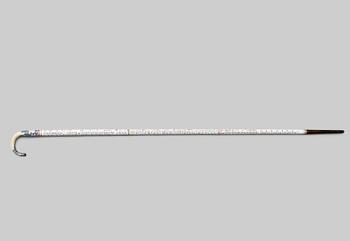
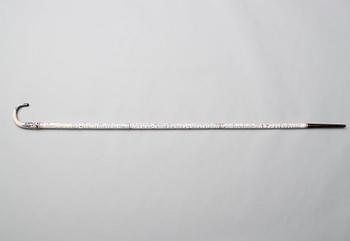
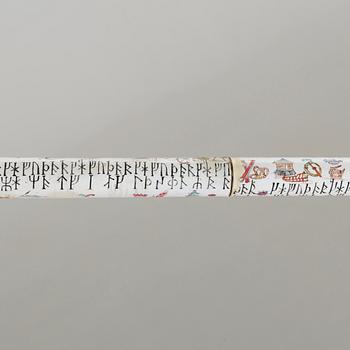
Made as a walking stick, decorated with the futhark repeating in traditional way. Painted decoration with zodiac symbols and figures along the lenght. Ferrule of brass at the end. Lenght 135,5 cm.
Damages, repairs.
Provenance
From the Collection of antique dealer Sten Röing (1880-1965), the collection was added to by his son Max Röing (1916-1984) during the 1950-60's, thence by descent.
More information
A Runic calendar (also Rune staff or Runic Almanac) is a perpetual calendar, variants of which have been used in Northern Europe until the 19th century.
The calendar is based on the 19-year-long Metonic cycle, correlating the Sun and the Moon. Runic calendars were written on parchment or carved onto staves of wood, bone, or horn. The oldest one known, and the only one from the Middle Ages, is the Nyköping staff from Sweden, believed to date from the 13th century.
For condition report contact specialist















Others have also viewed