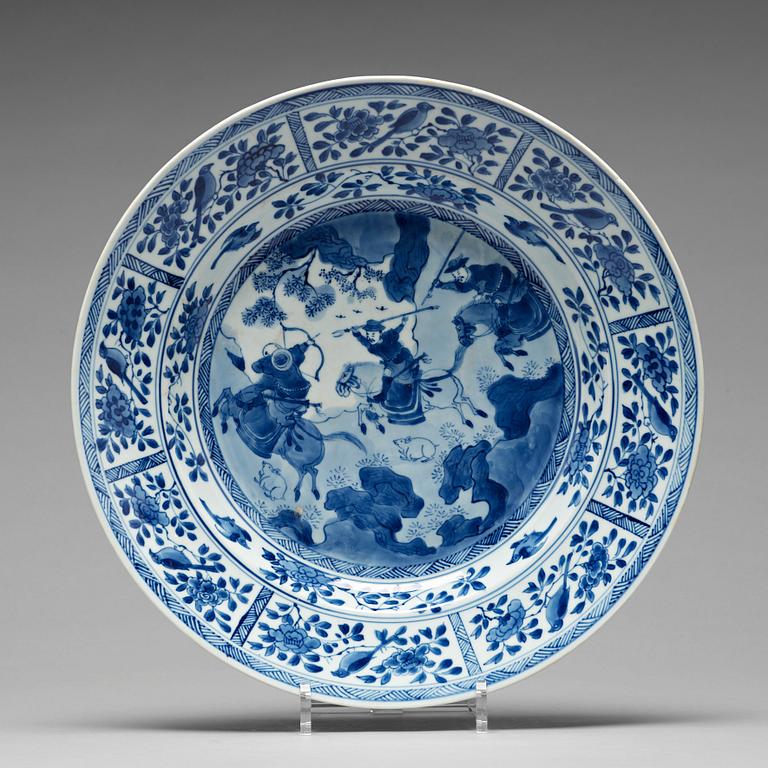
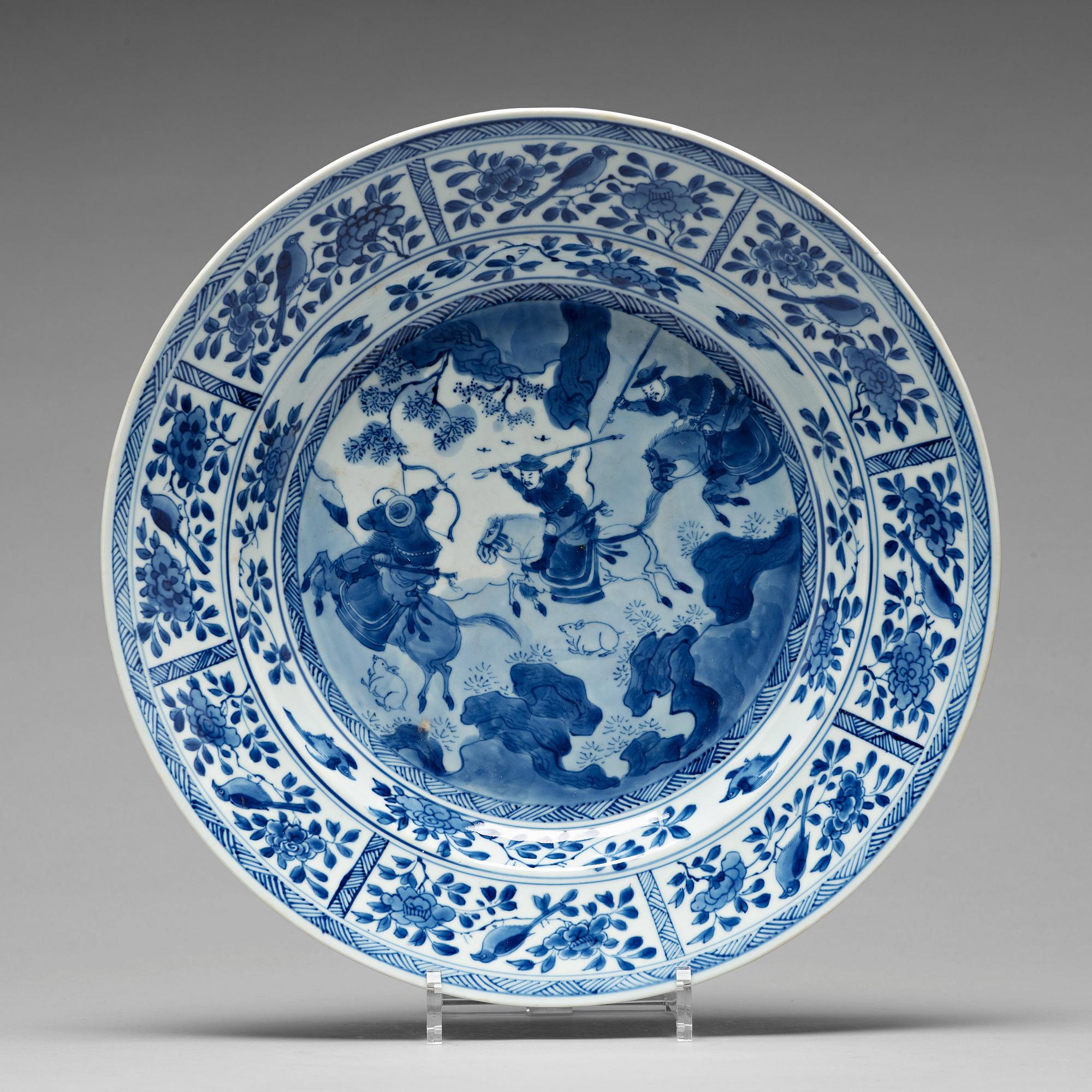
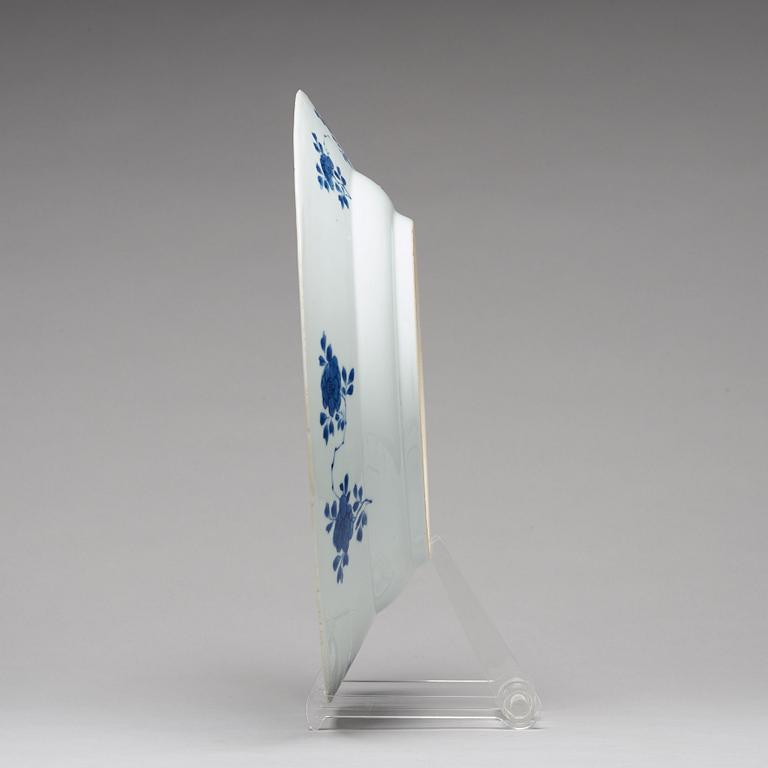
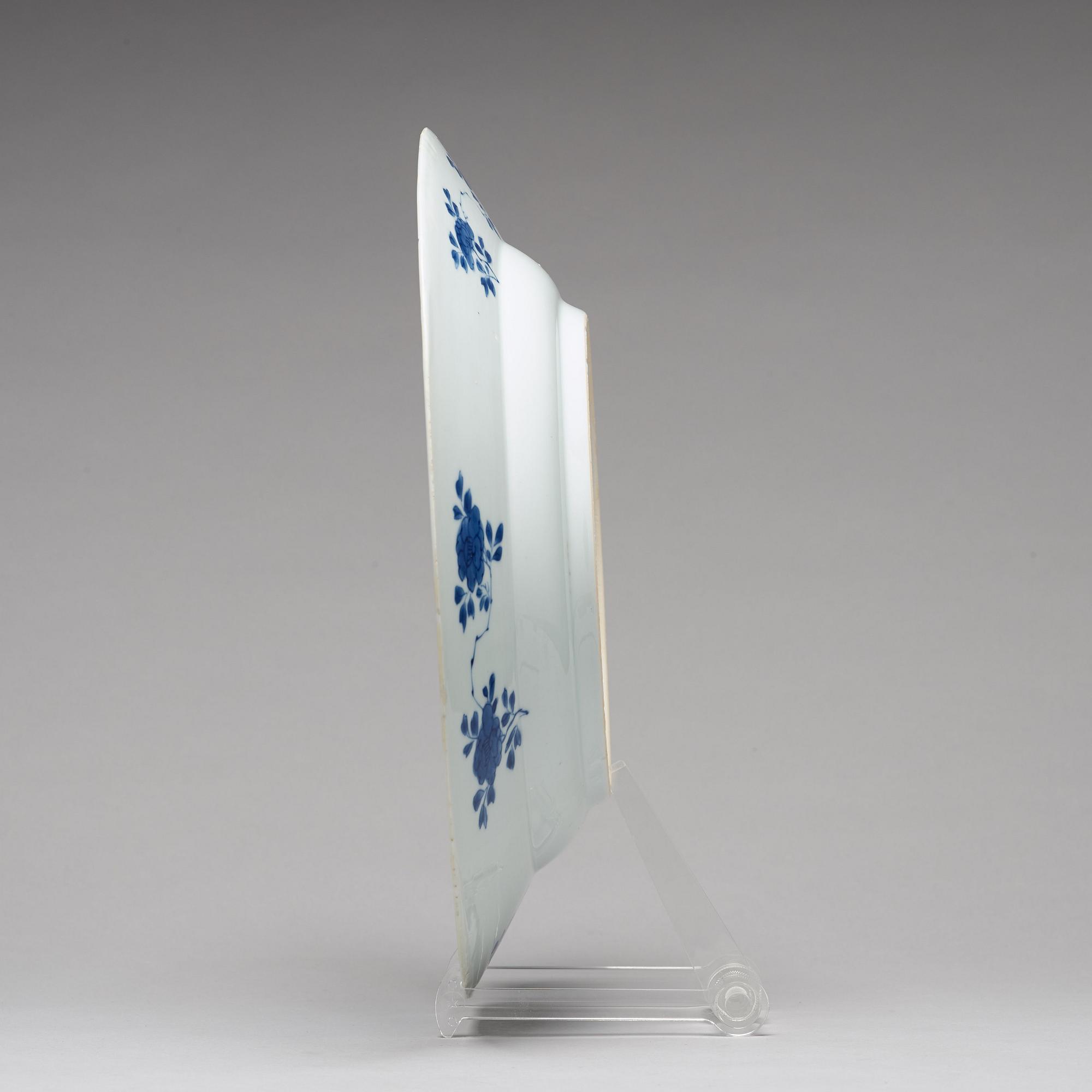
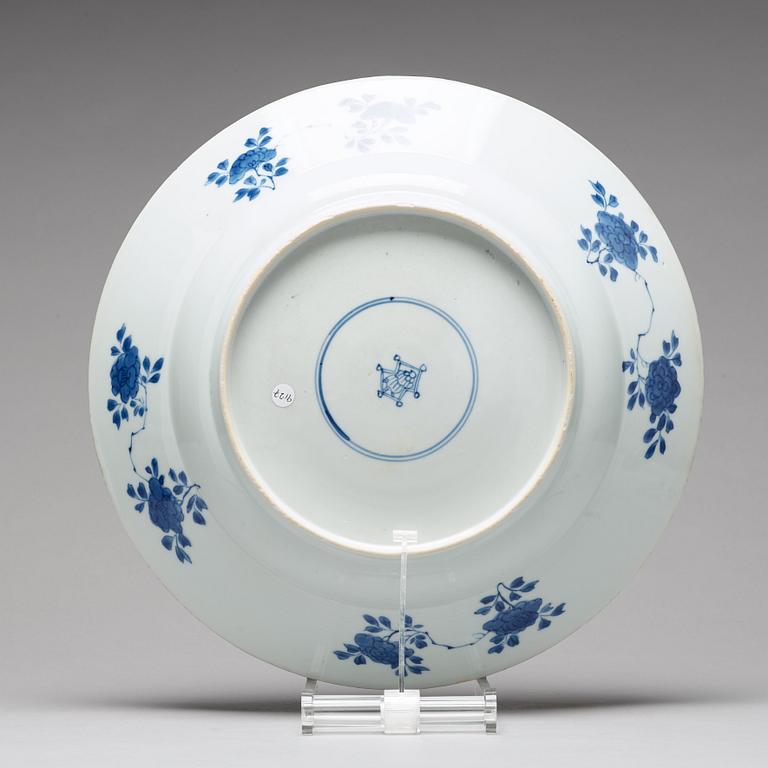
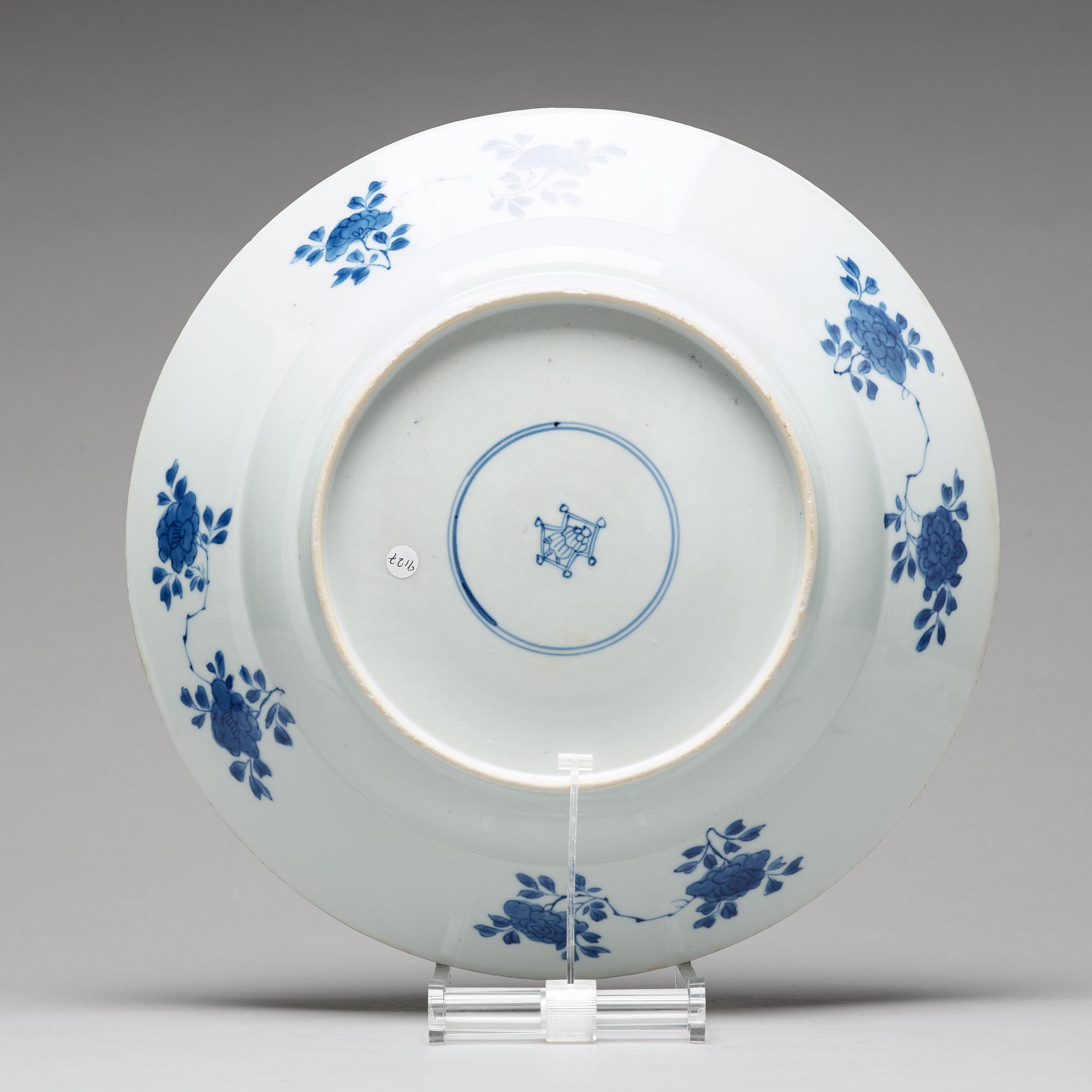
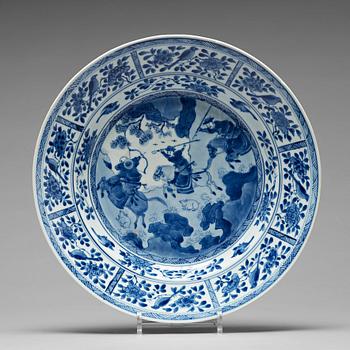
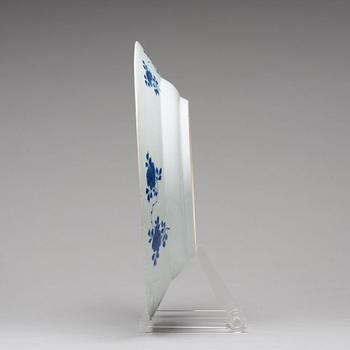
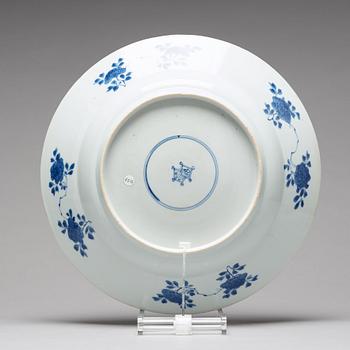
Decorated in vibrant inky blues with three noble huntsmen on horseback with bows and lancers chasing hare. With a border of panels containing birds amongst flowers and foliage. There are sprays of flowers to the underside of the rim. Diameter 36,5 cm.
Restored chips, restored crack. Small fritts.
Provenance
Purchased at Guest & Gray, London, 2005.
The Avalon Collection.
This collection, which in the main focuses on the Interregnum and Kangxi periods has been both carefully and sensitively formed over the last twenty-five years. The collector, a member of the English Oriental Ceramic Society, has assembled the collection with an eye for provenance whilst purchasing from old European collections, well-established antique dealers and at auction.
Academically, the pieces have been well researched both in terms of their symbolism and narrative themes. In many instances the imagery on the pieces has been referenced to episodes in the romantic and historic novels of Chinese mythology, which were used extensively in the decoration of seventeenth century Chinese porcelain.
Literature
Hunting scenes became popular in the seventeenth century after the Manchurians overthrew the Ming dynasty in 1644. The Kangxi emperor loved hunting and it became more a ritual than an imperial pastime – continuing the cultural roots of the Manchu nobility, whilst emphasising their ethnic identity as descendants of the Tartar horsemen from the Mongolian Slopes.
For condition report contact specialist

Others have also viewed