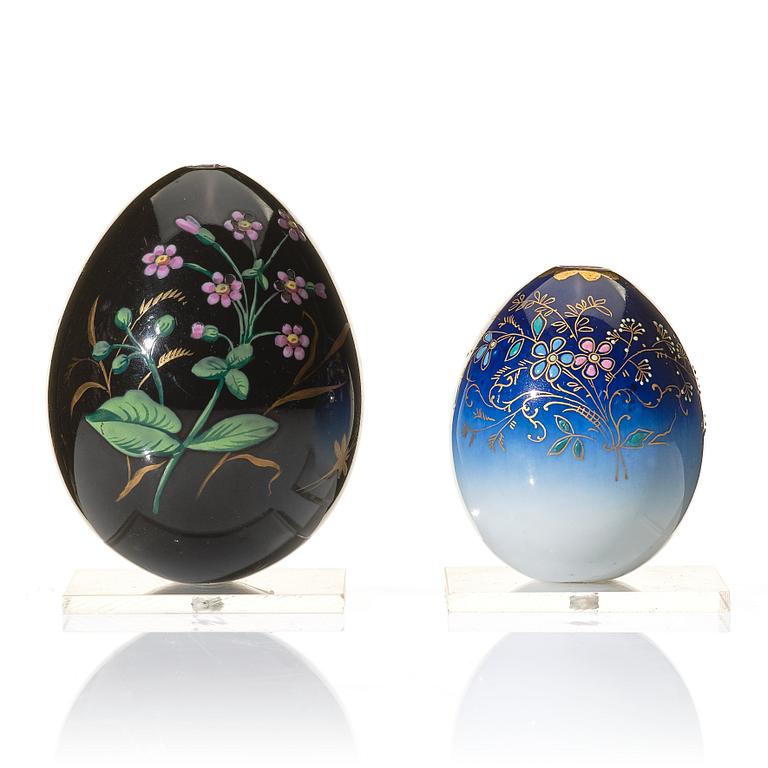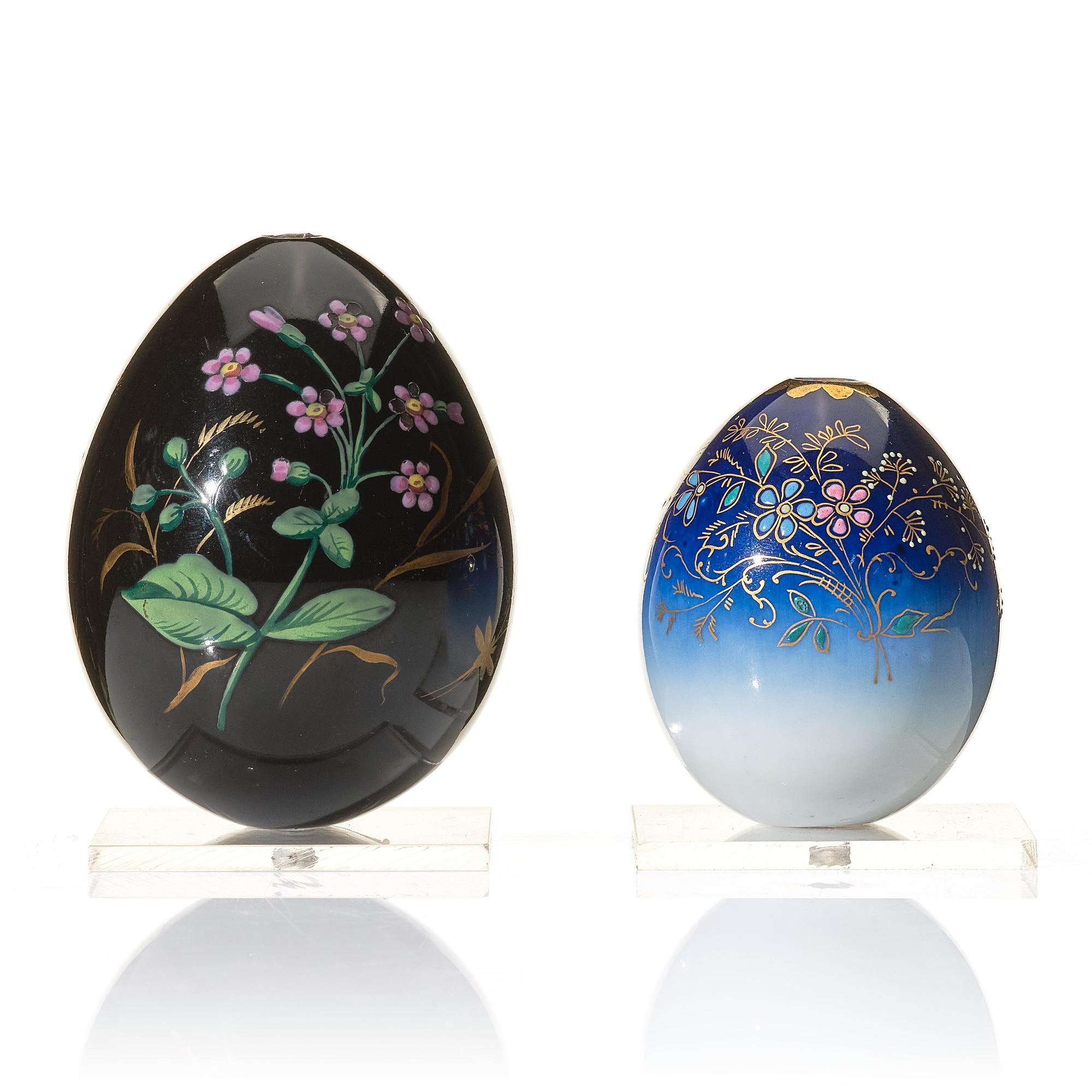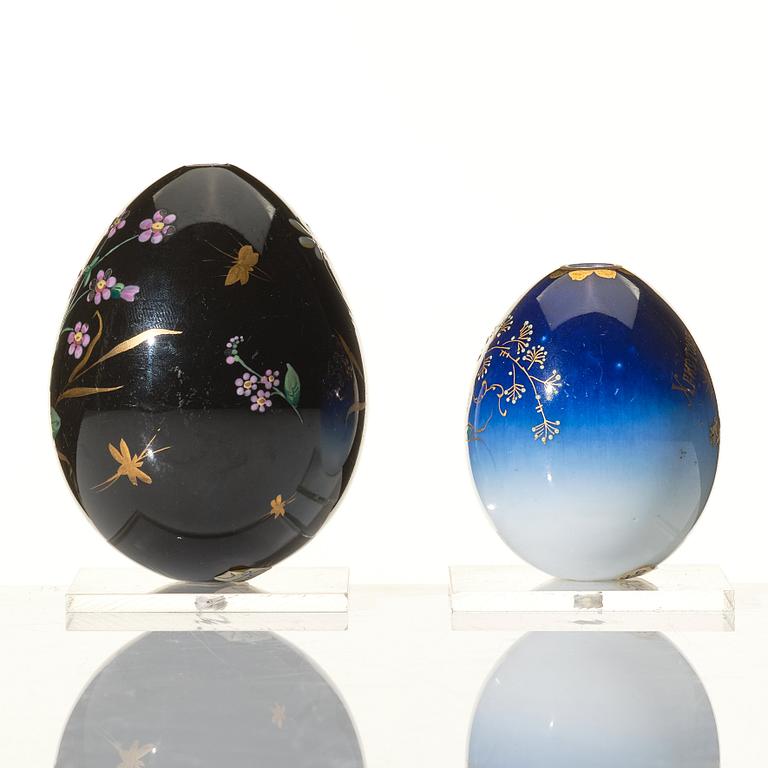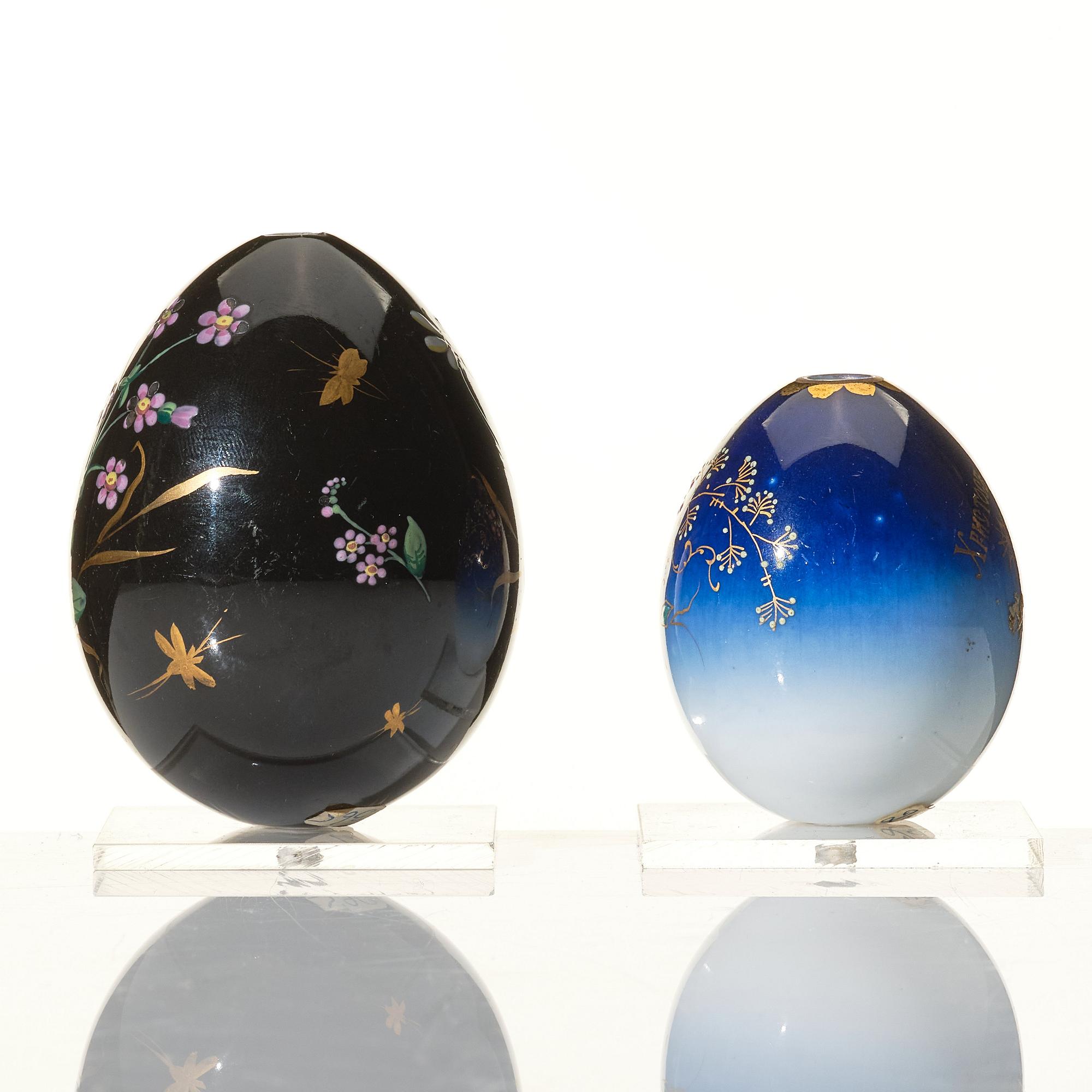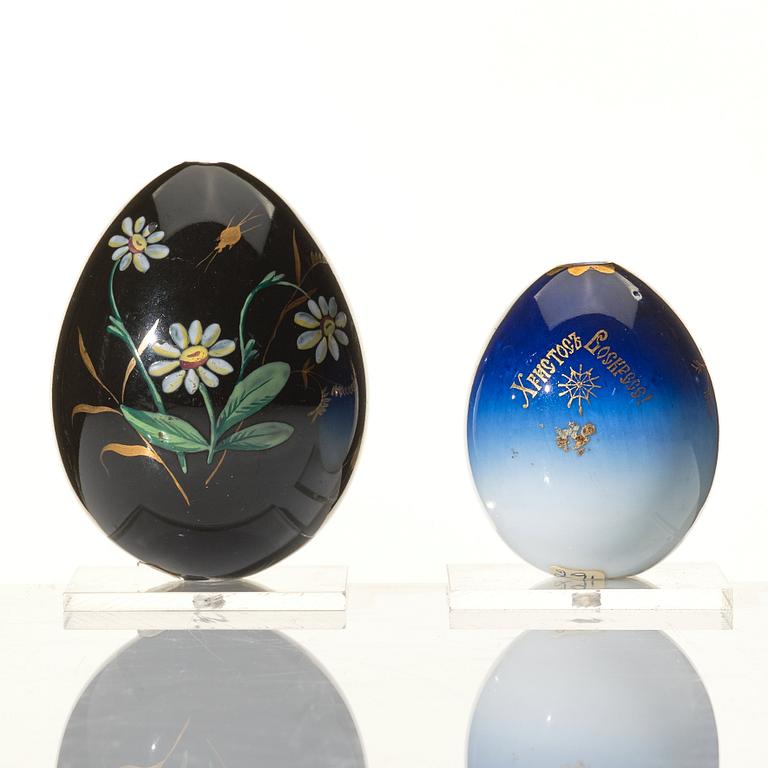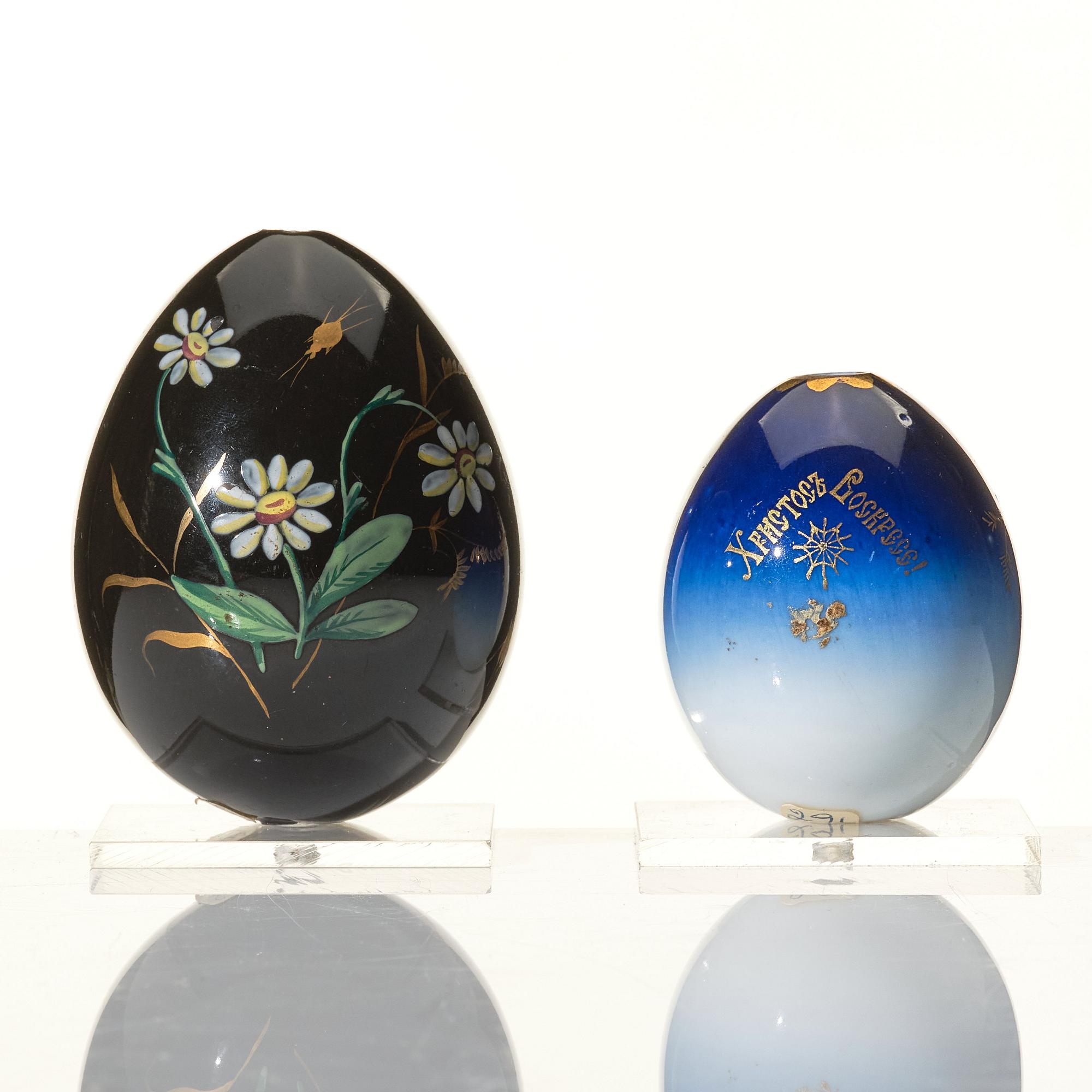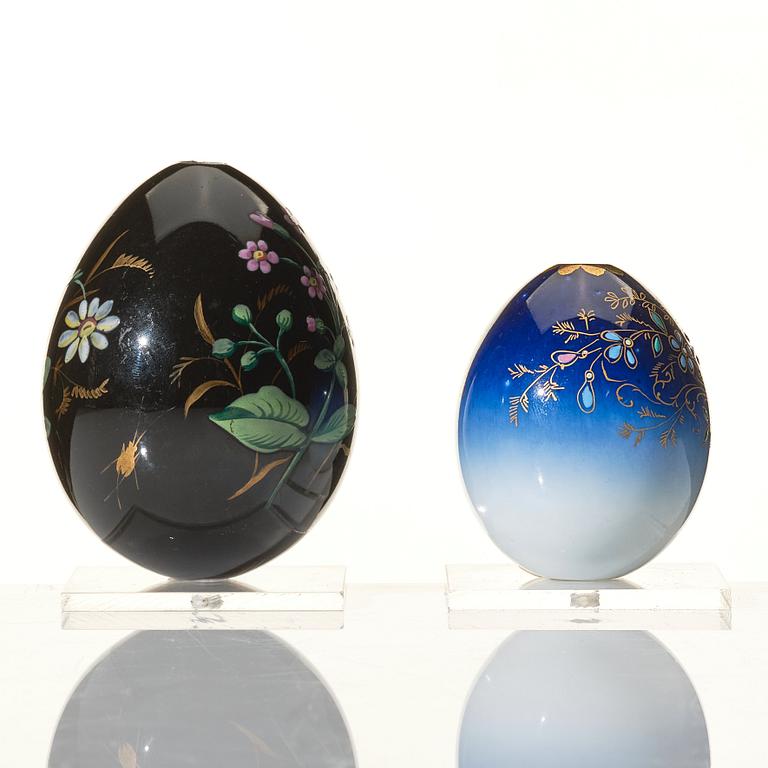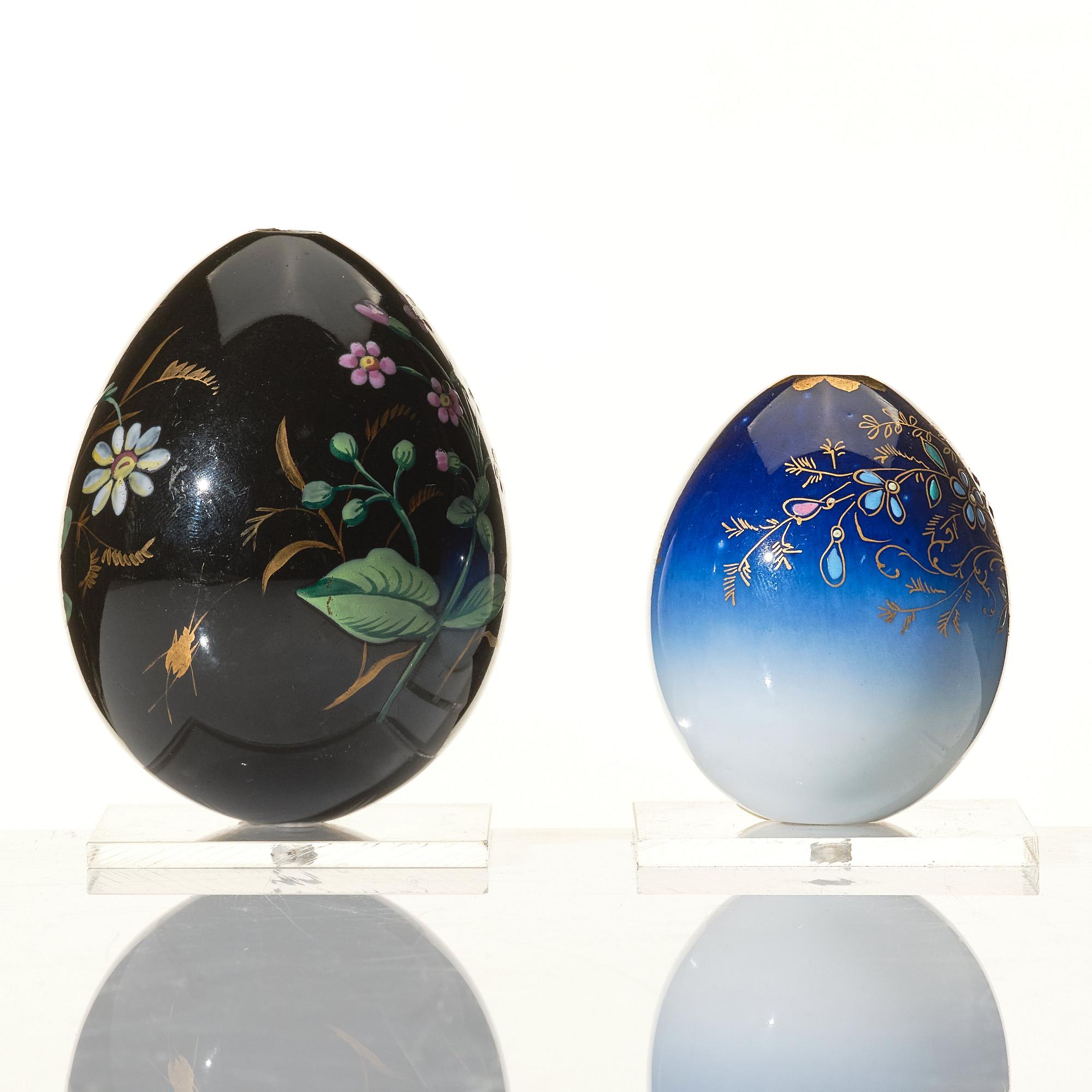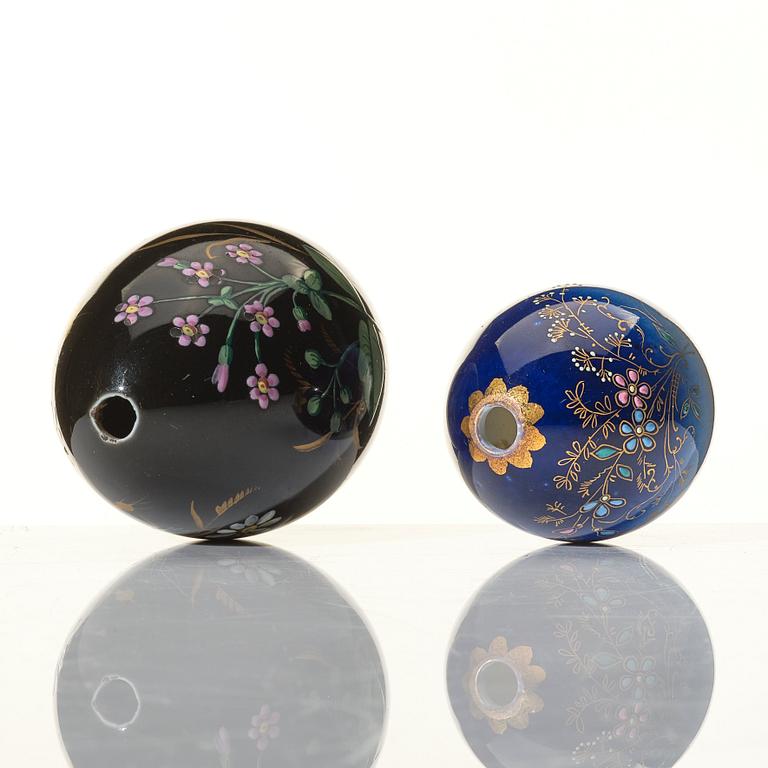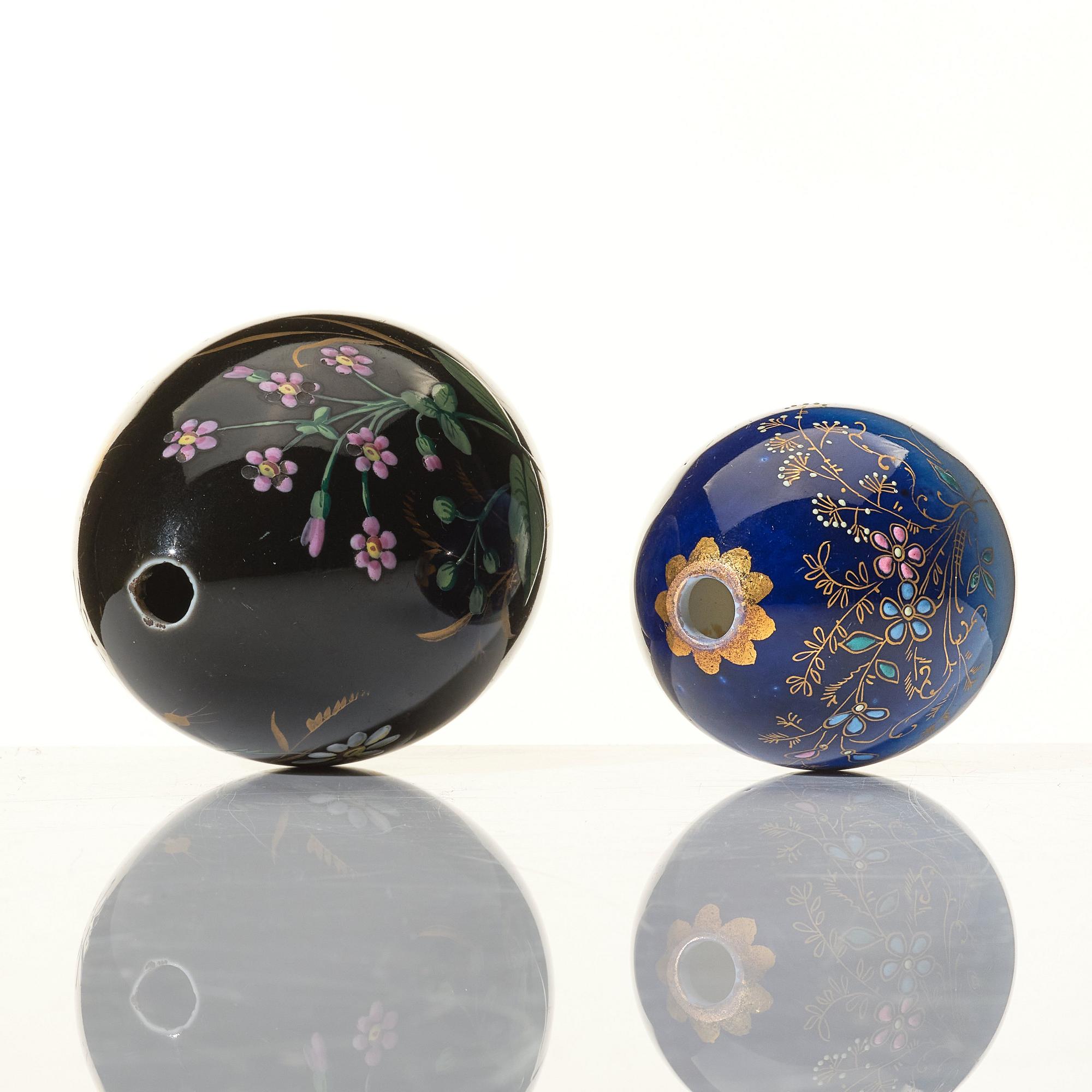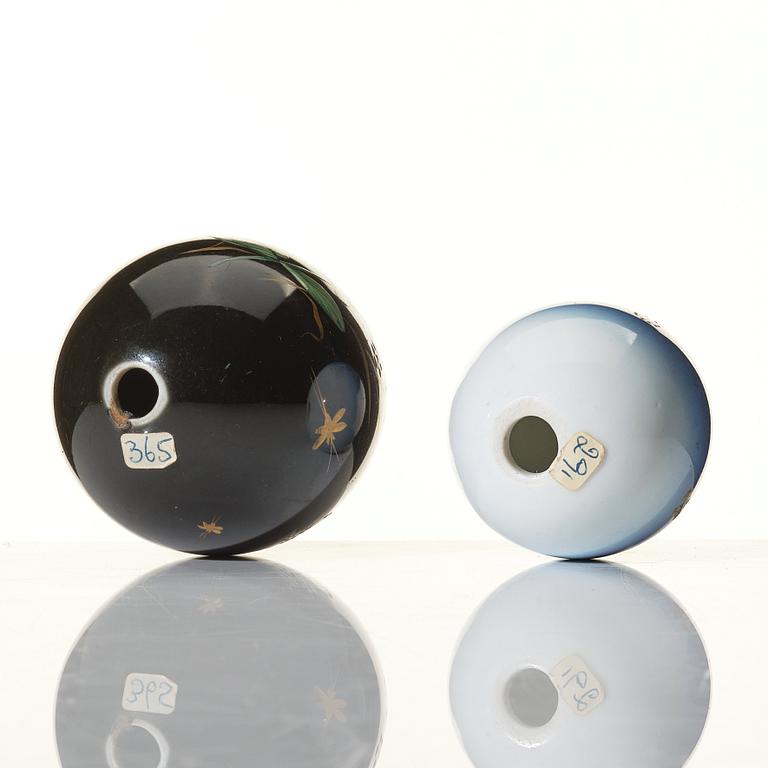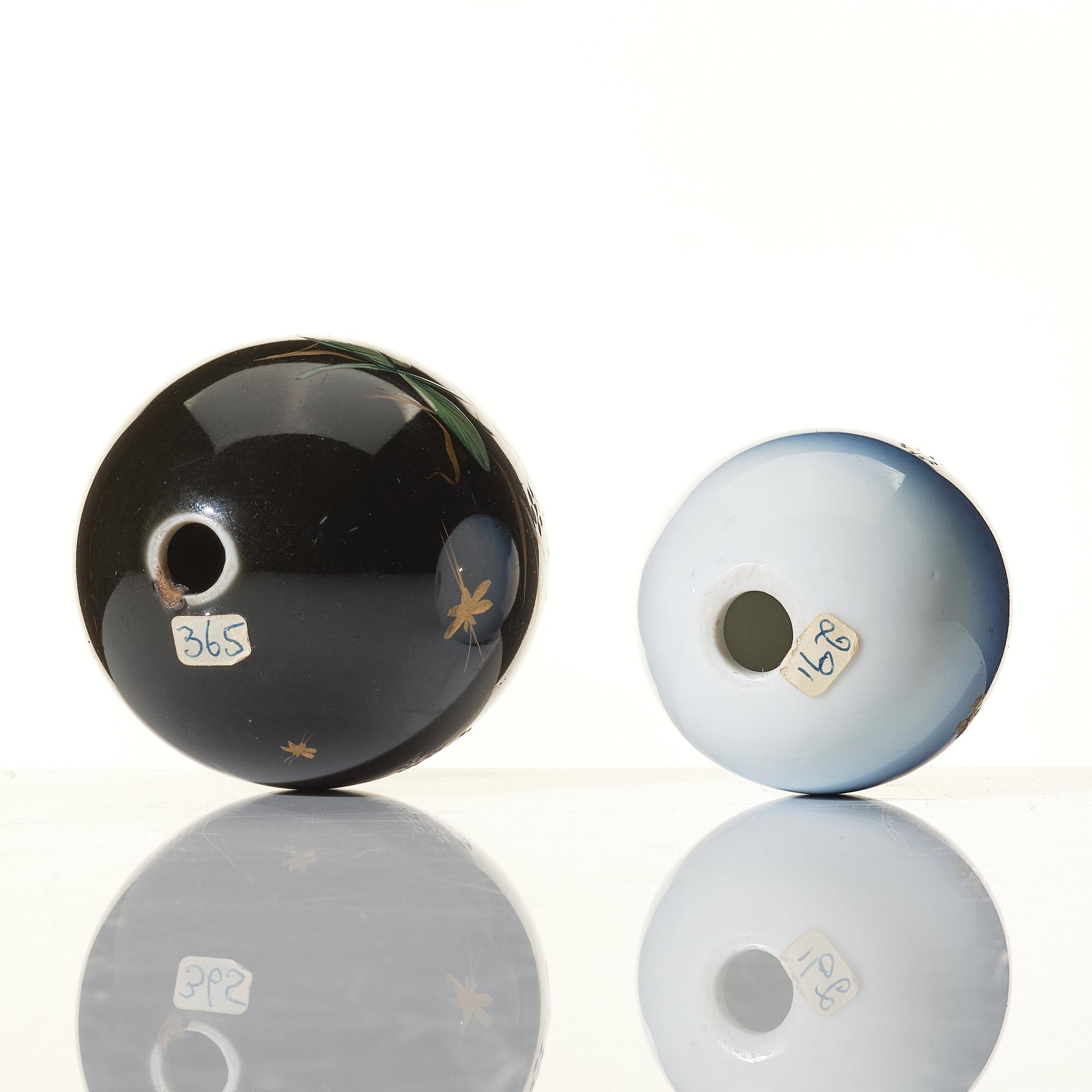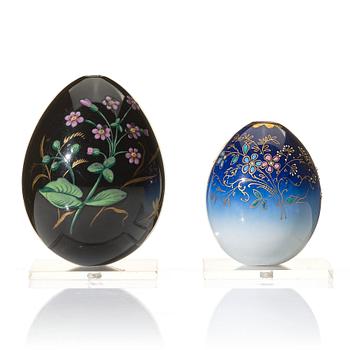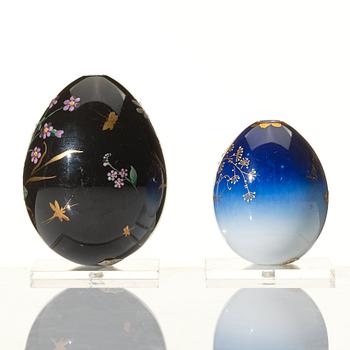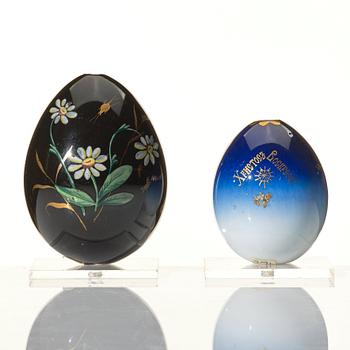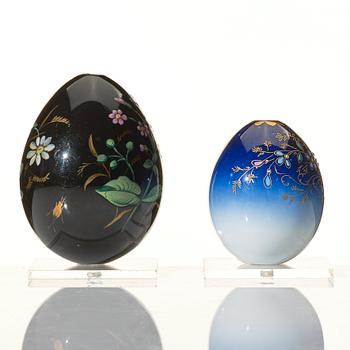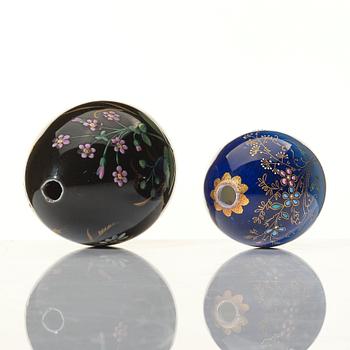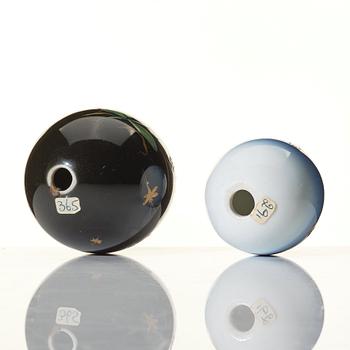
Painted and gilded decoration. Height 6,5-8,5 cm.
Wear.
Provenance
The private Collection of Nils Nessim (1916-1974), thence by descent.
Nils Nessim (1917-1974), was a Swedish businessman and carpet dealer, son of the Director and Carpet specialist Jean B Nessim (1887-1946). In 1942 he founded AB Nils Nessim in 1942, he expanded and in the 1960’s he founded Nils Nessim International and Nils Nessims Antiques. Nils were early schooled in the carpet business by his father, and went on many business trips to aquire carpets and goods for the stores. He travelled the world and built up an impressive collection of Antiques and Asian Works of Art alongside the carpet business. In 1959 he became the first westener to be allowed to export antiques from China. He is well known for his collection of Russian Easter Eggs, and at one point he is said to have had over 1000 of them.
Literature
Eggs with pale cream or pastel grounds & decorated with floral studies in Japonesque or loose brushwork inspired by Impressionist painting were particularly popular in the last decade of the nineteenth century.For other examples from the Imperial Porcelain Factory, see: Tamara Kudriavtseva & Harold Whitbeck, Russian Imperial Porcelain Easter Eggs. Русские императорские фарфоровые пасхальные яйцa (London: Merrell, 2001), nos. 203-212, pp. 255-259.The creamy pale green ground ground was obviously influenced by the cream-colored glazes that Lenox had shown at the Paris International Exposition in 1889 to great acclaim & which was imitated by factories throughout Europe & America. At the Imperial Porcelain Factory, these muted pastel glazes were used as grounds for floral or Russian Style ornament.
For condition report contact specialist