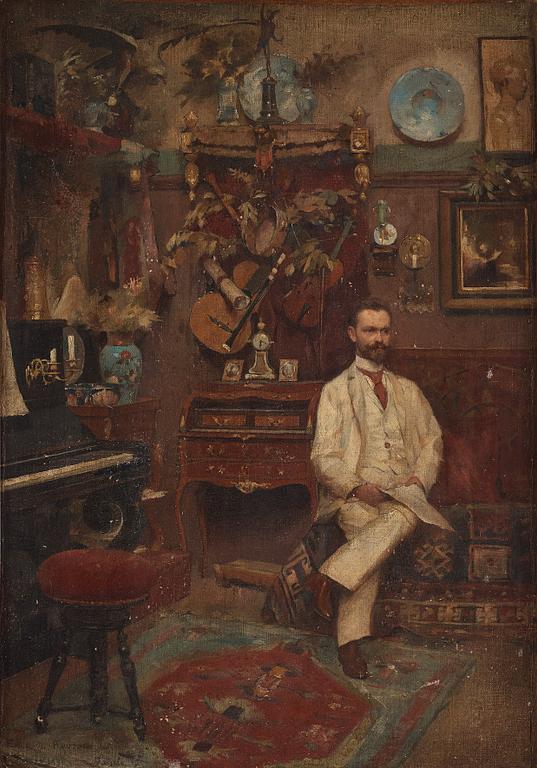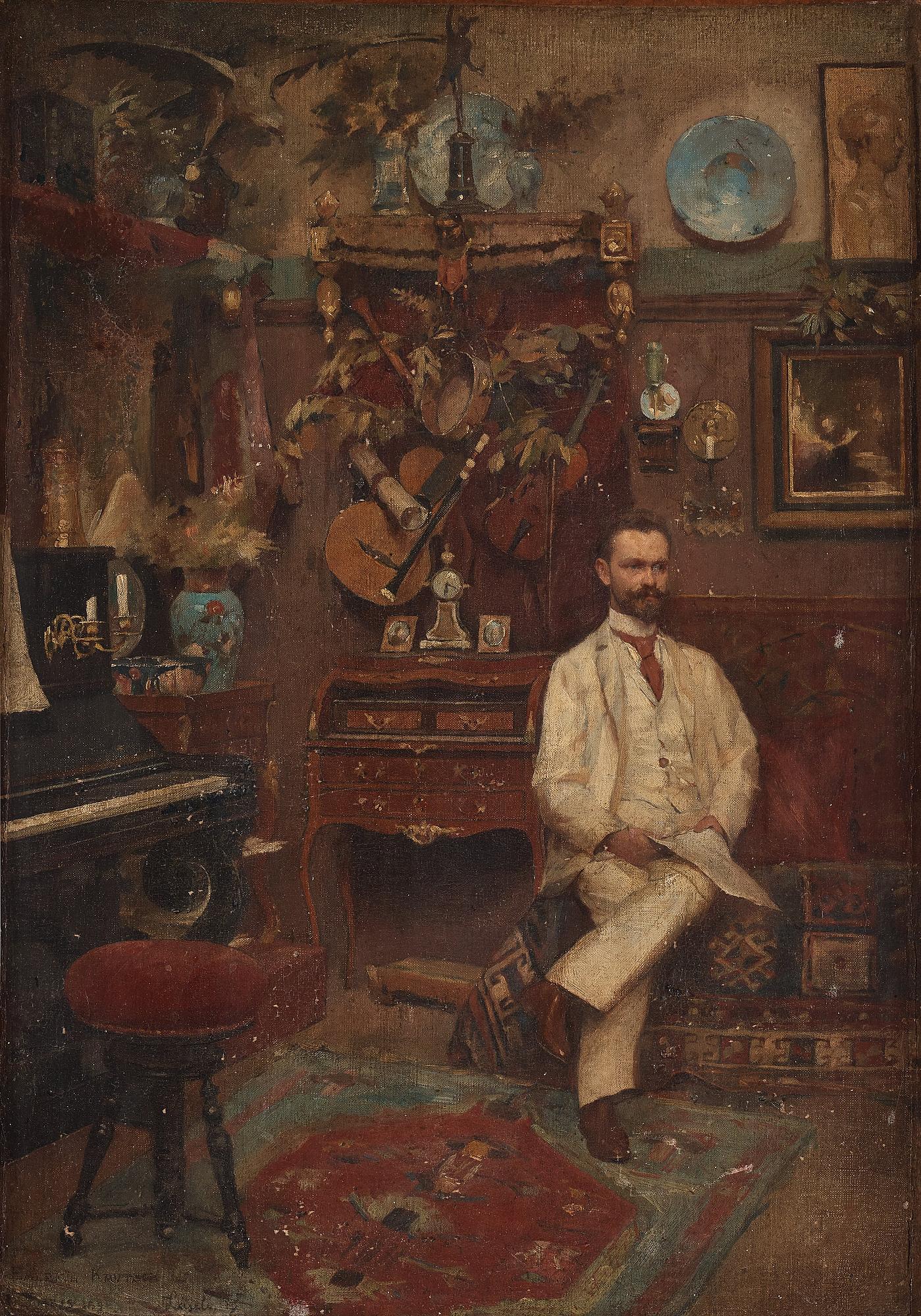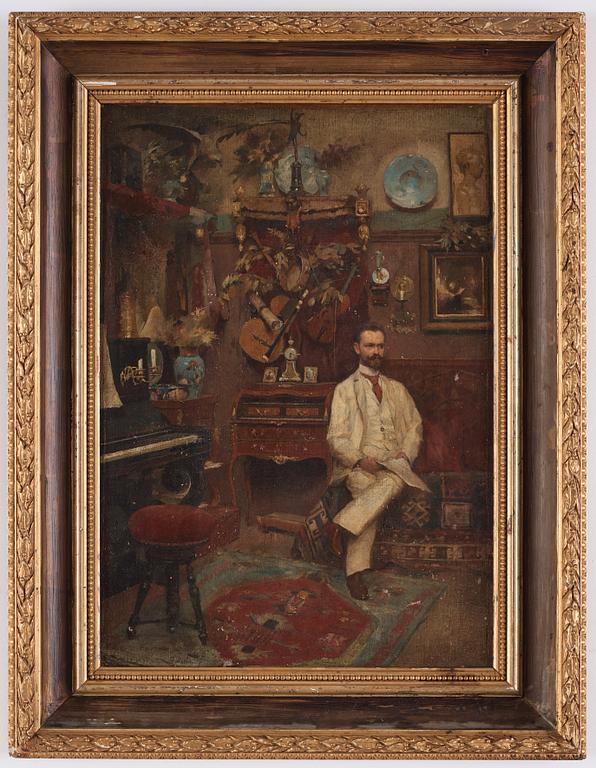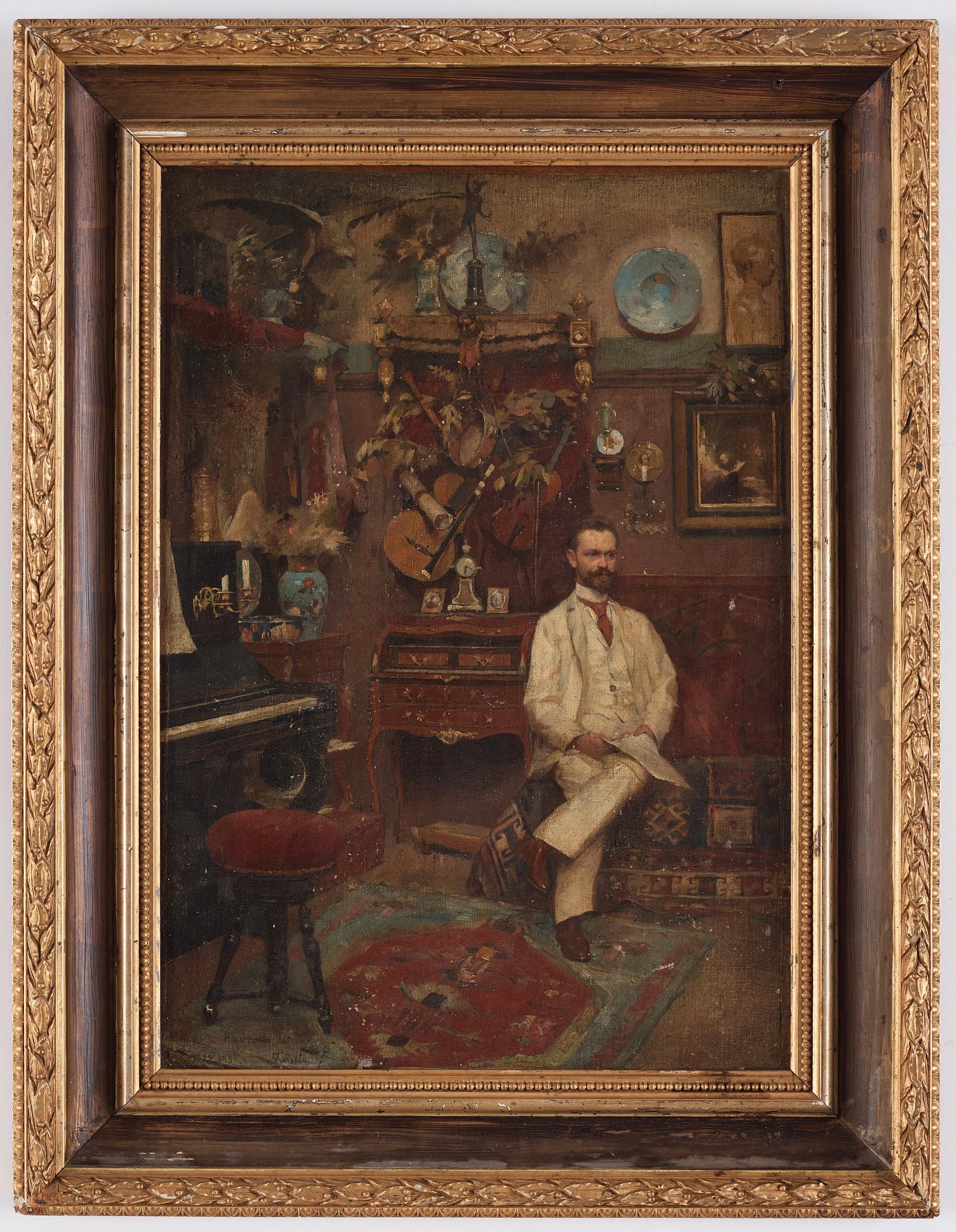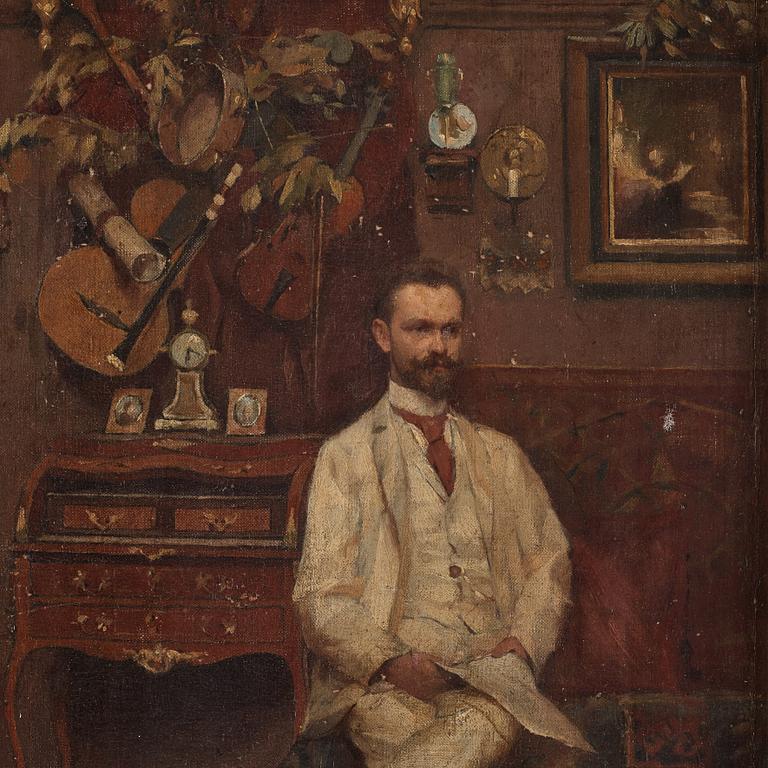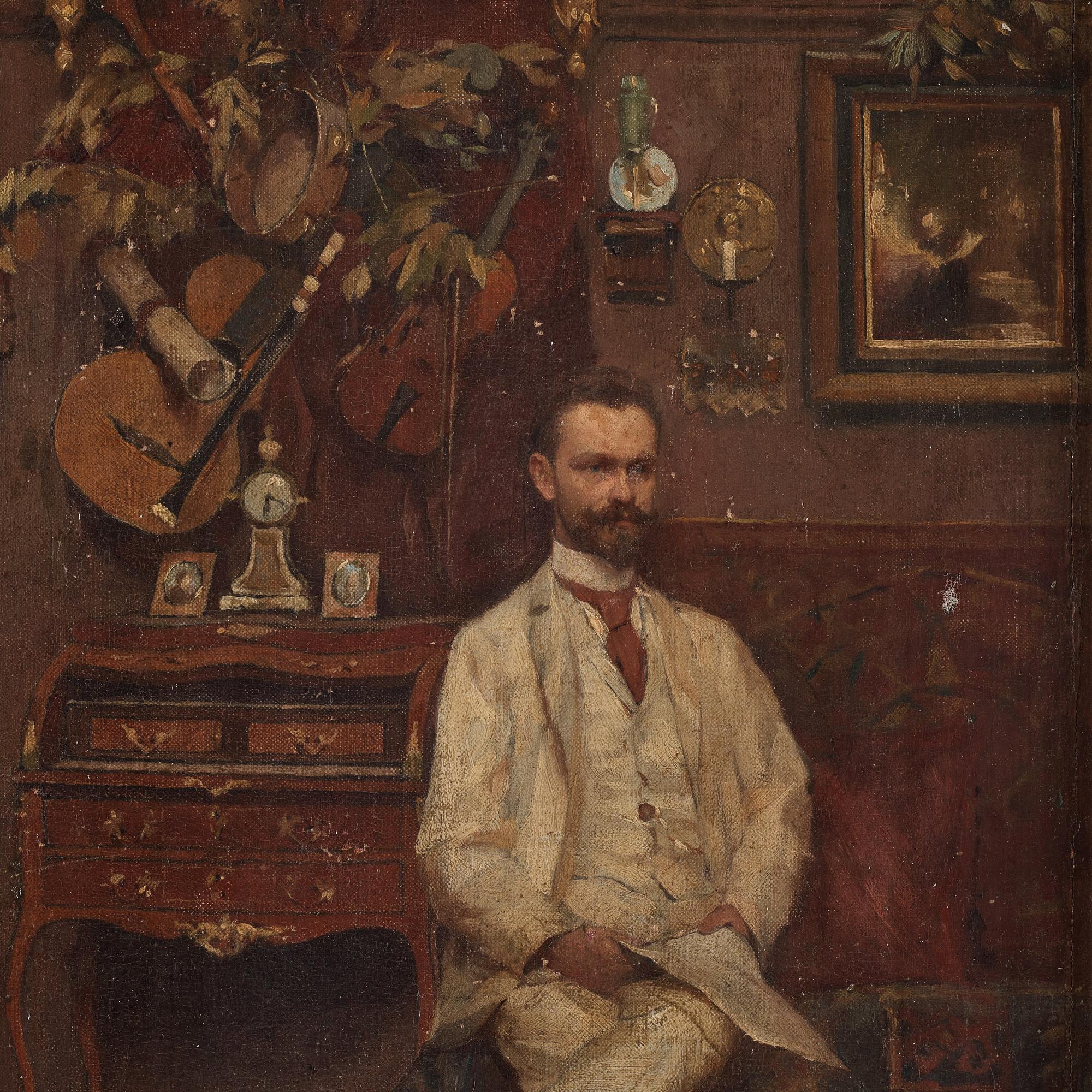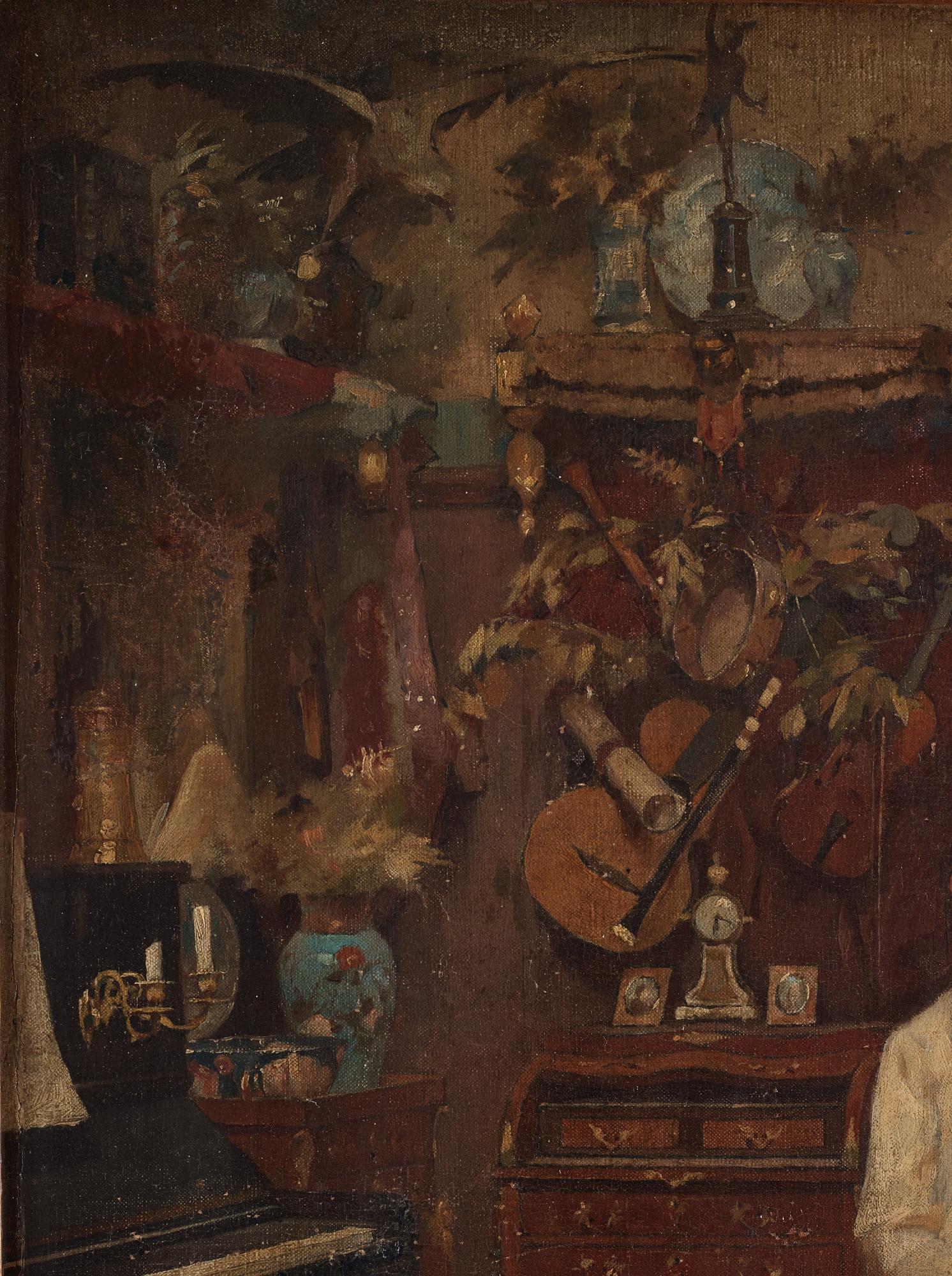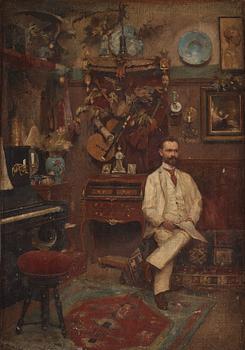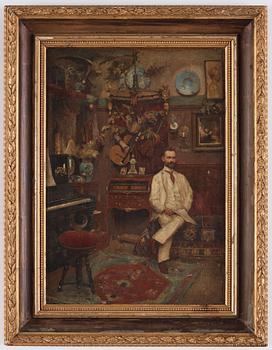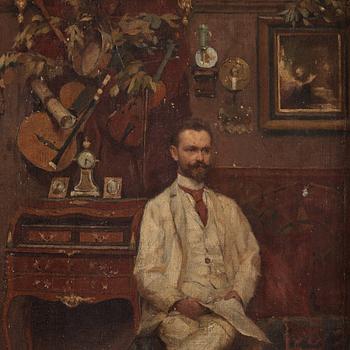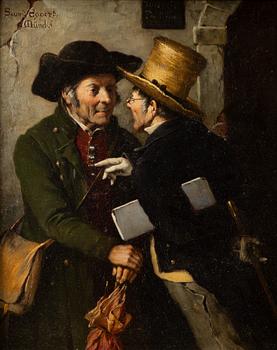
A portrait of Heinrich Kautsch
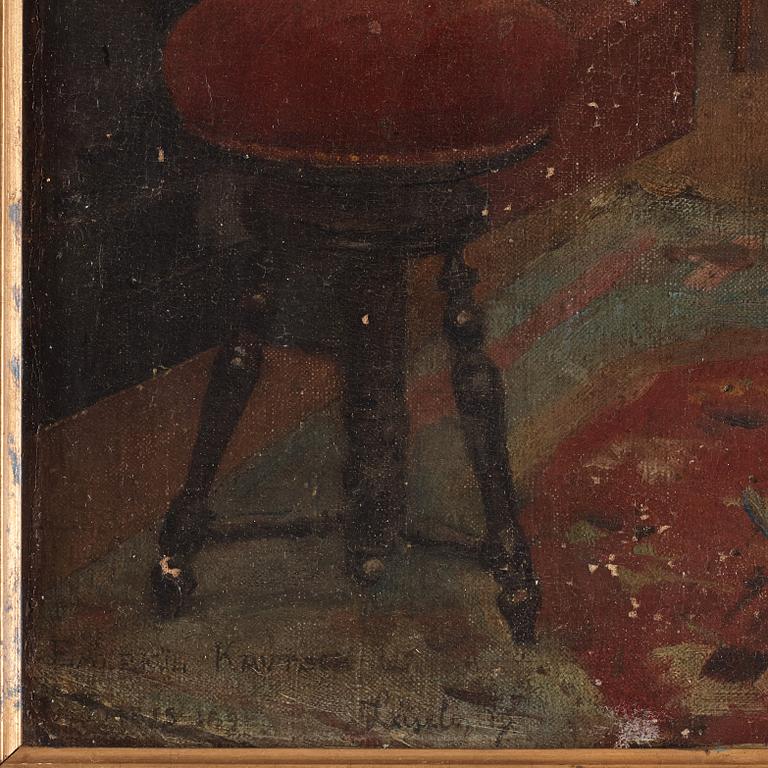
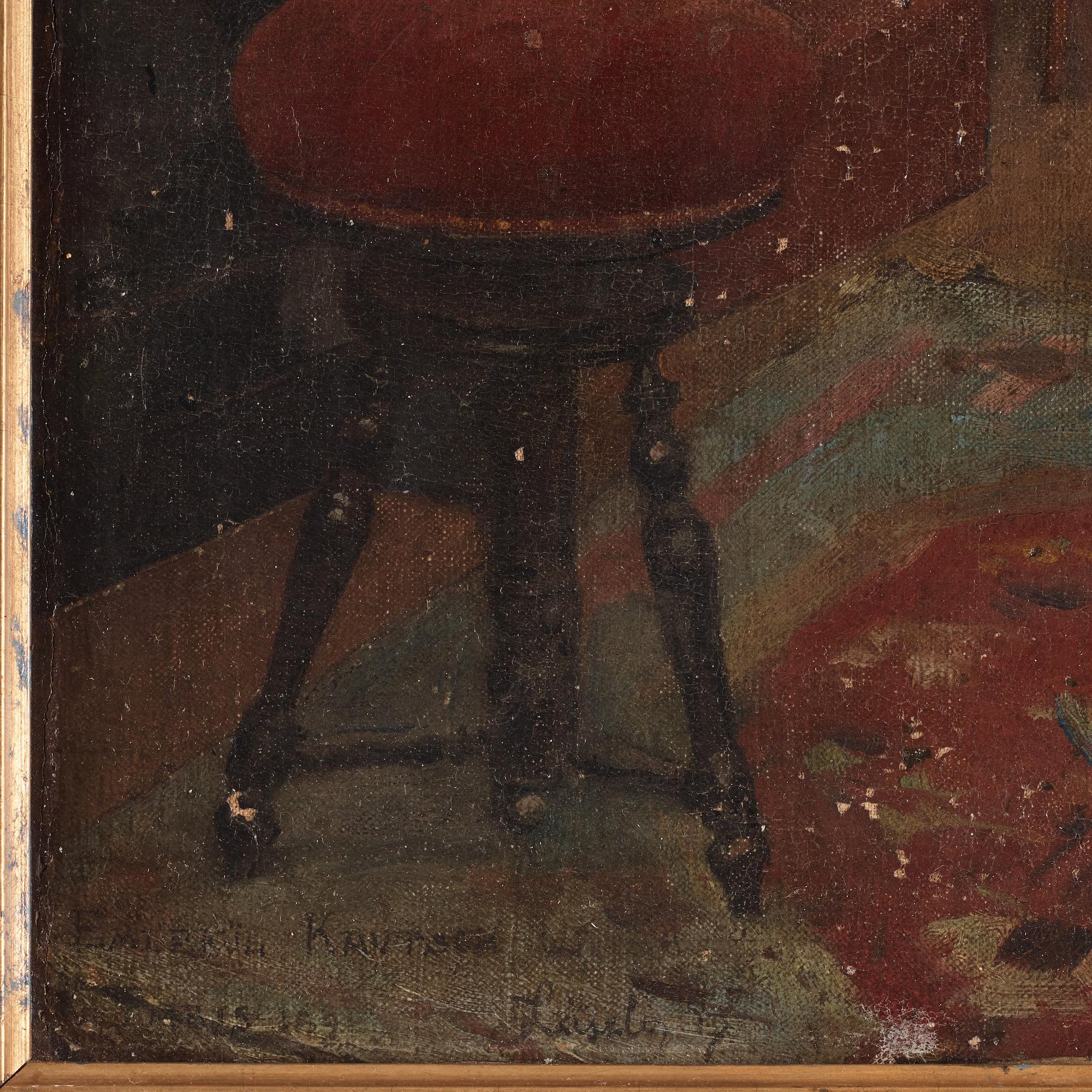
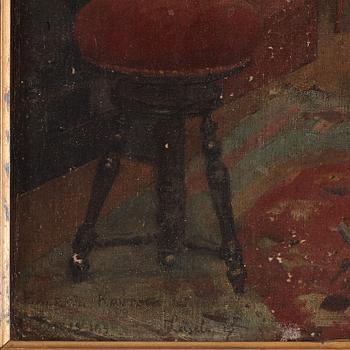
Signed László and dated Paris 1891. Canvas 47 x 33 cm. We thank Ms. Katherine Field from The de Laszlo Archive Trust, London, for information regarding this work.
Provenance
Private Collection.
More information
Katherine Field skriver: "We believe that this is a very early work from his time in Paris in 1891. His closest friends while studying at the Académie Julian were Otto Friedrich and Heinrich Kautsch who he had met in Munich."
László wrote in his autobiography:
“Most of my evenings I spent in the company of two Austrian friends, Friedrich and Kautch, who I had known in Munich. Friedrich was about ten years older than I and painted historical pictures. Kautsch was a talented Austrian medallist, who had already made a reputation in Paris. Their milieu had exactly the spirit I liked. Both were musical and played the piano, and I used to sing.” (Rutter, p. 68)
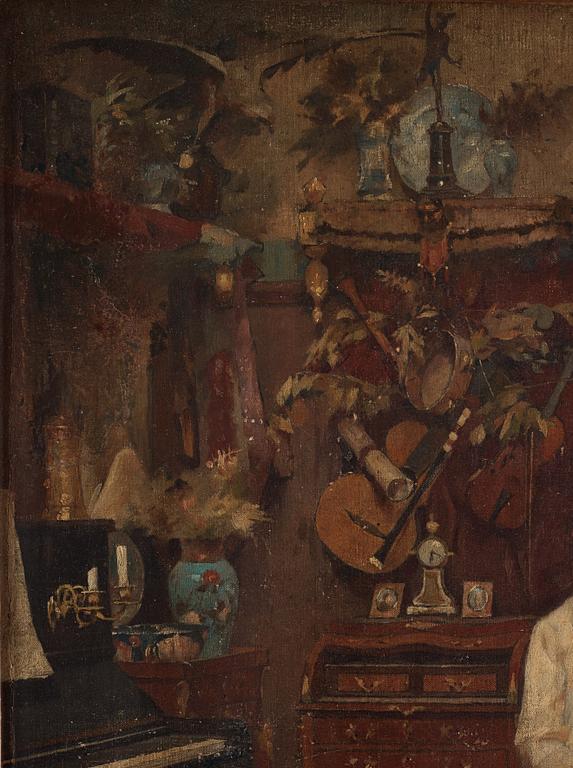
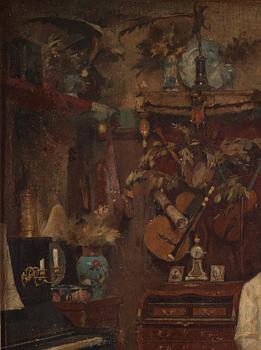
Kautsch worked on a small scale and although he had many good qualities he was inclined to be mean, and often malicious and even jealous. His studio was crowded with every conceivable object. There was too much of everything, and it lacked harmony as much as he did himself.” (p. 69)
For condition report contact specialist