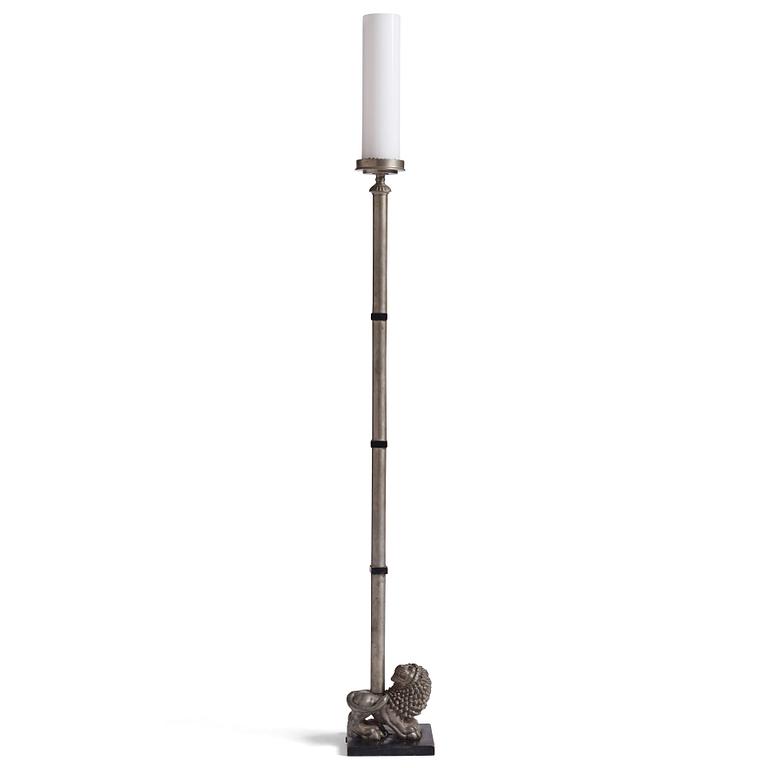
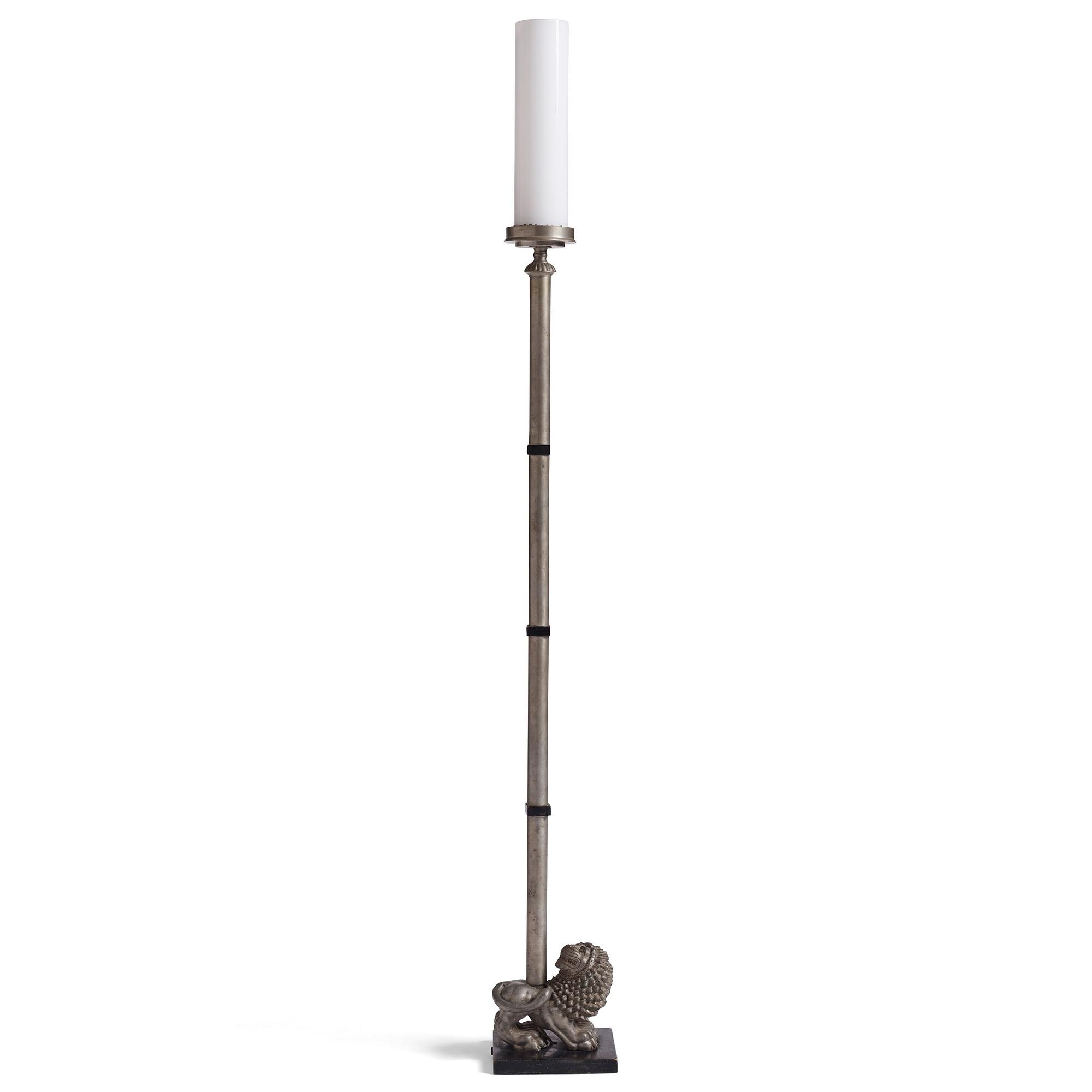
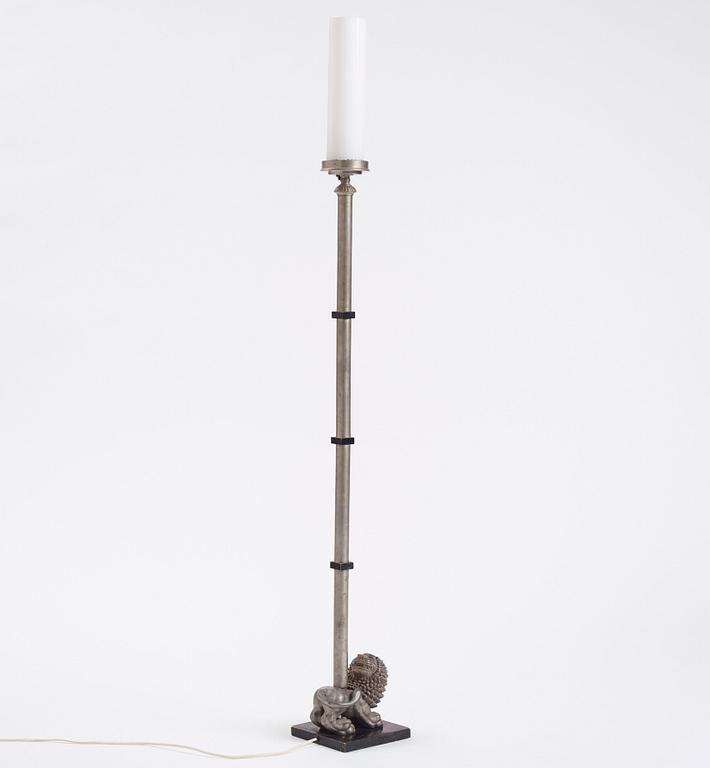
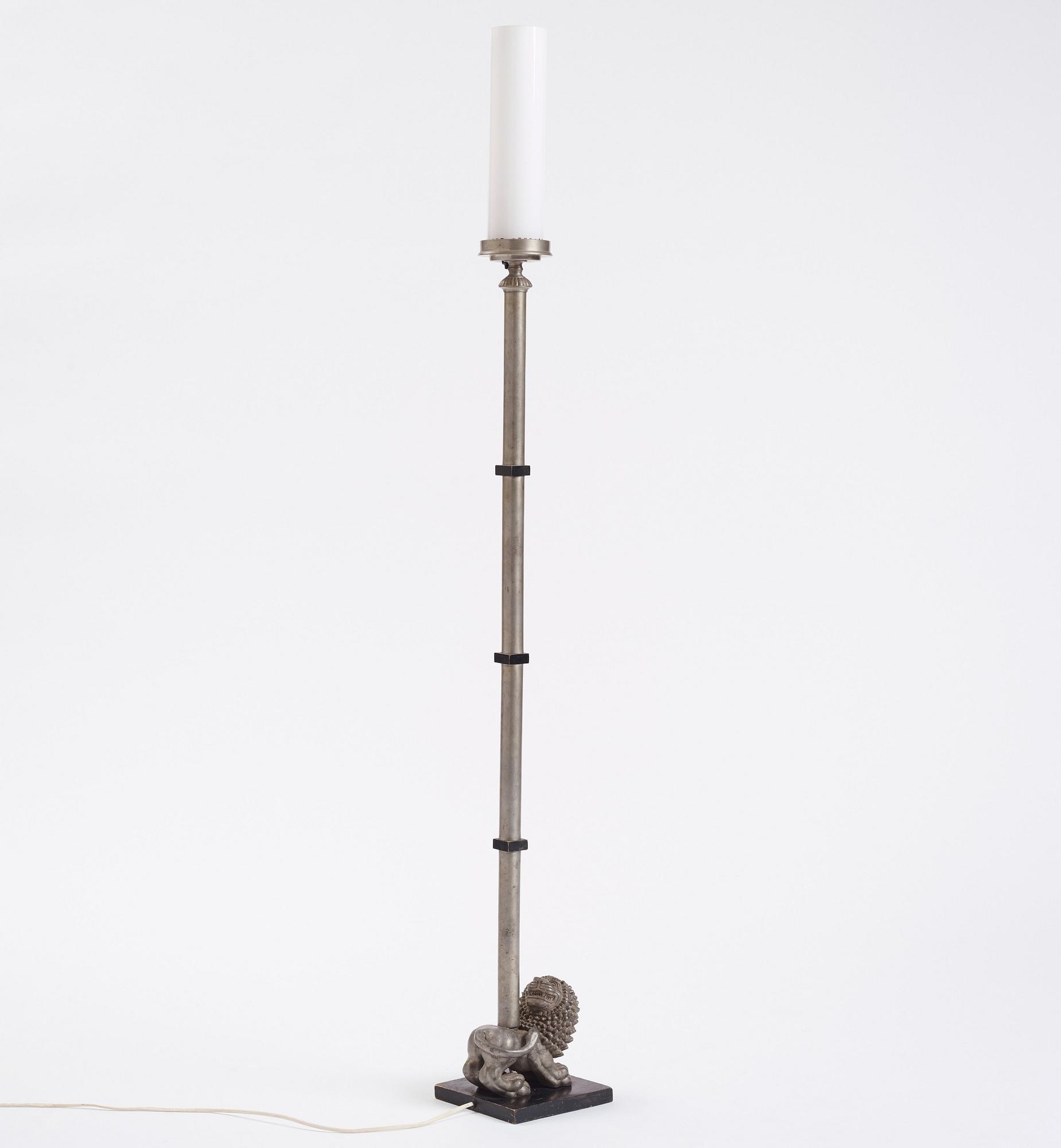
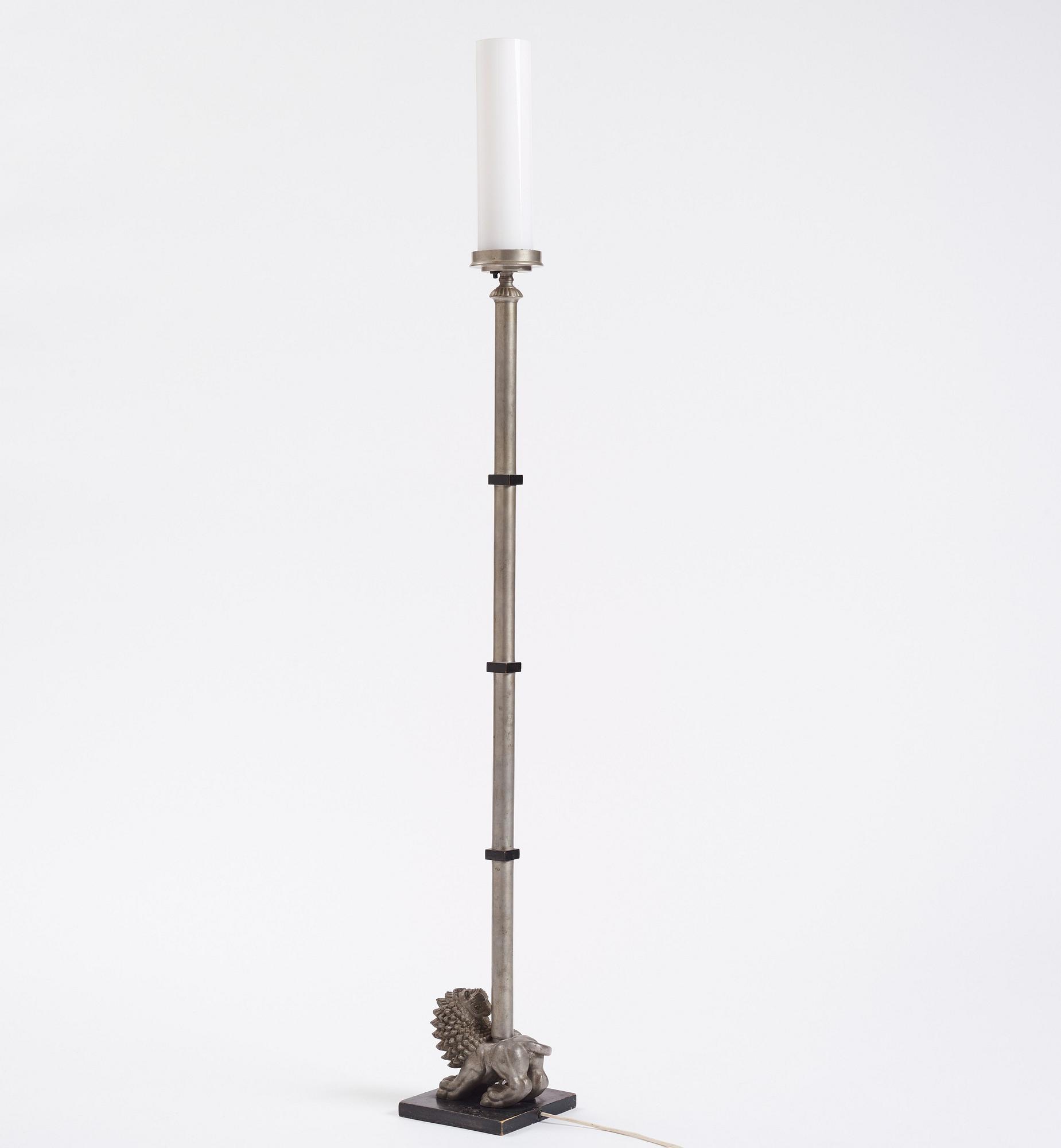
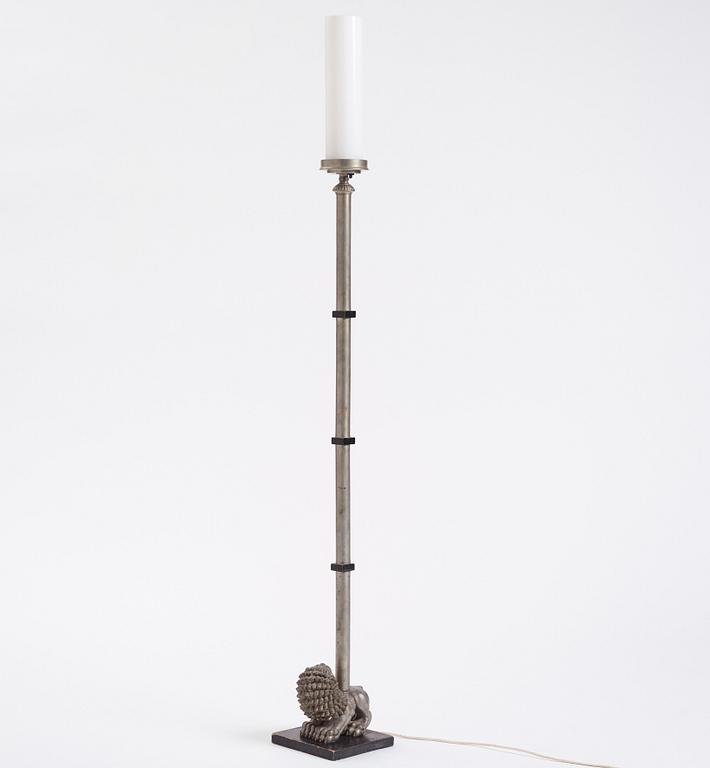
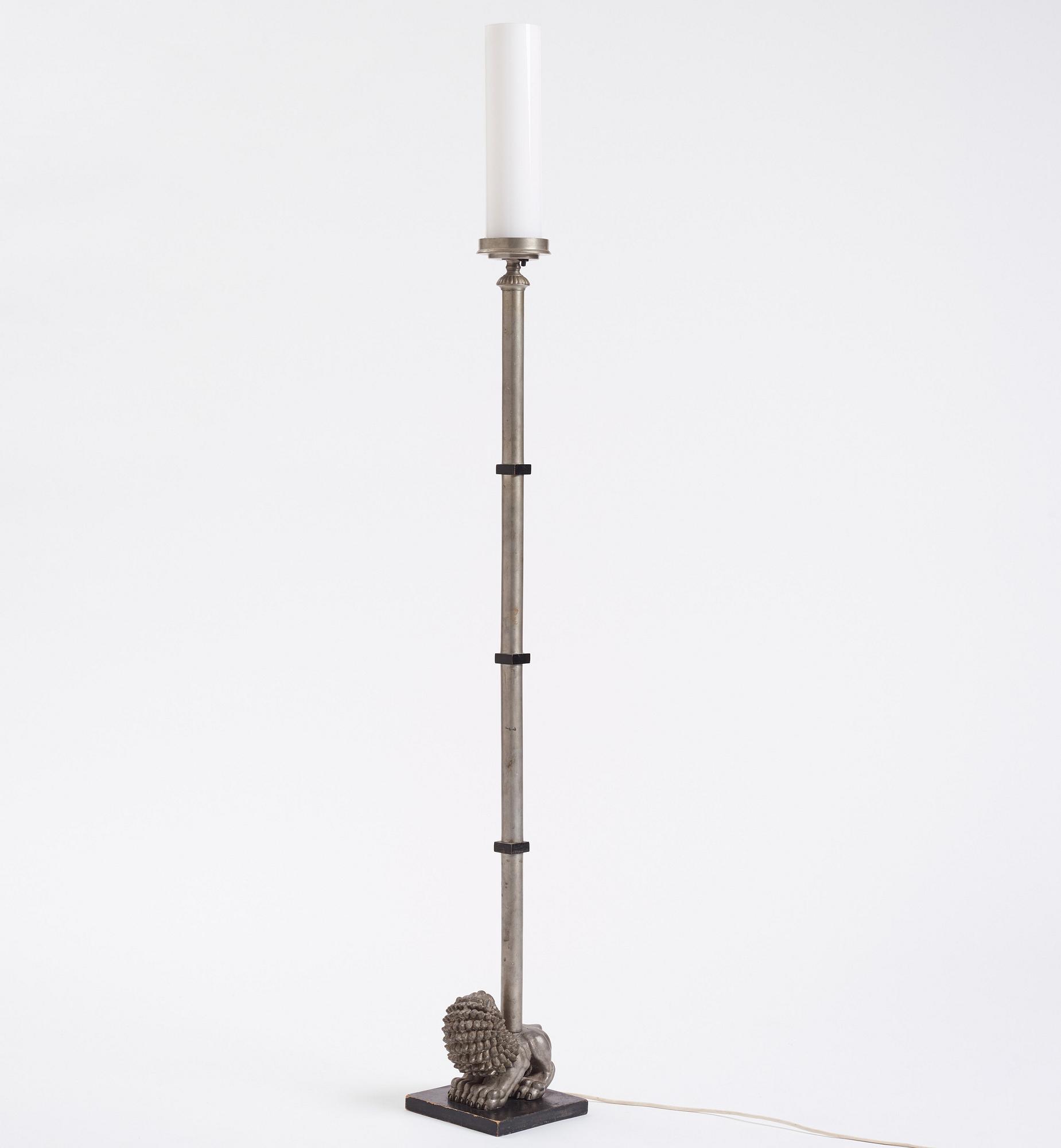
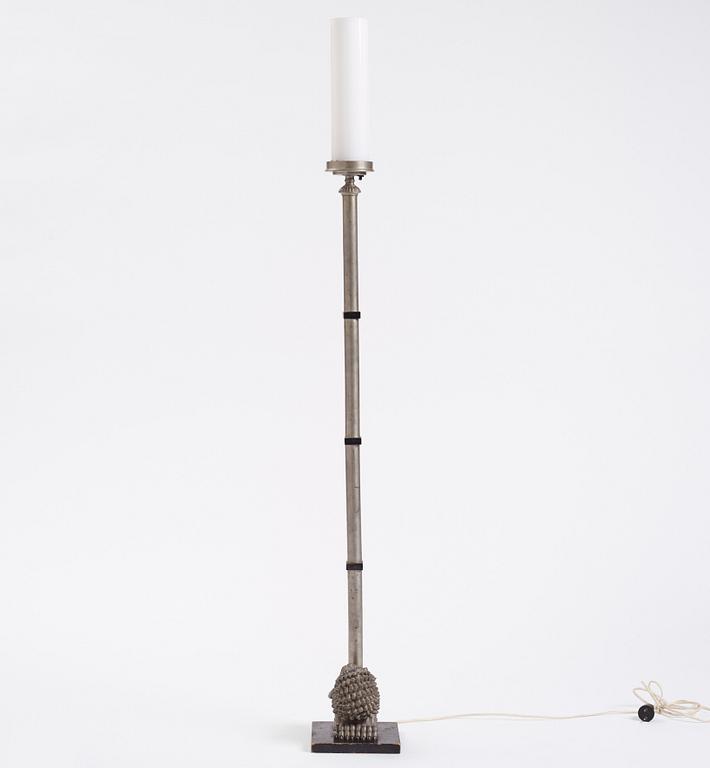
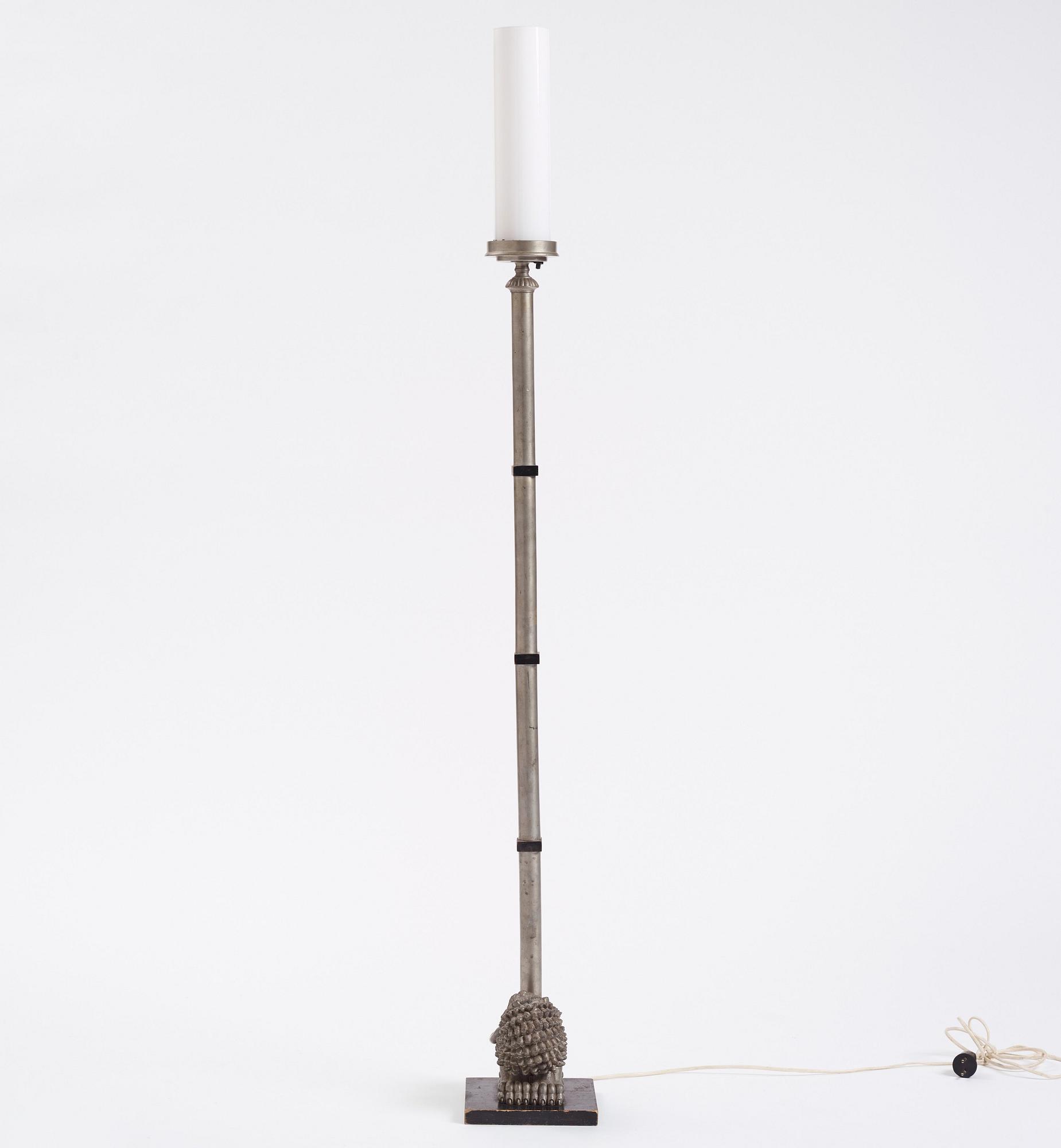
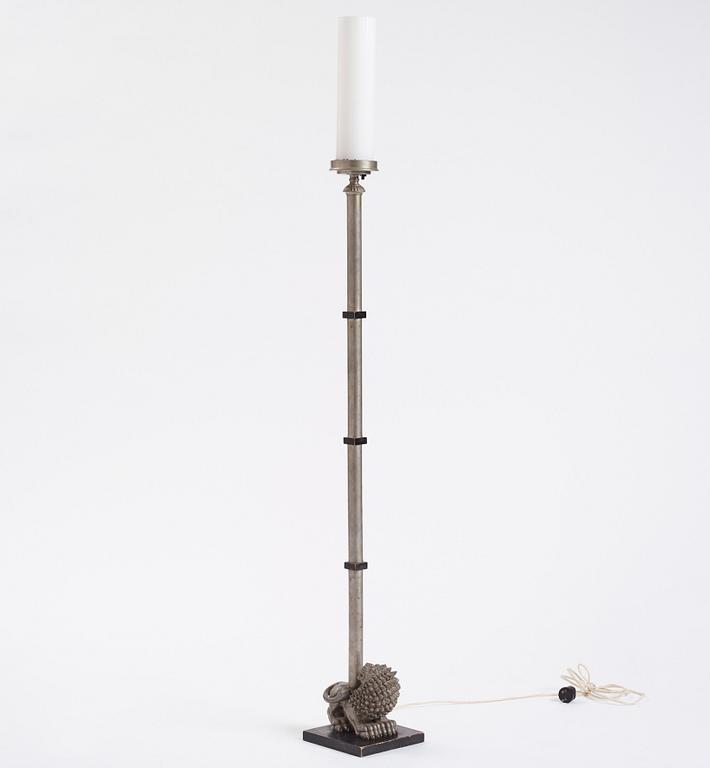
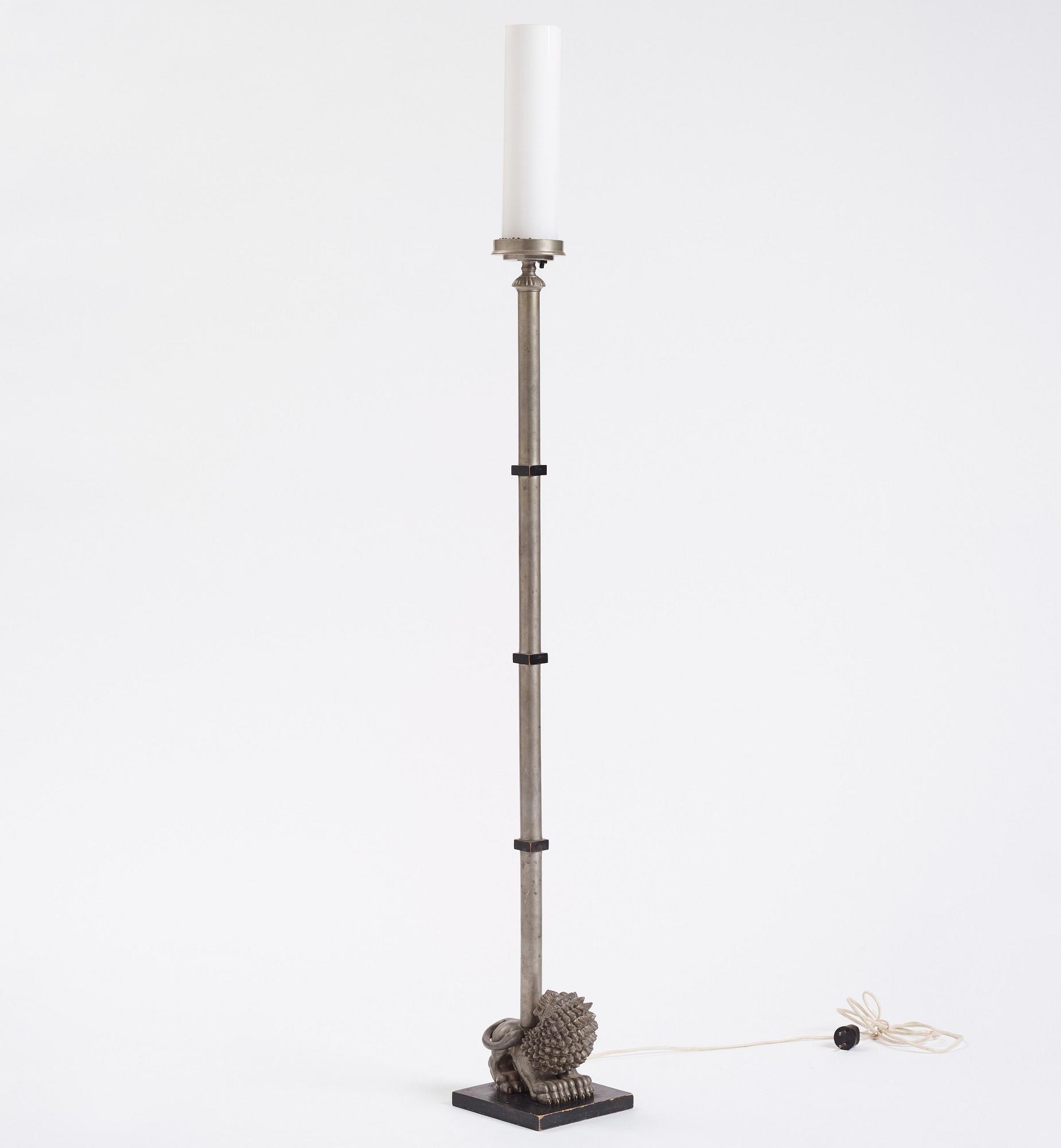
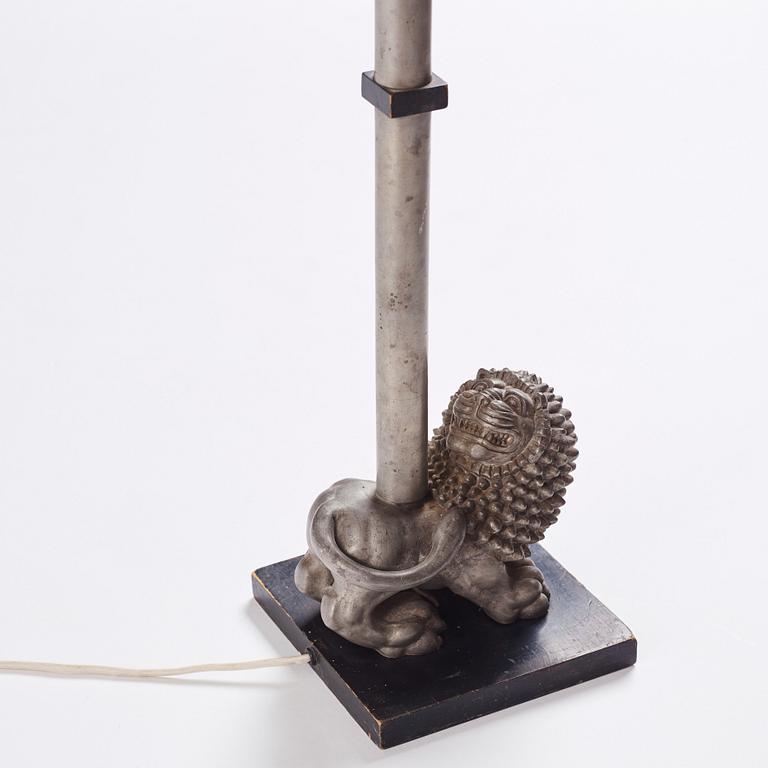
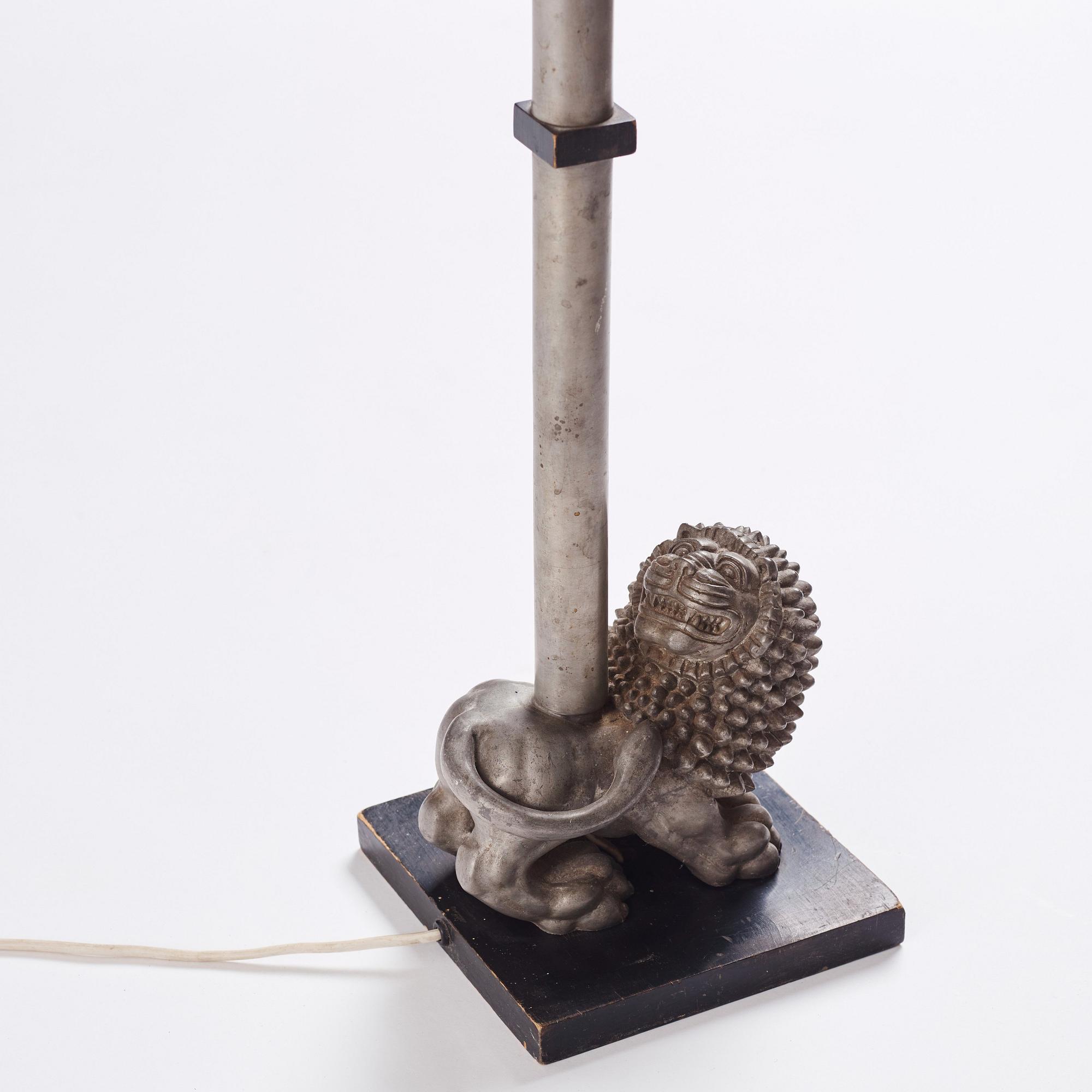
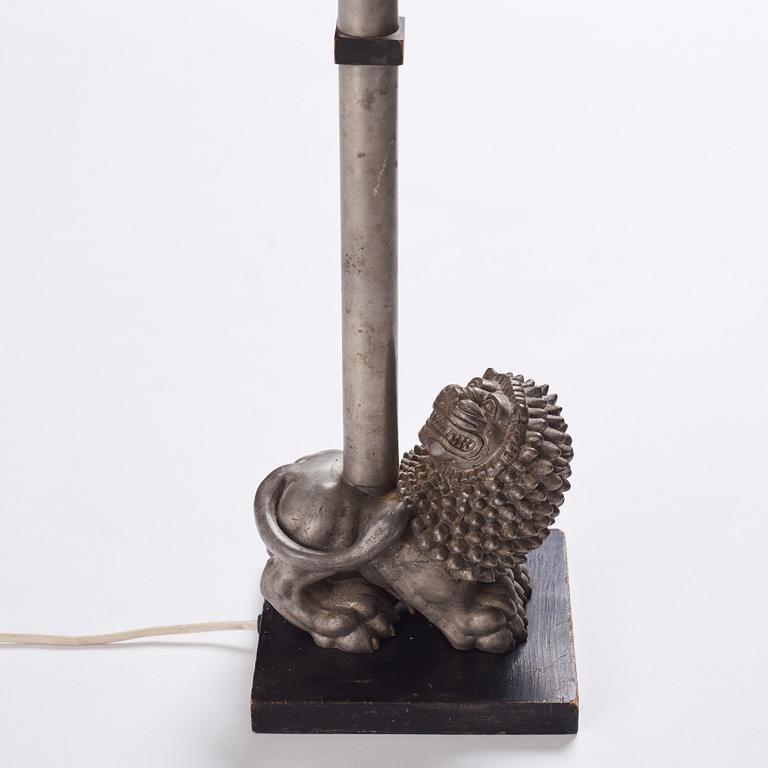
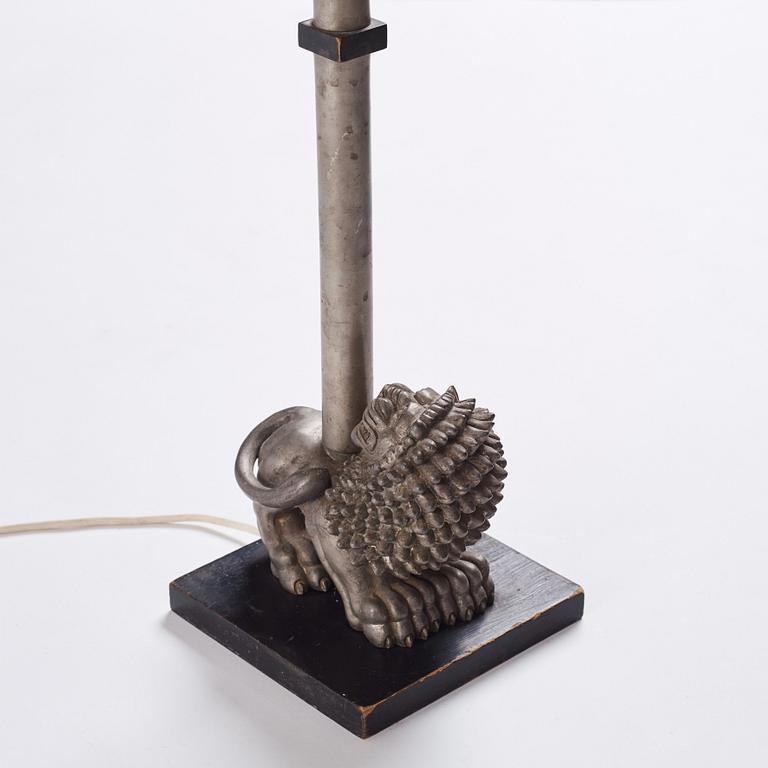
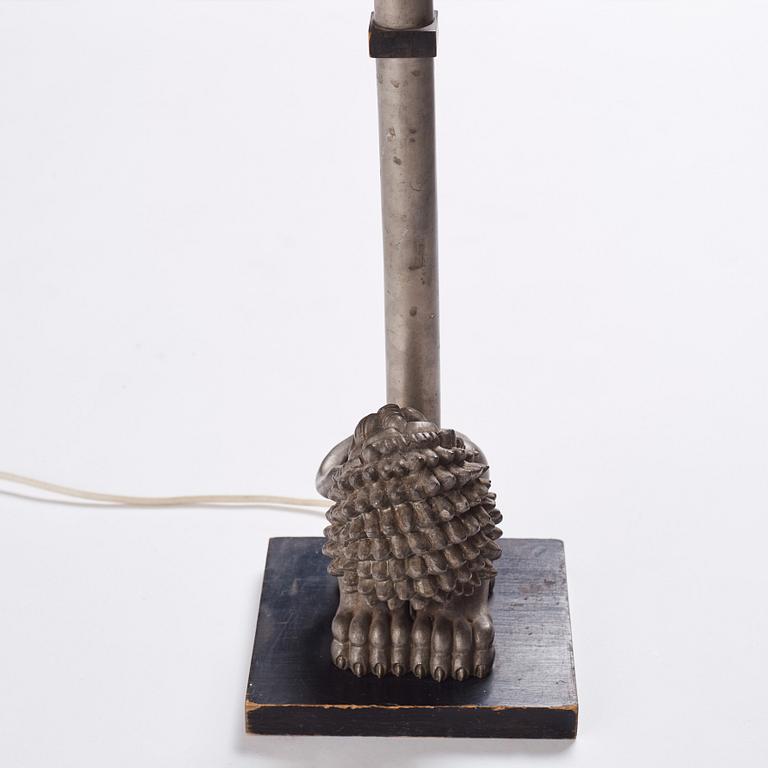
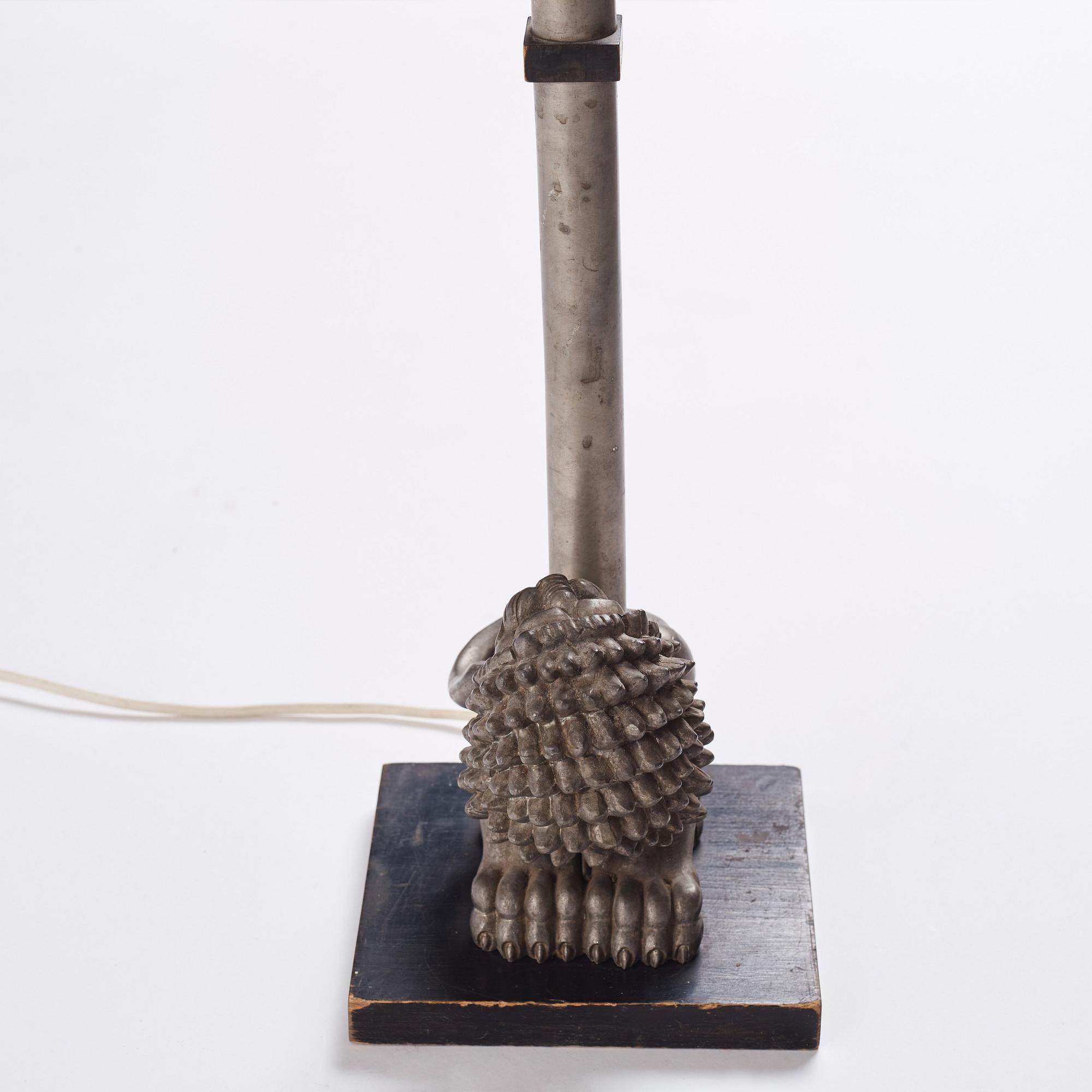
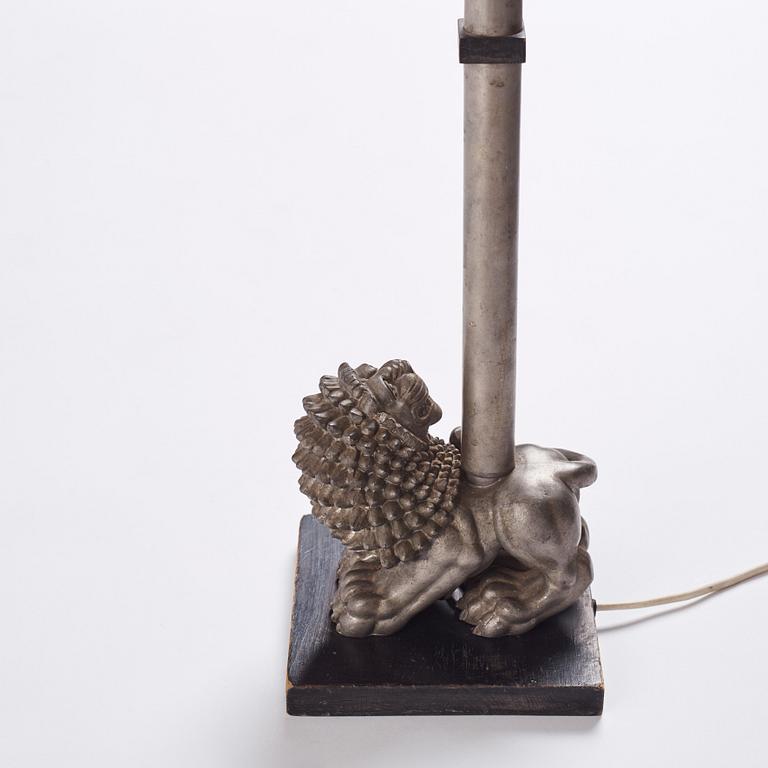
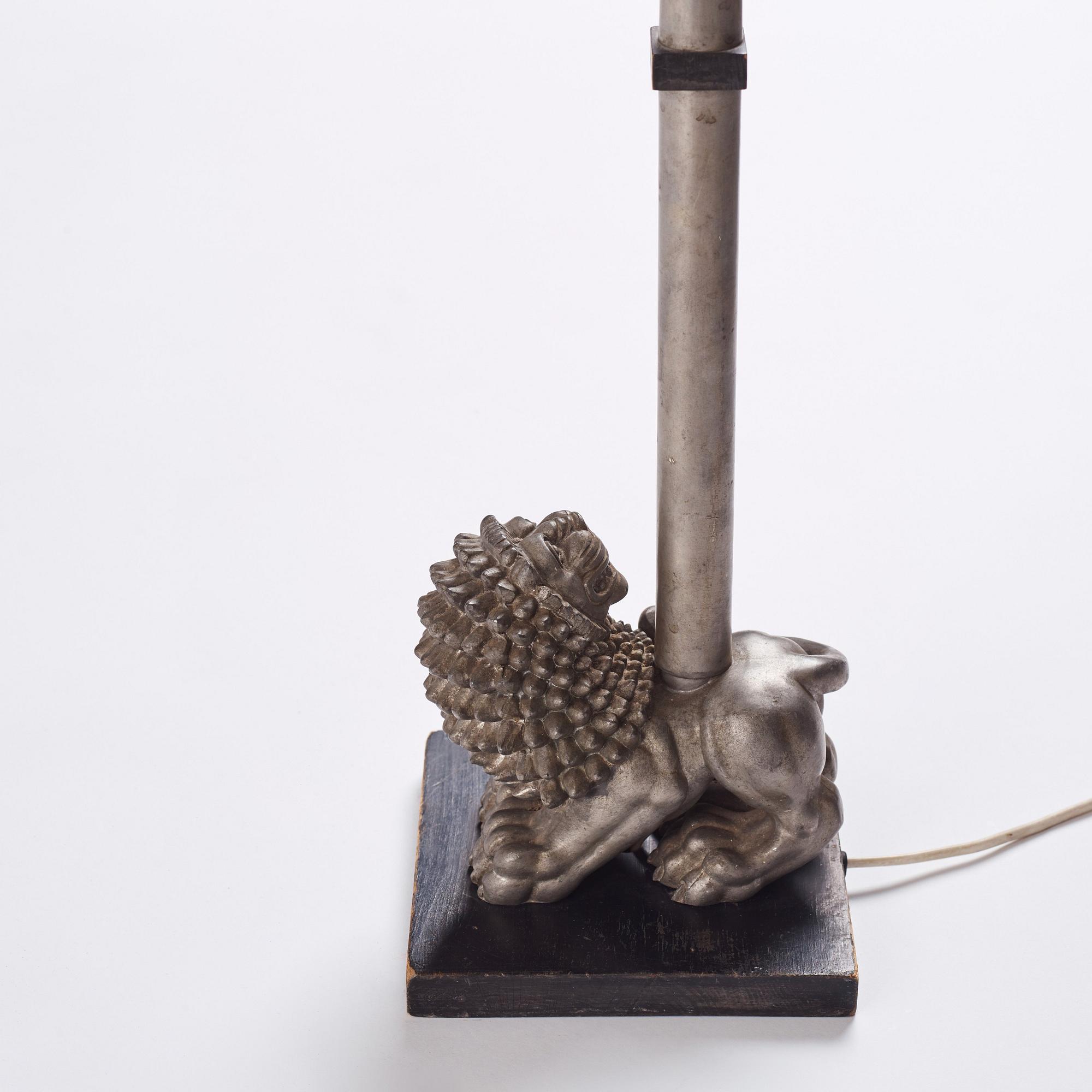
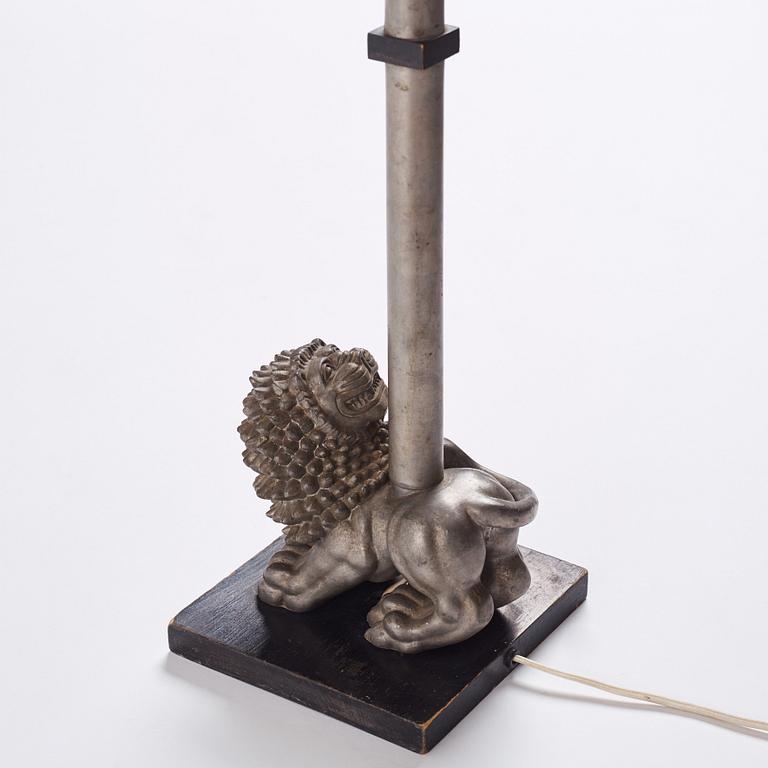
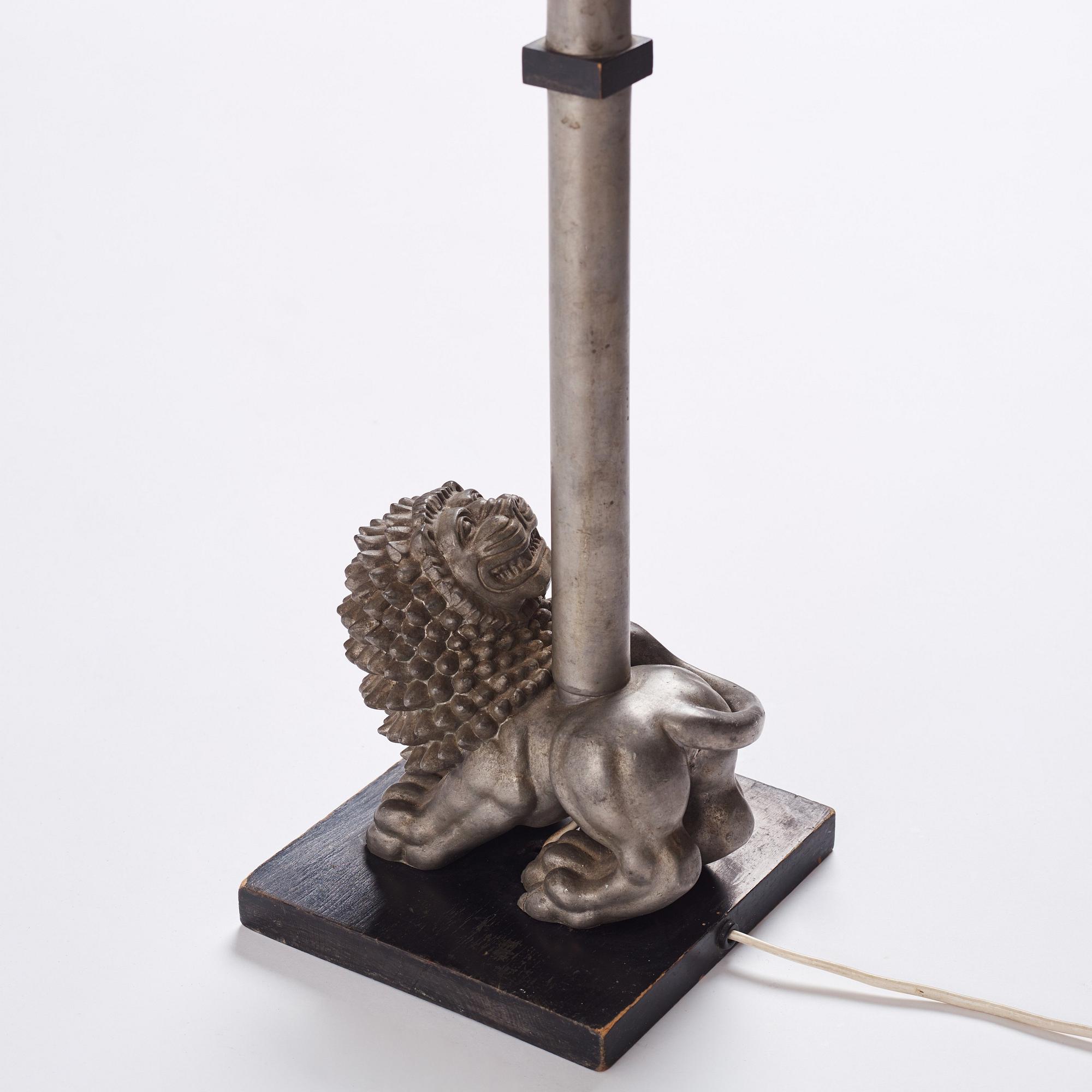
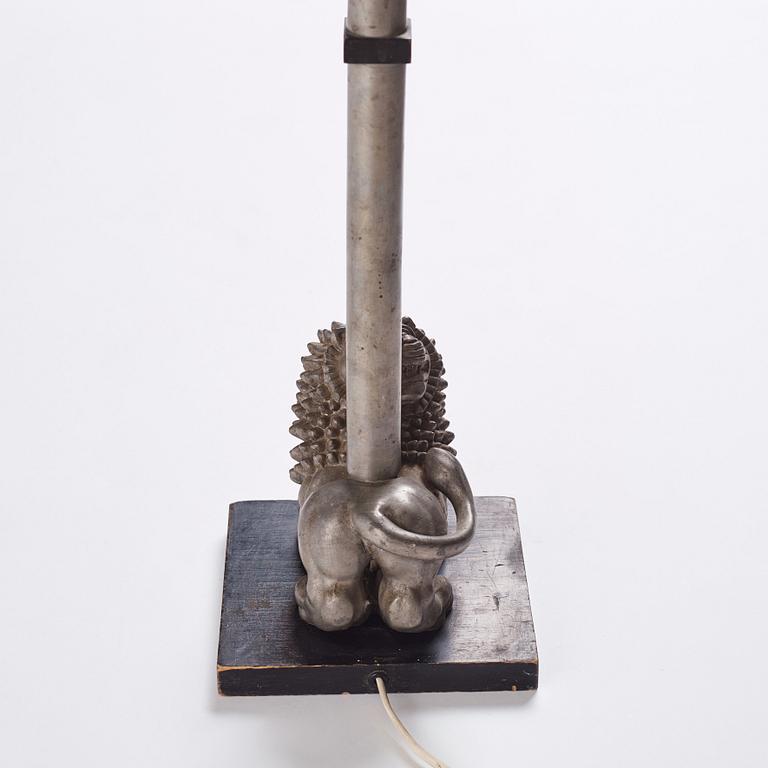
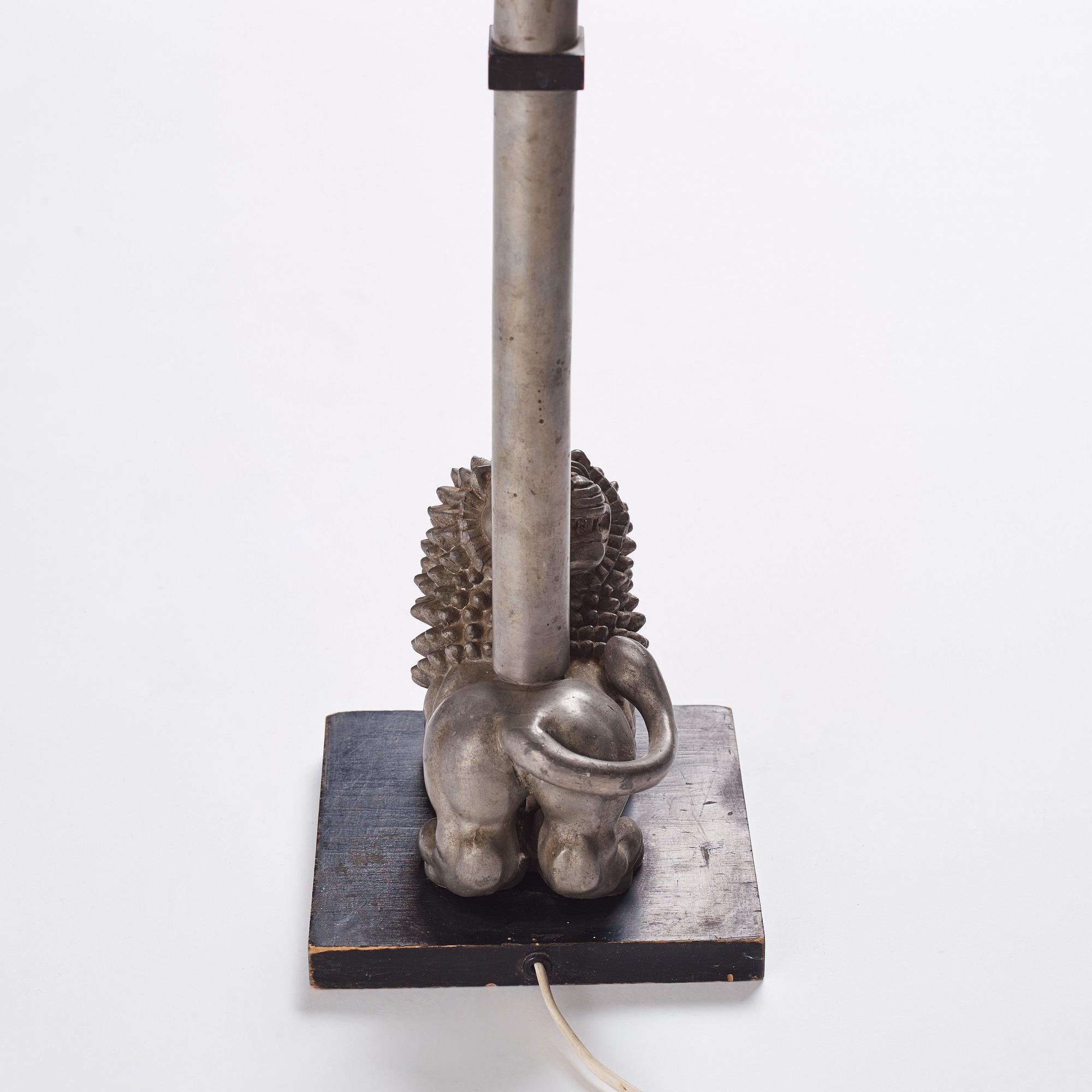
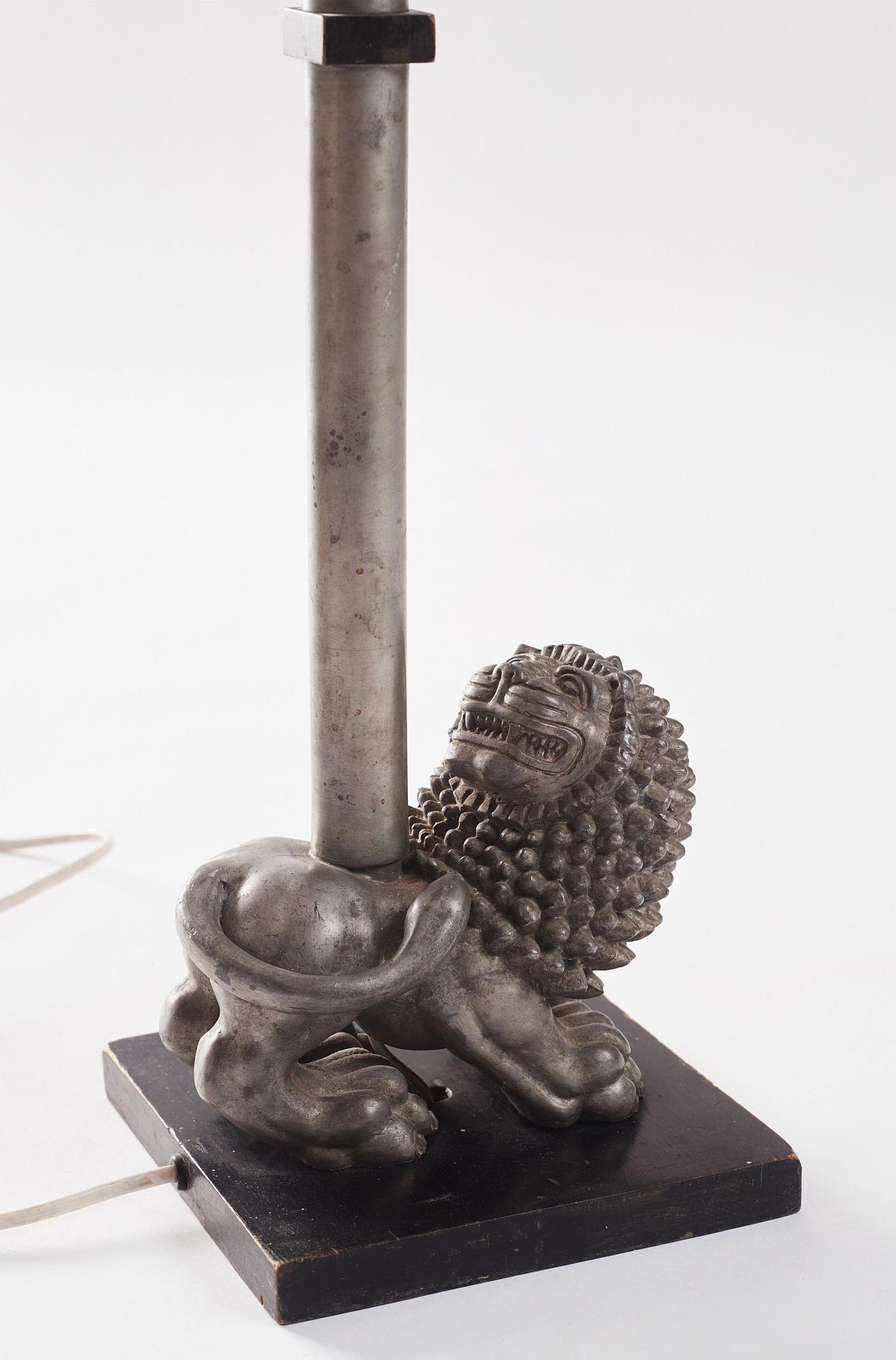
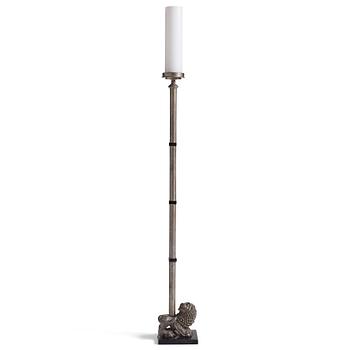
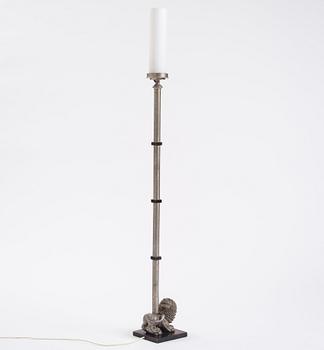
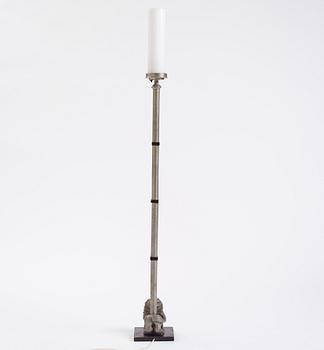
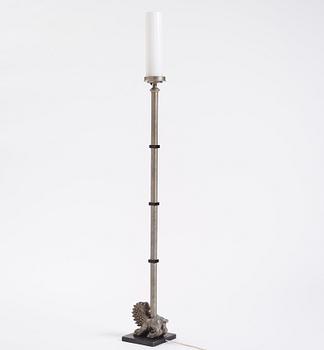
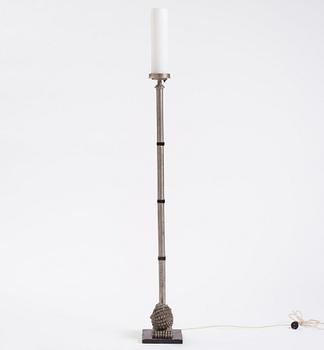
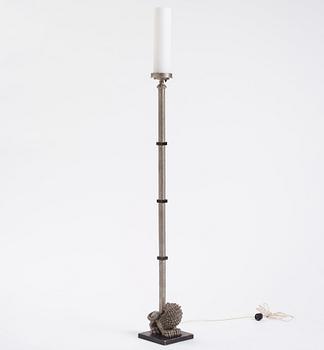
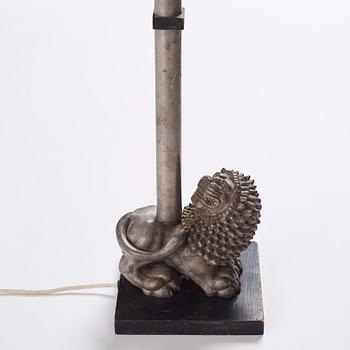
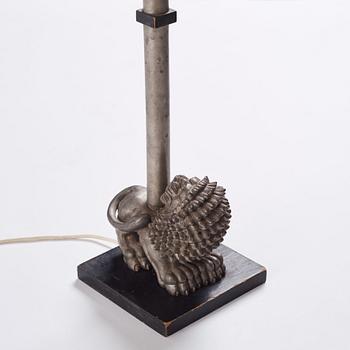
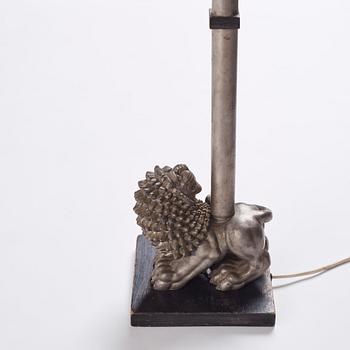
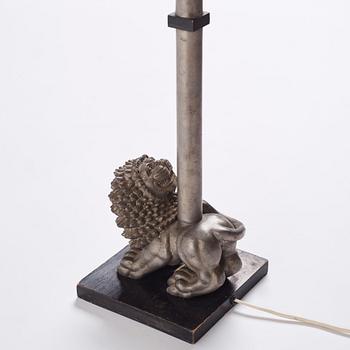
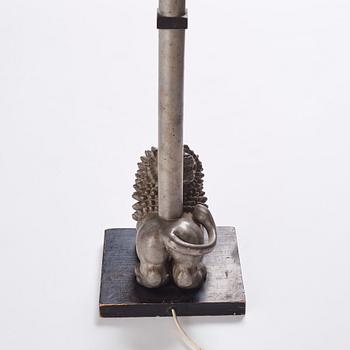
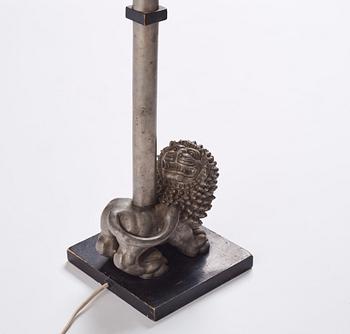
& Anna Petrus, a rare floor lamp, Svenskt Tenn, Stockholm ca 1929, reportedly acquired at the Stockholm Exhibition 1930.
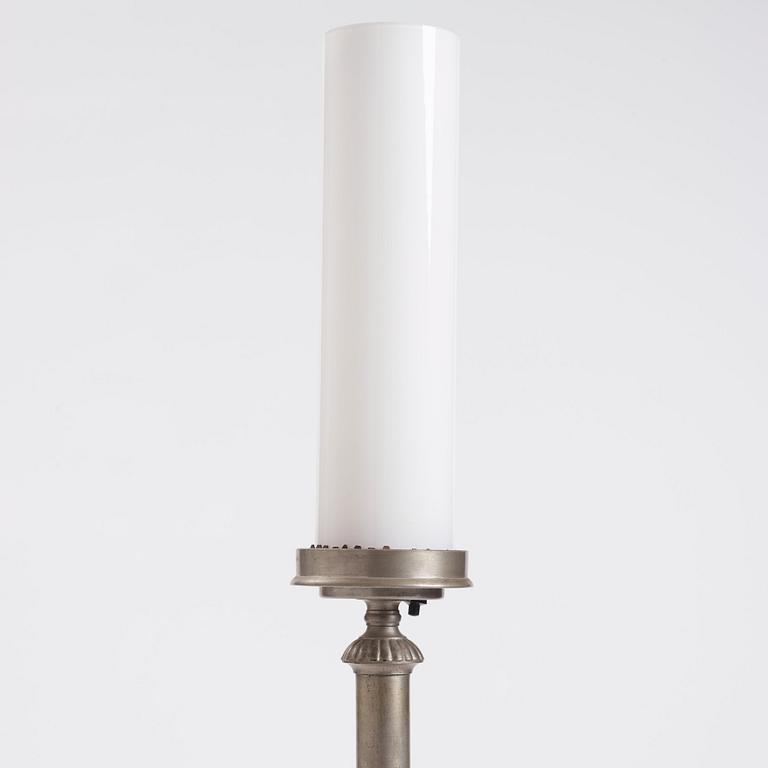
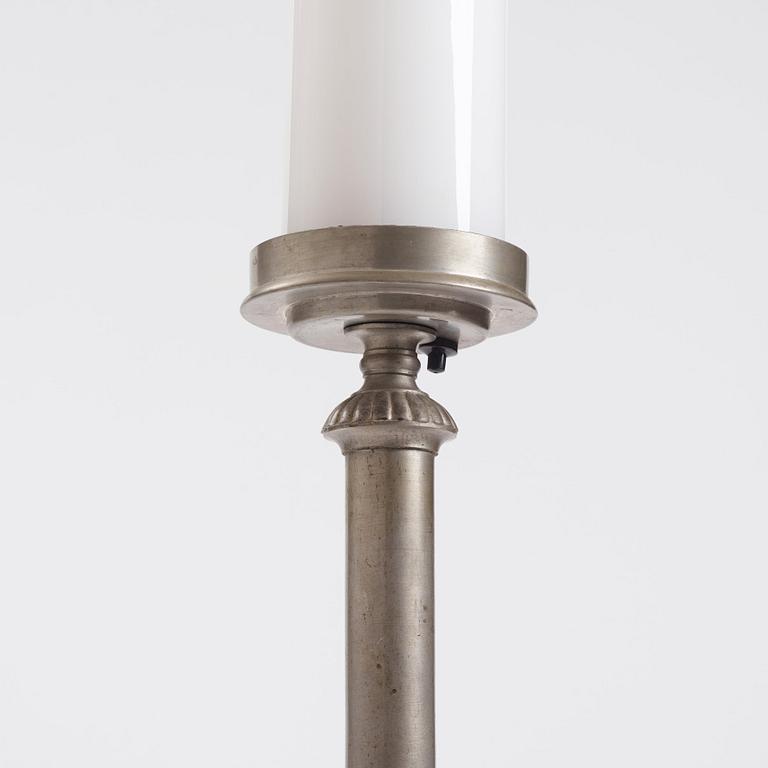
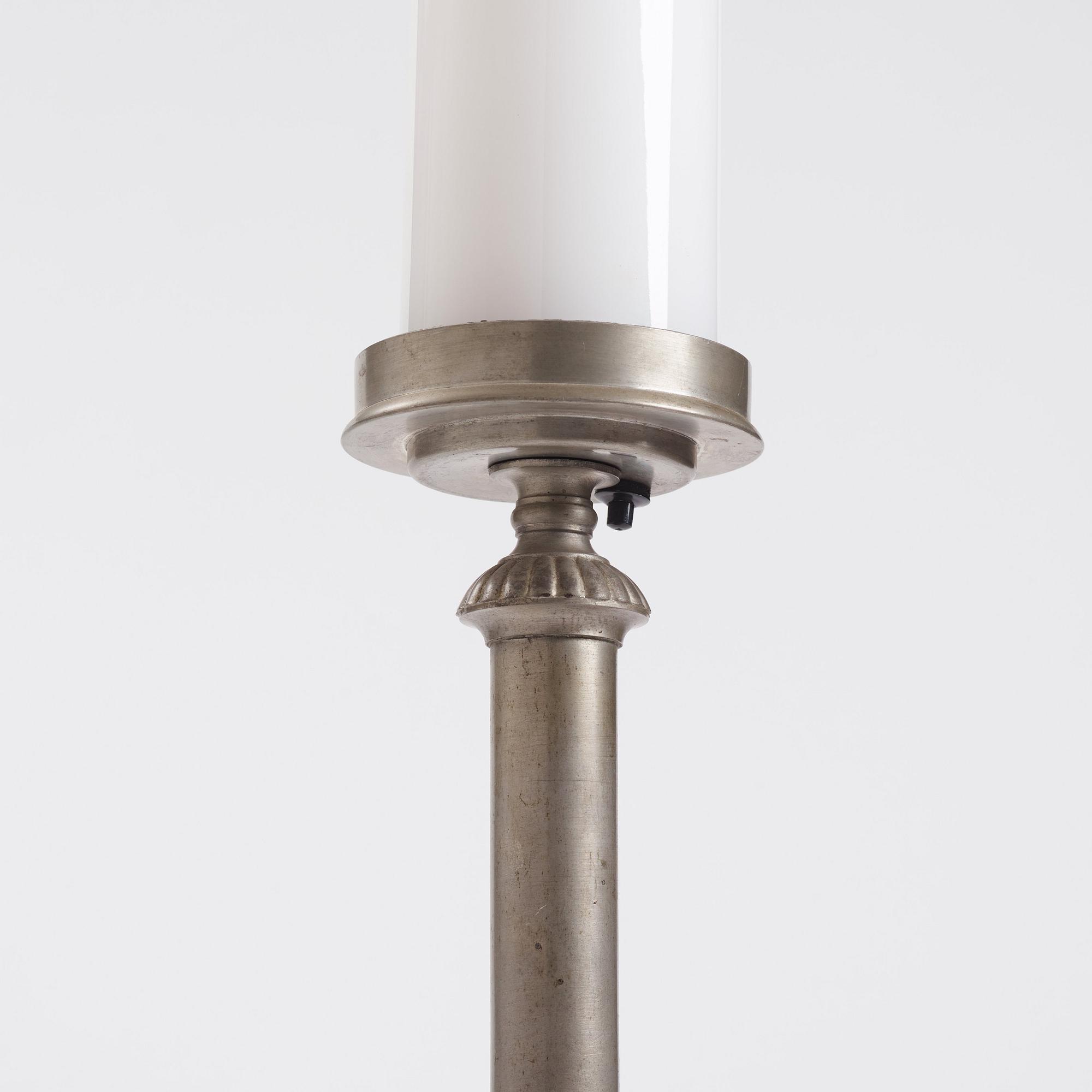
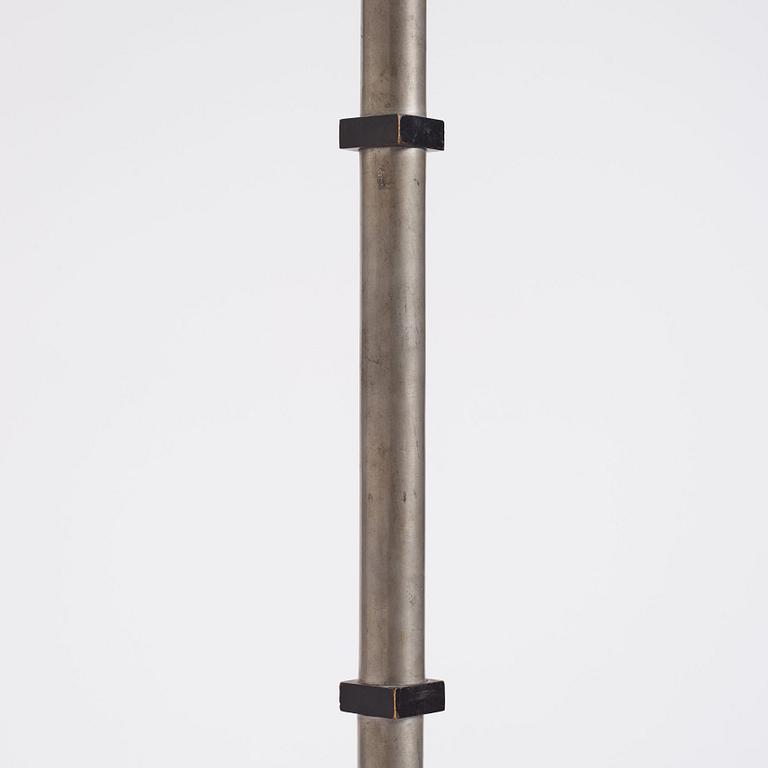
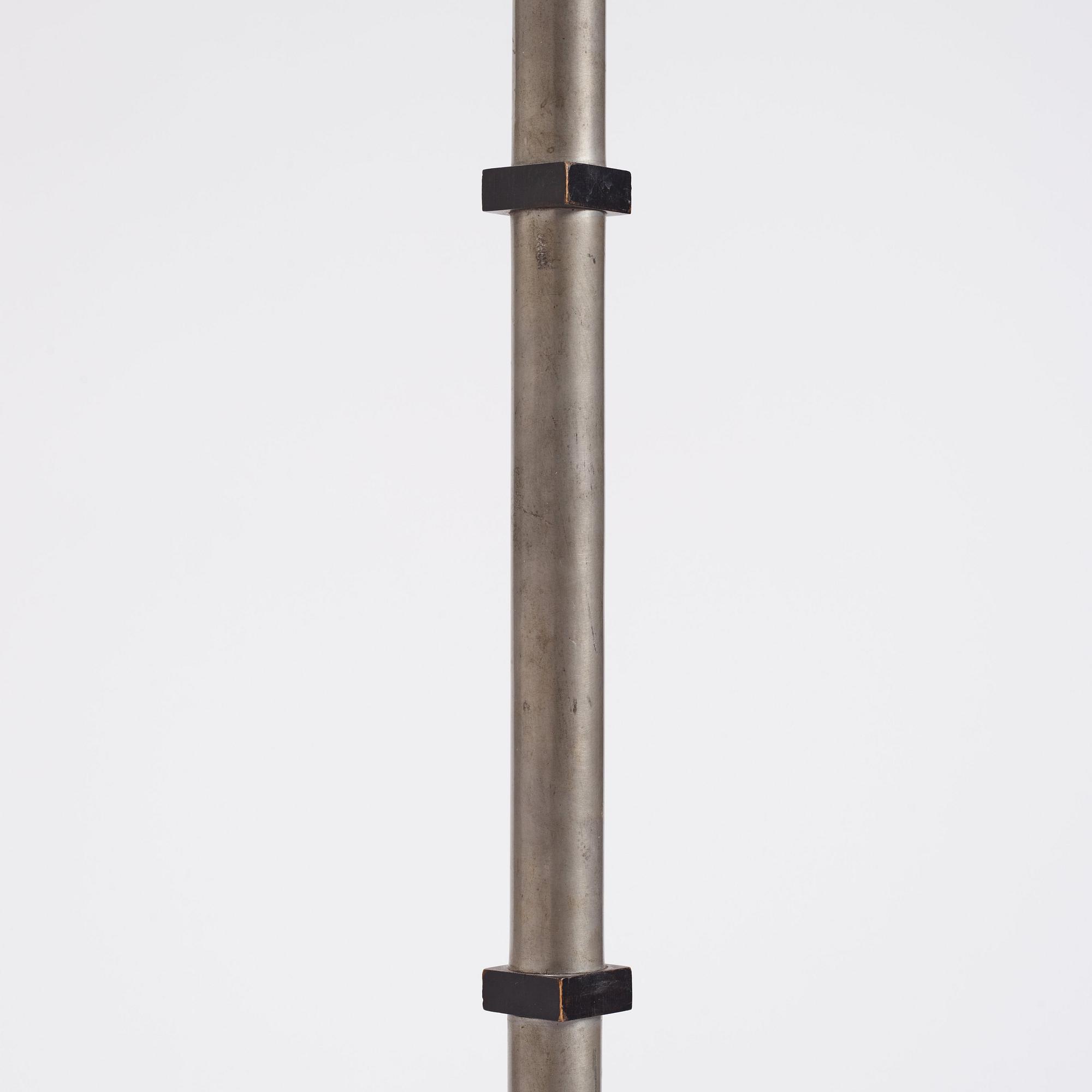
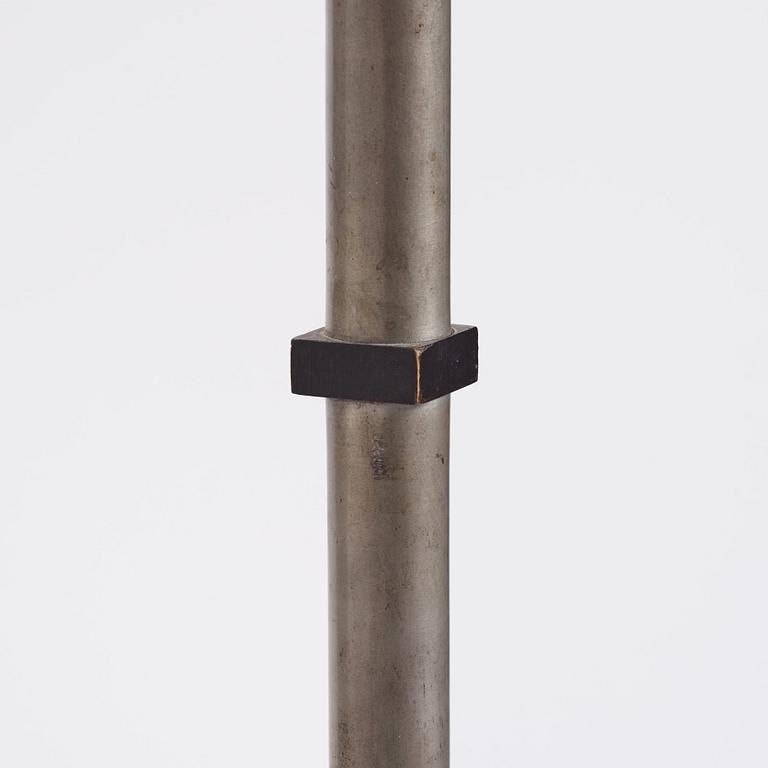
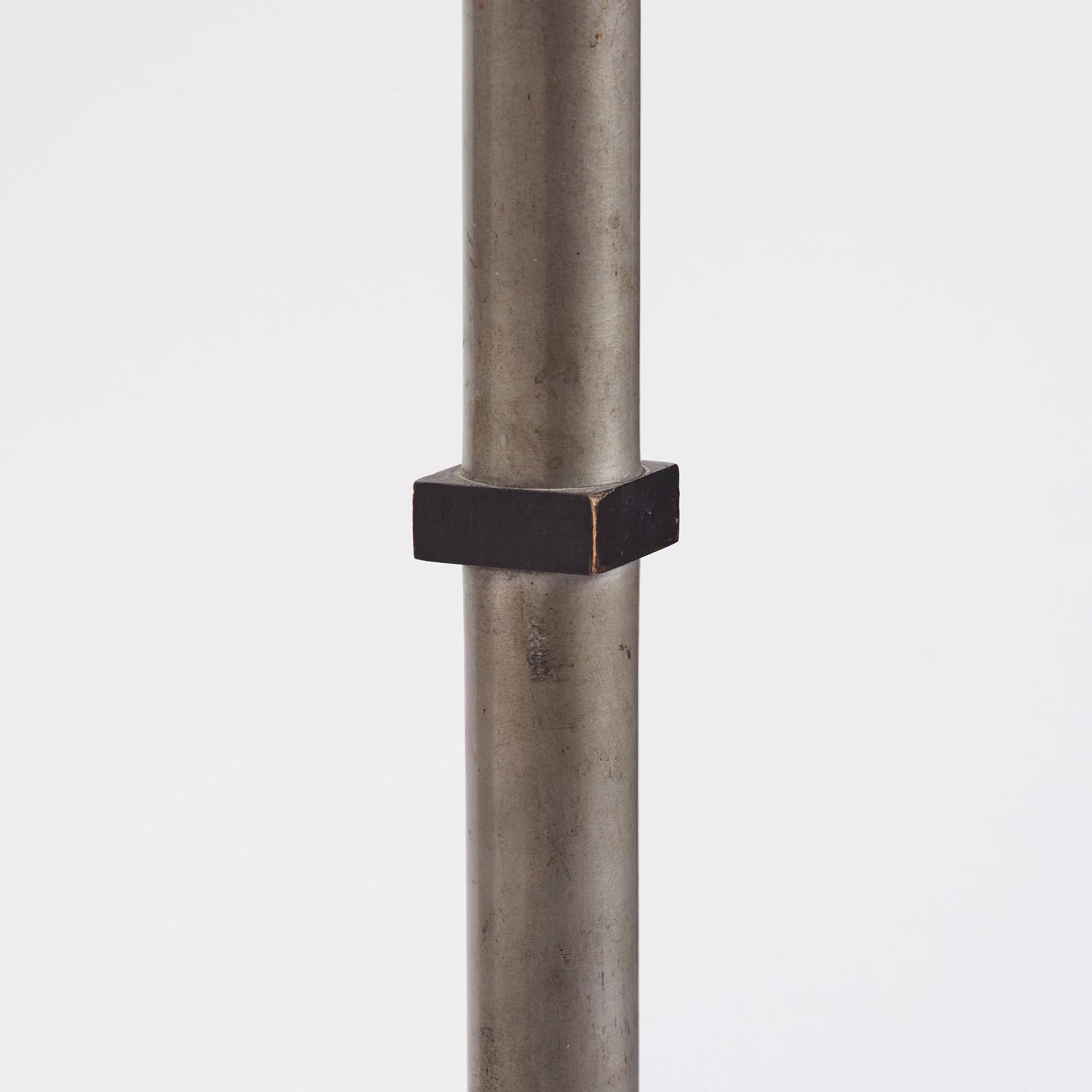
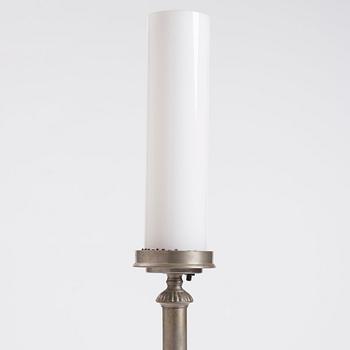
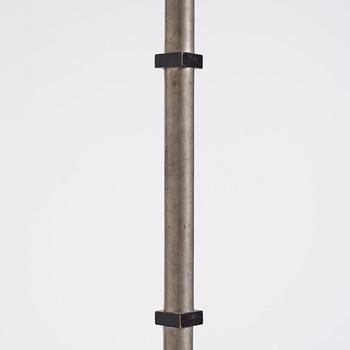
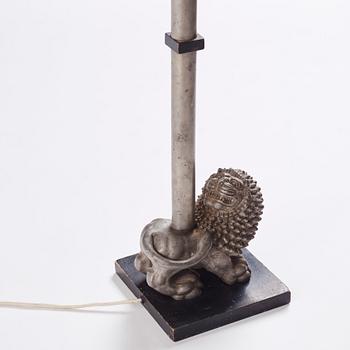
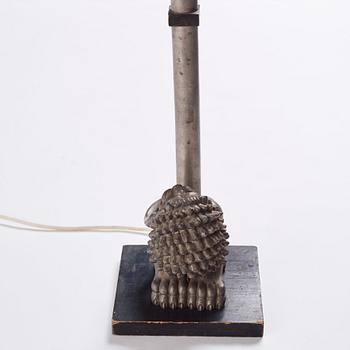
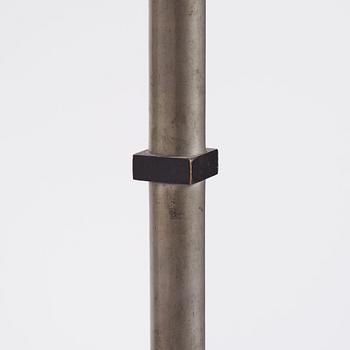
Pewter, base of a lion designed by Anna Petrus, stem with black lacquered wooden squares designed by Nils Fougstedt, later shade in white glass, height excluding shade 119 cm, total height 148 cm, the wooden base is 17.5 x 17.5 cm.
Wear. Later glass shade, function not guaranteed.
Provenance
The Widengren family. Per Widengren started one of Sweden's first ready-to-wear factories in Vingåker in 1896. The lamp was bought by one of the sons who eventually moved to Stockholm, reportedly at the Stockholm exhibition in 1930. Thence by descent.
More information
The model was designed in 1929, originally with a glass shade of model 8144 by Arvid Böhlmarks Lampfabrik.
More about Nils Fougstedt
Nils Fougstedt was a Swedish sculptor and designer. Brother of Arvid Fougstedt. Together with Estrid Ericson, he established a workshop for the production of pewter objects in Stockholm in 1924, which became the foundation of the company Firma Svenskt Tenn. For the company, he designed many beautiful works. From the 1920s classicism, he transitioned around 1930 to a moderate functionalism with straight, polished surfaces.
Read moreFor condition report contact specialist













Others have also viewed