

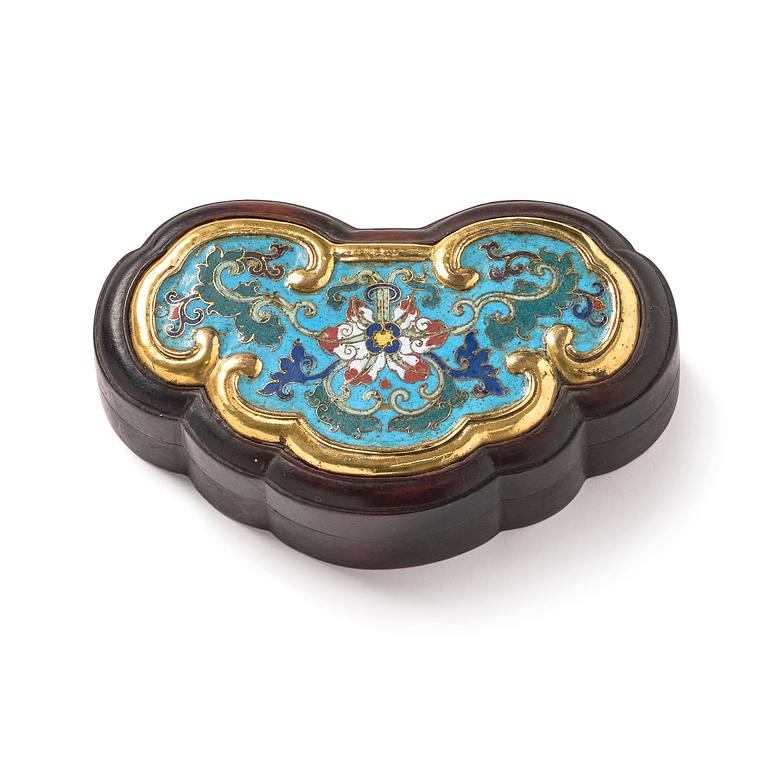
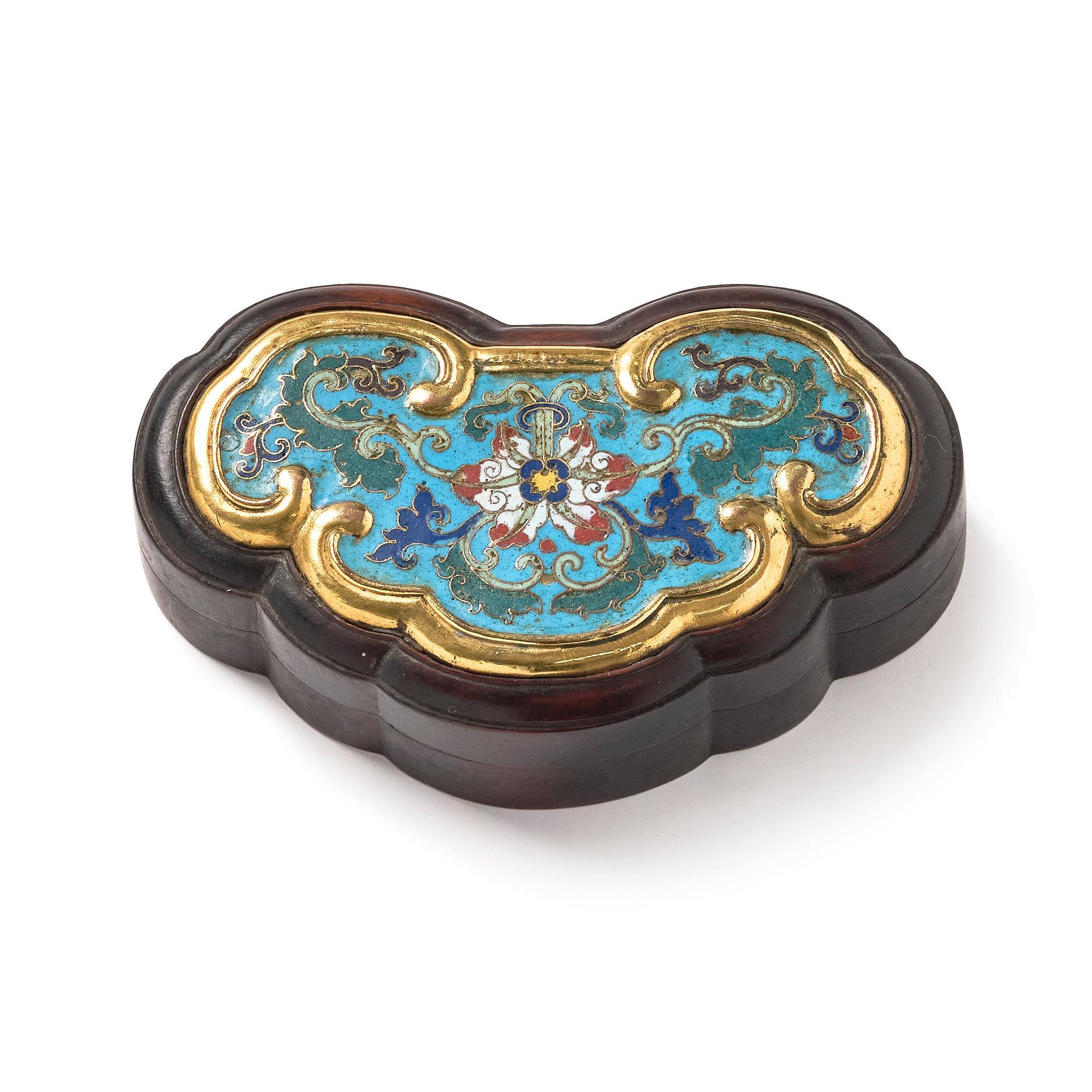
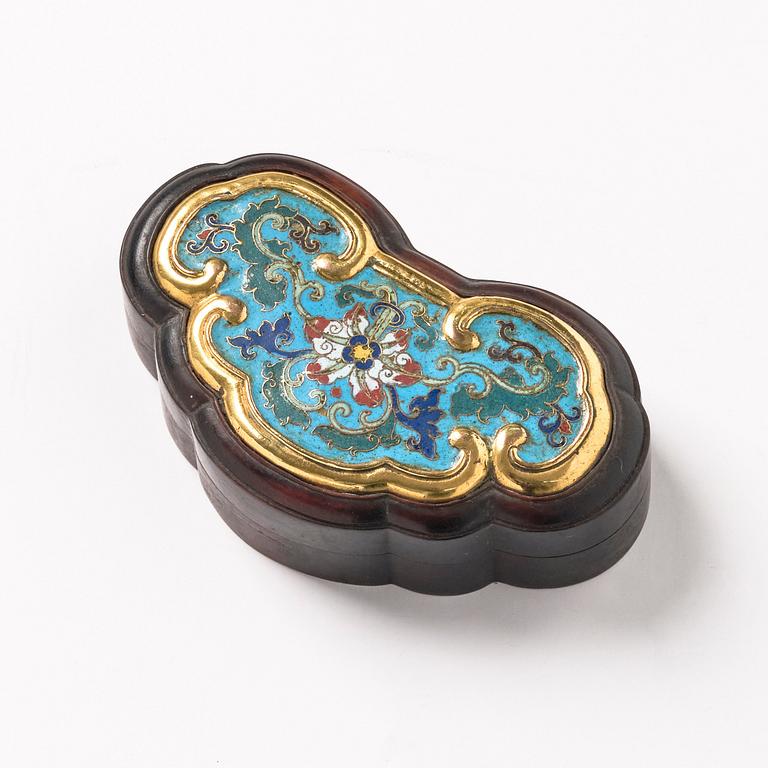
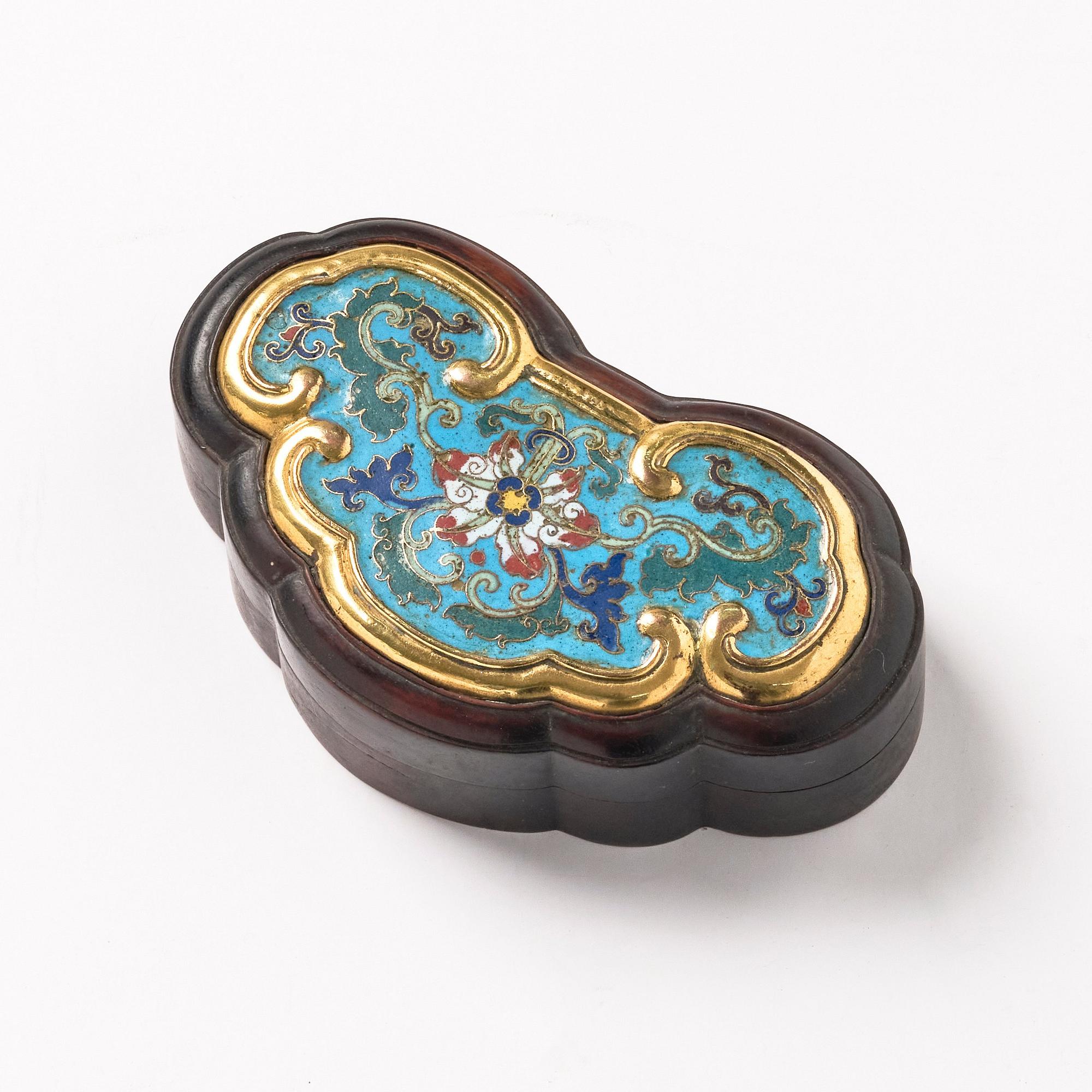
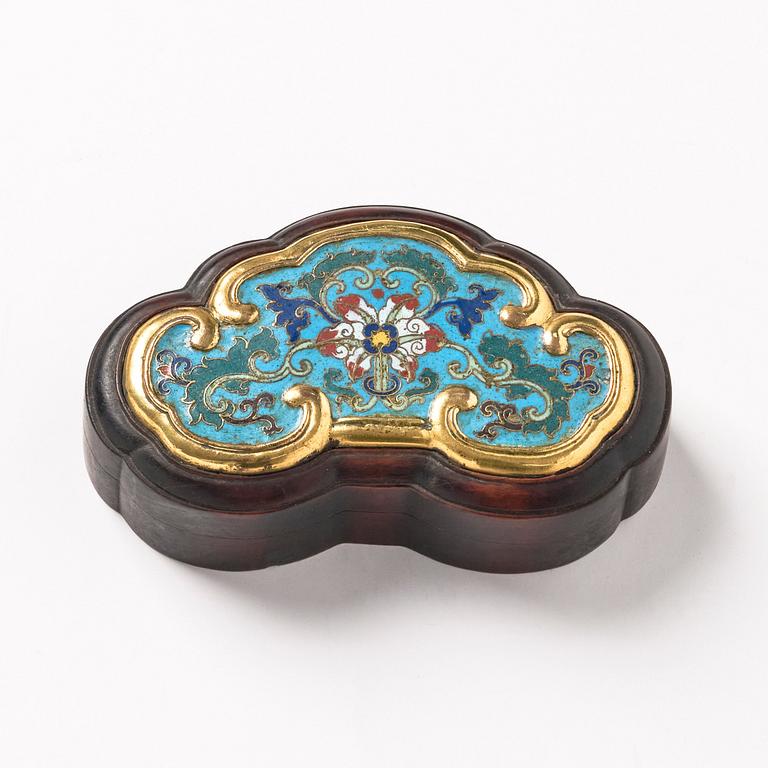
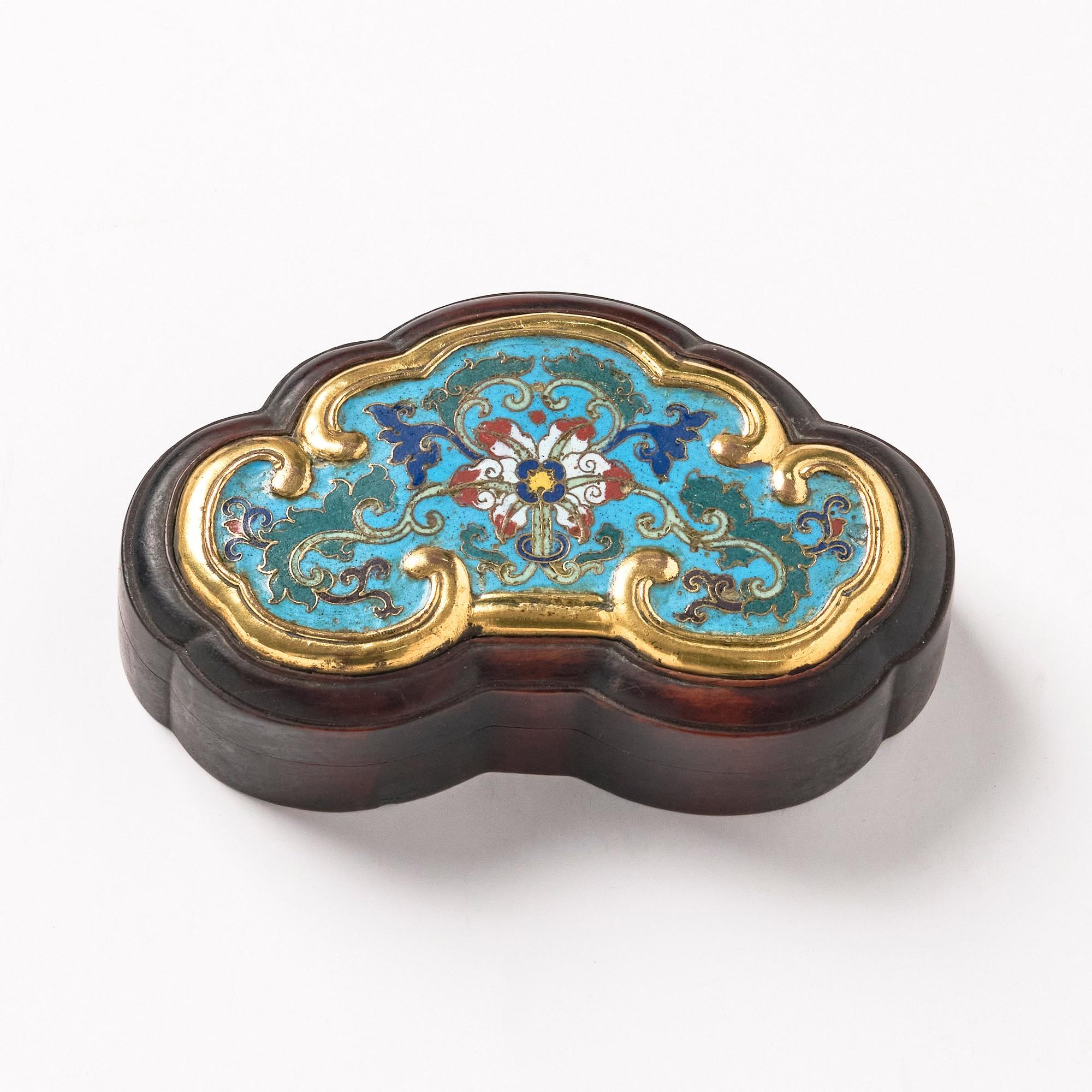
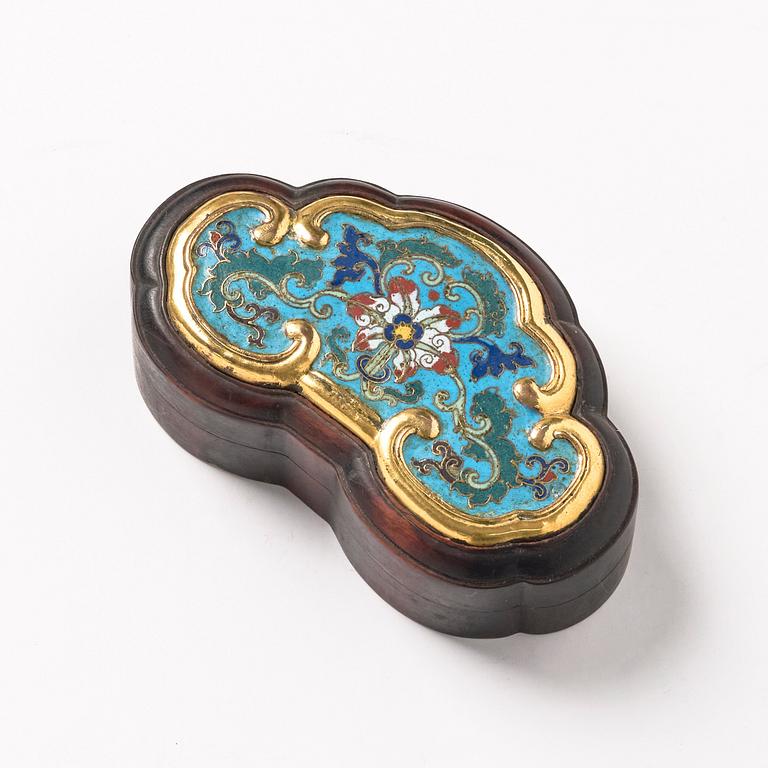
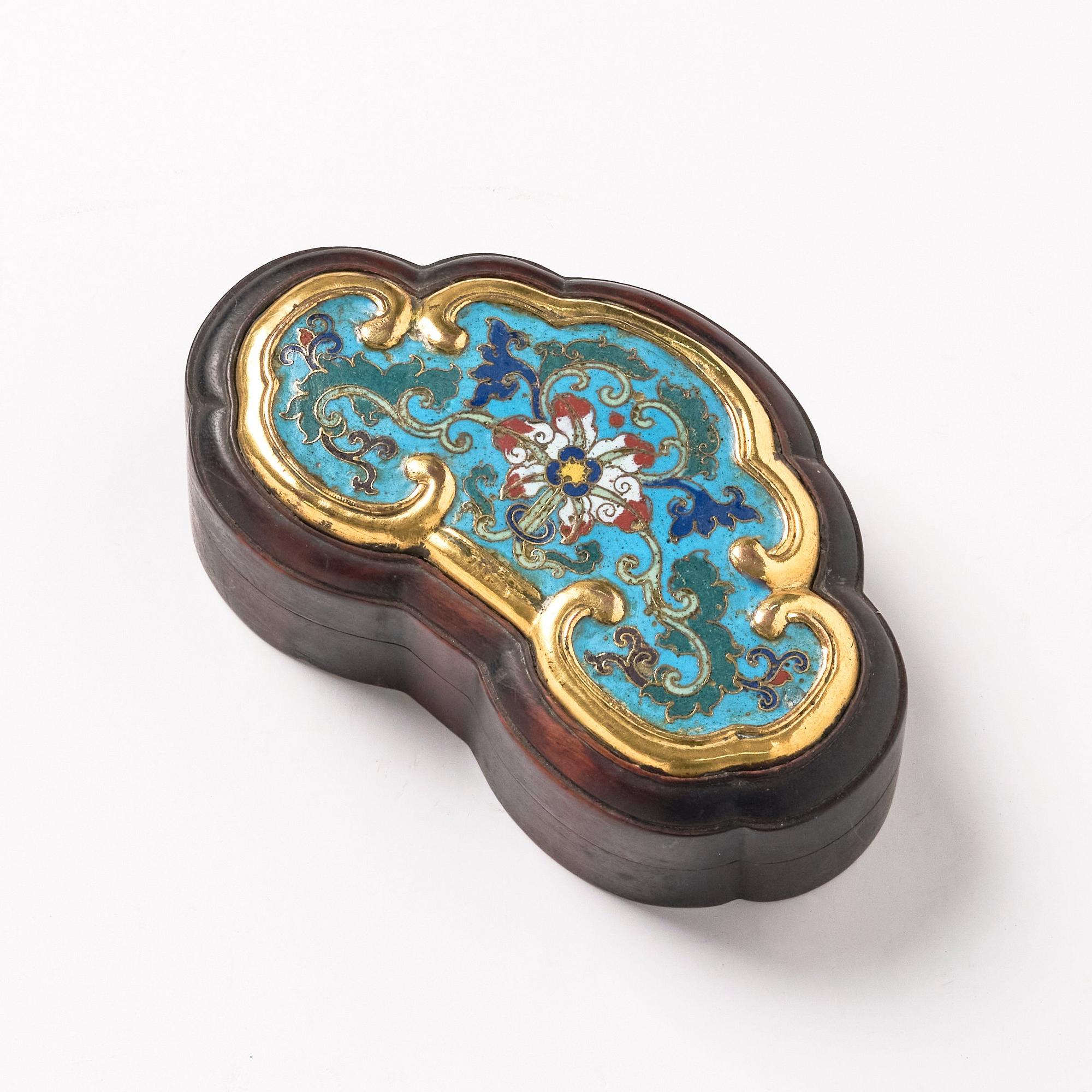
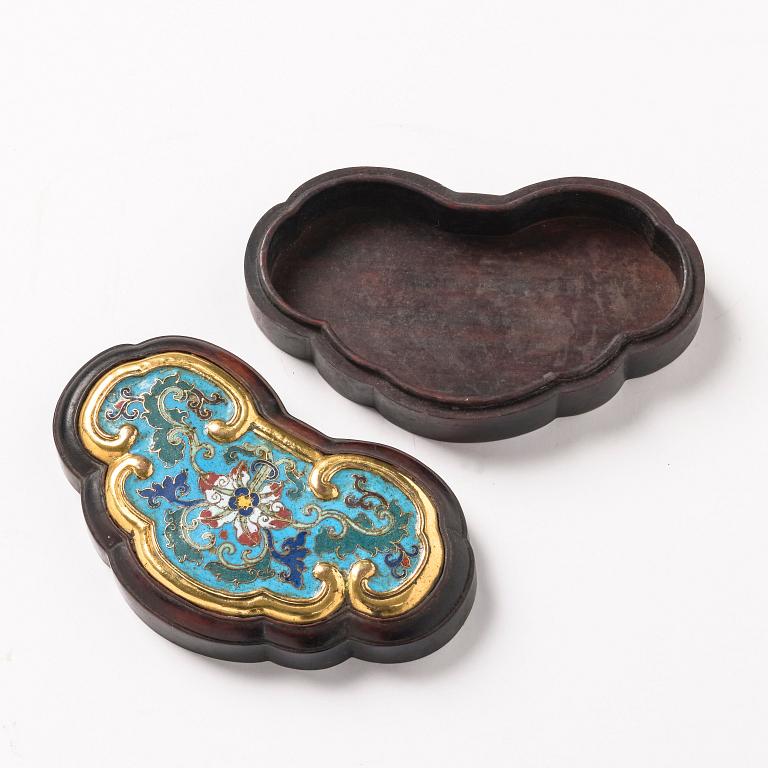
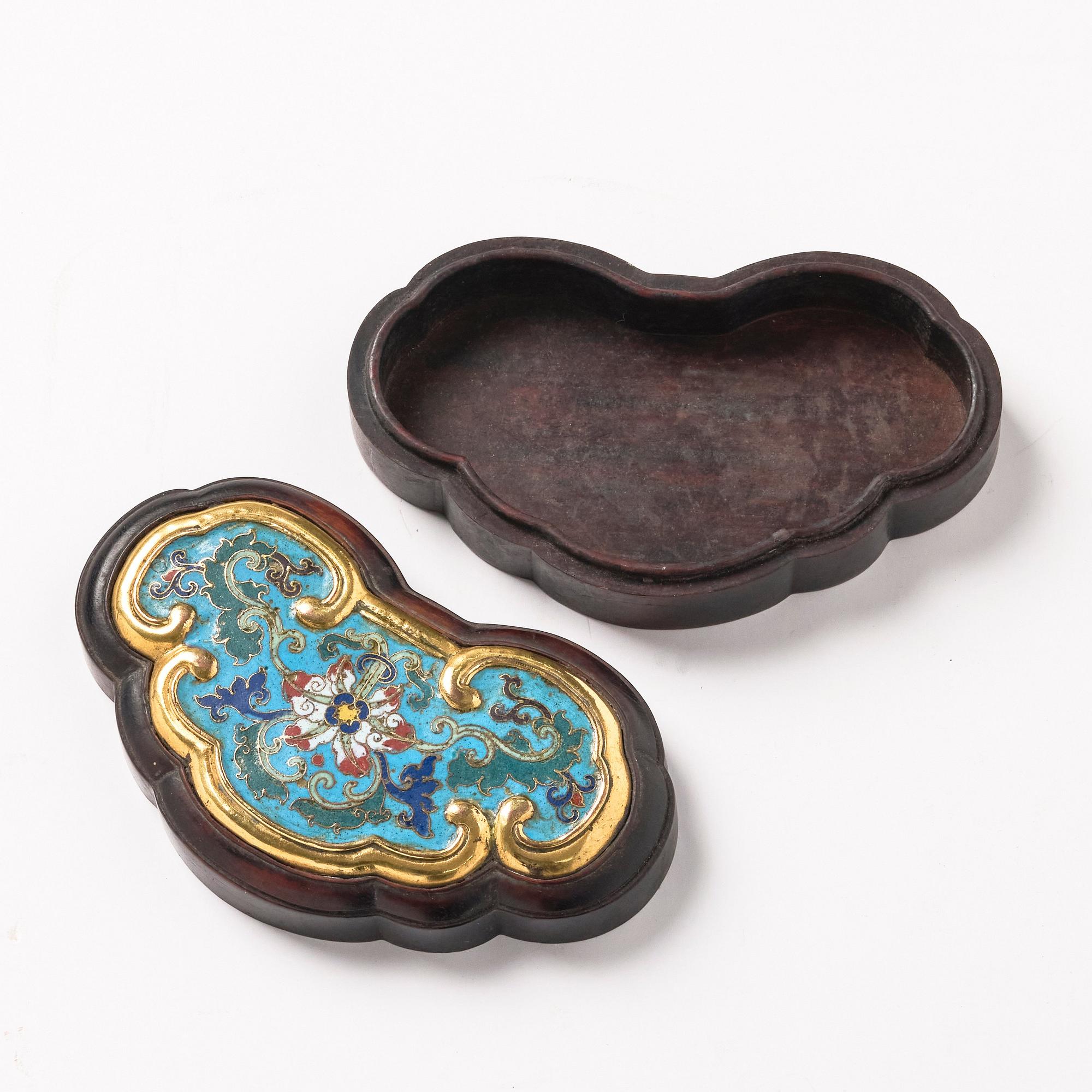
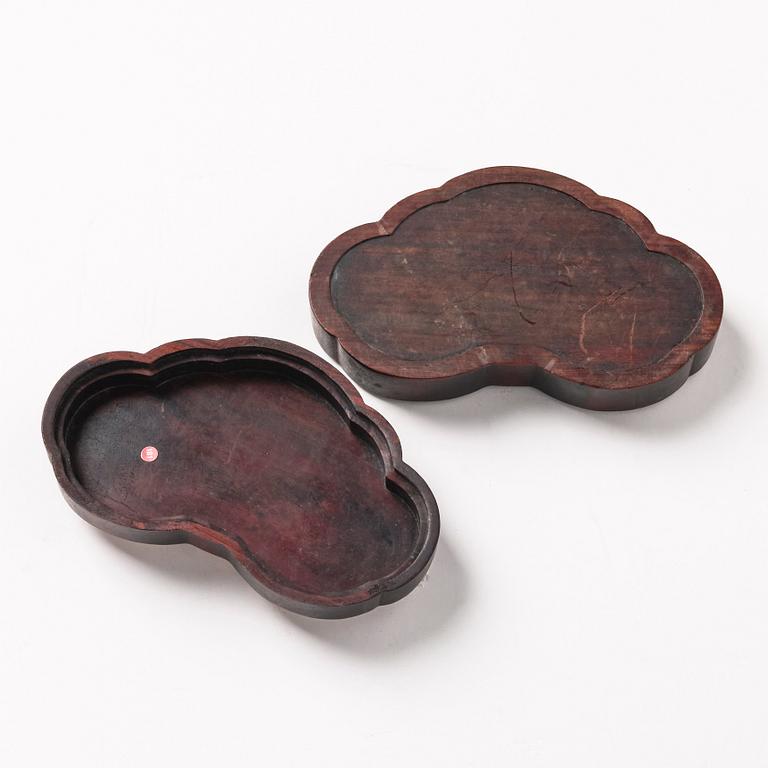
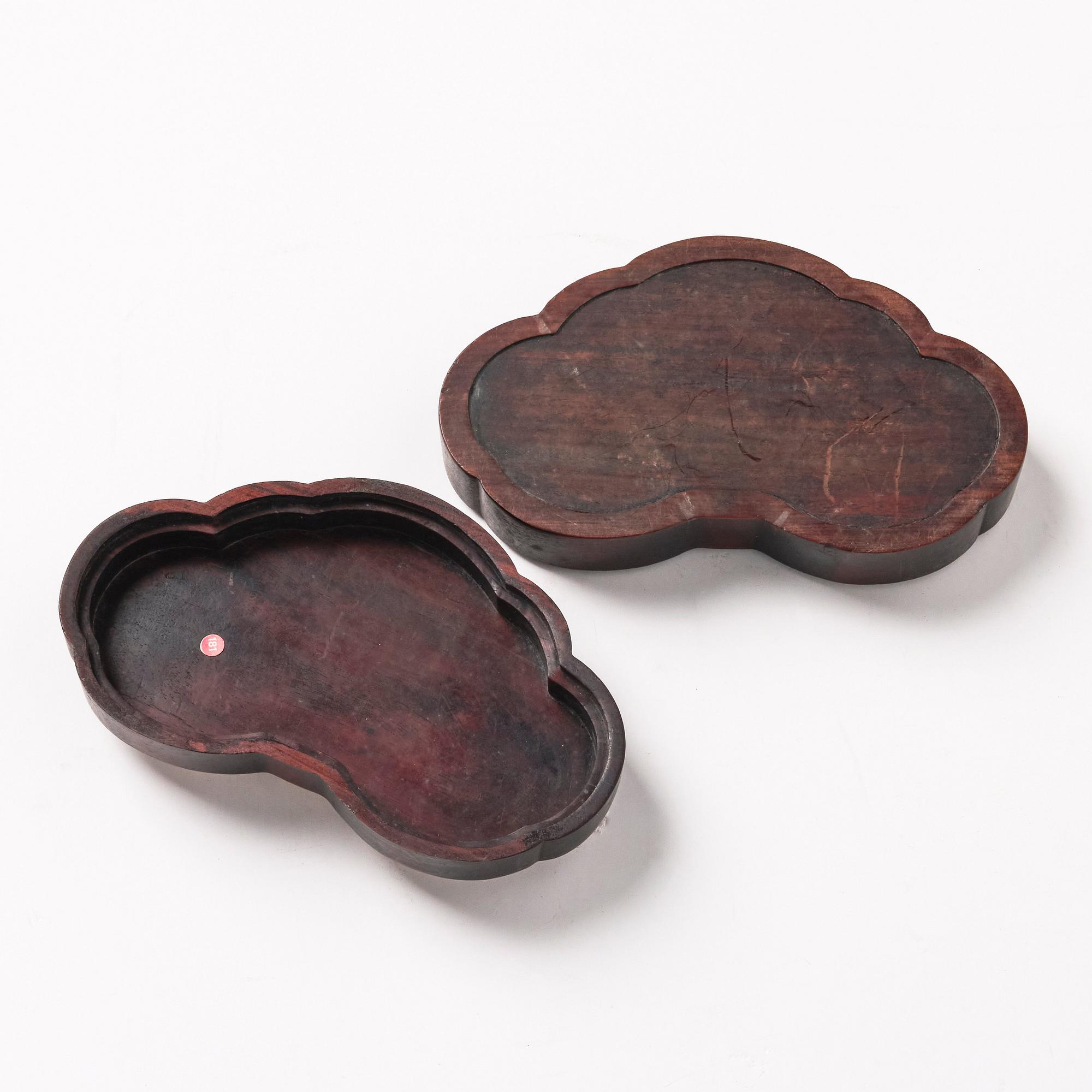
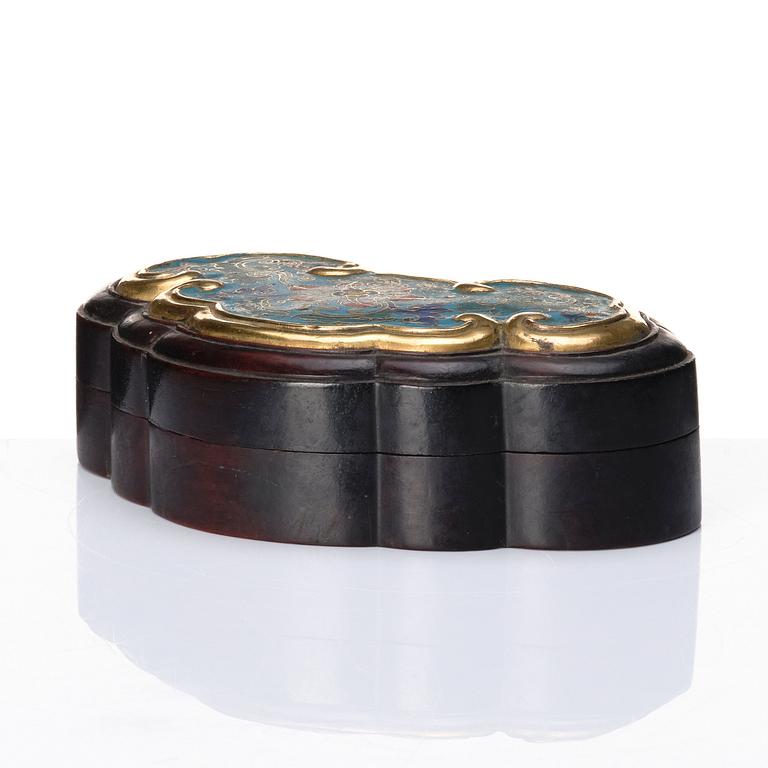
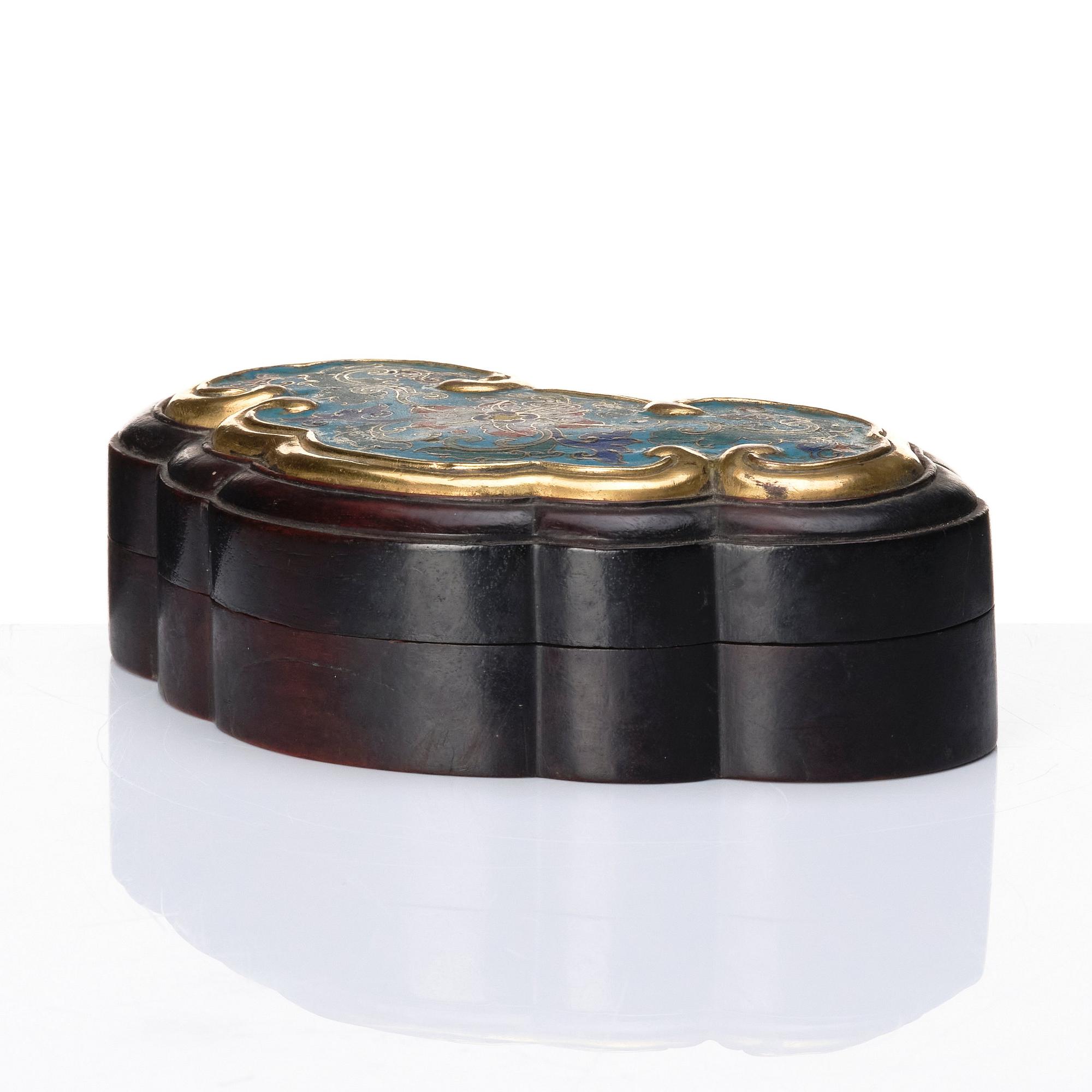
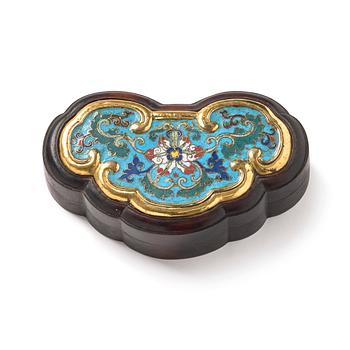
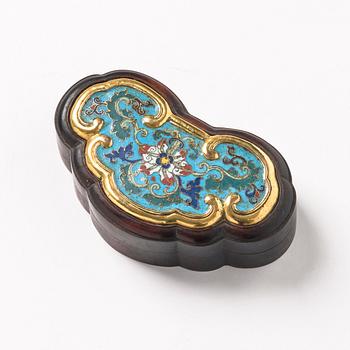
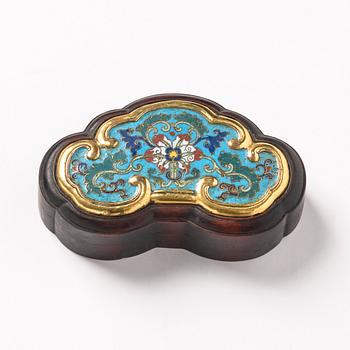
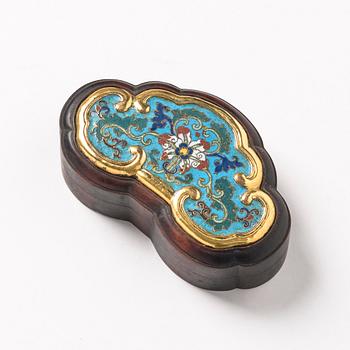
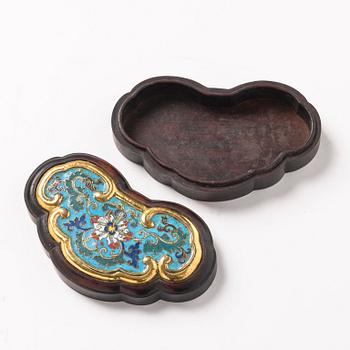
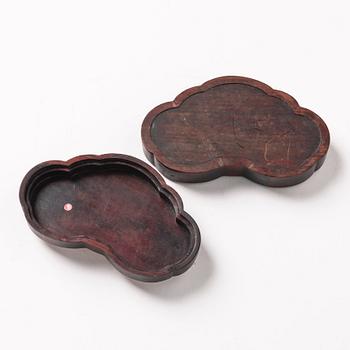
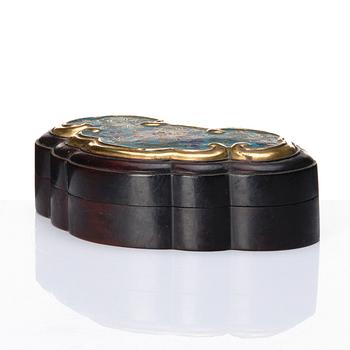
A cloisonné and hardwood box with cover, Qing dynasty, 18th century.
A ruyishaped box with cloisonné, partly gilded. Length 16 cm.
Wear.
Literature
Ruyi (Chinese: 如意; lit. 'as desired; as [you] wish') is a Chinese curved decorative object that serves as either a ceremonial scepter in Chinese Buddhism or a talisman symbolizing power and good fortune in Chinese folklore. The "ruyi" image frequently appears as a motif in Asian art.
A traditional ruyi has a long S-shaped handle and a head fashioned like a fist, cloud, or lingzhi mushroom. Ruyi are constructed from diverse materials. For example, the Palace Museum in Beijing has nearly 3,000 ruyi variously made of gold, silver, iron, bamboo, wood, ivory, coral, rhinoceros horn, lacquer, crystal, jade, and precious gems.
For condition report contact specialist

Others have also viewed
1744836
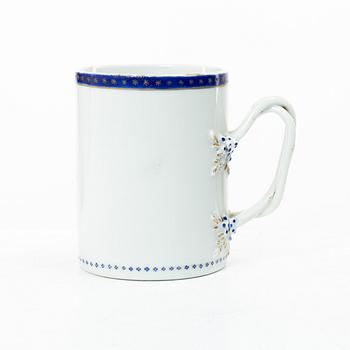
A Chinese export porcelain mug,
Qing dynasty, Jiaqing (1796-1820).
No bids
3d 21h
Estimate
2 000 SEK
1734124
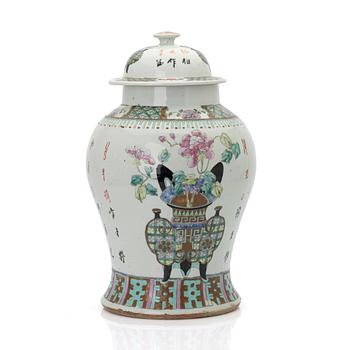
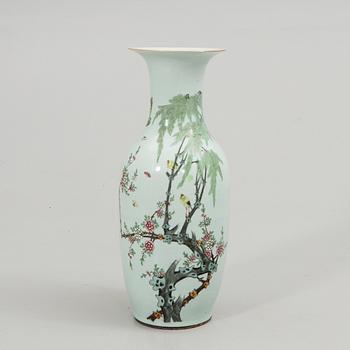
Vase with lock decoration,
late Qing dynasty, China, circa 1900.
No bids
1d 14h
Estimate
2 500 SEK
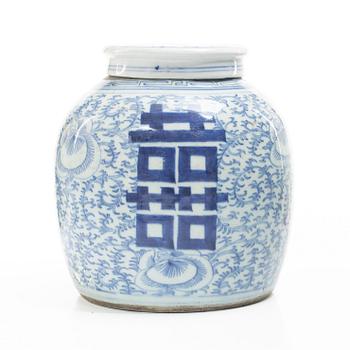
1745703
A Chinese blue and white porcelain jar with cover,
late Qing dynasty.
No bids
3d 18h
Estimate
1 500 SEK

1738798
A large blue and white ’figurative’ bowl,
Qing dynasty, 19th century.
No bids
6d 14h
Estimate
10 000 SEK
1732455
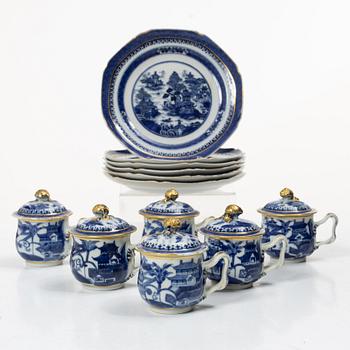
Service pieces,
12 pieces, company porcelain. Qing dynasty, circa 1800.
No bids
6d 12h
Estimate
3 000 SEK
1736657
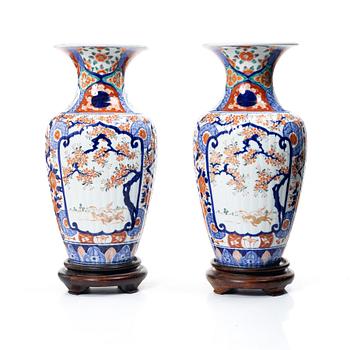
A pair of Japanese floor vases with Imari decoration. 19th century.
No bids
6d 13h
Estimate
2 500 SEK
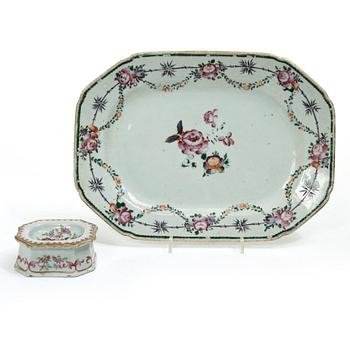
1745620
A Chinese famille rose porcelain serving dish and a salt,
Qing dynasty, Qianlong (1736-95).
No bids
19h 27m
Estimate
3 000 SEK