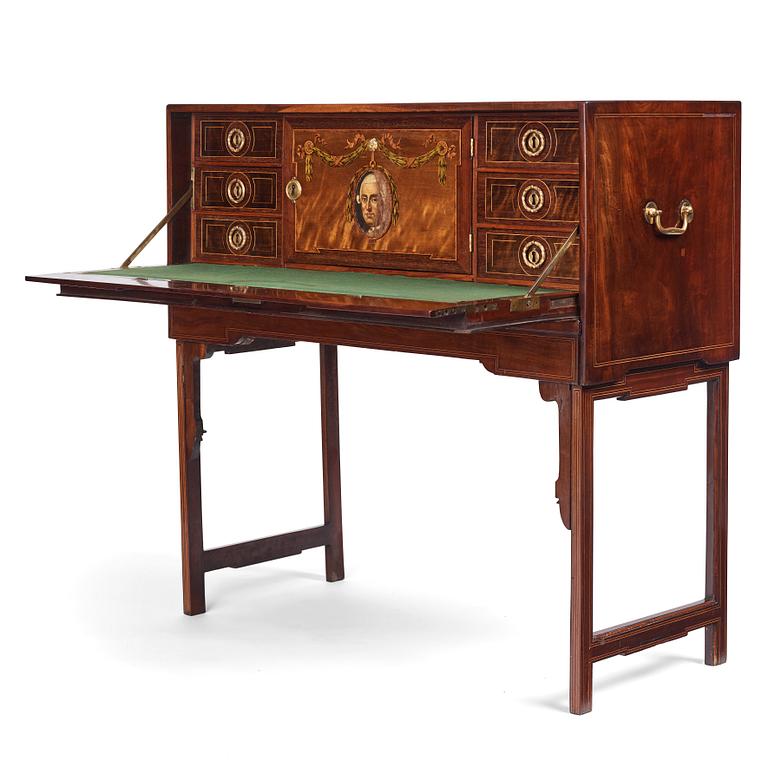
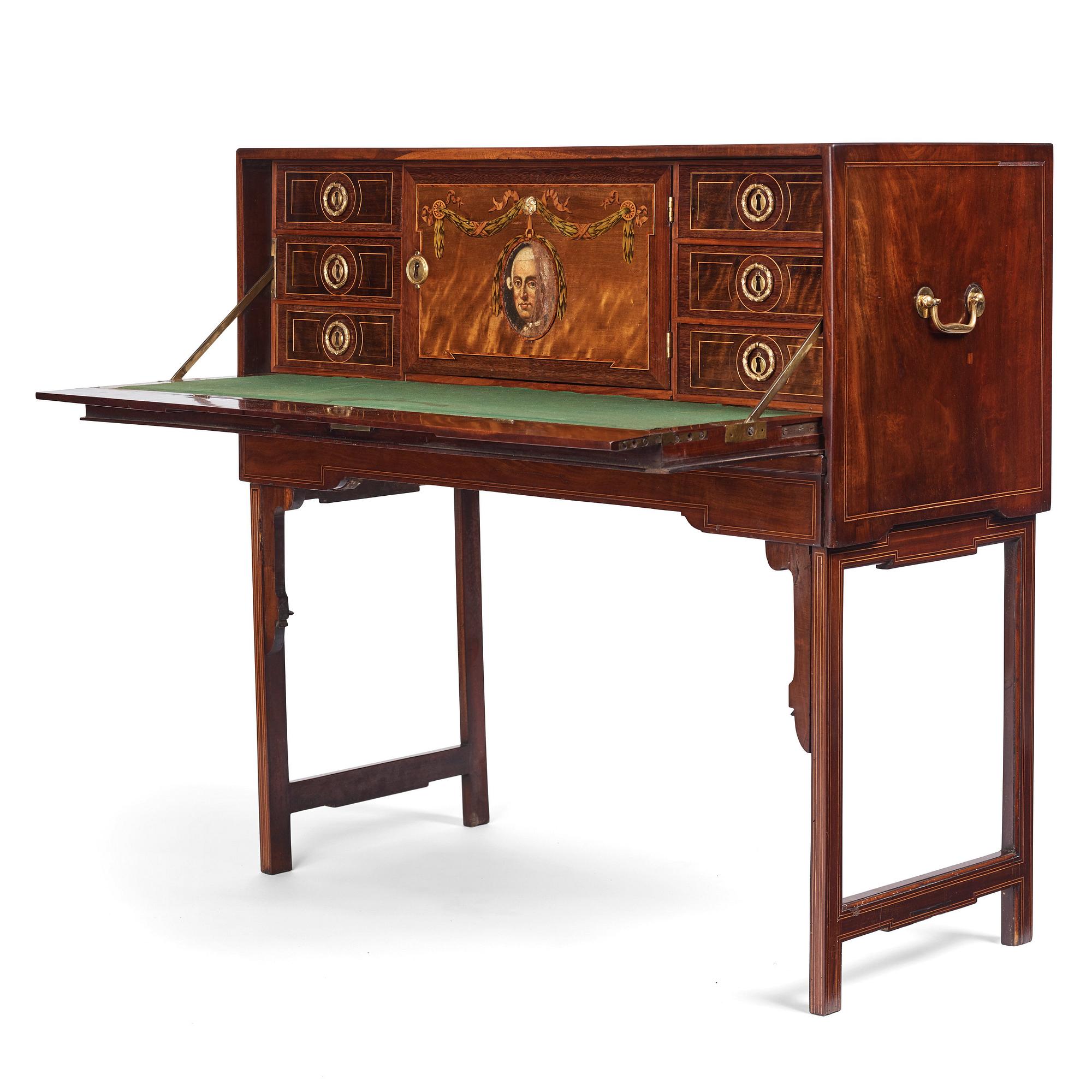
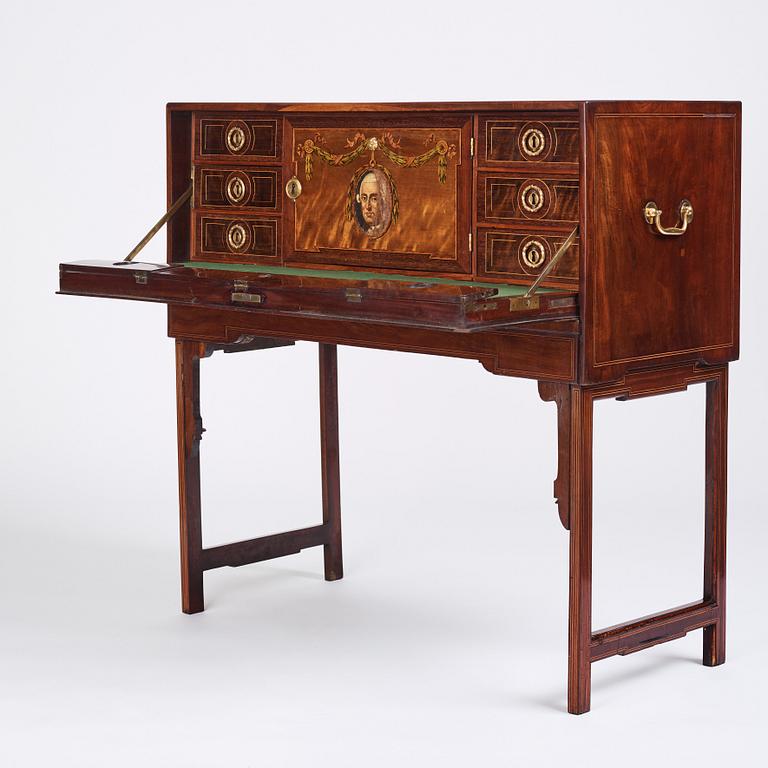
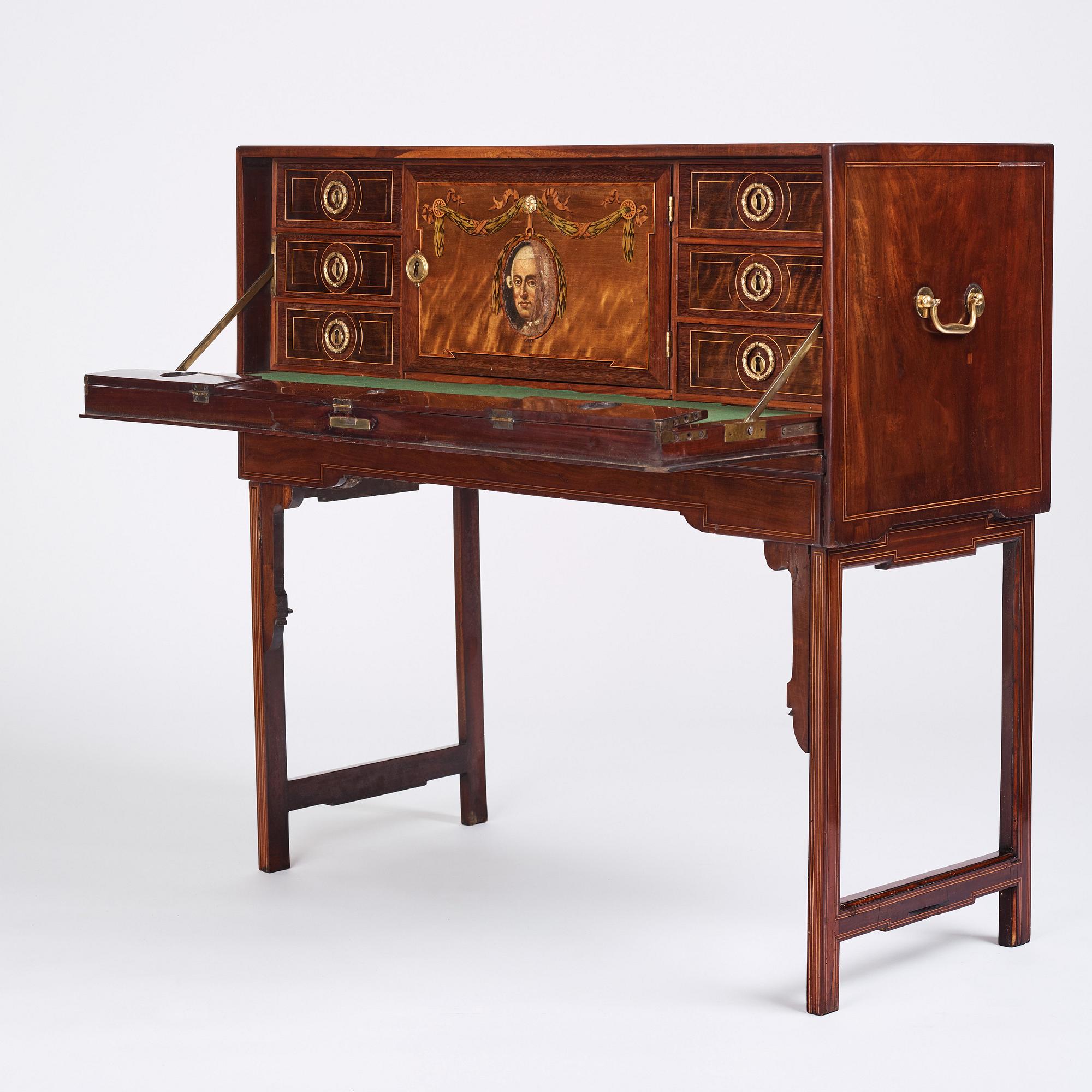
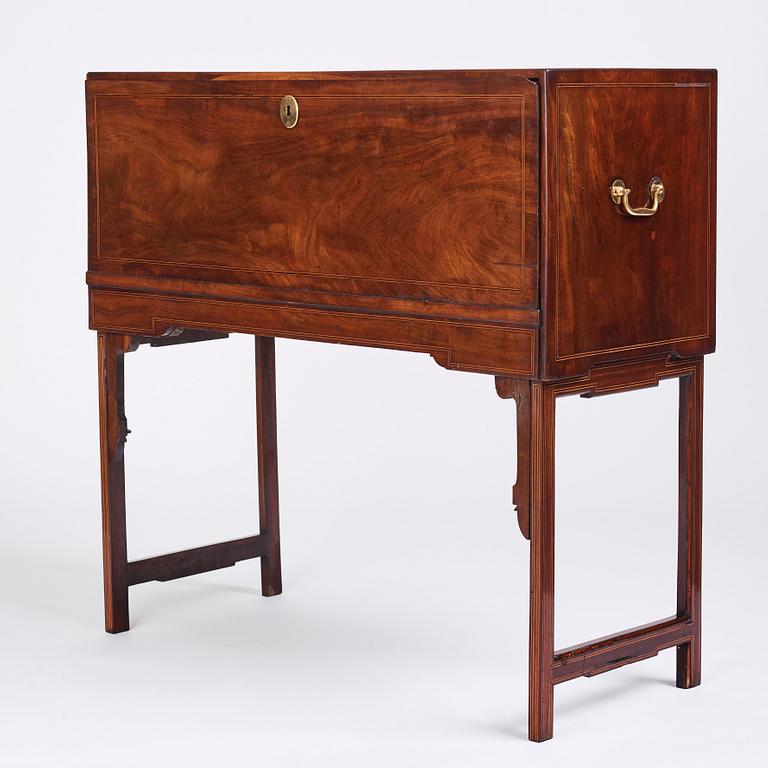
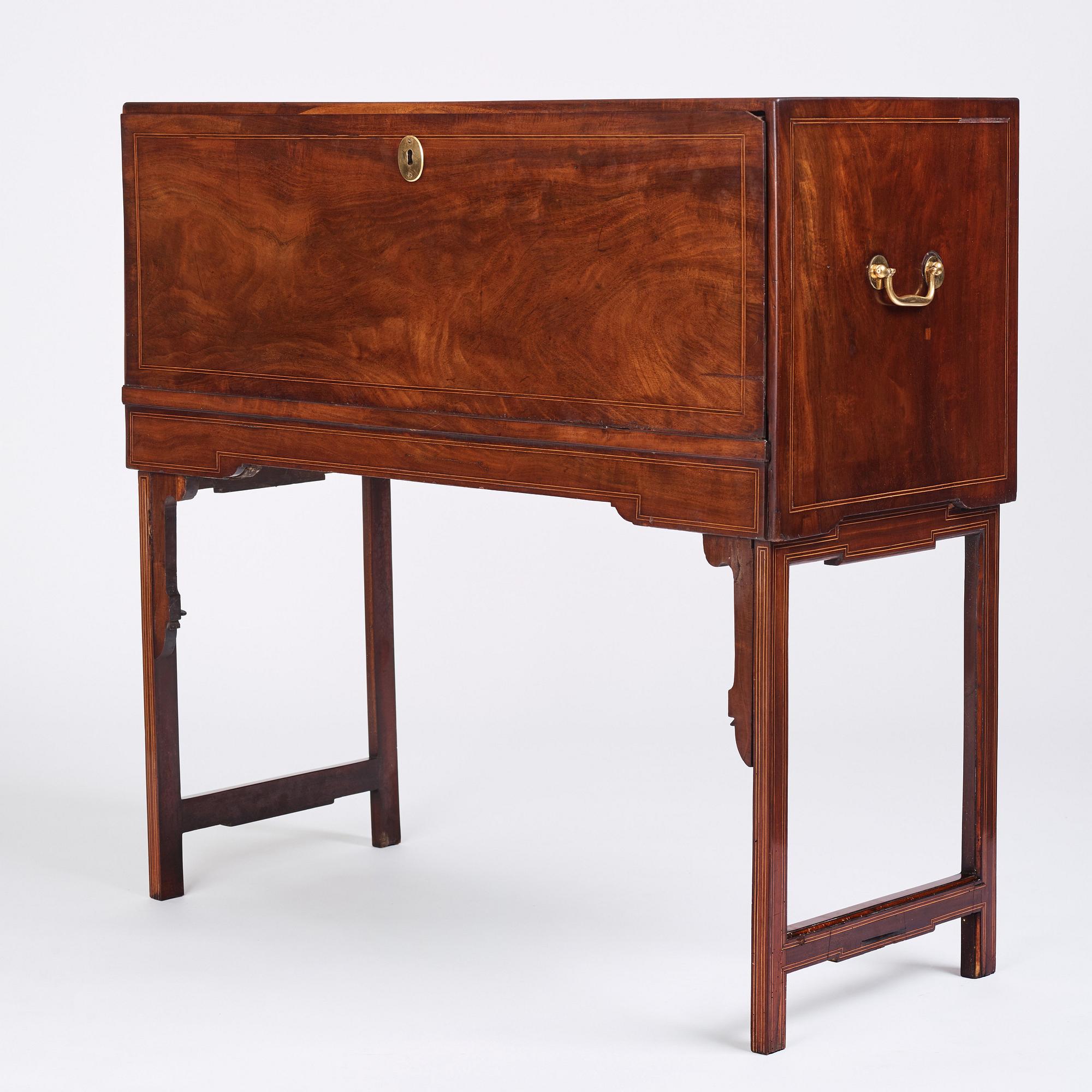
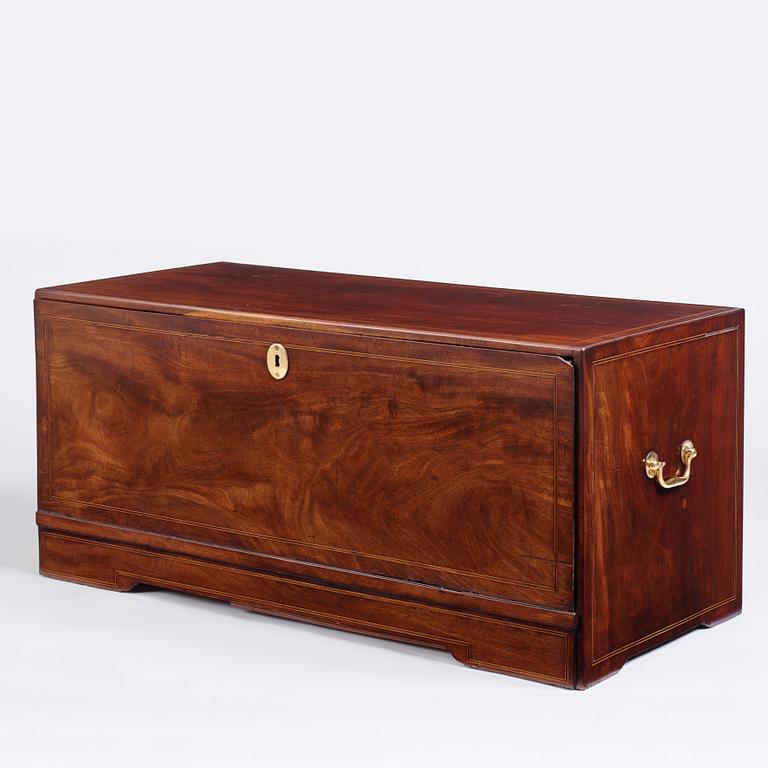
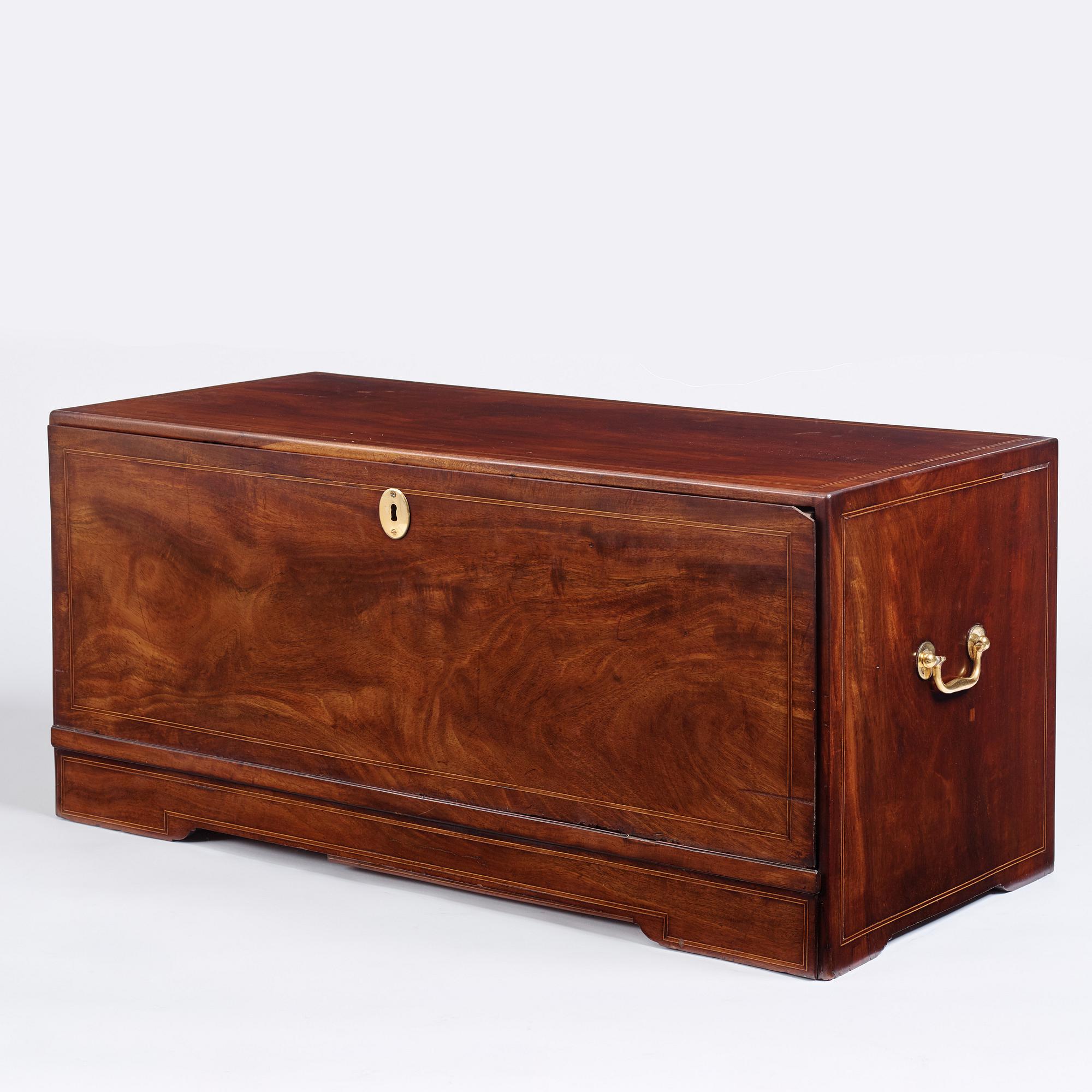
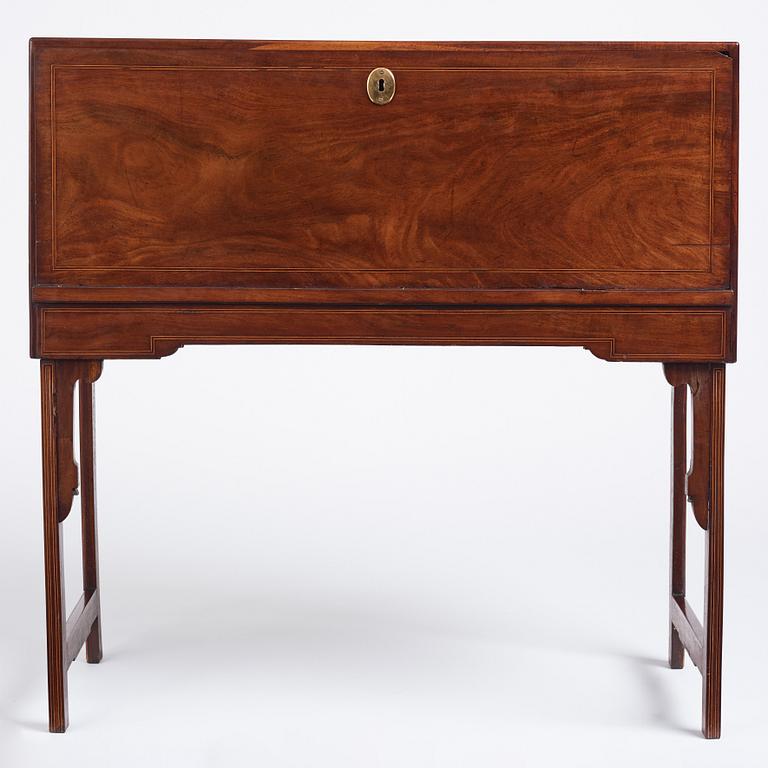
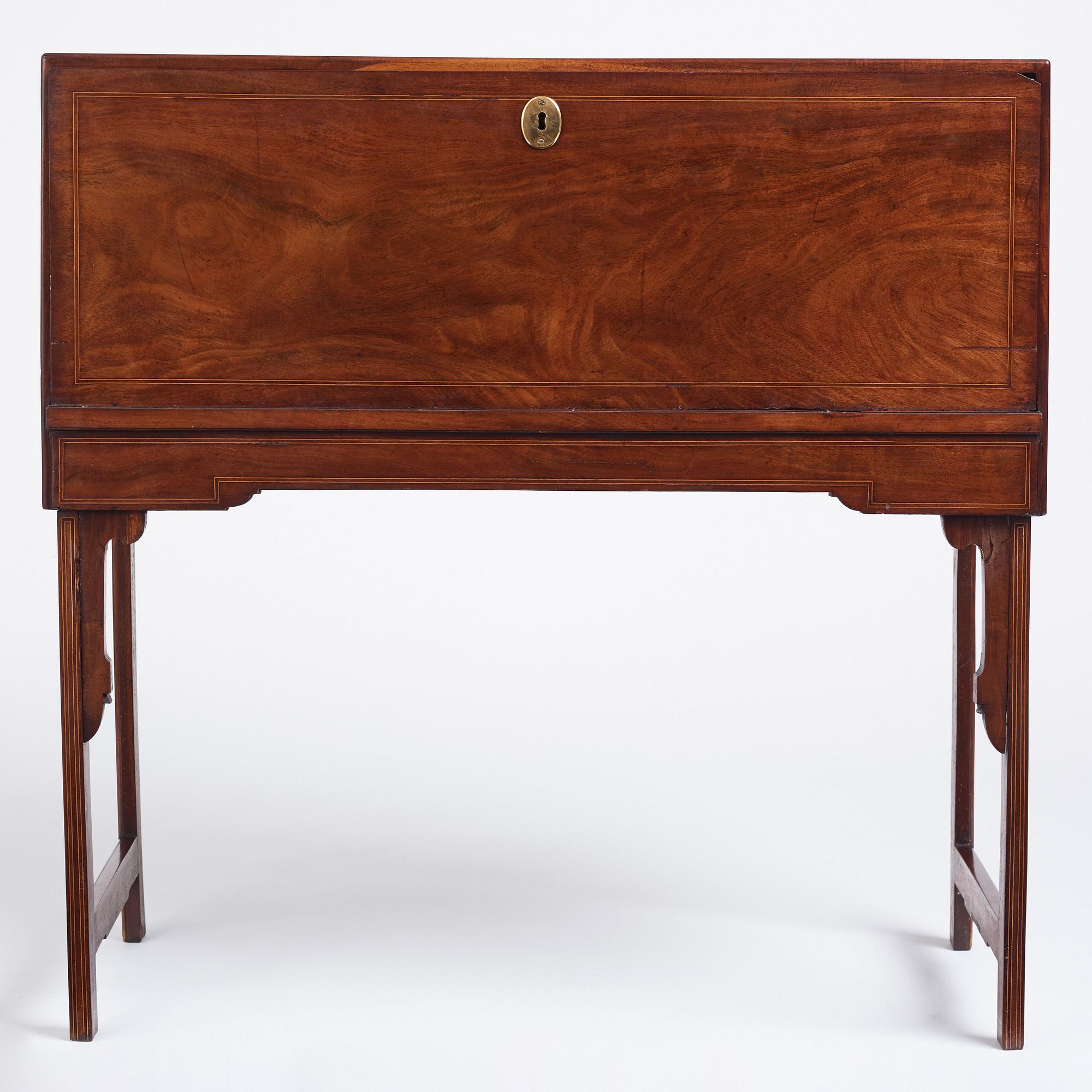
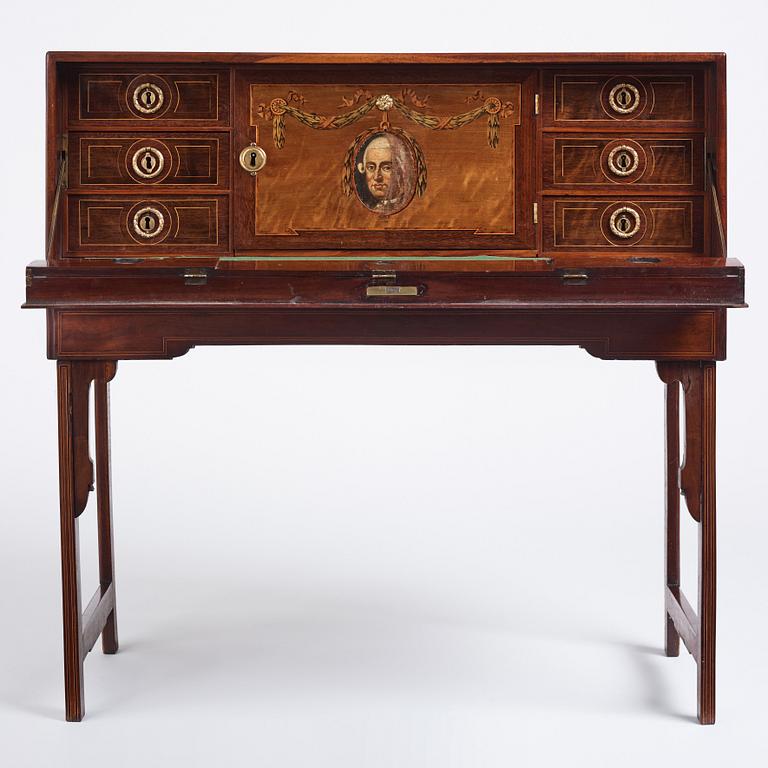
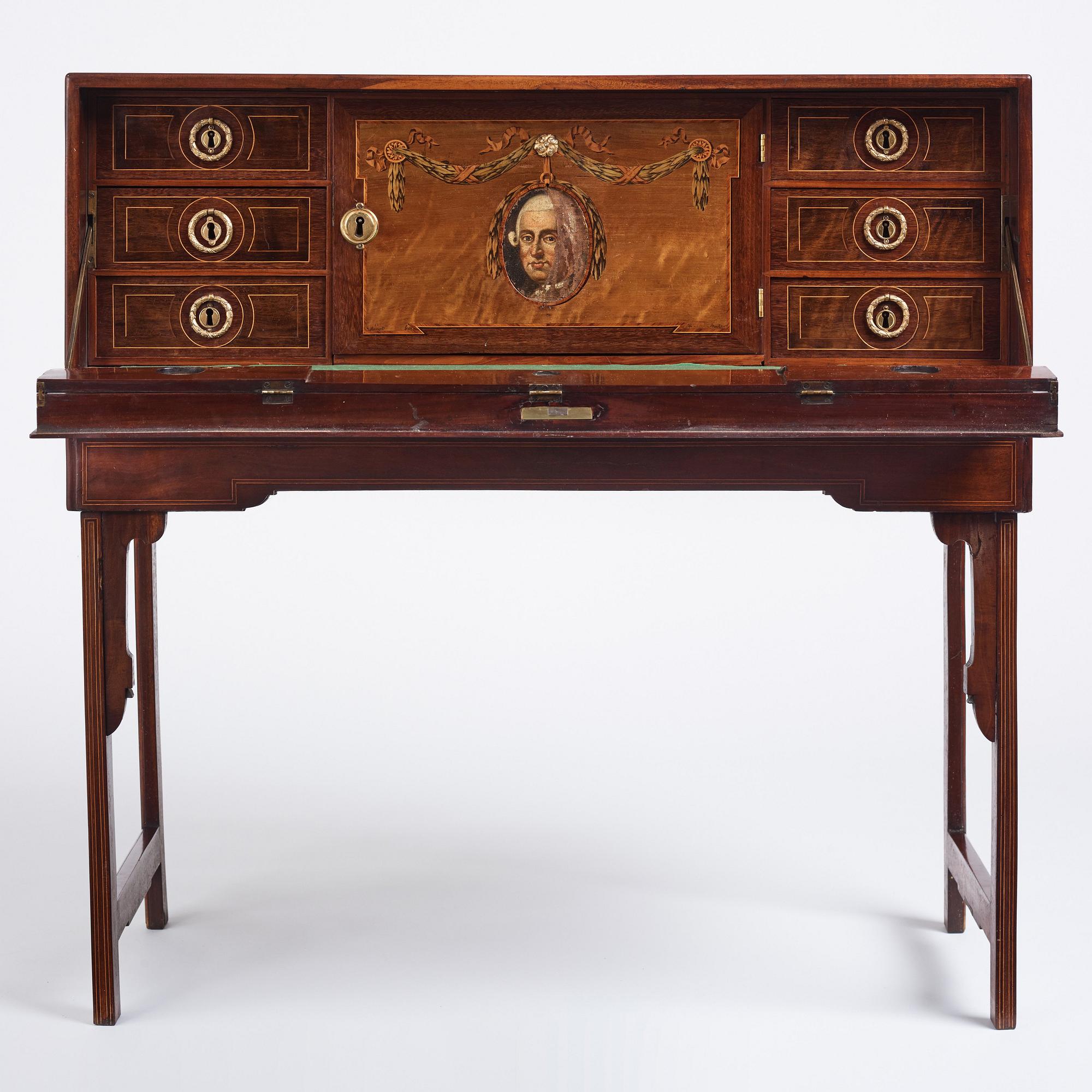
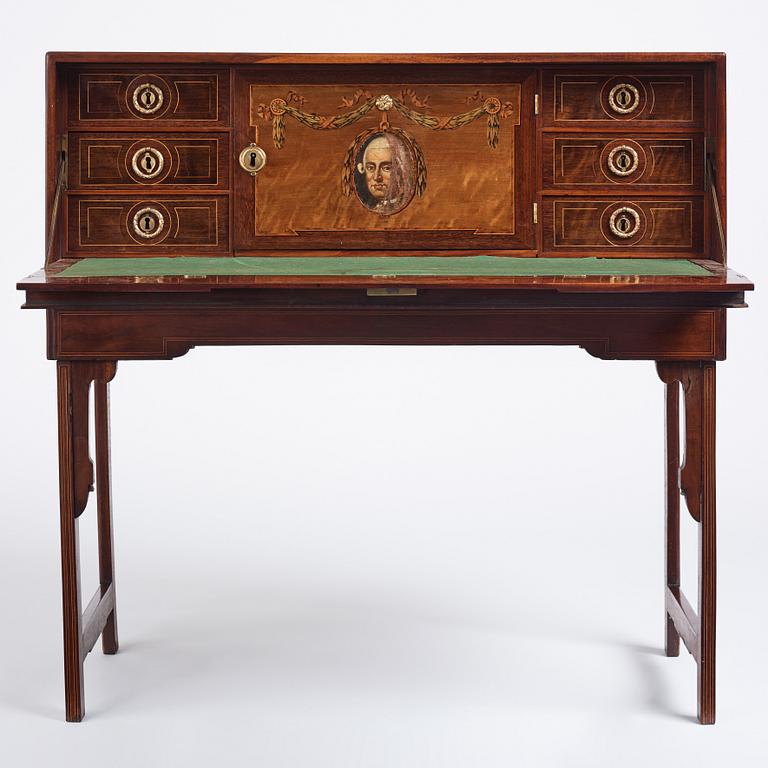
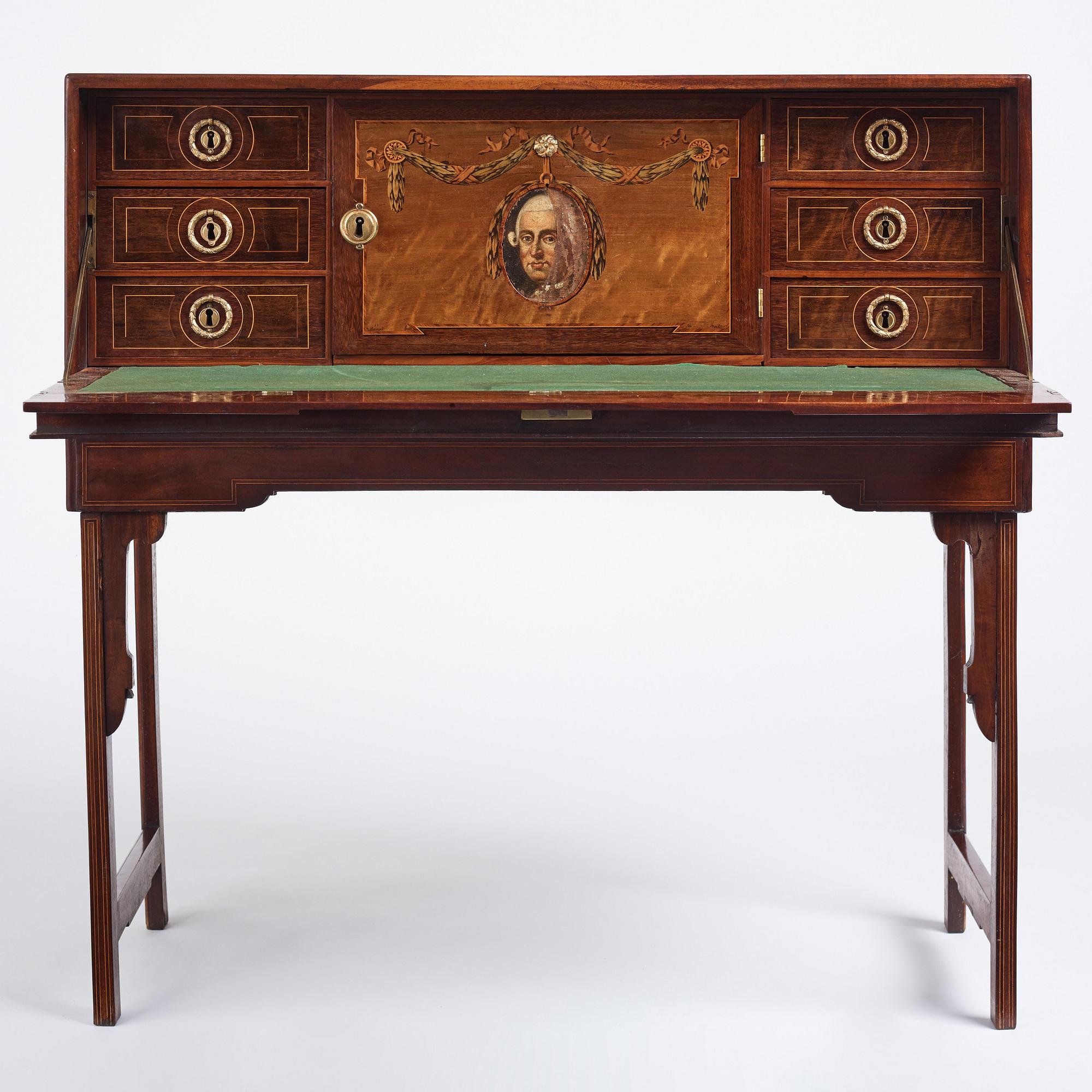
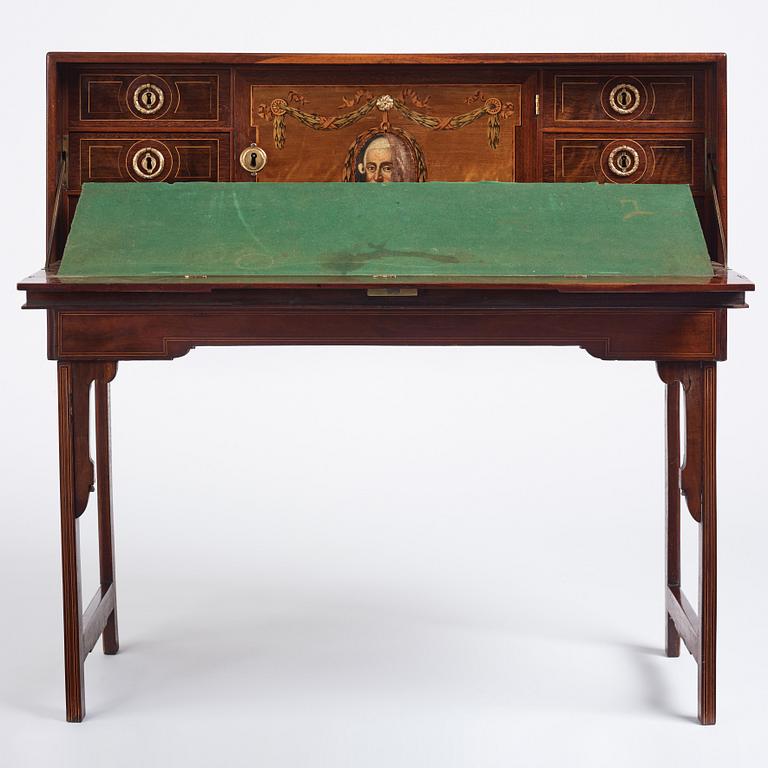
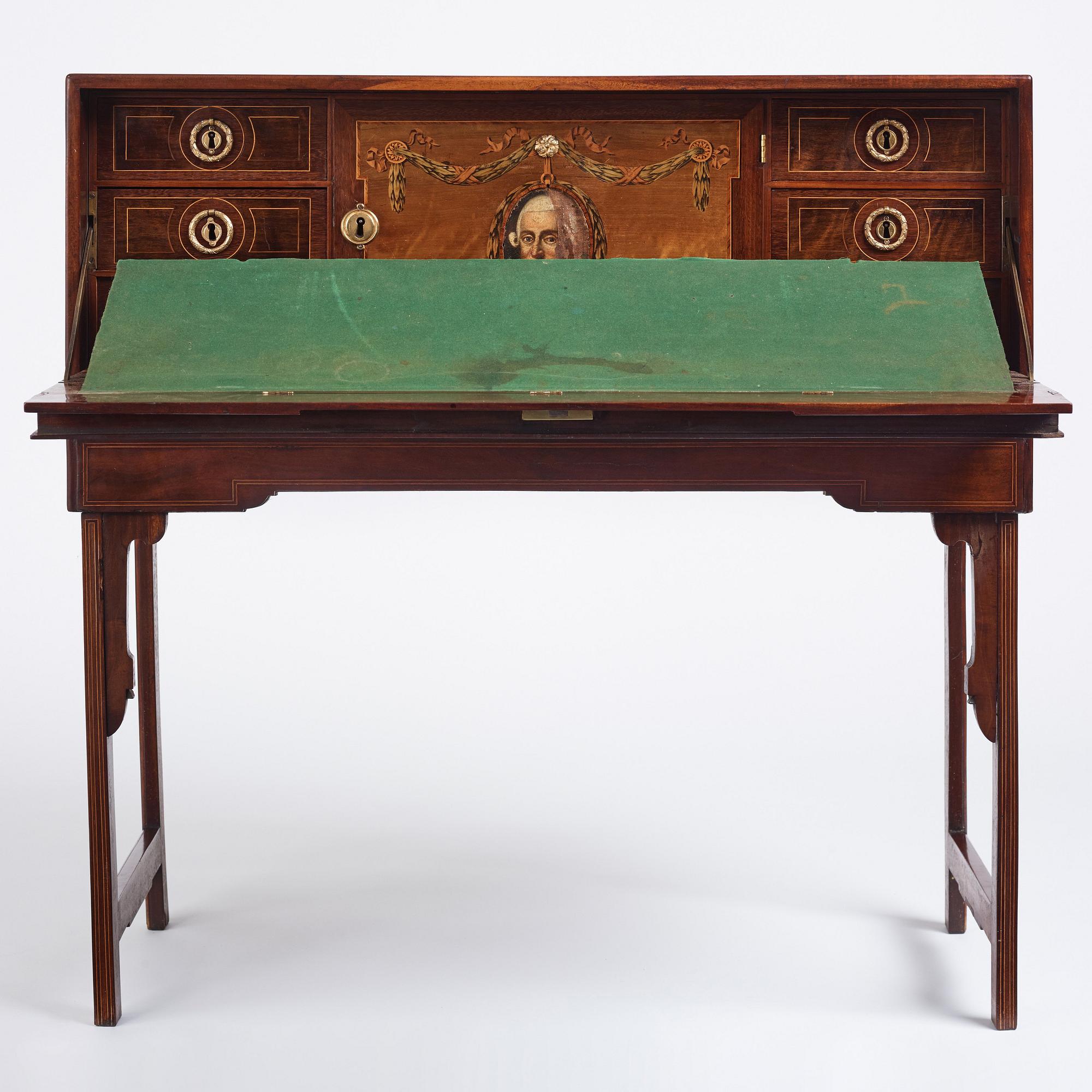
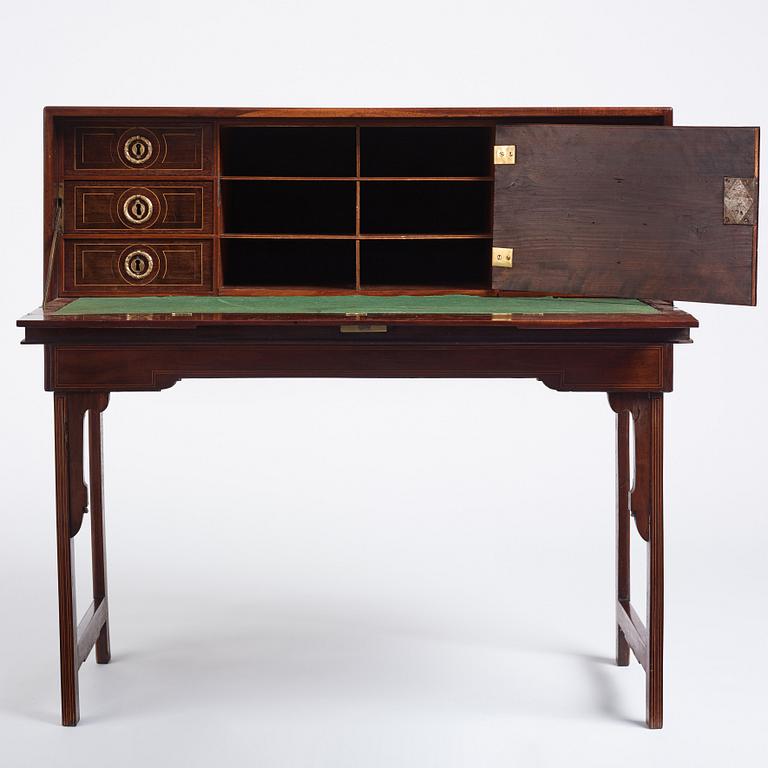
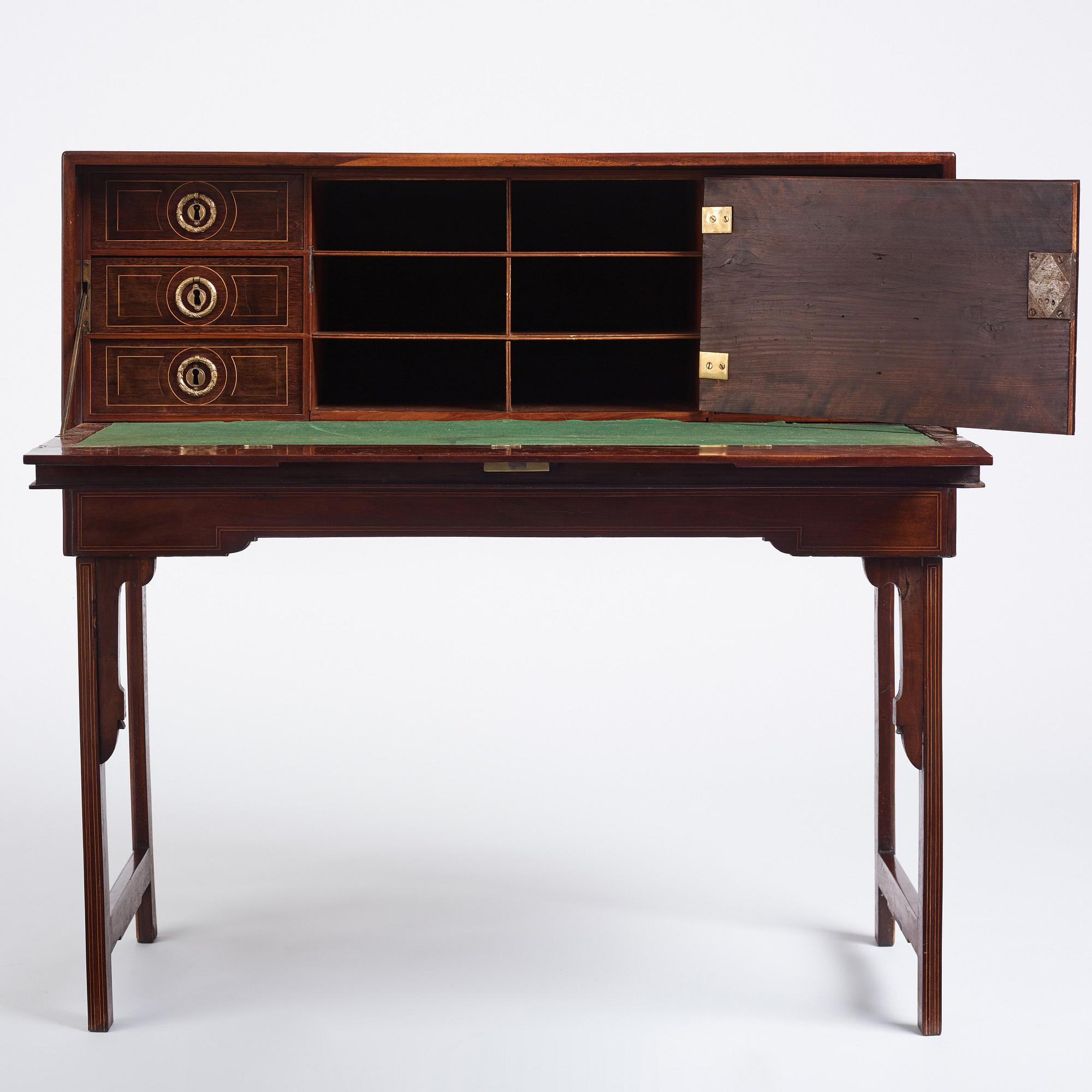
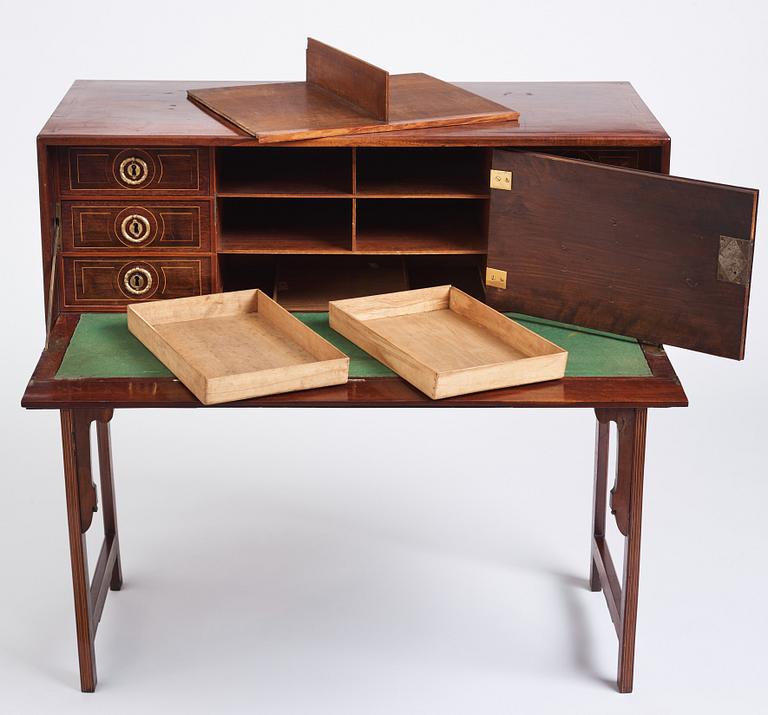
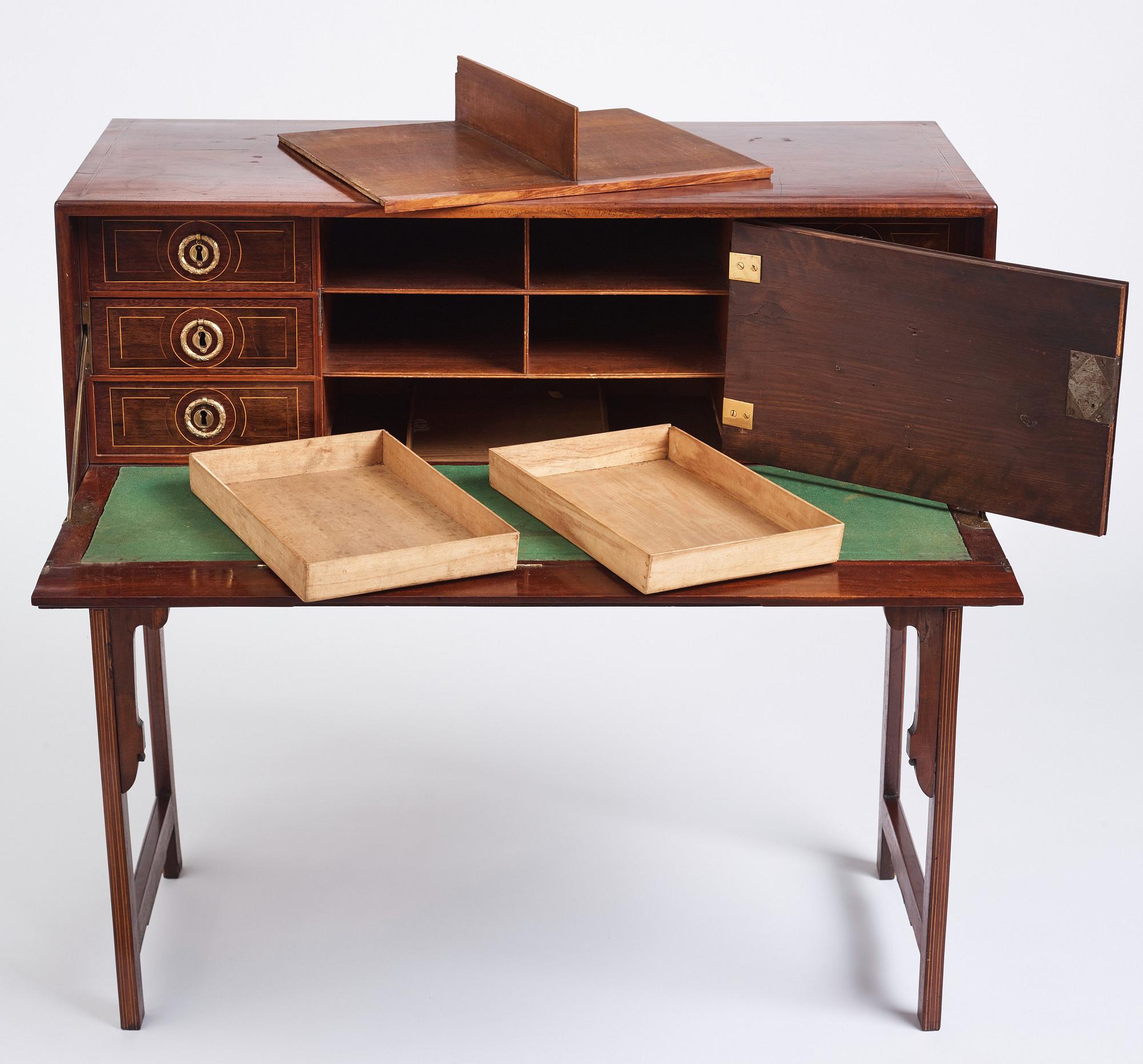
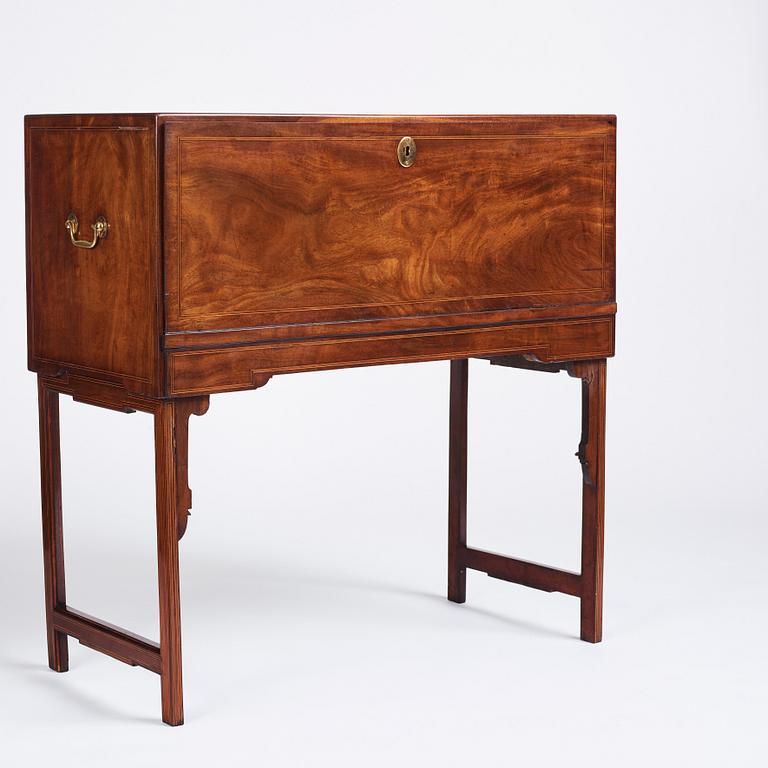
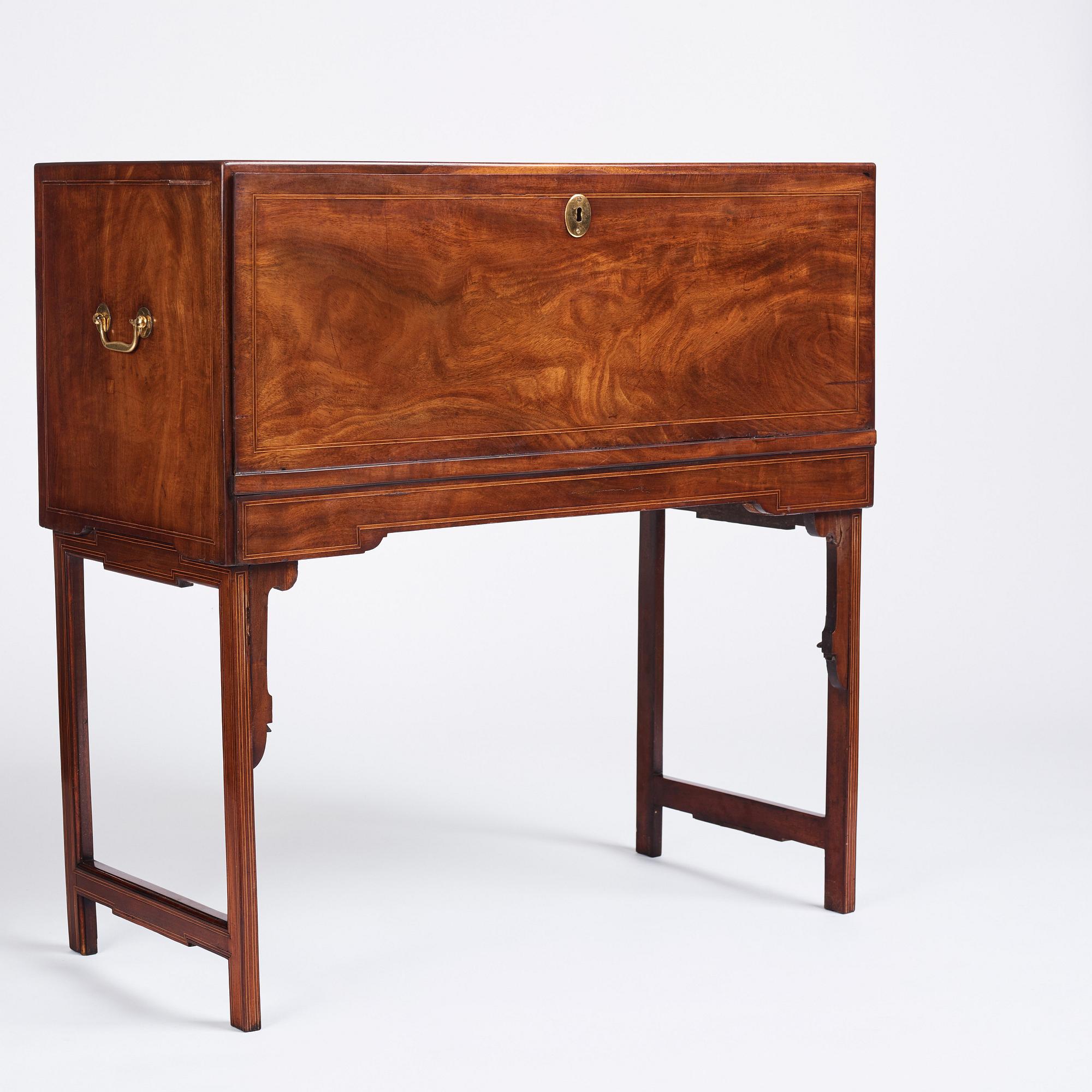
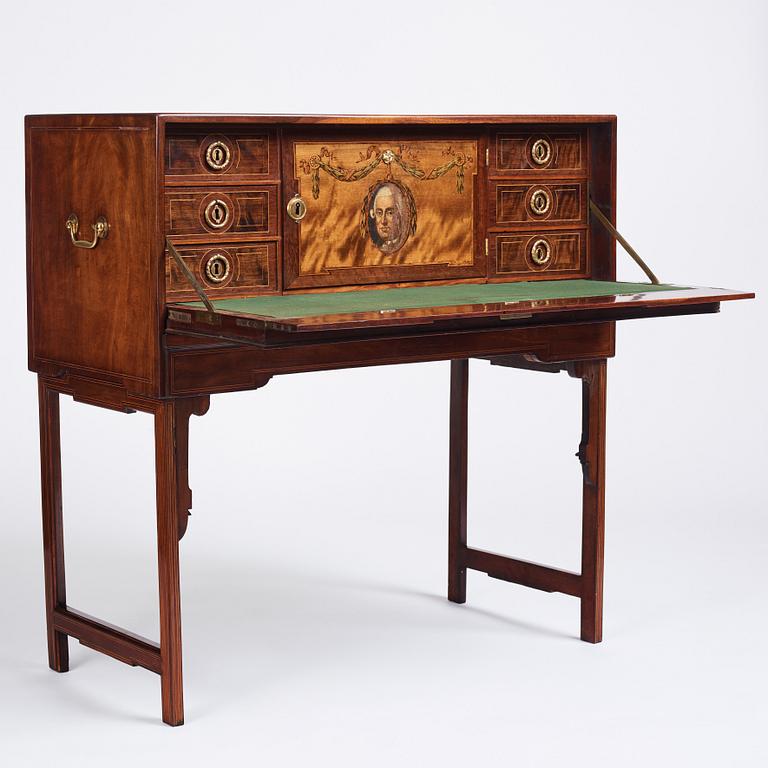
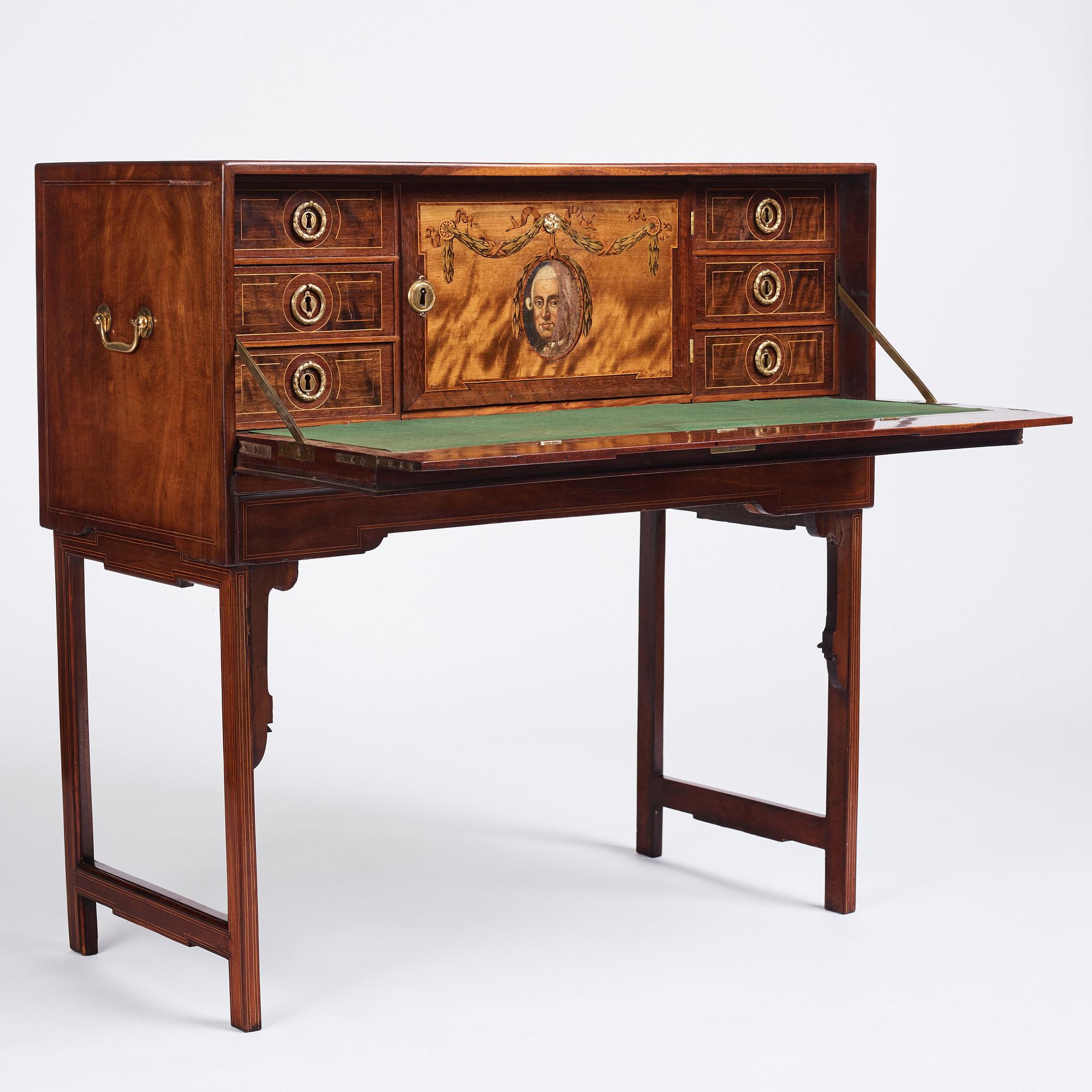
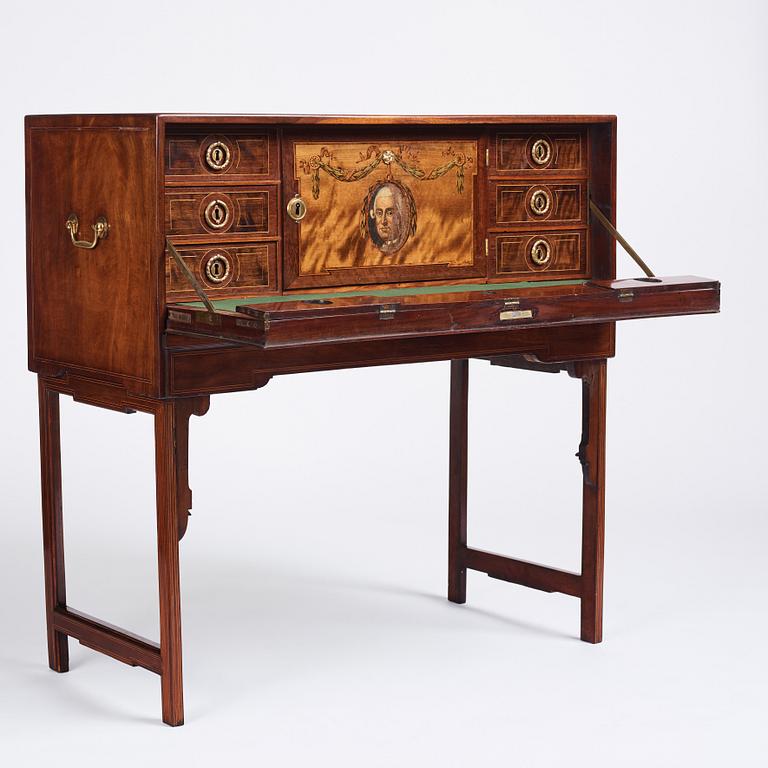
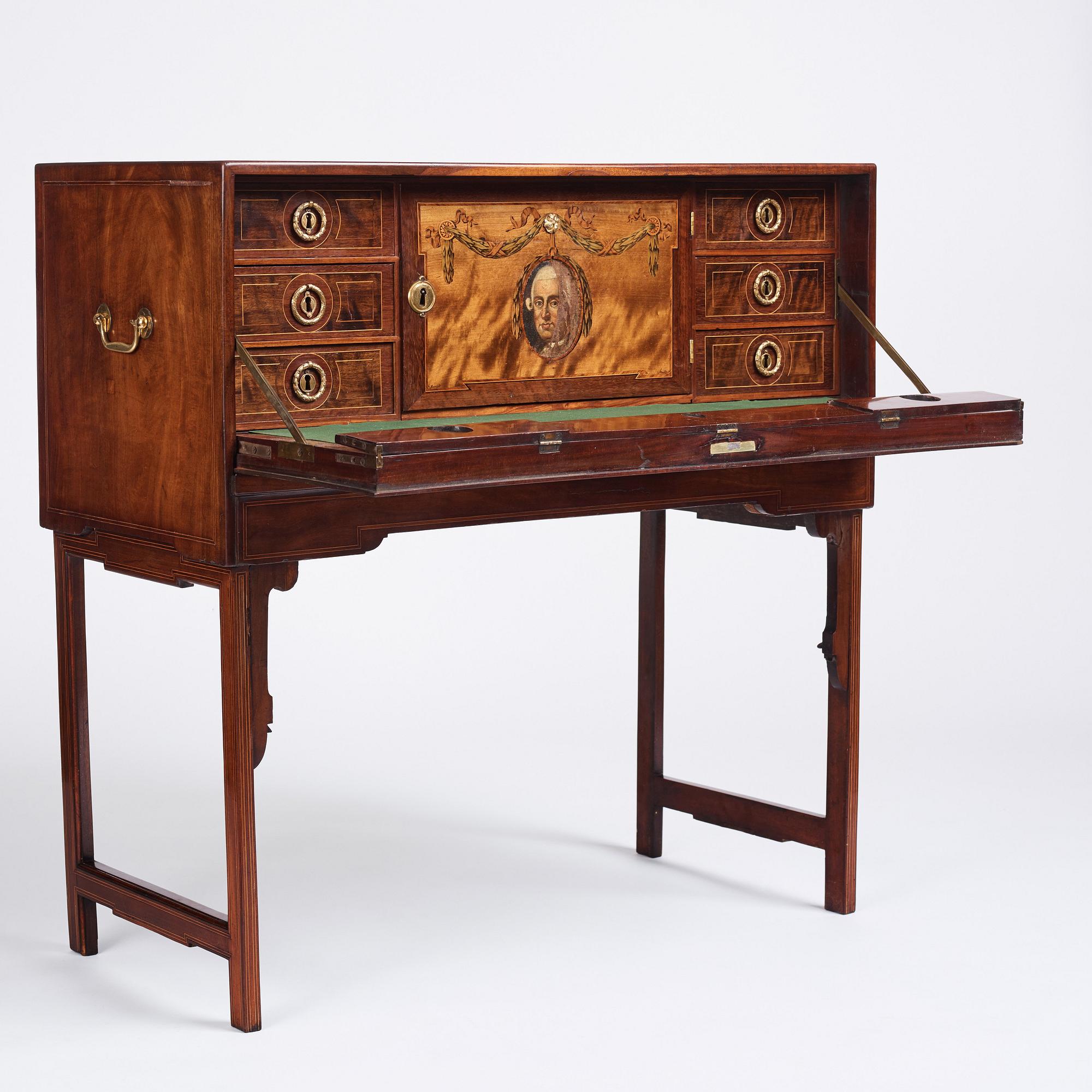
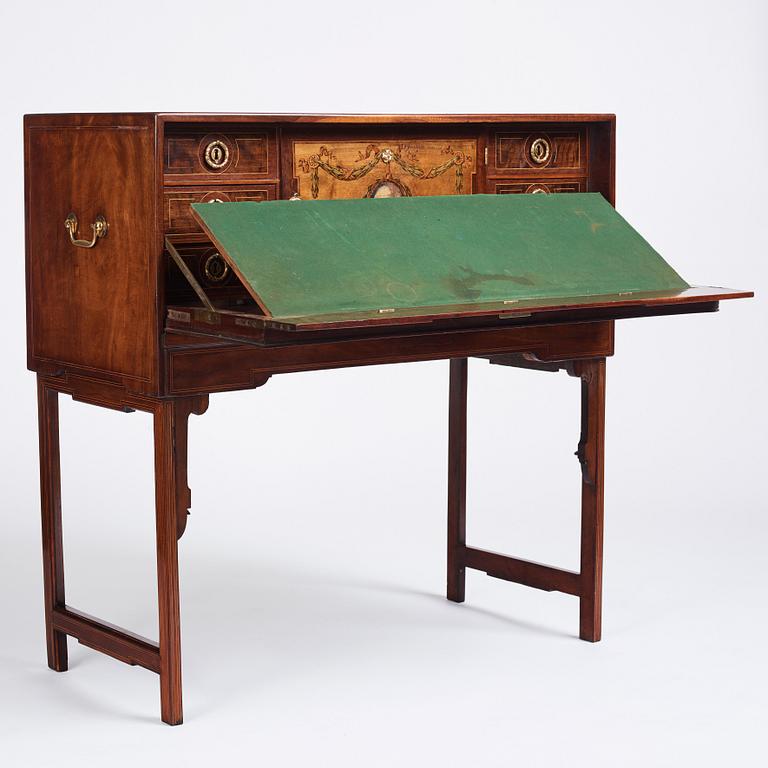
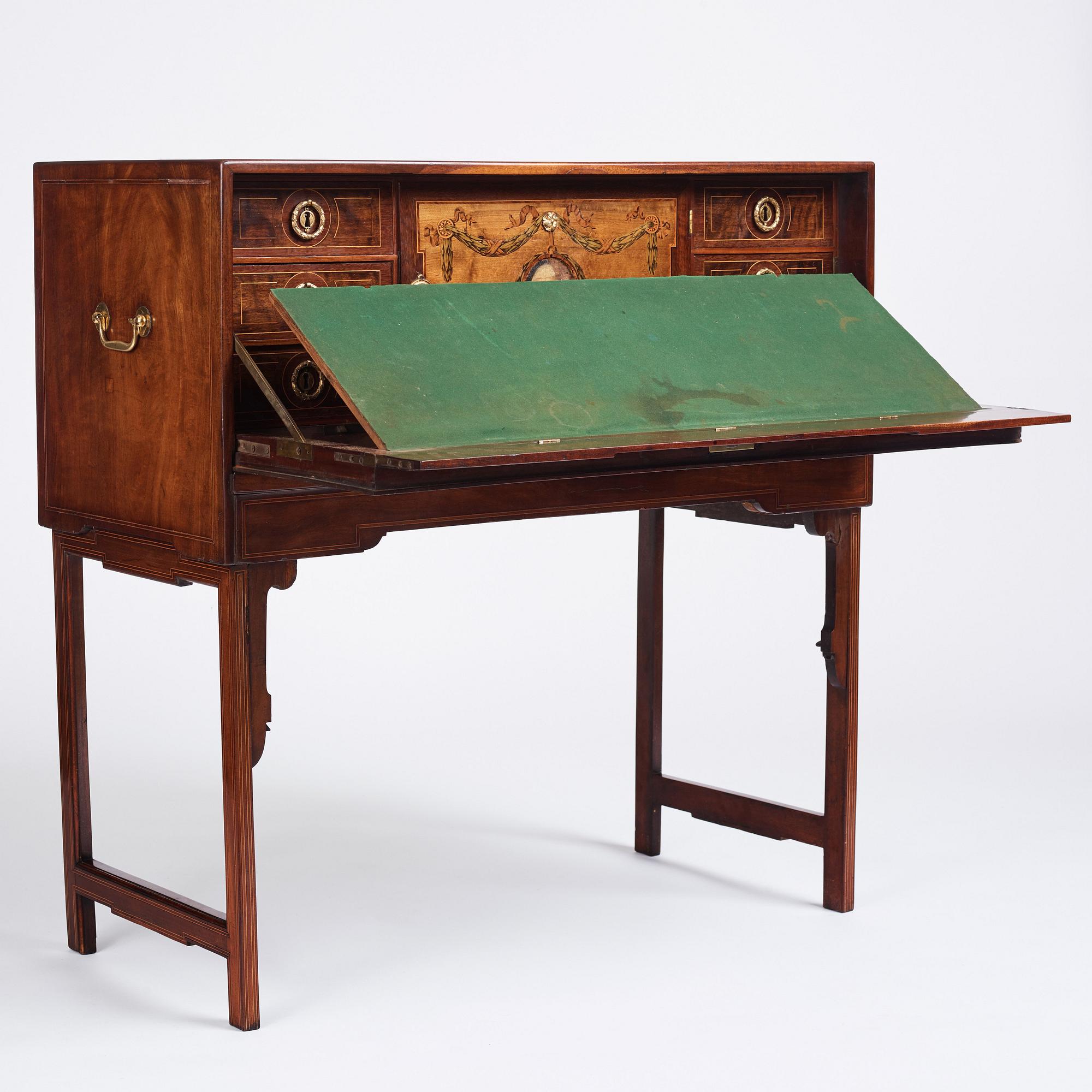
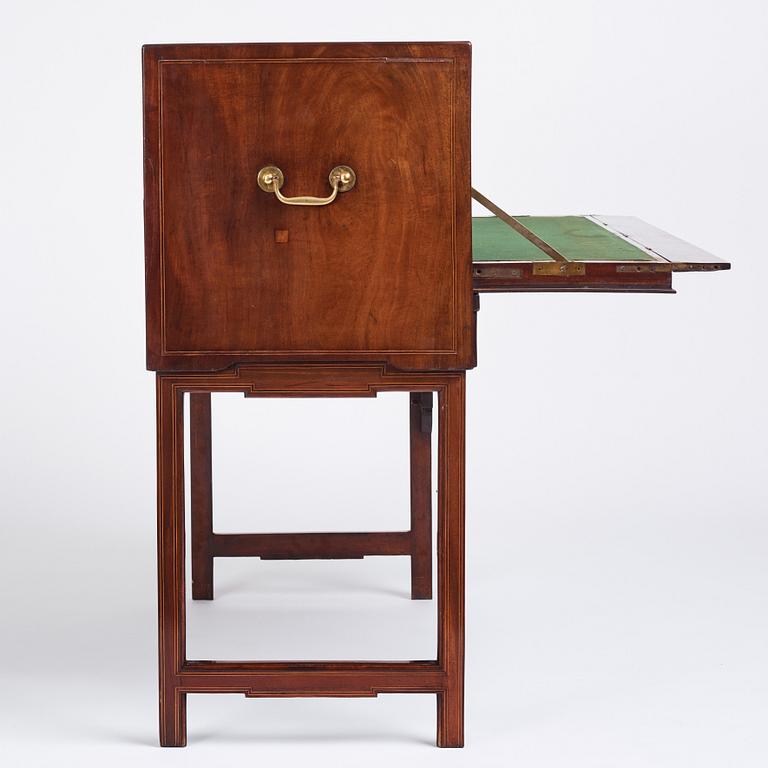
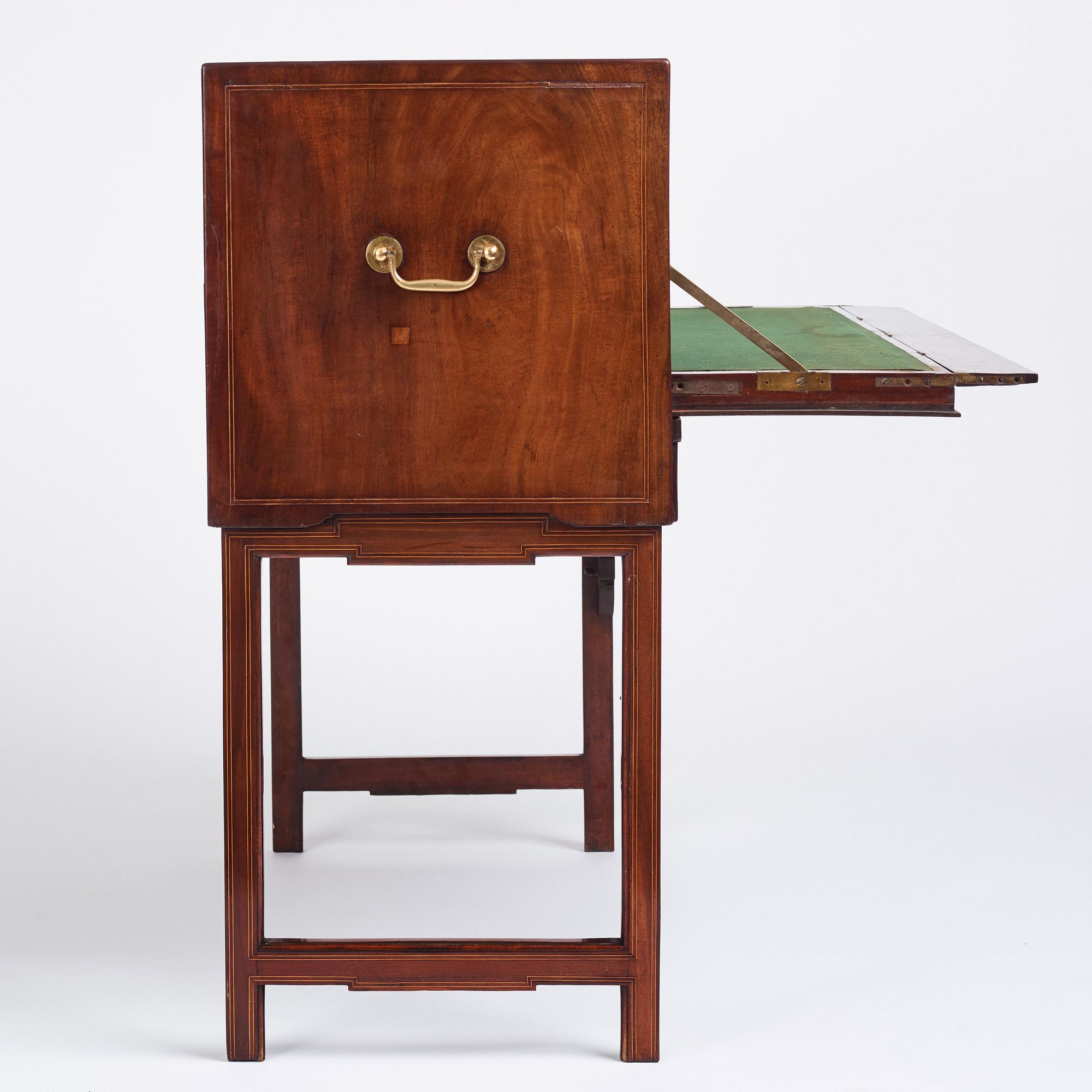
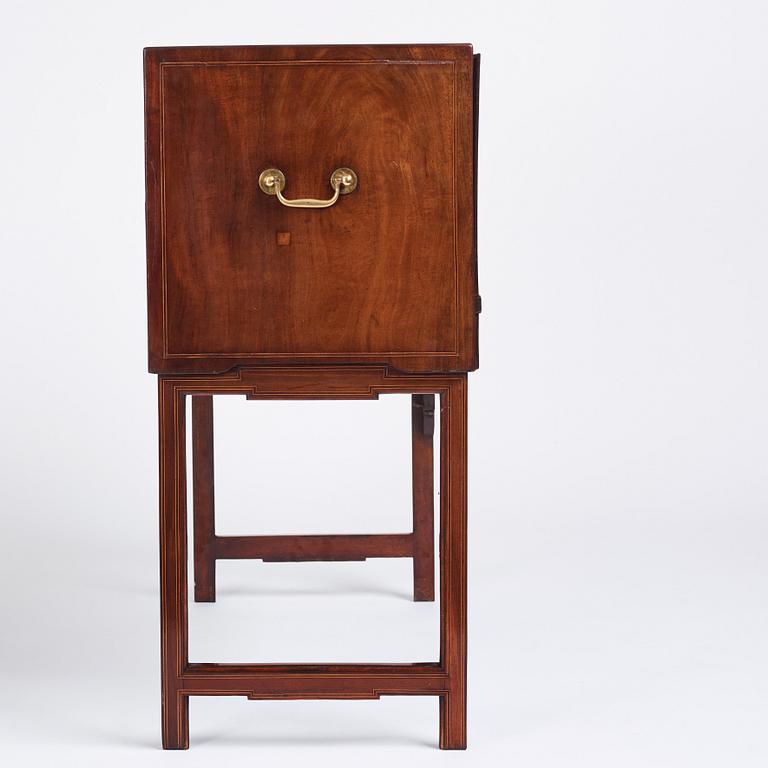
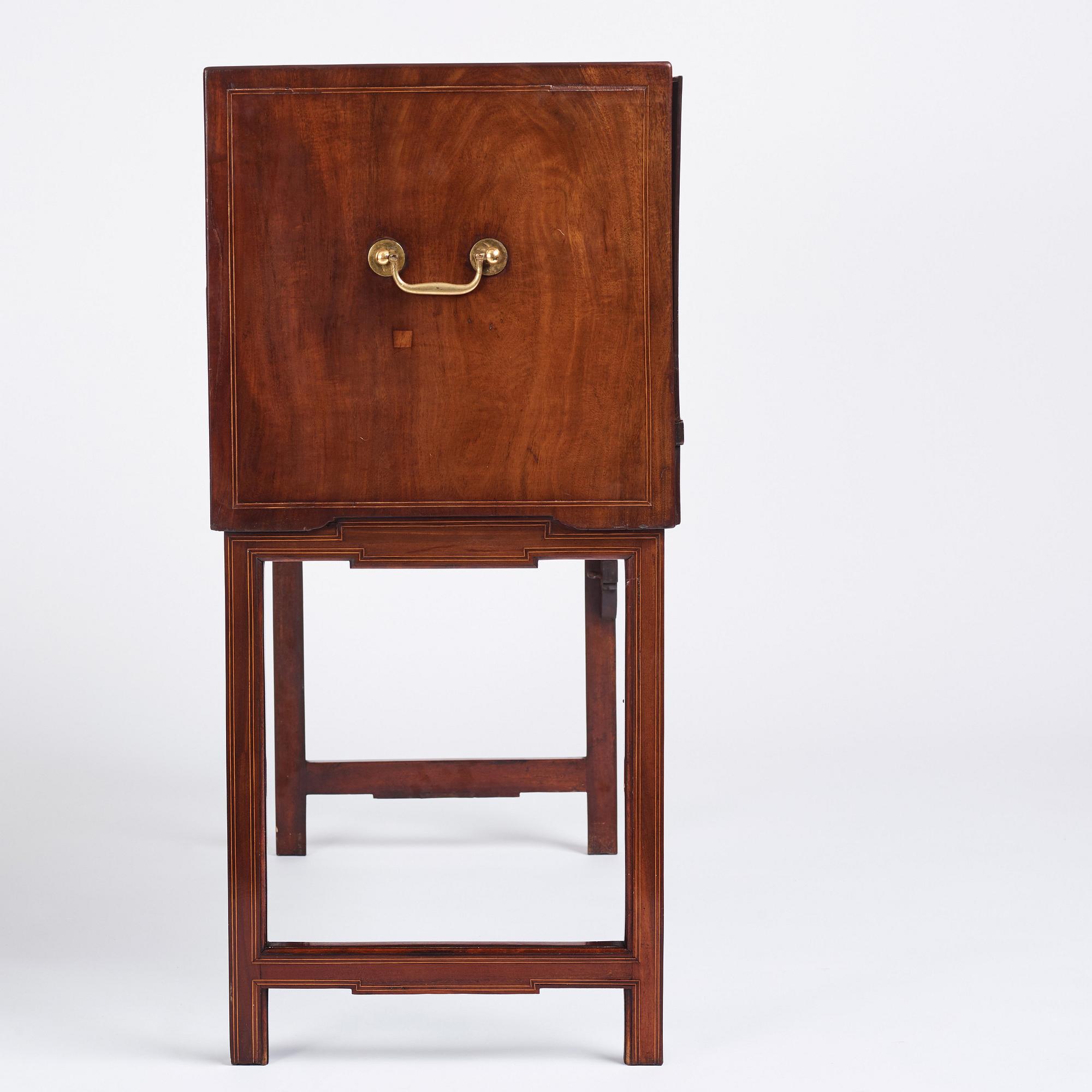
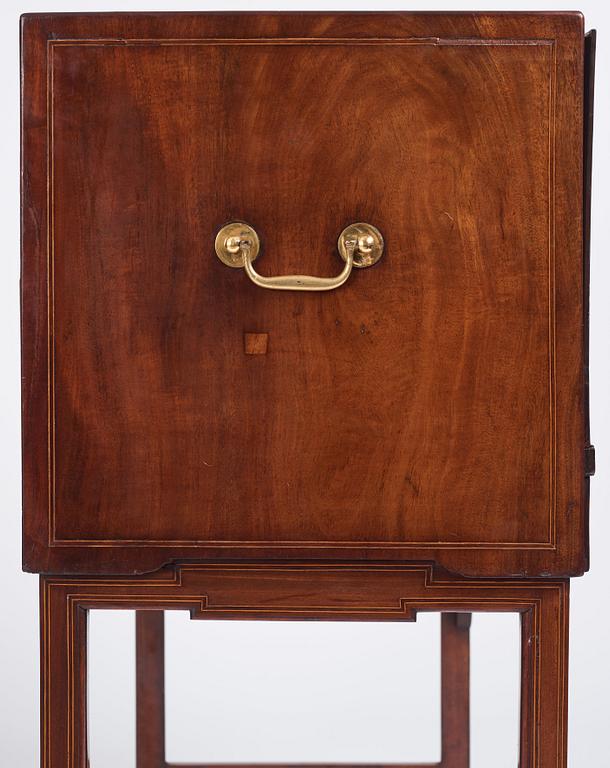
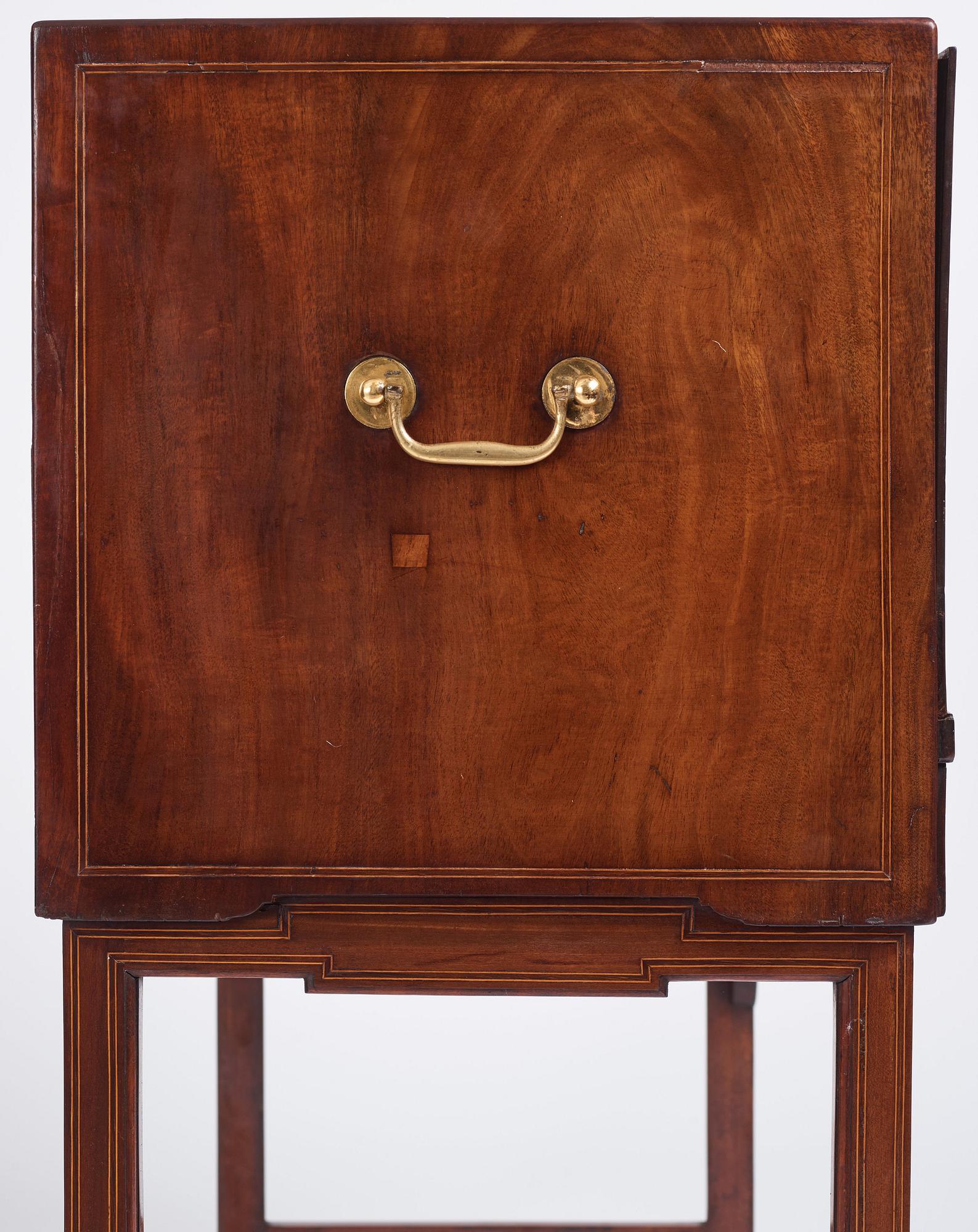
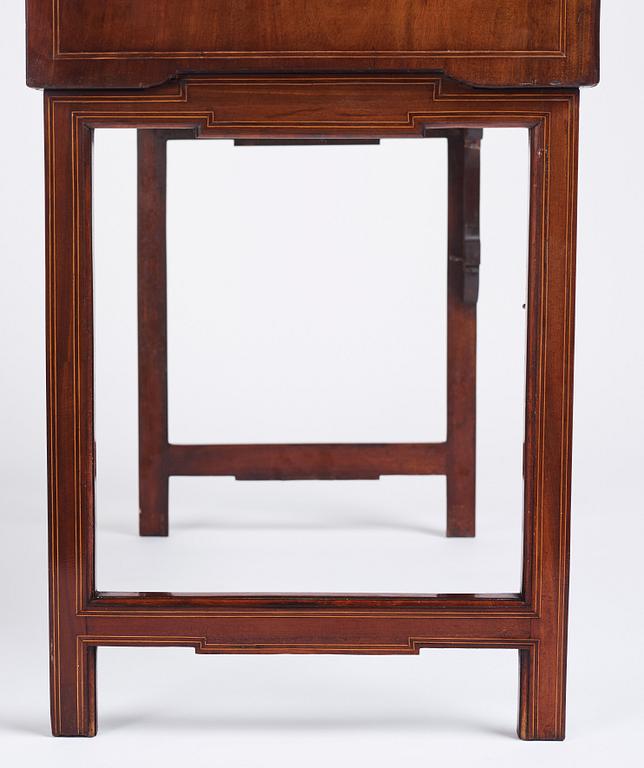
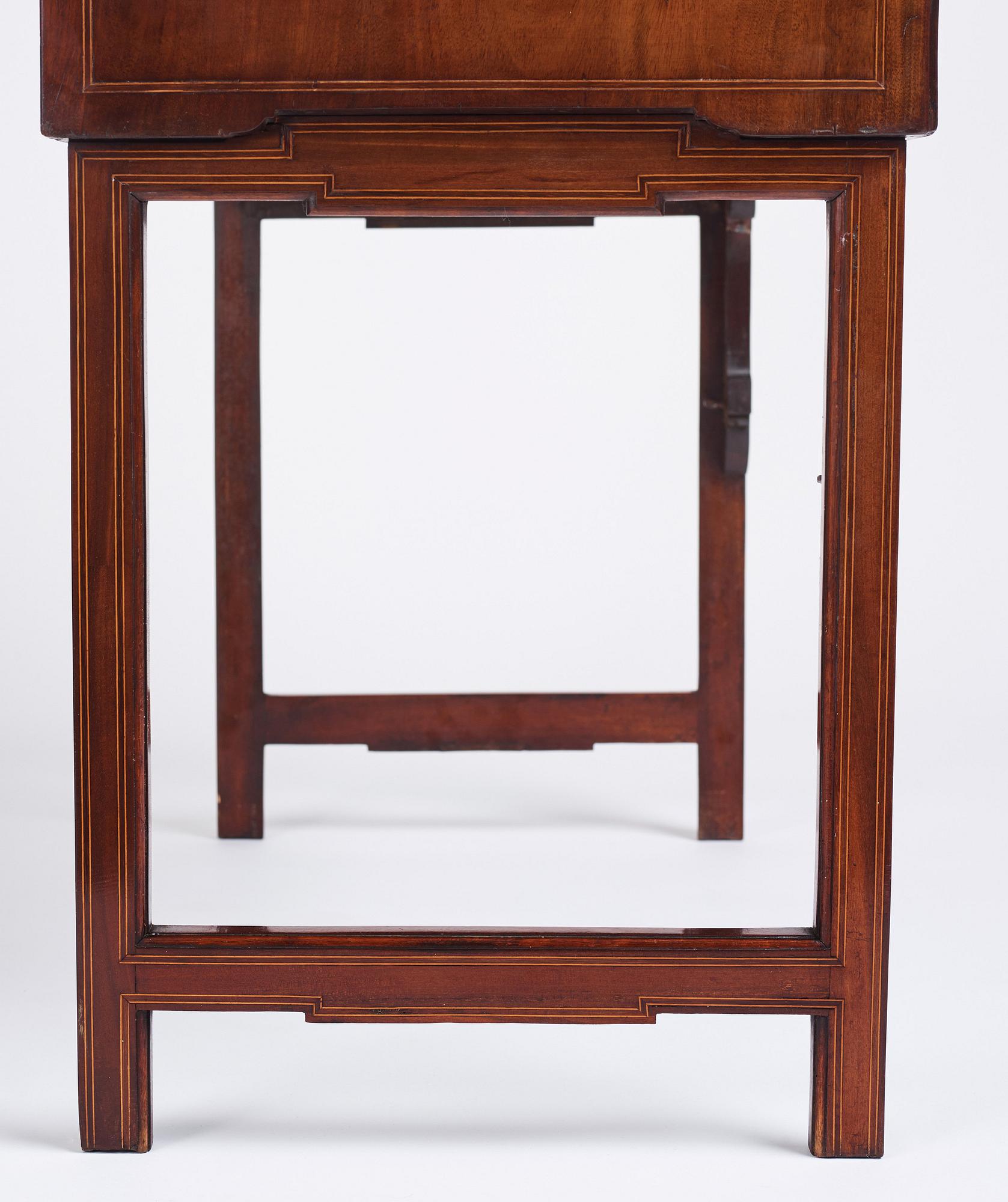
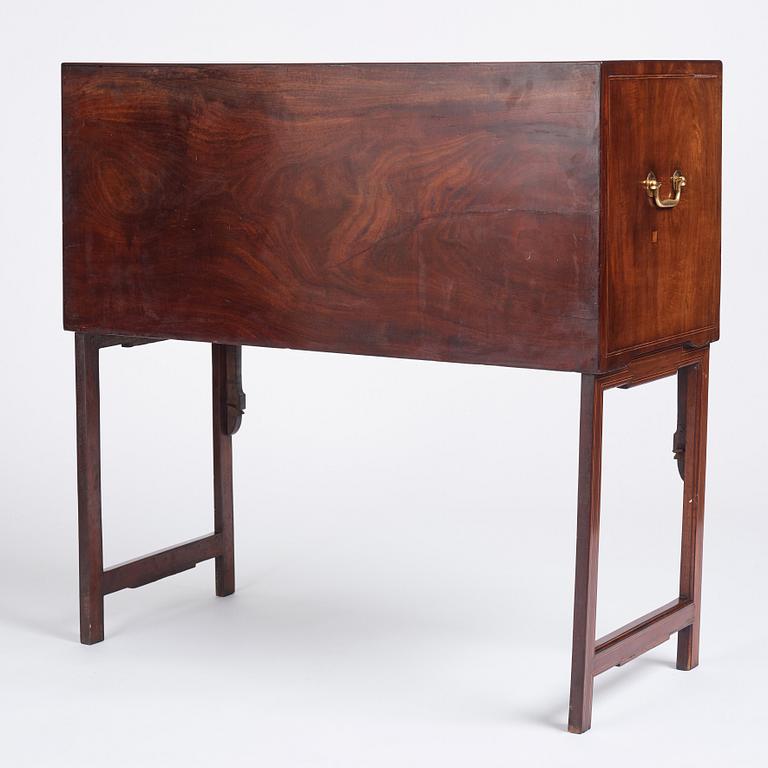
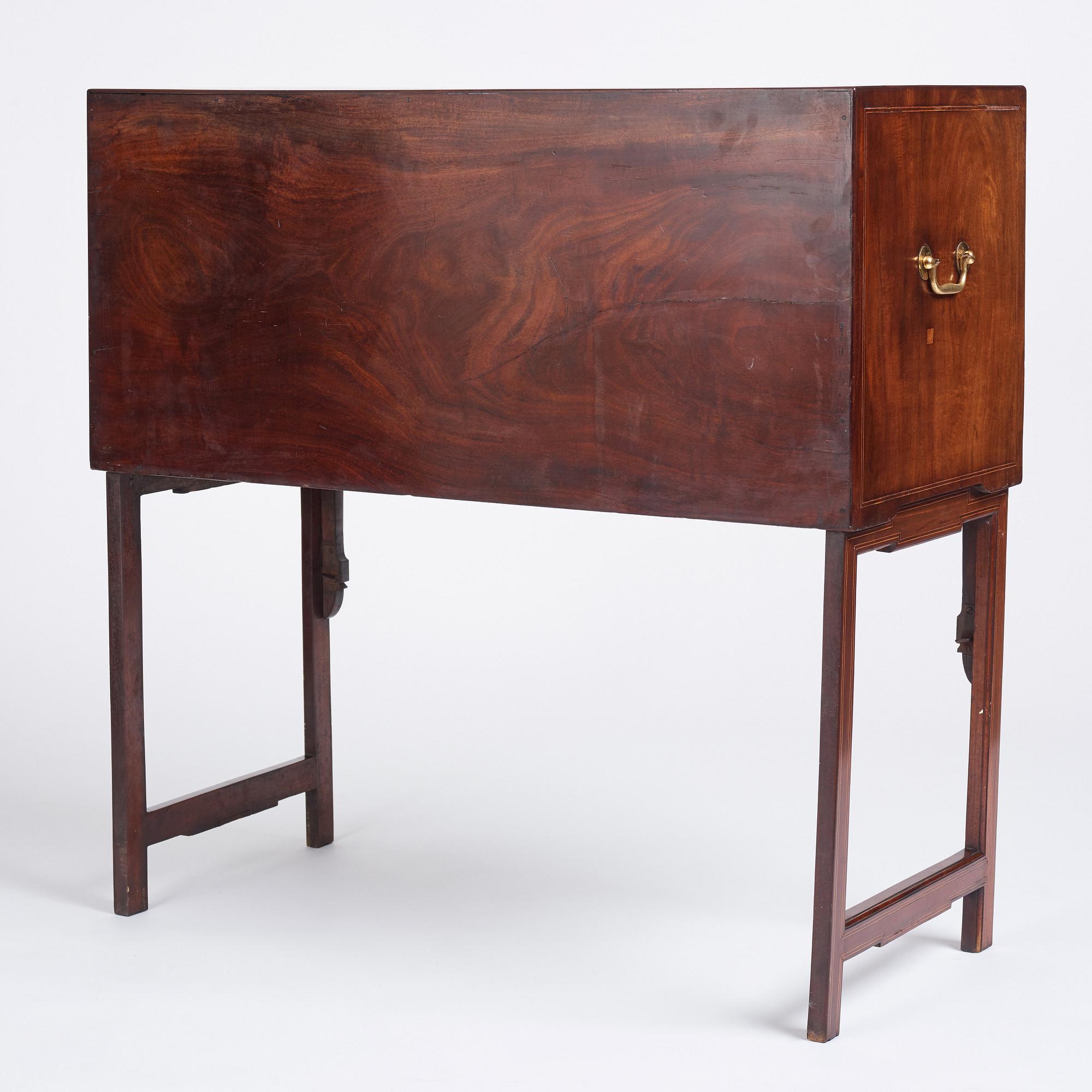
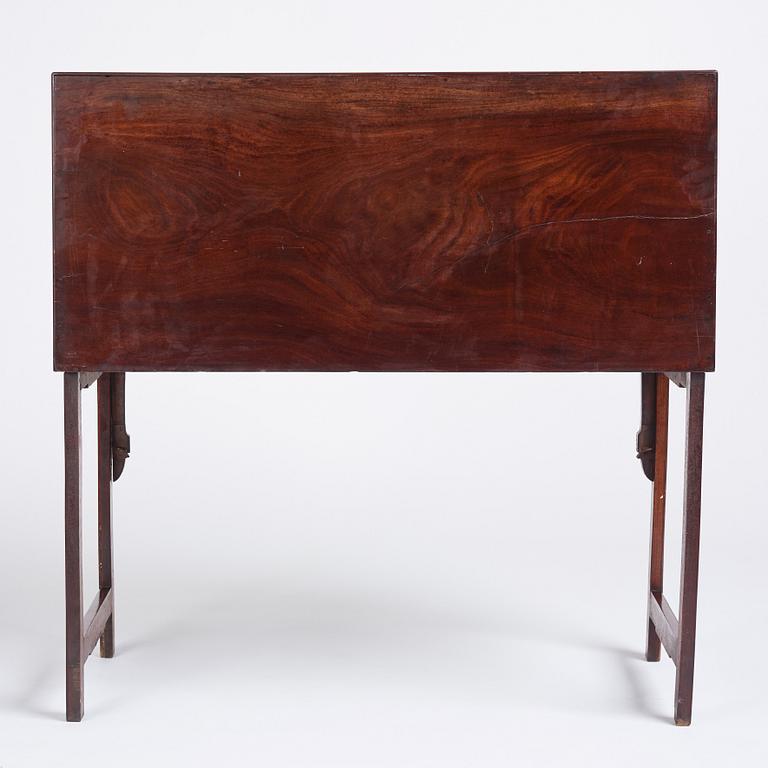
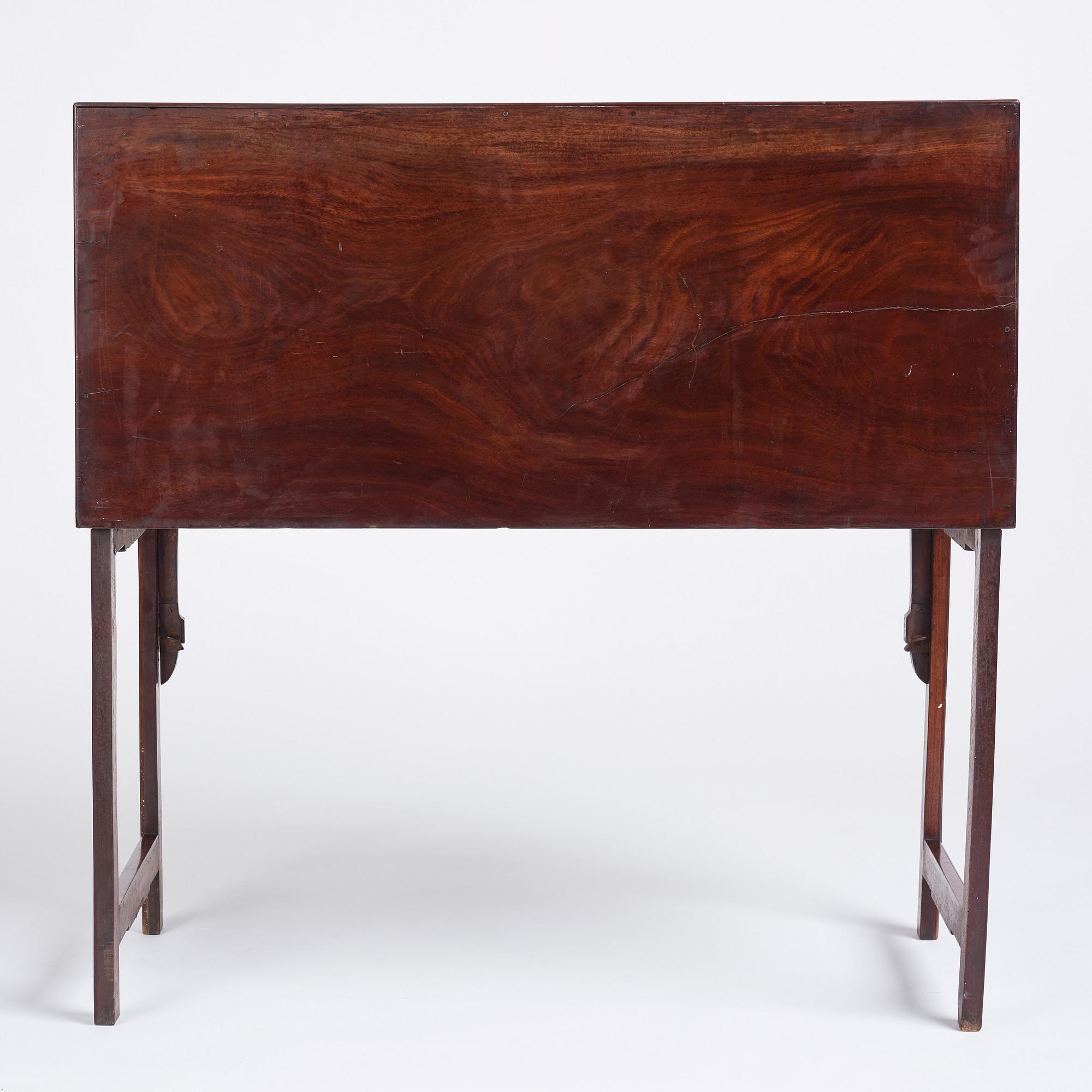
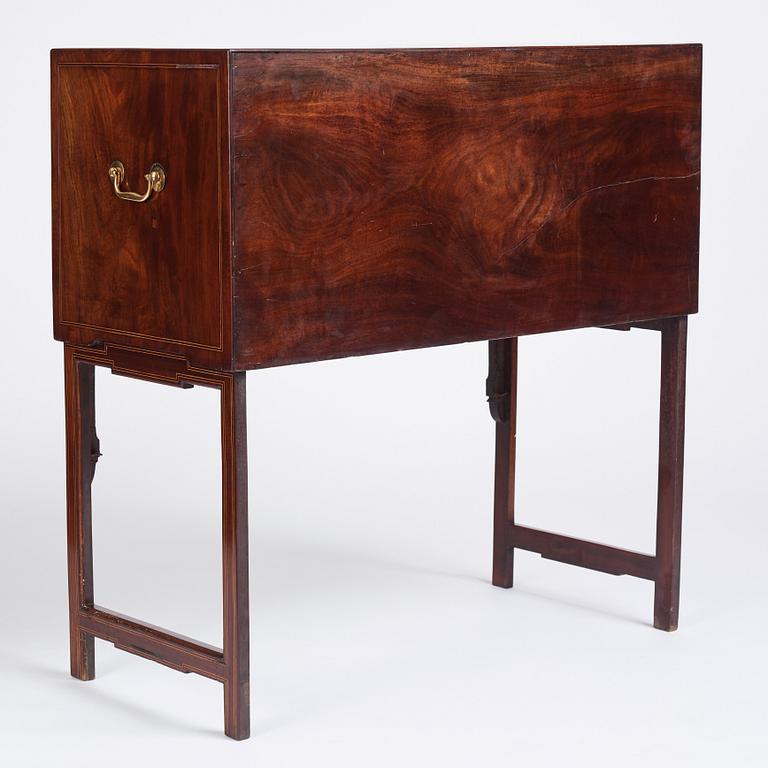
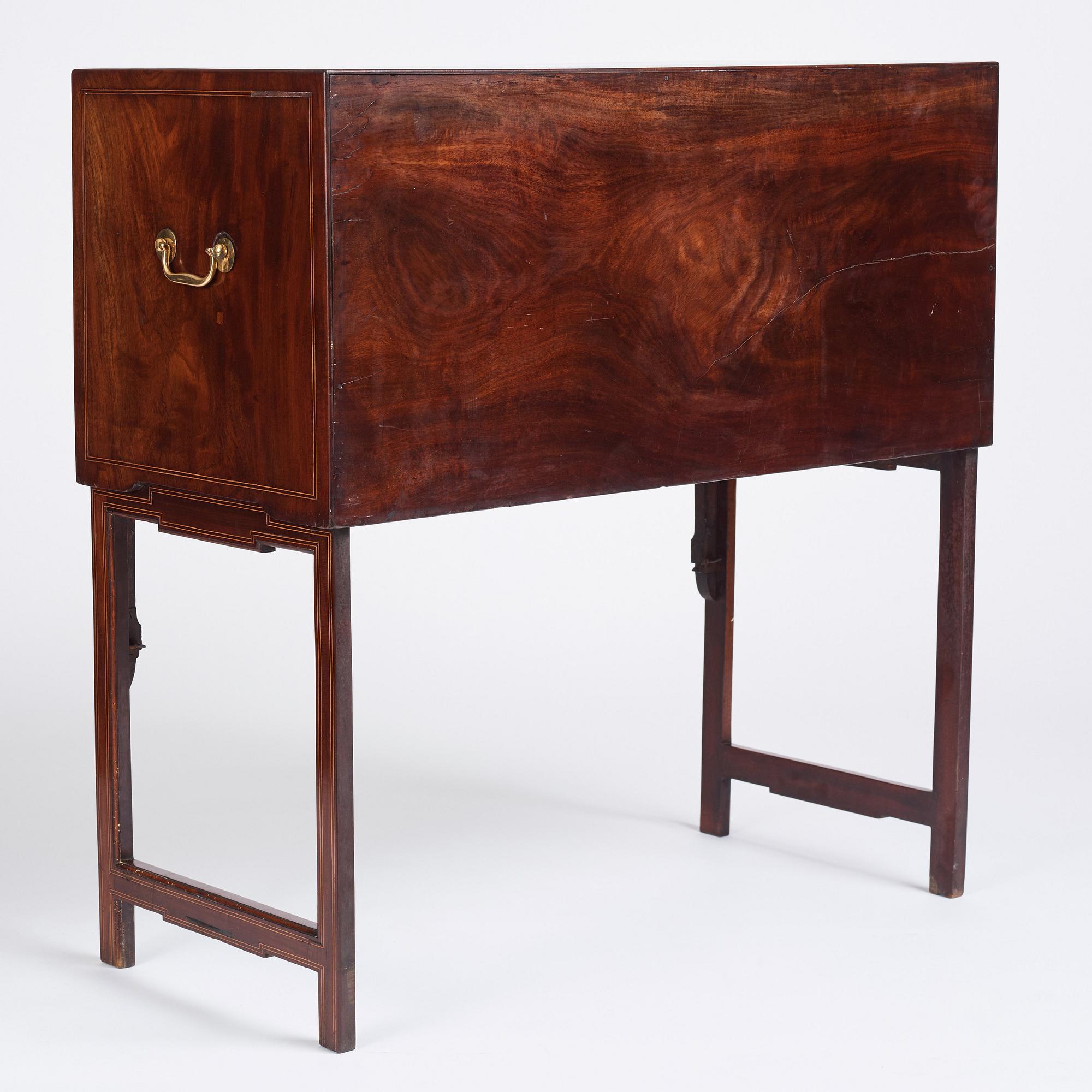
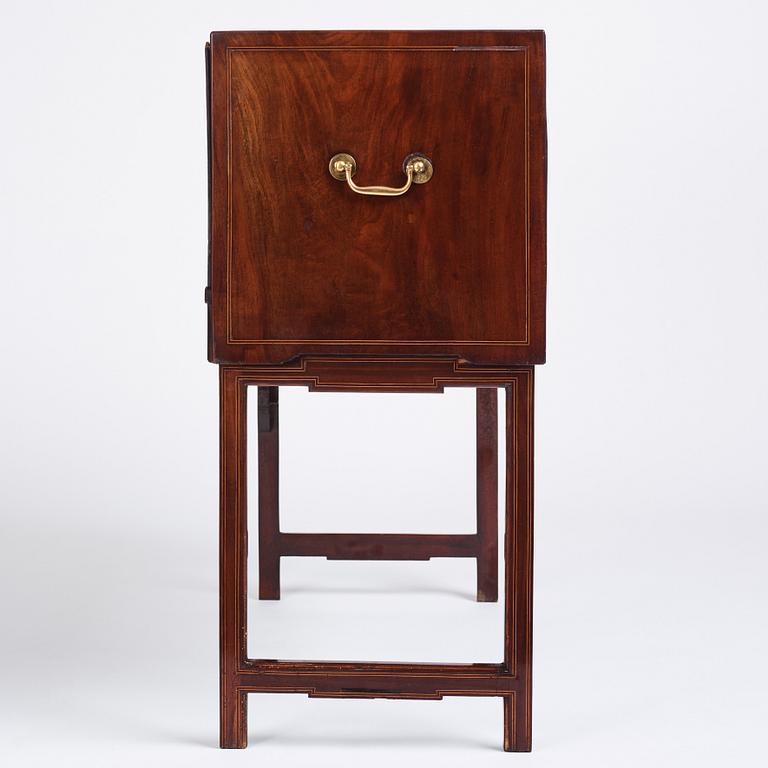
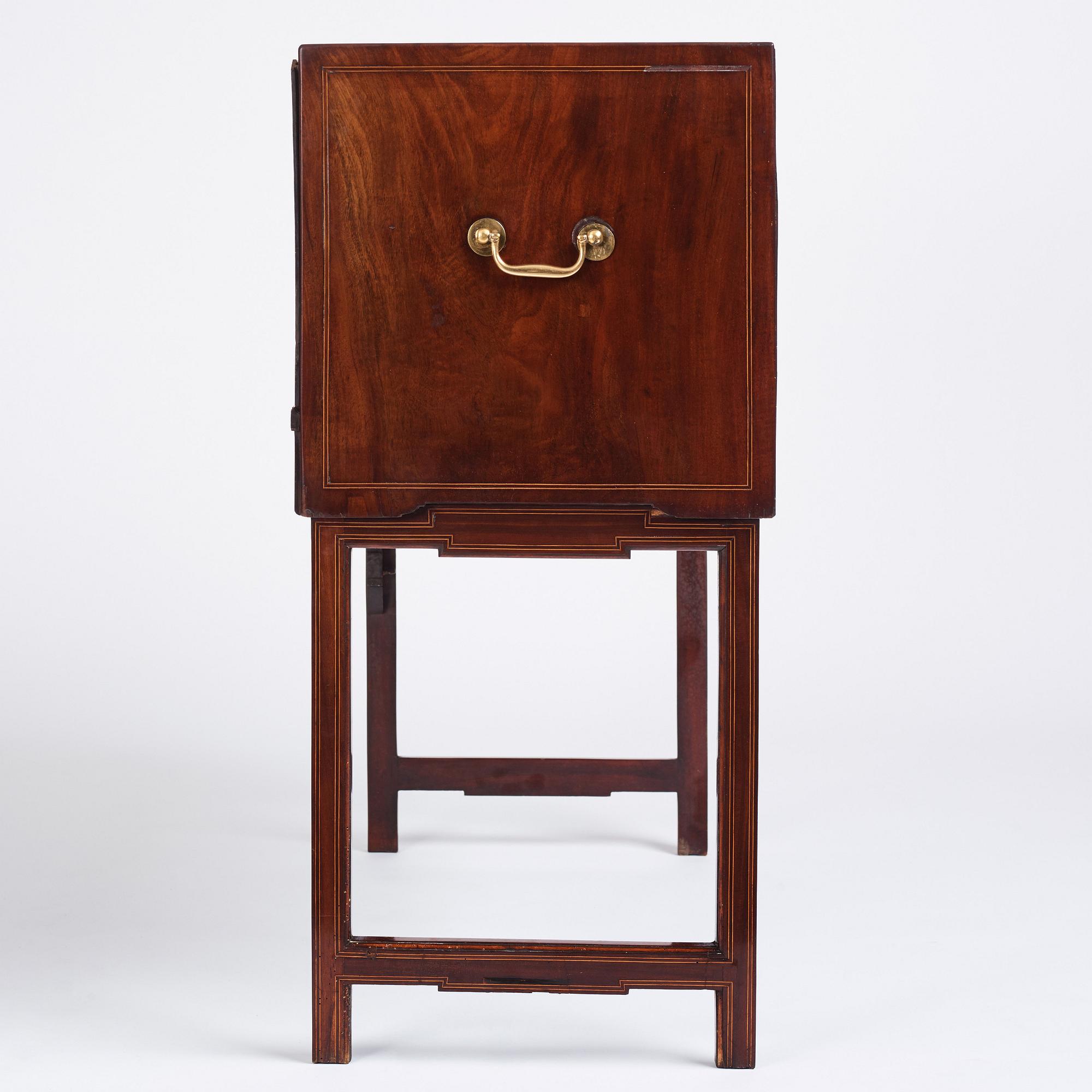
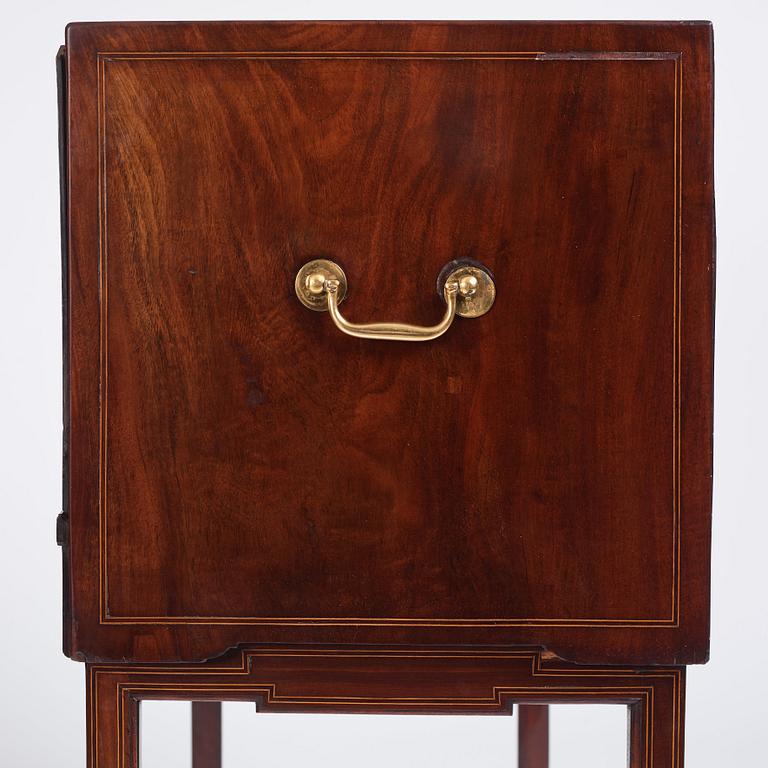
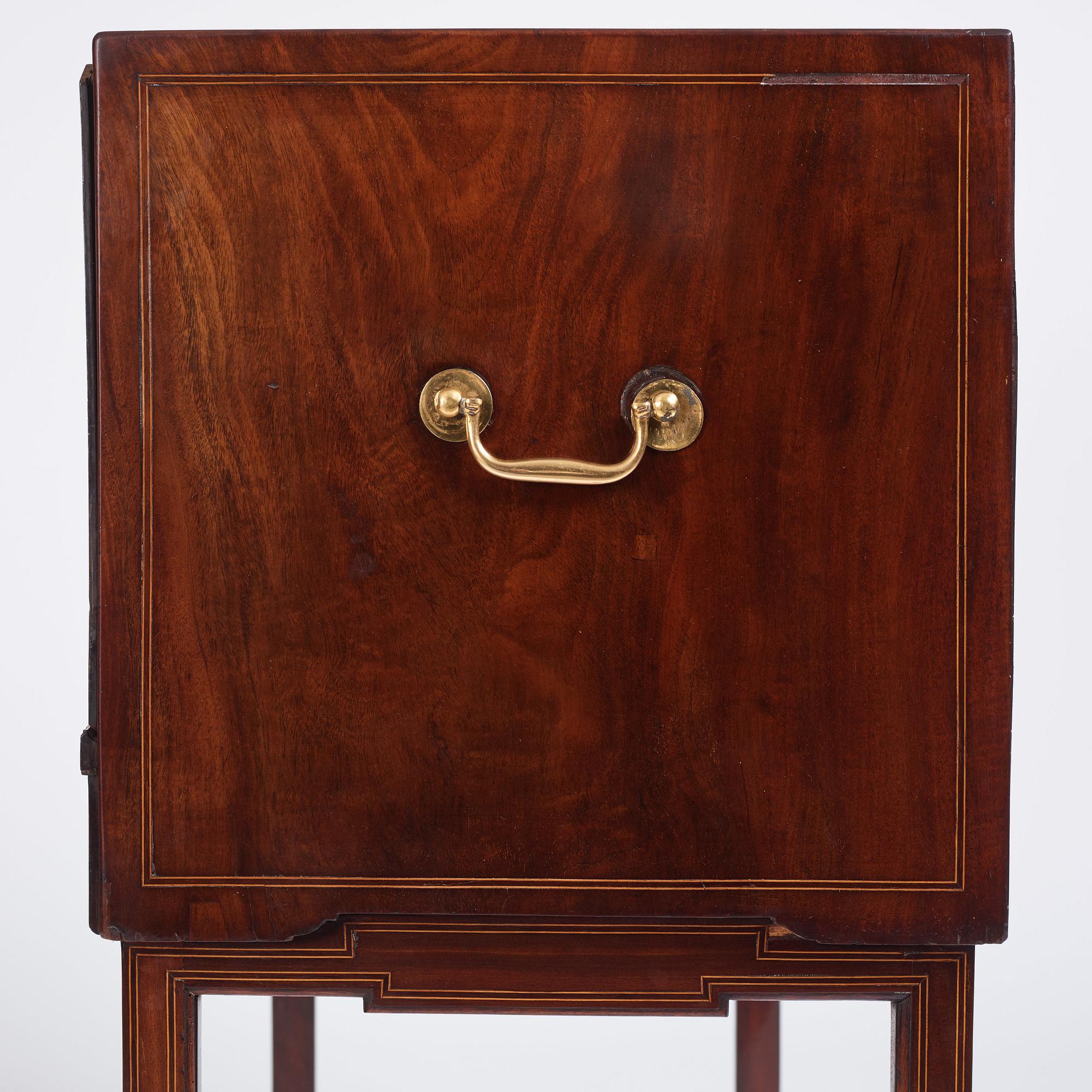
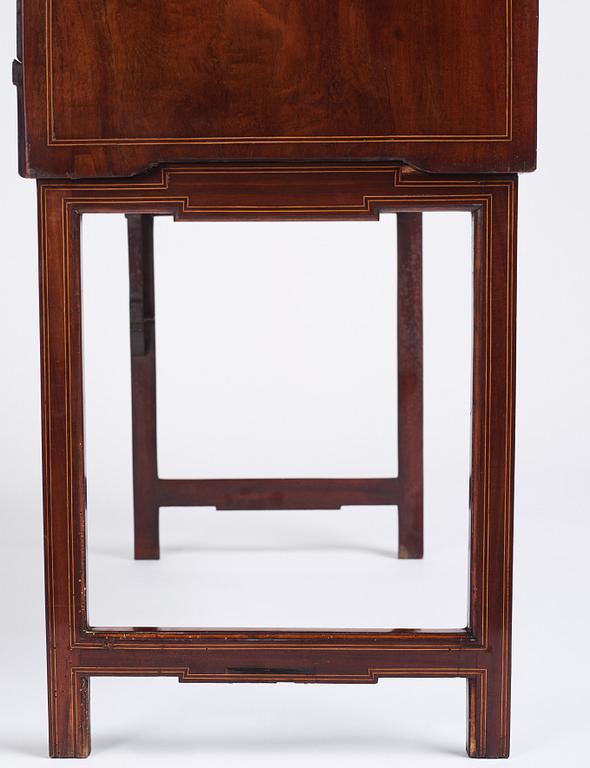
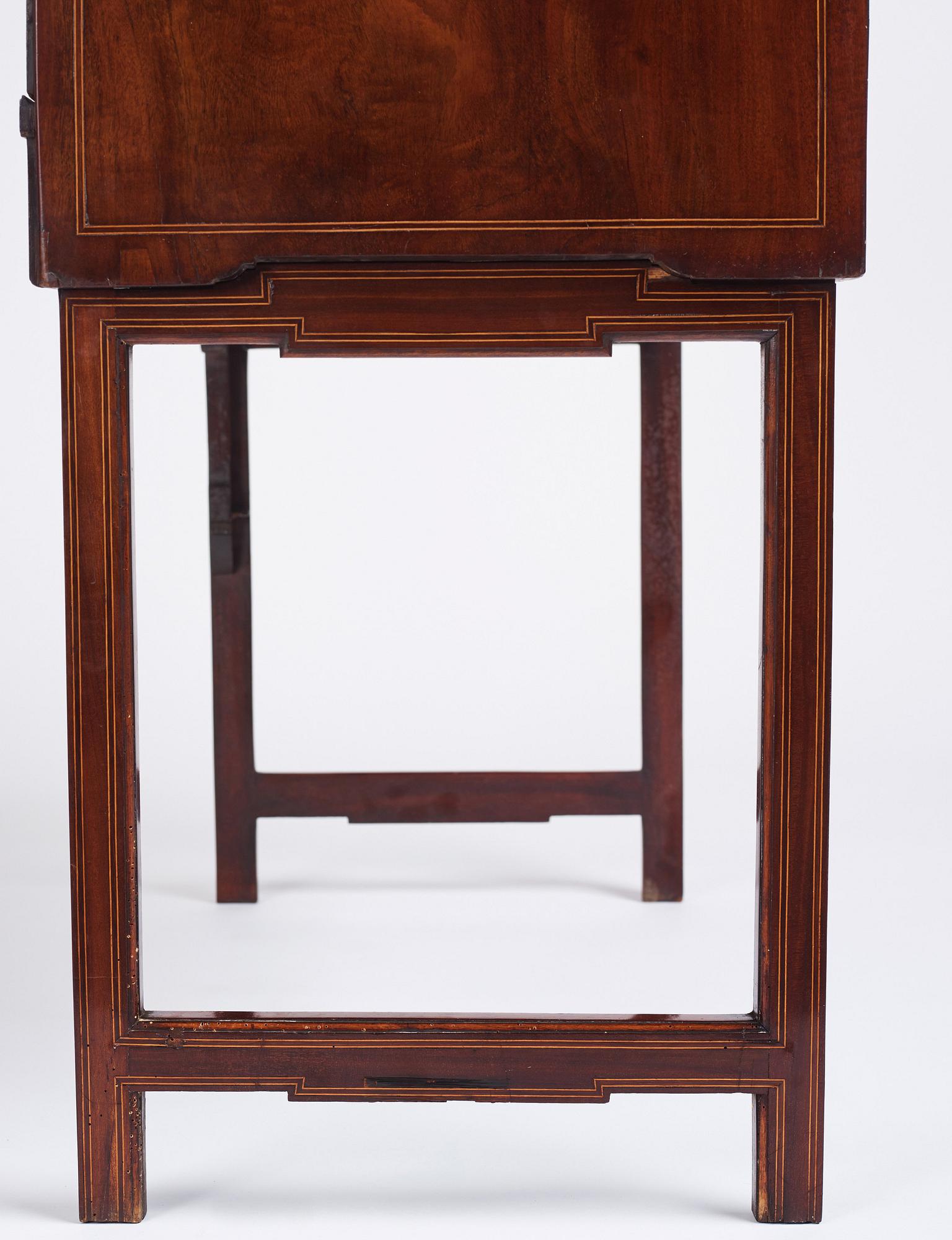
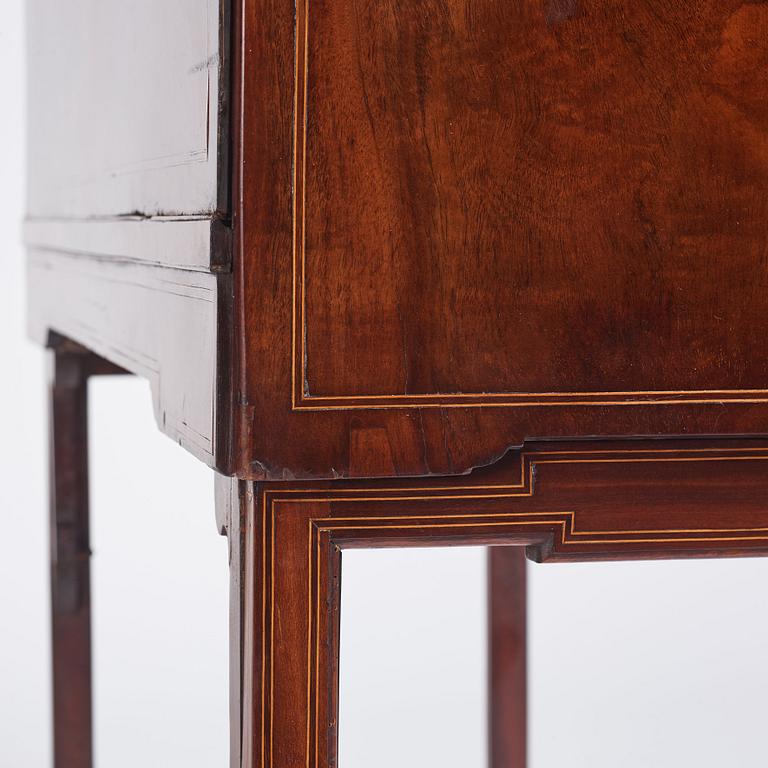
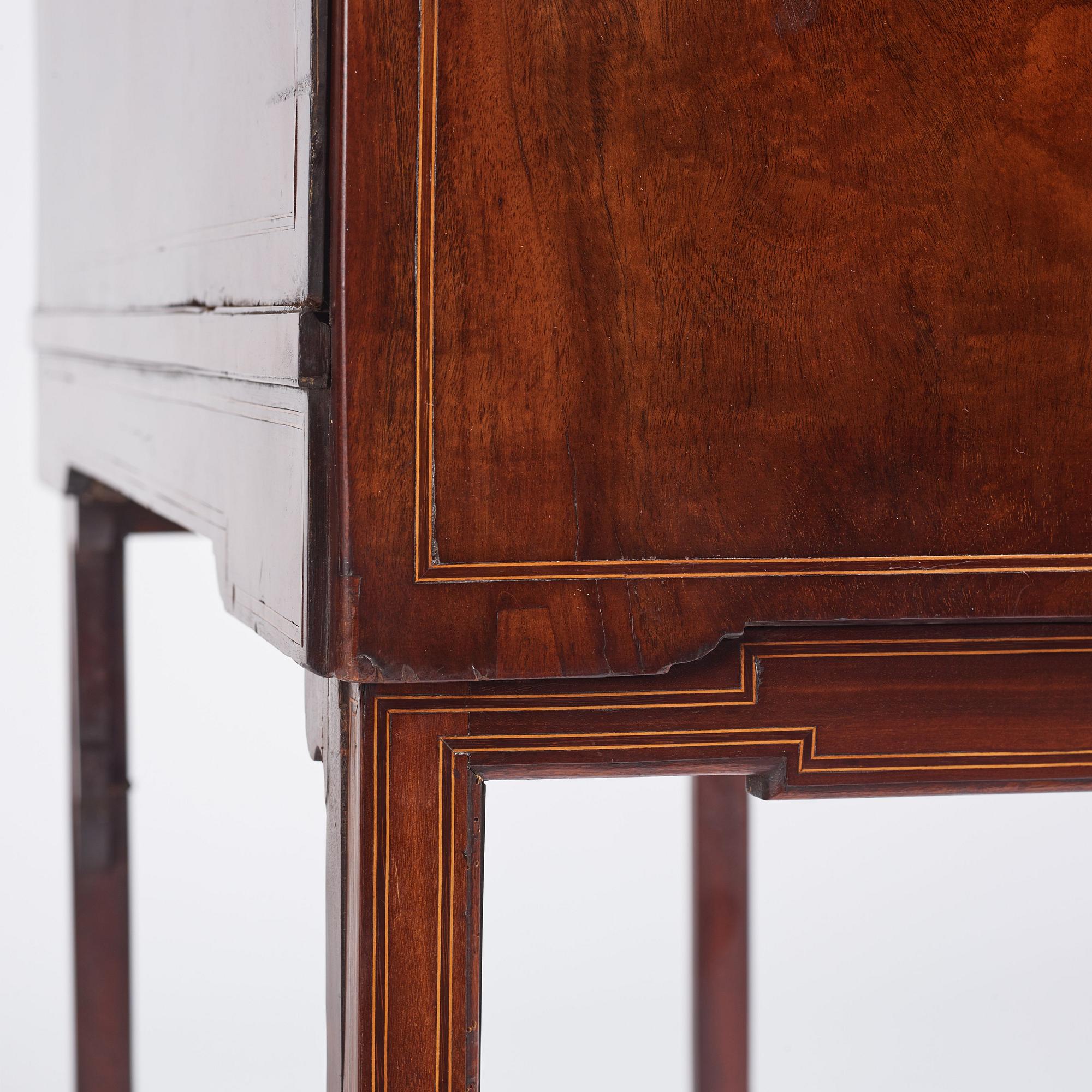
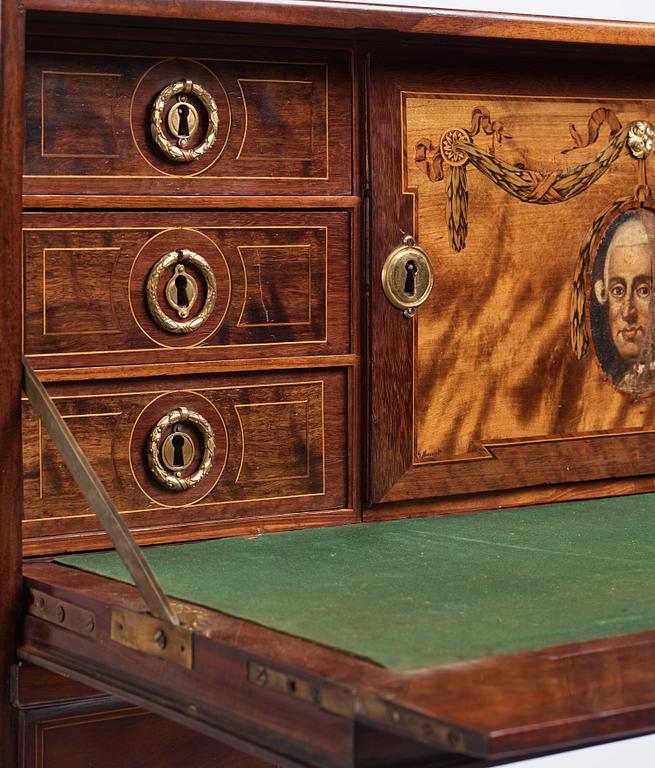
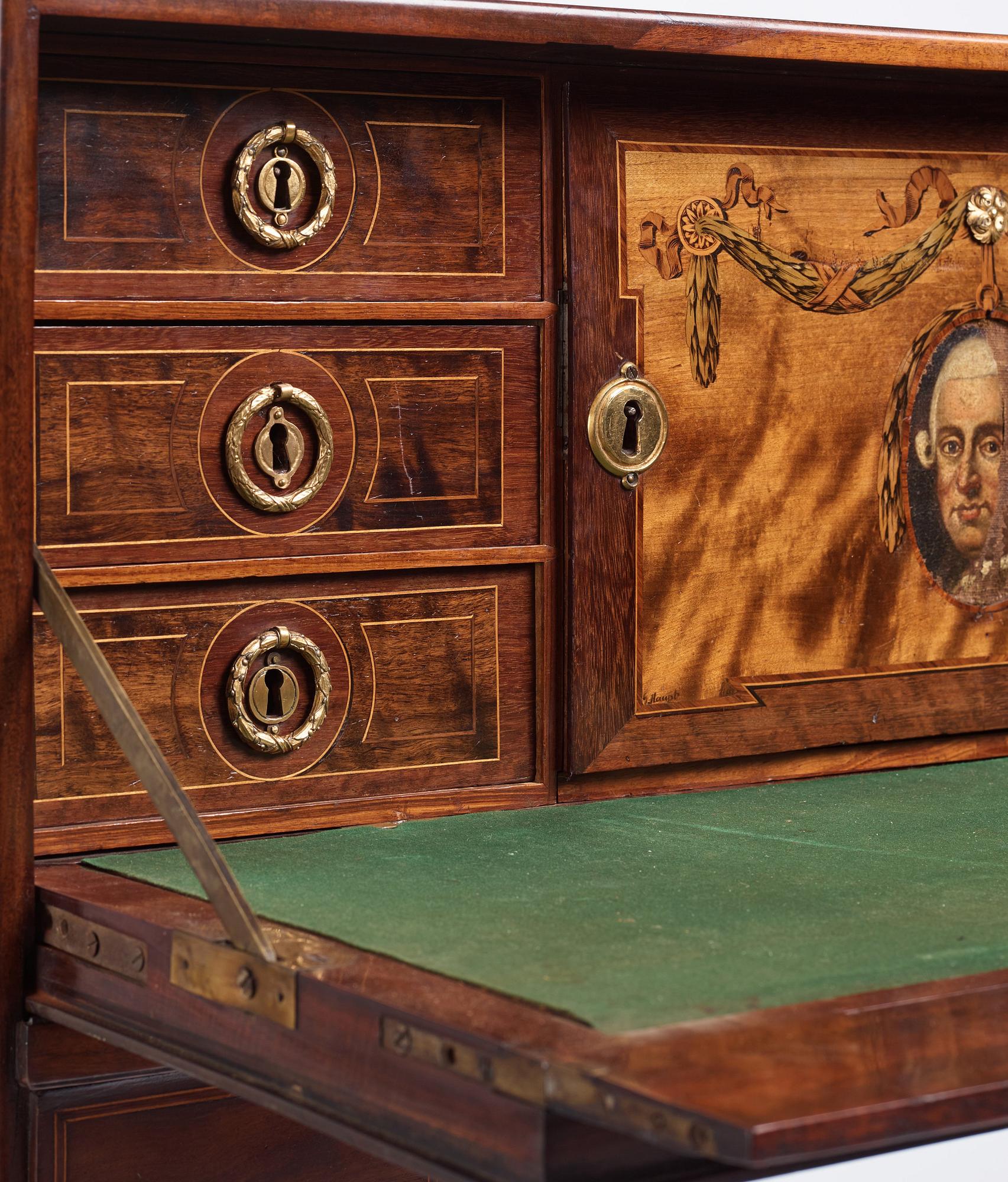
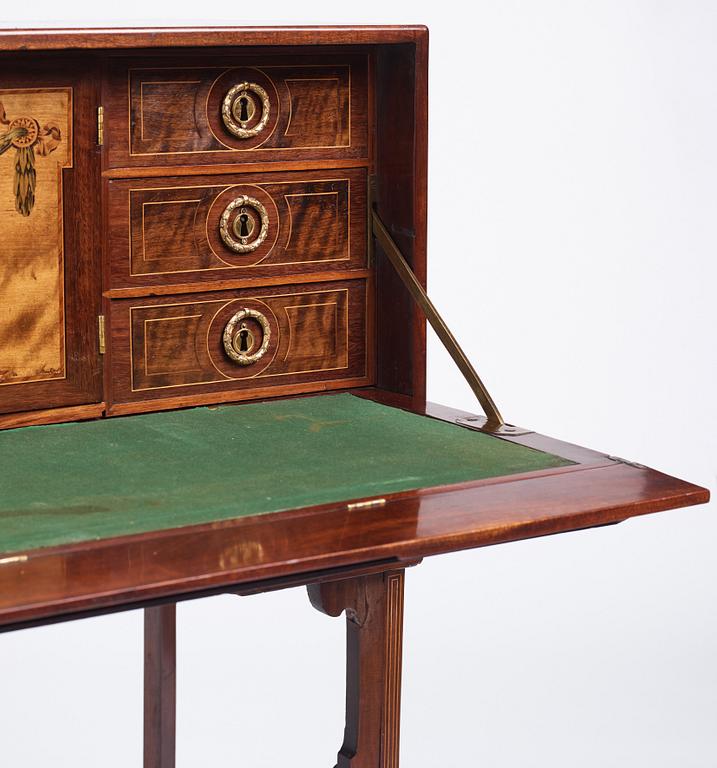
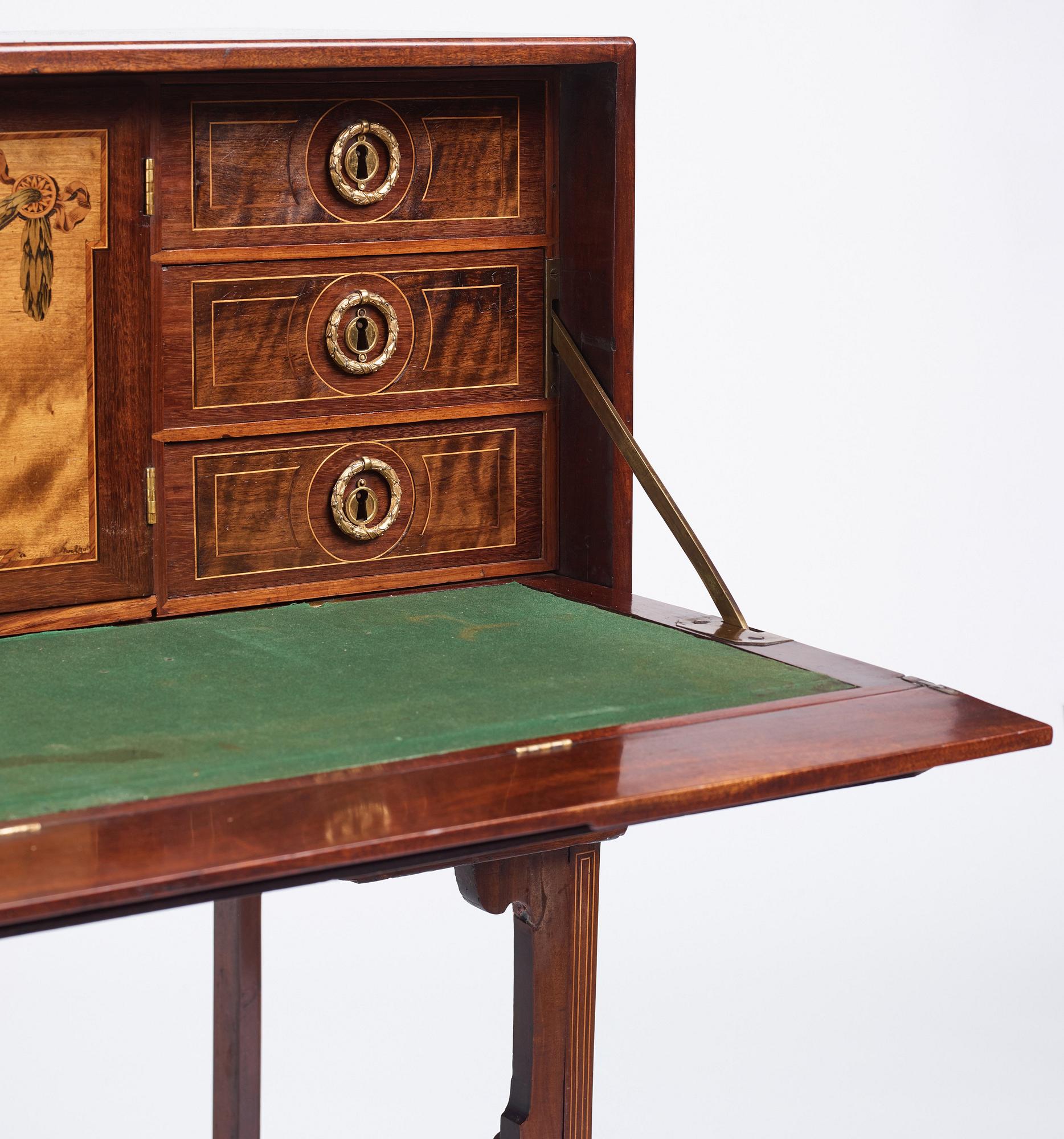
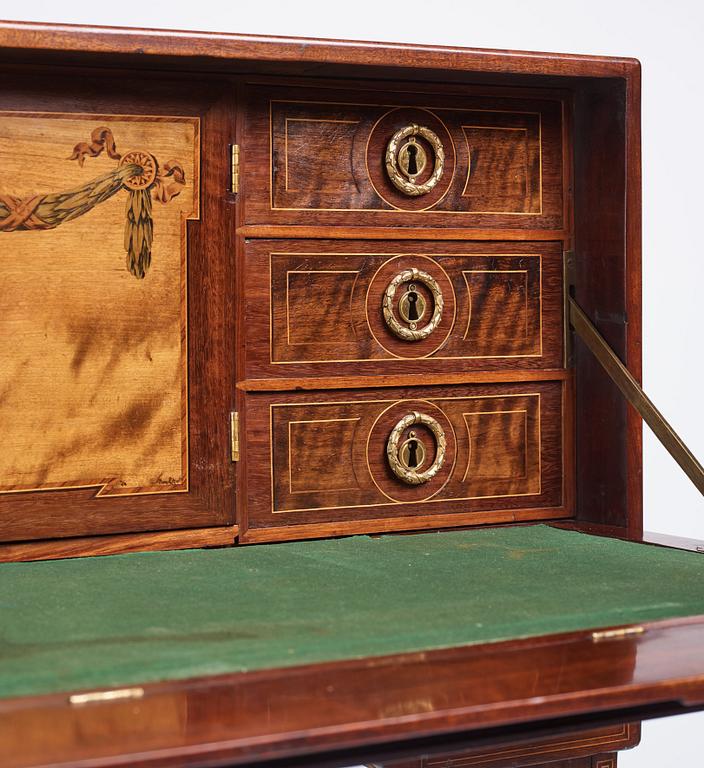
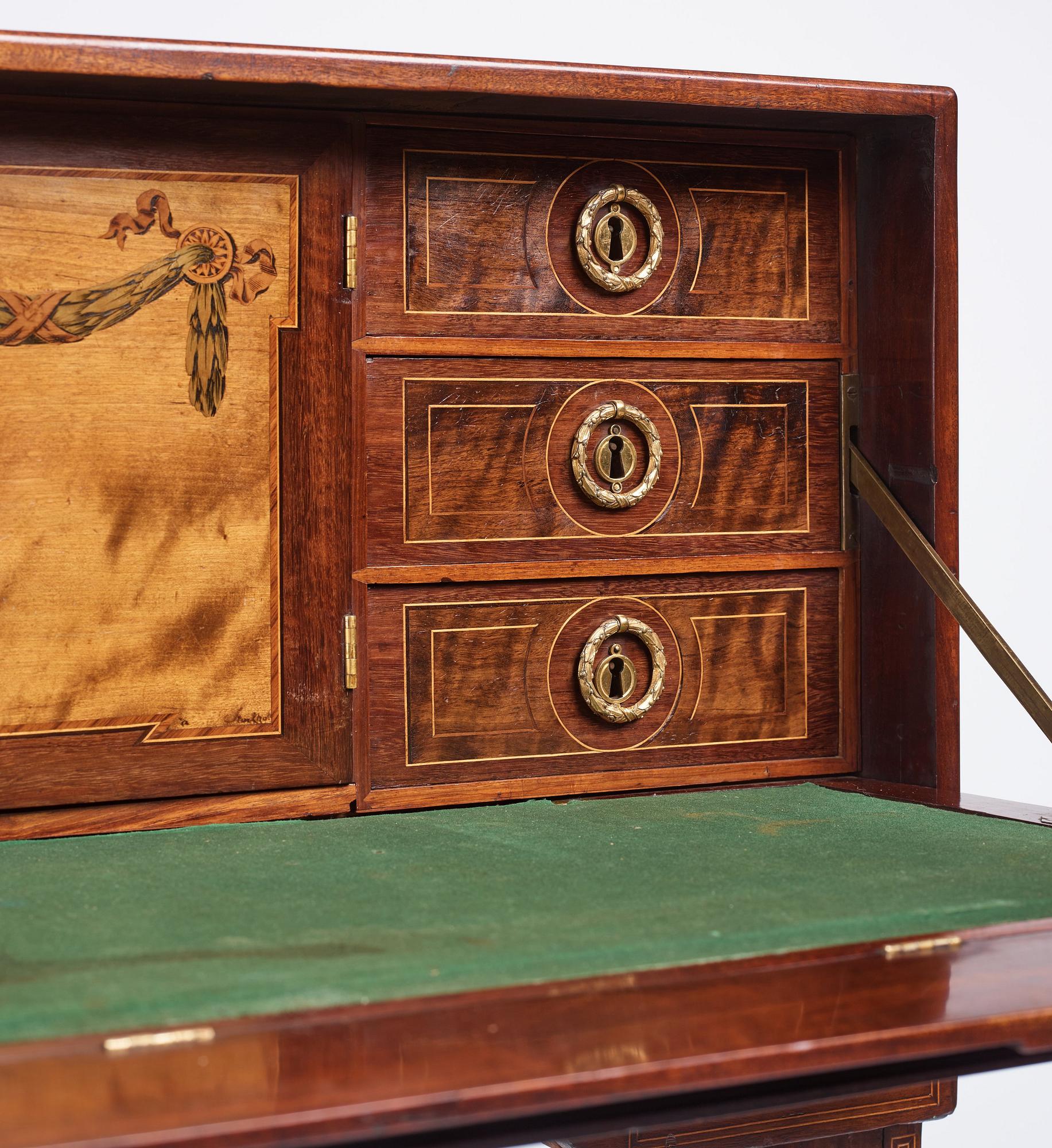
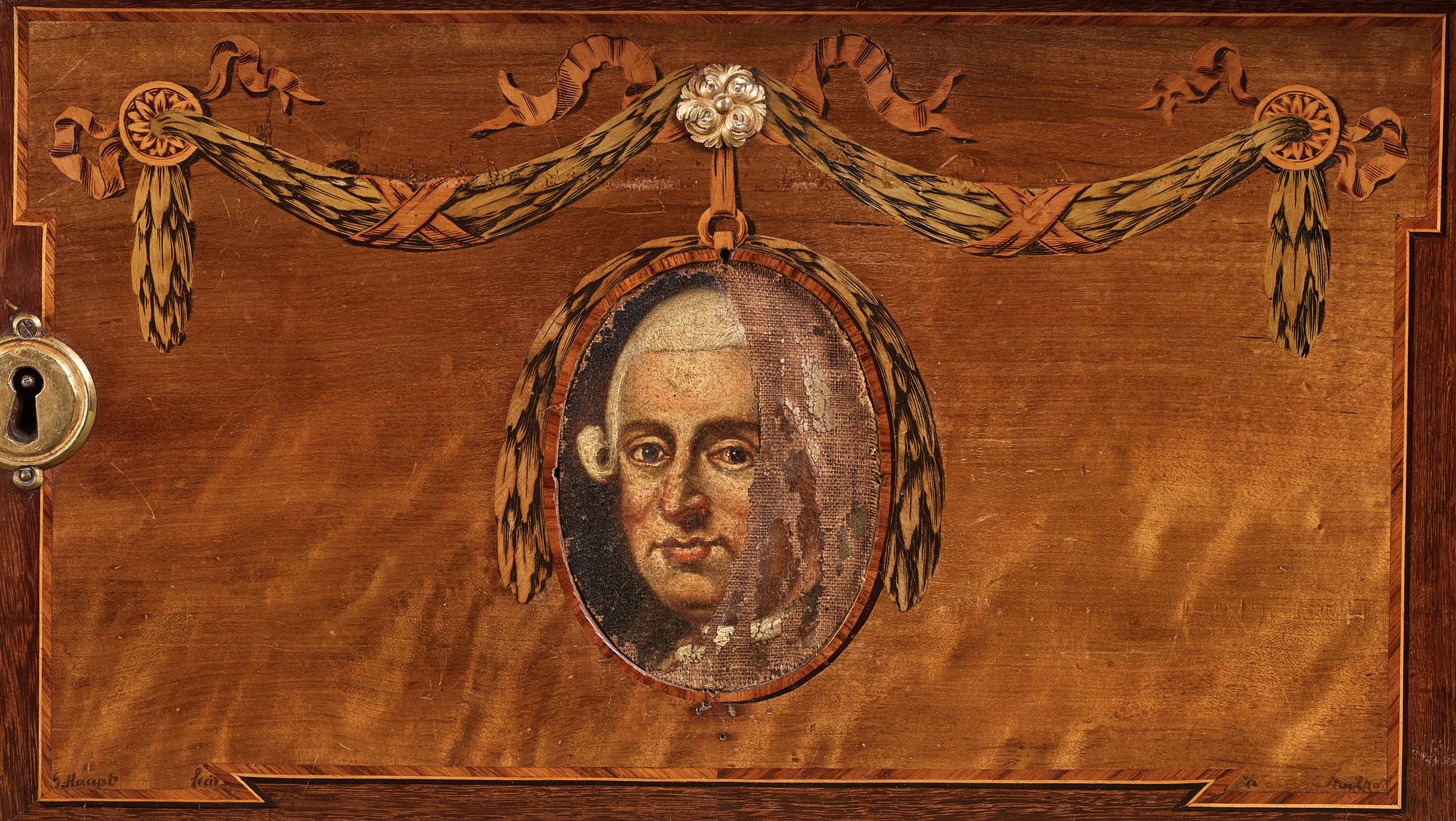
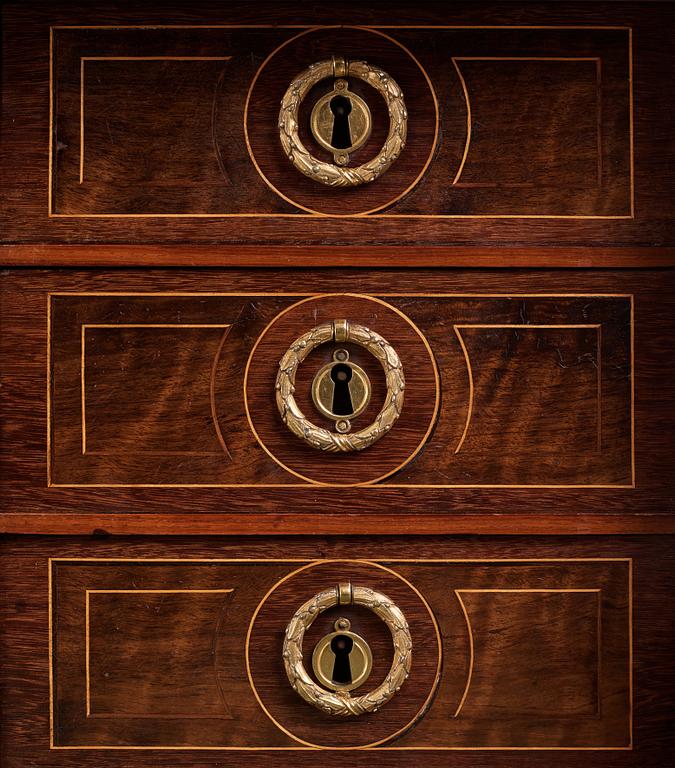
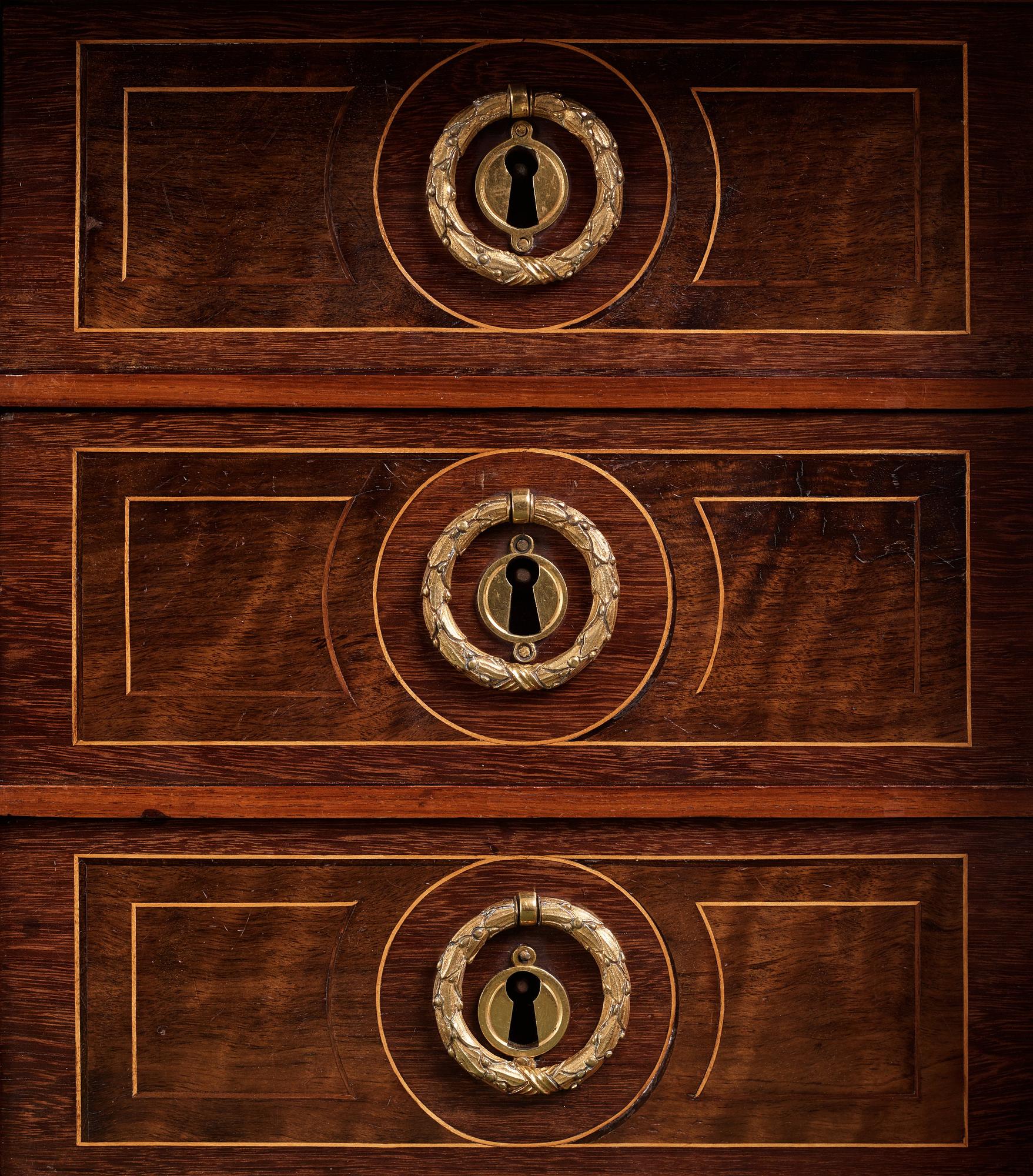
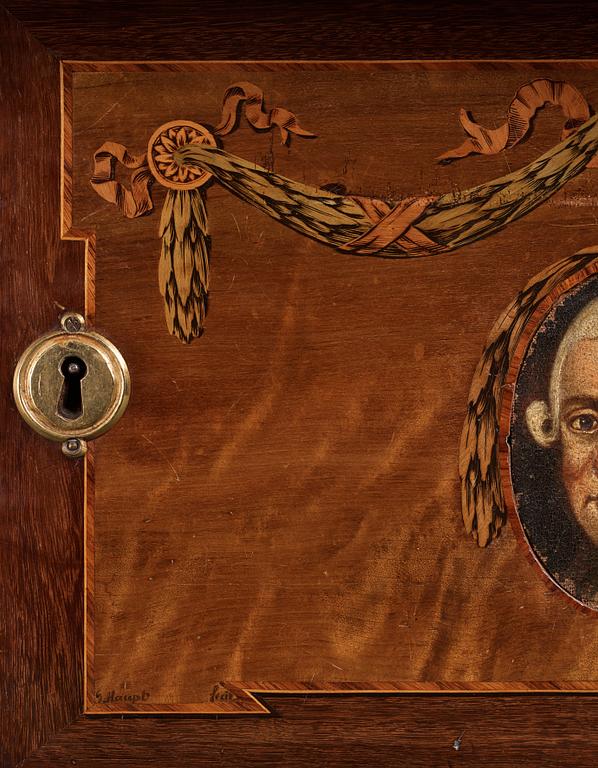
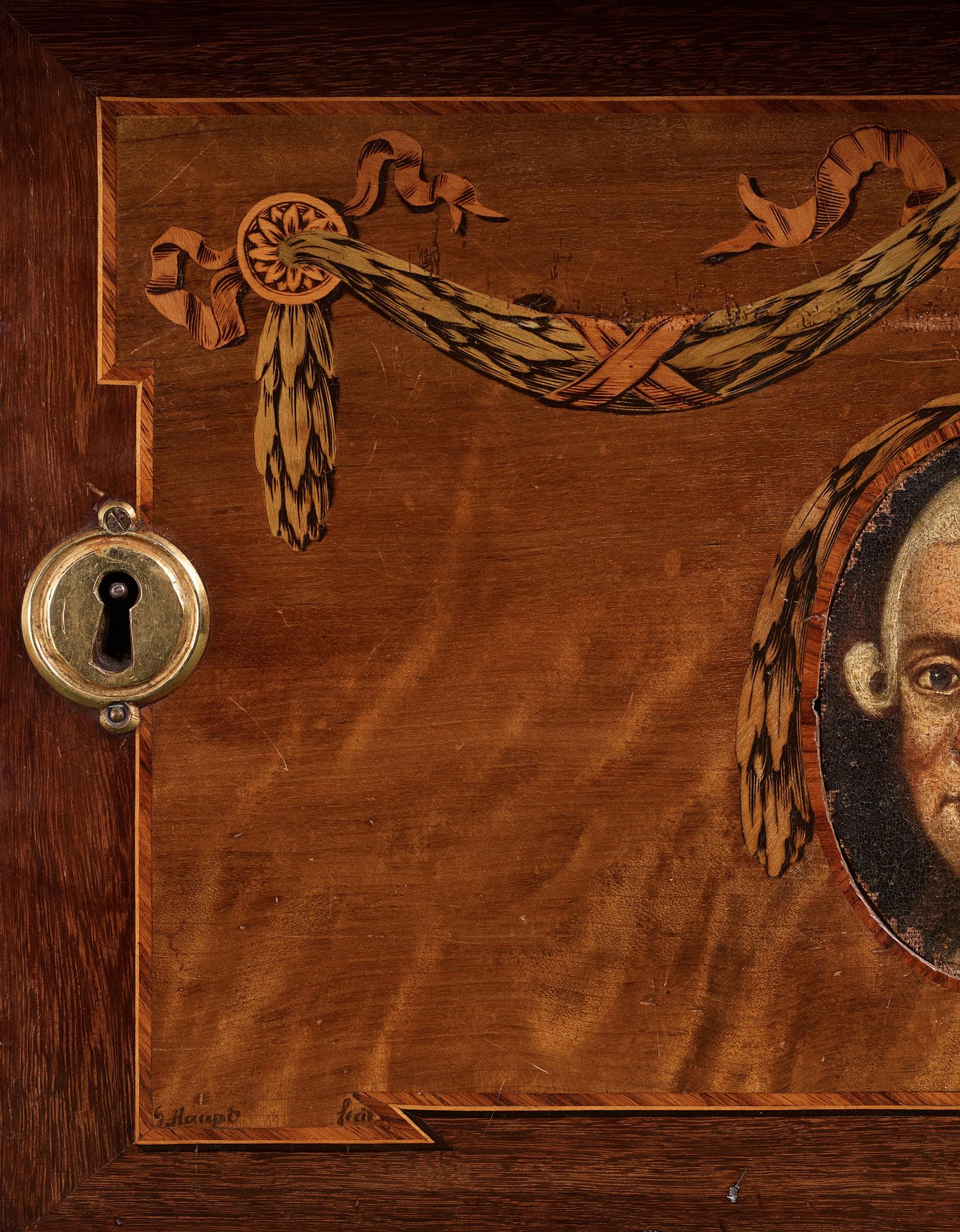
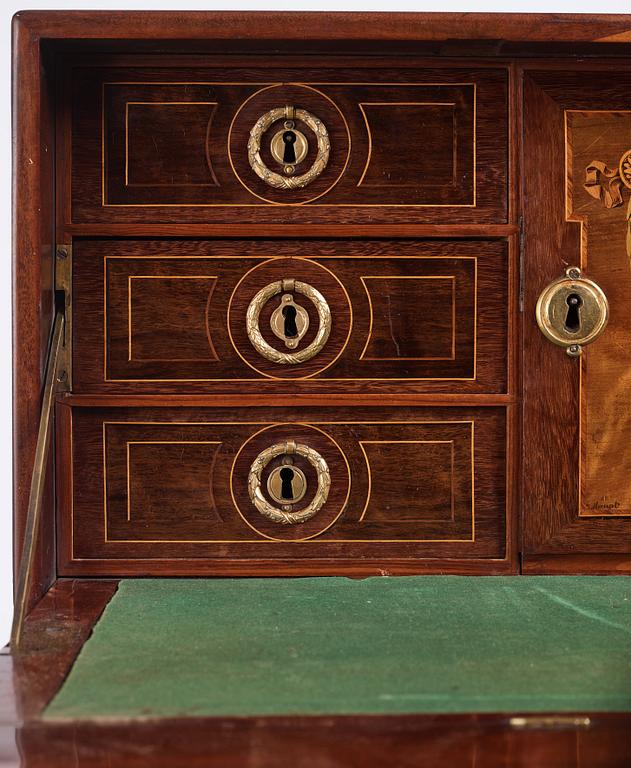
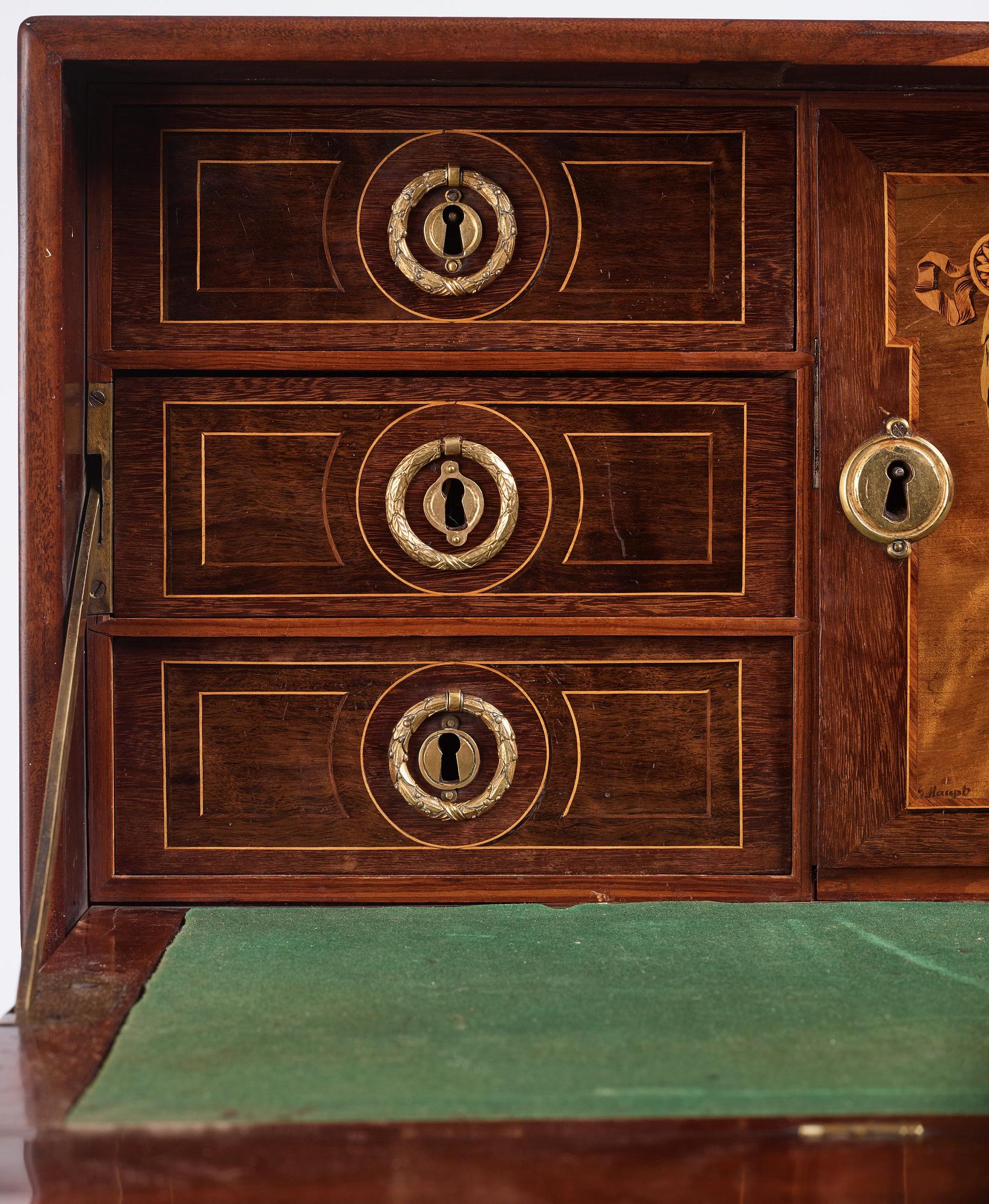
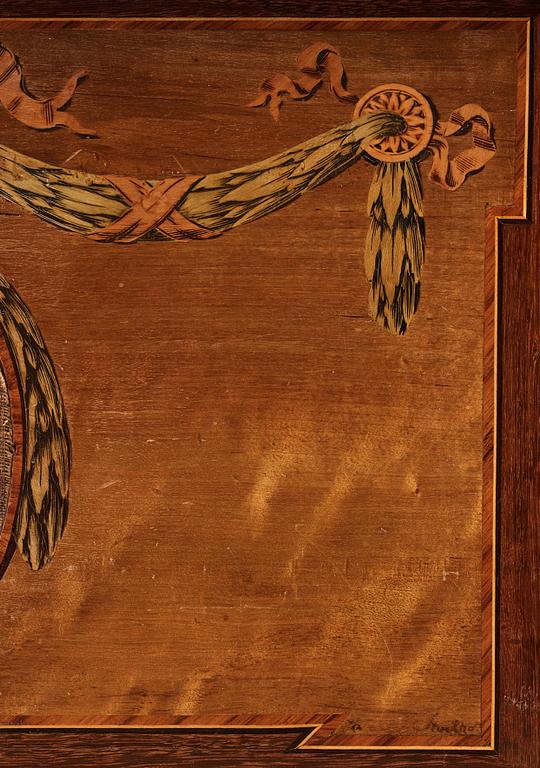
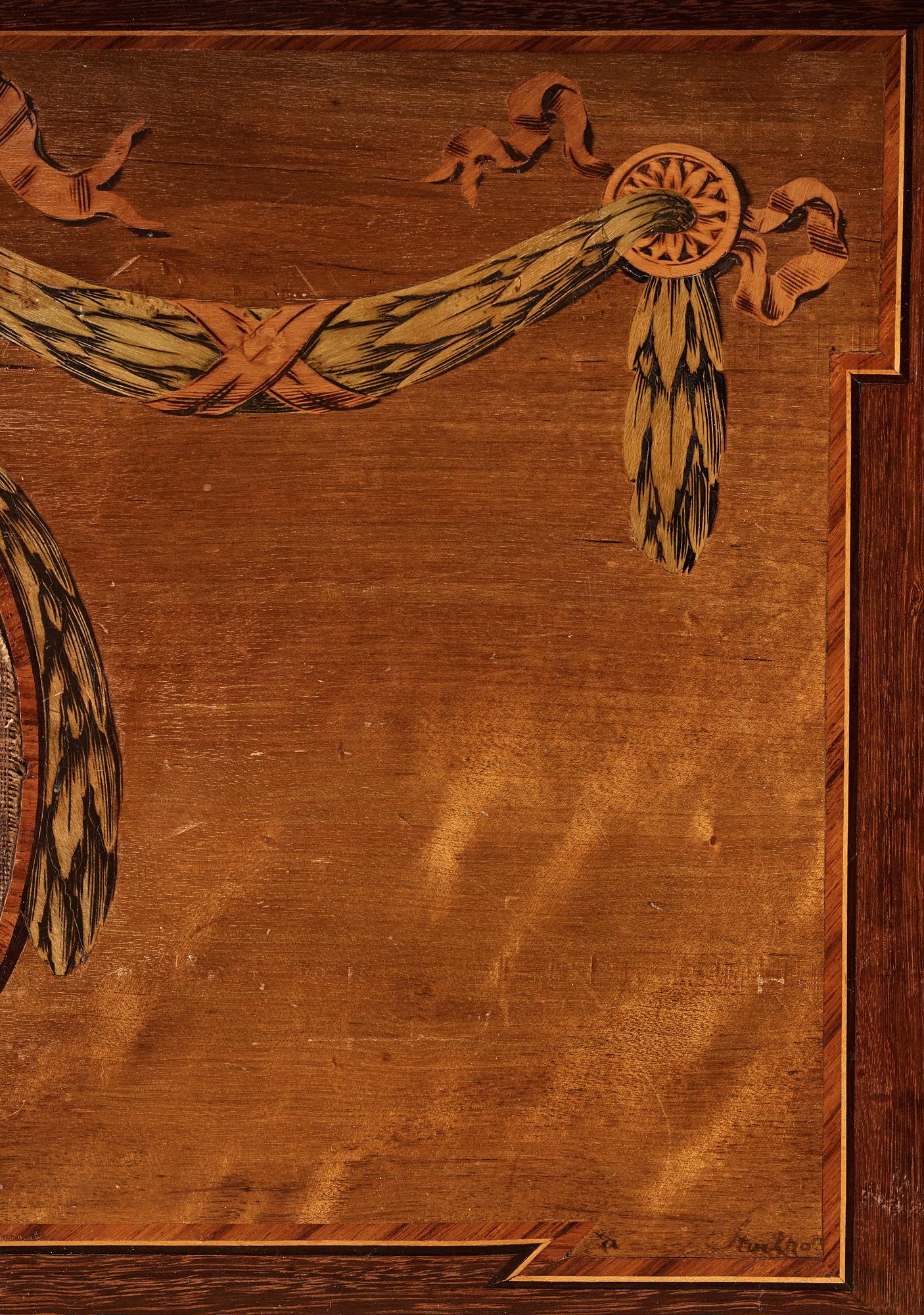
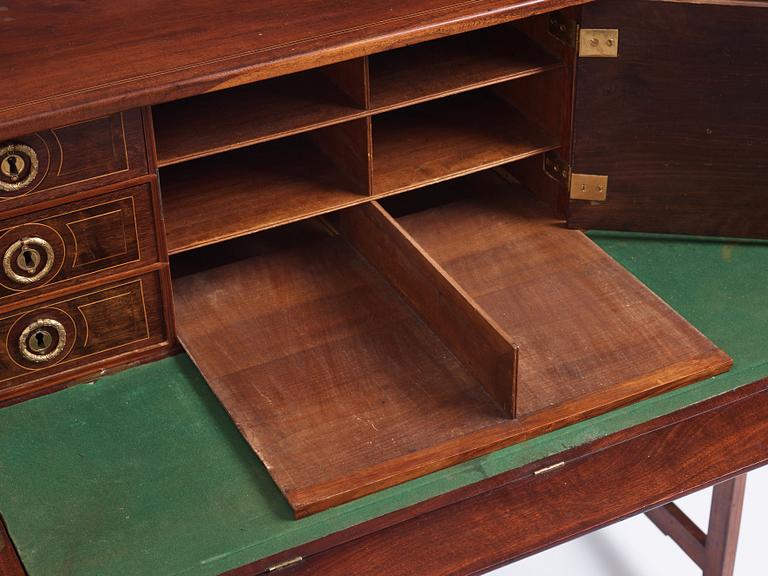
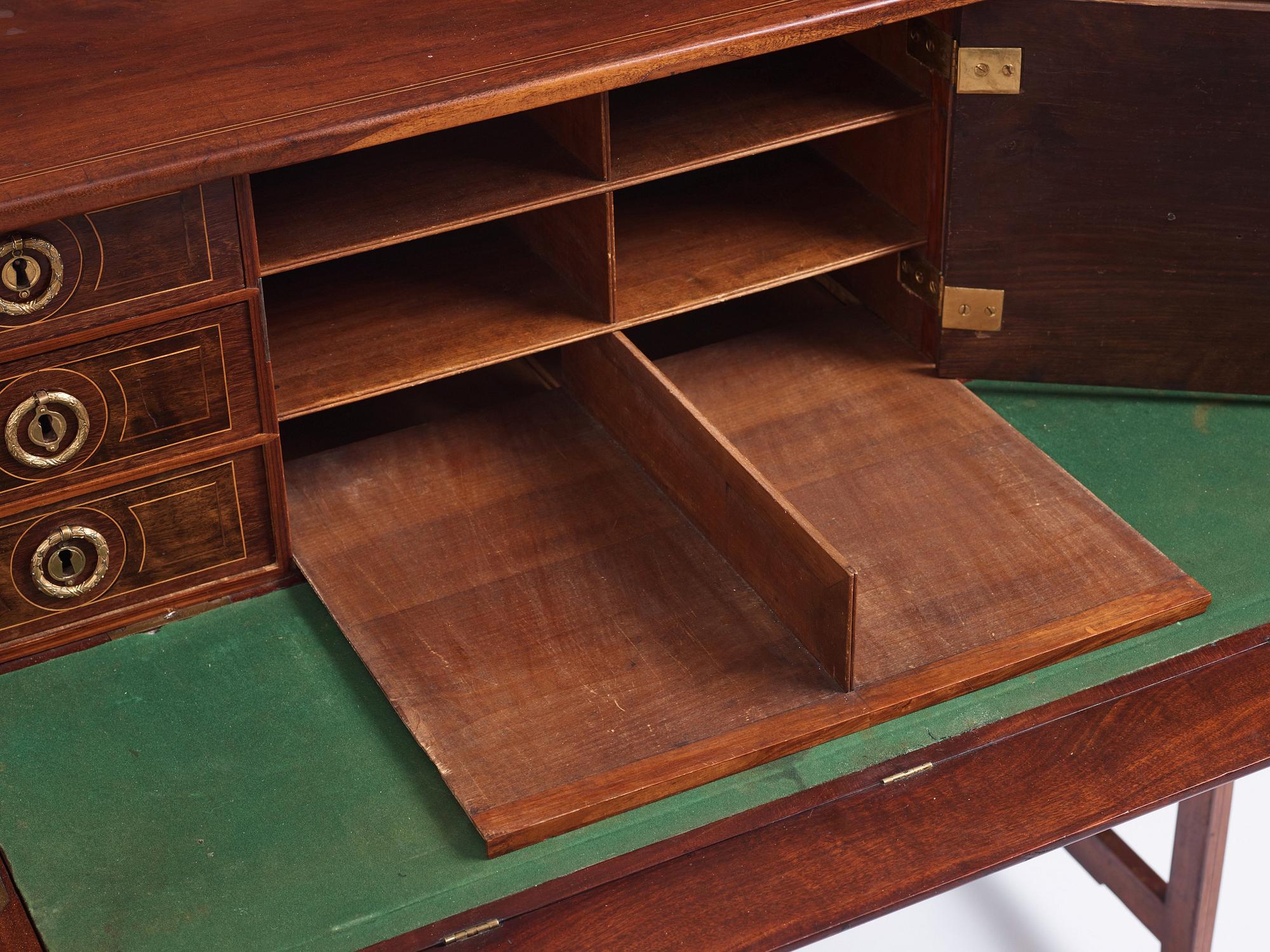
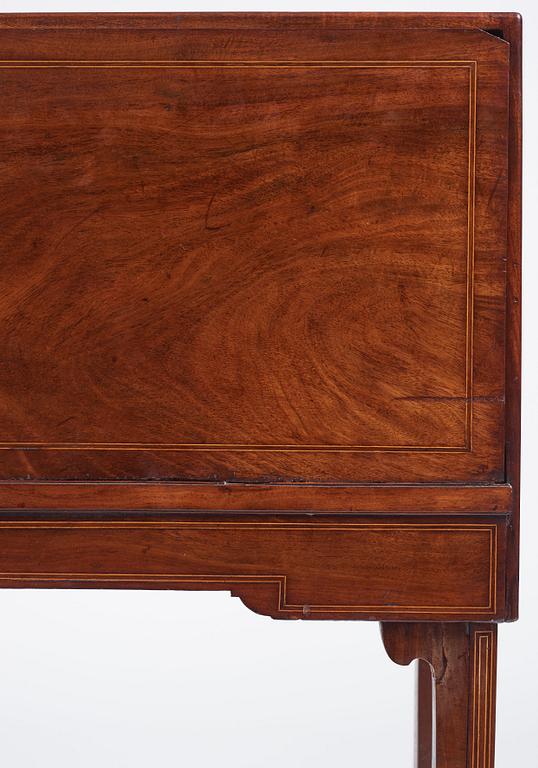
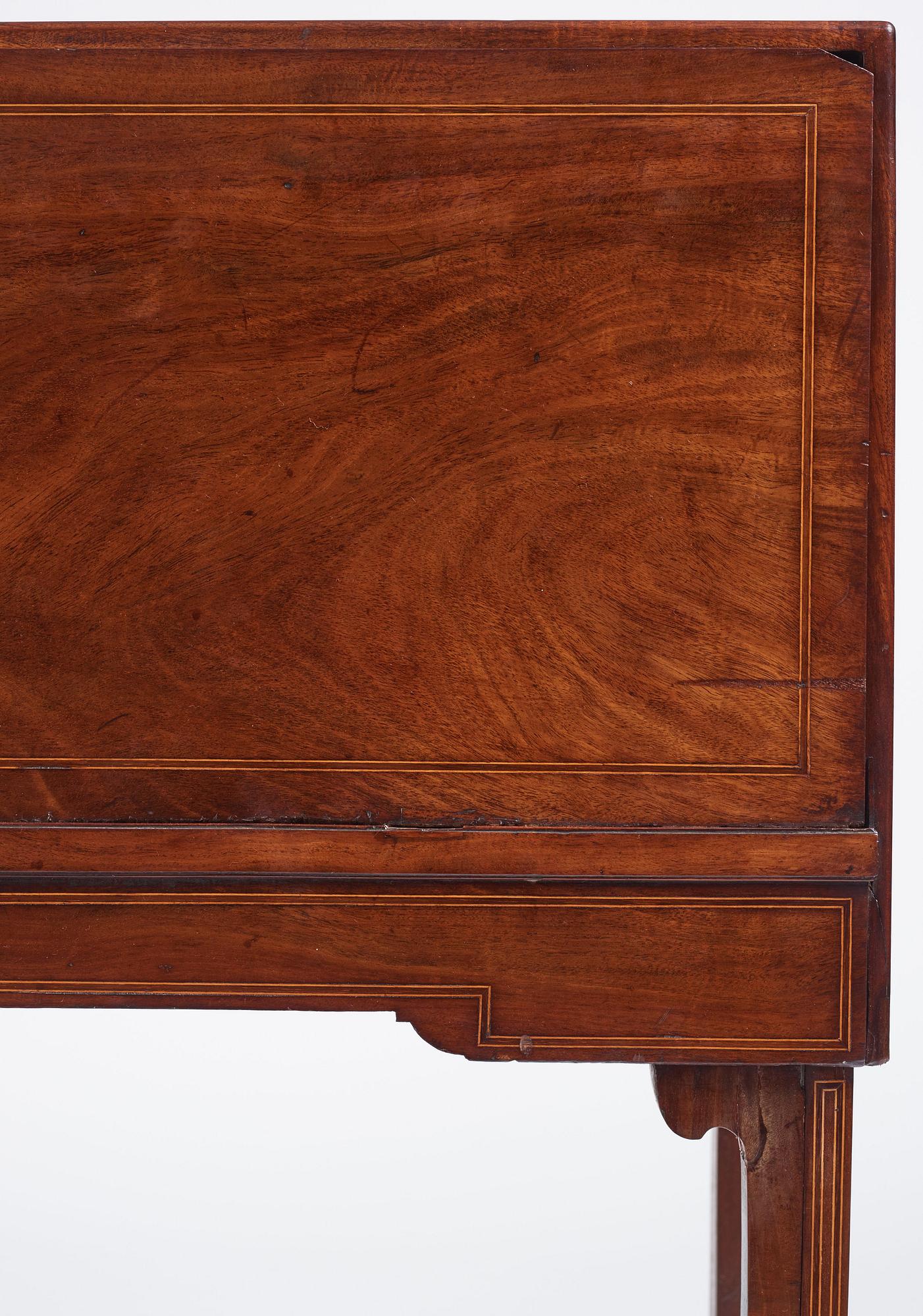
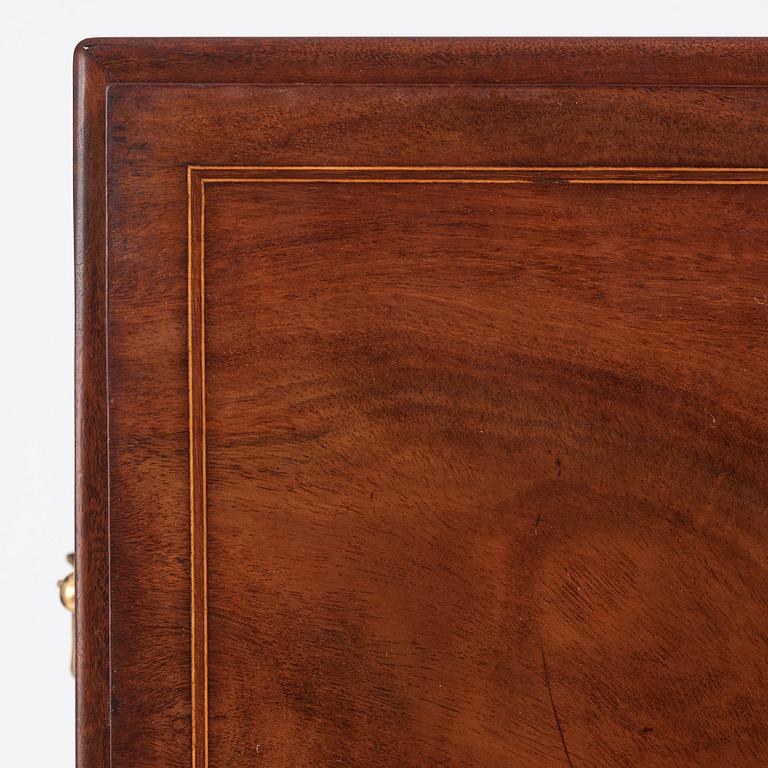
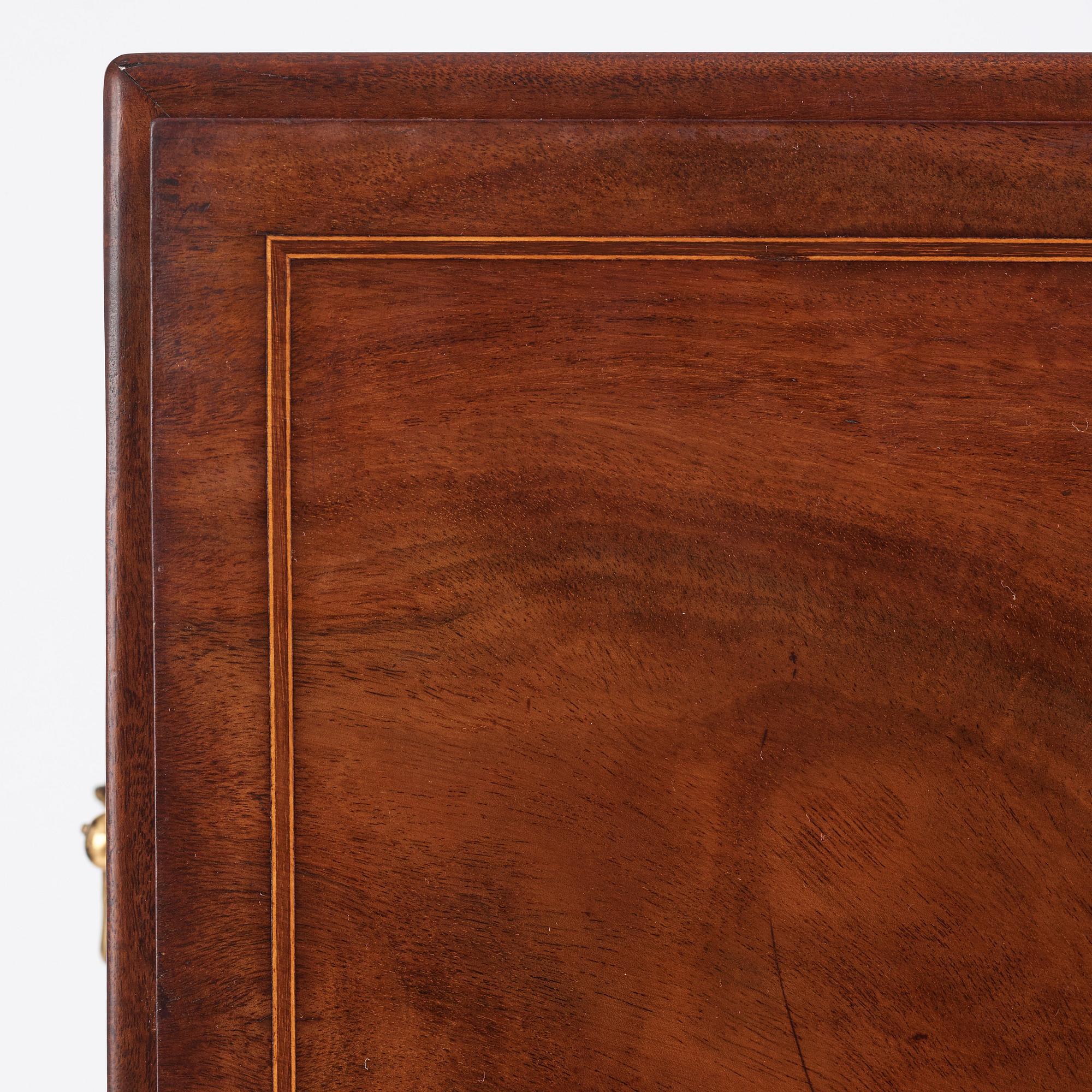
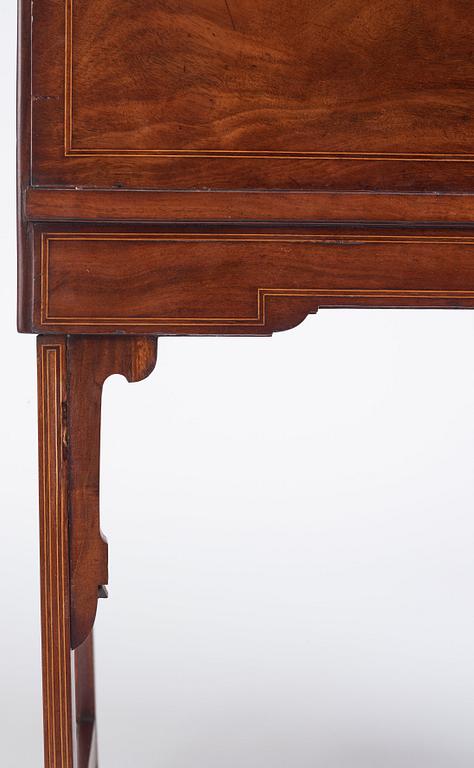
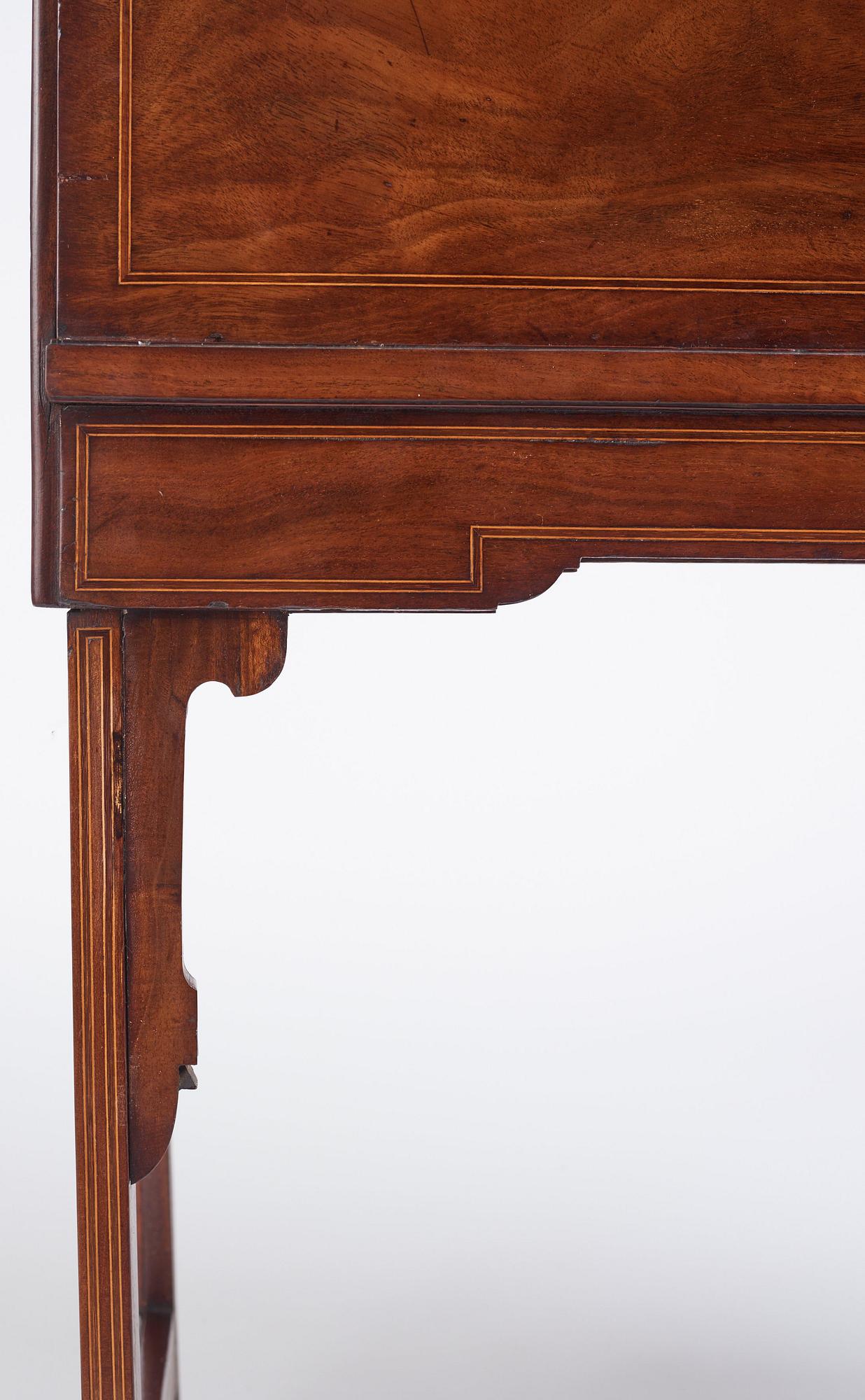
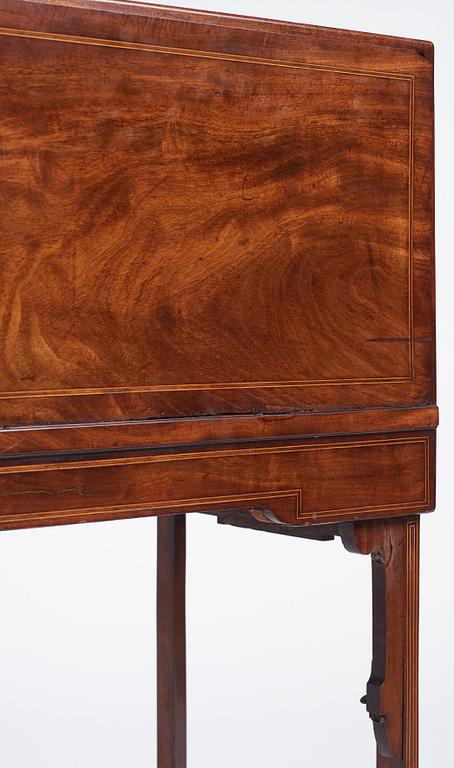
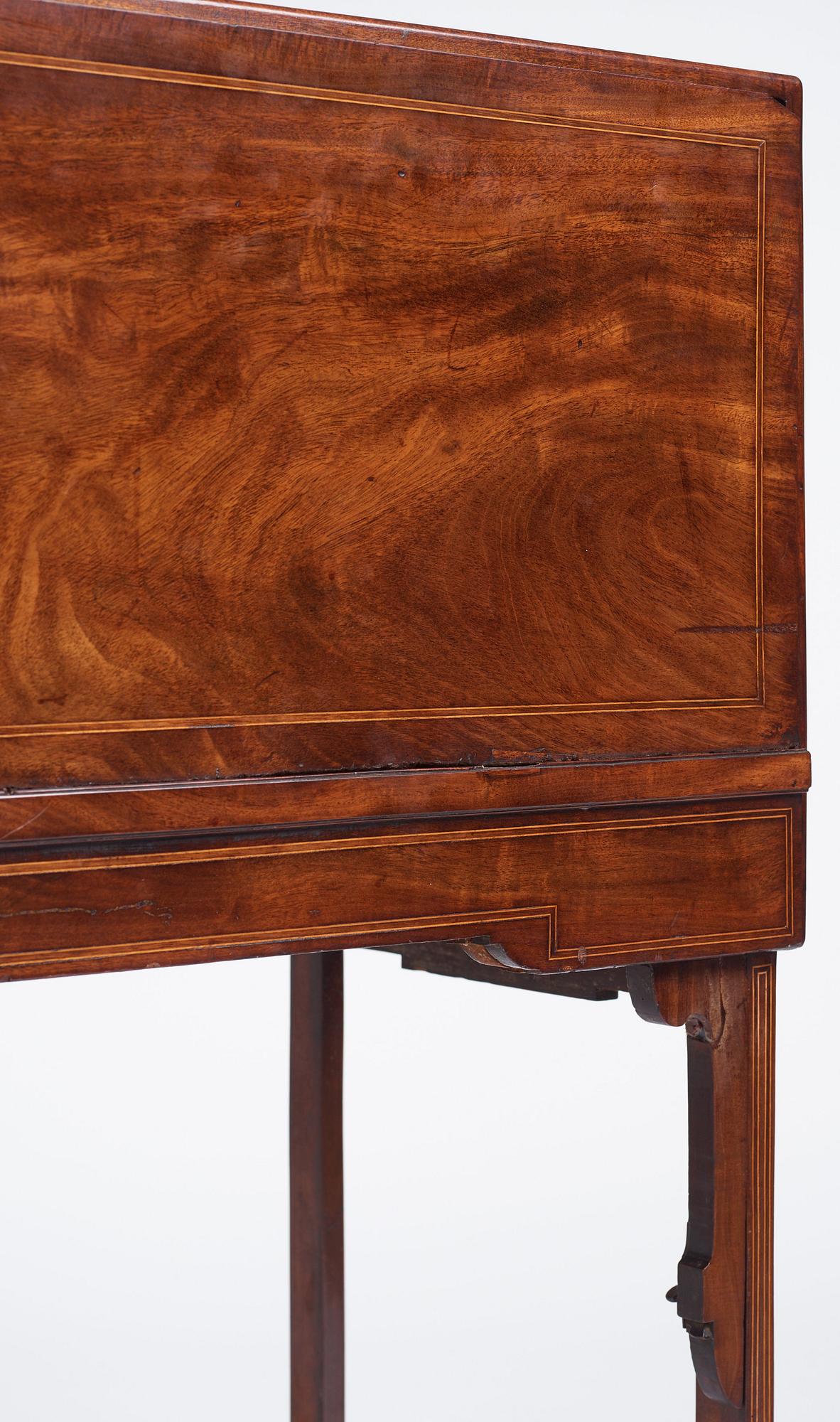
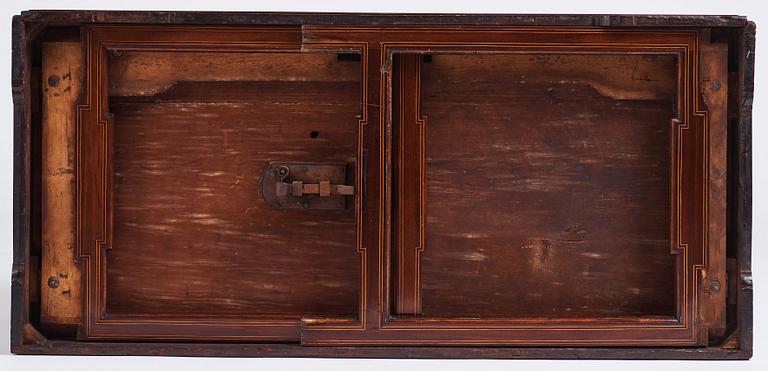
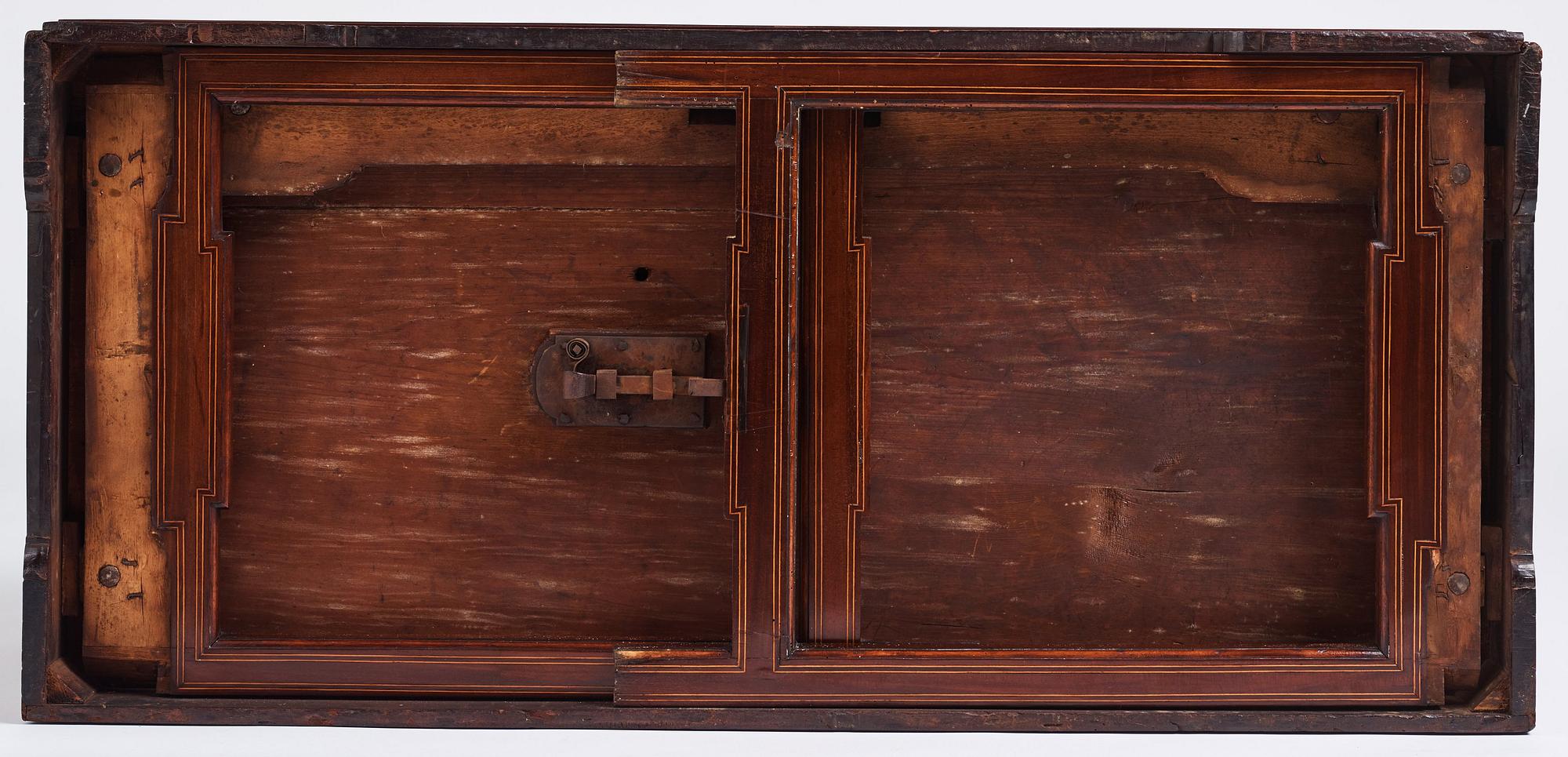
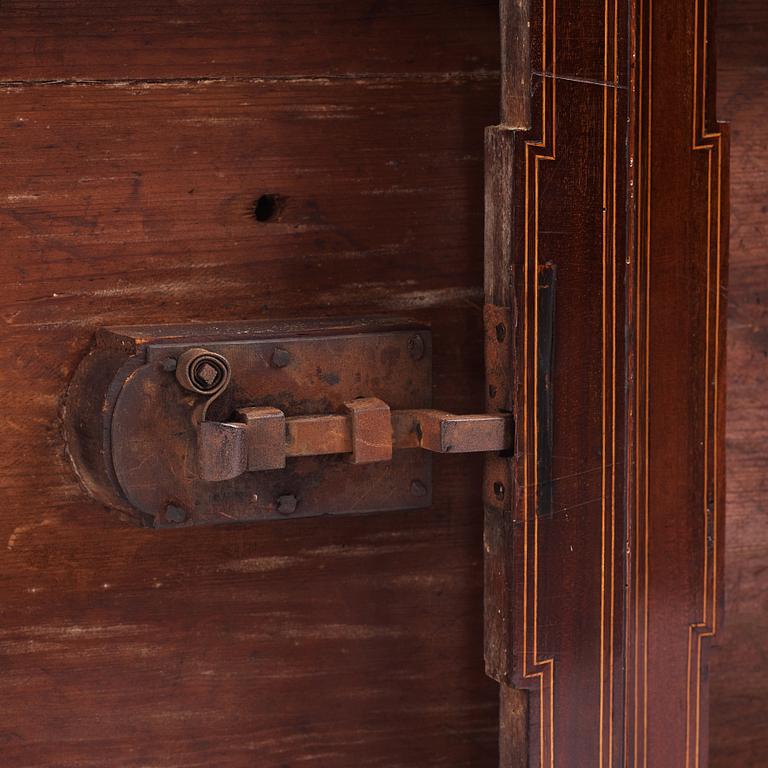
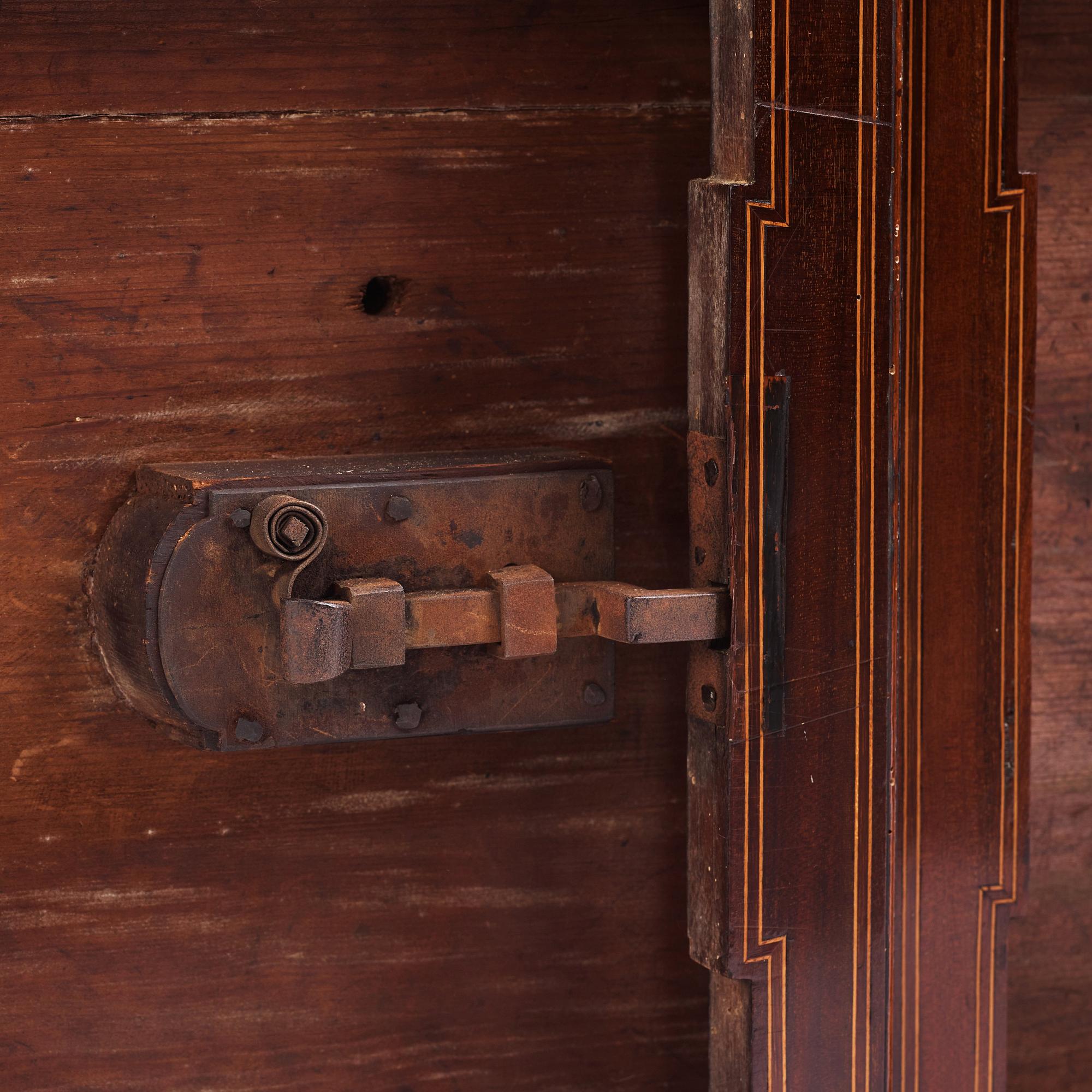
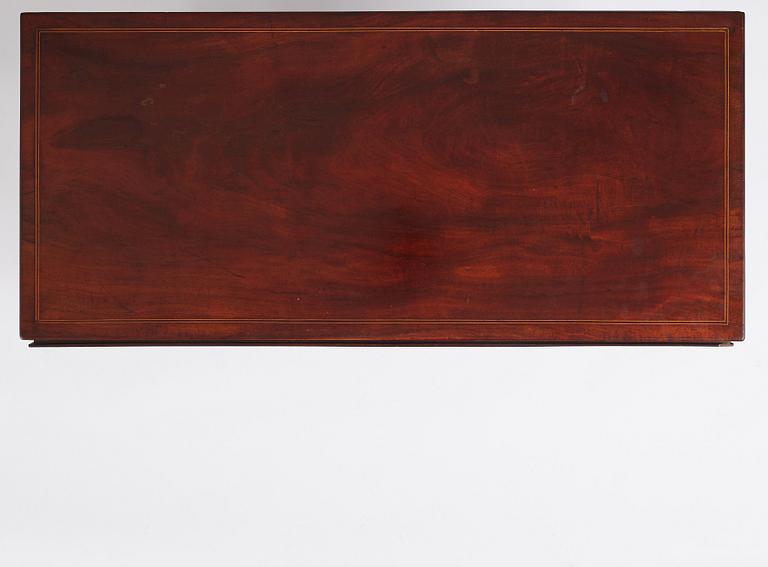
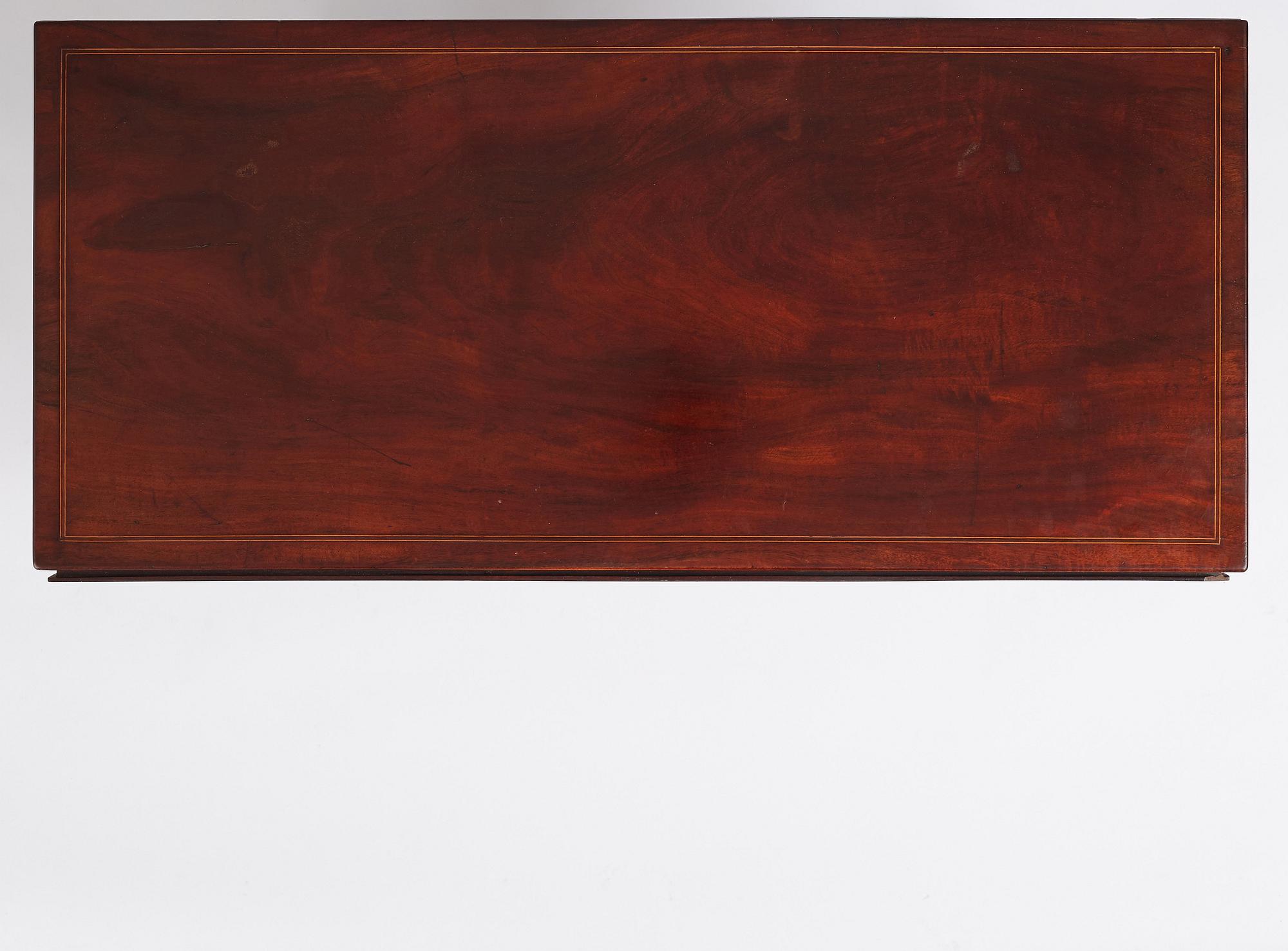
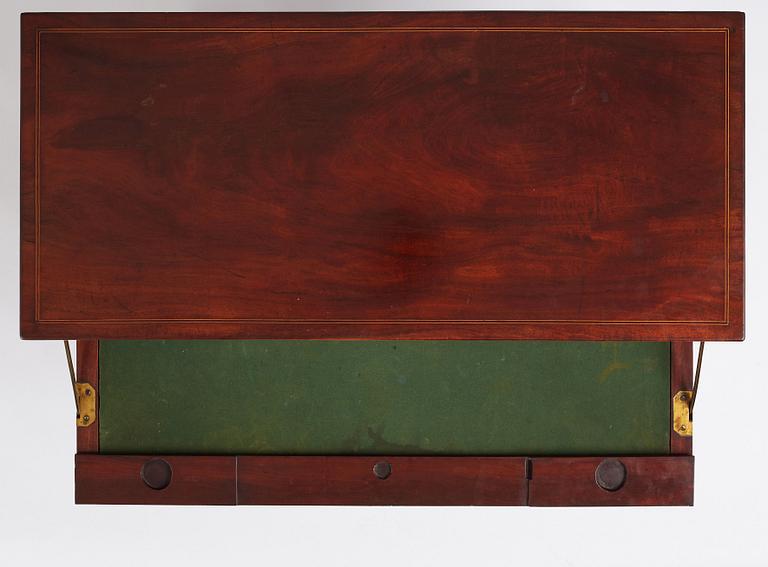
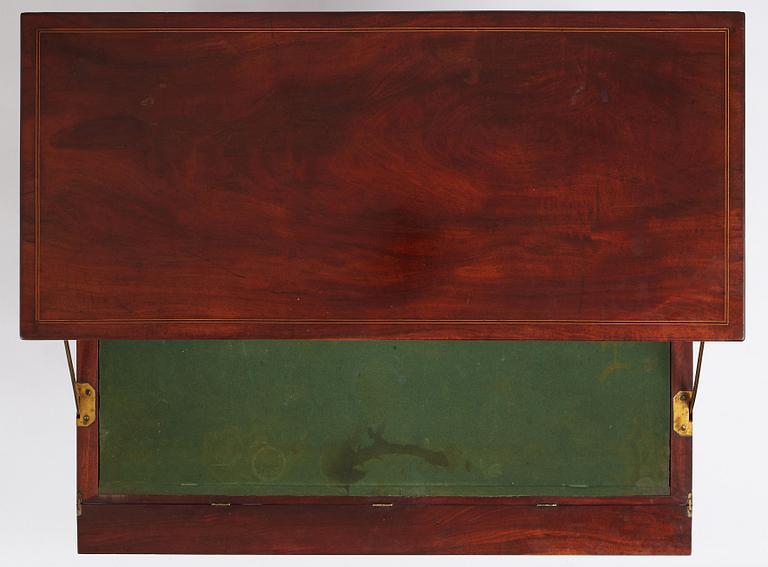
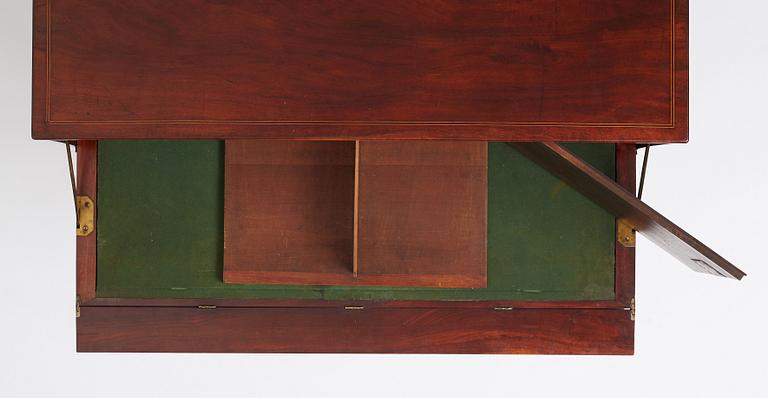
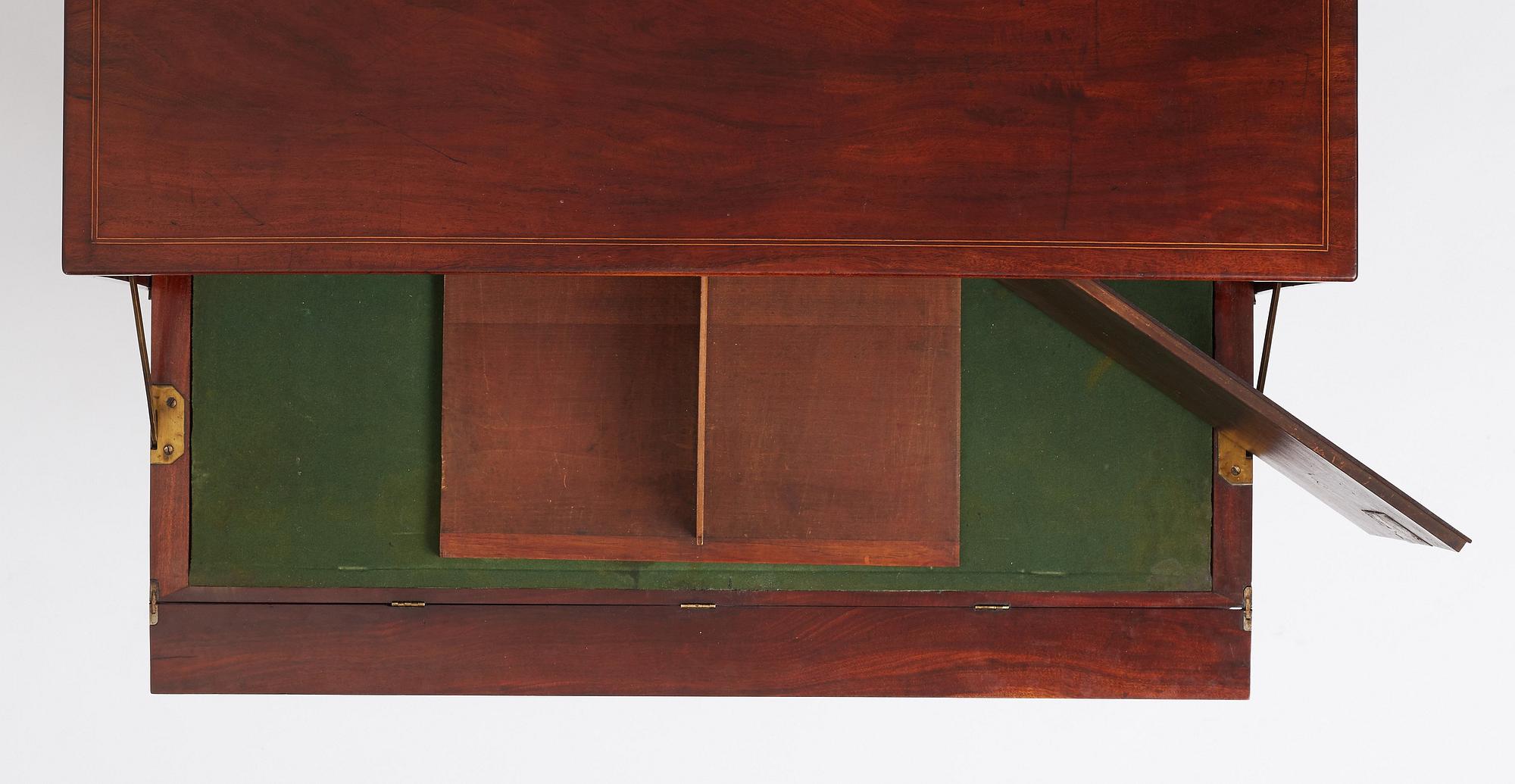
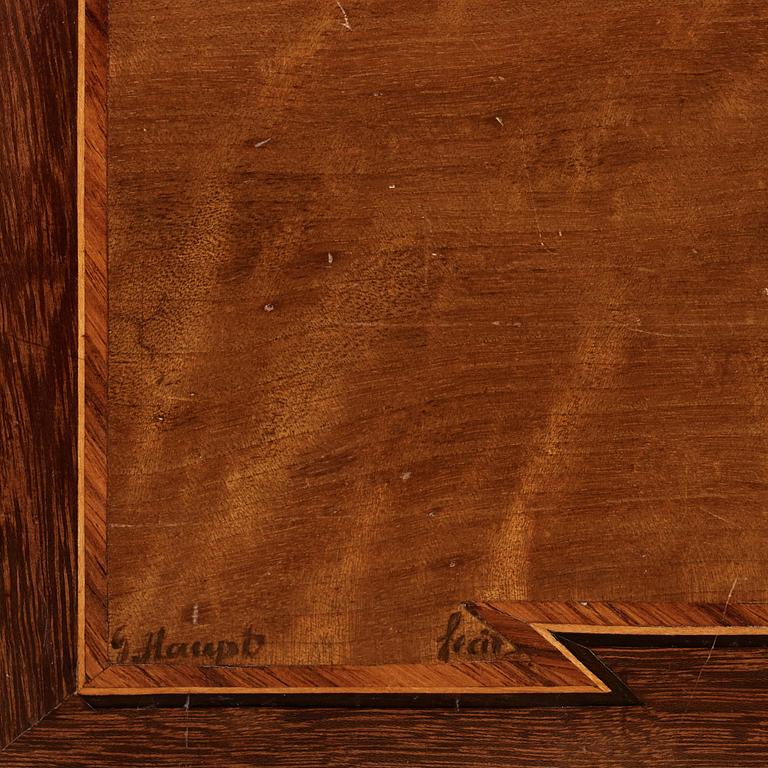
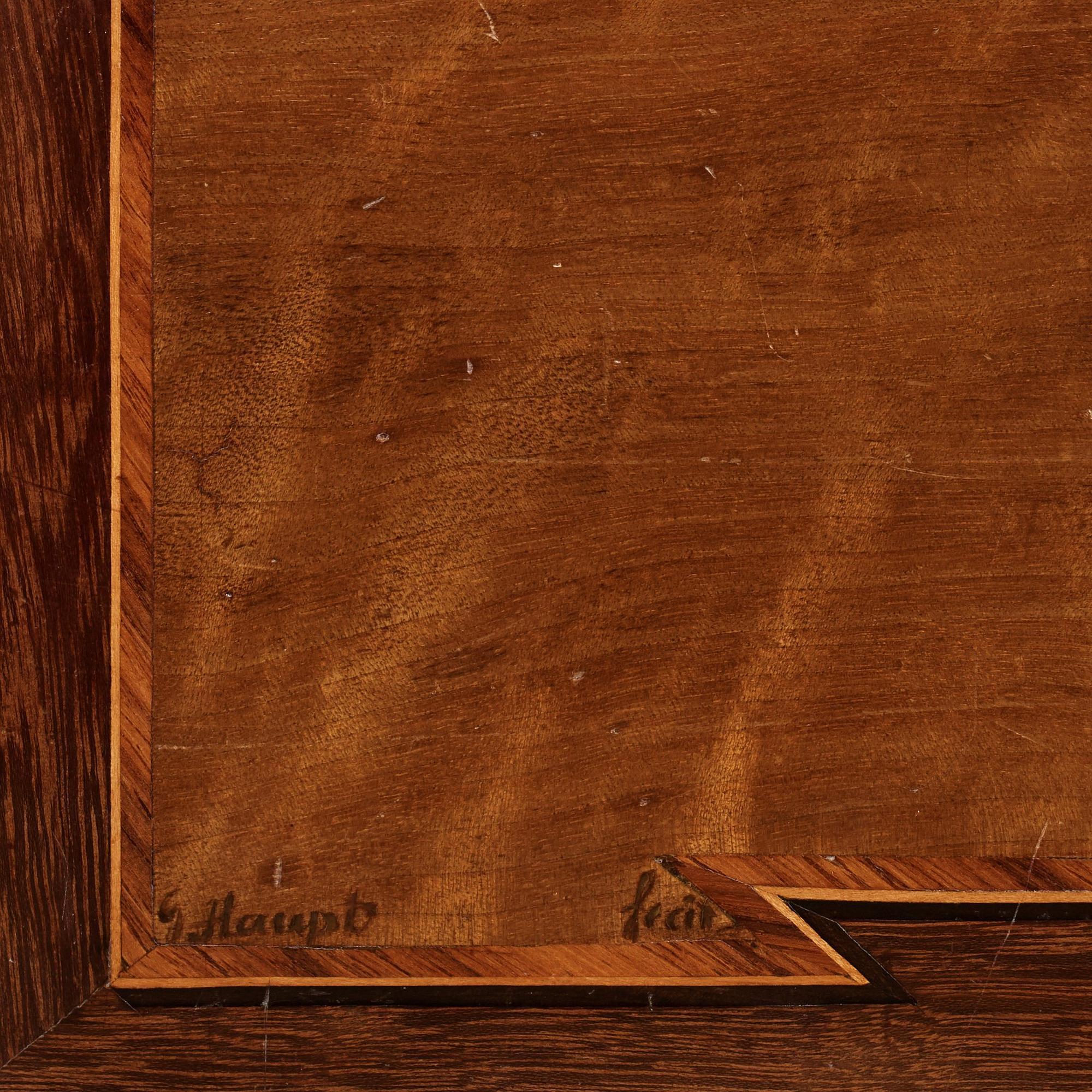
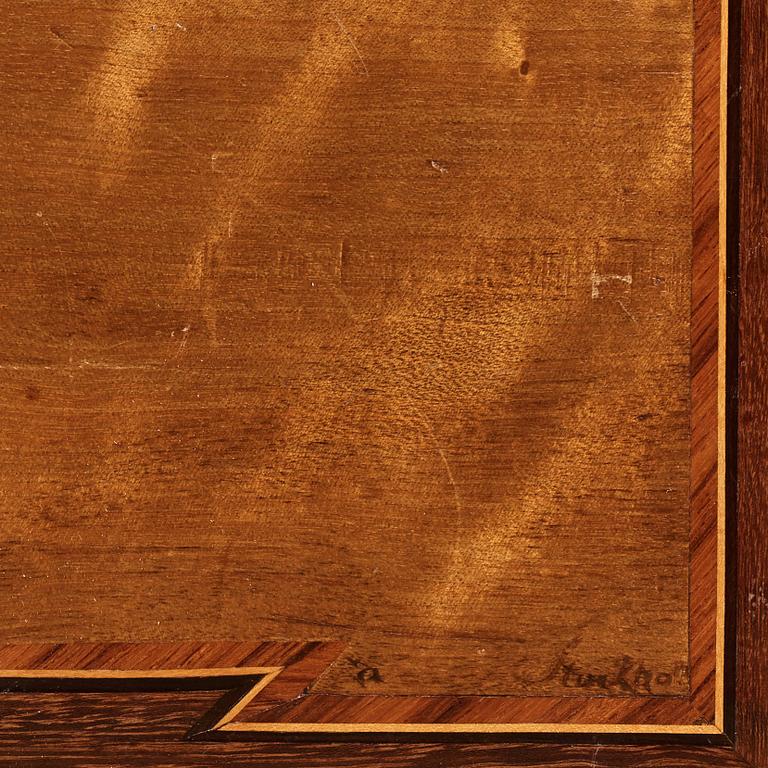
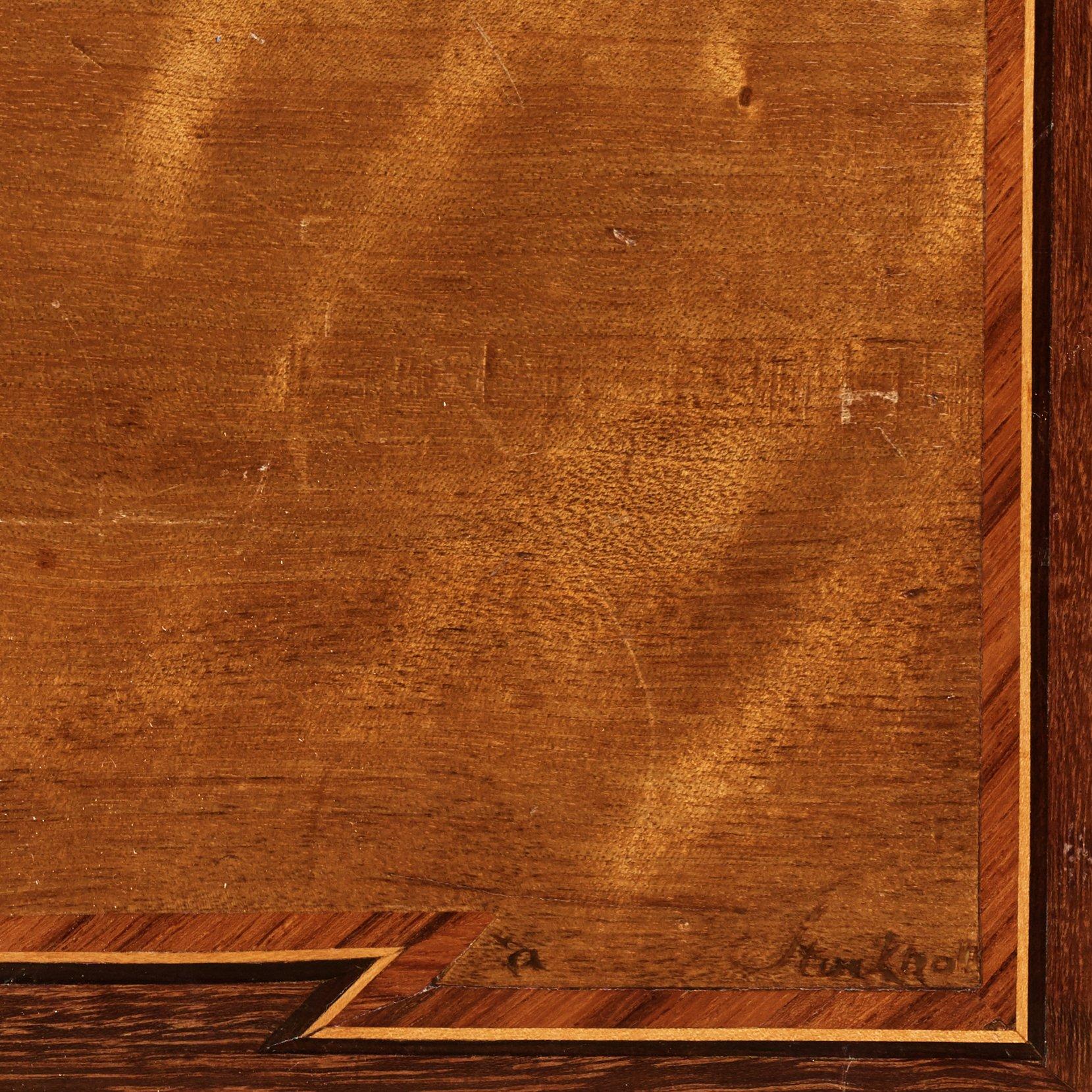
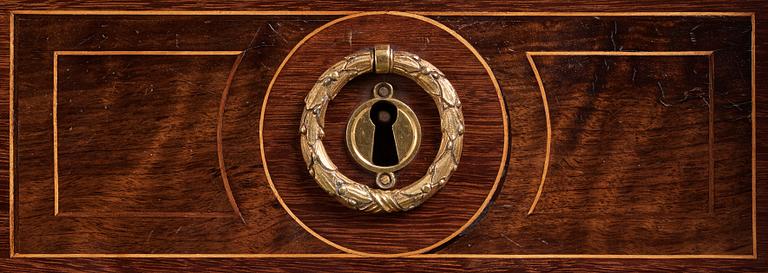
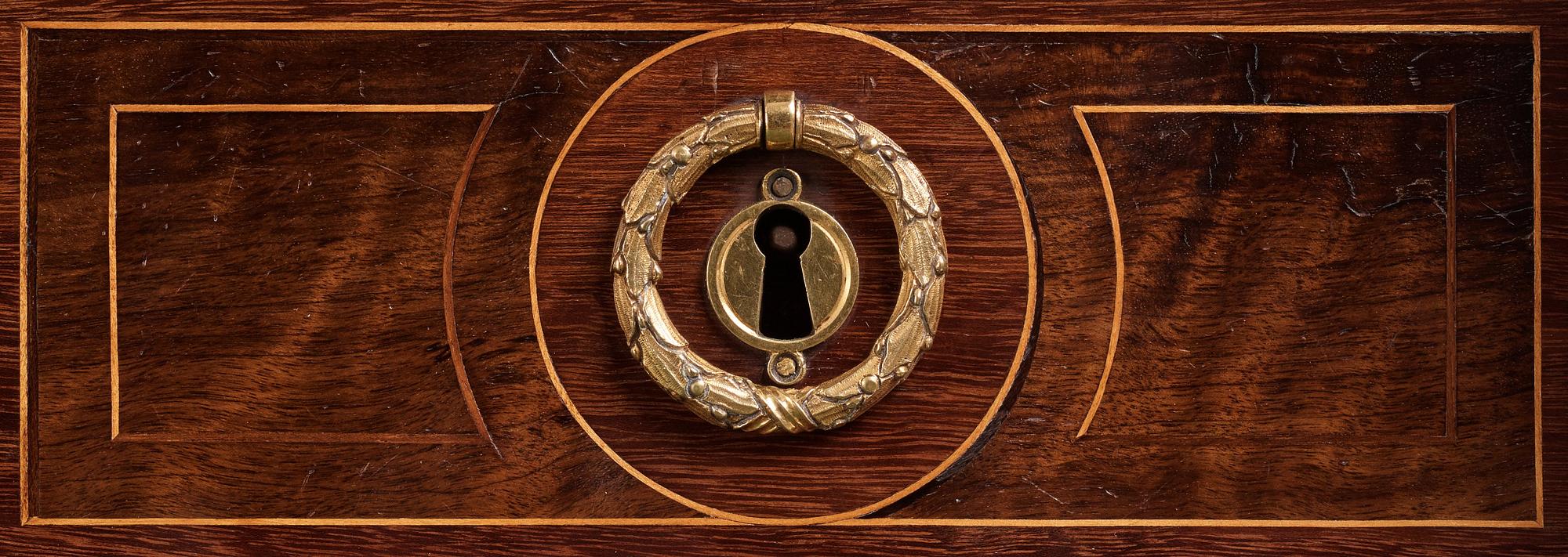
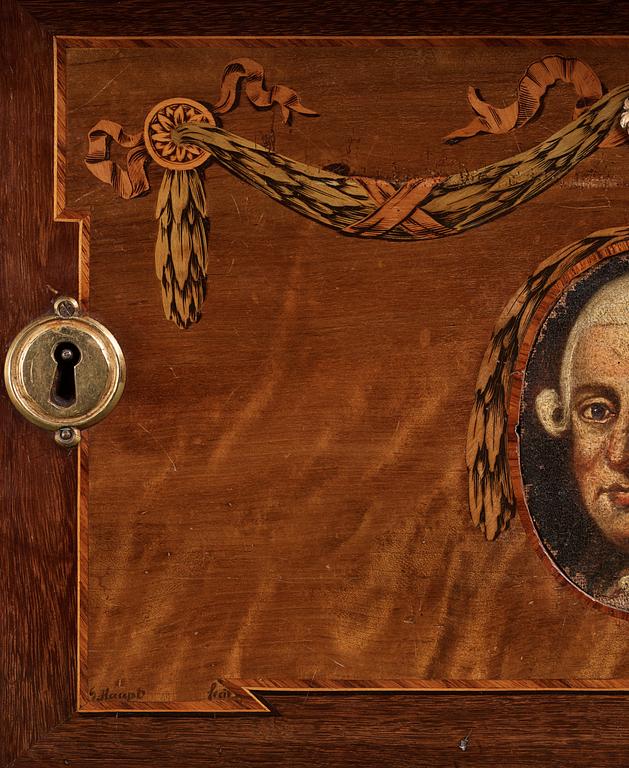
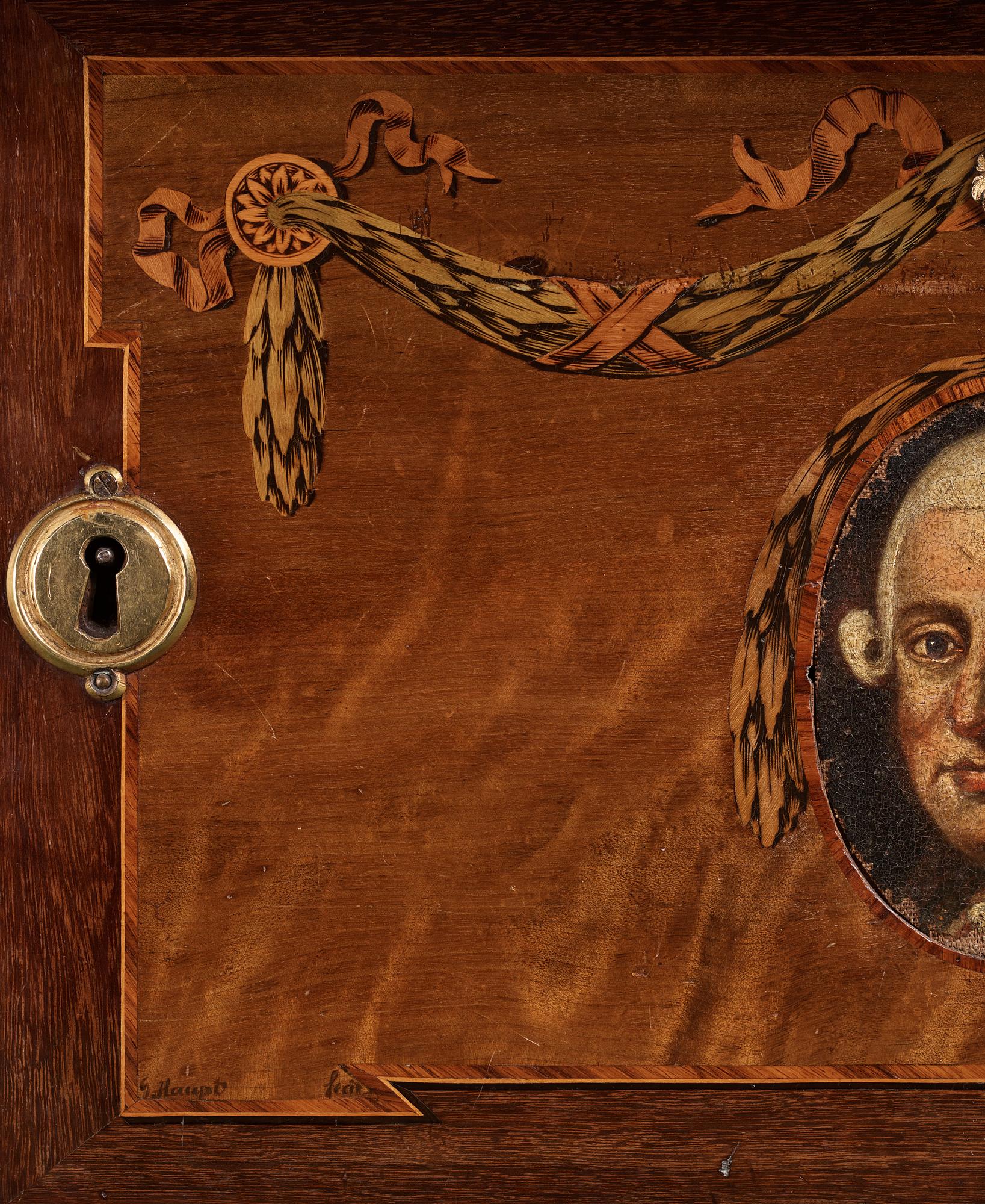
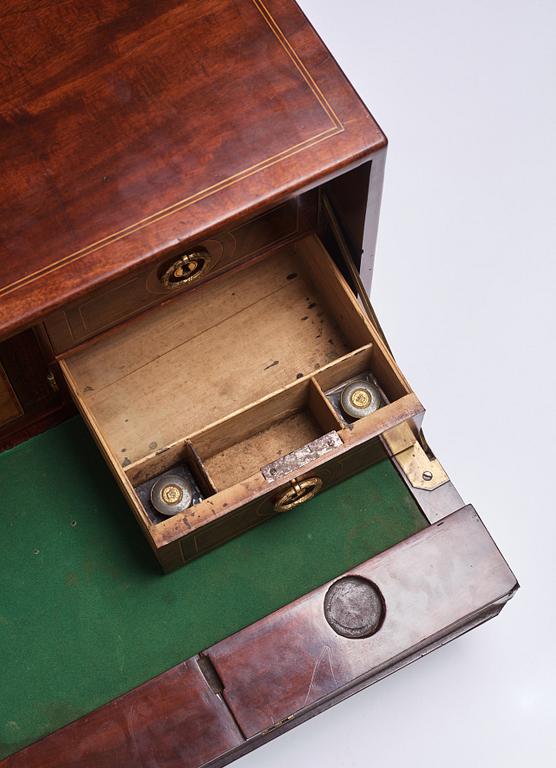
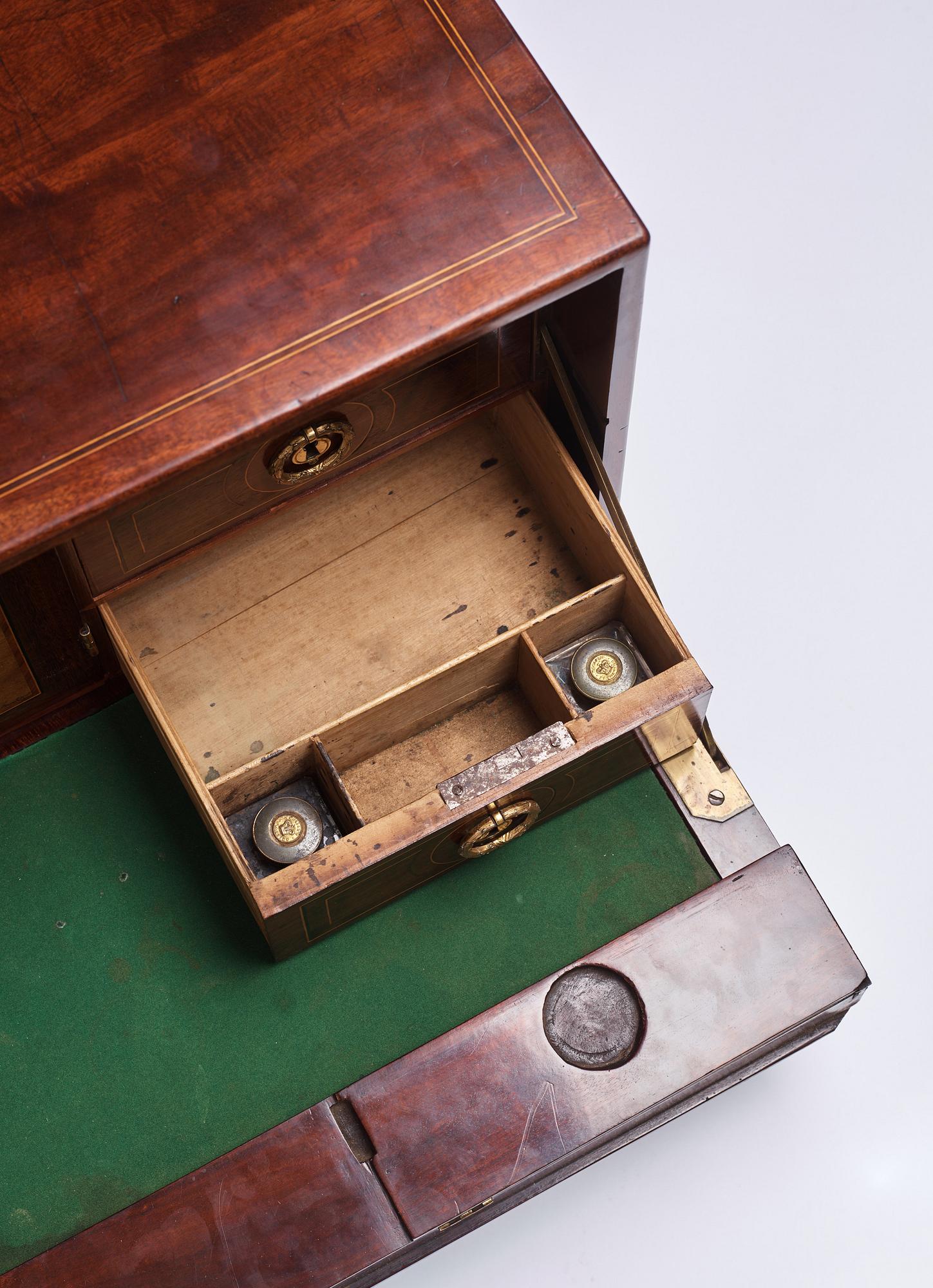
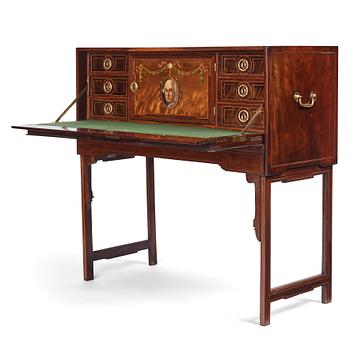
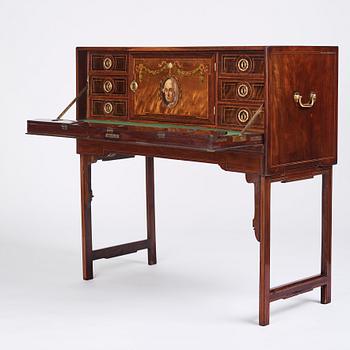
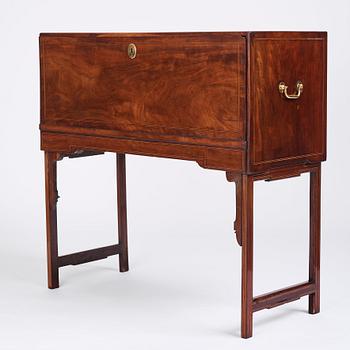
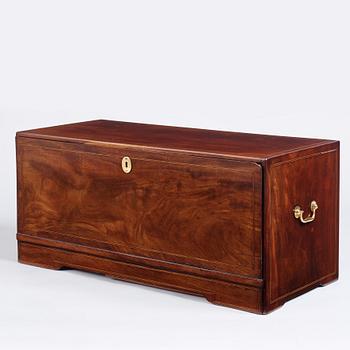
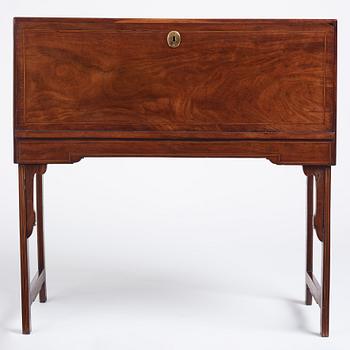
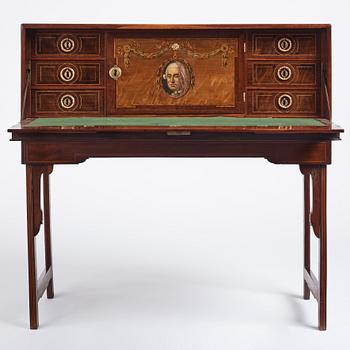
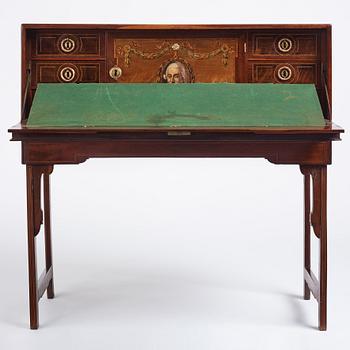
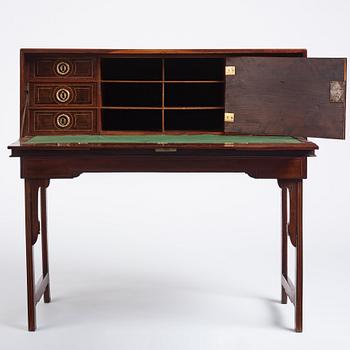
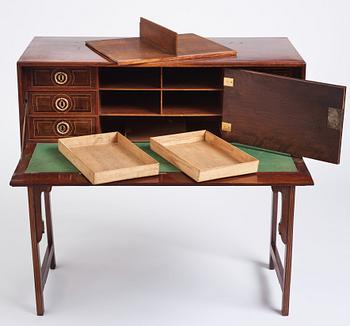
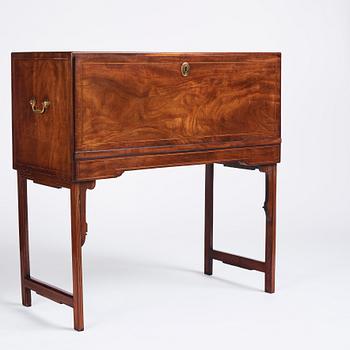
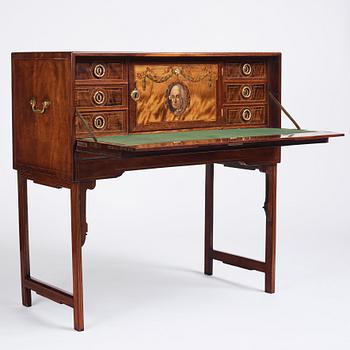
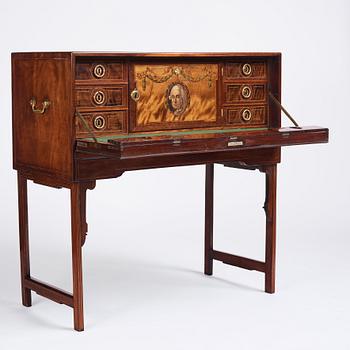
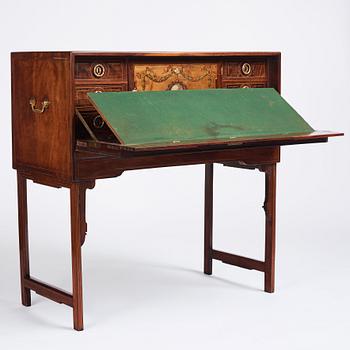
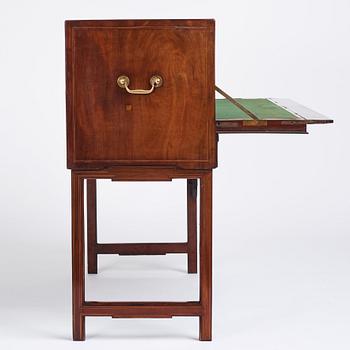
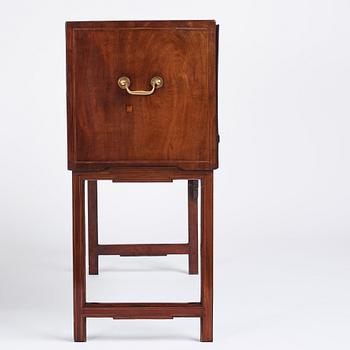
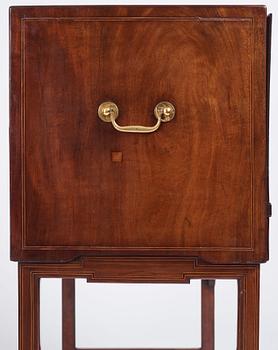
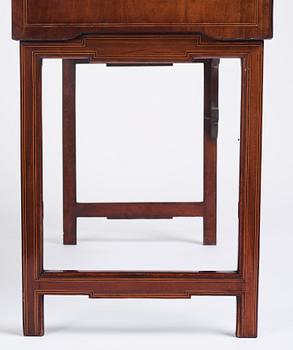
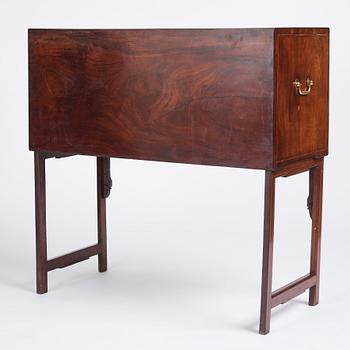
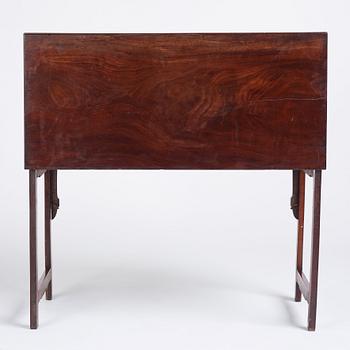
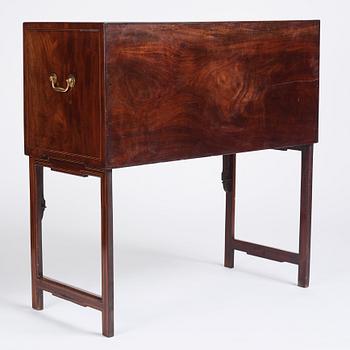
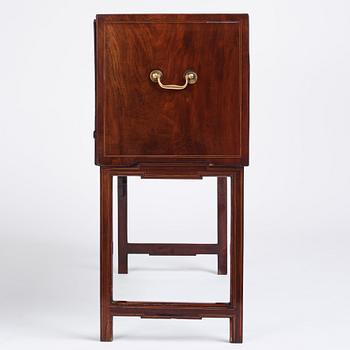
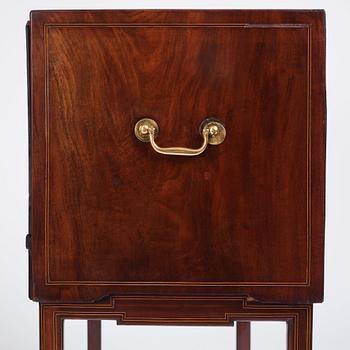
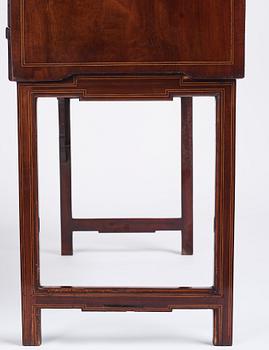
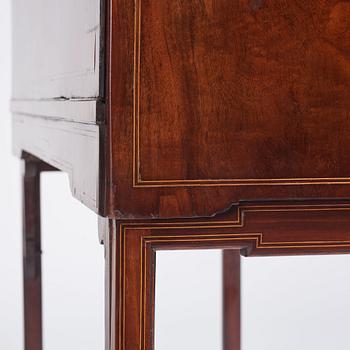
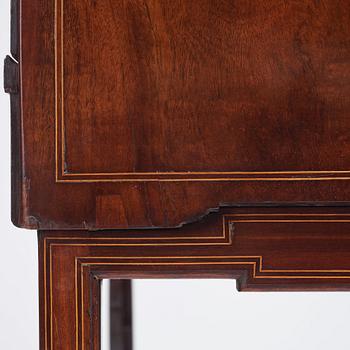
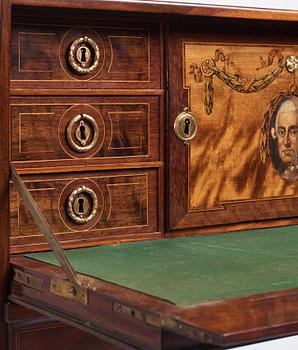
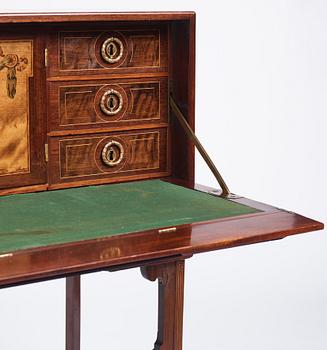
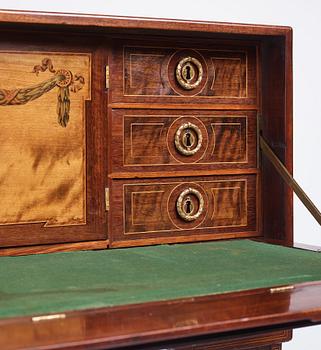
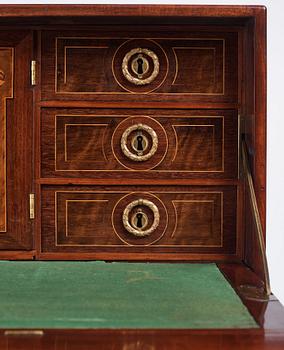
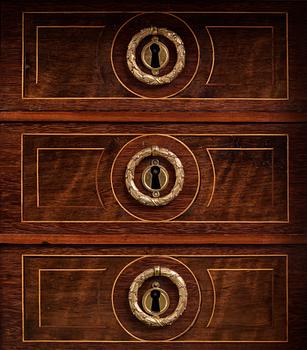
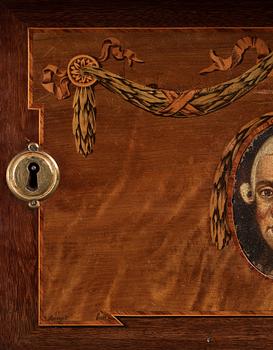
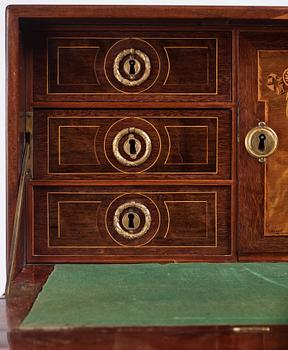
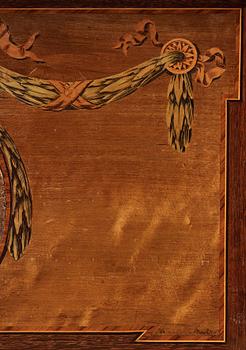
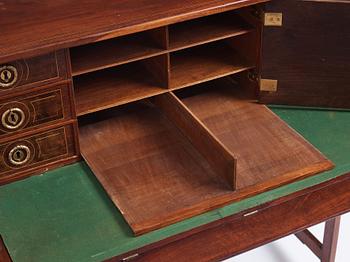
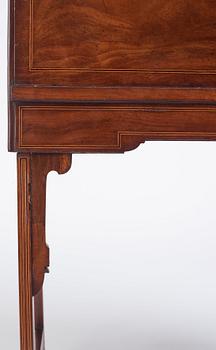
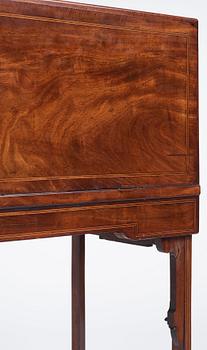
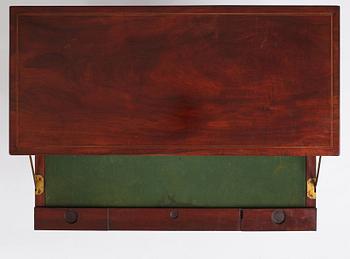
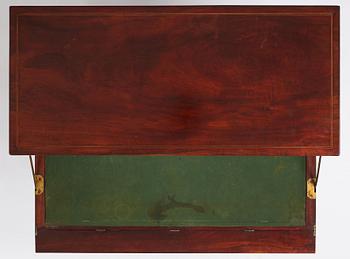
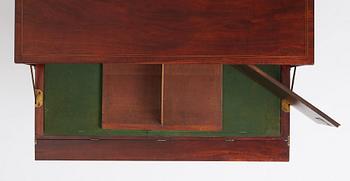
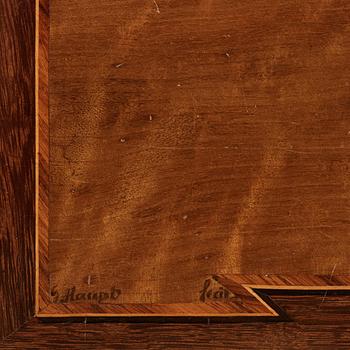
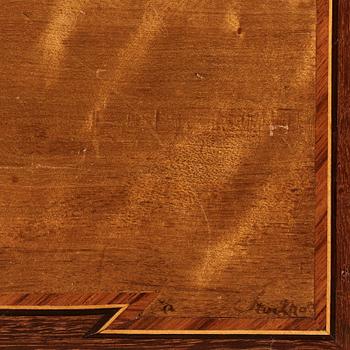
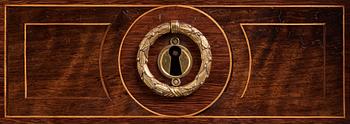
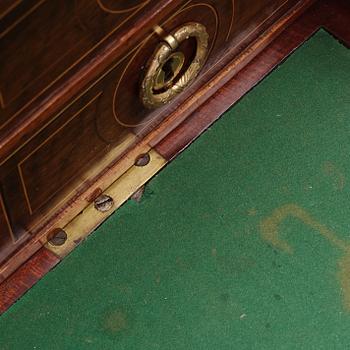
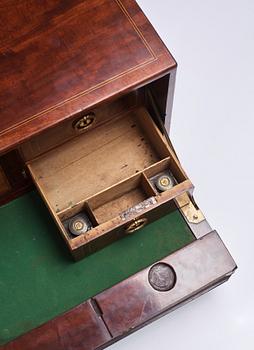
Freestanding on foldable legs. Partly of solid mahogony and veneered with mahogony, birch, rosewood, light and blackened woods. Mounts of gilded brass. With six smal drawers and compartmets behind a door. The folding flap with a flexible reading surface. Signed in the veneer on the small door: "G Haupt fecit à Stockhol".
Height 47 (with legs 104), length 103.5, width 47 cm.
Provenance
Private collection in the U.K
Literature
John Böttiger: "Georg Haupt", 1901, page 123
Marshall Lagerquist: "Georg Haupt, Ebeniste du Roi", Nordiska museets handlingar nr 92, 1979, pages 28-30 & compare nr 13 och 21
Per Falck & Per Westerberg:"Georg Haupt, snickaren som blev legend" in Svenska Turistföreningens årsbok 1987, illustrated page 111.
Lucy Wood: "Georg Haupt and his compatriots in London" i The Journal of The Furniture History Society, 2014, pages 238-275.
More information
Bukowskis has been entrusted to sell a hitherto unknown piece of furniture by Georg Haupt at this autumn’s auction. Being able to present a newly discovered, signed piece of furniture by Sweden’s foremost ébéniste is extremely rare. As it is also a previously unknown model, so it can be considered unique. The fact that the furniture was located in England may explain why it has not been noticed before, despite recent research.
The piece of furniture in question is a travel secretaire with folding legs, a design known from two earlier secretaries by Haupt. These two have the shape of a cylinder secretaire, while the auction secretaire is based on the shape of a writing box, a design not previously known at Haupt. John Böttiger quotes in his book about Haupt an account from 1775 where Haupt repaired a “travel table” also called “Rese skrifschatoll. What this piece of furniture looked like has not been known, but the auction’s travel secretaire indicates what the model may have looked like.
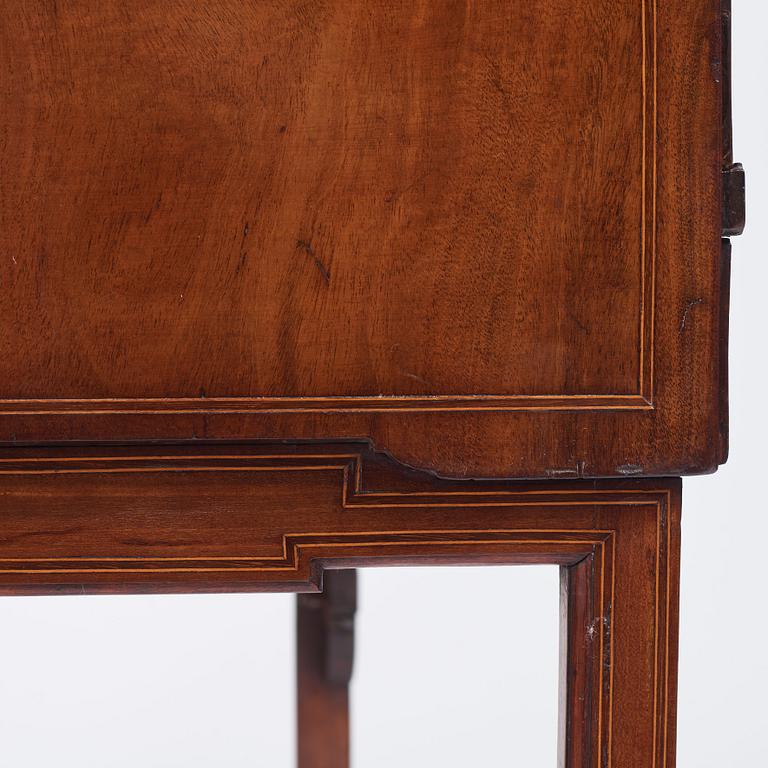
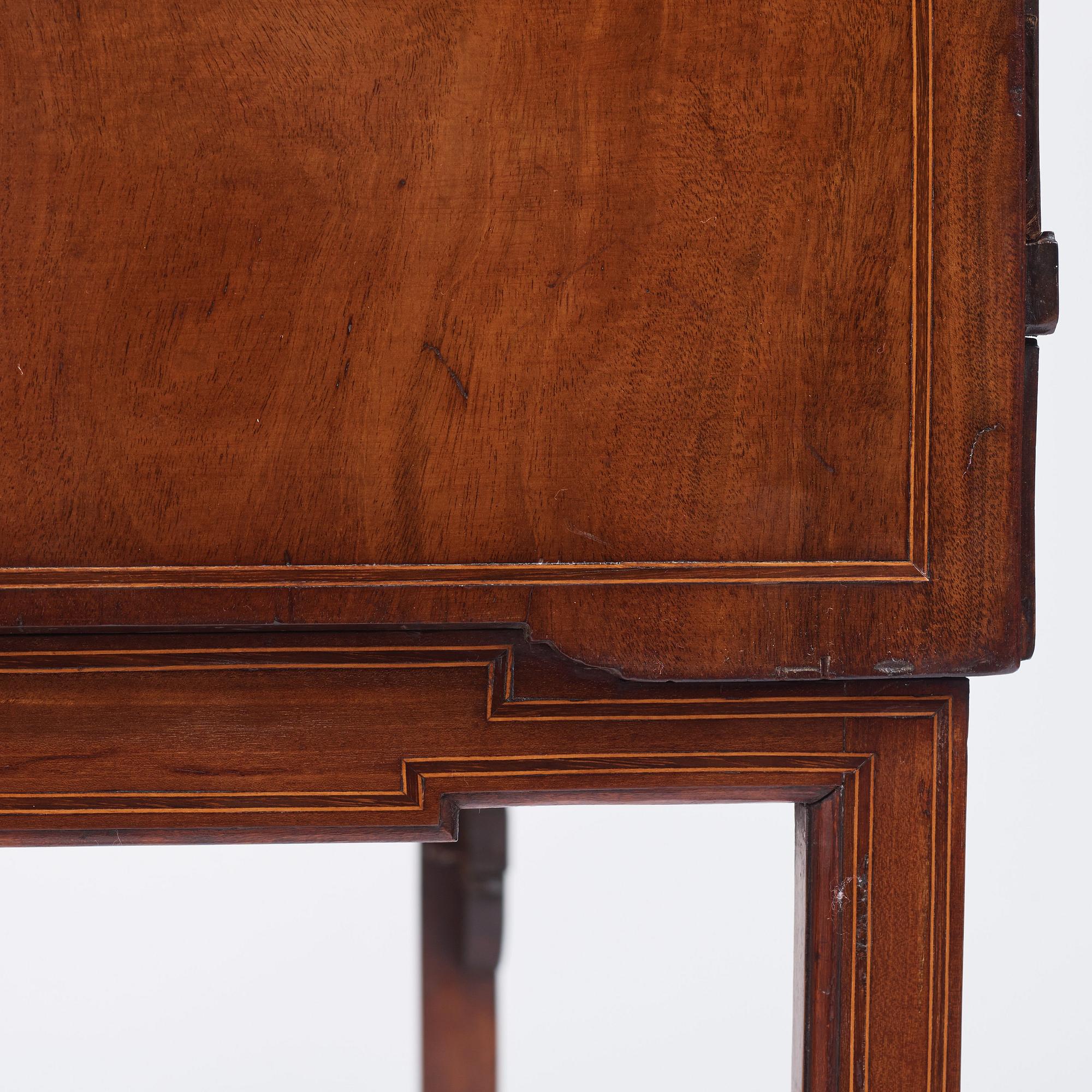
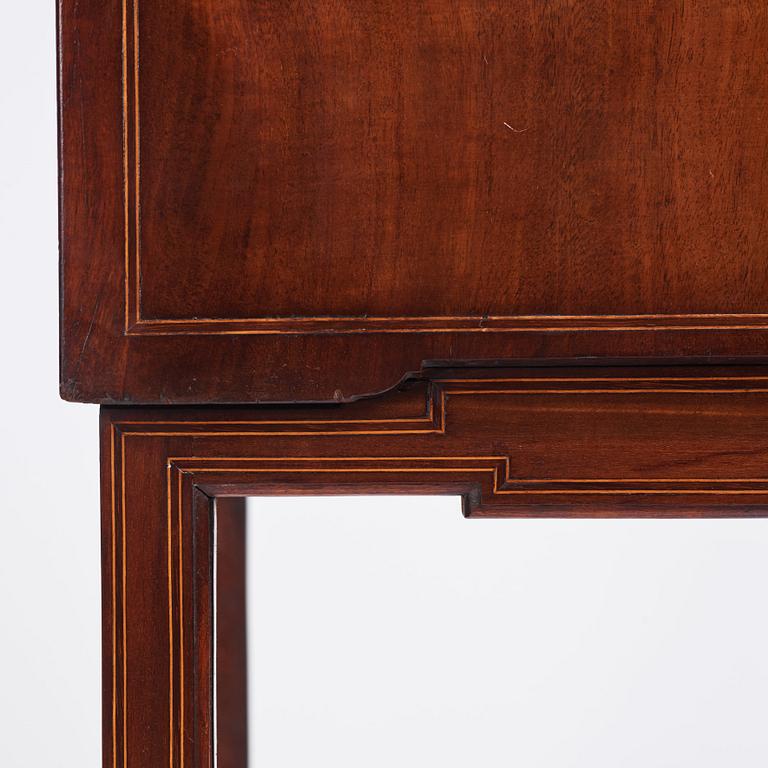
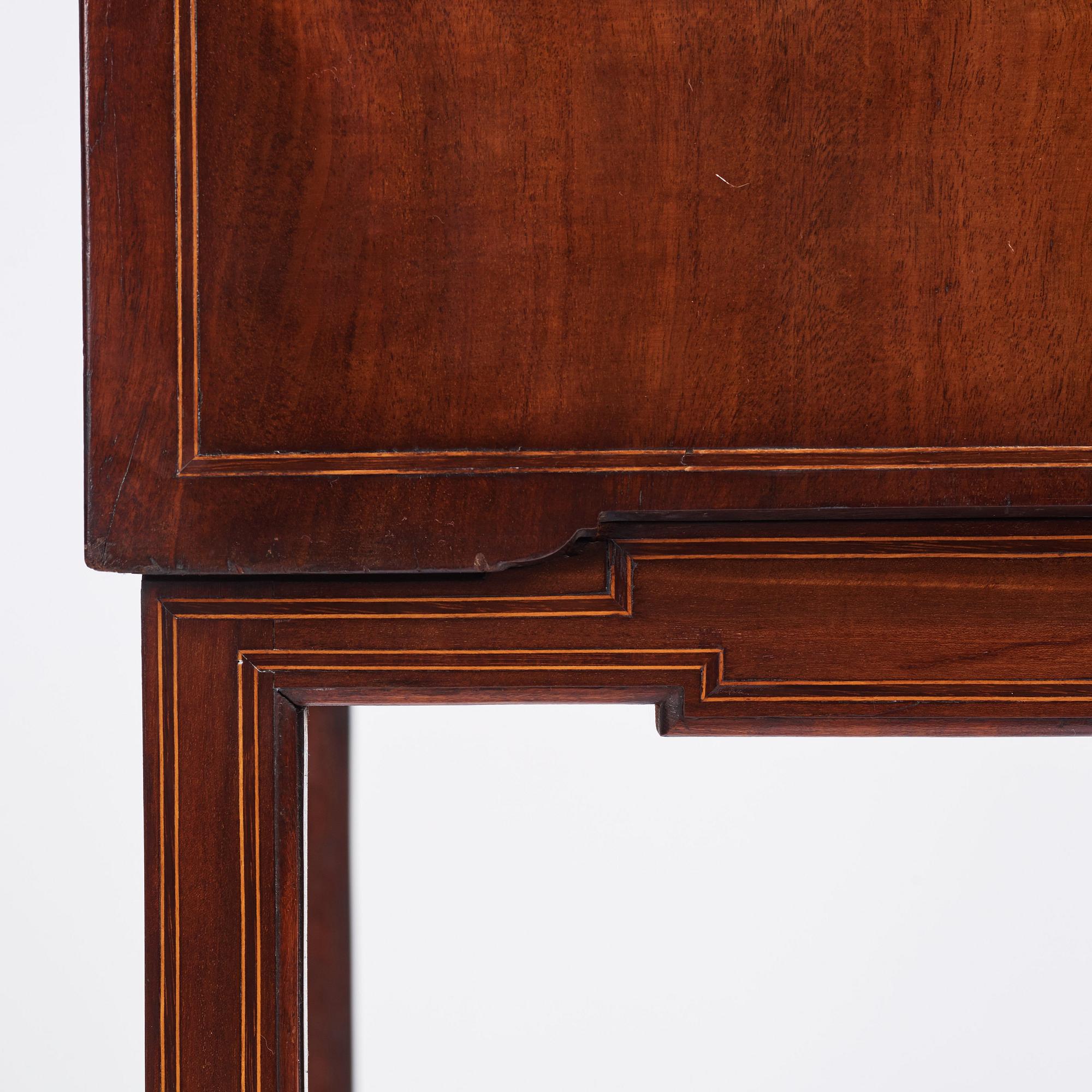
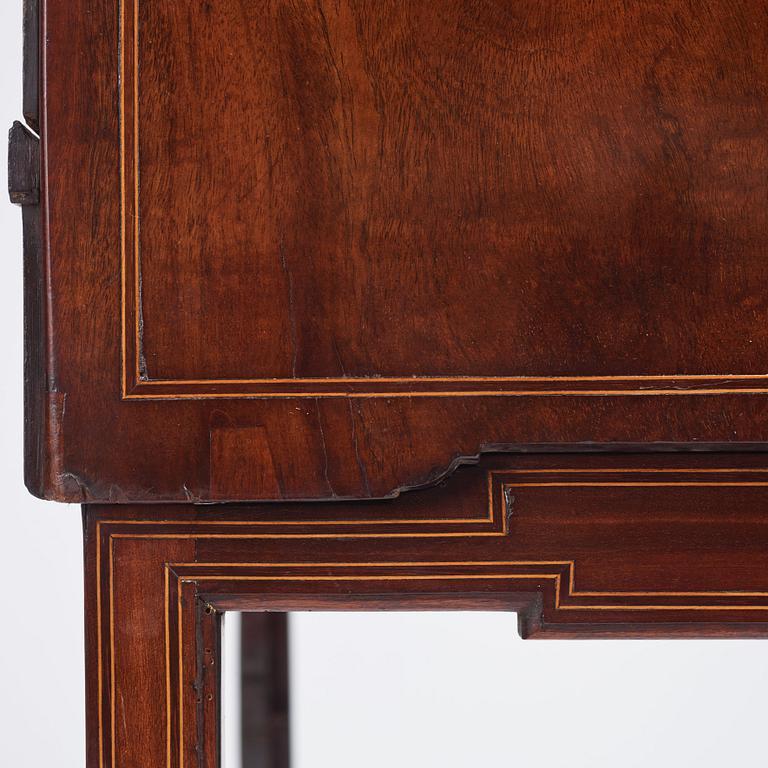
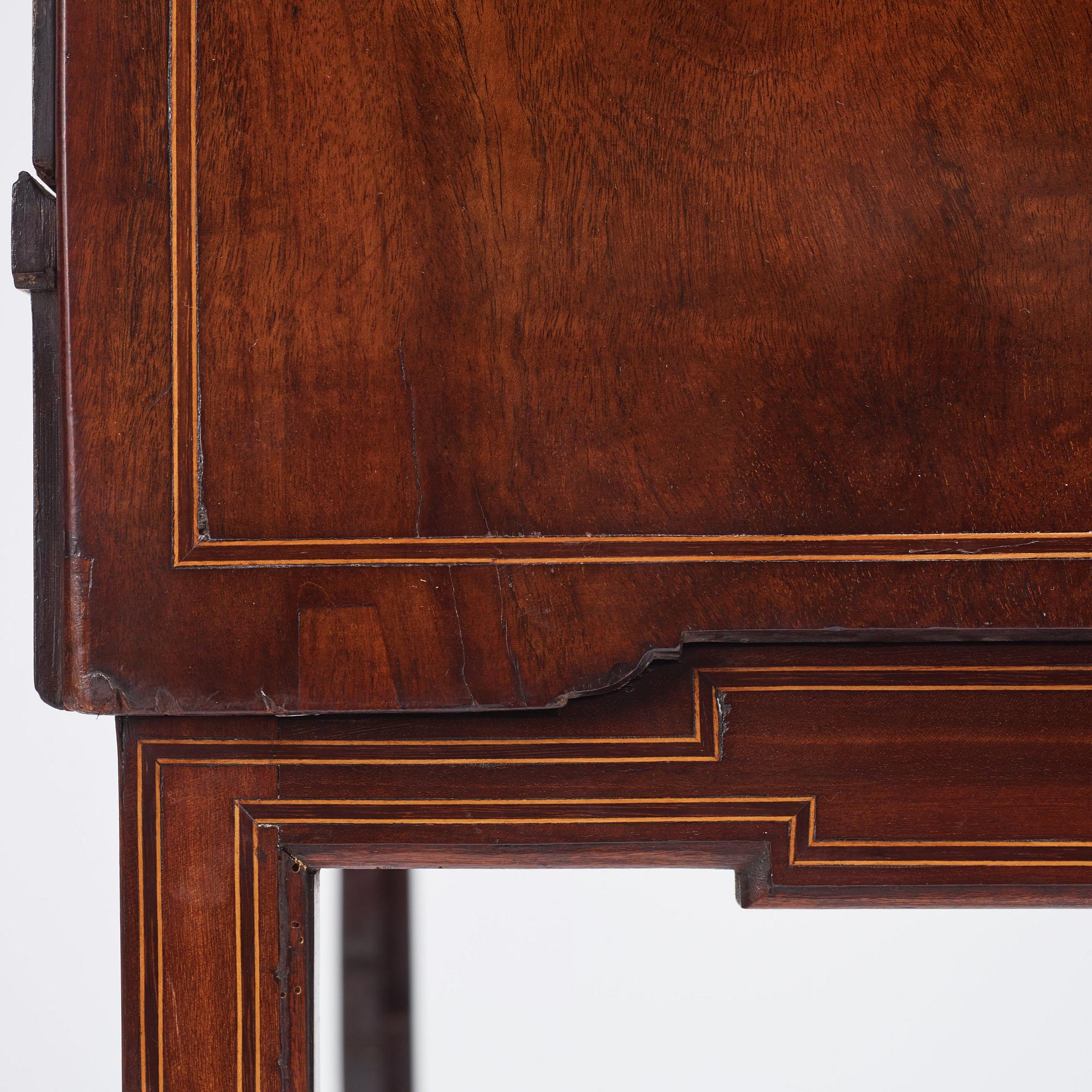
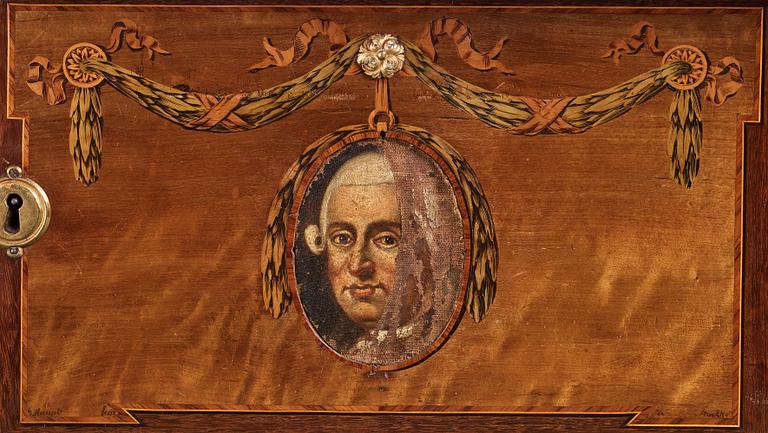
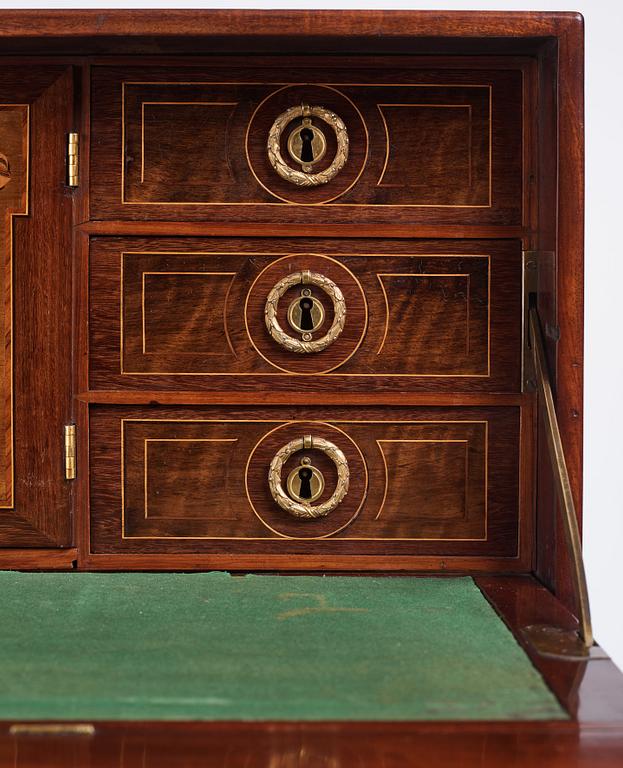
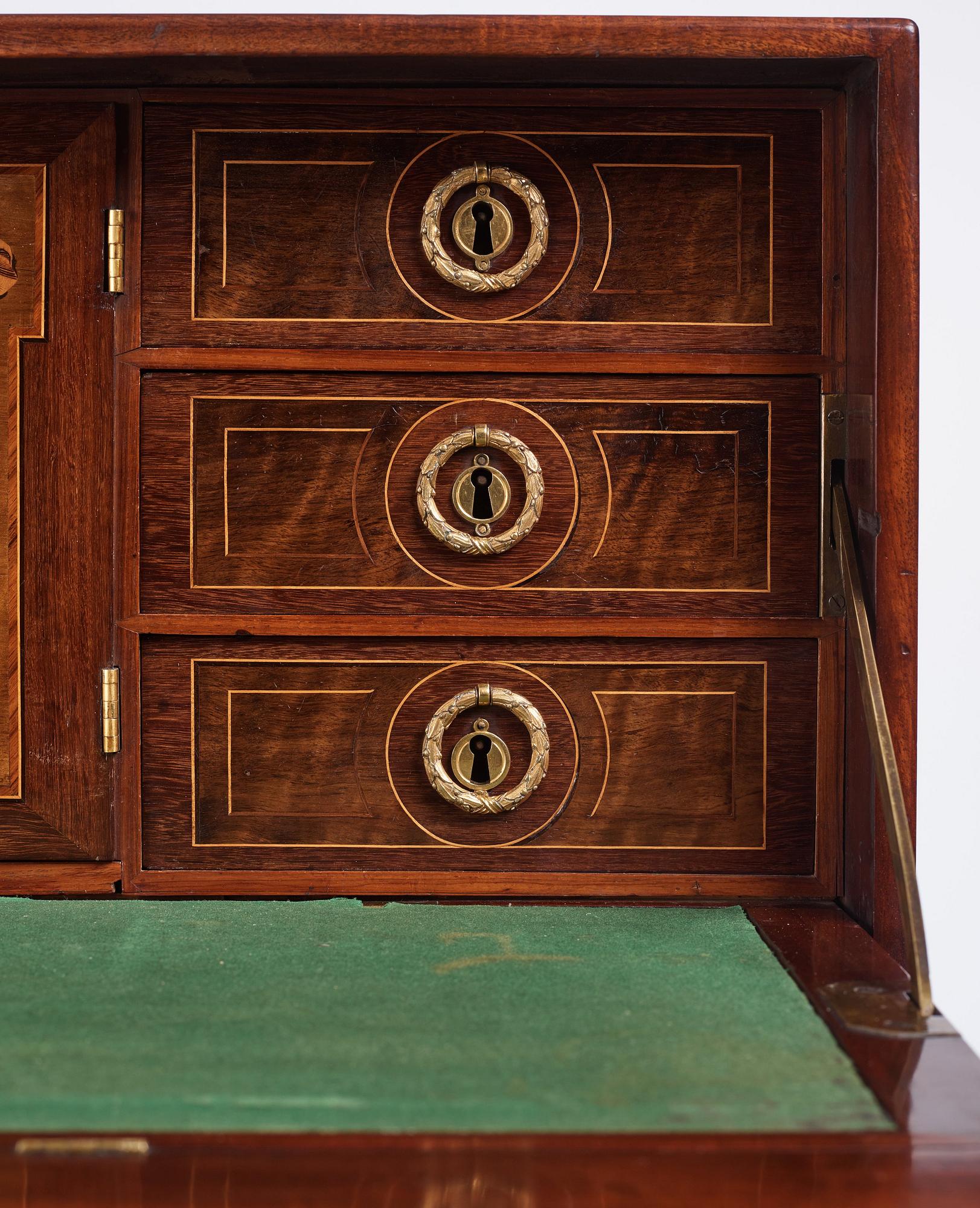
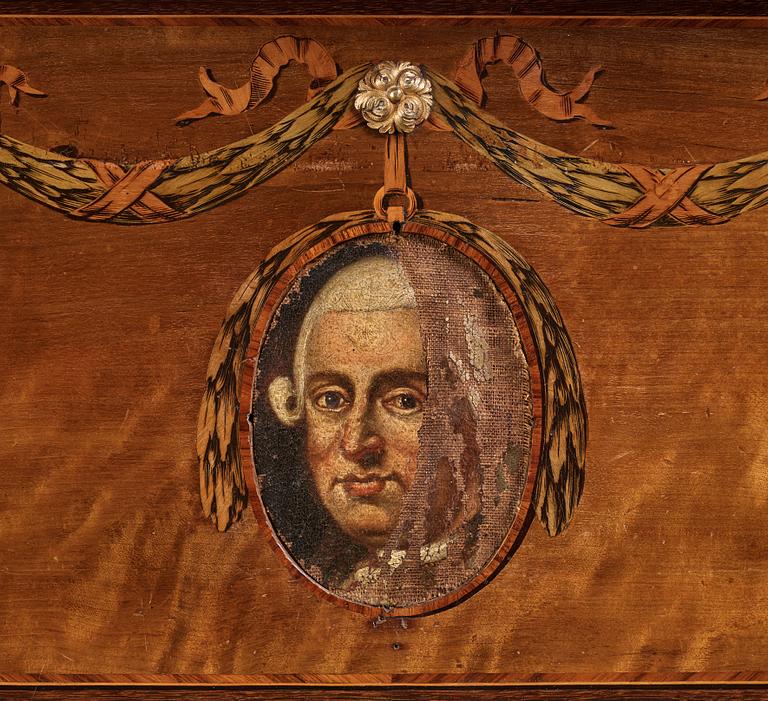
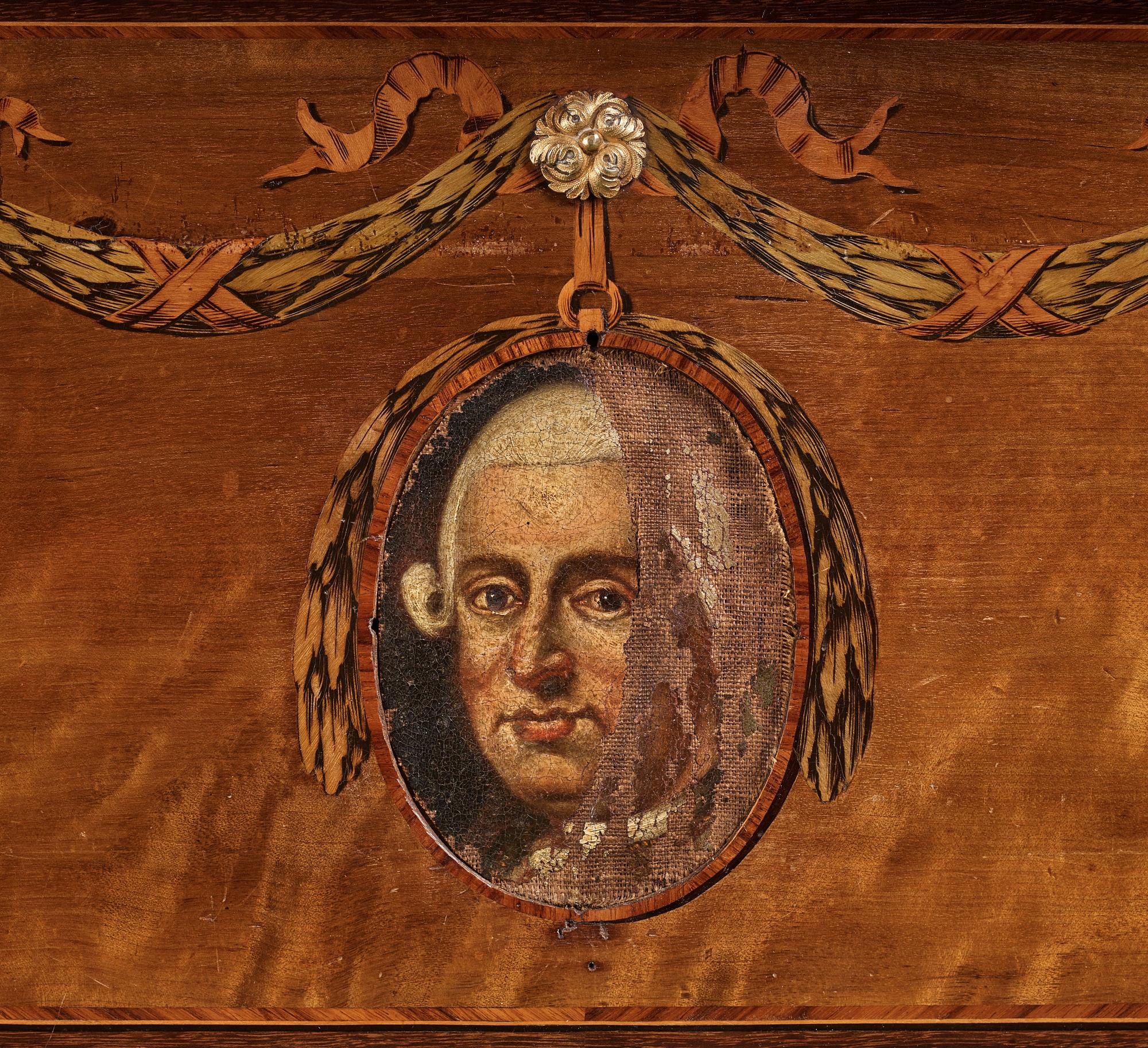
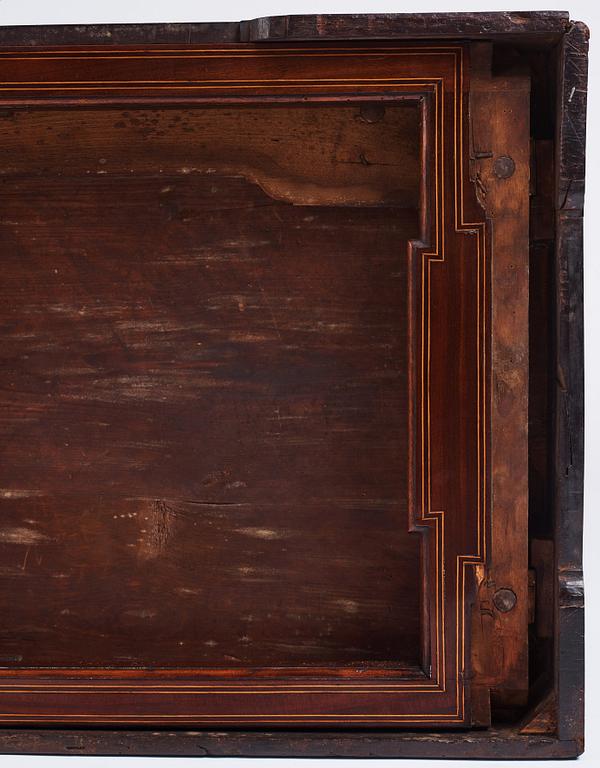
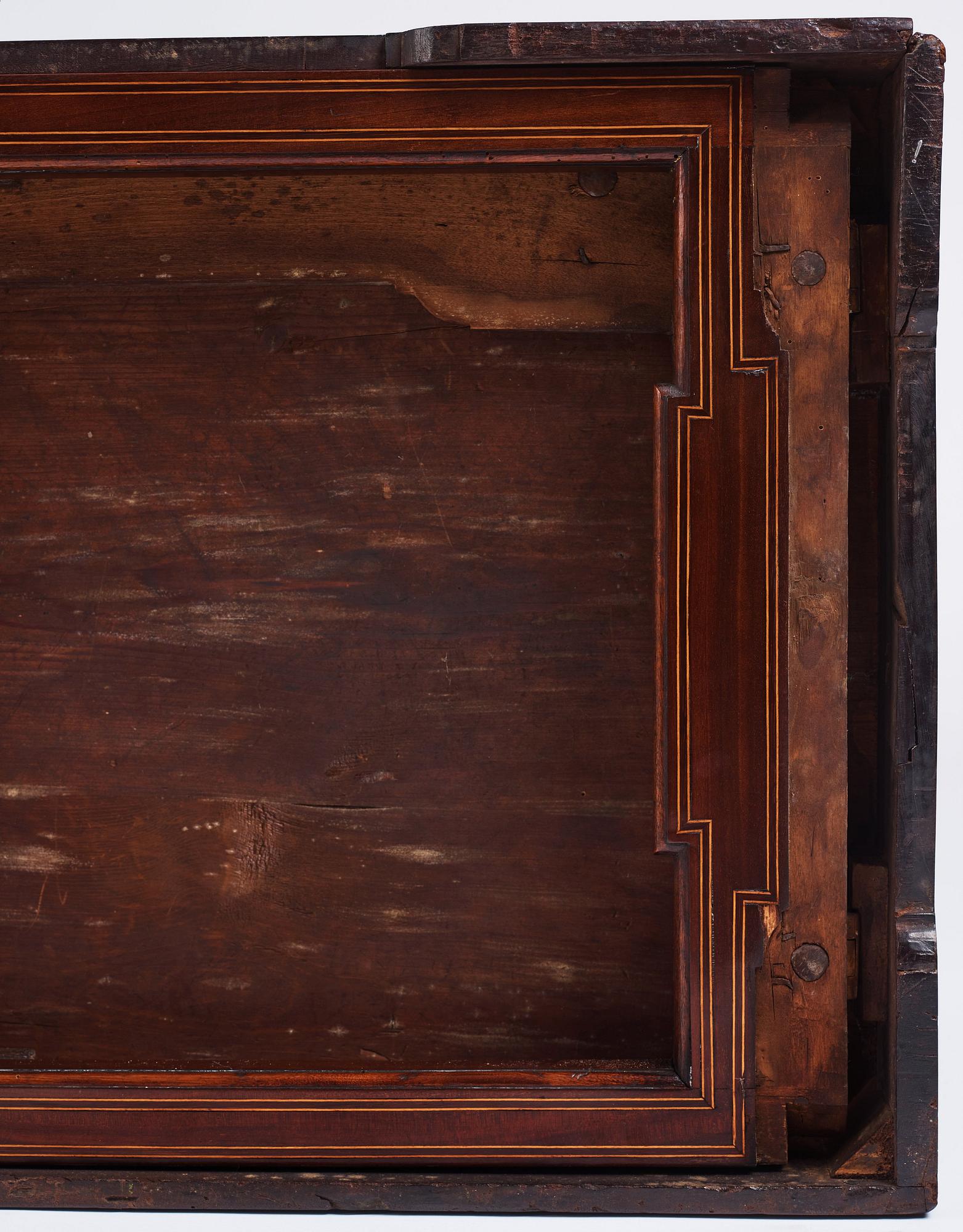
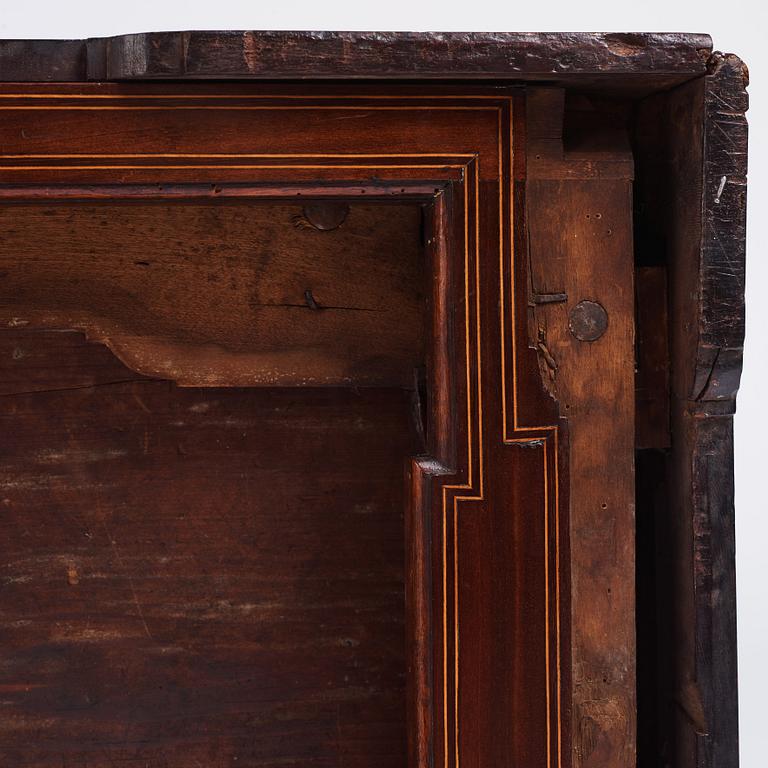
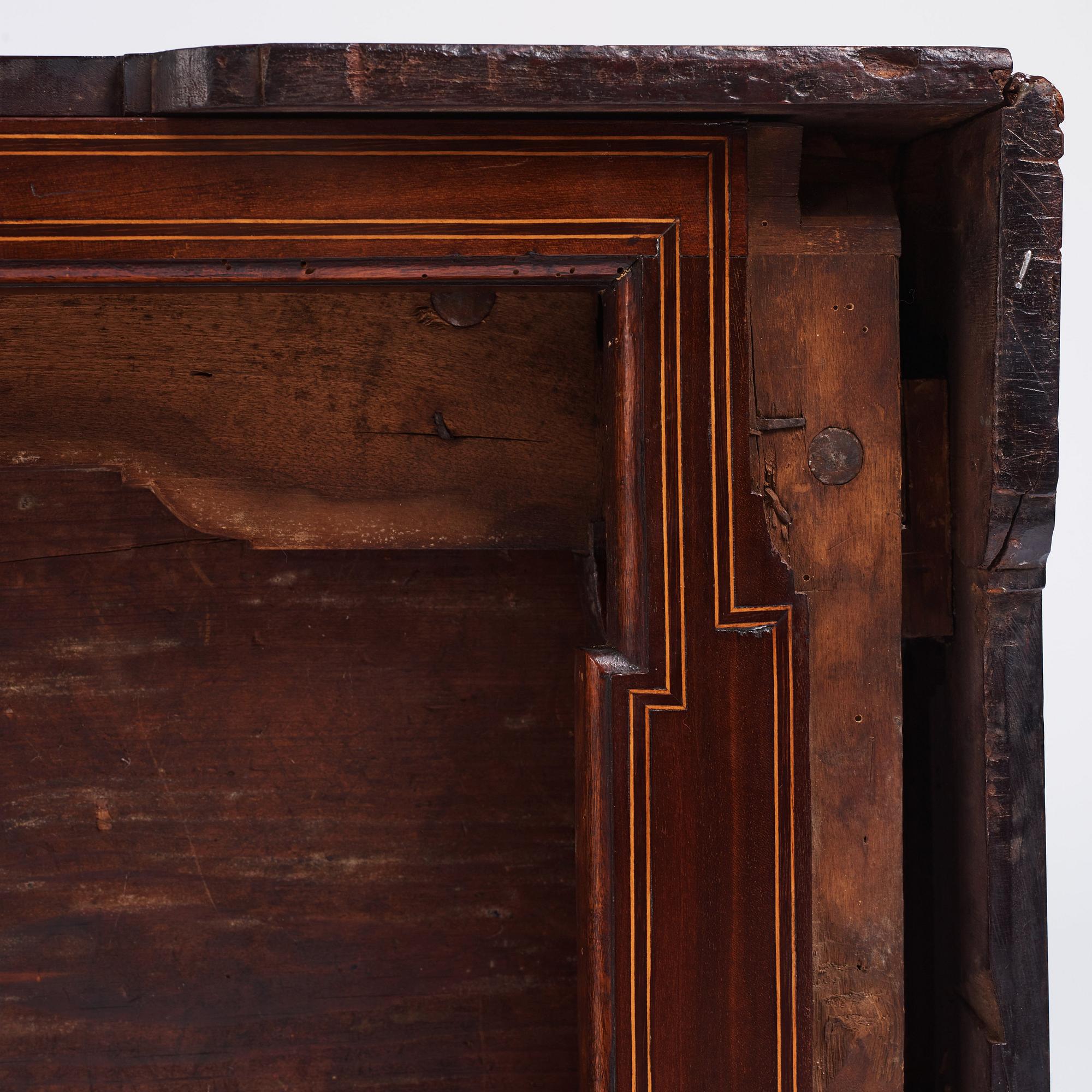
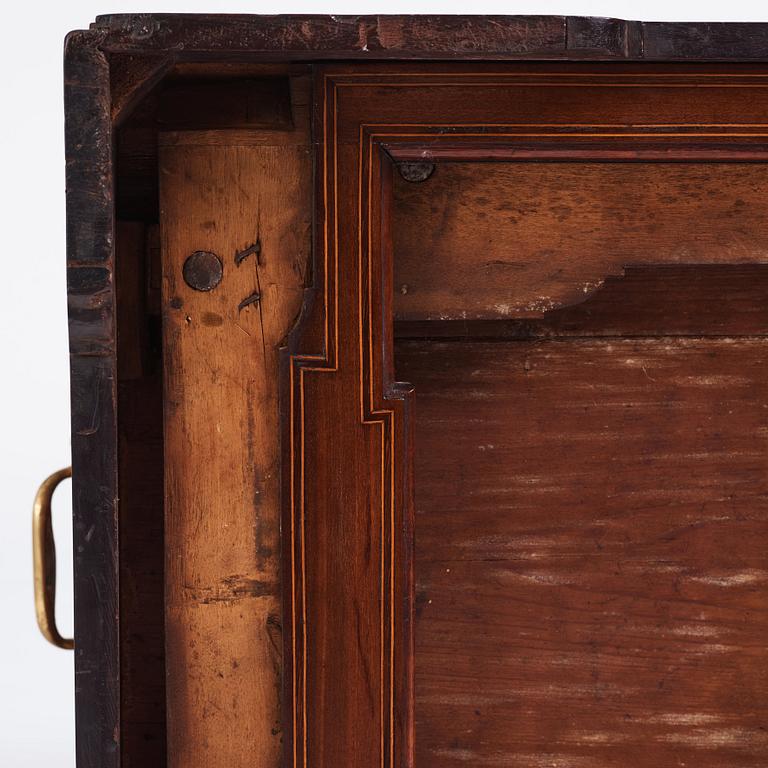
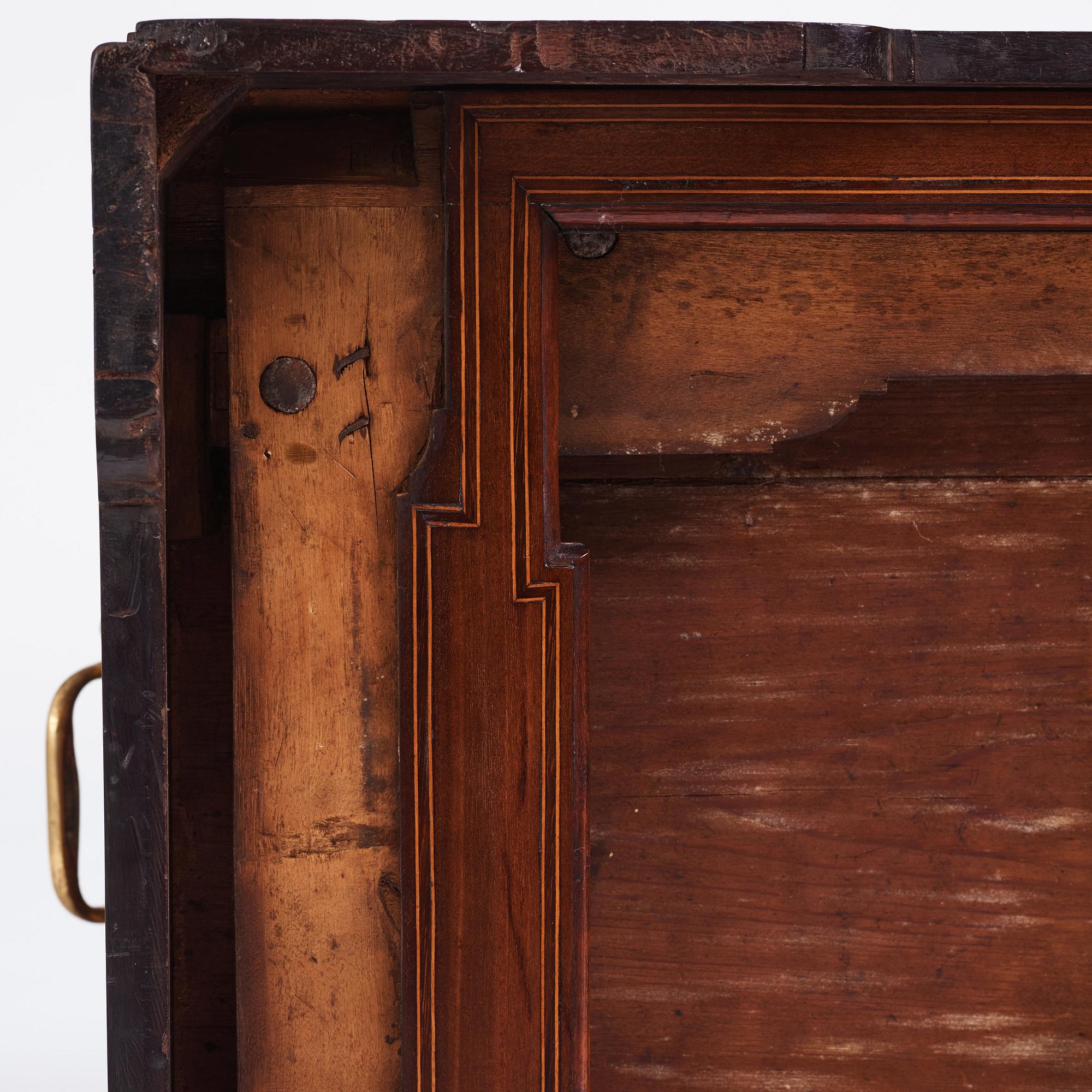
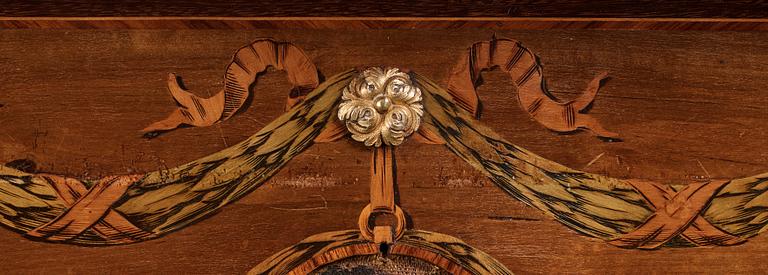
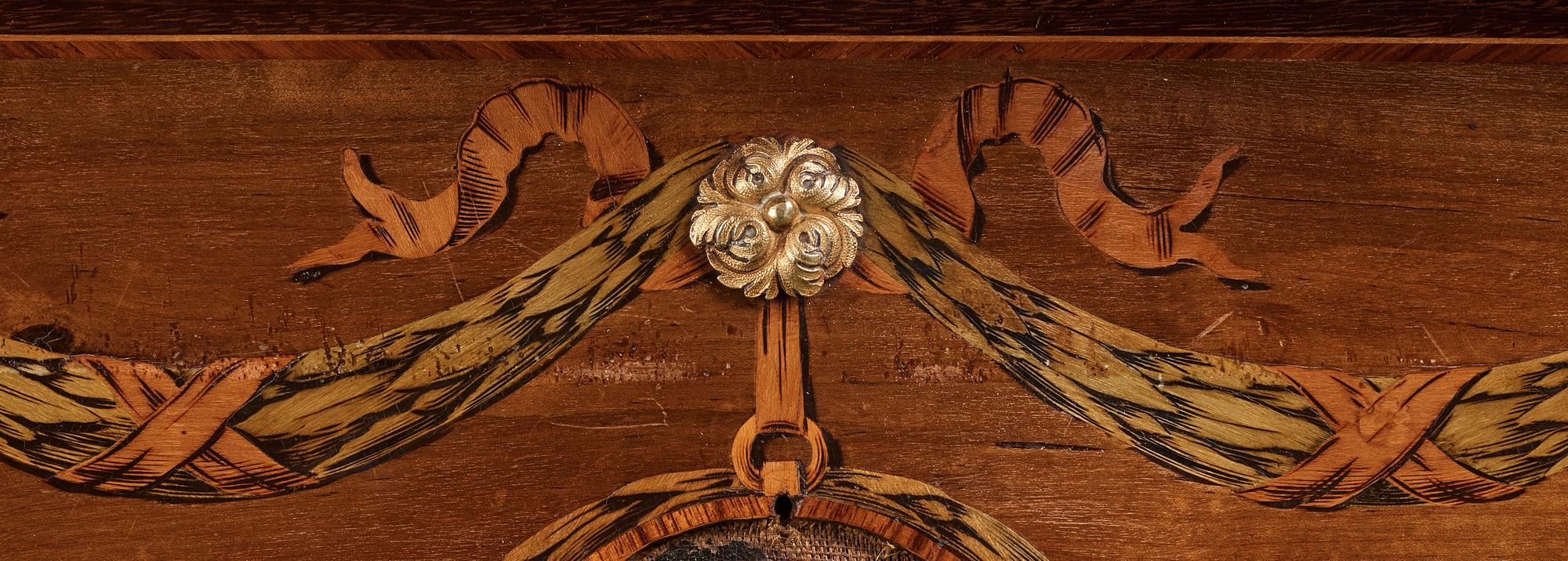
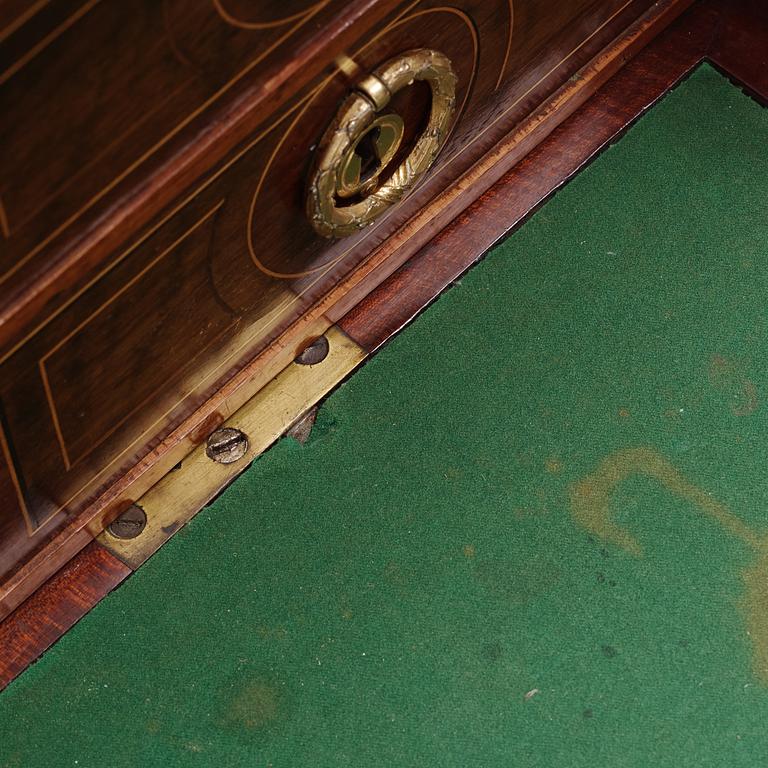
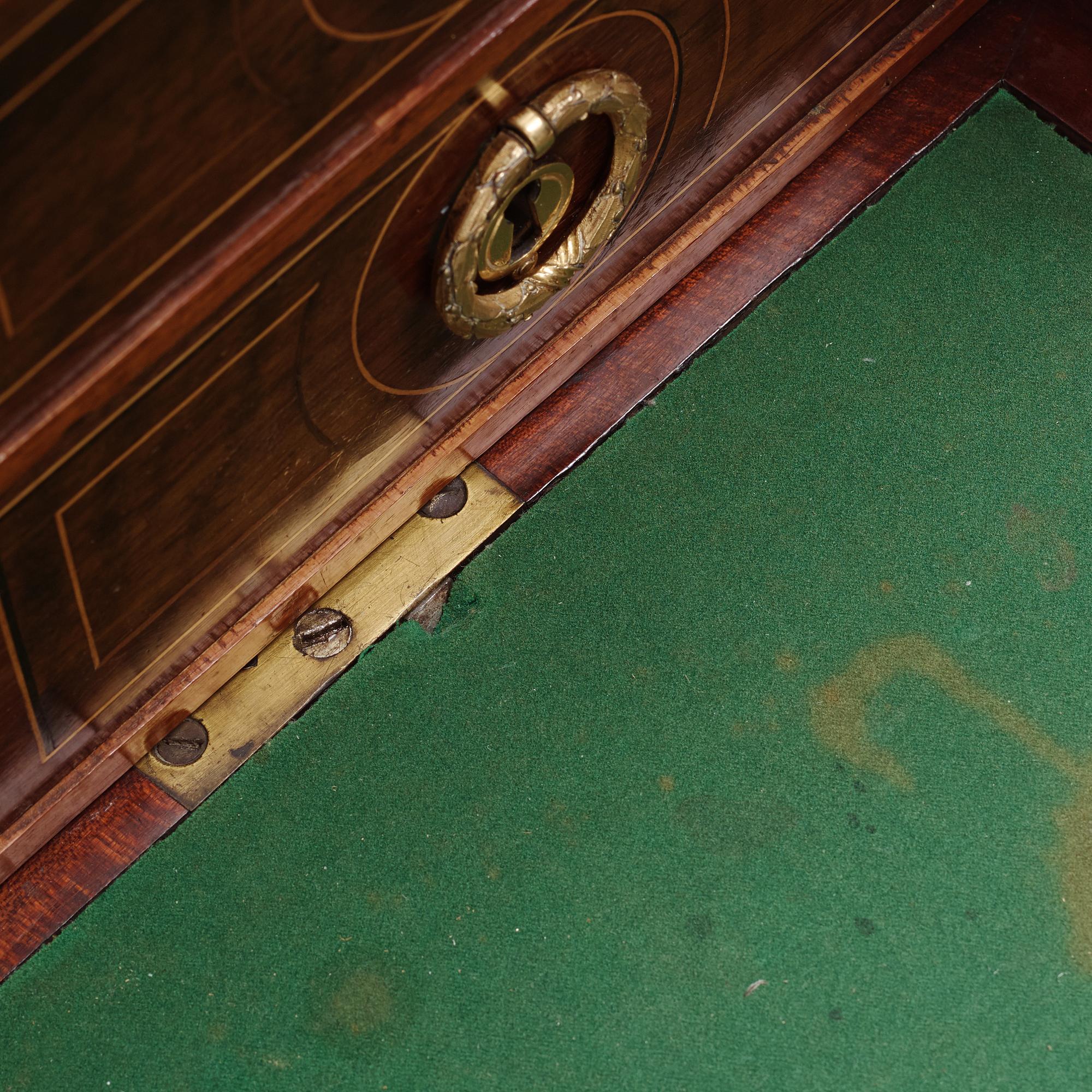
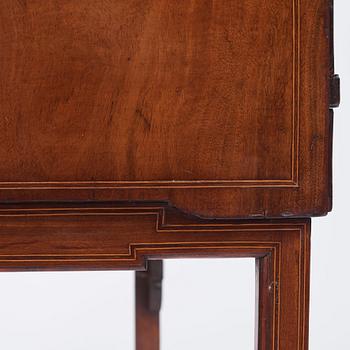
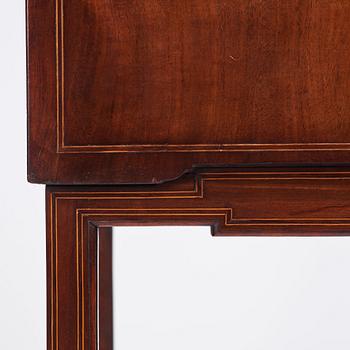
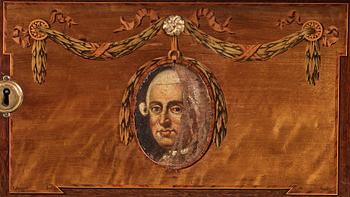
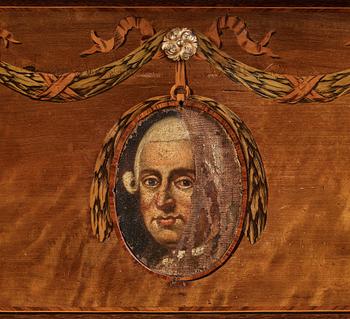
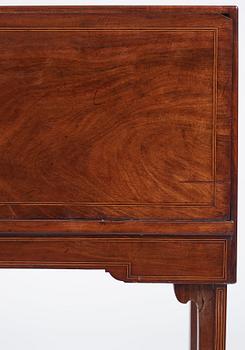
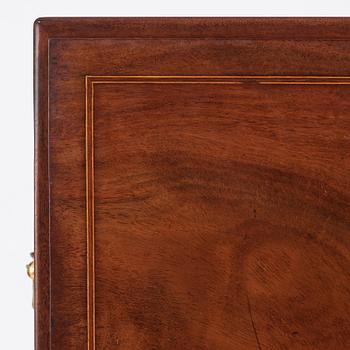
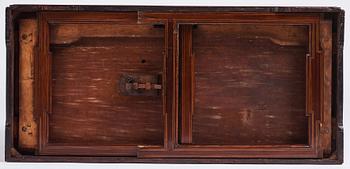
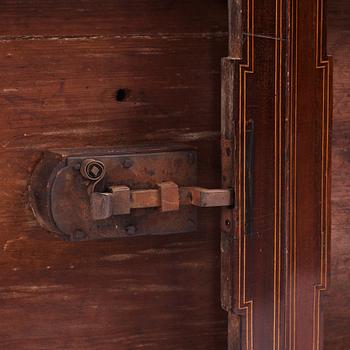
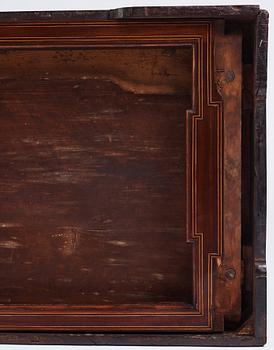
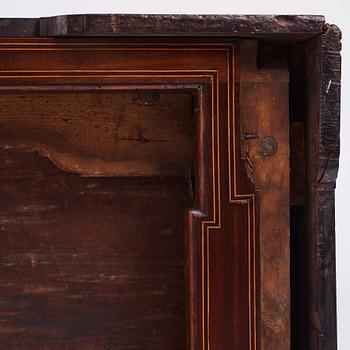
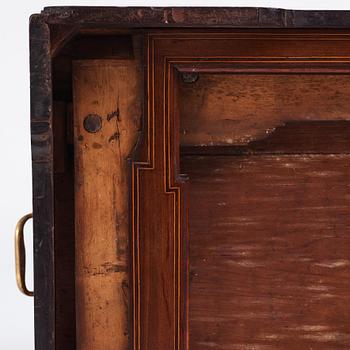
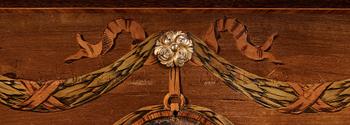
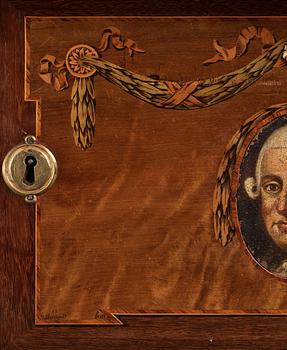
The secretaire is deceptively simple on the outside and richly decorated on the inside, like a cabinet. This contrasts with what one generally finds on Haupt´s secretaries, where the rich inlay on the outside contrasts with the usually simple drawer interiors, sometimes completely undecorated. The use of partly in solid mahogany with line incrustations, shows influences from Haupt’s years in England. In the profiling of the base, the fitting of the folding legs and the rich inlaid decoration of the interior, Haupt shows his unparalleled craftsmanship throughout. One recognizes his elegant laurel swag with a medallion and the use of shading to create a three-dimensional effect. In addition, the furniture is equipped with refinements such as hidden drawers and a reading desk, the folding mechanism of which is concealed behind “false screws”.
An interesting and unique detail is the design of the drawers' refined decor of different fields with shading. Alongside a shadow effect created by a stripe of blackened wood, as Haupt usually does, he has created fields with a depth effect only through inlaid light and dark veins. This is a design previously only seen on the drawers in the interior of Georg Haupt's famous mineral cabinet from 1773, gifted by King Gustav III to the Duke of Condé. Both furniture's drawers have flamed bottom veneer, which underlines the similarities.
What stands out in the decor is the medallion's inserted male portrait, an oil painting on canvas. There are no clues about who the portrait represents. Is it the customer, or perhaps the furniture was a gift, and it represents the recipient? Trying to date the secretaire can be a step along the way. With some exceptions, all the furniture where Haupt has visibly signed in the marquetry is early in his production, the first part of the 1770s; in addition to the Condé cabinet, for example, the page bed at Drottningholm, the commode from Svindersvik at the Nordic Museum and the recently identified secretaire at Gripsholm. The English features also speak for an early date. The English court architect William Chambers, born in Gothenburg, whom Haupt got to know in London and made a table for, had close contacts with Sweden through his family and assignments. One possibility is that the travel secretaire was made for someone in England. How it relates to the provenance, future research can hopefully provide an answer. For the time being, we must content ourselves with the fact that we can now add a valuable addition to Georg Haupt's well-known oeuvre.
For condition report contact specialist

Others have also viewed