


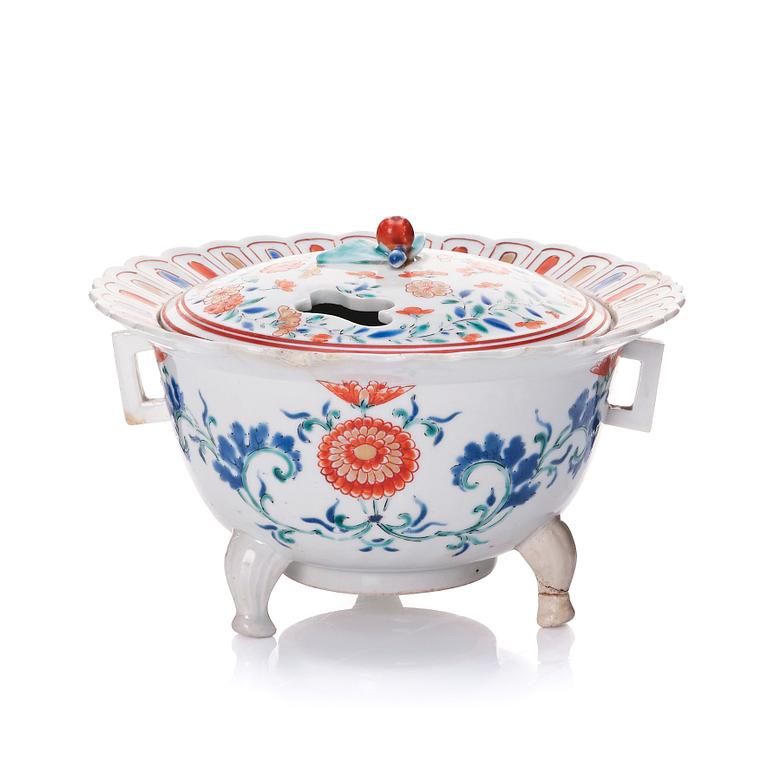
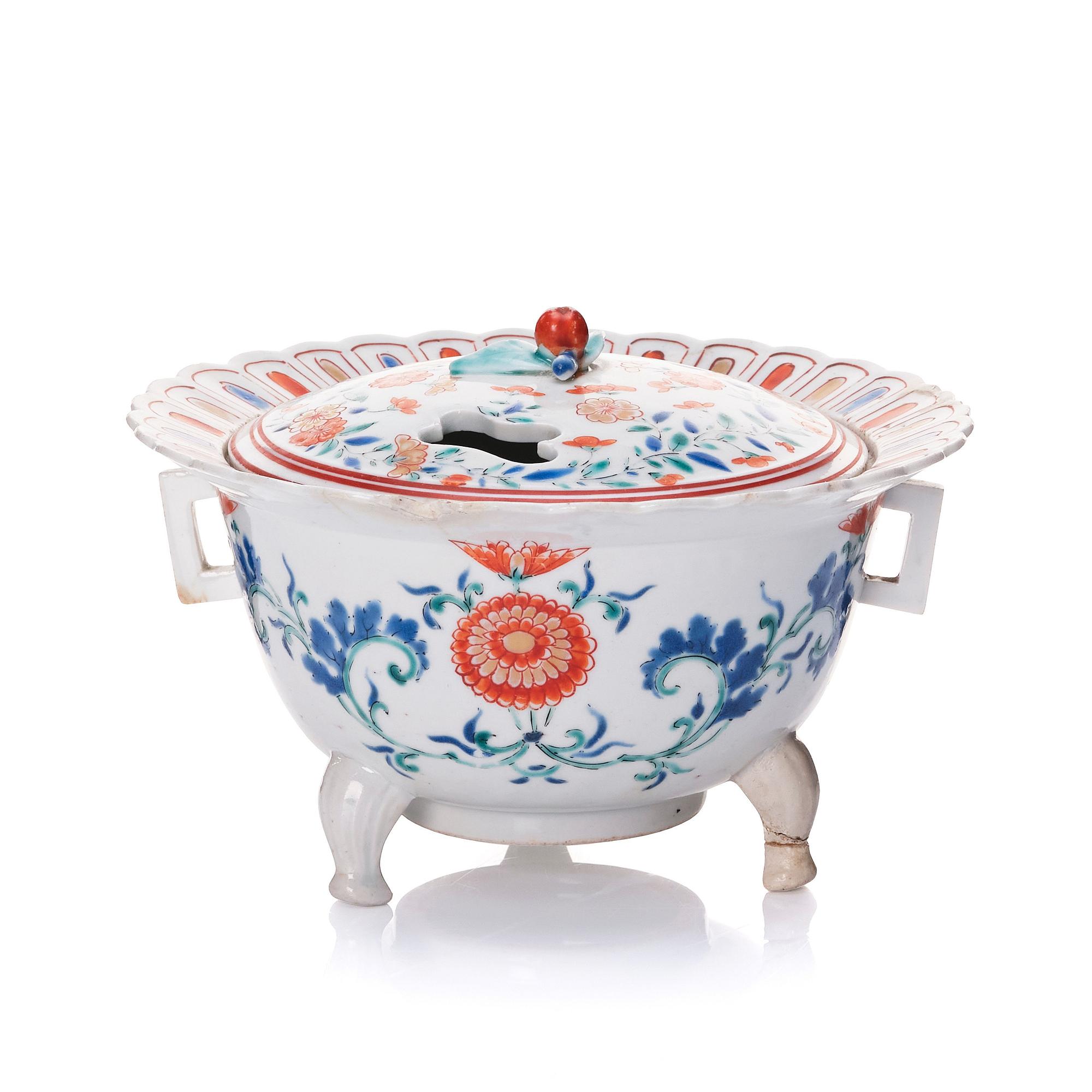
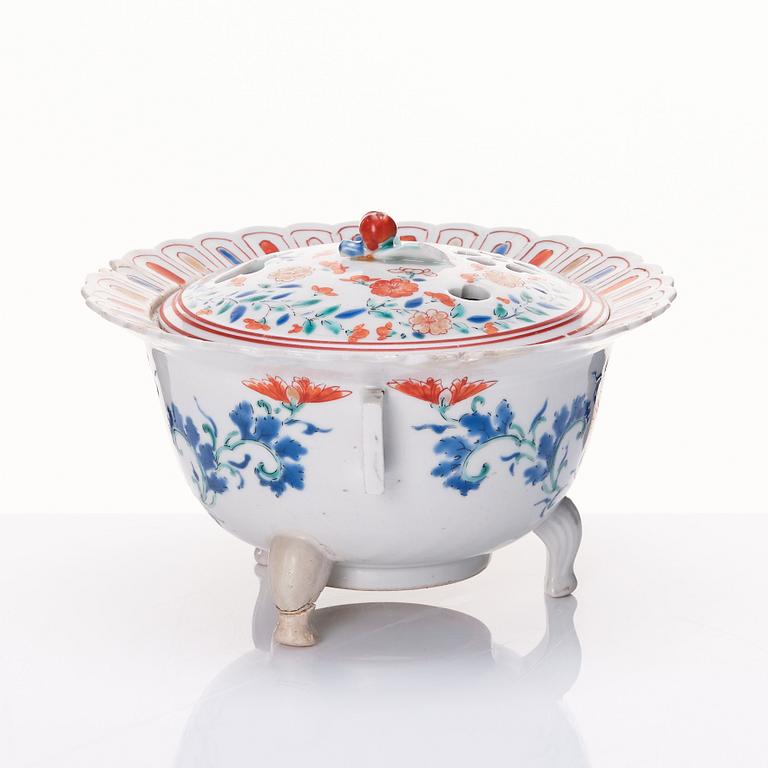
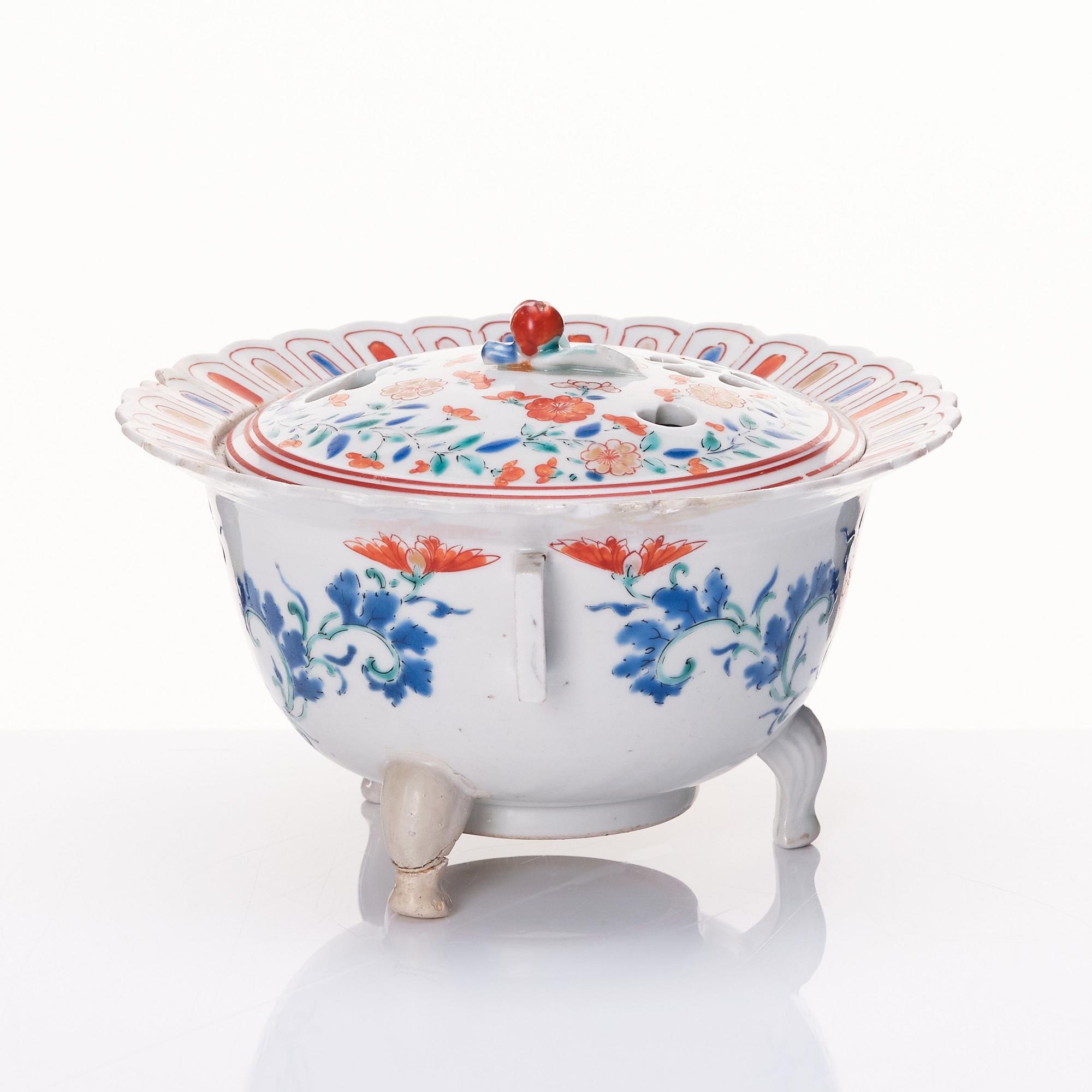
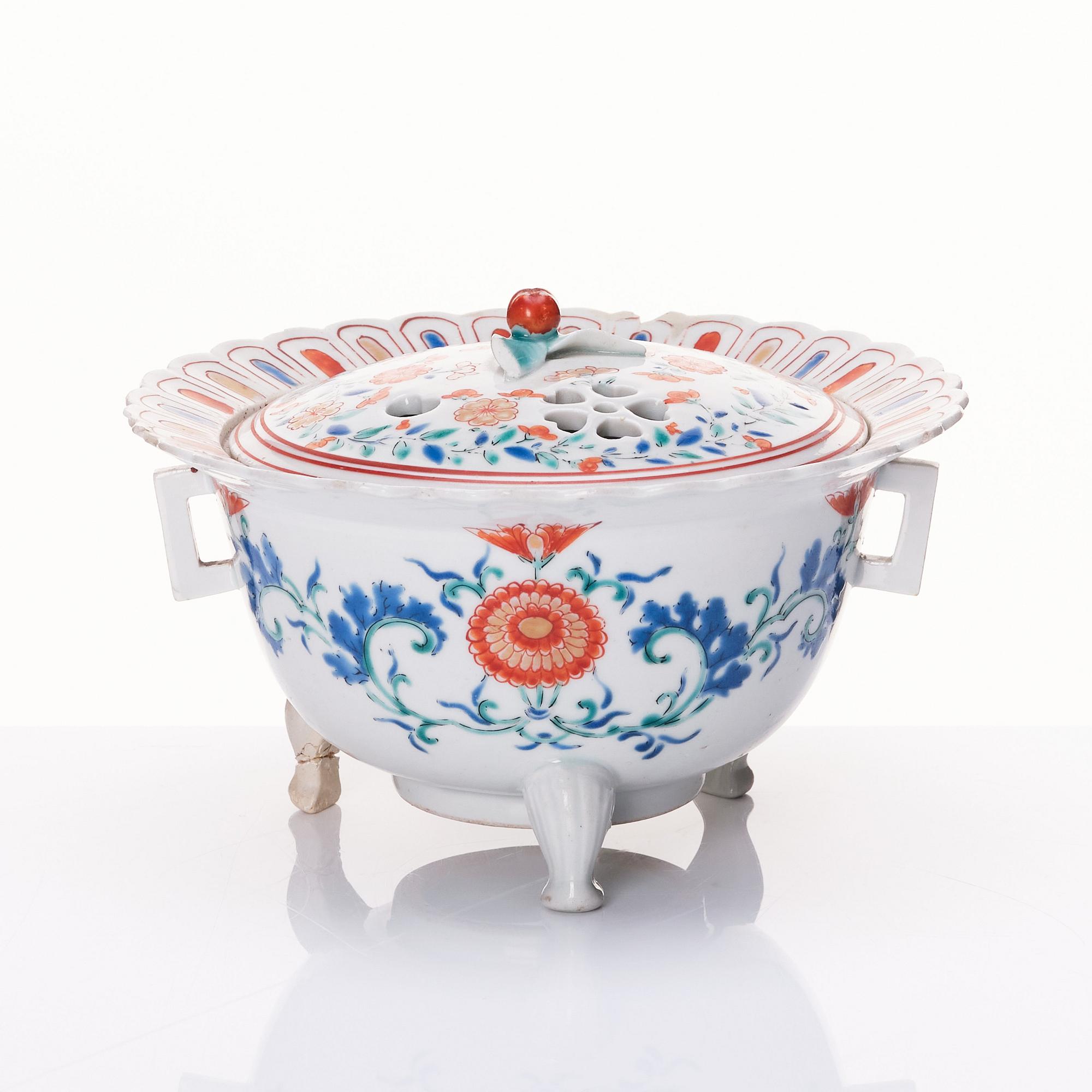
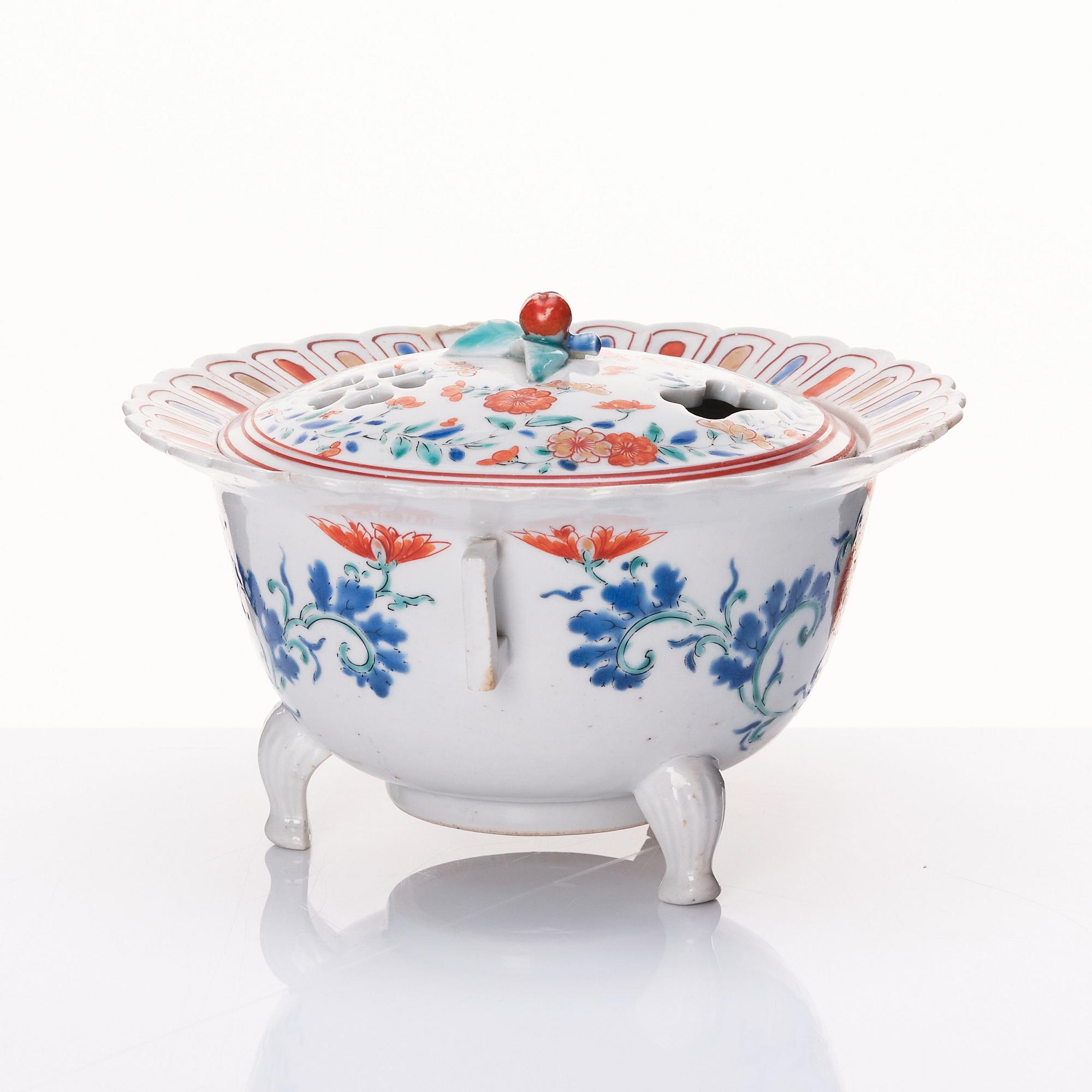
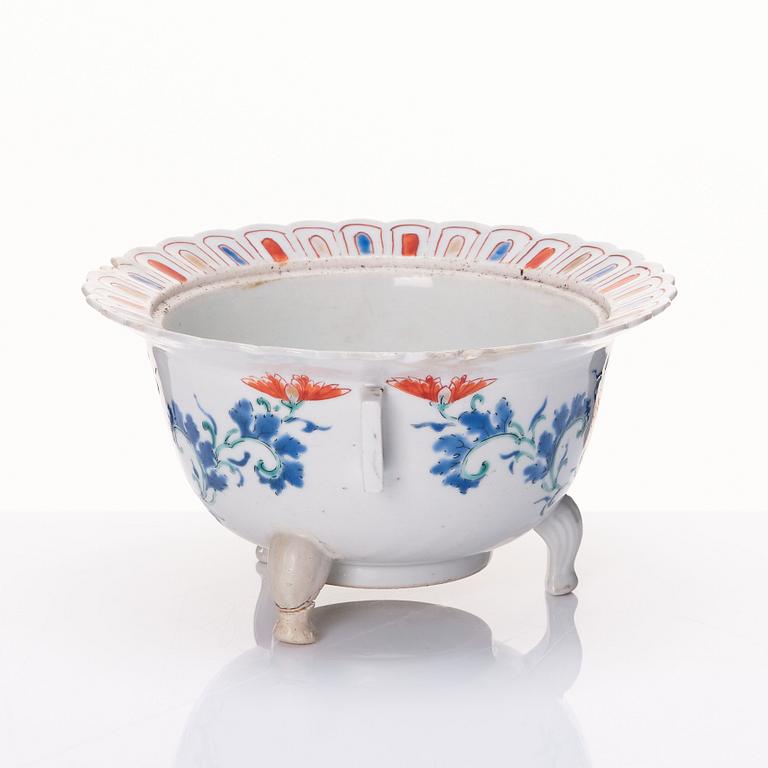
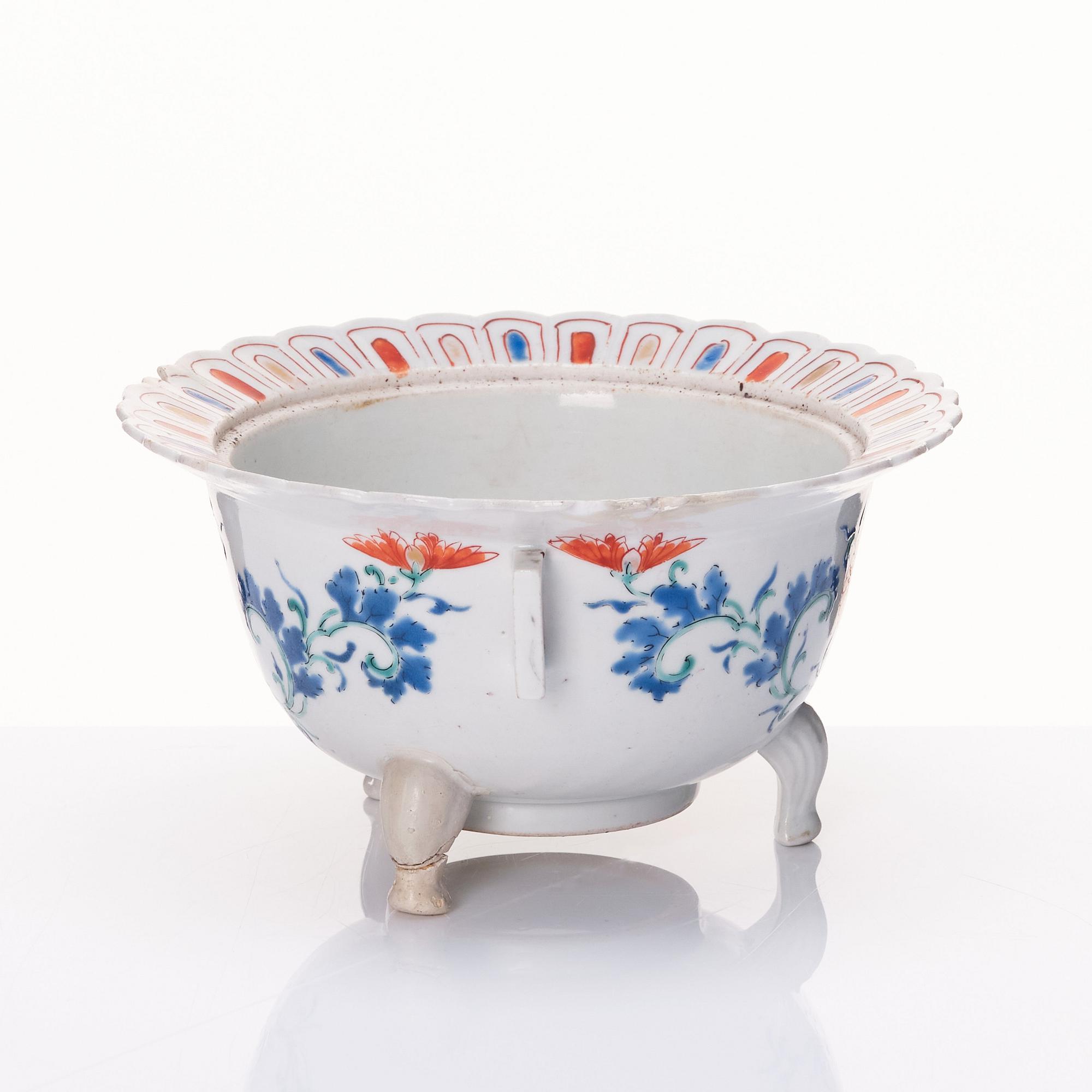
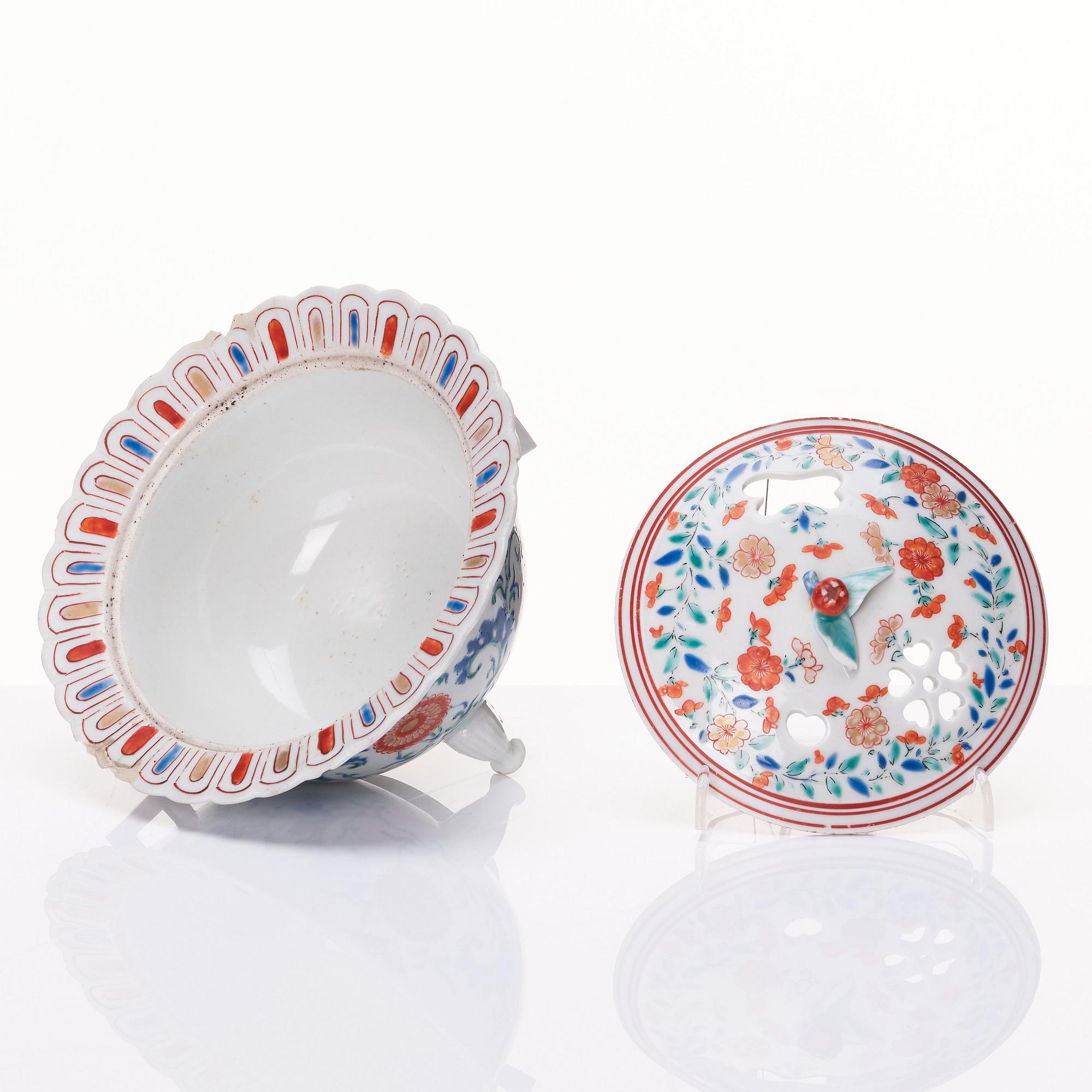
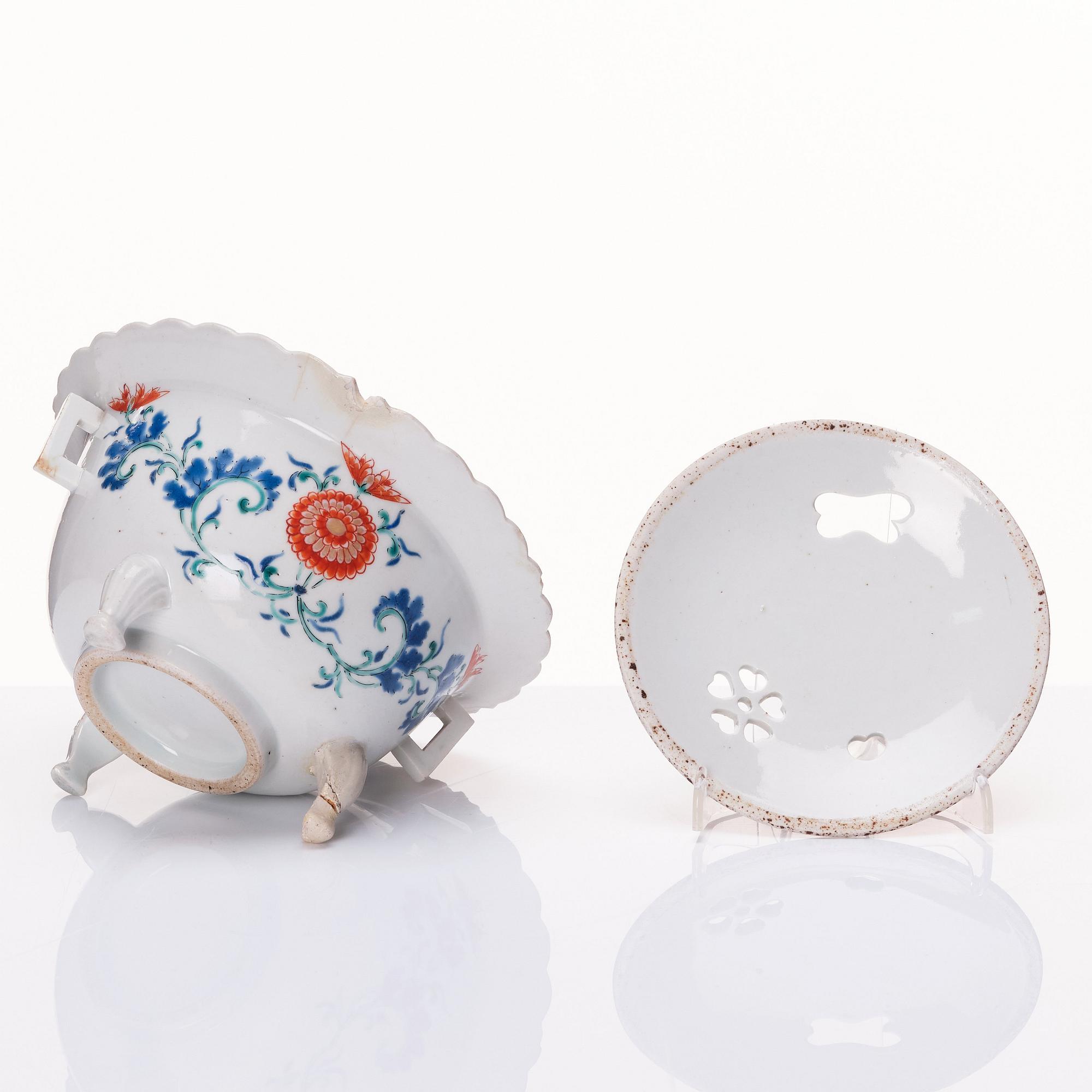
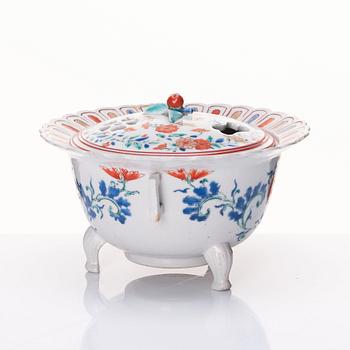
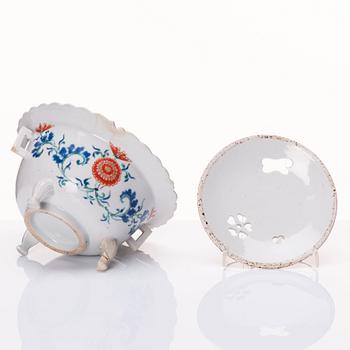
A tripod with handles and a pierced cover. Decorated with flowers. Finial in the shape of a fruit. Height 11.5 cm.
Damages/repairs.
Exhibitions
Compare a similar incense burner (koro)
late 17th century, in the Metropolitan Museum, New York, from the Hans Syz Collection, Gift of Stephan B. Syz and John D. Syz, 1995. Accession Number: 1995.268.114a, b.
More information
The Dr. Syz collection in the Metropolitan Museum chart the migration of models and patterns from East to West. Documenting a continuous process of influence and adaptation, these pieces provide a discriminating review of the nuances of stylistic change resulting from three centuries of trade.
Among the most telling comparisons is that of a Japanese incense burner (koro) and its Viennese counterpart. The Japanese model, finely enameled in a palette of light coral, green, and blue in the kakiemon style of late-seventeenth-century Japanese porcelain, is known to have been exported to Europe, as Augustus the Strong, elector of Saxony, acquired an example in 1723. Interesting is that while no records are known to survive from Du Paquier's factory, it is likely that the koro reached Vienna, as it had Dresden, through the intermediacy of a merchant. In Vienna Du Paquier boldly converted the Japanese form to a European one with new proportions, Baroque mask feet, European pastoral scenes.
For condition report contact specialist








Others have also viewed


