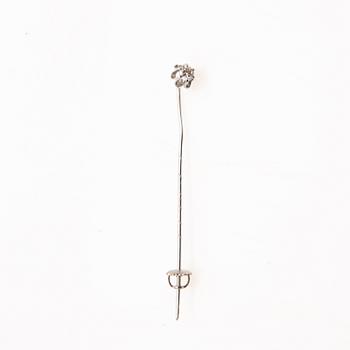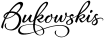
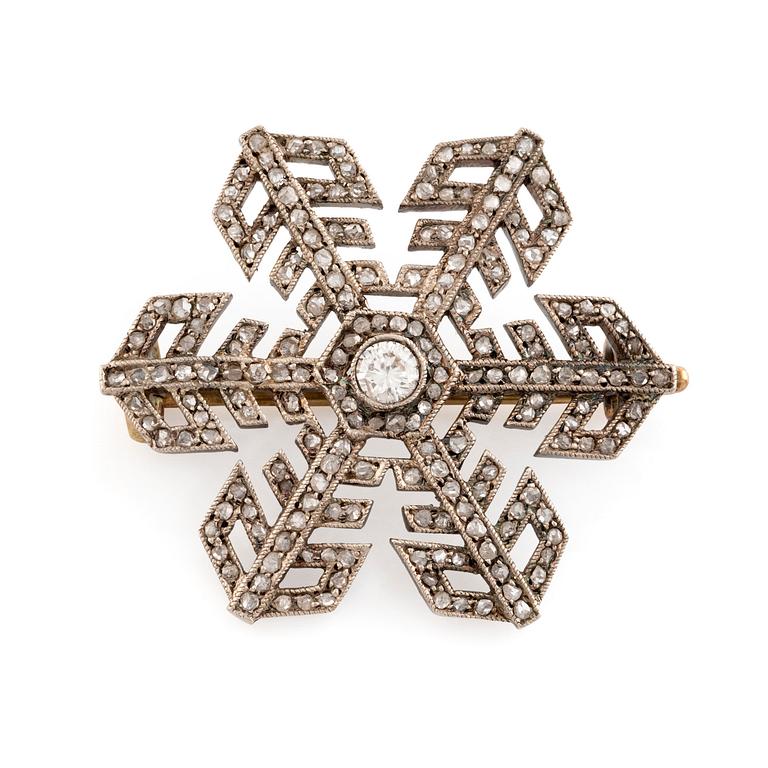
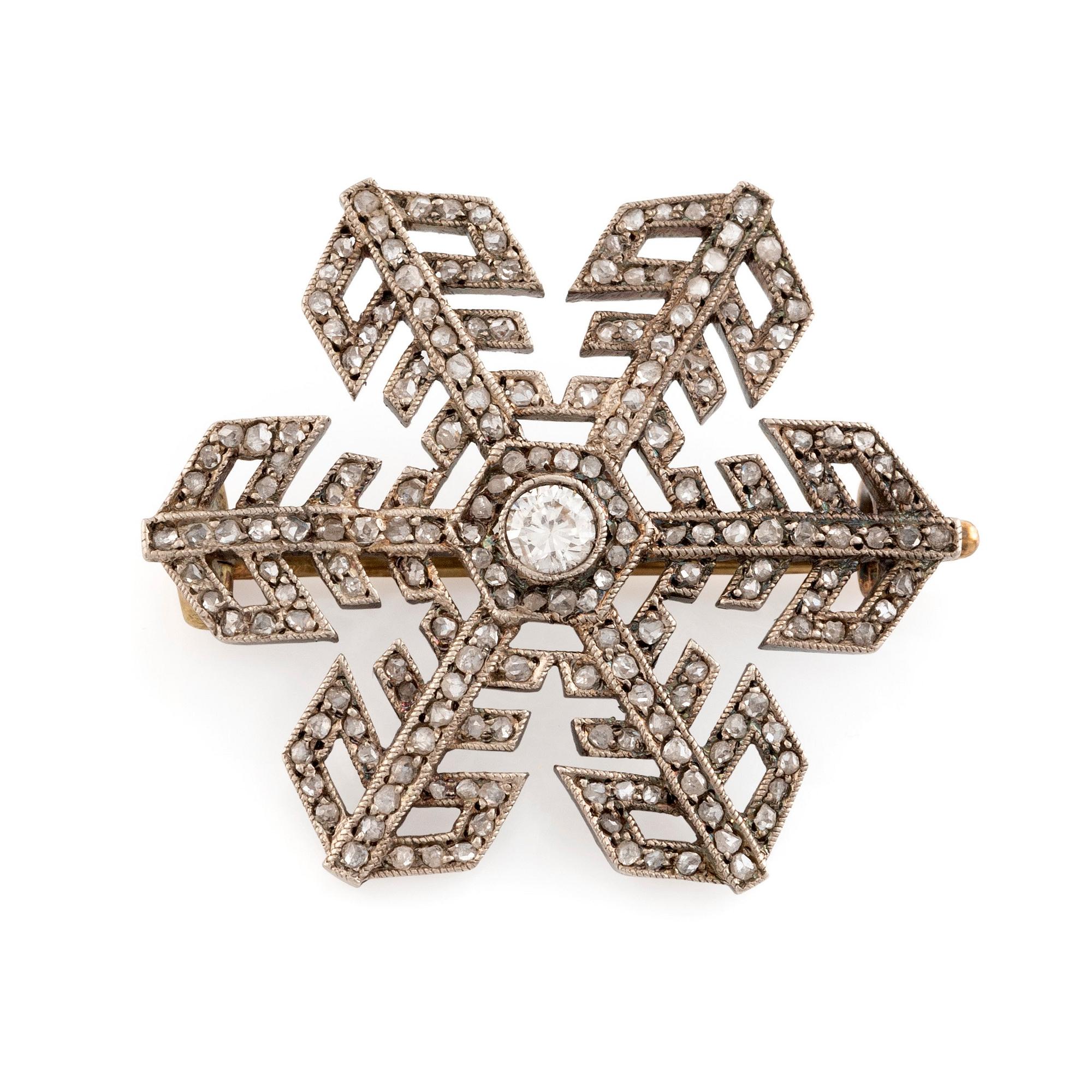
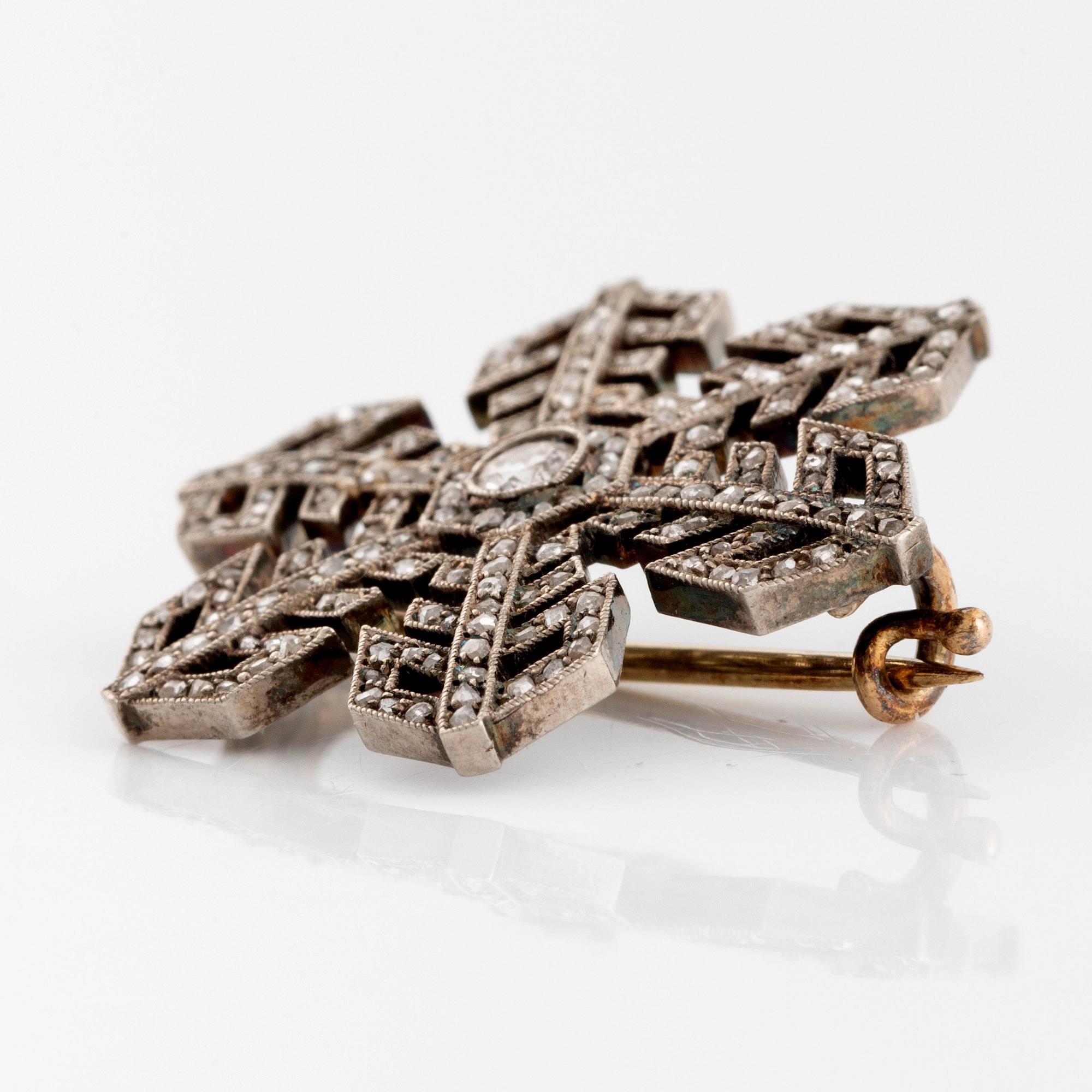
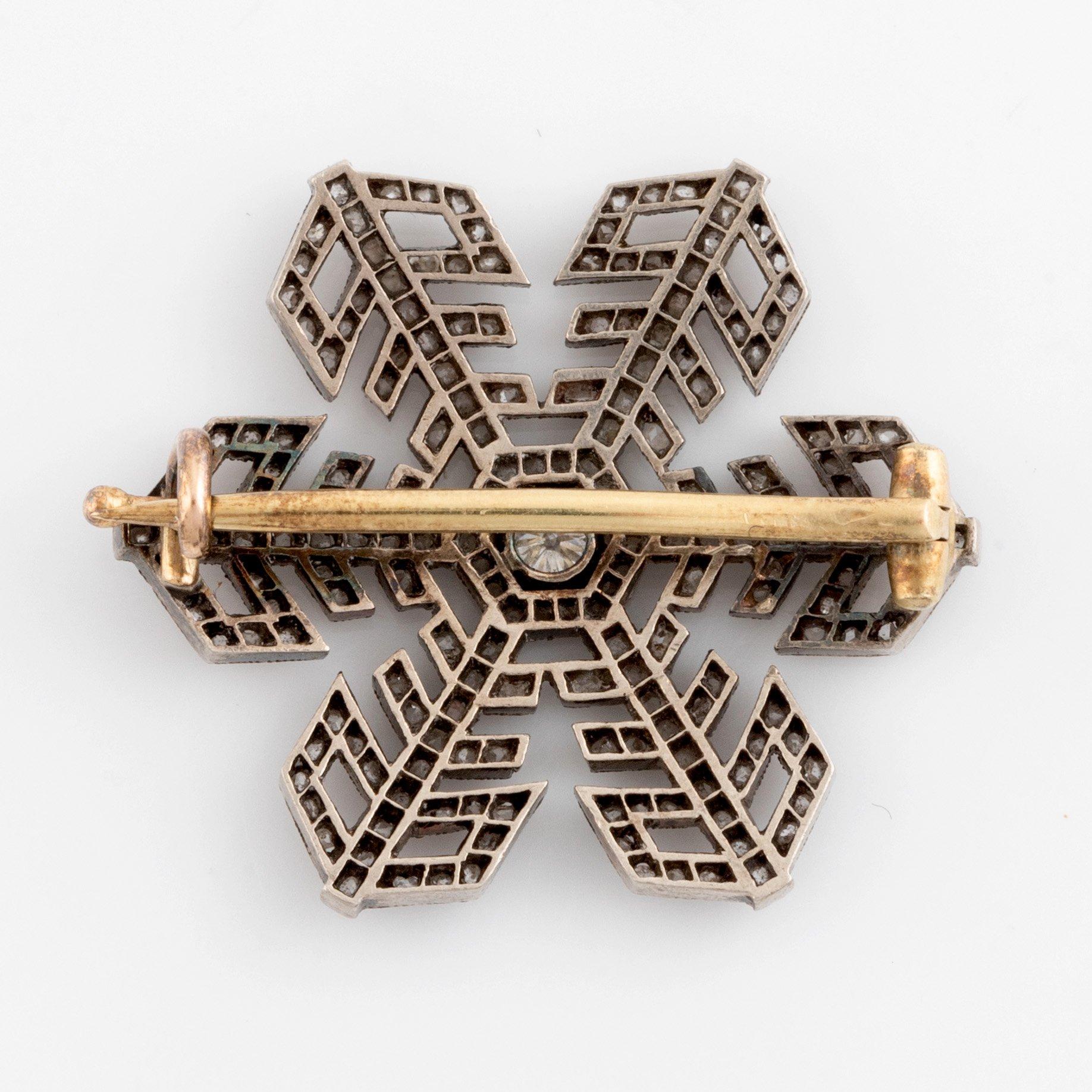
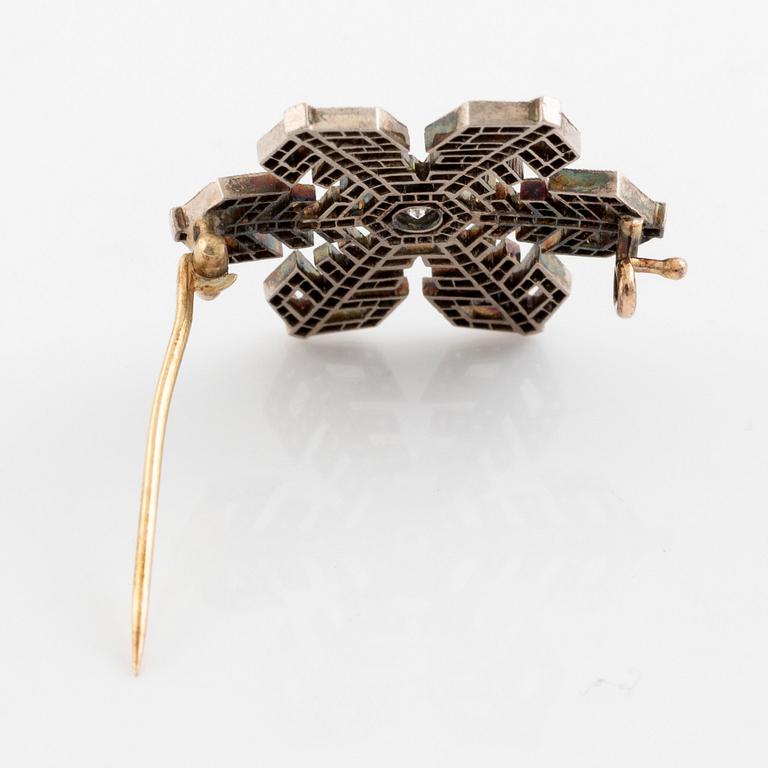
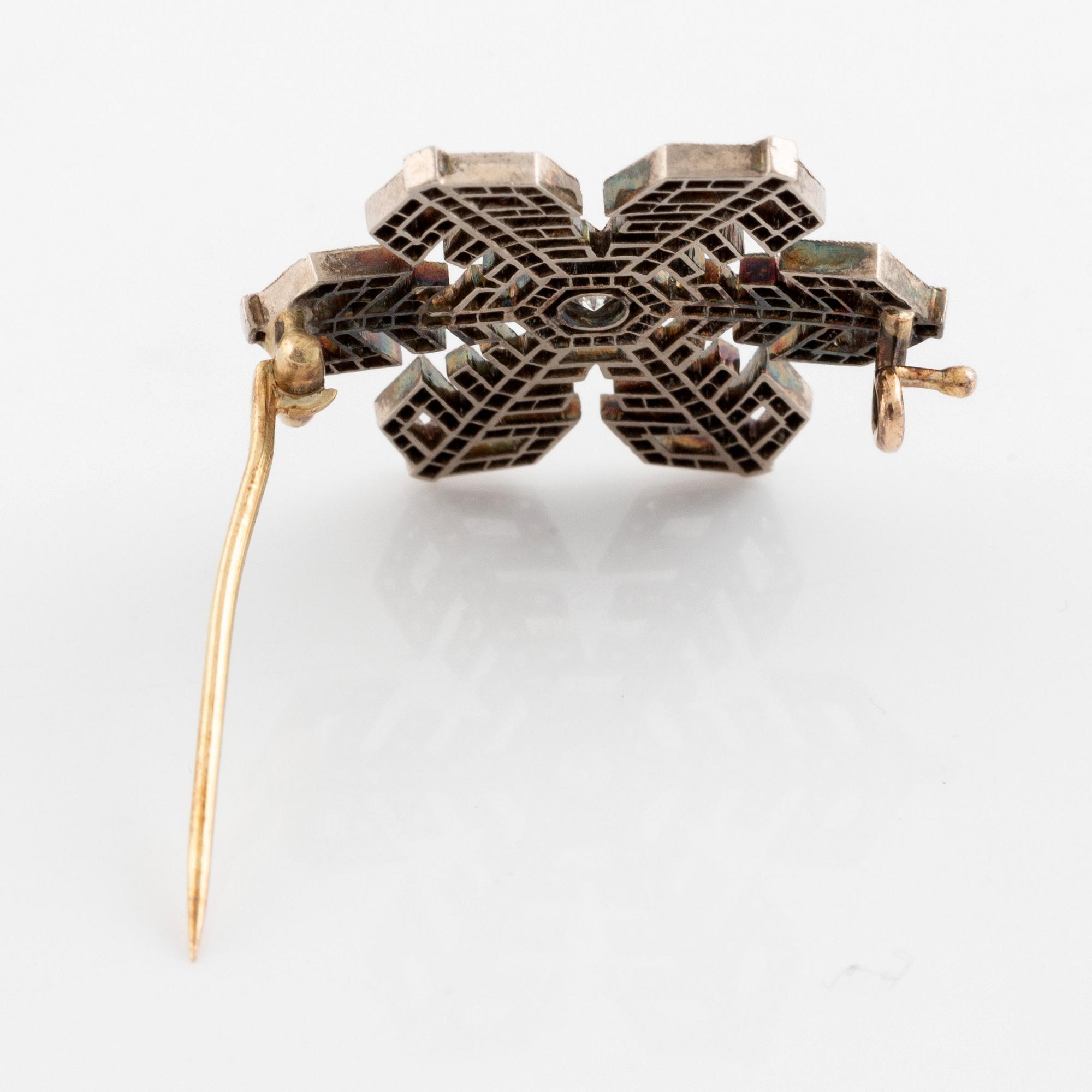
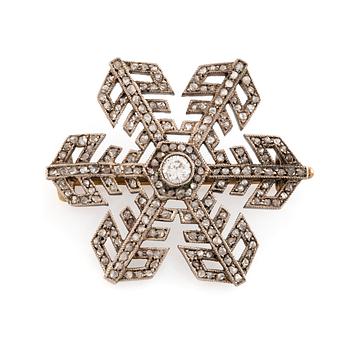
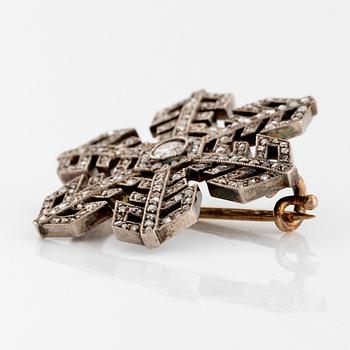
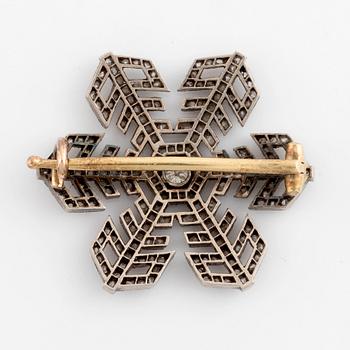
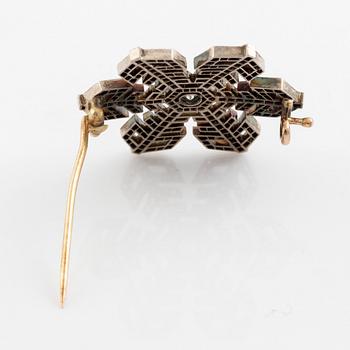
a stylised six-pointed snowflake decorated with rose-cut diamonds centring a brilliant-cut diamond, platinumsilver and gold, measuring ca 26 mm, weight 3 g. Apparently unmarked
Provenance
A gift from Emanuel Nobel (1859-1932), thence by descent.
More information
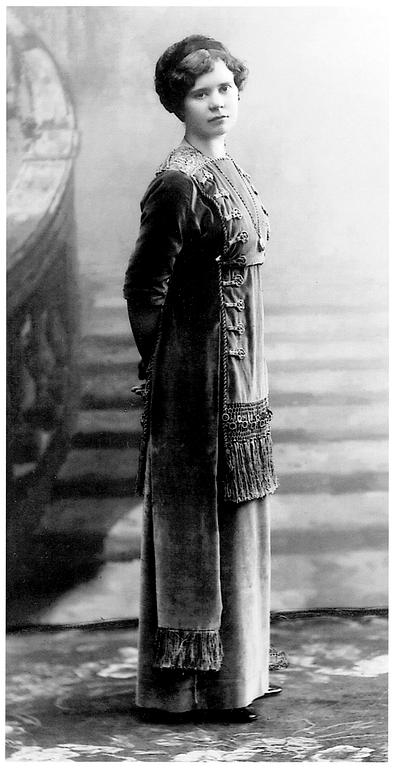
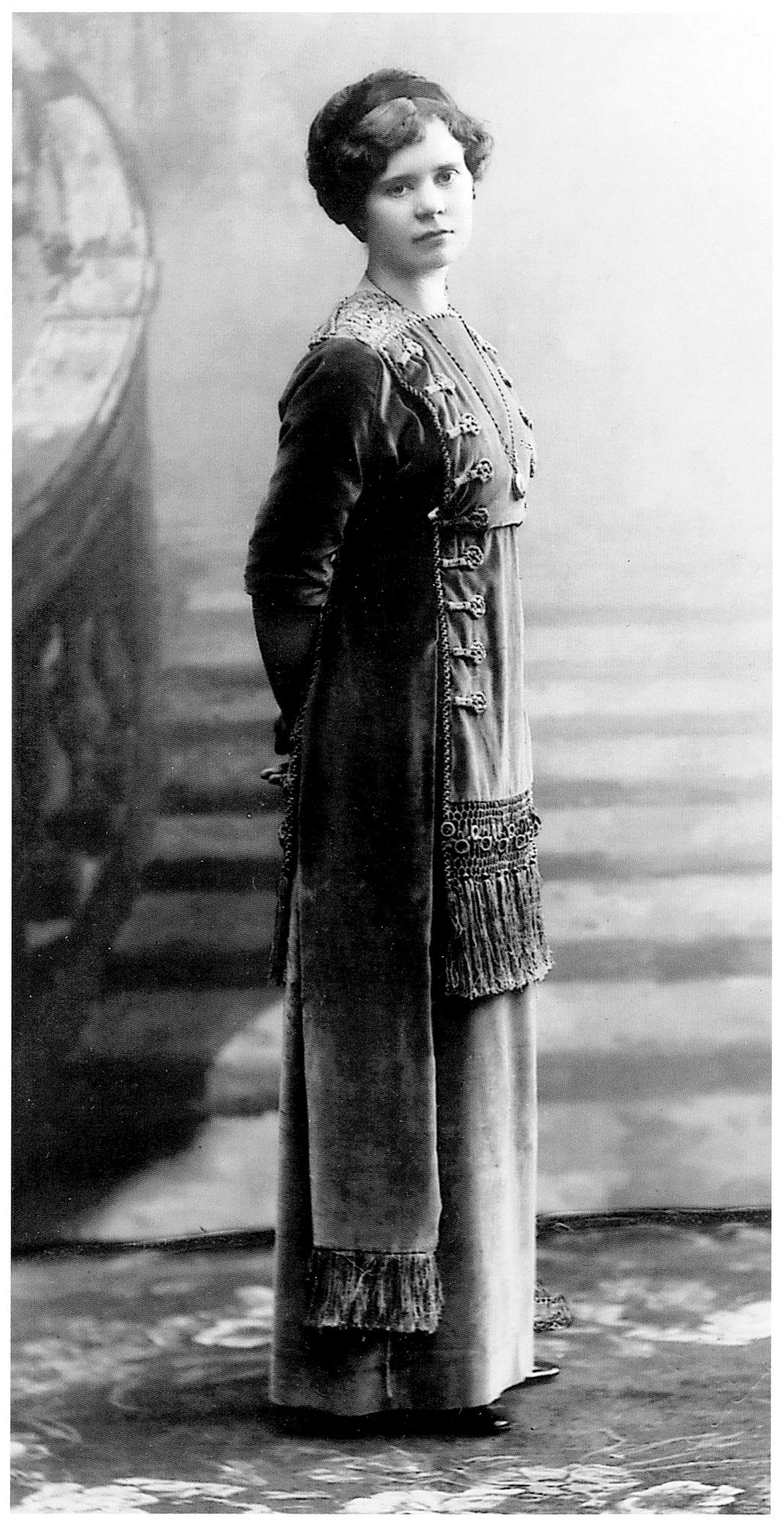
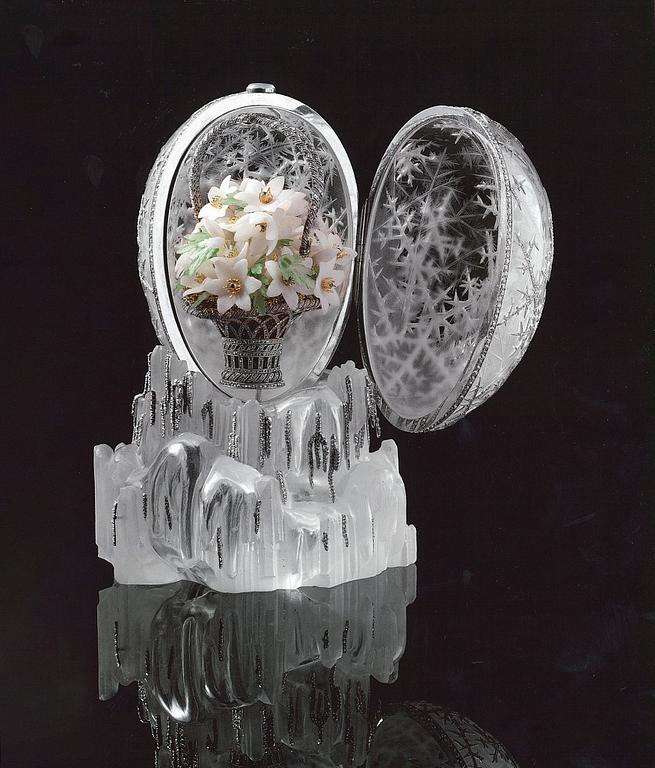
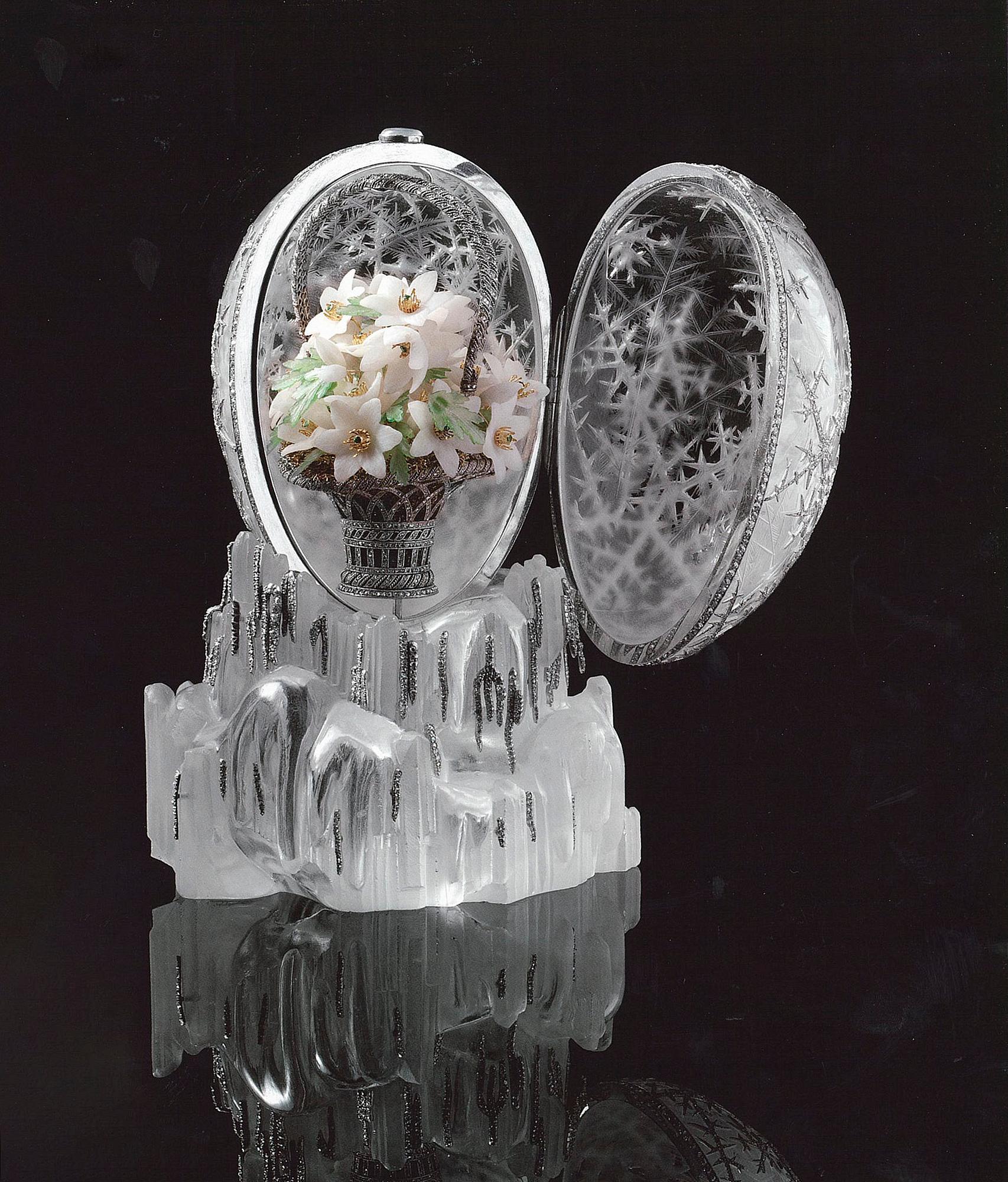
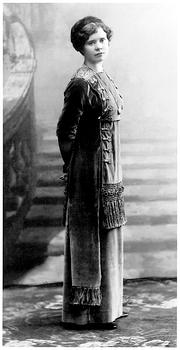
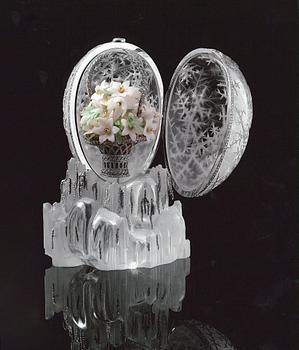
Legend has it that Alma Pihl (1888-1976) found the inspiration for her legendary snowflake jewellery on a cold winter's day in St. Petersburg while working in Fabergé's studio, watching snow crystals form intricate patterns on the window panes, and suddenly she had found the motif she was looking for. Carl Fabergé had just been commissioned by Emanuel Nobel to create a large number of small pieces of jewellery that Nobel could use as gifts for guests at his business dinners. Alma Pihl's small wintry masterpieces in the form of brooches and pendants were so appealing and striking that even the Tsar asked for her help when he ordered the 1913 Easter eggs for his family. The result was one of Fabergé's most beautiful Easter eggs, the so-called Winter Egg, and the following year Alma Pihl was again commissioned by the Tsar to design the annual Easter present. This masterful work of art, the so-called mosaic egg, is also one of Fabergé's most famous artefacts. The colourful egg is an almost overwhelmingly charming blend of its folk motif and the luxurious precision of craftsmanship that produced the gemstone egg, just over 10 cm high. Alma Pihl got the idea for the motif, highly stylised flowers in different colours, when she witnessed her mother-in-law doing her usual evening of cross-stitch embroidery, as most women did at the time. After the Russian Revolution, Alma Pihl settled in Finland and worked as a kindergarten teacher, very rarely talking about her former life as a designer with Fabergé.
For condition report contact specialist





Others have also viewed