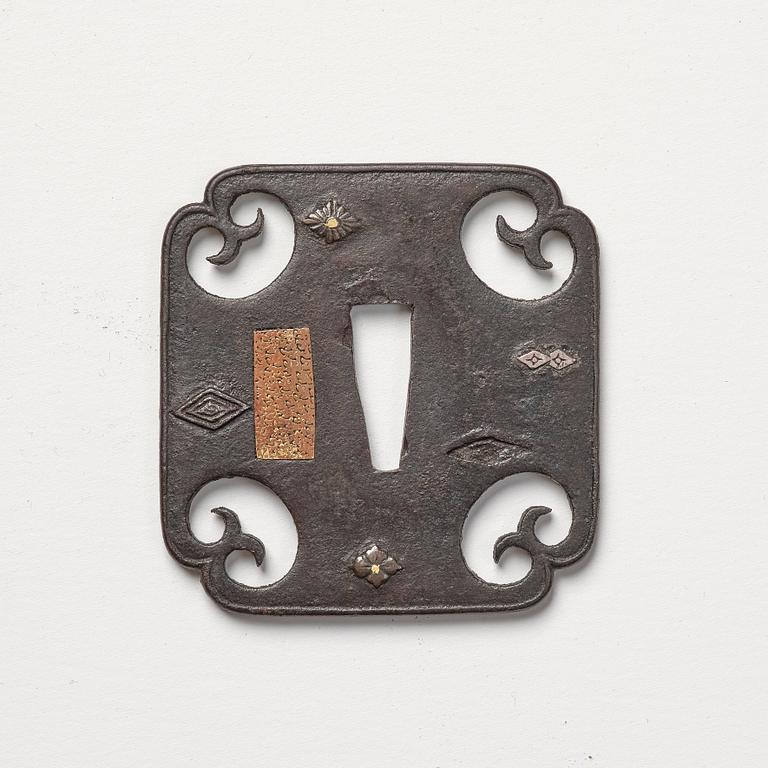
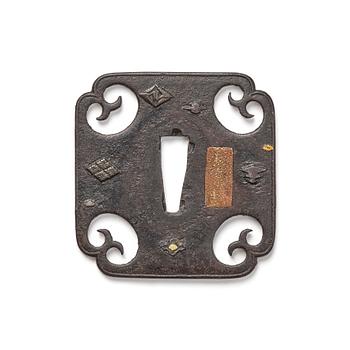
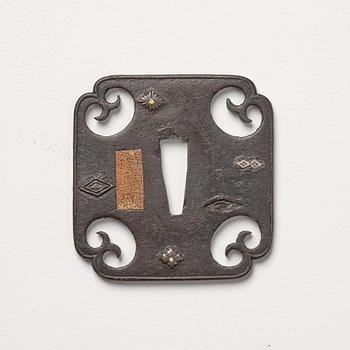
Of rectangular shape with corners in the shape of magatamas (a symbol for longevity). Decorated with mon symbols (family crests) in high relief with inlays of copper alloy, highlighted in gold and silver against a fine ground. Measurement 7.4x7.5 cm.
Wear, loss of decoration.
Provenance
Property of a private Swedish Collector.
Purchased in 2005, at the Älvsjö Antique Fair, Stockholm.
More information
The tsuba was an essential part of the Japanese sword, the tsuba or handguard protected the samurai’s hand. Tsuba artisans soon produced ornamental styles, which became family heirlooms. Most of these designs reflect the mythology, legends, customs, religion, and artistic side of Japan.
When Japan entered the more peaceful Edo period, from 1603 to 1867, the tsuba became more of an artwork rather than functional tools of war. Without battles to fight, the samurai favored more elaborate designs inspired by mythology, nature, and religion. In this time period, the most complex and ornate sword guards were produced bv tsuba artisans who also started to sign their works.
For condition report contact specialist




Others have also viewed