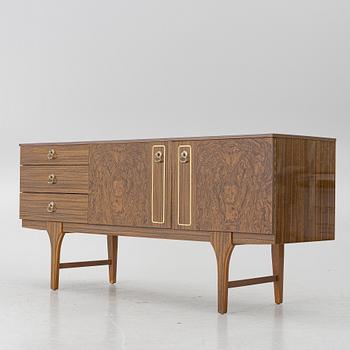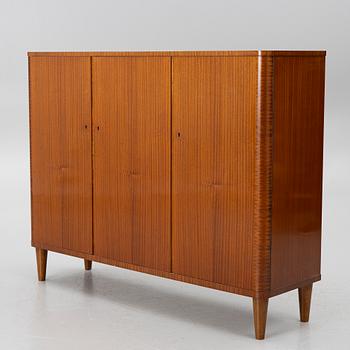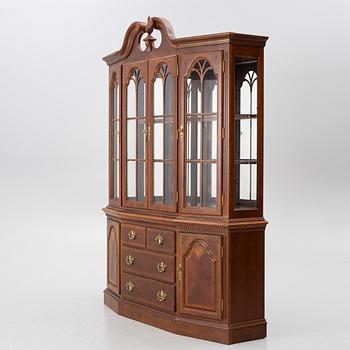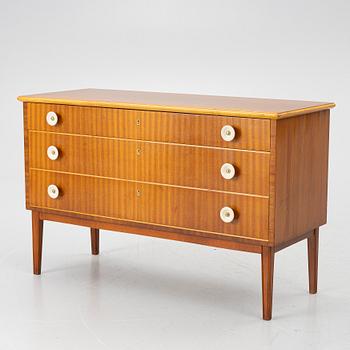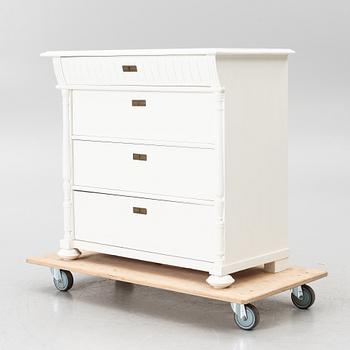
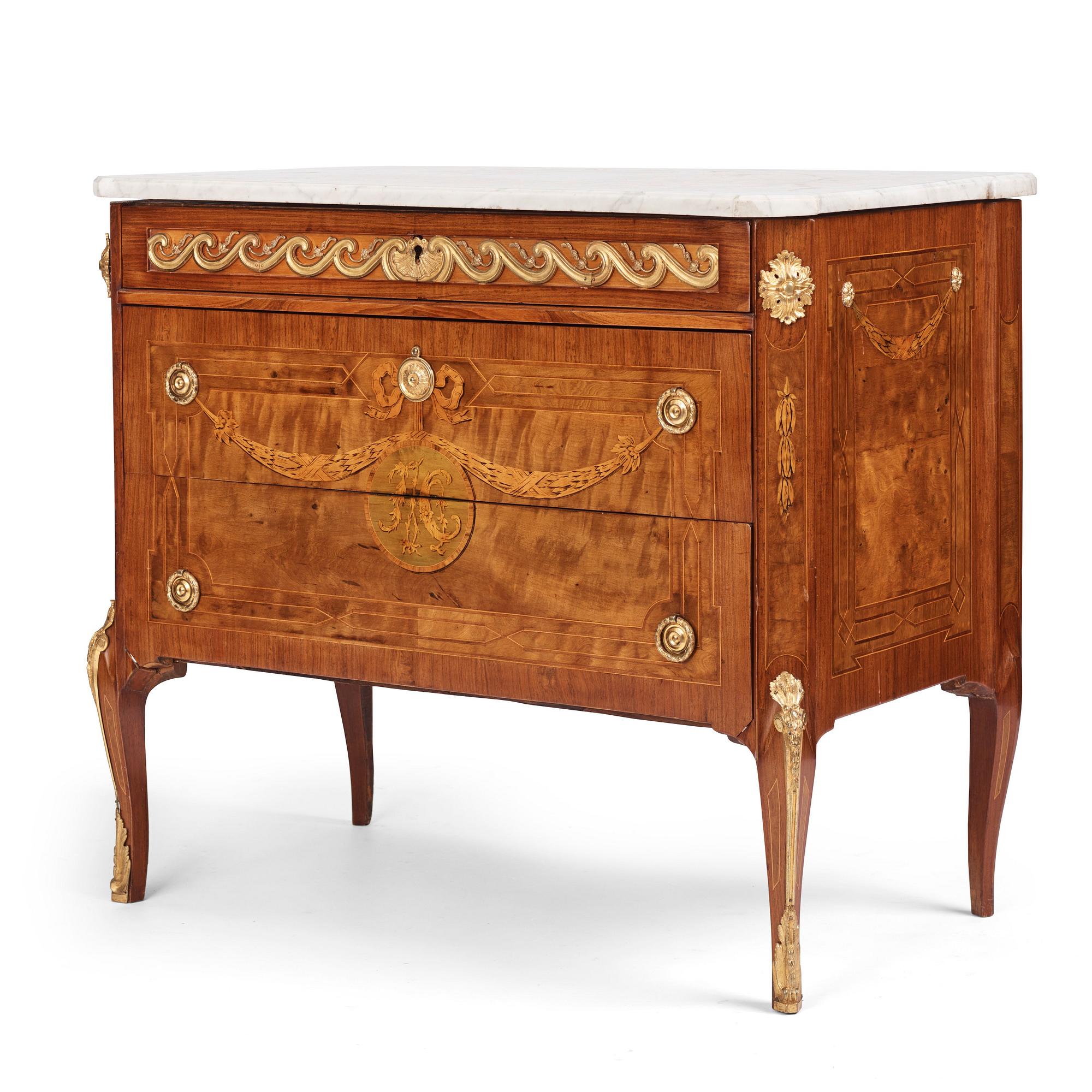
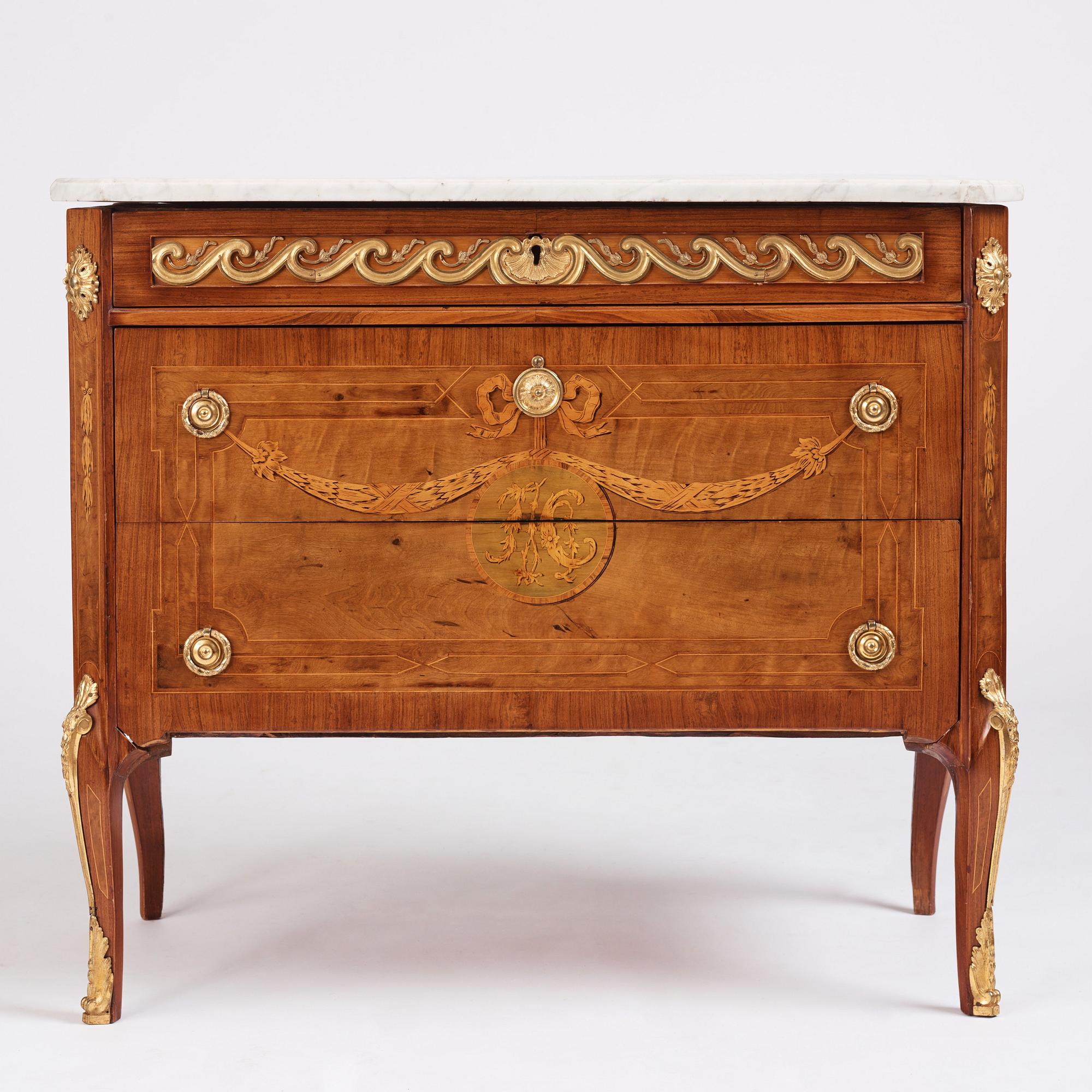
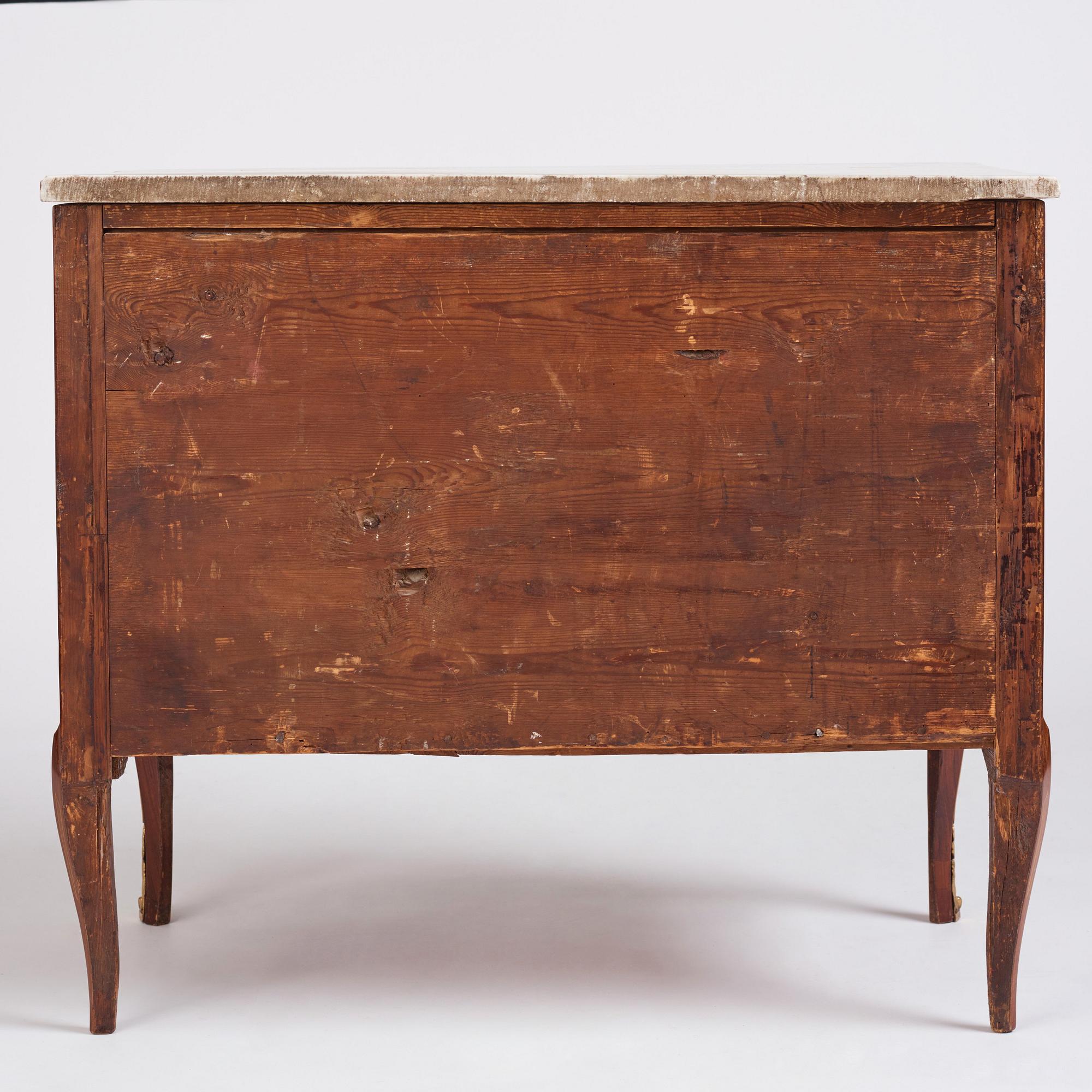
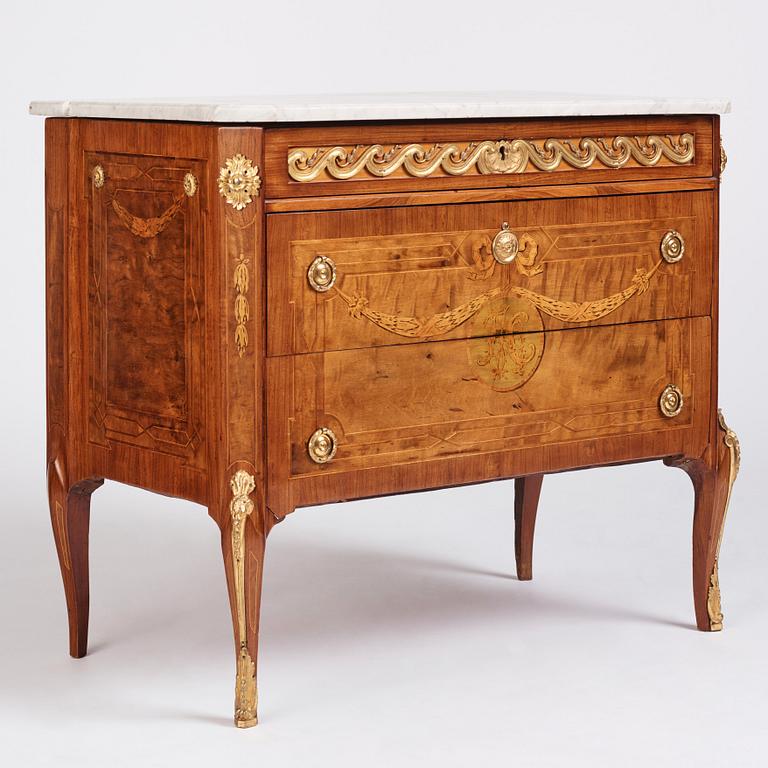
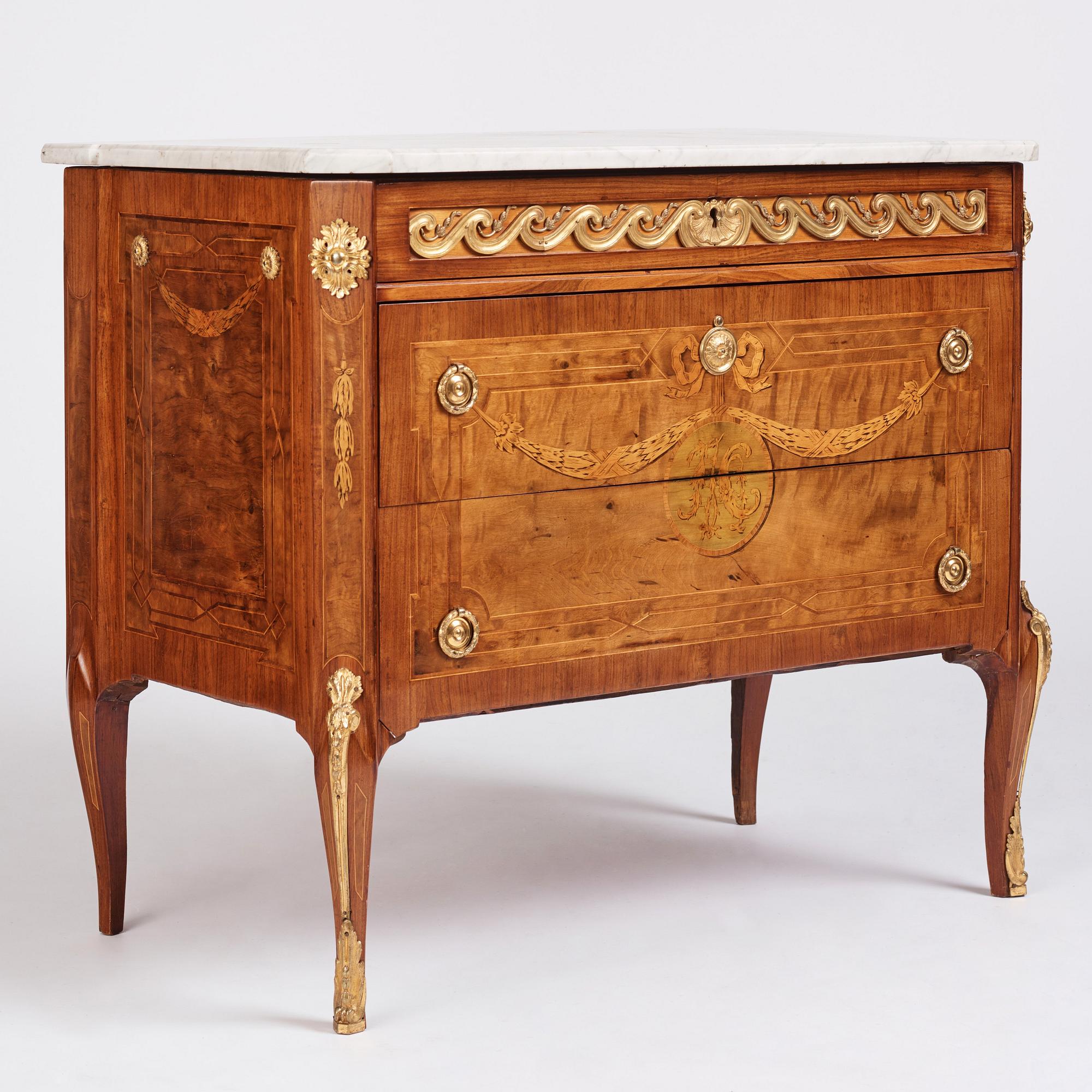
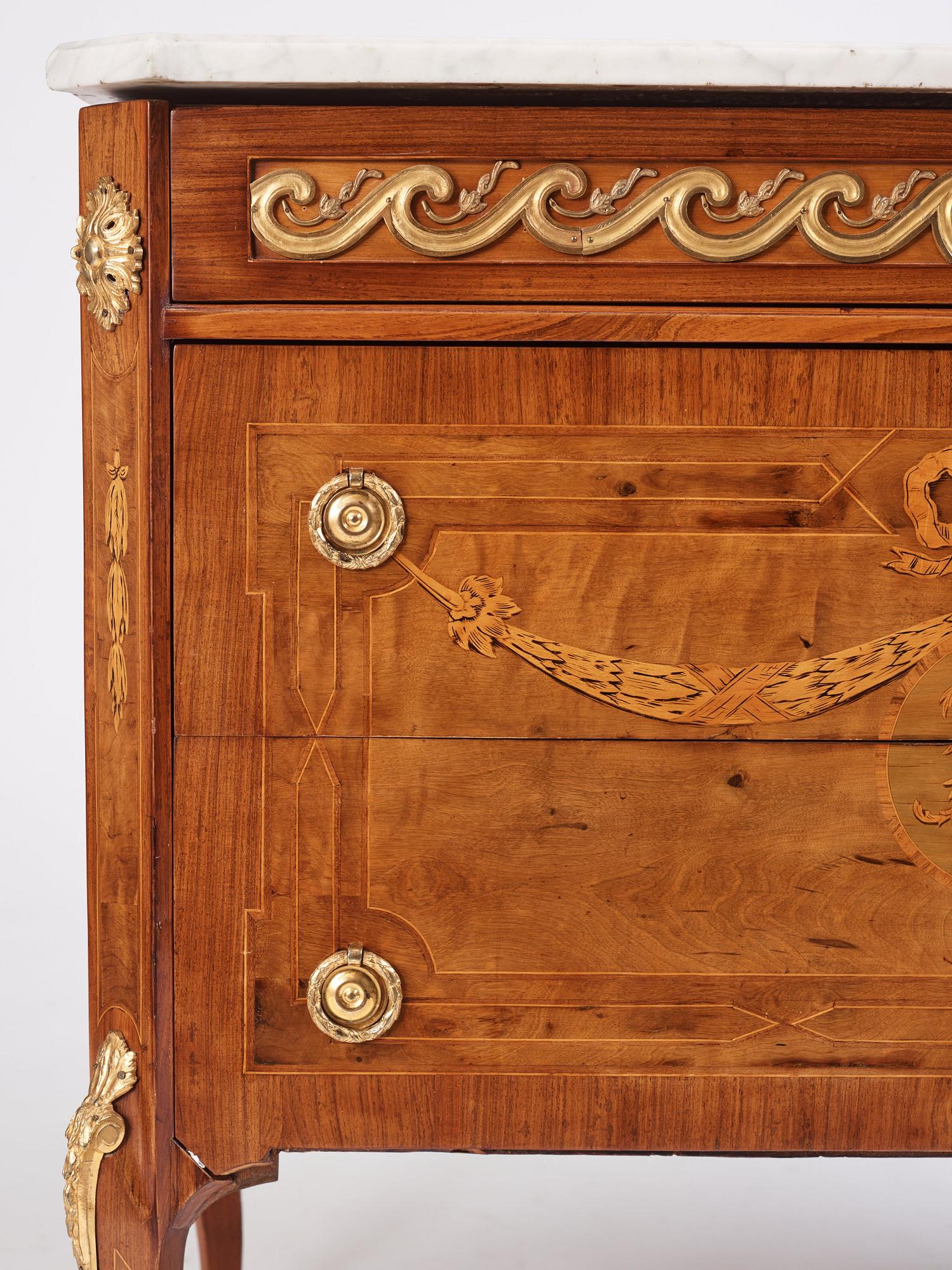
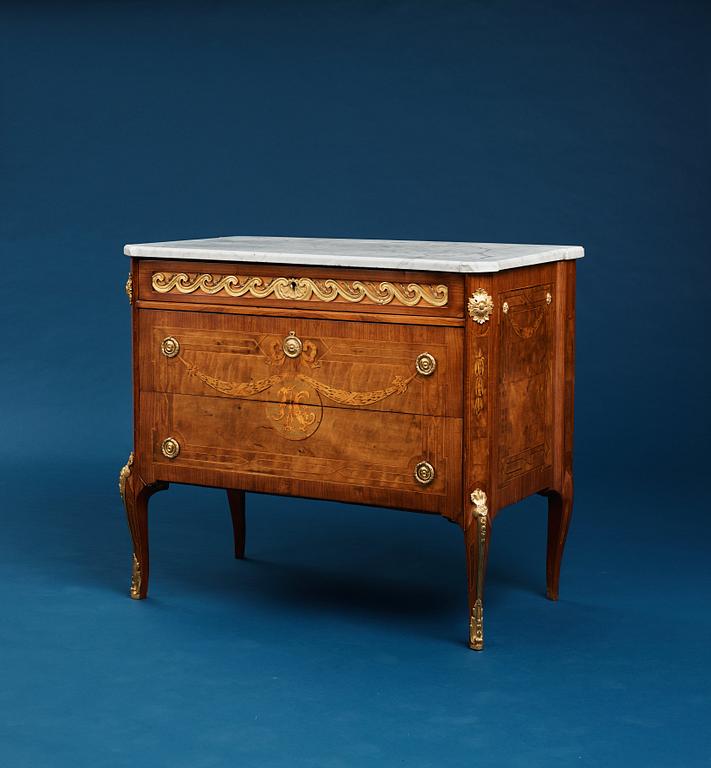
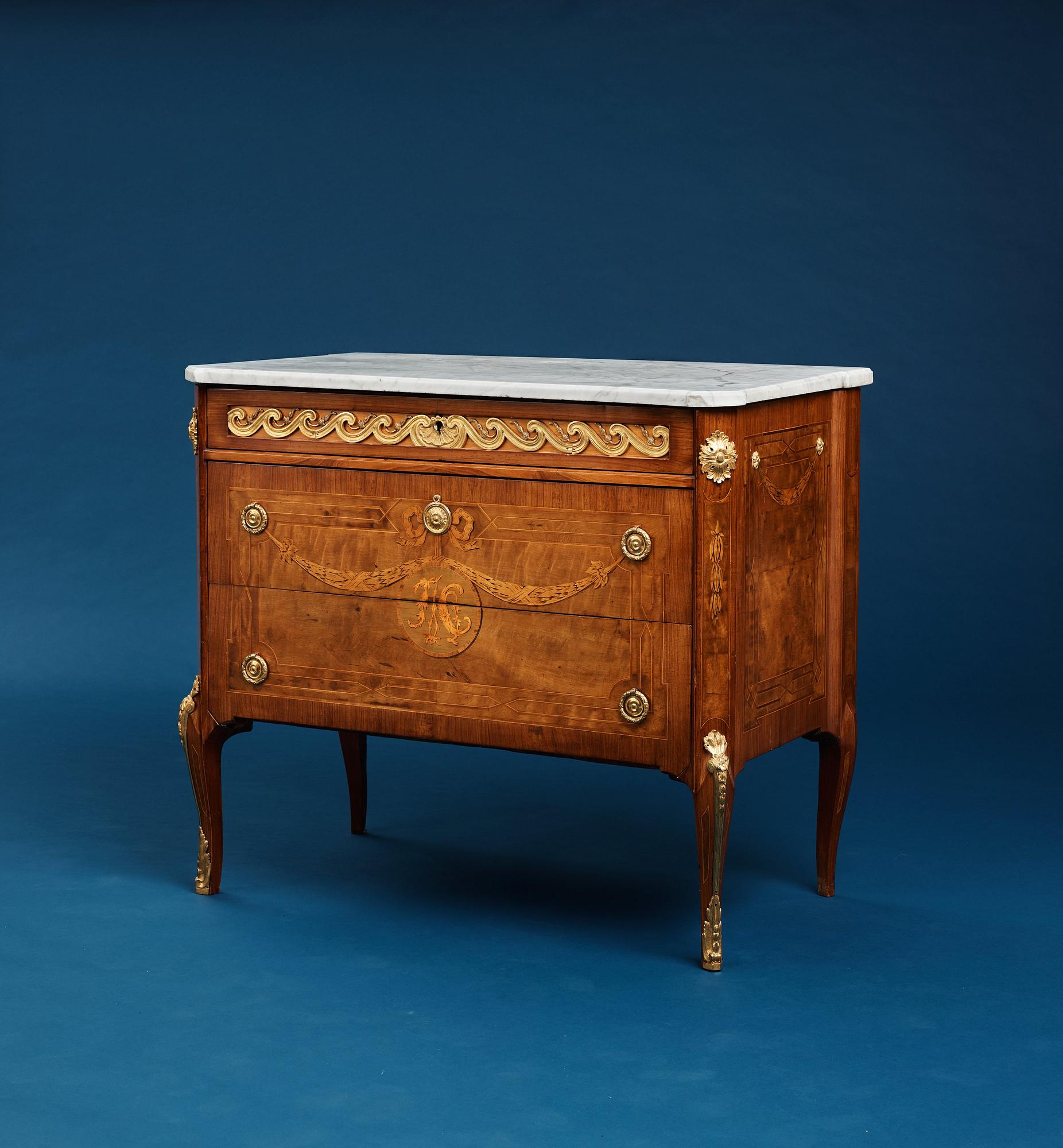
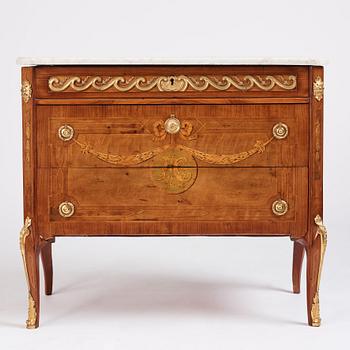
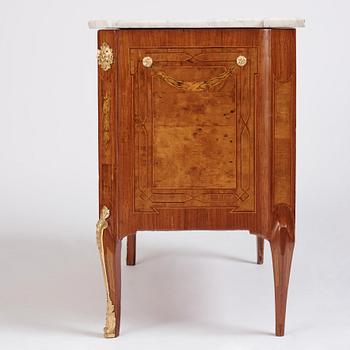
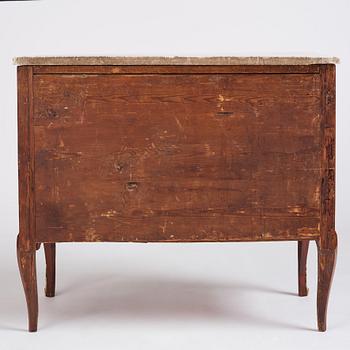
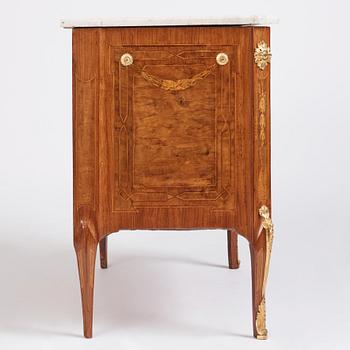
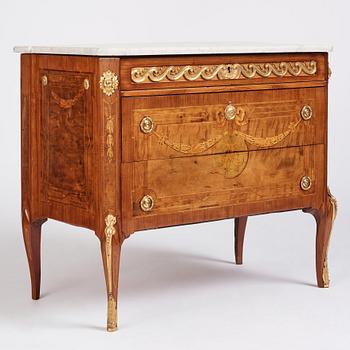
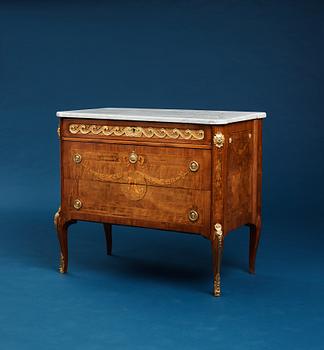
Length 96, width 56, height 85 cm.
Saleroom notice
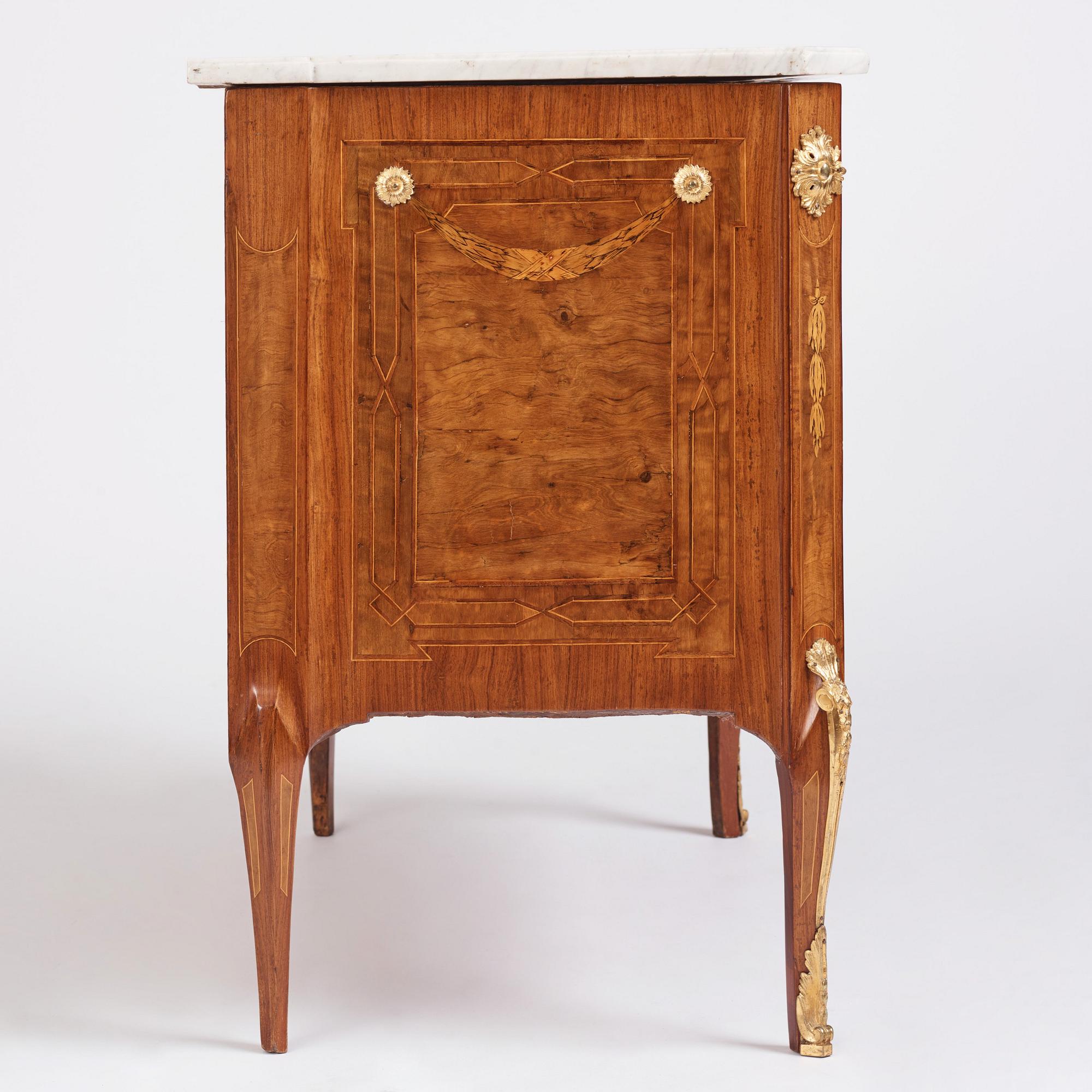
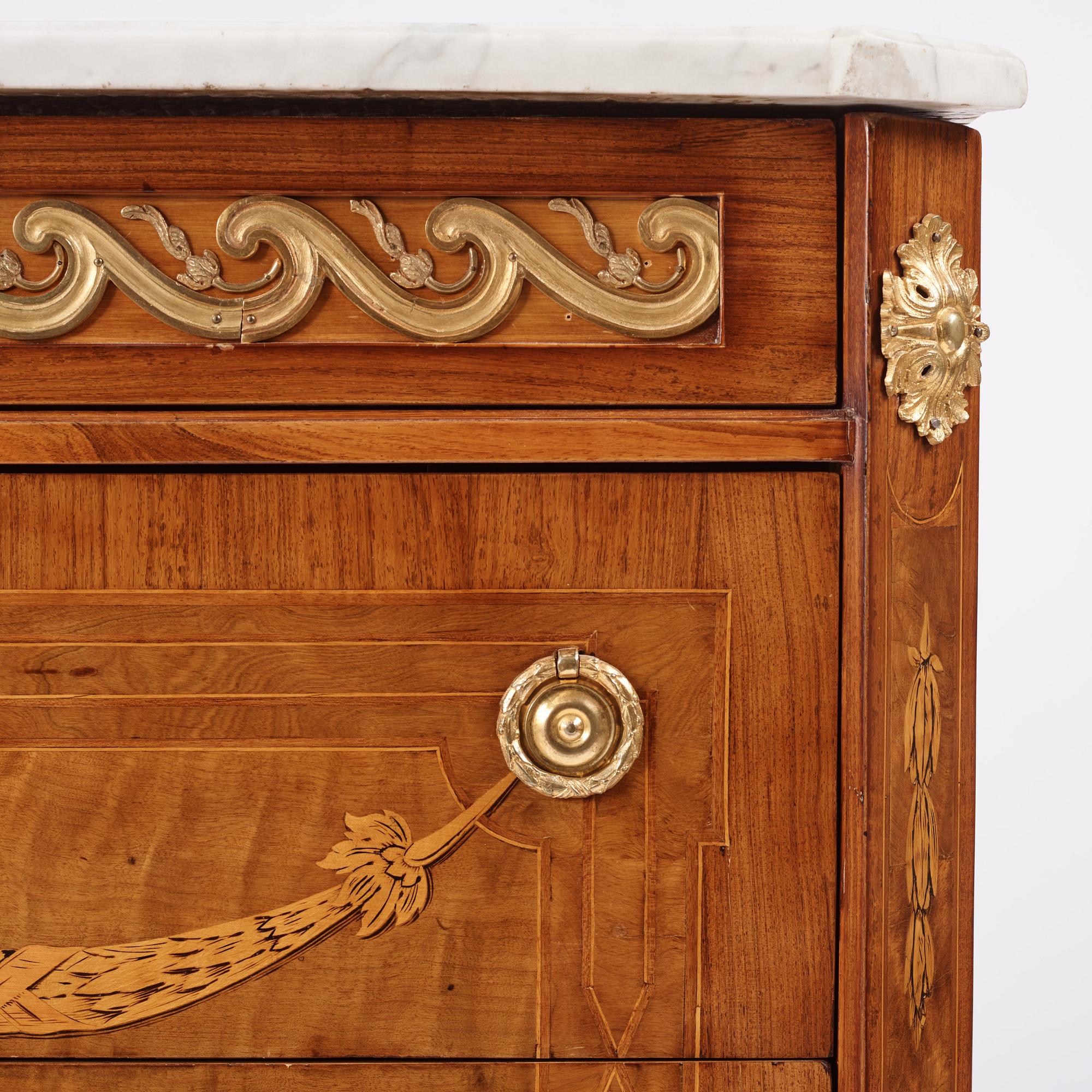
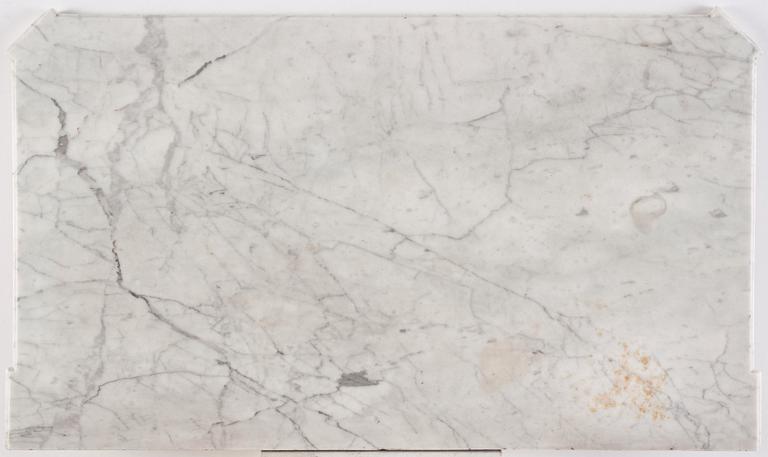
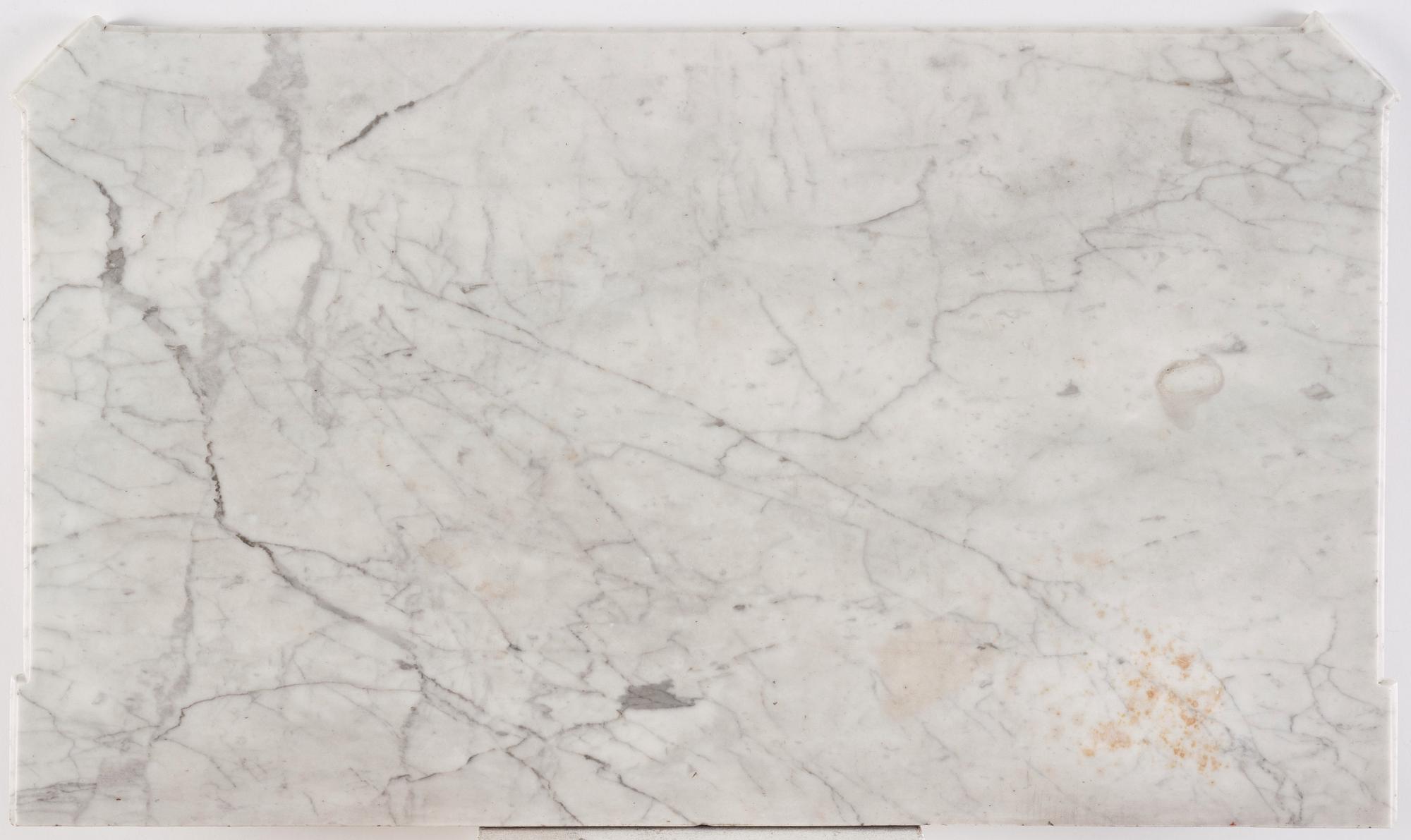
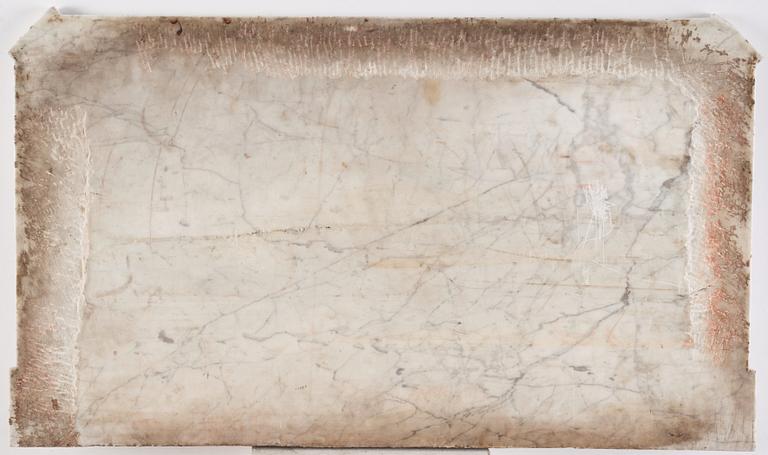
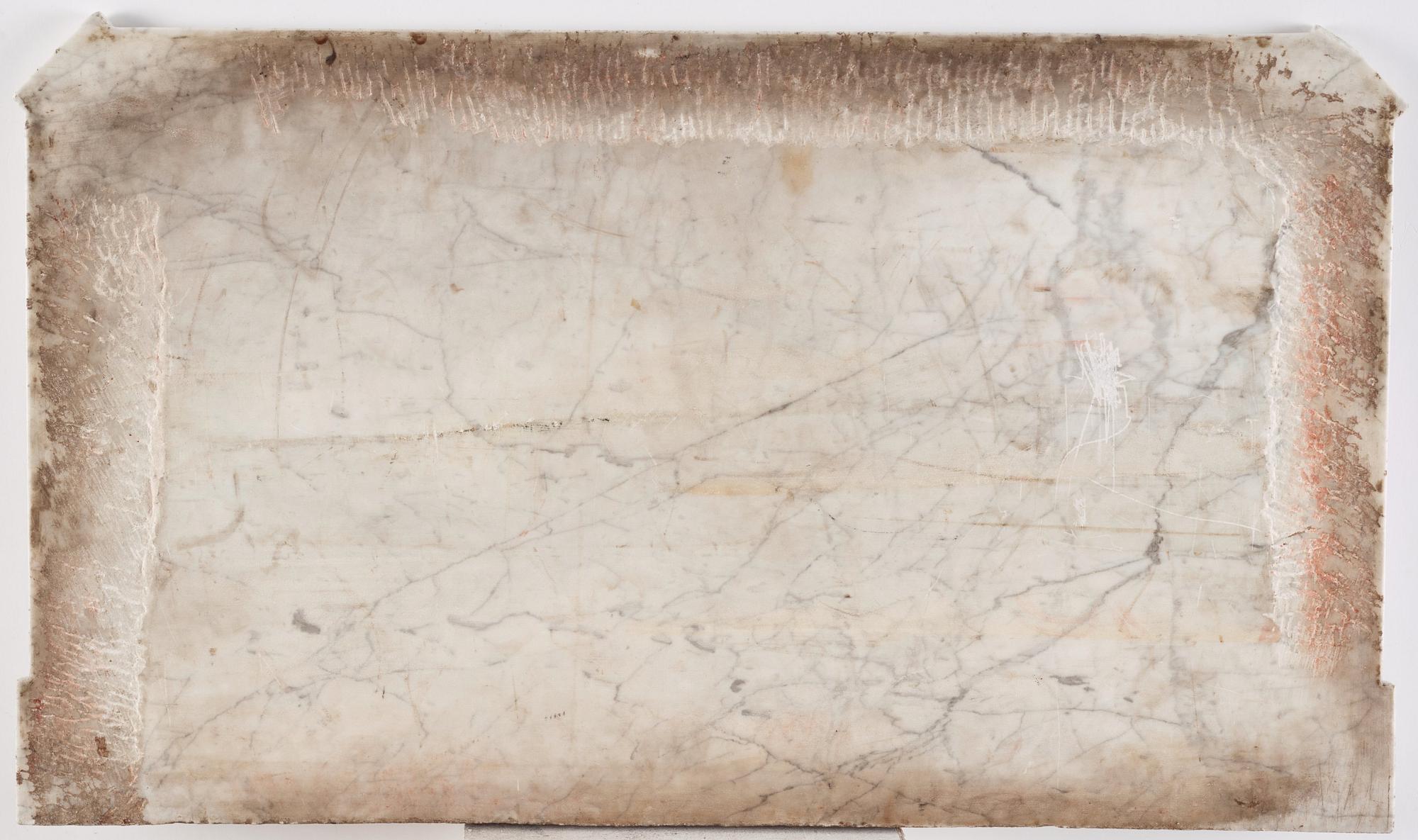
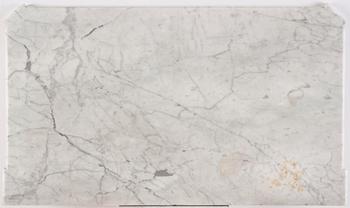
Skiva i vit marmor.
More information
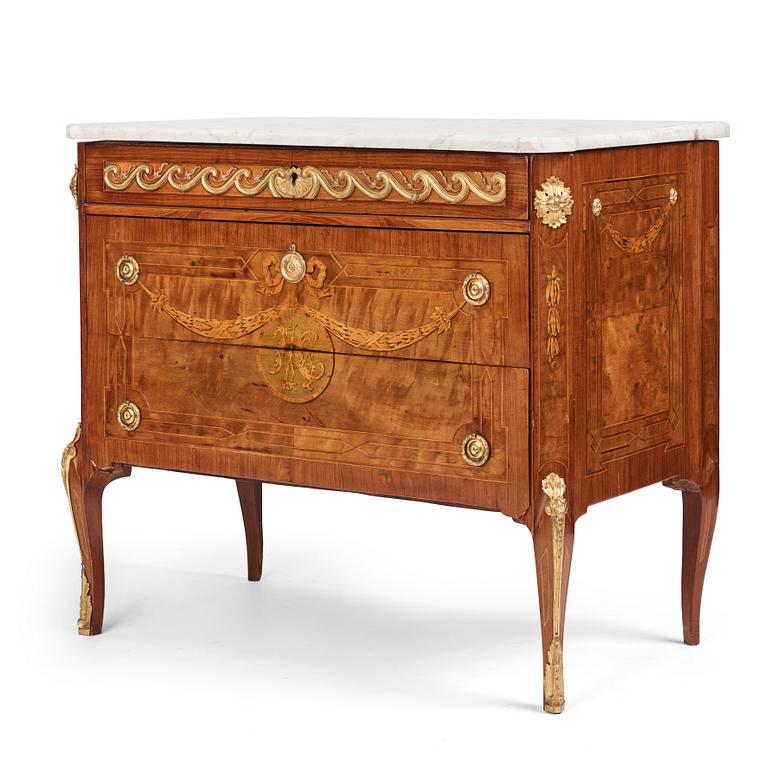
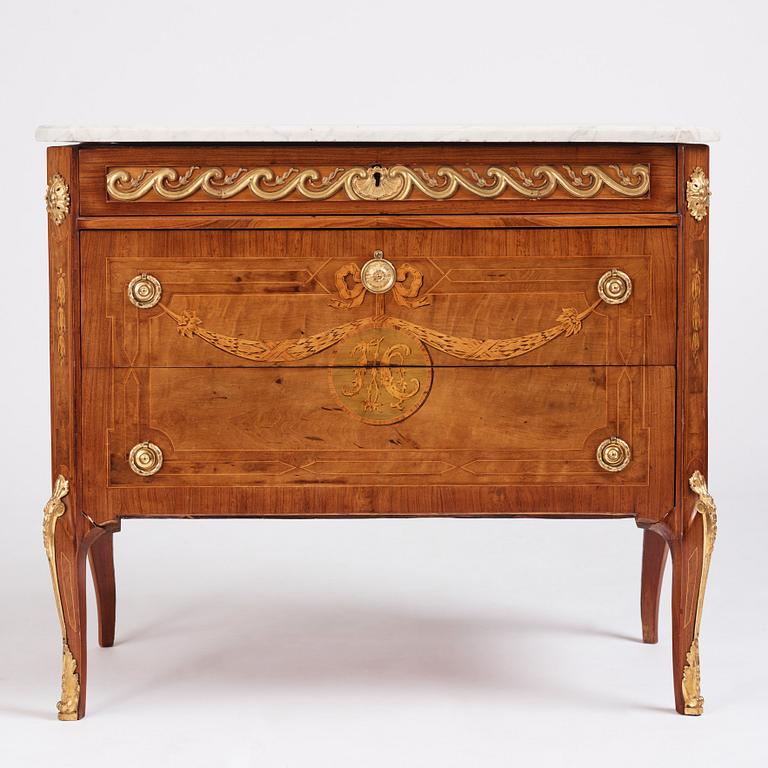
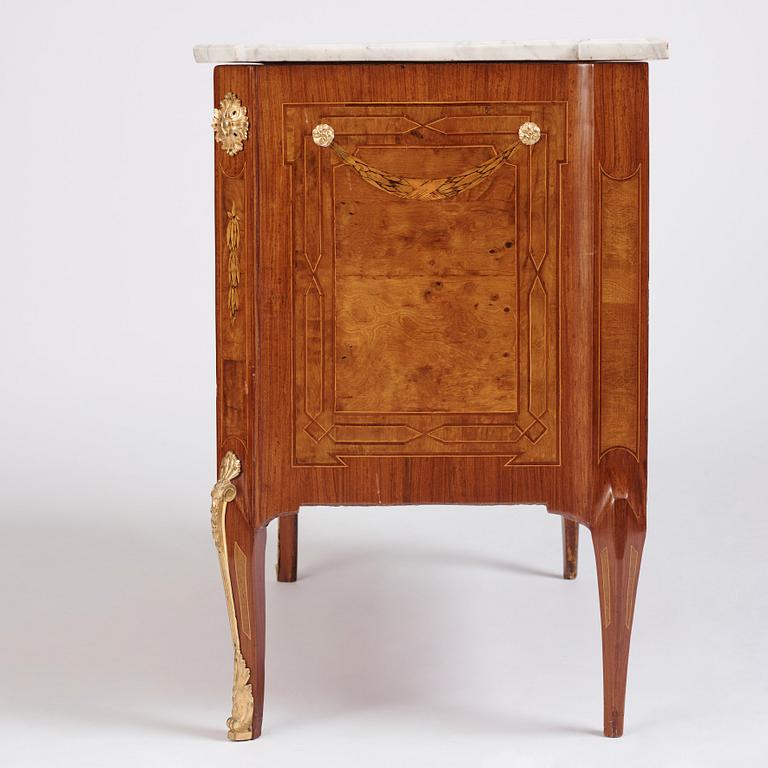
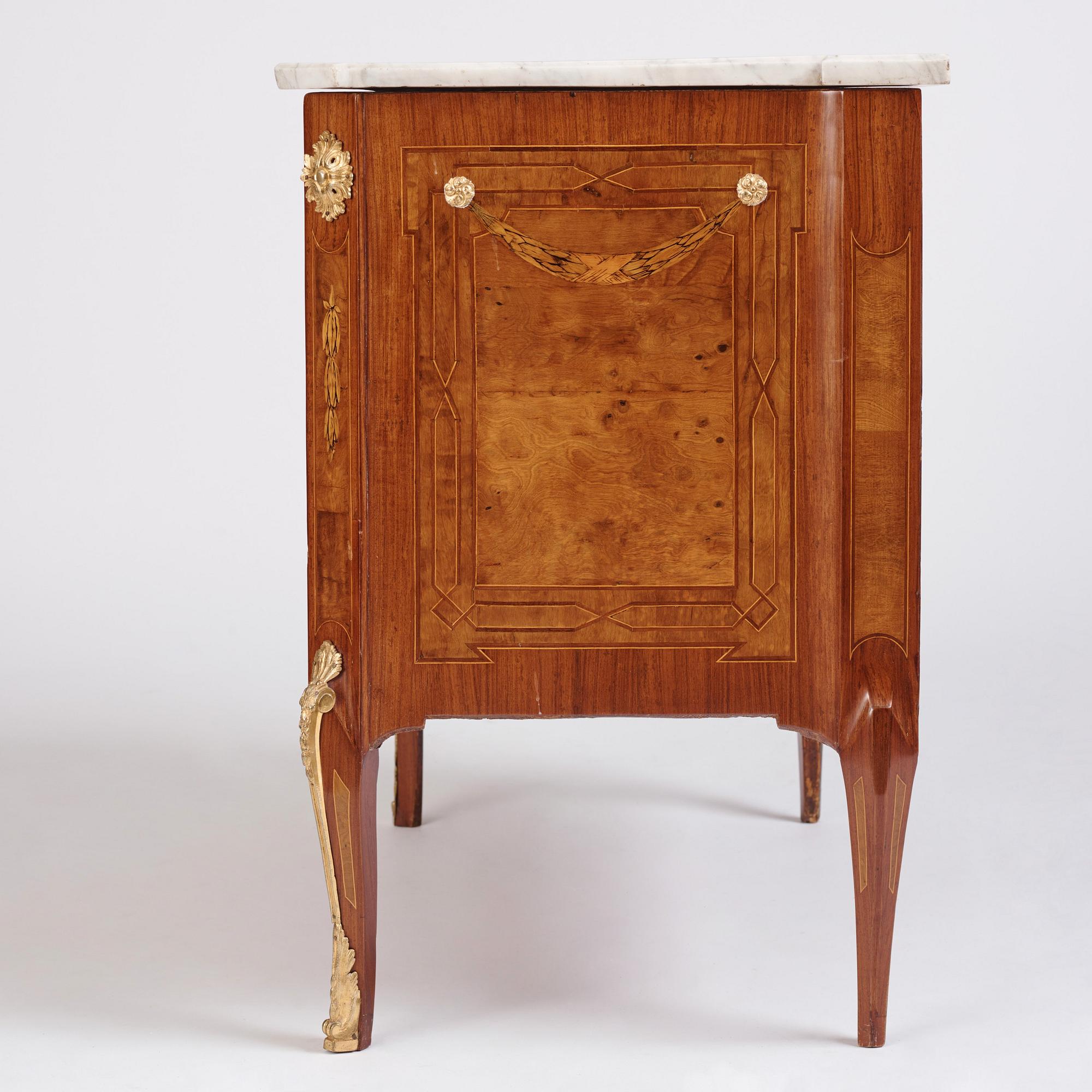
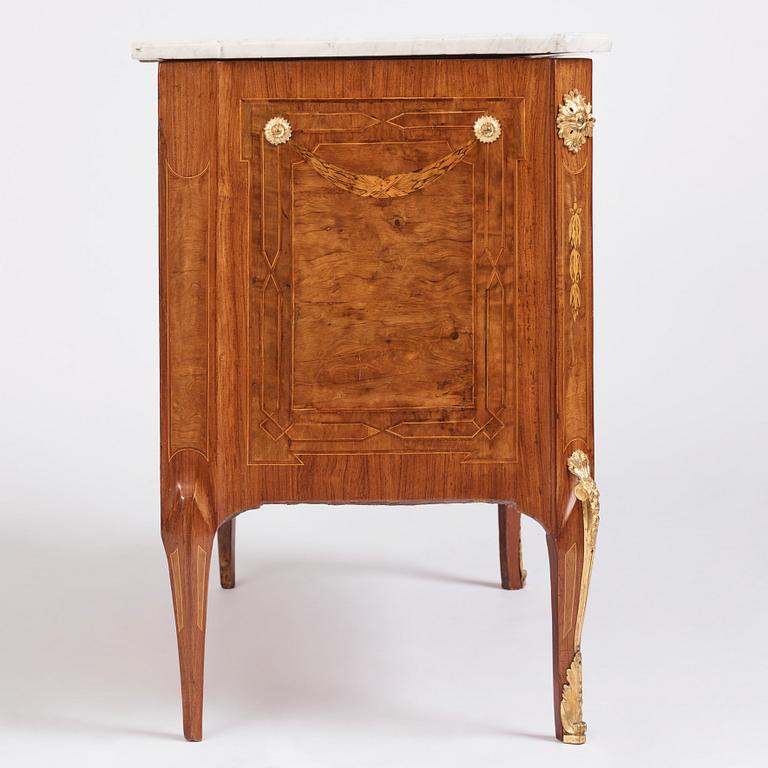
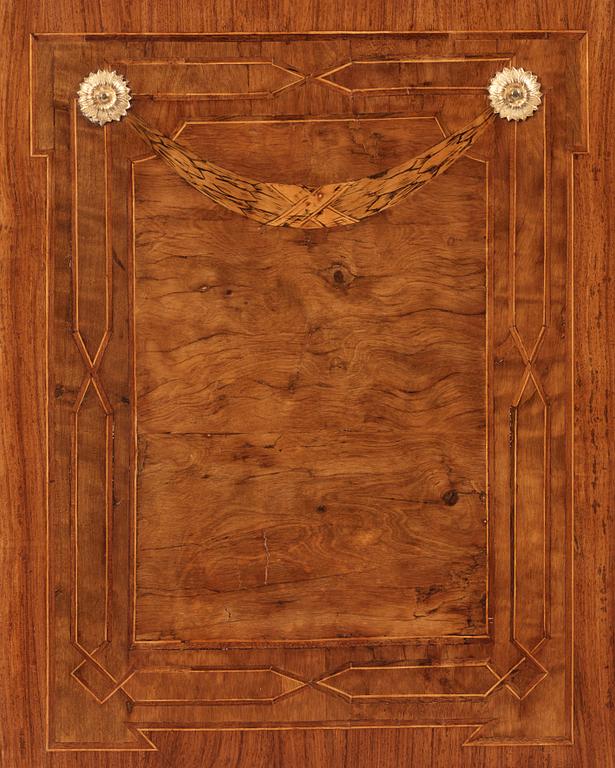
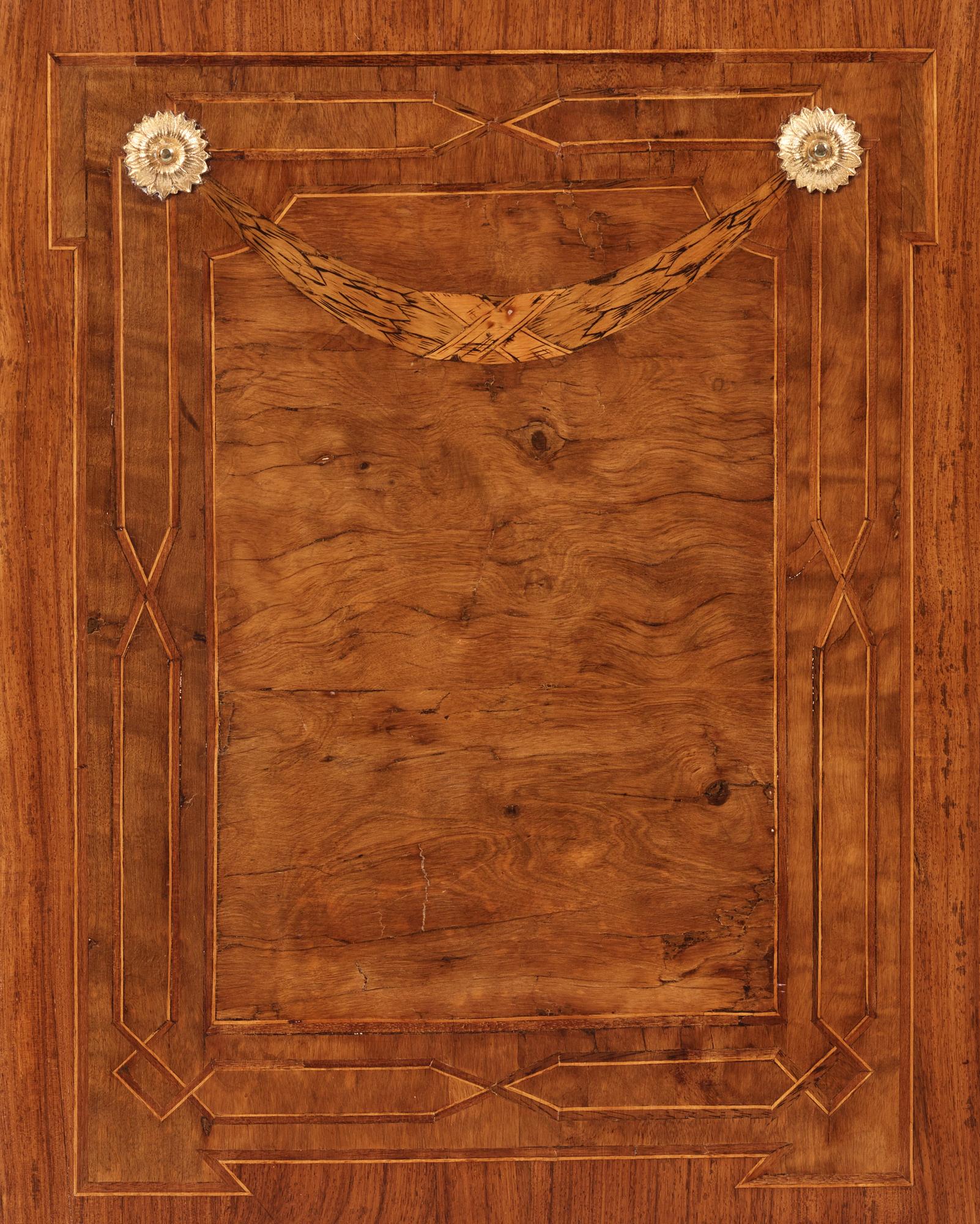
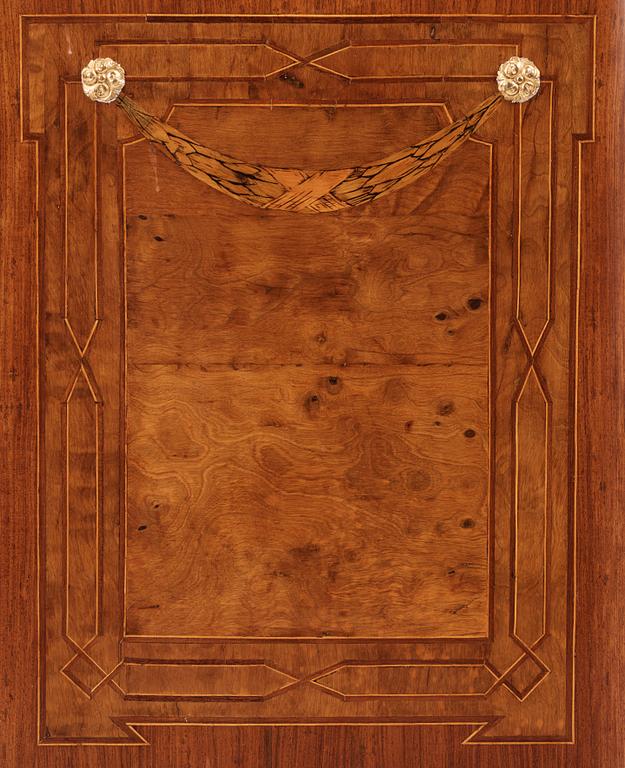
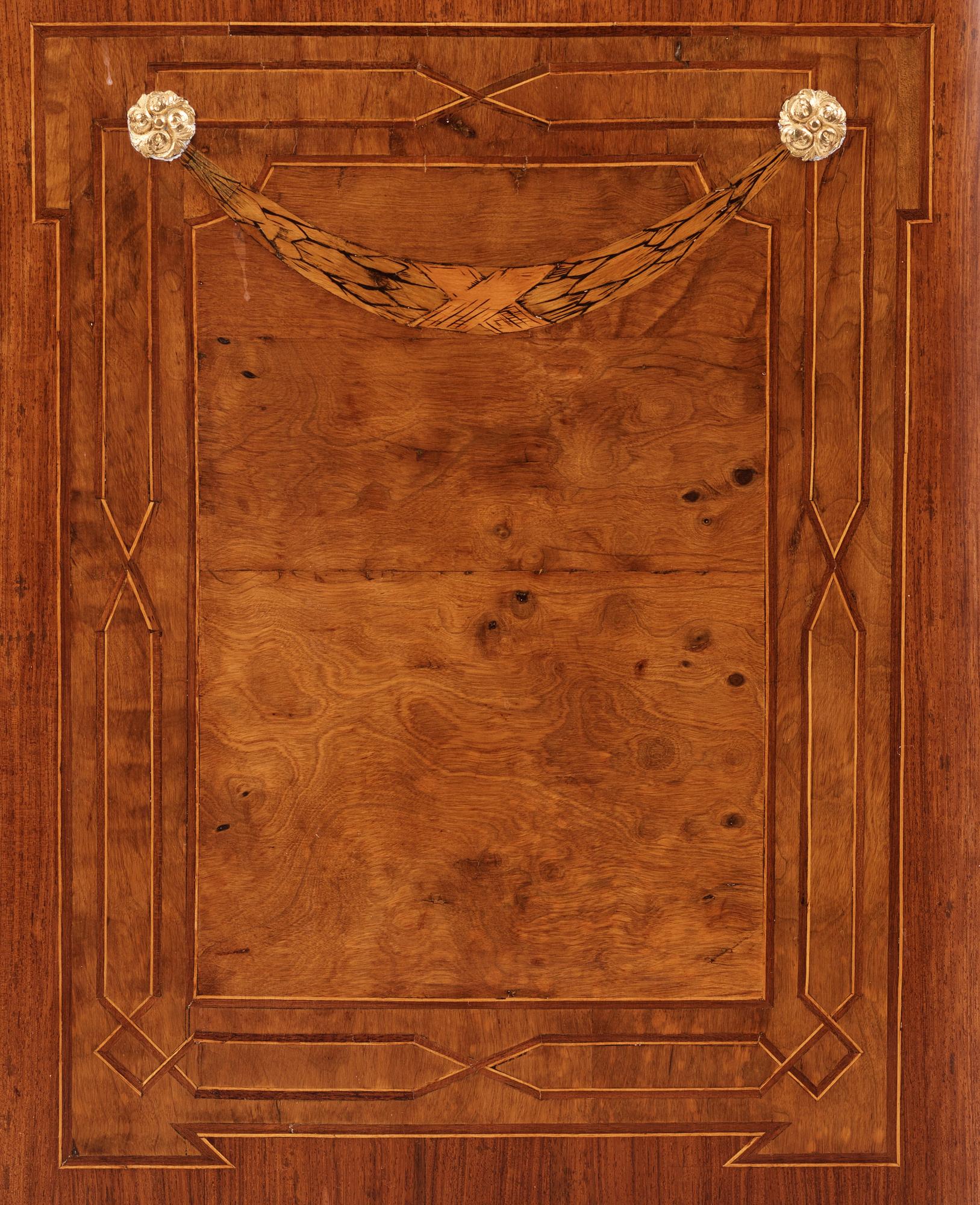
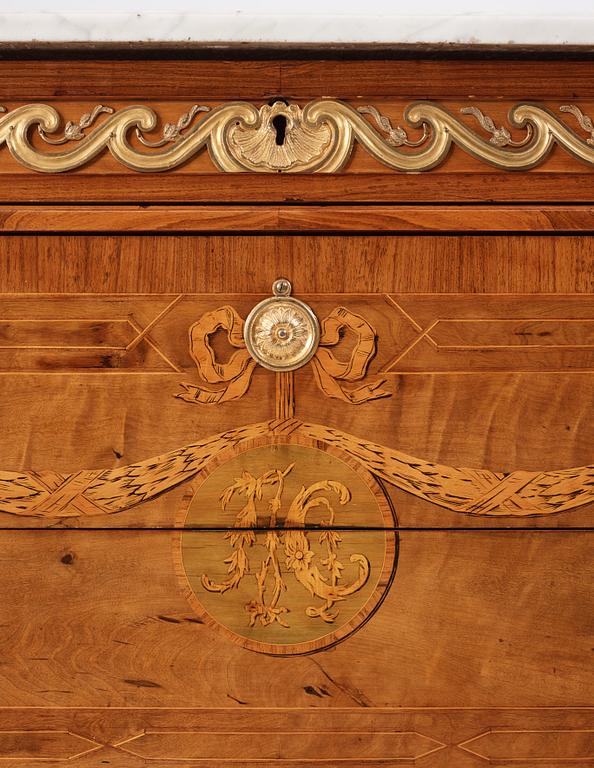
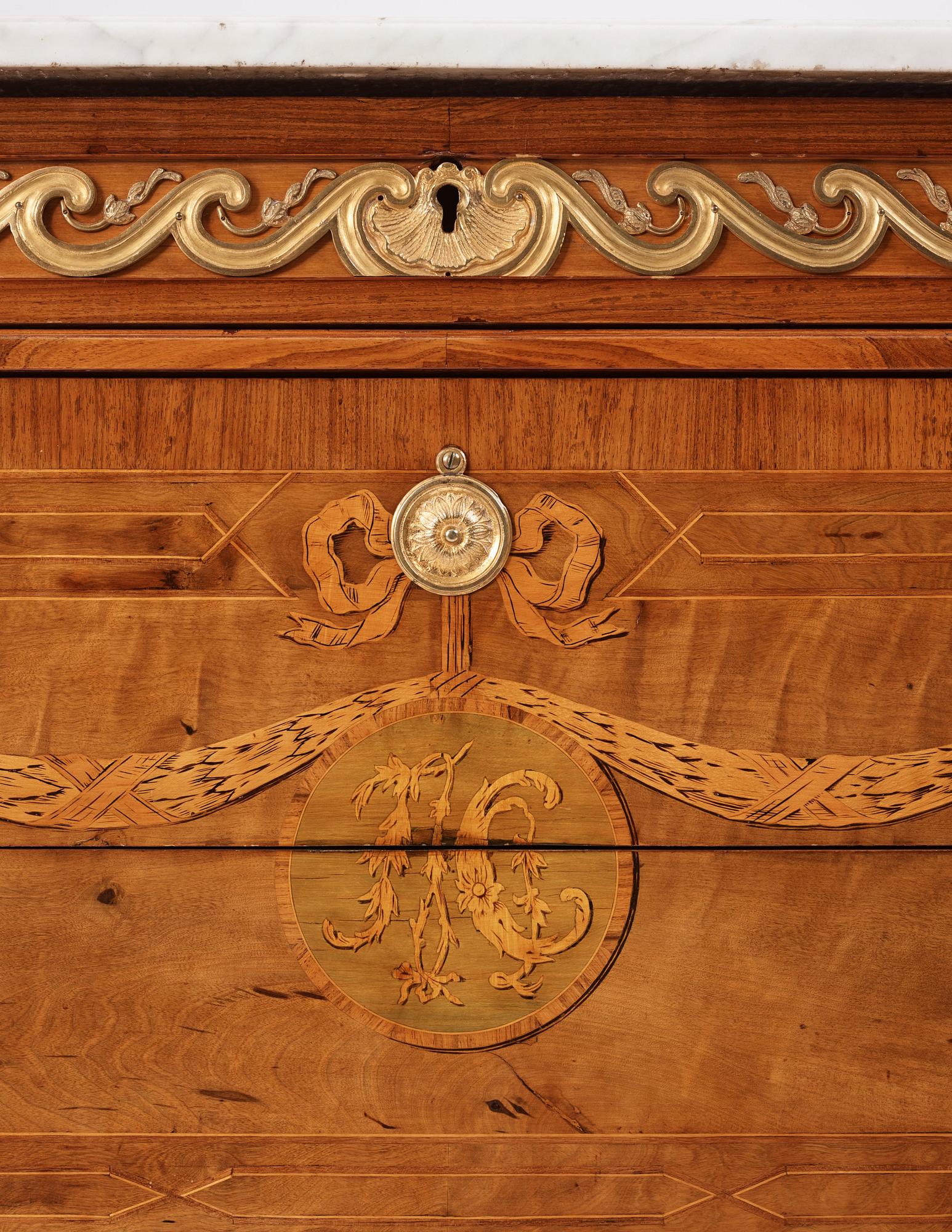
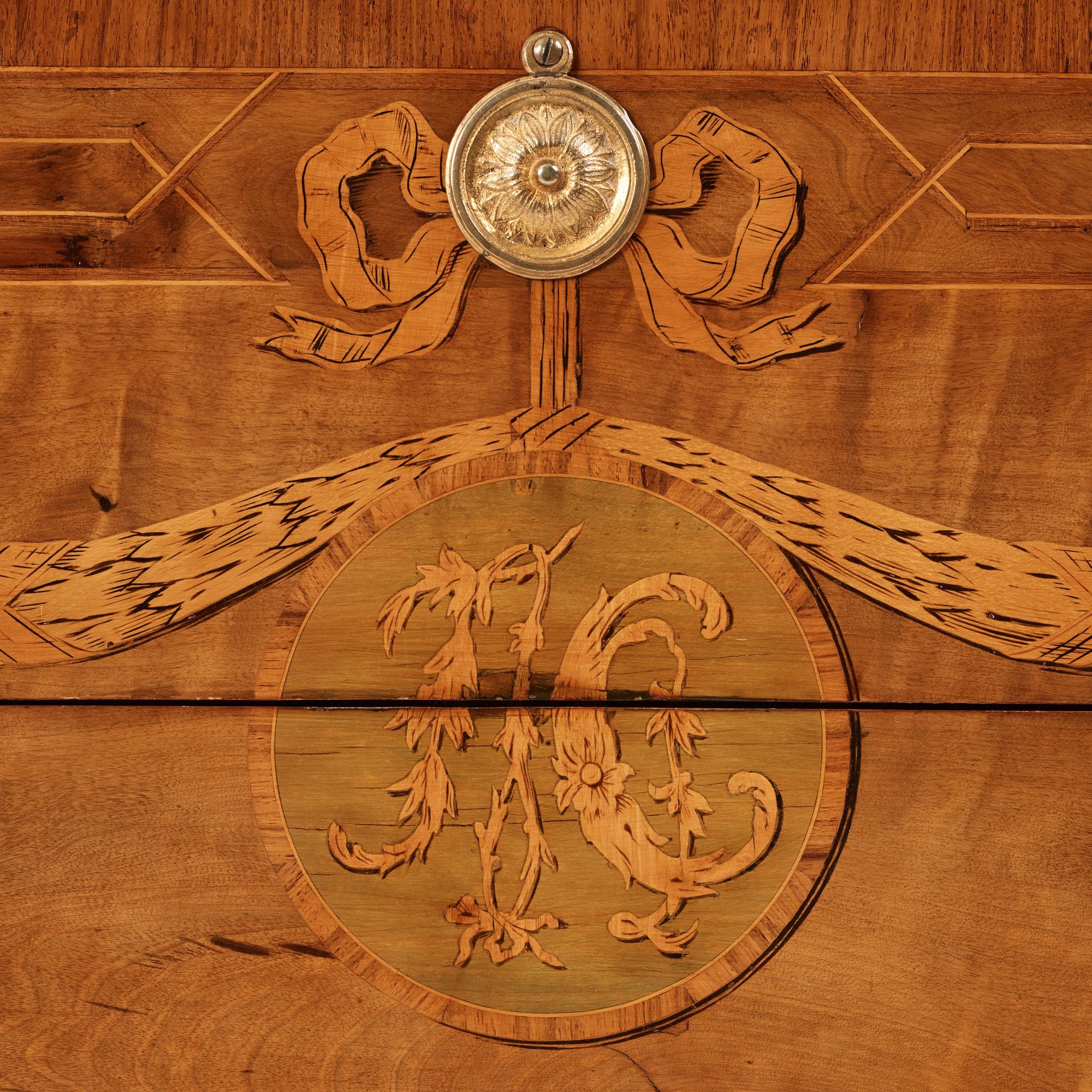
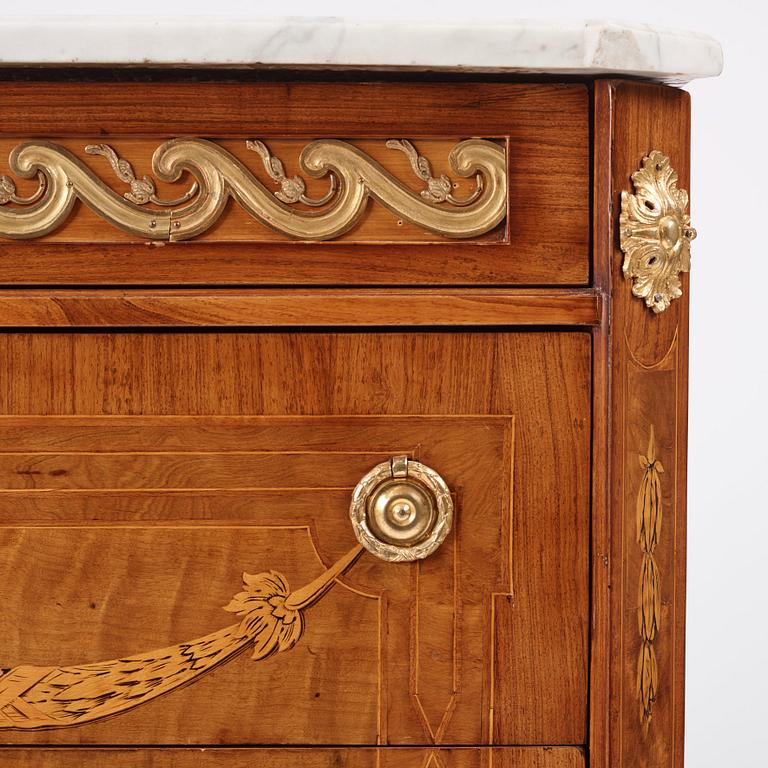
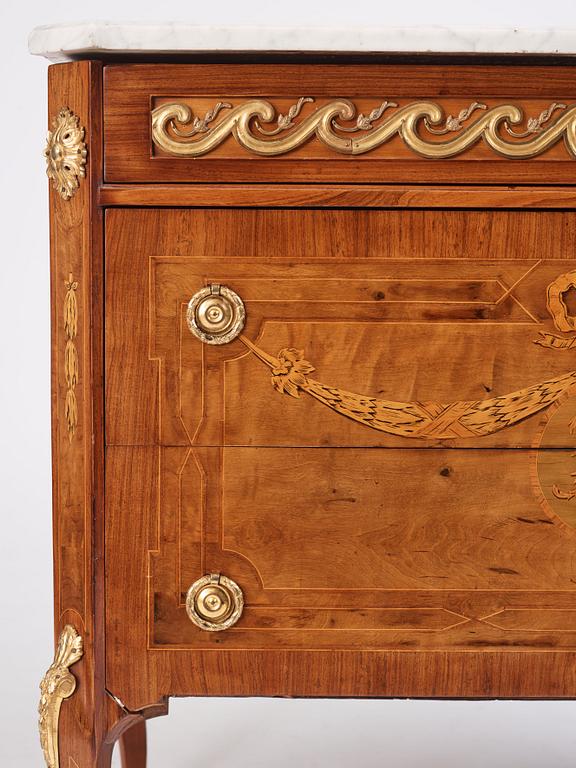
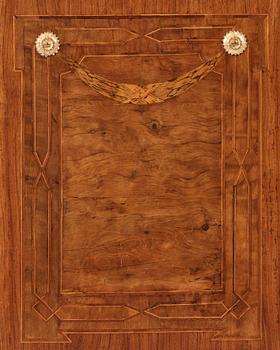
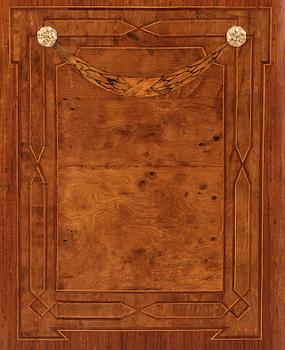
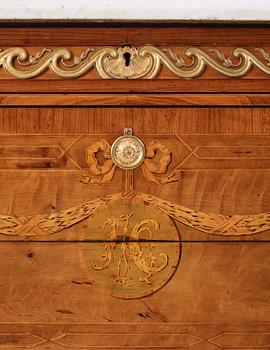
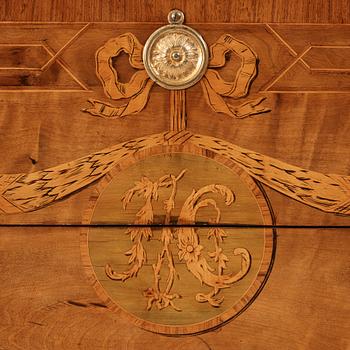
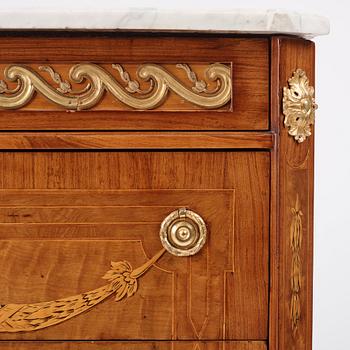
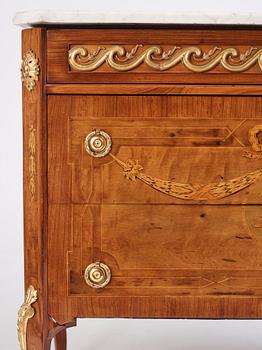
The bureau of the auction is an excellent example of how Georg Haupt was skilled at keeping up with the taste and style of the late 1780s. At first glance, the bureau may seem quite ordinary. But the details of festoons and a medallion with a monogram, as well as the curved veneer of the legs, reveal the master's hand, as well as the perfect proportioning and secure shading. In addition, the unusually rich use of precious woods and carefully selected veneer sheets signaled exclusivity and status for the contemporary society, as always in Haupt's intarsia-decorated furniture.
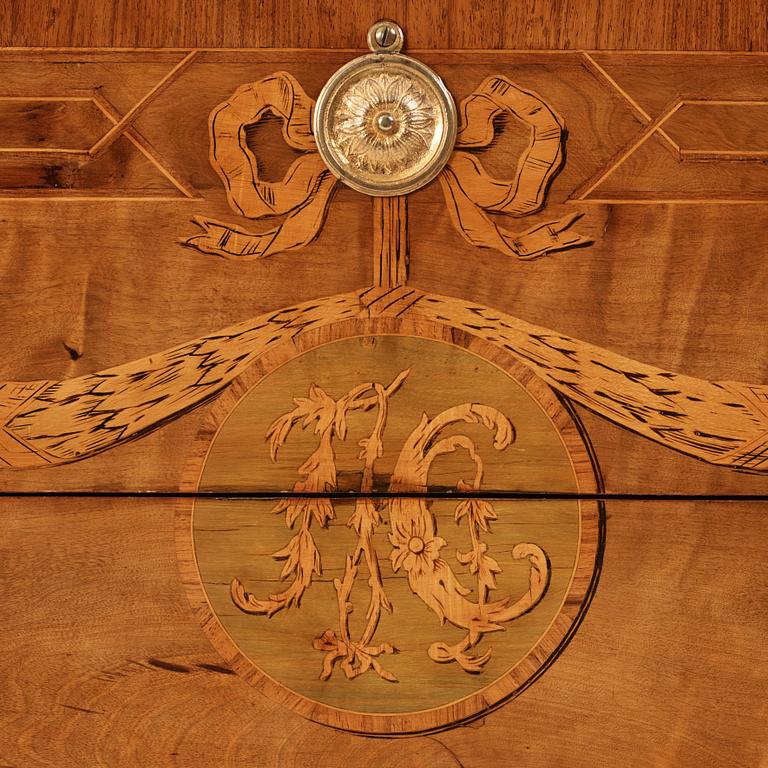
Among Swedish cabinetmakers, Haupt is the only one to use inlays of monograms formed by plant tendrils. In some cases, these are very clear - as in the case of a series of furniture ordered by the Sparre family, adorned with clear "S" - but more commonly, the monograms are almost abstract and can often be interpreted in several different letter combinations. Like Haupt's portrait medallions, which are usually part of a general arsenal of motifs - such as an "antique head" - and not specific portraits, it is possible that in some cases the monograms never intended to represent a specific combination of names, but rather should be regarded as abstract compositions.
For condition report contact specialist
Others have also viewed