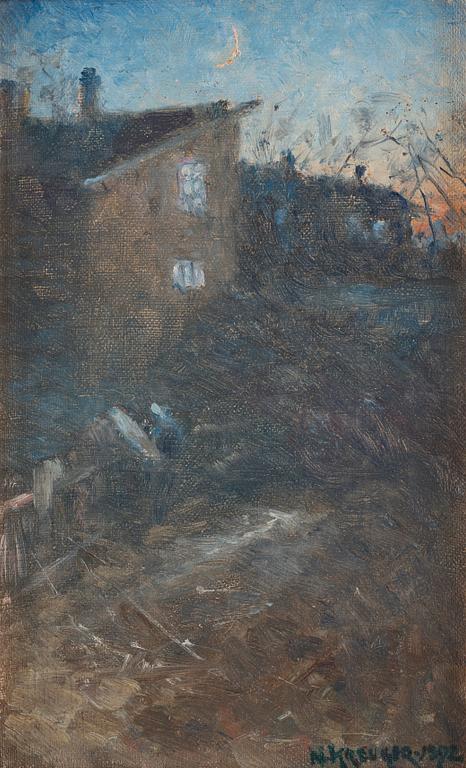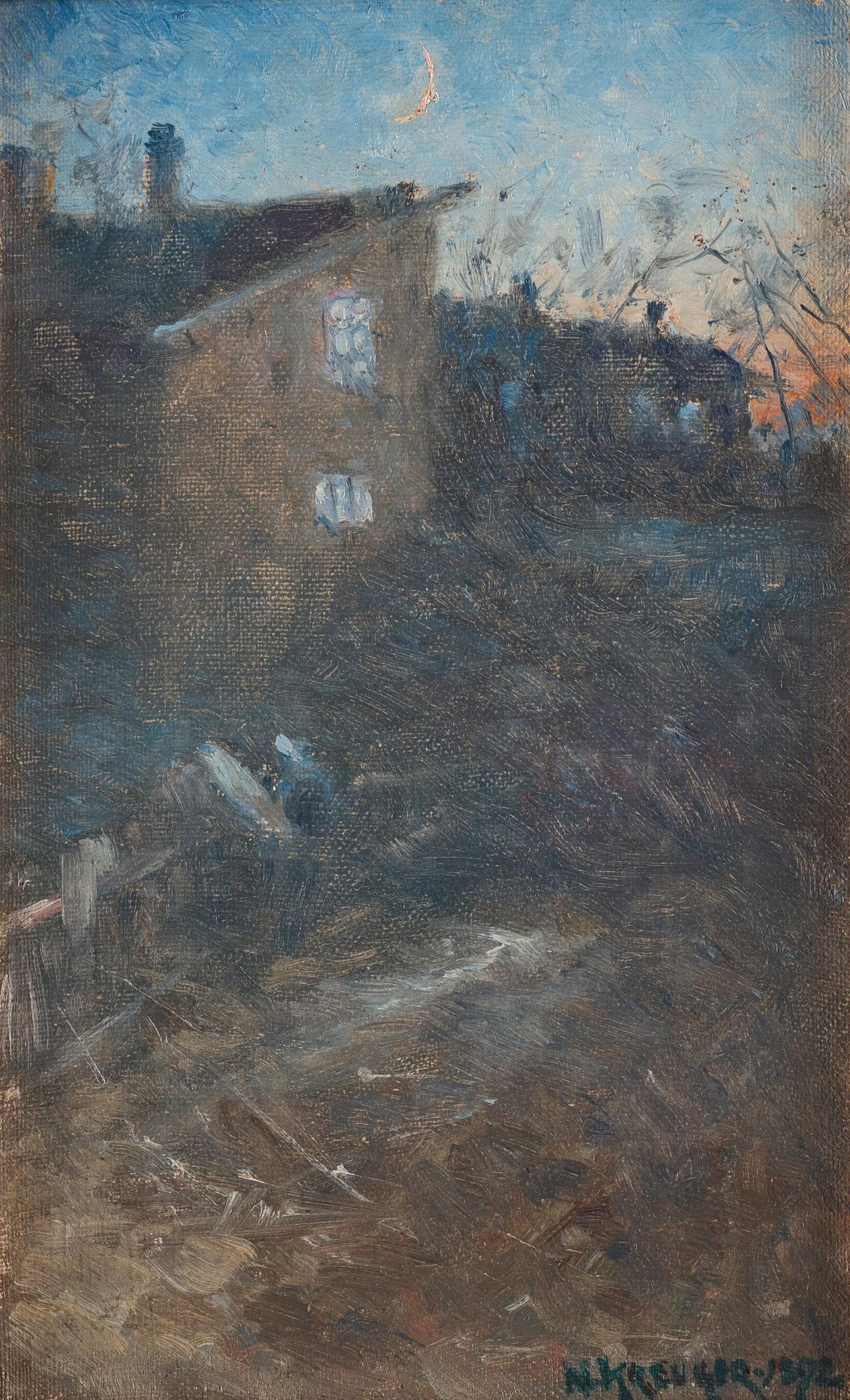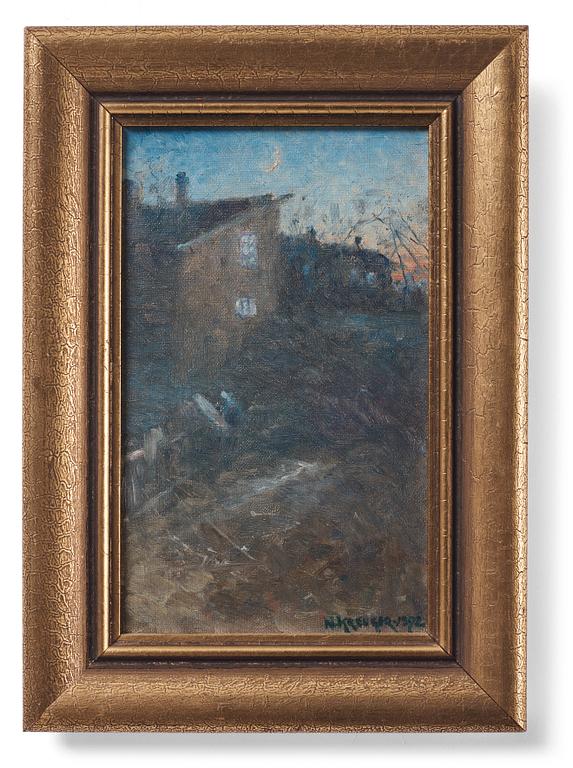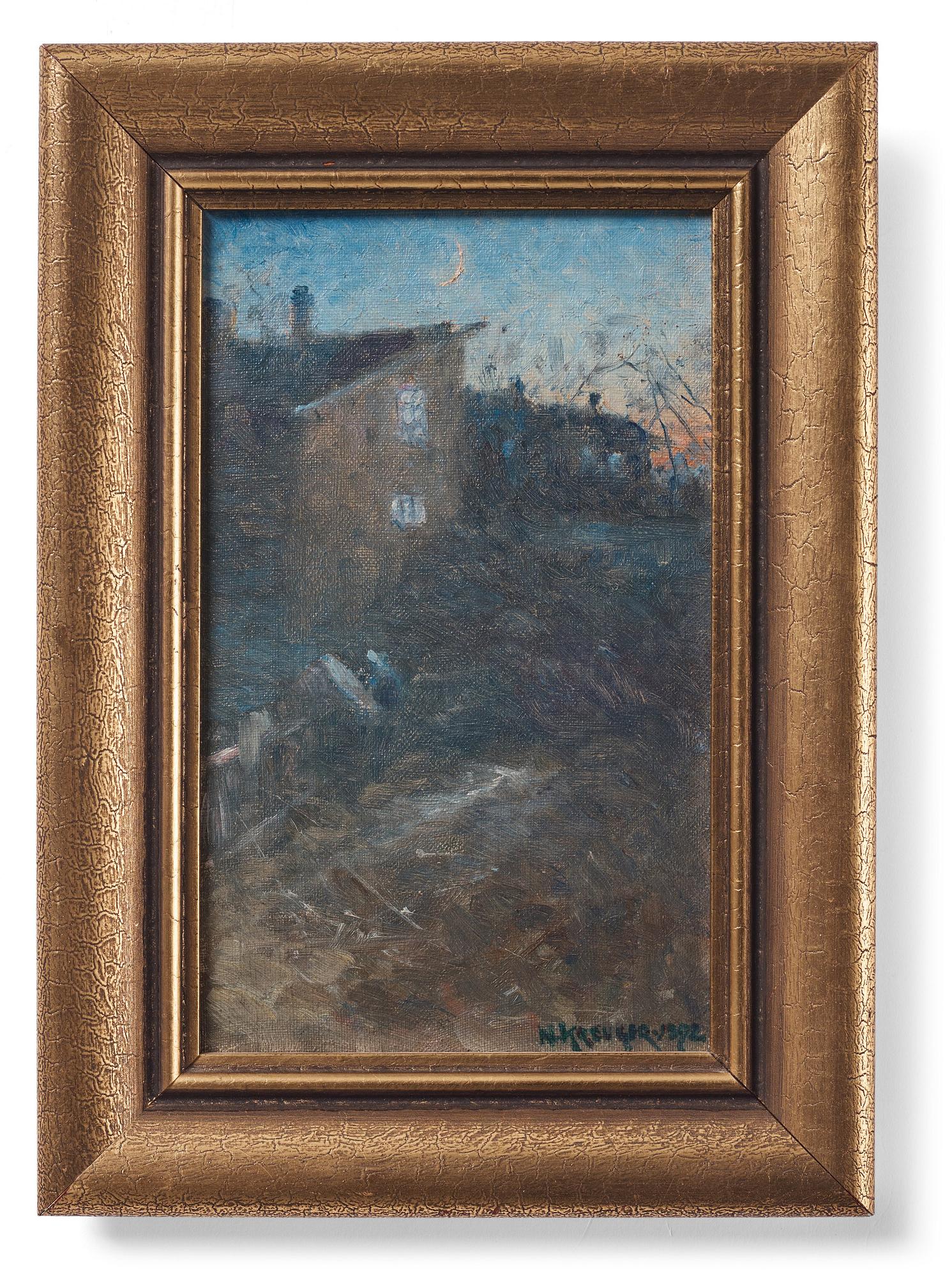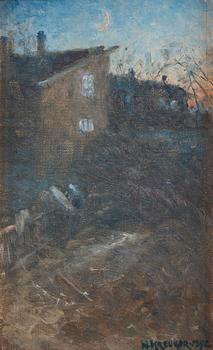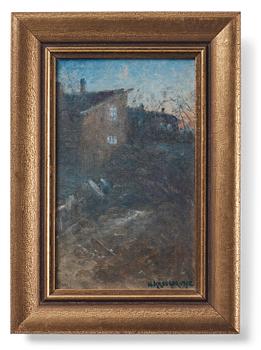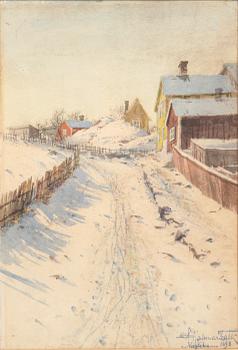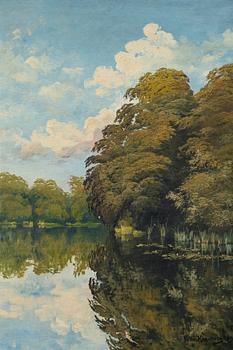
Twilight scene from Varberg
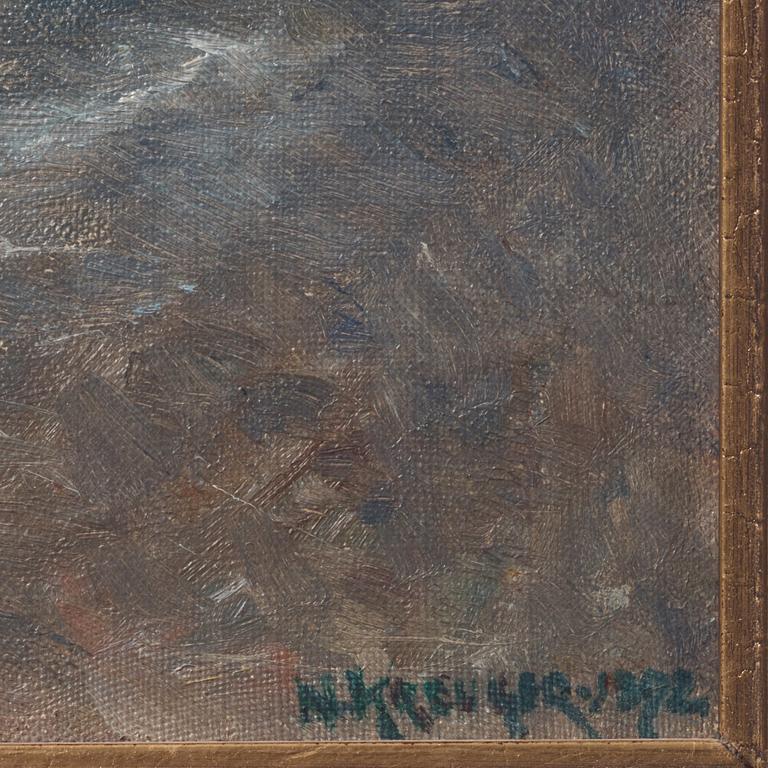
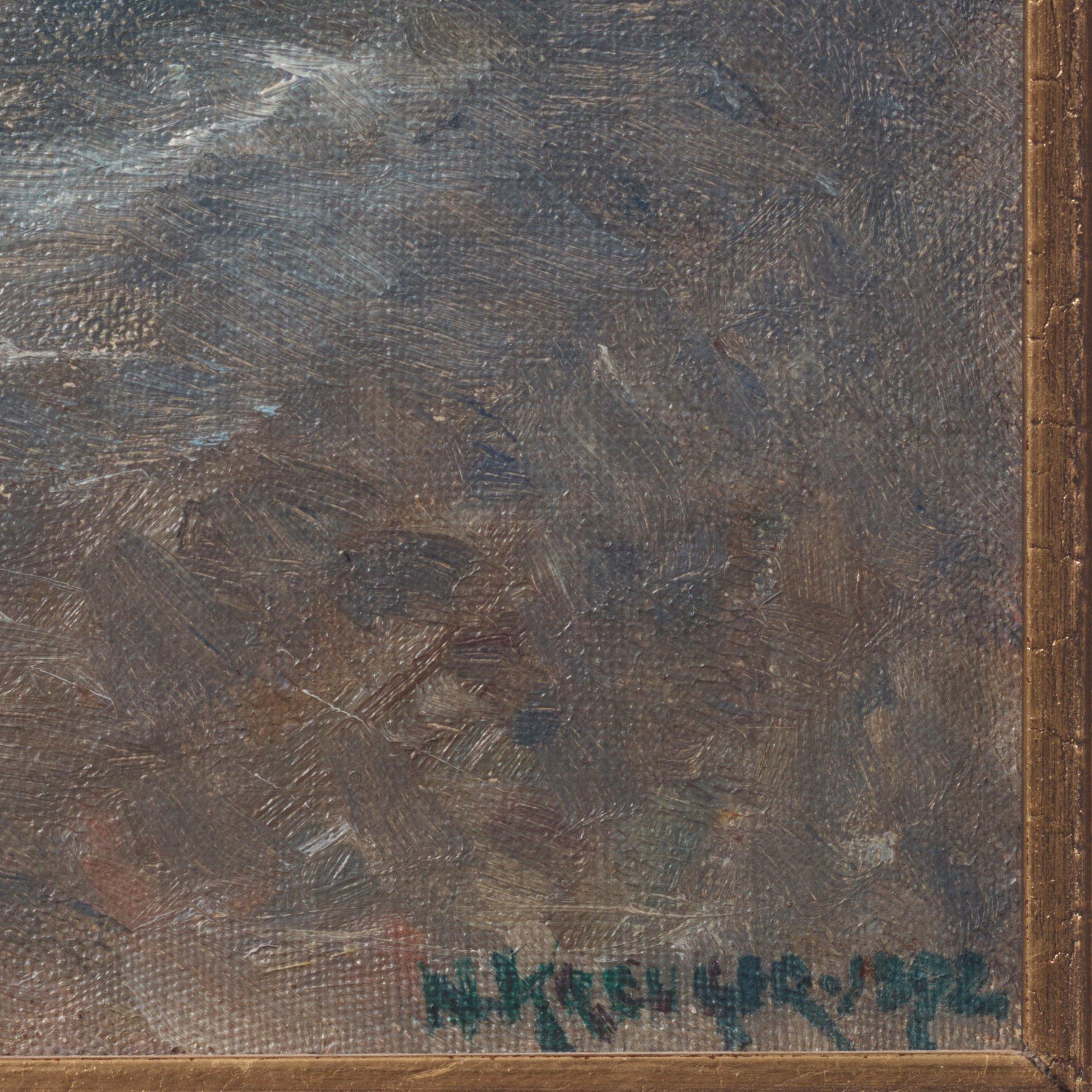
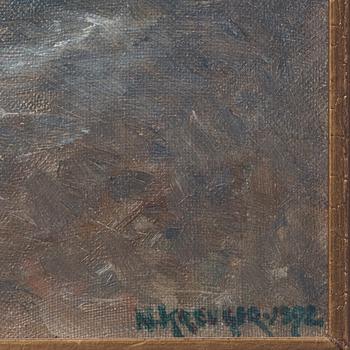
Signed N Kreuger and dated 1892. Canvas laid down on panel 23 x 14.5 cm.
More information
The subject from 1892 is drawn from Varberg, where Kreuger and his wife had settled in the autumn of 1887. With the exception of stays in Paris, Kalmar, and Stockholm, Kreuger remained loyal to Varberg in the coming years. Tomas Björk writes in "Nils Kreuger" (exhibition catalog, Prins Eugens Waldemarsudde, 2004):
"Varberg is situated on a flat area along the Halland coast. [...] In the town, there was an older wooden architecture, with a mix of simpler houses and those of a more representative nature. [...] Kreuger's early paintings from Varberg are characterized by a curiosity about the new environment, and several depict the old wooden buildings. Some motifs are portrayed in daylight with bright colors and in a nimble technique reminiscent of the Grez period, while others show the town in a subtle light. He often seeks out inconspicuous motifs depicted in fairly dissolved forms, and elements of geometrically perceived wooden architecture are readily juxtaposed with the organic form of the trees”.
For condition report contact specialist