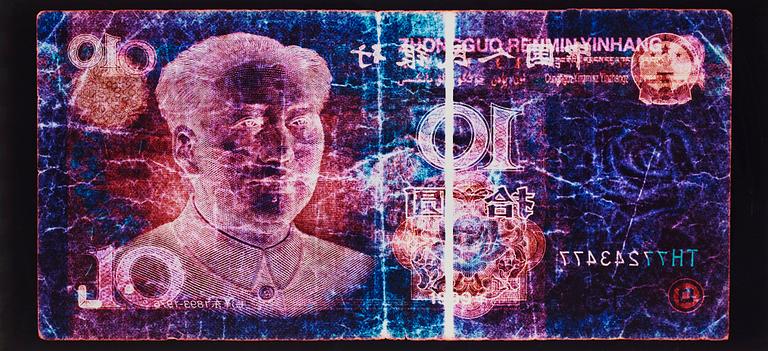
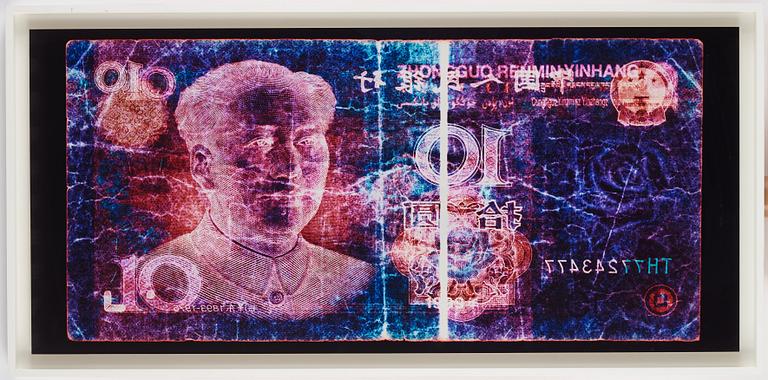
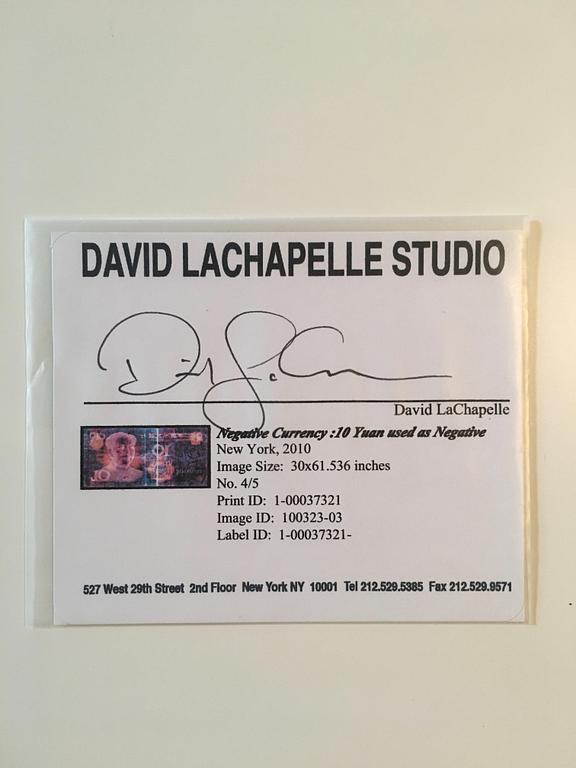
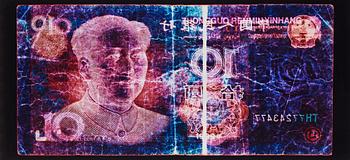
'Negative Currency: 10 Yuan used as Negative', 2010
Signed on label verso. Edition 4/5. Chromogenic print mounted on acrylic glass and framed, 81 x 164 cm including frame.
Provenance
David LaChapelle Studio, New York.
More information
From the "Negative Currency Project: Chinese Yuan" series.
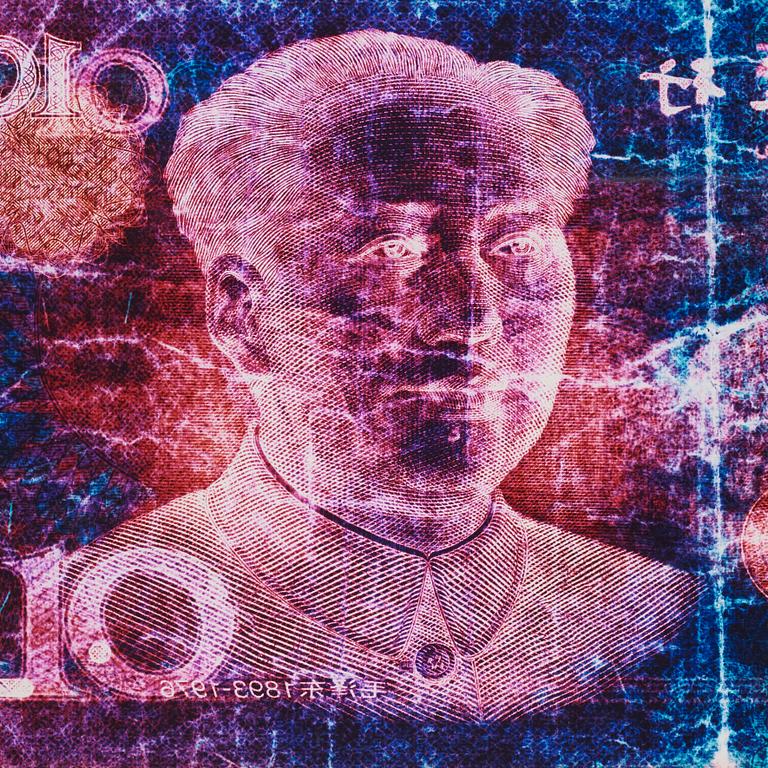
As the title indicates, the "Negative Currency" suite is the result of LaChapelle's experimentation with international banknotes as negatives. In inverted colours, both sides of the notes, one negative and one positive, appear in the final photograph. While LaChapelle's mentor Andy Warhol's prototypical 1962 work "Dollar Bill" explores the conceptual distinction between art and commerce, LaChapelle's "Negative Currency" demonstrates the dual effects that money has on our society, both positive and negative. The simplicity of the realisation of the idea results in a crystal clear concept. The photograph's simultaneous representation of both sides of the banknote is similar to the image created when traders examine banknotes against the light to certify their authenticity. By looking for watermarks and similar details. This visual reference becomes a reflection on the commercialisation of art. Like Warhol's work, this subtle critique is given an injection of irony as LaChapelle himself is highly entrepreneurial in the criticised market.
For condition report contact specialist

Image rights
The artworks in this database are protected by copyright and may not be reproduced without the permission of the rights holders. The artworks are reproduced in this database with a license from Bildupphovsrätt.







Others have also viewed