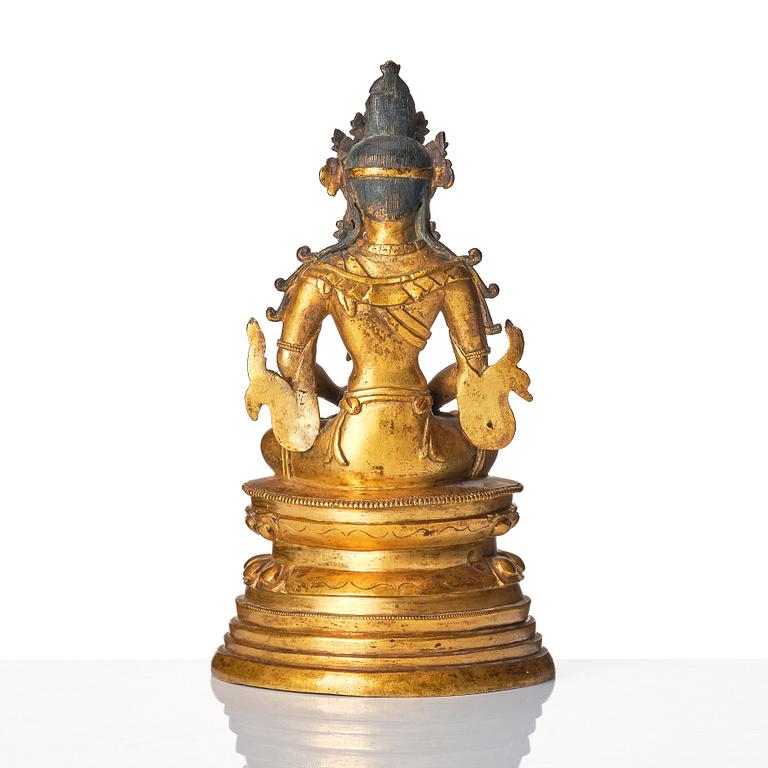
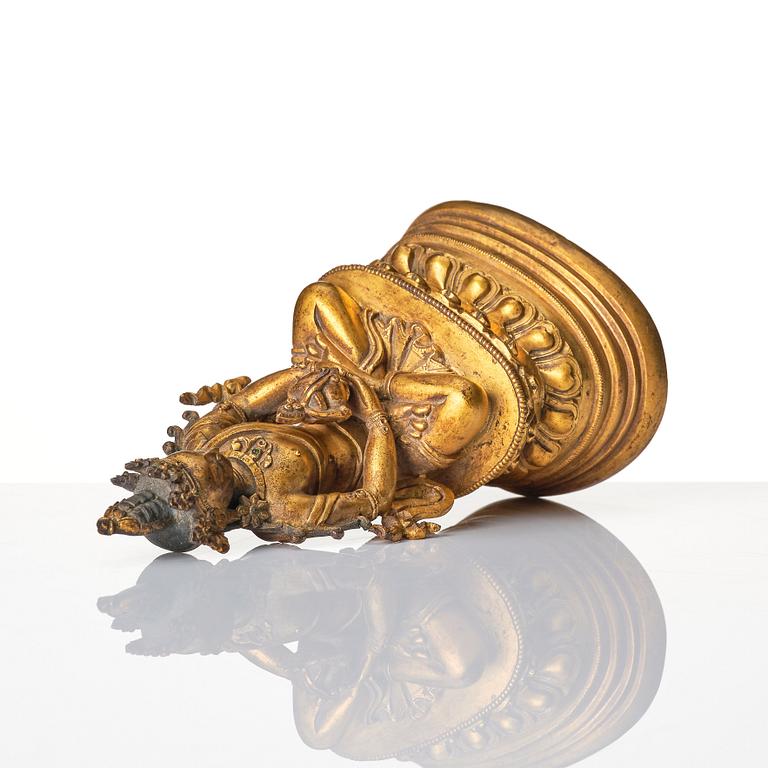
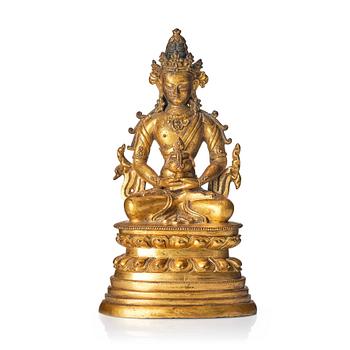
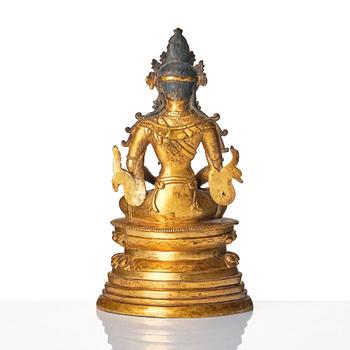
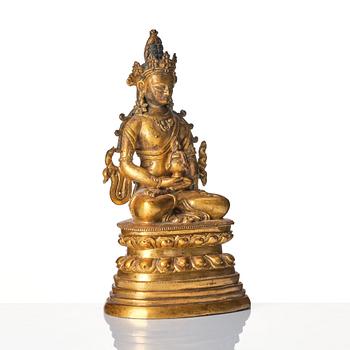
Finely cast seated in vajraparyankasana on a double-lotus base, depicted with hands held in dhyana mudra supporting a bumpa, his face with a serene expression and framed by an elaborate headdress and a pair of pendulous earlobes adorned with ornamental earrings, clad in loose clothing with finely detailed floral hems and and neatly folded by the lotus base. Traces of cold gilt and enamels. Height 15.5 cm.
A stola band restored.
Literature
Tibetan Buddhism was patronized by the Qing emperors, both for personal and political reasons, resulting in a surge in the production of Buddhist sculpture and painting. During the reign of Qianlong, the artisans of the Beijing workshops increasingly emulated sculpture from different periods and geographic areas, using as models the bronzes given as gifts from Tibetan dignitaries to the Qing court. Examples of Pala-style sculpture, from ninth-twelfth century Northeastern India, still remain in The Palace Museum Collection. Compare with a Pala-period bronze figure of Vajrasattva, illustrated in Cultural Relics of Tibetan Buddhism Collected in the Qing Palace, Beijing, 1992, Catalogue no. 56, and with a Pala-style Tibetan brass statue of Manjushri (see ibid., cat. no. 53).
For condition report contact specialist









Others have also viewed