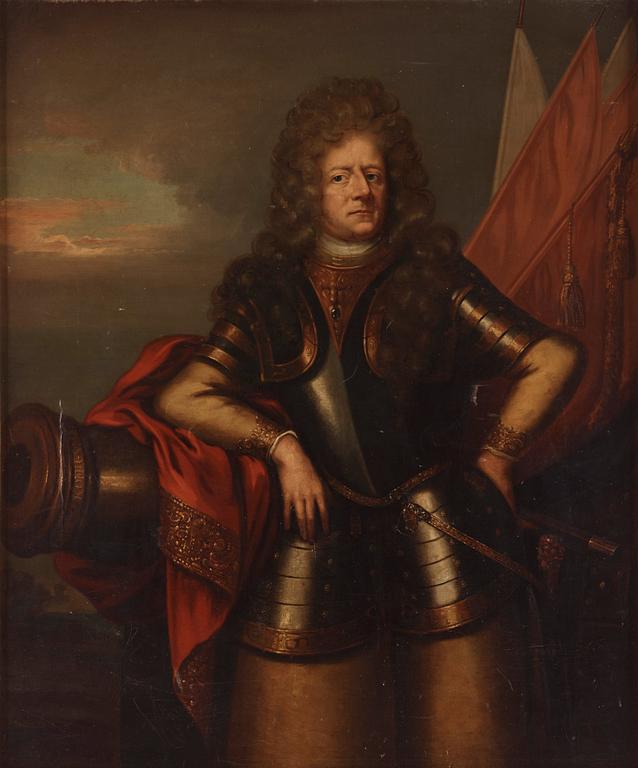
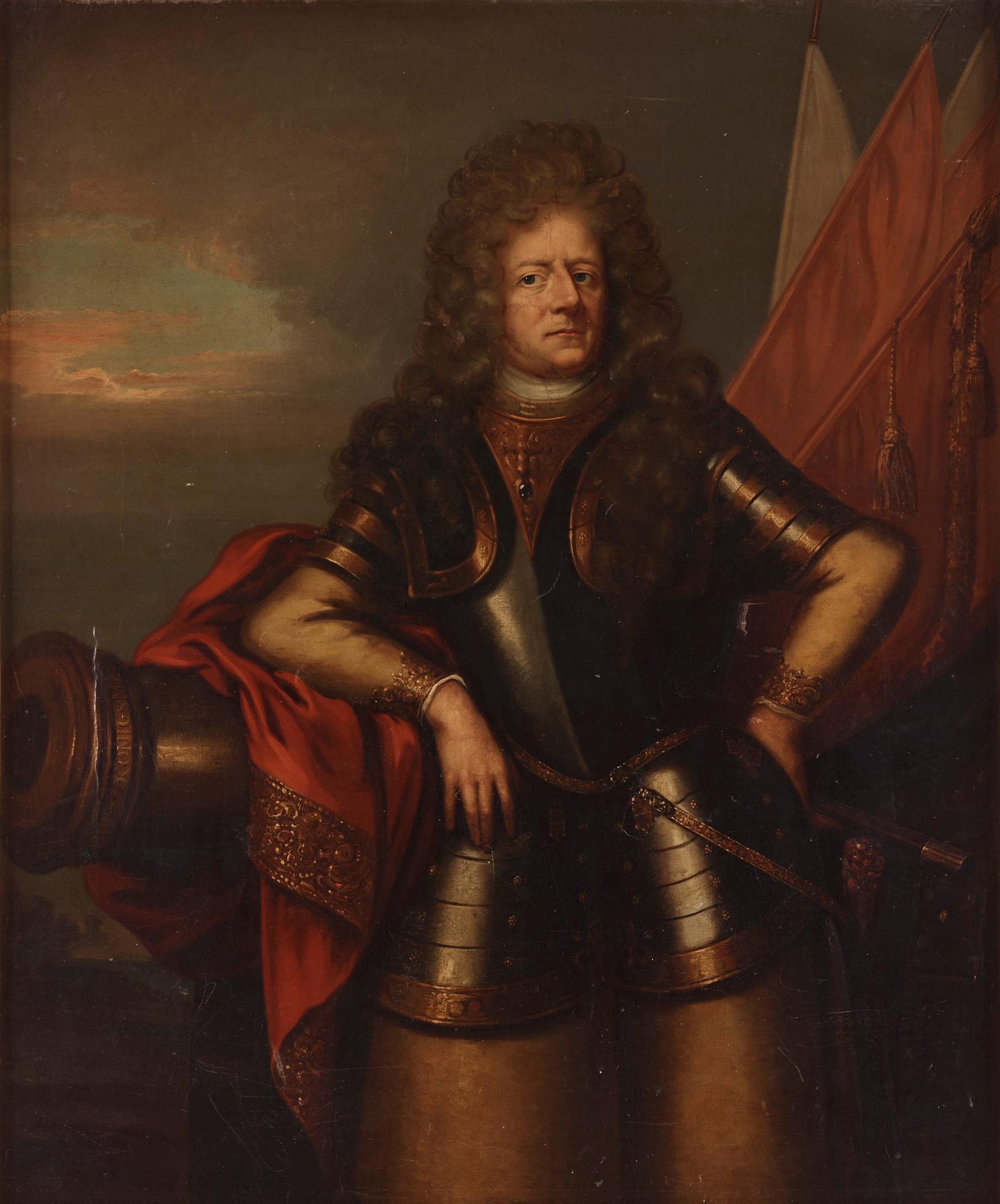
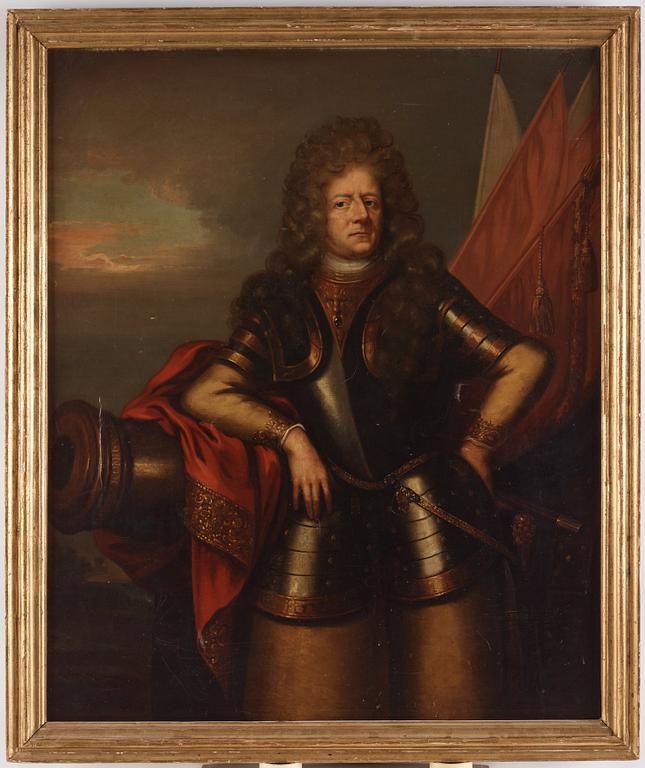
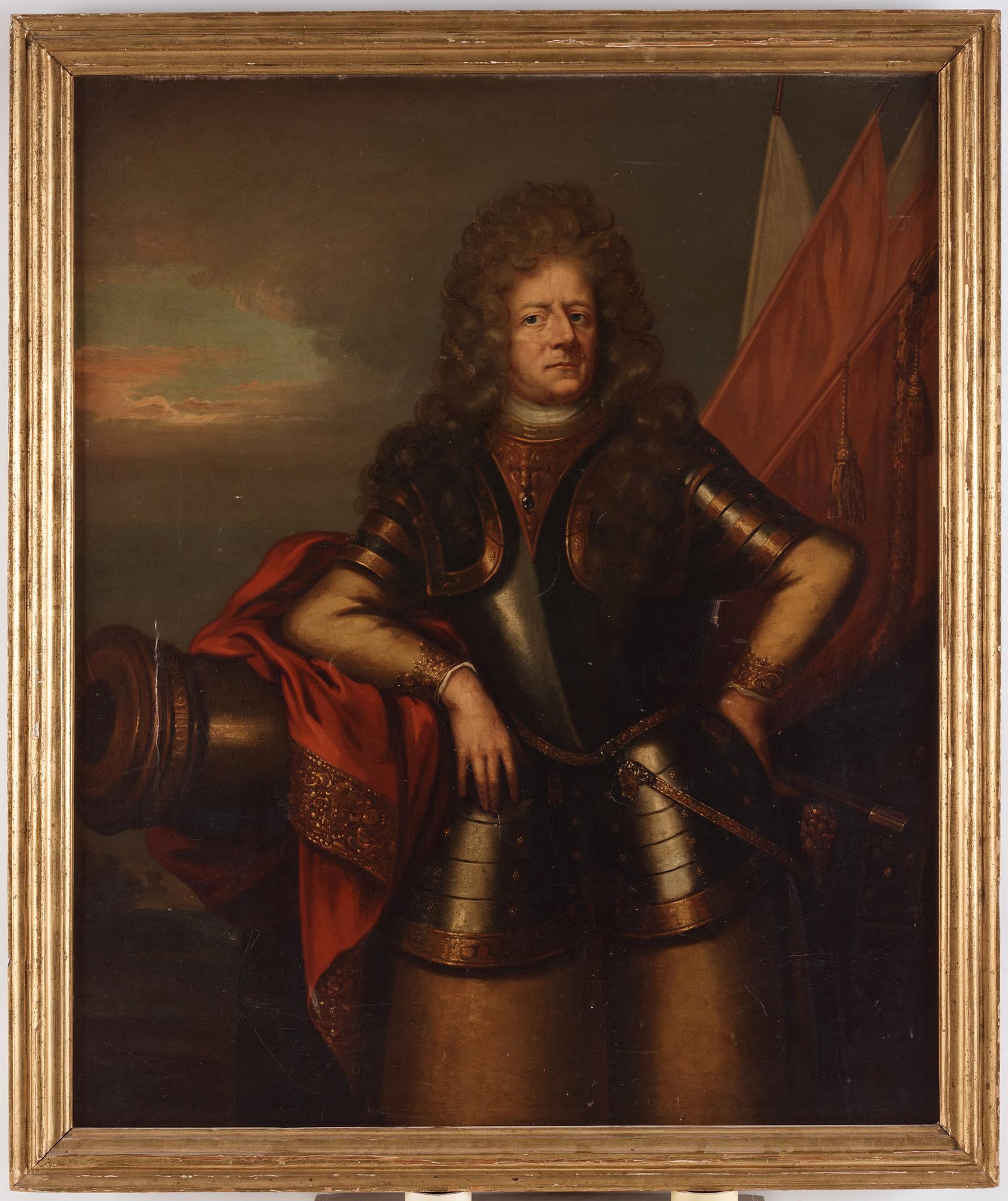
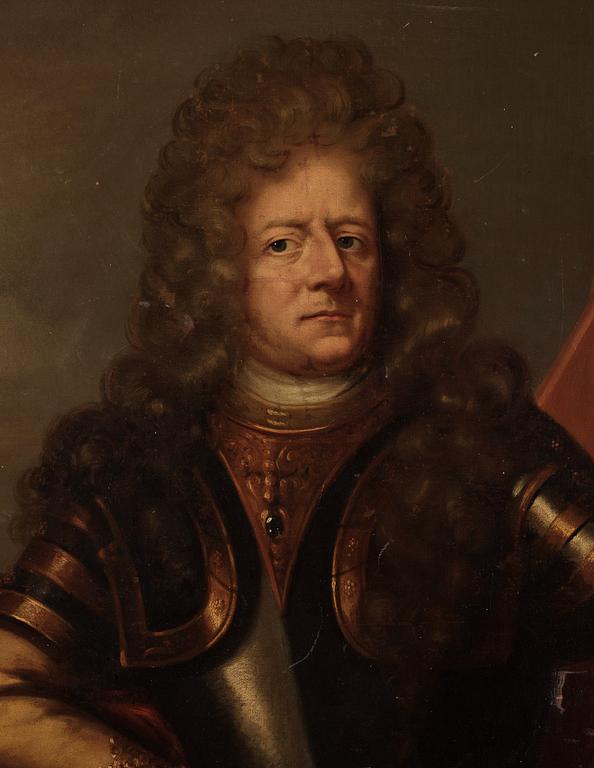
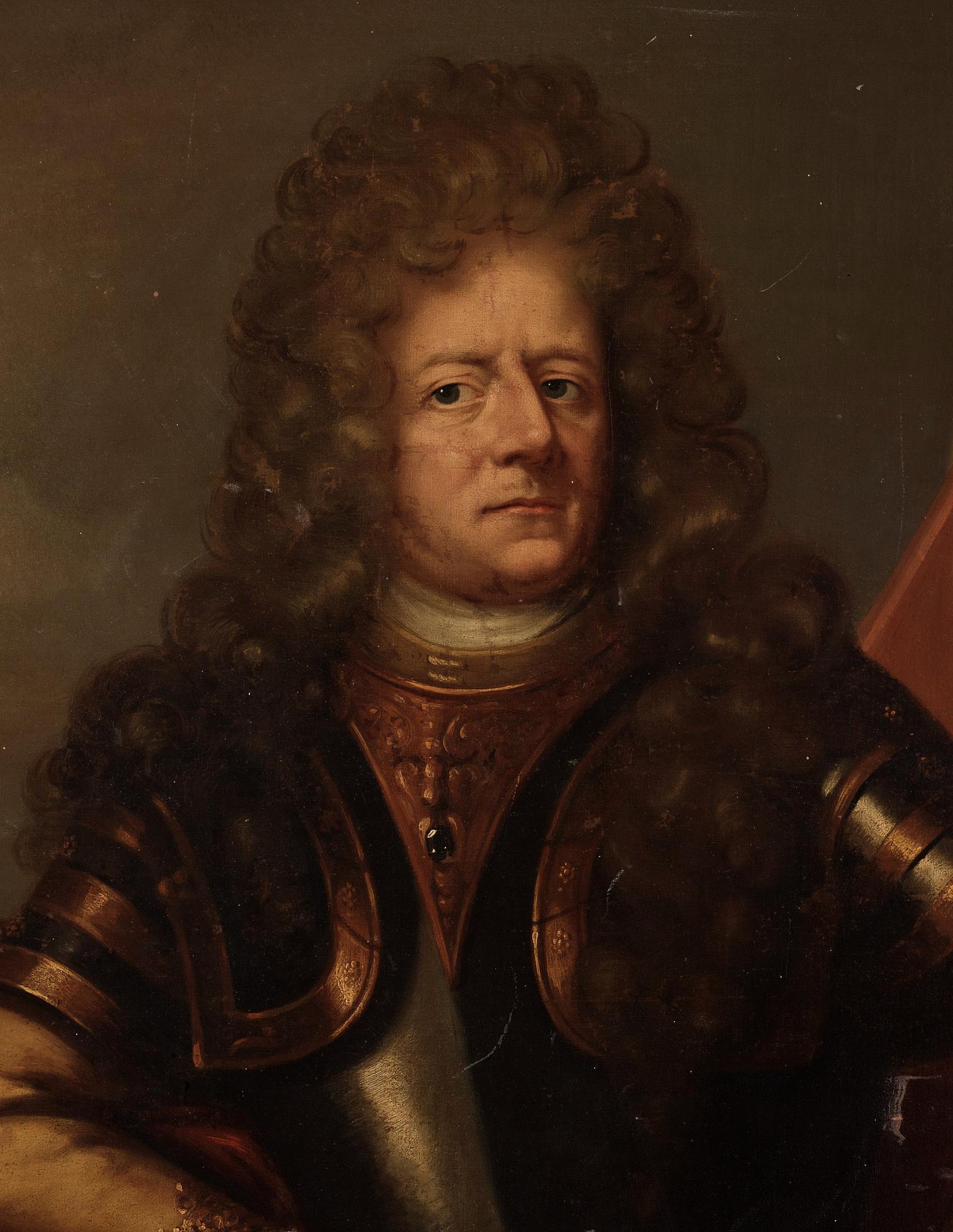
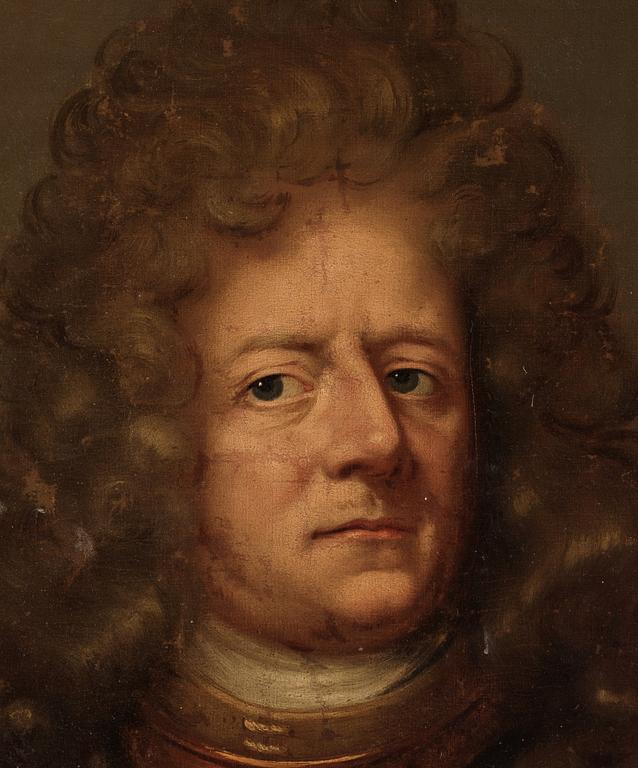
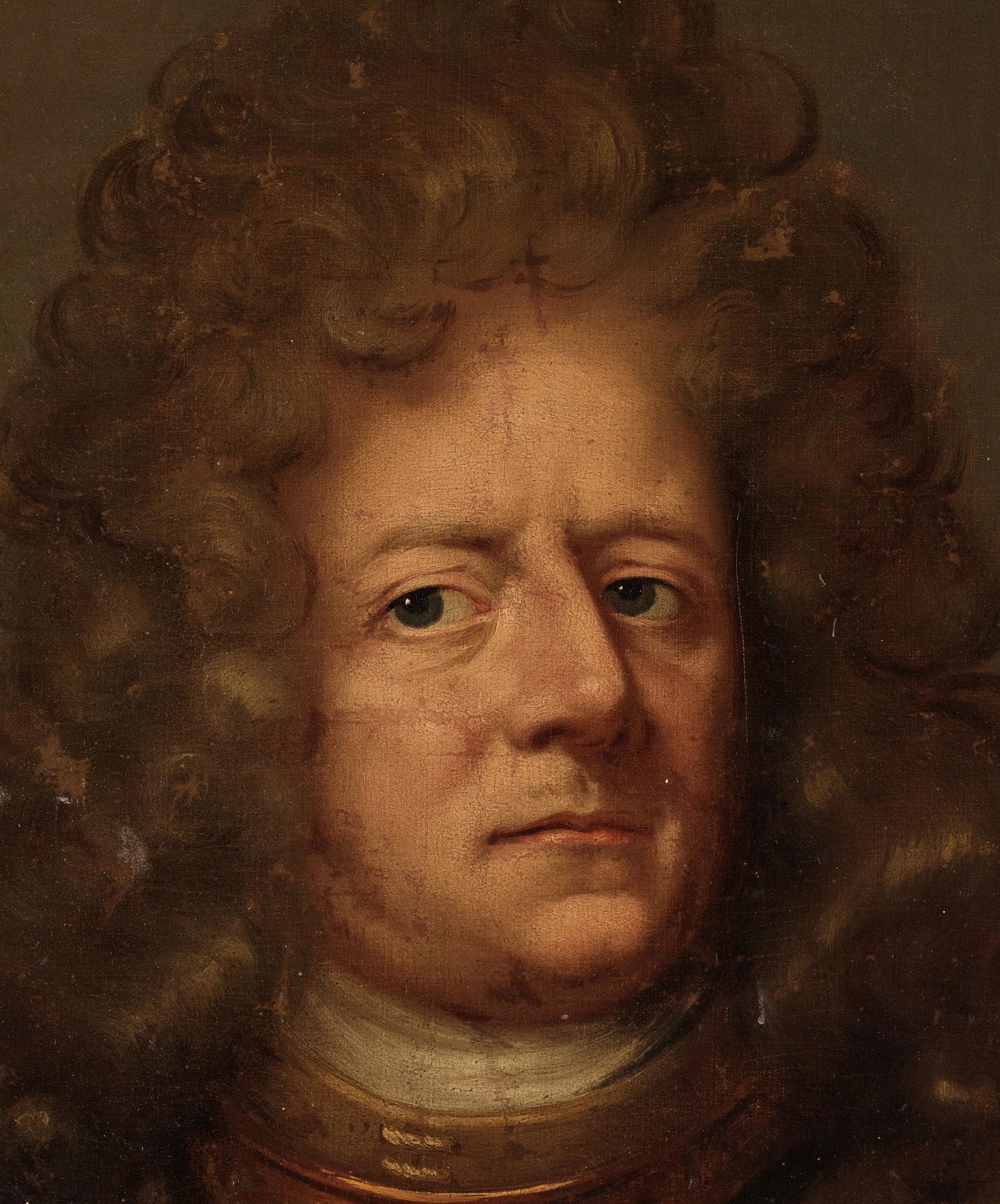
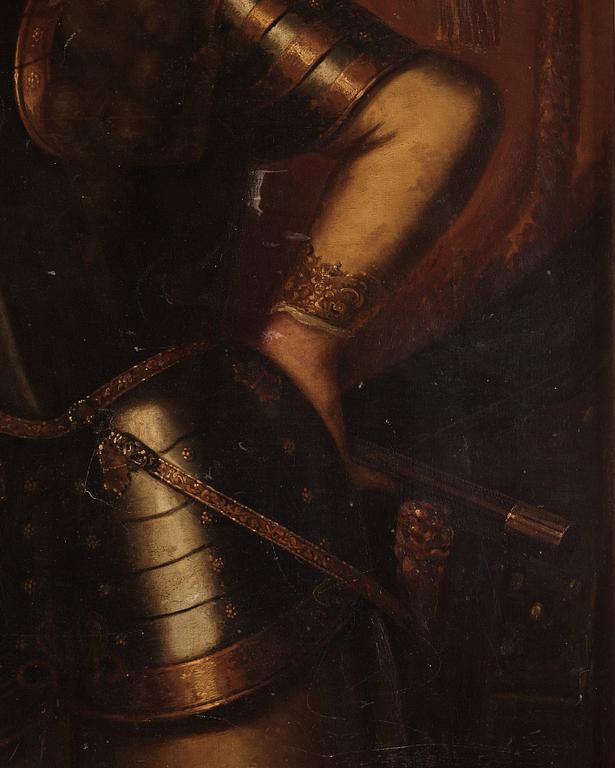
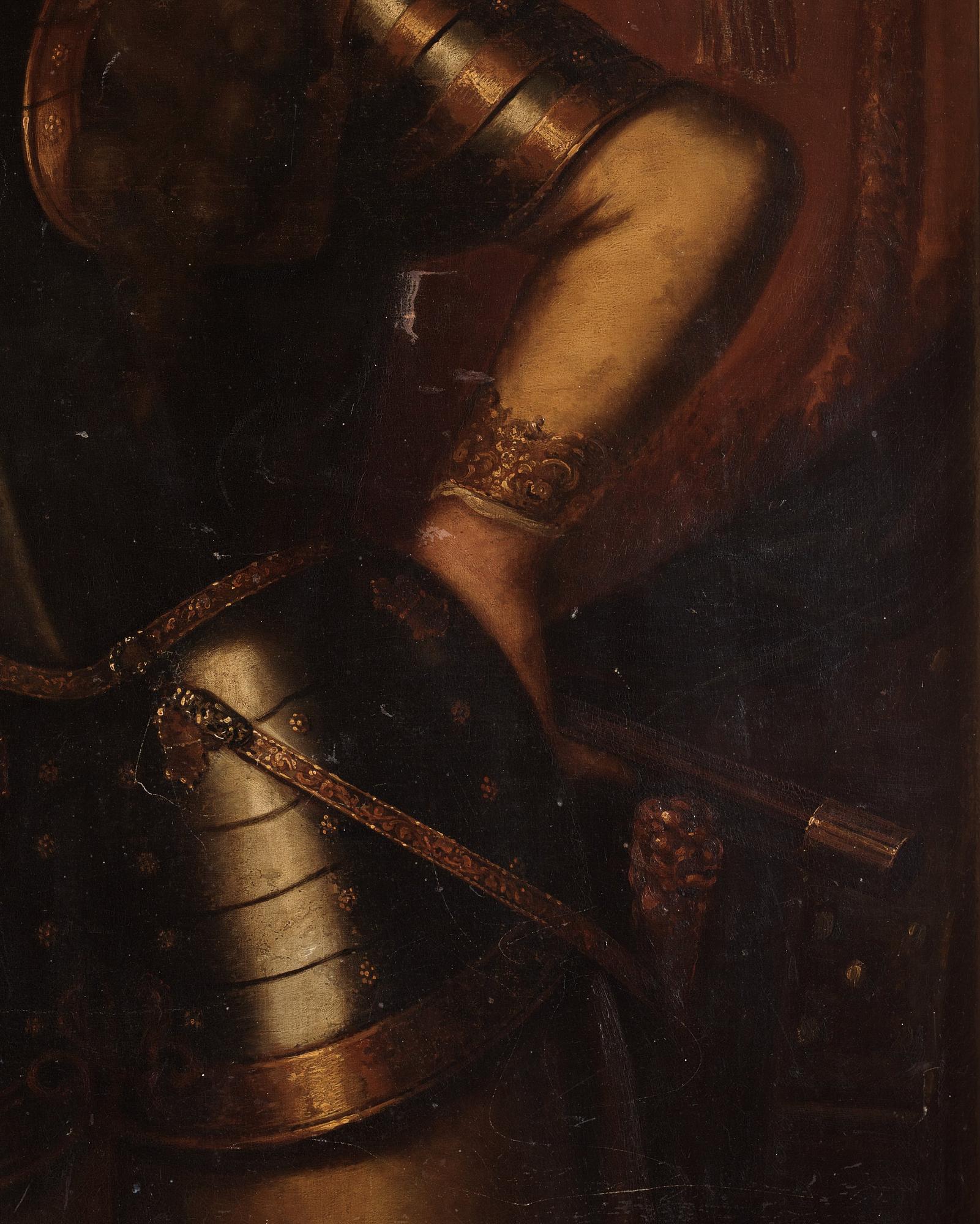
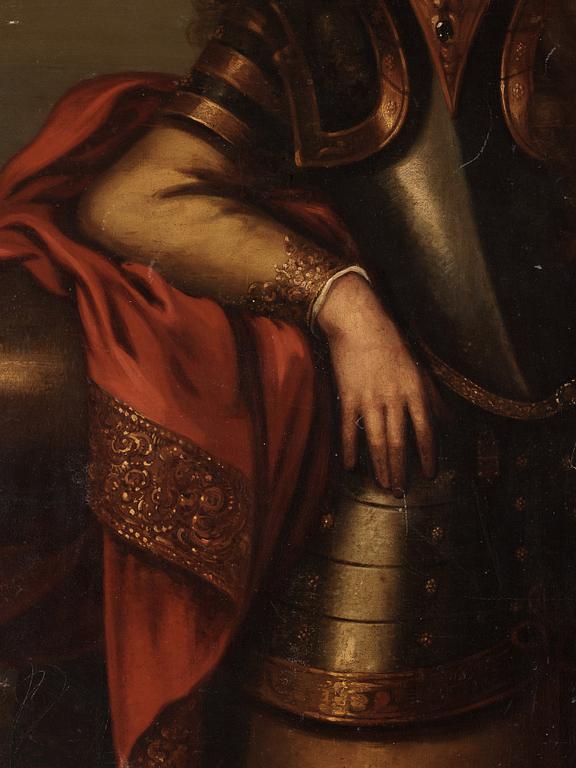
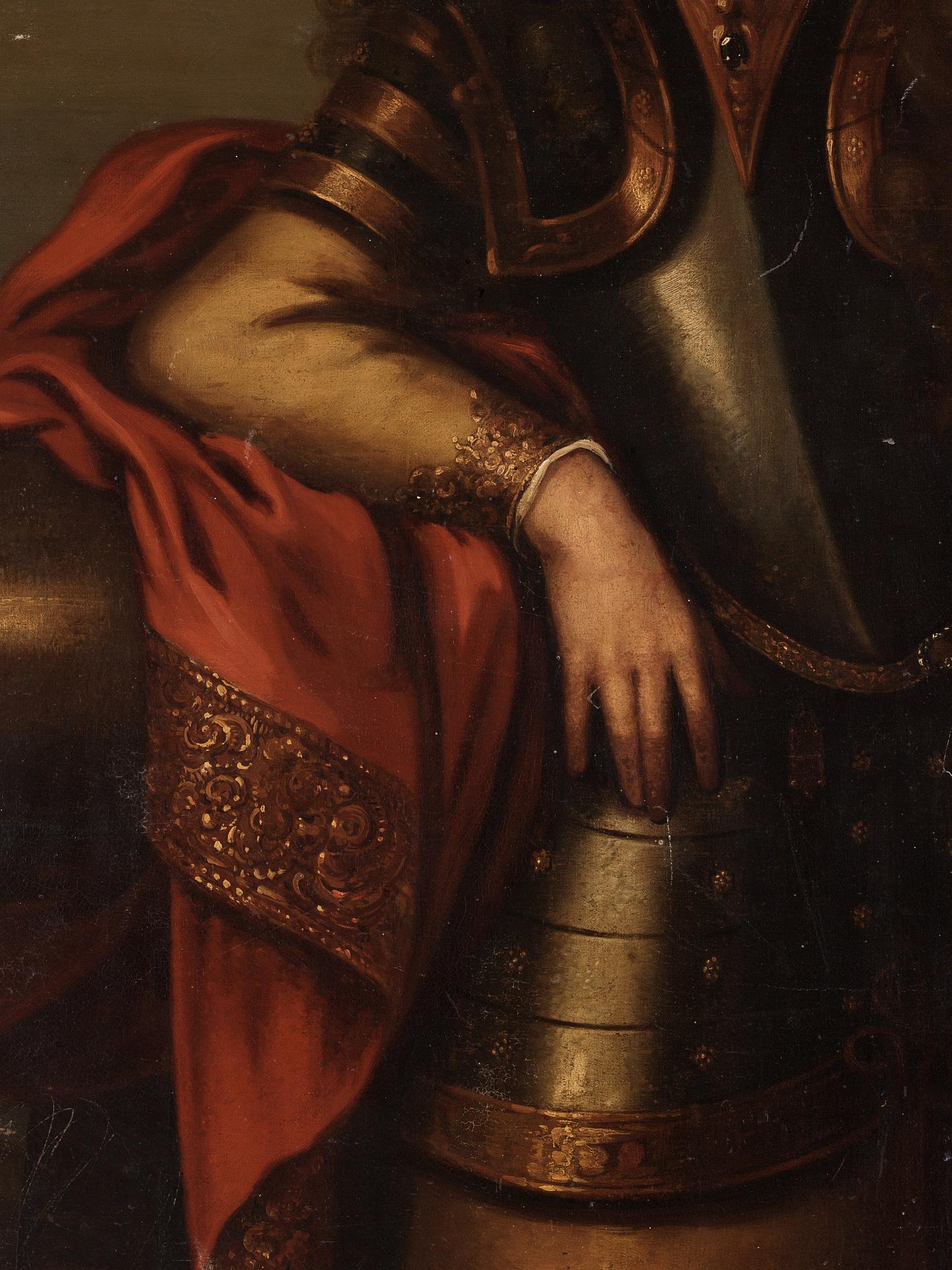
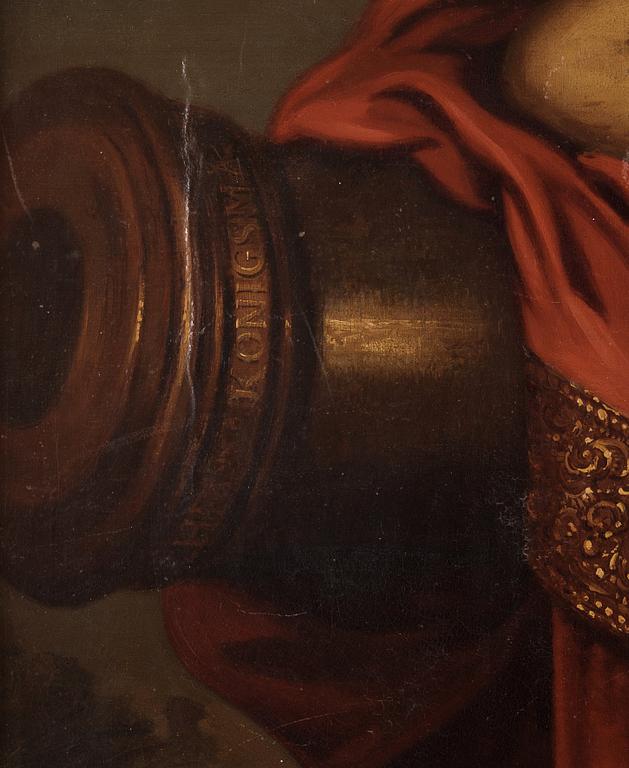
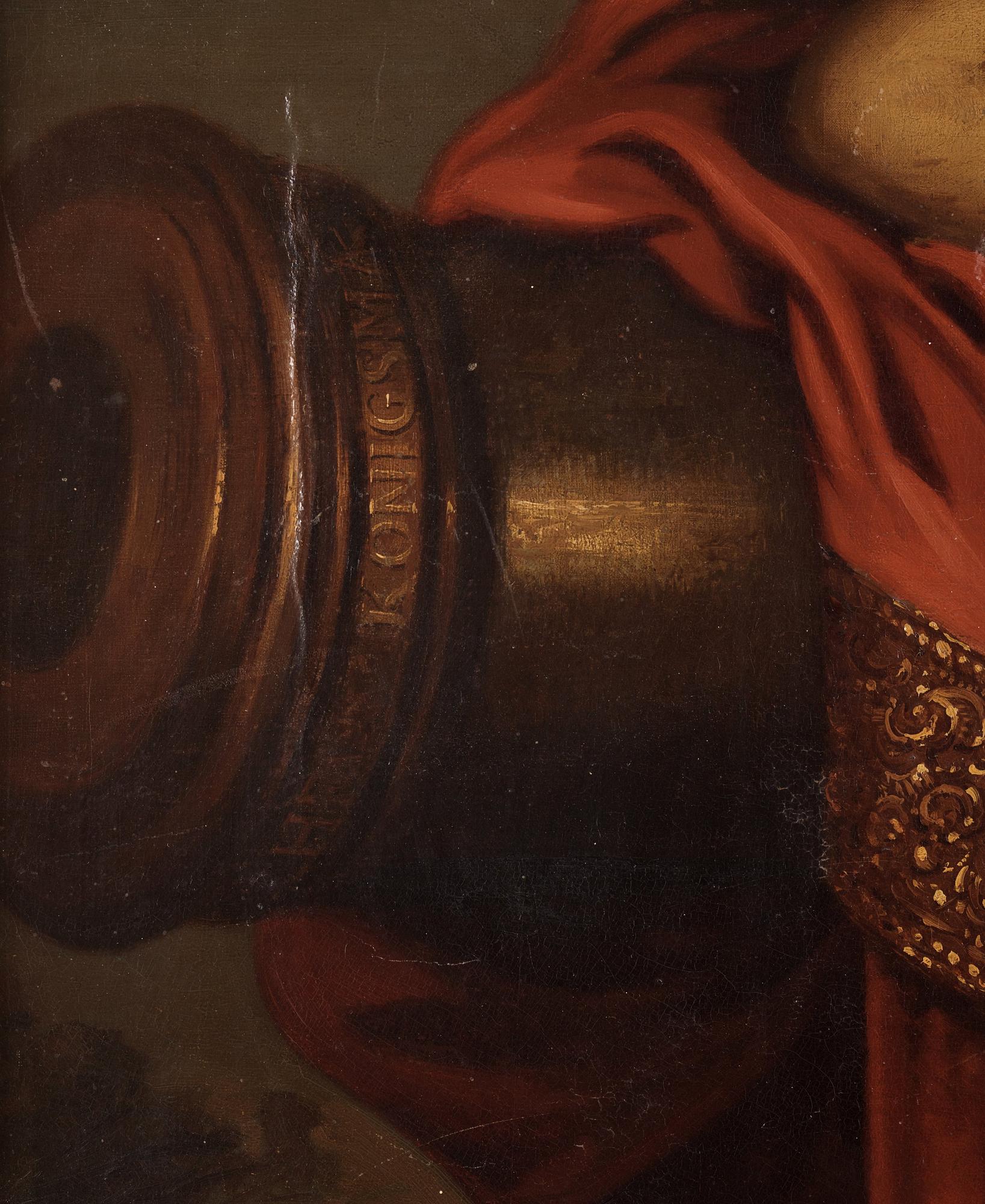
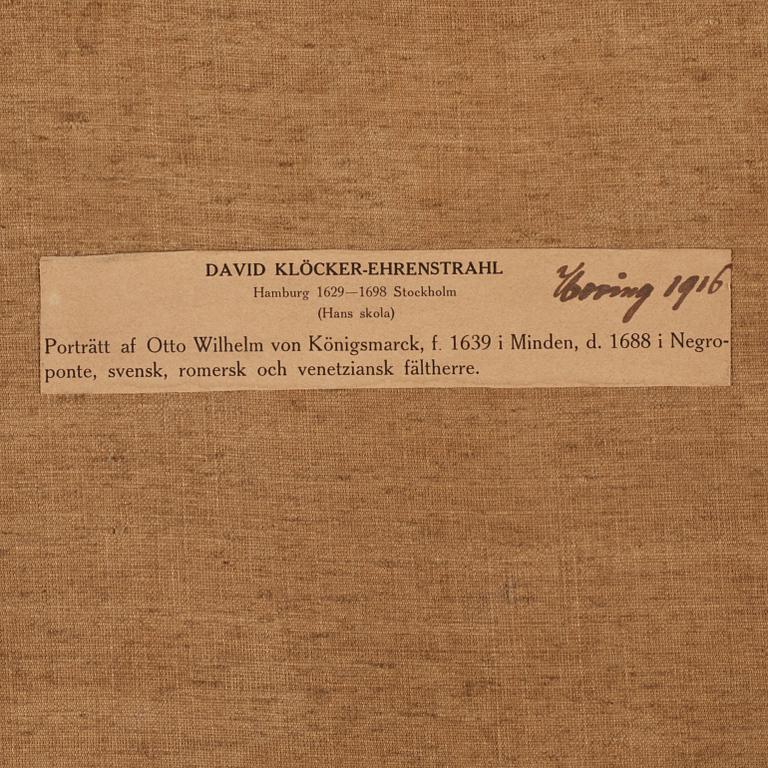
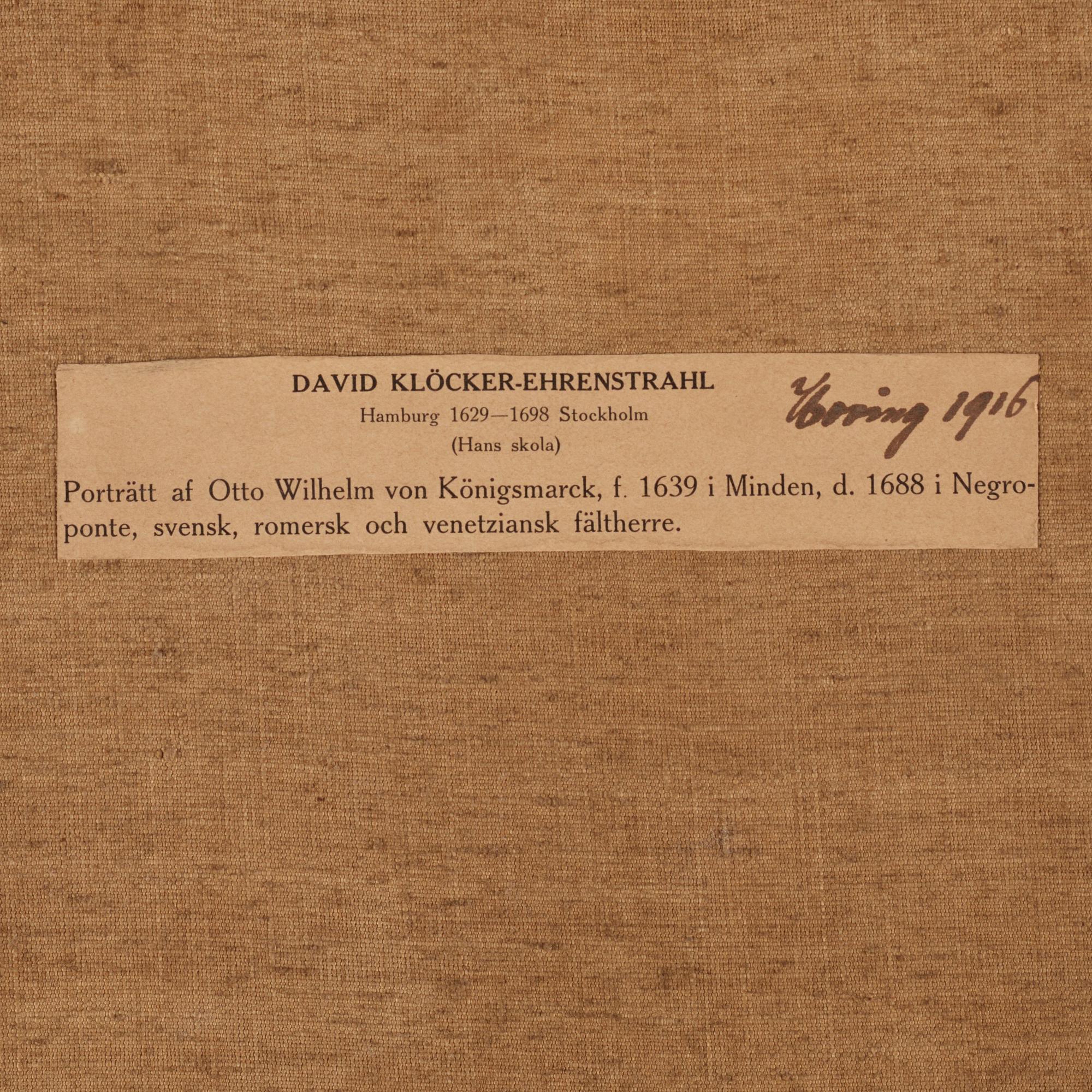
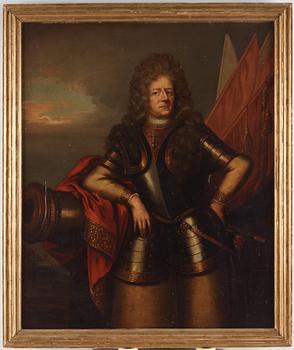
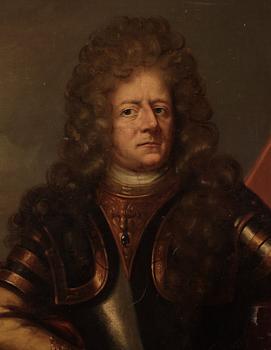
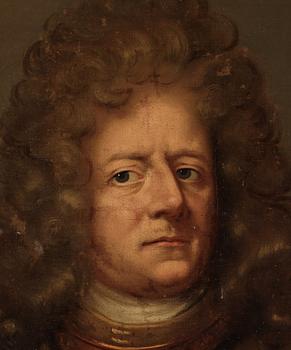
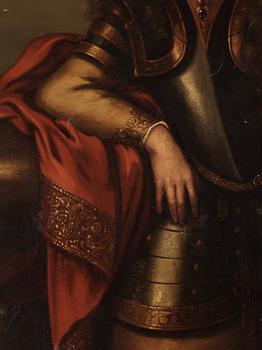
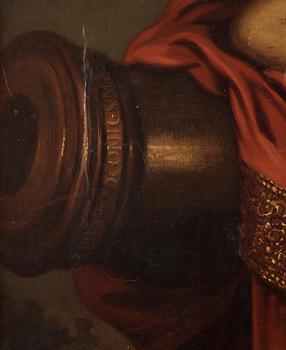
"Otto Wilhelm von Königsmarck" (1639-1688), half-length portrait.
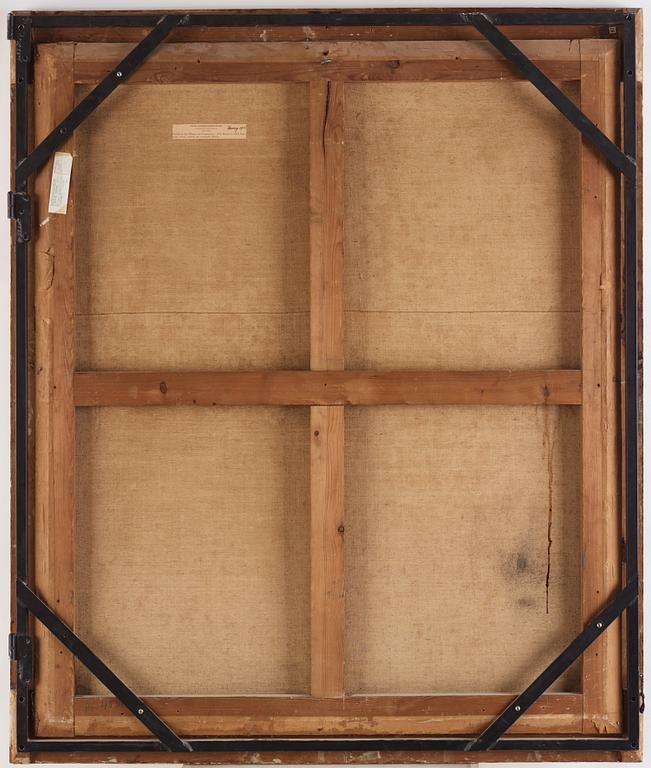
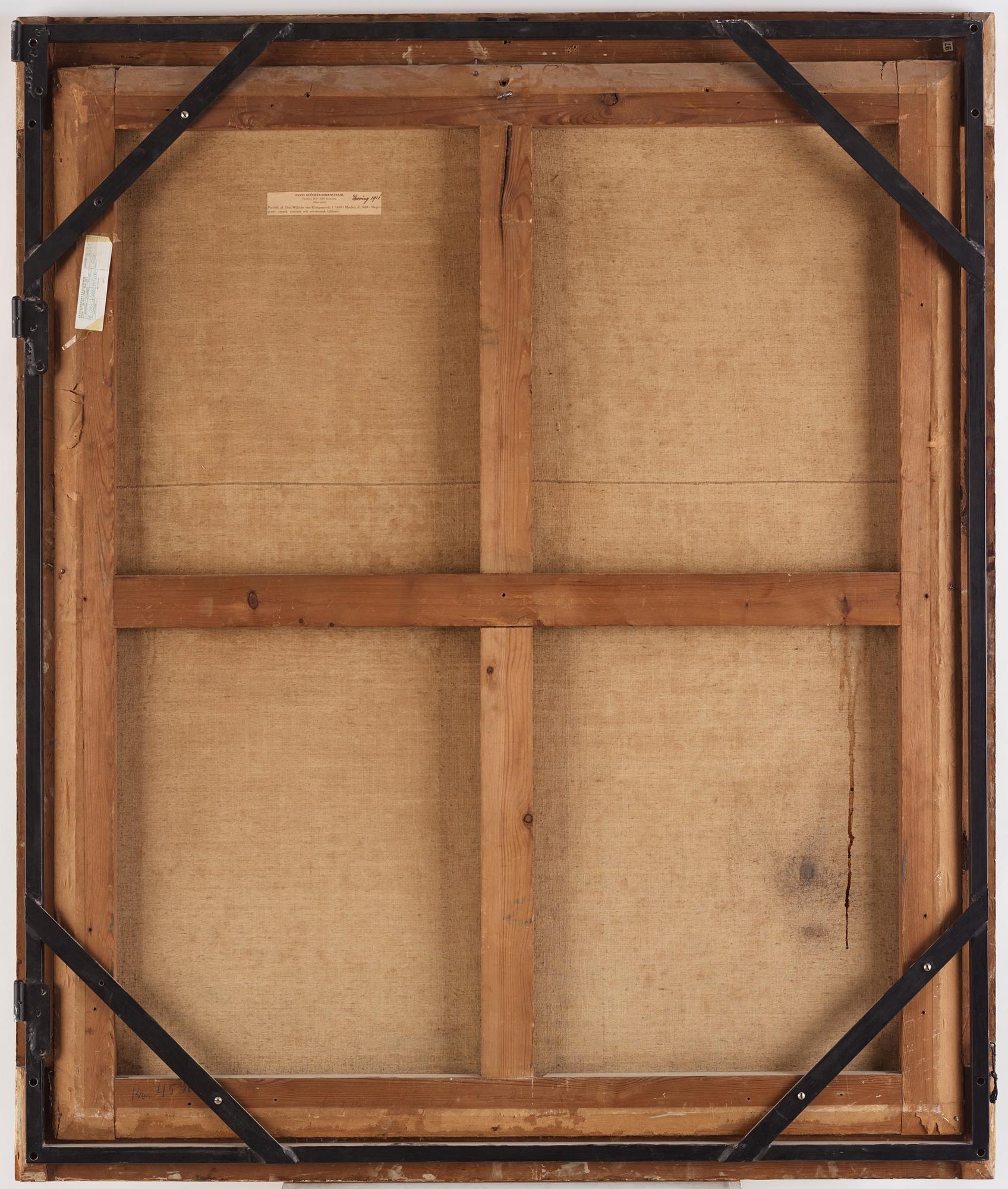
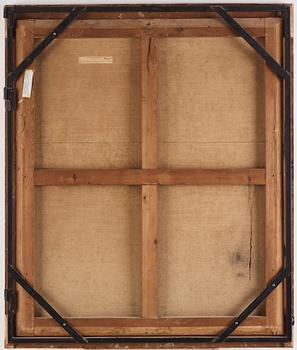
Relined canvas 140 x 115 cm.
Provenance
Formerly i the Wikström coll at Listonhill, Blasieholmen
Bukowski Auktioner, auction 327, 7-8 Oktober 1942, lot no 5, ill pl 1.
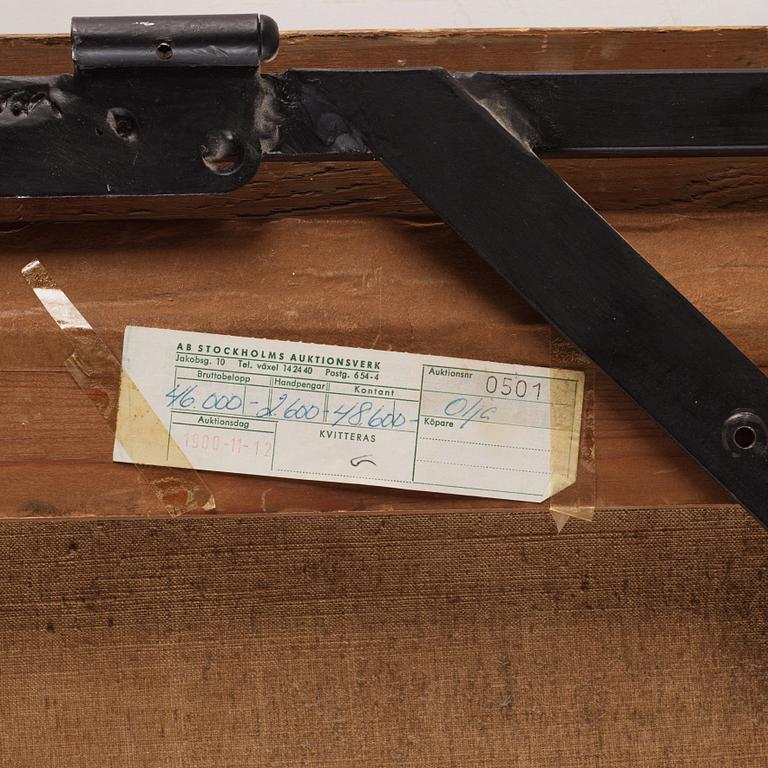
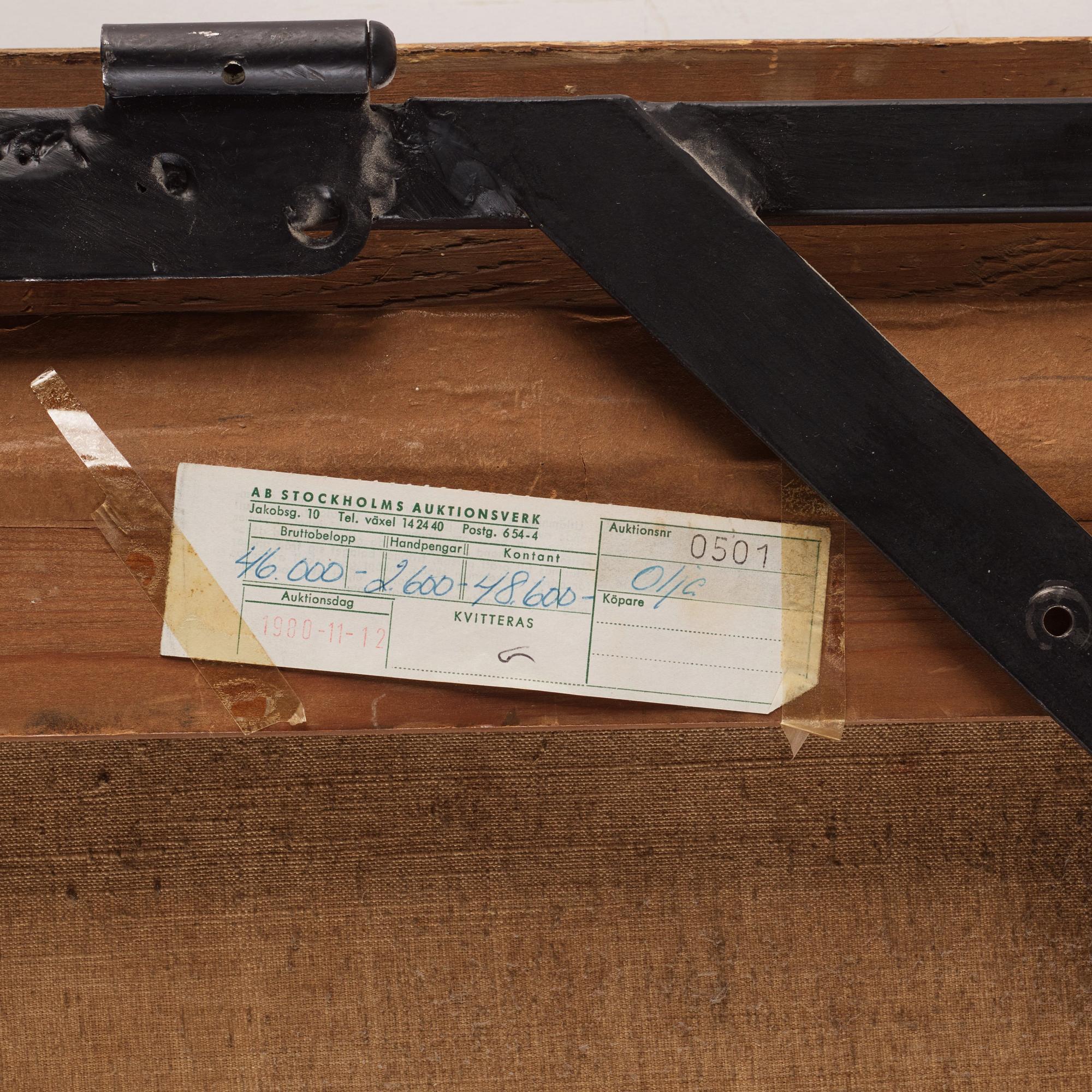
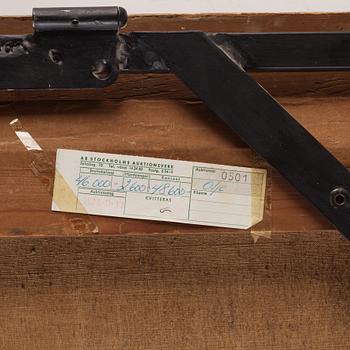
Stockholms Auktionsverk 1980, bought by present owner.
More information
Count Otto Wilhelm von Königsmarck was born in 1639 in Minden, Westphalia. He received his early education at home in Stade. At the age of fifteen, he was appointed rector illustris at the University of Jena. He came to Sweden in connection with the funeral of Charles X Gustav in 1660 and was appointed the same year as the chief chamberlain to Charles XI. von Königsmarck was primarily employed in diplomatic service in the following years. In 1665, he became the commander of the cavalry regiment of the Lord High Constable (C.G. Wrangel) and participated in the Bremen War in 1666, was sent as an envoy to the Saxon court in 1667, and later that same year became a major general of the Electoral Palatinate as well as colonel and commander of the Swedish Life Regiment of Horse. In 1668, he entered French military service, participated in Condé's campaigns from 1672 to 1674, including the Battle of Seneffe, and was appointed marshal (i.e., lieutenant general) in French service that same year.
He was appointed marshal and governor of Pomerania in 1675, and in 1679 also of Rügen and Wismar. His multi-year defense of Pomerania against superior enemies is considered a great military achievement in Swedish history.
Due to the reduction, von Königsmarck subsequently suffered significant financial losses. He lost his fiefdoms and pawned estates, and as a result, he became so embittered that in 1685 he left Sweden for good and entered military service. With the king's permission, he participated in the war against the Turks. That same year, he entered the service of Venice, where he was appointed commander-in-chief of the republic's land forces. Corinth and Athens were captured in 1687. During the siege of Athens, the Parthenon, which was used as a gunpowder magazine by the Turks, was hit. von Königsmarck is said to have deeply mourned when the temple was blown up.
During the siege of Negroponte in 1688, Otto Wilhelm von Königsmarck fell victim to the plague. He was buried in Stade, Germany. The Republic of Venice erected his marble statue outside the arsenal in Venice.
For condition report contact specialist

Others have also viewed