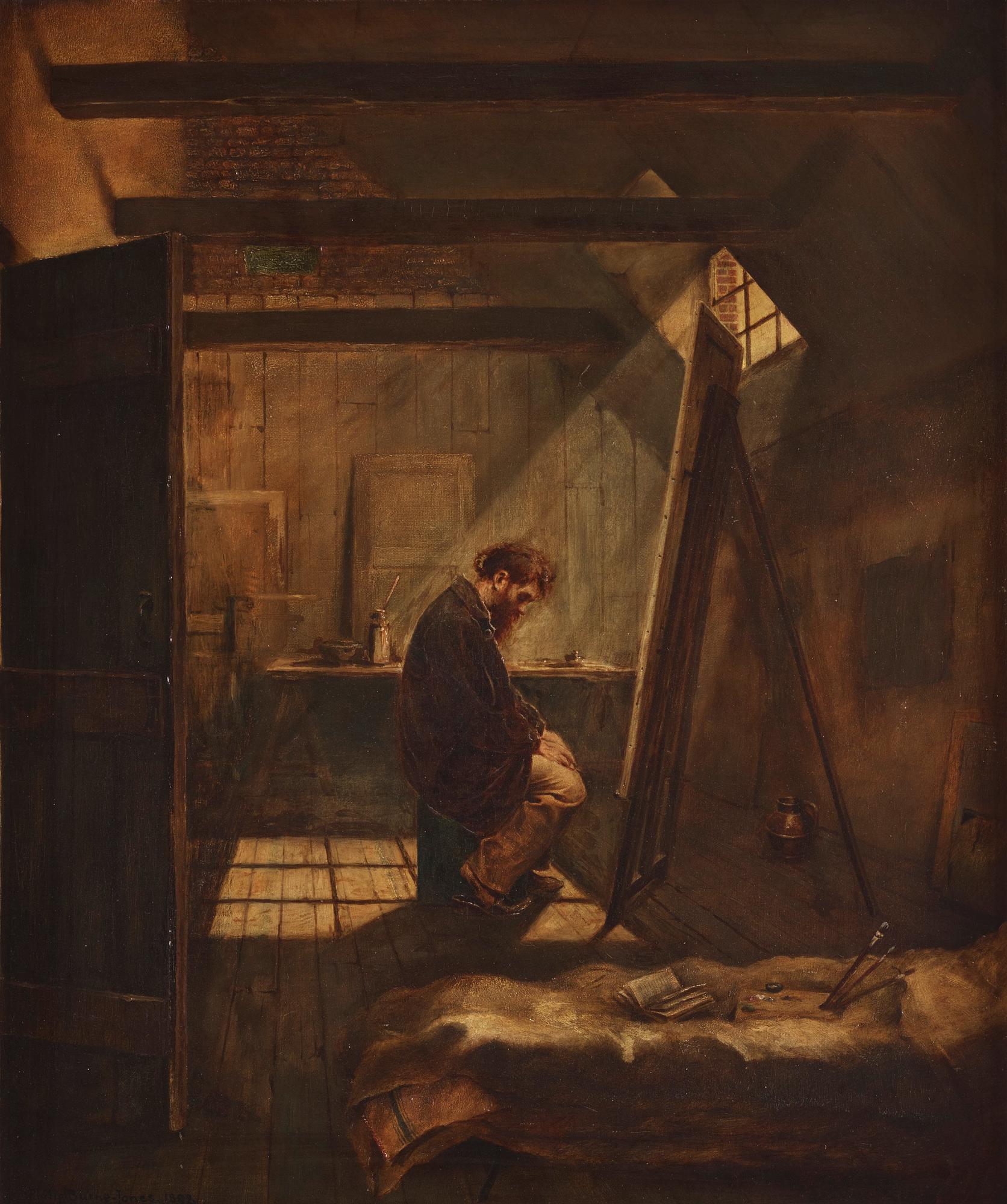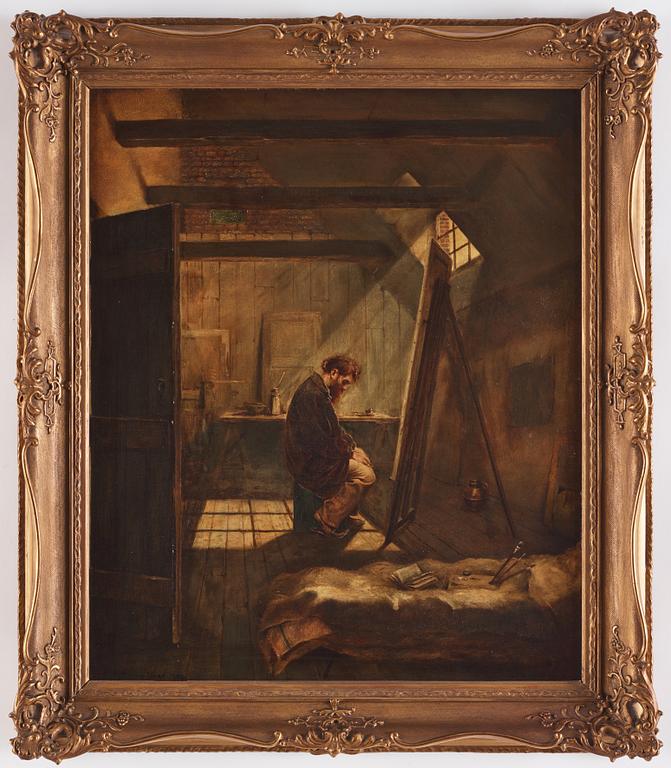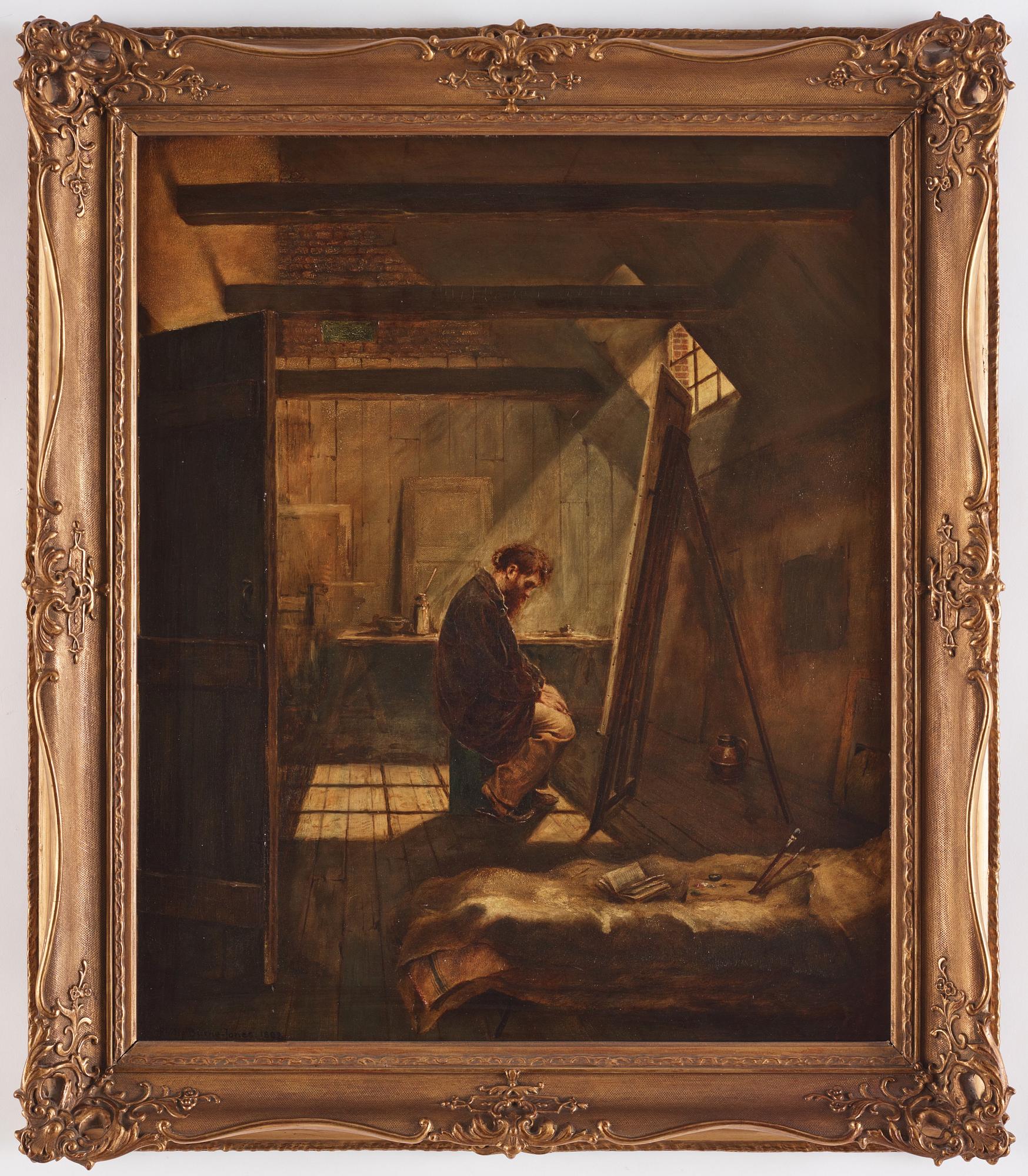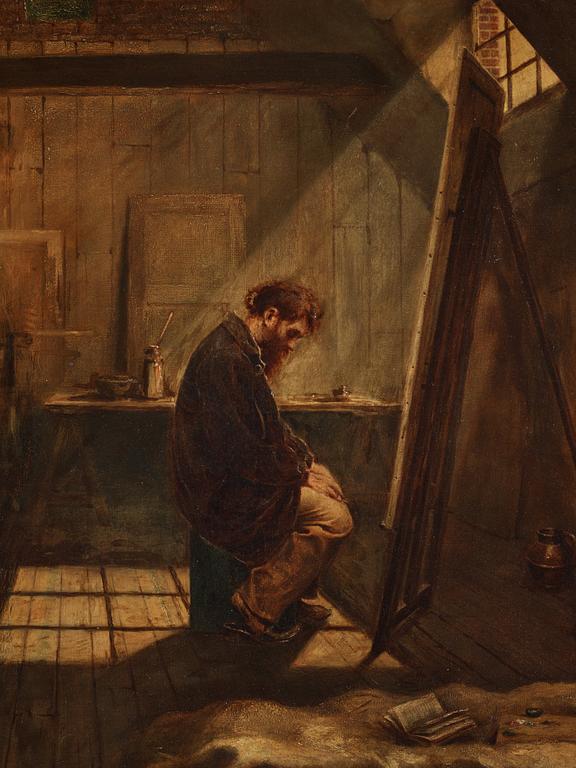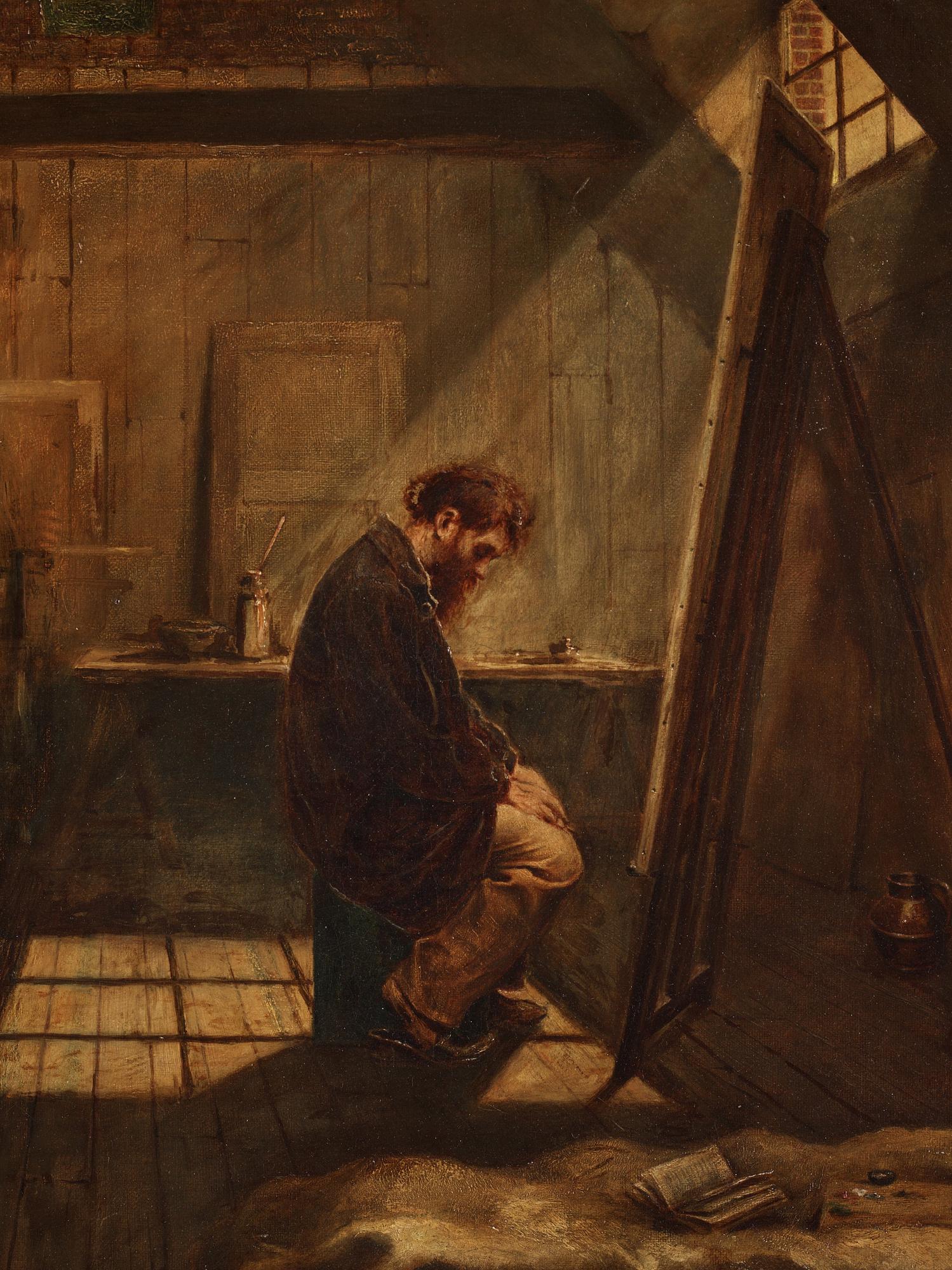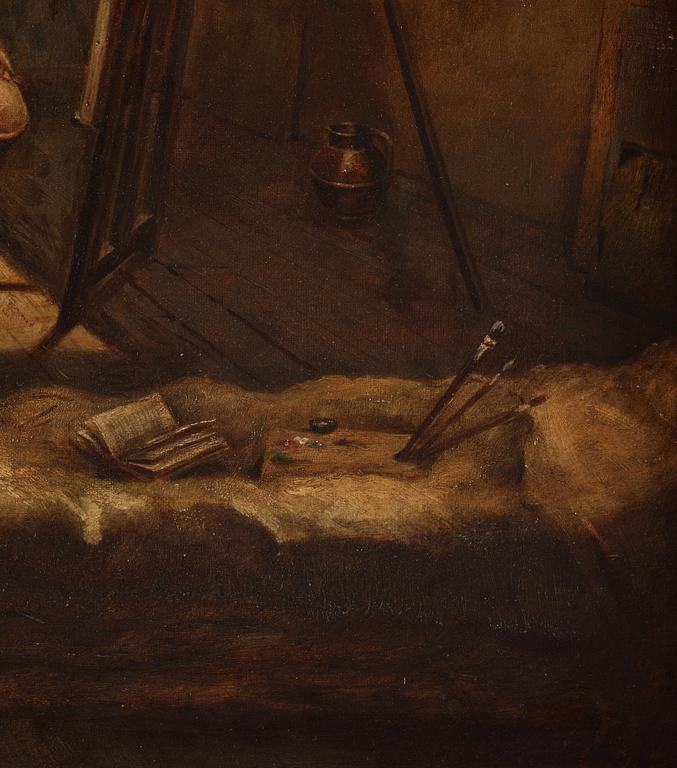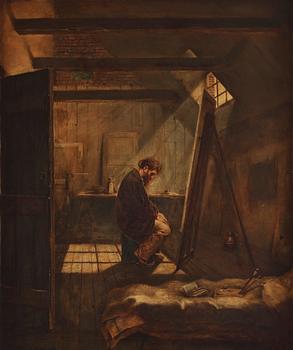
Self-criticism
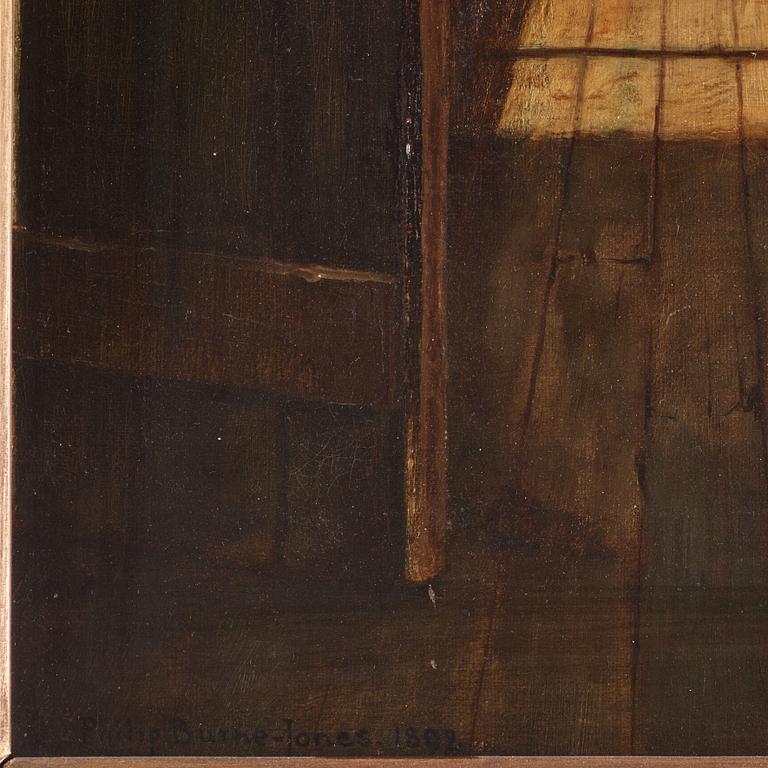
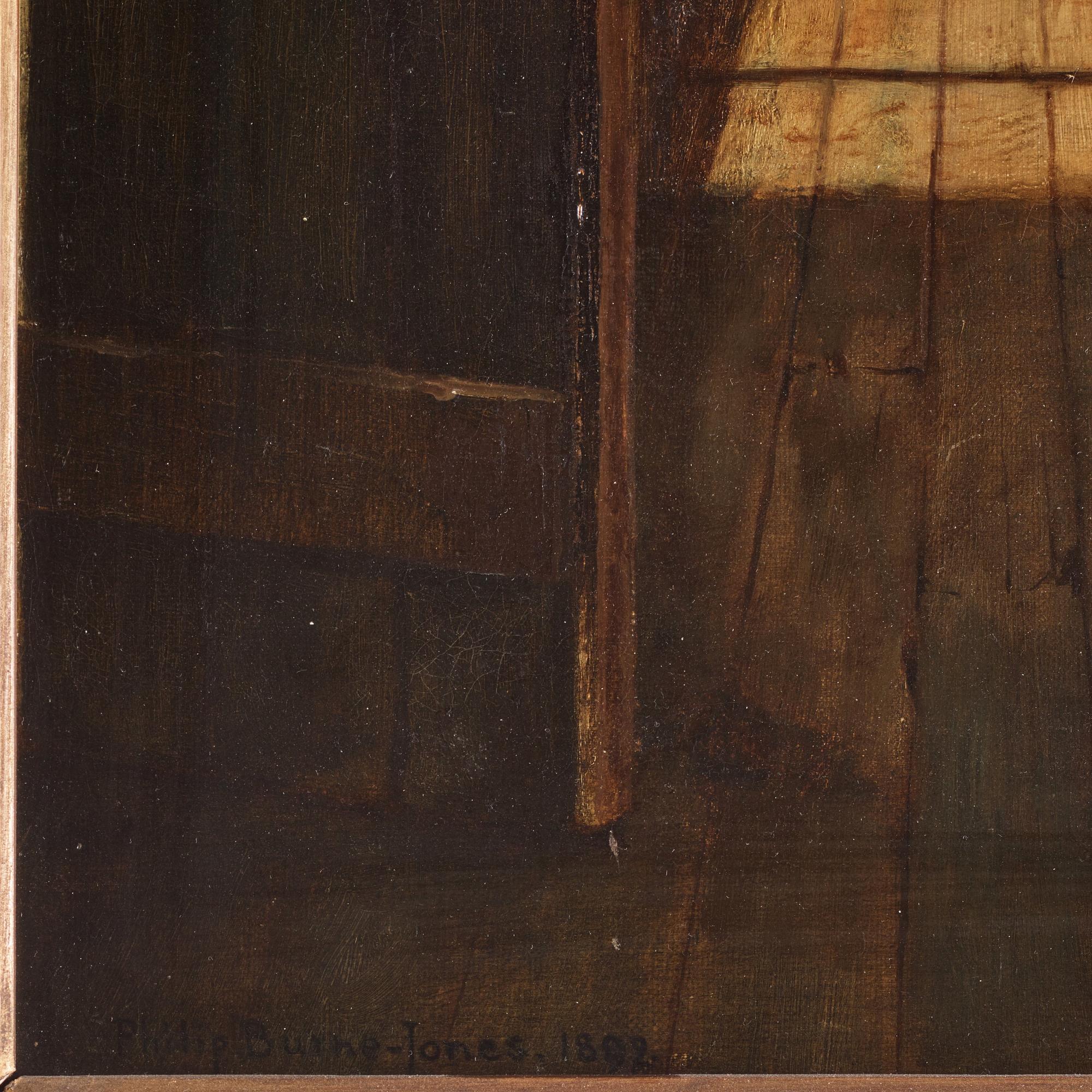
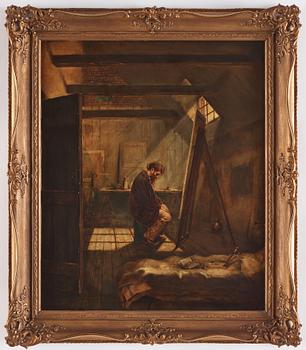
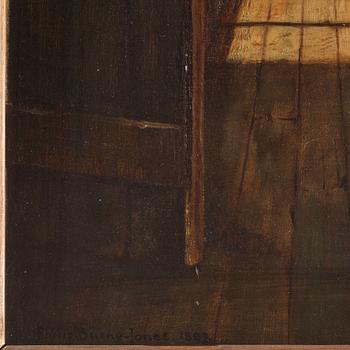
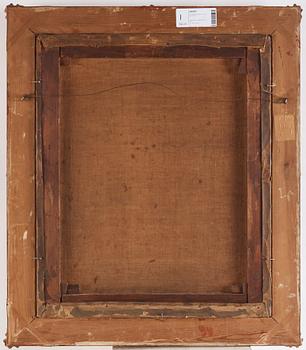
Signed Philip Burne-Jones and dated 1892. Oil on canvas 62 x 51 cm.
Provenance
Private Collection, Sweden.
Thence by descent.
More information
Philip Burne-Jones was the eldest son of the Pre-Raphaelite artist Edward Burne-Jones. He seriously pursued painting as a career and had his debut exhibition in 1886 at the Grosvenor Gallery in London. He also participated in exhibitions at Dowdeswell Galleries, Goupil, and New Gallery. He exhibited at the Royal Academy eleven times between 1898 and 1918, and at the Salon in Paris in 1900, where he displayed his portrait of his father, now housed at the National Portrait Gallery.
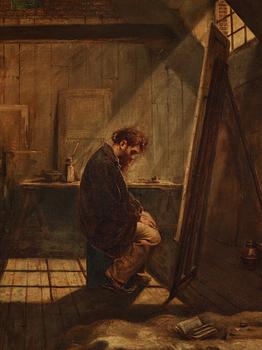
There is a second version of the auction's painting in the collection of Touchstones Rochdale museum titled "An Unfinished Masterpiece". The museum describes this version as follows: "Here he paints a romanticised view of an artist suffering in poverty for their vocation, sat dejectedly in front of his canvas at a loss for inspiration. Whilst this would have been a reality for many artists, others became wealthy. The 1850s to 1870s was a boom time for the art market and in the 1861 census artist was listed as a profession for the first time."
For condition report contact specialist