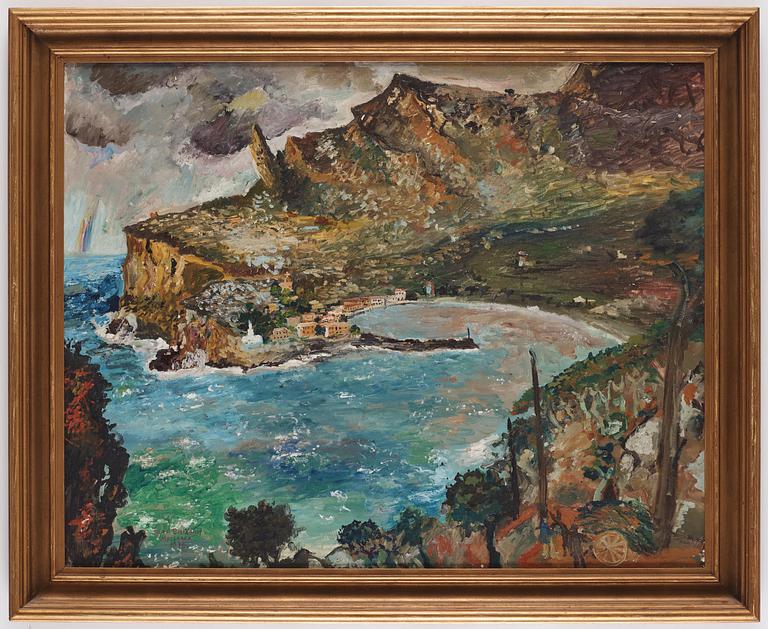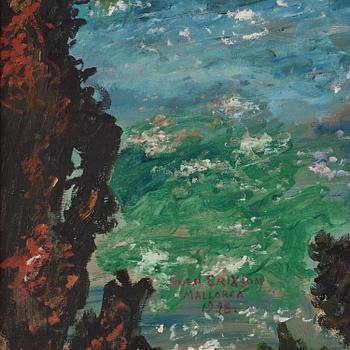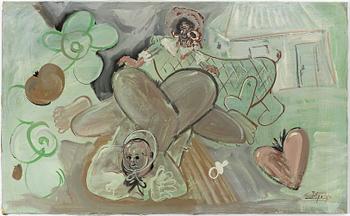
Mallorca
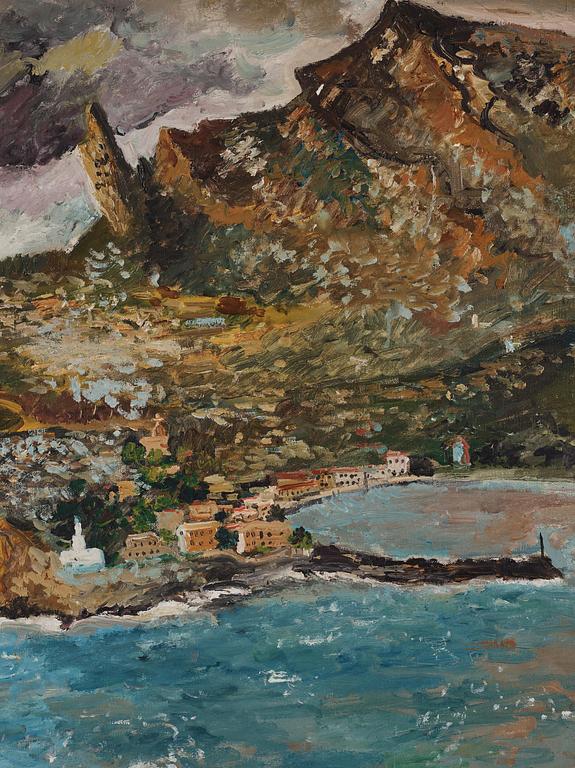
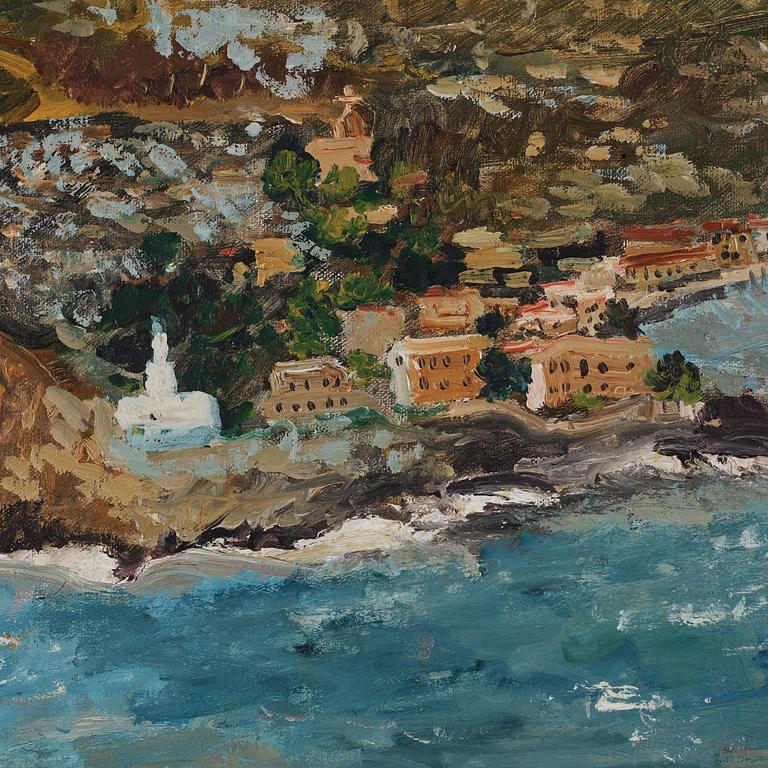
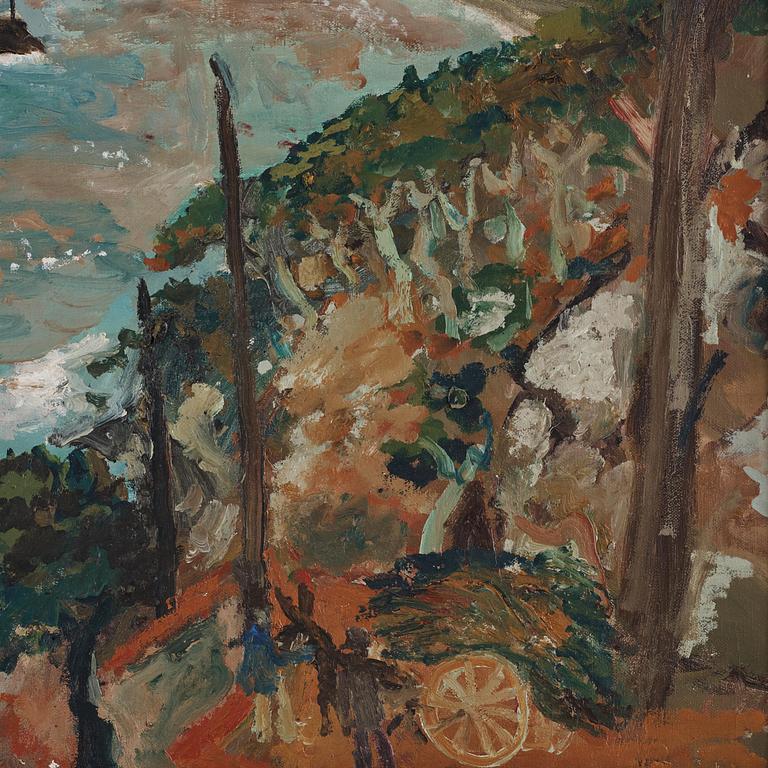
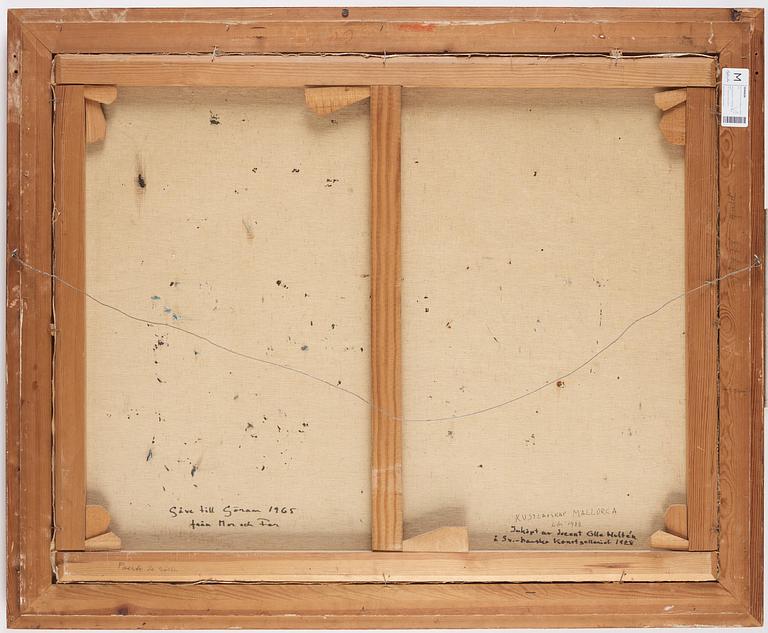
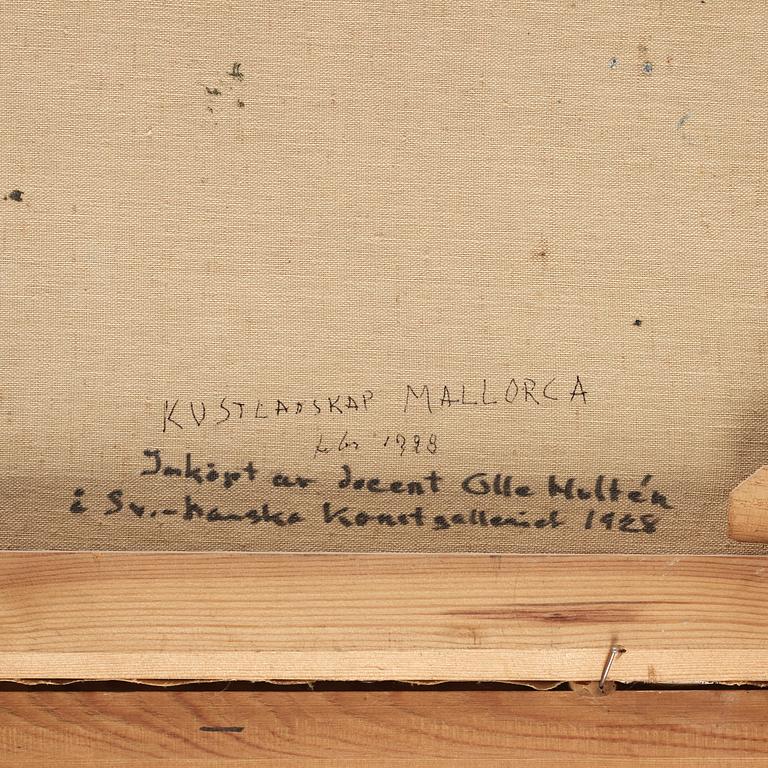
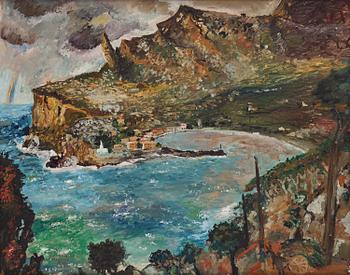
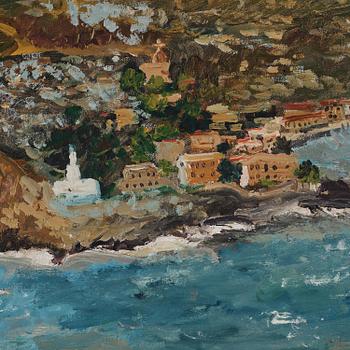
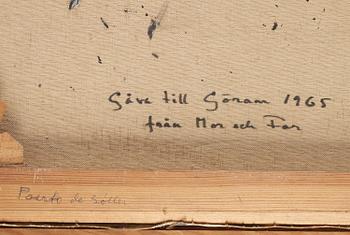
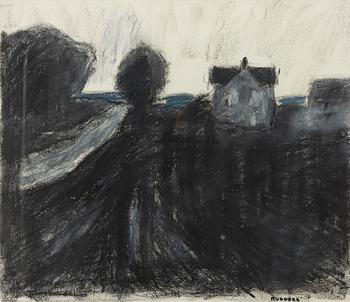
Signed Sven Erixson and dated Mallorca 1928. Canvas 79 x 100 cm.
Provenance
Svensk-Franska konstgalleriet, Stockholm.
Docent Olle Hultén, acquired from the above in 1928.
Exhibitions
Svensk-Franska konstgalleriet, Stockholm, "Thorwald Alef, Lars Boëthius, Sven Erixson", October 1928, cat. no 99.
More information
In 1927, the young Sven Erixson received a small grant from Slöjdföreningen. He took his savings and the grant money and traveled abroad. The year before, he had taken a long trip to Paris and the south of France, which had taught him a great deal about the world and made him more travel-wise. The painting in this auction was painted during the trip to Spain that was made possible by the grant. After visiting Valencia, Granada and Madrid, Sven reached Mallorca on January 25, 1928, and on the same day, in a letter to his missing fiancée, he described his strong experiences of the Mediterranean island: “it is magnificent, that is for sure, and I hope it will leave its mark on my canvases. The almond trees are now blooming everywhere and you can believe it is a beautiful sight”. Sven Erixson's paintings from this short stay in Mallorca, described by him as “one of the happiest periods”, are characterized by a fresh spontaneity and colorism clearly inspired by the southern climate and the encounter with the southern culture came to have a great impact on his continued painting.
More about Sven X:et Erixson
Sven Erixson, today more commenly known as X, was born in 1899 in Stockholm. He studied to become a decoration painter and art teacher at the Technical School in Stockholm after which he studied at the Higher School of Art and Design alongside study trips to Germany, France, Italy, Spain and North Africa. Despite being an inportant artist amoungst Swedish art, Erixson does not let etiquette and style limit his painting style. His greatest creation is defined by a tempremental style in stark colour patterns. Erixson's paintings balances between impressive, somewhat brutal expressions and a soft lyricism. He is one of the founders of the group Färg och Form, whose primitivist faction he belonged to. With an aura of narrative joy, Erixson recounts his experiences. He had an irresistable desire to share everything that he saw. He was inspired, much like Bror Hjorth of both folk art and mural painting from the middle ages, while also finding inspiration from German expressionism. But he speaks with greatest esteem about Chaim Soutines art. In a multitude of paintings, he conveyed his zest for life, with surfaces filled with swiftly captured figures. During the 1930s, his visual world was filled with family and the idyllic torpor, his canvas became greater and more complete. During the war he painted on butter paper, not only for practicalities sake, but also to take advantage of the slippery reflective surface which the paper supplies. Narration decreased in the 1950s when he was influenced by spontaneity, which in the following years led him to abstract spontaneous painting.
Read moreCovered by droit de suite
Image rights
The artworks in this database are protected by copyright and may not be reproduced without the permission of the rights holders. The artworks are reproduced in this database with a license from Bildupphovsrätt.