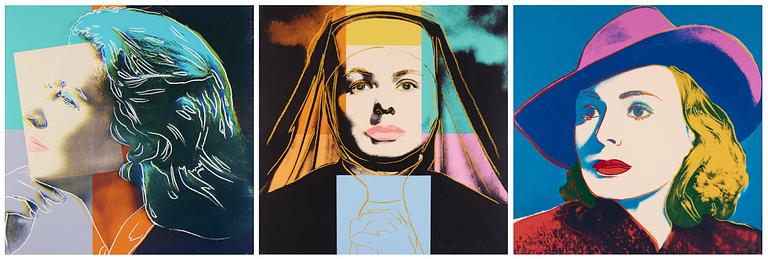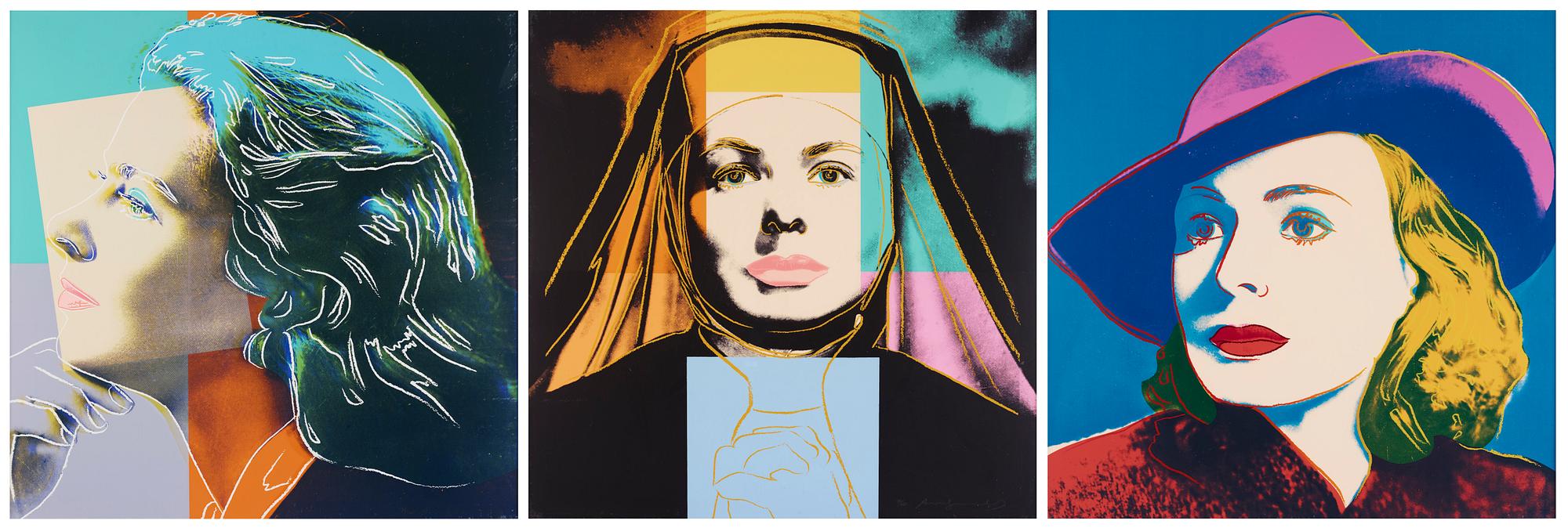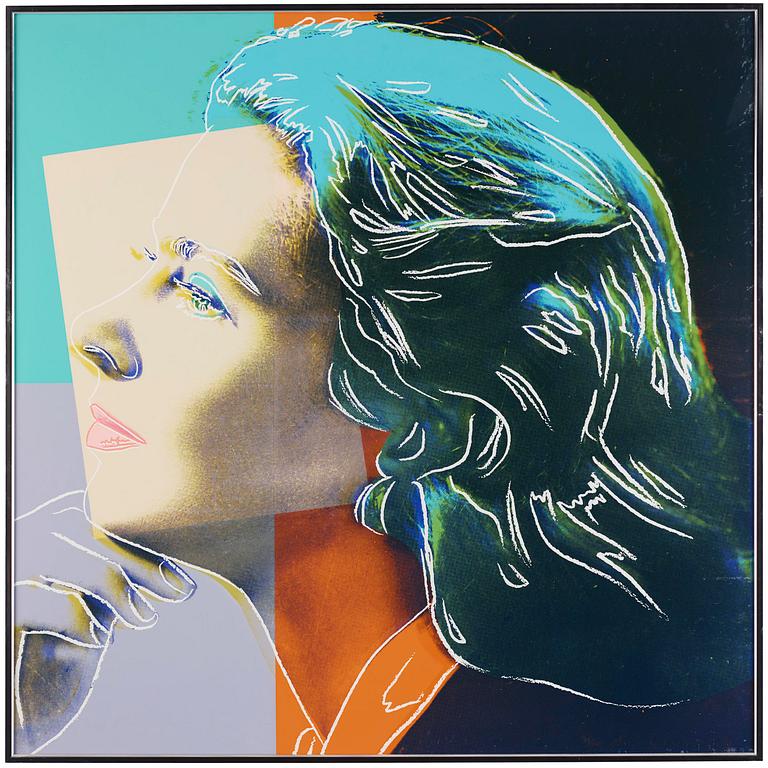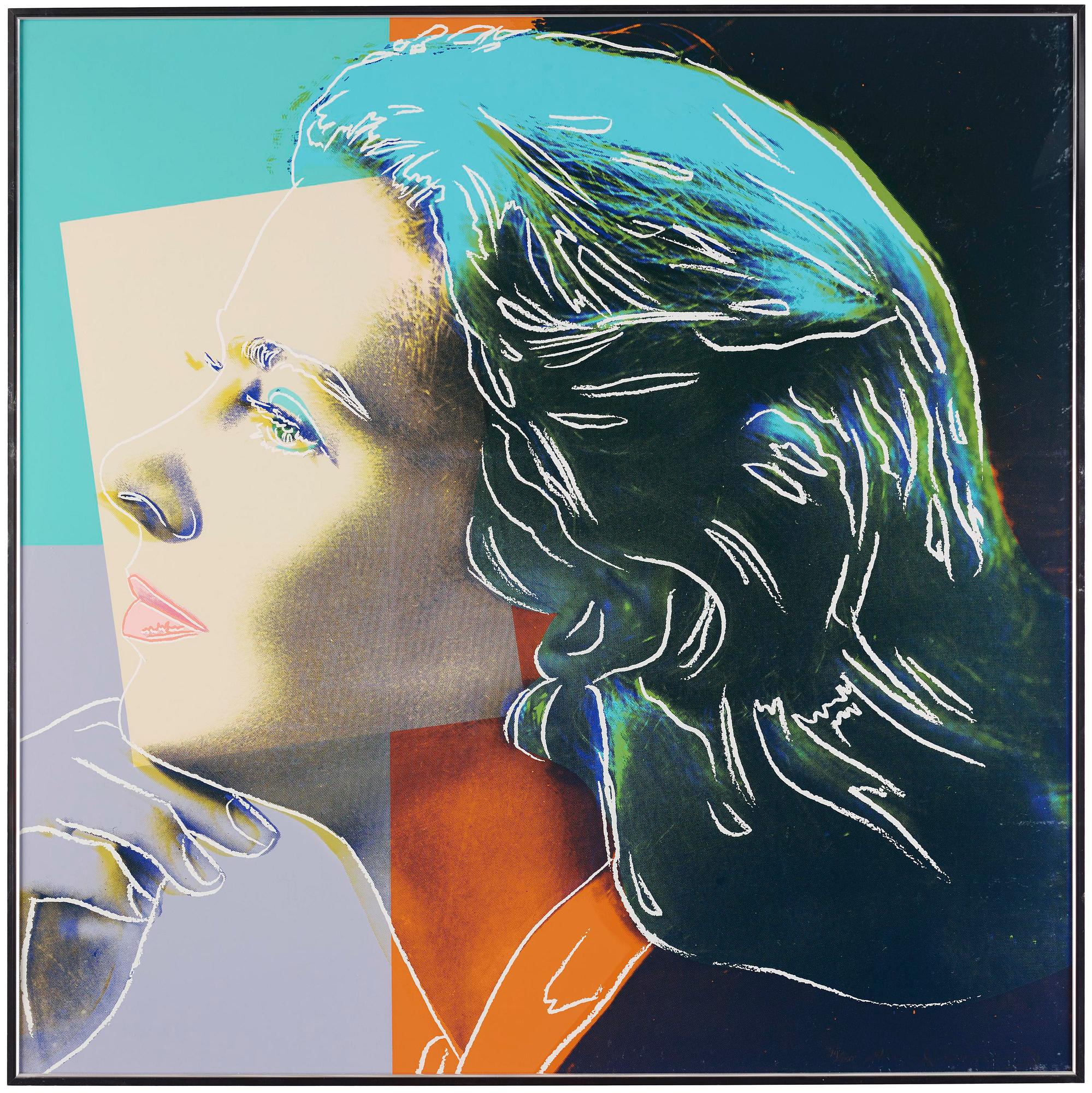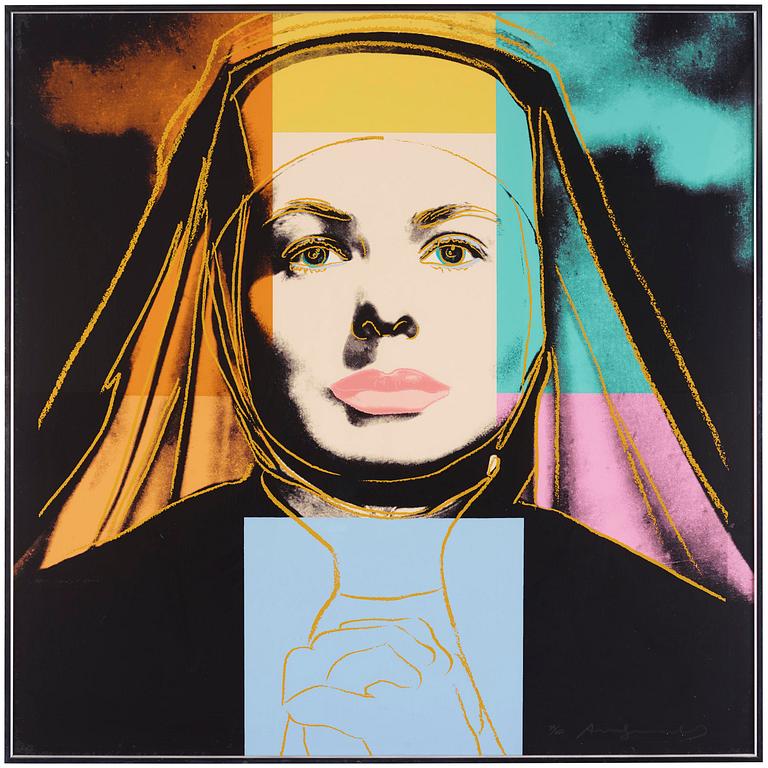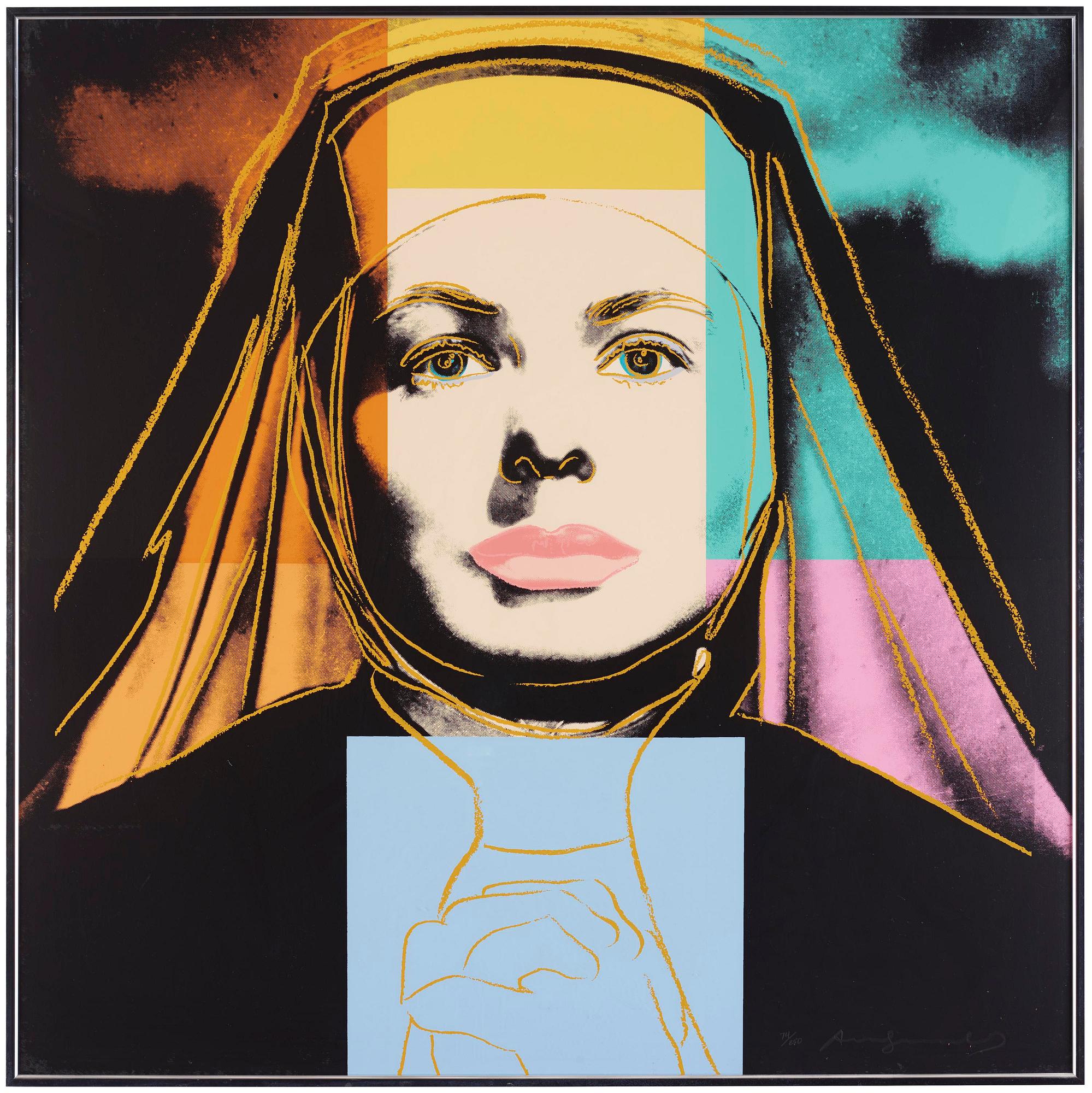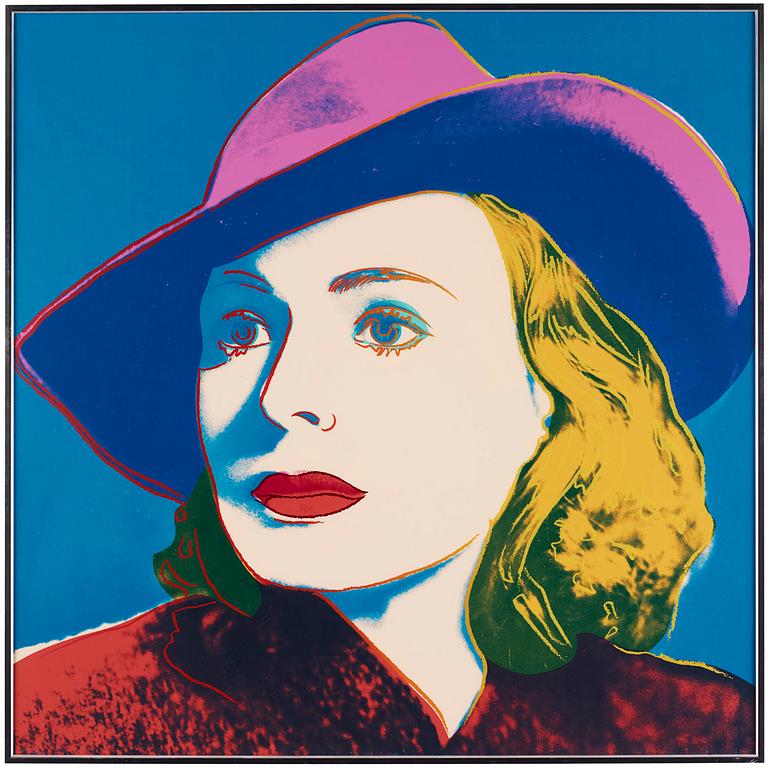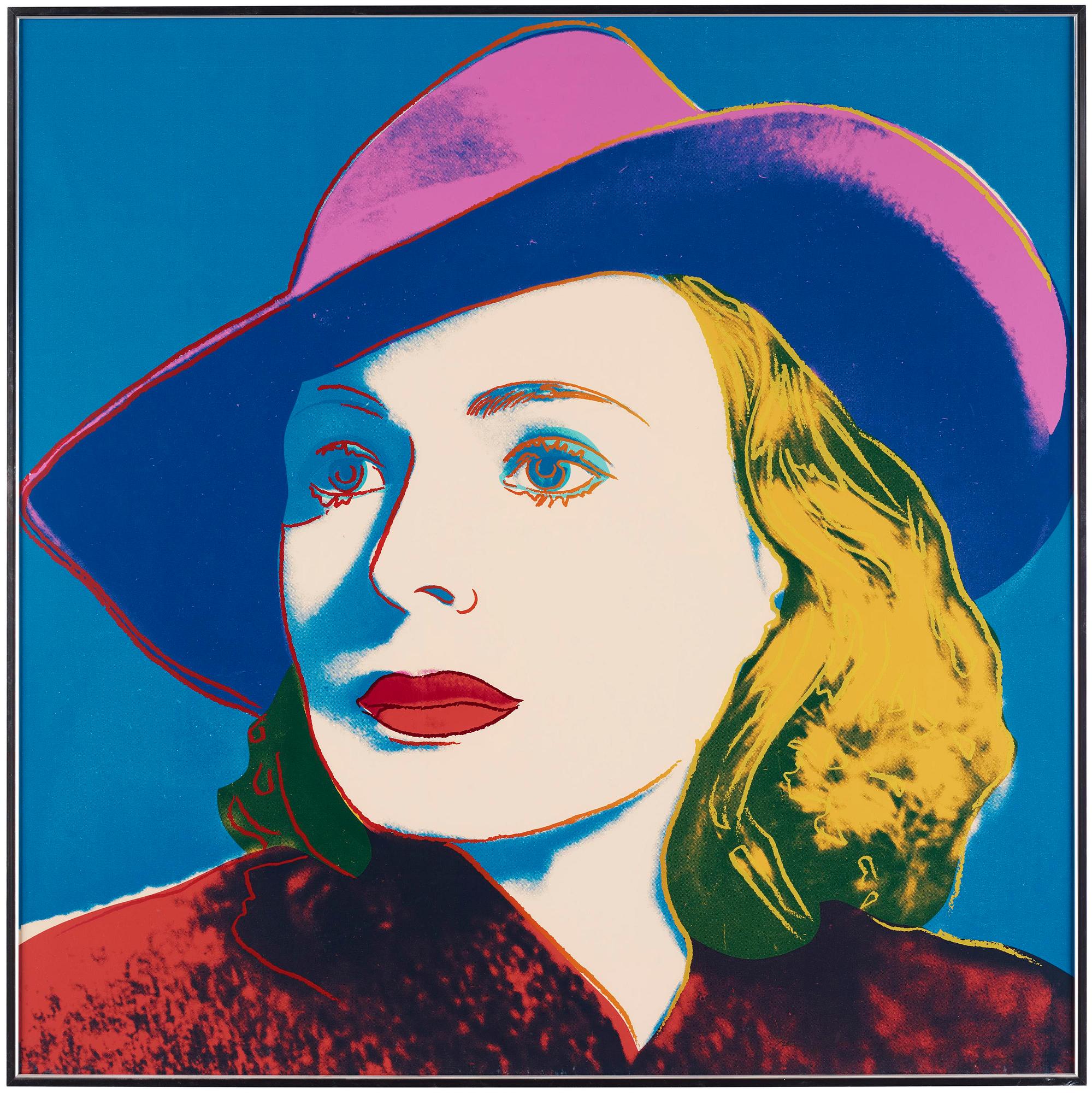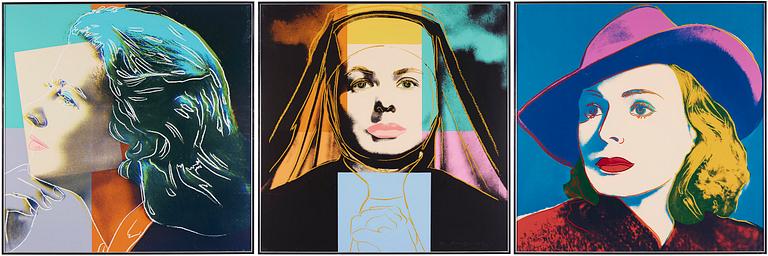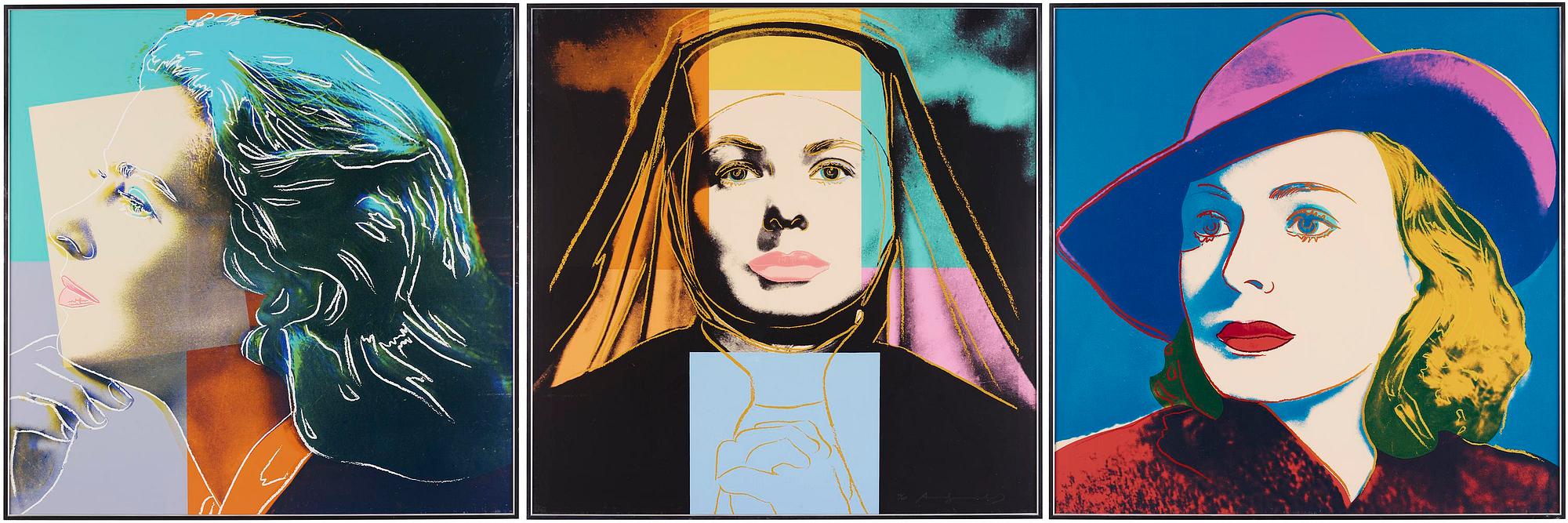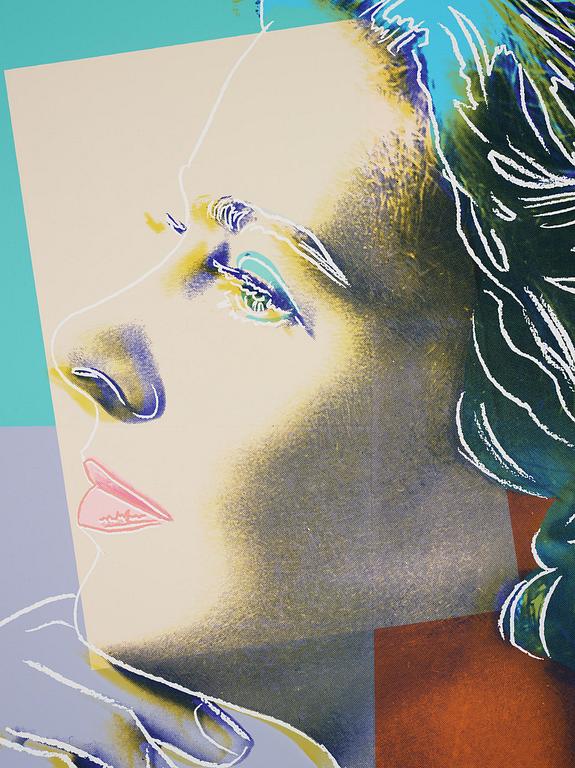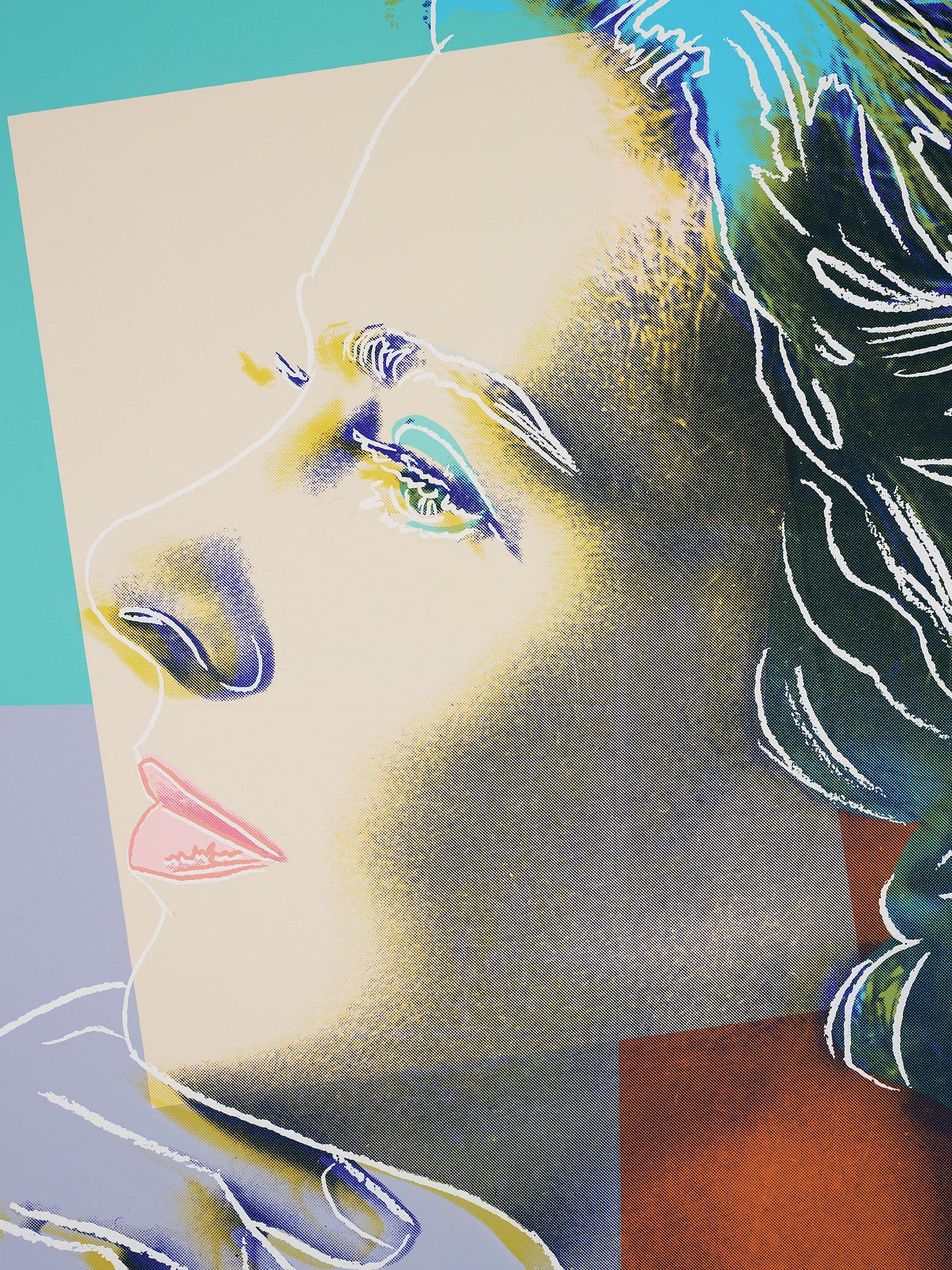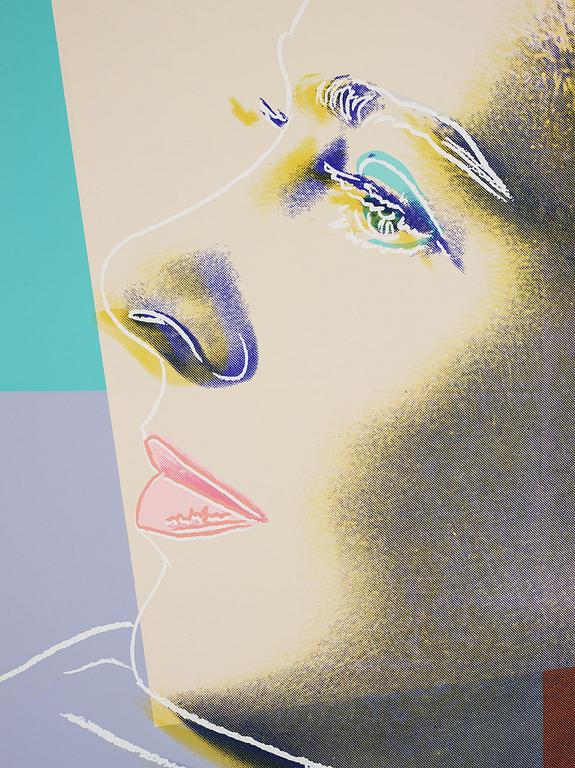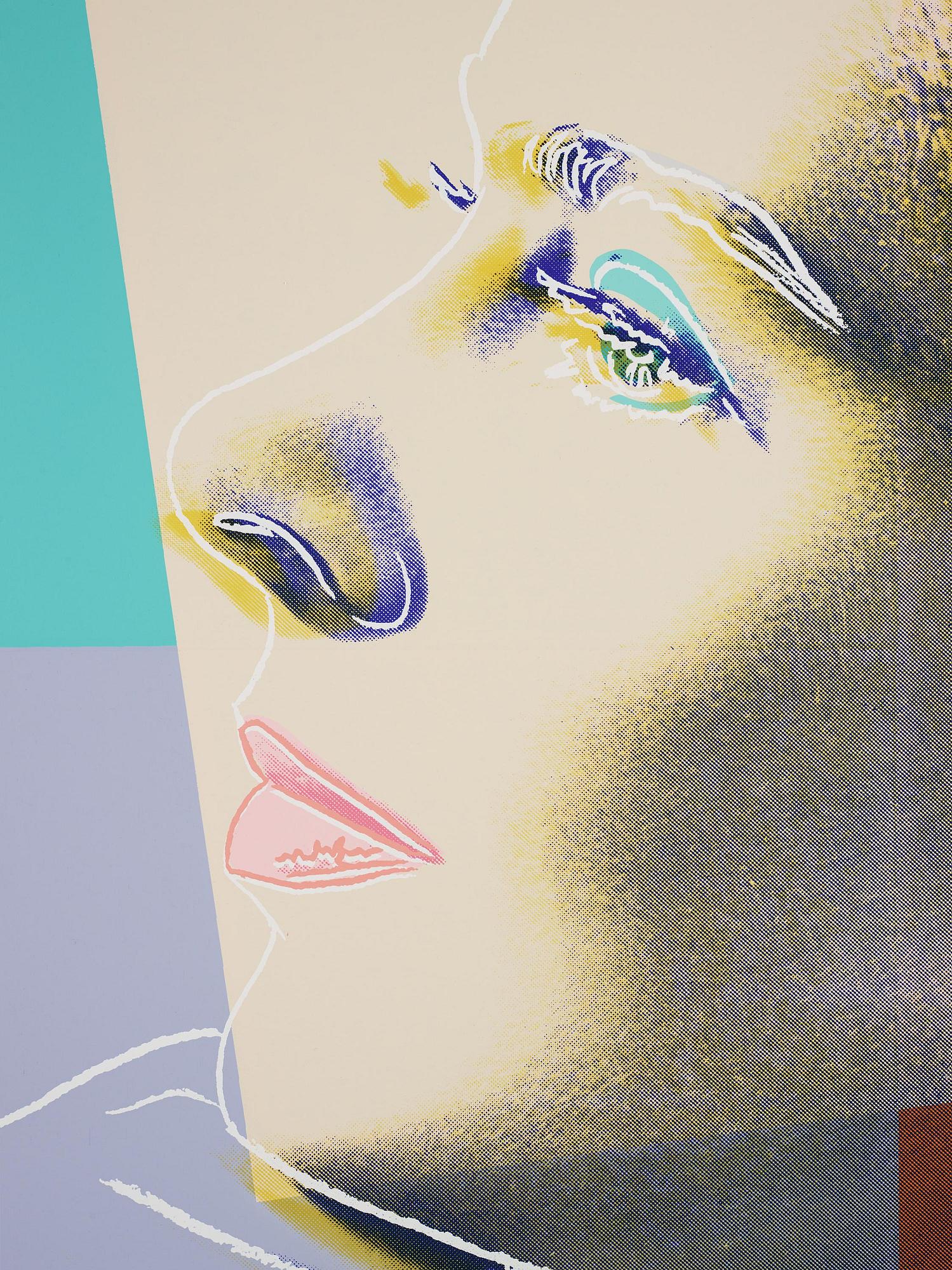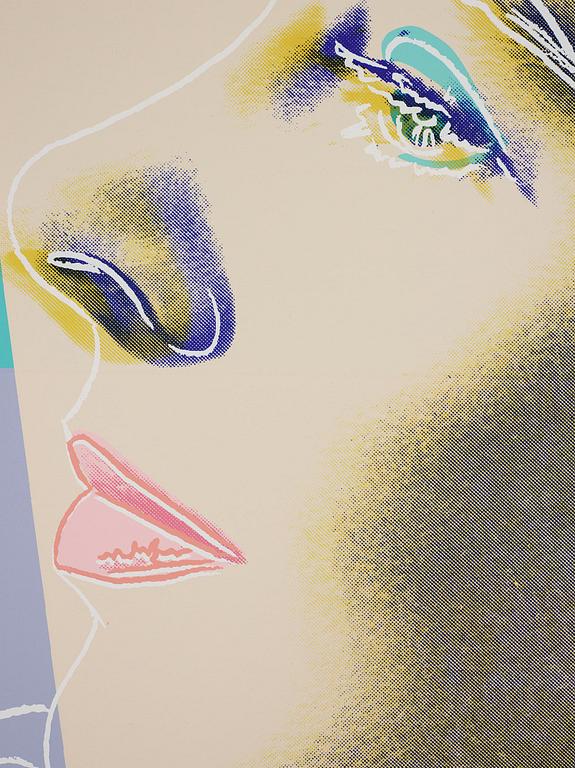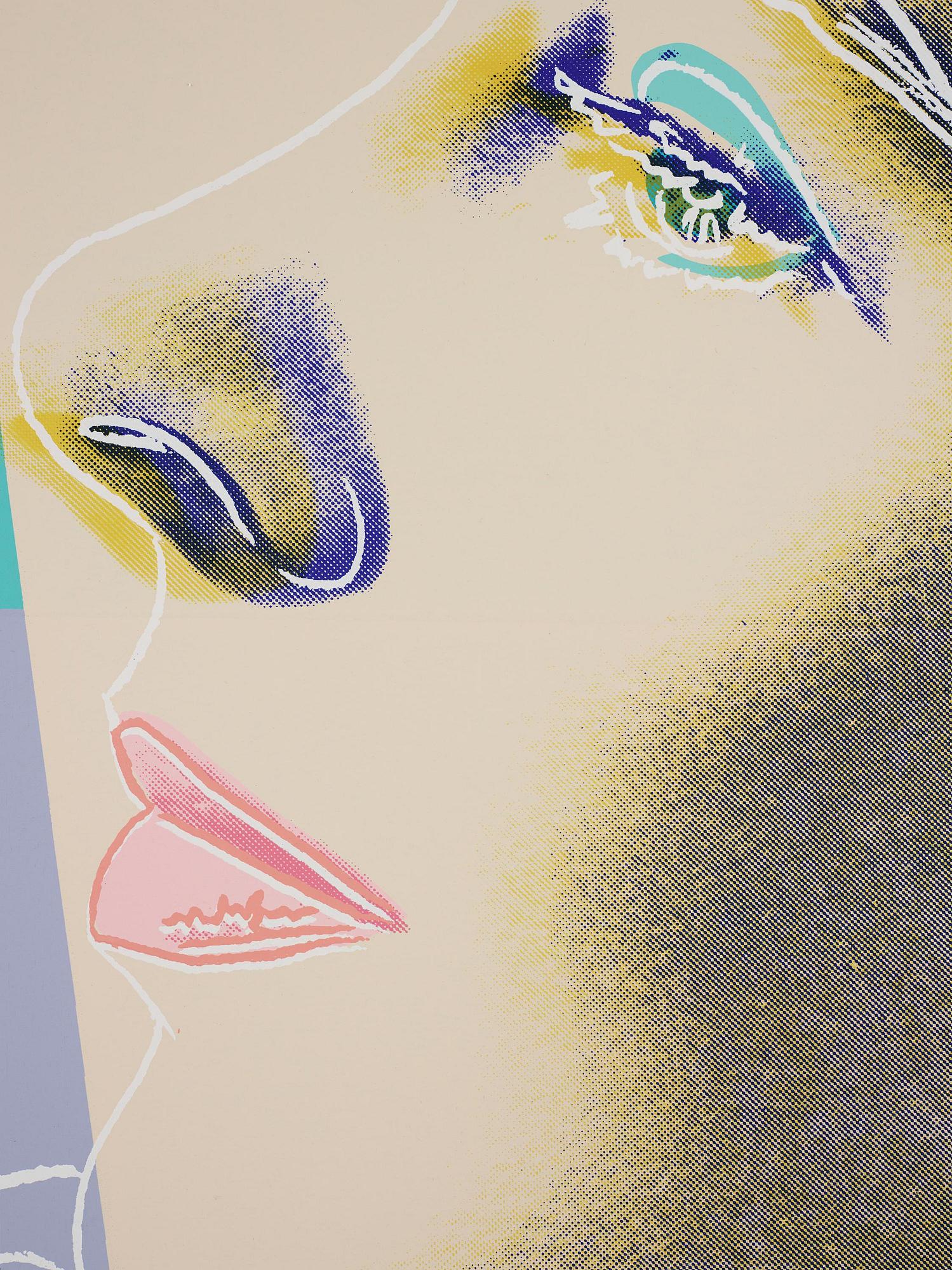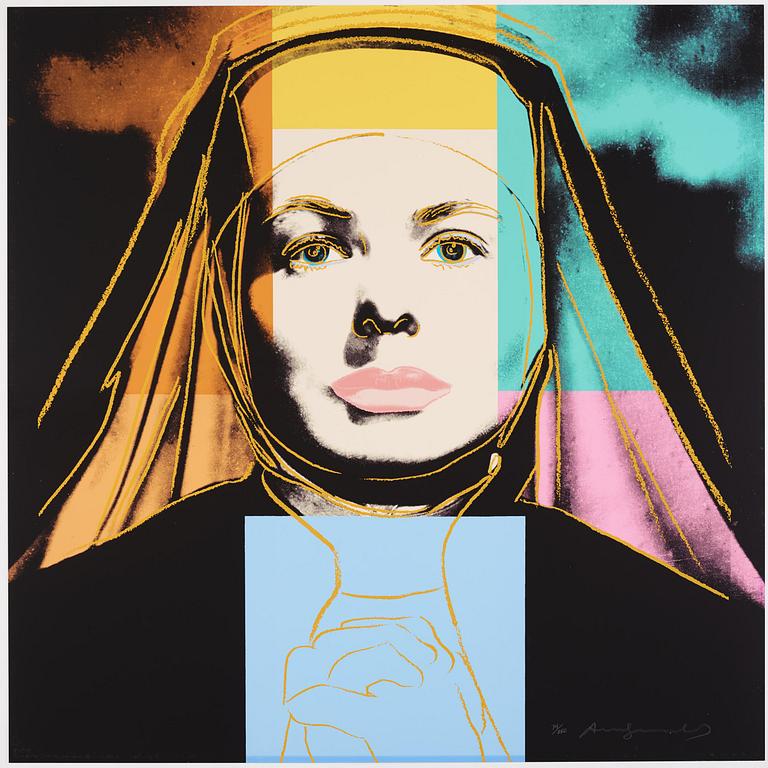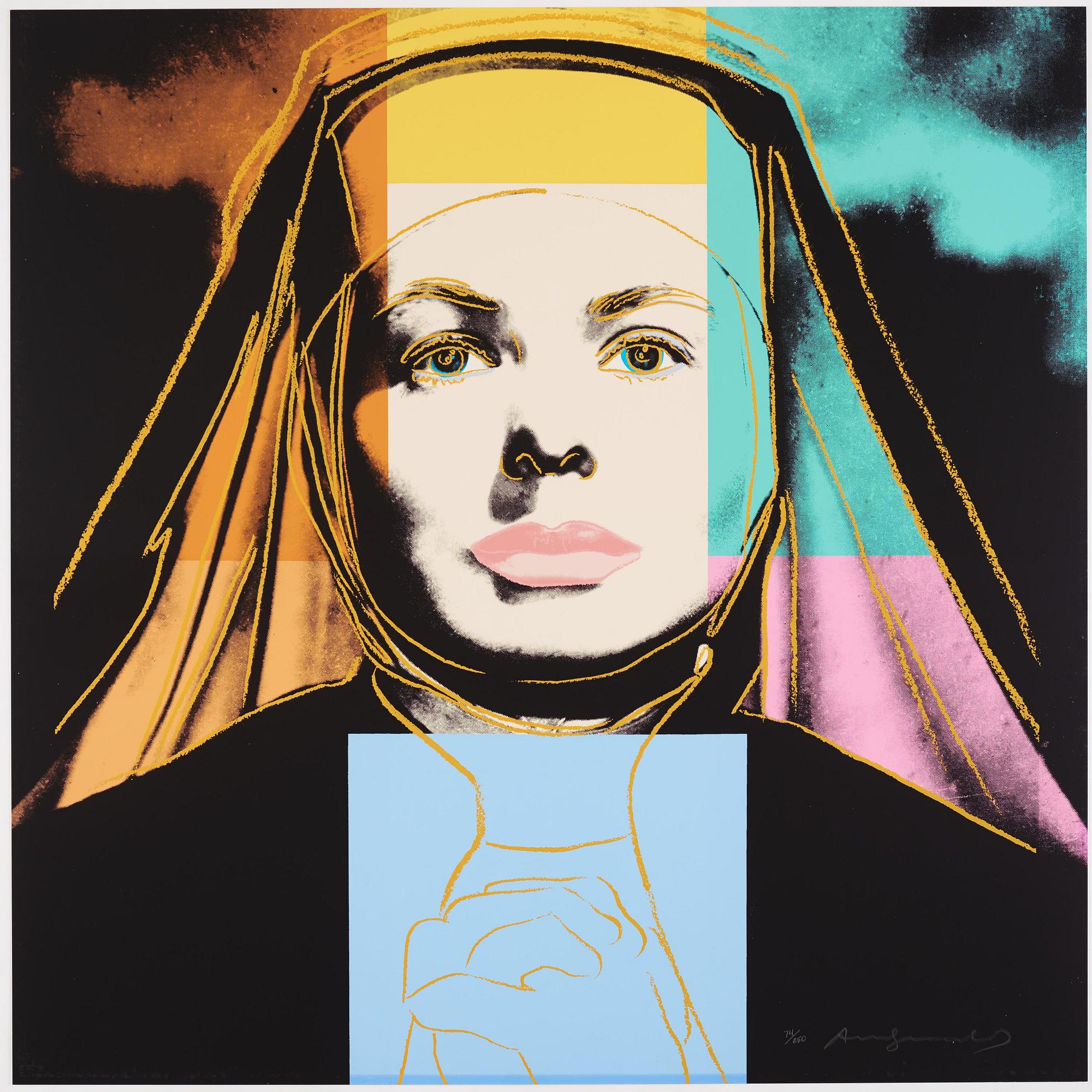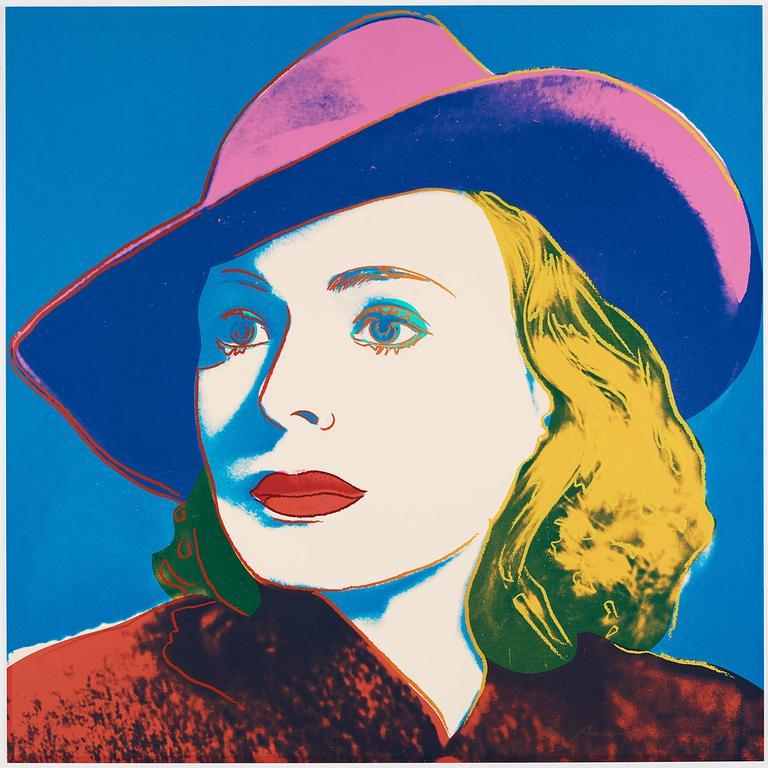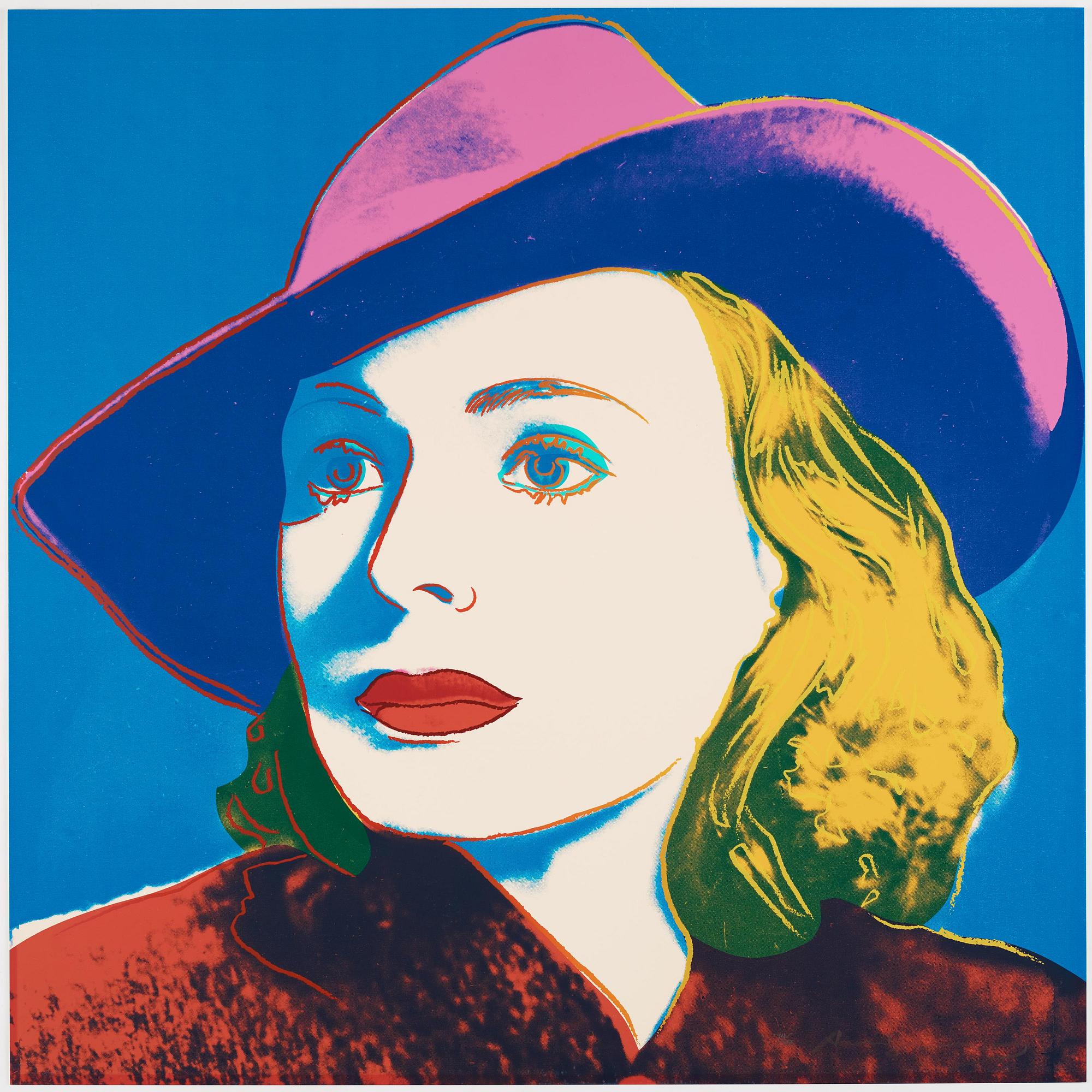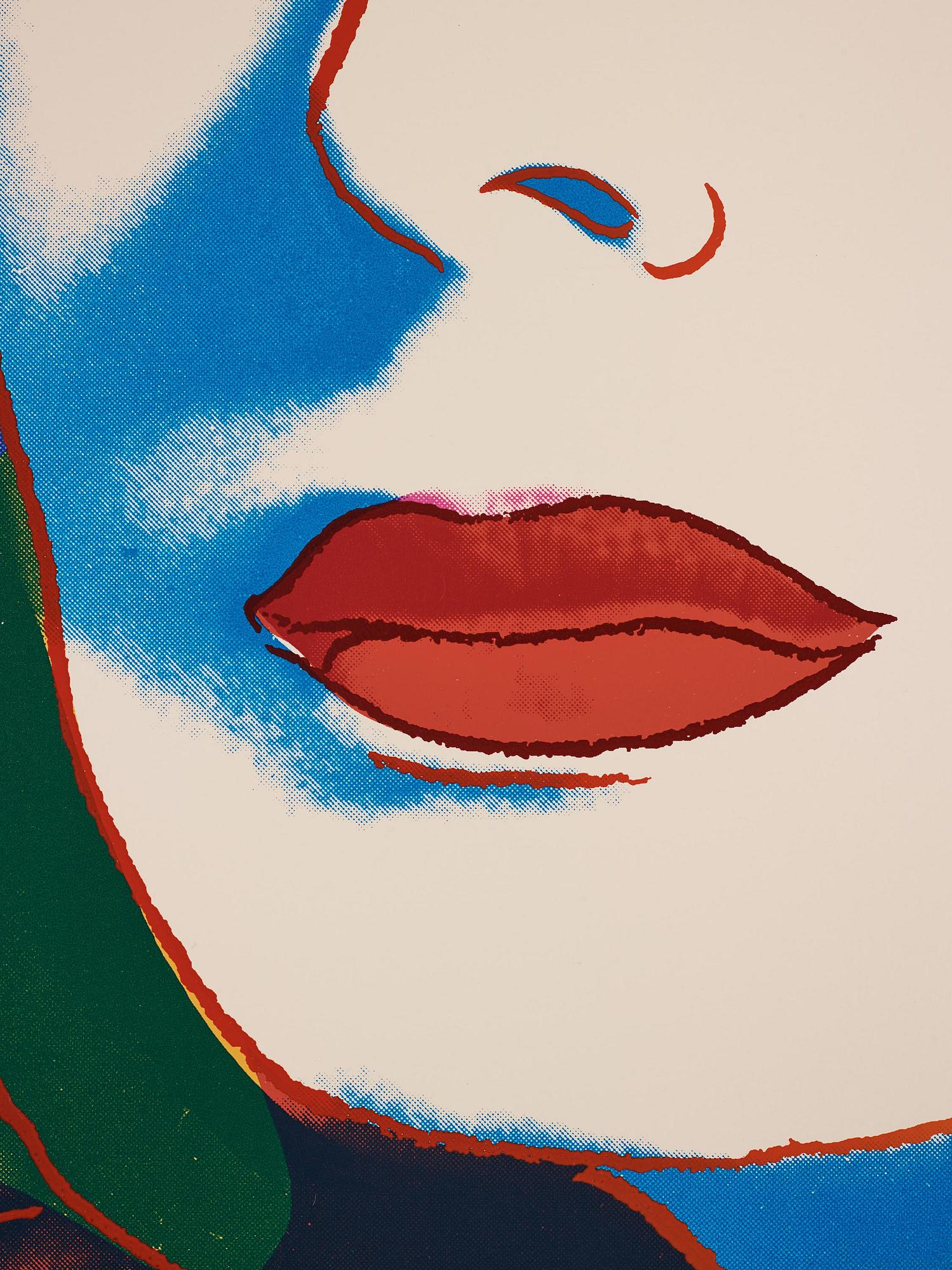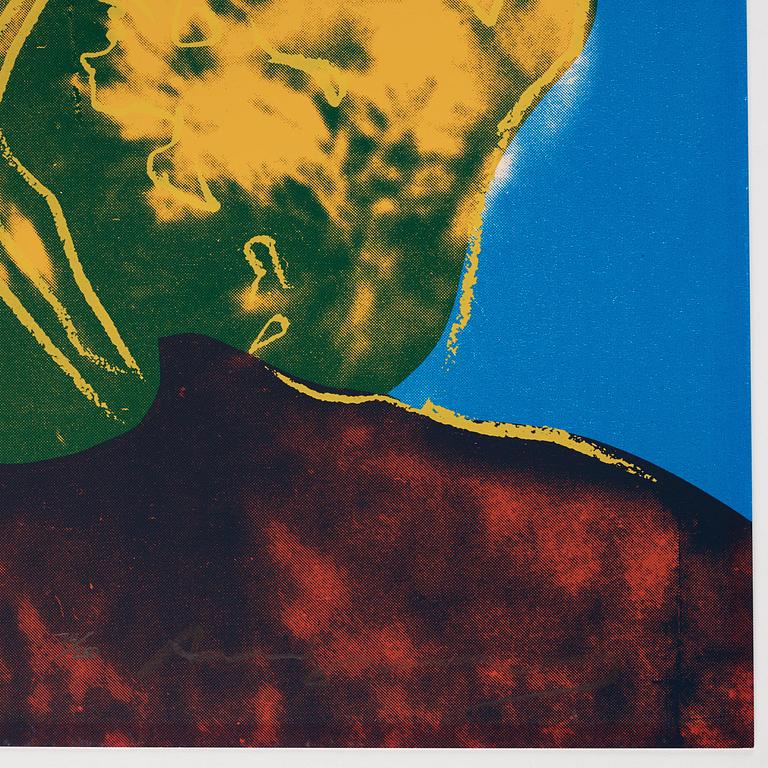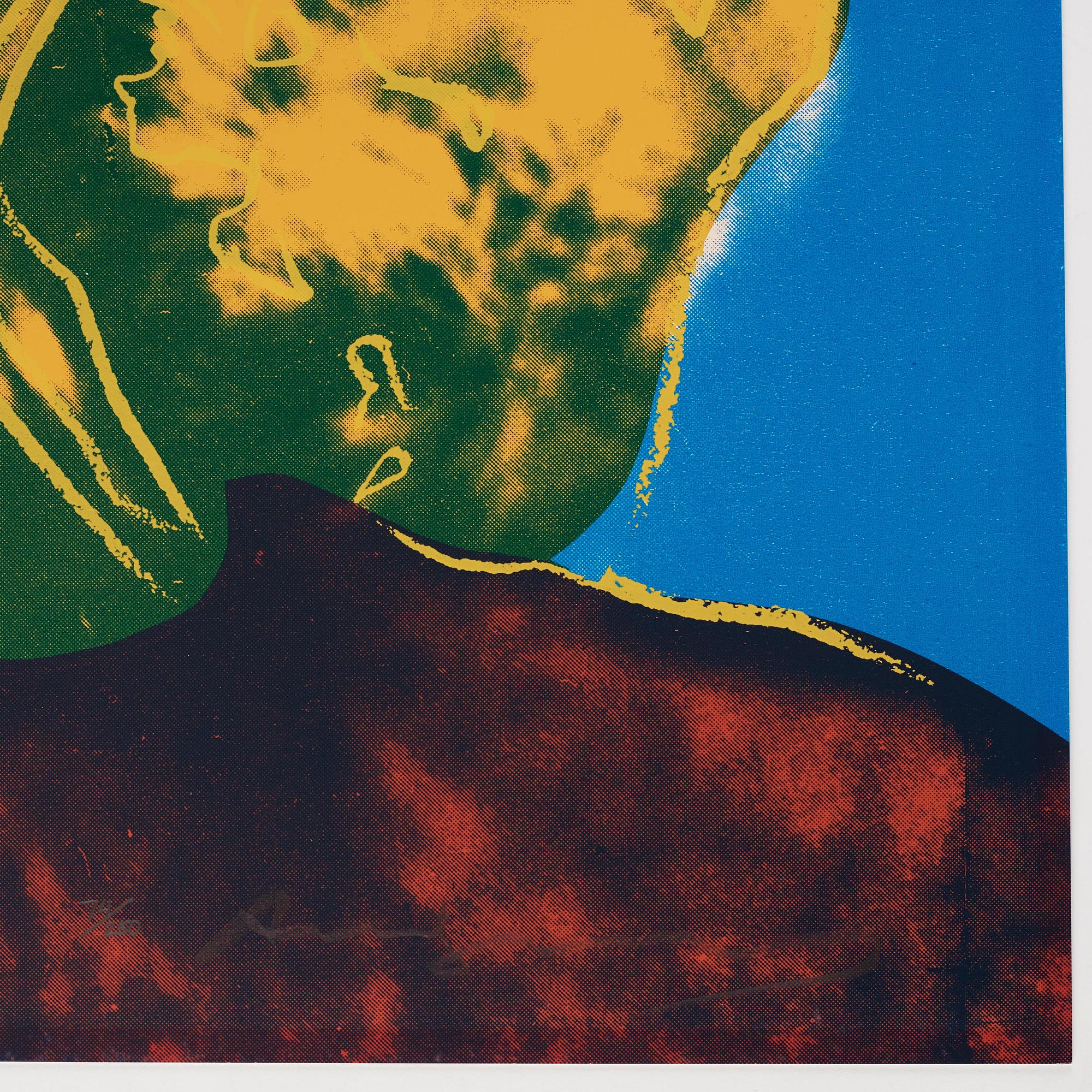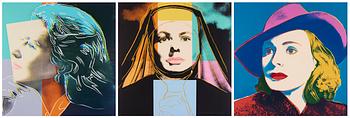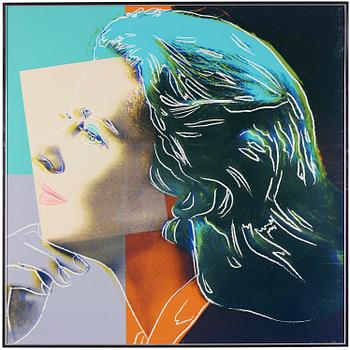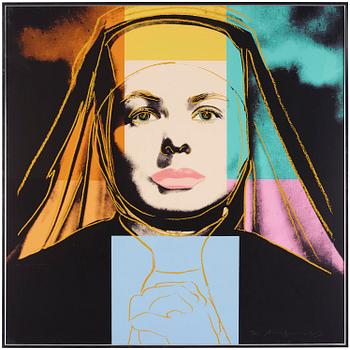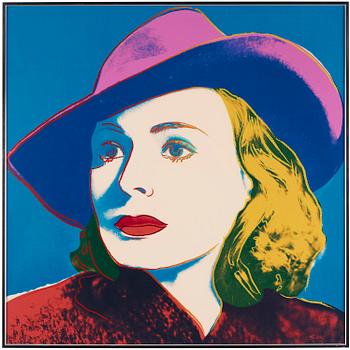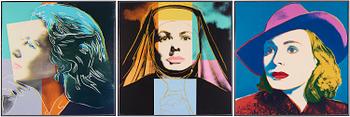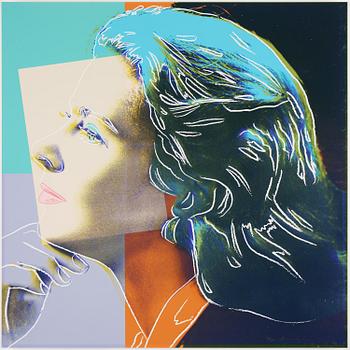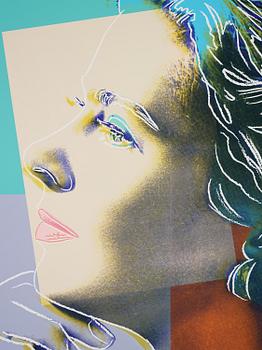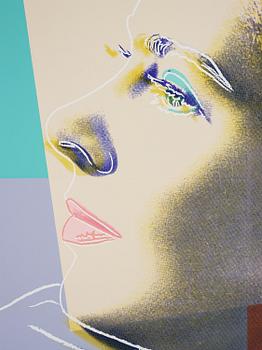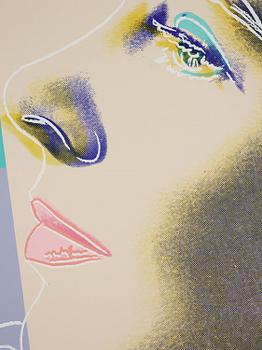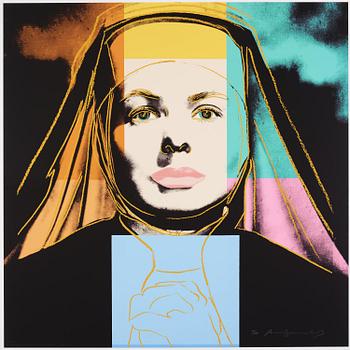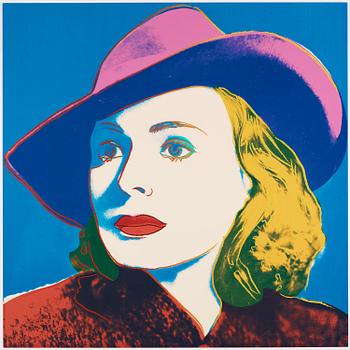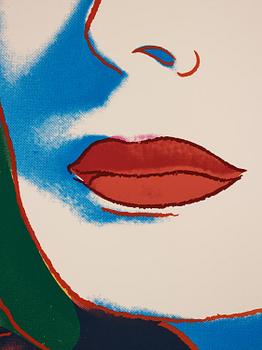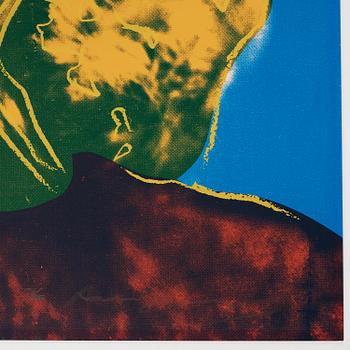
"Three portraits of Ingrid Bergman by Andy Warhol"
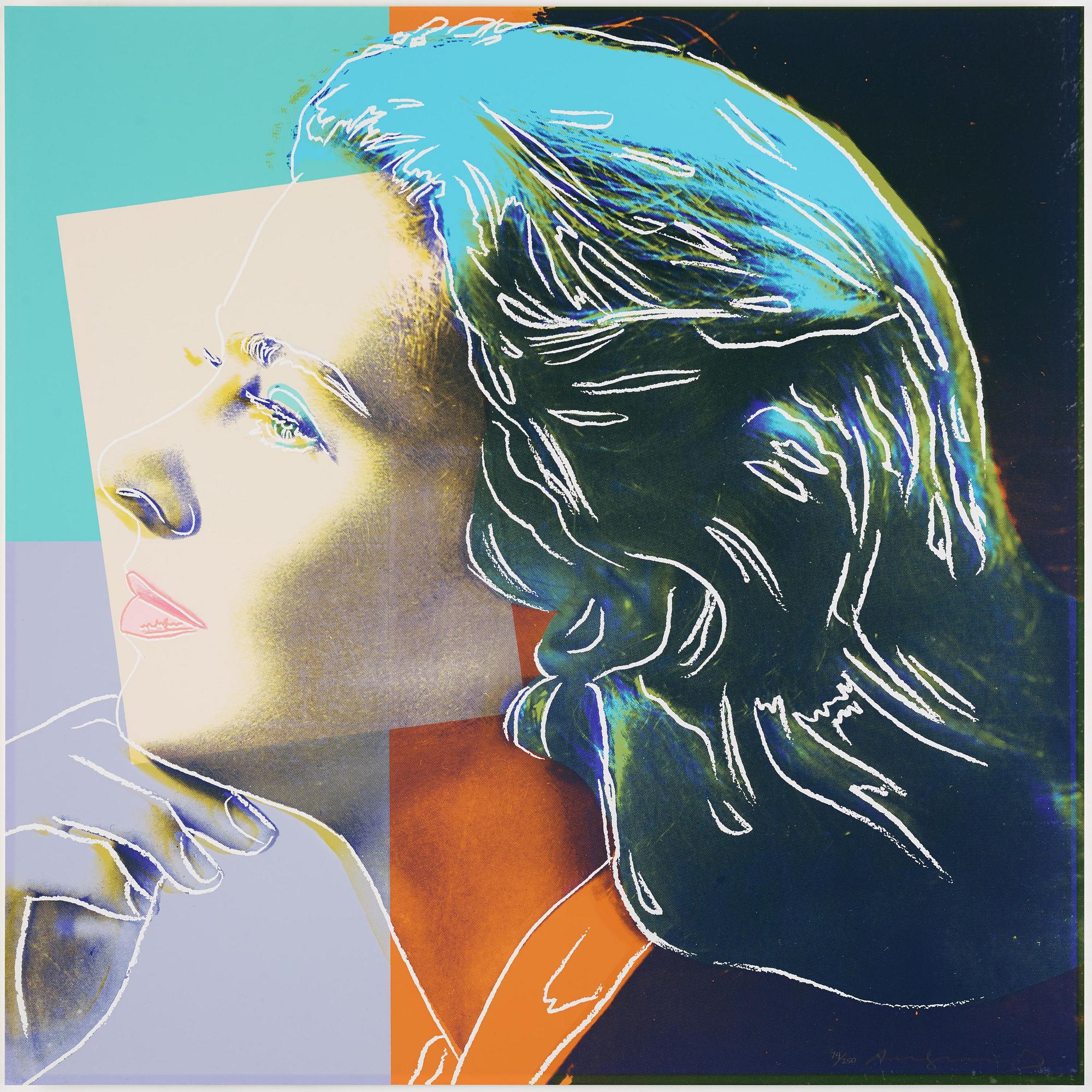
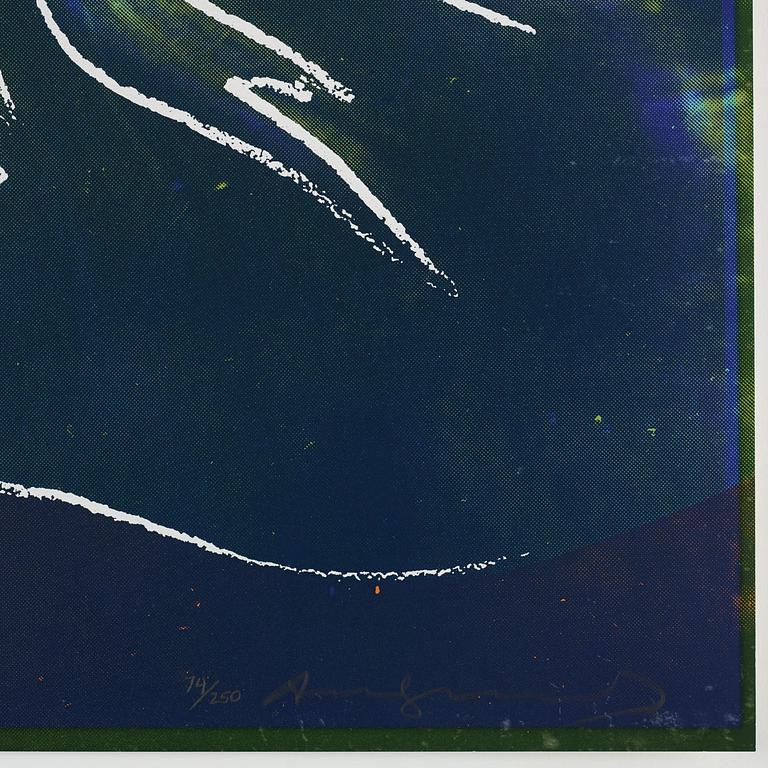
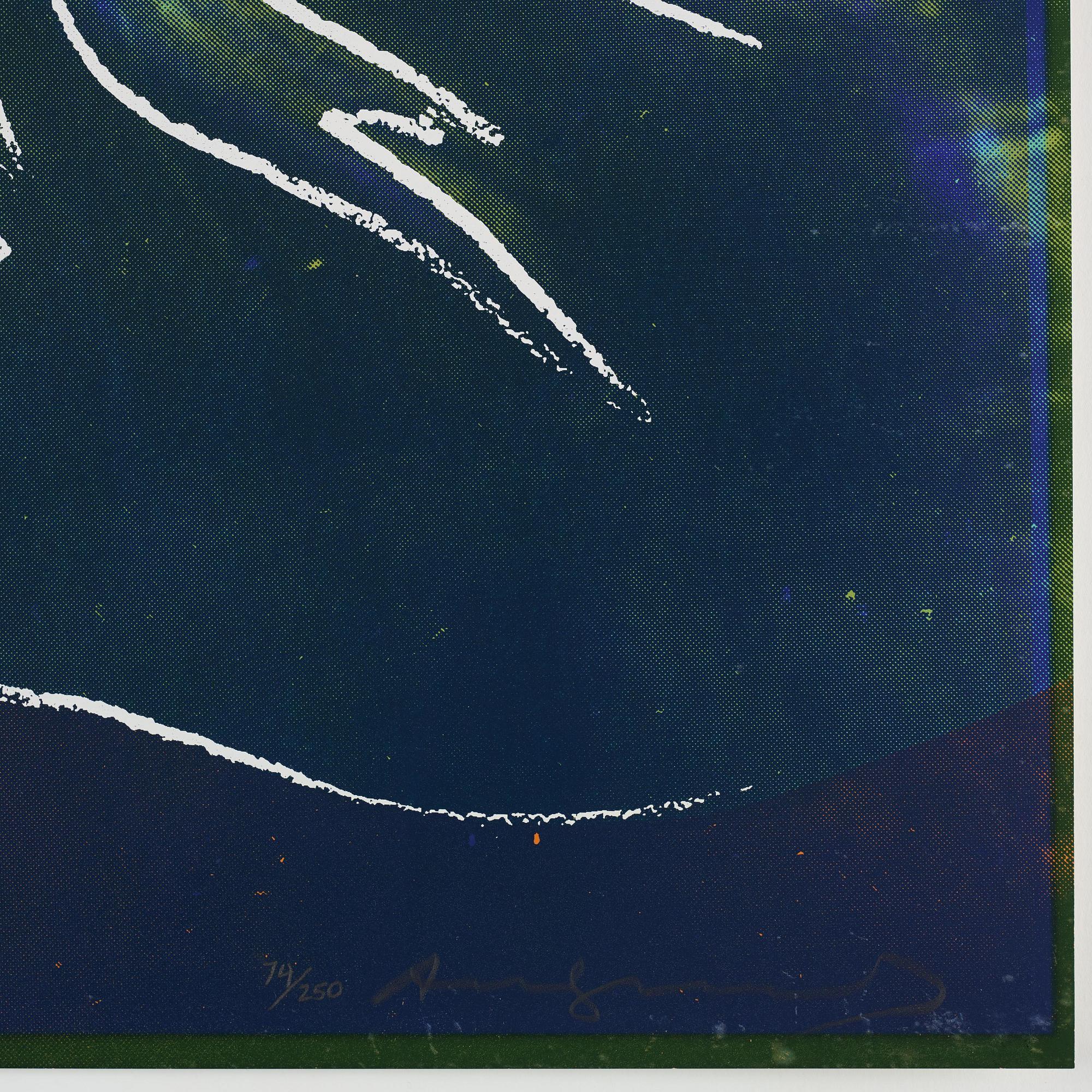
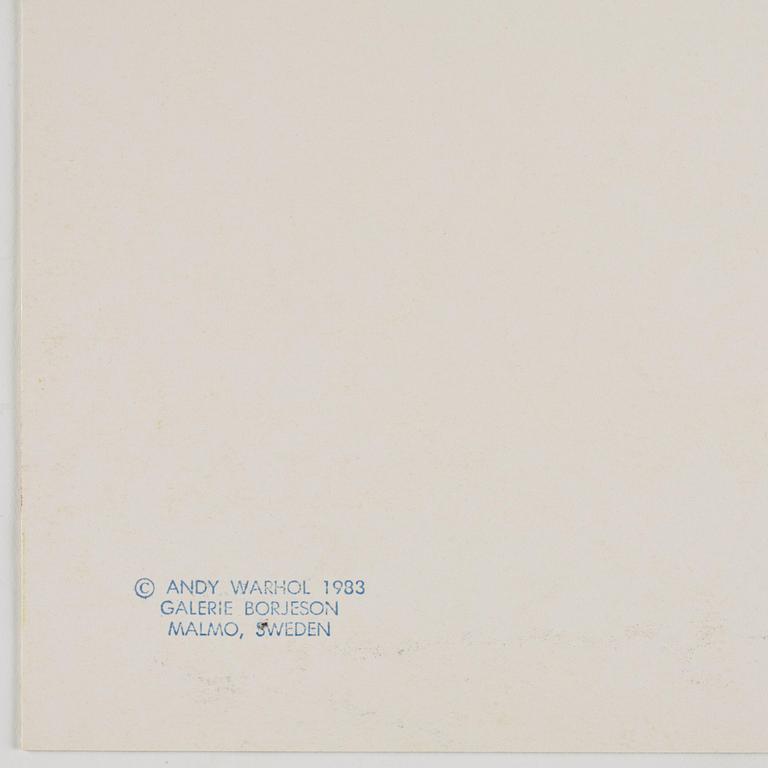
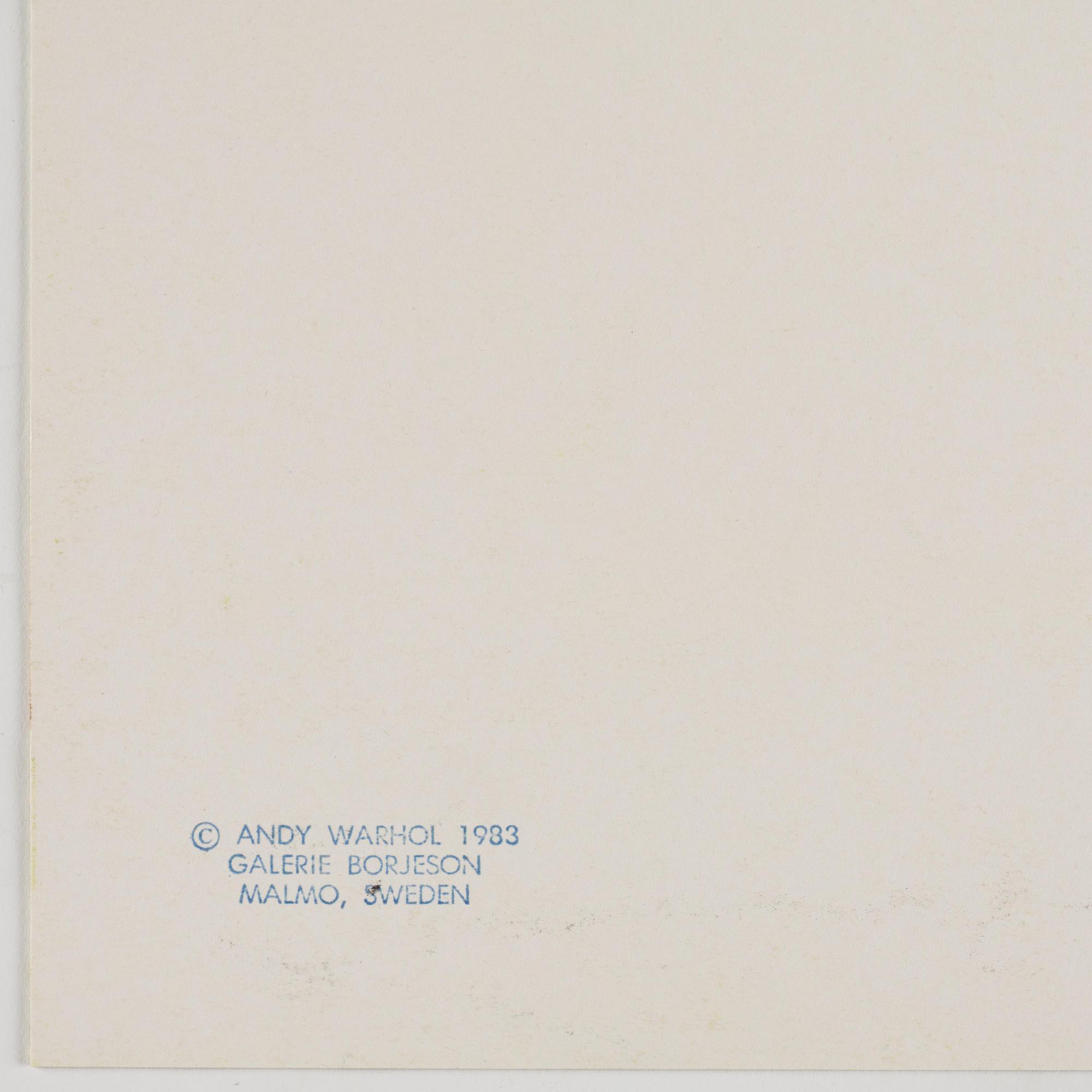
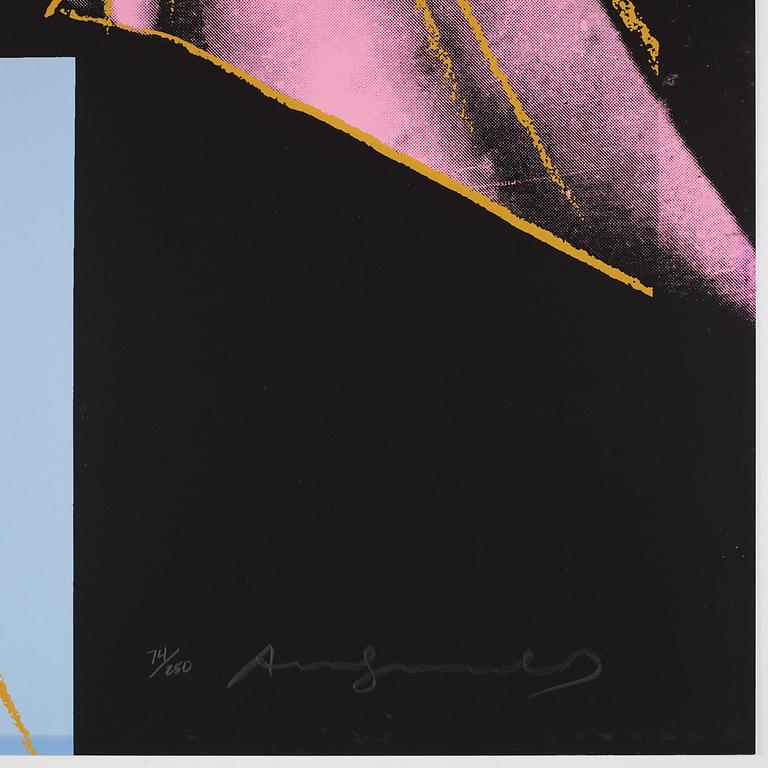
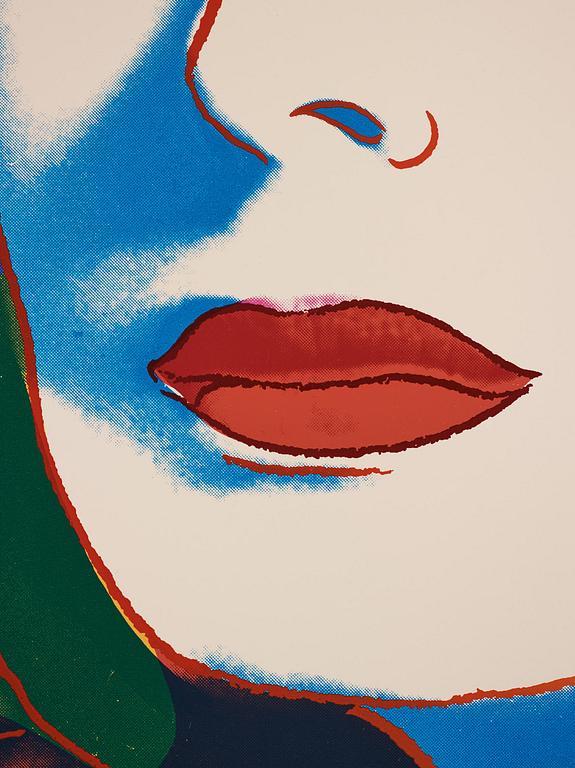
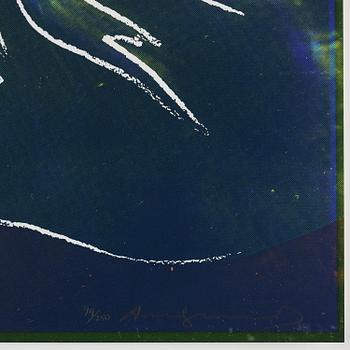
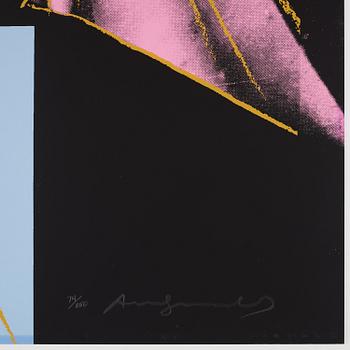
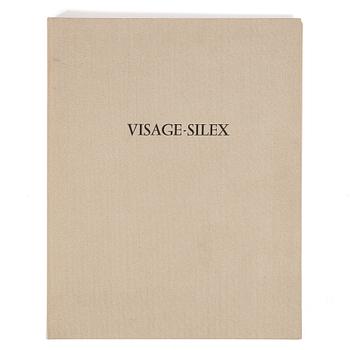
The complete portfolio with three silkscreens in colours, 1983, each signed in pencil and numbered 74/250, printed by Rupert Jasen Smith, New York, published by Galerie Börjeson, Malmö. I./S: 96.5 x 96.5 cm
Provenance
Purchased by the current owner at Galerie Börjeson, Malmö 1984.
Literature
Feldman II.313.
More information
The famous portfolio with Andy Warhol’s three portraits of Ingrid Bergman was first published in 1983 by Galerie Börjeson in Sweden. Warhol’s fascination with Hollywood superstars is well known. Earlier in his career he had produced a number of portraits of film stars using different techniques. On the folder’s flyleaf Per-Olov Börjeson describes a meeting between himself and the artist in which the idea of the portfolio came about:
“At our meeting in the fall of 1982 we discussed these very ‘Warholian’ portraits and whilst talking about the stars of the cinema Ingrid Bergman’s name was brought up. […] It was during this conversation that the idea of a series of graphic prints to honor the memory of a great artist whom we both admired, was born. […]
In these three prints we meet a new Andy Warhol. Gone is the very deliberate sense of distance that characterized the earlier portraits. Objective, and almost documentary in their lack of personal judgment, they are portraits of roles played rather than lives lived by people. The three portraits of Ingrid
Bergman, however, reveal Andy Warhol’s personal feelings and unbounded admiration for a woman and actress that he knew.
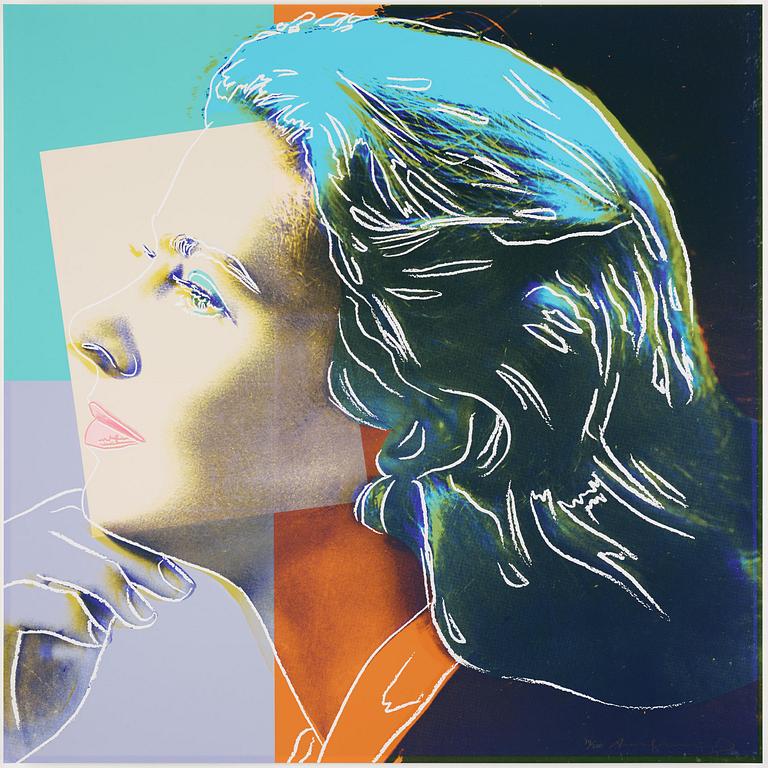
The titles of the three prints are: ‘The Nun’ (from ‘The Bells of St Mary’s’), ‘With hat’ (from ‘Casablanca’) and ‘Herself’. This last title reveals just how far Andy Warhol has gone. Beyond the portrait of a star-role to a statement of undisguised, personal feeling in a portrait which is so strikingly beautiful as to reveal the mutual kinship between two great artists.”
More about Andy Warhol
American artist, printmaker, and filmmaker. He studied at the Carnegie Institute of Technology from 1945 to 1949 and began his career as an art director for the magazines Vogue and Harper’s Bazaar. His success in the advertising industry led to the Art Directors Club Medal in 1957.
Warhol is considered one of the leading figures of Pop Art. His artistic practice consists largely of portraits, often of well-known individuals, executed in silkscreen technique. He also worked with reproduced documentary images as well as installations in which everyday consumer objects, such as packaging, were given a central role. The underlying idea was that beauty and energy can be found everywhere in modern society, even in things often regarded as banal. As a result, detergent boxes and soup cans became artistic motifs. Campbell’s soup cans and Brillo boxes were transformed through his work into some of the most iconic artworks of the 20th century.
From 1963 onward, he produced and participated in a large number of films in his own studio, The Factory, which simultaneously developed into an important meeting place for New York’s artistic and bohemian scene. Warhol continuously documented his surroundings with a film camera and later also a Polaroid camera. In his so-called Screen Tests, he filmed a number of internationally known figures, including Mick Jagger, Bob Dylan, Marcel Duchamp, and Salvador Dalí. According to his will, The Andy Warhol Foundation for the Visual Arts was established in New York in 1987, and in 1994 The Andy Warhol Museum opened in Pittsburgh.
Read moreFor condition report contact specialist
Image rights
The artworks in this database are protected by copyright and may not be reproduced without the permission of the rights holders. The artworks are reproduced in this database with a license from Bildupphovsrätt.