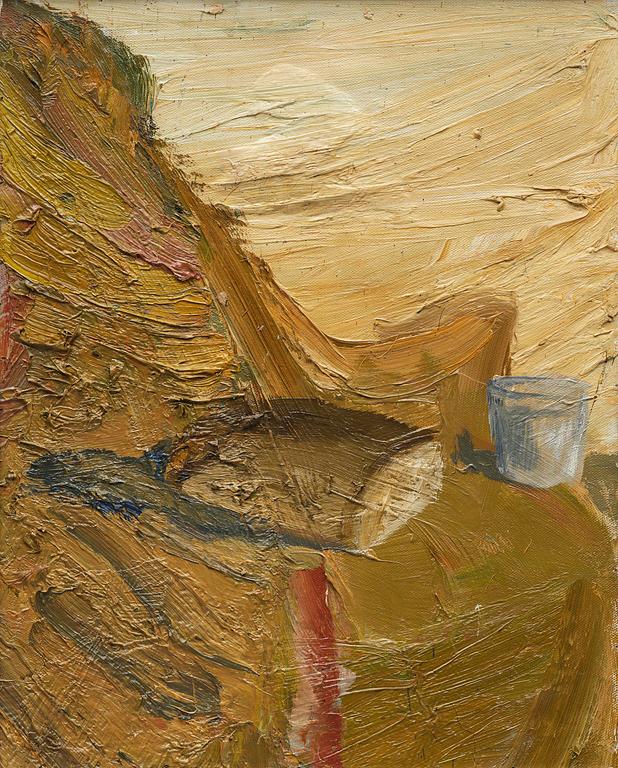
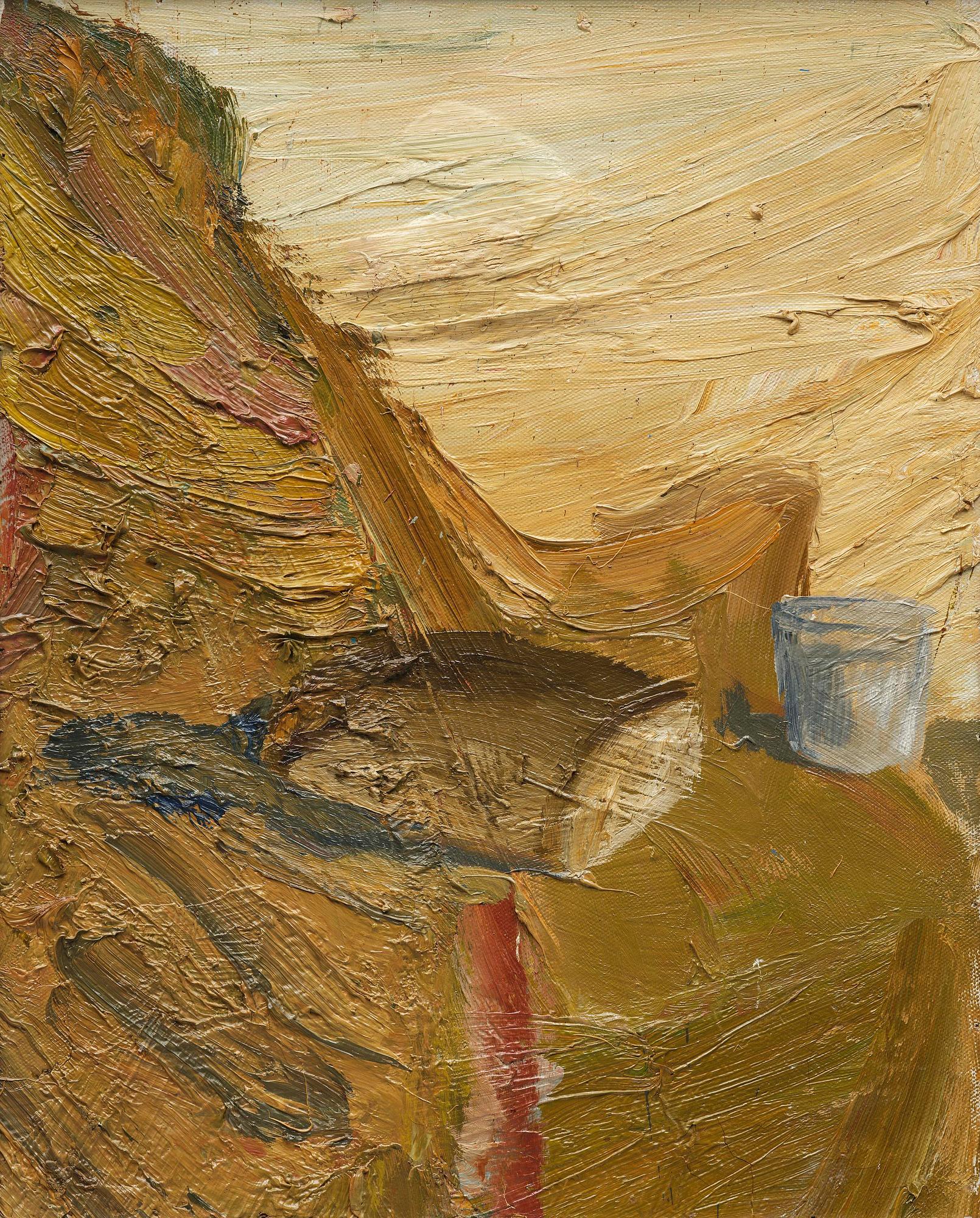
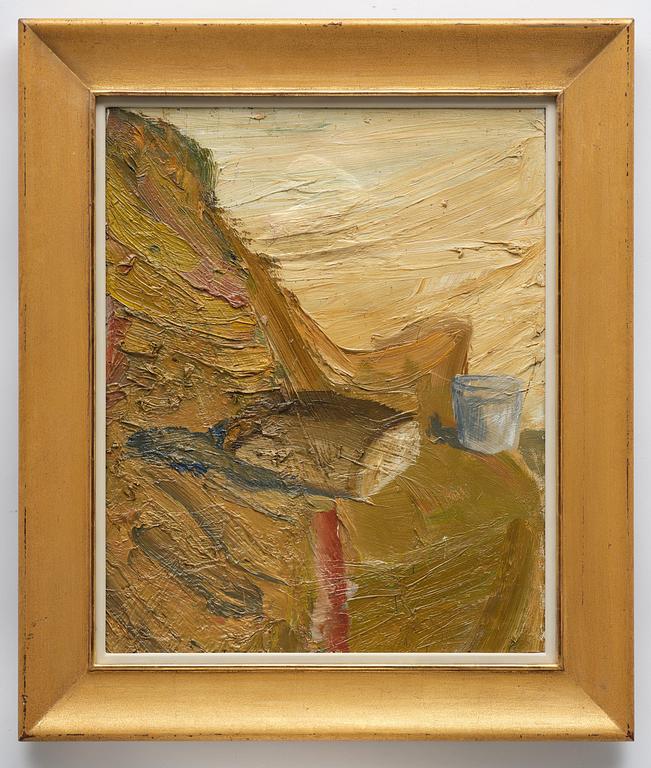
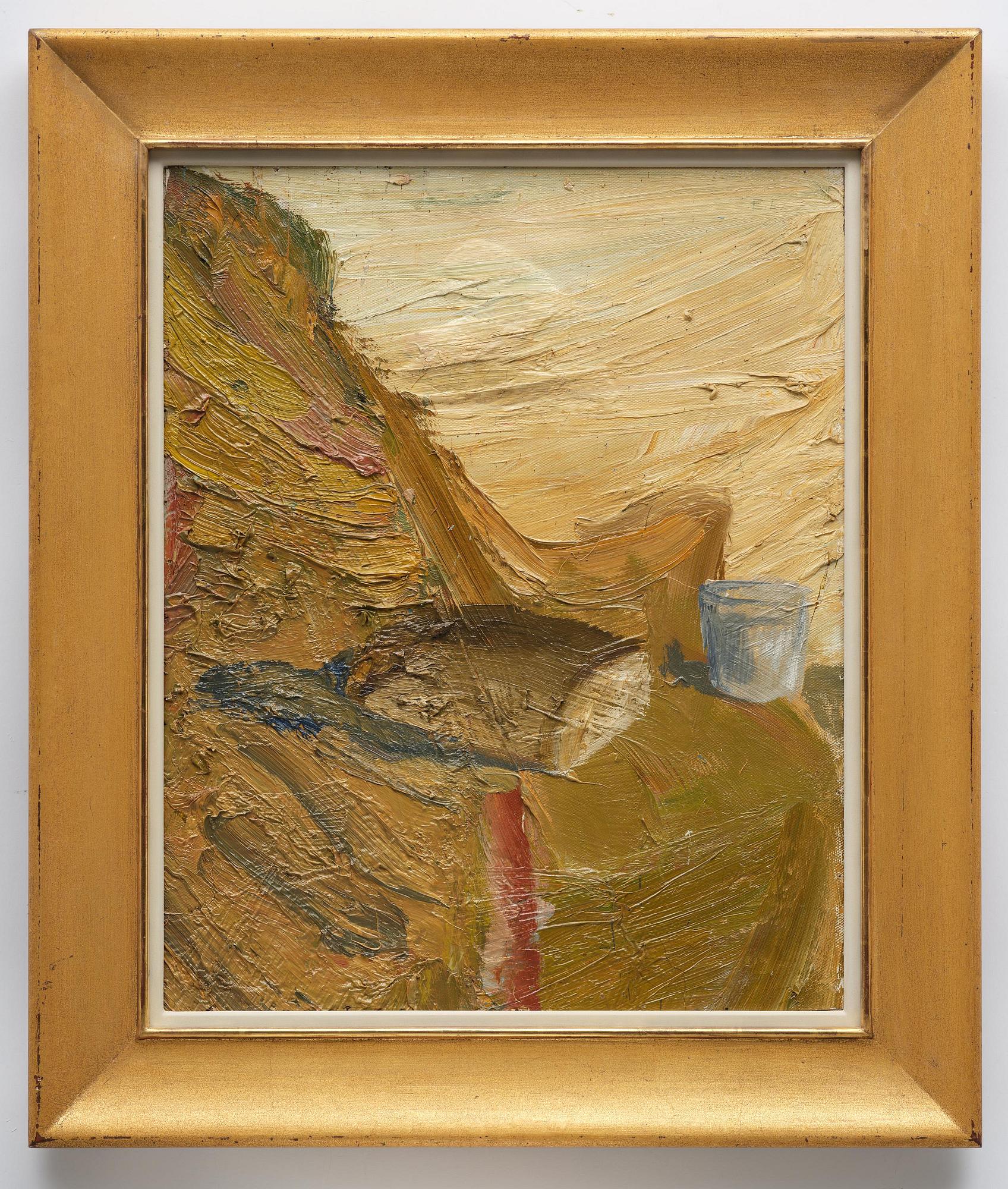
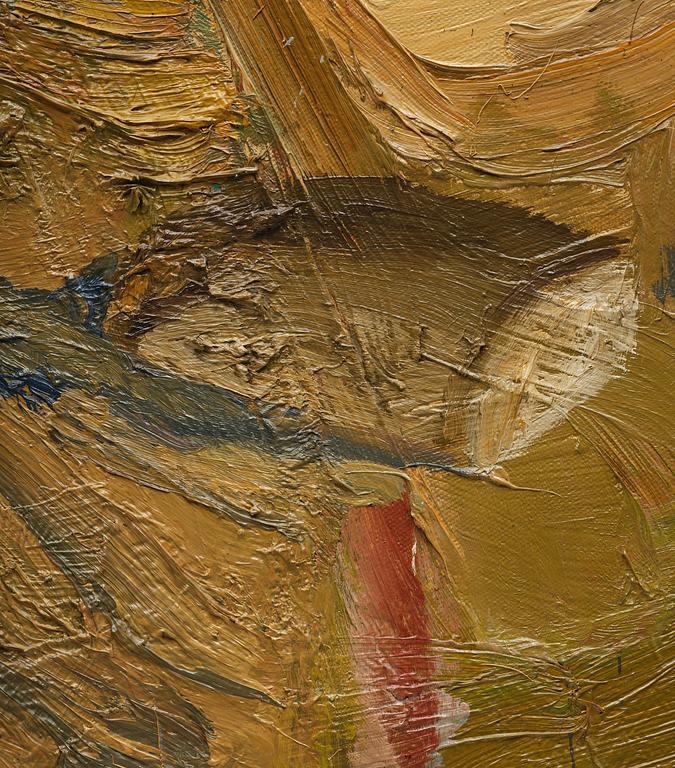
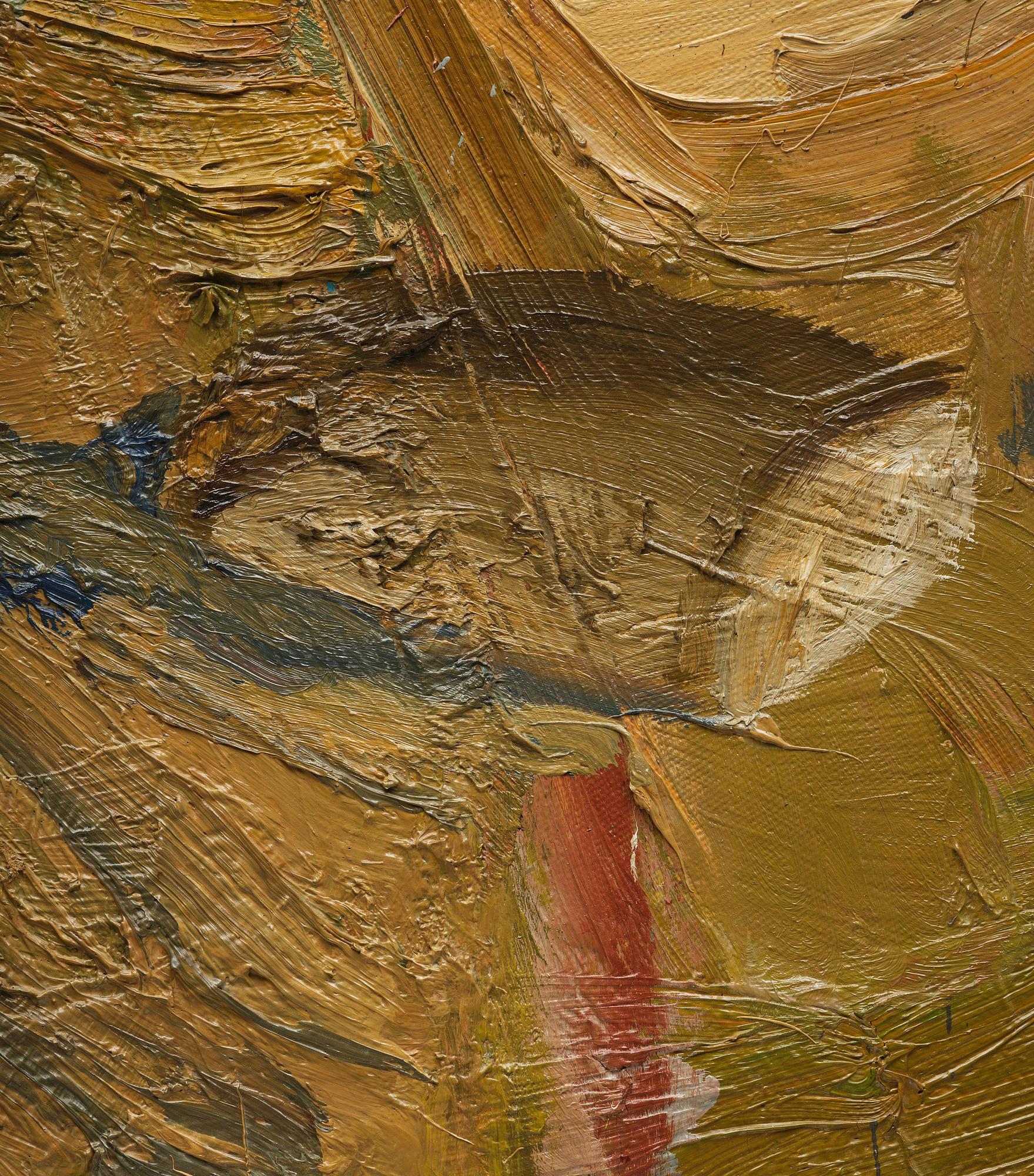
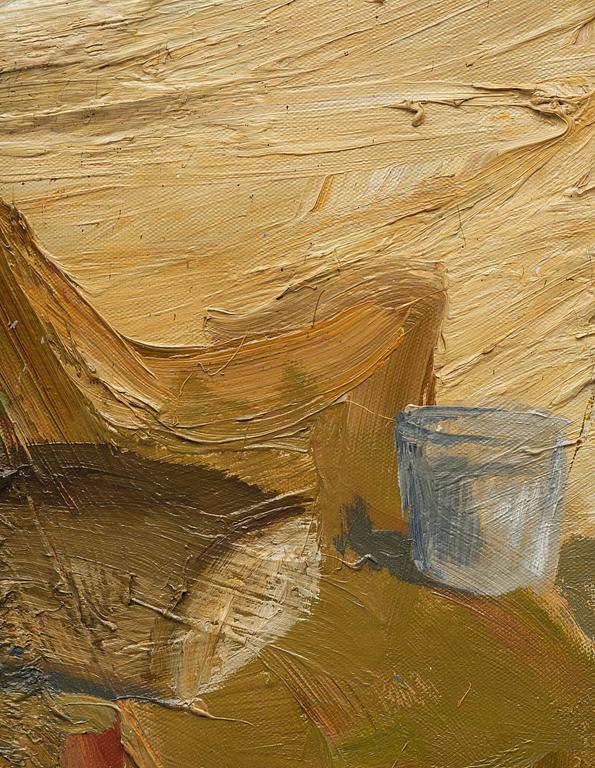
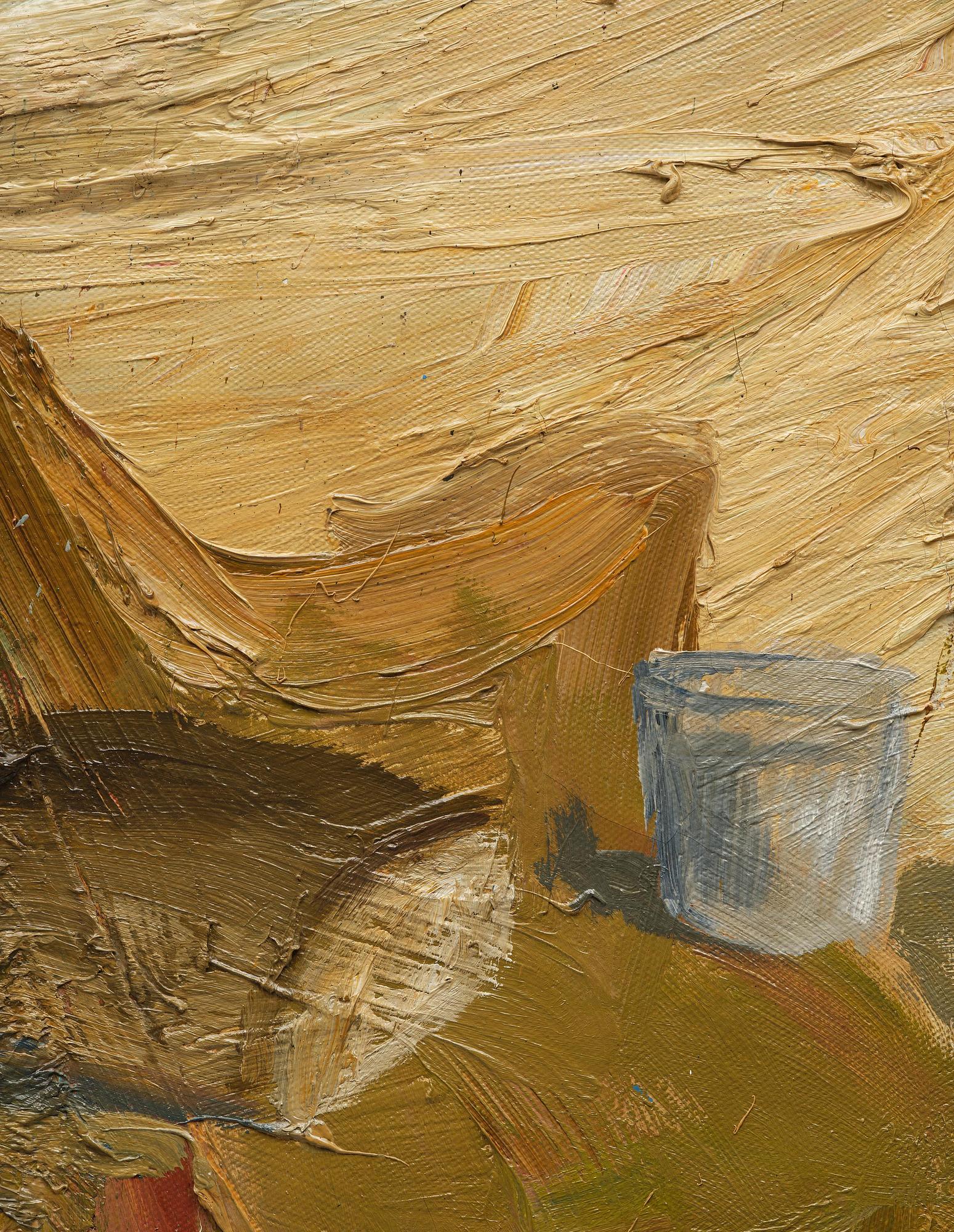
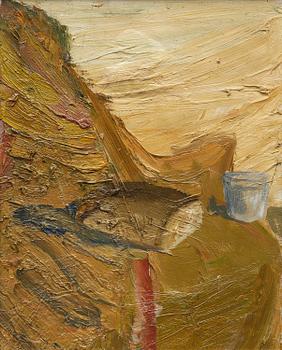
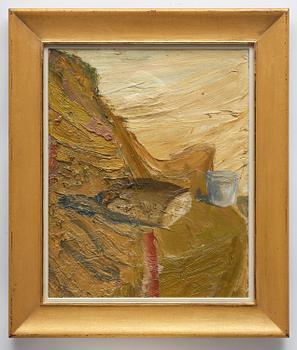
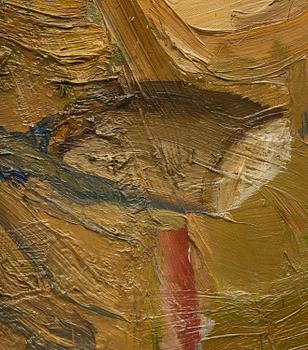
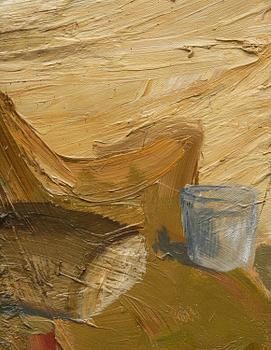
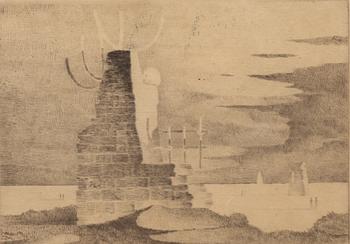
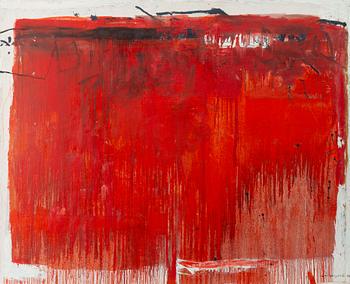
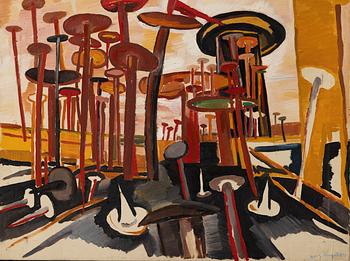
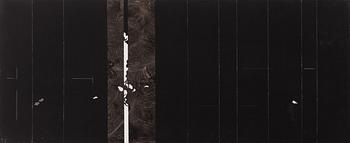
”Brödet”
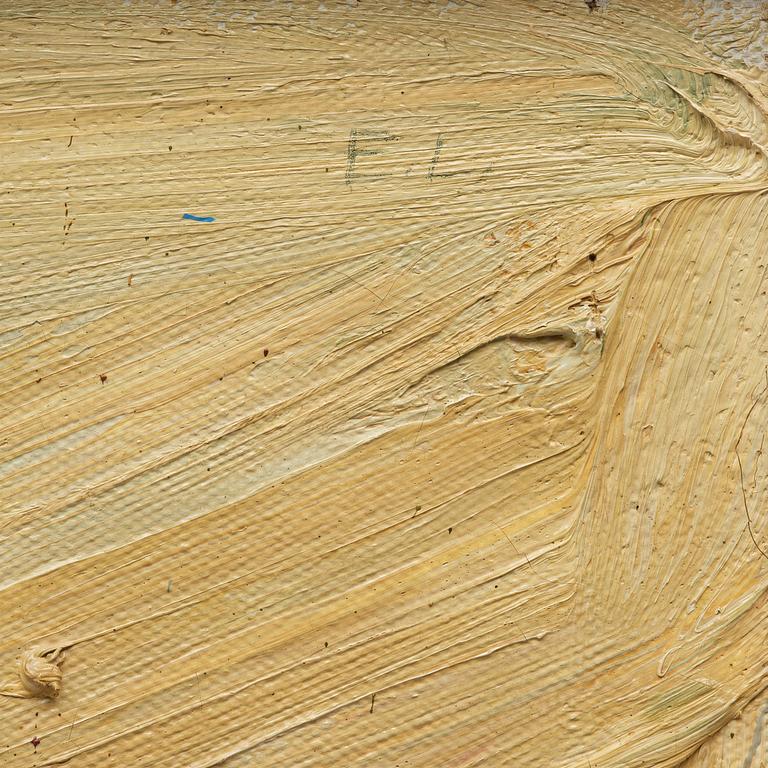
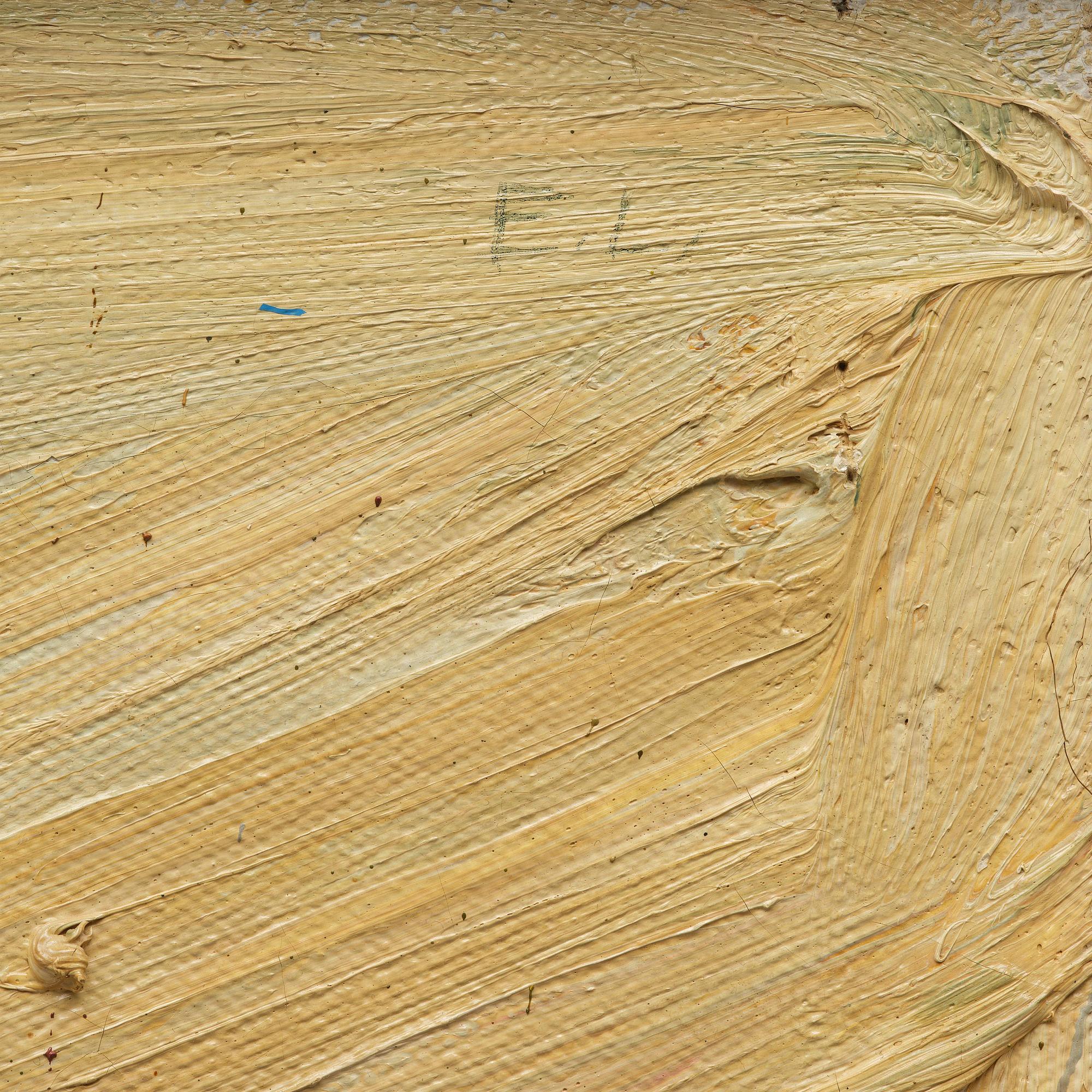
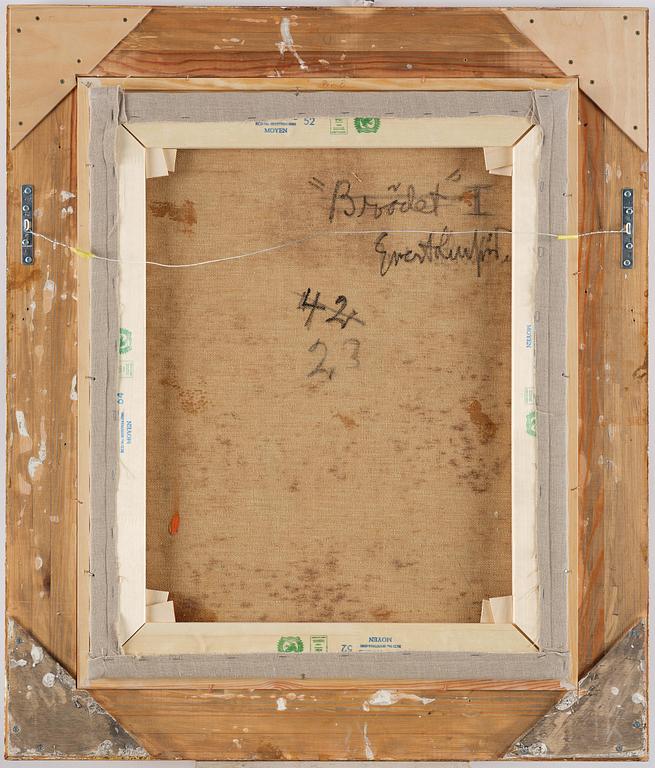
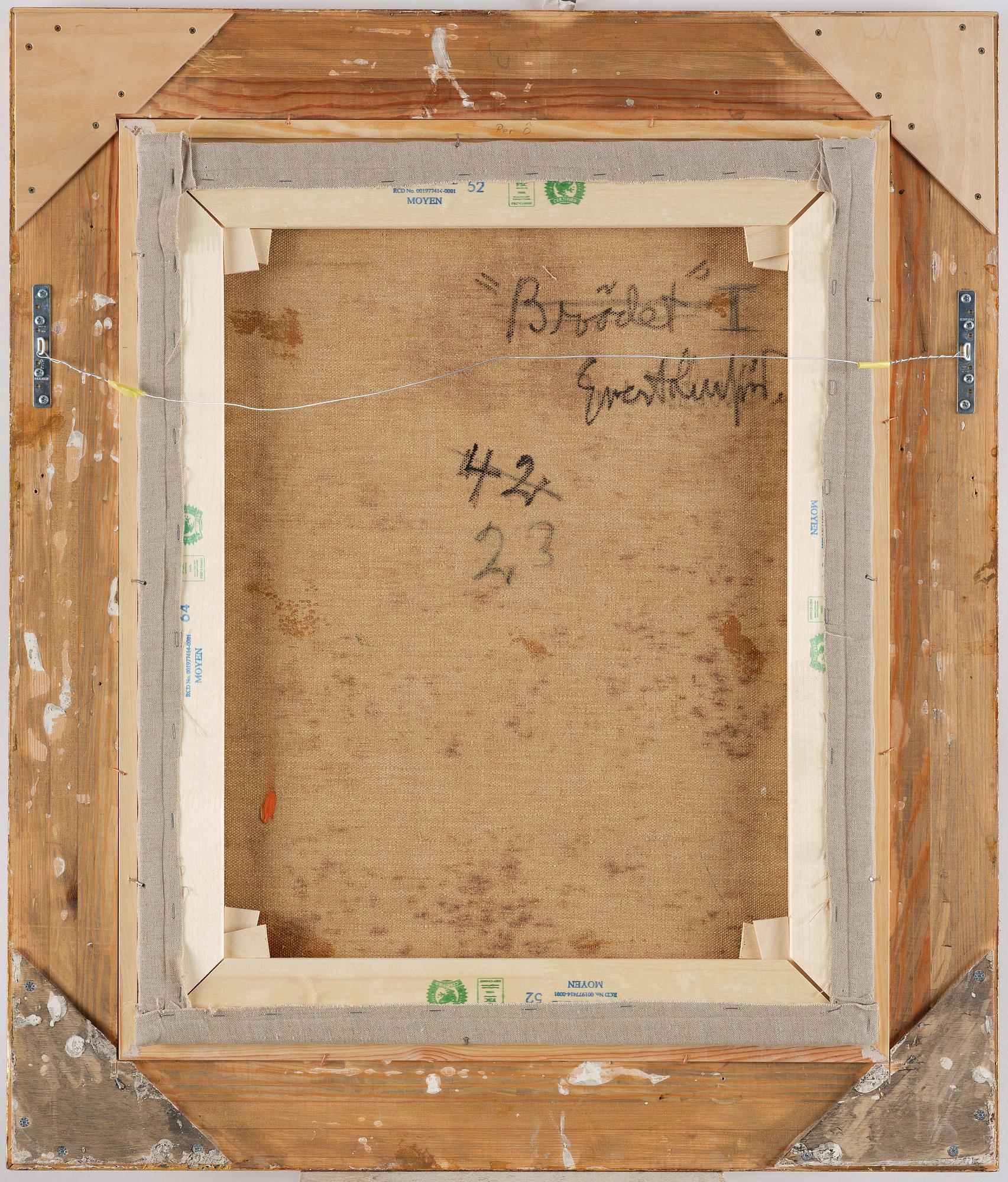
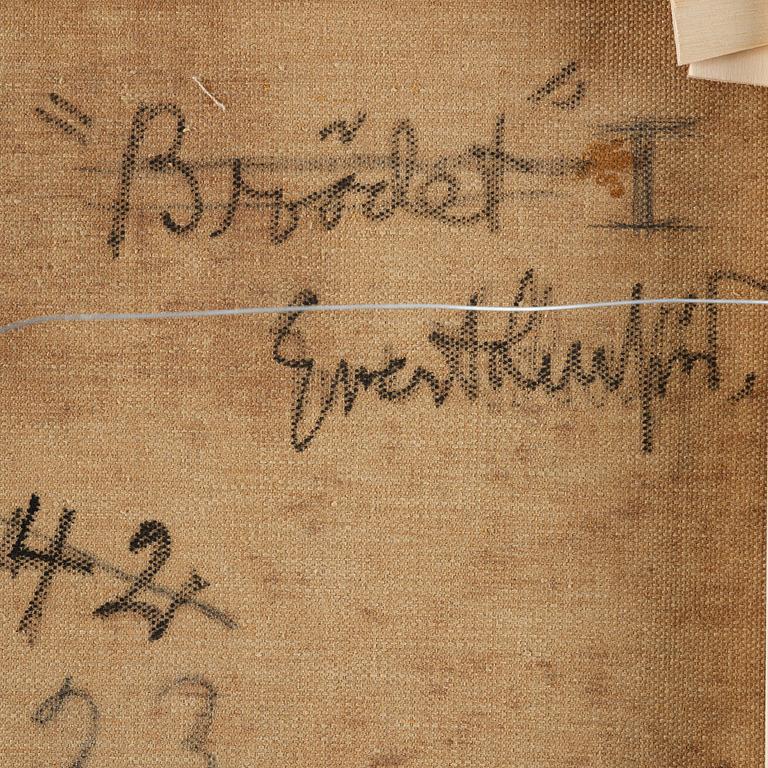
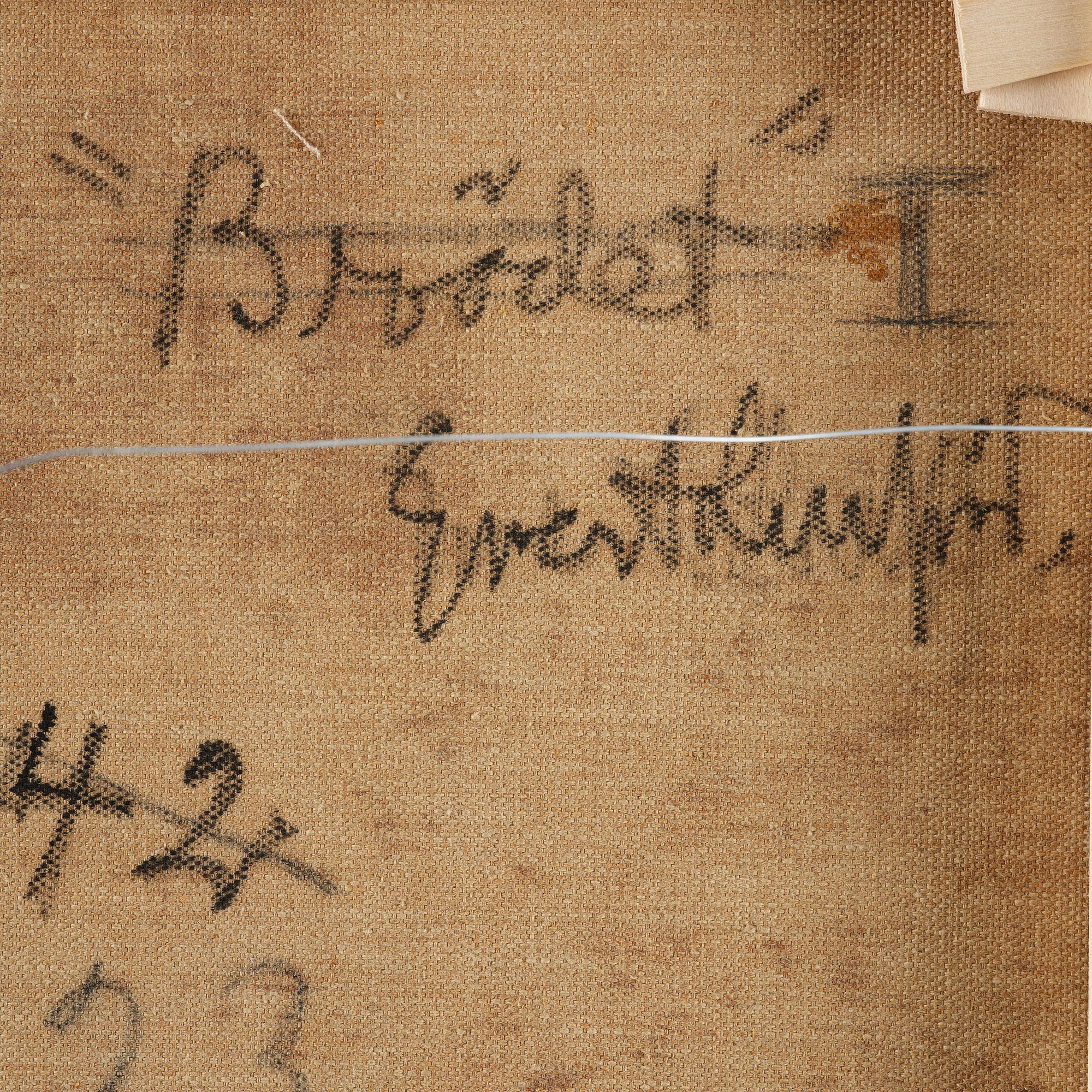
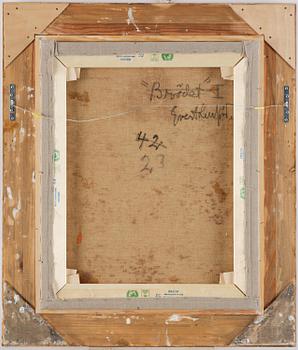
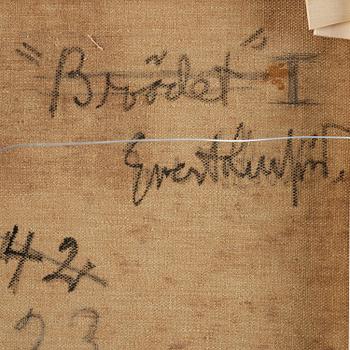
Monogram signed E.L. and signed Evert Lundquist on the reverse. Oil on relined canvas 64 x 52.5 cm.
More information
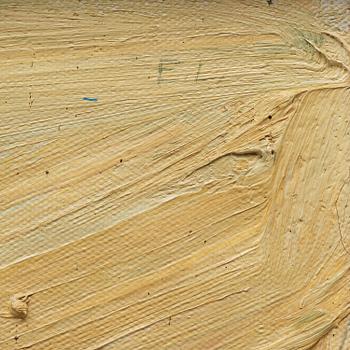
When Evert Lundquist broke through as a neo-expressionist in 1950, he had already been active for thirty years. He began his career in the spirit of Neue Sachlichkeit (New Objectivity) in the 1920s and later embraced the heavy expressionism of the 1930s, influenced by James Ensor. The giants of art history—Rembrandt, Chardin, and Van Gogh—led him toward an impasto technique in which lines, forms, and colors are born simultaneously. He once said: “I grope my way forward until I reach the point where it begins to burn.”
Lundquist depicted the humble and everyday—the spade, the candle, the ladder, the tree—but often also women. His motifs gained intensity through strongly simplified forms, almost dissolved by thick layers of paint.
Together with Staffan Hallström, Olle Nyman, Torsten Renqvist, Sixten Lundbom, and Roland Kempe, Evert Lundquist was part of the Saltsjö-Duvnäs Group, one of Sweden’s most important artistic circles. The artists became friends during their student years at the Royal Academy of Fine Arts and lived for a few years in Saltsjö-Duvnäs during the 1940s. All achieved great success—particularly Hallström and Nyman—but above all Lundquist, who also exhibited extensively on the international stage.
Lundquist studied at Carl Wilhelmson’s Painting School in 1924. That same year, he attended the Académie Julian in Paris before continuing his studies at the Royal Academy of Fine Arts in Stockholm under Gösta von Hennigs, Carl Wilhelmson, and Albert Engström (1925–1931). He later became a professor at the same institution (1960–1970).
After his studies, Lundquist developed a more expressionistic style, with affinities to Edvard Munch. Although his impasto technique might seem spontaneous, his paintings were in fact created slowly and deliberately, waiting for the image to reveal its possibilities.
Through his visionary yet deceptively simple painting, Lundquist became one of the most significant Swedish artists of his generation. He represented Sweden at the São Paulo Biennial, where he won a prize, and was selected for the Guggenheim International Award in New York in 1964 as one of the world’s 100 leading artists. He also exhibited at the Dunn International at the Beaverbrook Art Gallery in Canada and at the Tate Gallery in London.
International museums acquired his works, and leading galleries wanted to exhibit him, but after a few years he chose to withdraw from the international art scene. From 1953, he lived and worked in a whitewashed building near Drottningholm Palace. A few years before his death, he became completely blind—but continued to paint until the very end.
For condition report contact specialist
Covered by droit de suite
Image rights
The artworks in this database are protected by copyright and may not be reproduced without the permission of the rights holders. The artworks are reproduced in this database with a license from Bildupphovsrätt.