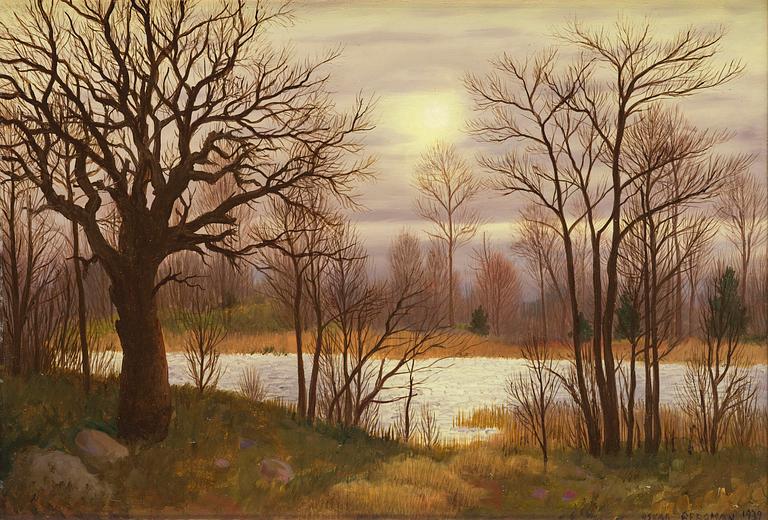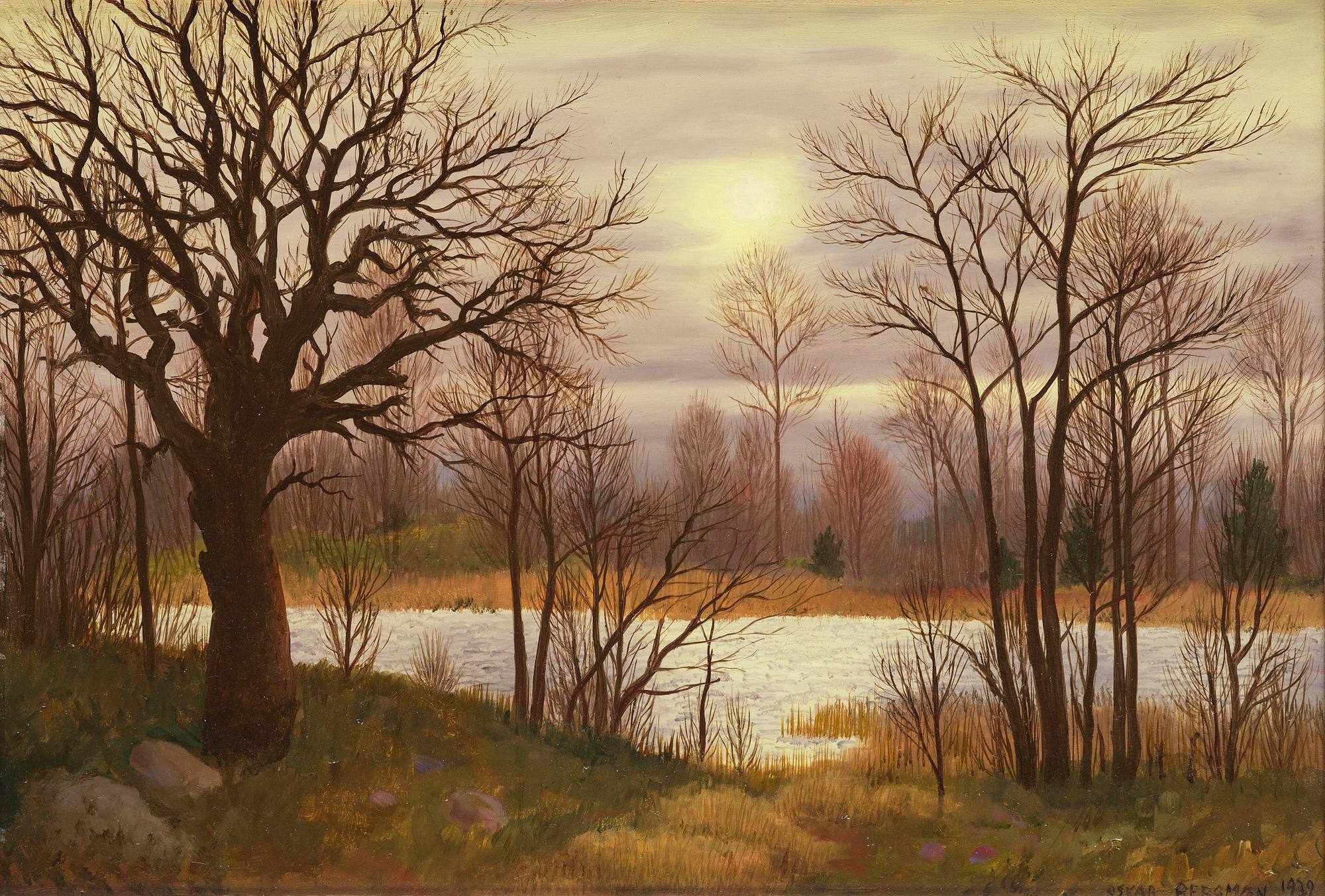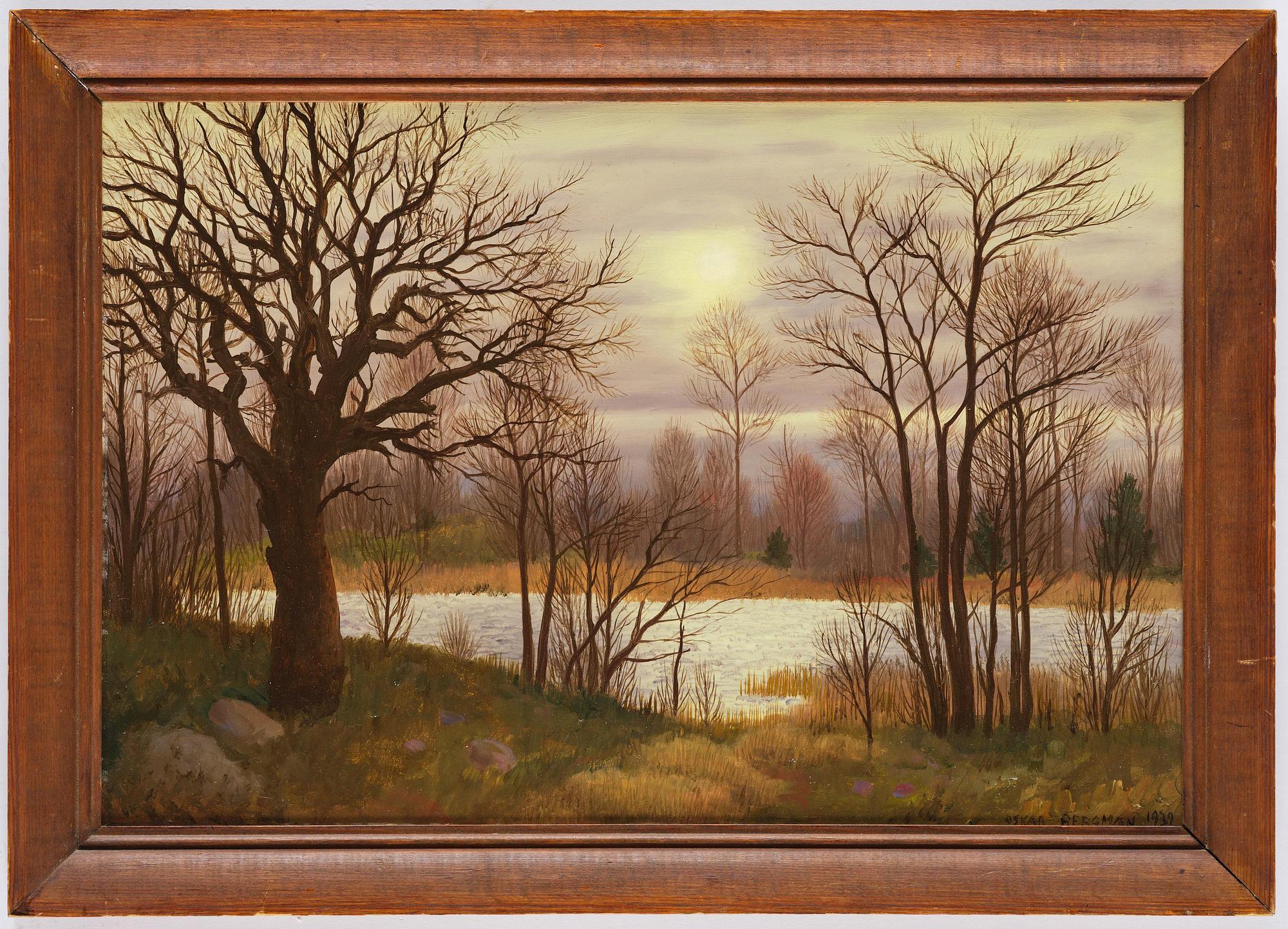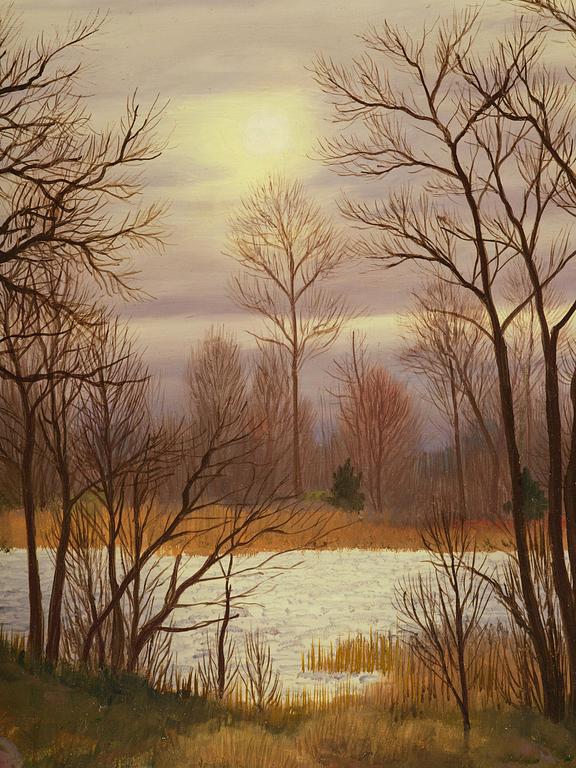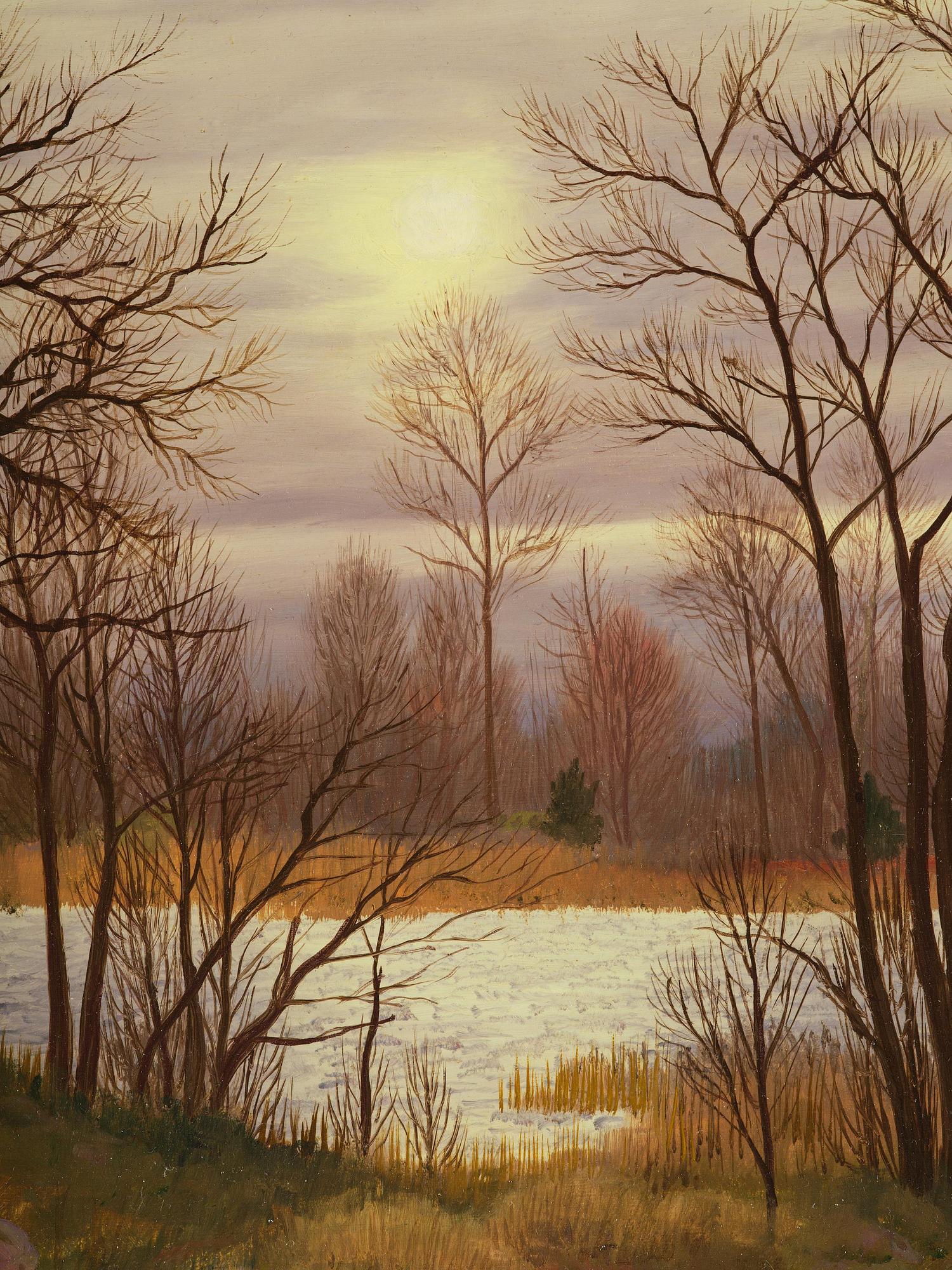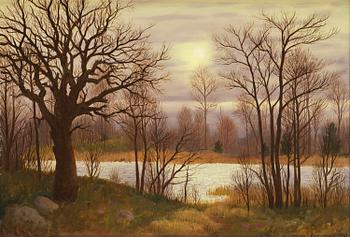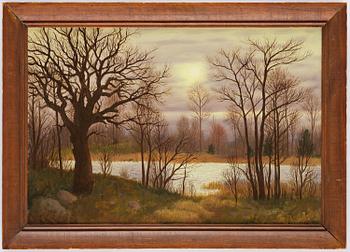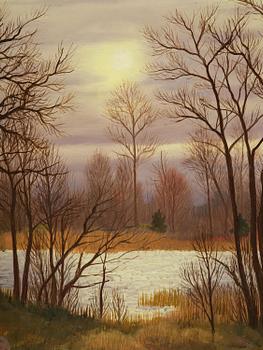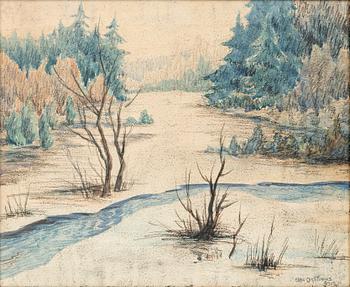
"Vintersol, Neglinge"
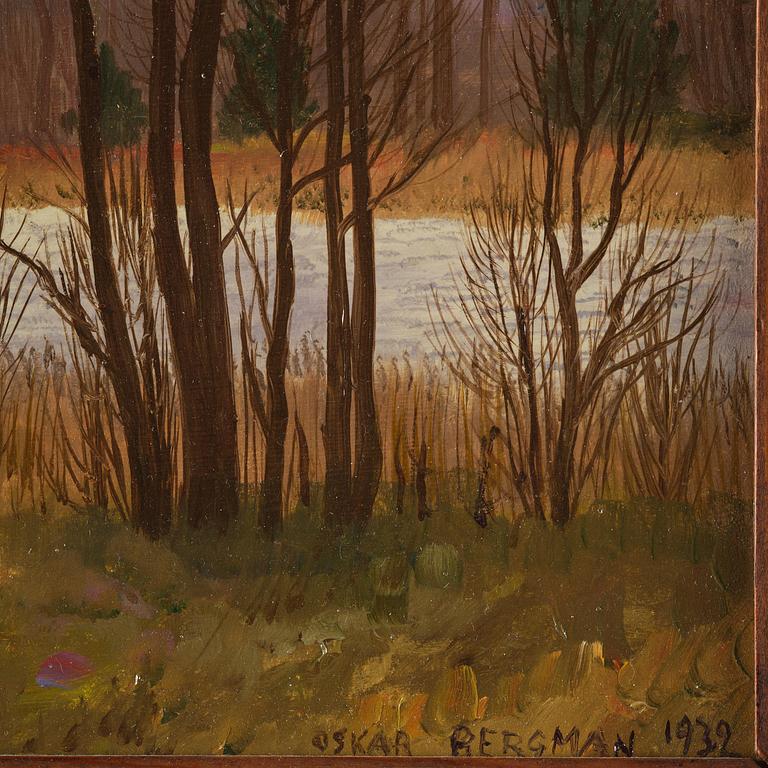
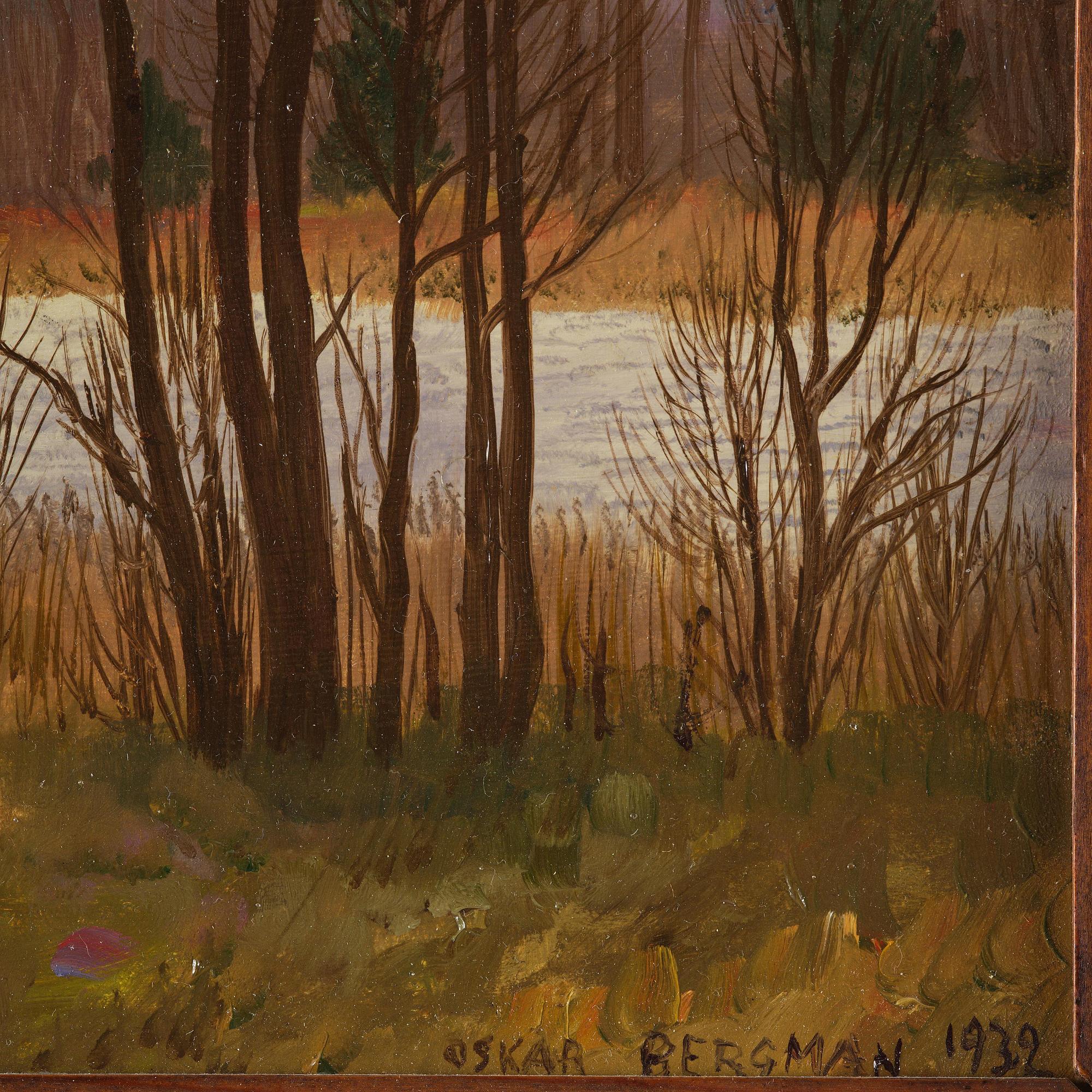
Signed Oskar Bergman and dated 1932. Panel 30 x 44 cm.
More information
Oskar Bergman (1879–1963) was a Swedish painter, graphic artist, and watercolourist who belonged to the same generation as, among others, Carl Larsson and Bruno Liljefors, but he forged his own path. He studied at the Royal Academy of Fine Arts in Stockholm and quickly became known for his unique ability to render the Swedish landscape in watercolour and gouache with meticulous precision. Bergman's images are often characterised by an almost fairy-tale clarity – snow-covered landscapes, tranquil groves, blooming meadows, and waterways are depicted in a atmospheric, sometimes almost magical light. He was also a skilled graphic artist, producing many woodcuts and etchings.
Neglinge, in Saltsjöbaden outside Stockholm, played an important role in his life. There, Oskar Bergman had his home and studio for most of his life, and the nature in the area became one of his main sources of inspiration. The region around Neglinge, with its proximity to the archipelago, pine forests, and the characteristic lakes, recurs in many of his paintings.
More about Oskar Bergman
Oskar Bergman occupies a unique position in Swedish art history through his detail-rich, atmospheric landscape paintings of primarily Swedish nature and Swedish towns in bright colours and shimmering light. With a strong influence from the Swedish Artists' Association's national romanticism and Japanese woodblock printmaking, he developed his distinctive visual language. He primarily worked in gouache and watercolour, mediums that allowed for a high degree of control and precision in execution.
His motifs are often drawn from the areas around Saltsjöbaden, where he spent much of his life, but his works transcend the documentary. Instead, the landscapes serve as subjects of study where he explores form, rhythm, and composition. With restrained colour palettes and a carefully constructed pictorial structure, he creates a visual order where each element is balanced. Oskar Bergman's art can be understood as an extension of the national romantic landscape painting, but with a personal interpretation that approaches the decorative and sometimes symbolic. Through his methodical working process and focus on the formal qualities of nature, he contributed to a continuity within Swedish figurative painting during the first half of the 20th century.
Read moreFor condition report contact specialist

Covered by droit de suite
Image rights
The artworks in this database are protected by copyright and may not be reproduced without the permission of the rights holders. The artworks are reproduced in this database with a license from Bildupphovsrätt.