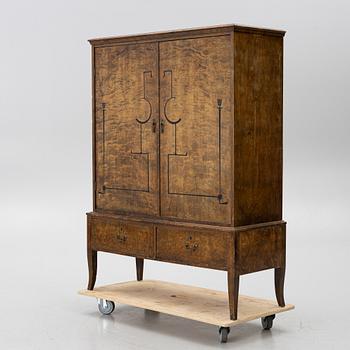
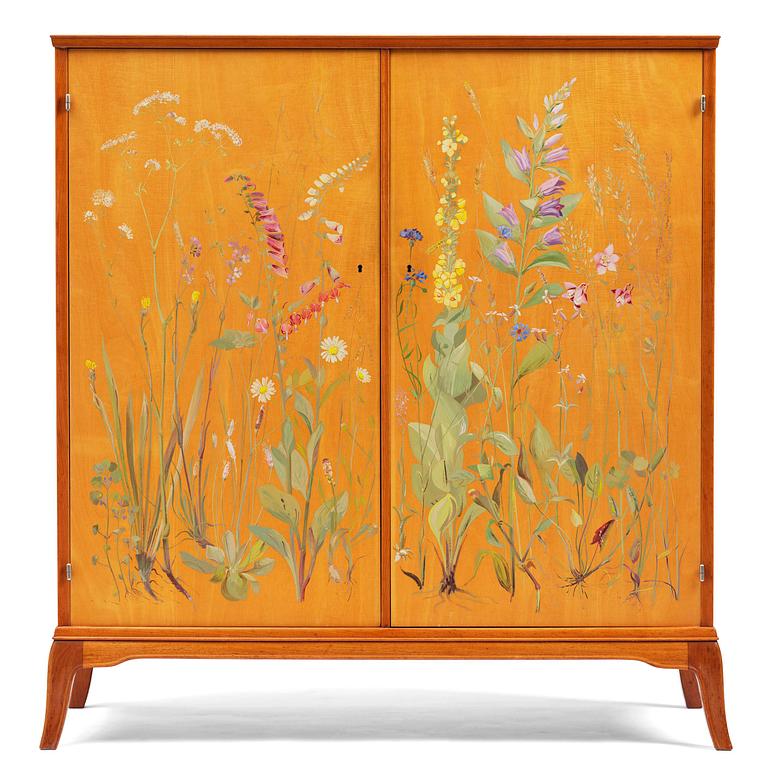
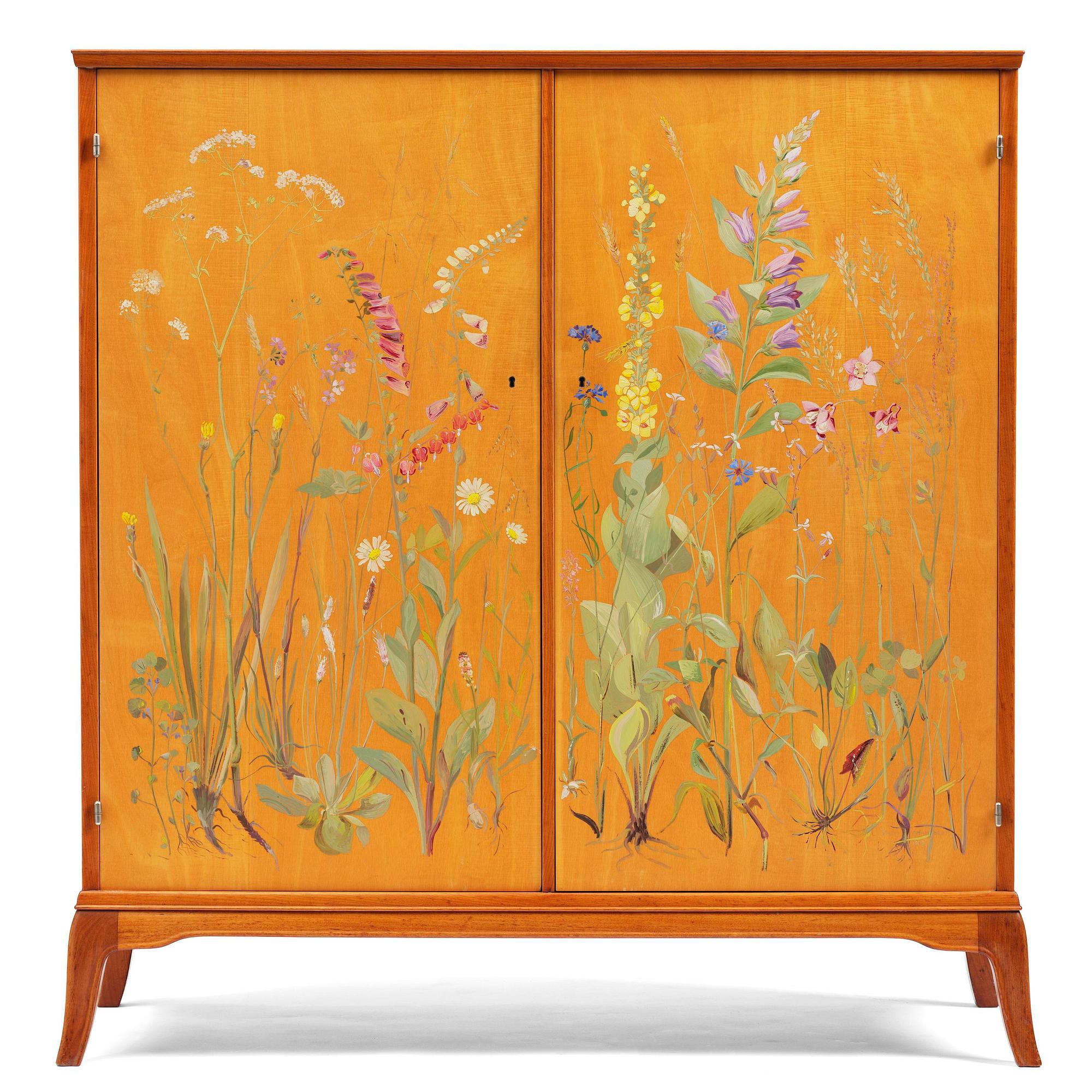
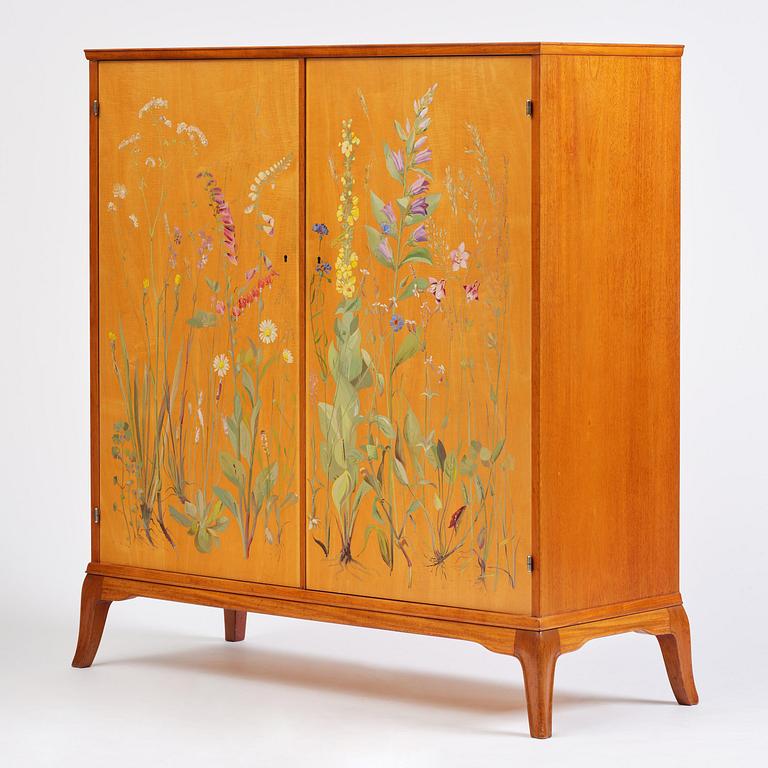
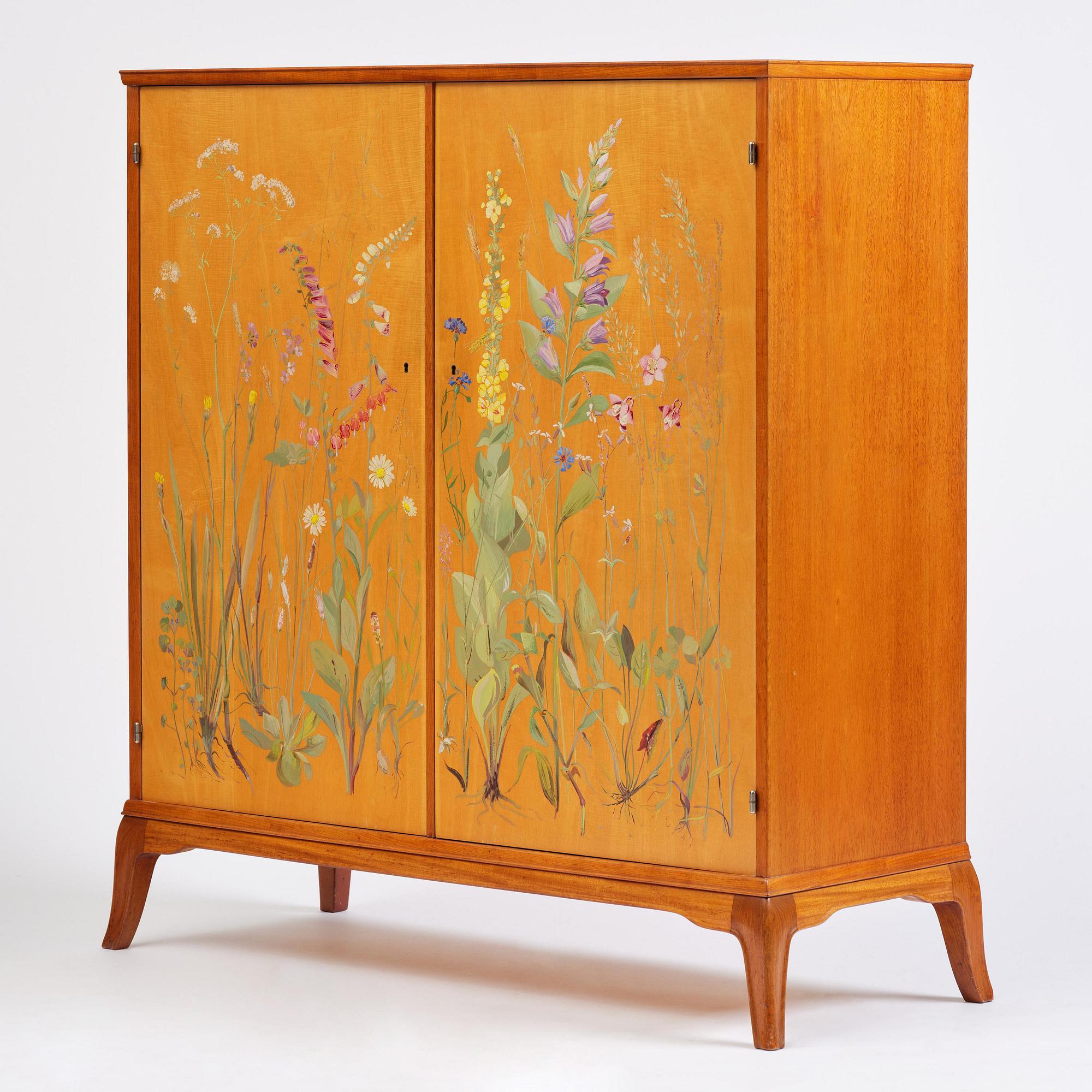
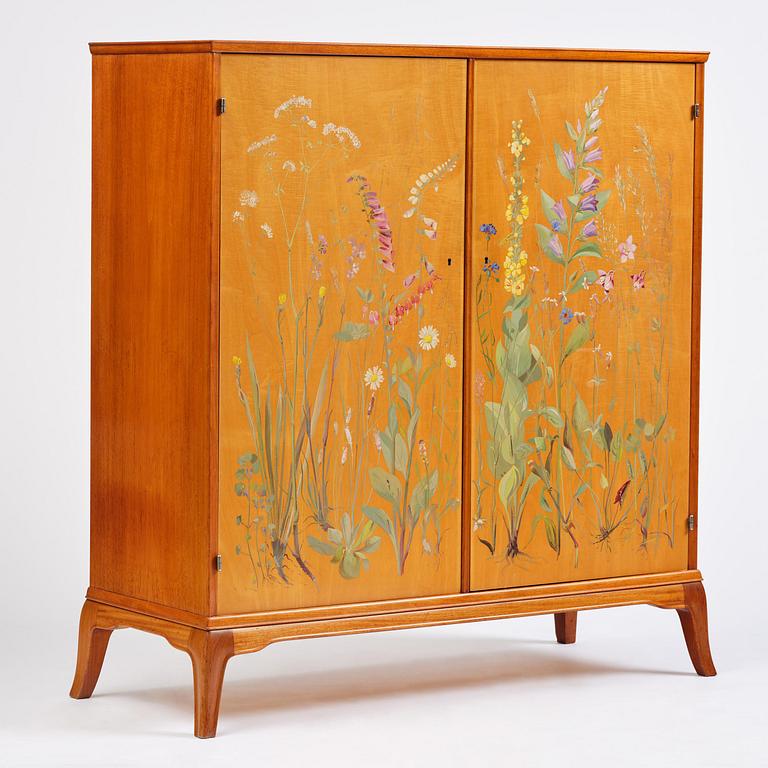
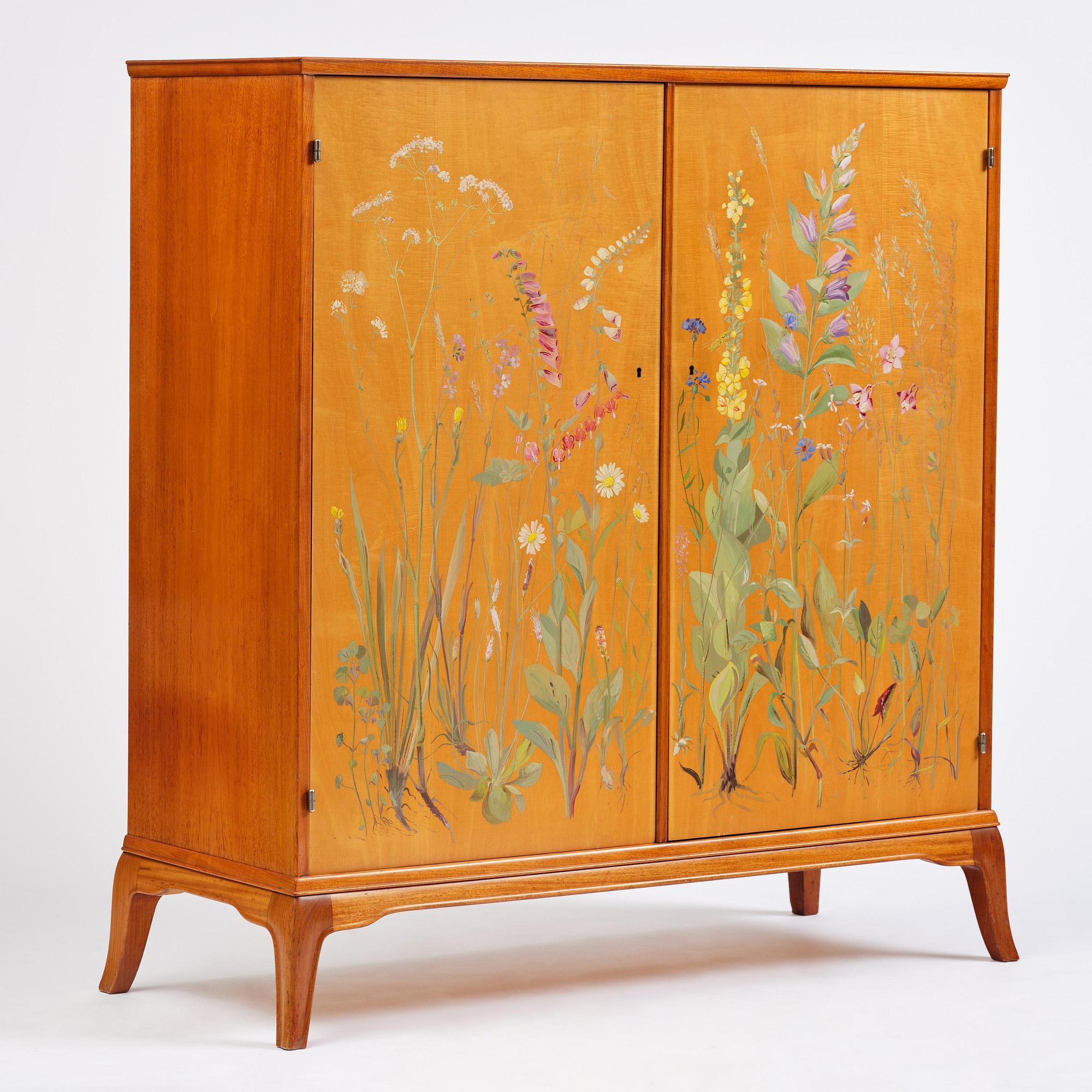
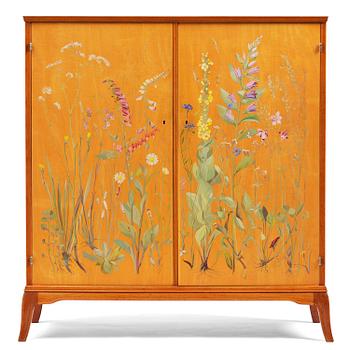
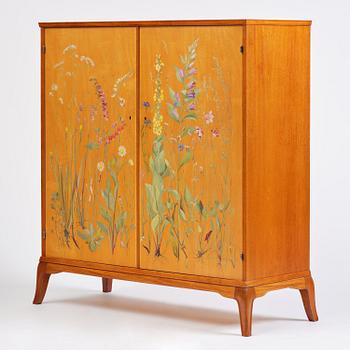
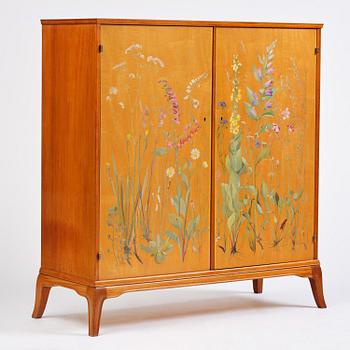
A unique cabinet, Chamberts Möbelfabrik, Norrköping, 1952.
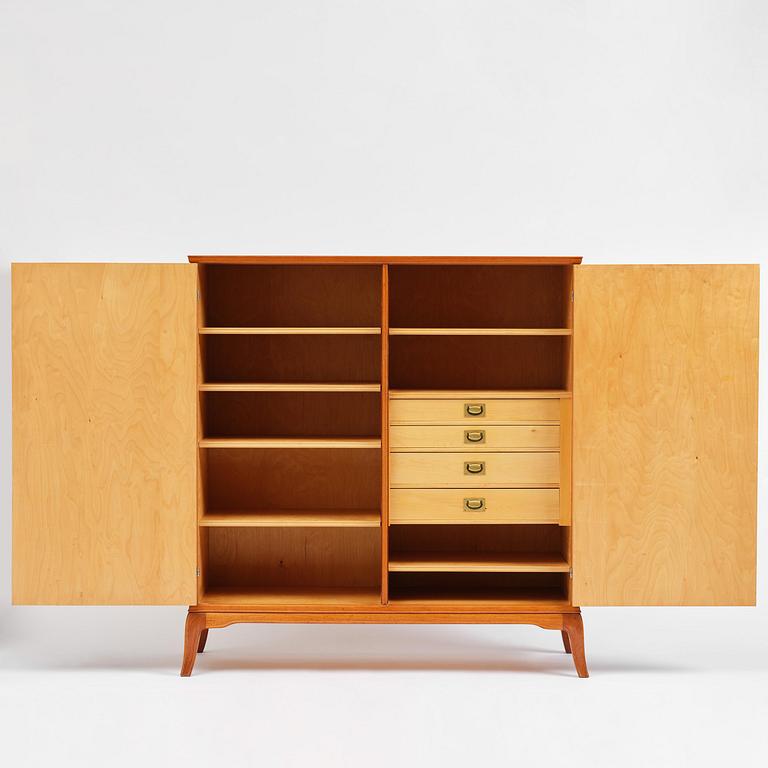
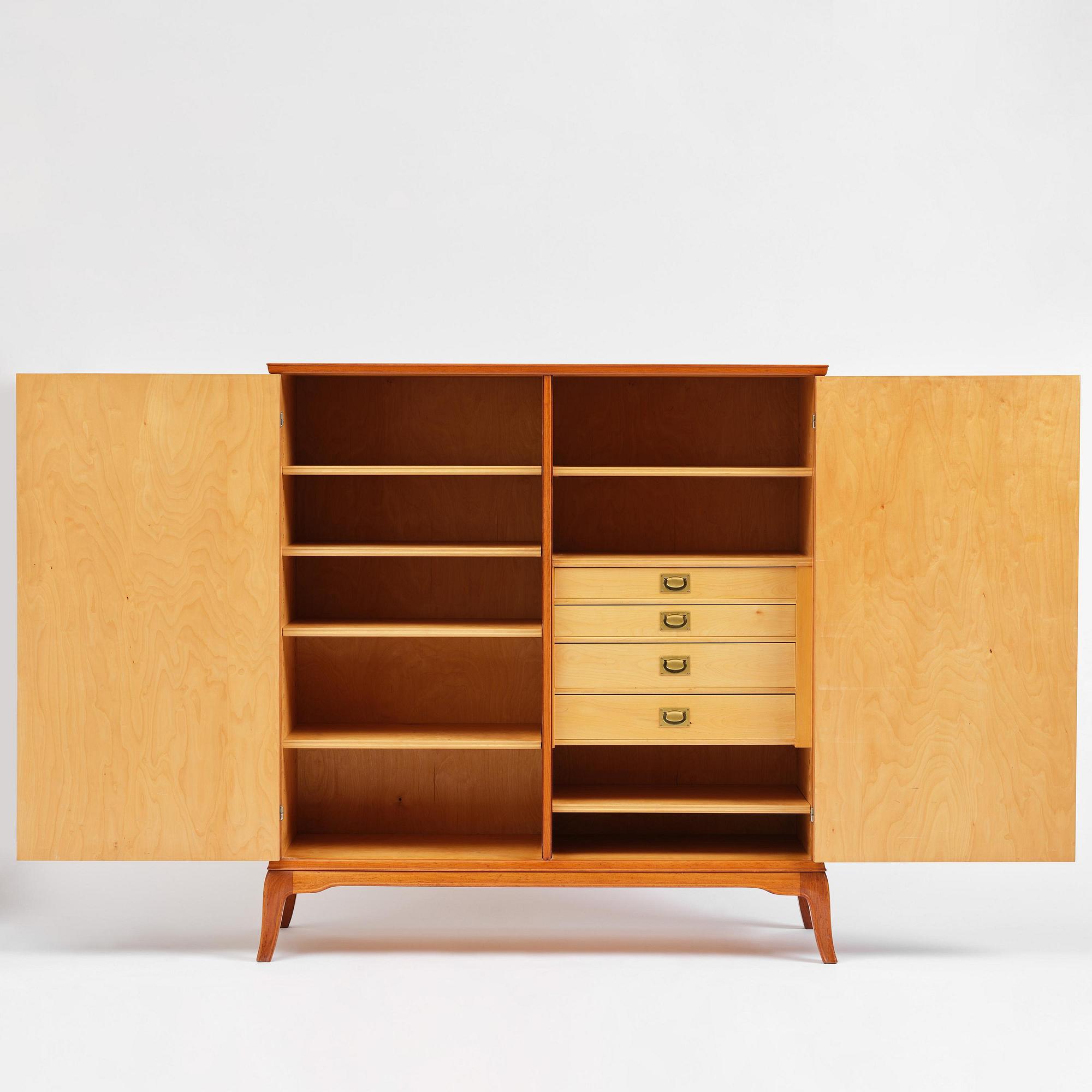
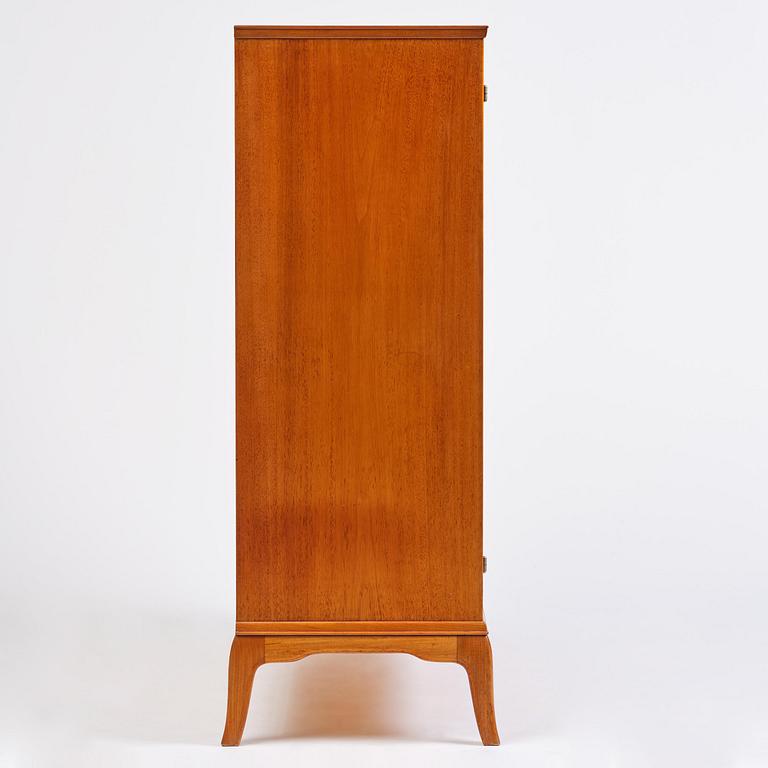
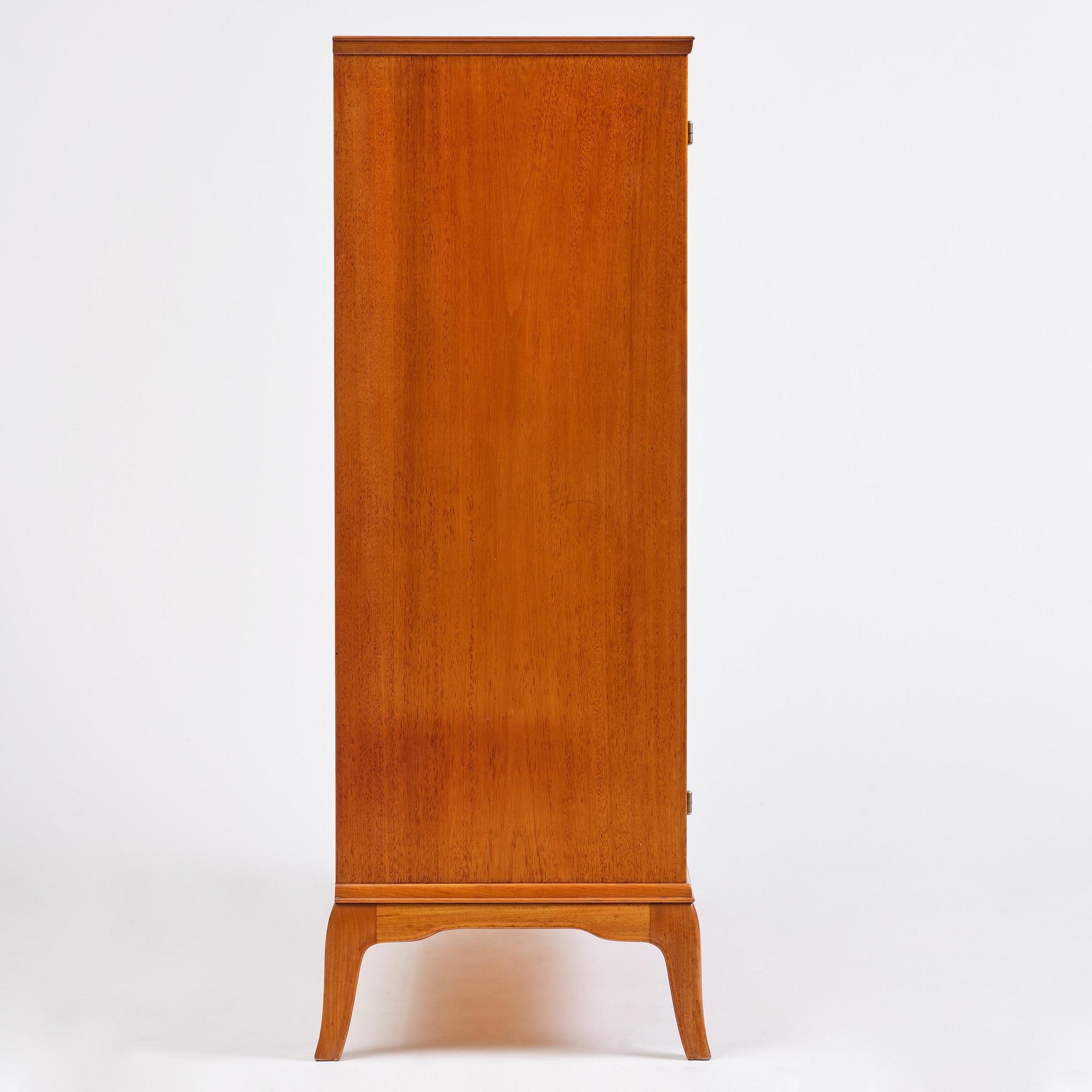
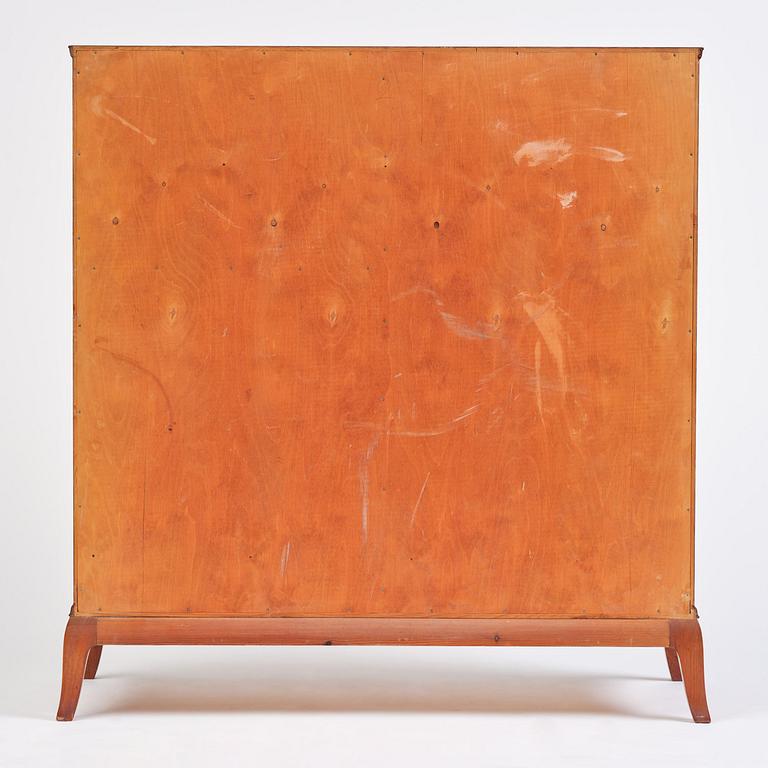
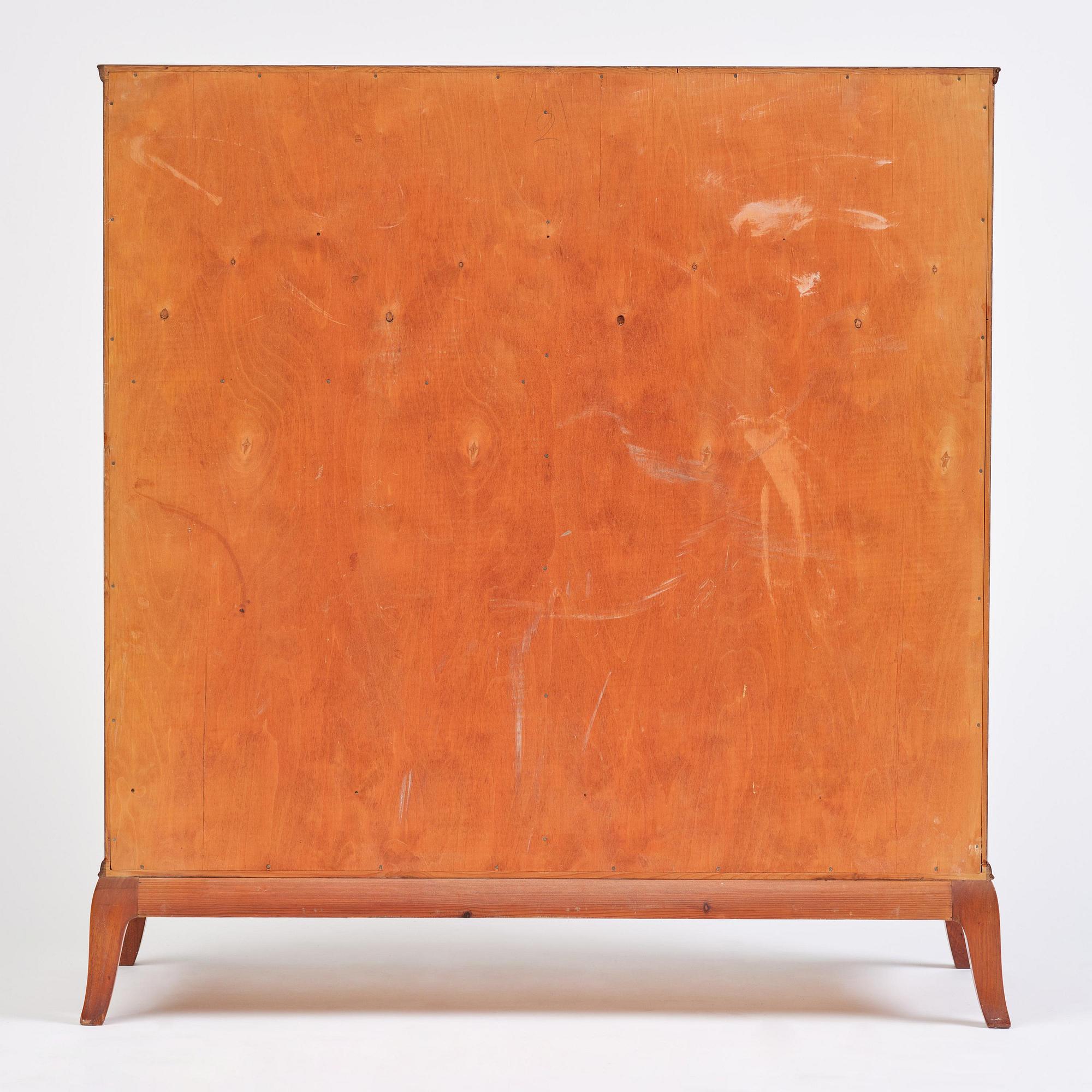
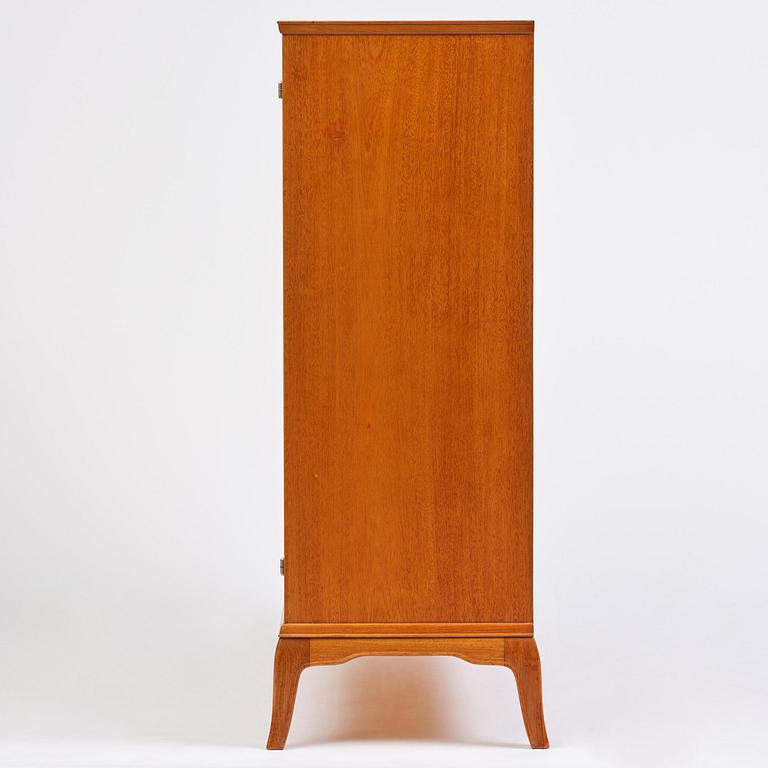
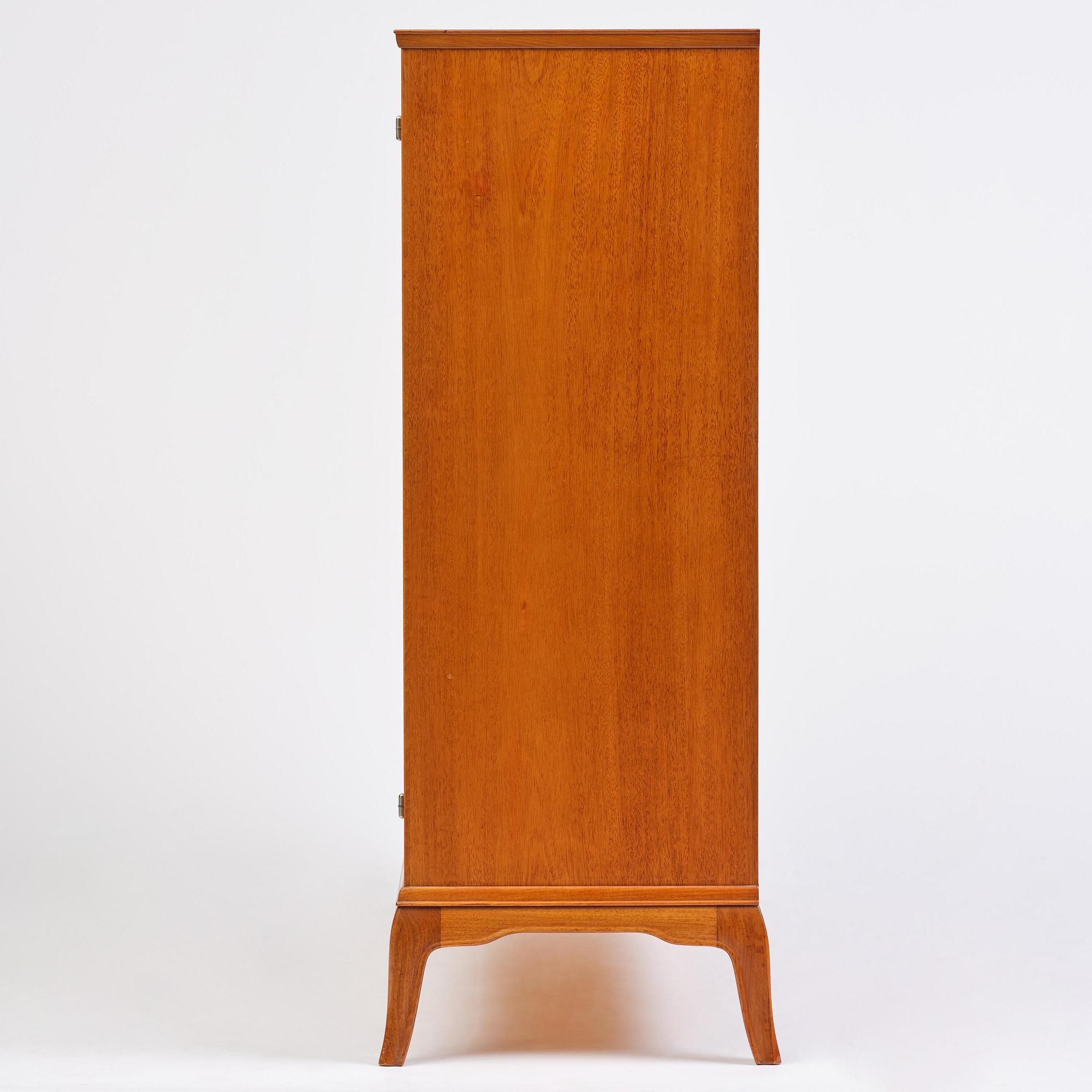
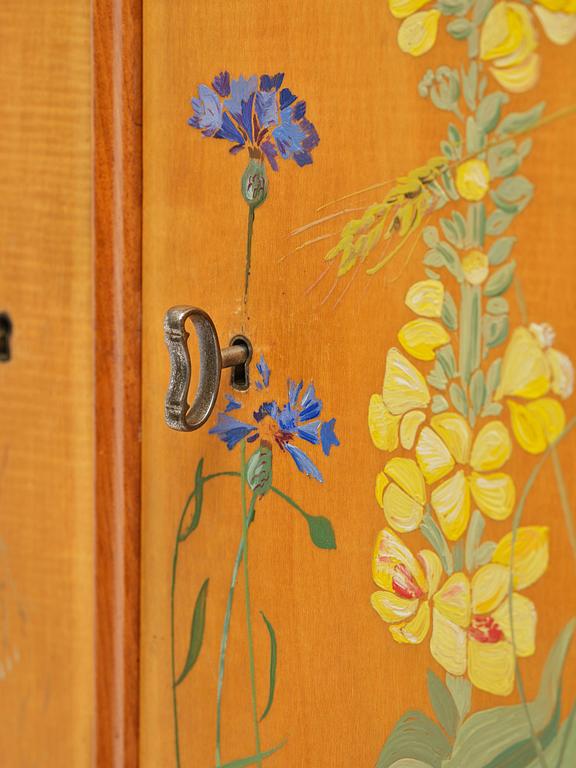
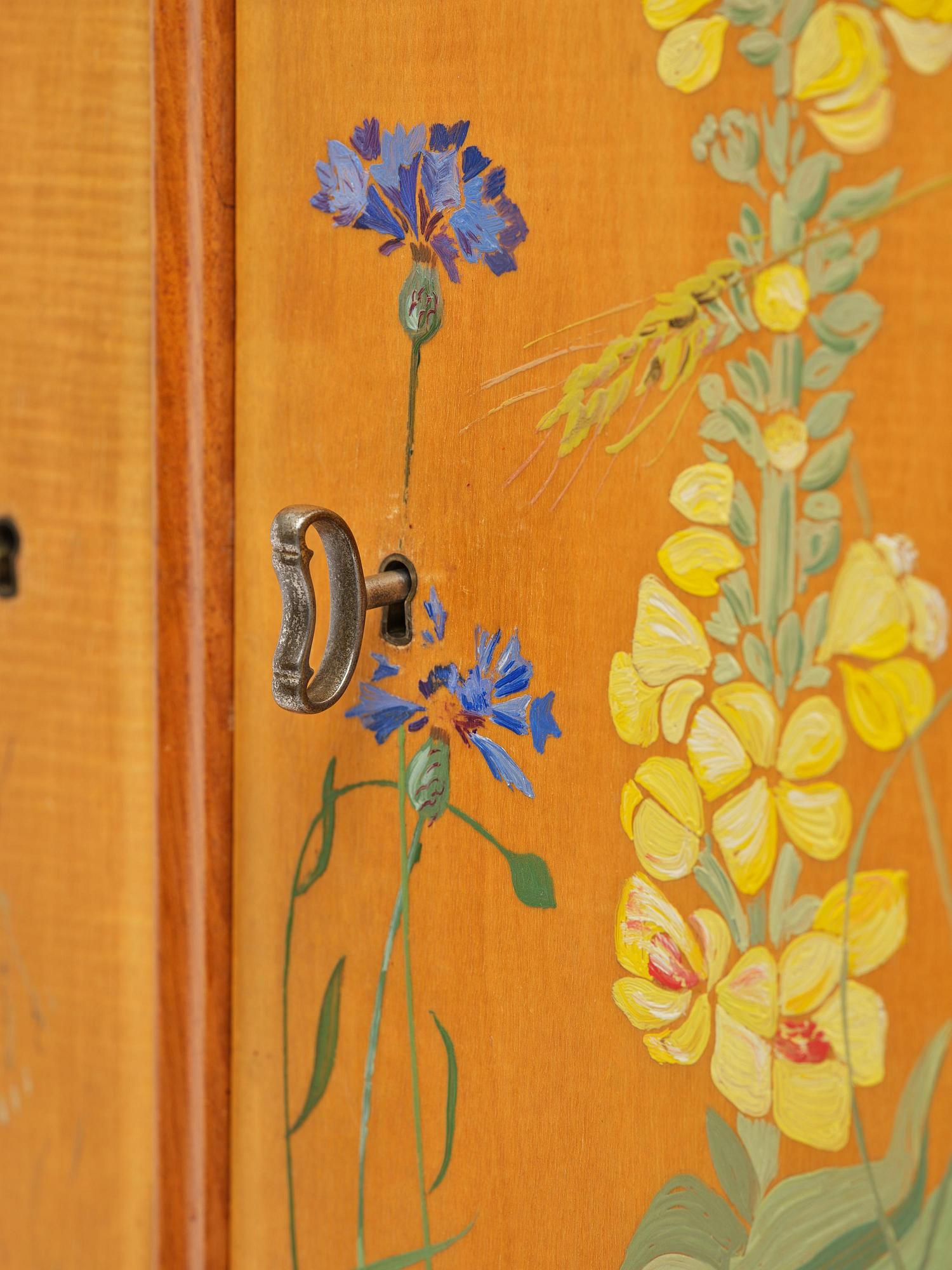
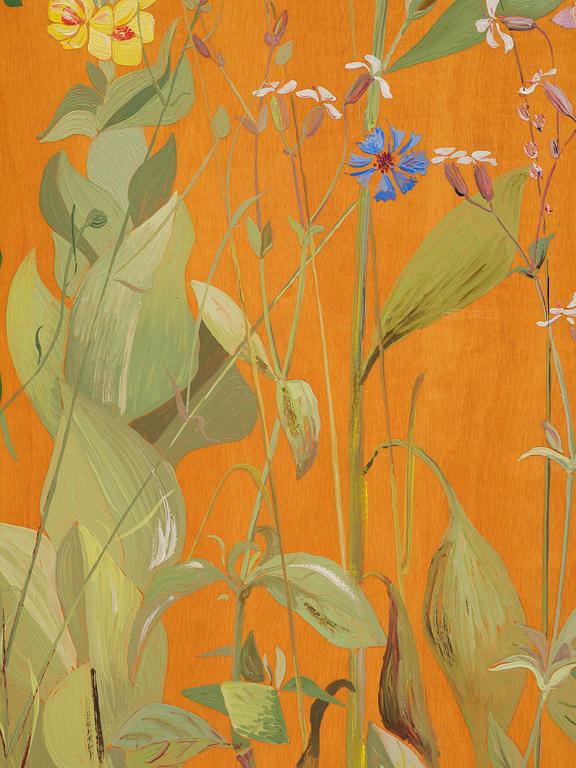
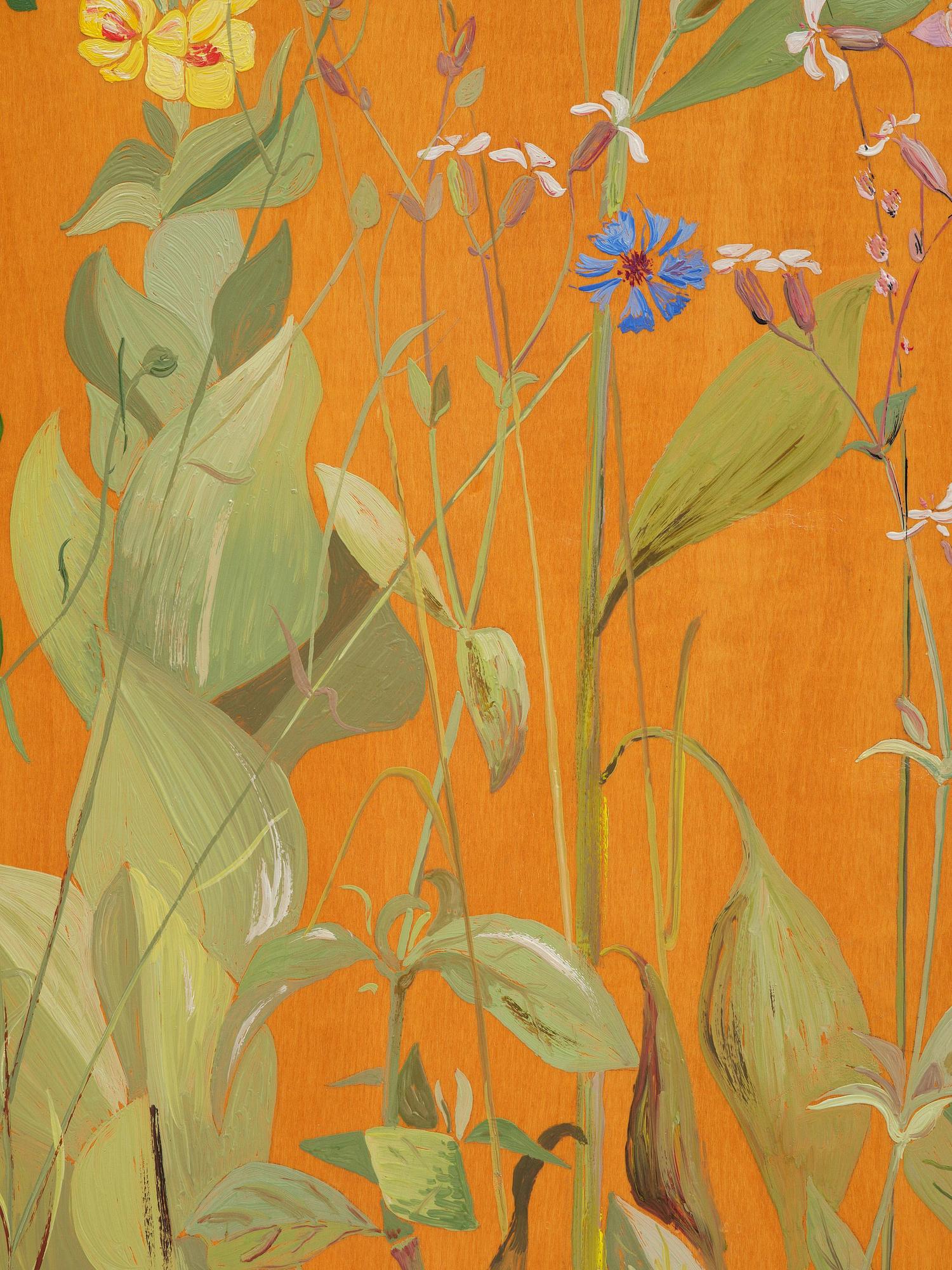
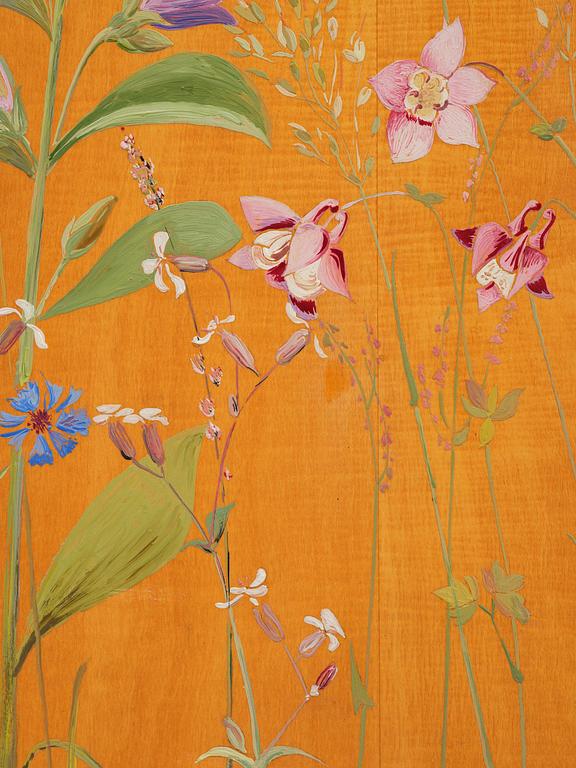
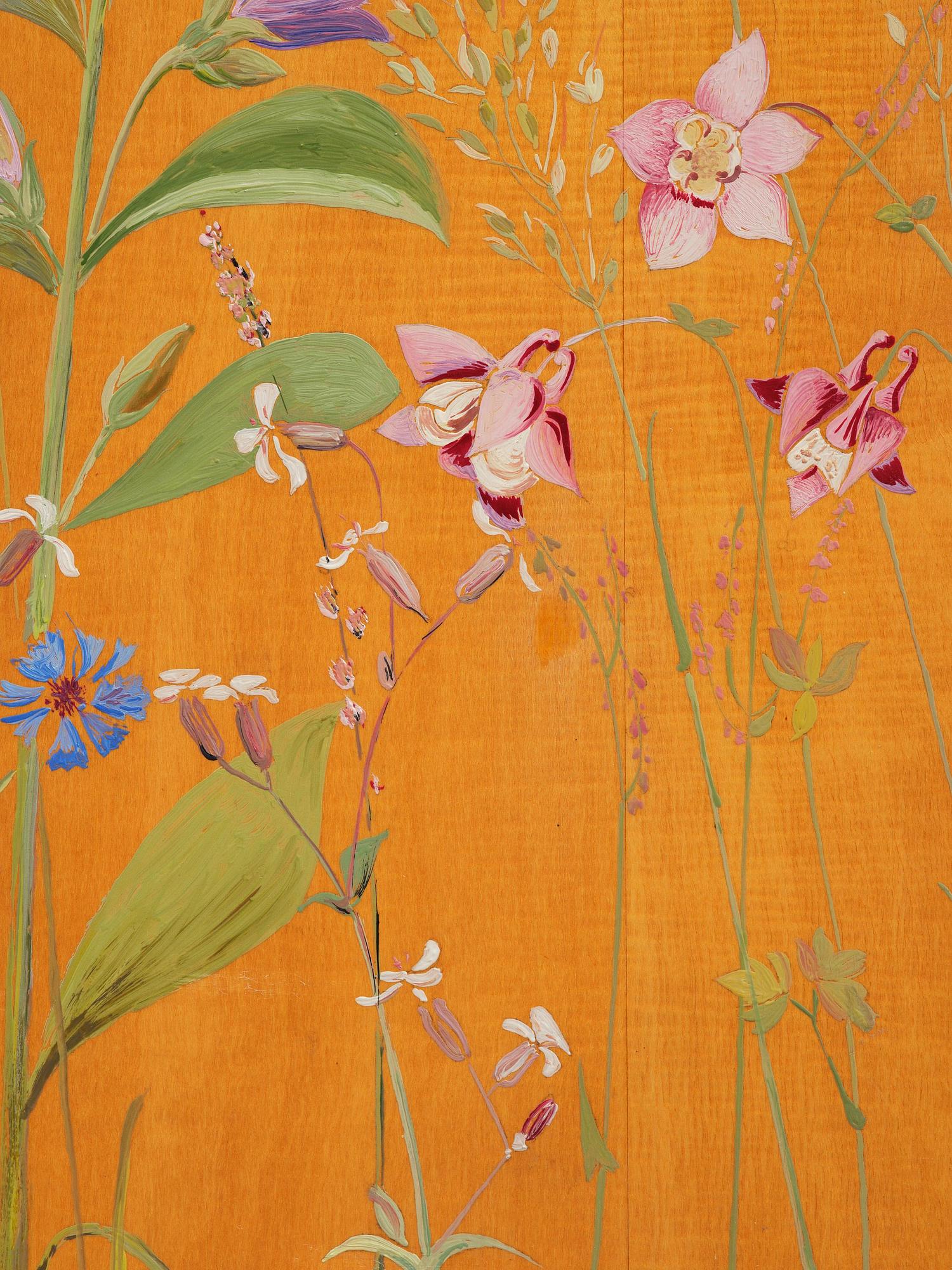
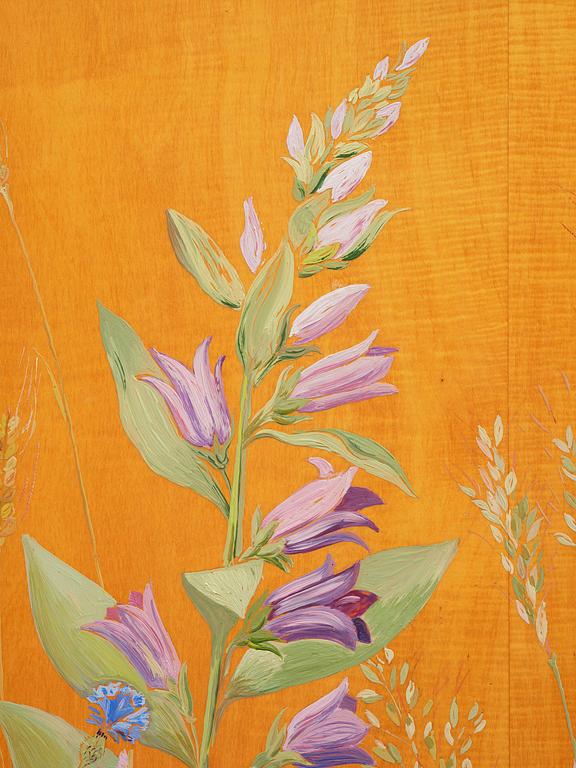
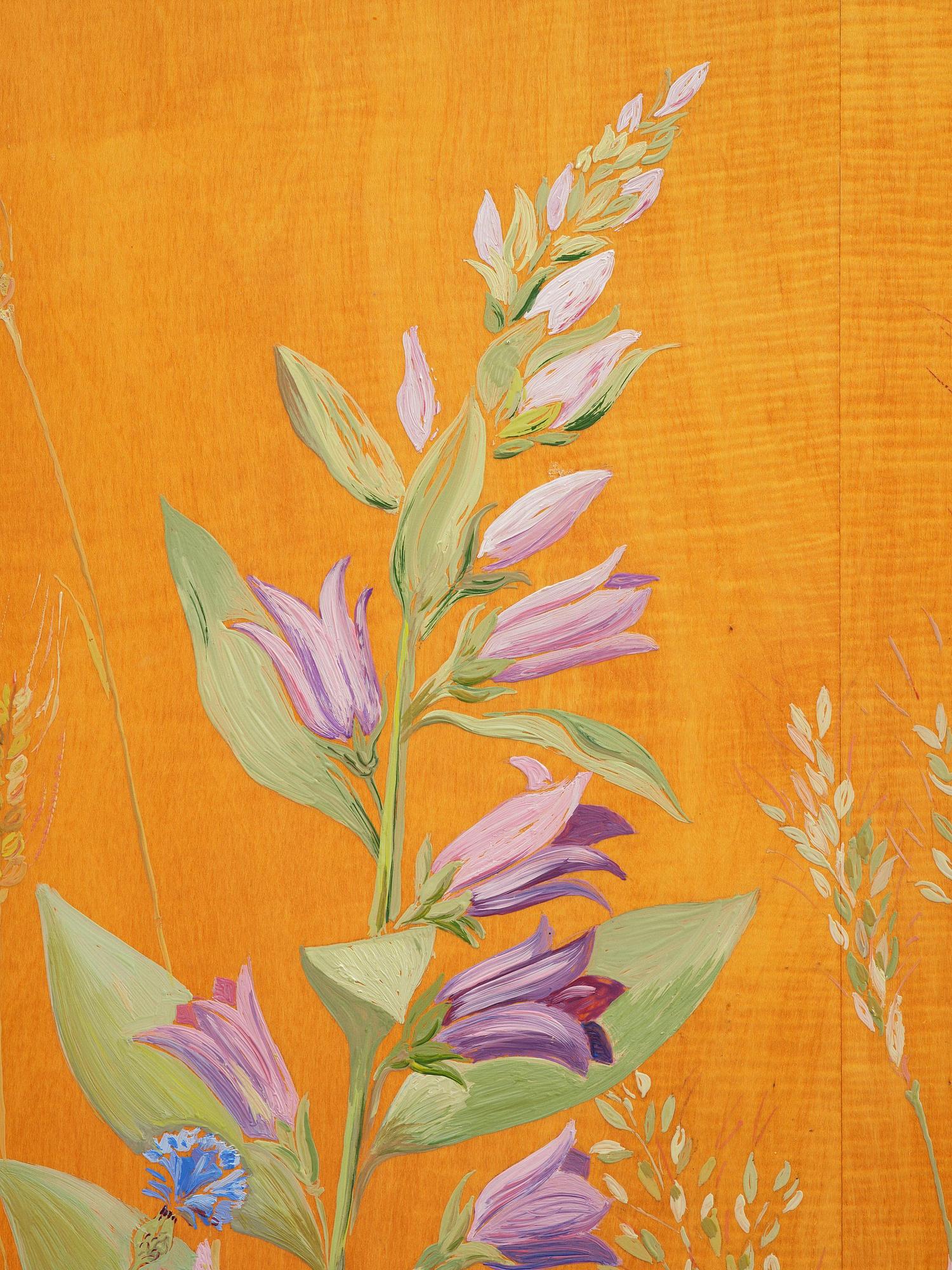
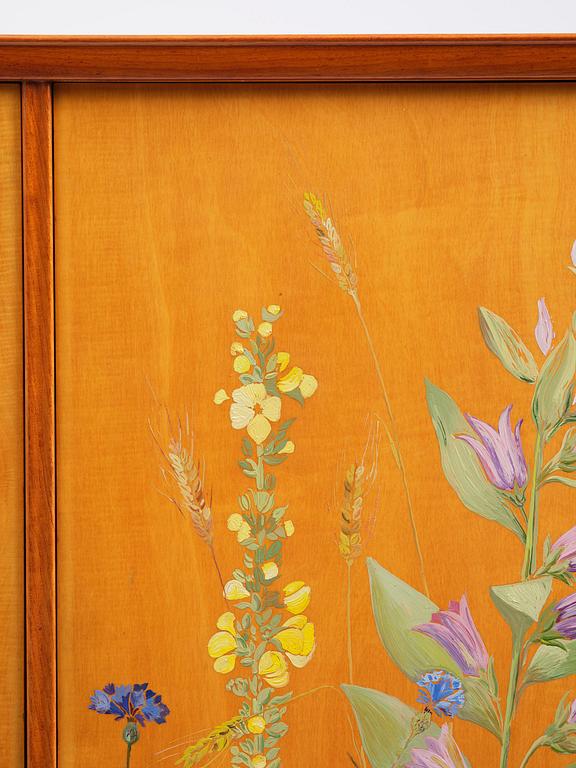
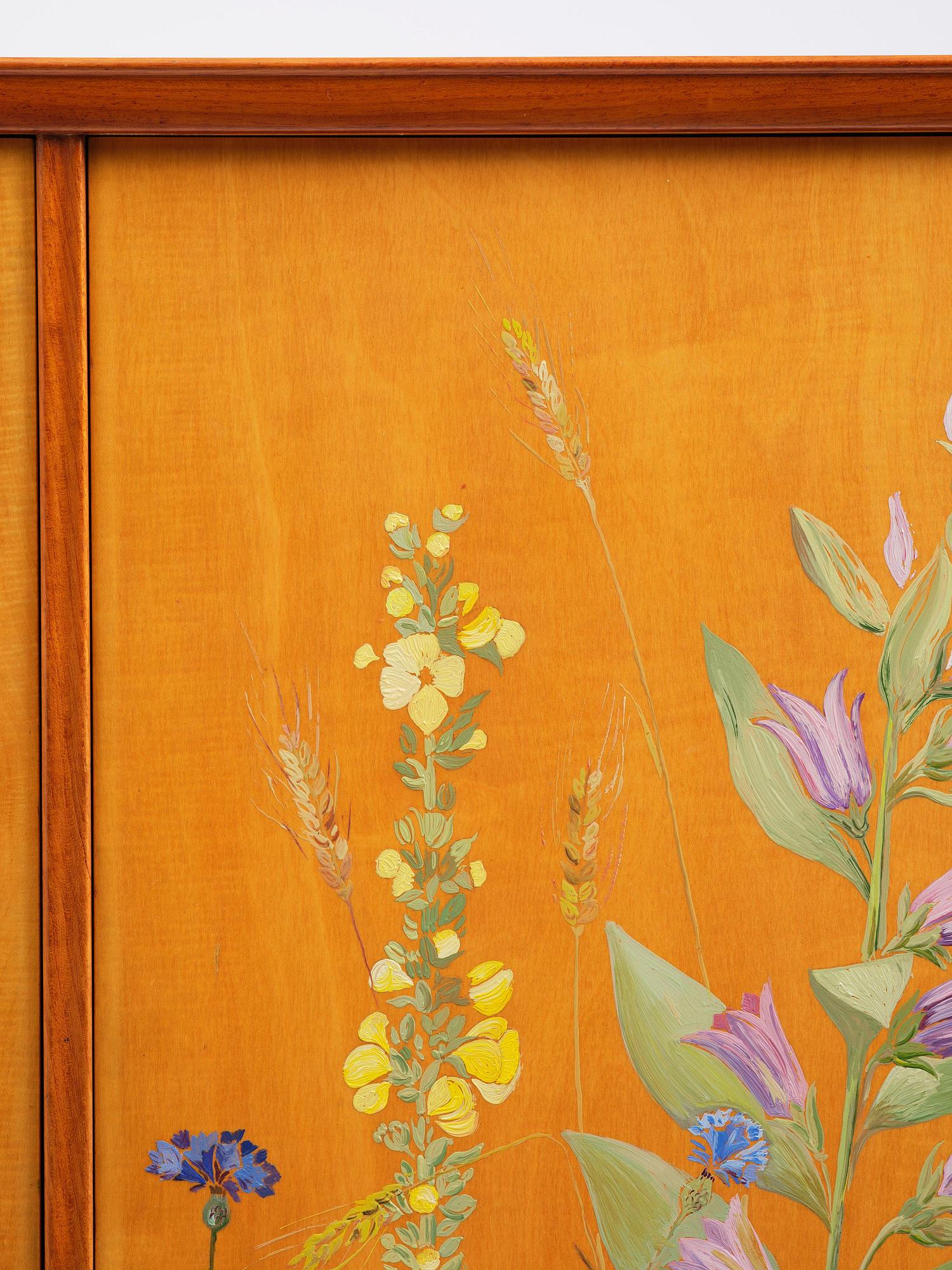
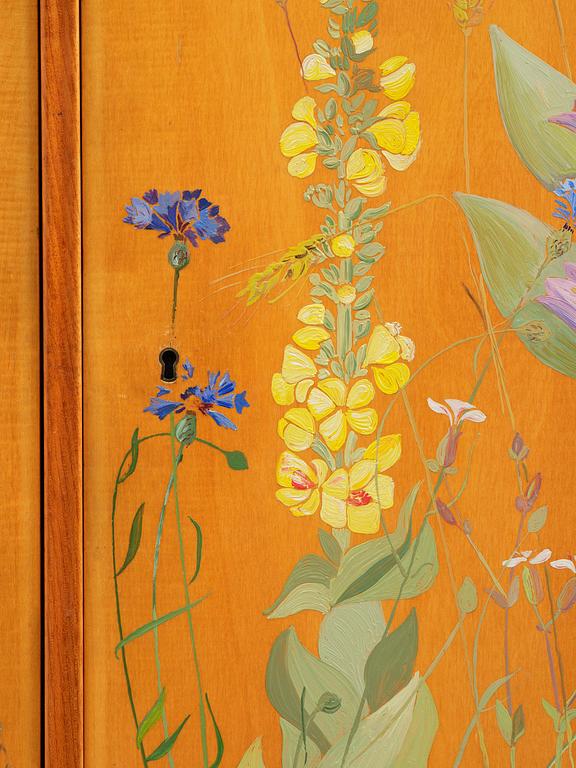
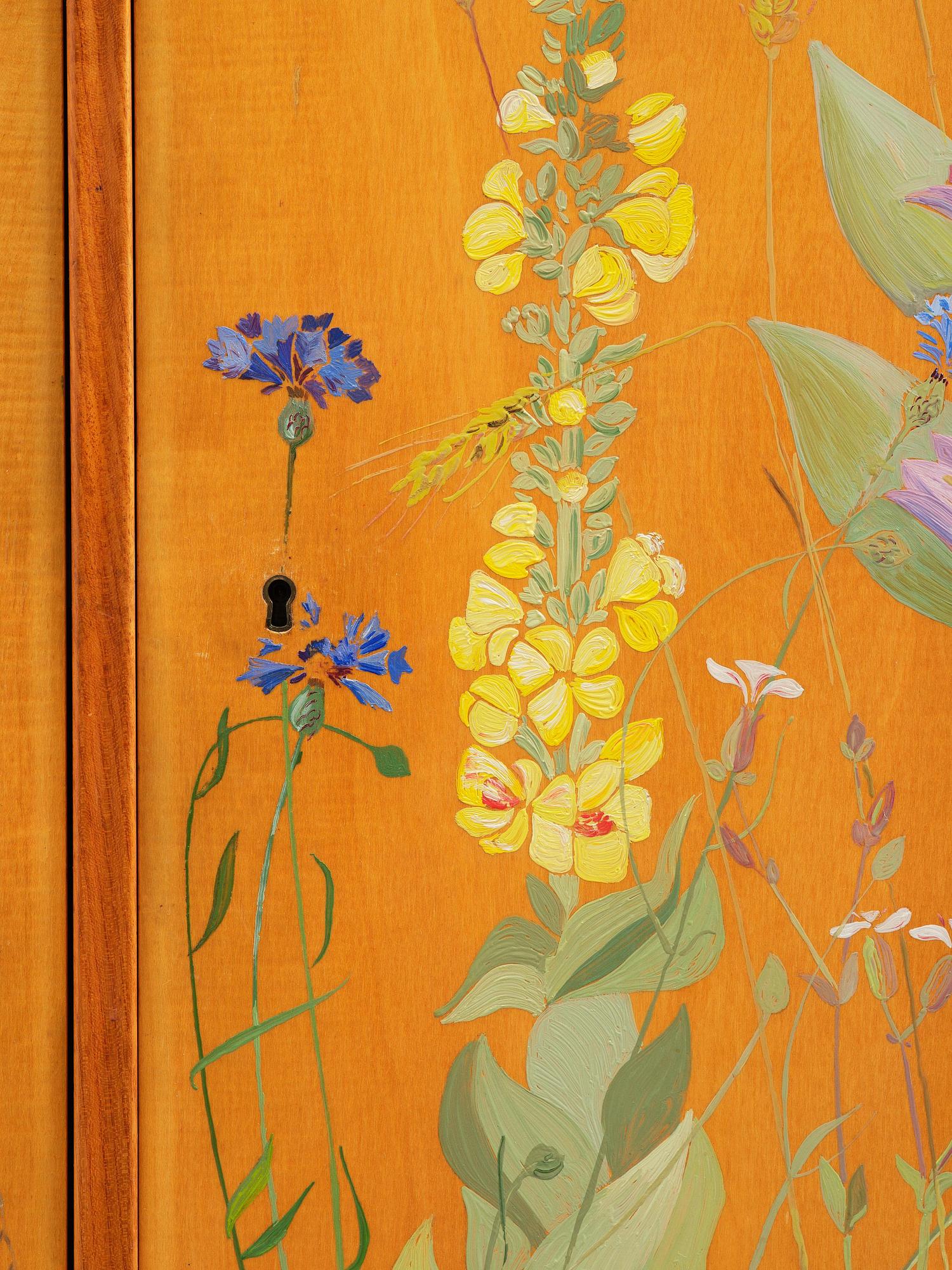
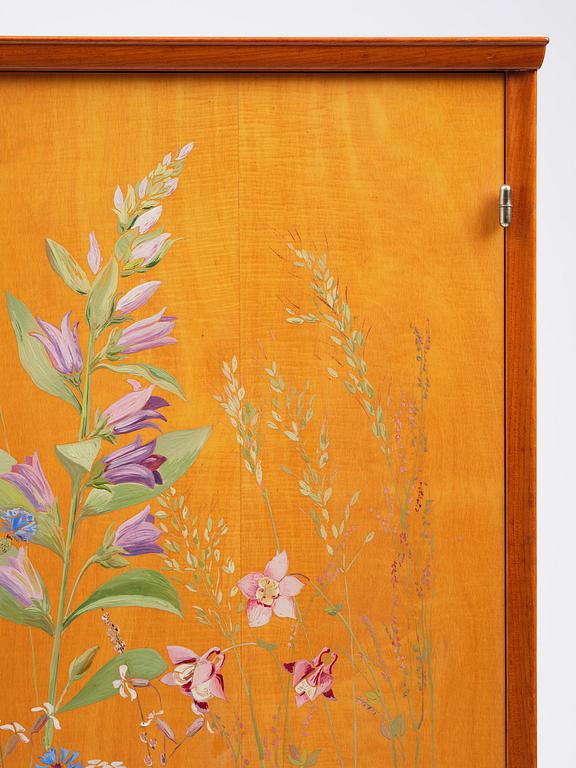
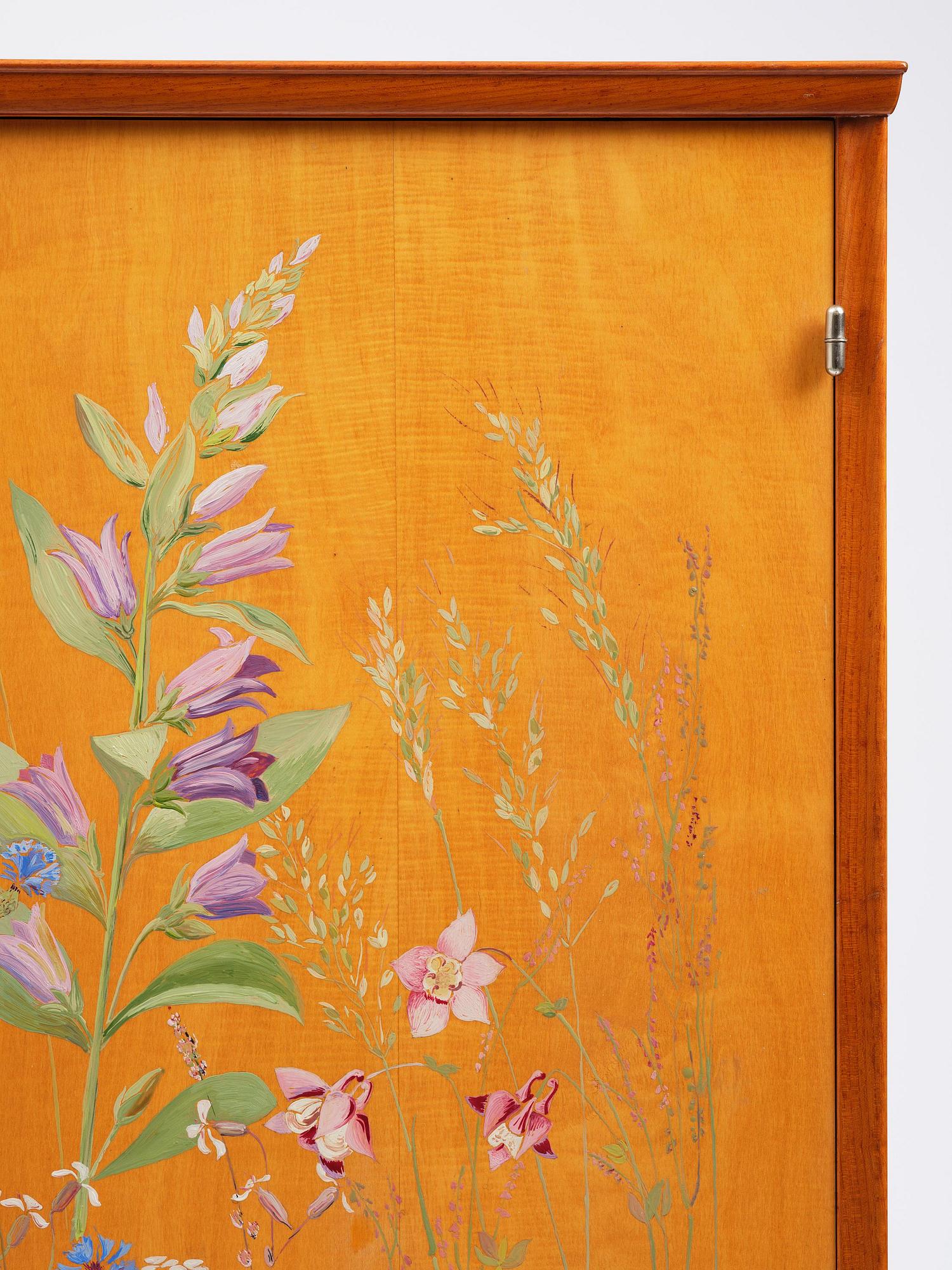
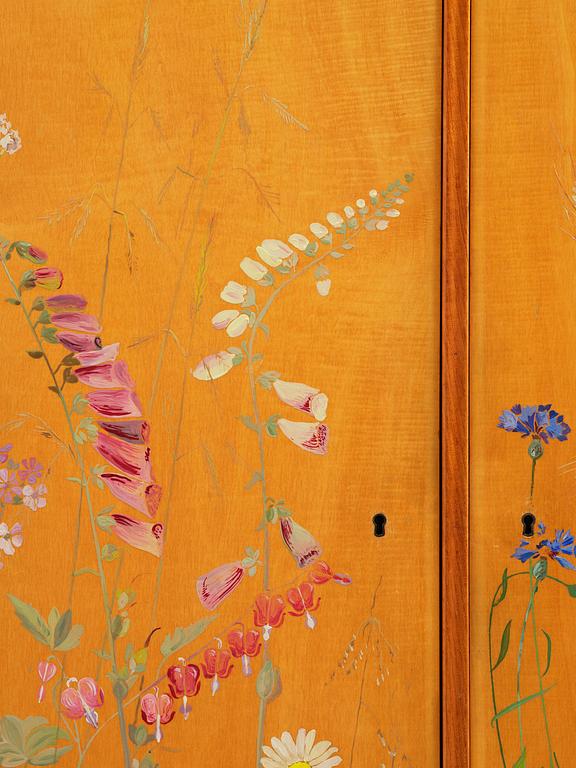
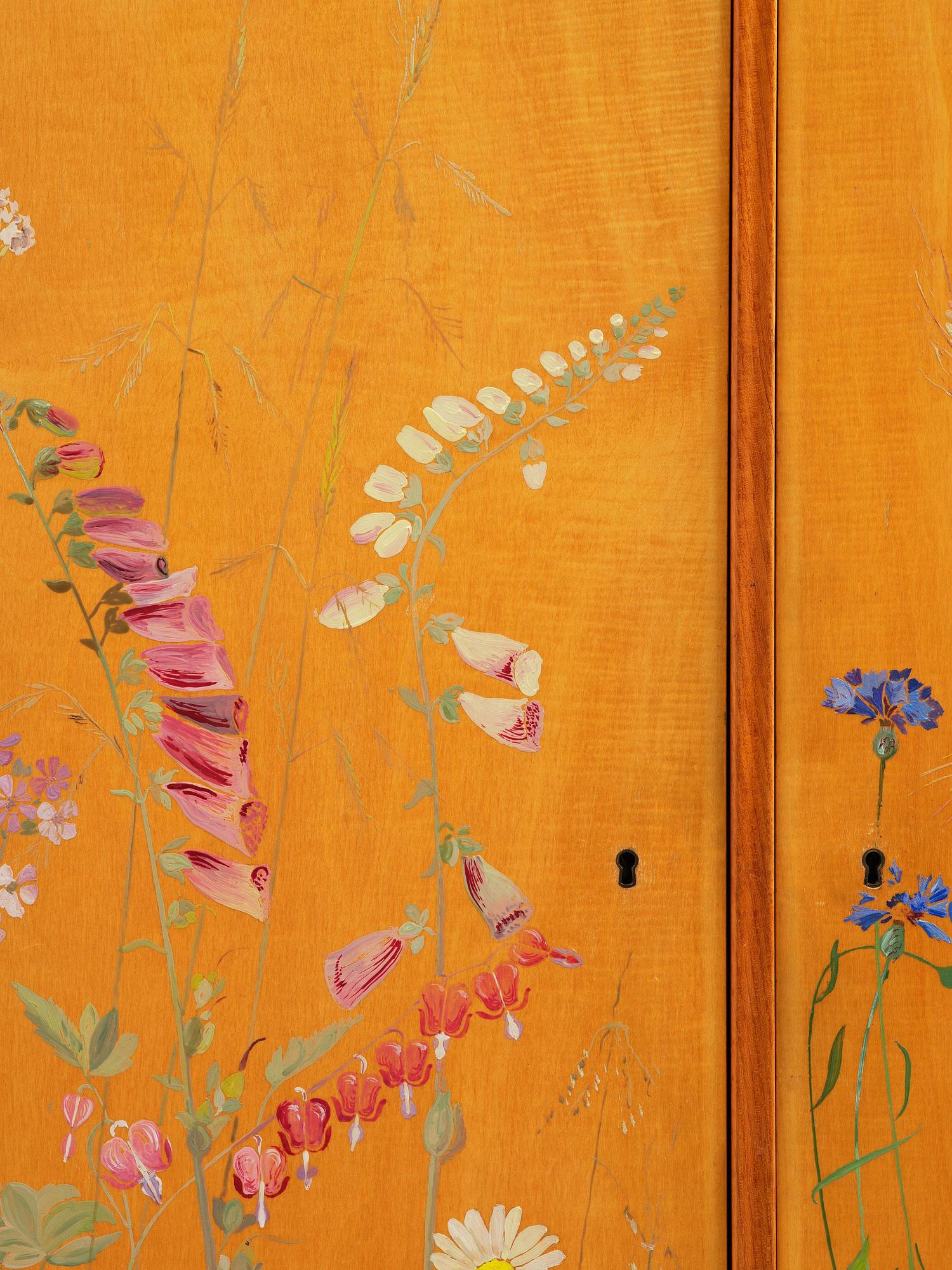
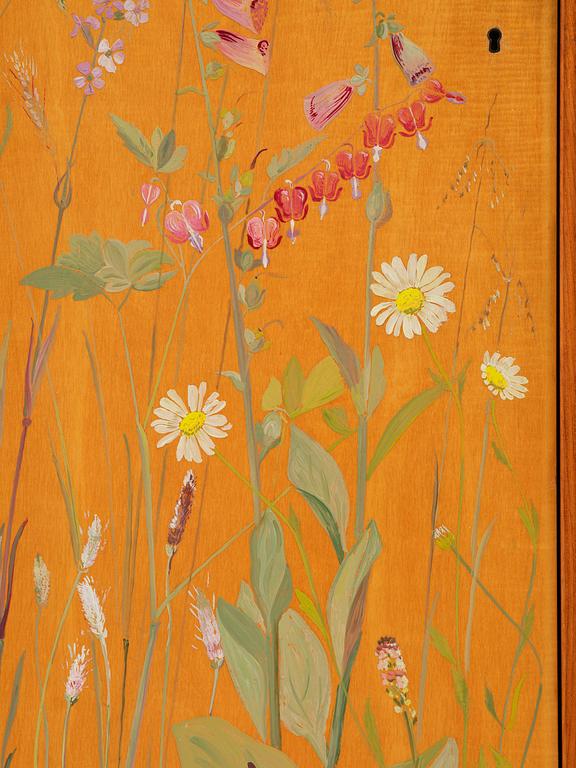
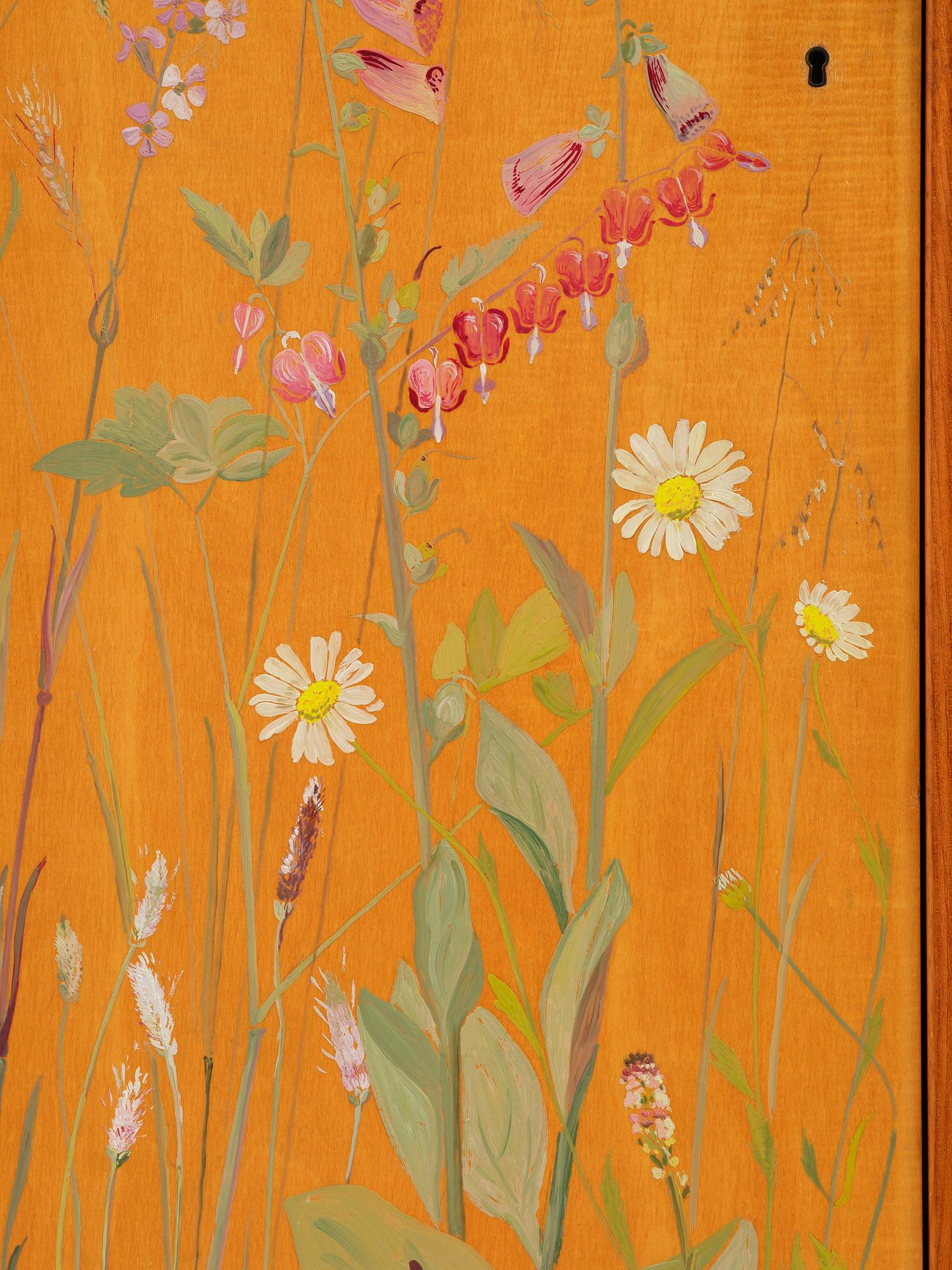
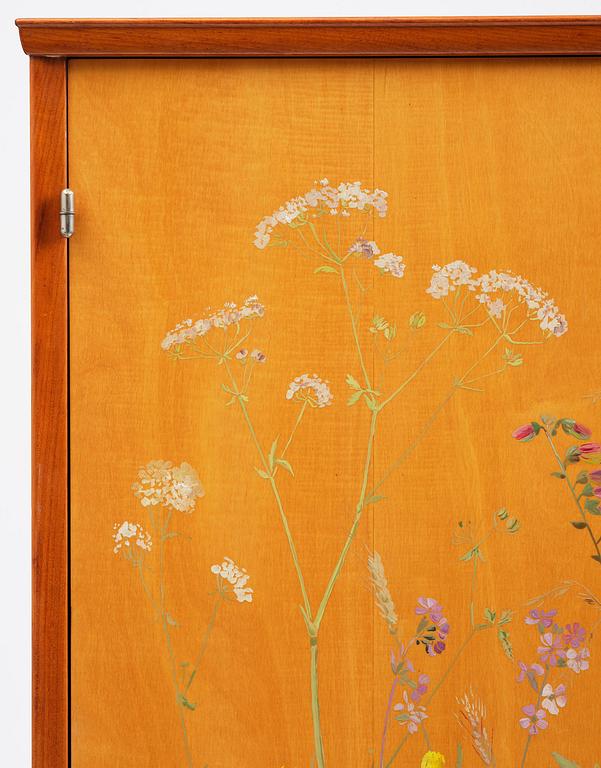
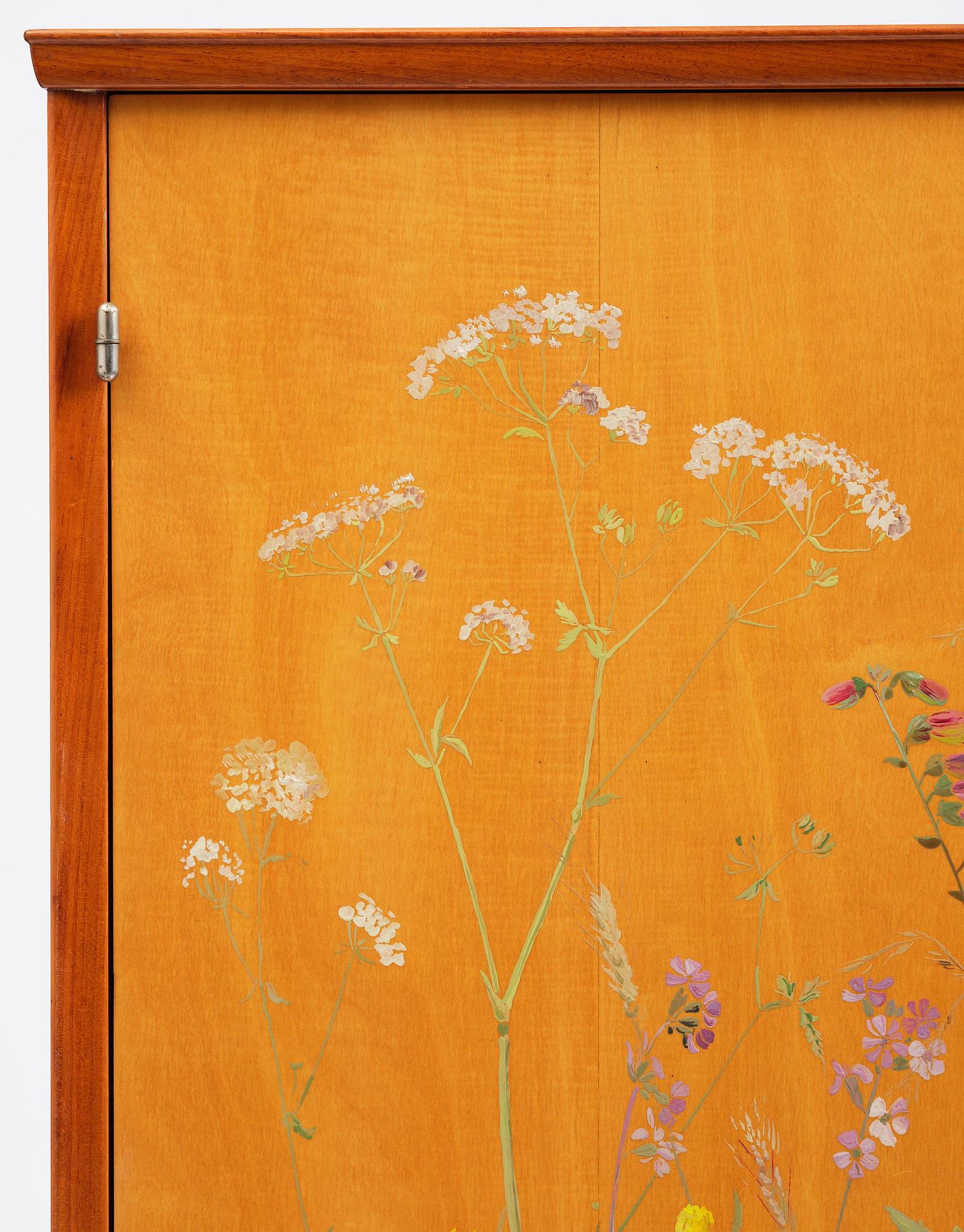
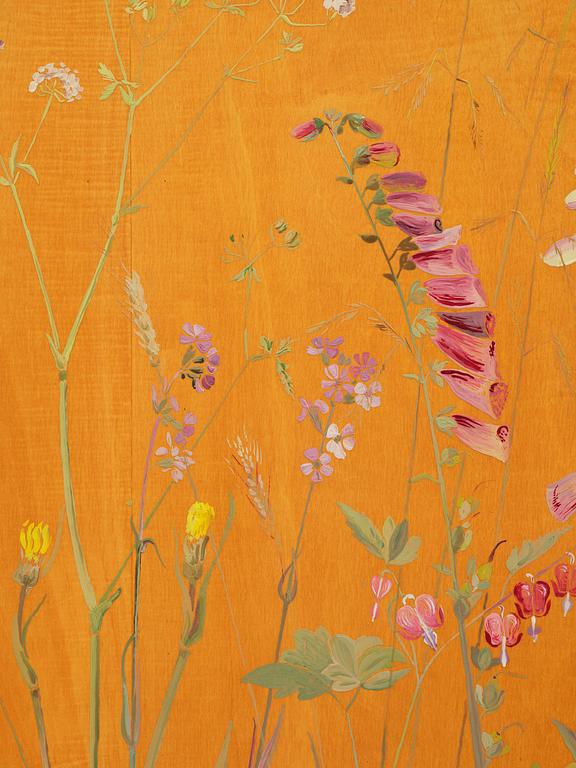
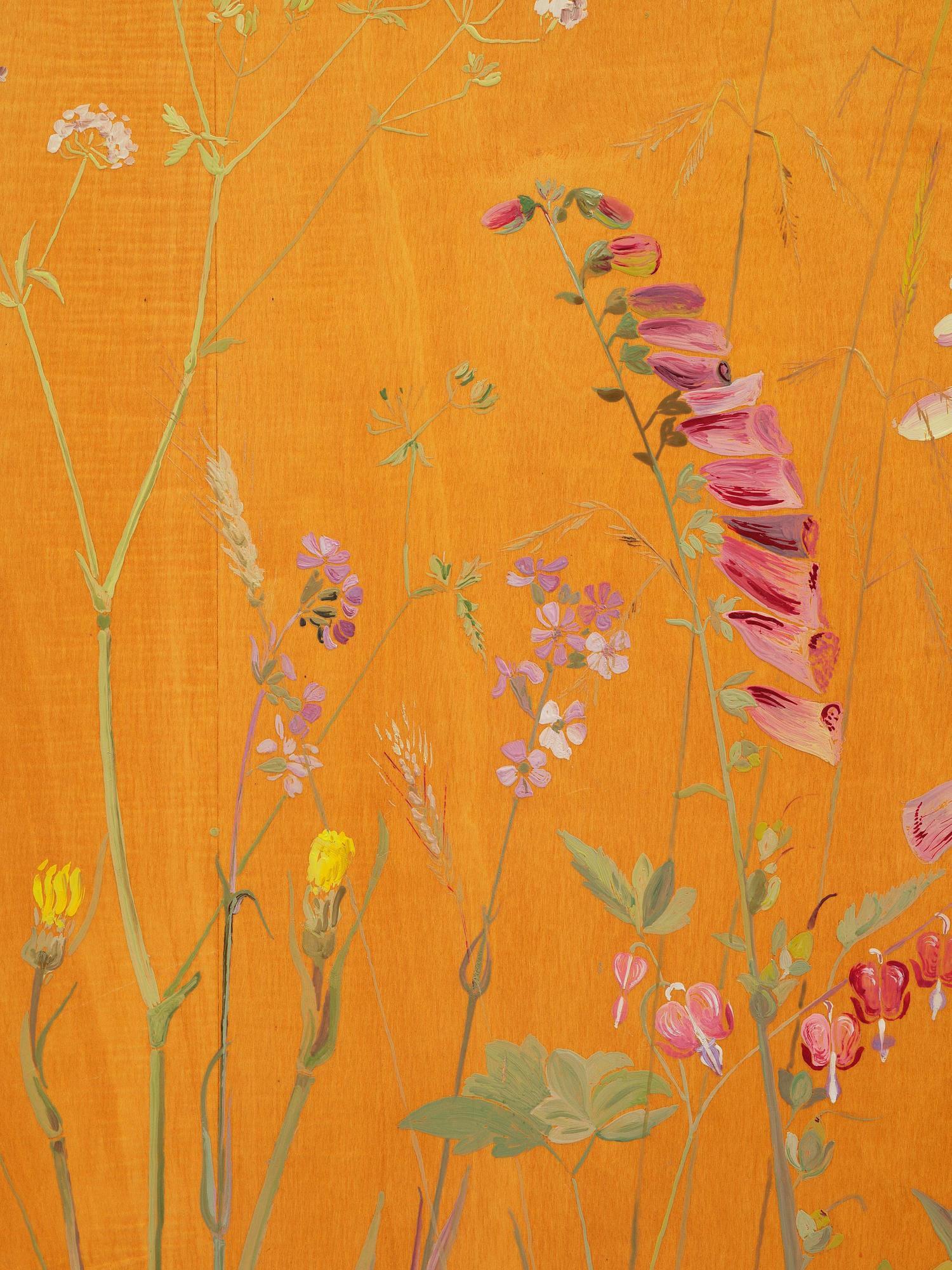
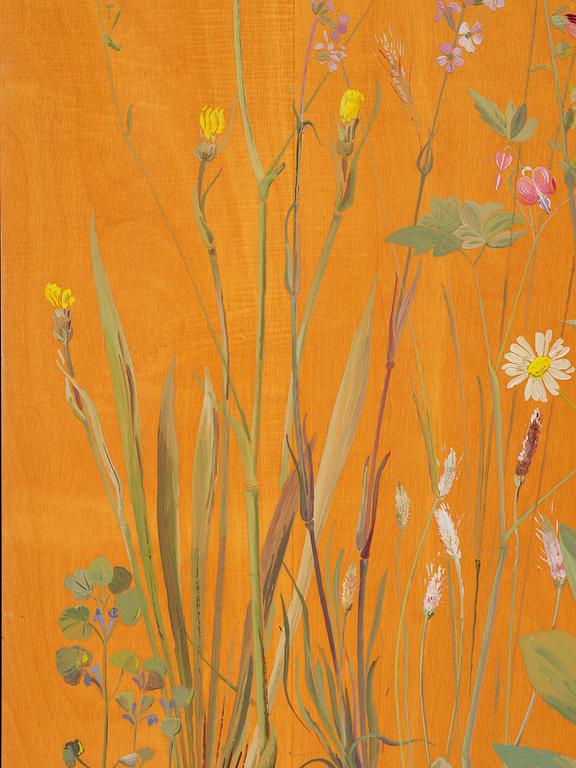
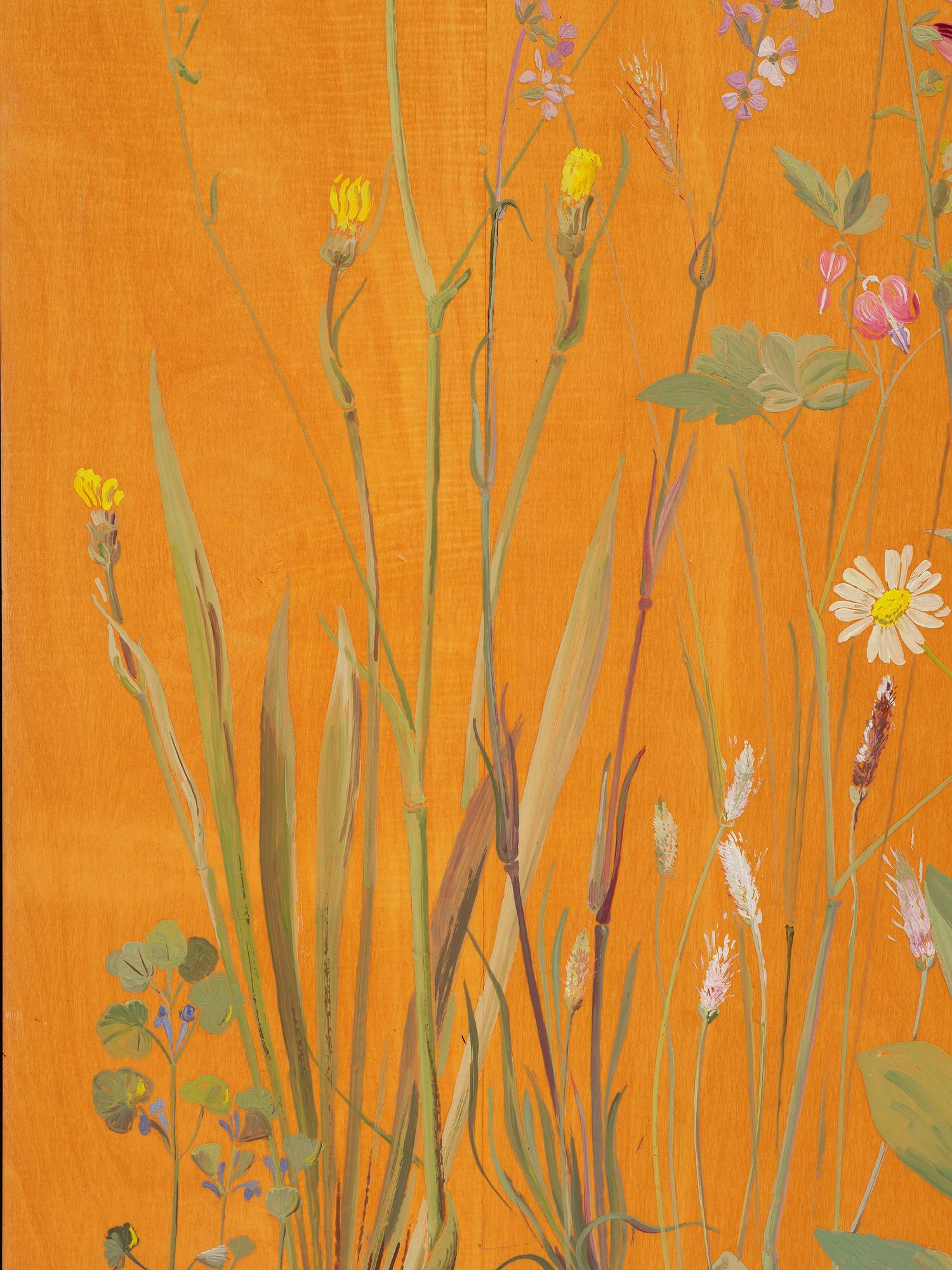
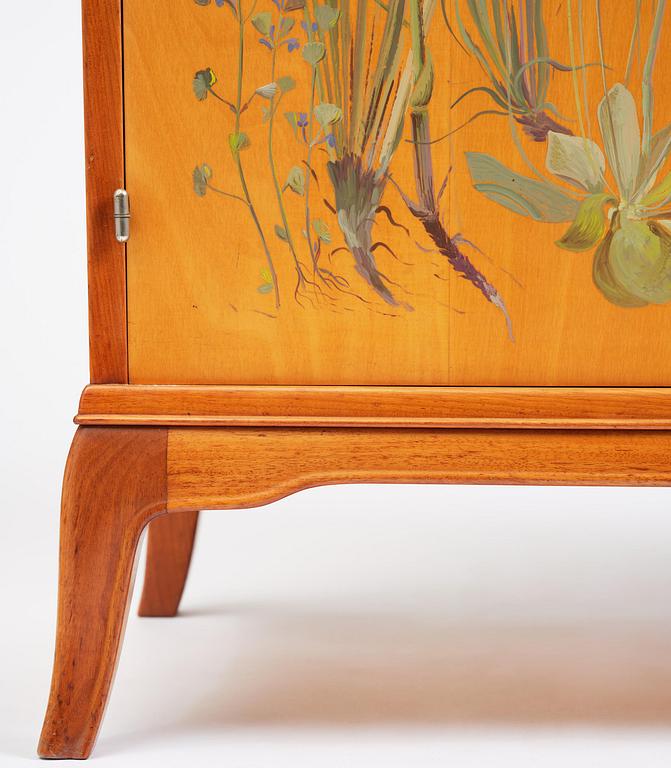
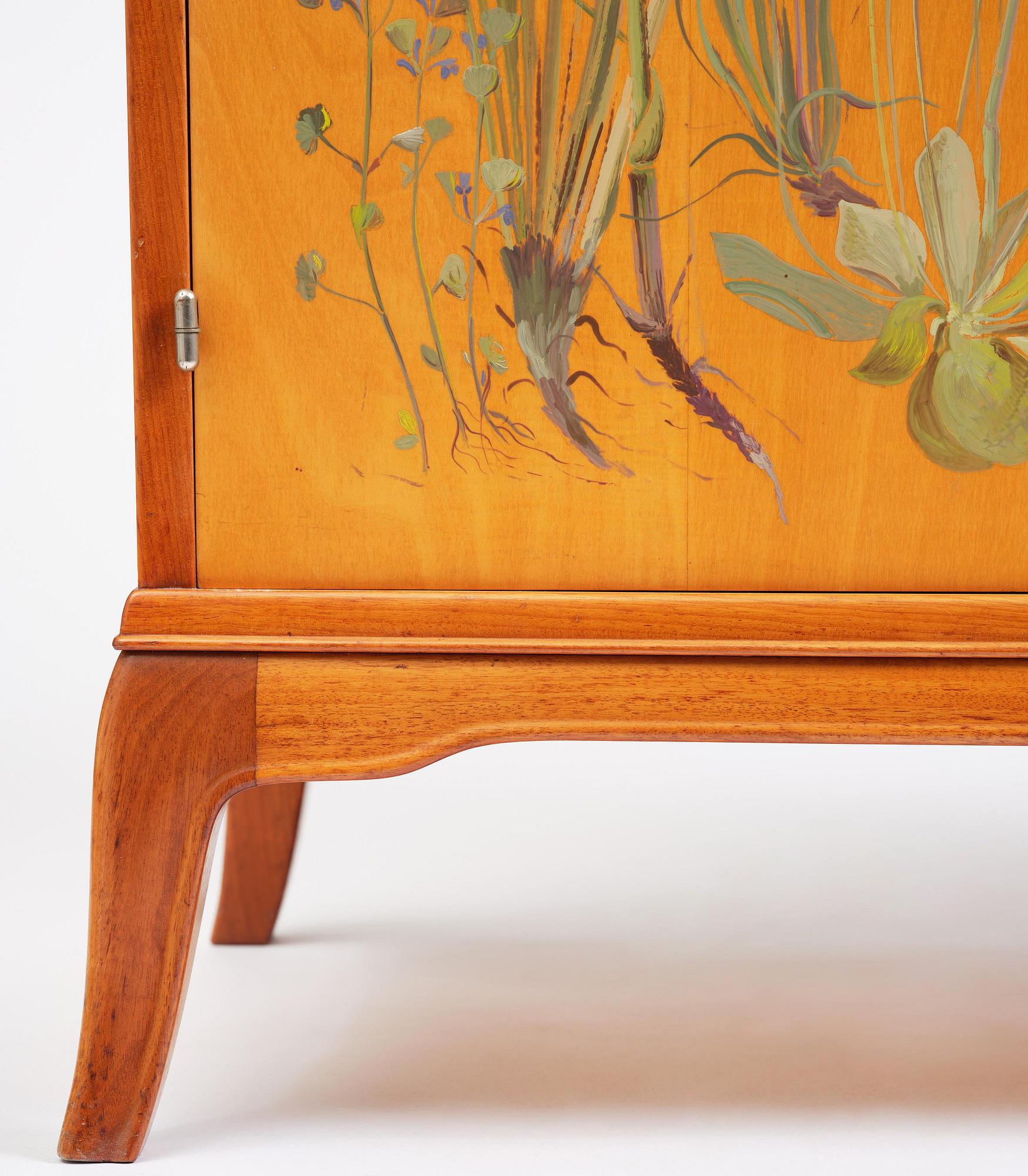
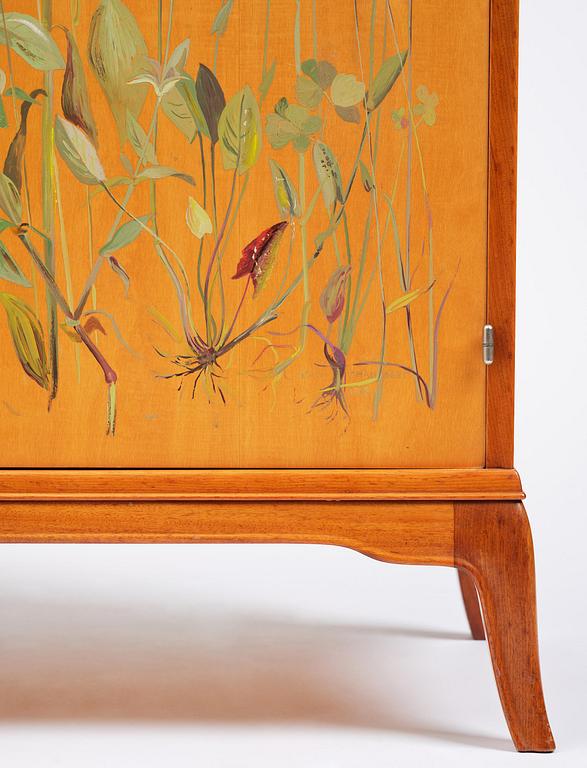
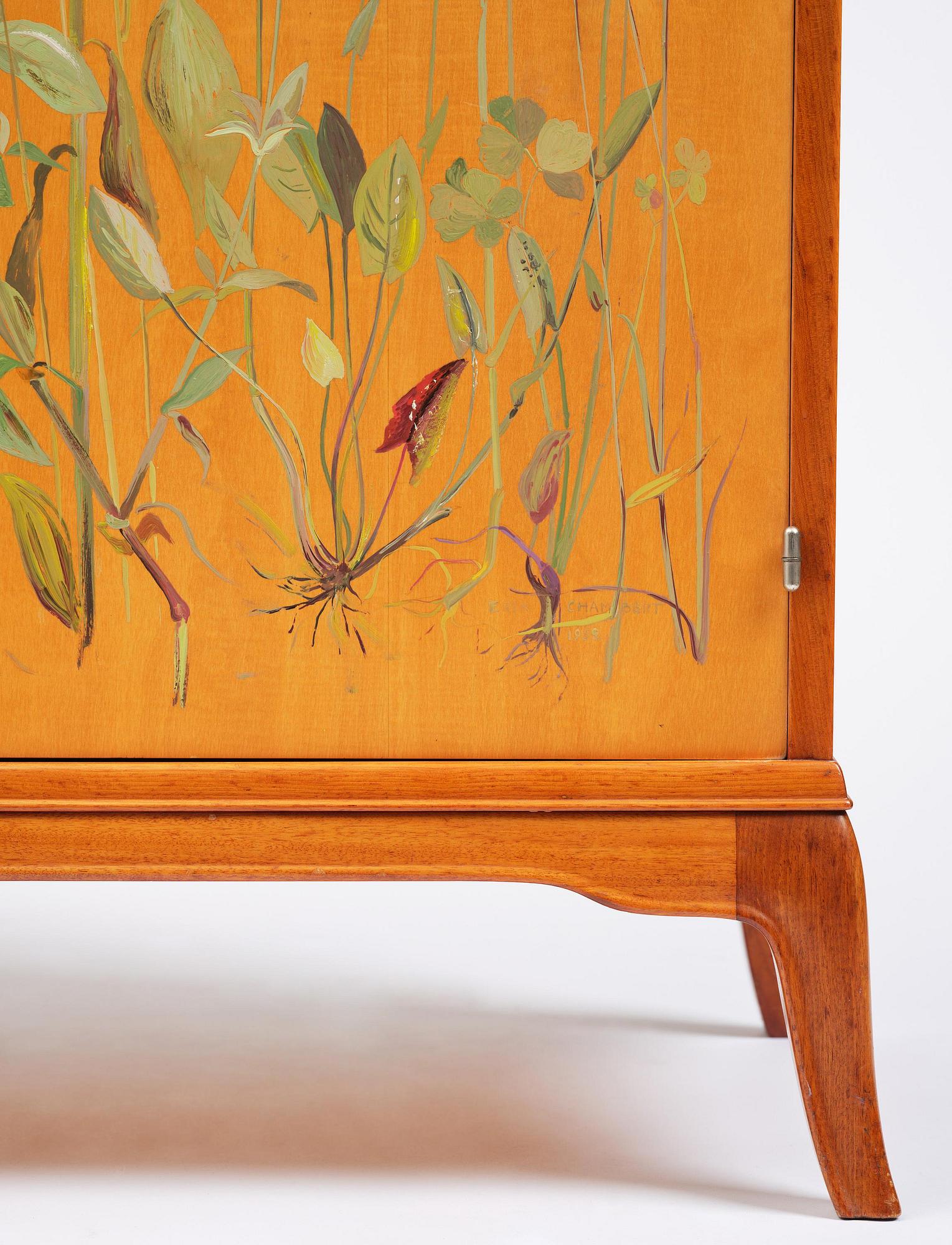
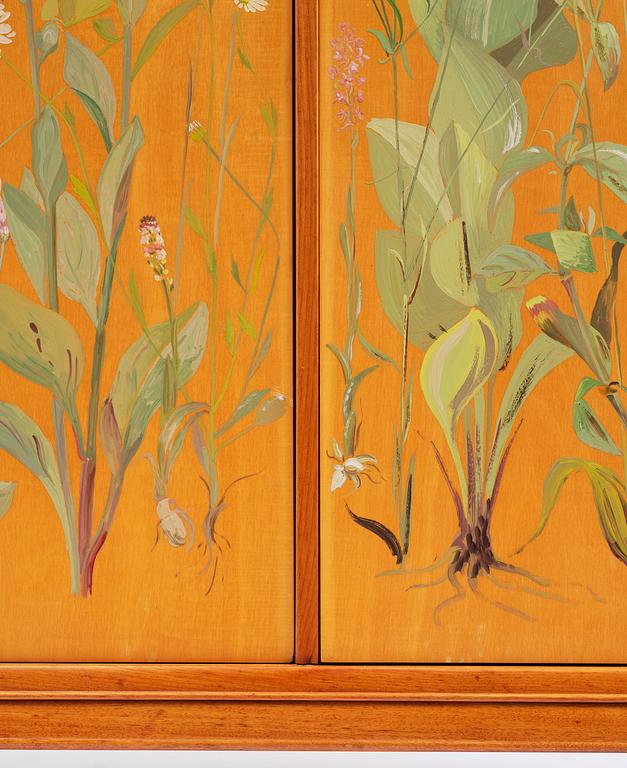
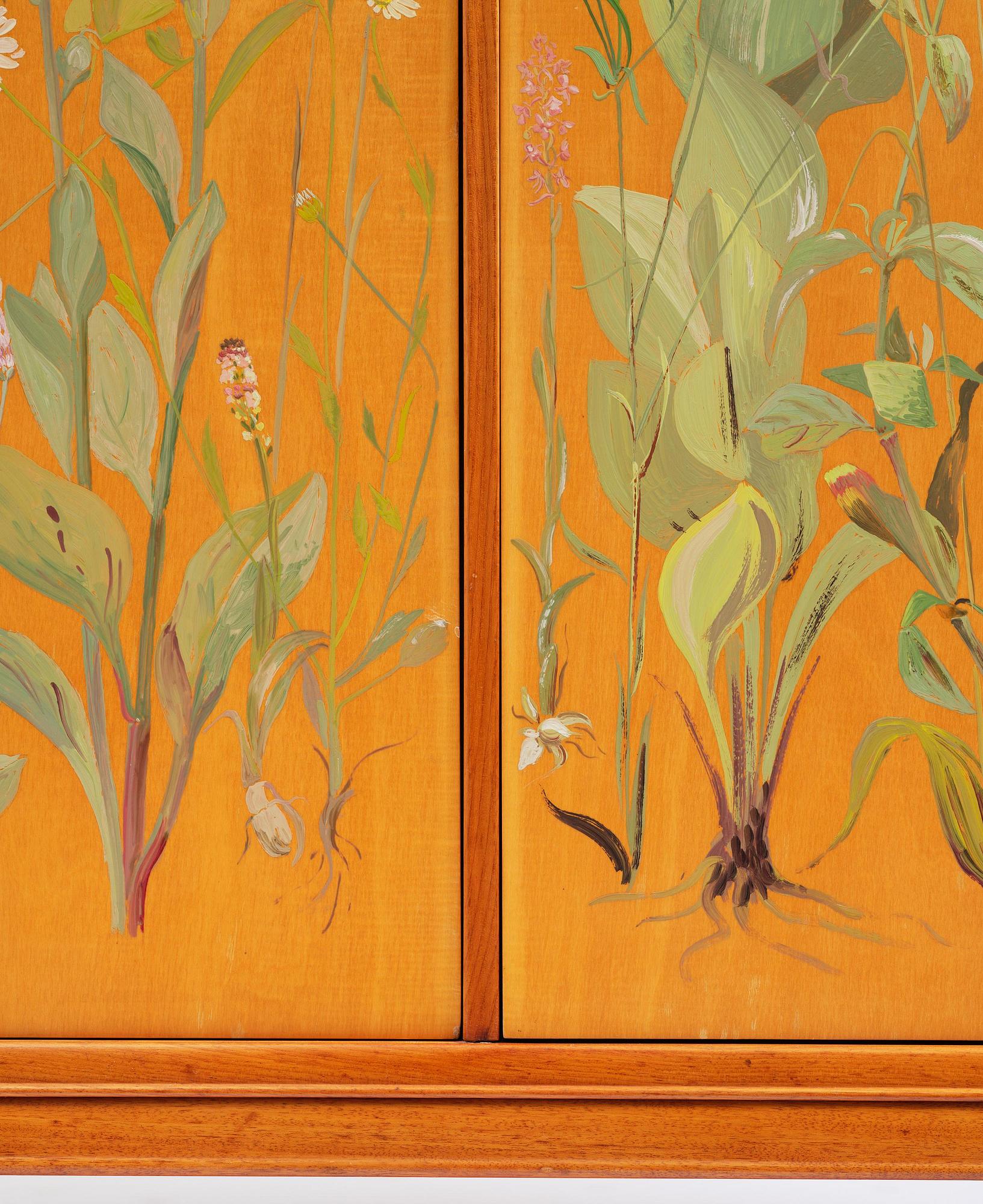
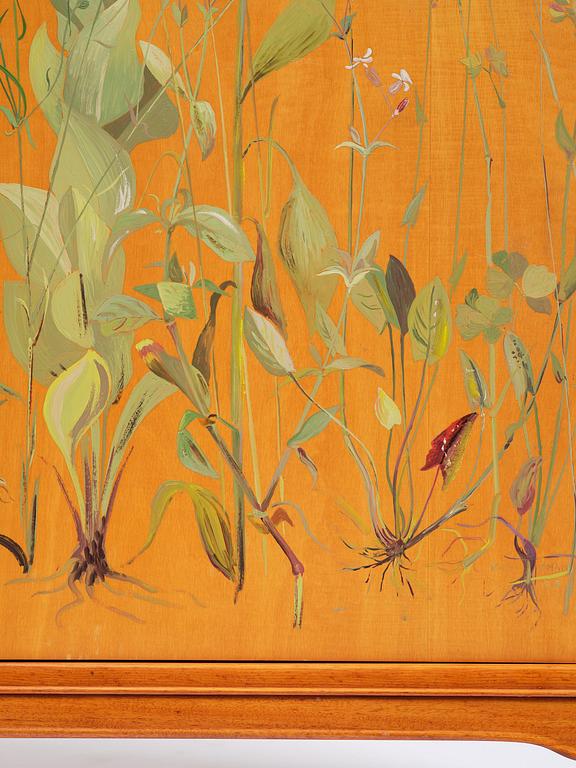
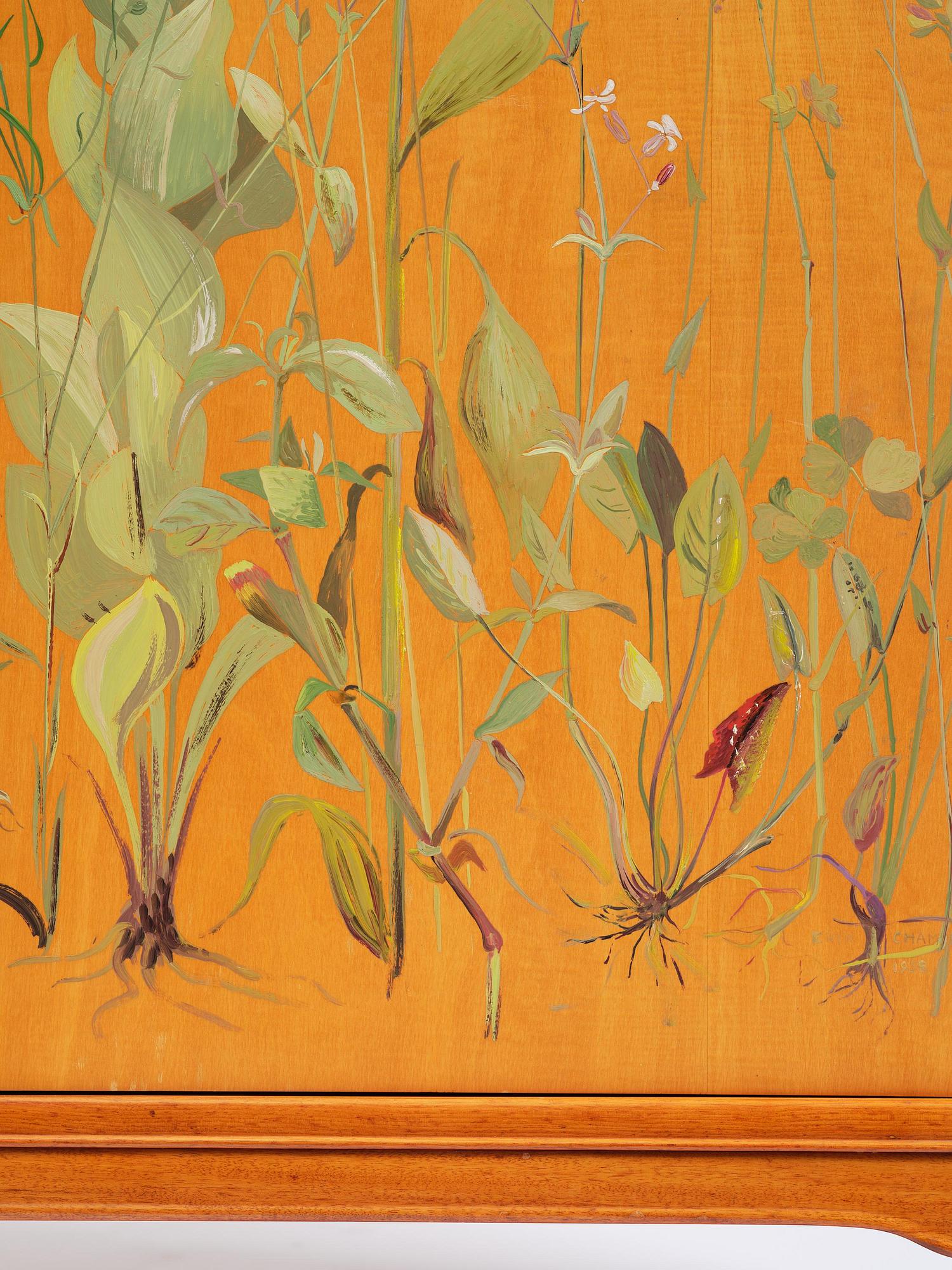
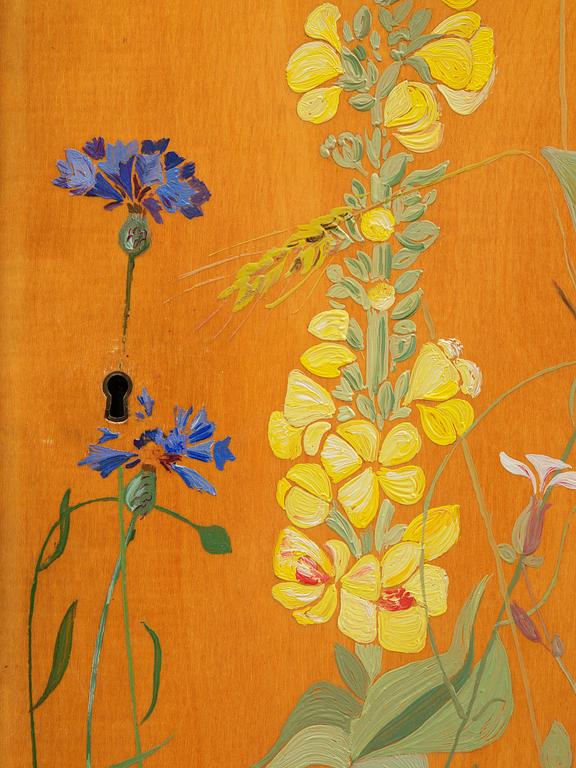
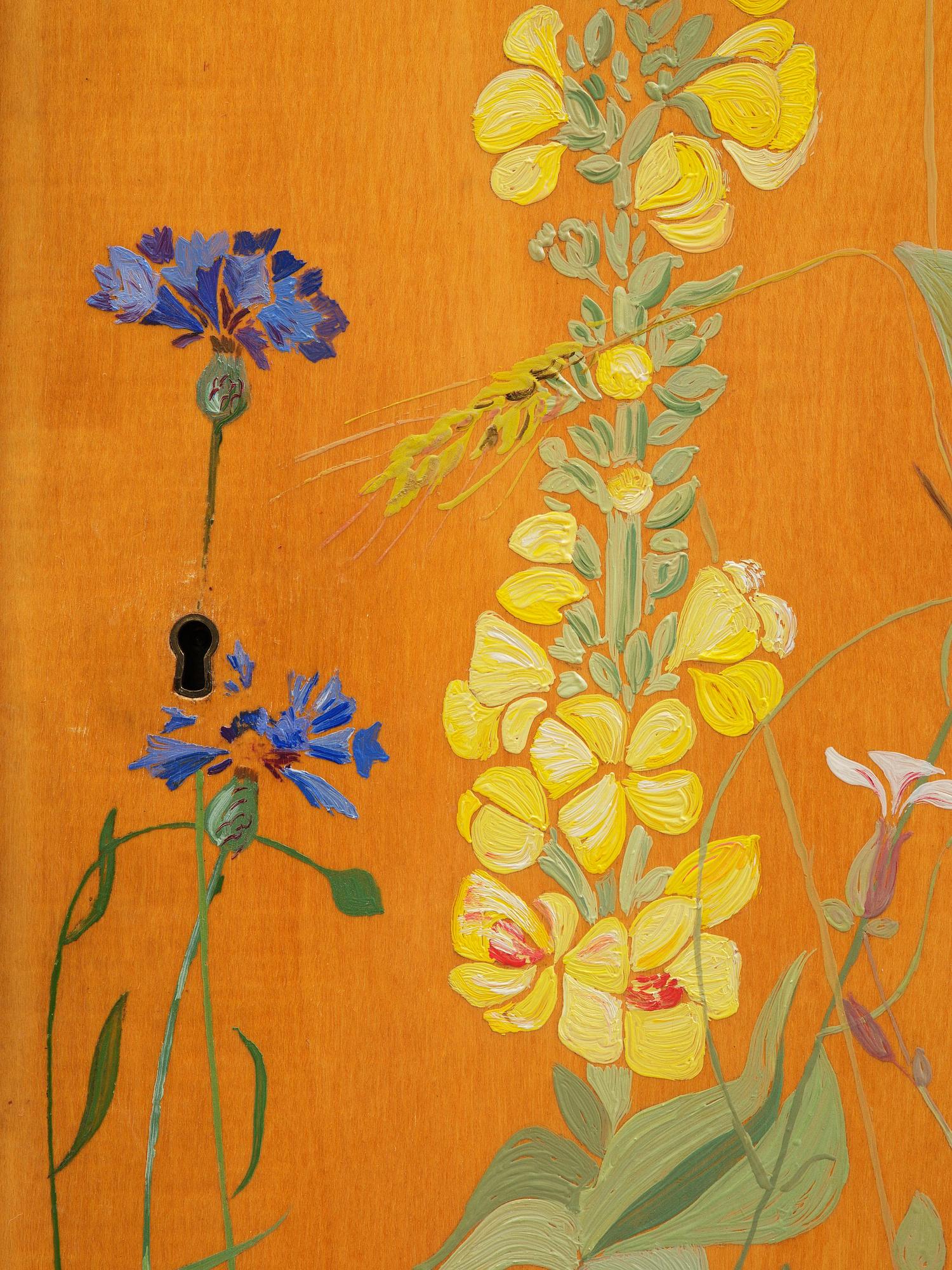
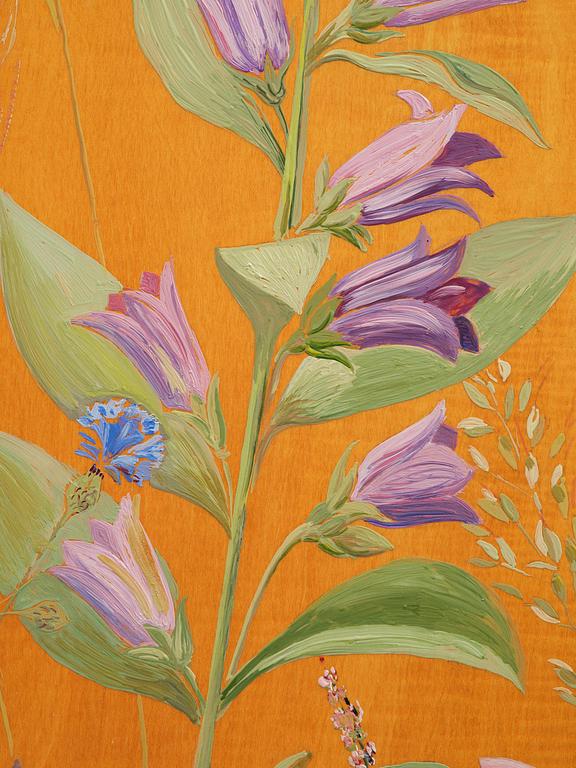
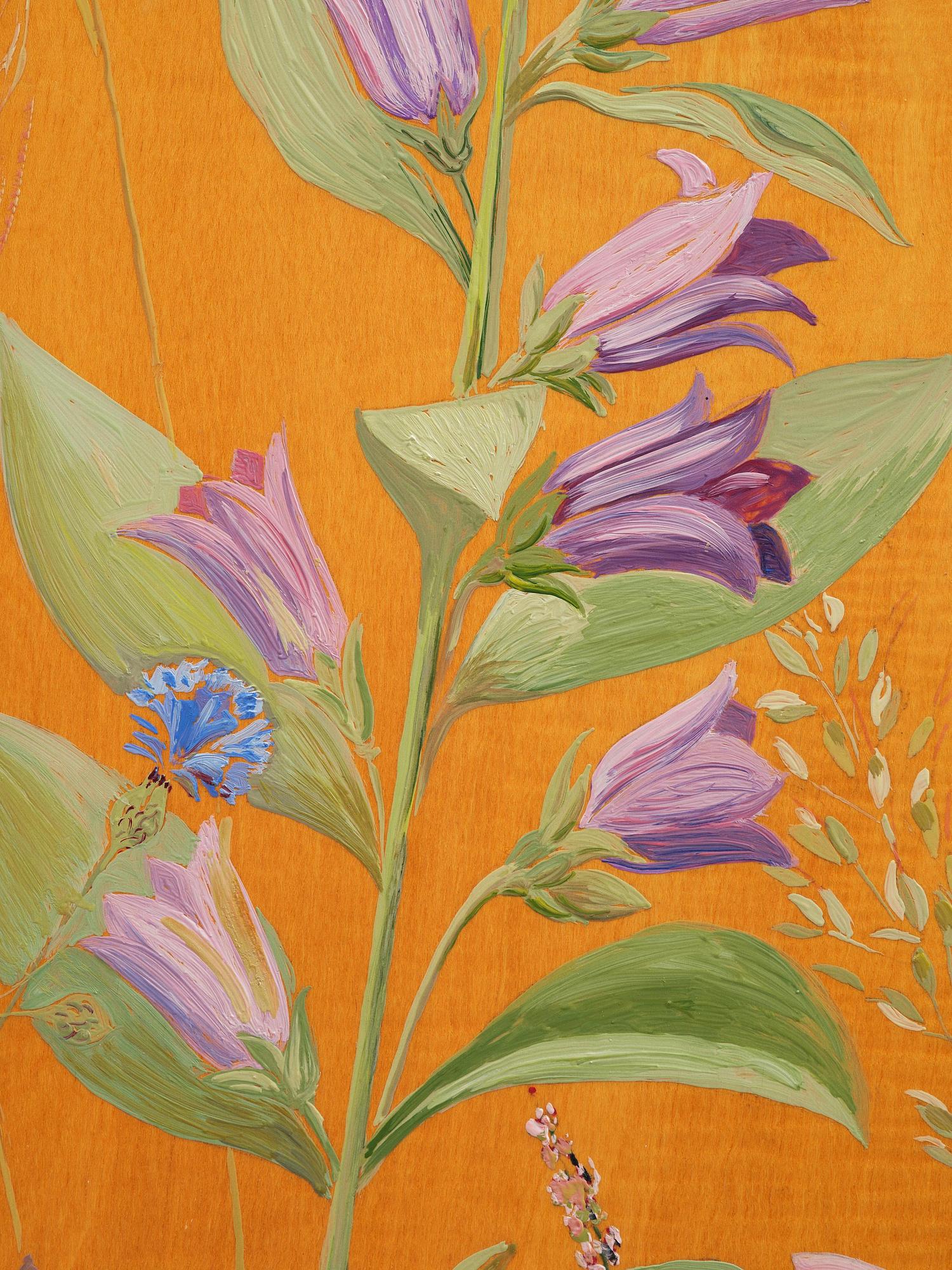
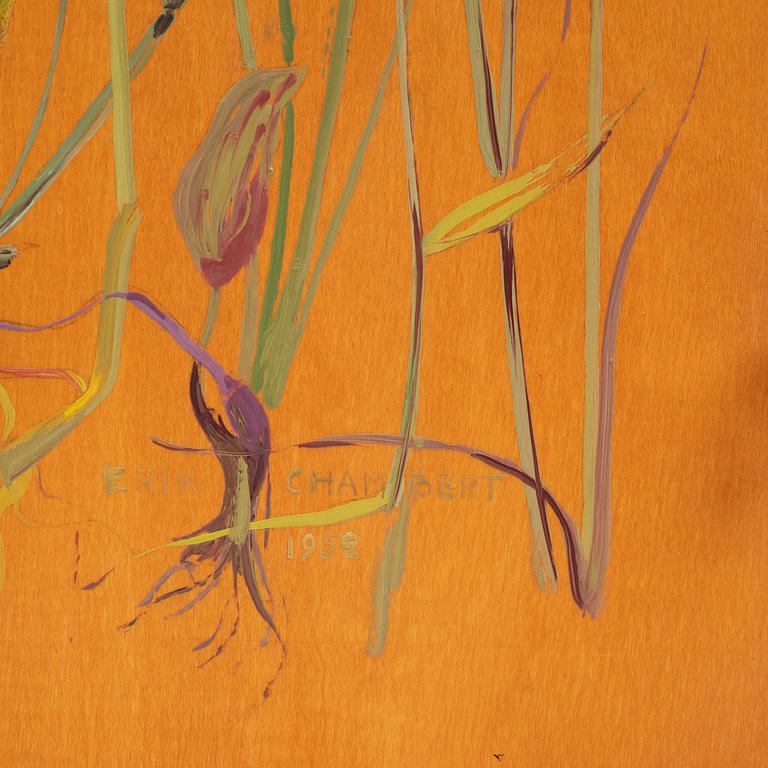
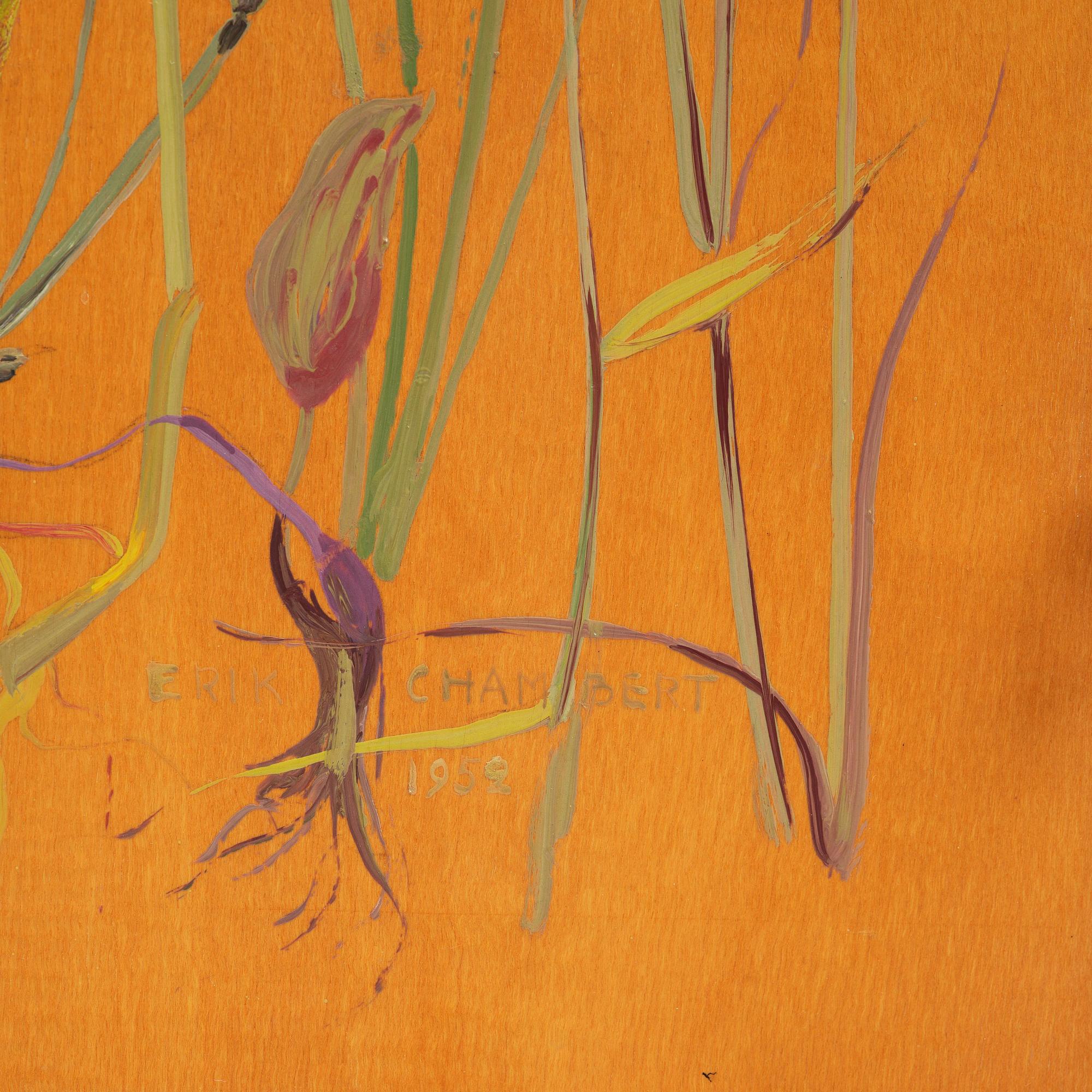
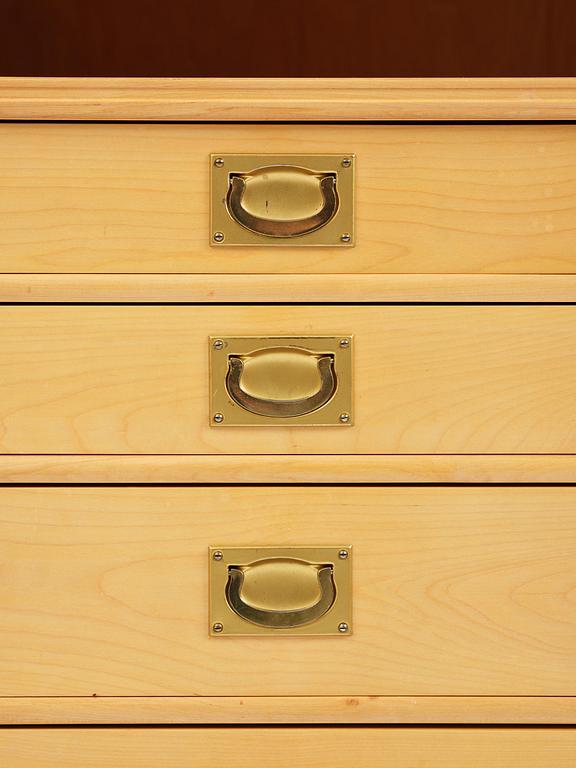
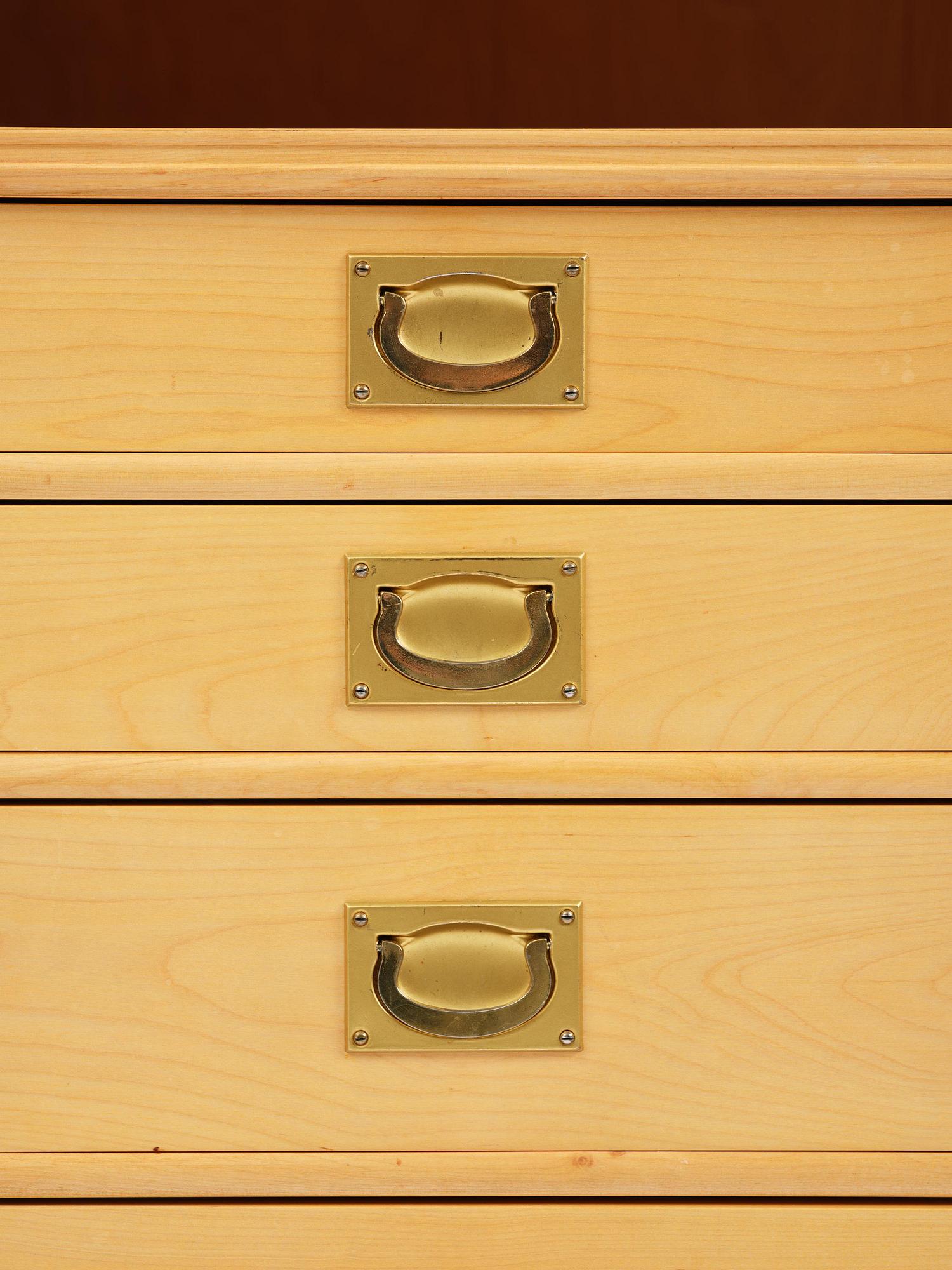
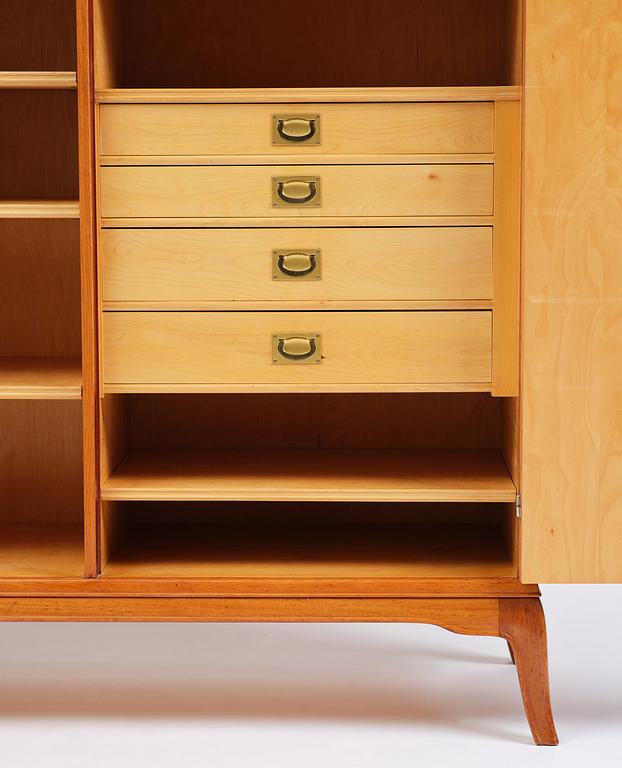
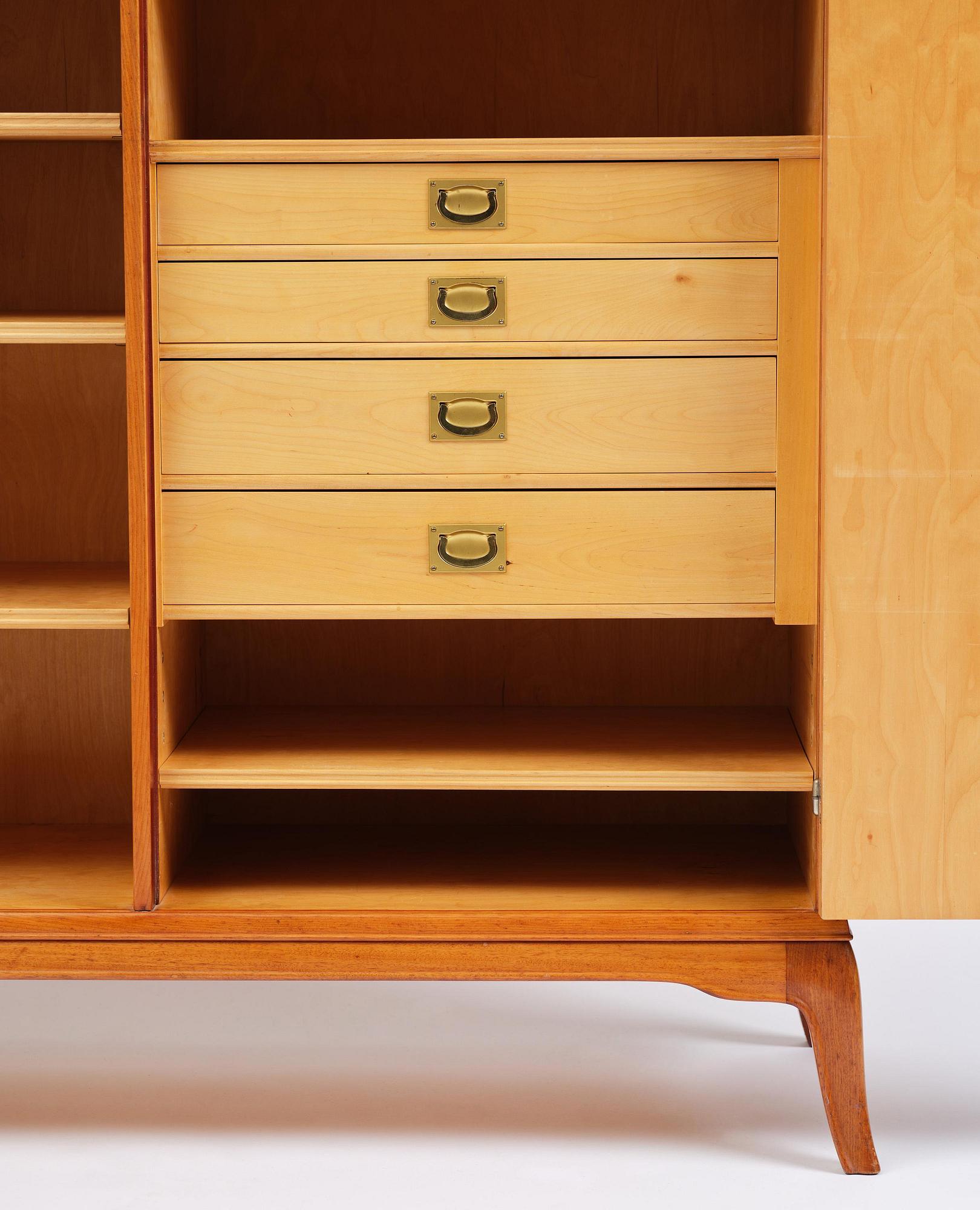
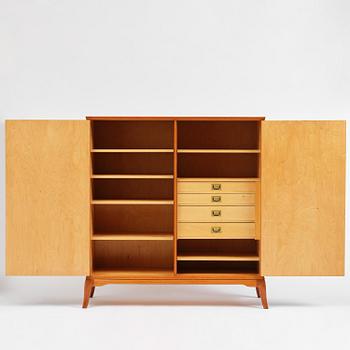
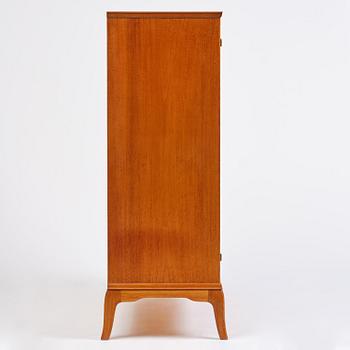
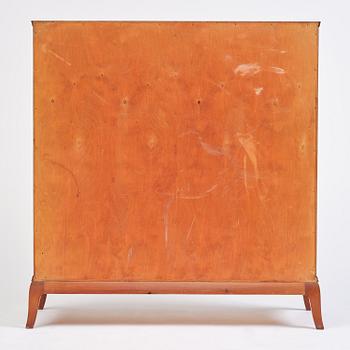
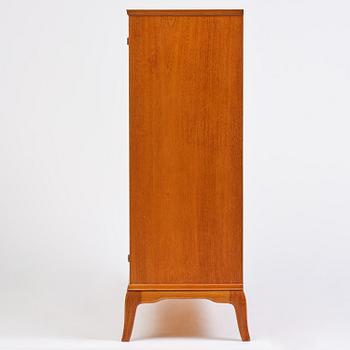
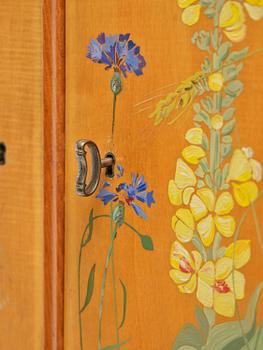
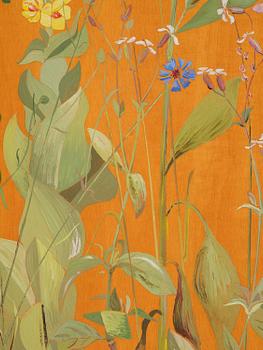
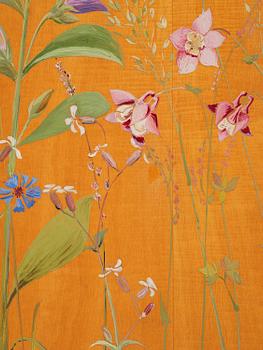
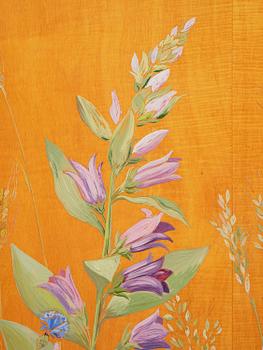
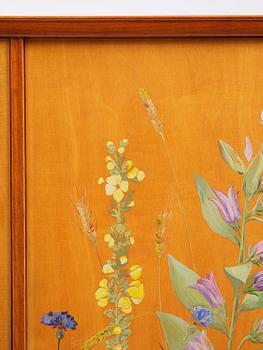
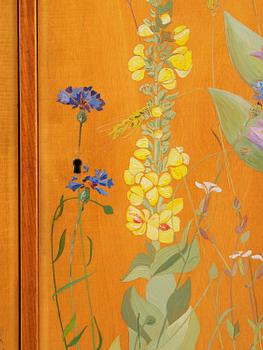
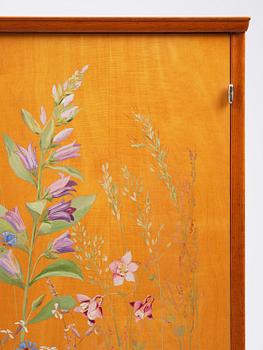
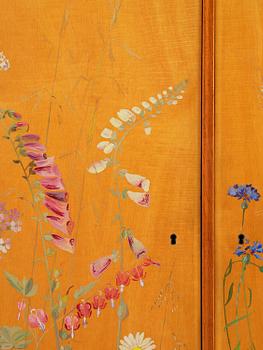
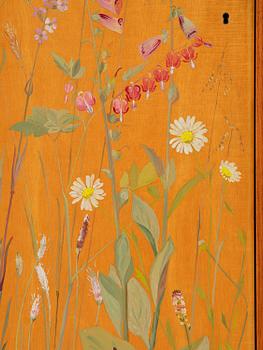
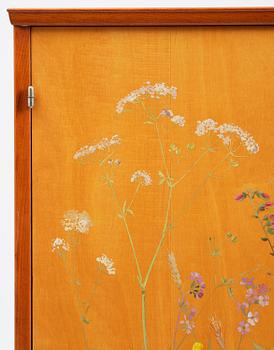
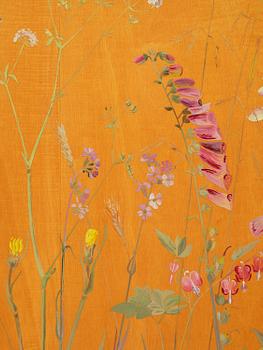
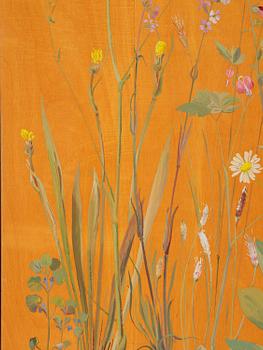
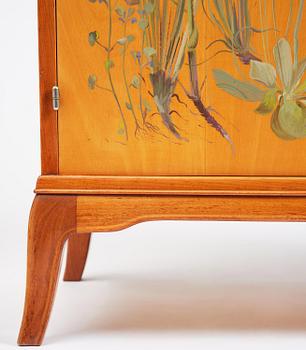
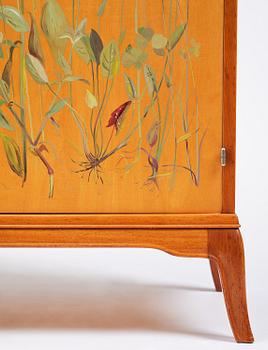
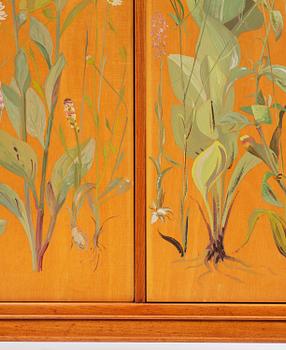
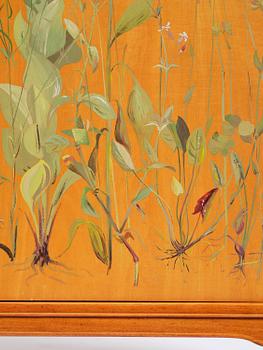
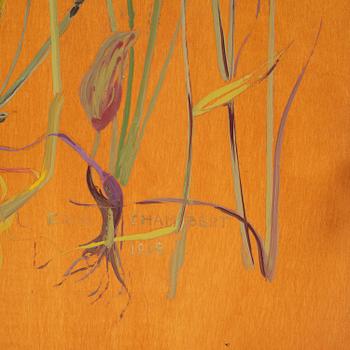
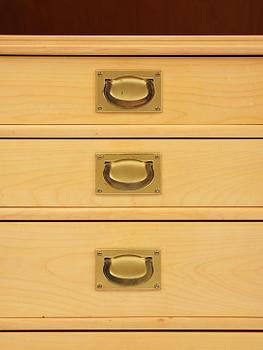
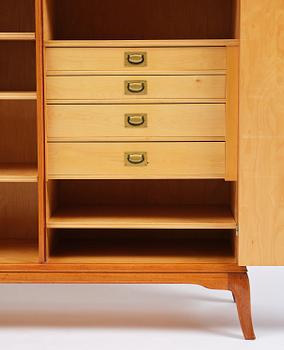
Rectangular form, curved legs, veneered with mahogany and birch, hand painted decoration of a selection of Swedish summer flowers by Erik Chambert, signed and dated ERIK CHAMBERT 1952. Interior with four drawers, one fixed and a total of six loose adjustable shelves. Height 131 cm, width 122.5 cm, depth 46 cm.
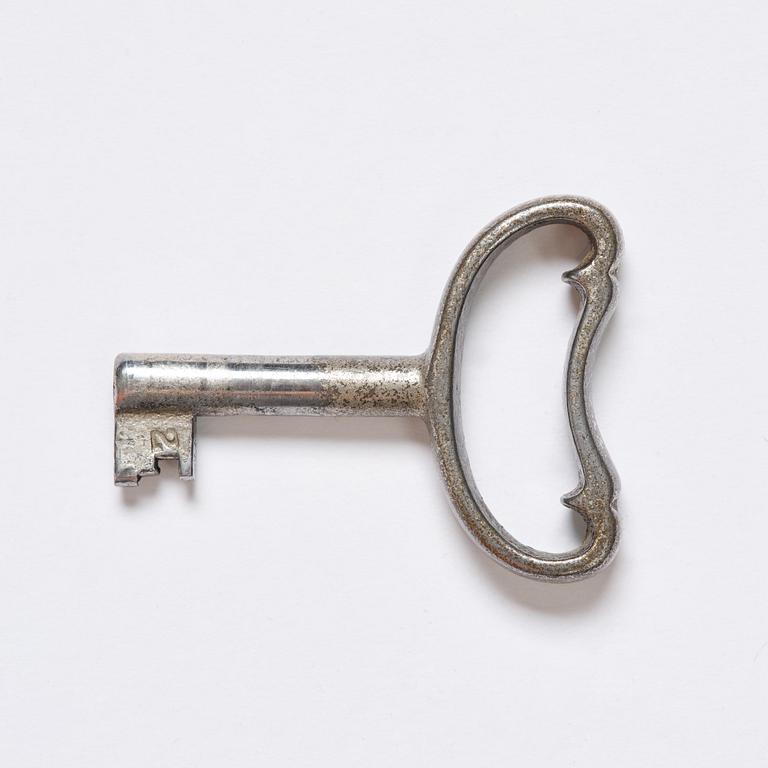
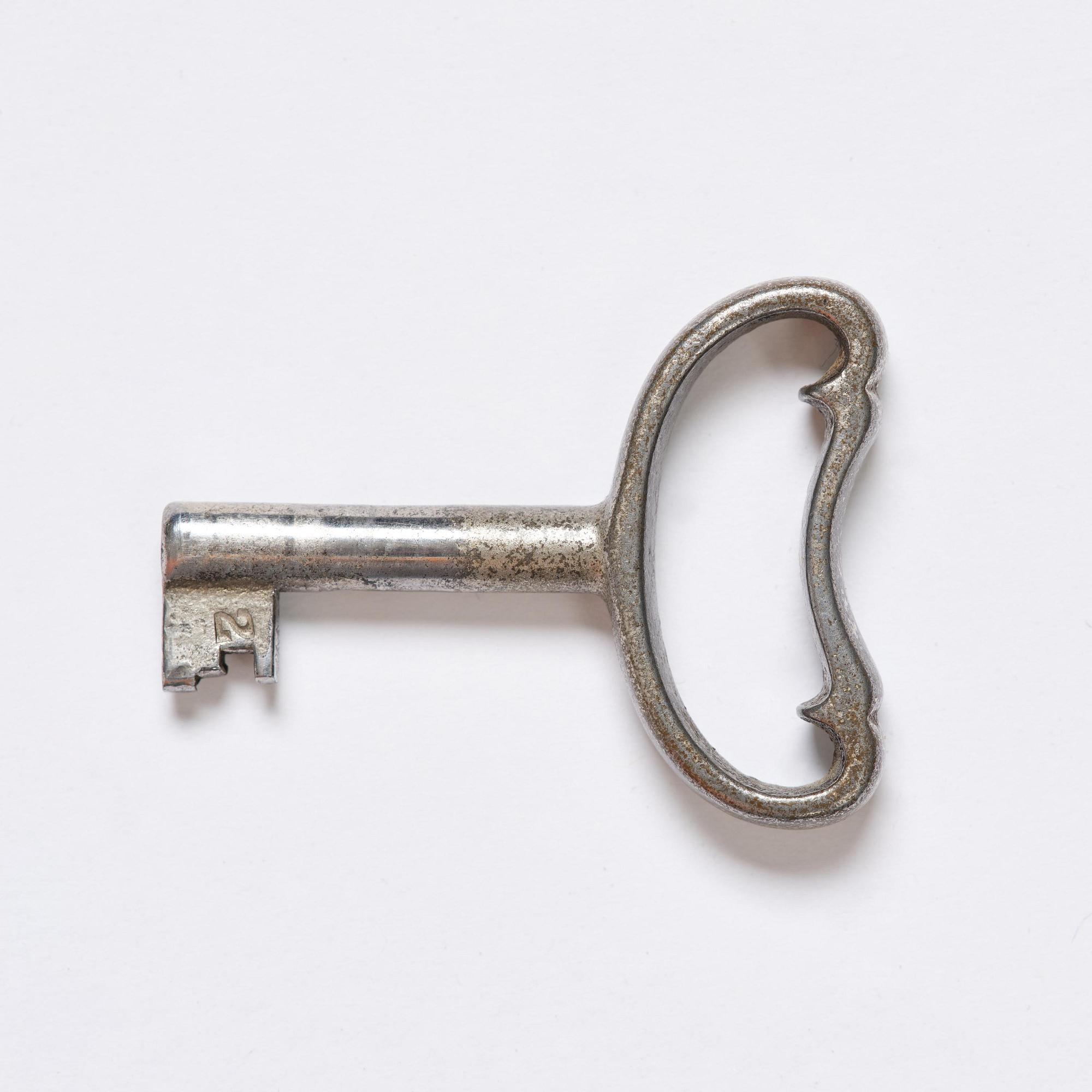
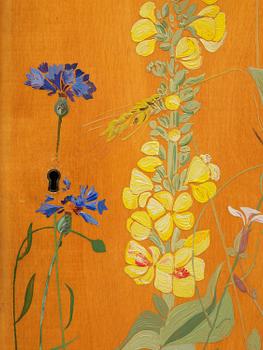
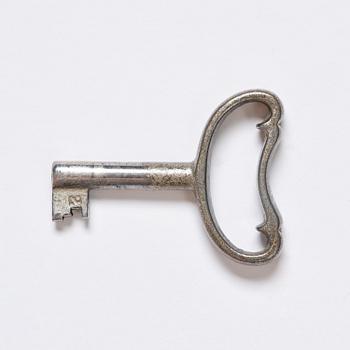
Some wear to the painted decor next to the right keyhole. Keys included.
Provenance
Purchased from Chamberts in Norrköping ca. 1952, thence by descent within the family.
Literature
Bonnie Festin, "Sommaräng, konkret och harlekin: verk av Erik Chambert", Norrköping City Museum 2015, compare pp 54 and 57.
More information
Eric Chambert was a versatile artist, designer, and furniture architect with a distinctive expression often described as “human functionalism.” He was influenced by the artistic currents of his time but always transformed them into a personal style. Today, he is regarded as one of the foremost Swedish designers of the 20th century, alongside contemporaries such as Josef Frank and Carl Malmsten.
Raised in his father’s company, AB Chambert’s furniture factory in Norrköping, Chambert began working at the age of 16 and trained as a cabinetmaker before continuing his studies at The Higher School of Arts, Crafts and Design (now Konstfack) in Stockholm. Study trips across Europe brought him early into contact with both the Bauhaus movement and Art Concret.
After graduating in 1925, he was employed at Otto Schulz’s design office I Gothenburg. His breakthrough came at the Stockholm Exhibition in 1930, where he furnished a functionalist apartment designed by Kurt von Schmalensee. This success was followed by participation in the world exhibitions in Brussels in 1935, Paris in 1937, and New York City in 1939.
Despite the ideals of functionalism, Chambert remained committed to craftsmanship, and the furniture from the family workshop was always hand-made with great care. During the 1930s and 1940s, his design language softened and nature motifs became increasingly central. He worked with inlays and later with painted floral compositions, alongside a growing interest in drawing and painting, which eventually also established him as a recognised visual artist.
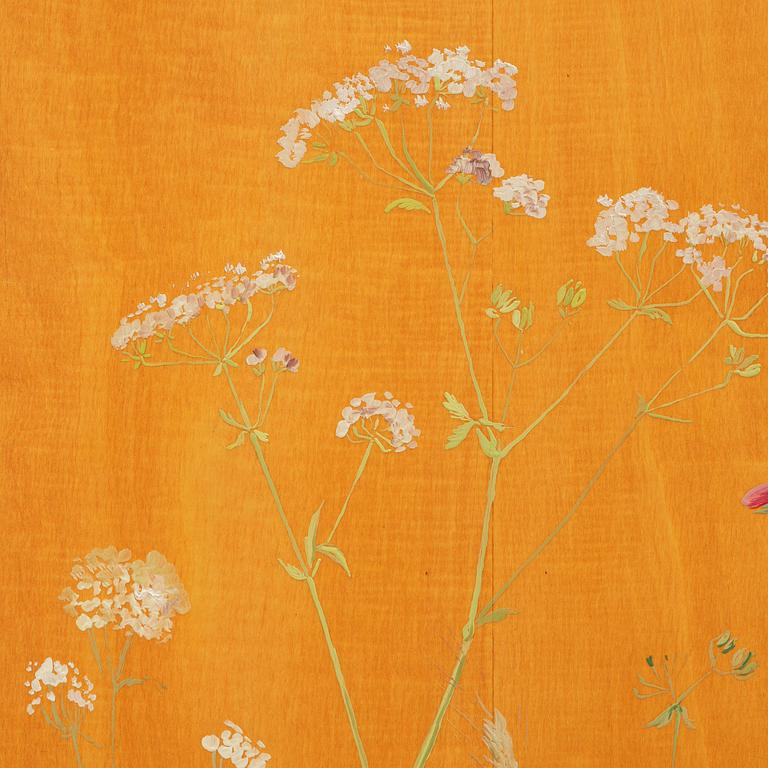
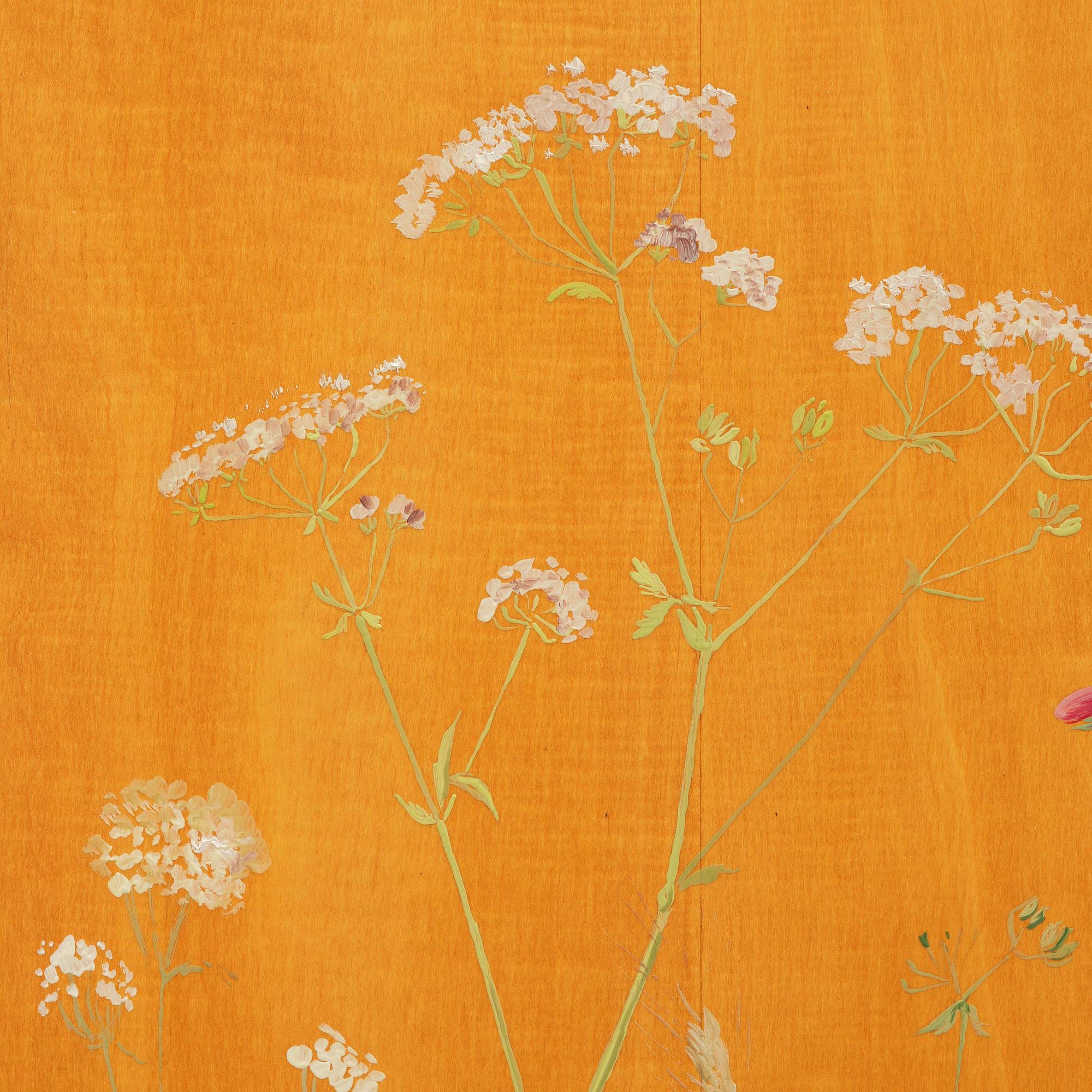
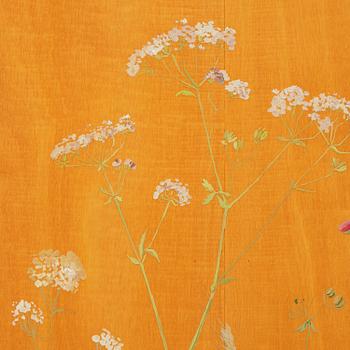
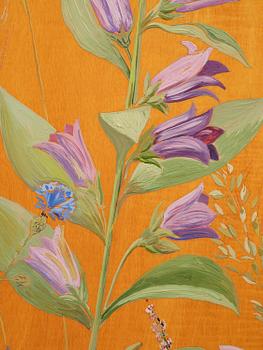
Chambert was an active painter, creating gouaches, wall paintings, and designs for wallpapers and textiles. Nature was his primary source of inspiration. During cycling trips, he observed and sketched wild plants, grasses, and weeds, sometimes with roots attached, often bringing them back to his studio for further study. This interest in nature deepened in his furniture design. In the 1940s, he began using cabinet surfaces as artistic canvases, painting lush floral meadows in oil. The unique cabinet in this auction is richly decorated with Swedish wildflowers: hepatica, hawkweed, cow parsley, foxglove, bleeding heart, oxeye daisy, mullein, Carpathian bellflower, columbine, and various grasses. Chambert's preparatory sketches in gouache for the present decor is held in the collections of Norrköpings konstmuseum.
More about Erik Chambert
Erik Chambert was a designer and artist. Chambert worked throughout his long career primarily as a furniture architect in the family business Chamberts Möbelfabrik in Norrköping. Chambert gained recognition through exhibitions such as Stockholm 1930, Chicago 1933, Paris 1937, and New York 1939. During the 1940s and 50s, Chambert developed a personal style with more refined models. His furniture was often of high quality, considering his background as a carpenter. Some of Chambert's iconic pieces include the chair "Poem" and the cabinet "Livets Vägskål". He was also recognised as an artist with his abstract works during the 1950s and 60s.
Read moreFor condition report contact specialist

Image rights
The artworks in this database are protected by copyright and may not be reproduced without the permission of the rights holders. The artworks are reproduced in this database with a license from Bildupphovsrätt.
Others have also viewed