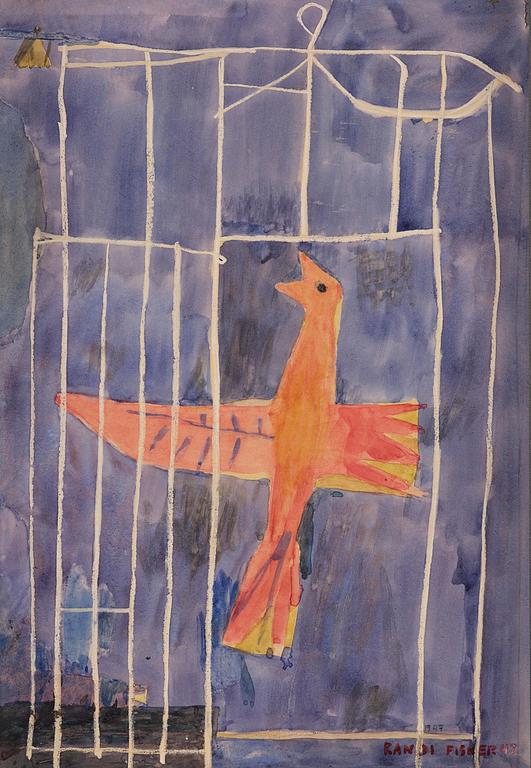
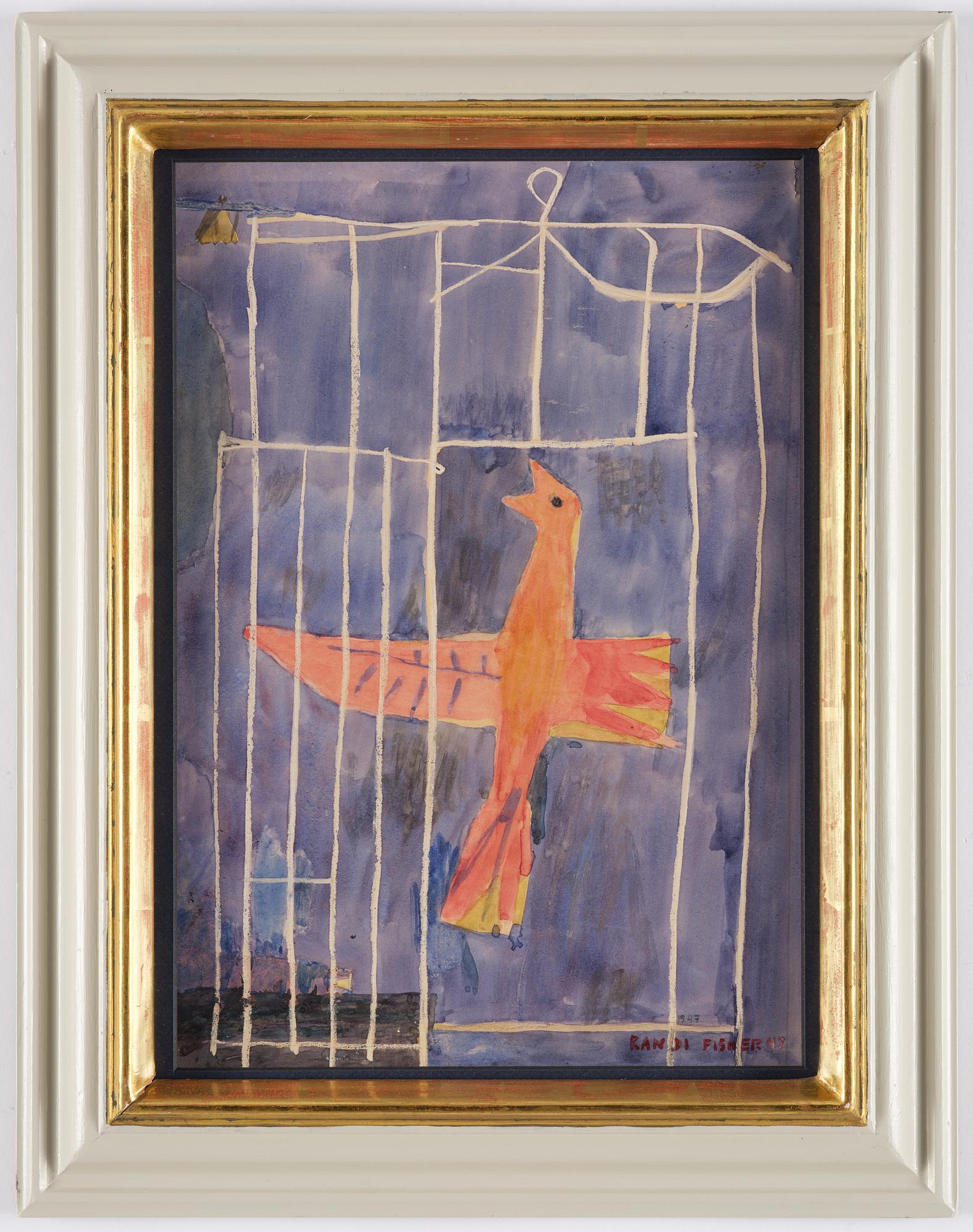
Bird in a cage
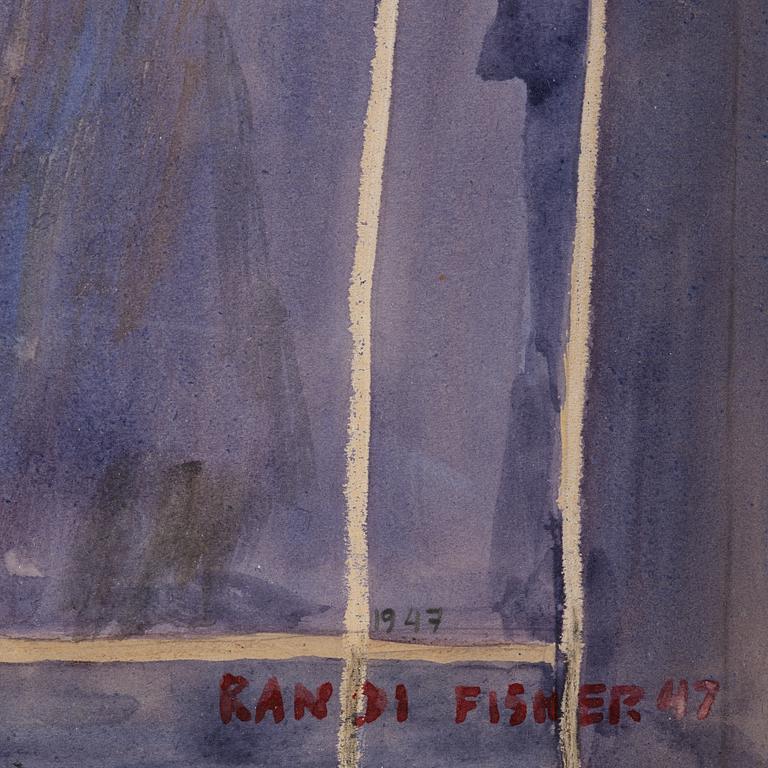
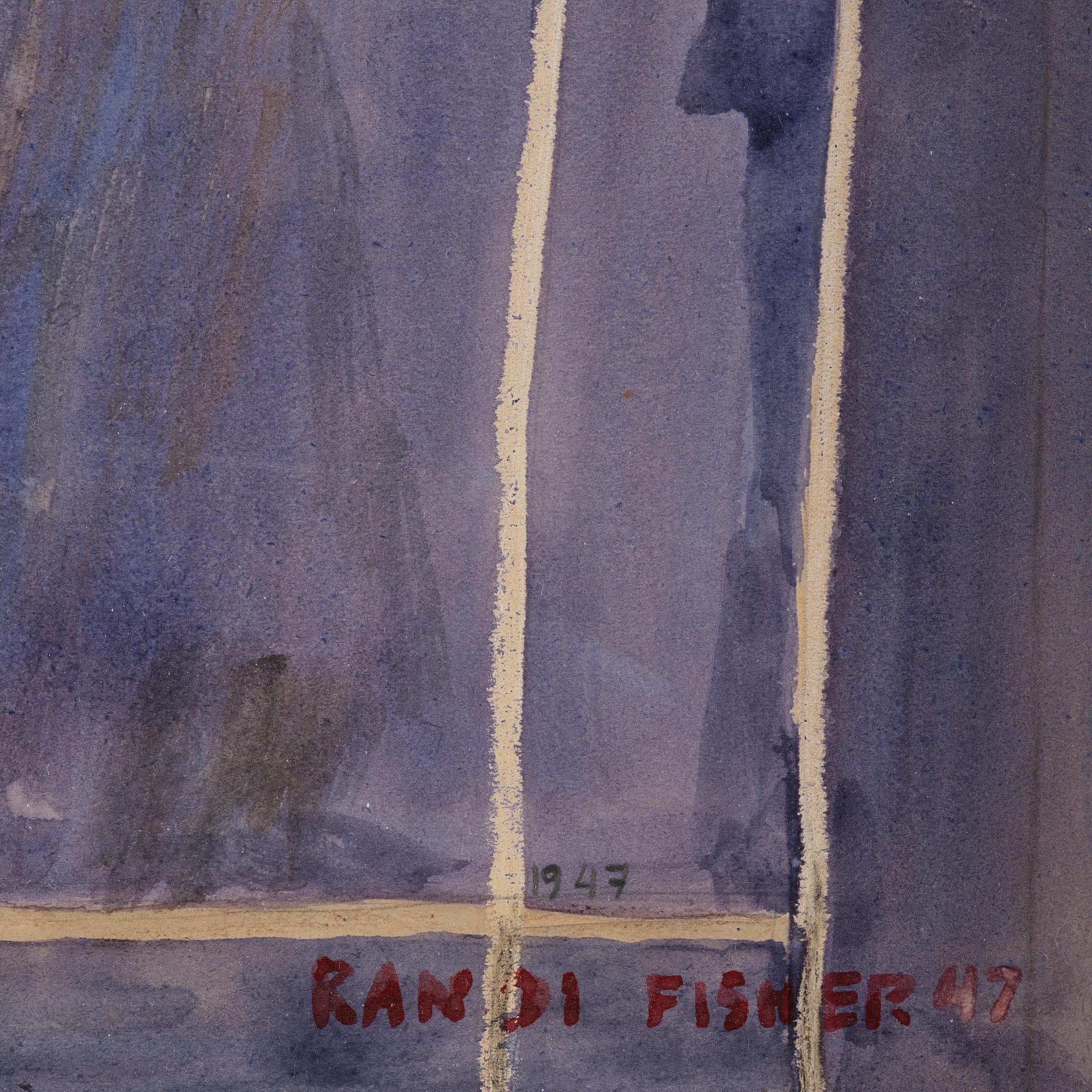
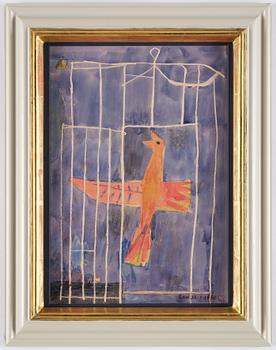
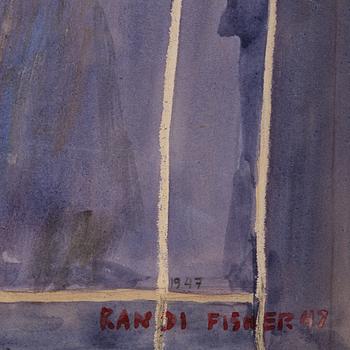
Signed Randi Fisher and dated 1947. Mixed media on paper 36 x 25 cm.
Provenance
An important collection.
More information
The merely 27-year-old Randi Fisher was, when this painting was executed in 1947, a true pioneer of Swedish modernism and the only woman in the Swedish artist group "the men of 1947," also known as the concretists. The group became influential after the legendary exhibition "Young Art" in 1947 at Galleri Färg och Form in Stockholm.
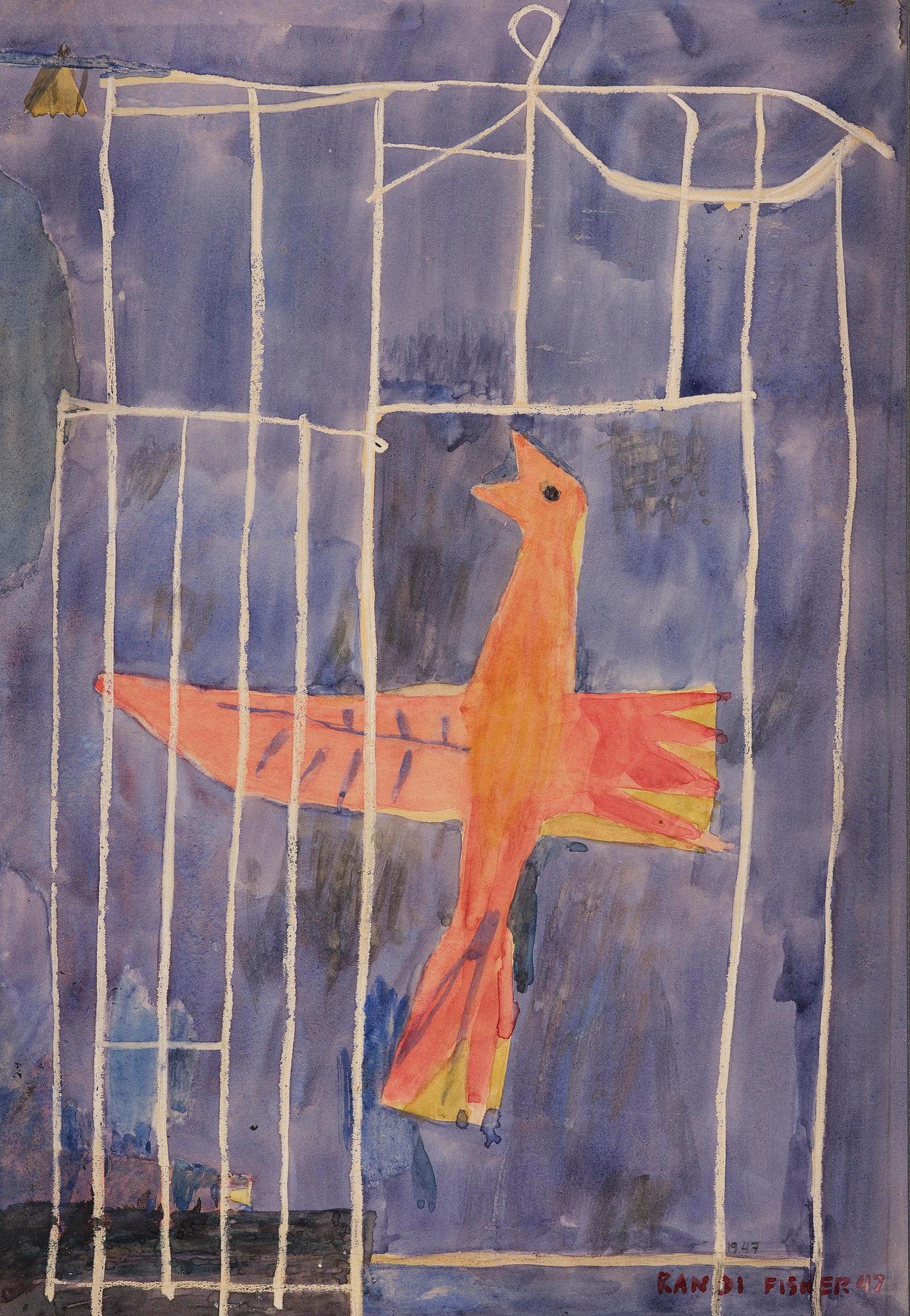
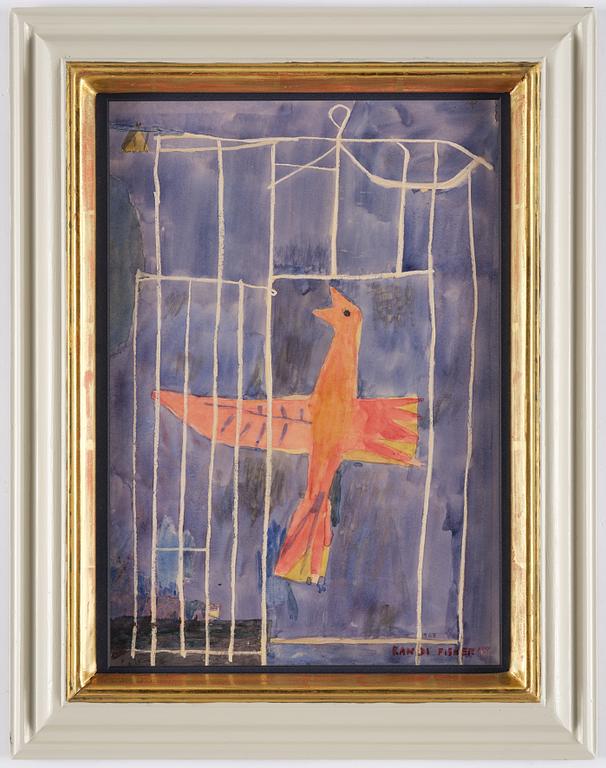
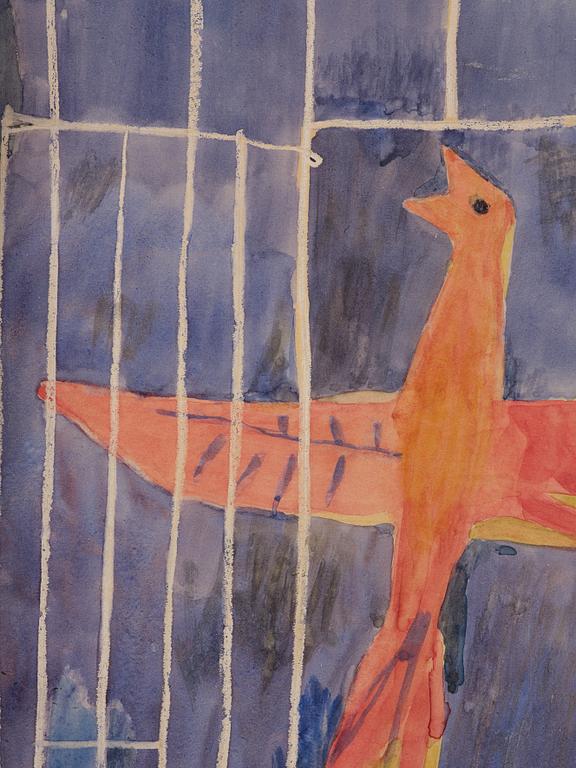
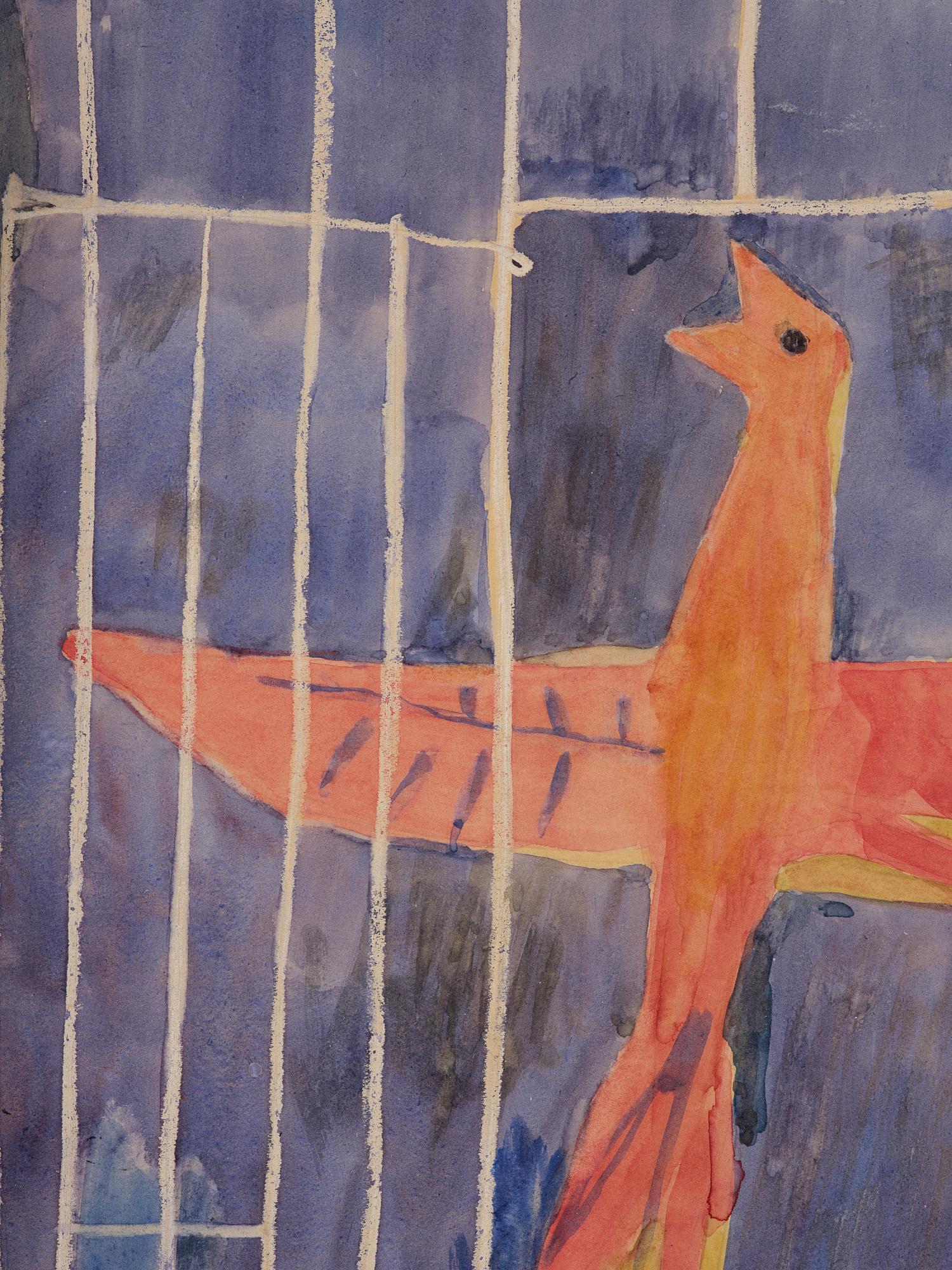
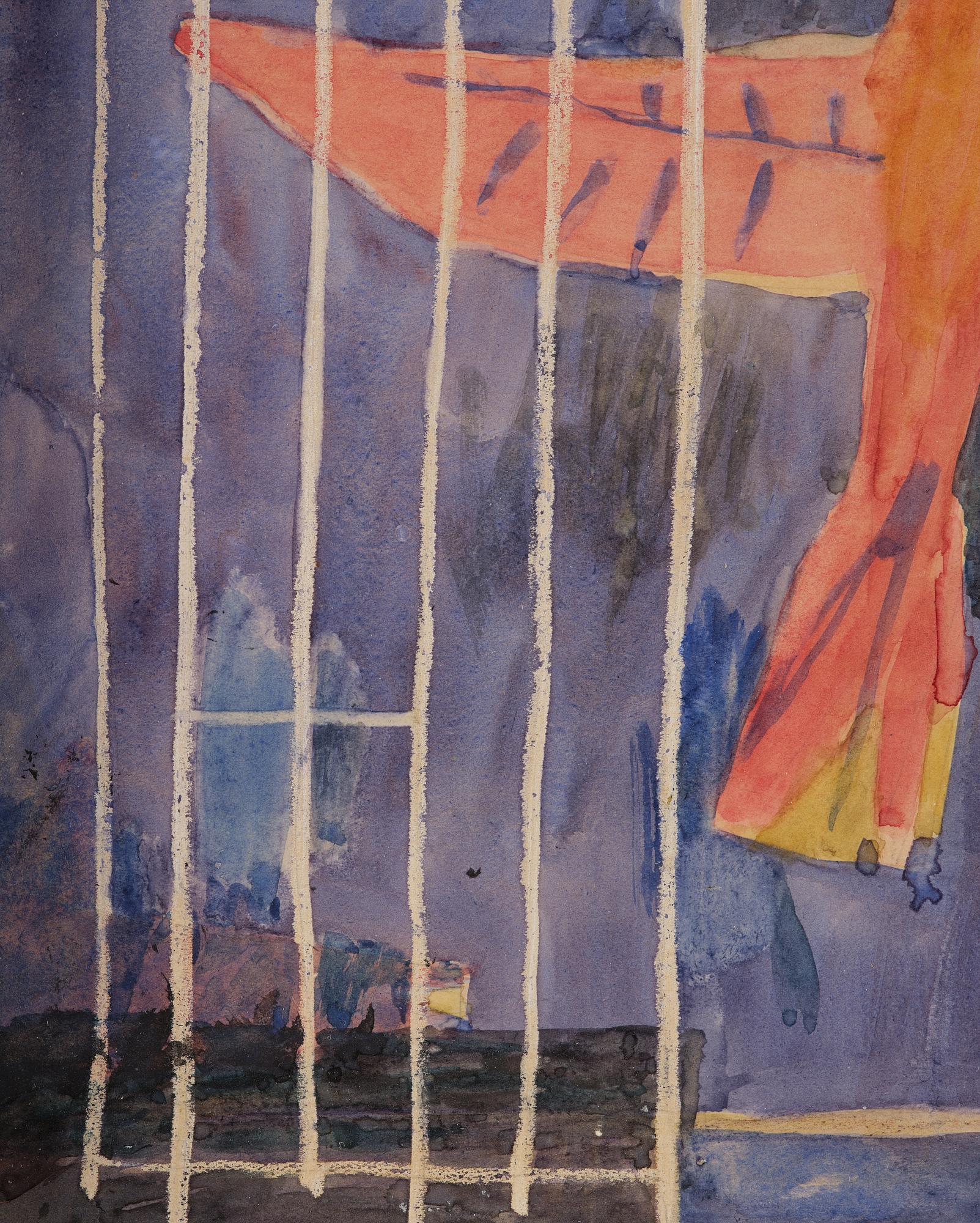
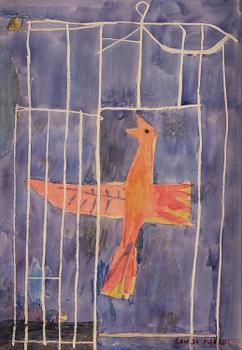
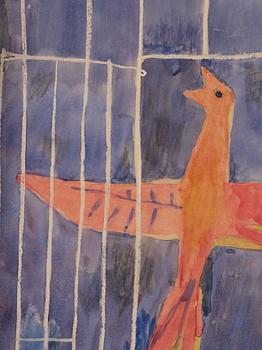
The painting is a brilliant example of Randi Fisher's early, playful modernist style where she combines concrete forms with a personal expression; a stylised orange bird enclosed in a white cage, against a deep blue background. Randi Fisher's "Bird in Cage" can be viewed from several perspectives, particularly considering the time it was created. The most obvious is the contrast between the bird's inherent nature – to fly and be free – and the cage's confinement. The bird is painted in a warm, vibrant orange tone with an open beak, which can be interpreted as singing or calling out. Its being trapped in a cage creates a tension between vitality and control.
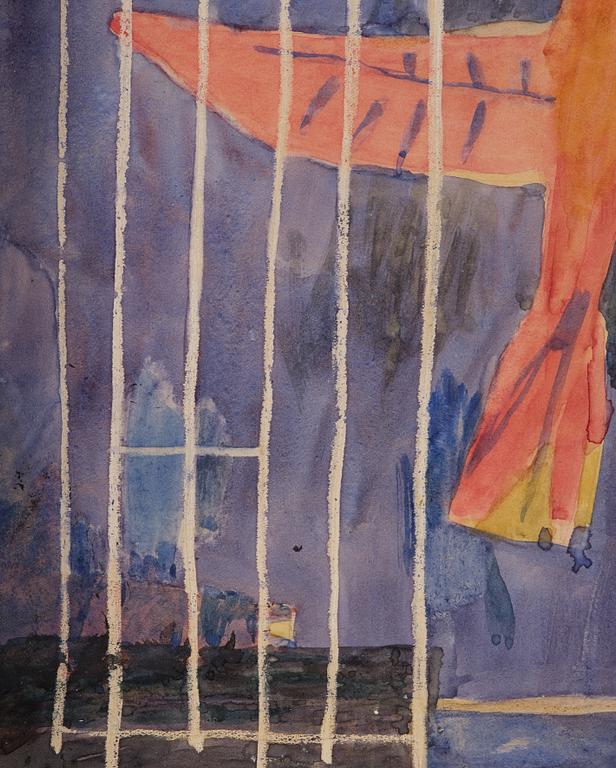
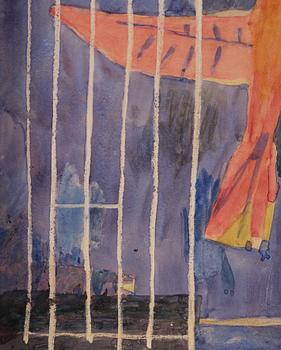
At the same time, the post-war melancholy prevailed as the painting was made just two years after the end of World War II. In art, there was often an underlying sense of confinement and processing of the restrictions that World War II had imposed. The birdcage can symbolise the mental or physical barriers that remained in society after years of war and turmoil. From a purely artistic perspective, the image is about the meeting between organic forms (the bird) and geometric lines (the cage). The white, delicate lines that form the cage feel almost transparent and fragile, making the captivity not experienced as absolute or heavy, but rather as a fragile frame around the bird's existence.
Randi Fisher was known for combining her personal imagery with a strong expression. Here, the cage is used as a graphic element that divides the picture plane, which is typical of her background in glass painting and monumental art where line and structure are central. In summary, the painting can be seen as a poetic depiction of hope and longing – a colourful creature that, despite its limitations, retains its voice and character.
The young Randi Fisher's position in Swedish art history around 1947 was both unique and groundbreaking. She was at the centre of events as Swedish modernism took a decisive step towards the abstract. That she, as a young woman in an extremely male-dominated art world, took her place alongside others such as Lennart Rodhe and Olle Bonniér was an extraordinary achievement in itself and a recognition of her artistic power. While many of her contemporary colleagues still clung to a more traditional painting style, 27-year-old Randi Fisher was one of the foremost representatives of the new concretism.
For condition report contact specialist

Covered by droit de suite
Image rights
The artworks in this database are protected by copyright and may not be reproduced without the permission of the rights holders. The artworks are reproduced in this database with a license from Bildupphovsrätt.
Others have also viewed