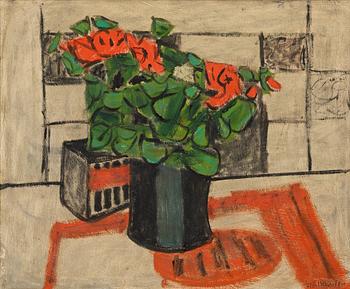
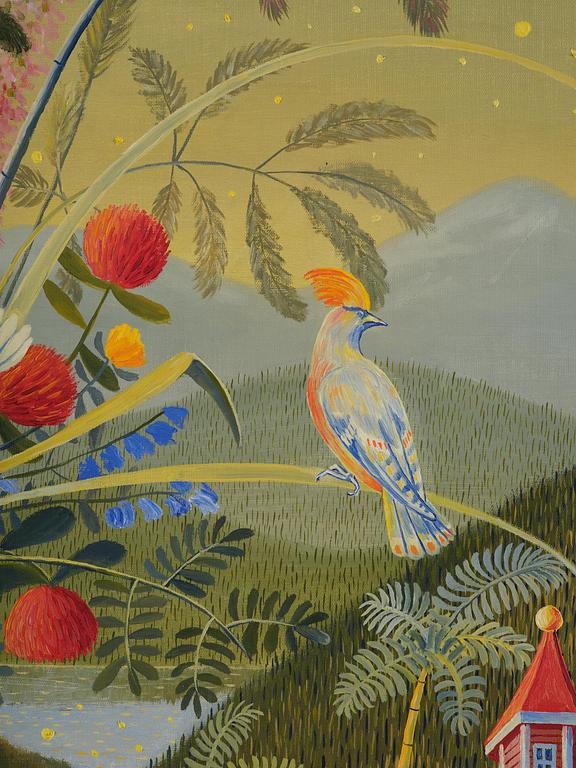
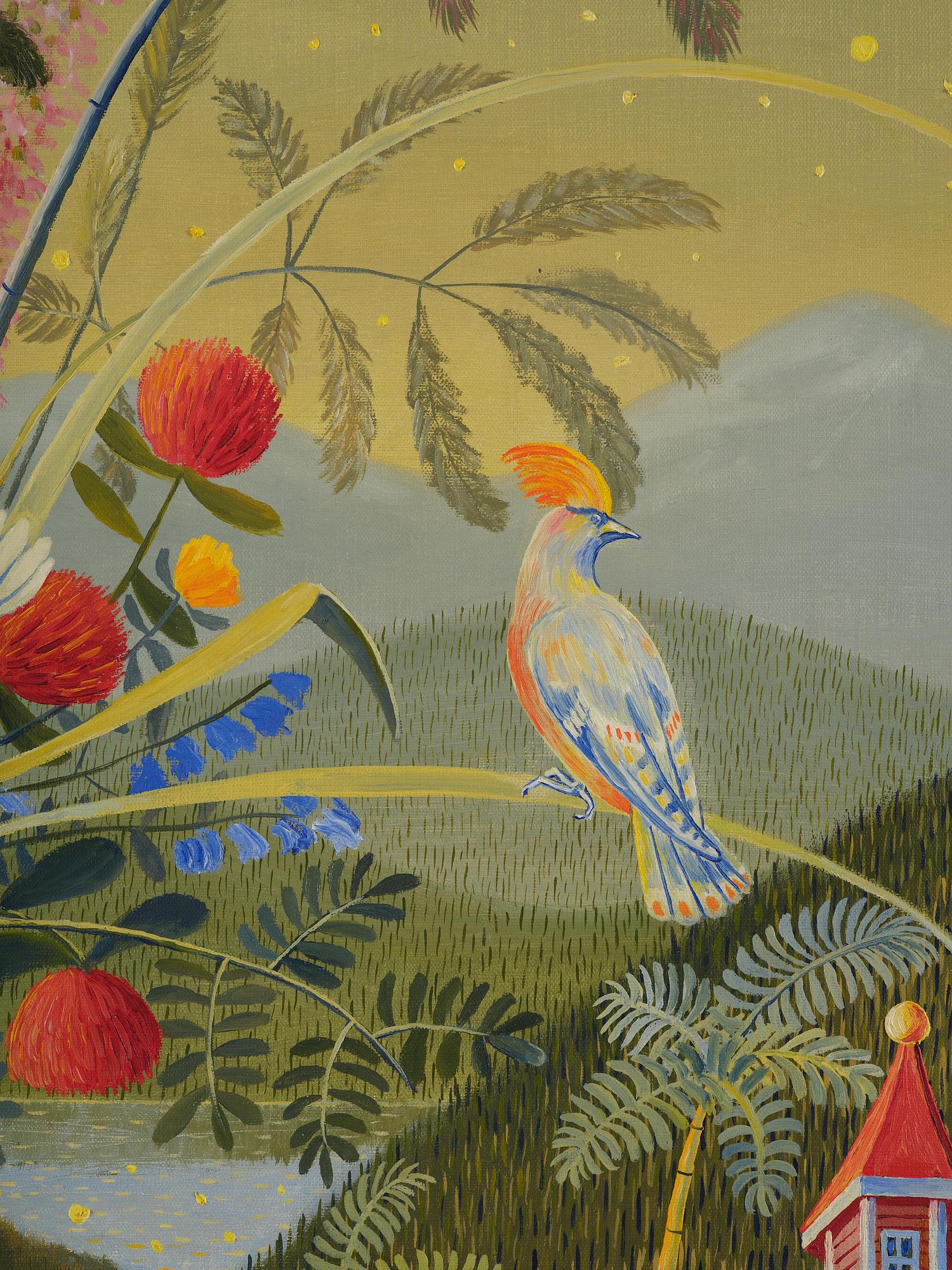
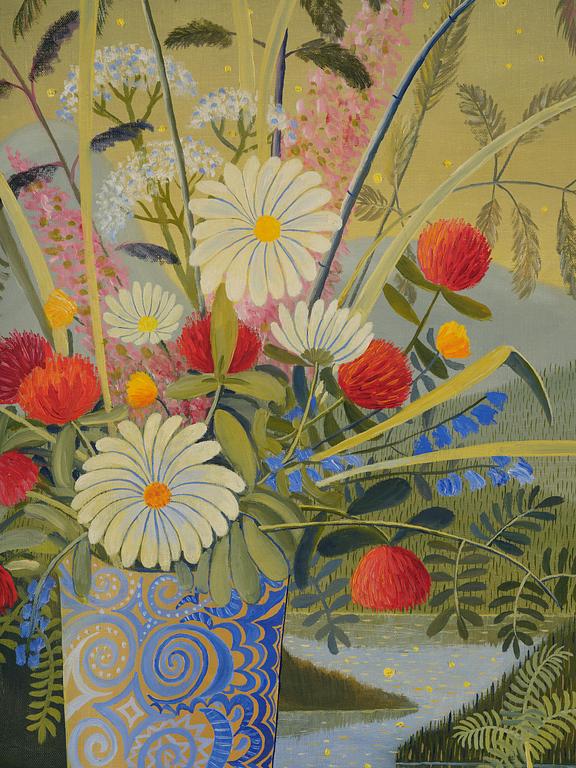
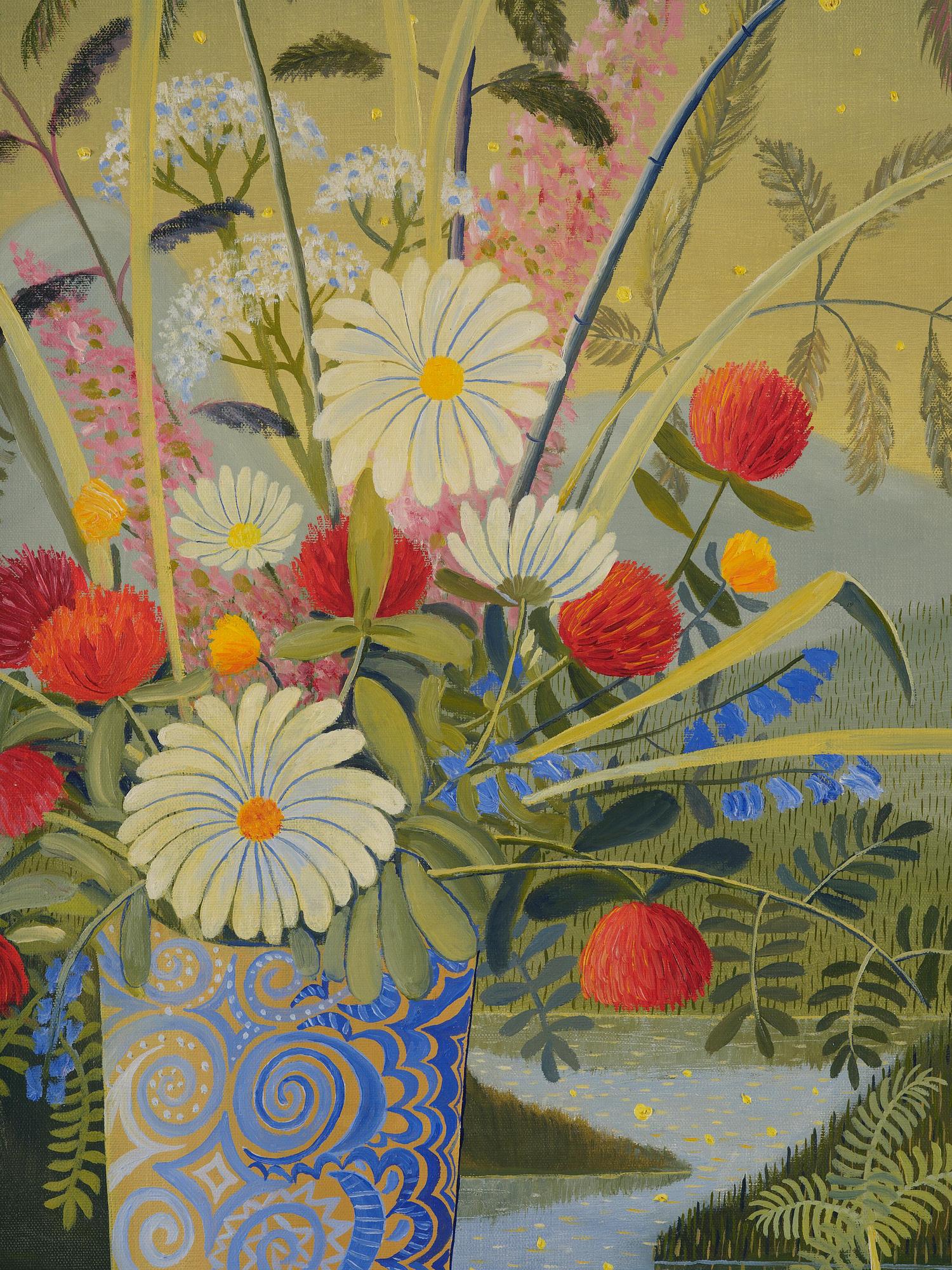
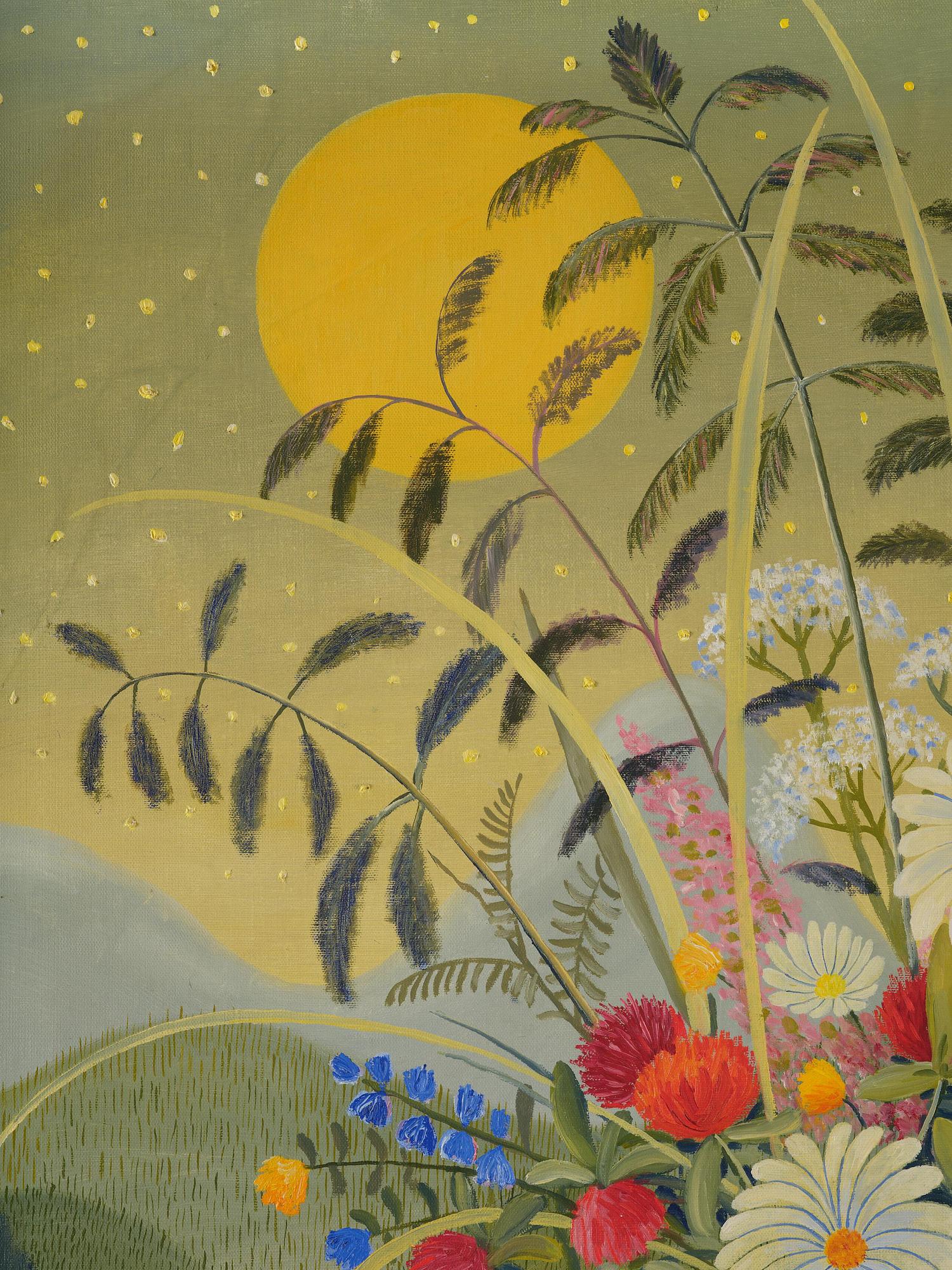
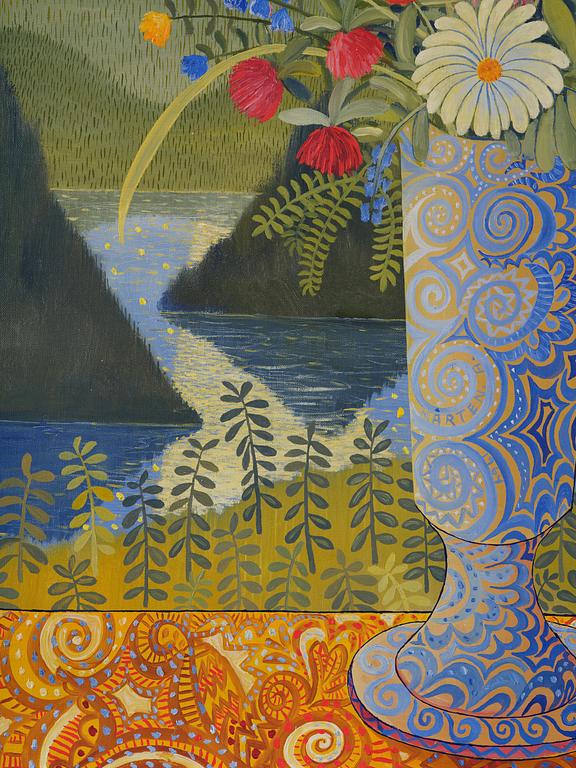
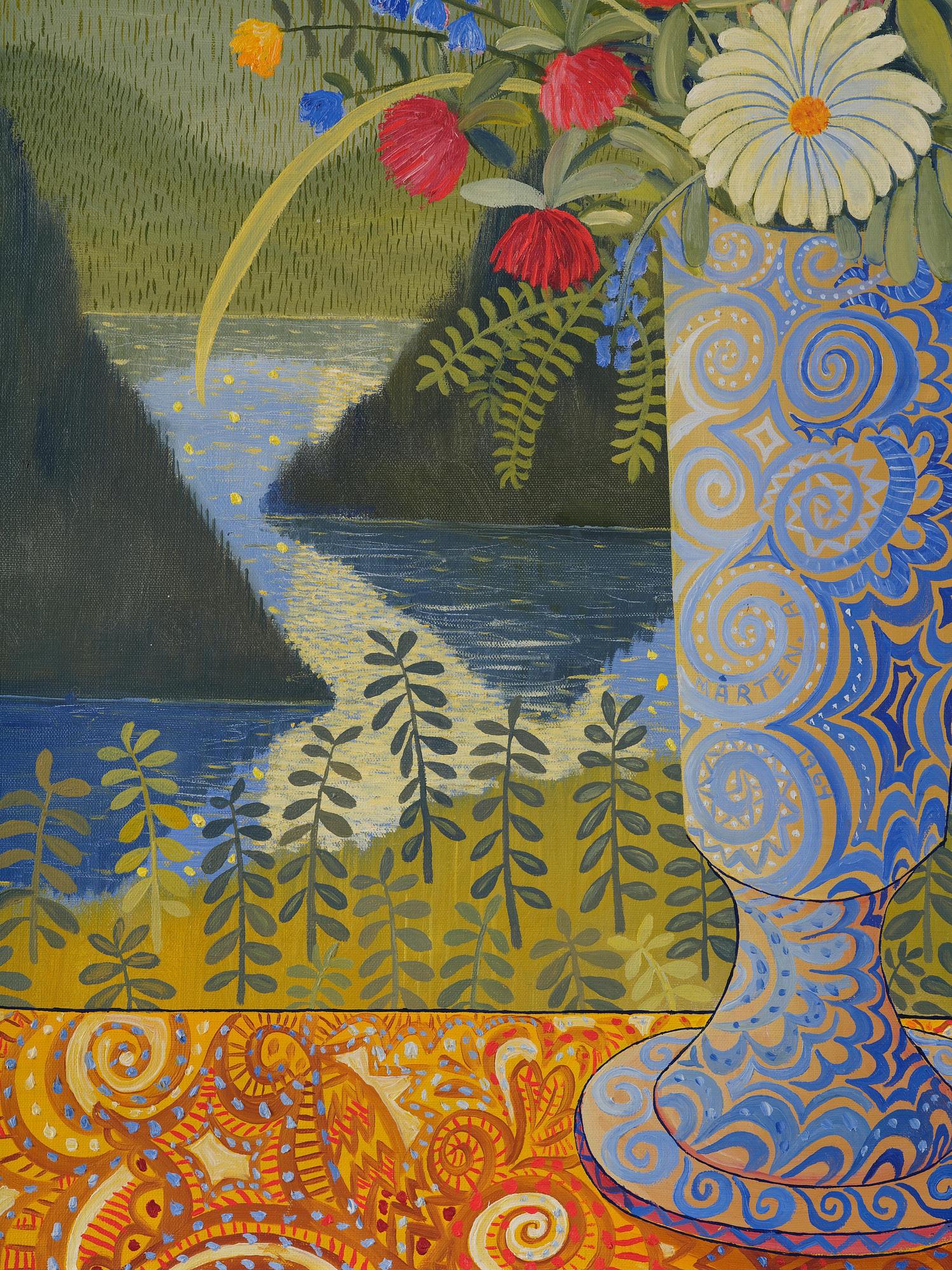
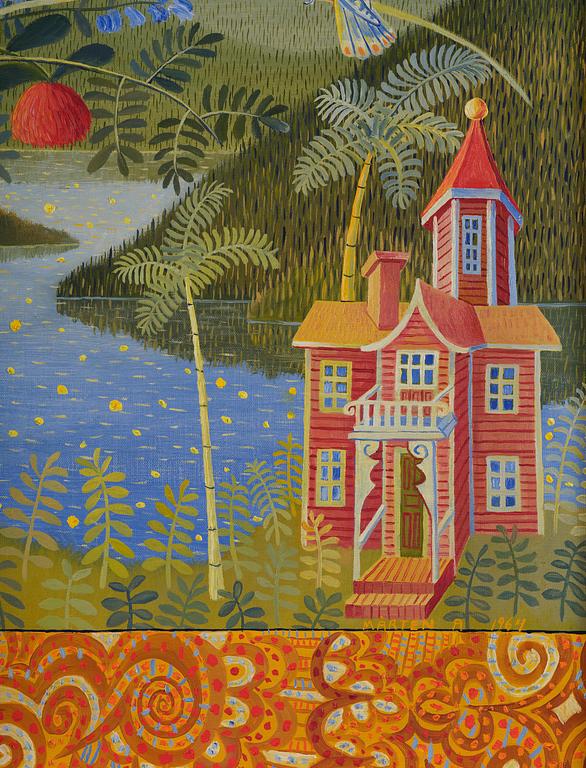
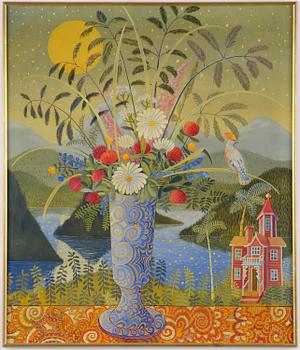
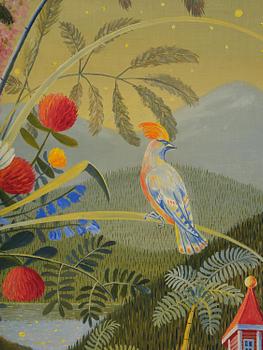
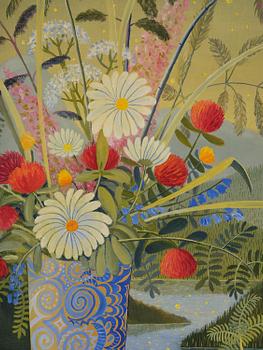
"Sommarblommmor"
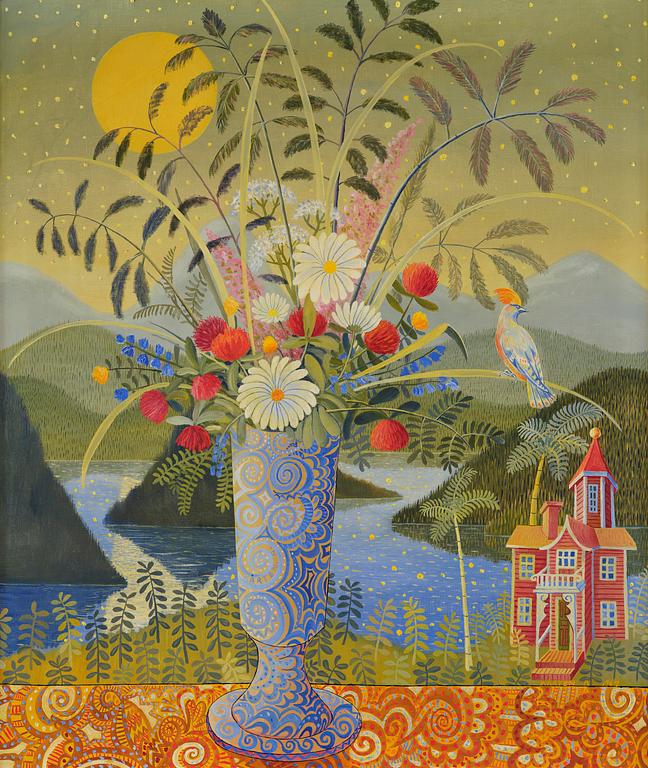
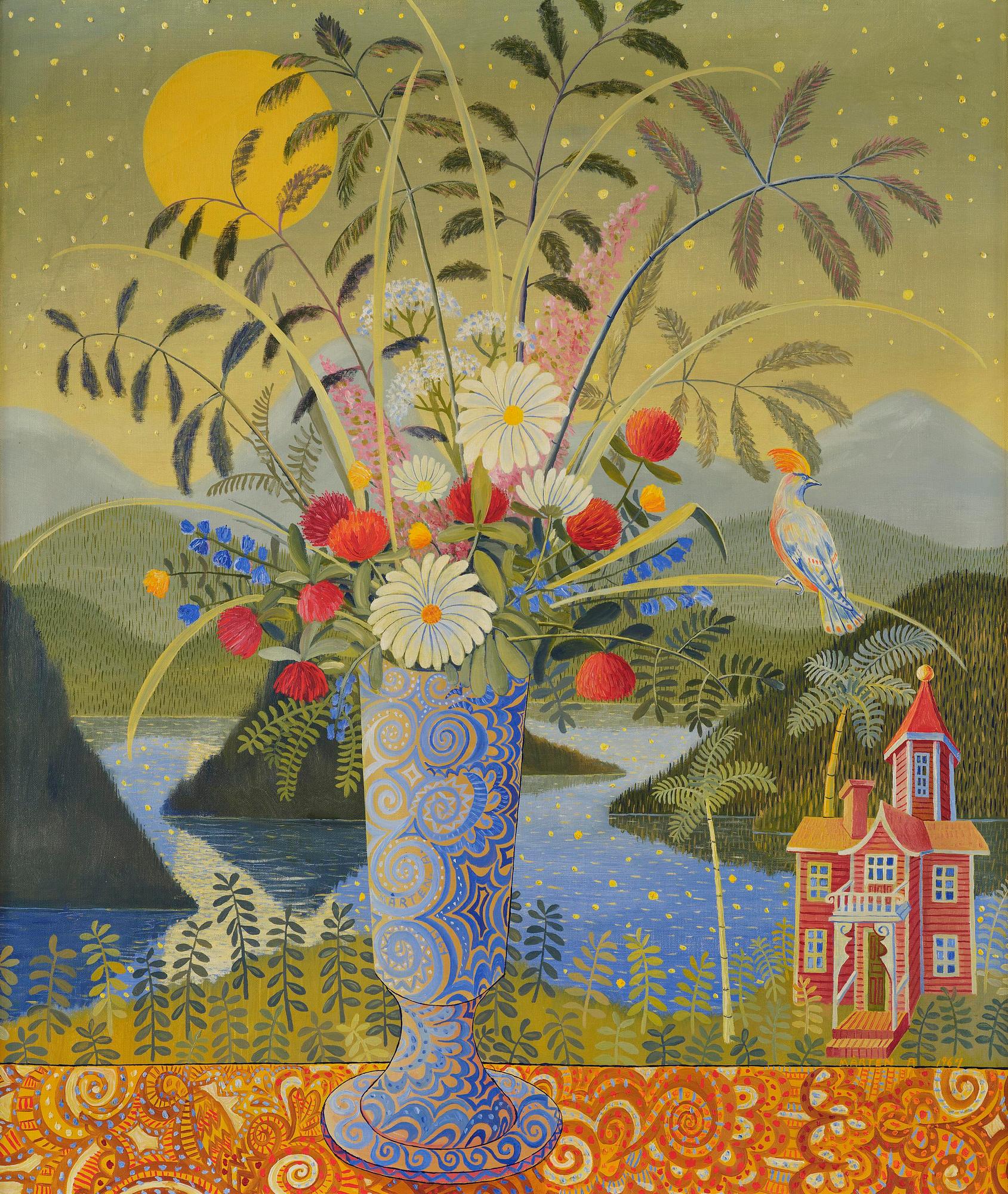
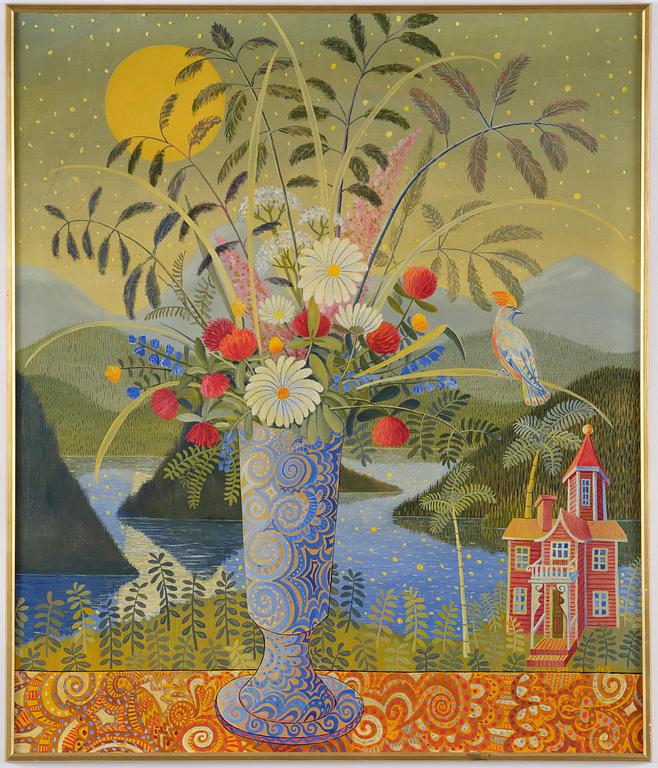
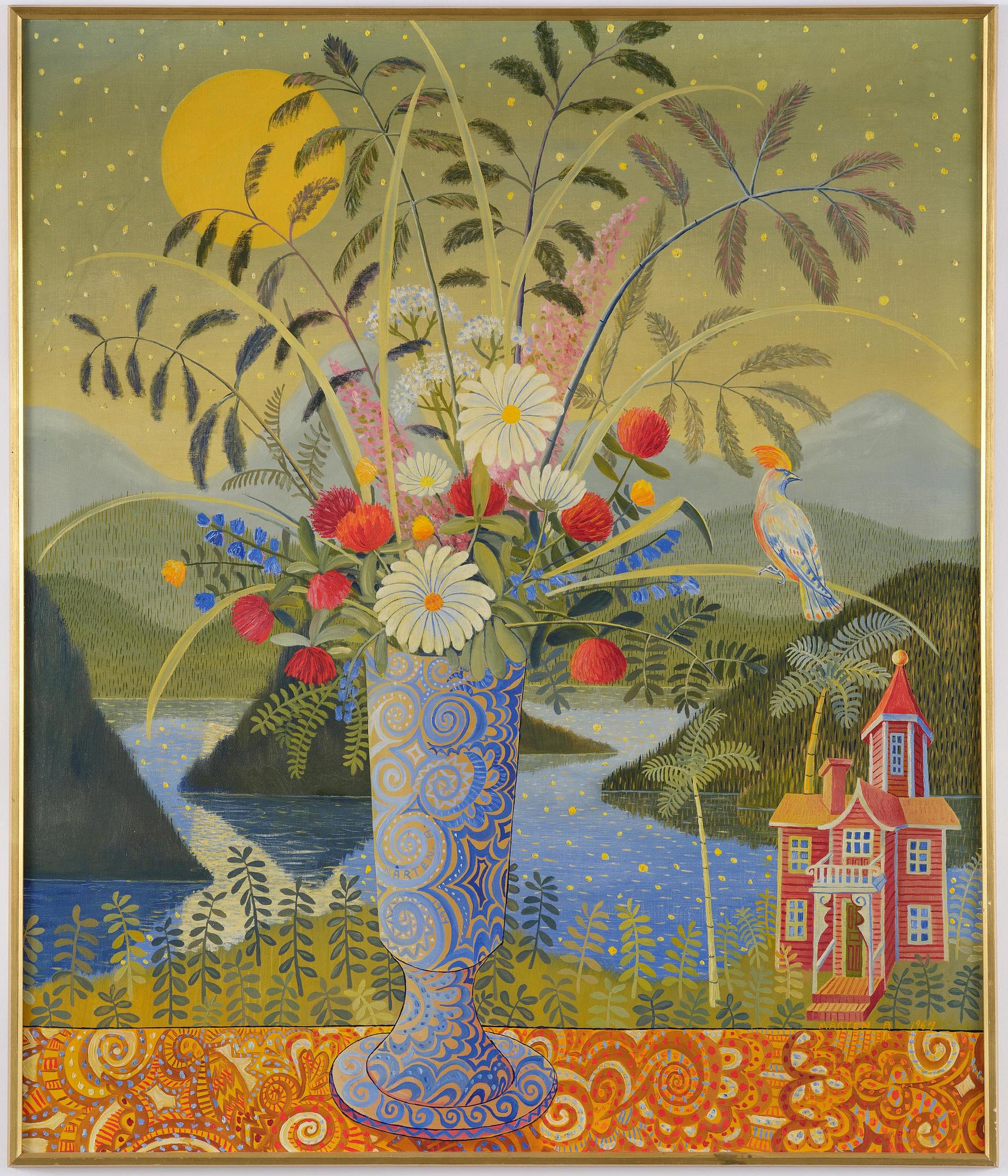
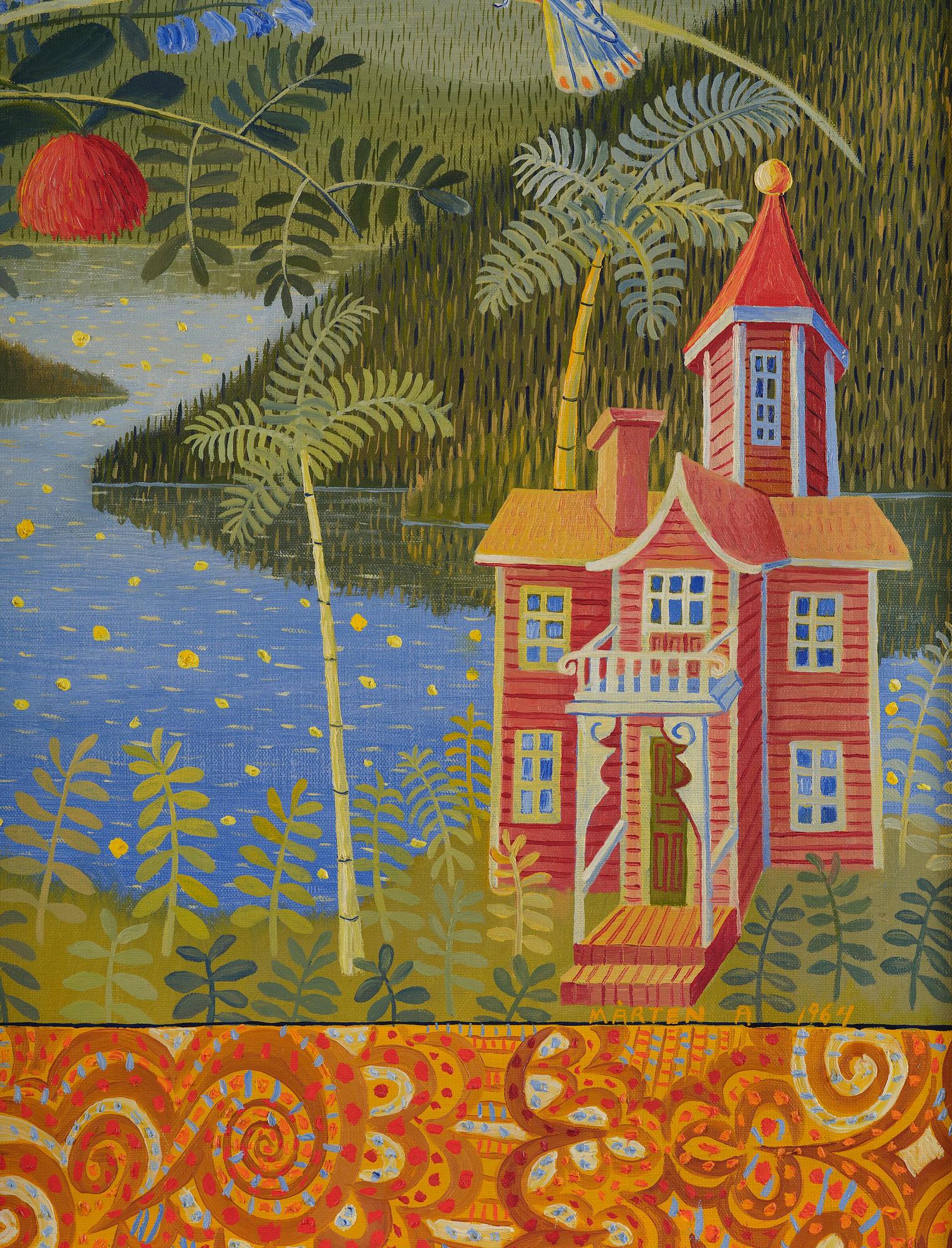
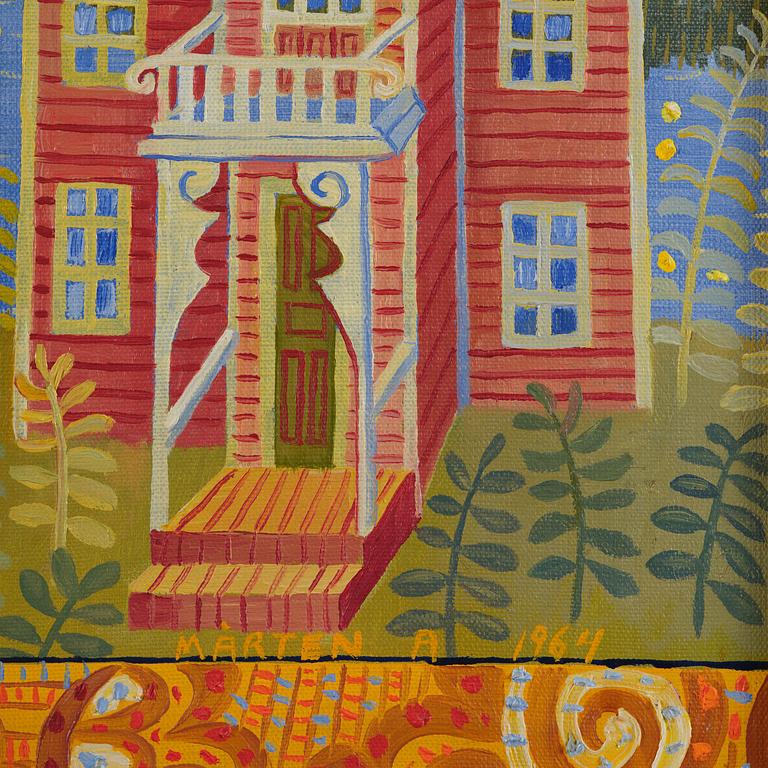
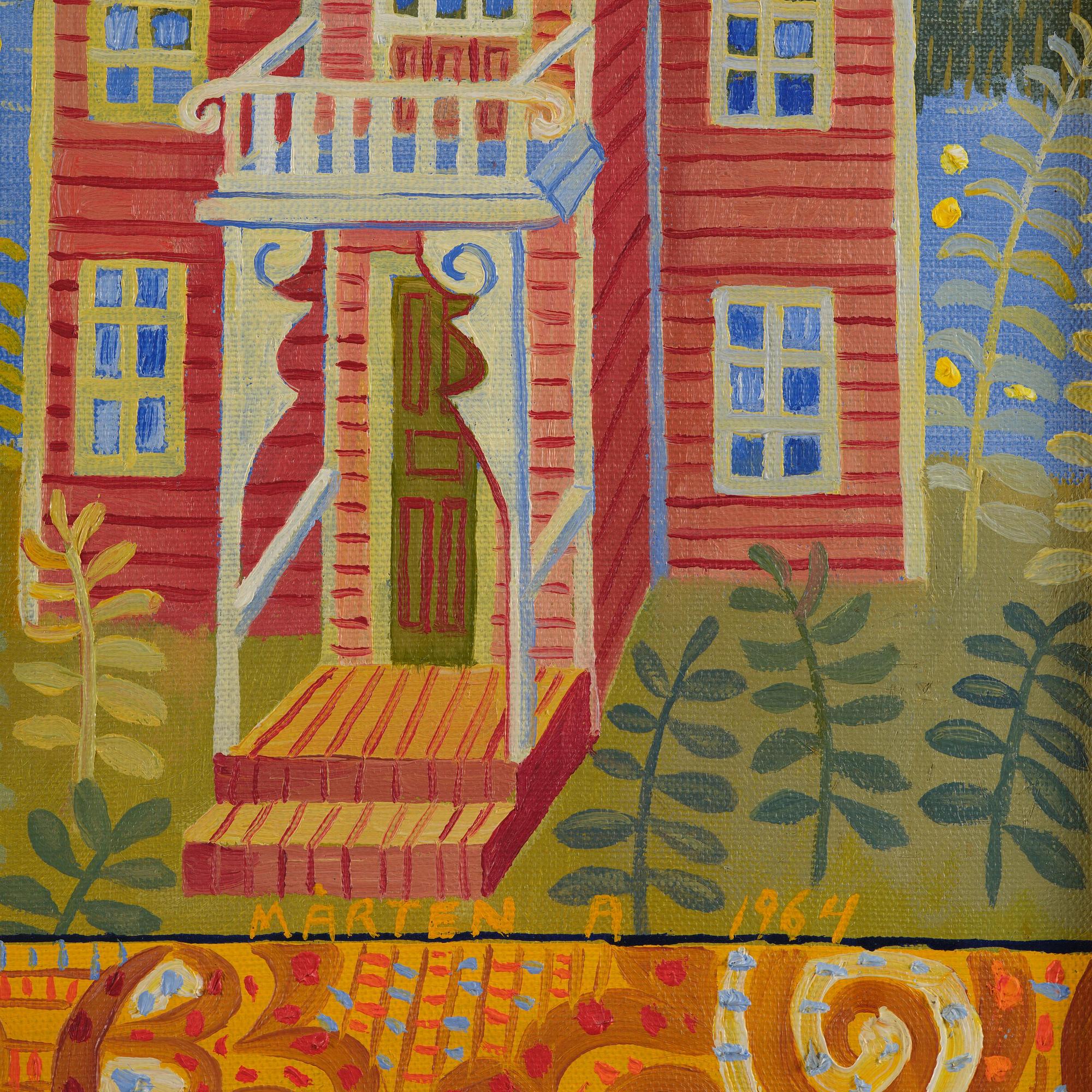
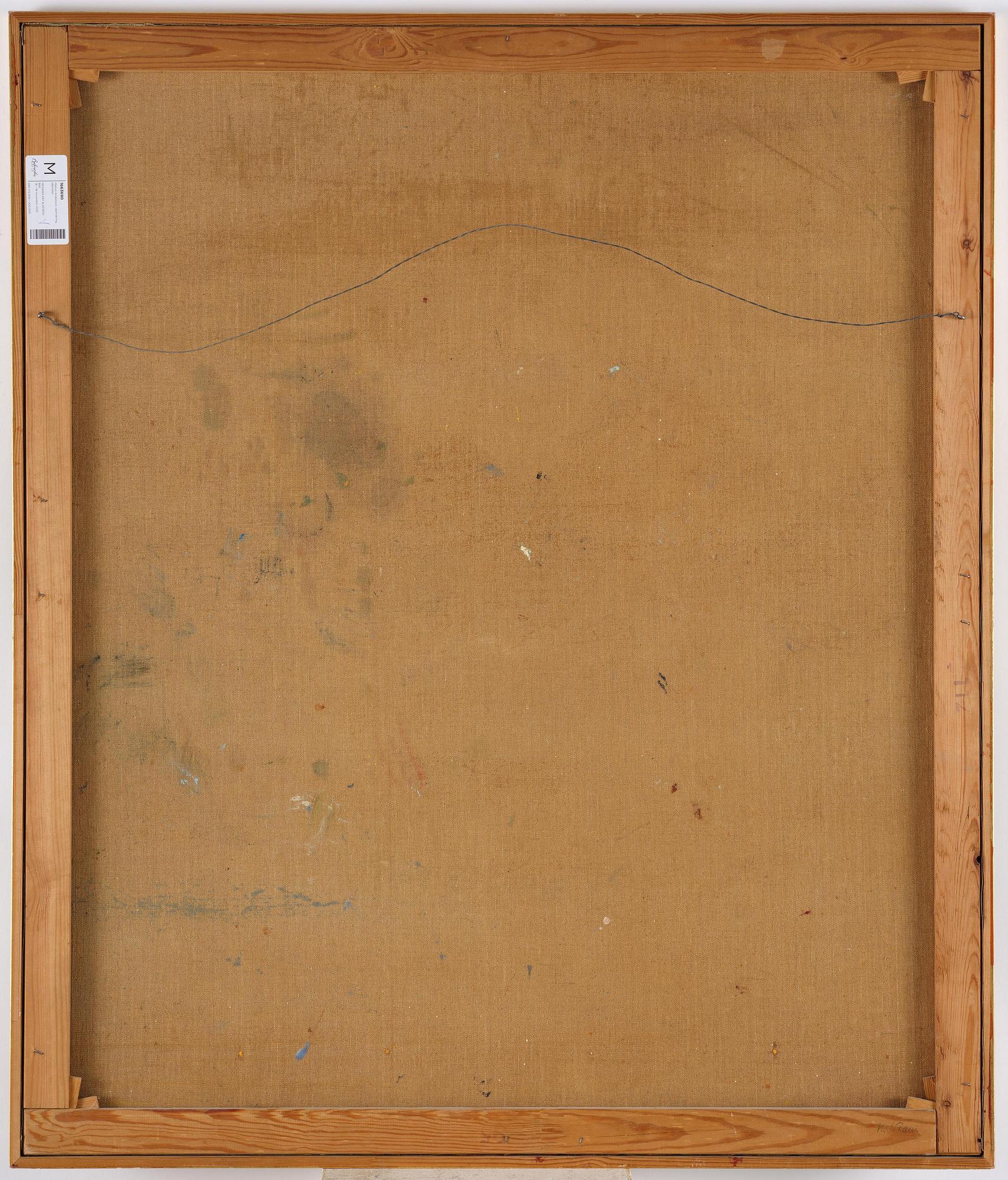
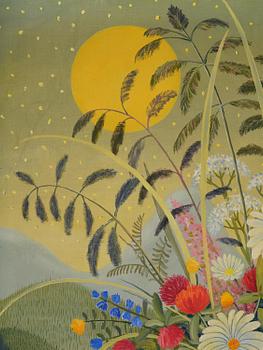
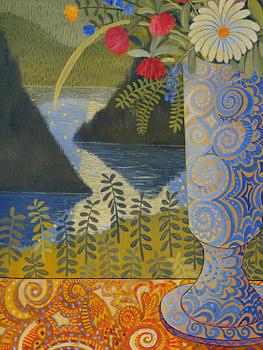
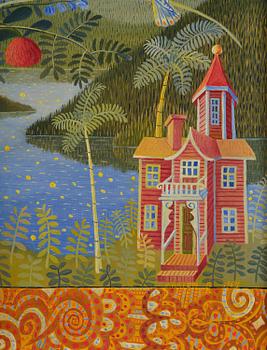
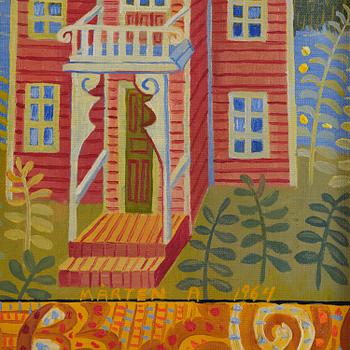
Signed Mårten A and dated 1964. Oil on canvas 112 x 95 cm.
Literature
Teddy Gummers, "Mårten Andersson", 1978, illustrated in black and white p. 33.
More information
Mårten Andersson was born in 1934 in Freluga, just outside Bollnäs in Hälsingland. His father was a freedom-seeking soul who made a living as a carpenter, plank painter, and decorator. He often depicted moose in marshes and sunsets, but since the moose were difficult to capture, his son had to step in early to help. At Söräng school, the teachers discovered Mårten's talent and ensured he could attend a painting course with the Bollnäs artists Per Englund and Fritiof Strandberg. At the age of 18, he moved to Stockholm and enrolled in the Konstfack school of art, , where he stayed for two years. During the summers, he worked with Jerk Werkmäster in Rättvik, an important mentor who guided him towards serious painting.
Together with his friend Lennart Jirlow, Mårten then travelled to Italy and enrolled at the Free Academy in Florence. In Tuscany, he encountered the entire history of Western art and realised that the Hälsingland provincialism, the legacy of the decorative painters, Lim-Johan and Haaken Gulleson, was Sweden's answer to the Italians' Botticelli and Donatello. Italy became a pivotal experience that followed him back to Hälsingland. Once back in Freluga, he found that his world of motifs could be excellently combined with the Italian heritage.
Mårten Andersson's art is characterised by narratives where each painting carries its own story. He plays with interpretations and perspectives that leave the viewer perplexed, while the mystique and the ritual interplay between humanity and nature are ever-present. His colour palette is built on strong reds, blues, and yellows, where even existential solitude glimmers behind the vibrancy of the colours. The boundary between the world of fairy tales and reality is often blurred, and in his motifs, both romantic sweetness and dreamlike surrealism coexist.
Although influences from colourists such as Bror Hjorth, Sven Erixson, and Vera Nilsson can be traced, Mårten Andersson has forged his own path. Like Bror Hjorth, he frequently returns to motifs of dance, music, and above all, his homeland. He understood early on that it was the Hälsingland folk art, the people, and the tales in his vicinity that were his primary sources of inspiration and that simultaneously held something universal and exotic.
More about Mårten Andersson
Mårten Andersson was born in 1934 in Freluga, approximately 10 kilometres from Bollnäs in Hälsningland. His father was a spirited soul and he made a living as a carpenter, painter and itinerant worker. He preferred to paint moose in marshlands with beautiful sunsets , though he cound it hard to paint moose, so his only son had to pitch in early to help. The teachers at Sörängs school realised the young painter’s potential and saw to it that he attended a painting course with Bollnäs artists Per Englund and Fritiof Strandberg.
Upon turning eighteen, Andersson moved to Stockholm and started his studying decorative arts at Konstfack, where he remained for two years. During the summers Andersson worked with Jerk Werkmäster in Rättvik, a crucial influence who showed him the way to becoming a serious painter. After finishing school, Andersson and his friend Lennart Jirlow travelled to Italy and enrolled in the Free Academy in Florence. In Tuscany Andersson discovered the entire history of Western art and realized that the provincialism of Hälsingland and the legacy of folk painters like Lim-Johan and Haaken Gulleson were Sweden's answer to Italian masters like Botticelli and Donatello, among others.
Italy became a defining experience for Mårten Andersson, who returned to Freluga in Hälsingland and found that his subject matter blended seamlessly with his newfound Italian heritage. Each painting Mårten Andersson creates tells its own unique story; he plays with various interpretations and perspectives that leave the viewer somewhat perplexed and uncertain.
For condition report contact specialist

Covered by droit de suite
Image rights
The artworks in this database are protected by copyright and may not be reproduced without the permission of the rights holders. The artworks are reproduced in this database with a license from Bildupphovsrätt.



Others have also viewed