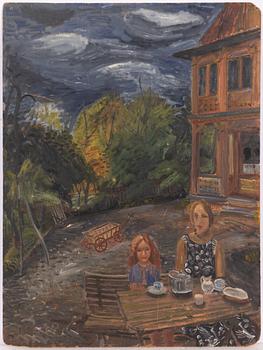
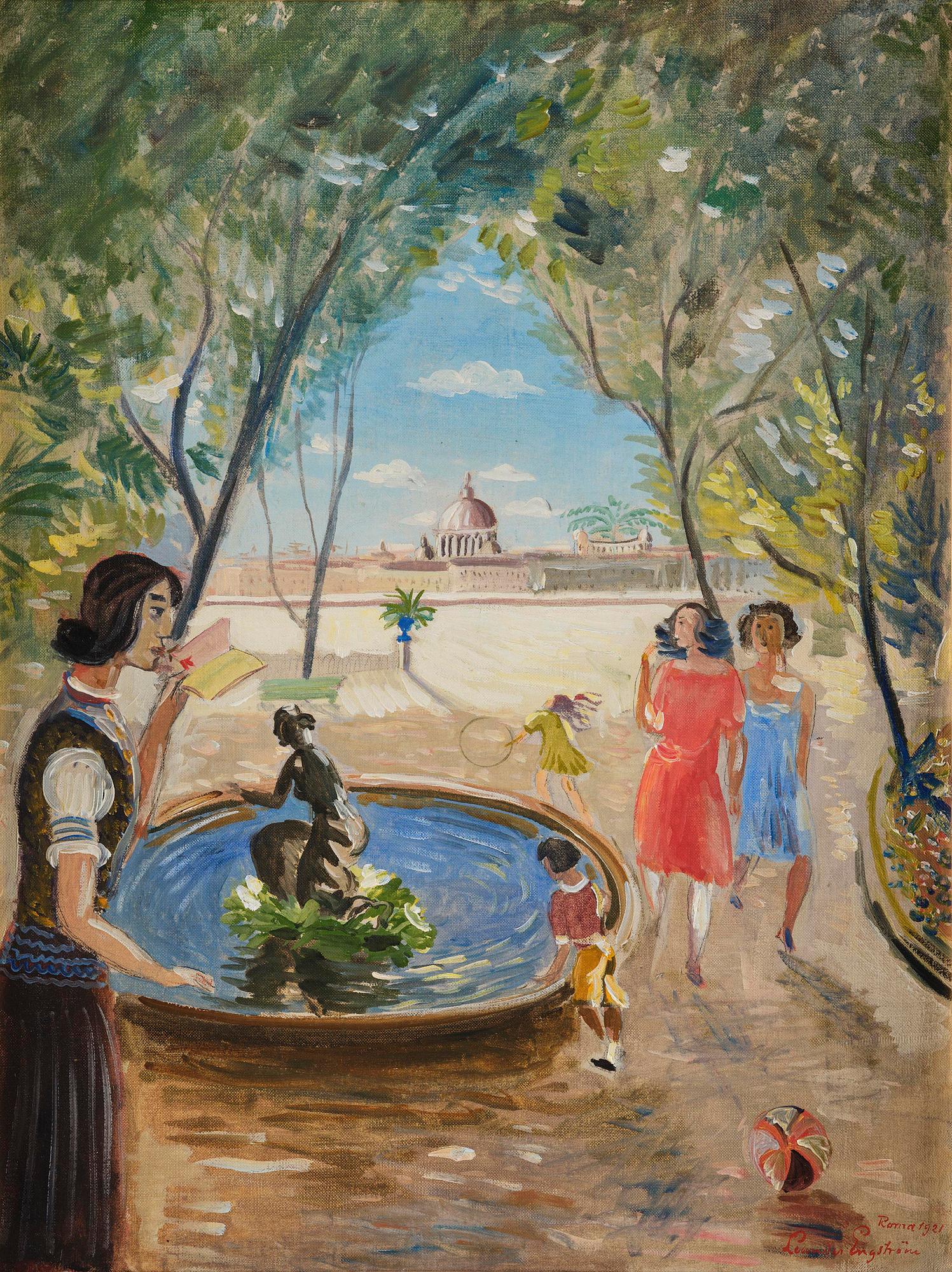
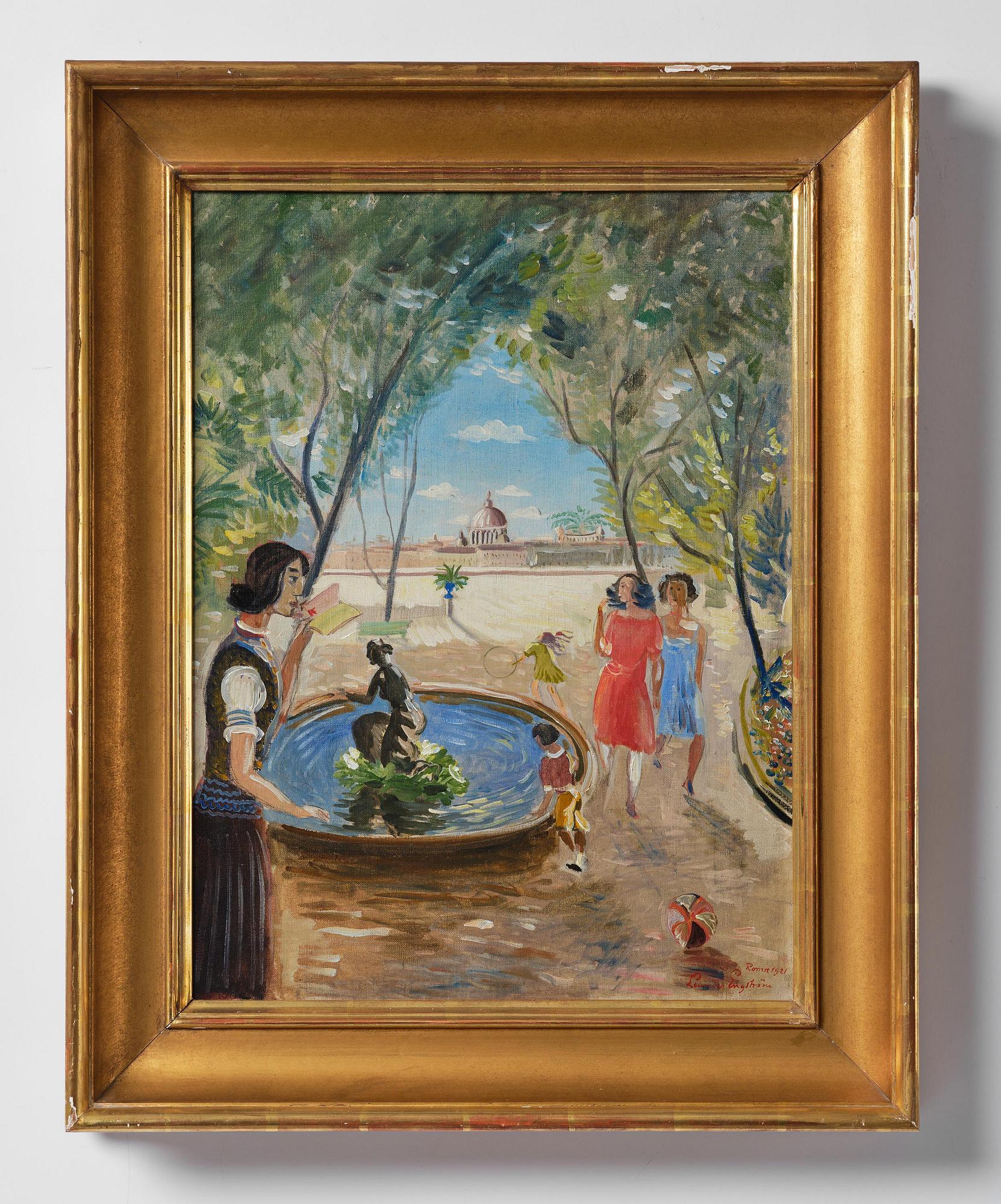
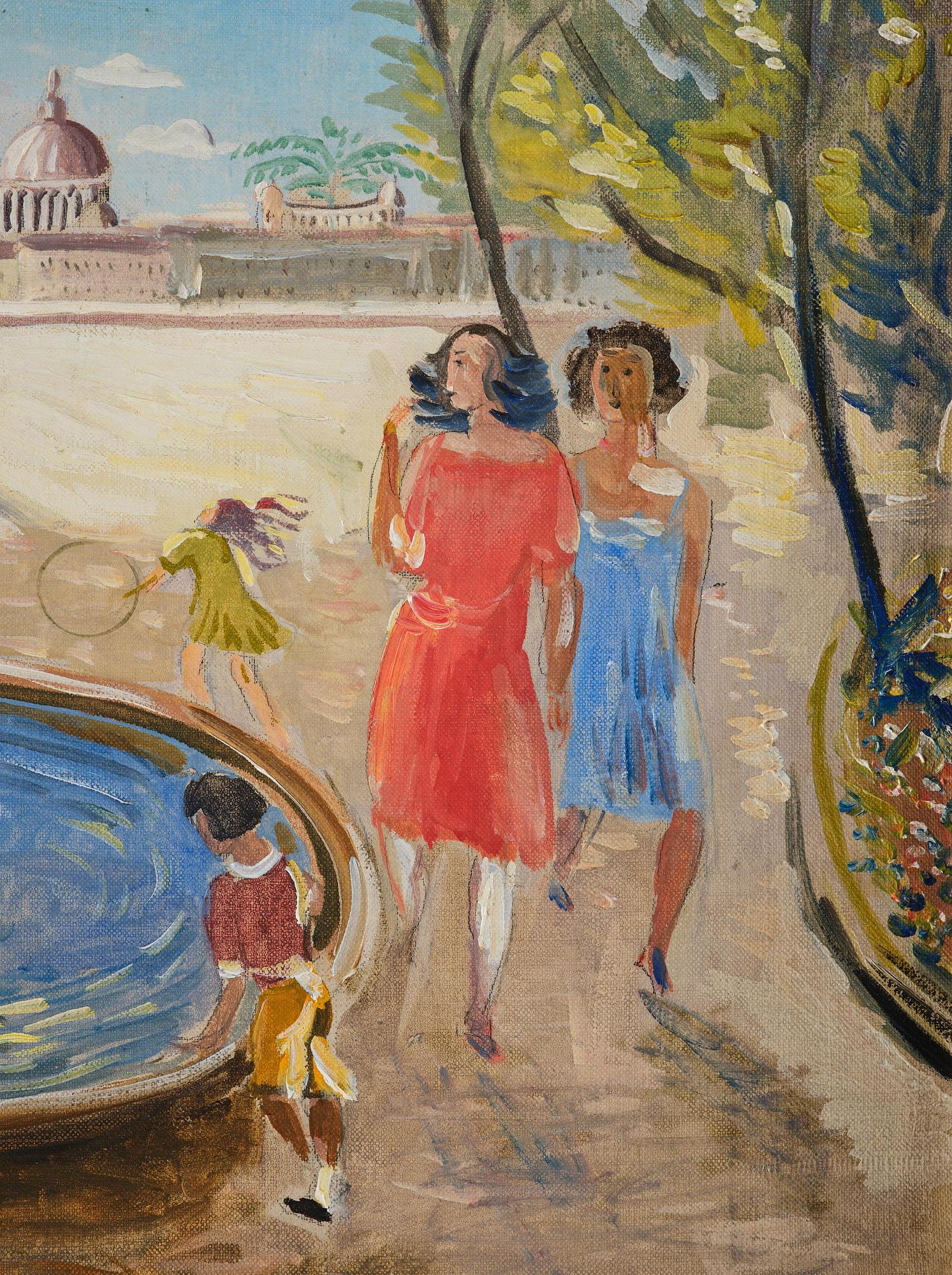
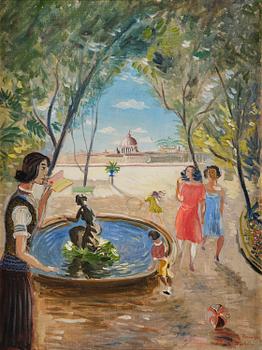
"Parken"
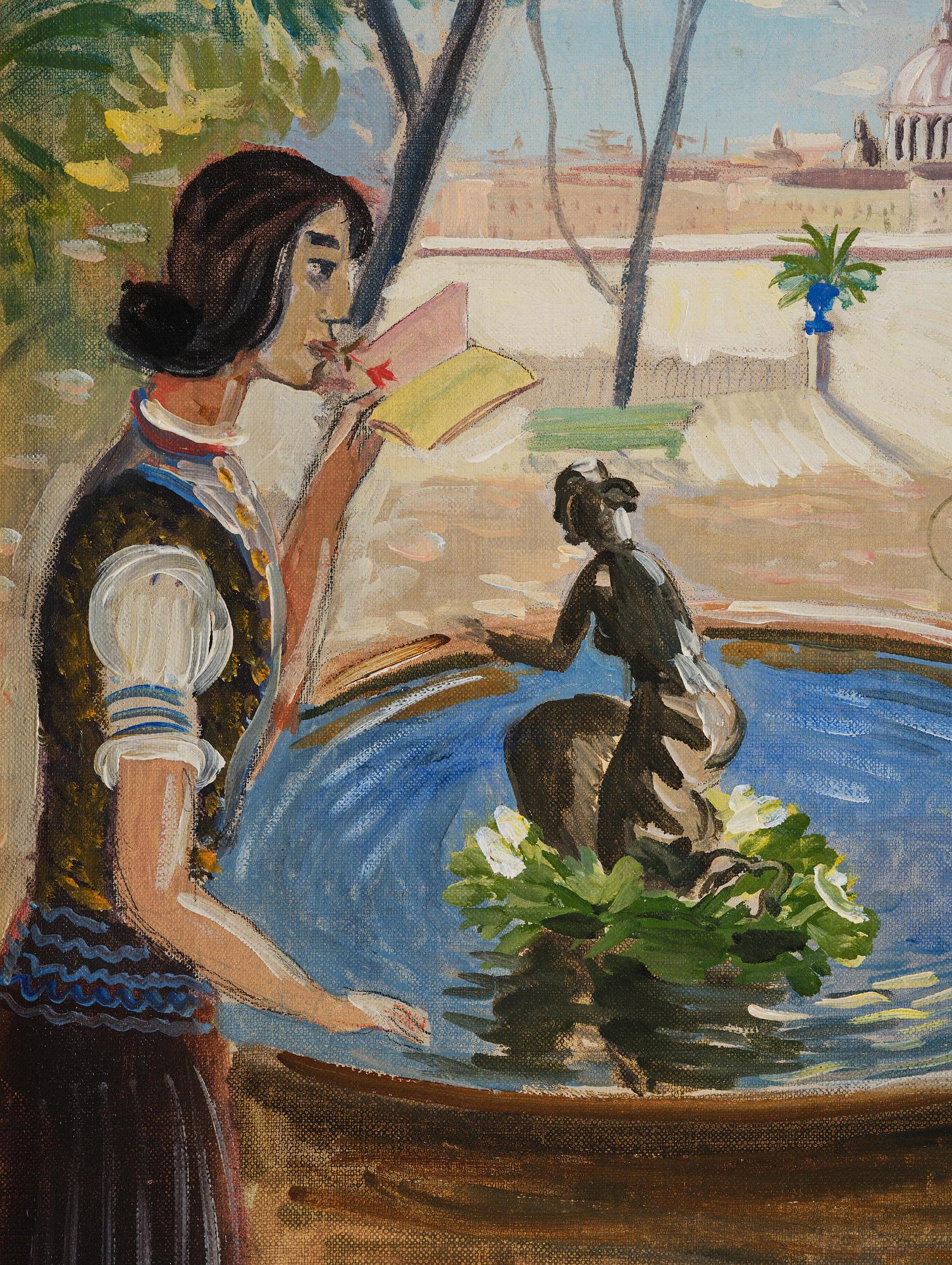
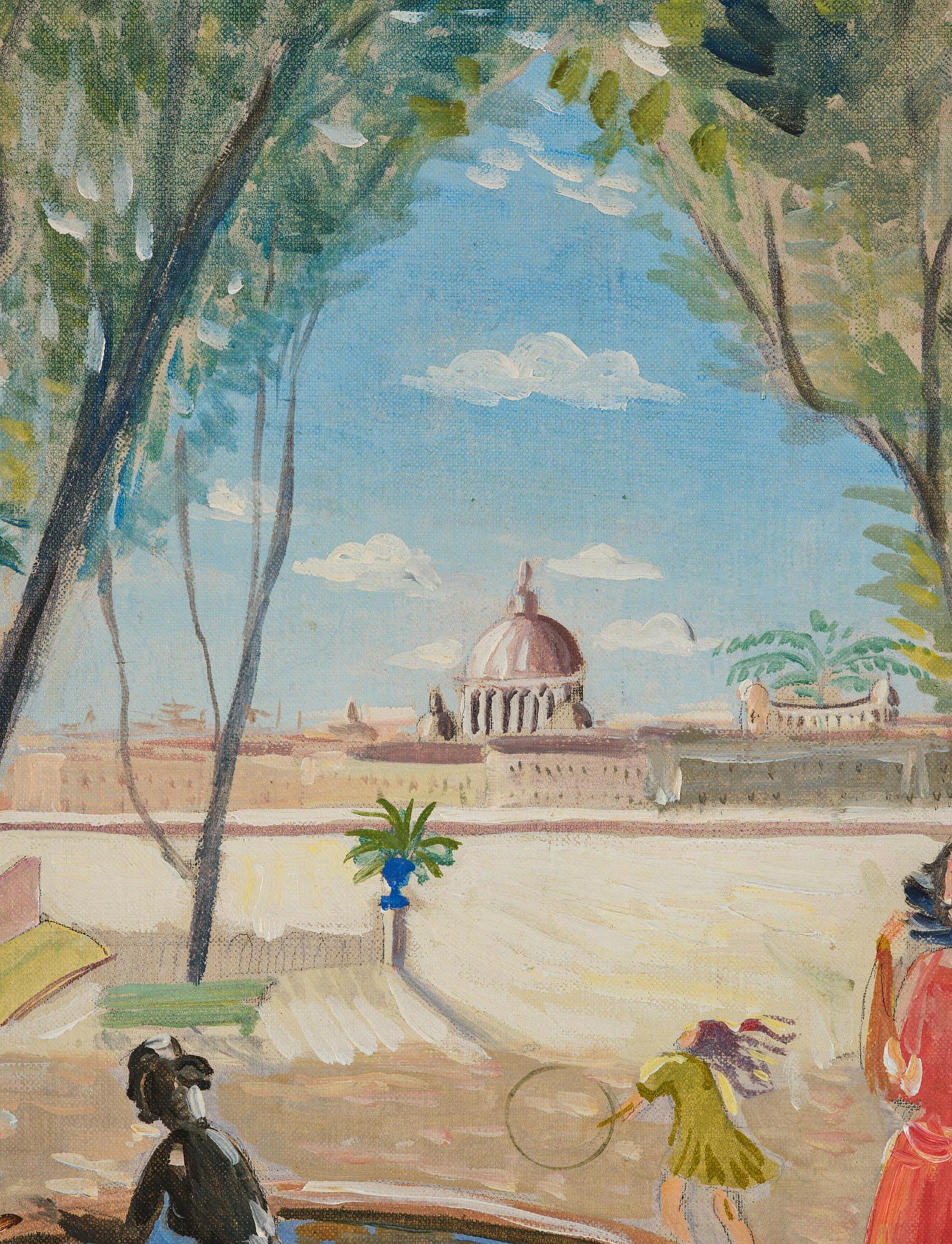
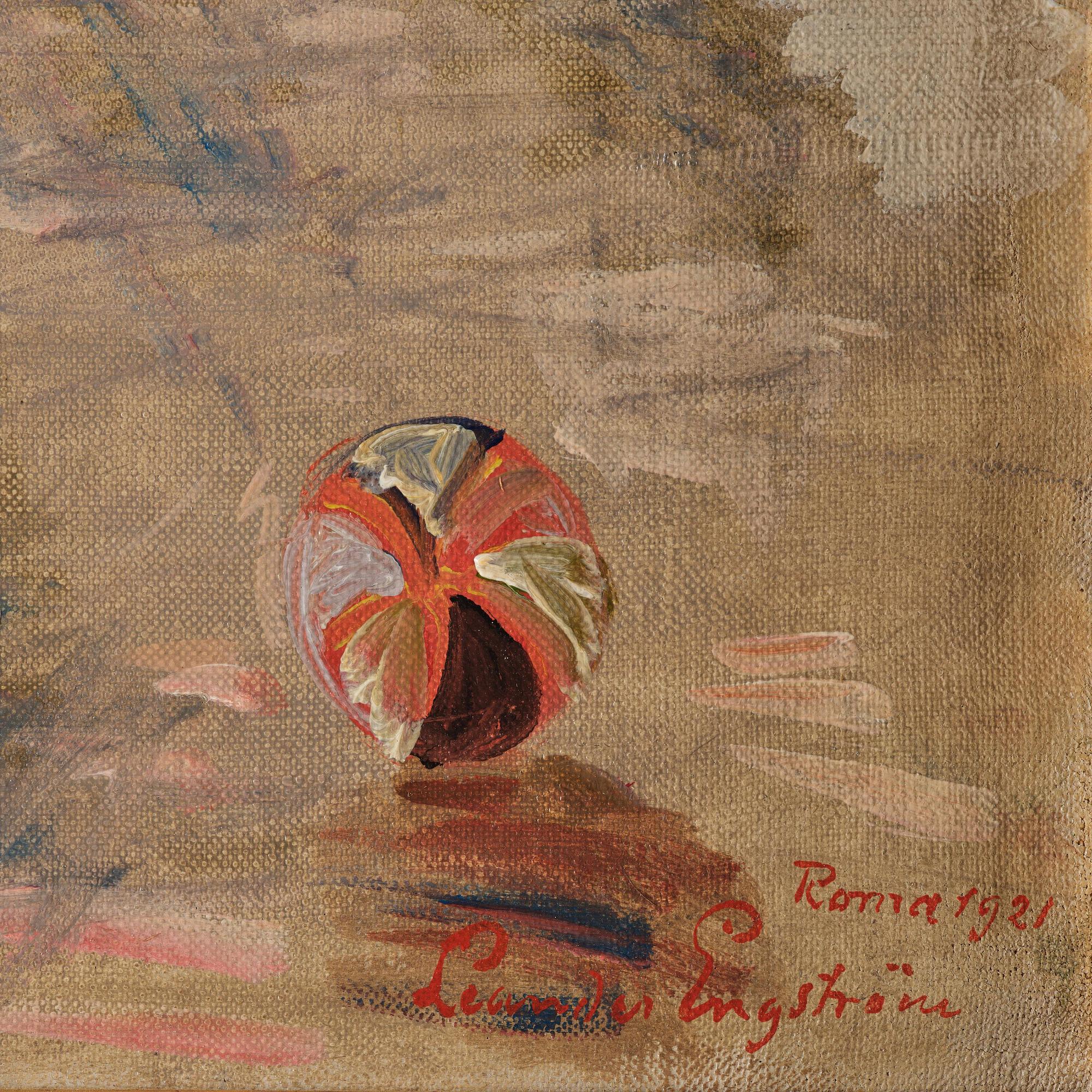
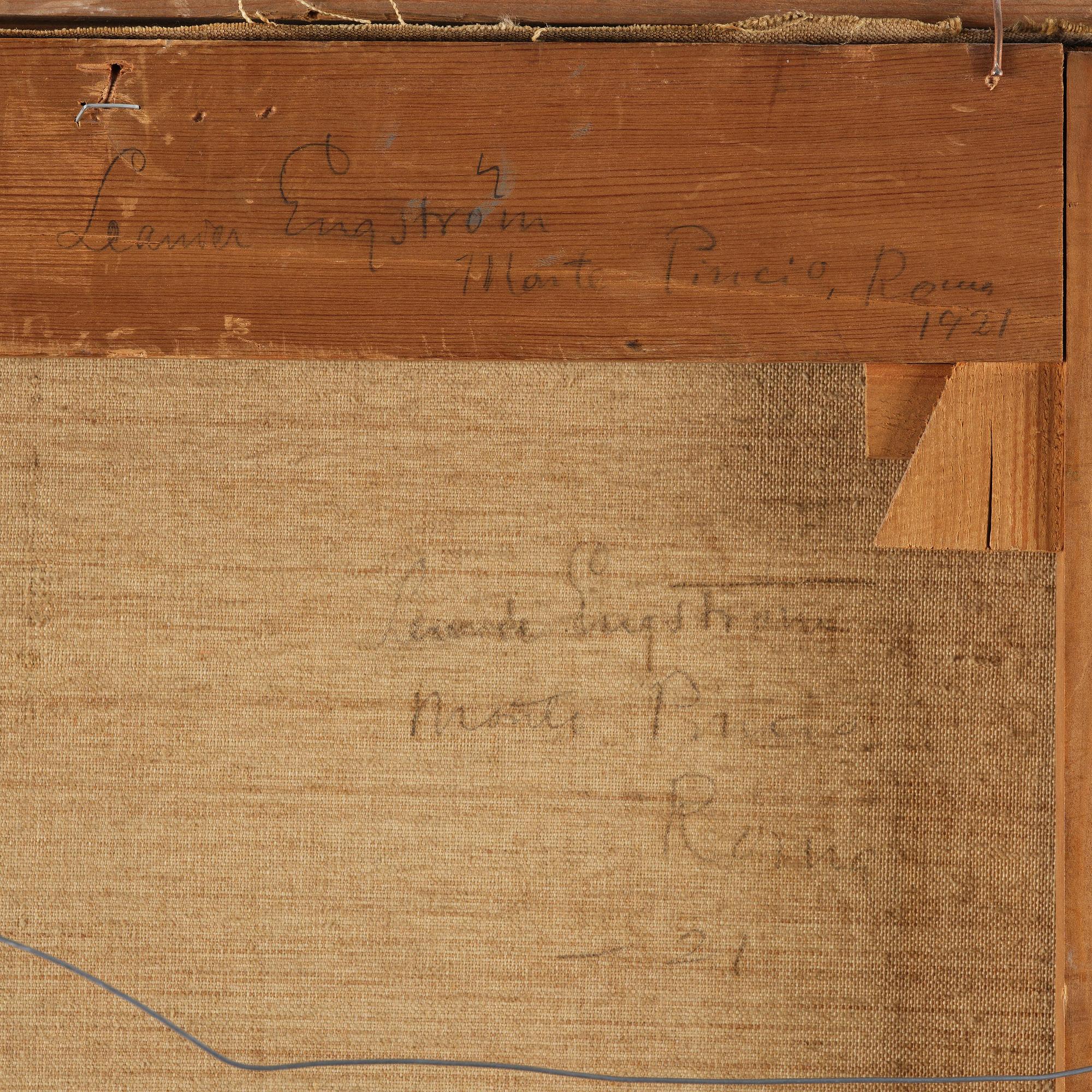
Signed Leander Engström and dated Roma 1921. Oil on canvas 61.5 x 46 cm.
Provenance
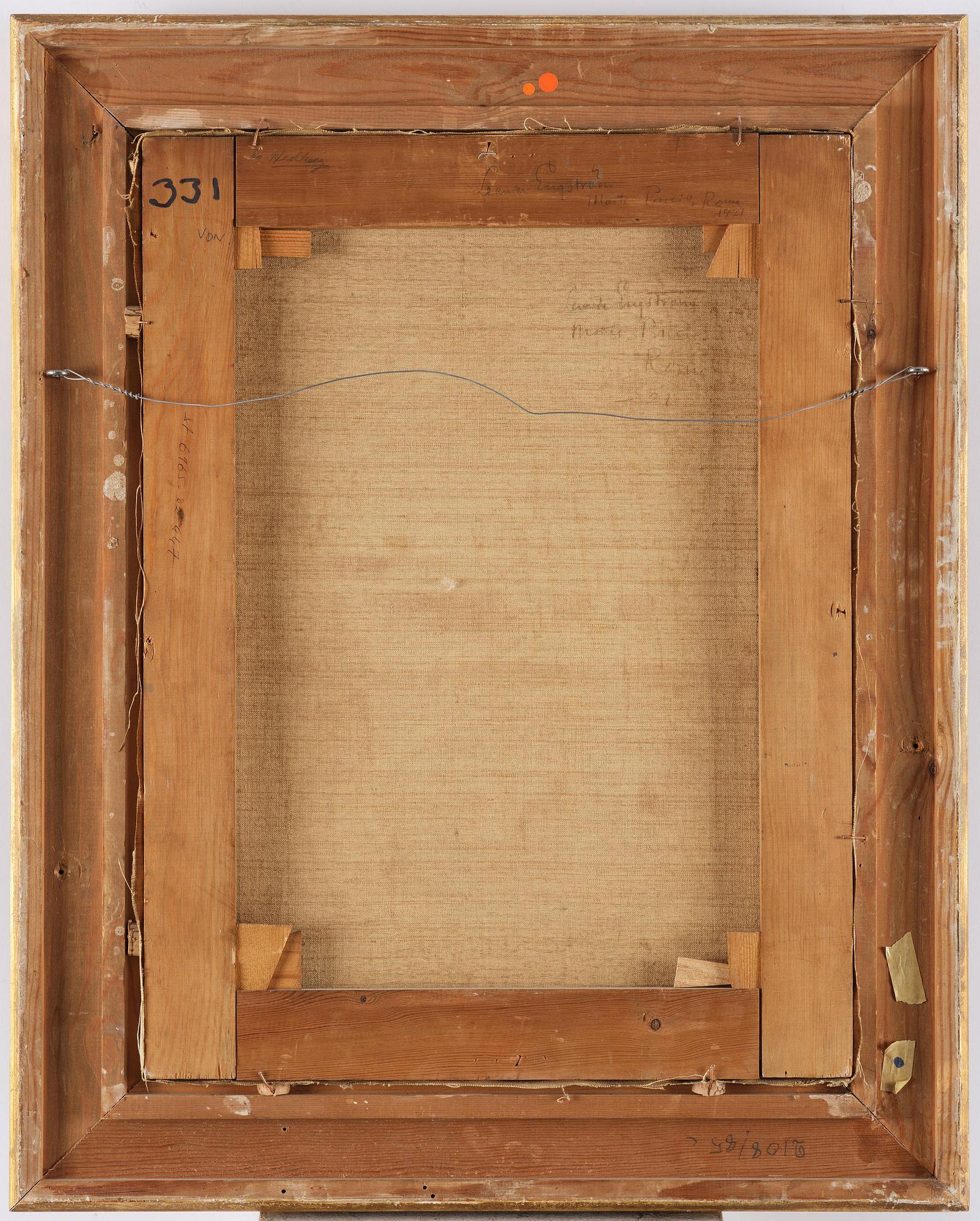
Previously in Doctor Gustaf Hedberg's collection.
Literature
Nils Palmgren, "Leander Engström", 1939, illustrated p. 91.
More information
Leander Engström occupies a unique position in Swedish art history as one of the most vibrant and temperamental expressionists of the early 20th century. Born in Ytterhogdal in Härjedalen and raised in the northern landscape, Engström carried with him a strong sense of the grandeur and drama of nature—something that would become a fundamental motif in his artistic career. He studied at the Artists' Association School in Stockholm and subsequently moved to Paris, where he came into contact with the Swedish artist circle around Matisse in 1911. It was also there that he encountered the possibilities of colour as a means of expression—a discovery that would deeply influence him.
Back in Sweden, Engström became one of the key figures in the young generation that exhibited at the legendary De Unga exhibition in 1909 and later at the Expressionist exhibition in 1918.
Particularly well-known are his motifs from Tornedalen, where he found an inexhaustible source of inspiration. The northern mountains, Sami people, reindeer herding, and the shifting Arctic light are depicted in works that pulse with life and presence. At the same time, Engström often travelled—to Italy, France, and Spain—and these journeys introduced new dimensions to his art: the variations of light, urban motifs, architecture, and new cultural impressions.
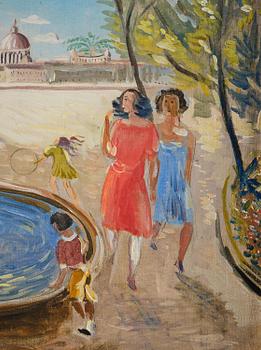
"Parken," his work from 1921, painted in Rome, is a clear example of Leander Engström's ability to unite Nordic temperament with Southern European light and atmosphere.
More about Leander Engström
Per leander Engström was a Swedish visual artist born in Ytterhogdal. He studied under the tutorship of Henri Matisse in Paris and the artists association school in Stockholm. Engström was part of the artistic group De Unga together with none other than Isaac Grünewald and Tor Bjurström. Engström was greatly inspired by Paul Gauguin, Vincent van Gogh and Paul Cézanne. Leander Engström followed in Osslund's footsteps and was captivated by Lapland's overwhelming natural scenery, which he depicted using the forms and colors of Fauvism. His paintings from 1912-15 - landscapes, still lifes, nude scenes - are harmonious and emotional, built upon Cézannes principles of discrete, weak colours. The years between 1916 and 1919 kan be understood as his most expressionistic period. Sweeping lines, large stylised planes and bright strong colours dominated his characteristic style. Engström found himself in Italy between 1920 and 1922 where he studied the early Rennaissance; it was during this time that he neared new objectivity. Leander Engström was one of Matisse's most impressive pupils.
Read moreFor condition report contact specialist












Others have also viewed