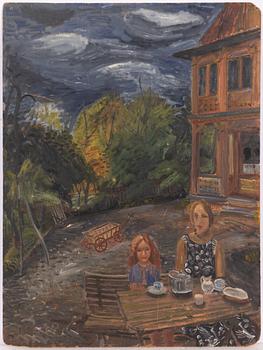
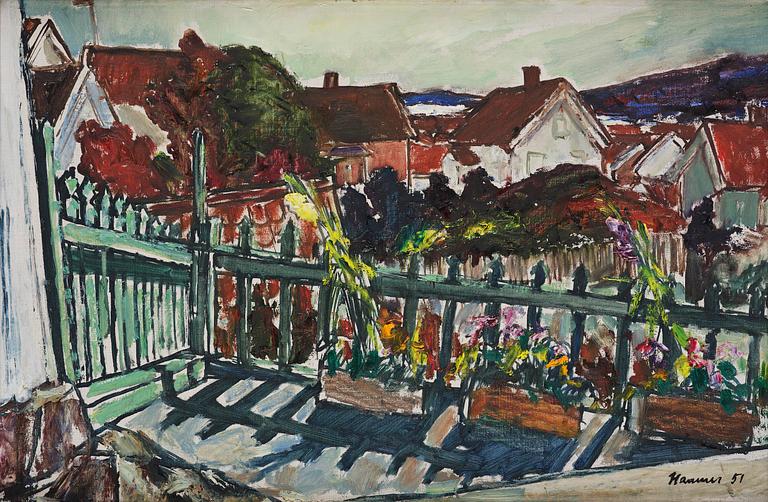
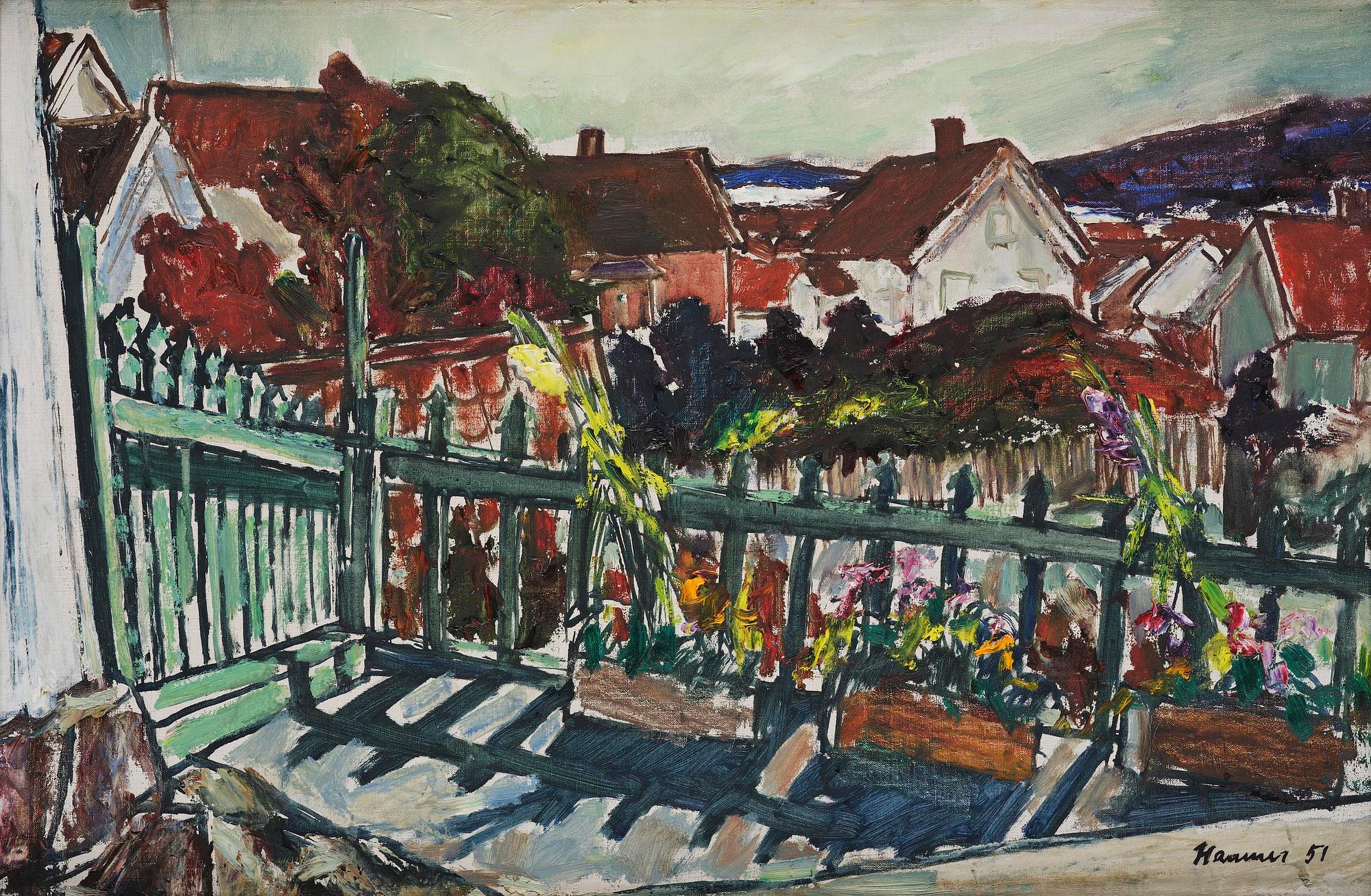
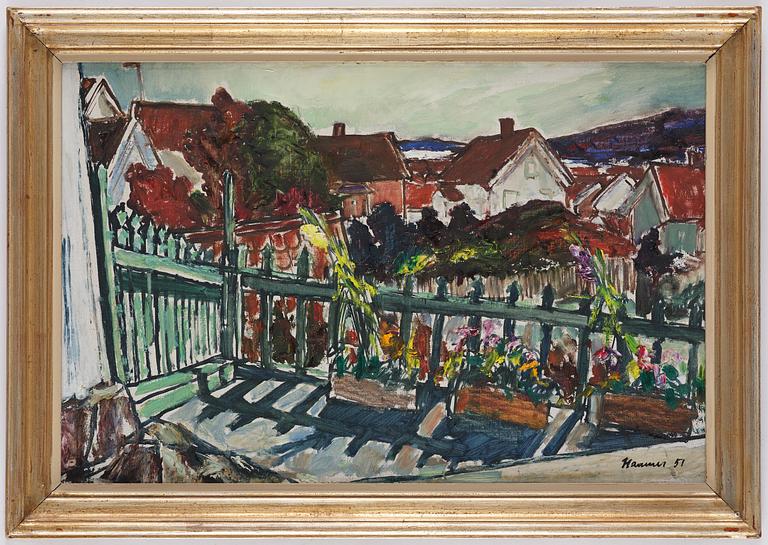
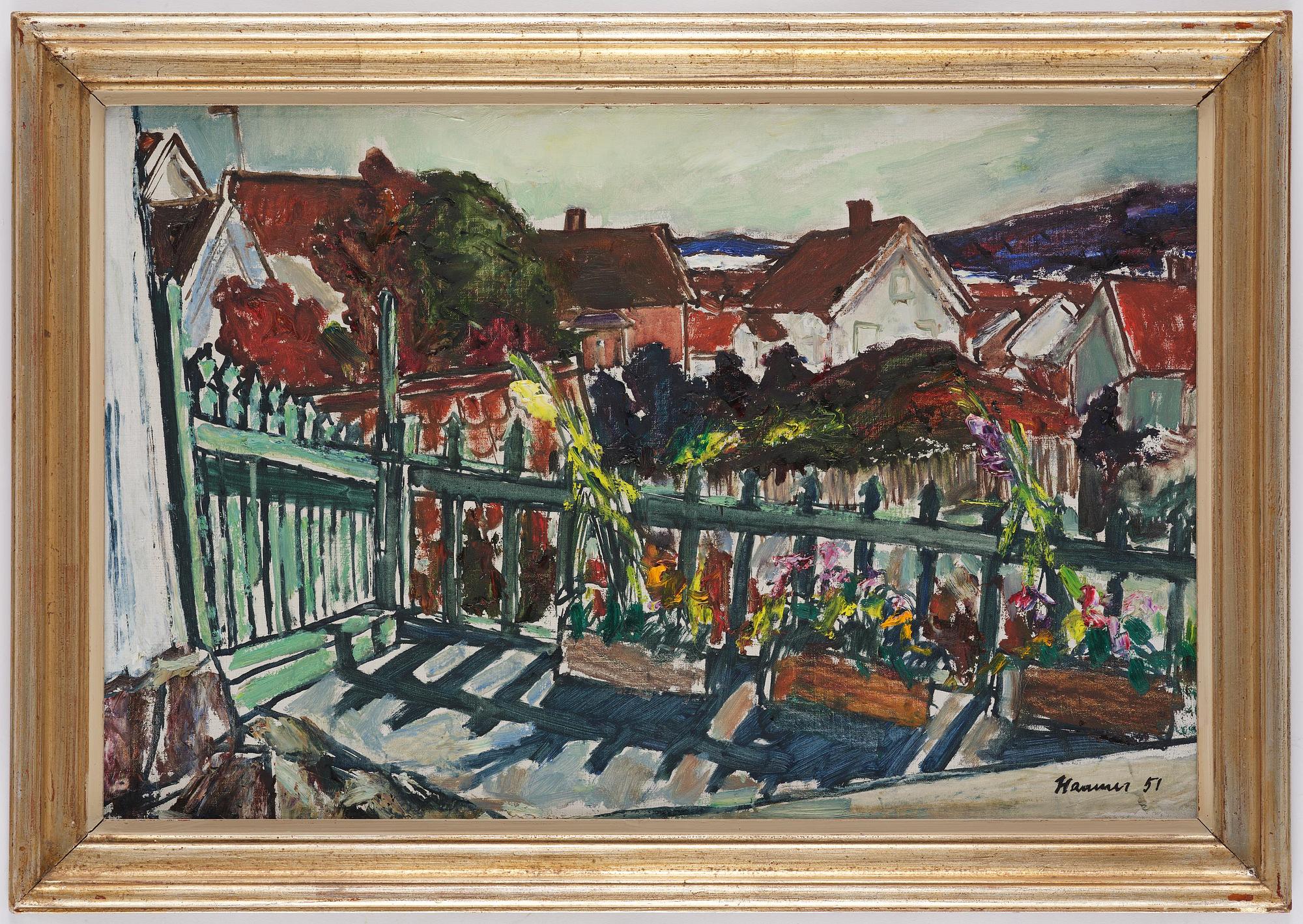
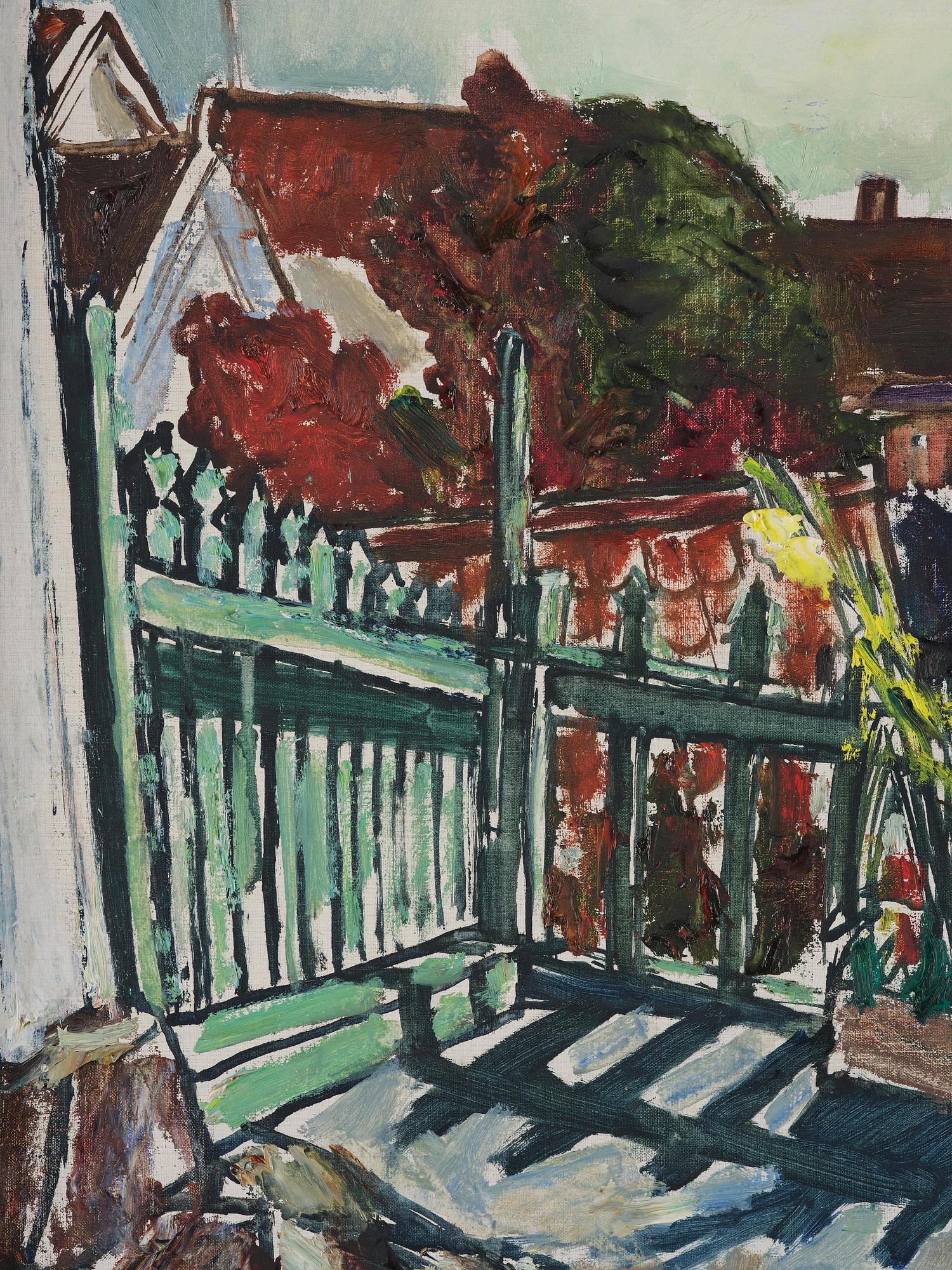
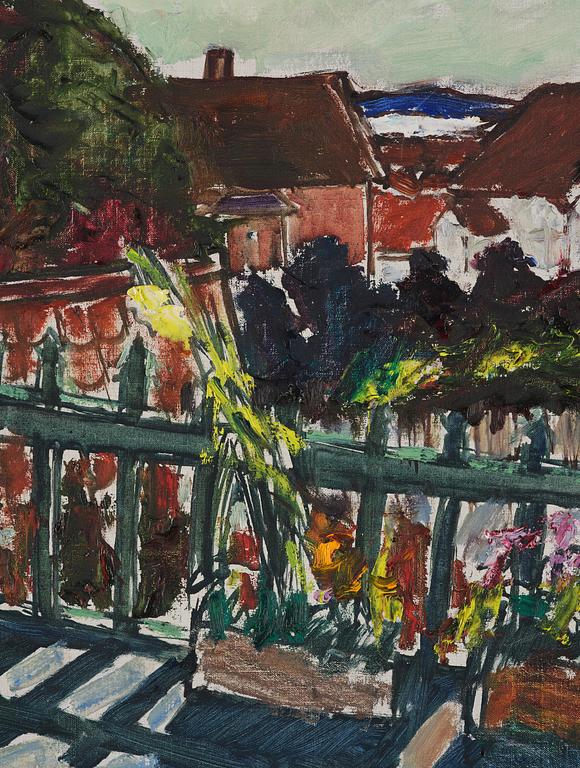
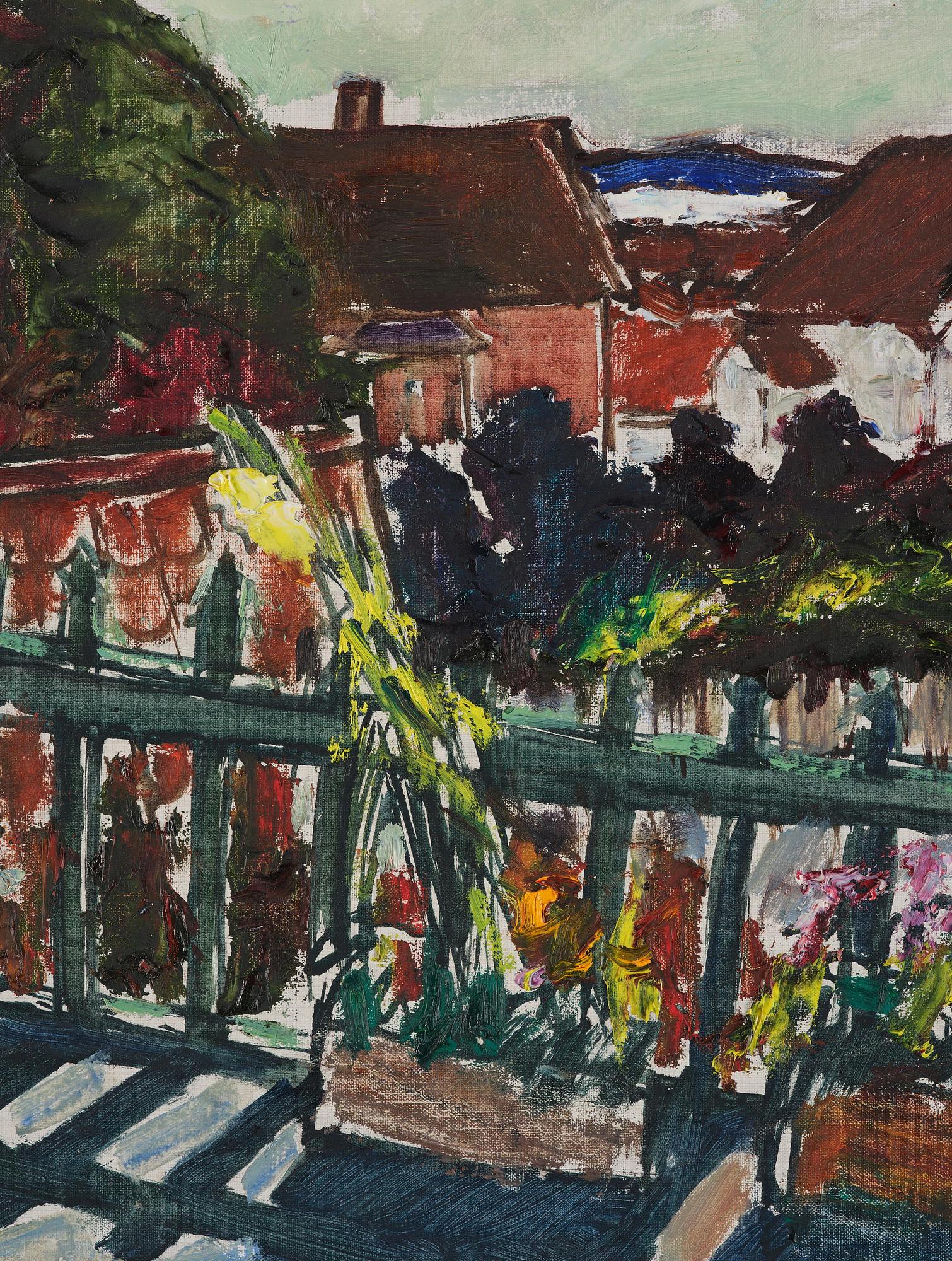
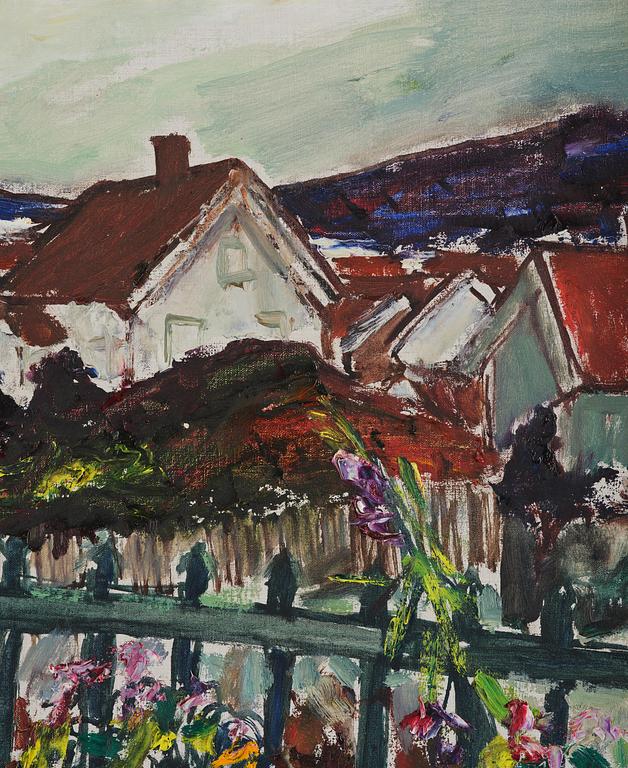
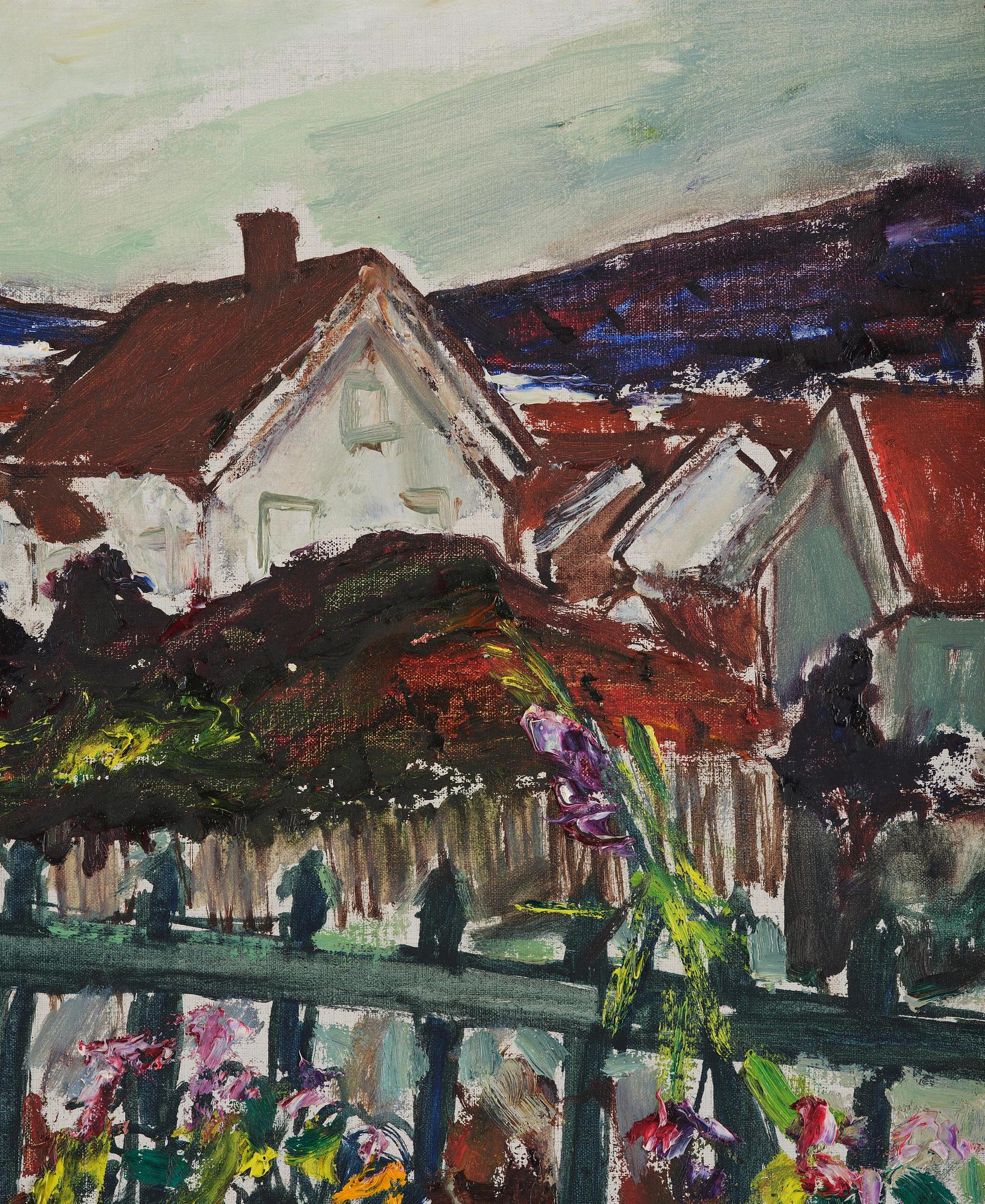
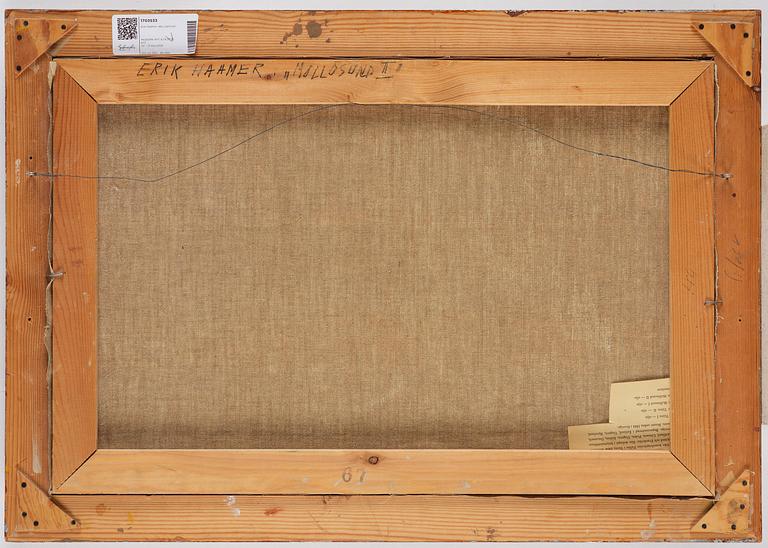
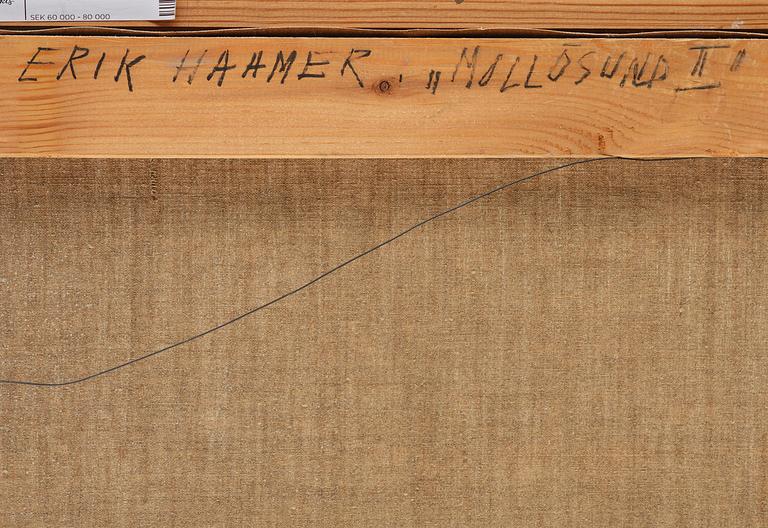
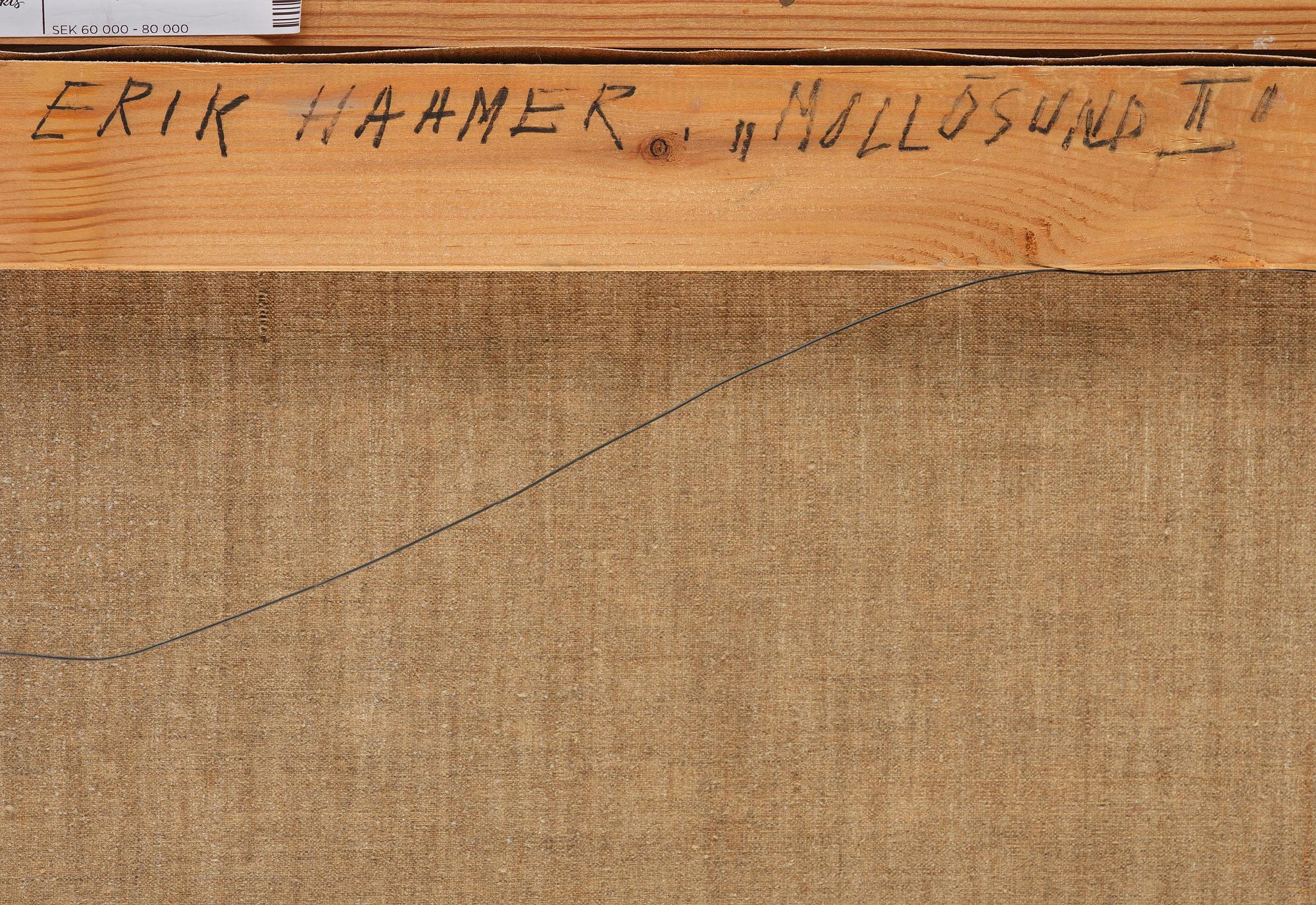
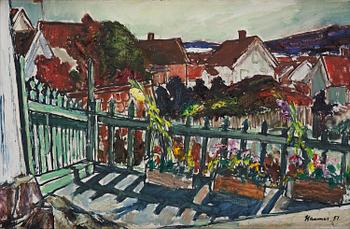
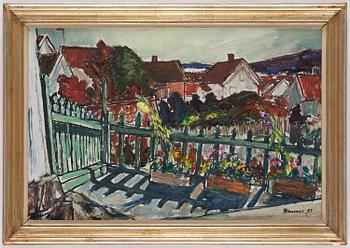
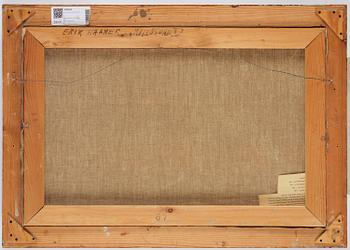
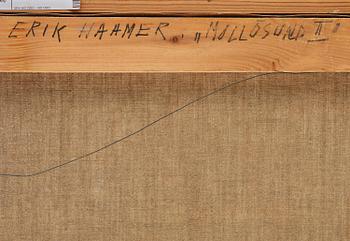
"Mollösund II"
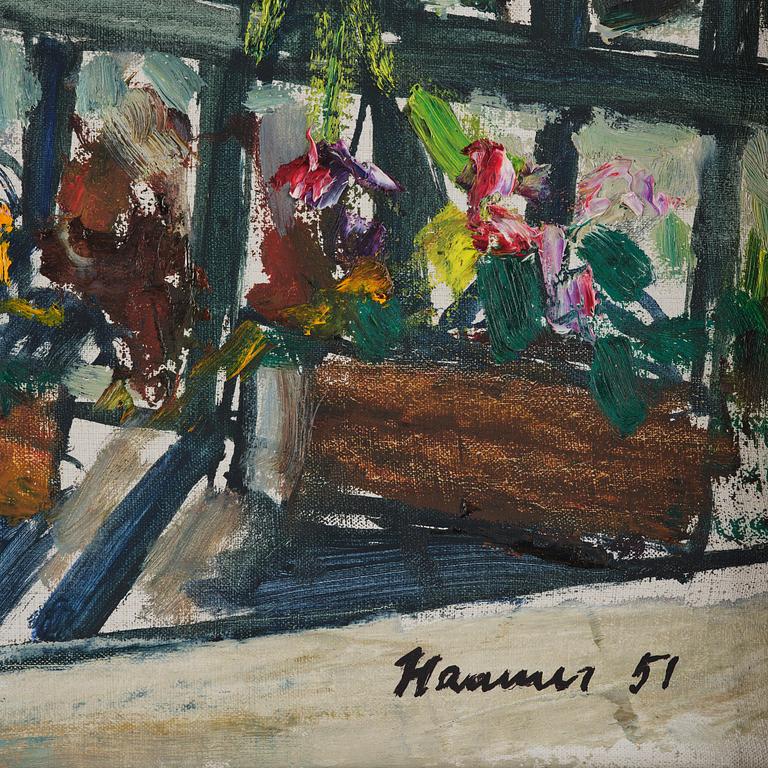
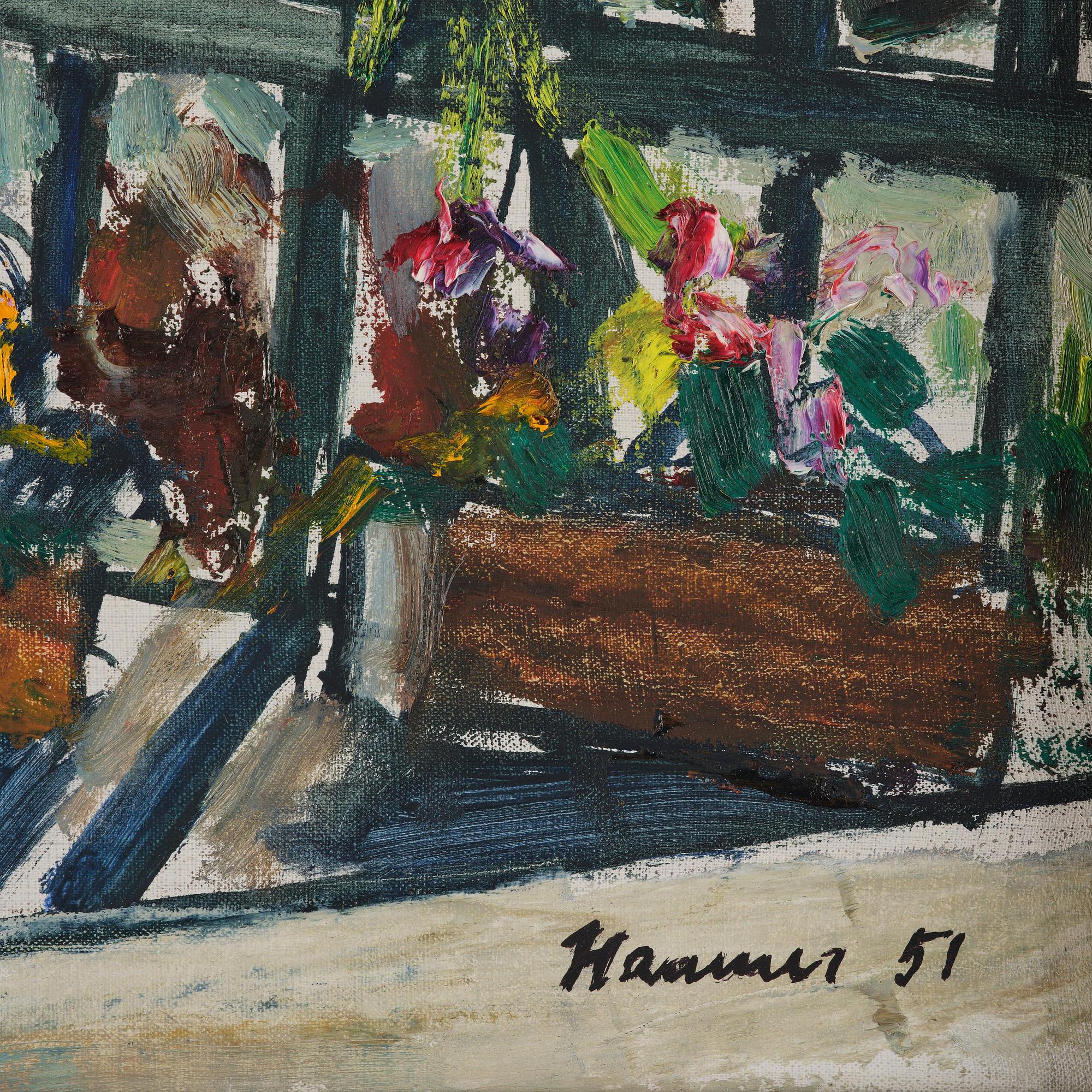
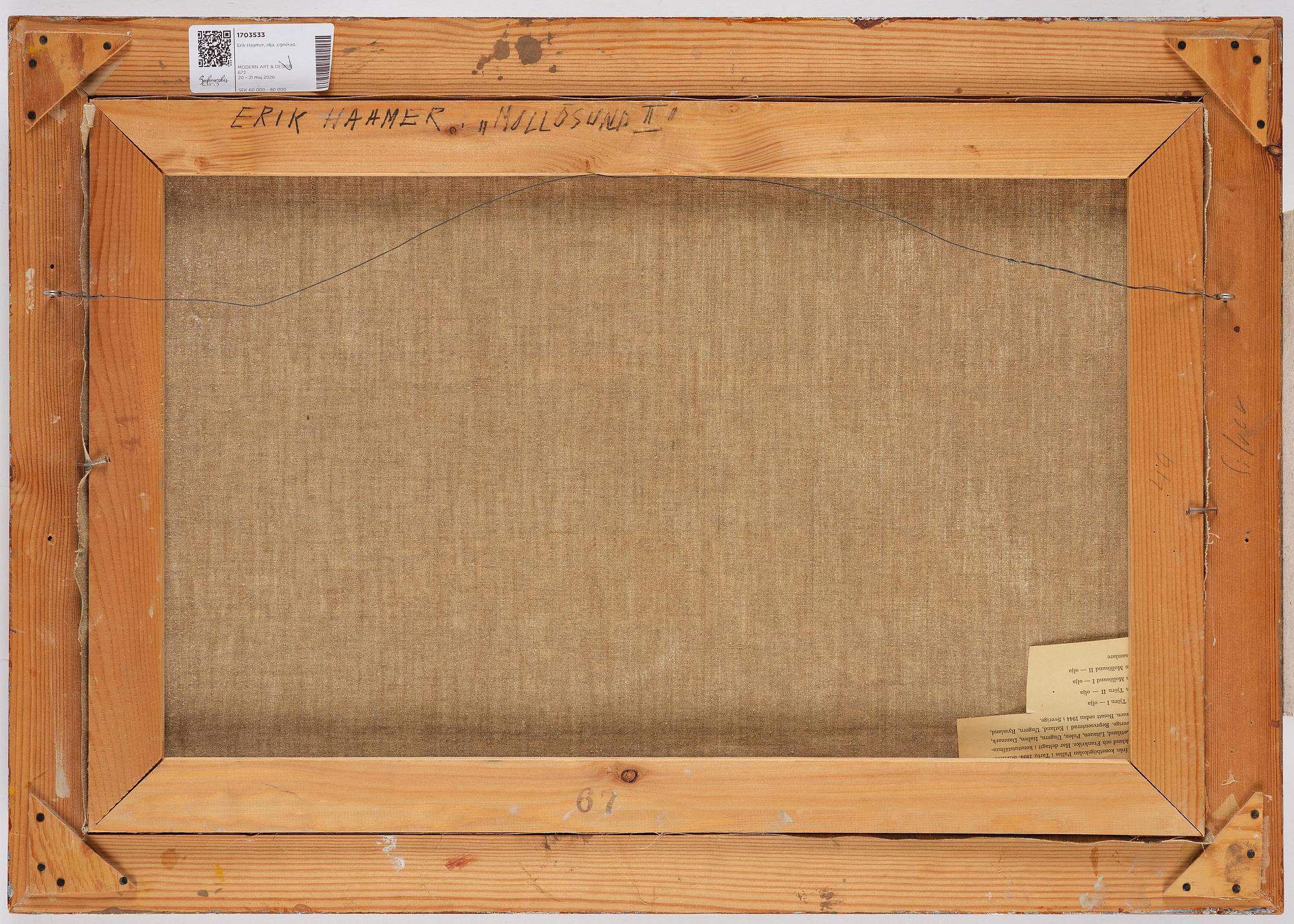
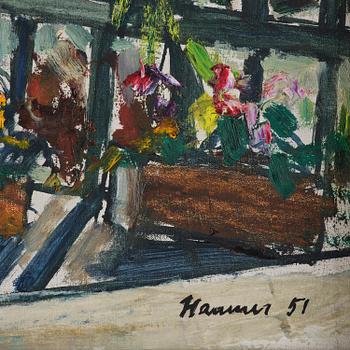
Signed Haamer and dated 57. Oil on canvas 45 x 67 cm.
More information
When Haamer fled Estonia during the turmoil of the Second World War, he eventually settled on the Swedish west coast, where fishing communities like Mollösund offered both refuge and a new source of artistic inspiration.
Mollösund, one of Bohuslän’s oldest fishing villages, is defined by its stark light, rocky shores, and deep connection to the sea. For Haamer, whose earlier work in Estonia often depicted coastal life and the struggles of fishermen, this environment felt both familiar and transformed. The North Sea’s harsher climate and the quiet rhythms of Swedish coastal communities introduced a new emotional register into his work—more introspective, yet still grounded in collective experience.
In his paintings from this period, Haamer often portrayed solitary figures, boats, and groups of people bound together by shared labor or silent contemplation. The subdued palette, the tension between isolation and community, and the ever-present horizon line all echo the Bohuslän landscape.
More about Eerik Haamer
Erik Haamer, born in Arensburg at Ösel in Estonia but was active in Sweden from 1945 up until their death. After school Haamer continued his studying from 1928 up until 1931 in the Faculty of Sports Science at Tartu university were in 1931 he illustrated a brochure about breathstroke. He was keen on an artistic education and in 1930 he was accepted into Pallas Higher Art School in Tartu where, in the following 5 years, he was a pupil to Nikolai Triig. He also went on several educational trips to Finland, France, and Norway.
After his studied Haamar got a job as a sports and art teacher at Tartu all boys school. In 1941 Haamar moved to Tallinn and worked during the inter-war years in the The School of Fine Arts and Applied Arts where he was a teacher in painting, drawing, and anatomy. During the Soviet occupation in autumn 1944, Haamar travelled to Sweden from the Vilsandi island by boat where he was reunited with the rest of his family, who had fled to Finland in March of the same year.
In the years of 1945-1975, Haamer lived in Gothenburg where he up until 1954 worked in The Ethnographic Museum's archives, after which he worked at Einar Eriksson's Architect firm as a planner.
He was involved in exhibitions in Estonia, Poland, Hungary, Italy, Kanada, and the USA as well as Estonian exhibitions in Sweden. His art was composed of figure compositions and landcape paintings as well as illustrations, among other things, he illustrated Alex Milits' edition of Estonia's national epic, Kalevipoeg. Haamer is represented at Moderna Museet and Örebro läns museum.
Read moreFor condition report contact specialist

Covered by droit de suite
Image rights
The artworks in this database are protected by copyright and may not be reproduced without the permission of the rights holders. The artworks are reproduced in this database with a license from Bildupphovsrätt.
Others have also viewed