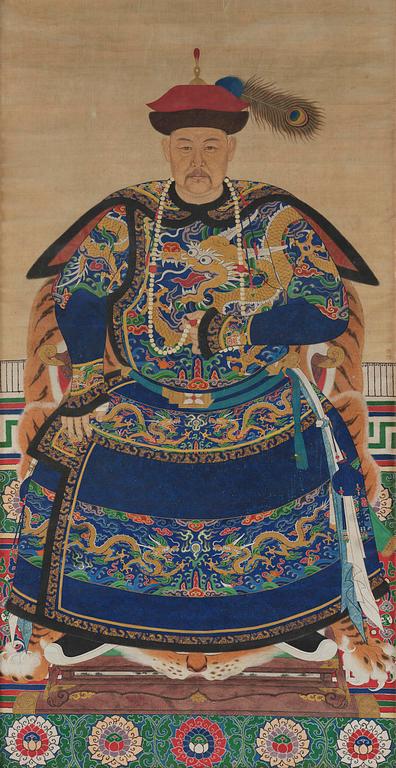
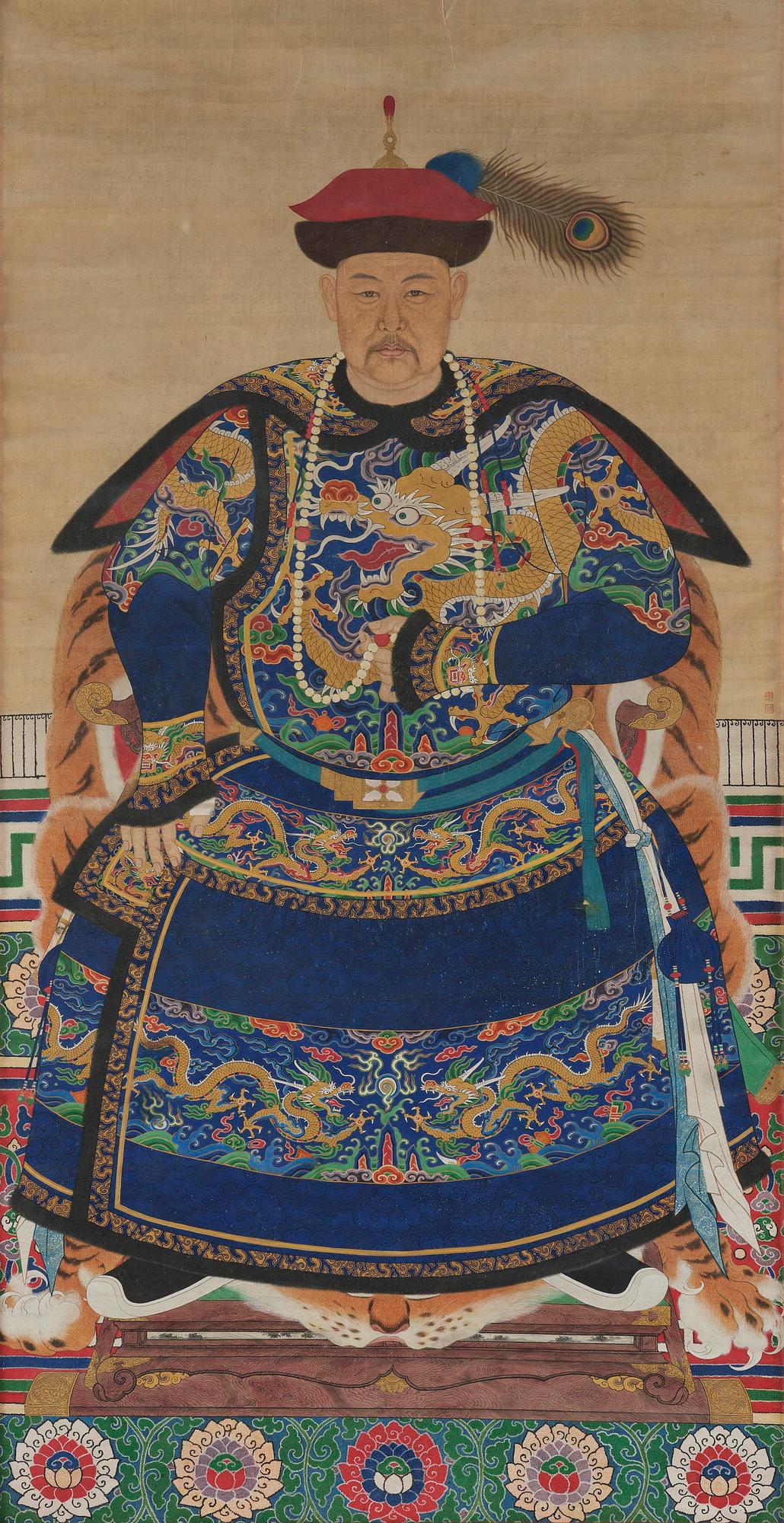
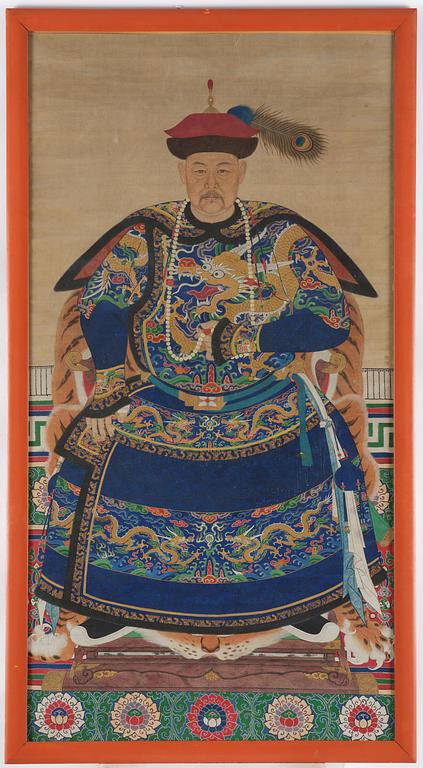
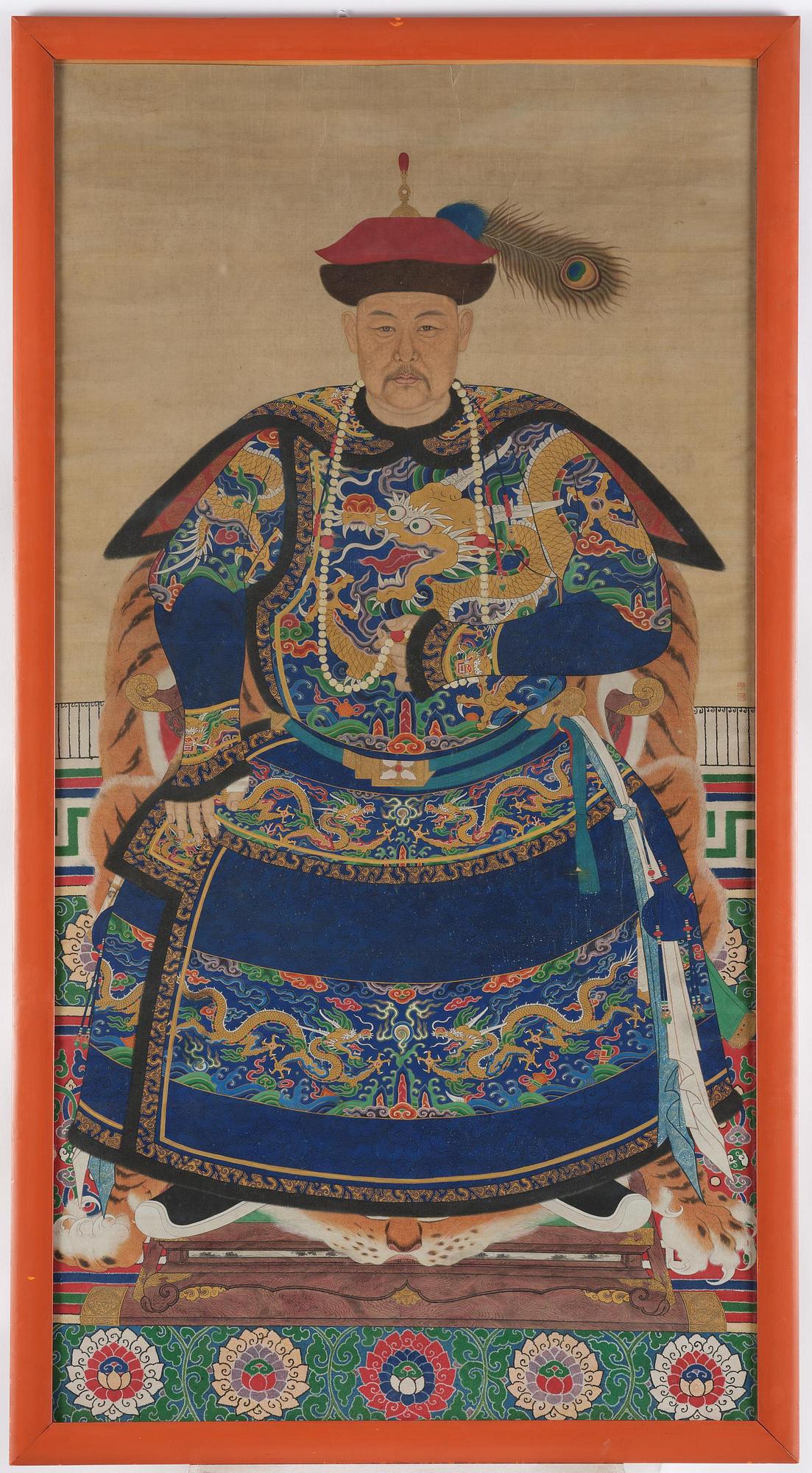
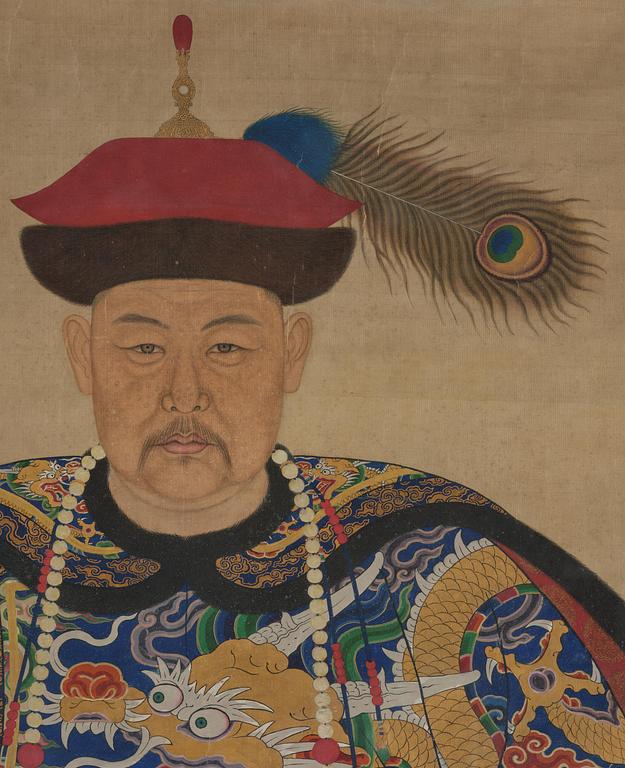
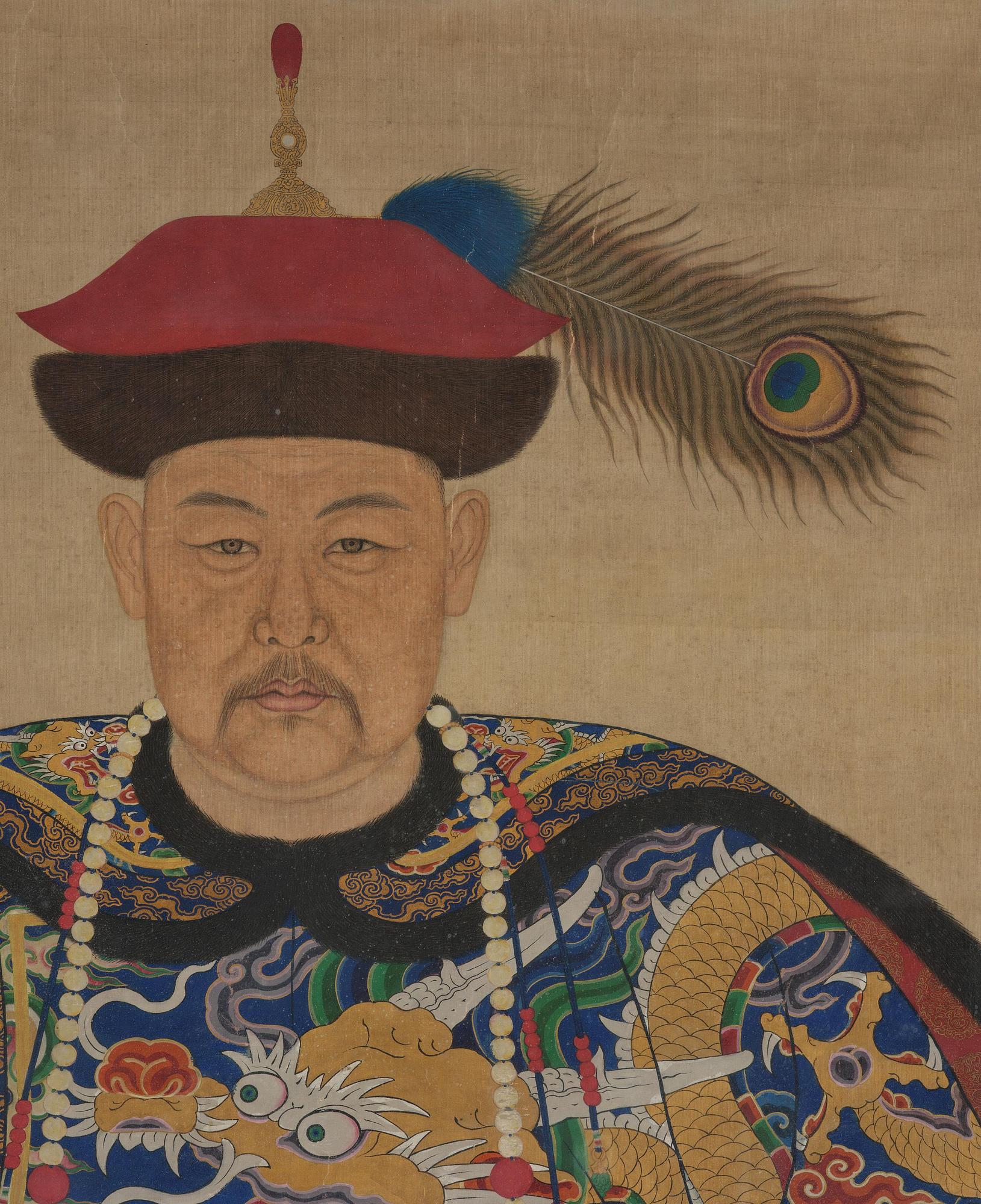
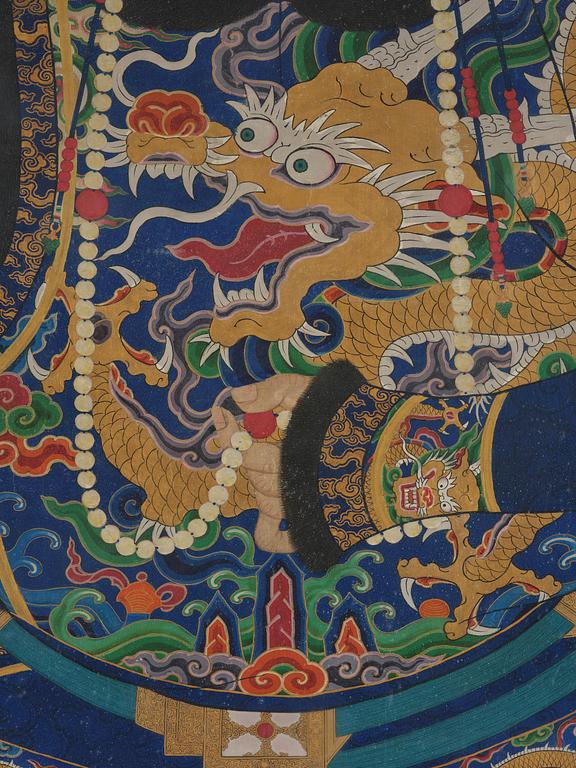
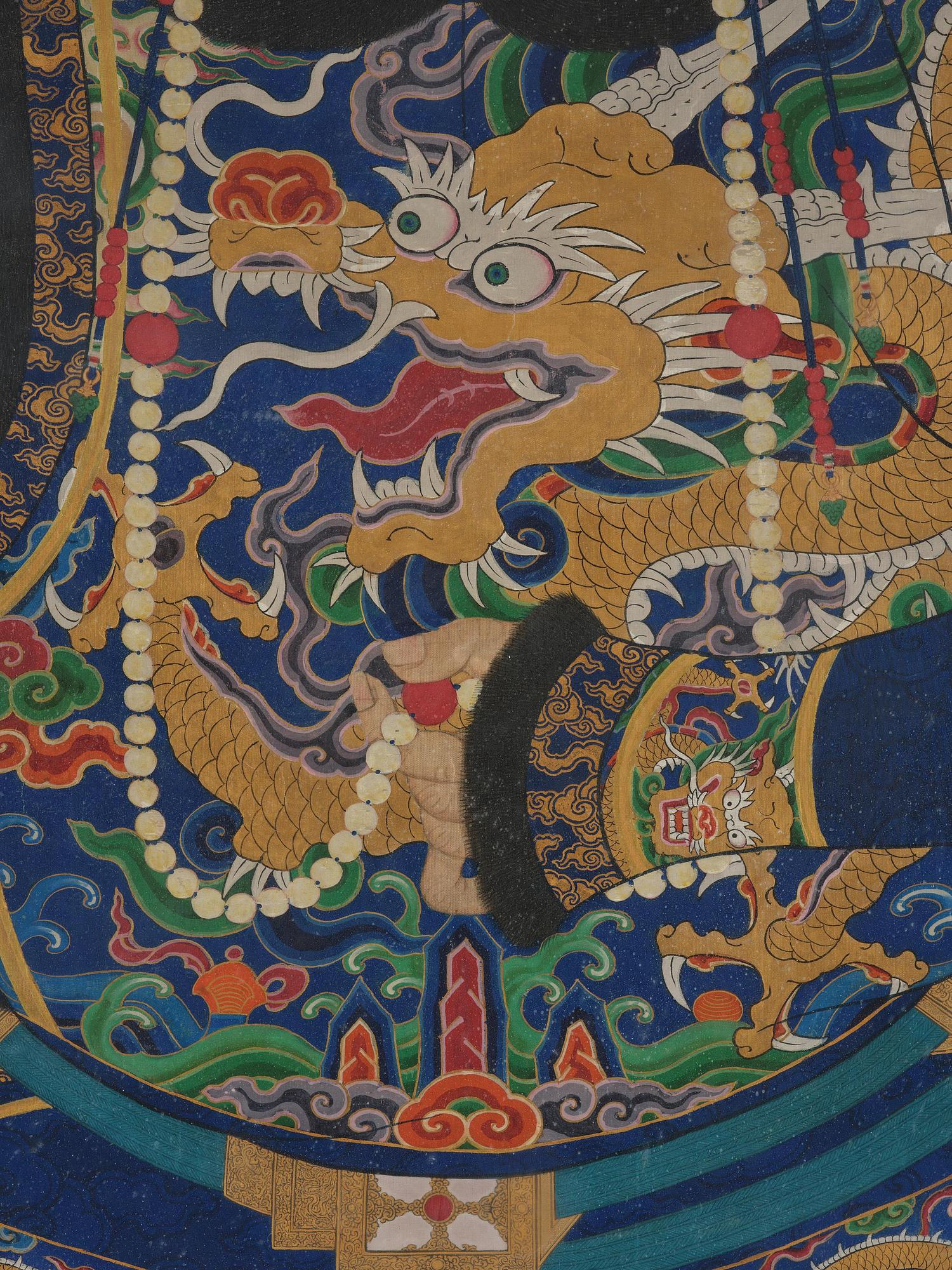
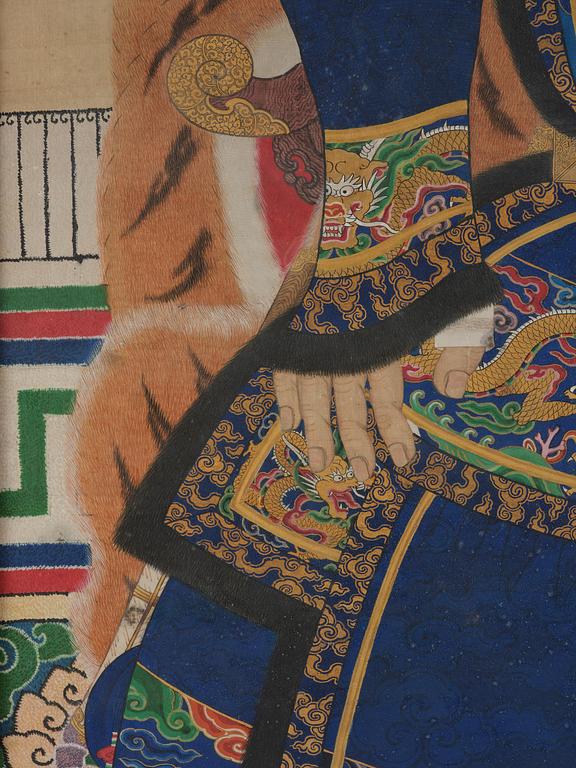
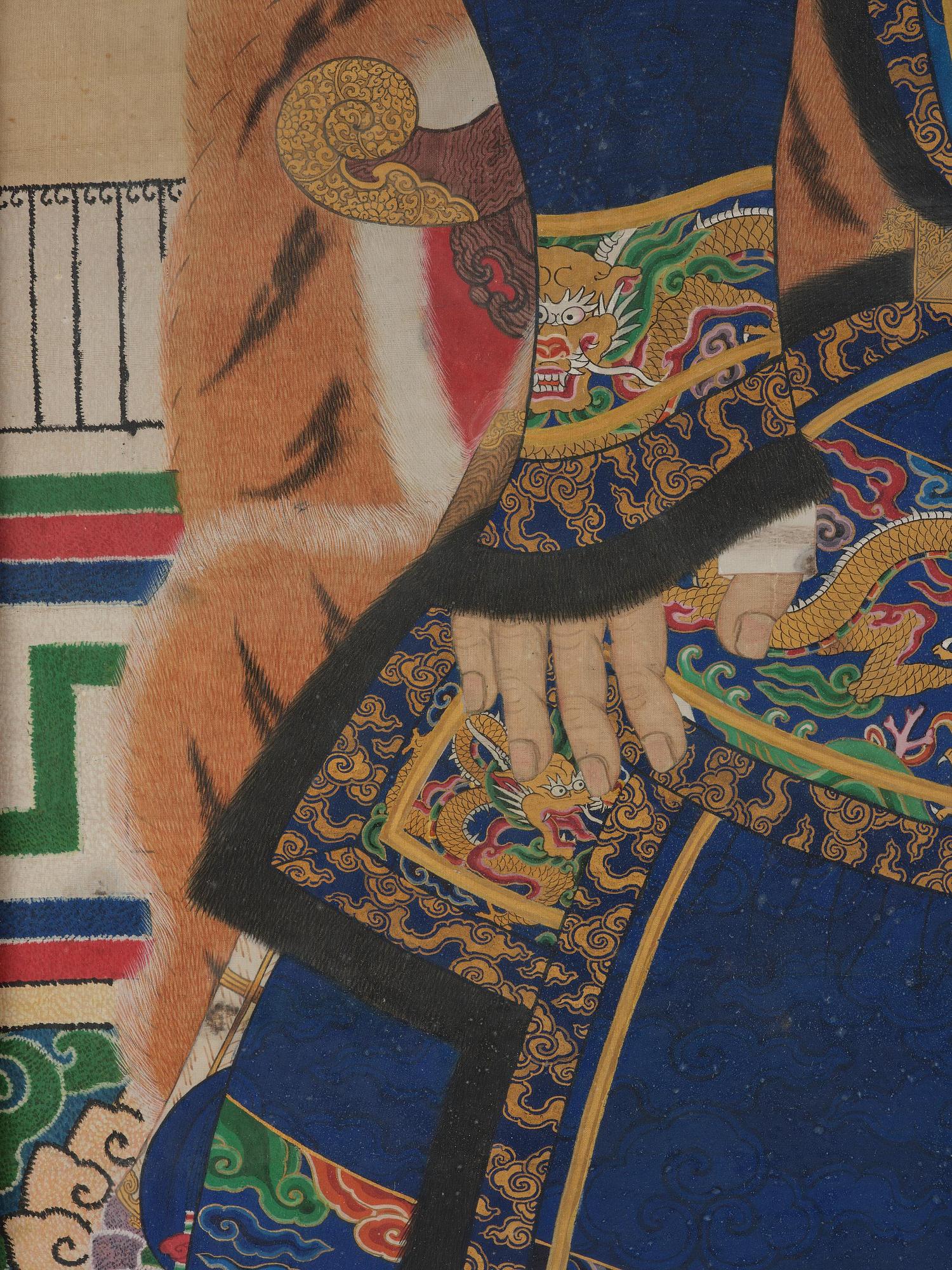
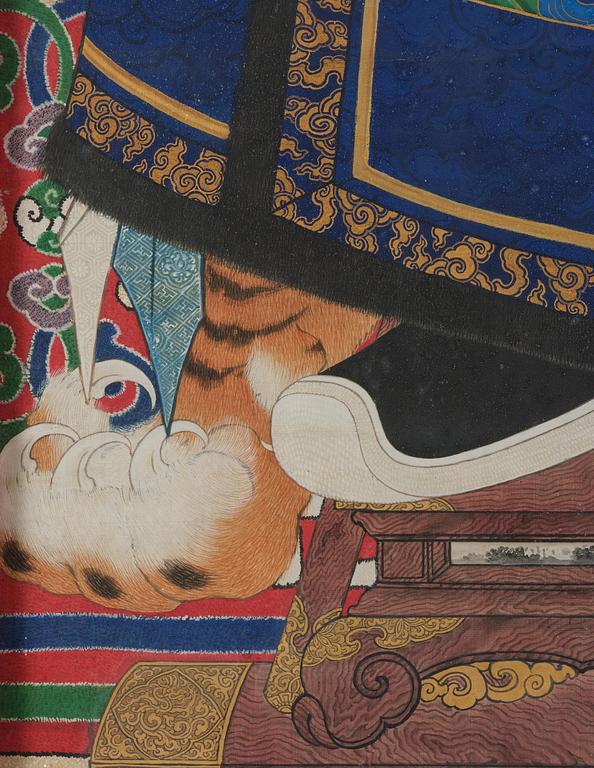
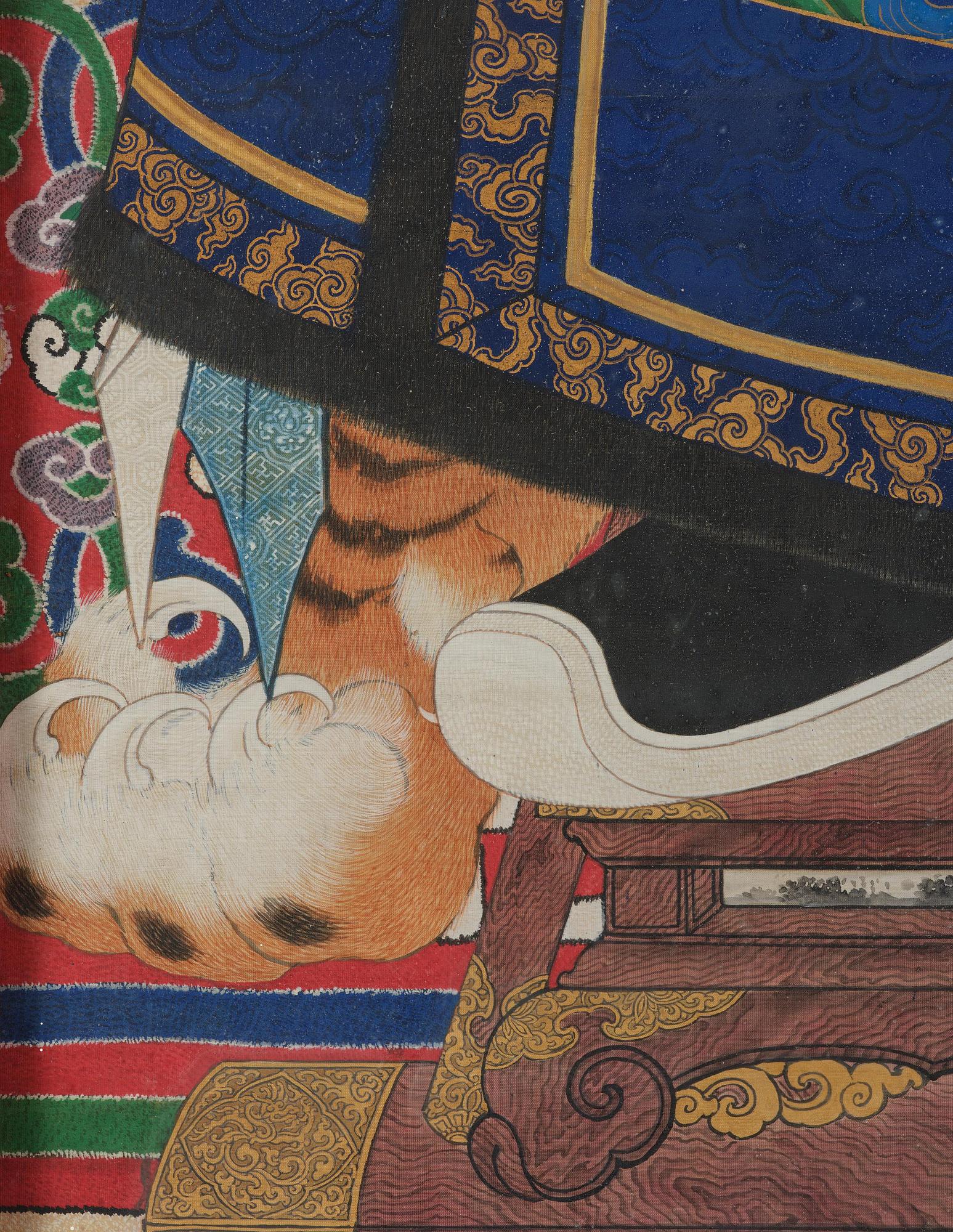
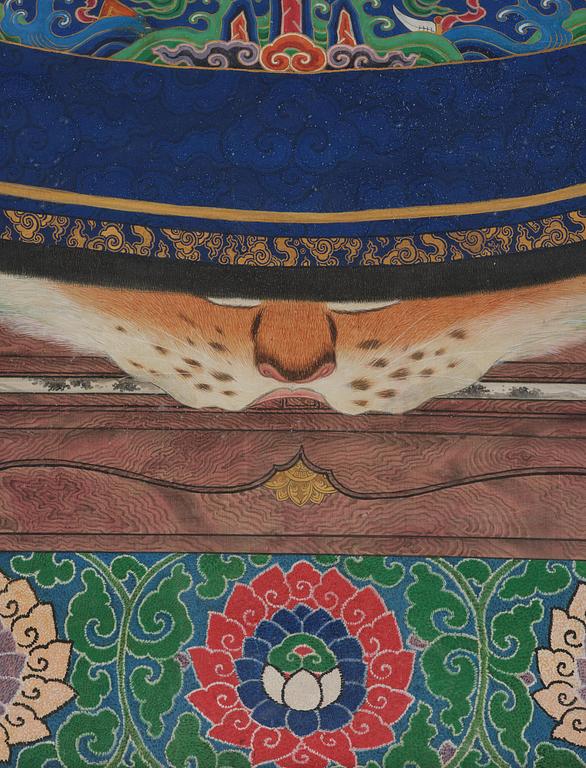
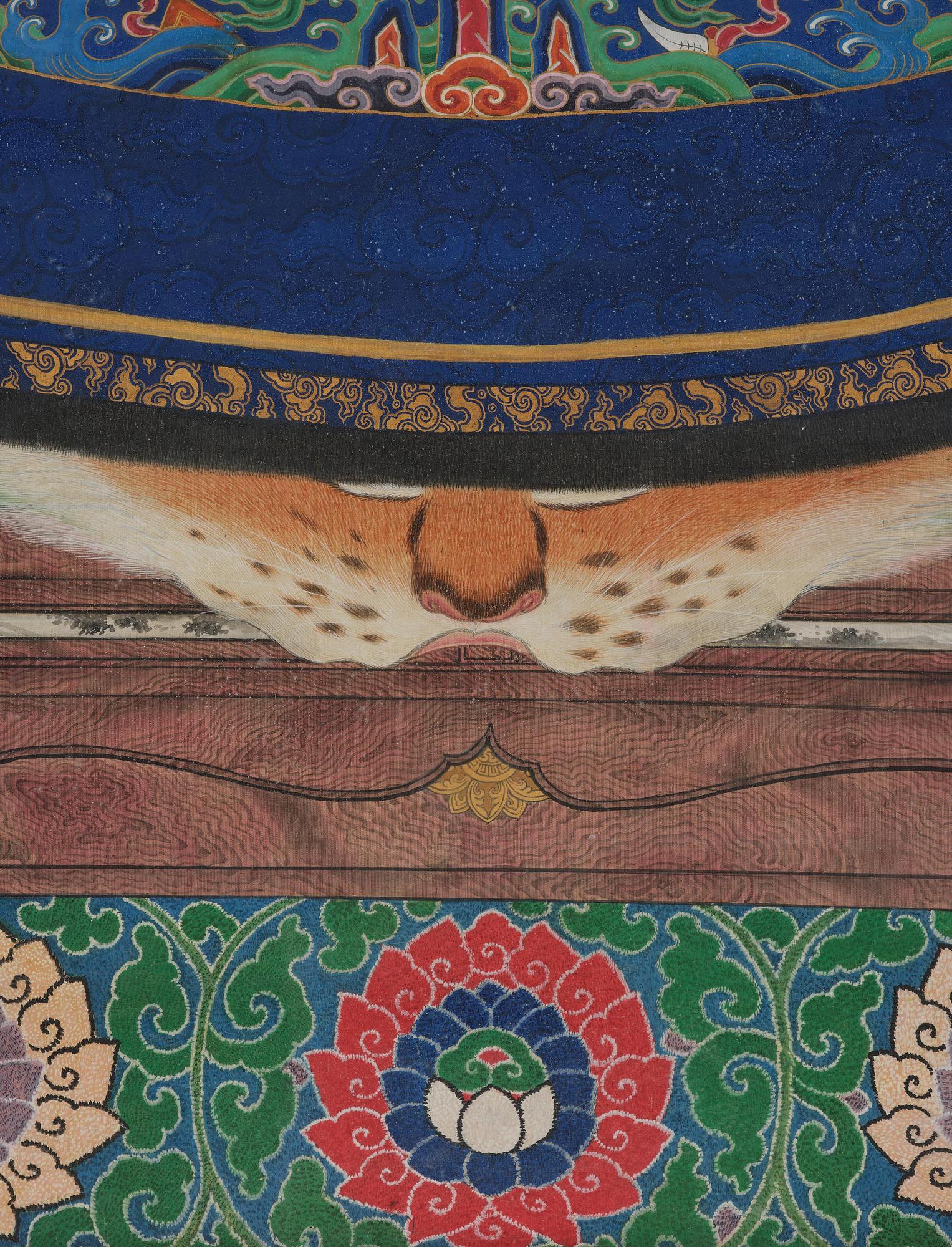
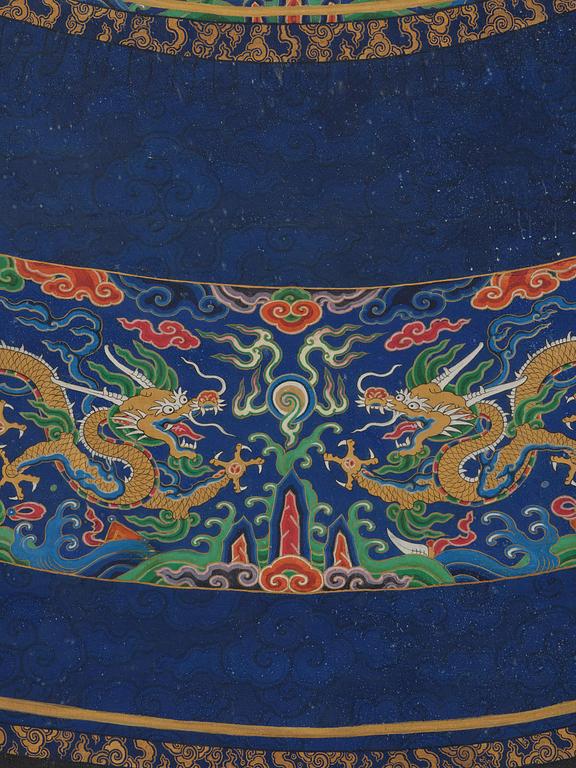
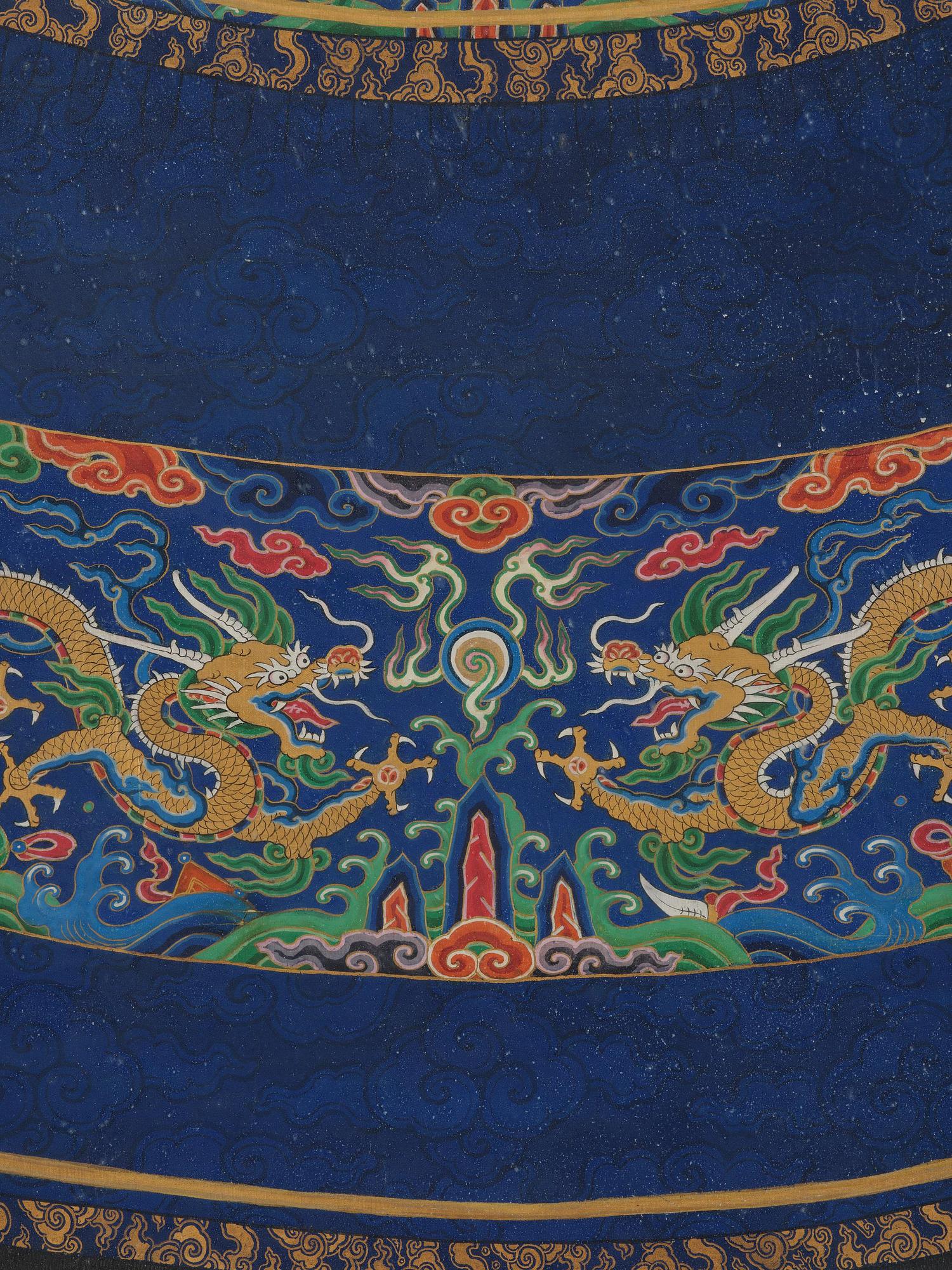
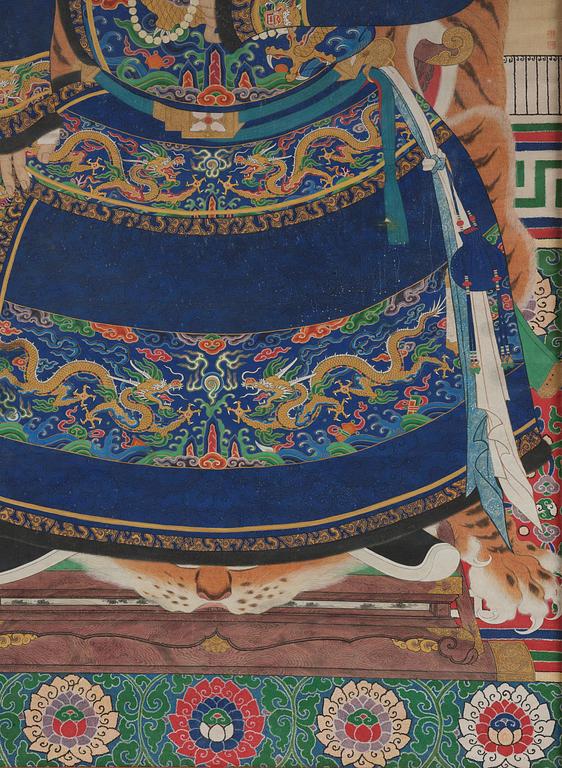
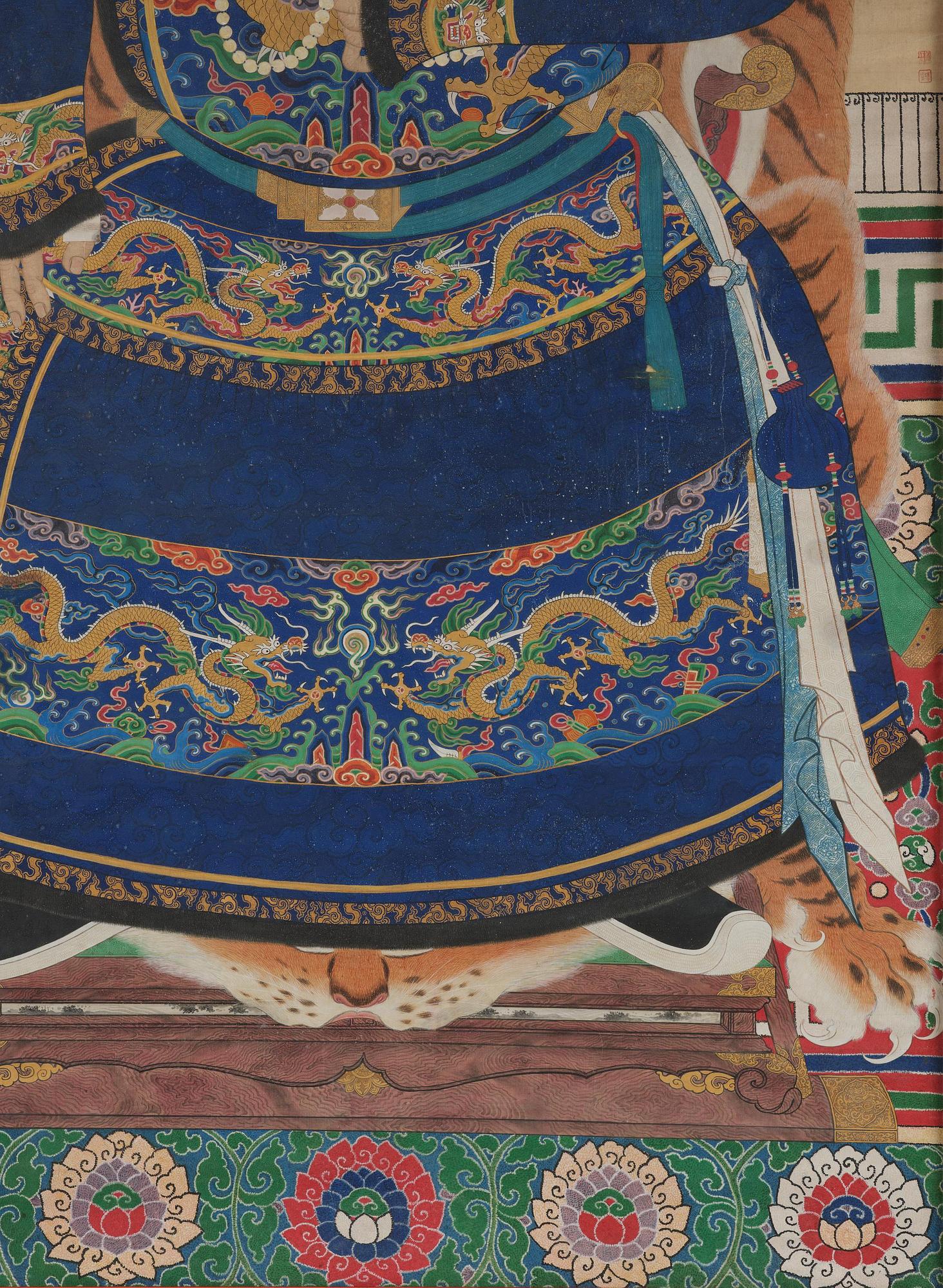
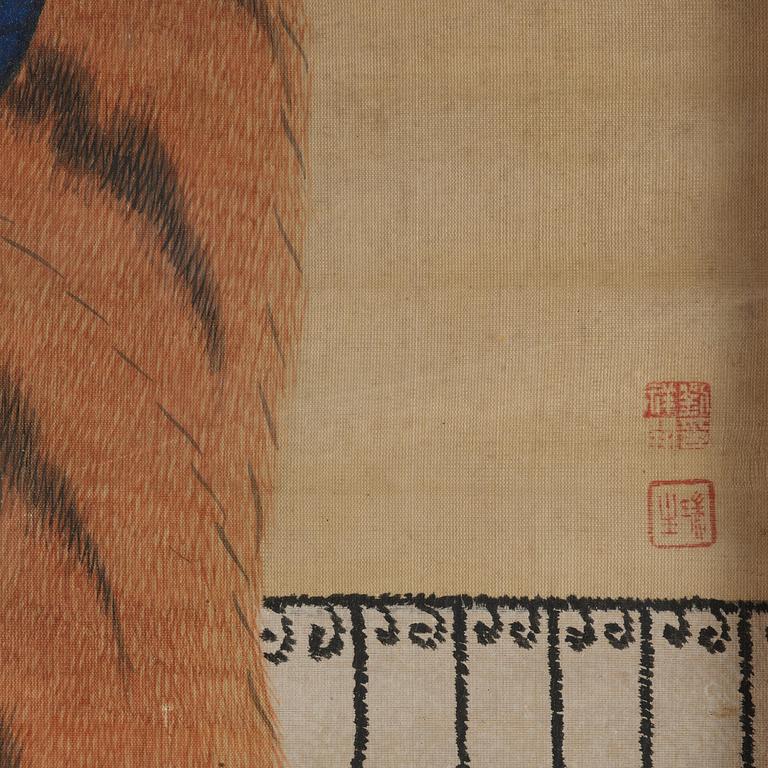
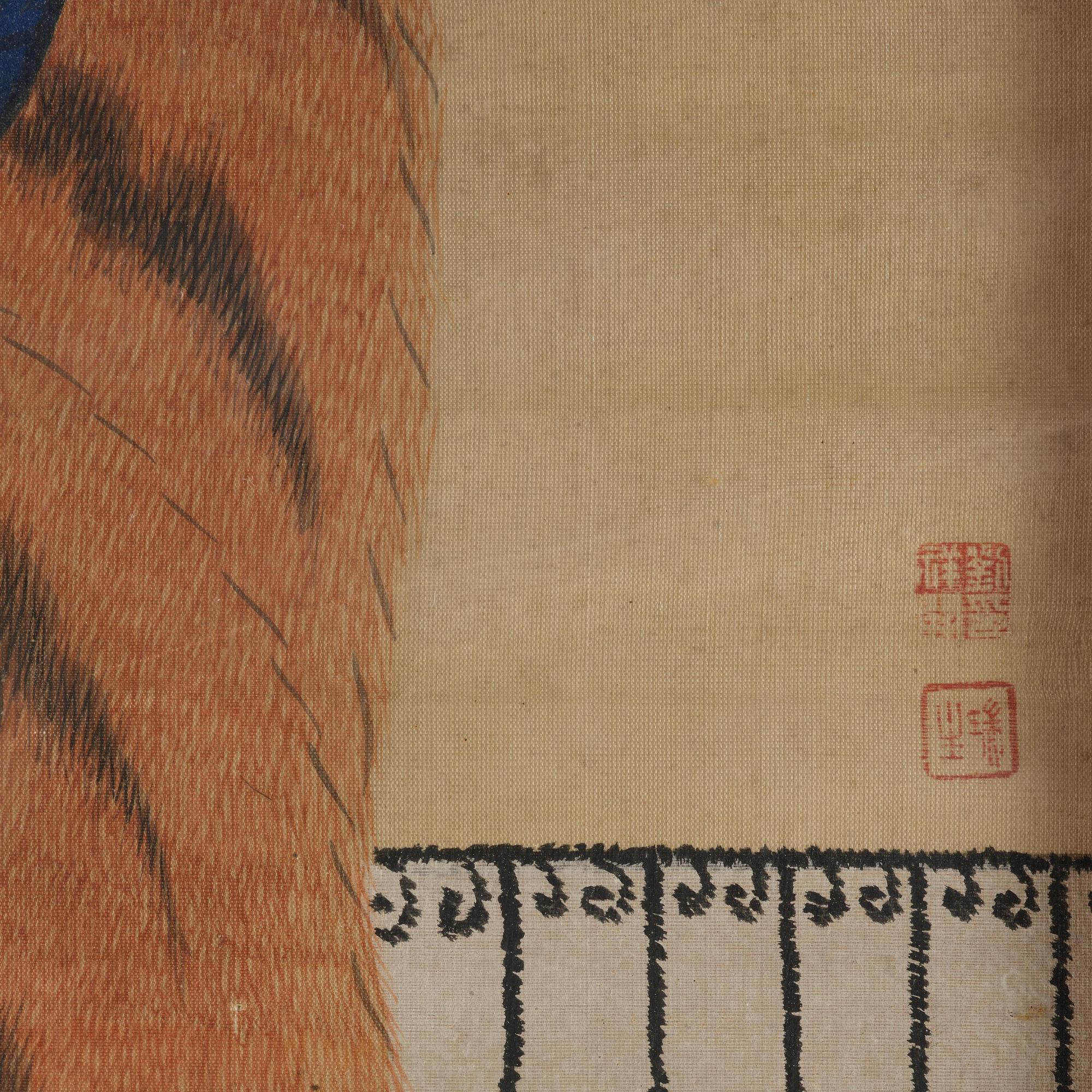
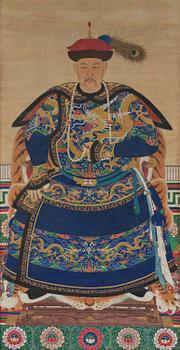
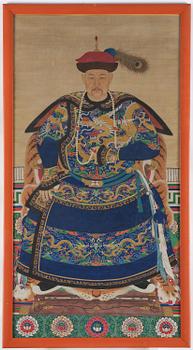
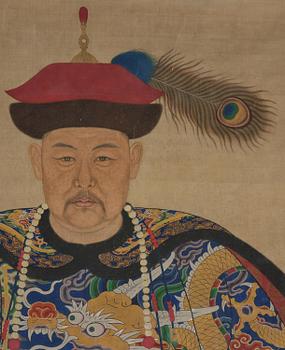
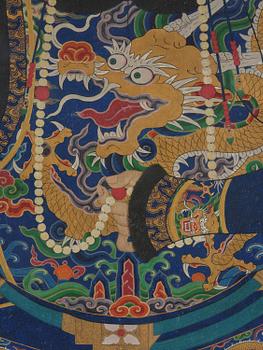
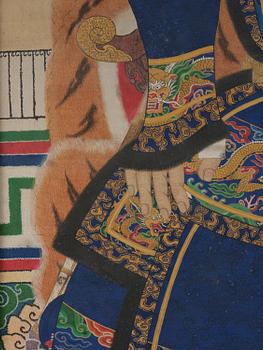
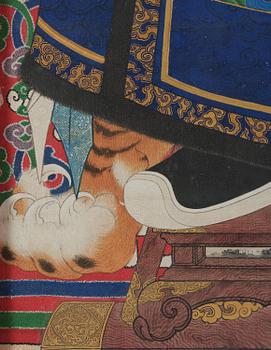
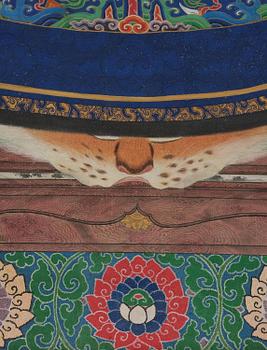
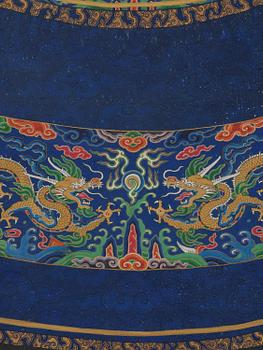
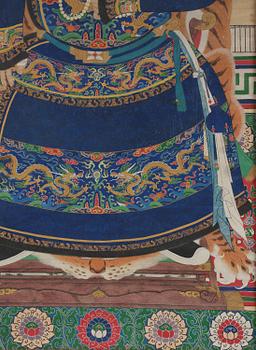
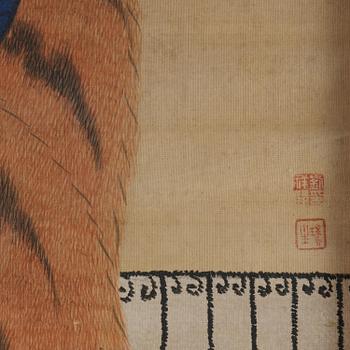
The one seal reads Liu, followed by Xiang. The lower signature looks to be 瑶生. Portraying a high ranking official/bannerman dressed in a formal manchu ceremonial outfit chaofu, consisting of cape (pi ling), a blue silk dragon court robe (chaopao). He is depicted with a powerful gaze, seated on a throne, with a gold finial inset with pearls and a ruby stone. He appears to have pockmarks. Silk laid on paper. Measure motif 97.5x188 cm. Measure with frame 109x200 cm. Can be rolled up.
Wear. Creases. Small holes and a small tear.
Provenance
From a private Swedish Collector who purchased the two portraits from an Estate Sale in the early 1970's from a lady who lived in Sweden but had German/Austrian roots.
The dragon jifu with the large dragon is illustrated in what was the fashion in the 17th century, perhaps giving us a clue to whom it is, a high ranking member of the Qing society and very possibly of the inner circle of the Qing Imperial Court.
The hat finial gives us further clues, they were coded with information about rank. The finialsof the imperial clan were lavishly emebllished with large eastern pearls. The apex with ruby was used for sons of the emperor down to the ninth rank of nobility.
According to dress regulations, only male princes of the highest orders could wear the blue ceremonial robe, the chaozhu neclace made of precious stones and the hat finial embellished with pearls and a ruby stone.
Exhibitions
Compare with a portrait in the Metropolitan museum of art, New York, Credit Line: "Rogers Fund, 1942". Object Number: 42.141.17.
Compare with a pair of paintings sold at Bonhams London, New Bond Street, Fine Chinese Art, lot no 117, 10 November 2016.
Compare also with lot 2066 at Bonhams New York, Chinese Works of Art and Paintings, 13 March 2017.
Literature
Worshiping the ancestors : Chinese commemorative portraits by Stuart, Jan, 1955-; Rawski, Evelyn Sakakida; Freer Gallery of Art; Arthur M. Sackler Gallery (Smithsonian Institution. Compare with a portrait on p. 99, from the Collection of the Royal Ontario Museum wearing the same type of large dragon decoration on his jacket.
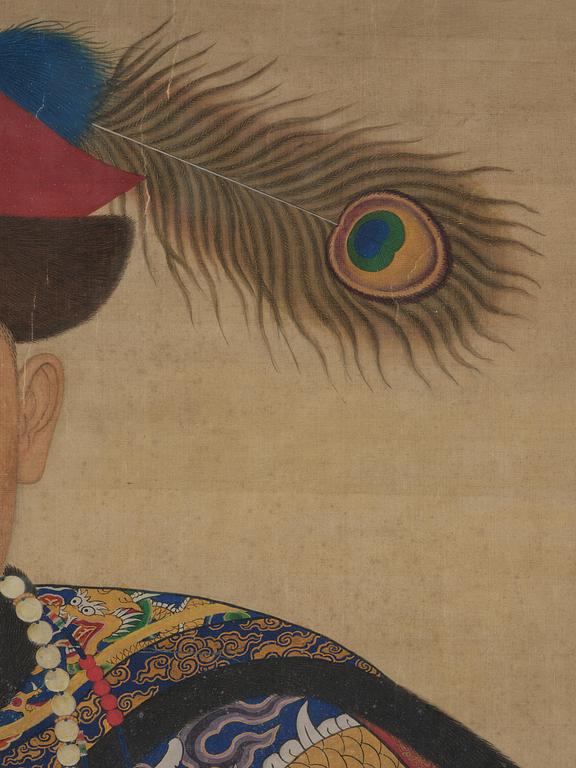
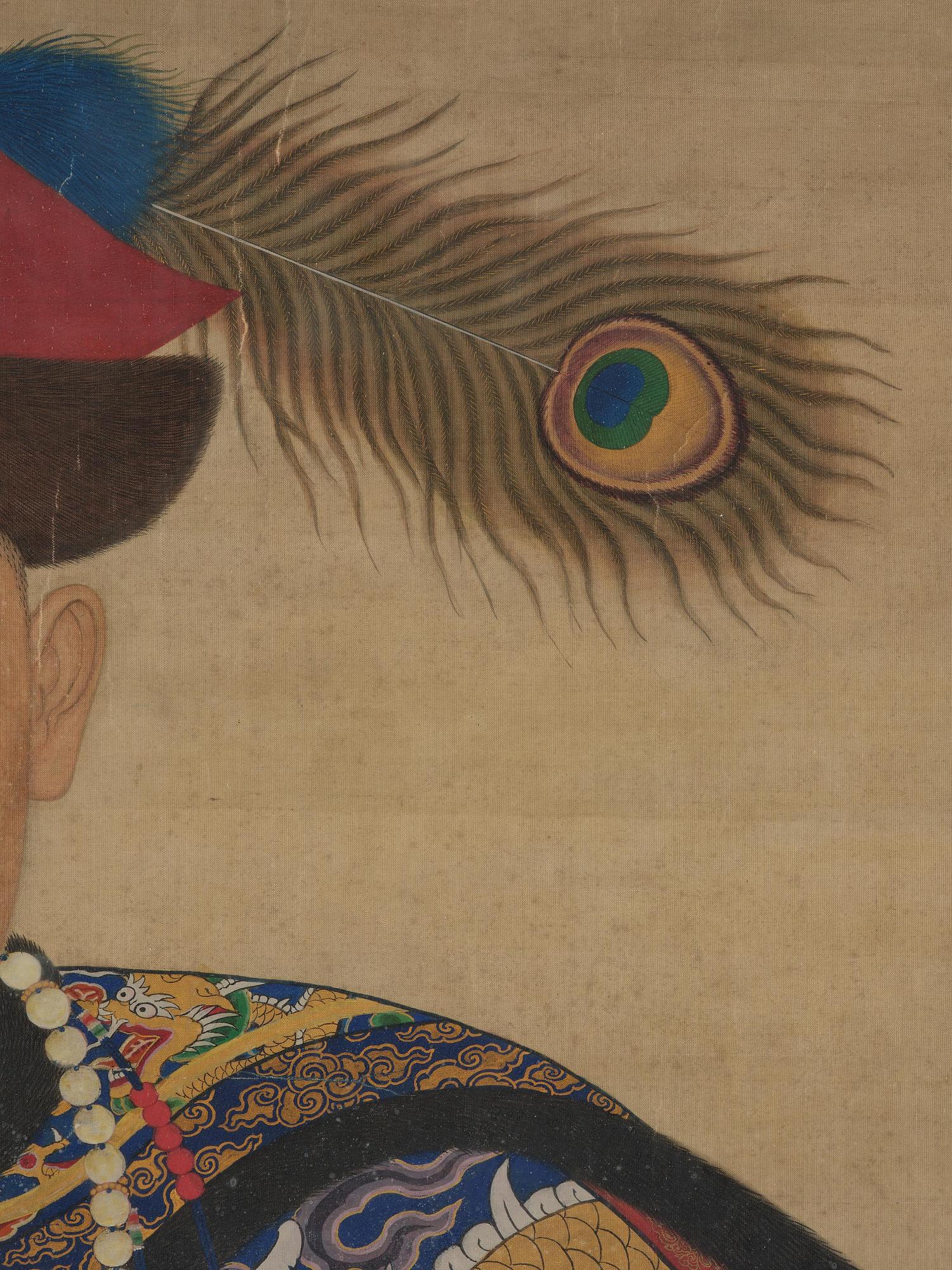
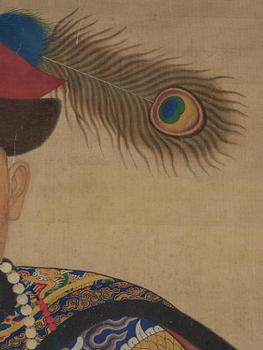
Compare also with a portrait in the Collection of the Smithosonian, Arthur M Sackler Gallery depicting Prince Zhuang. Wearing the same type of clothing and insignia but a three eyed peacock feather. Depicted on p. 54. Pl 2.2.
The Art of China, Highlights of the Philadelphia Museum, compare with a portrait on page 232, and read about the hatfinials.
More information
The present lot embodies the Imperial academy workshop style of the 18th century, which combined traditional Chinese portrait painting with Western painting techniques introduced by Jesuit missionary artists at Court such as Giuseppe Castiglione (1688-1766), Ignace Sichelbart (1708-1780) and Jean-Denis Attiret (1702-1768). However it would have most likely been painted by Chinese artists well schooled in the Jesuit manner of painting and European shading.
The large hanging scrolls, on account of their function as cult paintings hence often unsigned eventhough workshop productions, they are not listed in the major catalogue of the imperial collection of painting and calligraphy, the Shiqu baoji xubian.
For condition report contact specialist

Others have also viewed