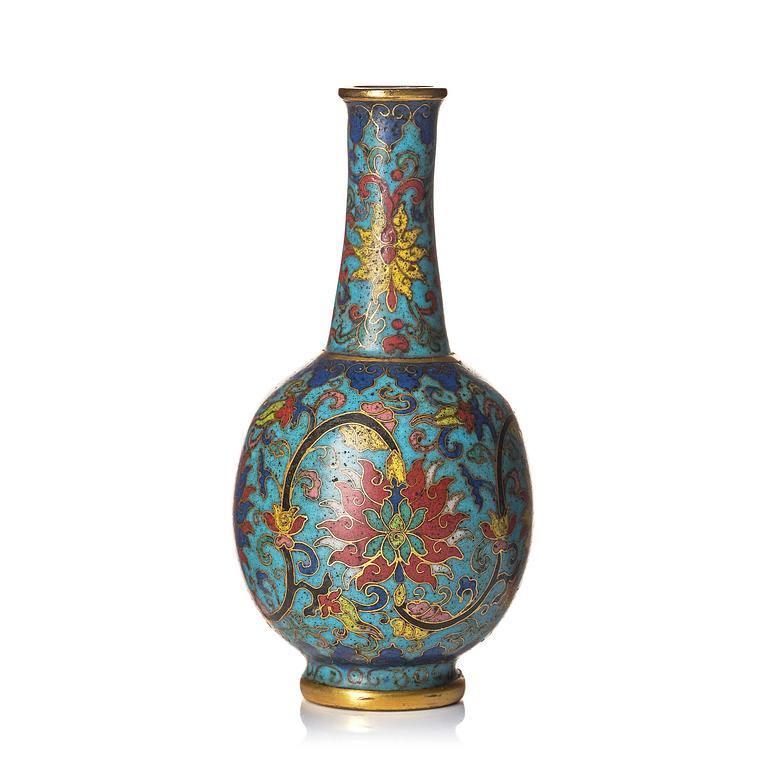
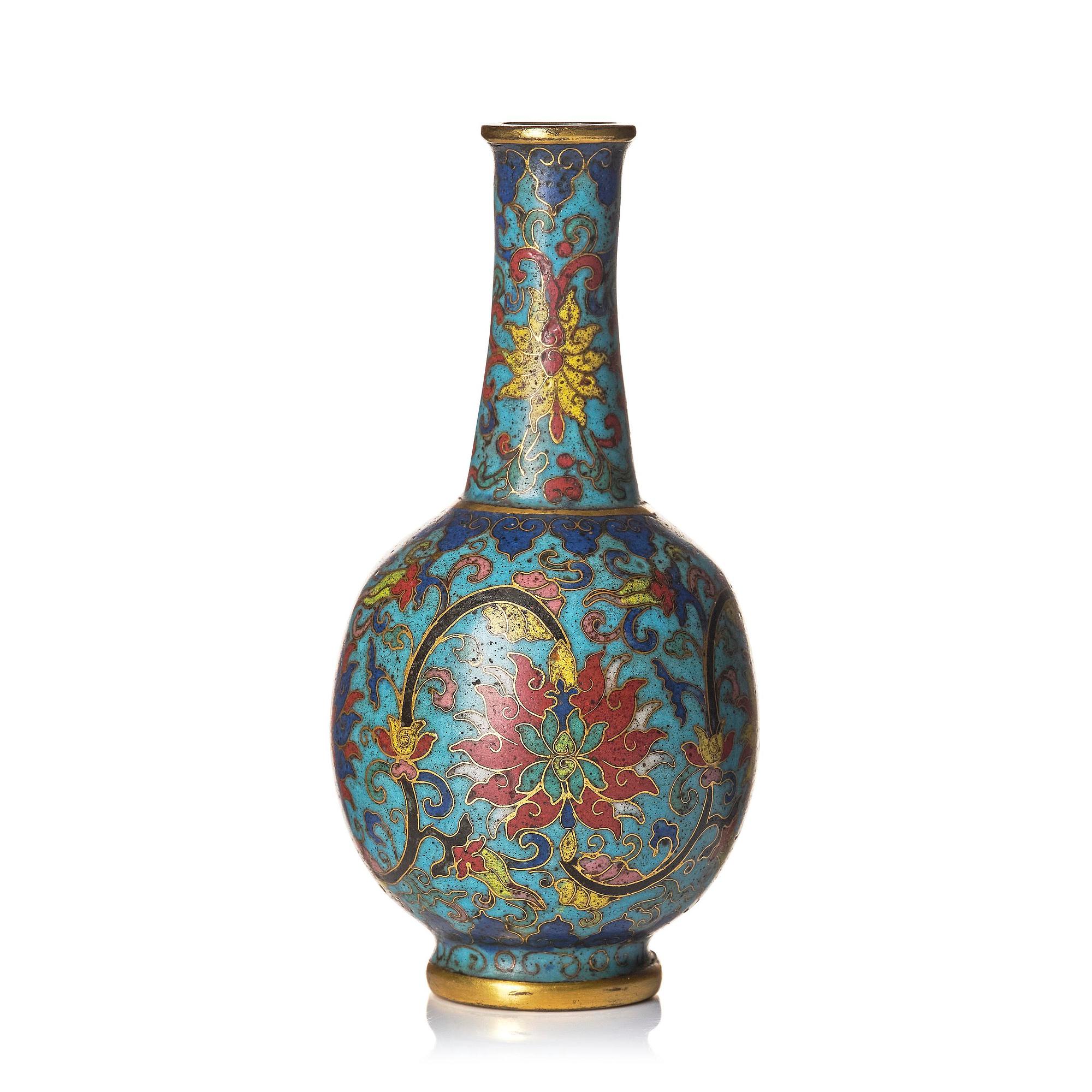
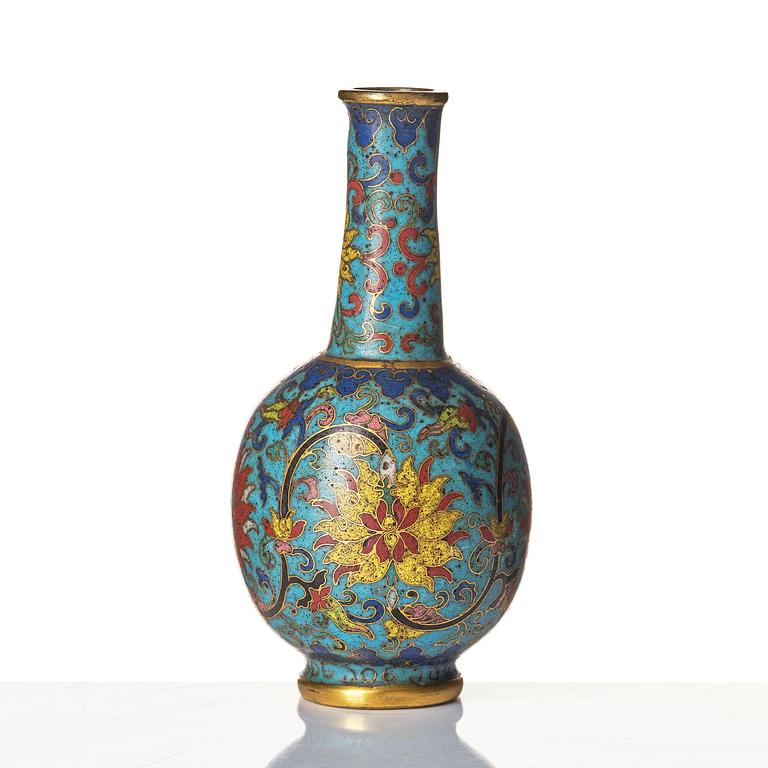
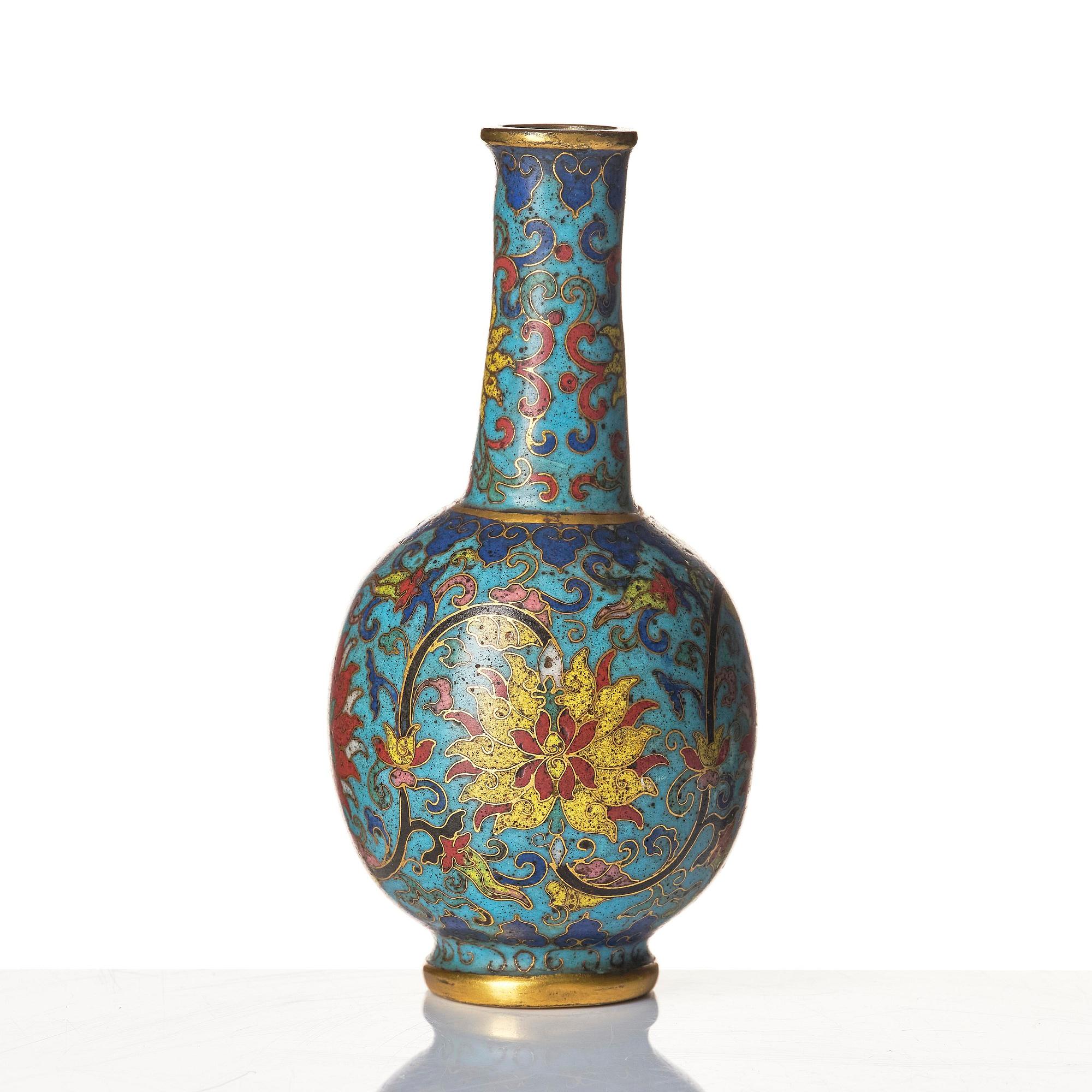
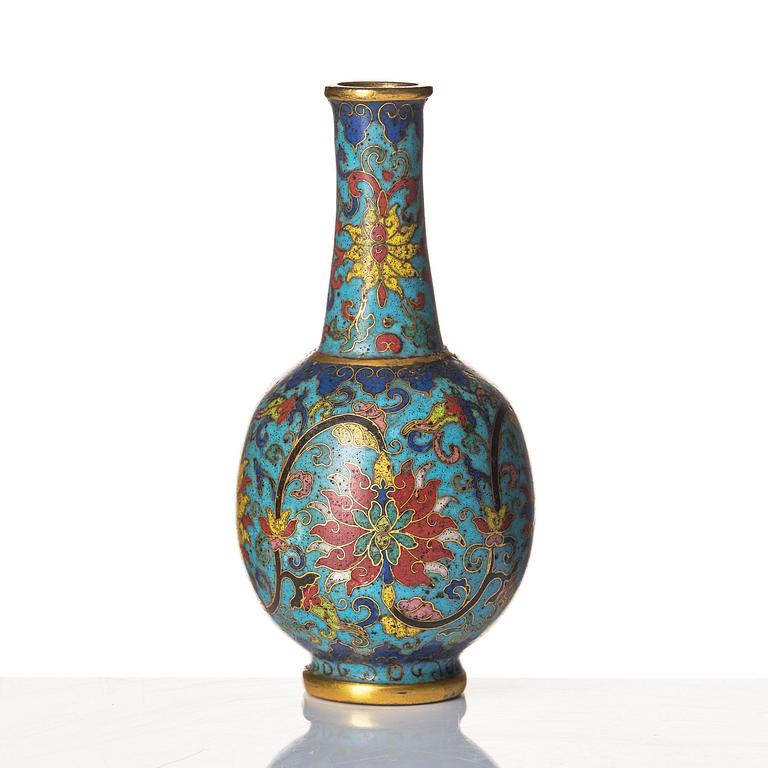
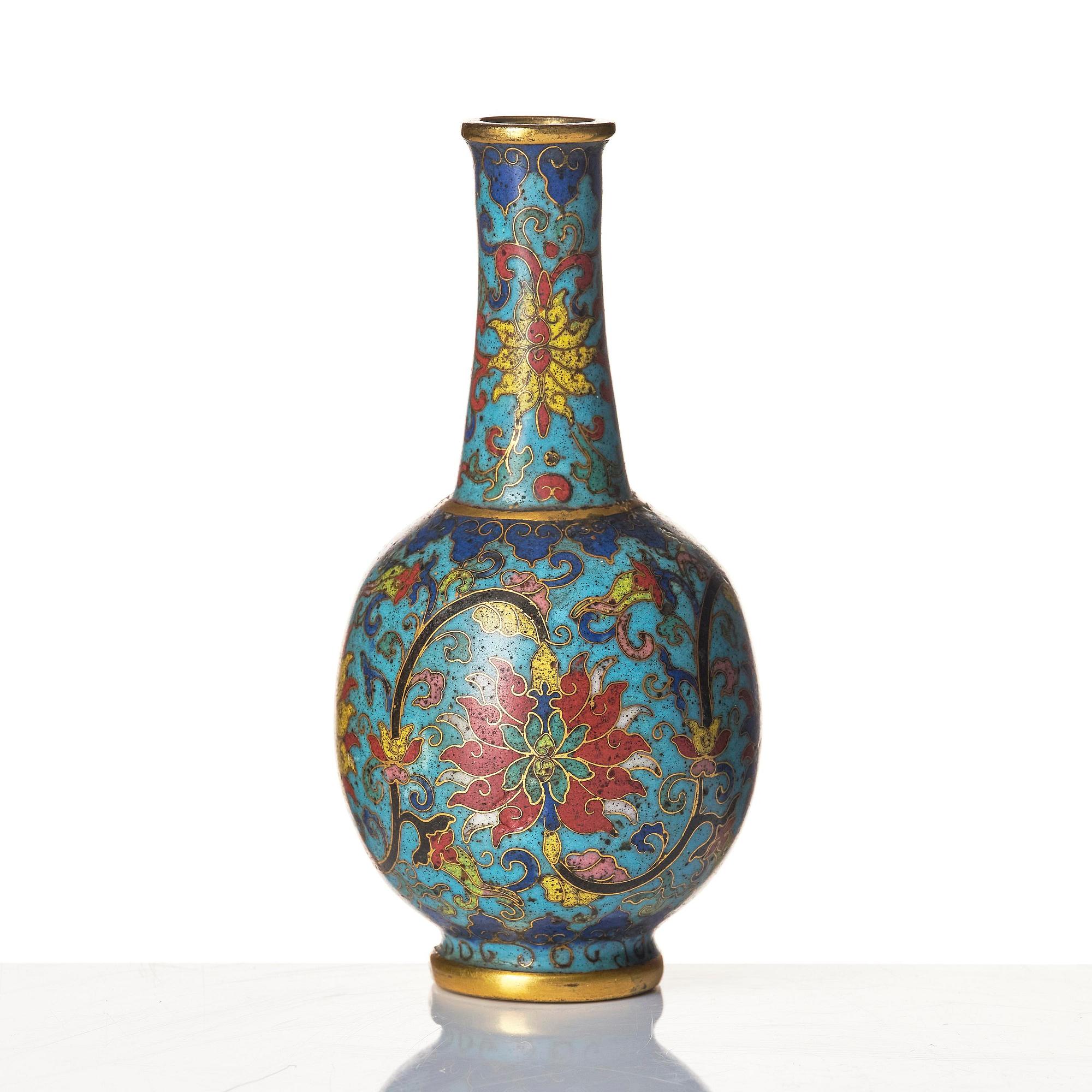
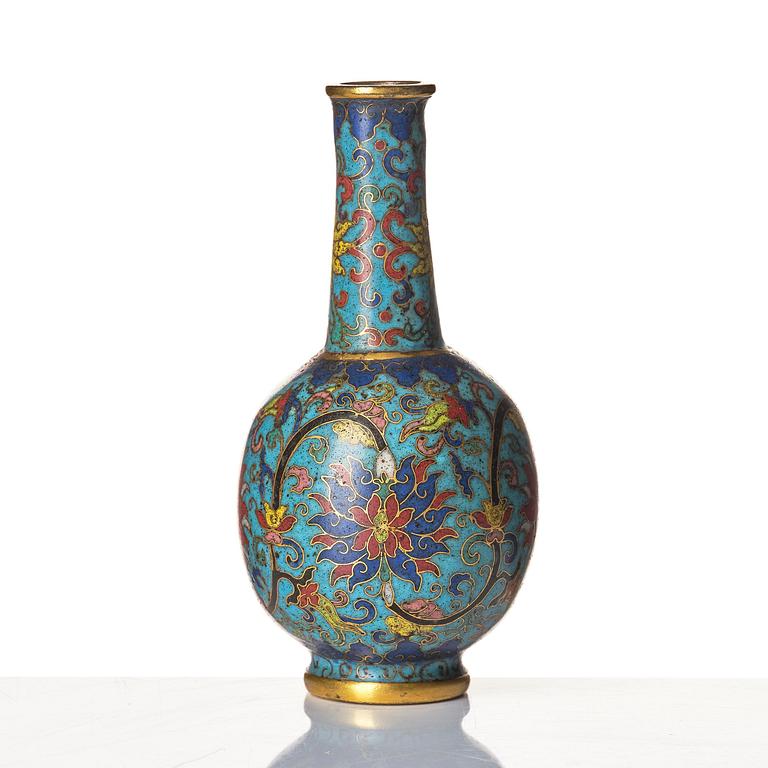
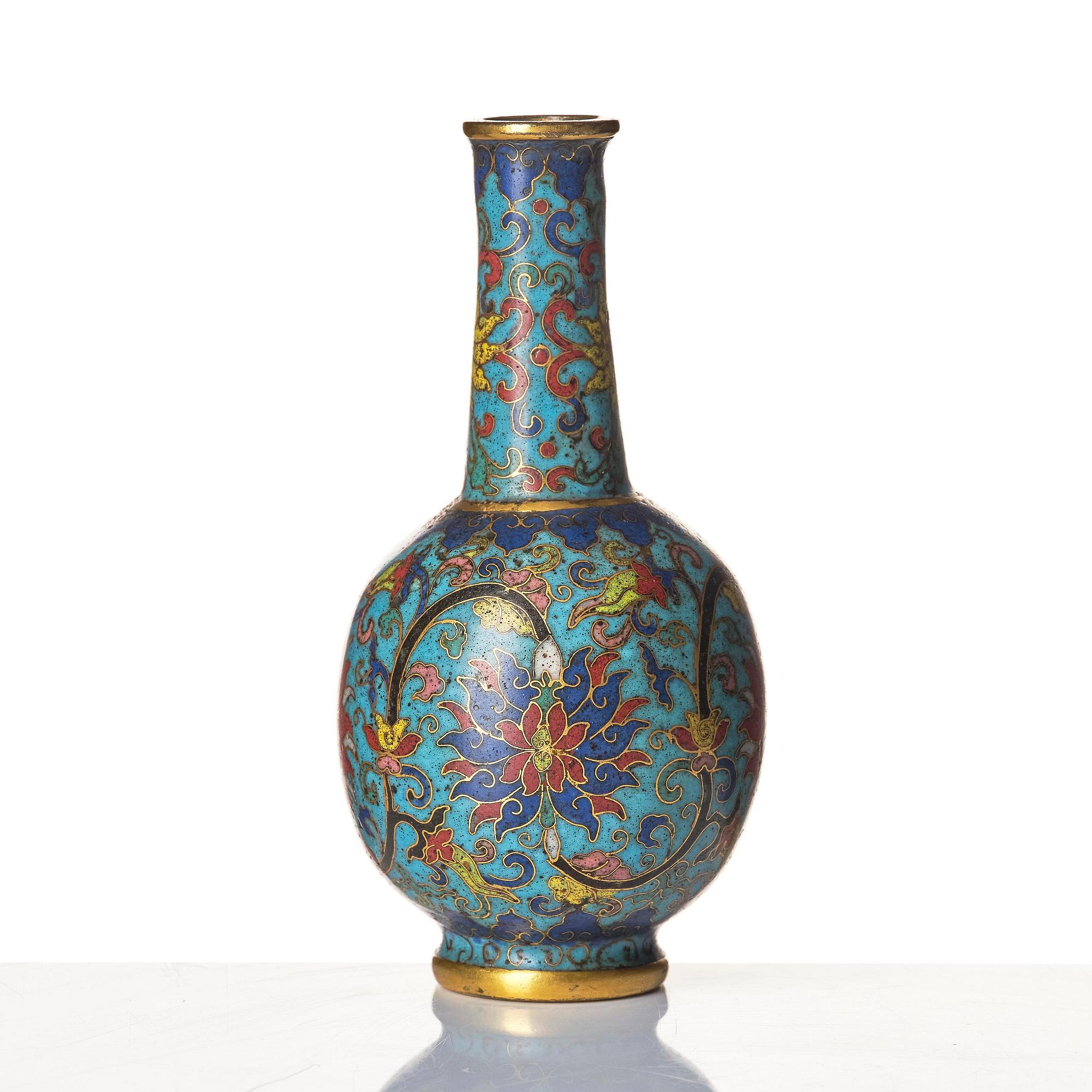
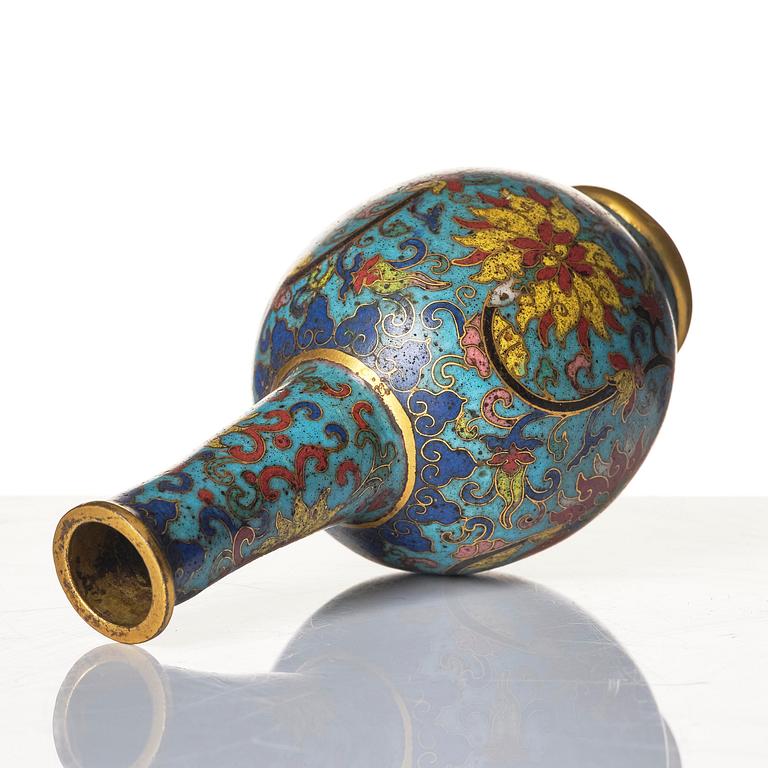
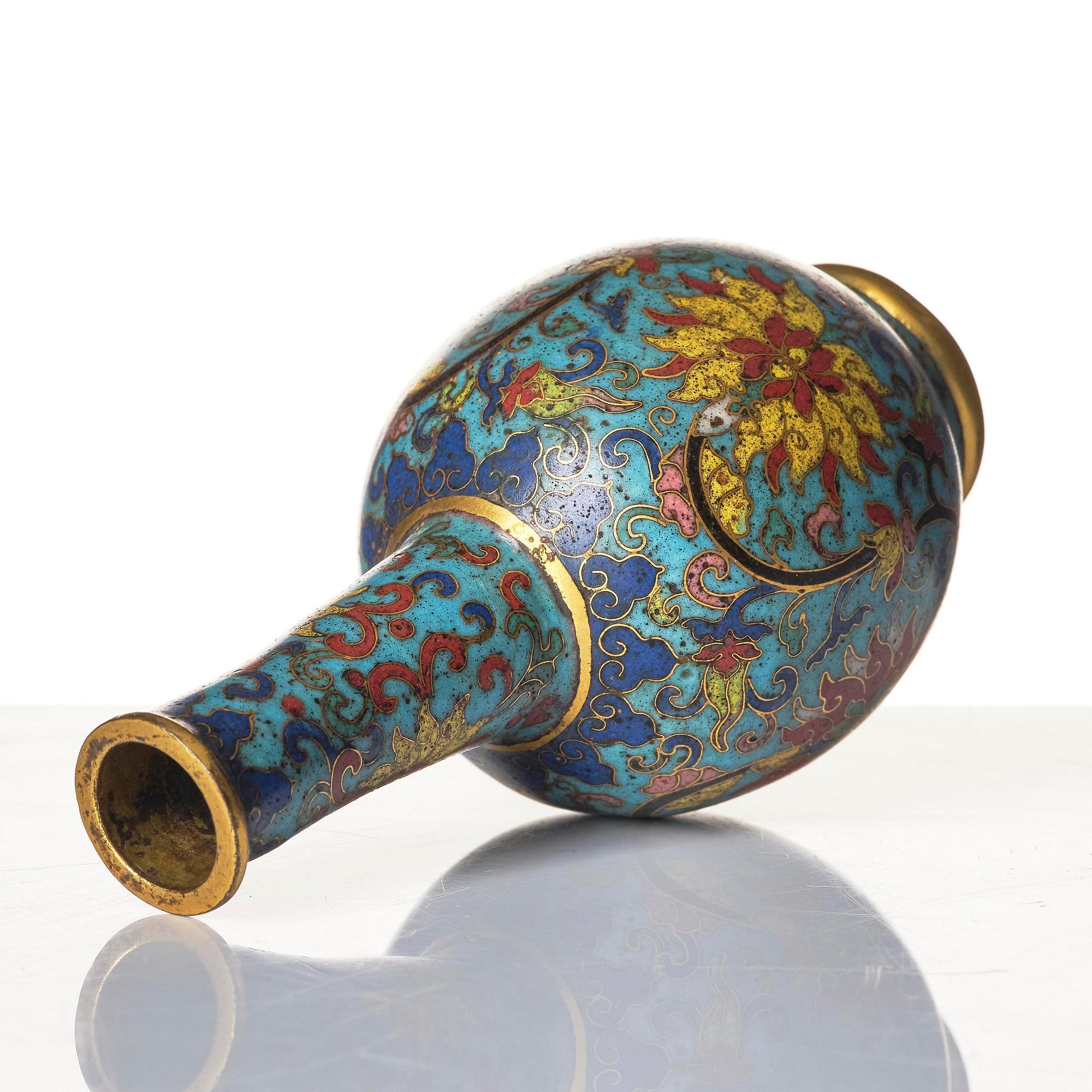
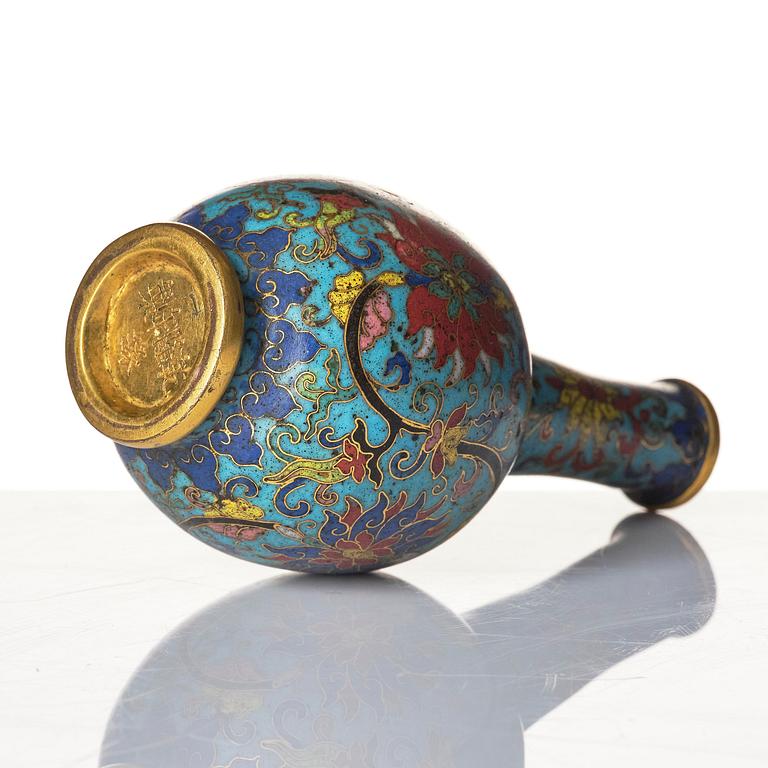
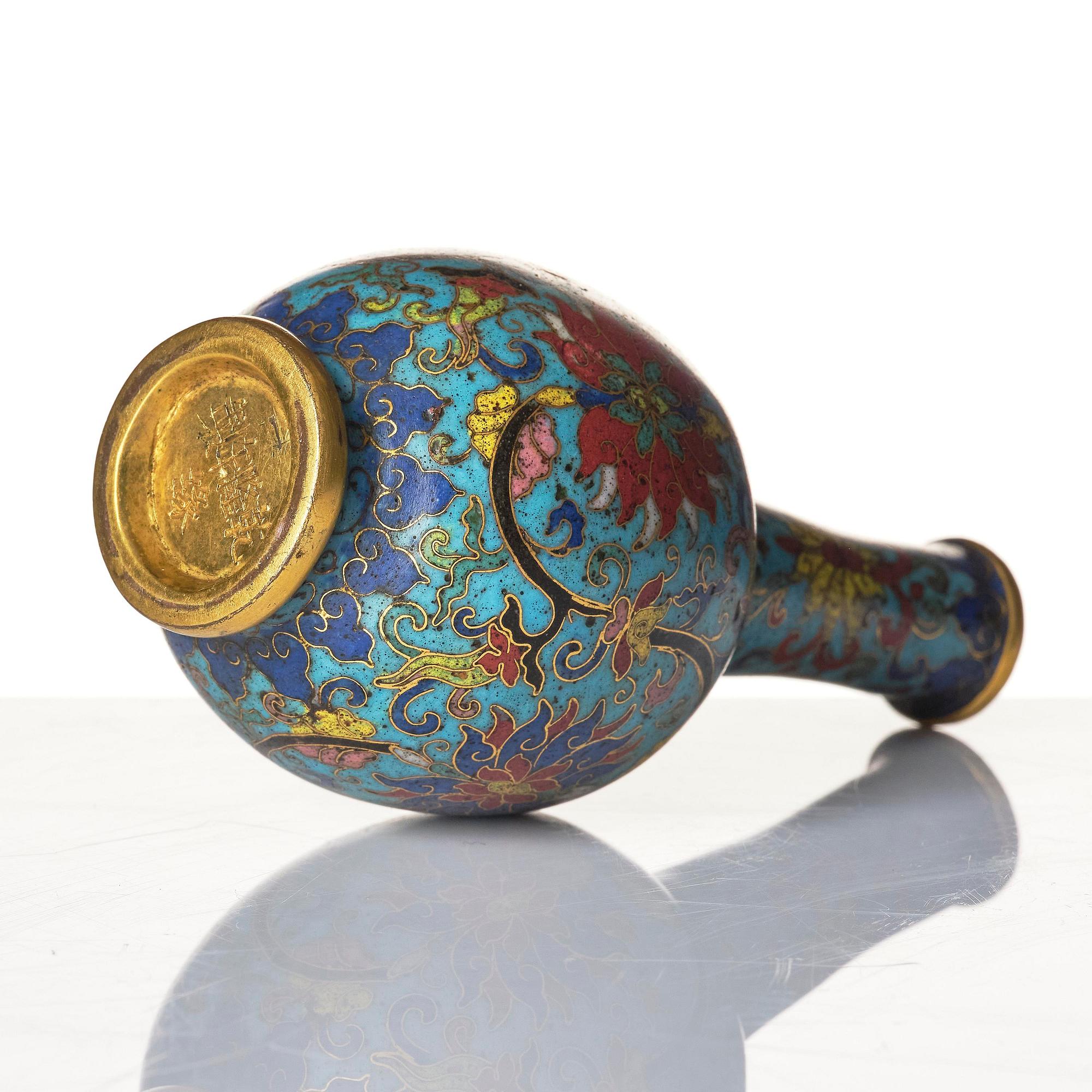
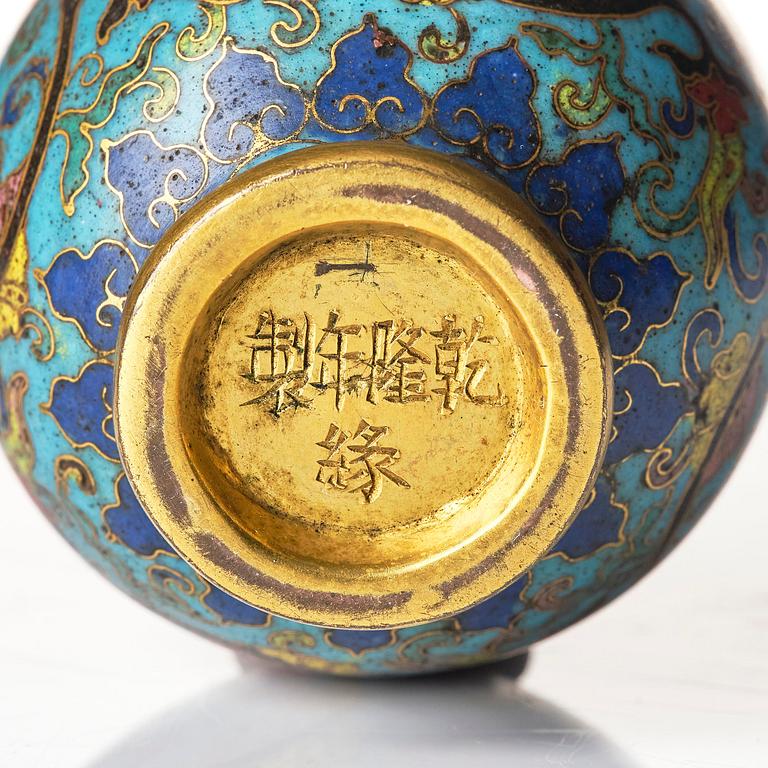
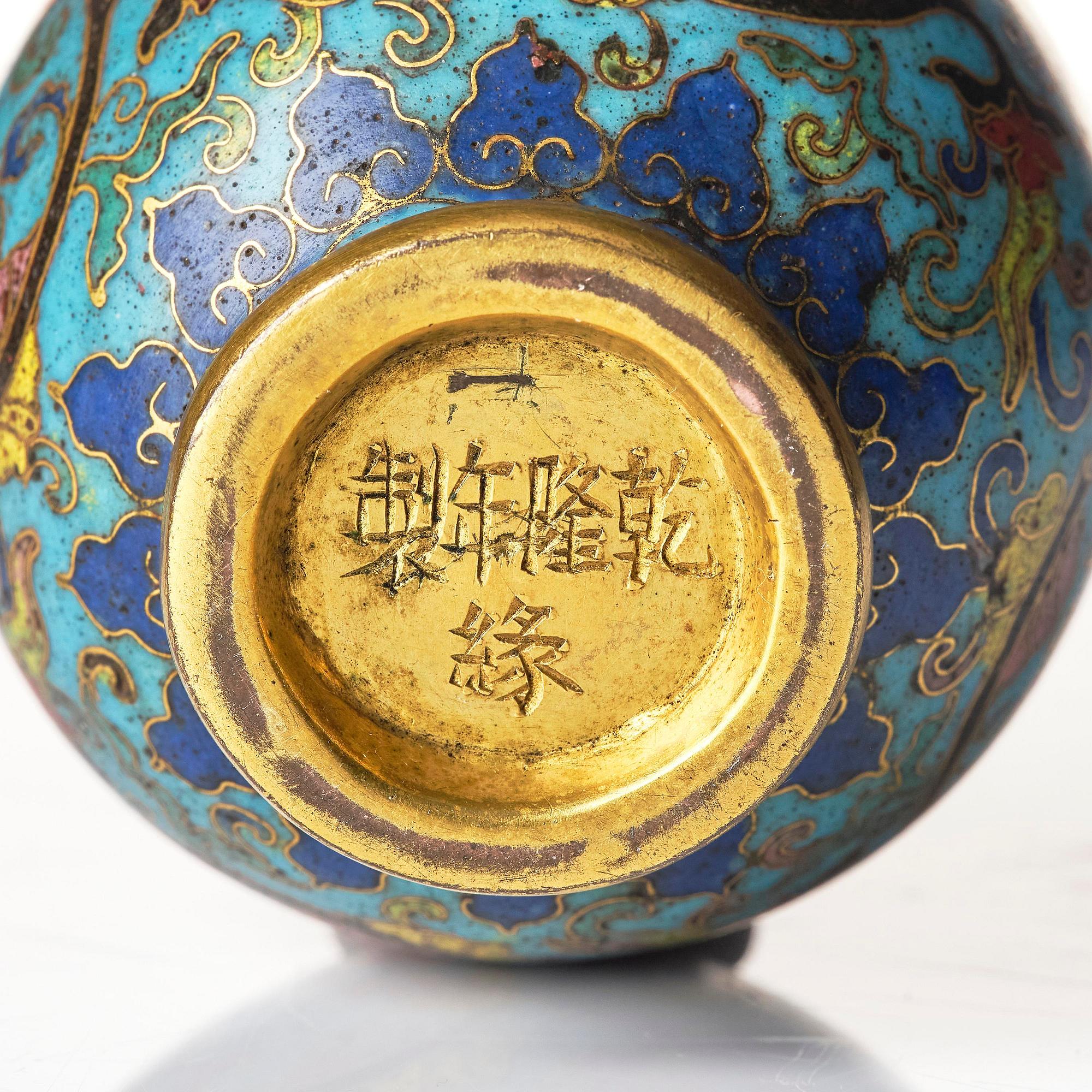
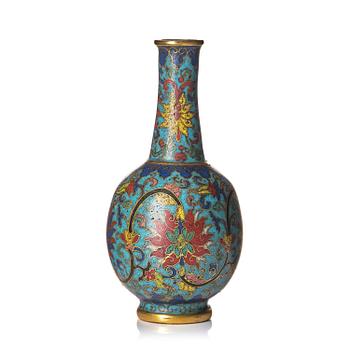
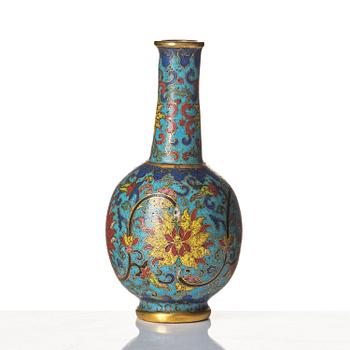
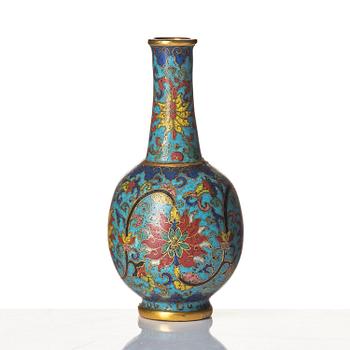
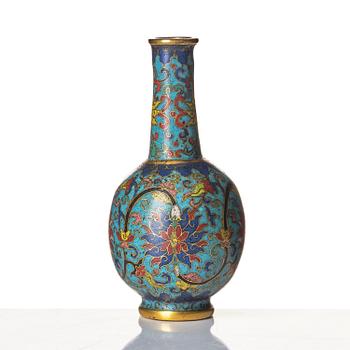
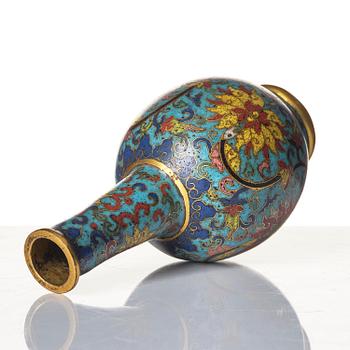
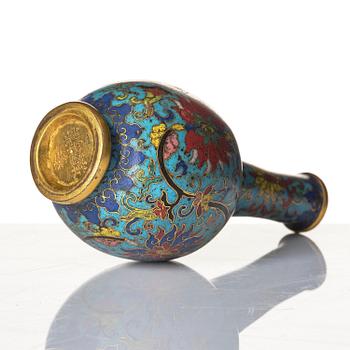
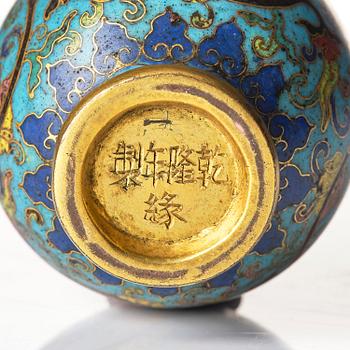
The vase is cast with a globular body and tall slightly tapering neck, decorated in multi-coloured enamels with scrolling lotus against a turquoise ground. The gilt base is incised with a Qianlong reign mark in a horizontal line followed by an additional character of Yuan. Height 12 cm.
Provenance
Property of a private Swedish collector.
Exhibitions
Compare another related Qianlong cloisonné enamel vase in the Palace Museum, Beijing, illustrated in Compendium of Collection of the Palace Museum: Enamels 2, Beijing and Hefei, 2011, pl.154.
Compare, Christies Live auction 3217 Reverence and Perfection - Magnificent Imperial Cloisonne Enamels from a Private European Collection, lot no 2057, 29 May 2013.
Literature
Compare to a slightly smaller example (12.1 cm. high) in the Pierre Uldry Collection, inscribed with an additional character, Shou, illustrated by Brinker and Lutz in Chinese Cloisonné: The Pierre Uldry Collection, New York, 1989, pl. 285. The authors note that the additional inscription seen on some Qing cloisonné enamel pieces may appear as a single number between one and five or as an obscure character defining the vessel's usage and category, op. cit., p. 74.
See also, a very similar one in Cloisonné, Chinese enamels form the Yuan, Ming and Qing dynasties, Edited by Beatrice Quette. Page 291.
The extra character is also sometimes seen on some imperial glass wares and believed by some scholars to be a serial number from the Chinese classic Qianziwen, 'The One Thousand Word Essay', with a strong connection to the Imperial Workshops (refer to Elegance and Radiance, Grandeur in Qing Glass, Chinese University of Hong Kong, 2000, p. 312).
For condition report contact specialist

Others have also viewed