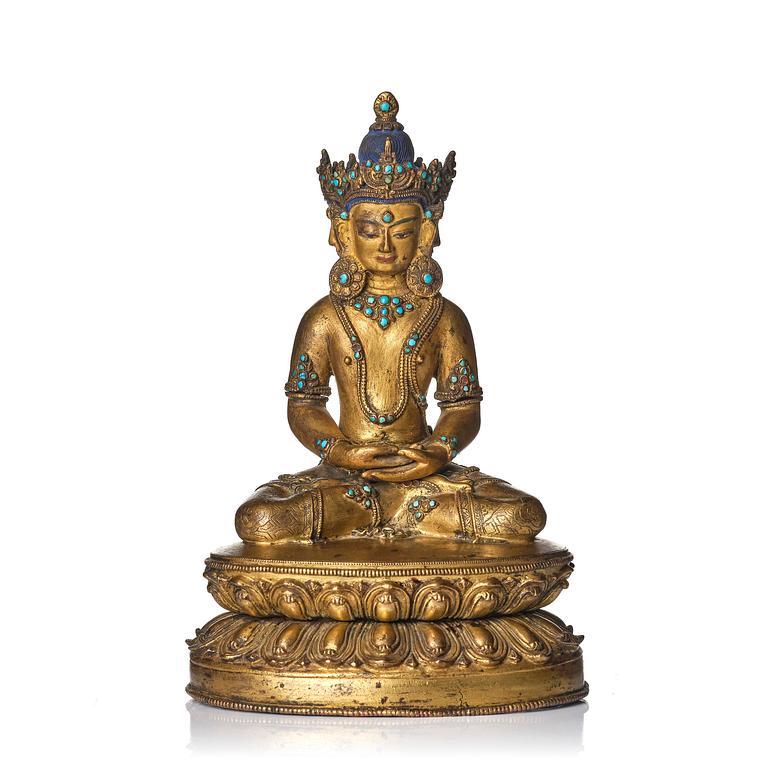
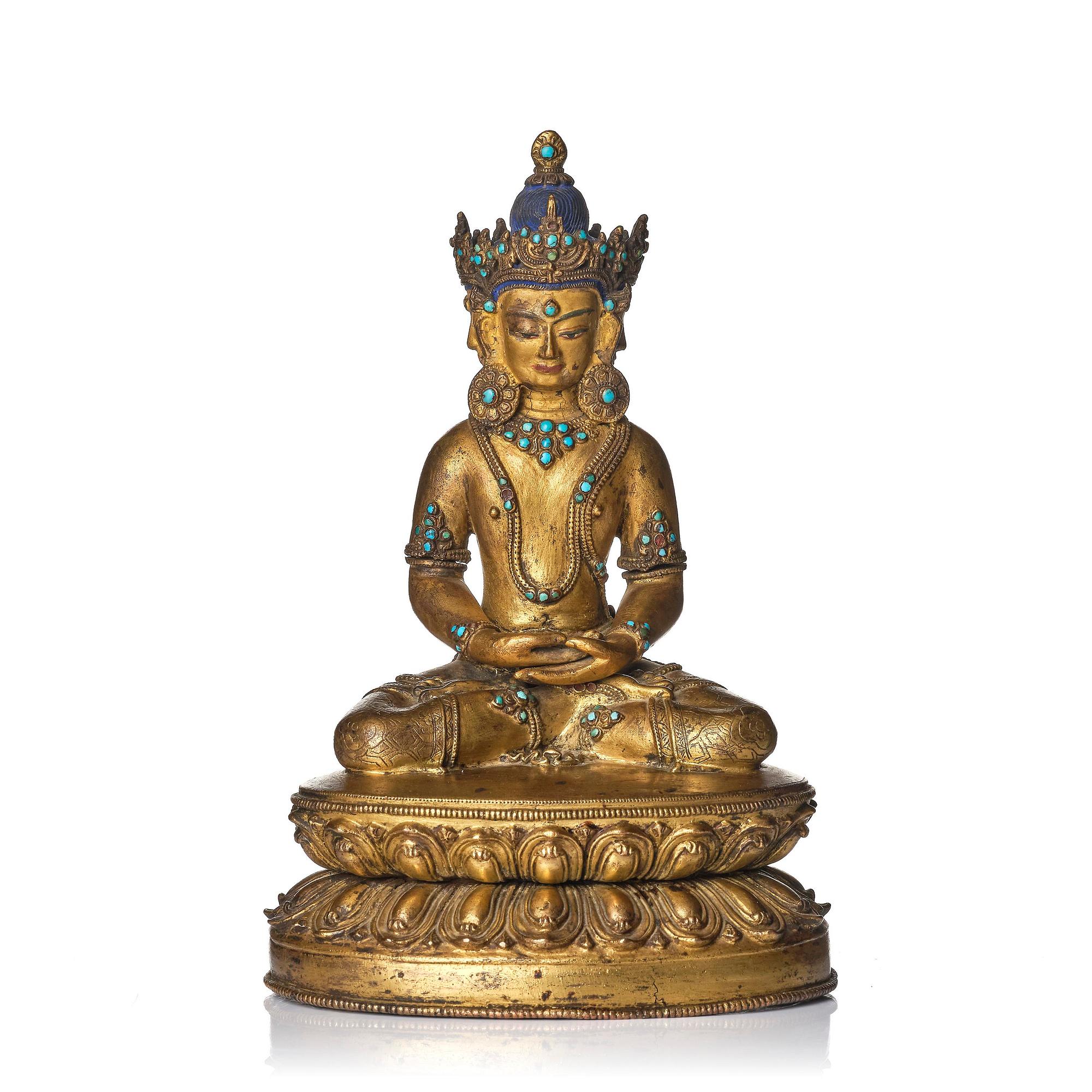
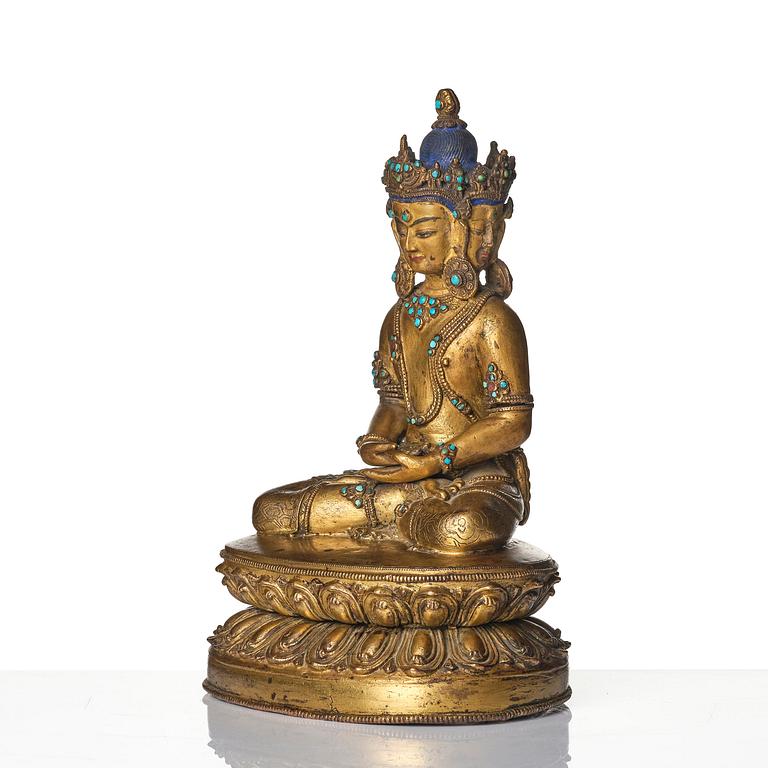
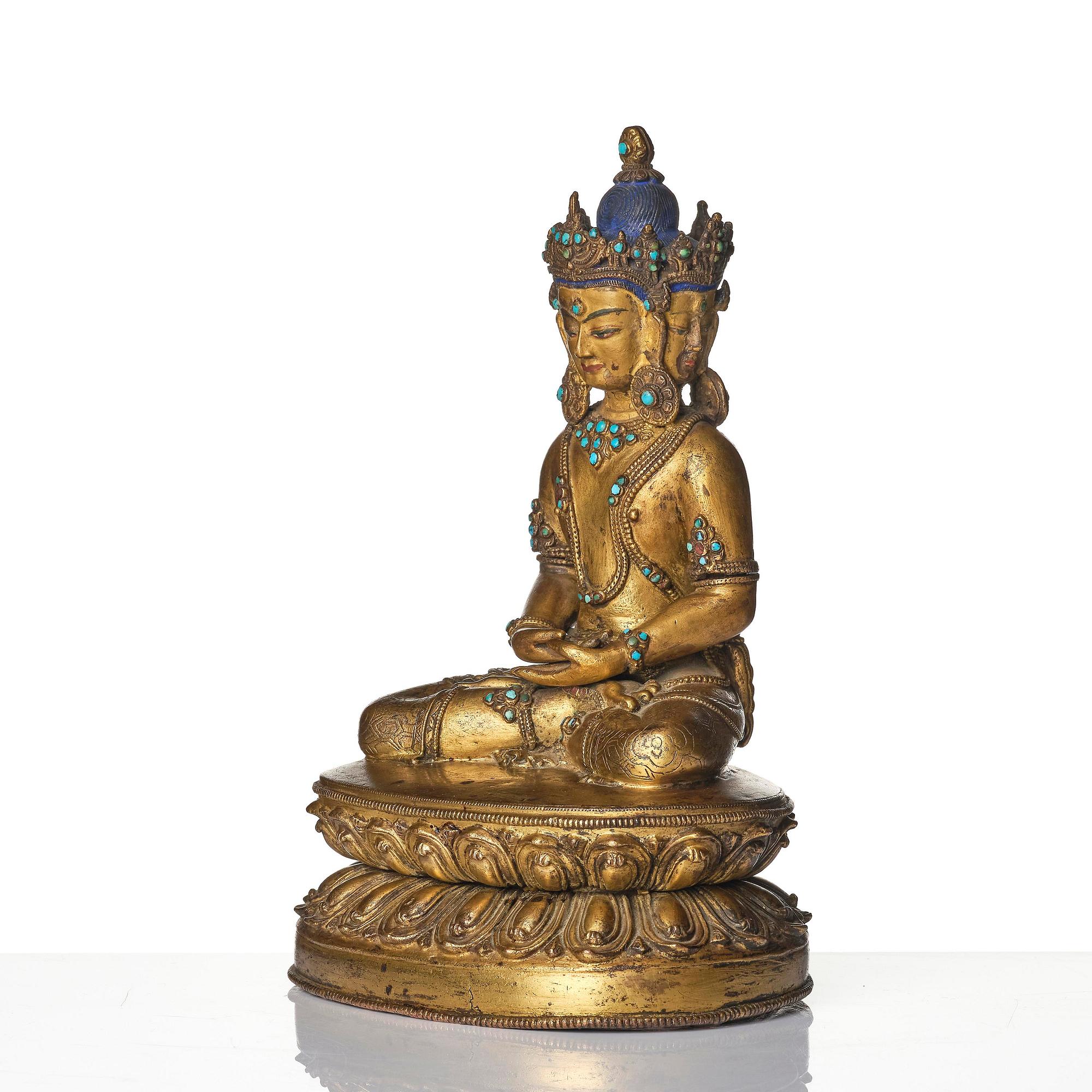
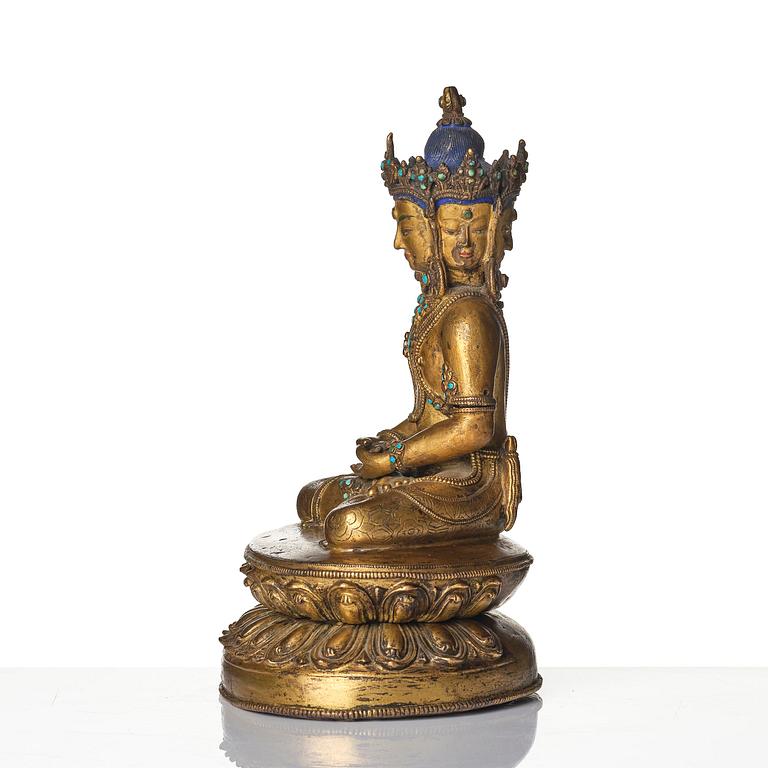
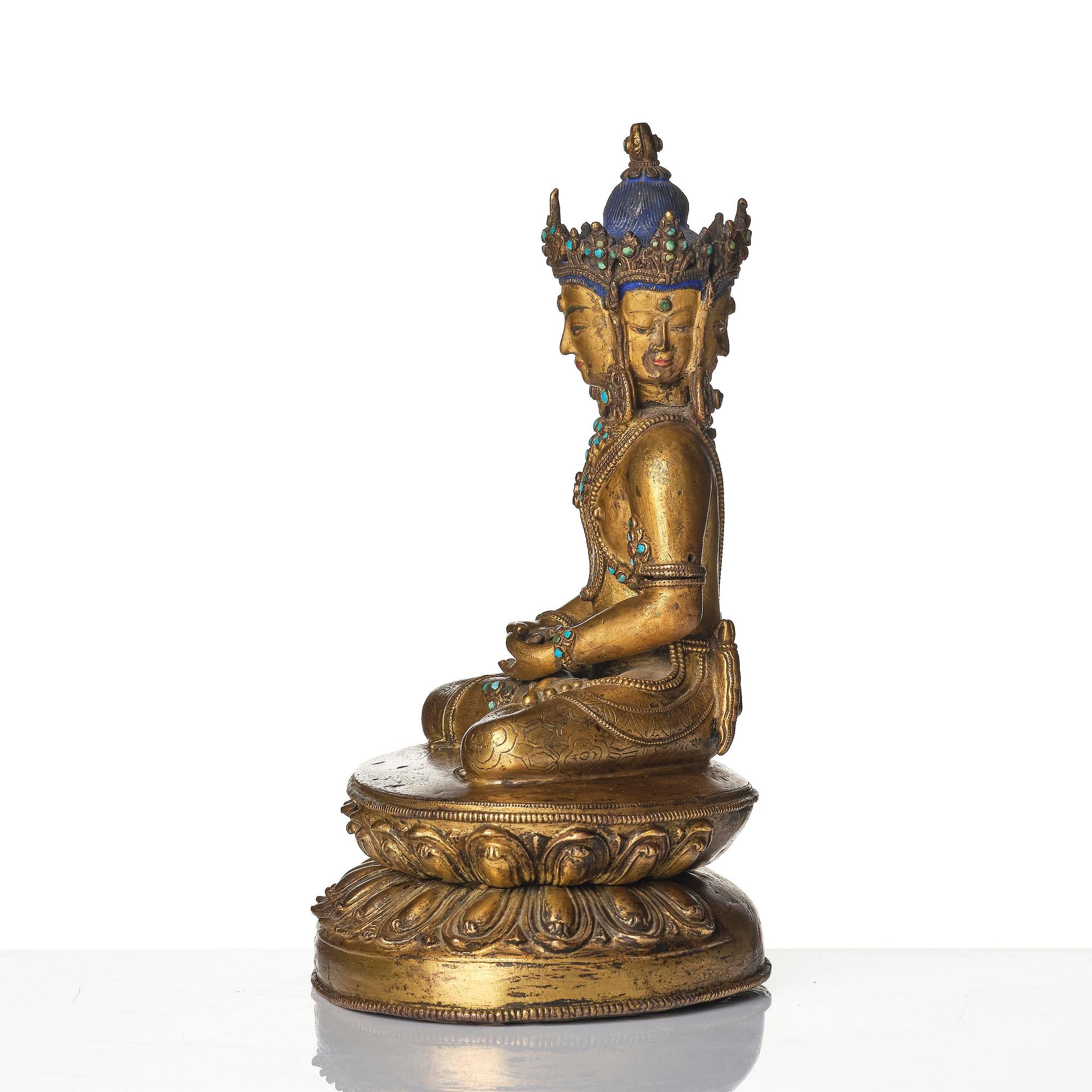
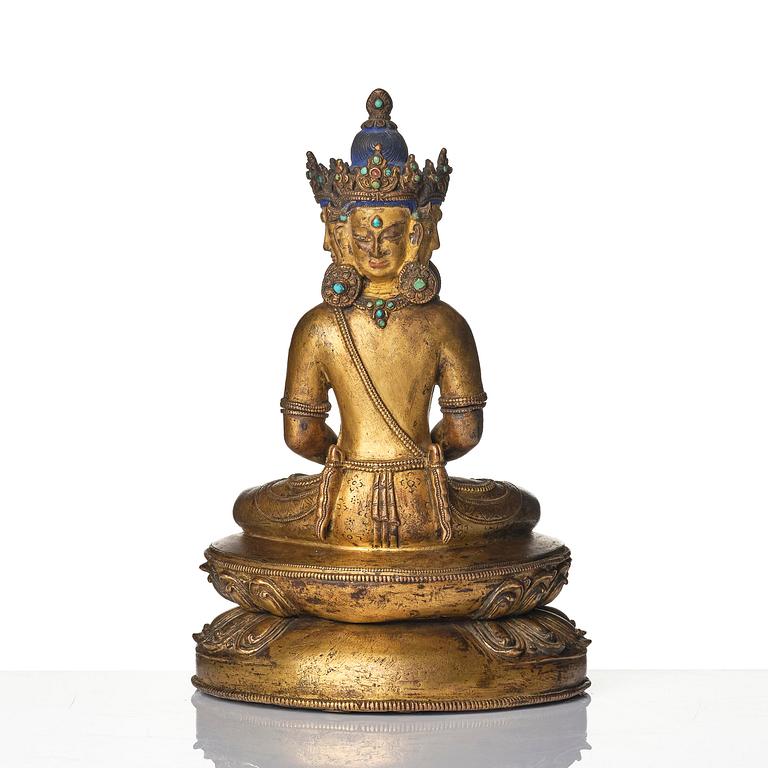
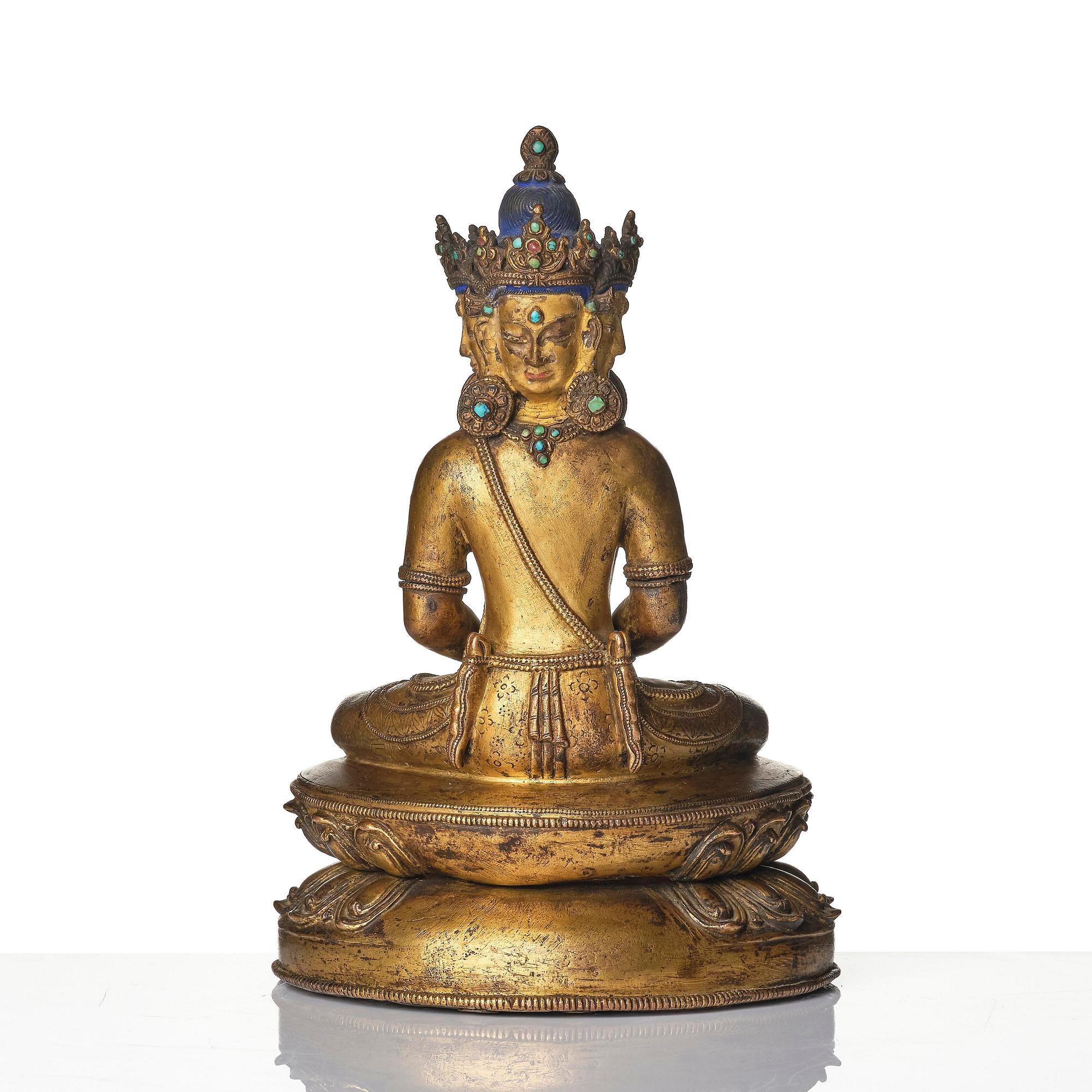
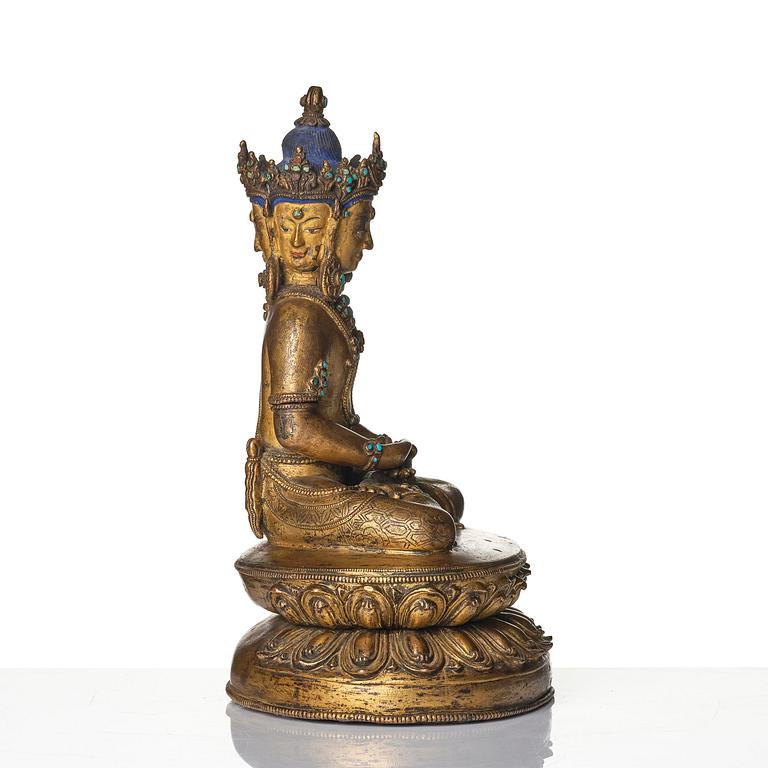
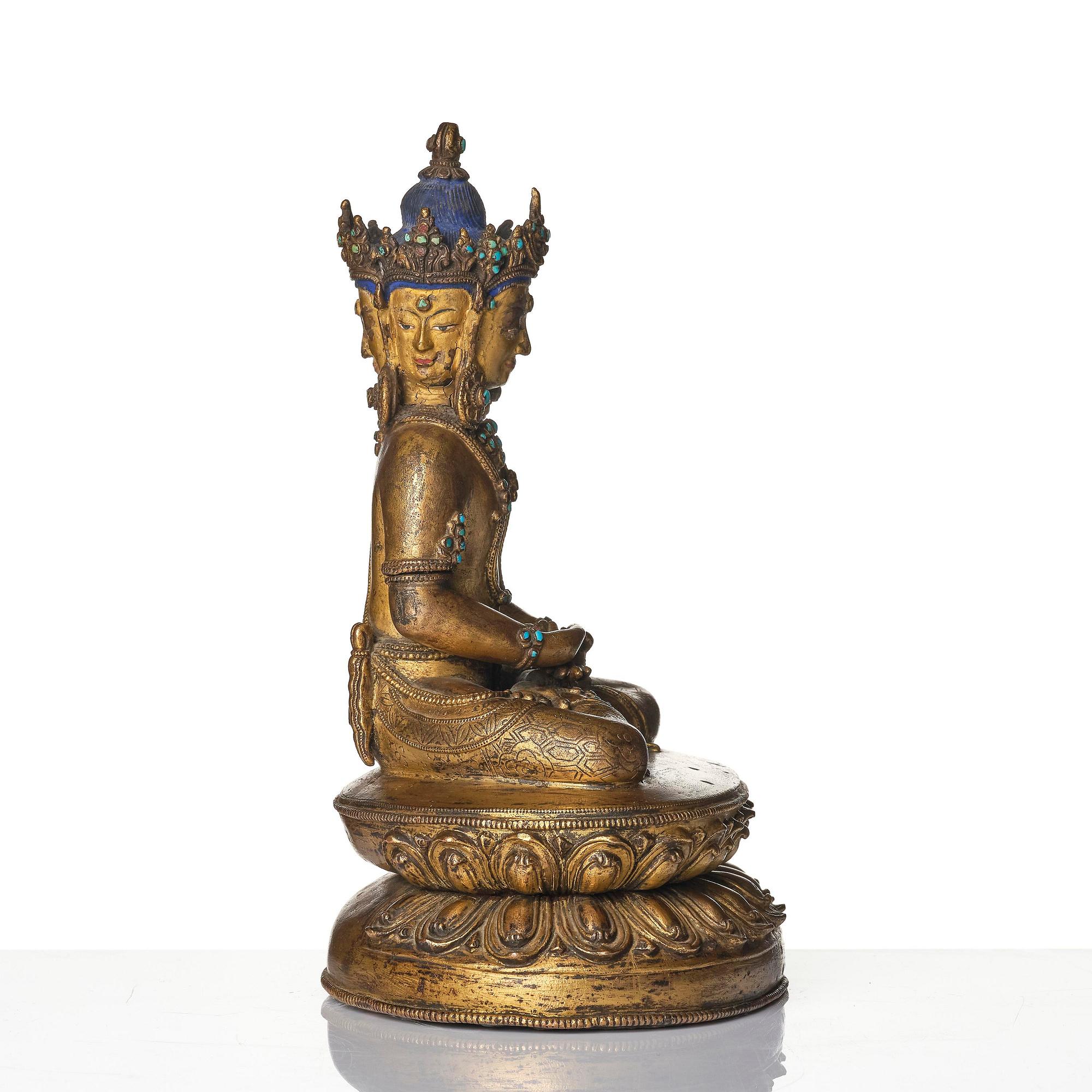
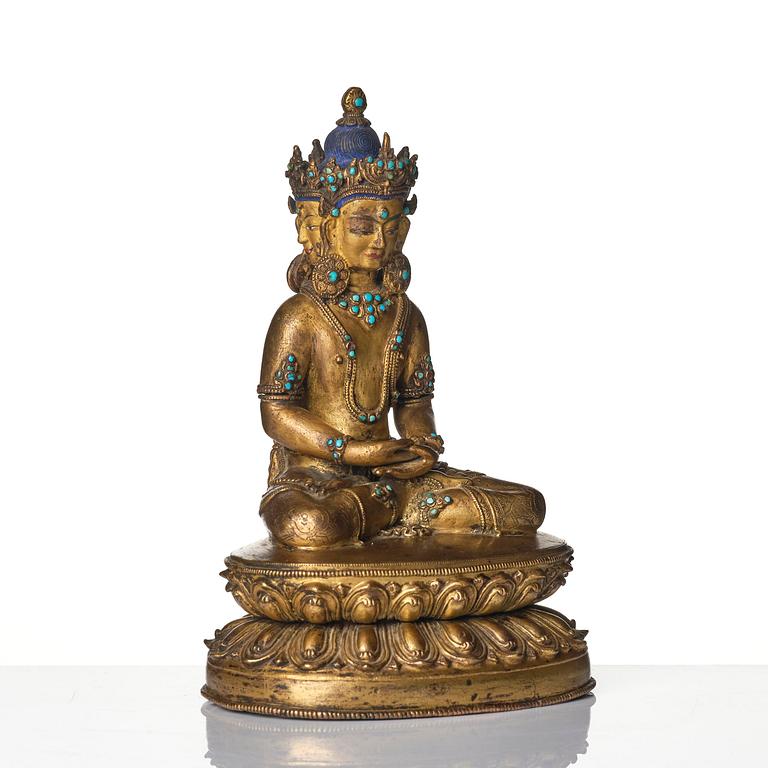
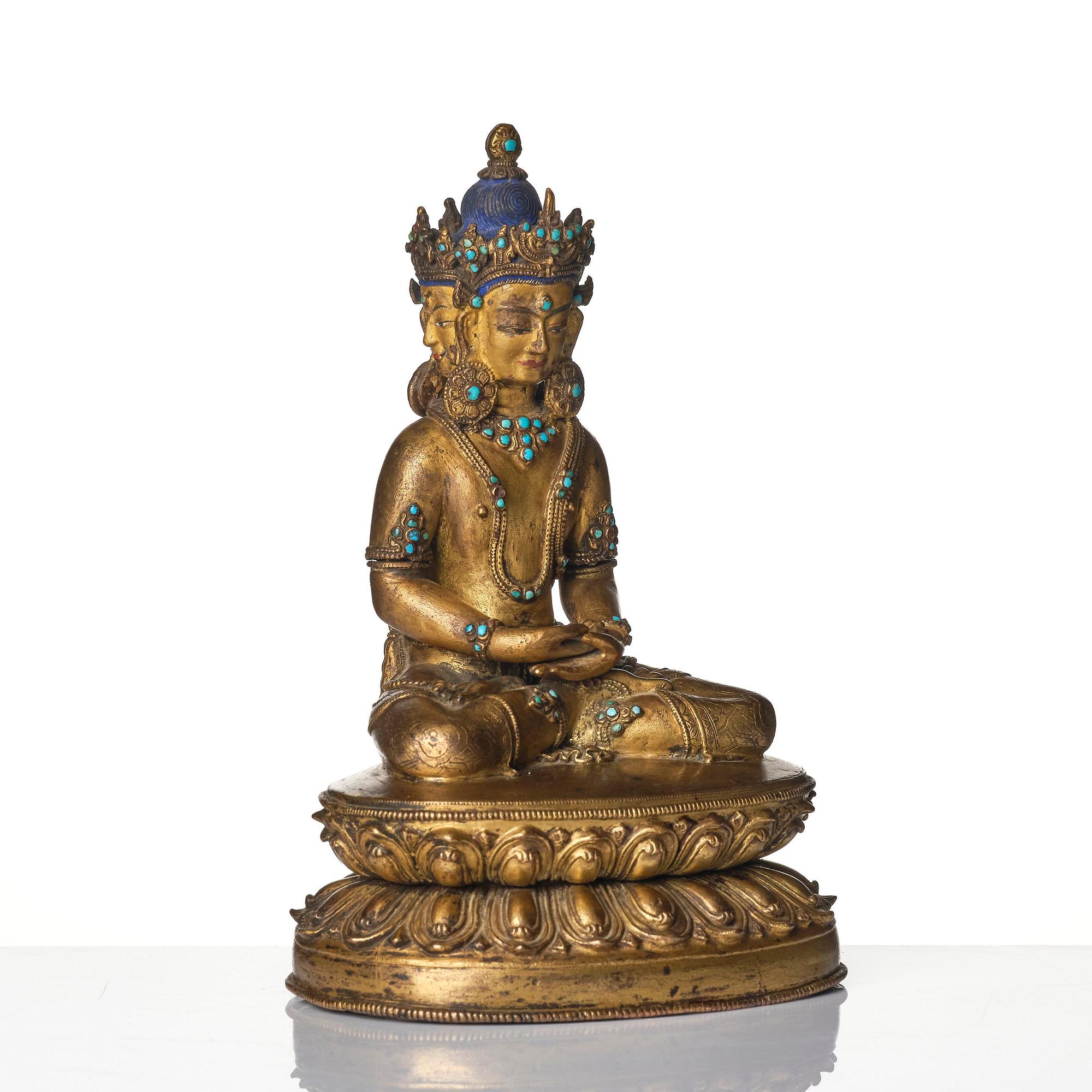
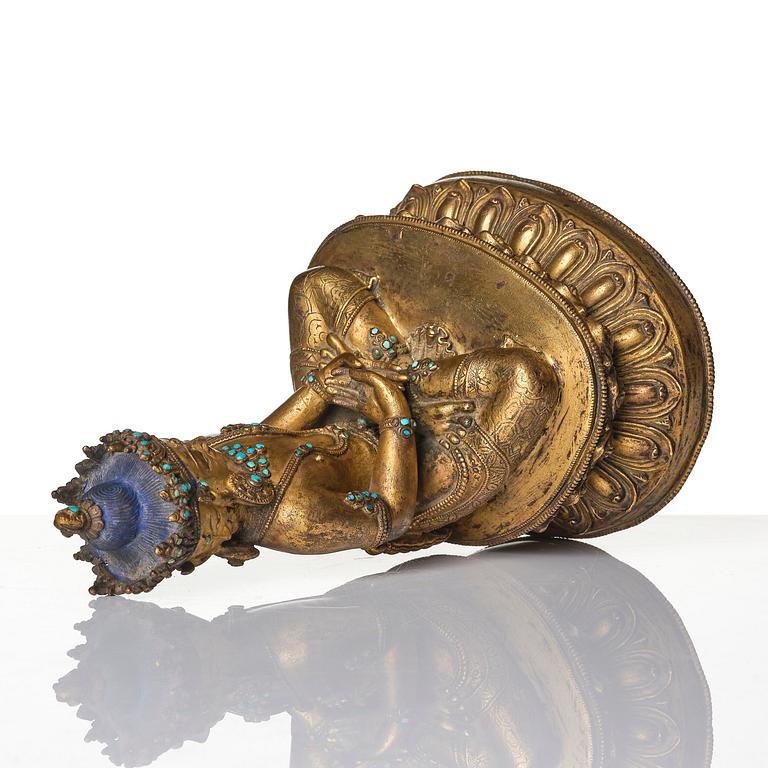
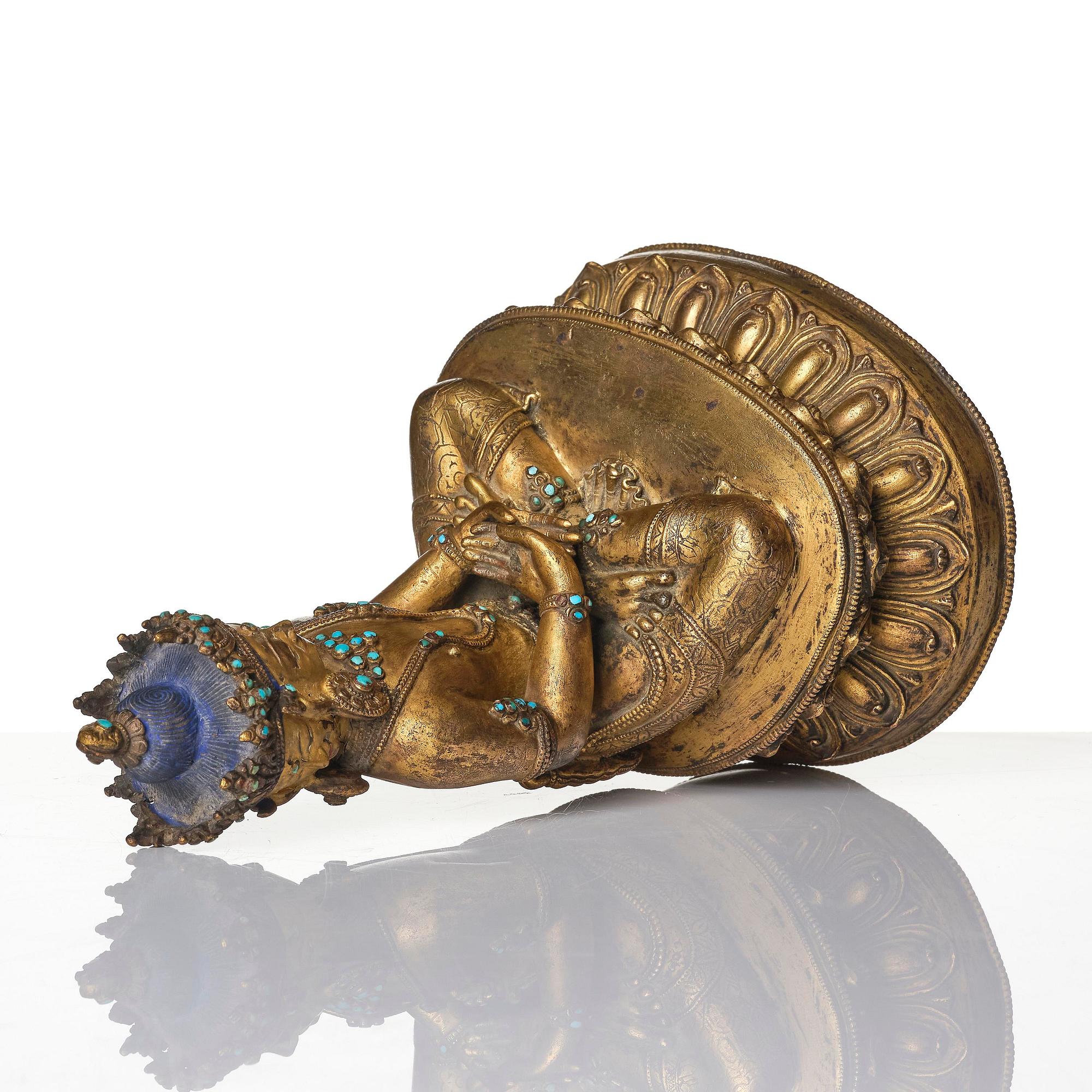
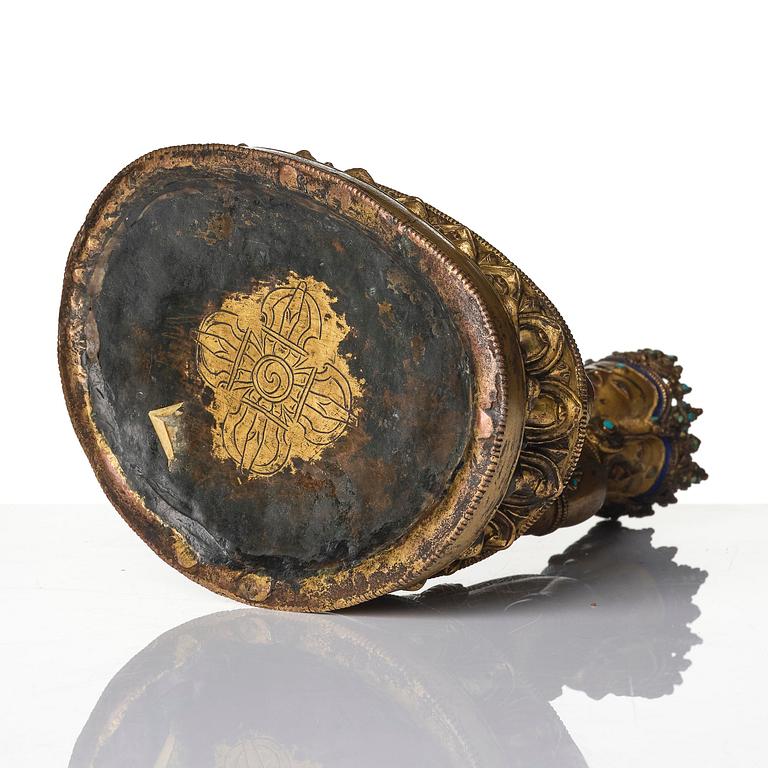
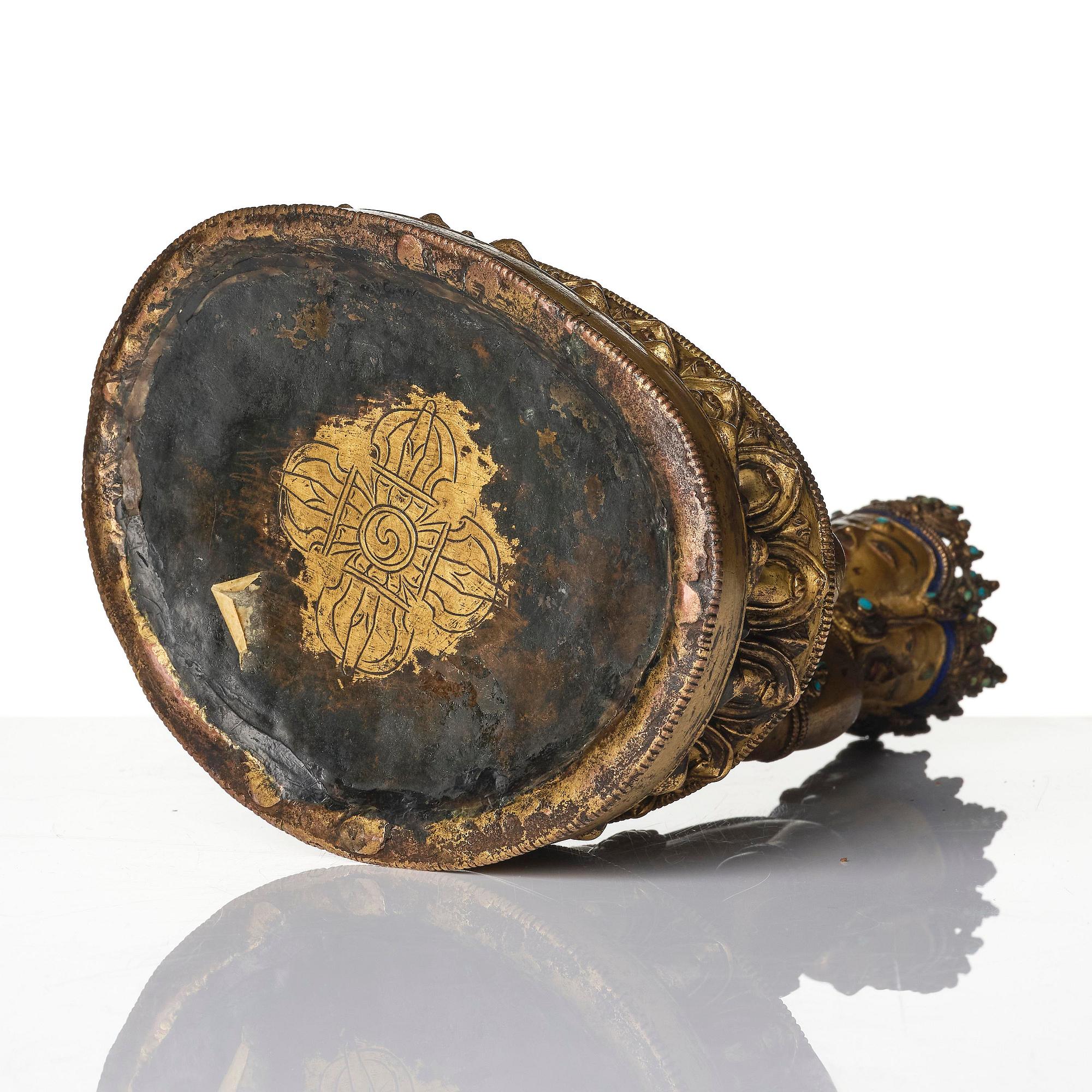
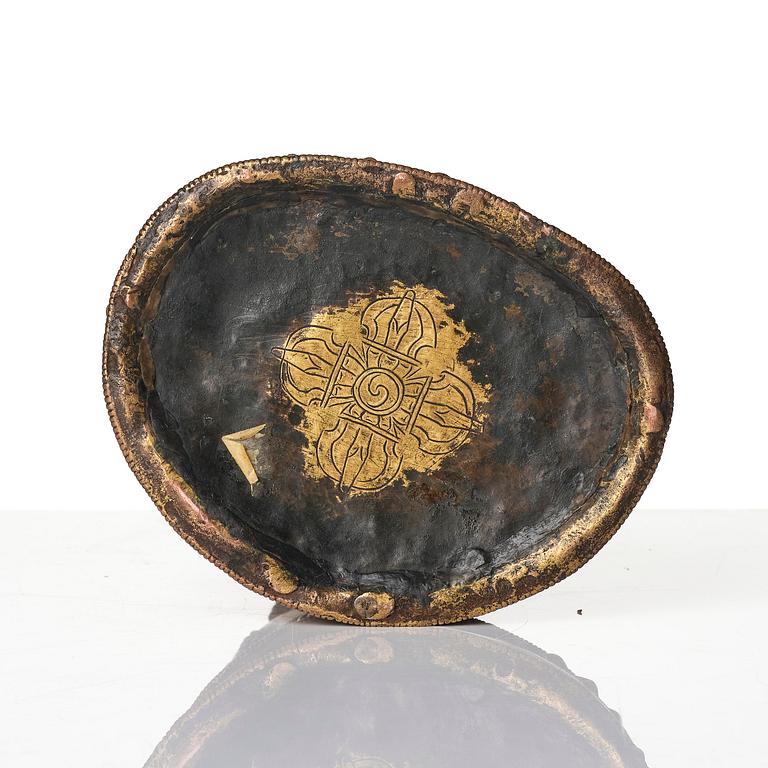
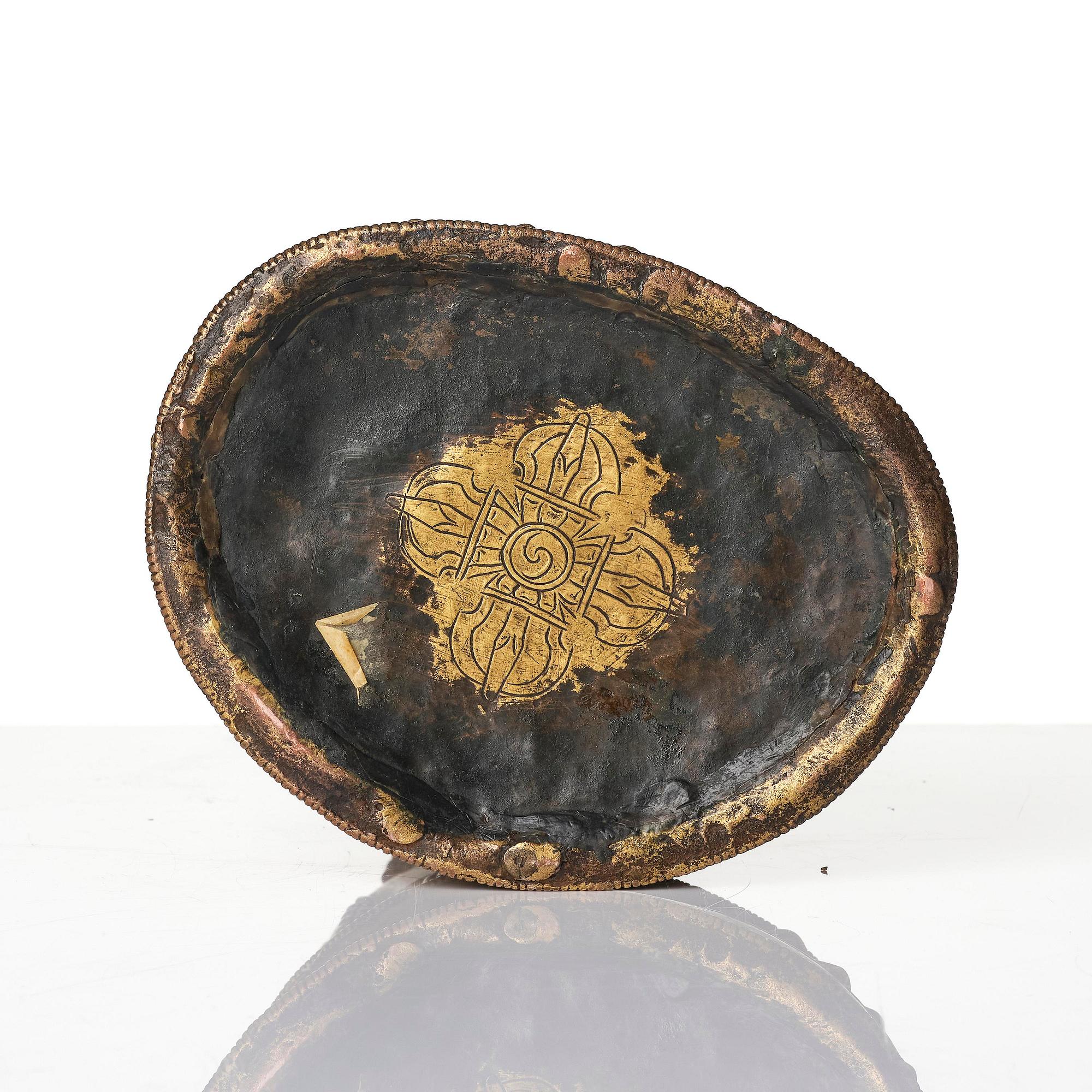
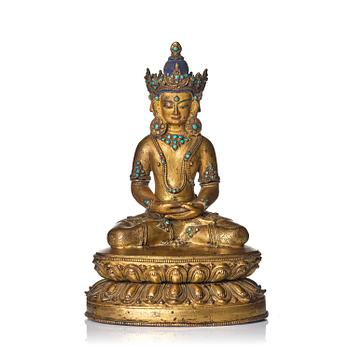
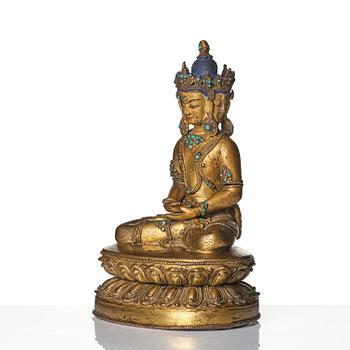
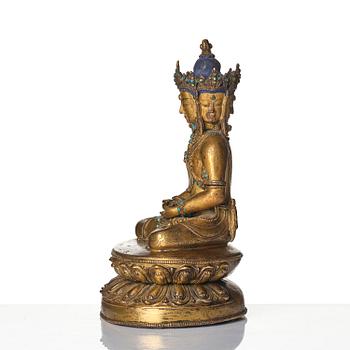
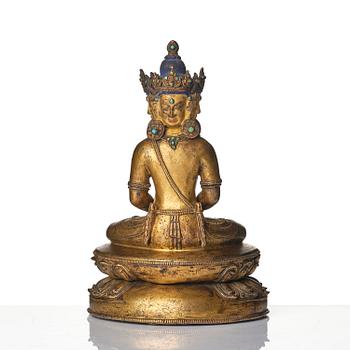
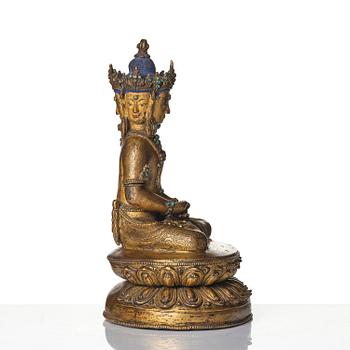
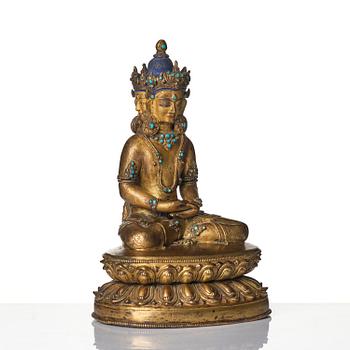
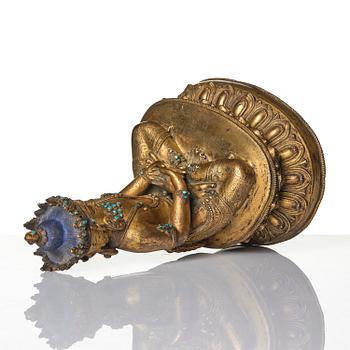
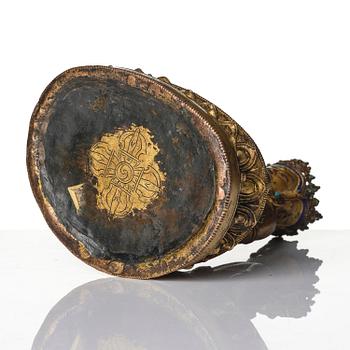
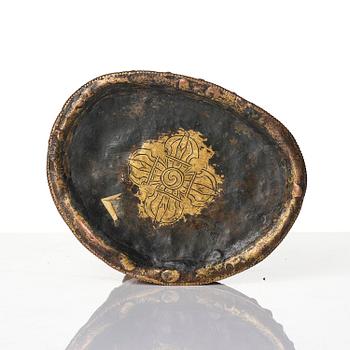
The figure is cast seated in dhyasana upon a double lotus throne with beaded edges, holding his hands in his lap, joined in the meditative samadhi mudra and meant to support The Wheel of Dharma (Dharmachakra) or an upright vajra, the head is represented with four faces, each with a calm expression and a drop-shaped urna between the arched brows, framed by ears suspending large floral earrings, a continuous ornate crown encircling the pigmented high coiffure, clad in a geometric-patterned skirt (antaravasaka) with finely incised borders which is tied around the waist and terminating in a ruffled flourish between his crossed legs, adorned in elaborate jewellery inlaid with turquoise beads, the faces with cold gold paste and pigments, sealed with a copper plate engraved with a gilt double vajra (visvavarja). Height: 23 cm.
Cast in parts. Attribute, wheel, missing.
Provenance
From the collection of Chef and Restaurant Manager Erik Berlin (1930‑2012), Malmö. Thence by descent within the family.
Exhibitions
Compare with a Tibetan sculpture of the same period but smaller; sold at Christie's New York, lot 85, 14 September 2010.
Compare with one at Himalayan Art resources, lot not 2381.
Literature
Another example of a four-faced Vairocana is published in Amy Heller, Early Himalayan Art, New Delhi, 2008, pp.124-5, no.40.
More information
Sarvavid Vairocana is the chief deity in the Sarvavid Vairocana Mandala, the root mandala of the Sarvadurgatiparisodhana Tantra. Out of the five ’wisdom’ Buddhas, he is the only one who may have more than one face. Sarvavid Vairocana is recognized by his bodhisattva regalia, his four faces, and The Wheel of Dharma (Dharmachakra), which is lost in the present figure. In this large and finely detailed figure of Vairocana, he is depicted in his four-faced form, alluding to his epithet as the Omniscient Buddha.
The present figure is cast in parts, with the forearms and lower part of the lotus throne cast in separate parts.
For condition report contact specialist
Others have also viewed