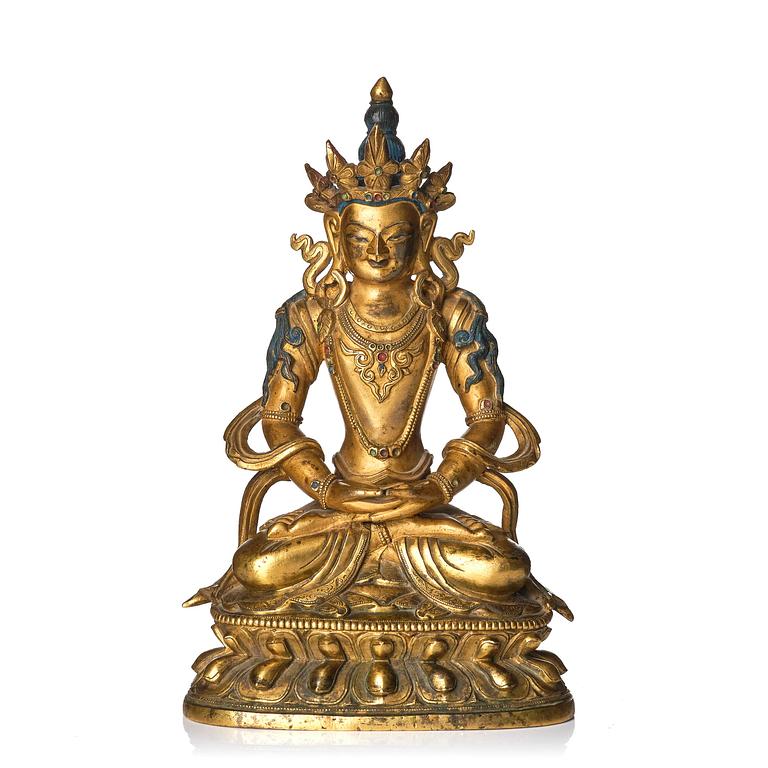
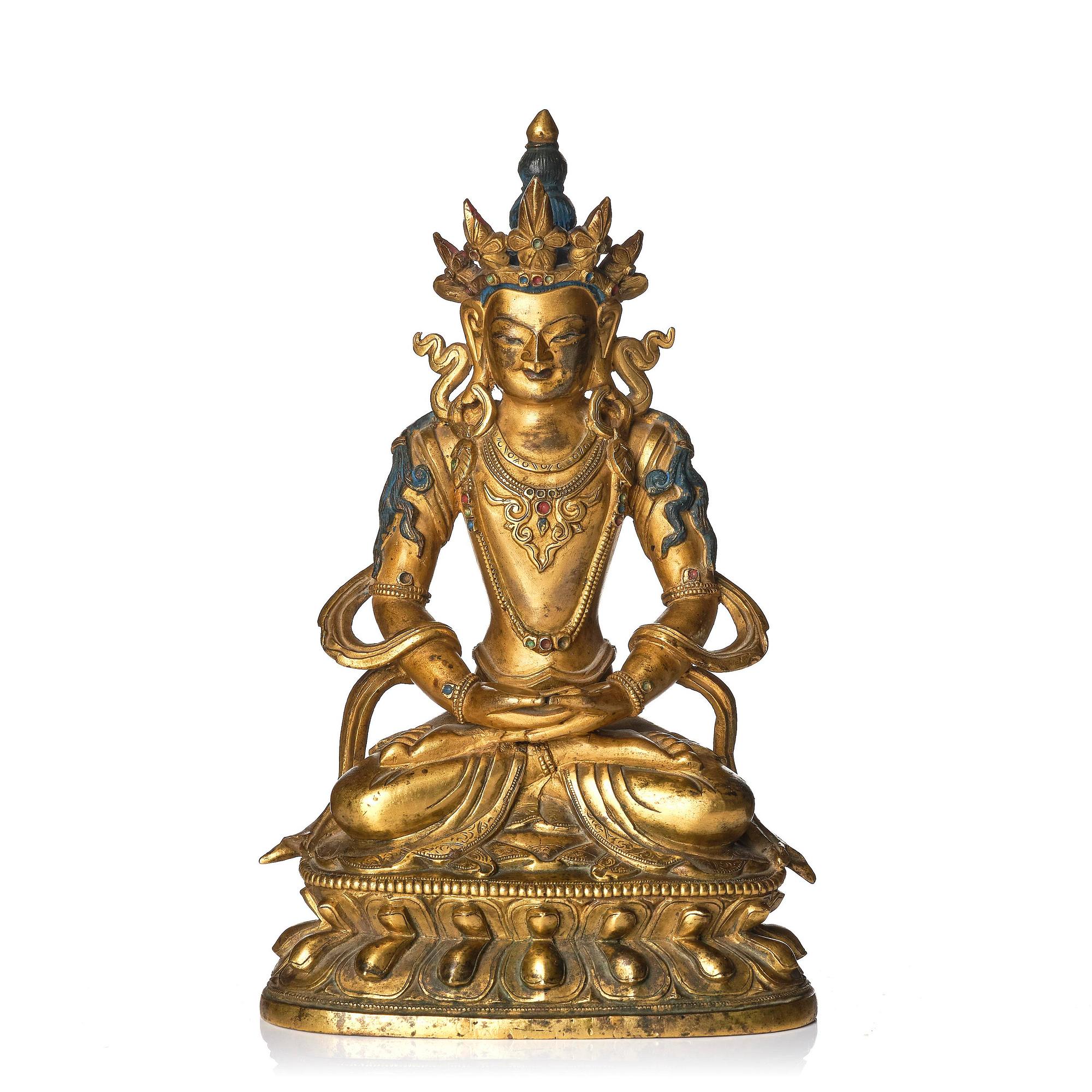
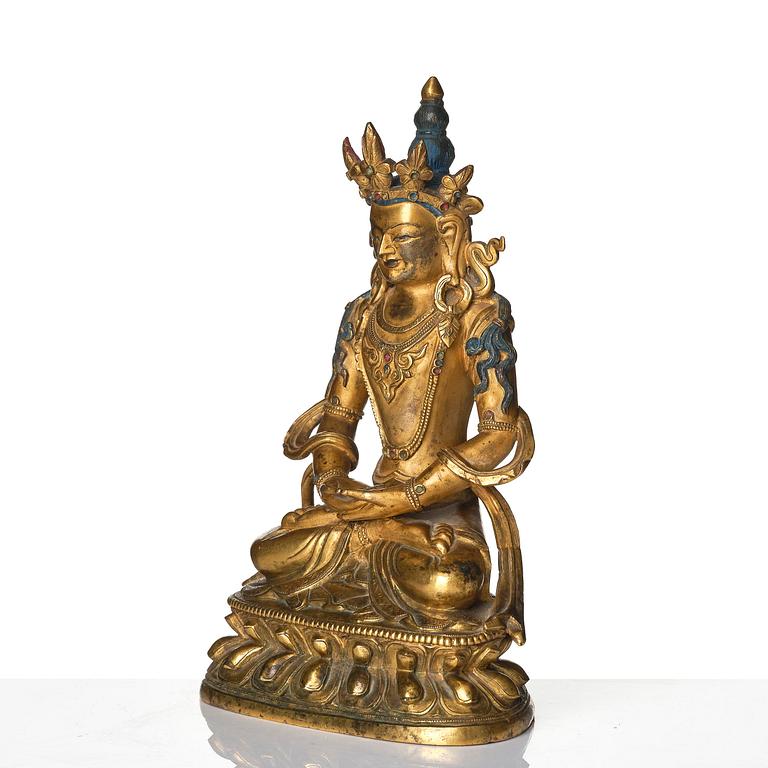
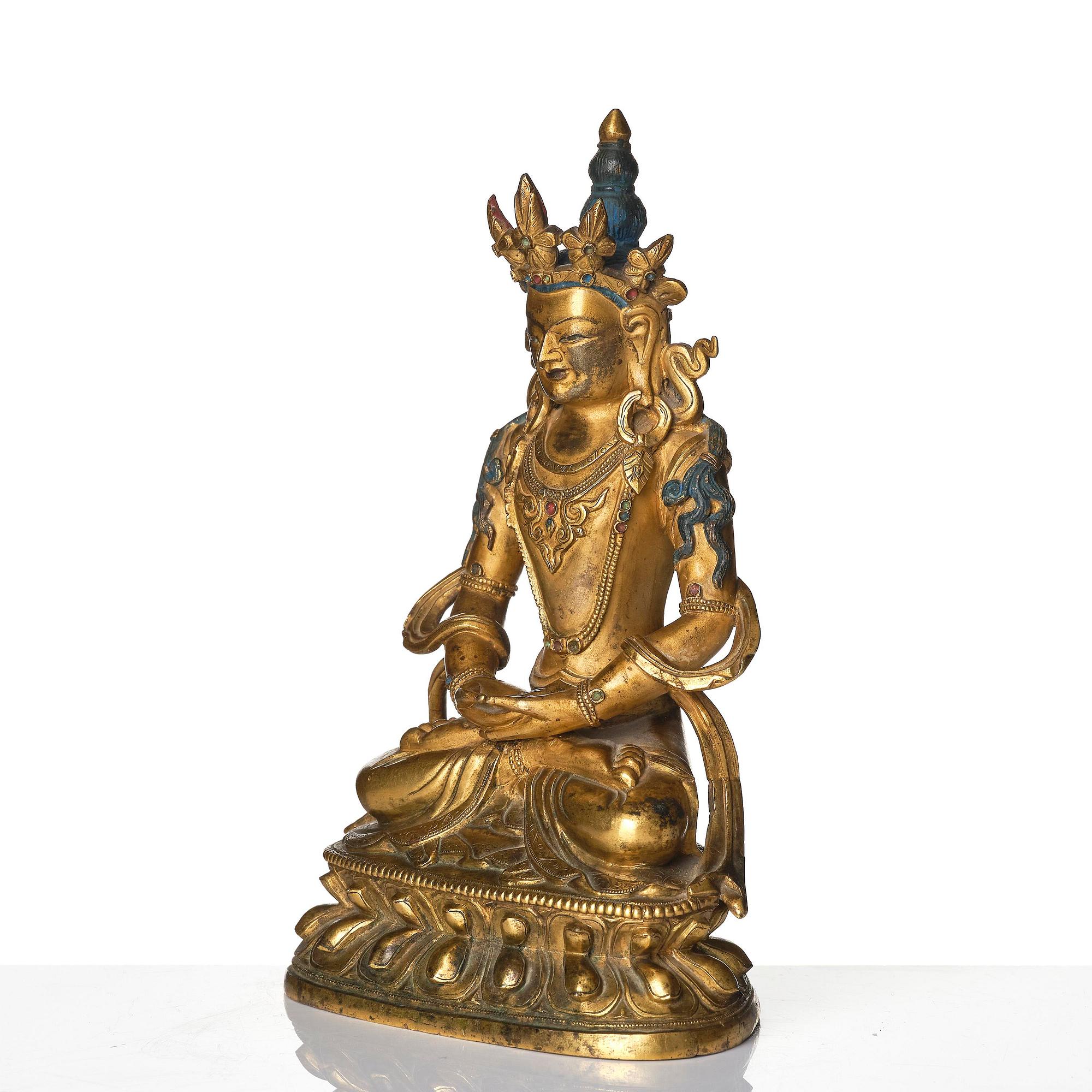
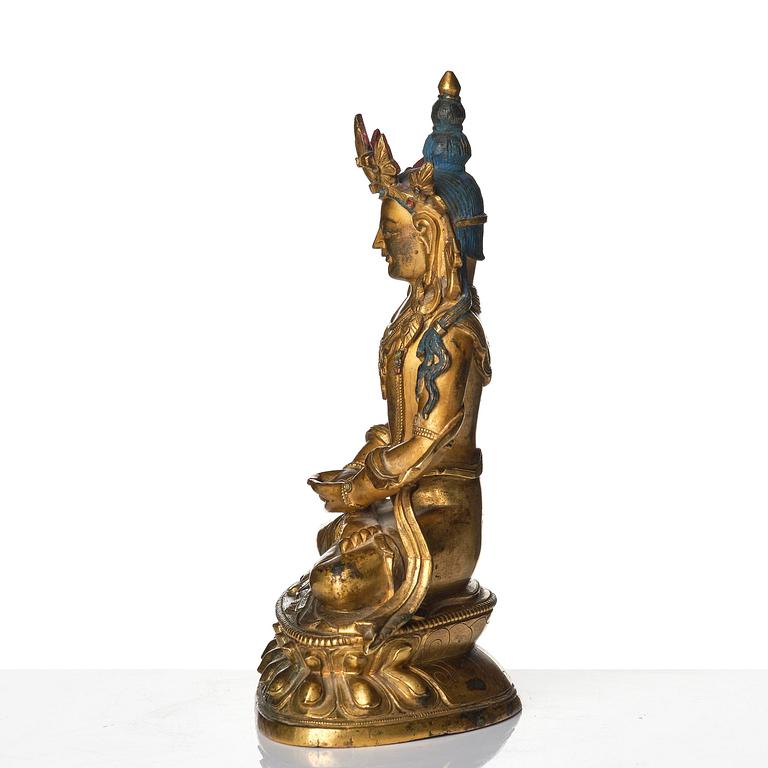
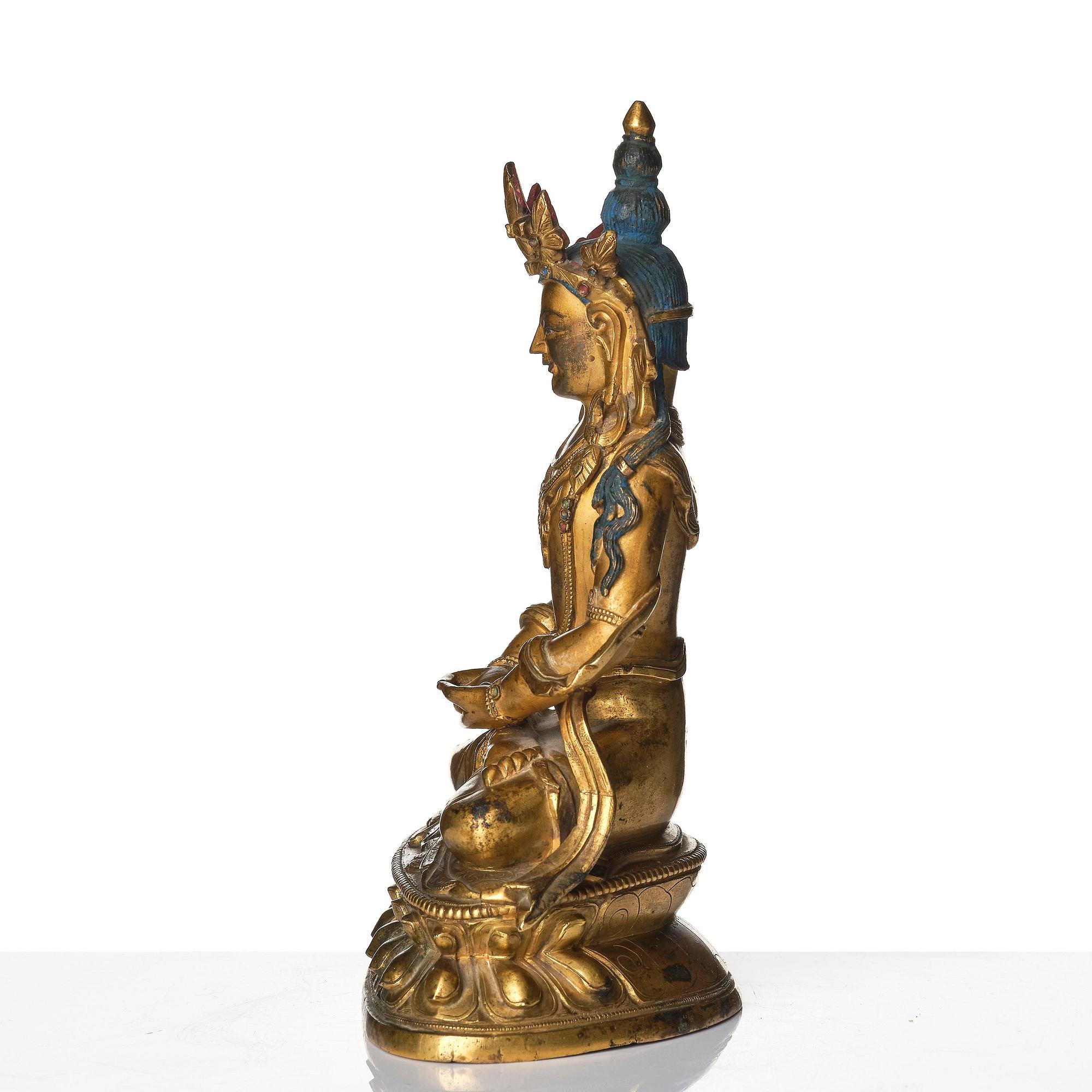
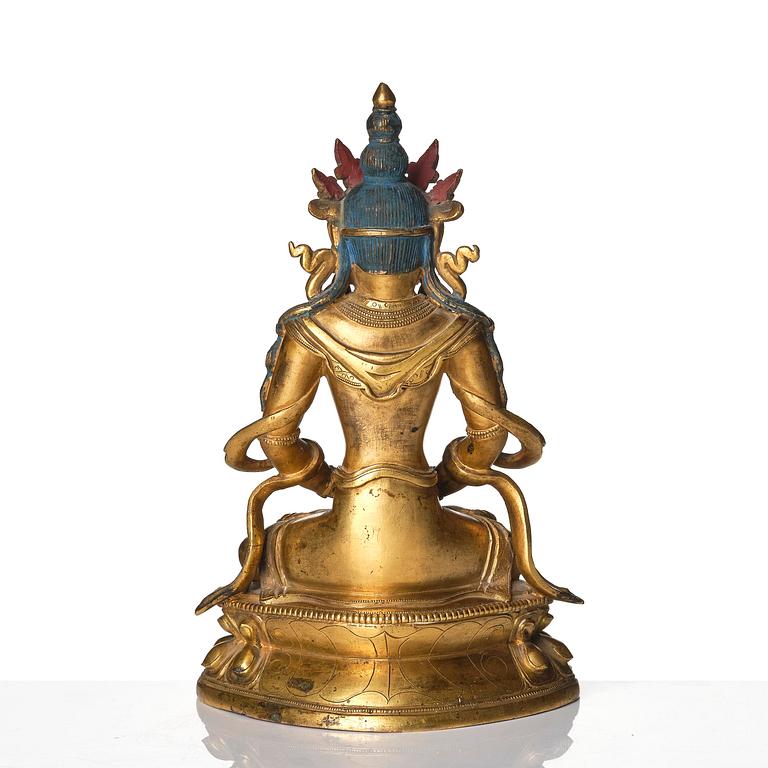
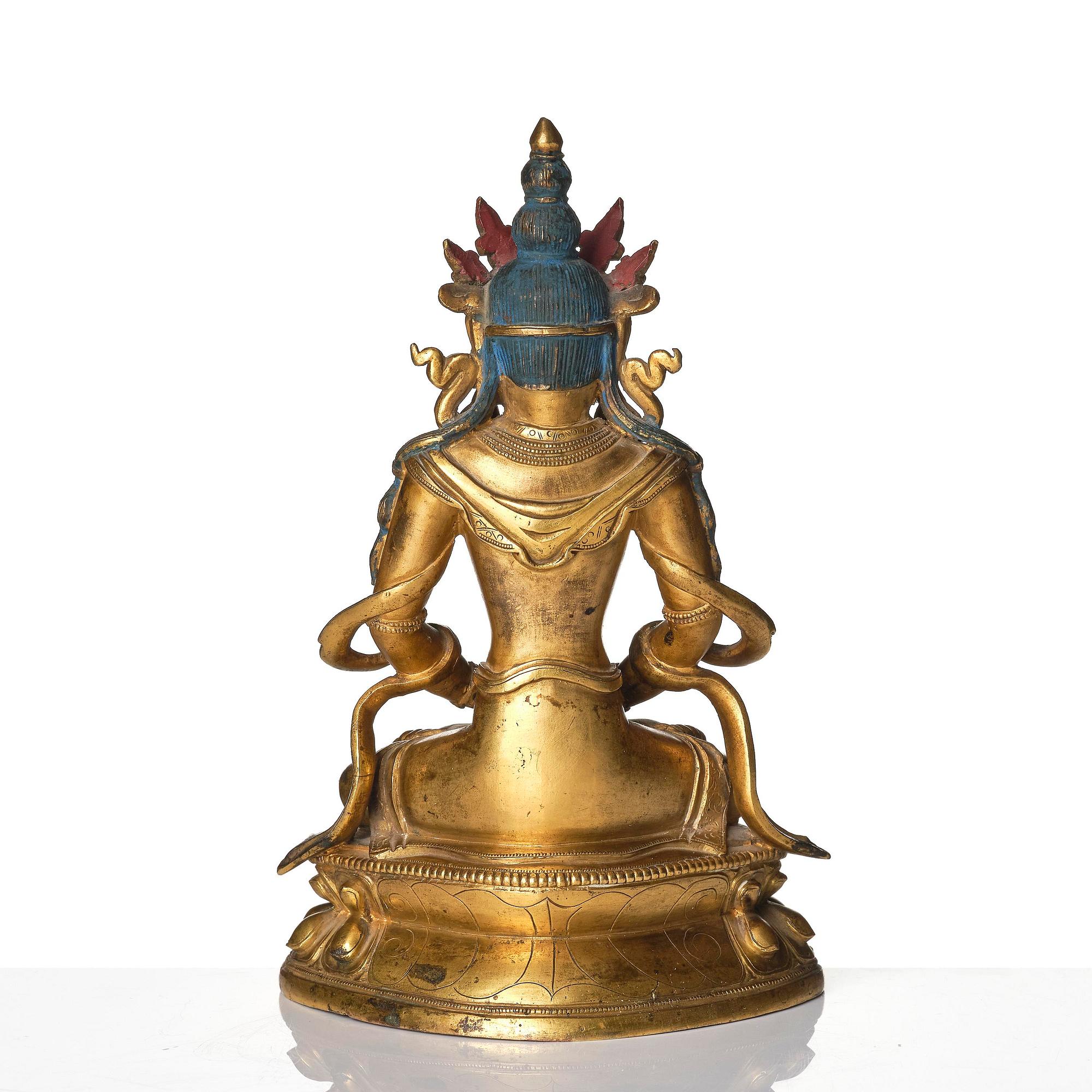
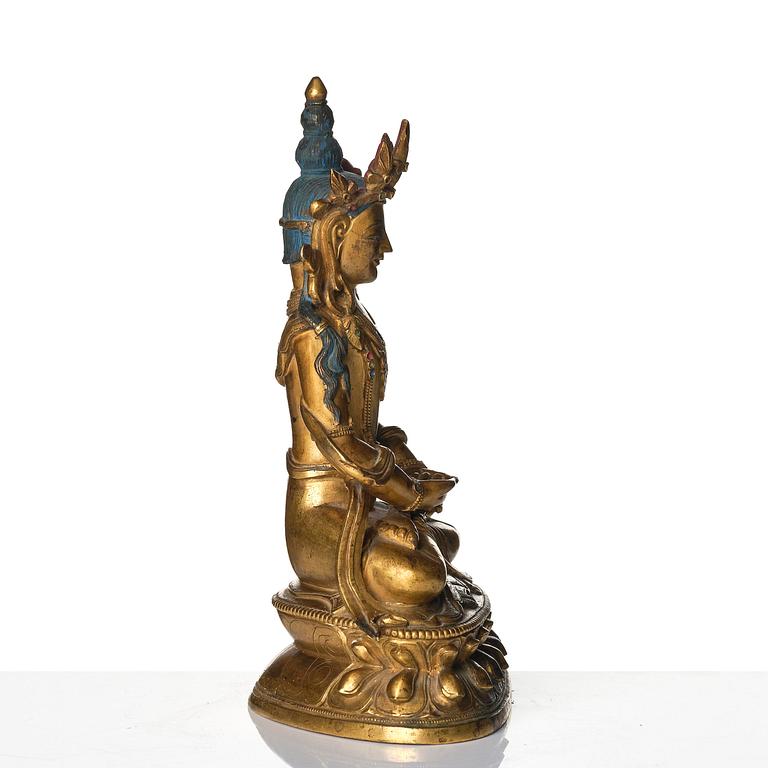
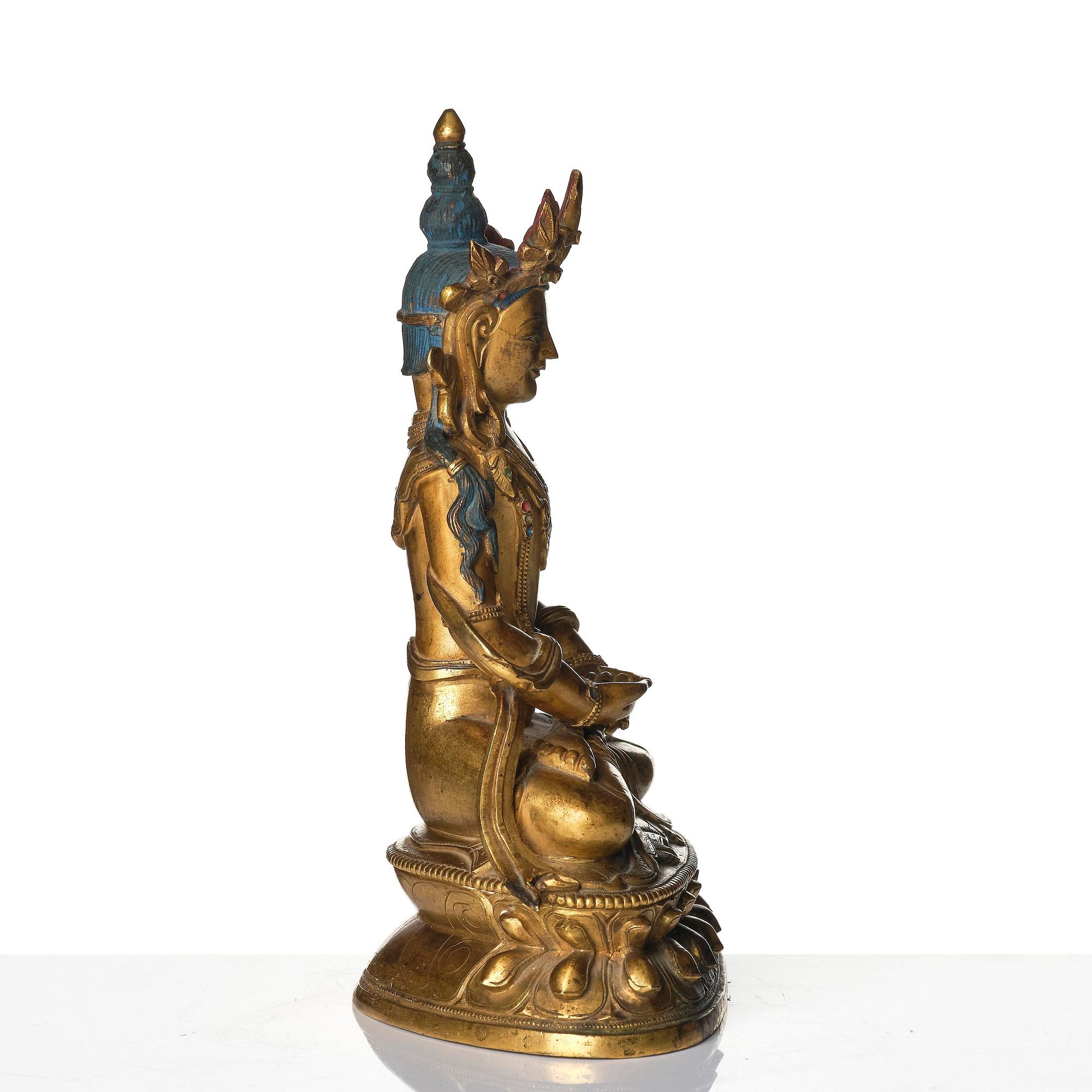
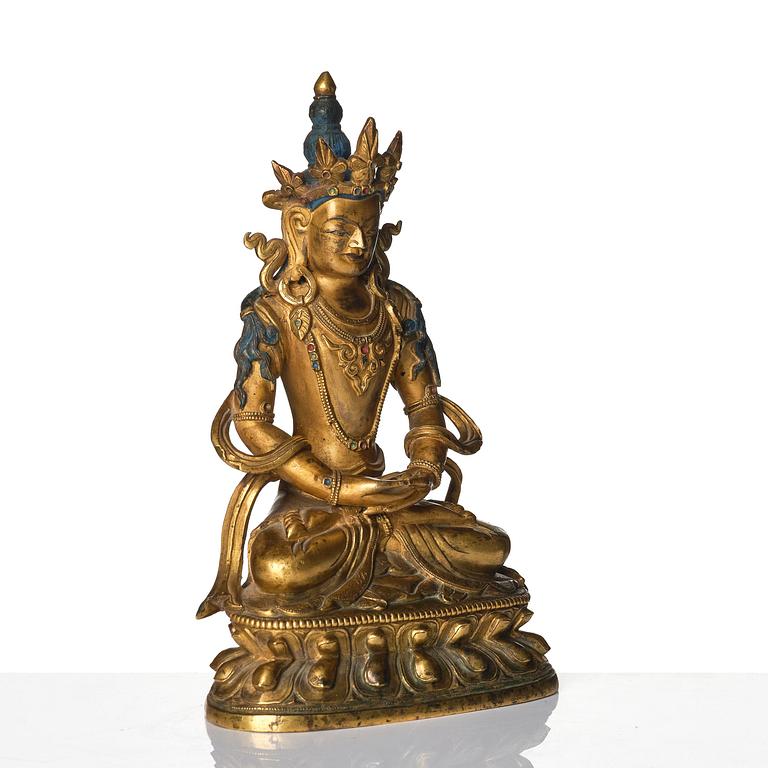
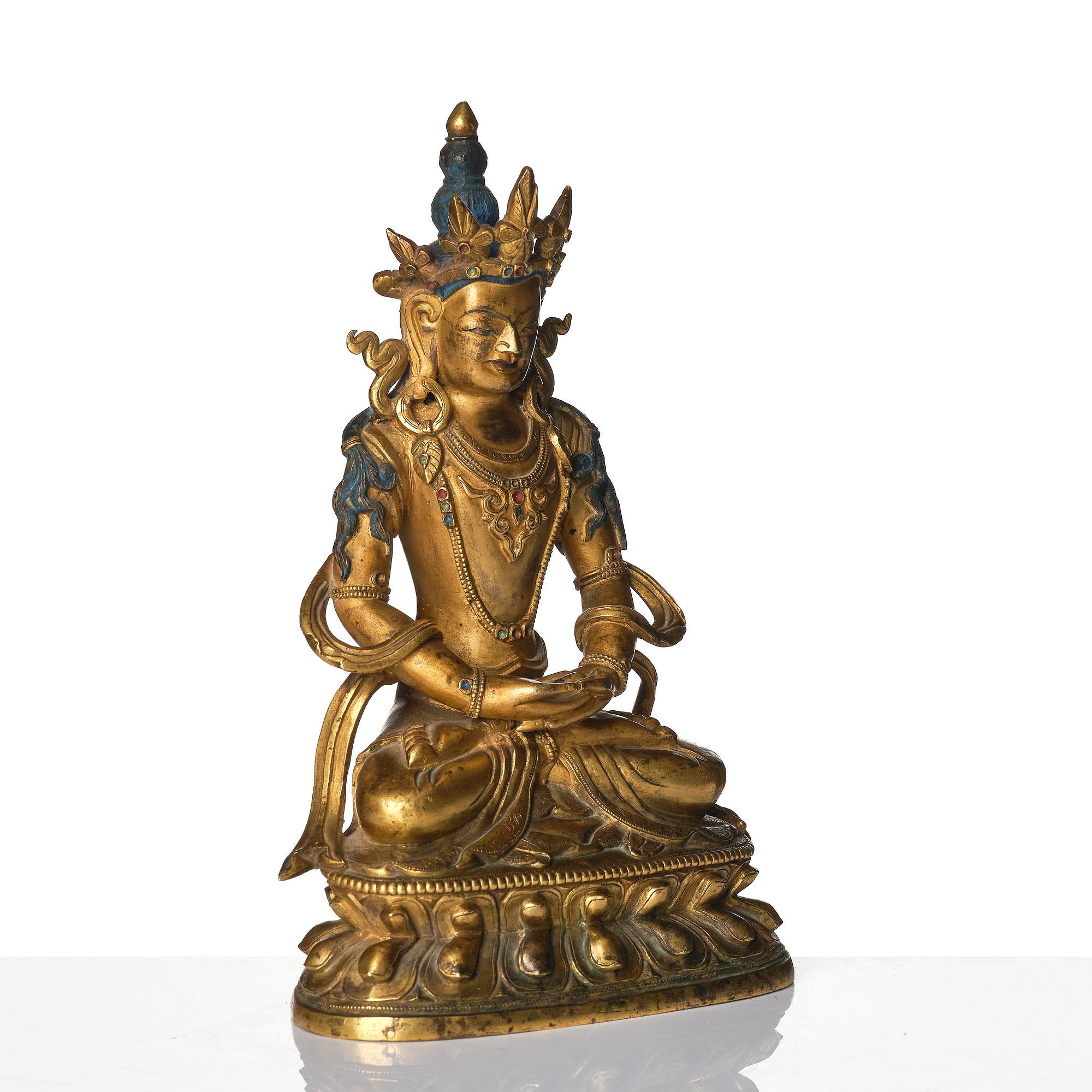
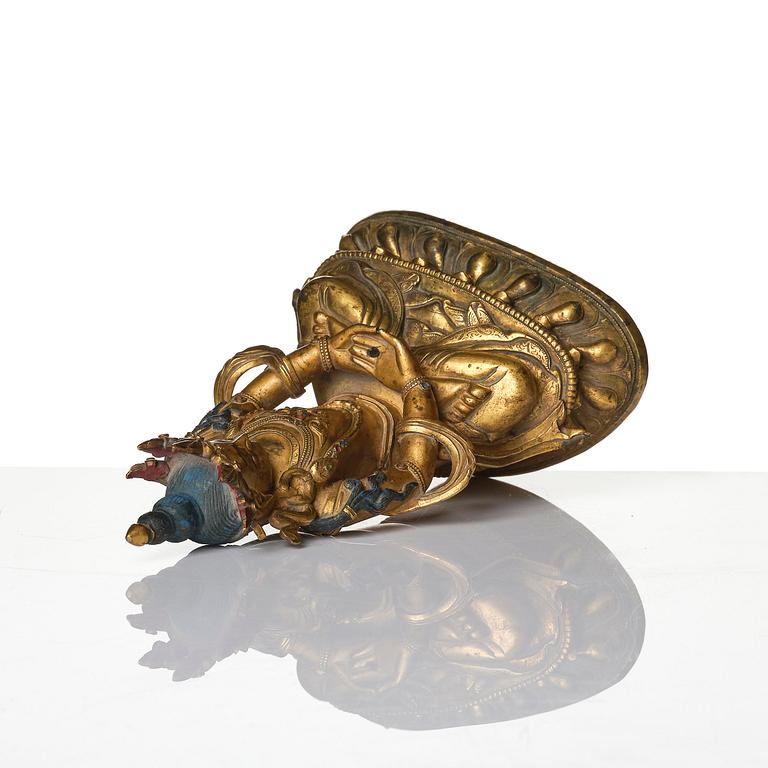
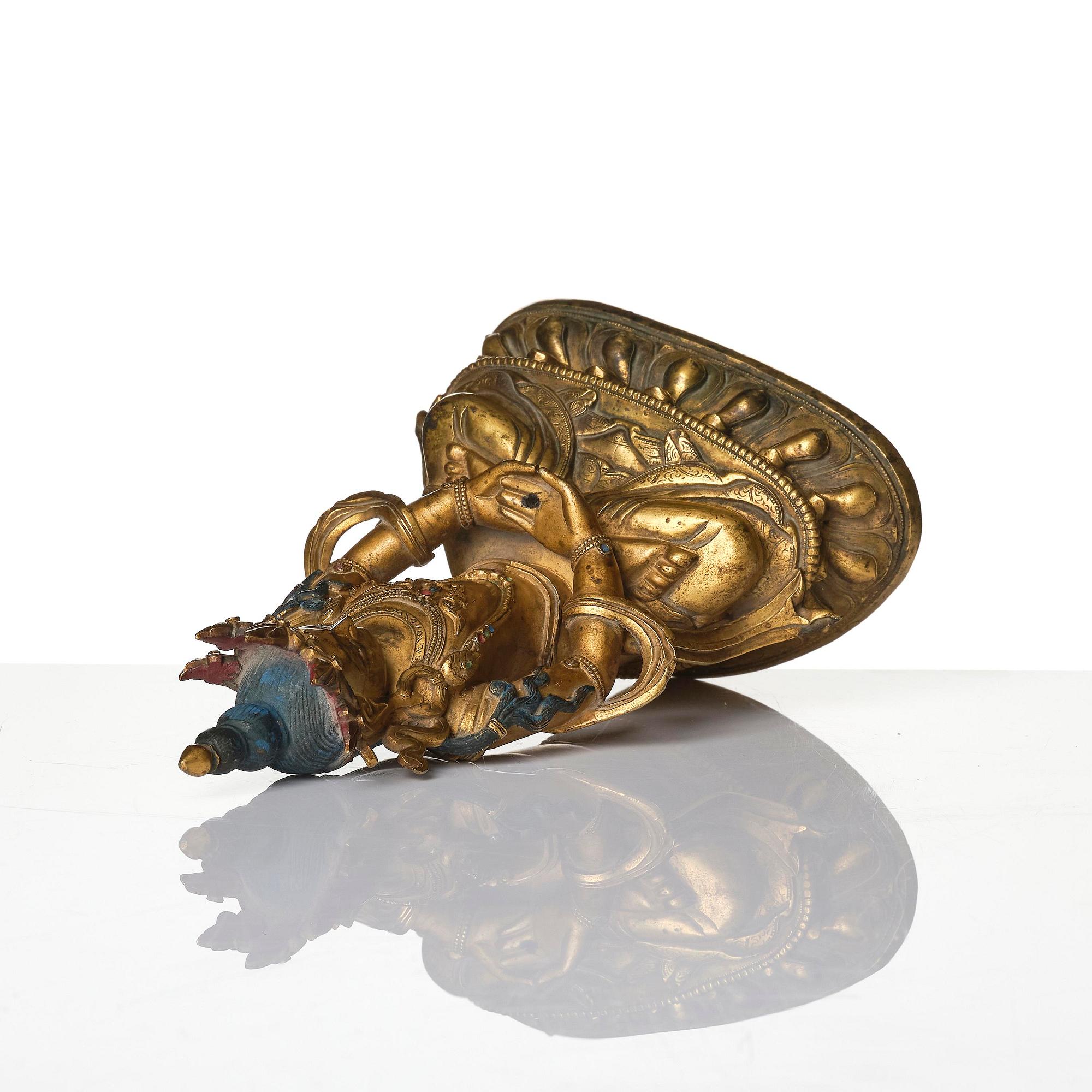
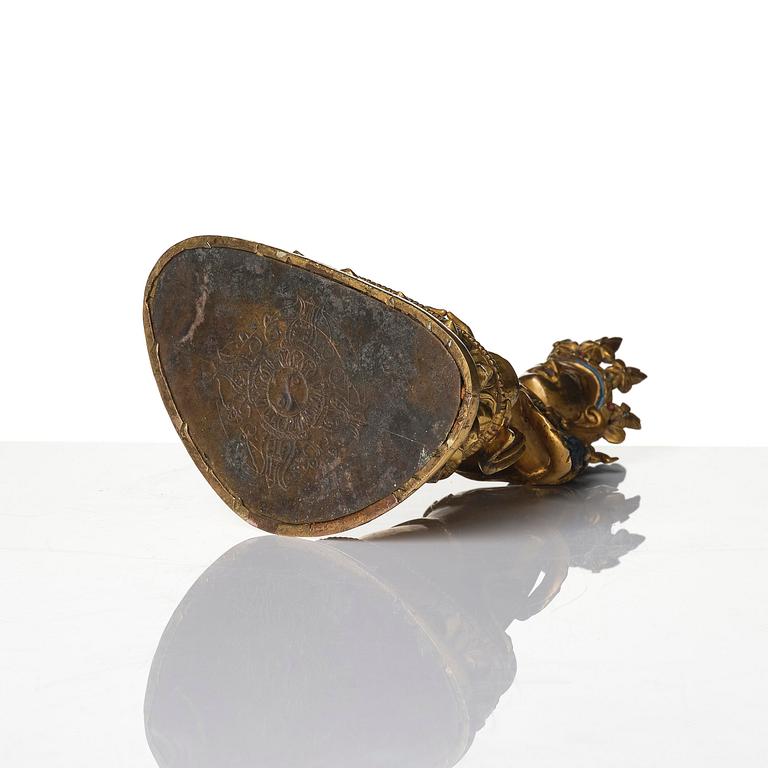
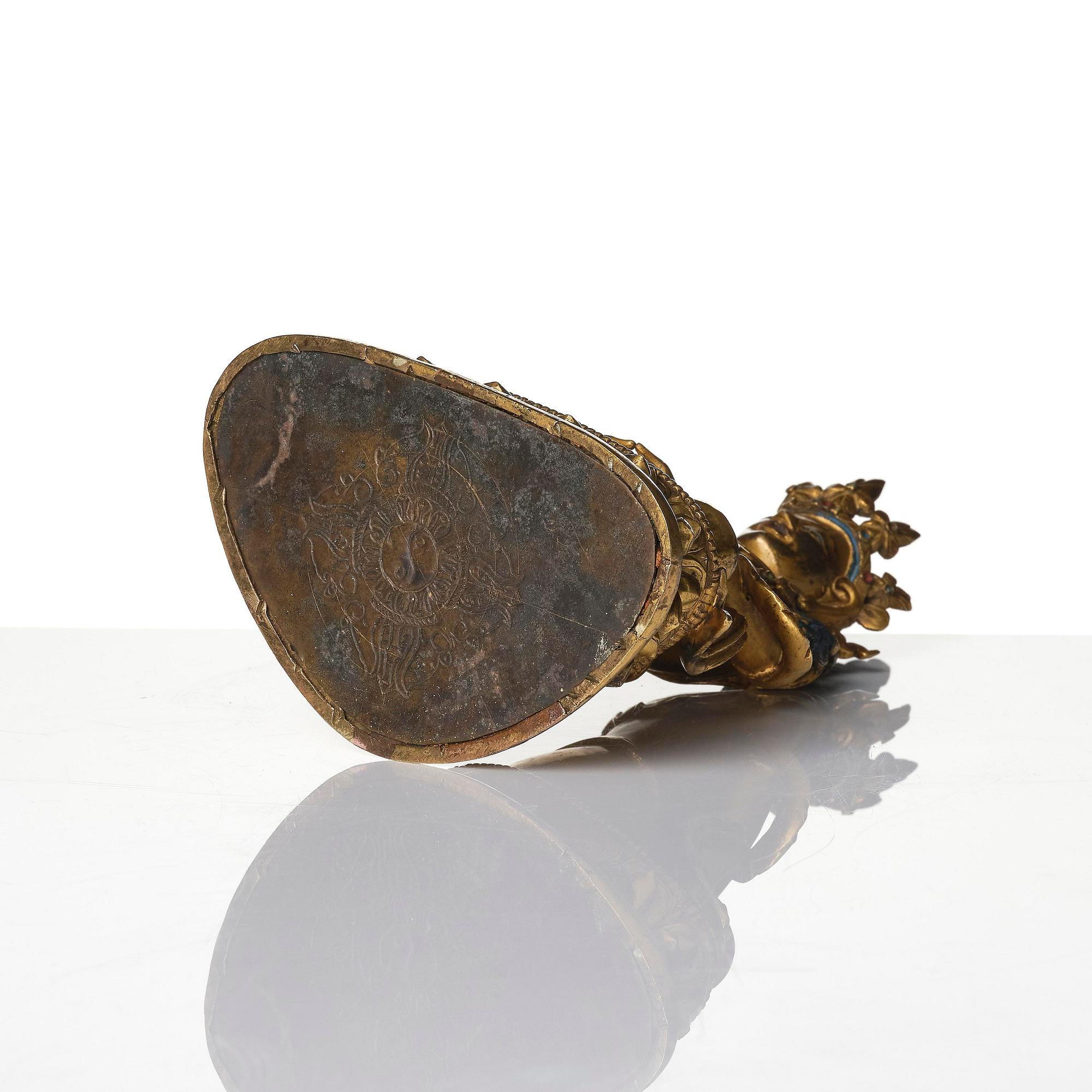
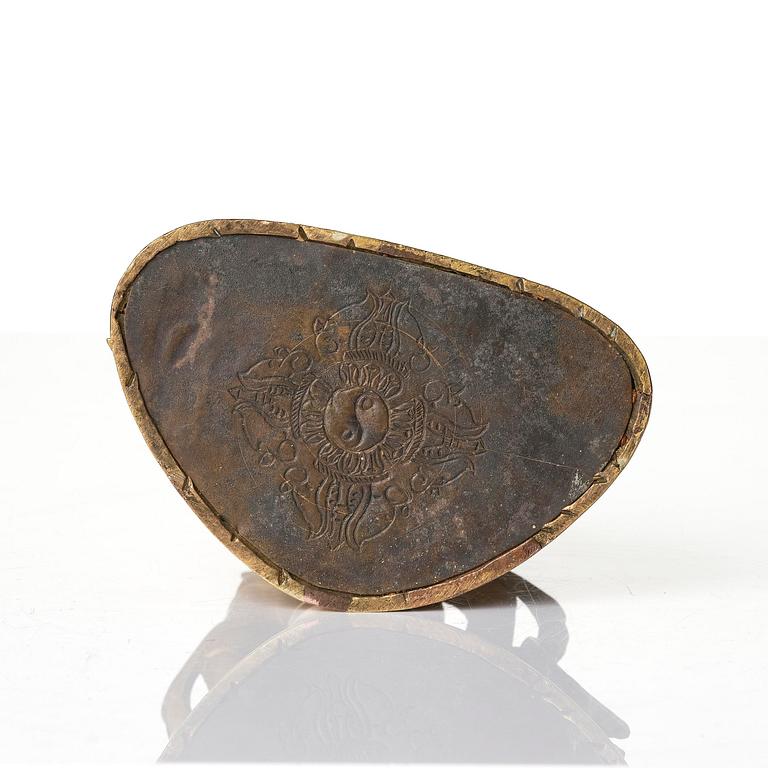
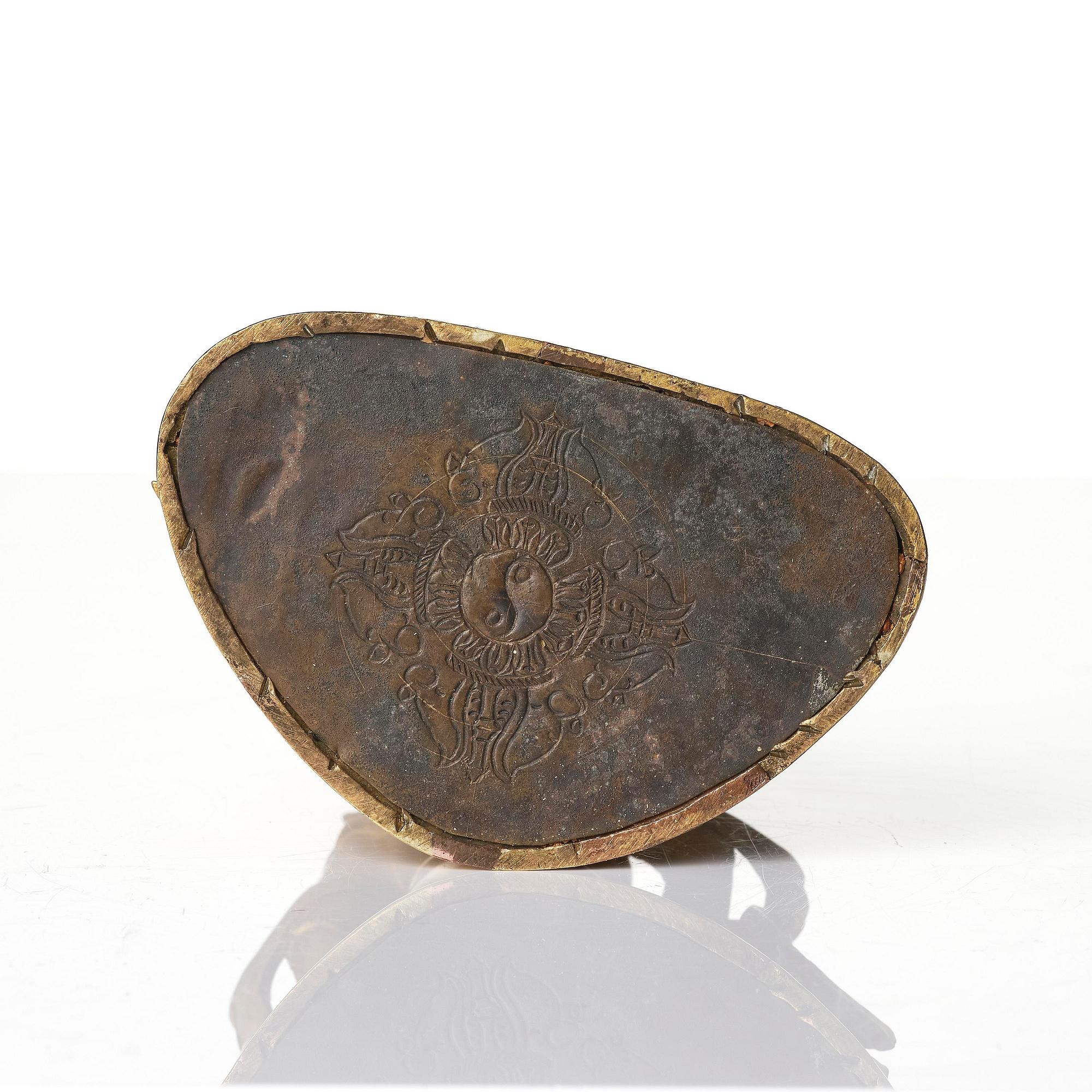
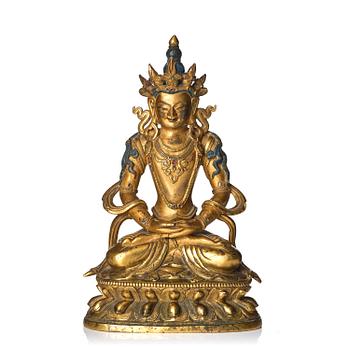
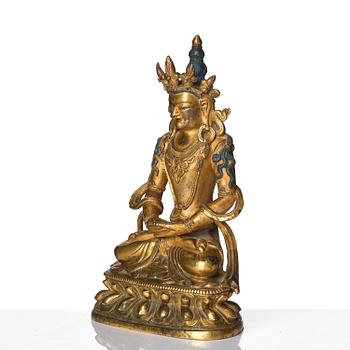
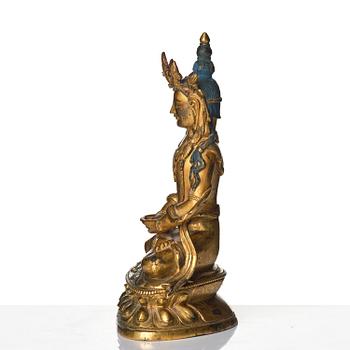
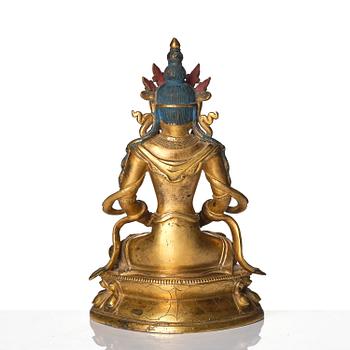
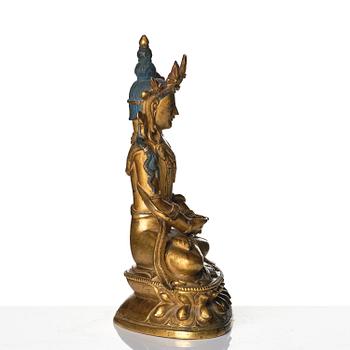
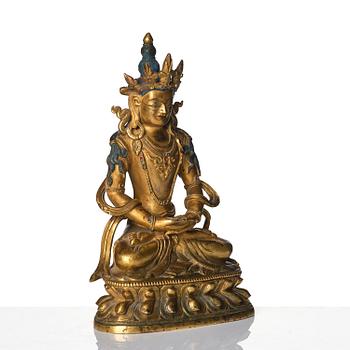
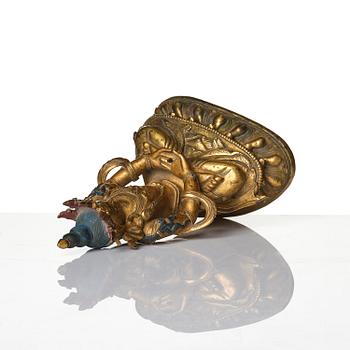
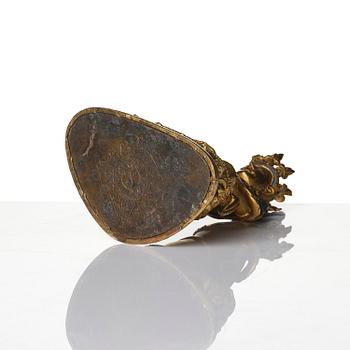
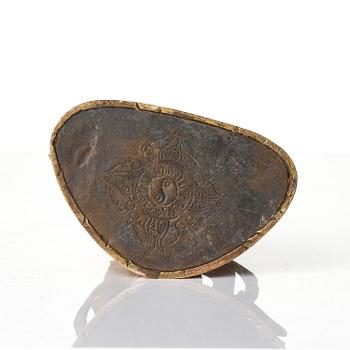
Well cast, seated in dhyanasana on a high double-lotus base with hands held in dhyana mudra, wearing a finely incised dhoti tied at the waist, a long sash flowing freely about the shoulders and arms, elaborate jewellery adorning the chest, arms, and ankles, the face with a serene expression framed by pendulous earrings and a five-pointed diadem encircling a tiered topknot. Base sealed with and decorated with a double-vajra. Filled. Cold gold paint and gilded. Height 16.5 cm. Weight 1024 gram.
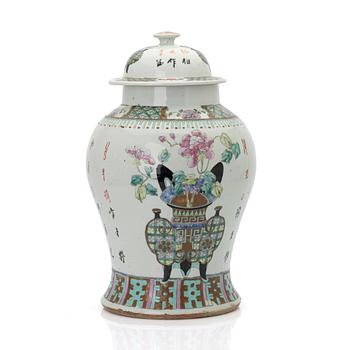
Vase missing.
Provenance
From the collection of Mr Karl Alfred Gustawsson (1897-1997), chief antiquarian at the Swedish National Antiquities Authority, who received it as a gift originally from the Swedish Archeologist and Explorer Folke Bergman (1902-1946), amanuensis at the Museum of Far Eastern Antiquties, thence by descent. Folke Bergman aquired it when he participated in the Sven Hedin Expedition. Mr Gustawsson was asked to join Sven Hedin's Sino-Swedish Expedition in 1927.
More information
Amitayus, the Buddha of Infinite Life, is considered an apparitional form of the Buddha Amitabha; both are typically depicted with red skin in paintings and textiles, denoting their shared identity. In Tibetan shrines, a figure of Amitayus is often set alongside the figures of Ushnishavijaya and White Tara in a longevity triad. Amitabha and Amitayus are celebrated in both Mahayana and Vajrayana practices, and both were popular deities to worship during the Qing dynasty. Figures of Amitayus were produced in large quantities to commemorate imperial birthdays.
For condition report contact specialist

Others have also viewed