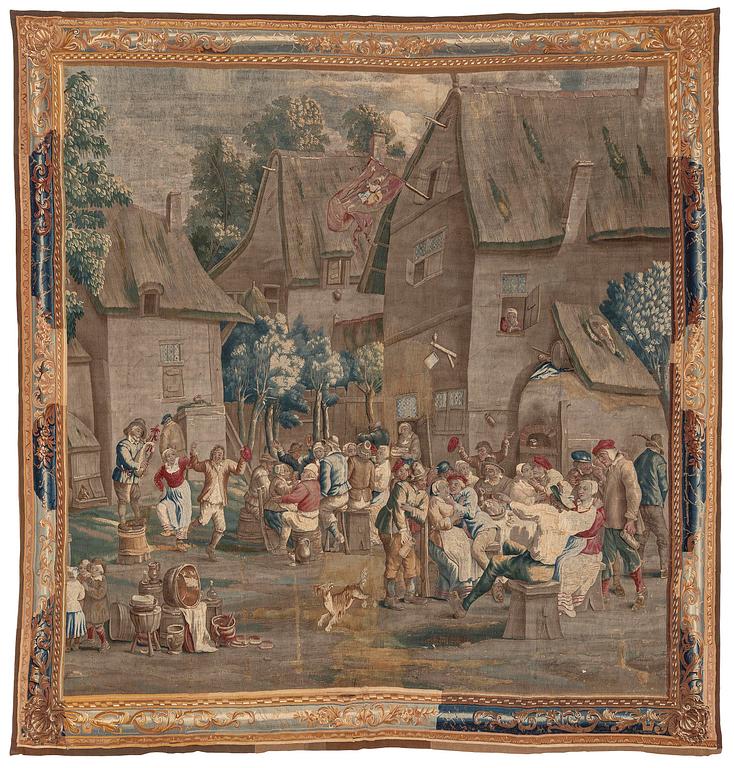
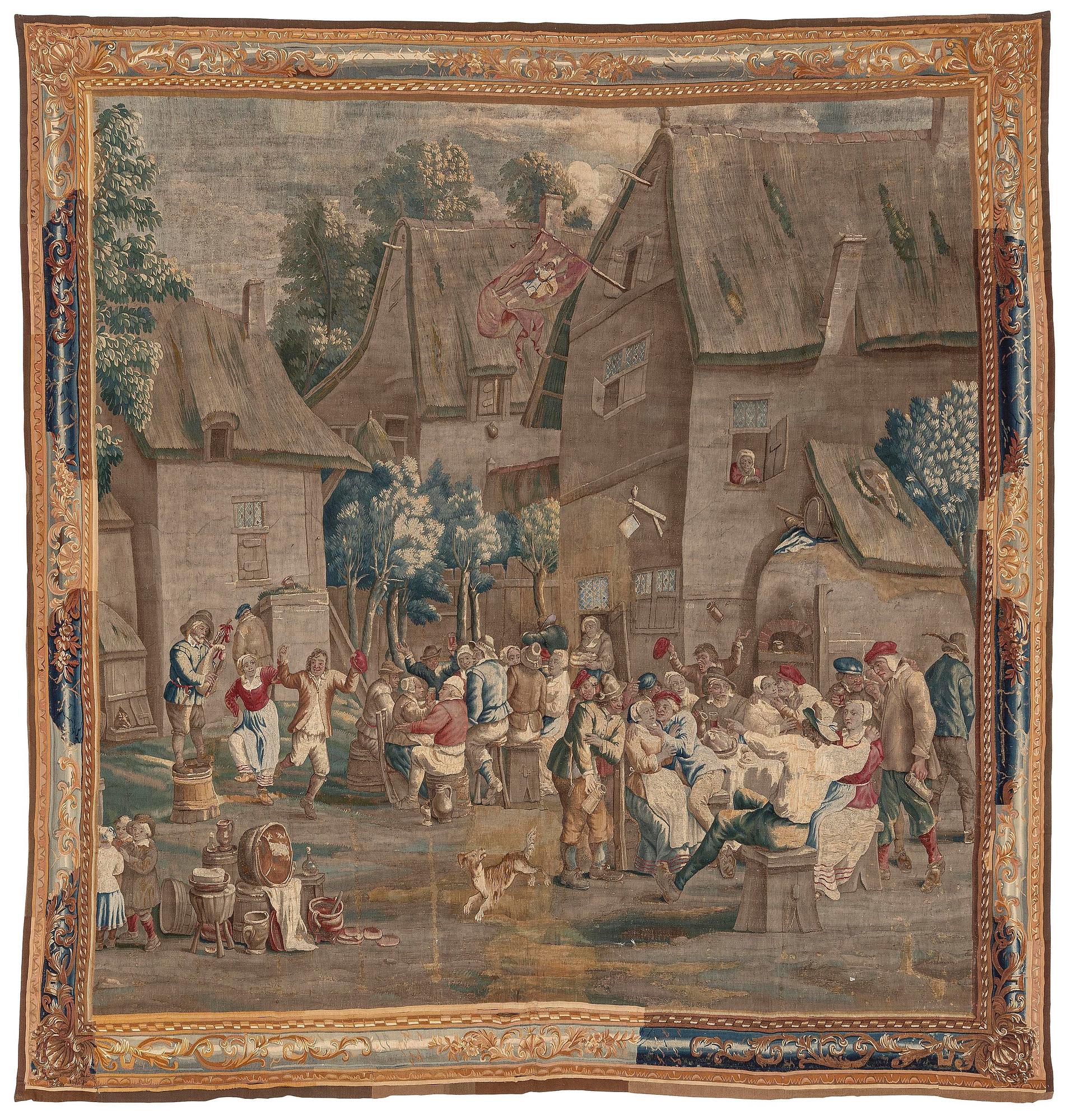
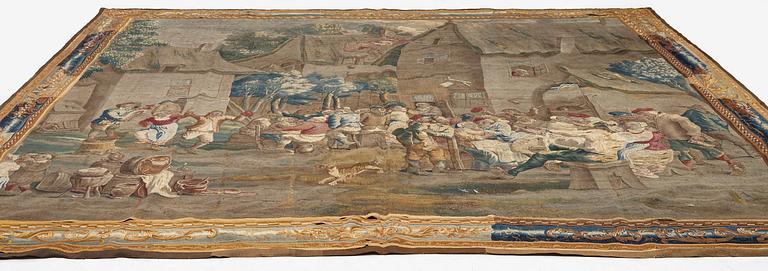
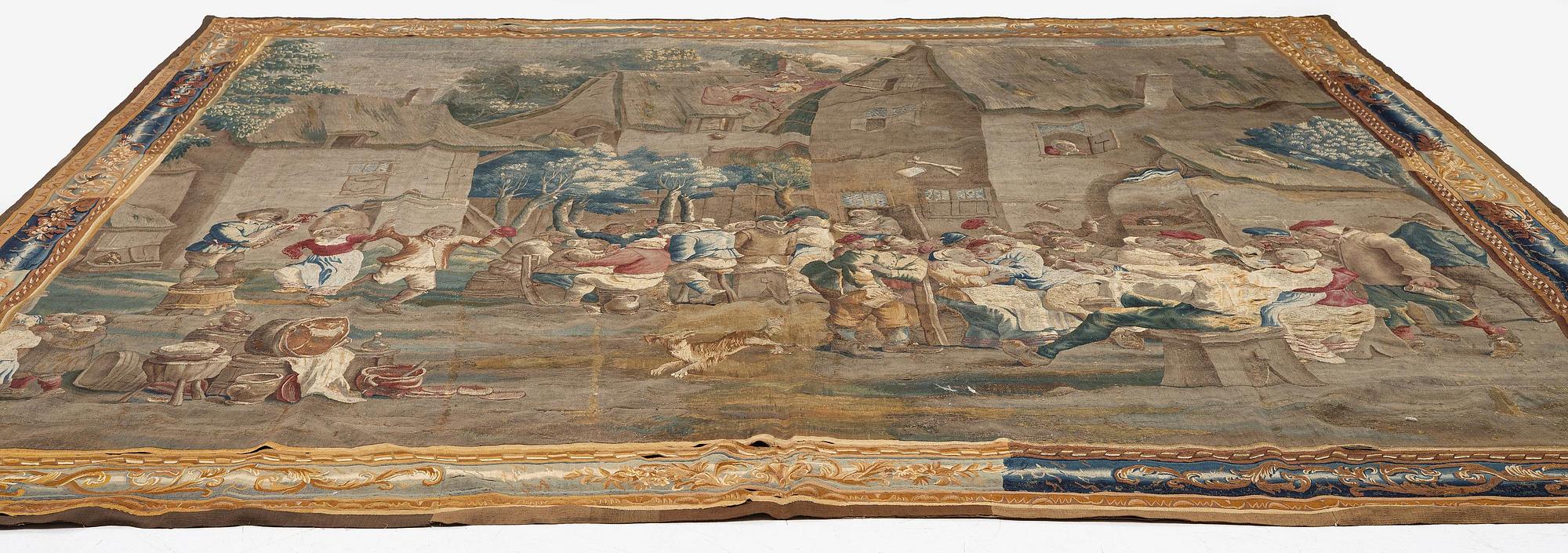
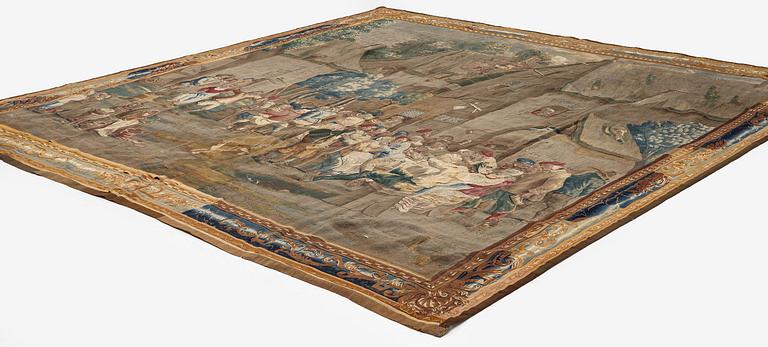
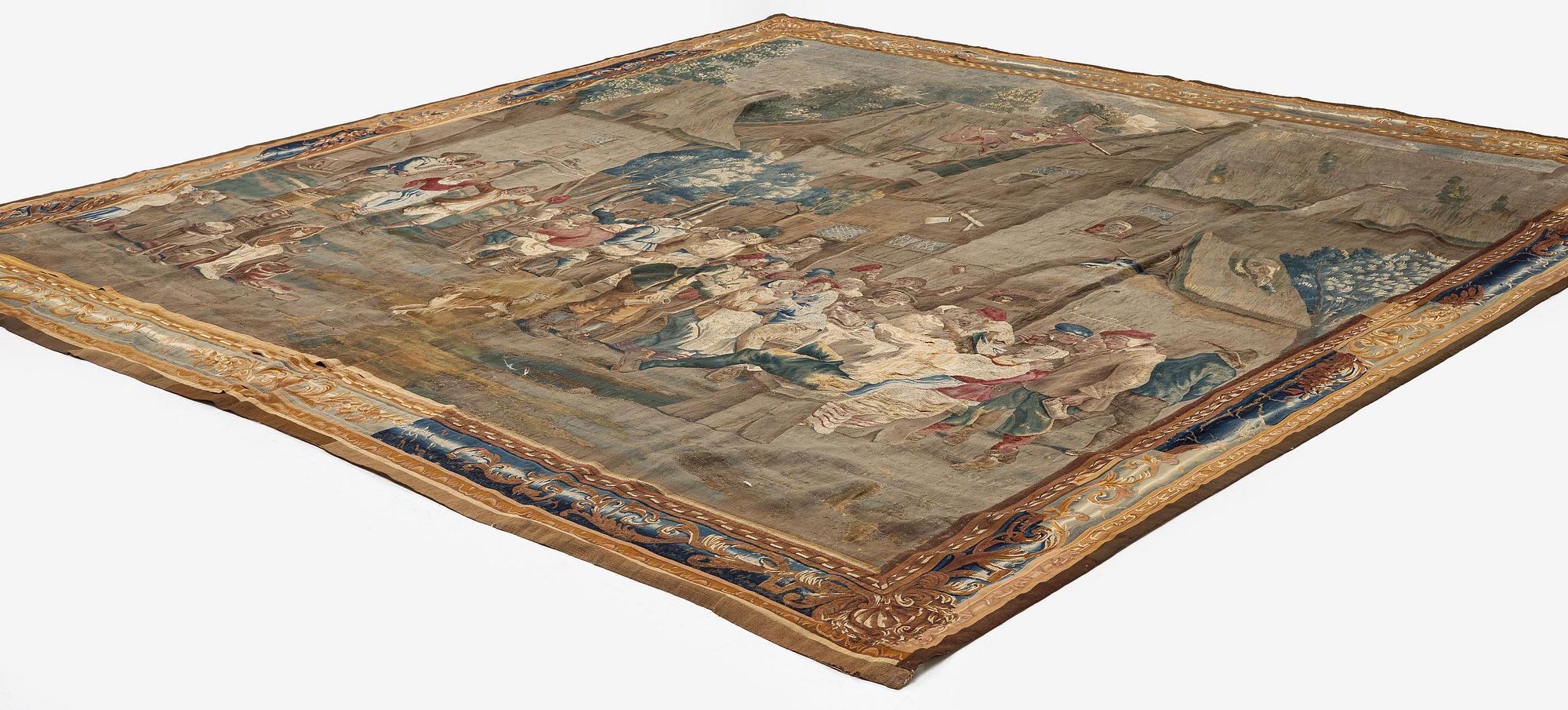
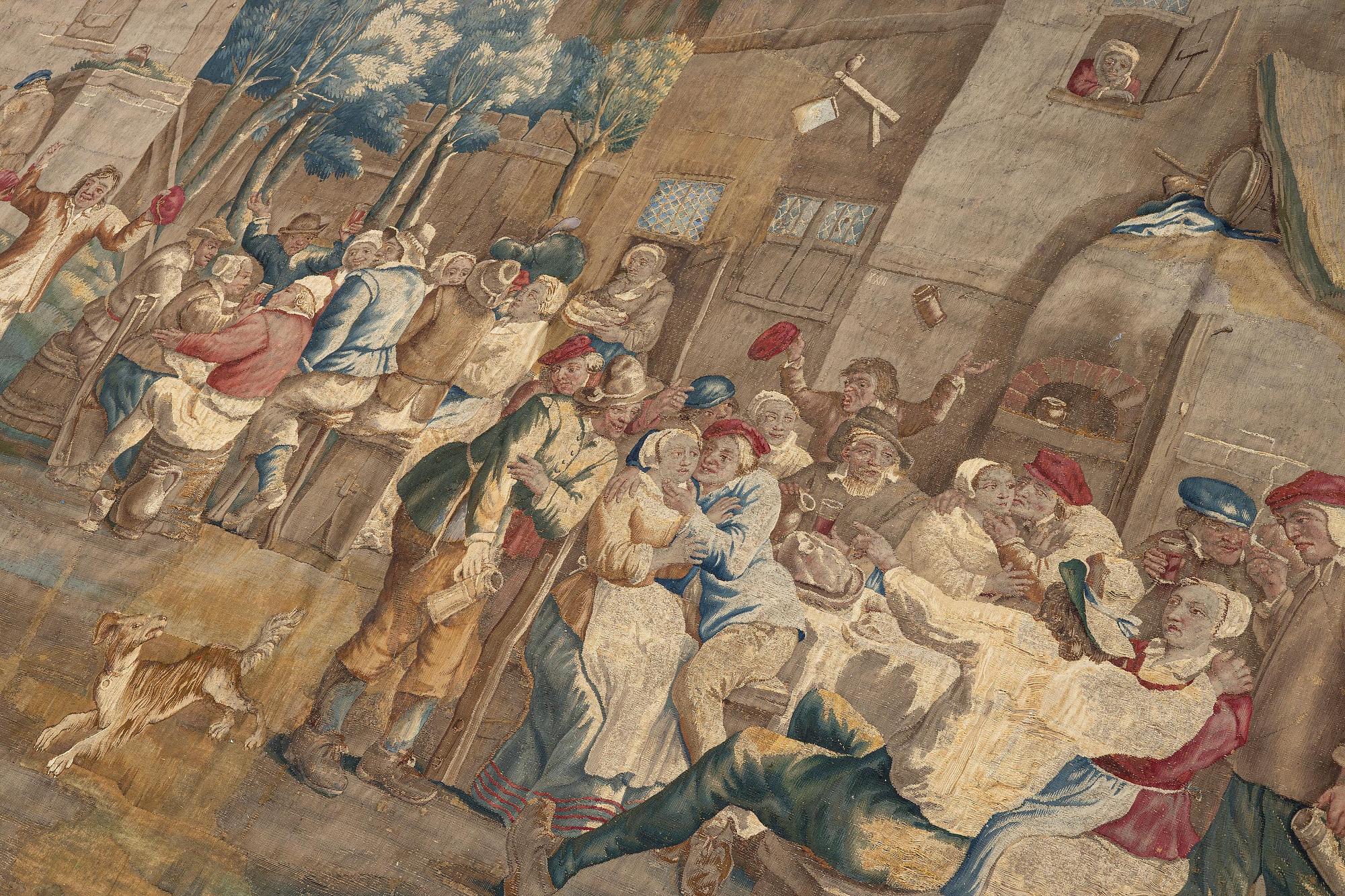
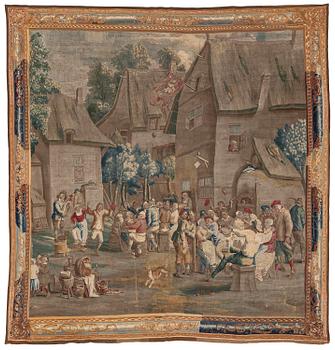
A Brussels tapestry, 'Kermess' c. 345 x 332 cm, after David Teniers the Younger, circa 1700.
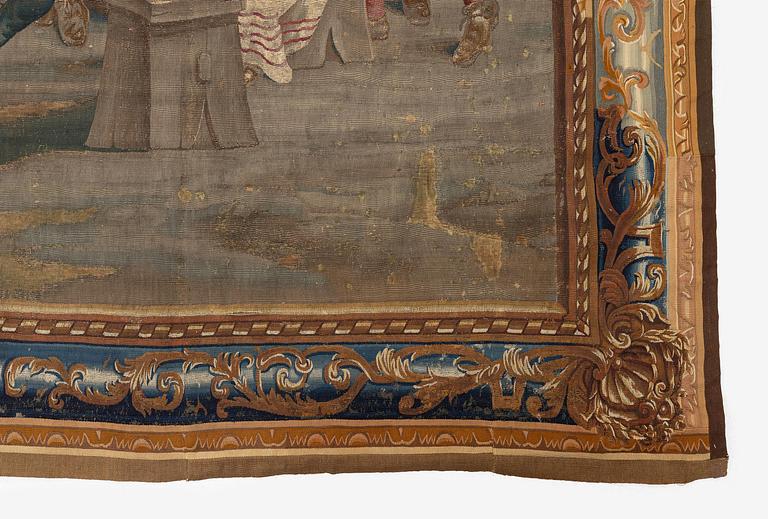
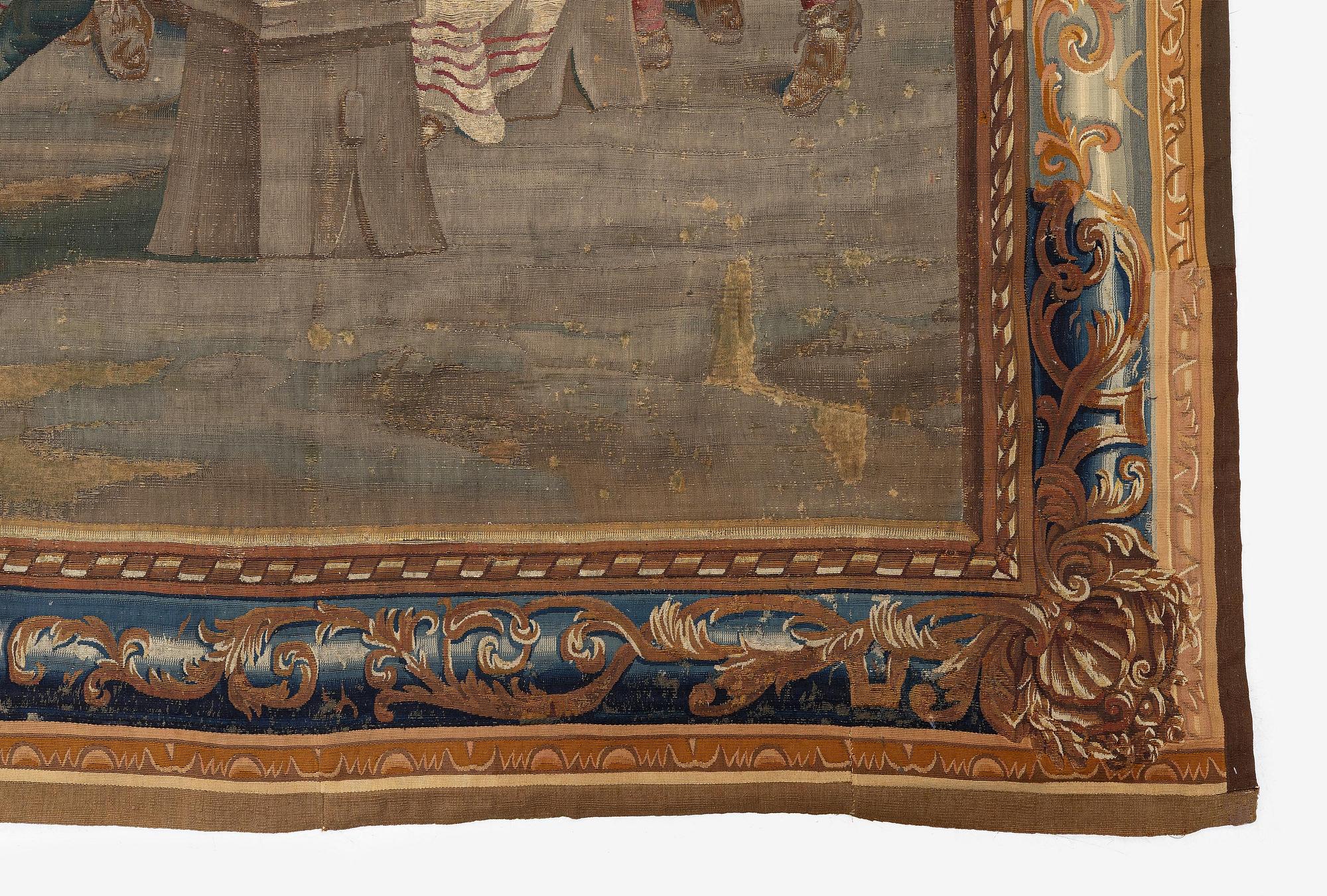
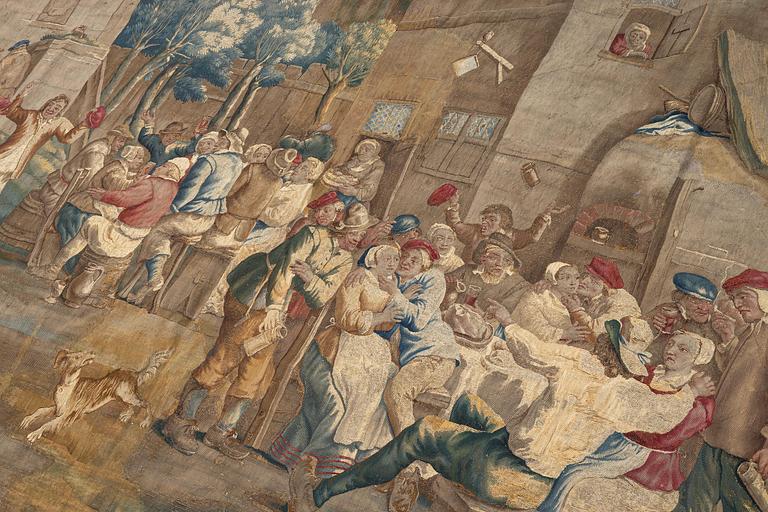
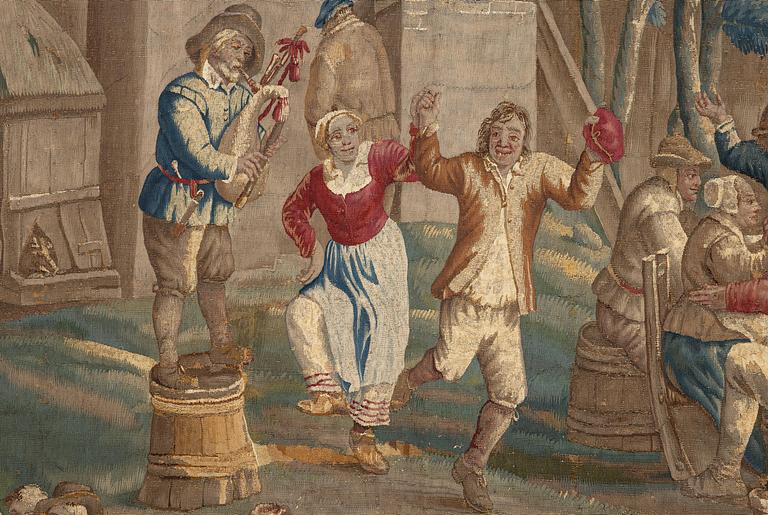
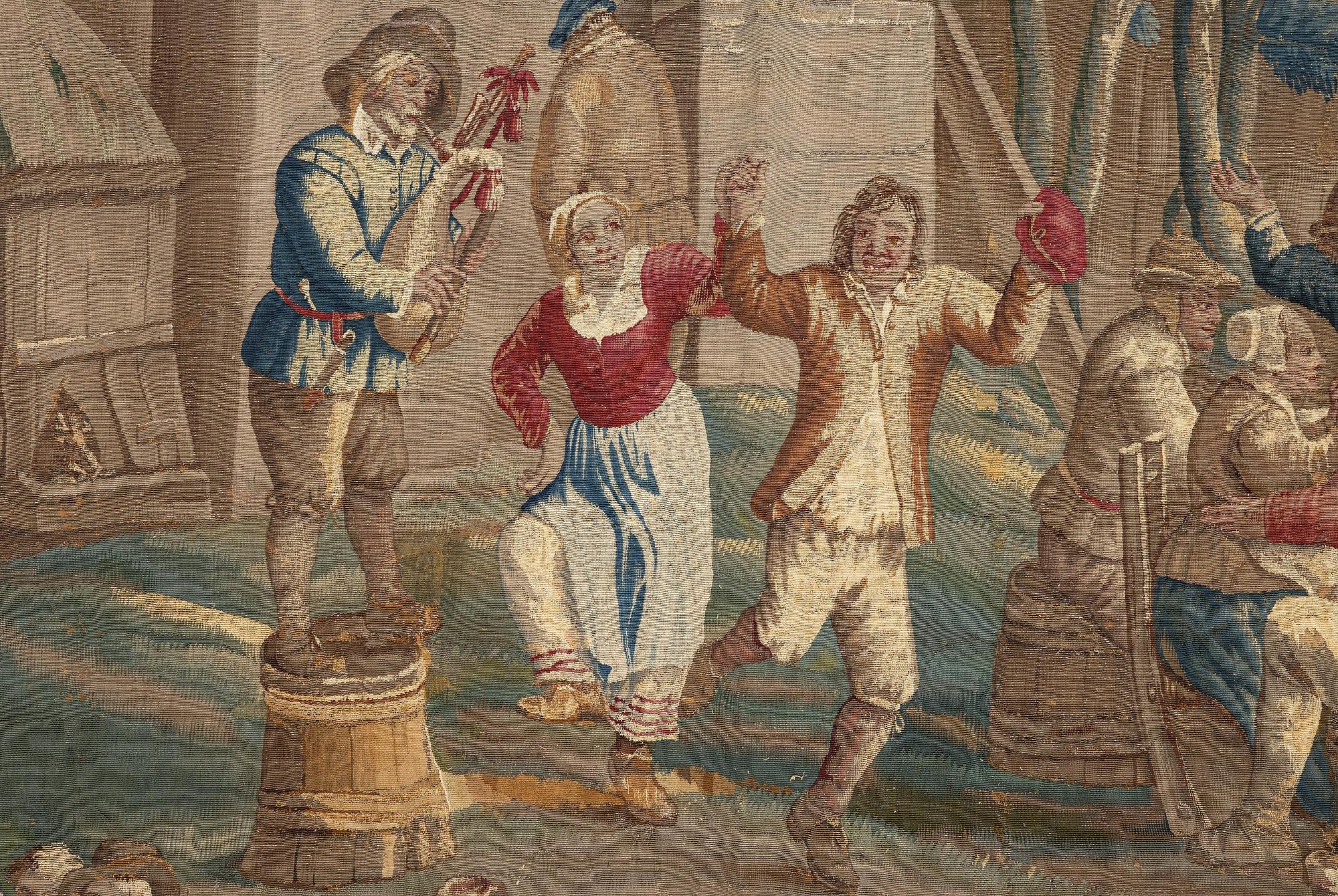
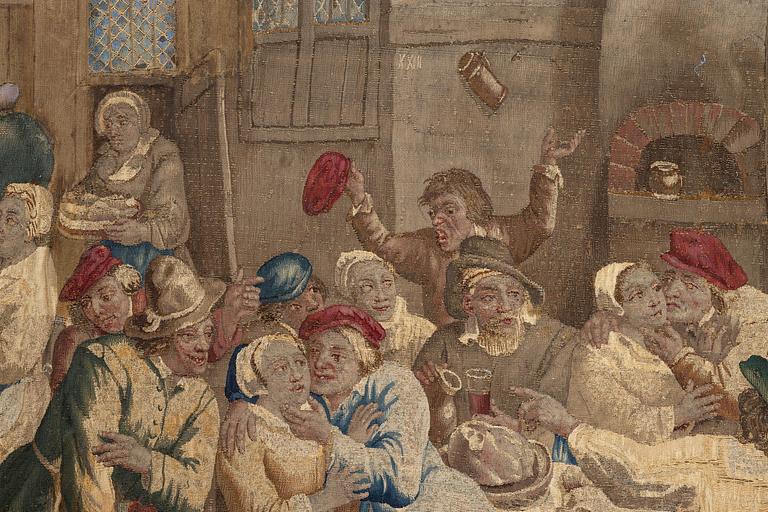
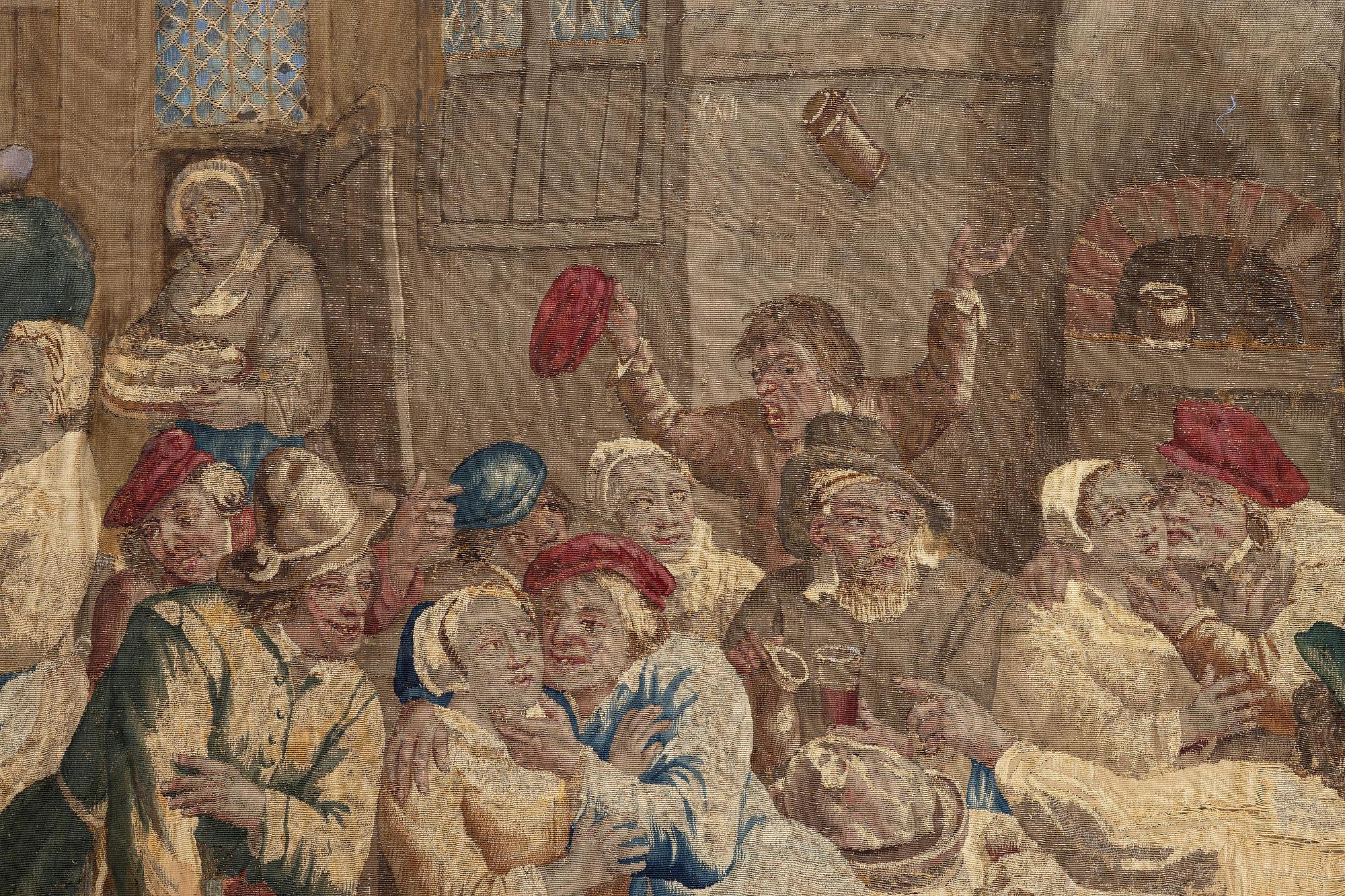
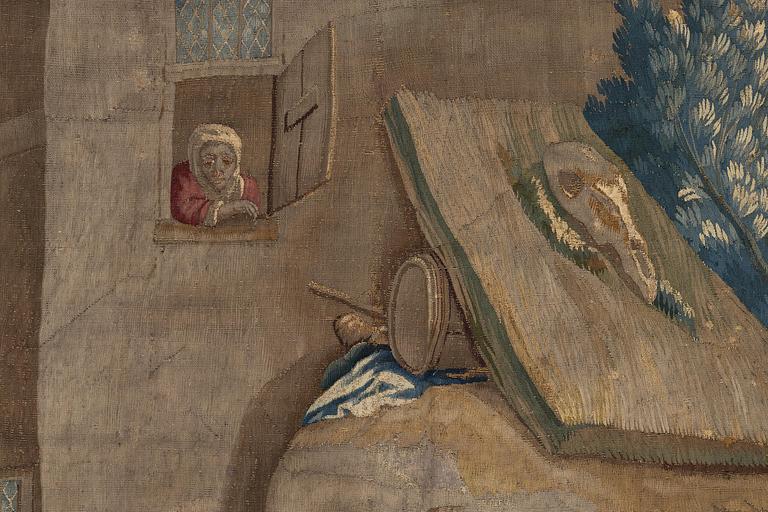
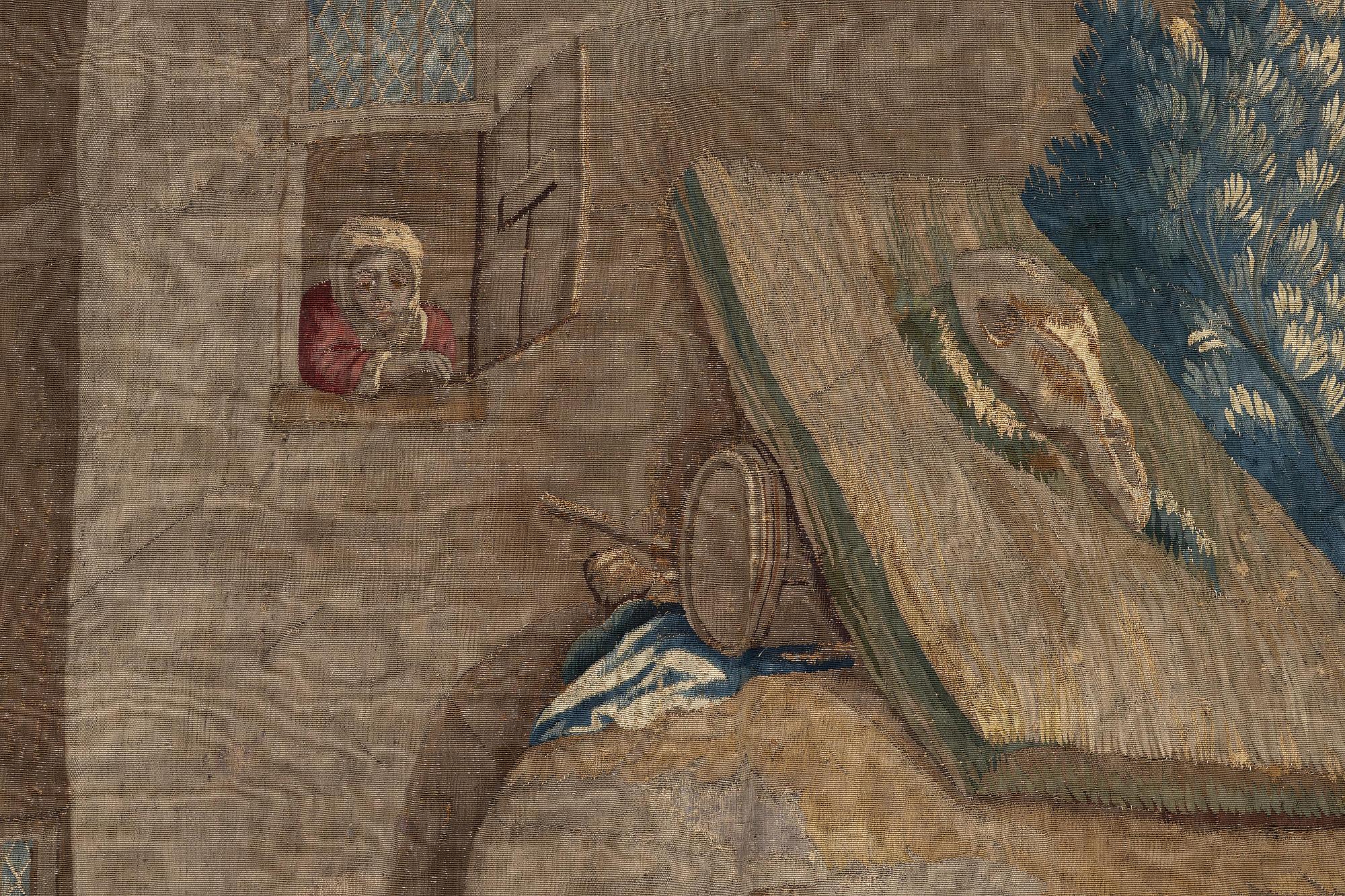
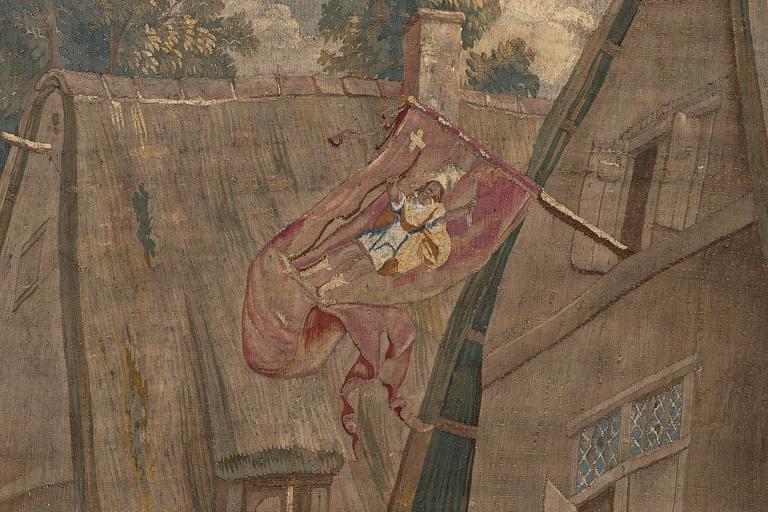
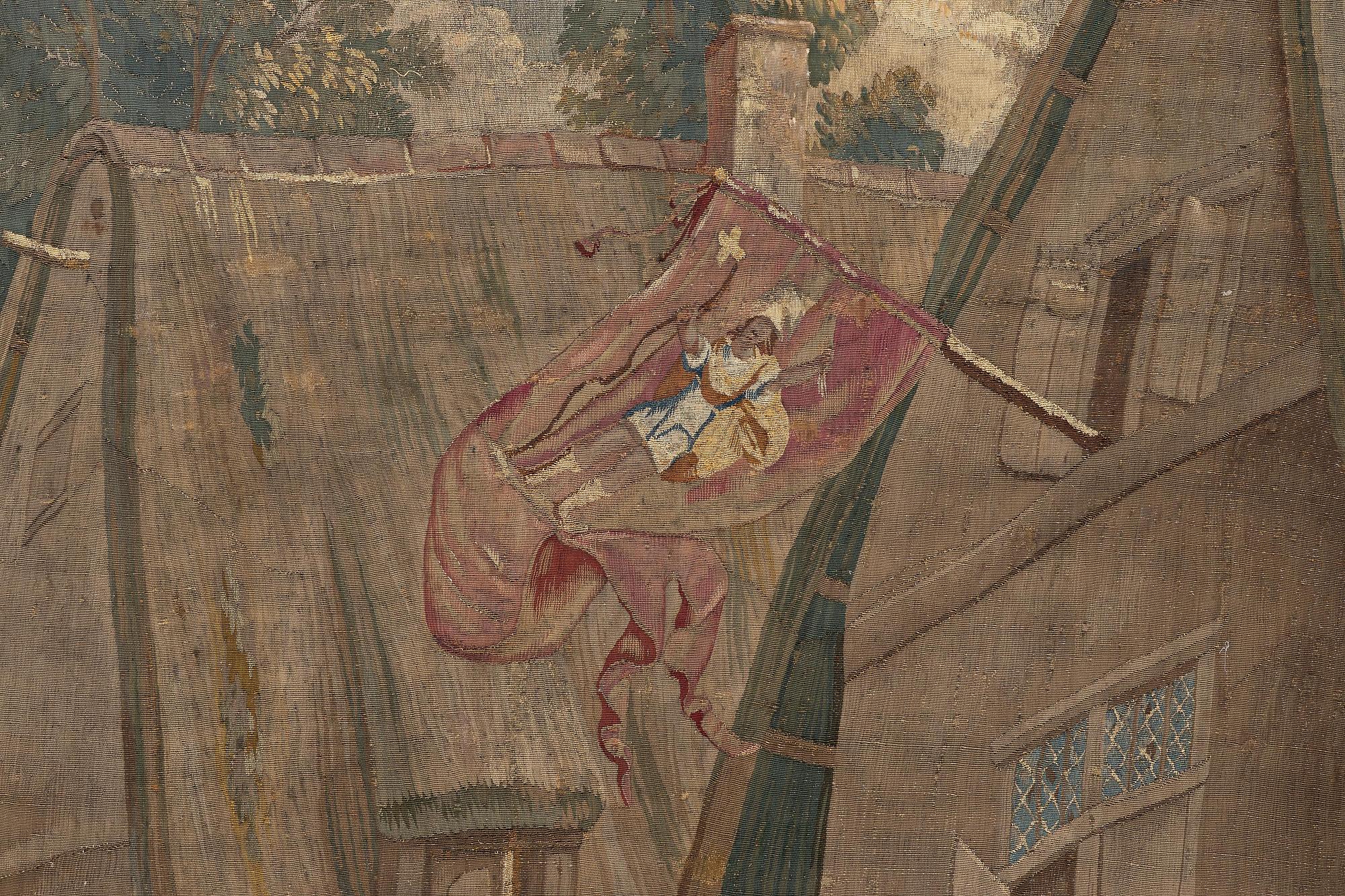
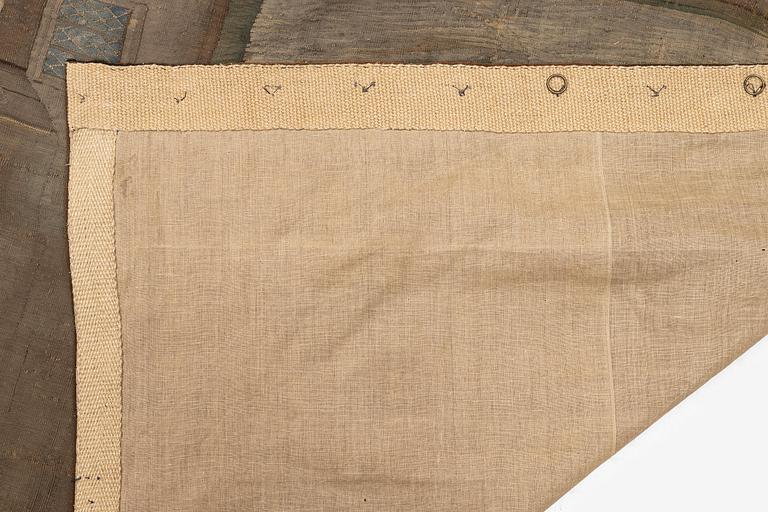
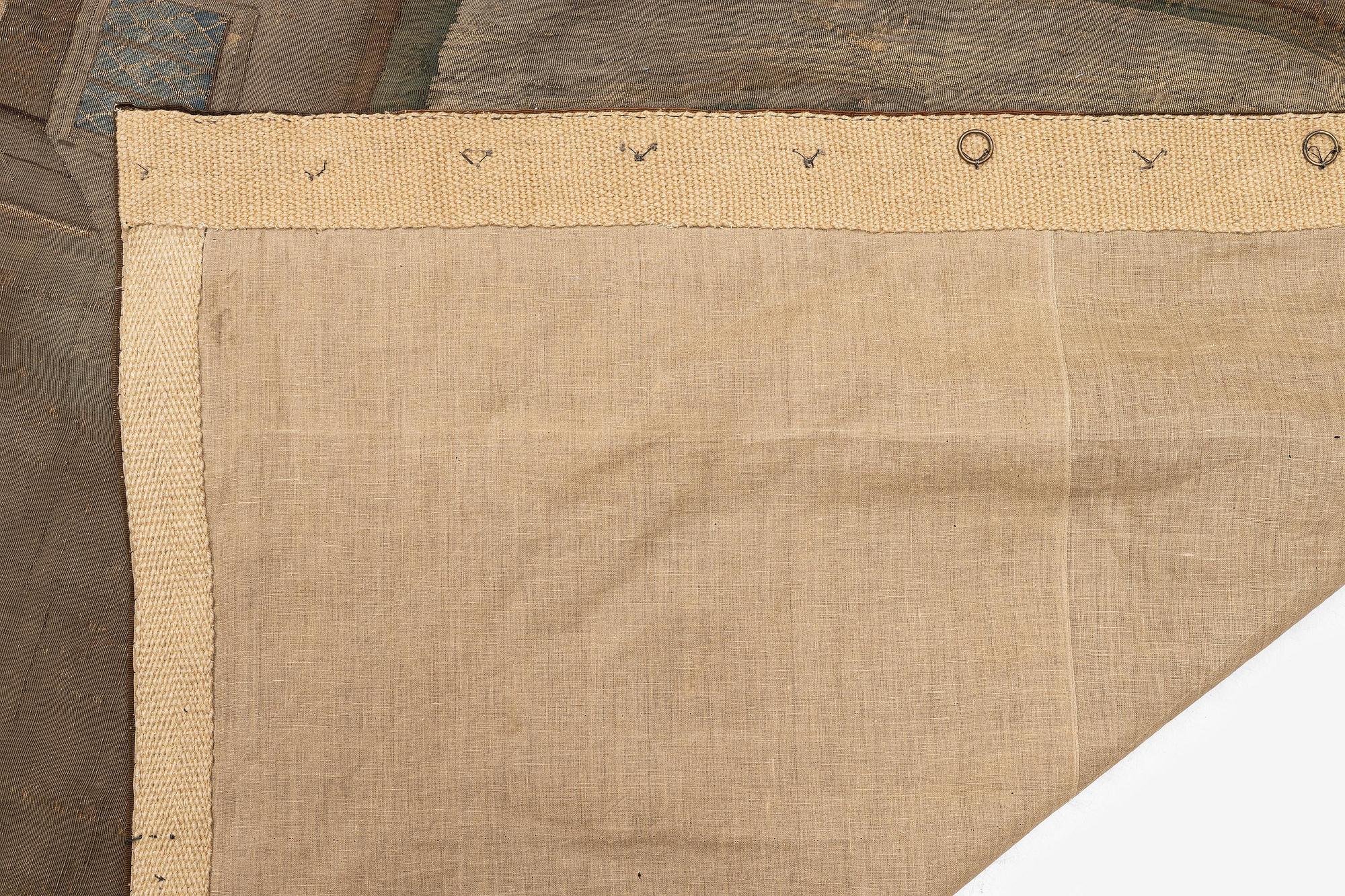
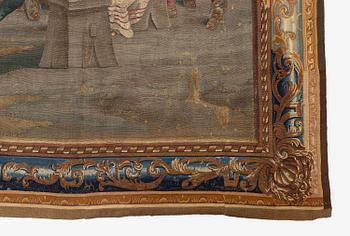
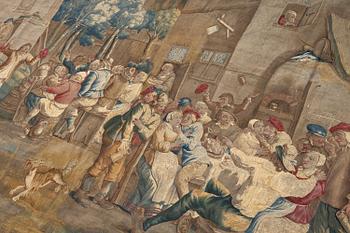
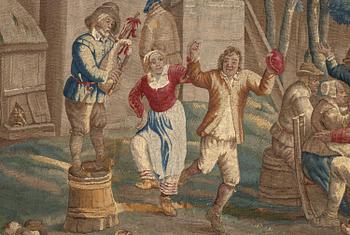
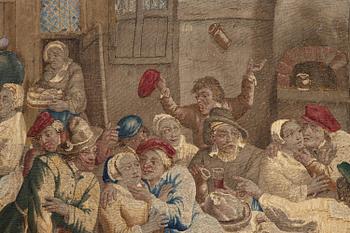
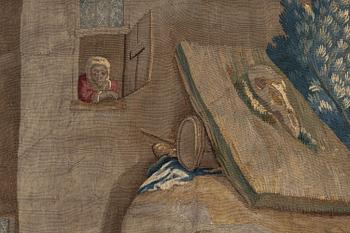
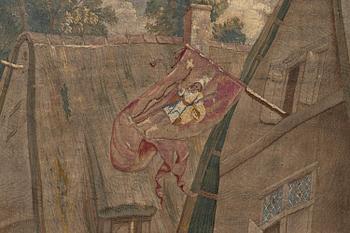
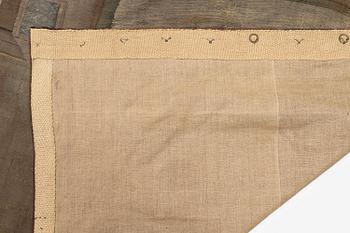
From a series of four tapestries: "L'homme qui pisse". A polychrome scene with in the foreground children and a dog as well as a large number of eating, drinking and flirting farmers and peasant women around two tables. At the back a tavern and other houses as well as trees. A flag fluttering from the attic window of the tavern depicts Saint George, the patron saint of agricultural workers. A border in the shape of a baroque frame in blue and golden nuances. Wool and silk. Lined.
Provenance
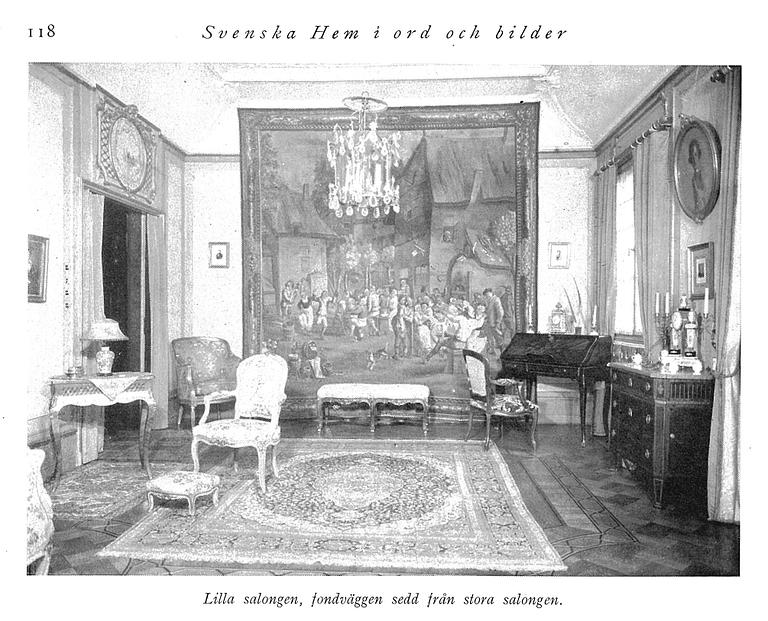
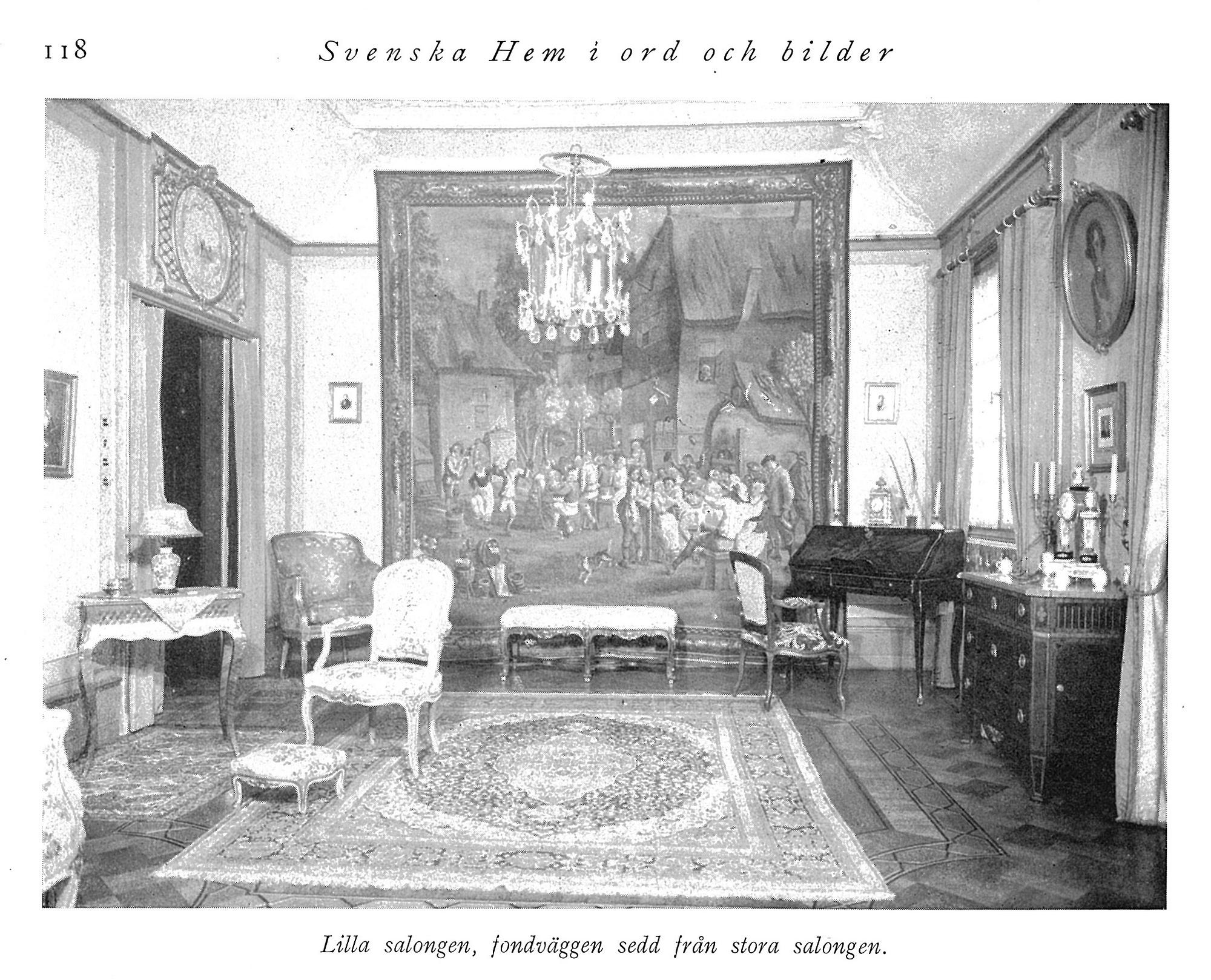
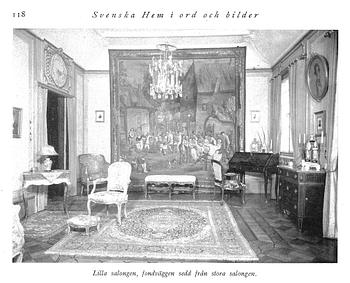
The bank director and collector Osborn Kling (1874-1953).
Bukowskis, Stockholm, The collection of bank director Osborn Kling, 25-26 September 1934, cat. no. 151, pl. p. 21.
The collection and art dealer Tore Gerschman (1913-1992), Stockholm.
Literature
"Svenska Hem i ord och bilder", Red. Albin Roosval, Stockholm 1934, Ernst Malmberg: Bankdirektör och fru Osborn Klings hem, Ulrikagatan 11, Stockholm, text page 111-132, plate page 118-119; Compare the Village Fete (Saint George’s Fair) exhibition "The Divine Art: Four Centuries of European Tapestries",
The Art Institute of Chicago and Regenstein Hall 2008-2009.
Compare lot 205 sold at Christie’s, London, 14 November 2002.
More information
The tapestries associated with Teniers have consistently been attributed to David Teniers the Younger, who died in 1690, according to the earliest archival records. As the son of David Teniers the Elder, he became a master in the Antwerp guild in 1633. His reputation grew significantly after Archduke Leopold William, governor of the Netherlands, appointed him court painter in 1647. This recognition brought him international commissions, especially from King Philip IV of Spain, who reportedly commissioned so many of Teniers’ works that a separate gallery had to be built to house them.
The earliest documented weavers connected to the production of these tapestry subjects around 1693 were Jeroen Le Clerc and Jacob van der Borcht. Le Clerc appears in records as early as 1679, while van der Borcht obtained weaving privileges in 1676. Together, they delivered the first known tapestry series to Prince Rupert of Bavaria in 1693.
Teniers-inspired tapestry themes quickly became highly fashionable and were among the most widely woven subjects across Europe during the first half of the eighteenth century. Workshops adapted and modified the scenes according to local artistic traditions, and productions appeared in major weaving centres such as Brussels, Lille, Beauvais, Madrid, London, and Audenarde.
For condition report contact specialist

Others have also viewed