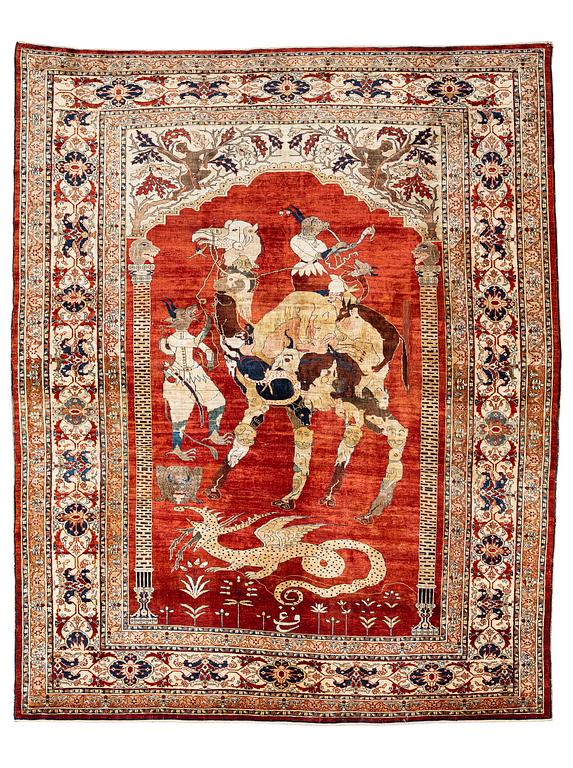
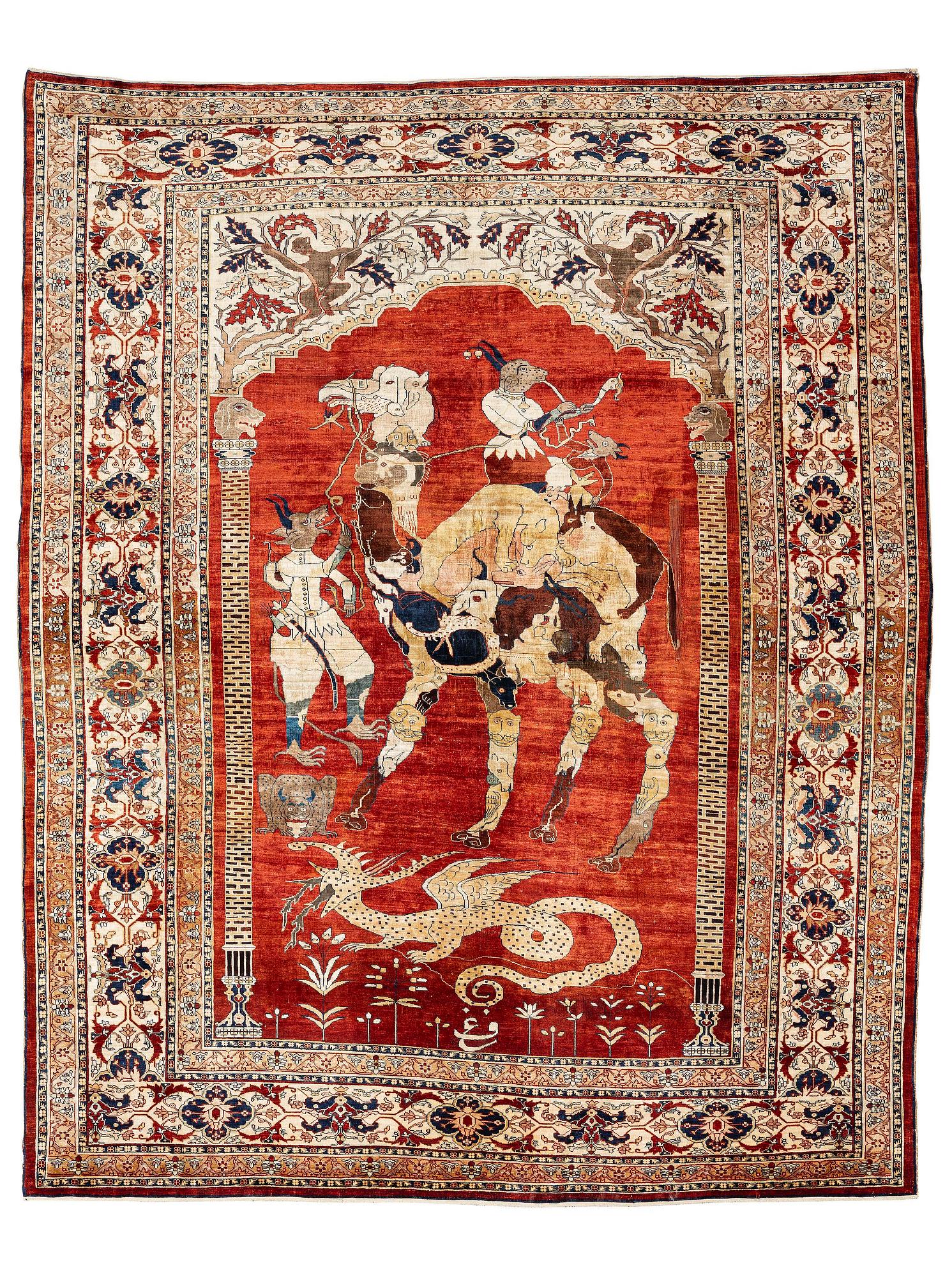
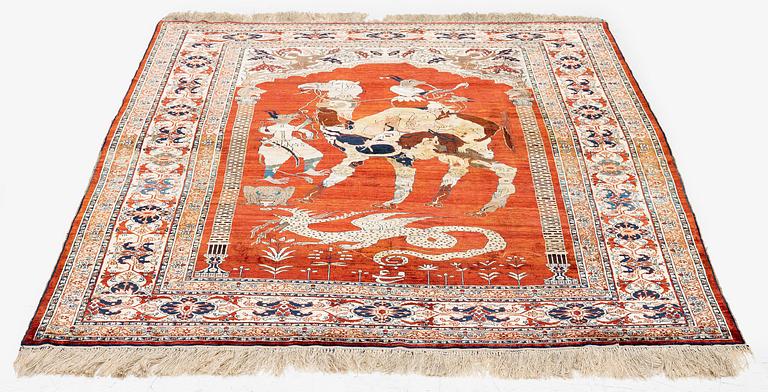
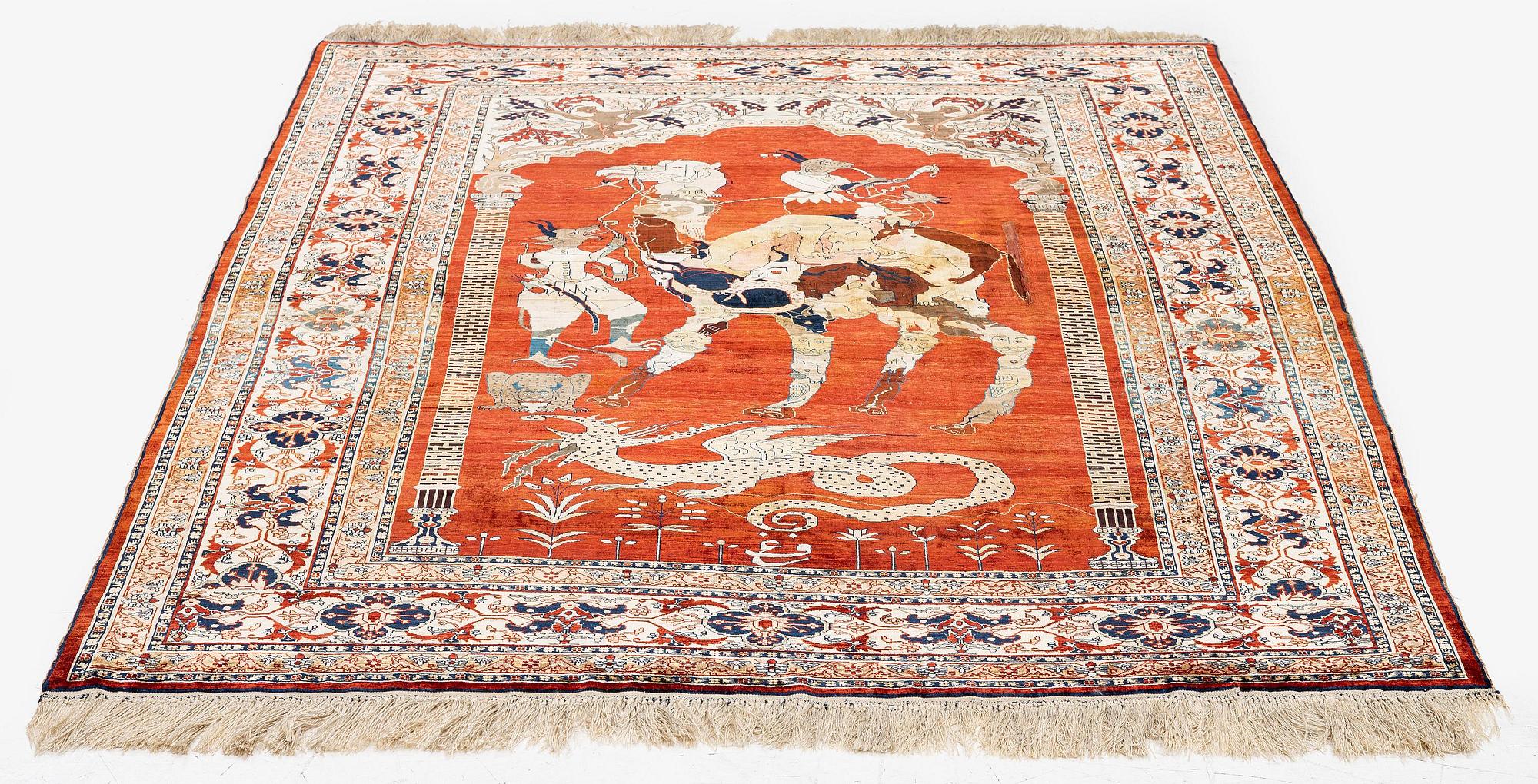
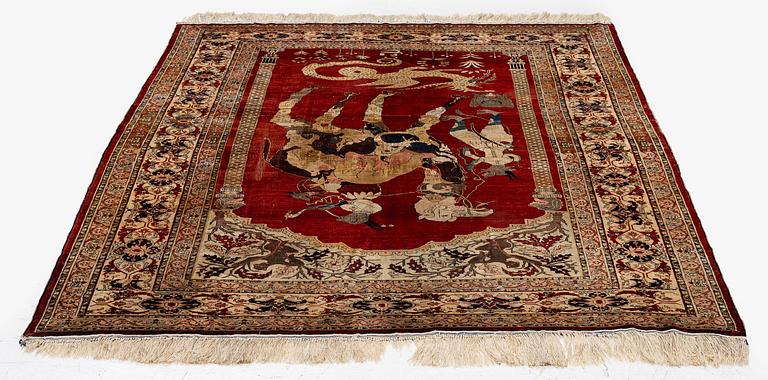
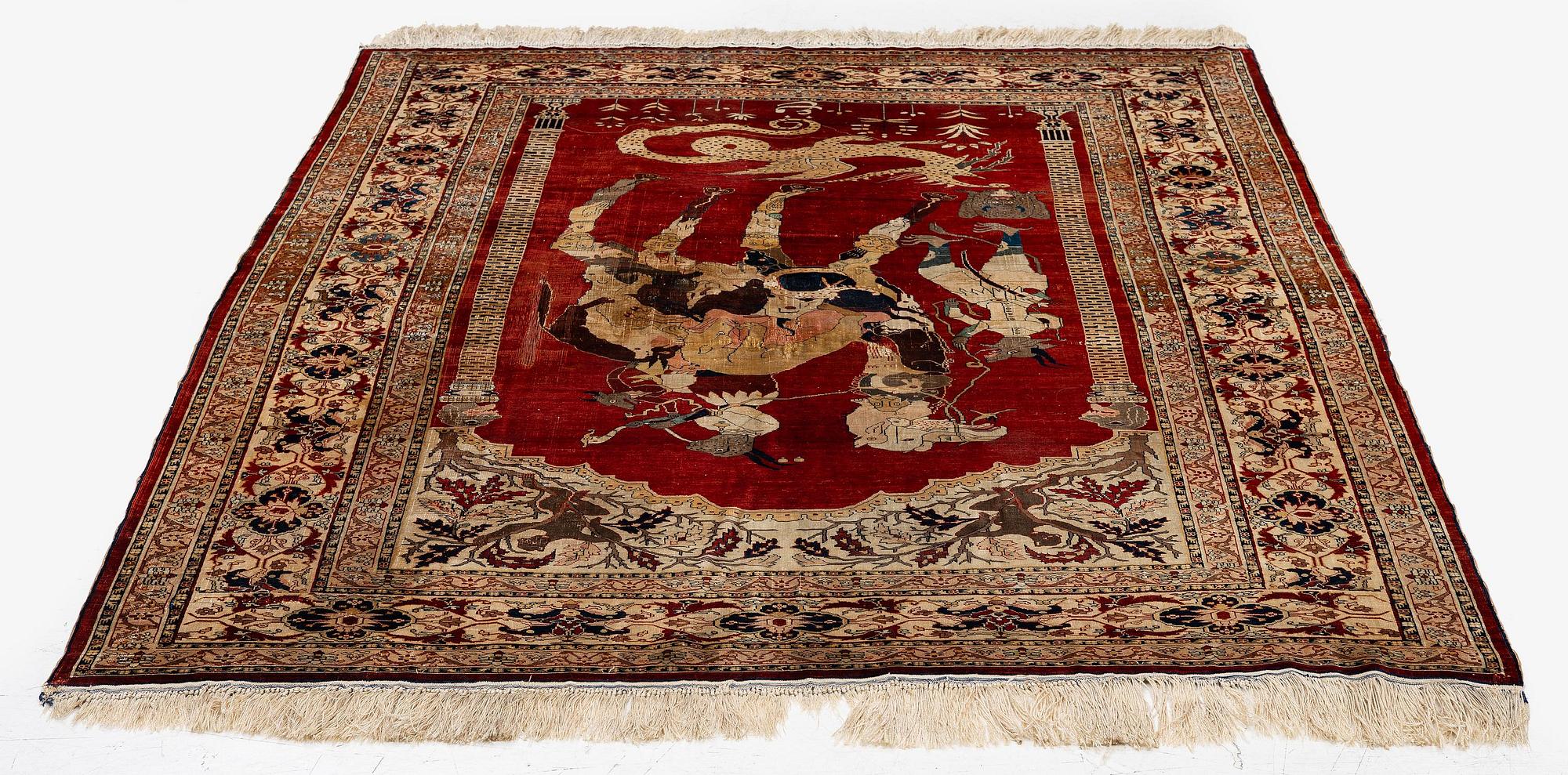
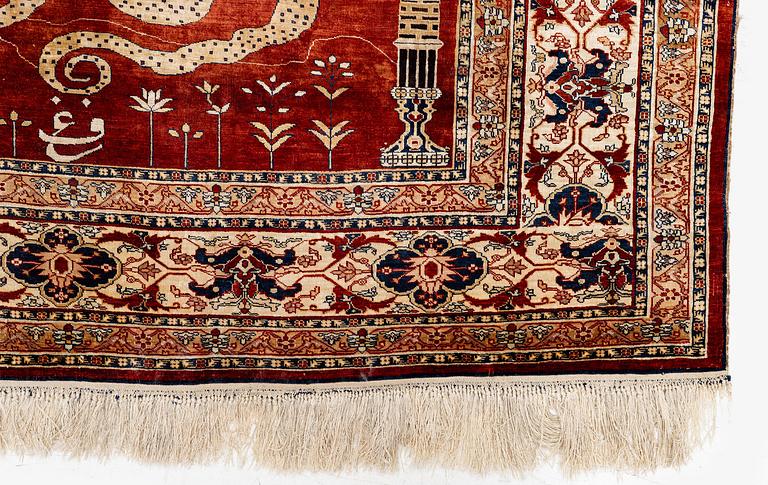
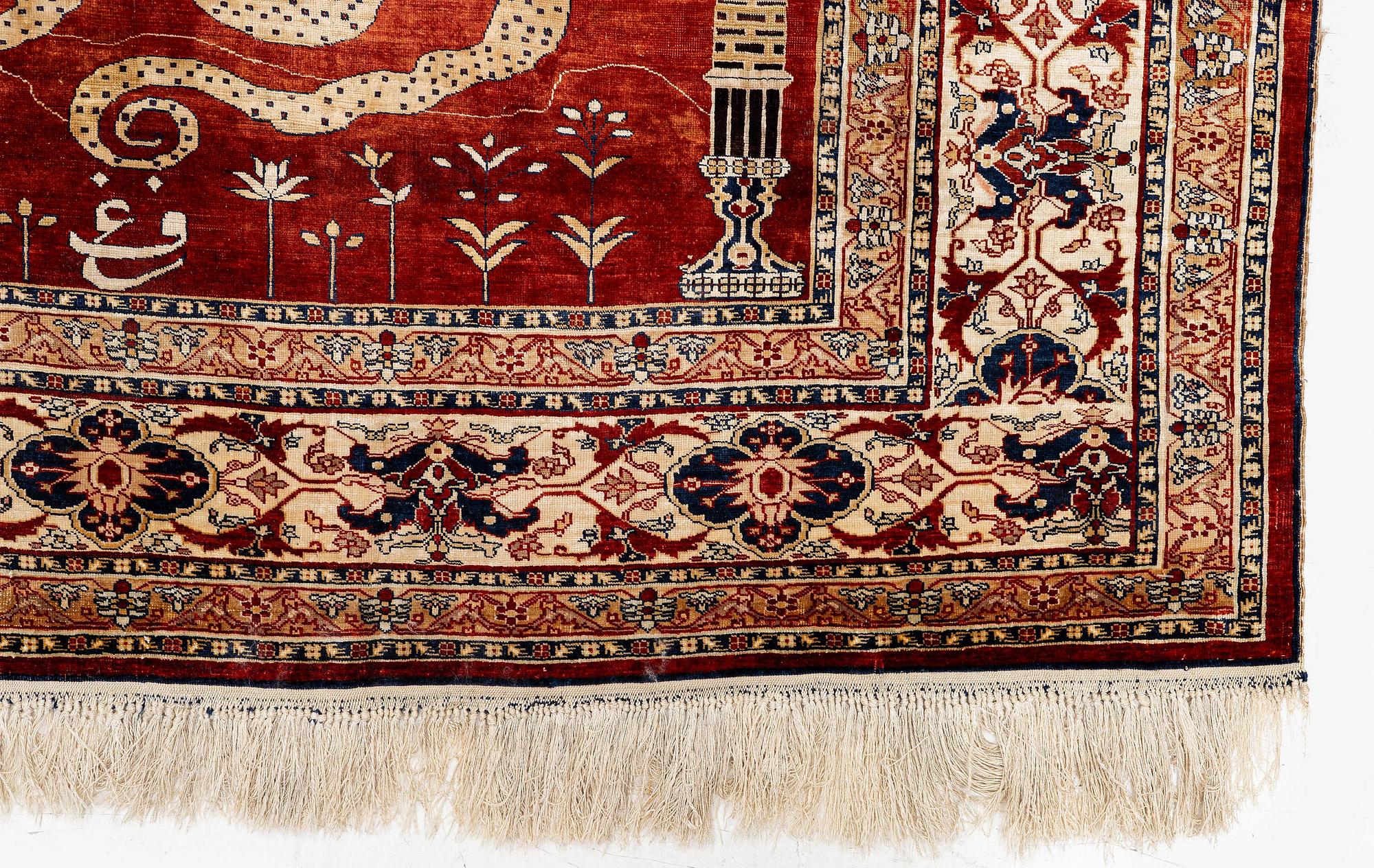
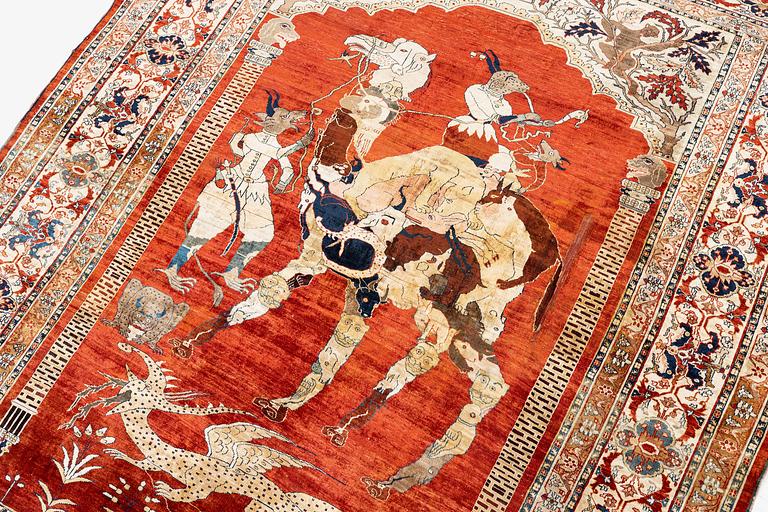
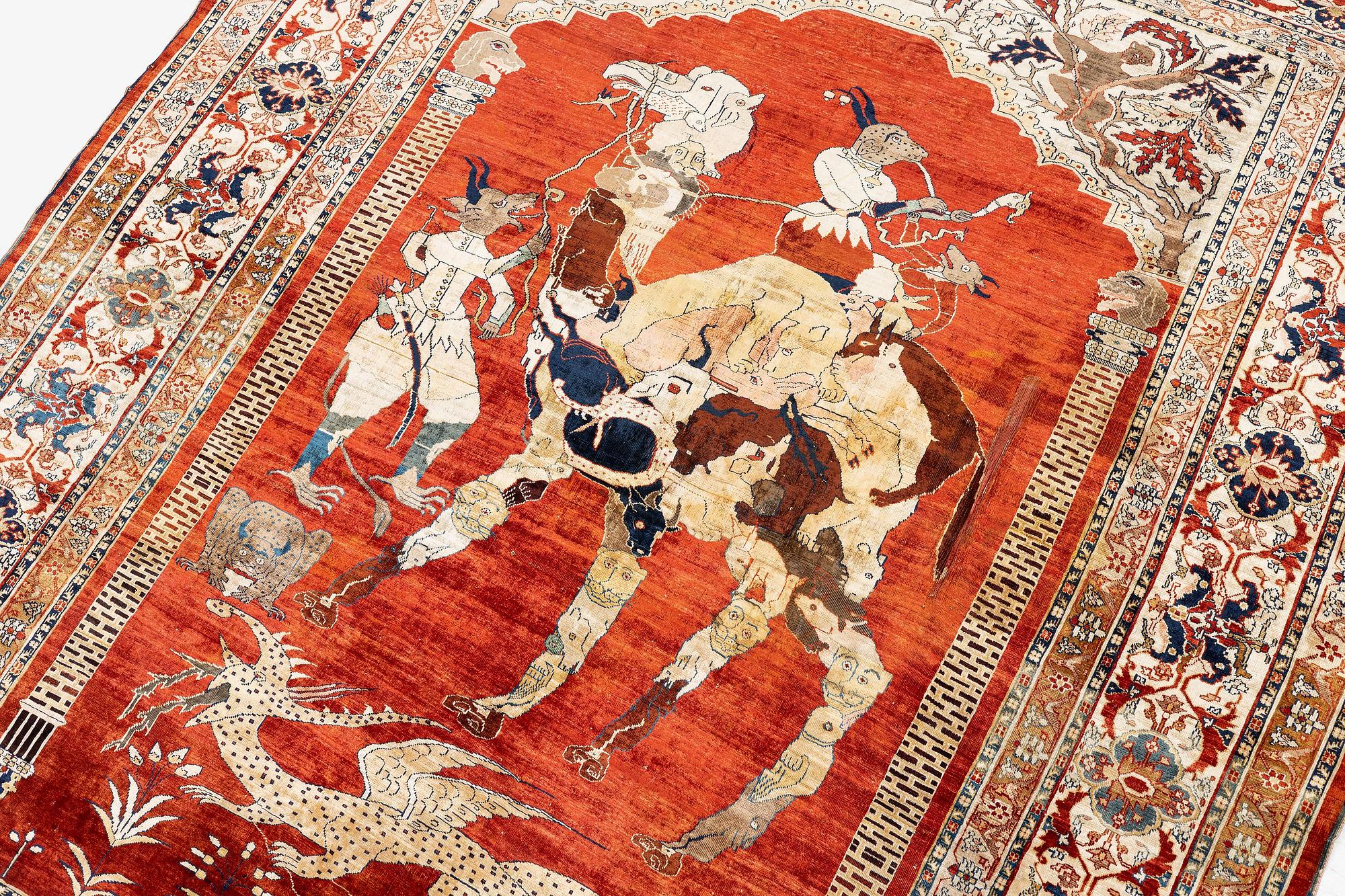
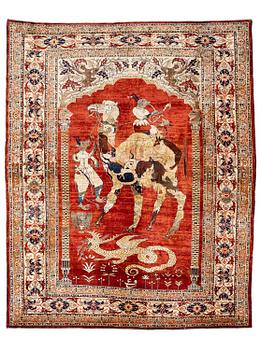
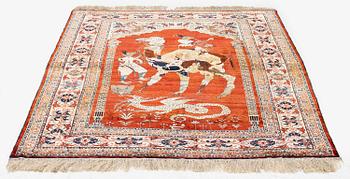
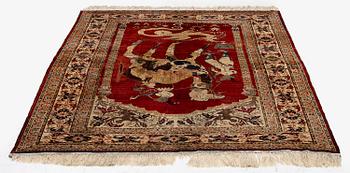
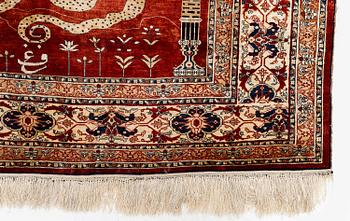
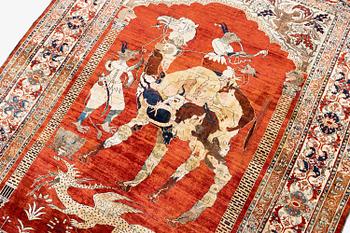
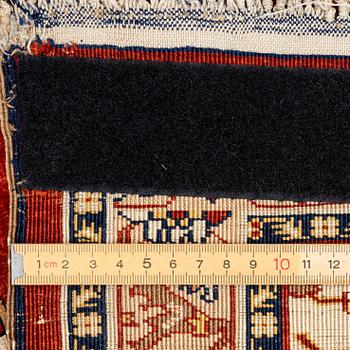
Circa 1880. A red ground with a camel as a mixture of demons, dervishes, lovers, rabbits, dragons, and a Buddhist monk with an earring and a khakkhara staff. The signature stylistically corresponds with that on a related example sold at Sotheby's, Important European Decorative Arts, London, 23 October 2013, lot 212, catalogued with provenance “By repute, the collection of Sigmund Freud.”
More information
The intricate composition of a composite camel and its handler draws inspiration from the fashionable miniature paintings that flourished in India and Persia from the 16th century onward. In this artistic tradition, images of humans, animals, and mythical beings were carefully combined to create a larger, unified figure within the artwork.
A notable example is a 16th-century Safavid miniature now housed in the Metropolitan Museum of Art in New York. The painting depicts a camel formed from an imaginative arrangement of demons, dervishes, embracing couples, rabbits, dragons, and even a Buddhist monk wearing an earring and carrying a khakkhara staff.
The popularity of composite imagery continued well into the 19th century. This enduring artistic taste can also be seen in a Qajar pen-and-ink drawing signed by Sattar Tabrizi, which was sold at Bonhams on 26 October 2020 as lot 32.
For condition report contact specialist

Others have also viewed