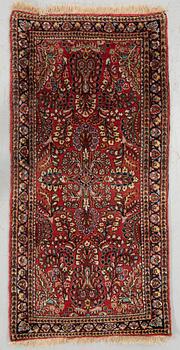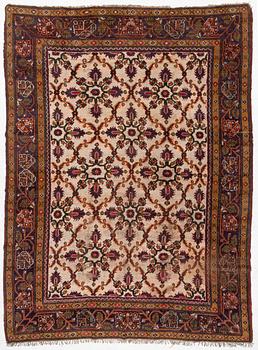
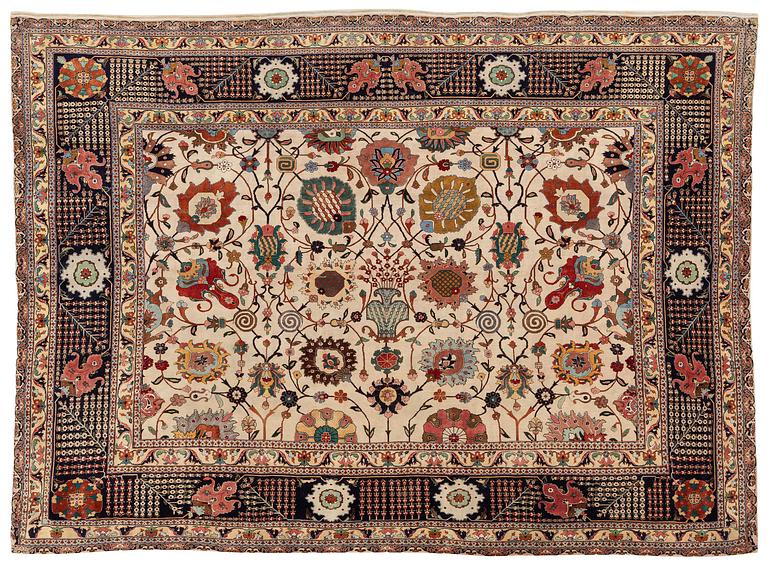
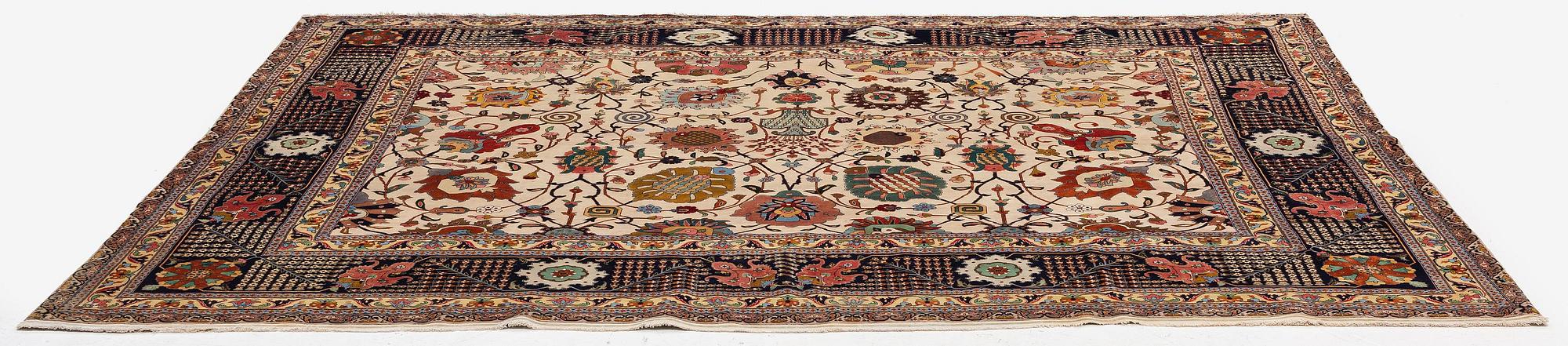
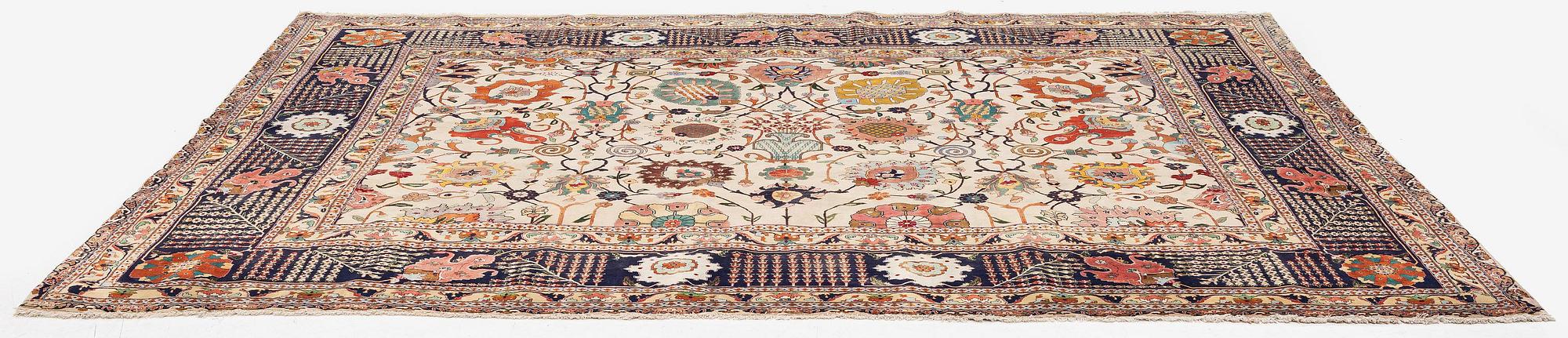
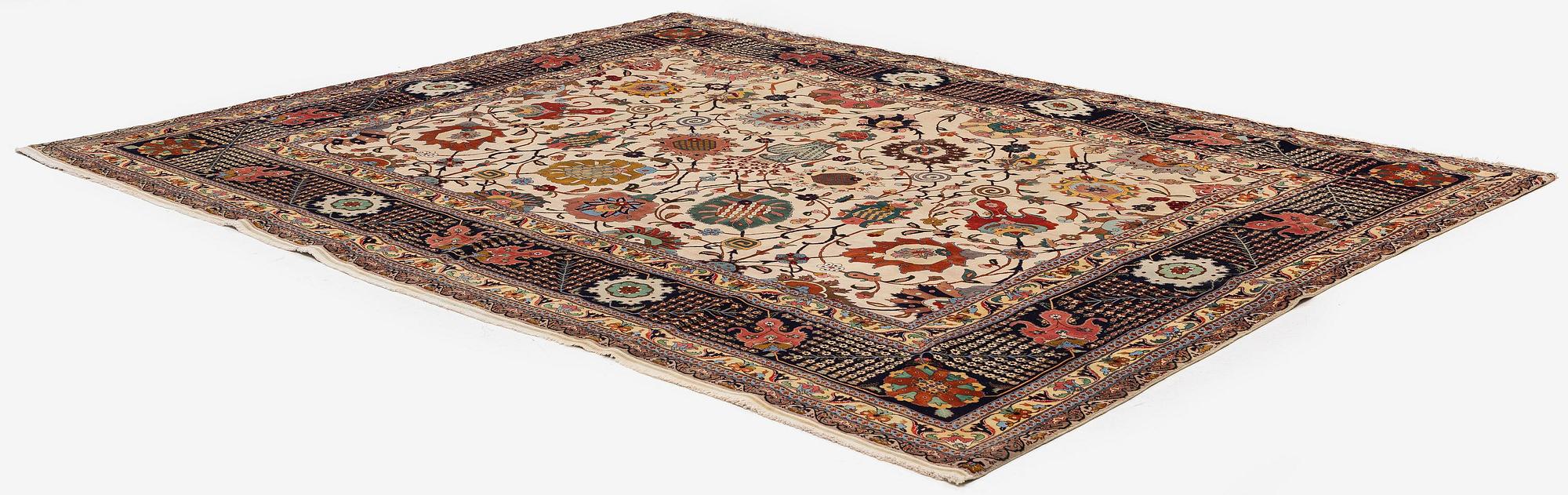
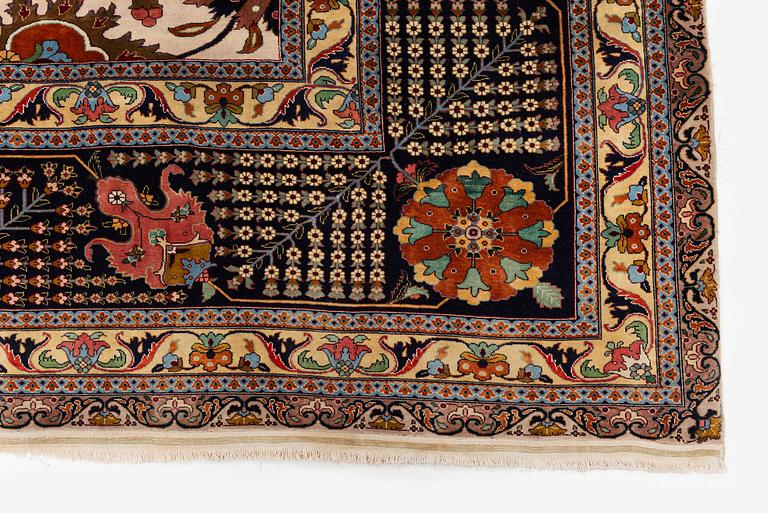
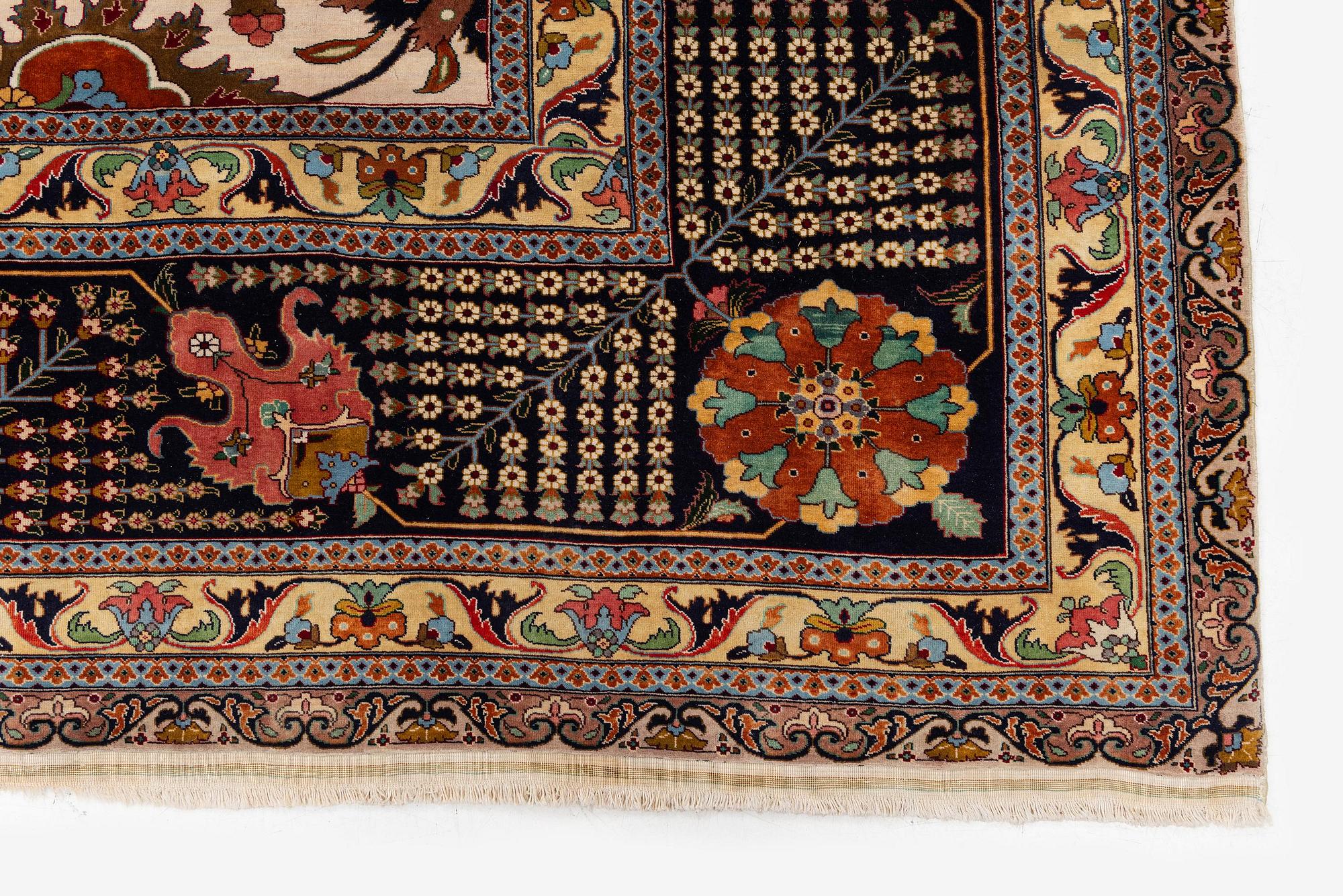
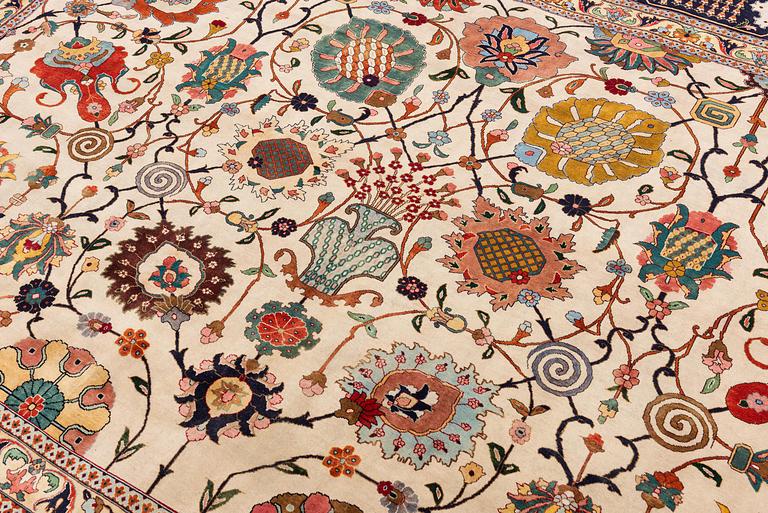
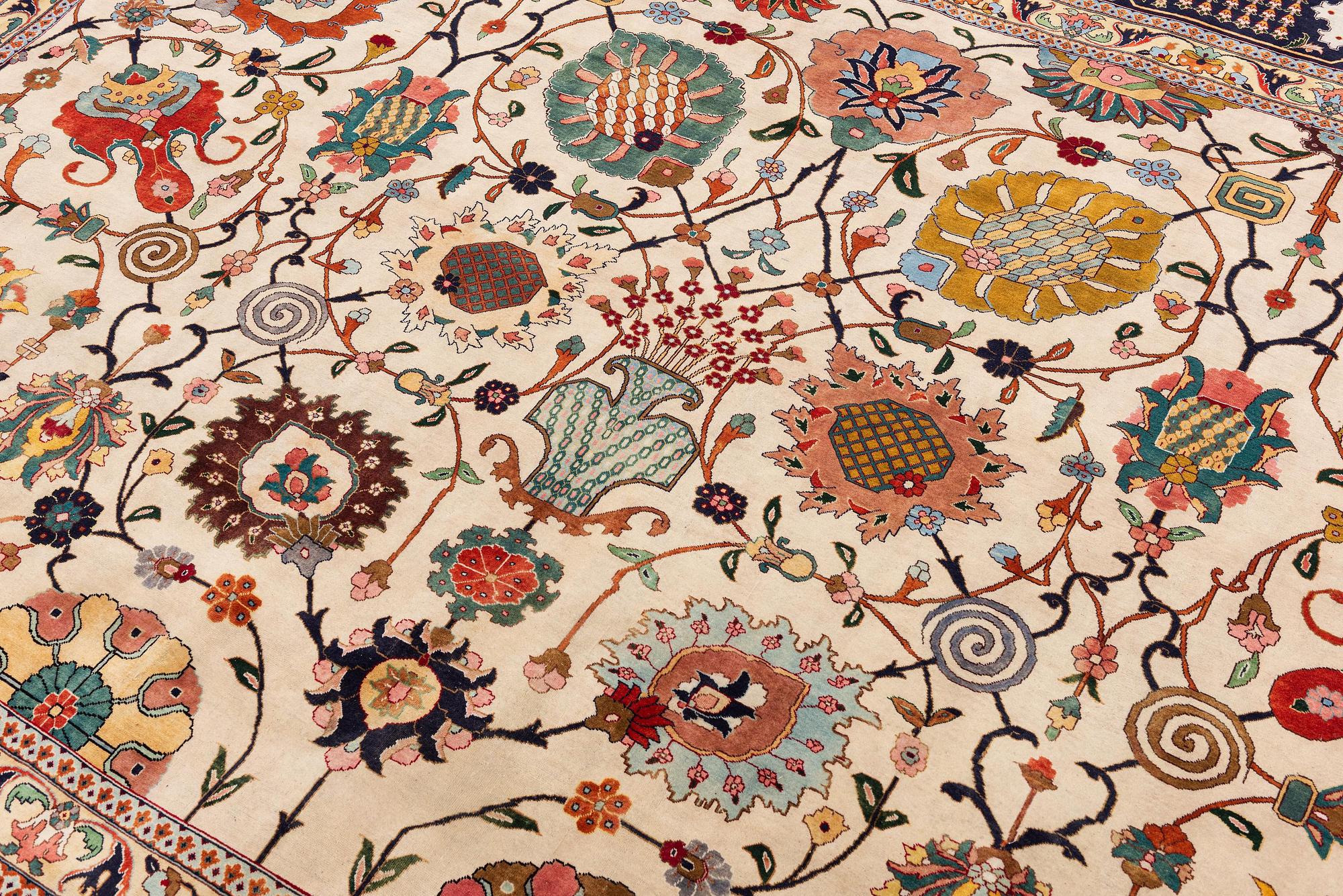
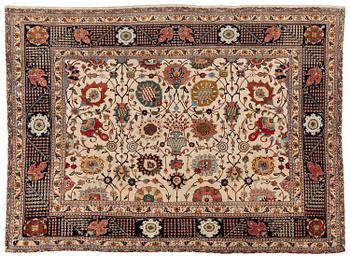
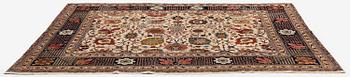
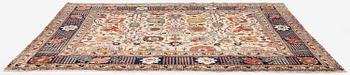
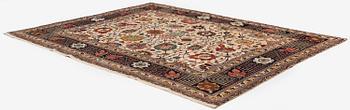
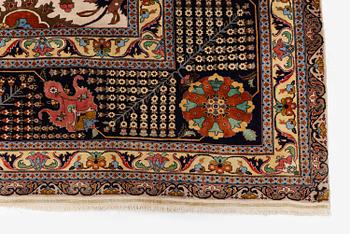
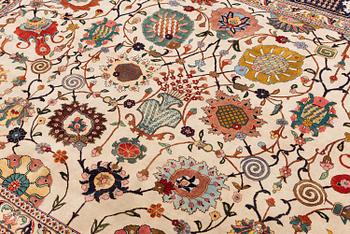
Circa 1930. An ivory ground with a large polychrome Safavid "Vase design" with large palmette and floral scrolls.
Literature
Compare Völker, Annika "The Oriental Knotted Carpets in the MAK", 2001 Vienna: Böhlau, plate 95, pp. 270-1.
More information
The present carpet draws closely upon the design of an early 17th-century ‘Vase’ carpet fragment preserved in the Museum für Angewandte Kunst, Vienna. The scrolling vine lattice, palmette motifs and refined drawing are characteristic of the celebrated ‘Vase’ carpets produced in Safavid Persia during the late 16th and early 17th centuries.
In the early 20th century, a renewed scholarly interest in classical Persian weaving brought such masterpieces to wider attention through a series of influential publications. European workshops, notably PETAG and Benlian & Co., were granted access to historic prototypes and fragments. Drawing upon these sources, they produced faithful reinterpretations that both preserved and disseminated the aesthetic legacy of the great Safavid weaving ateliers.
For condition report contact specialist

Others have also viewed