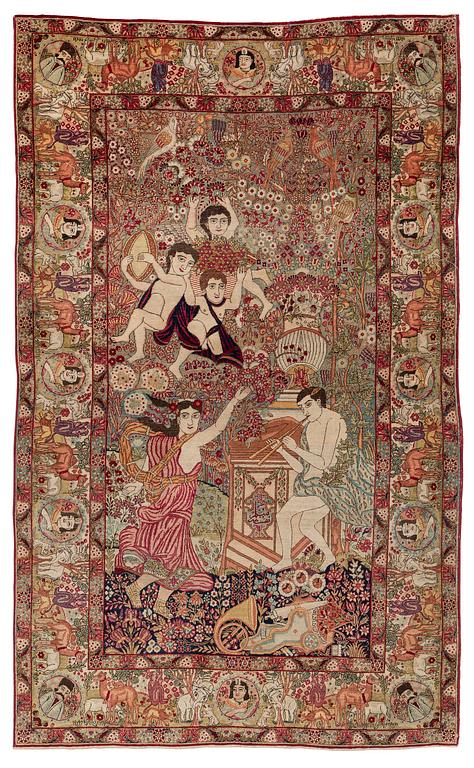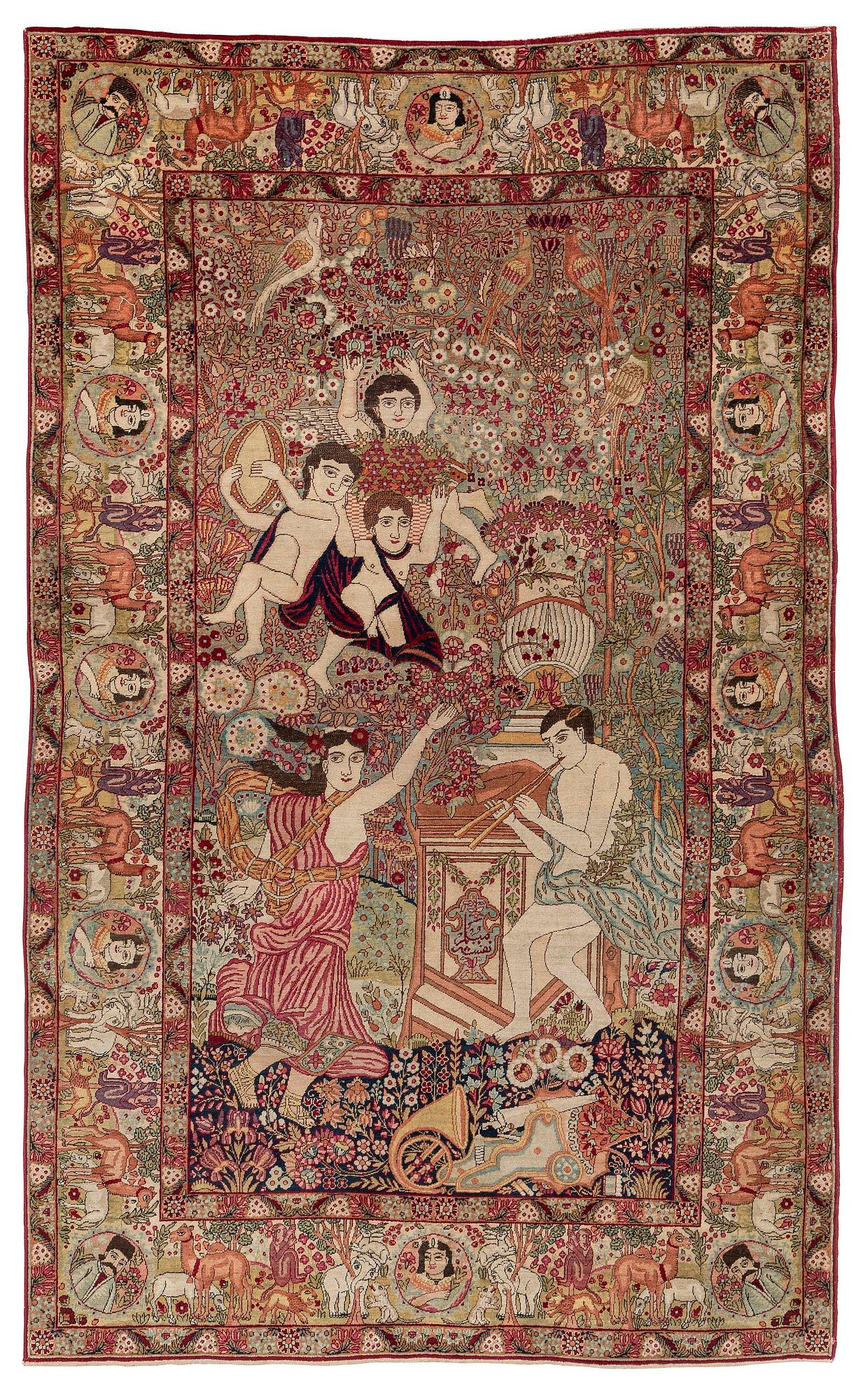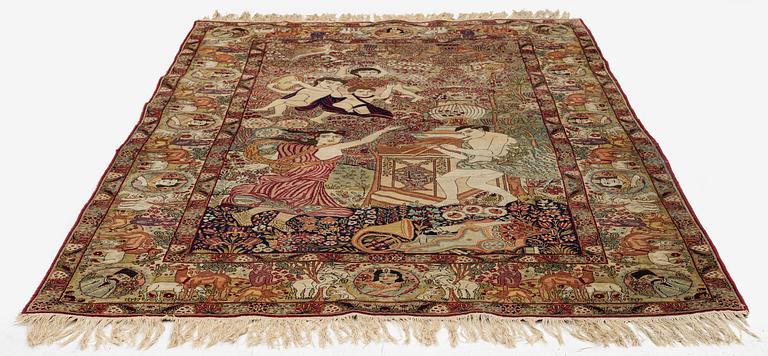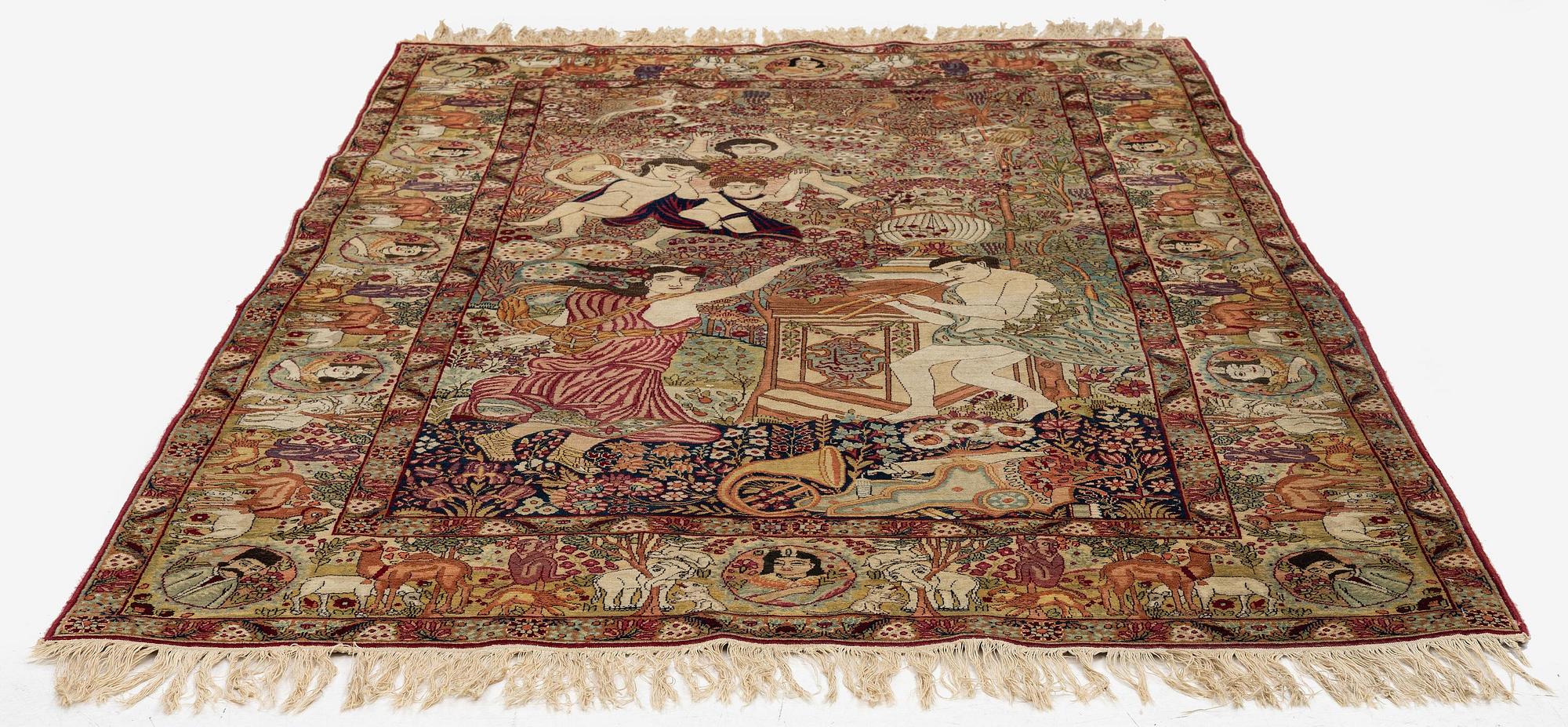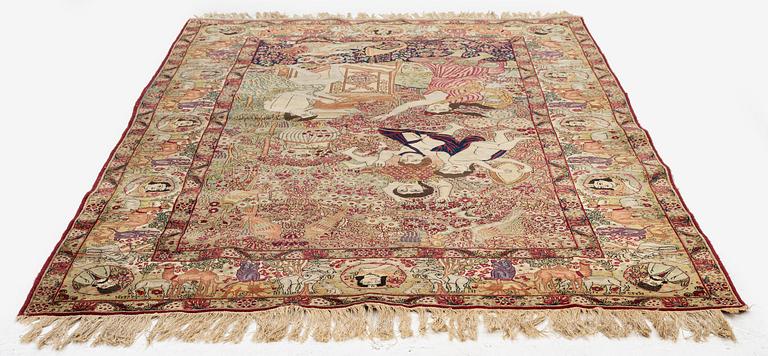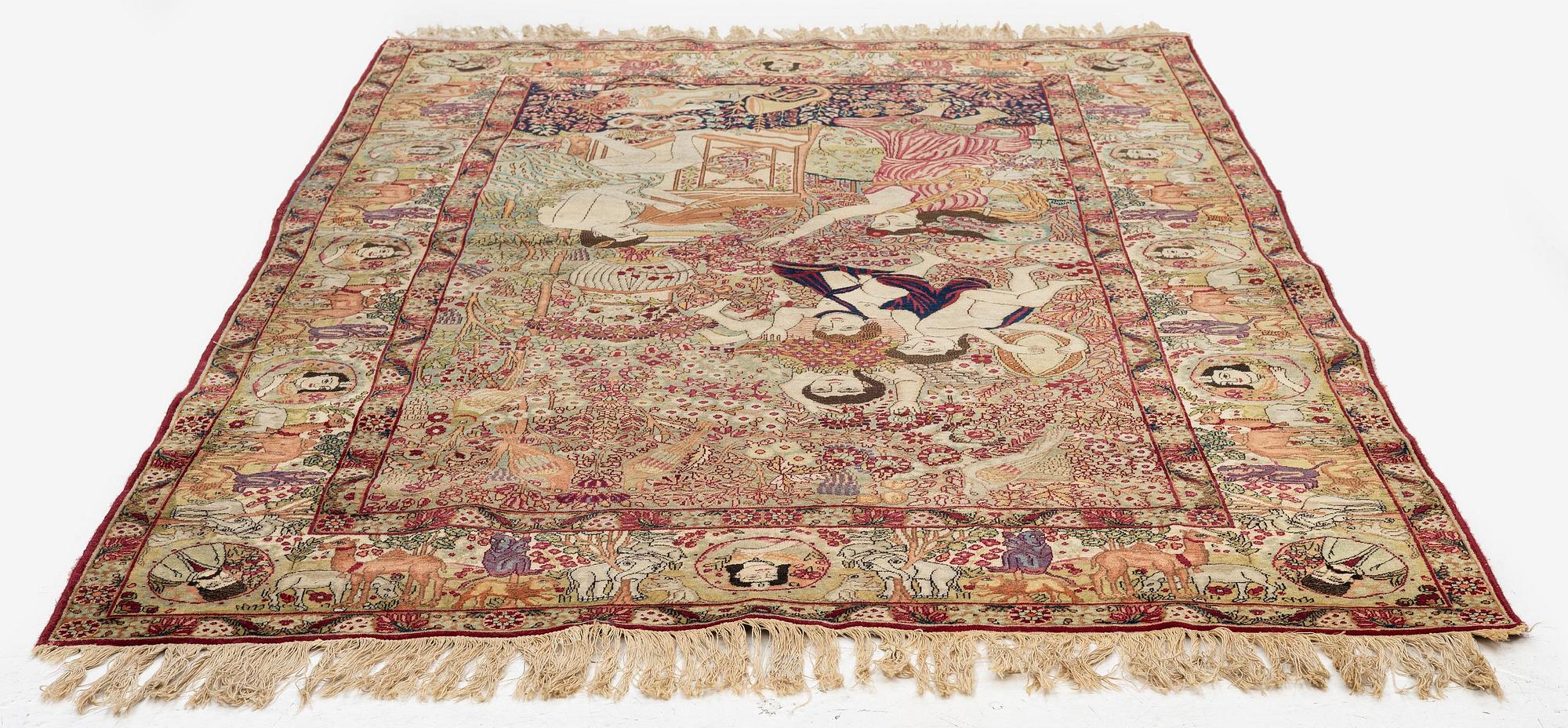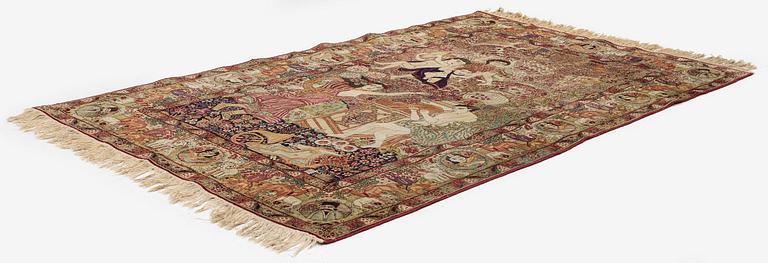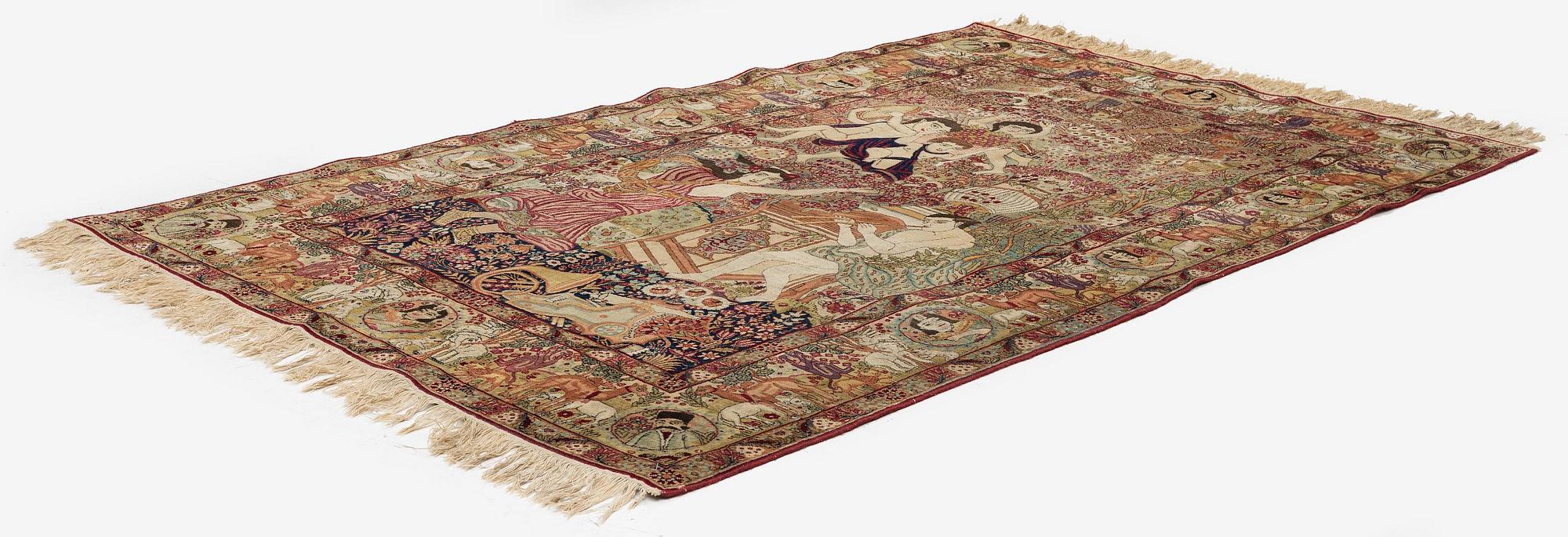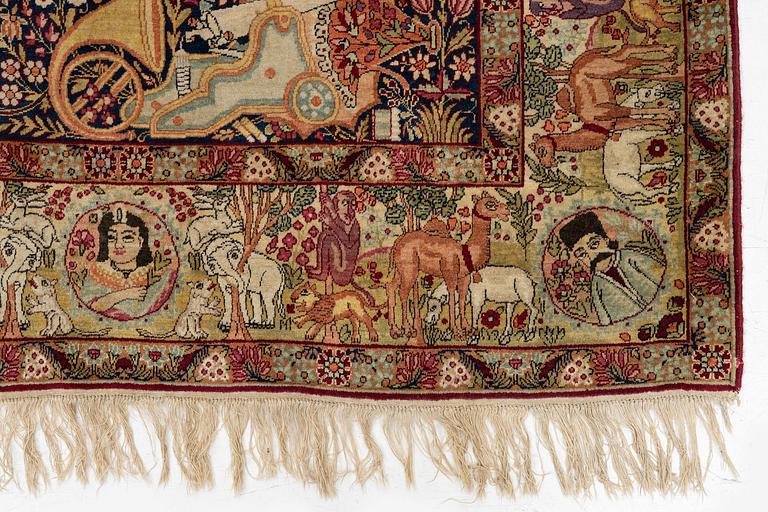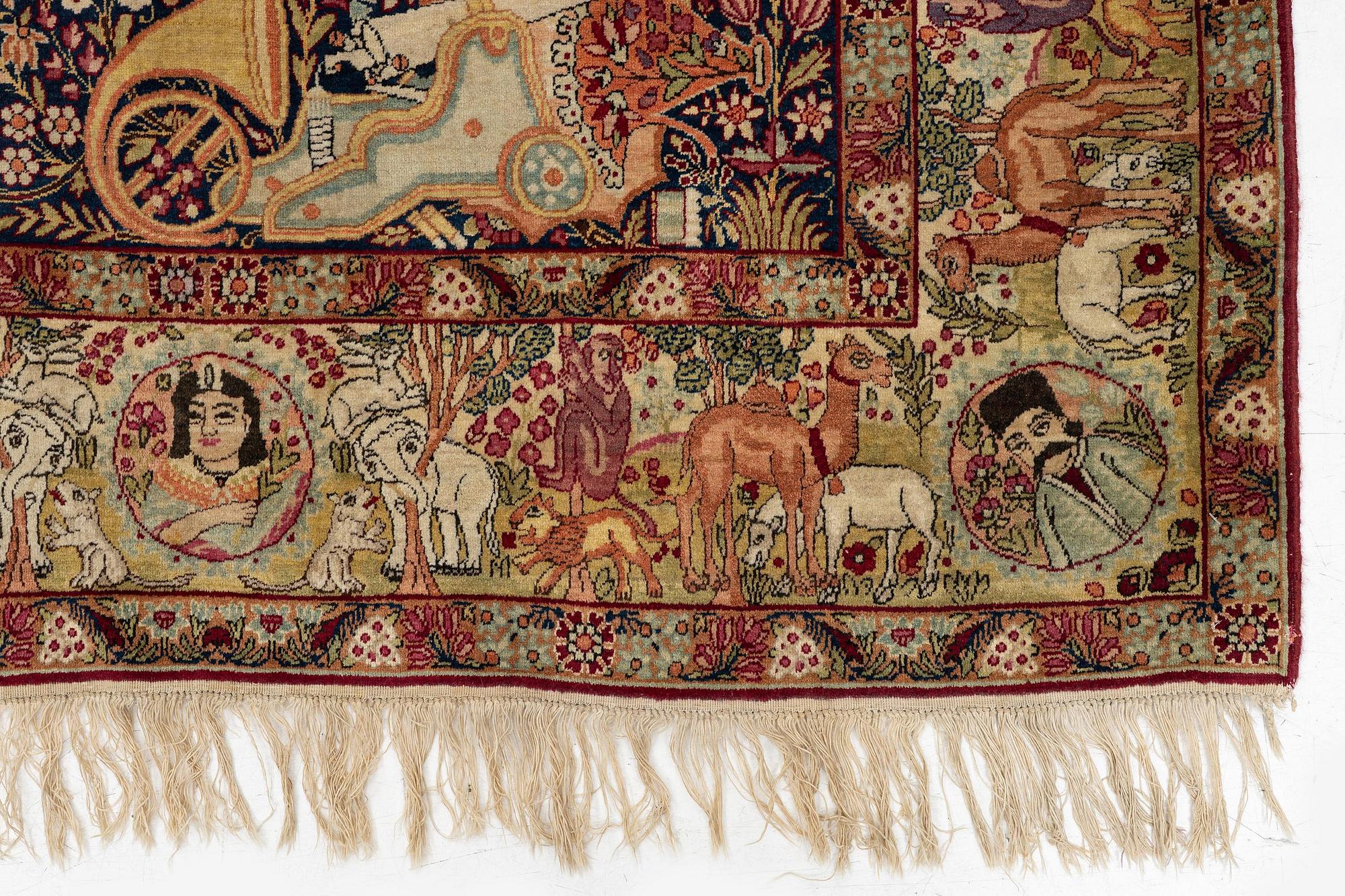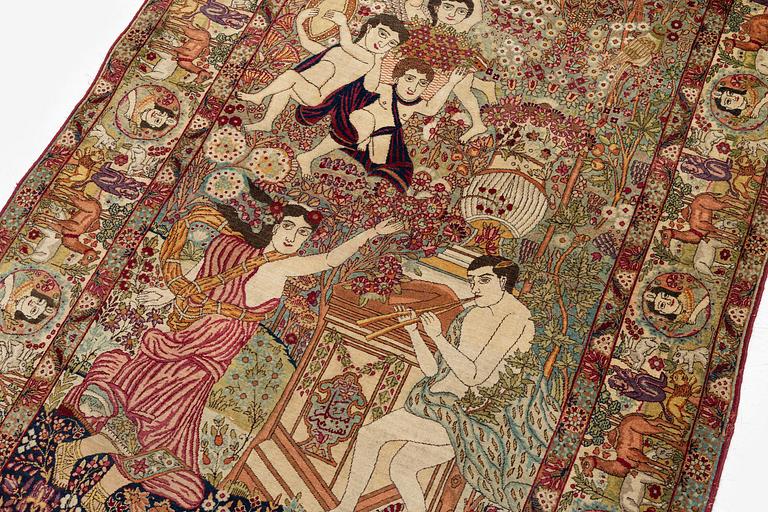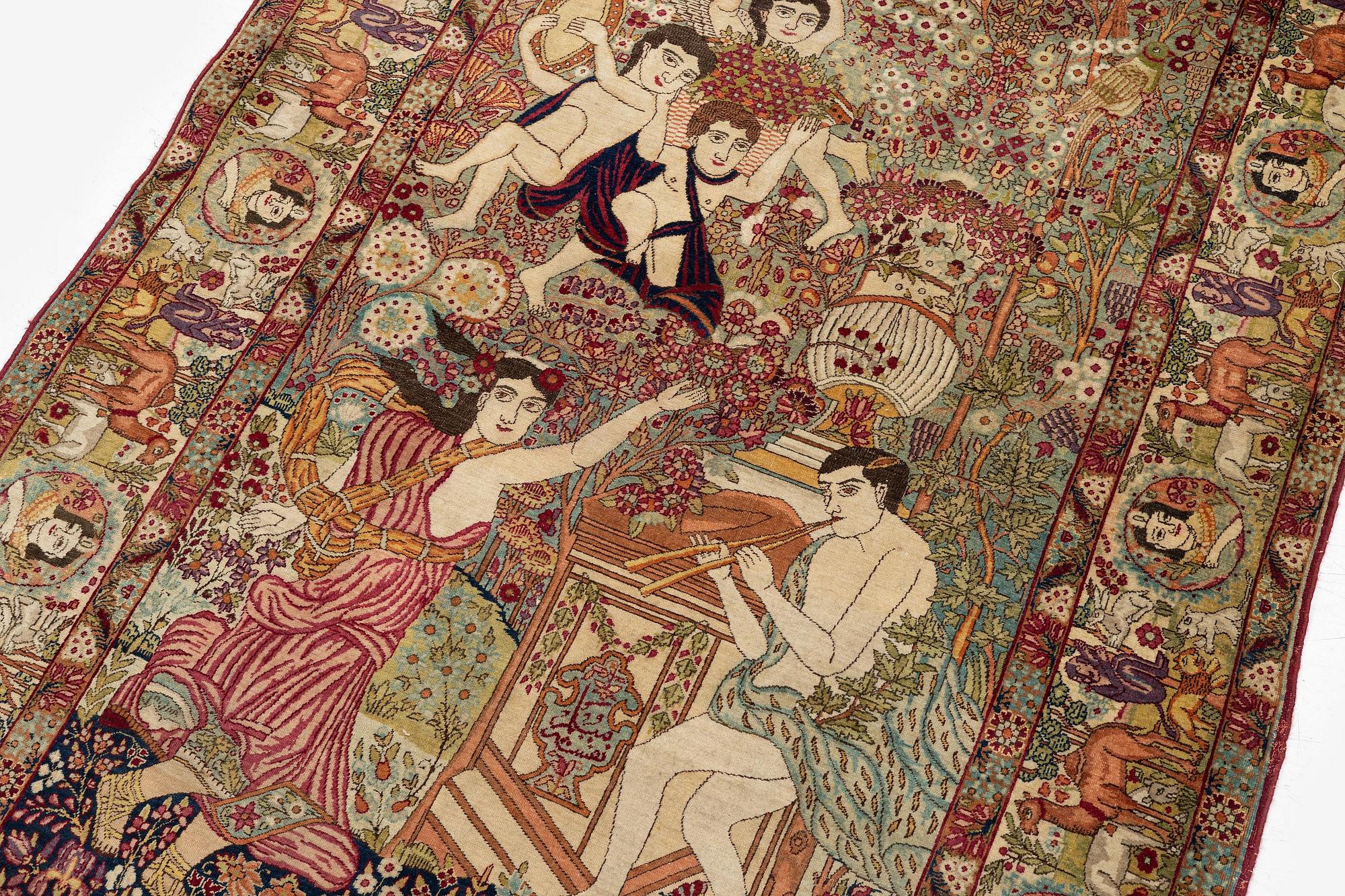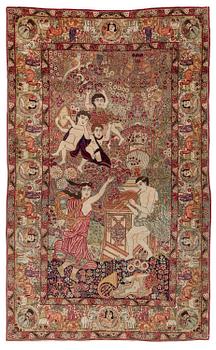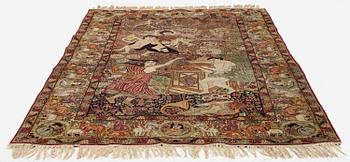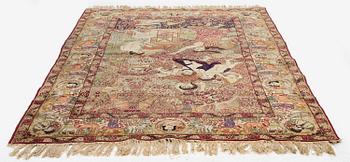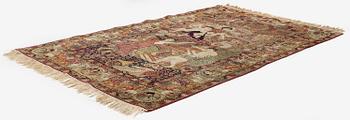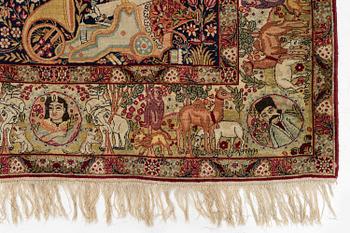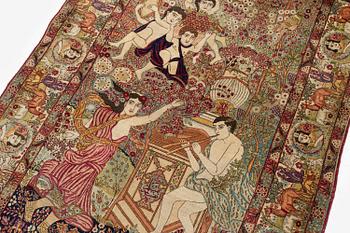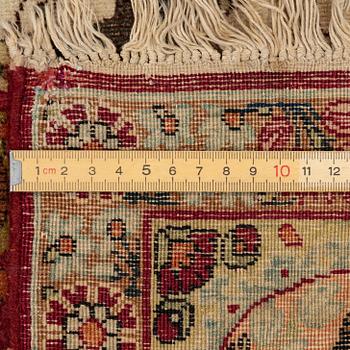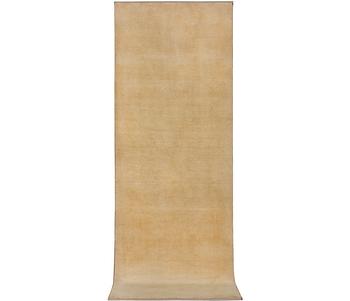
Circa 1900. Depicting Pomona with Vertumnus.
More information
The design of this carpet is derived from a celebrated tapestry produced by the Gobelins Manufactory during the reign of Louis XIV. It forms part of the series Les Sujets de la Fable, inspired by compositions attributed to Raphael, whose influence on European decorative arts remained profound well into the Baroque period.
The scene, known as La Danse d’une nymphe, de la droite, presents a richly animated mythological tableau. A dancing nymph is accompanied by lively tambourine-playing putti, set within an abundant flowering landscape. The composition is further enriched by classical ornament, including a bacchic krater vase, emblematic of festivity and abundance. Within this Arcadian setting appear the figures of Pomona and Vertumnus, the latter depicted in the guise of a faun playing the pipes associated with Pan. Together, these elements evoke themes of fertility, transformation, and pastoral harmony.
A version of this tapestry was displayed in the public rooms of Nasir al-Din Shah Qajar at the Golestan Palace in Tehran. Its presence at the Qajar court reflects the 19th-century fascination with European art and design. This exposure is widely believed to have inspired the production of a series of Kirman carpets incorporating this distinctive composition.
This carpet stands as a remarkable example of cross-cultural artistic exchange, translating a French royal tapestry—rooted in Renaissance and classical mythology—into the refined textile tradition of Persian weaving.
For condition report contact specialist