


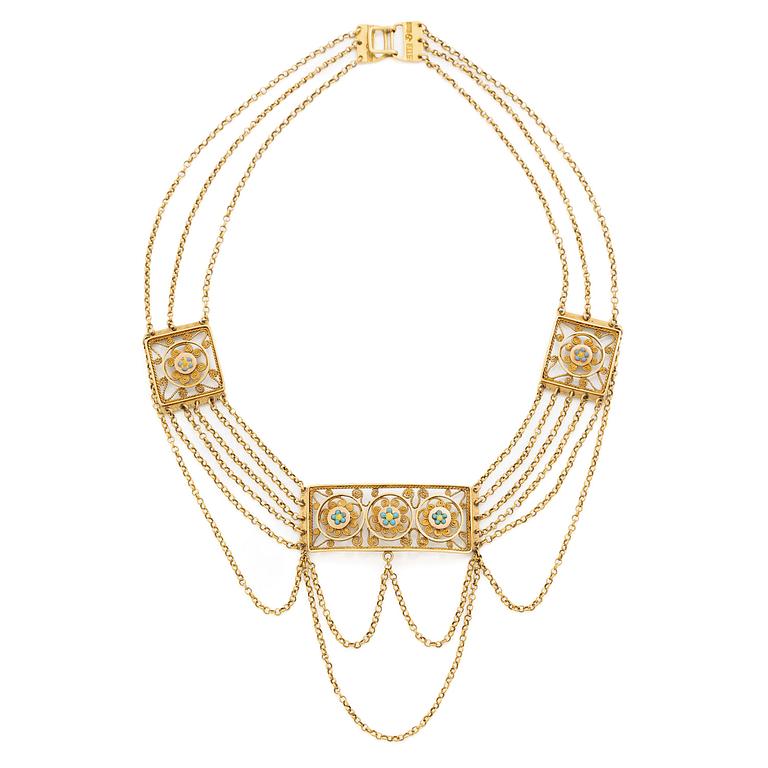
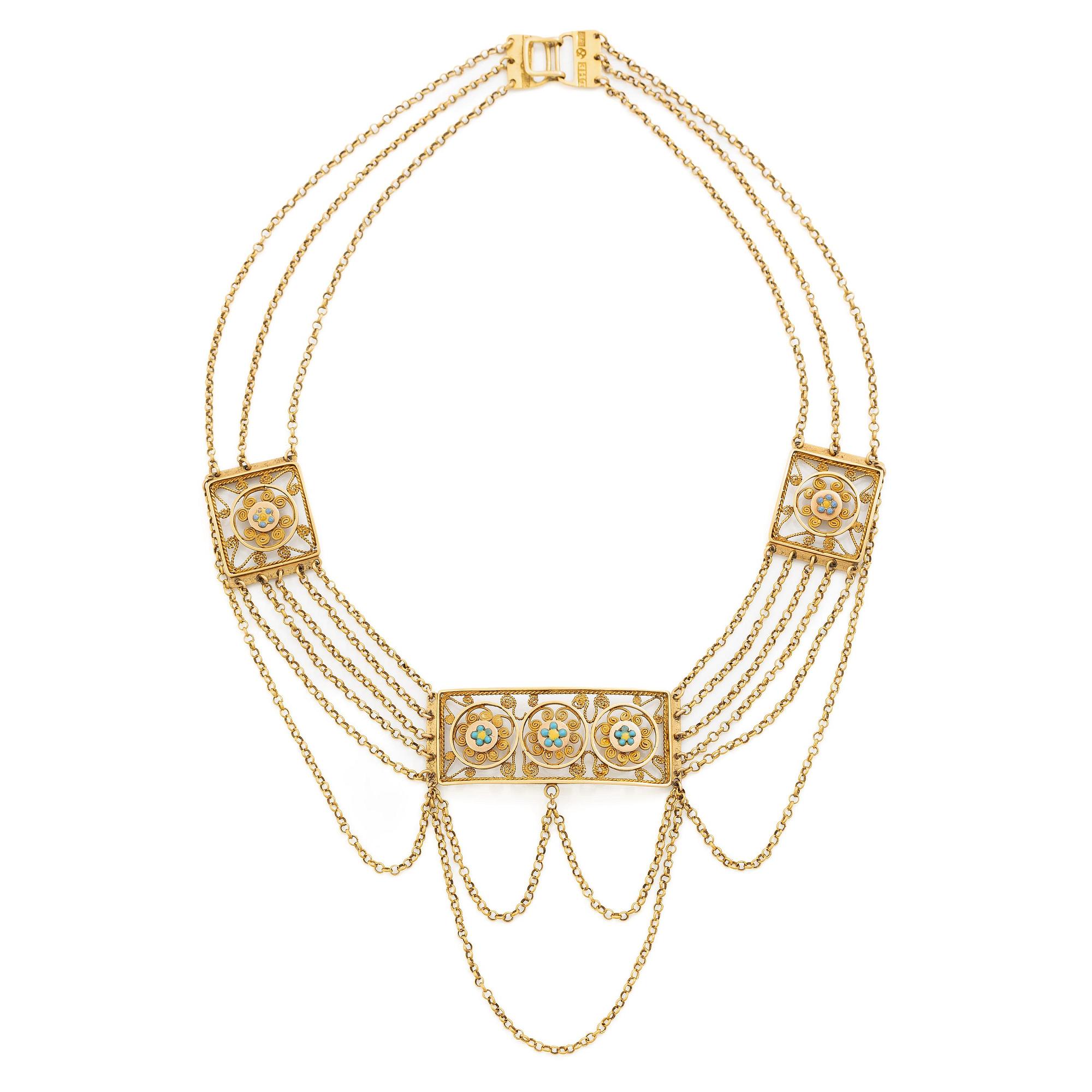
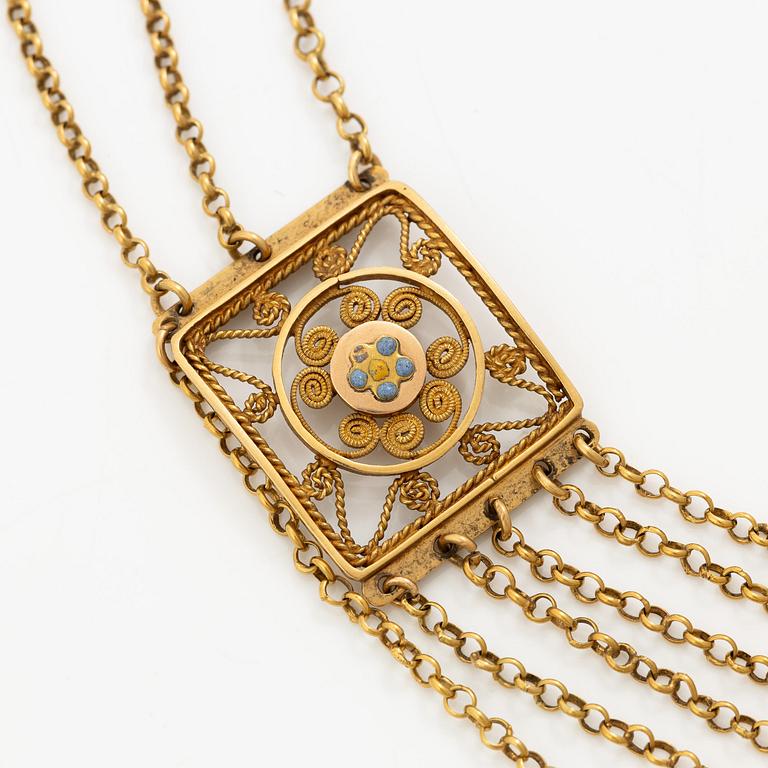
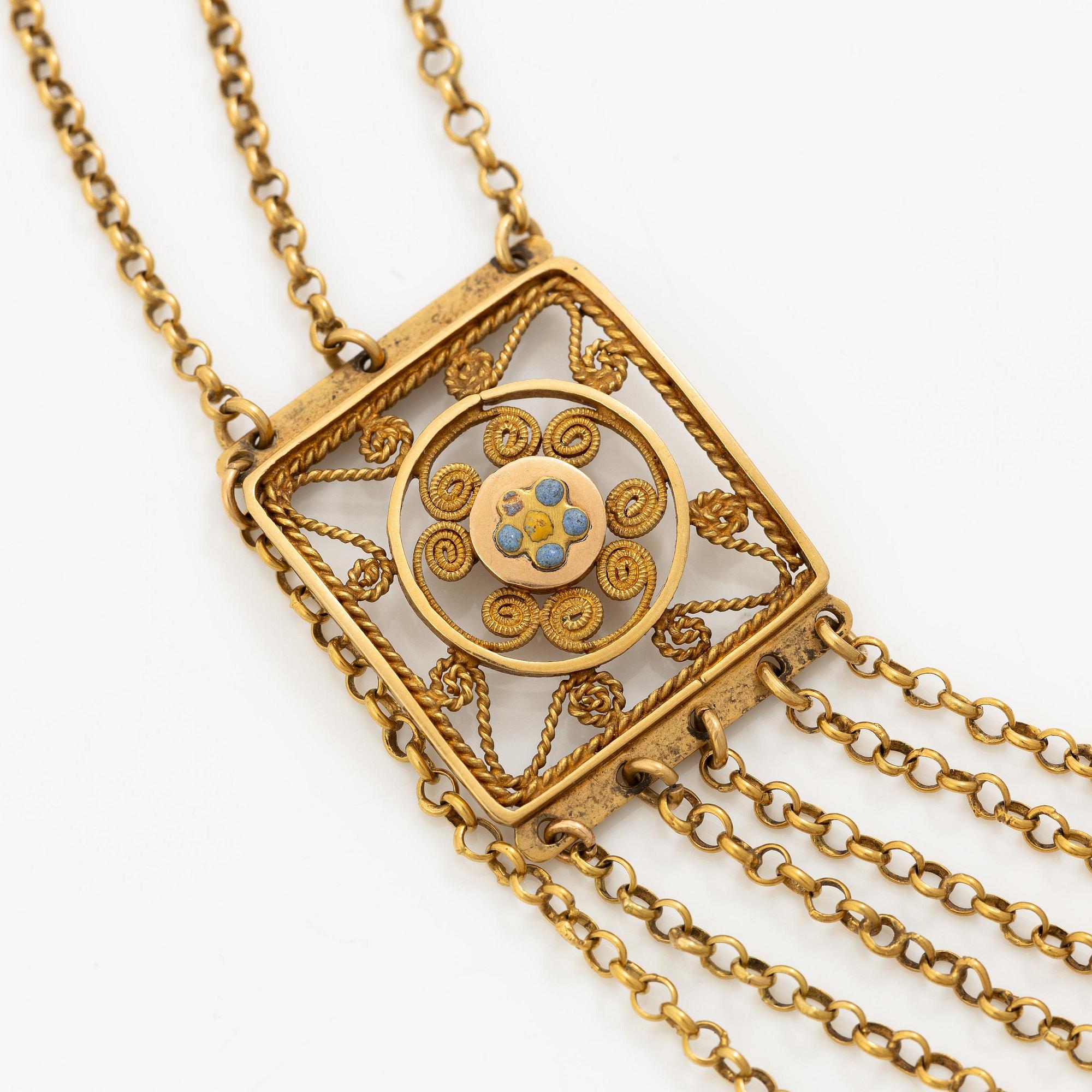
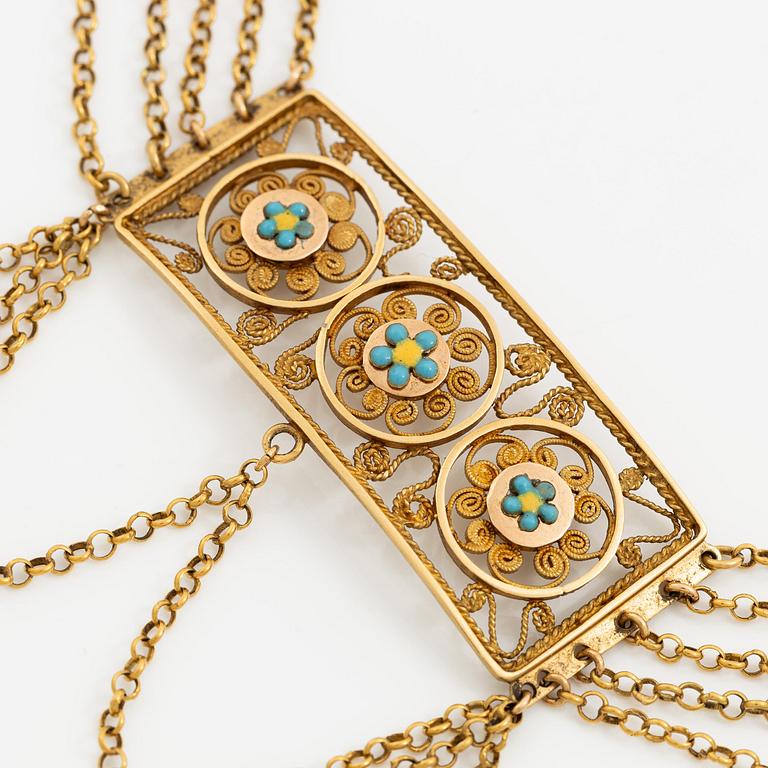
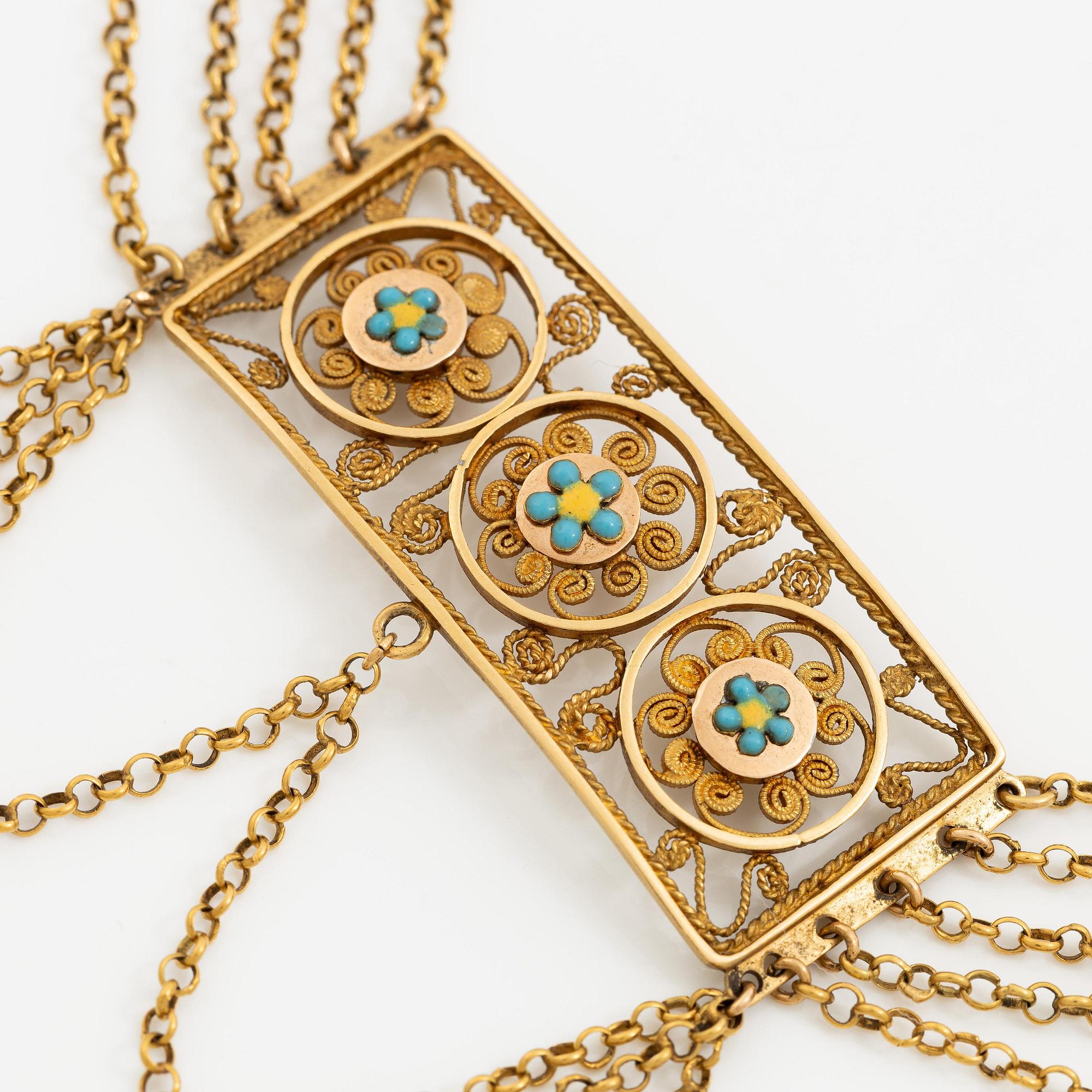
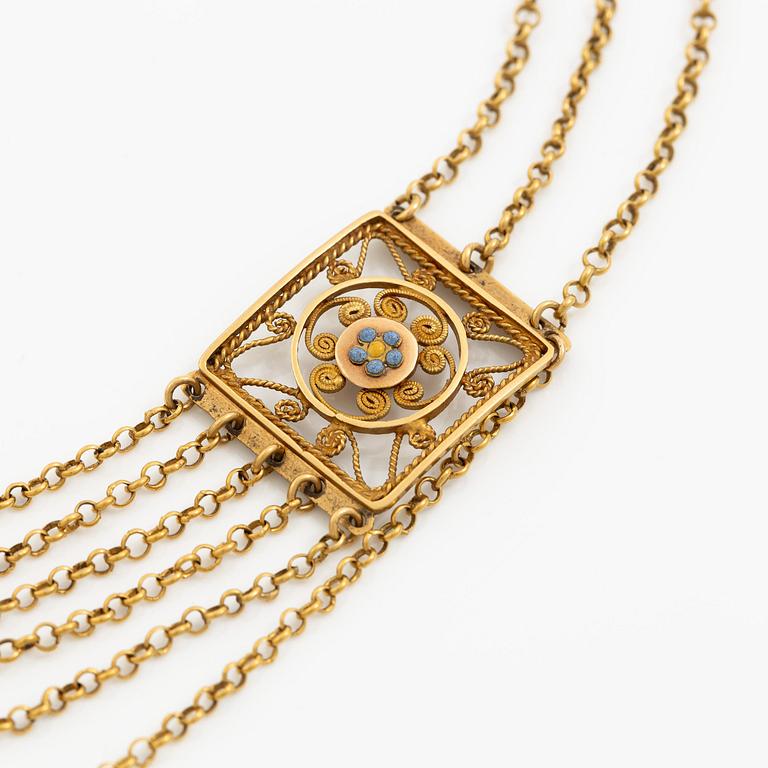
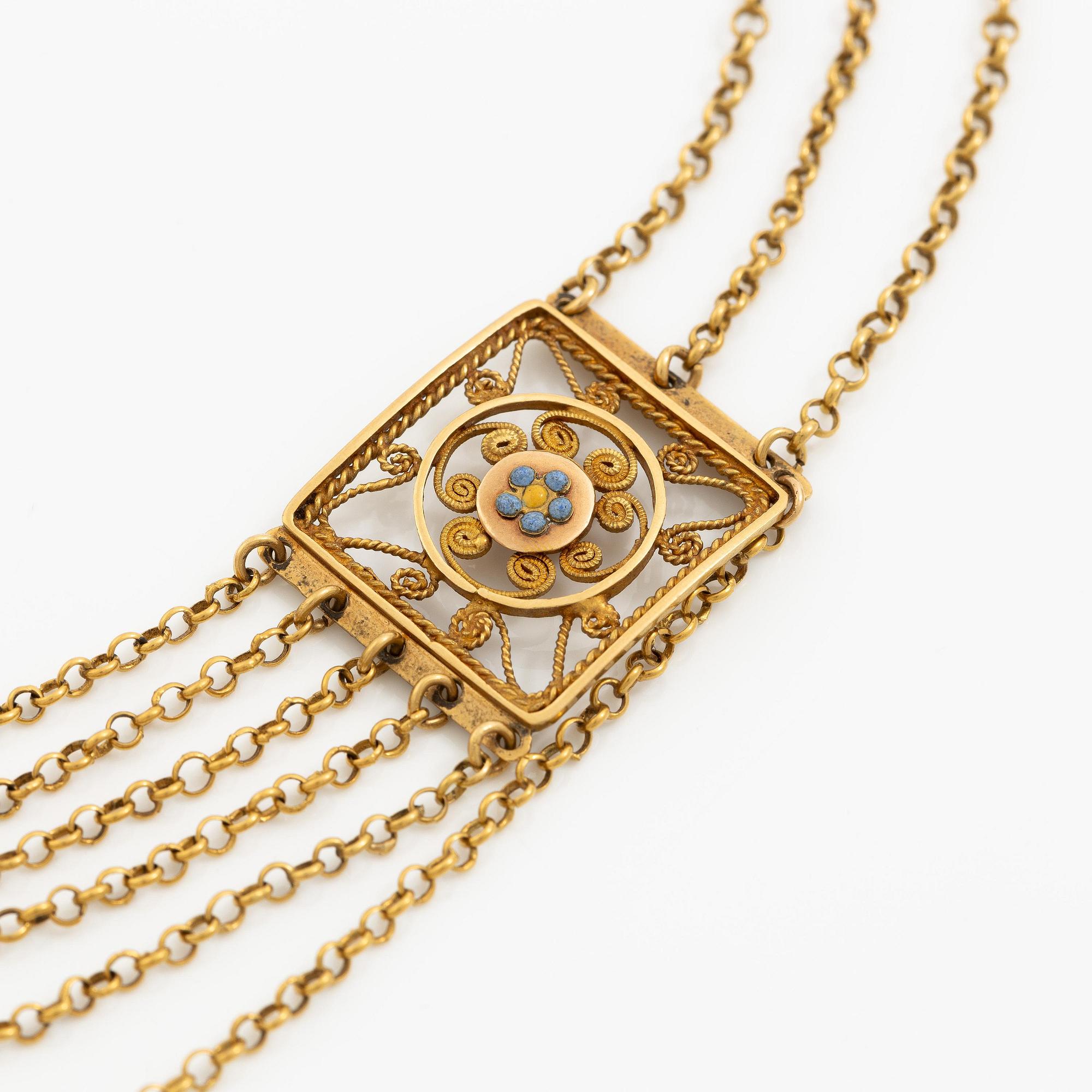
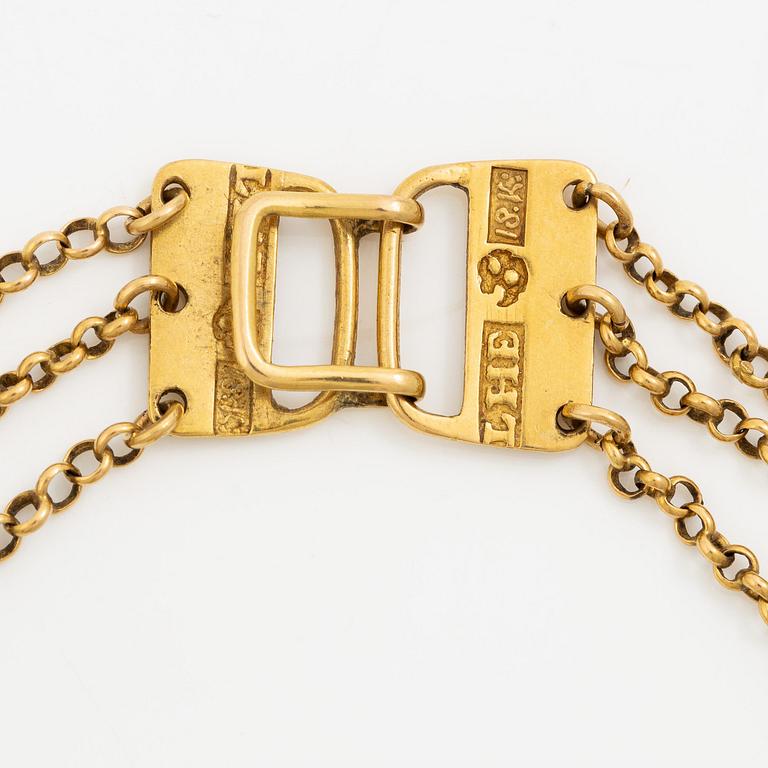
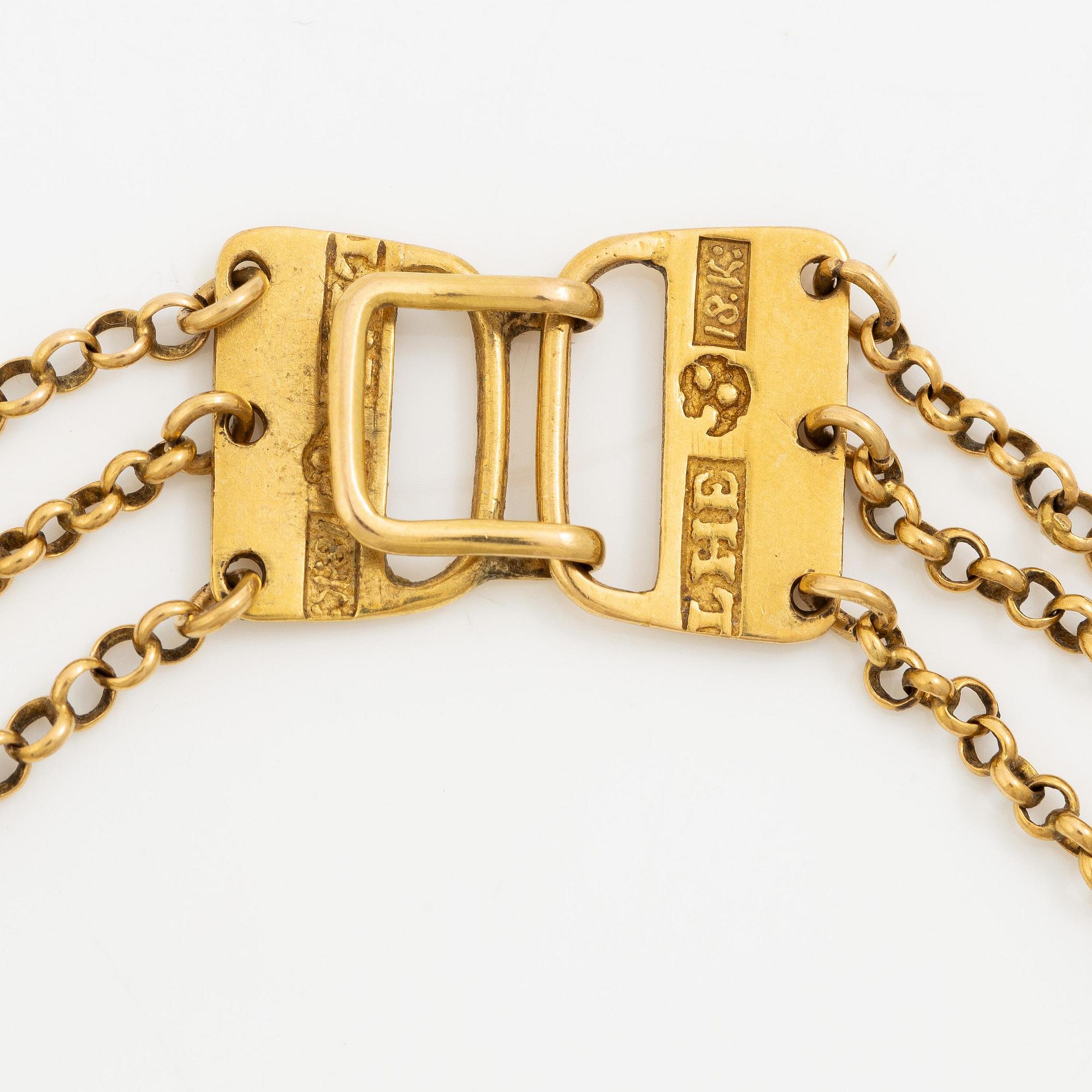
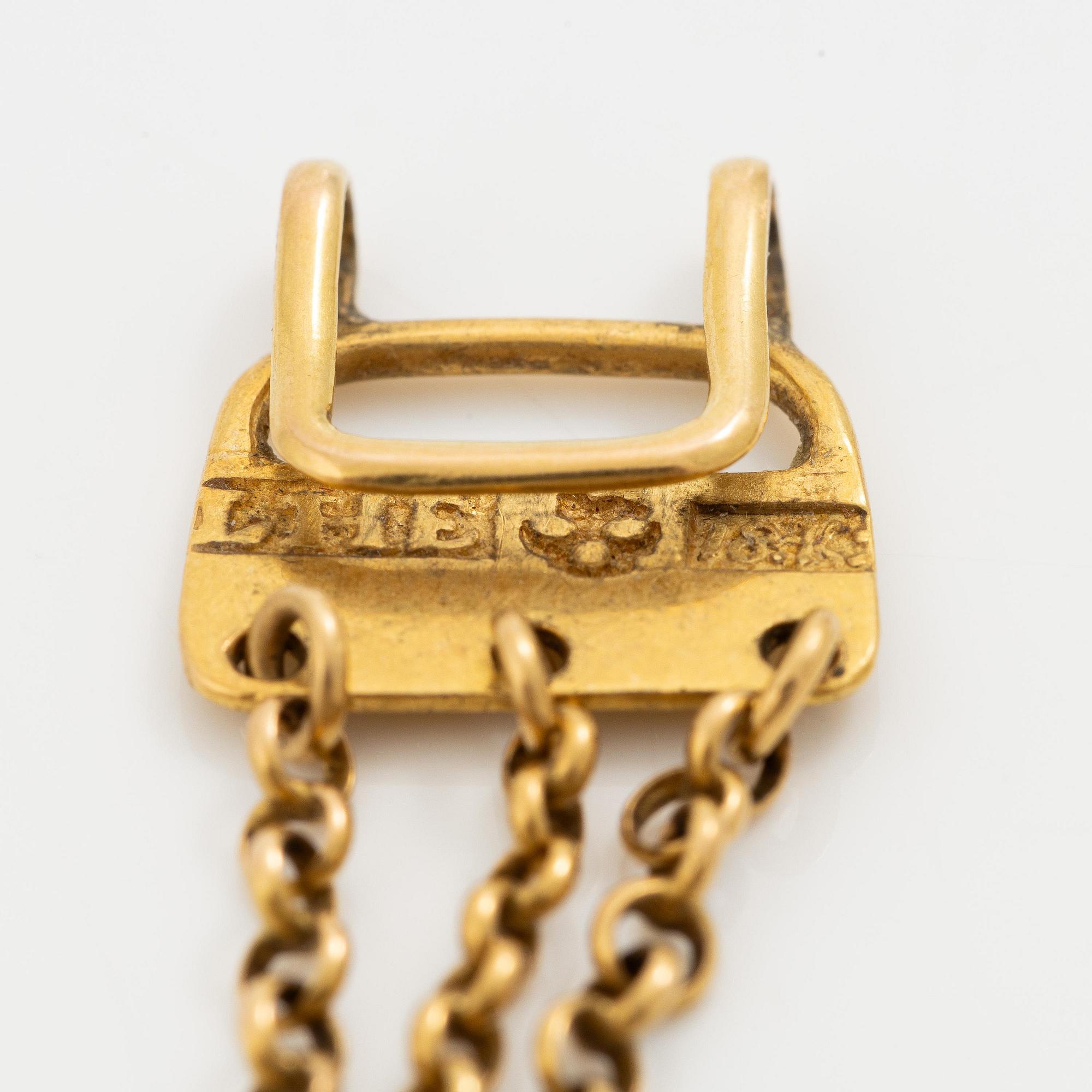
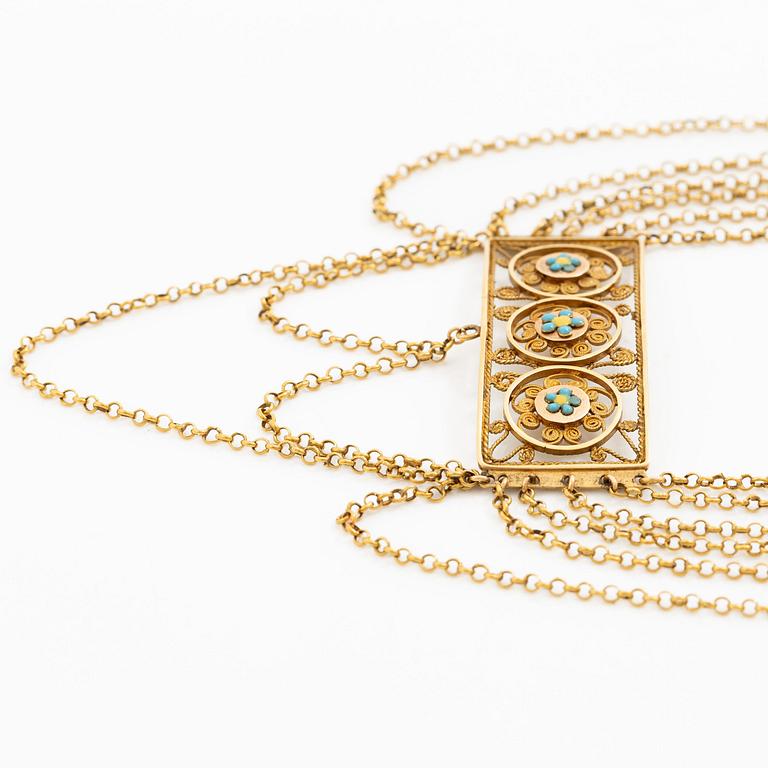
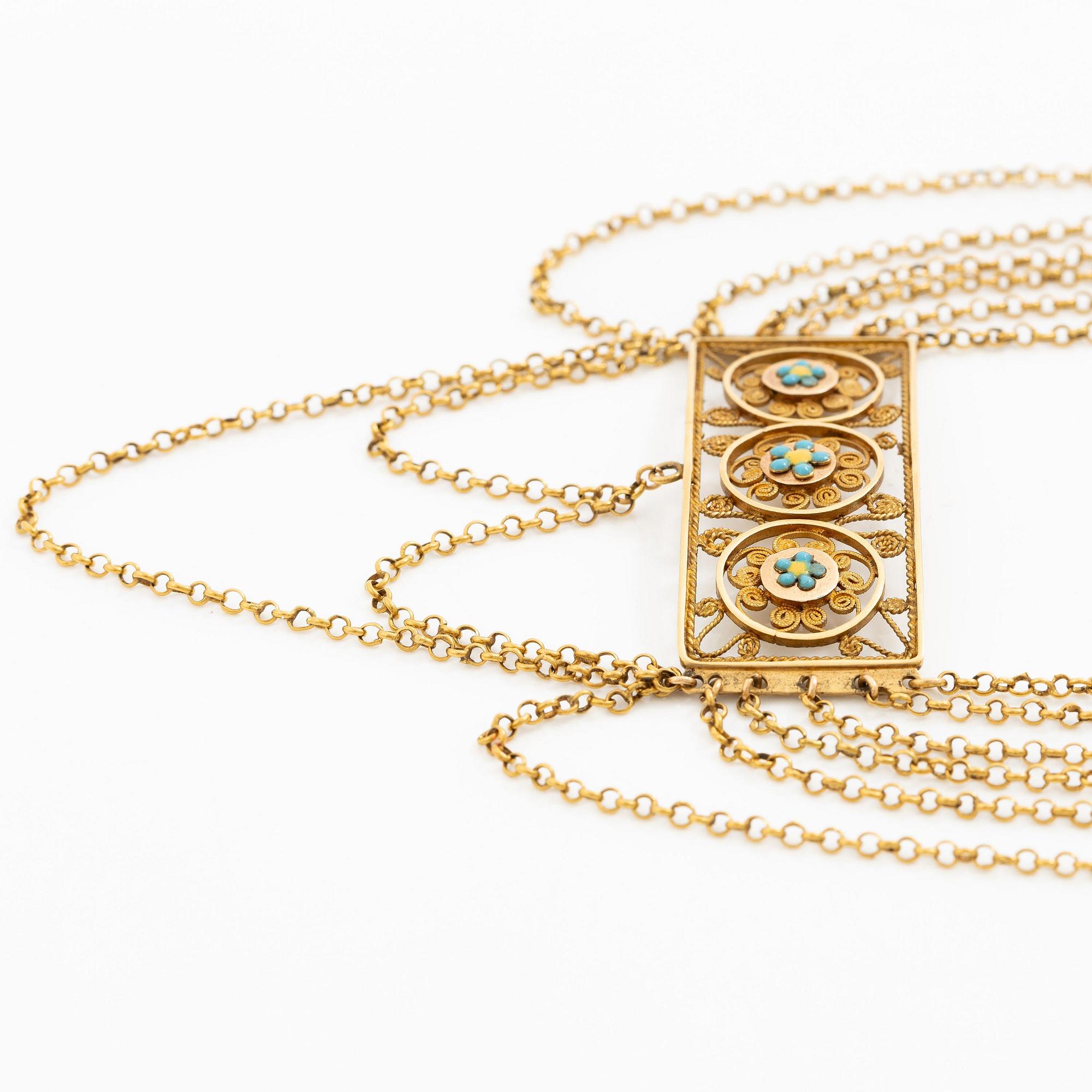
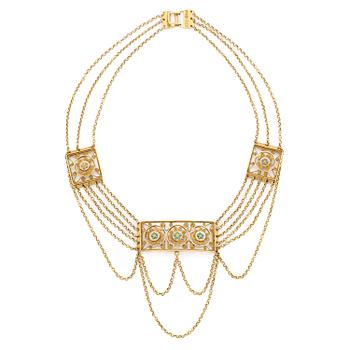
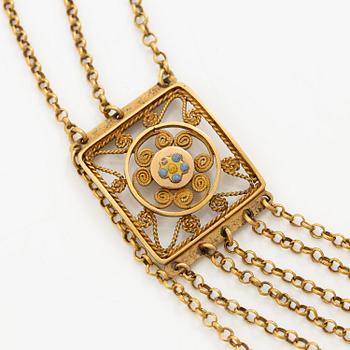
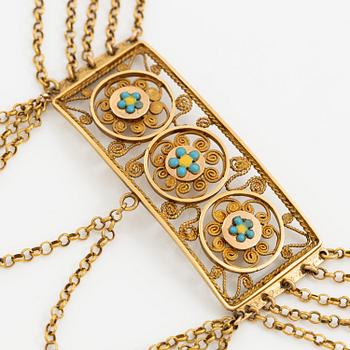
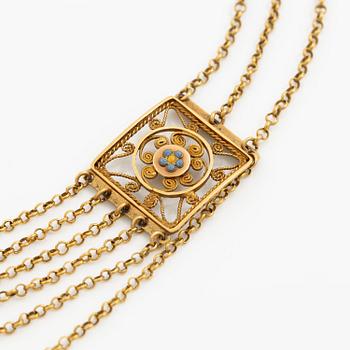
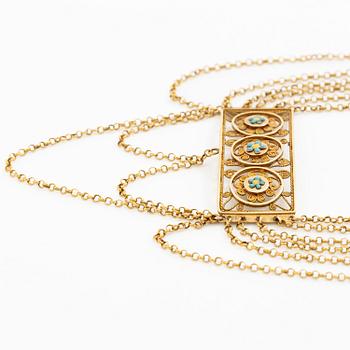
A necklace 18K gold with enamel decoration, 19th century.
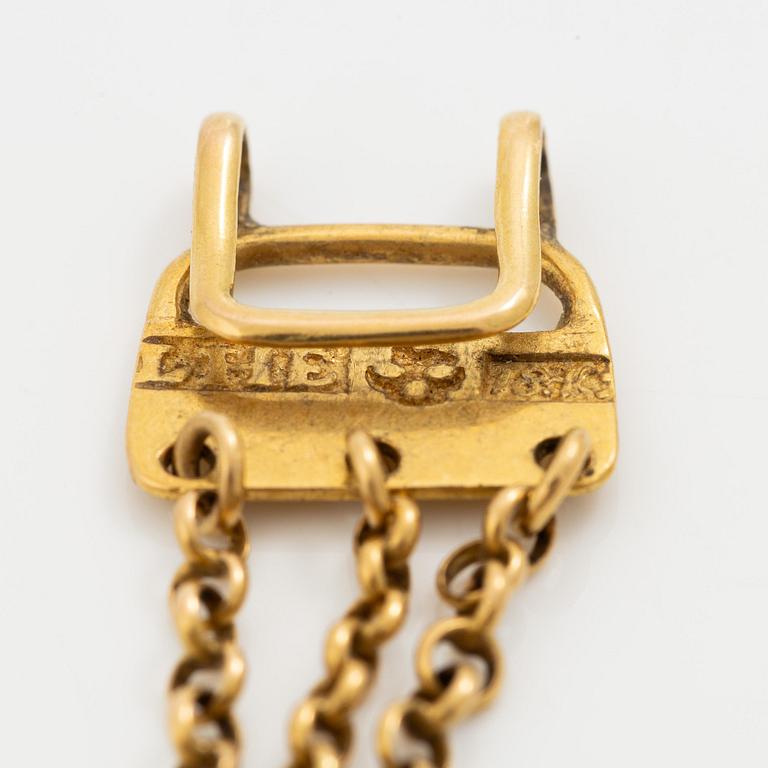
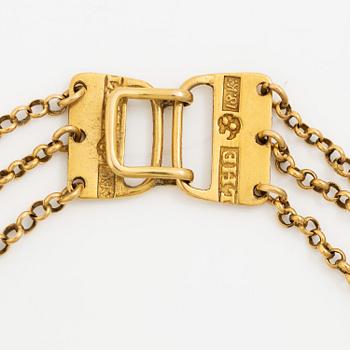
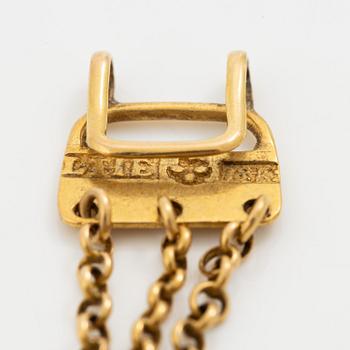
Ca 50 X 20 mm, length ca 38.5 cm, weight 30.5 g. Stamped AHE, likely LH Ertman, active 1786-1813 in Kalmar.
More information
During the 19th century, gold jewelry became increasingly associated with the rising bourgeoisie. As economic and social structures shifted, the middle classes sought to express status, taste, and respectability through refined yet wearable adornment. These pieces often balanced elegance with restraint, favoring craftsmanship and quality materials over ostentation. Gold—valued for both its intrinsic worth and symbolic permanence—was shaped into brooches, chains, and rings that reflected contemporary ideals of order, symmetry, and classical inspiration.
For condition report contact specialist

Others have also viewed
1737191
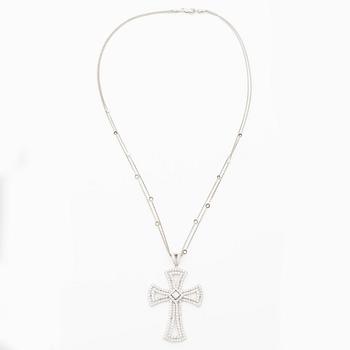
Cross pendant in white gold with princess-cut and brilliant-cut diamonds.
No bids
15h 12m
Estimate
40 000 SEK
1745225
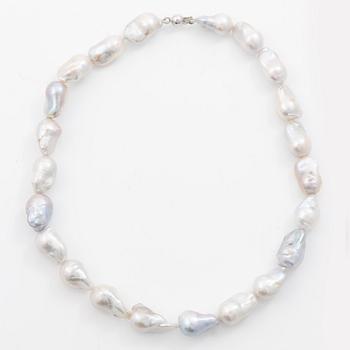
Necklace with cultured baroque freshwater pearls and an 18K white gold clasp.
No bids
5d 17h
Estimate
6 000 SEK
1739317
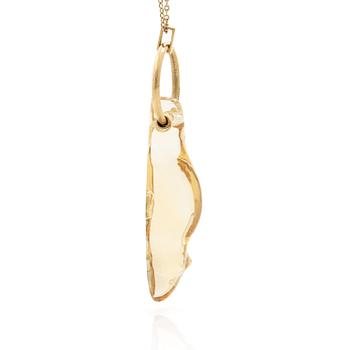
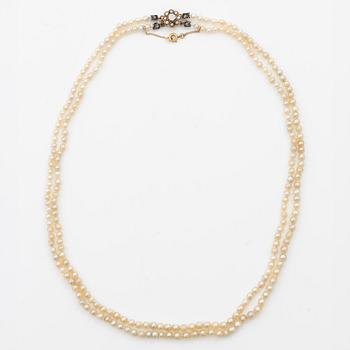
Pearl necklace with a gold clasp set with an old-cut and rose-cut diamonds and pearls.
No bids
5d 15h
Estimate
6 500 SEK
1739229
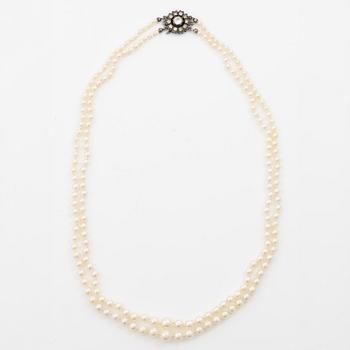
Double-row necklace with graduated cultured pearls,
silver clasp set with paste stones.
No bids
1d 17h
Estimate
2 500 SEK
1747807
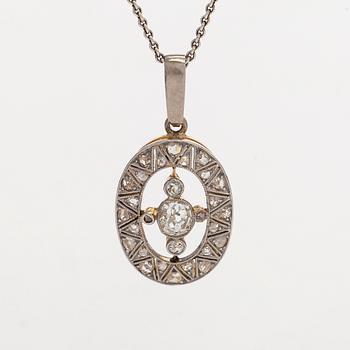
Pendant,
old-cut and rose-cut diamonds, 18K gold, chain in platinum.
No bids
5d 20h
Estimate
700 EUR
1747558
Caroline Lindholm
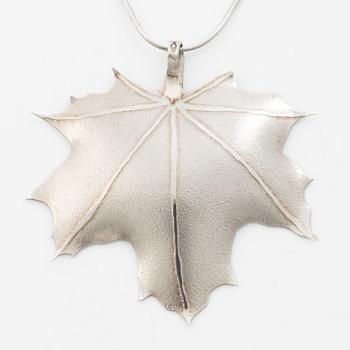
Pendant with chain, silver, in the form of maple leave.
No bids
5d 16h
Estimate
2 500 SEK