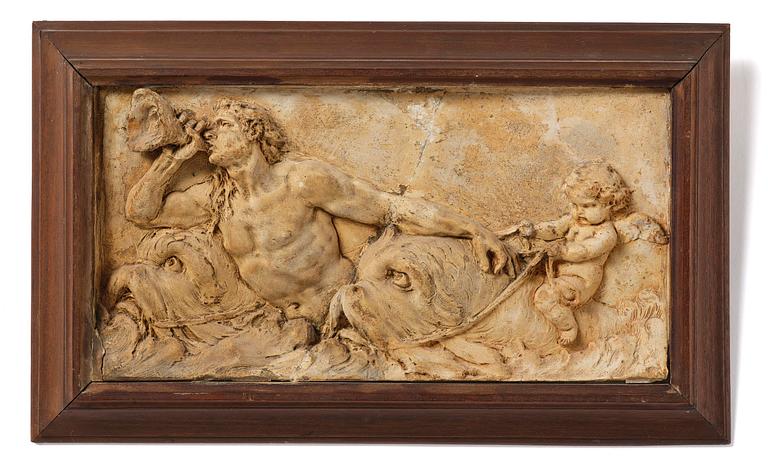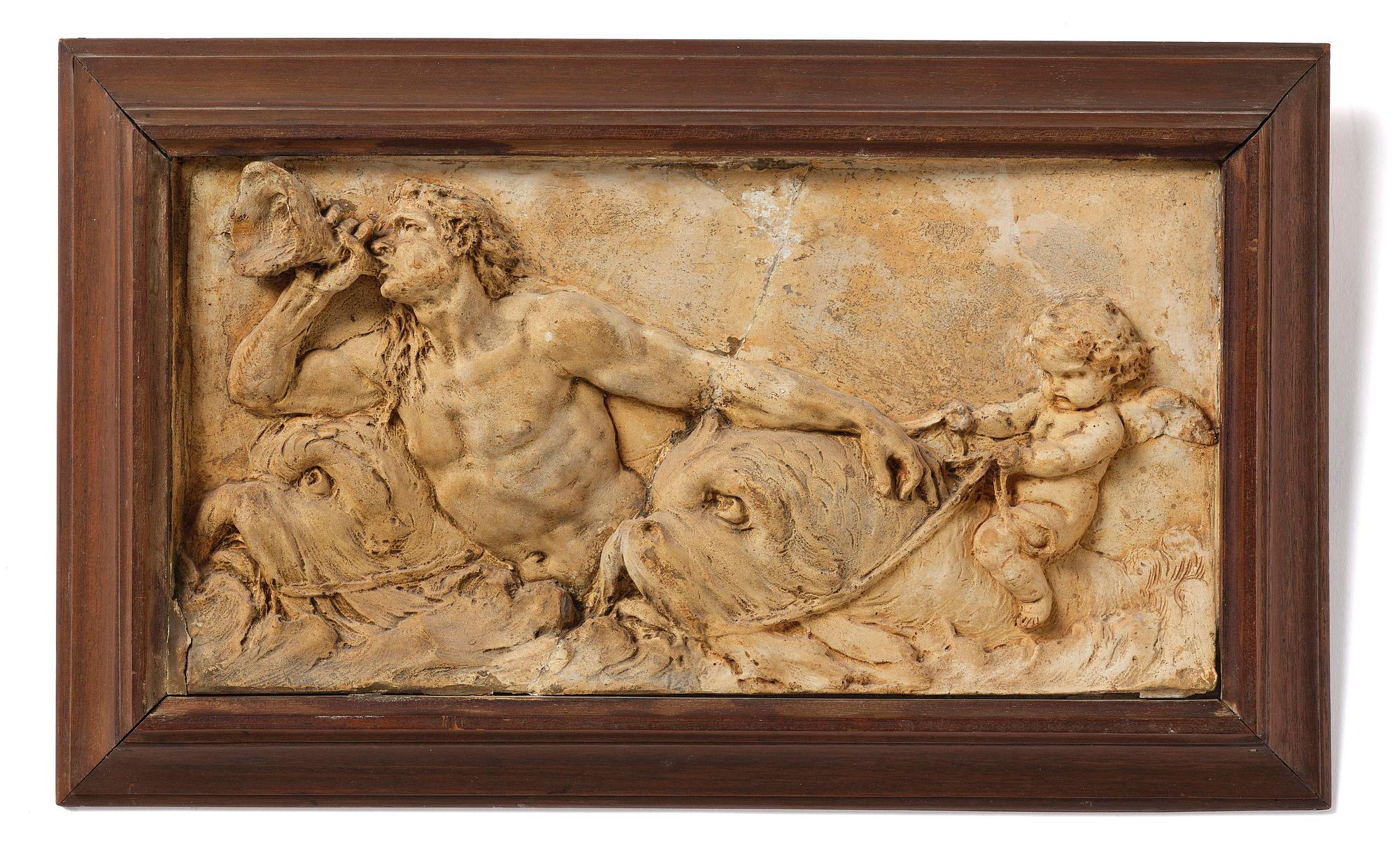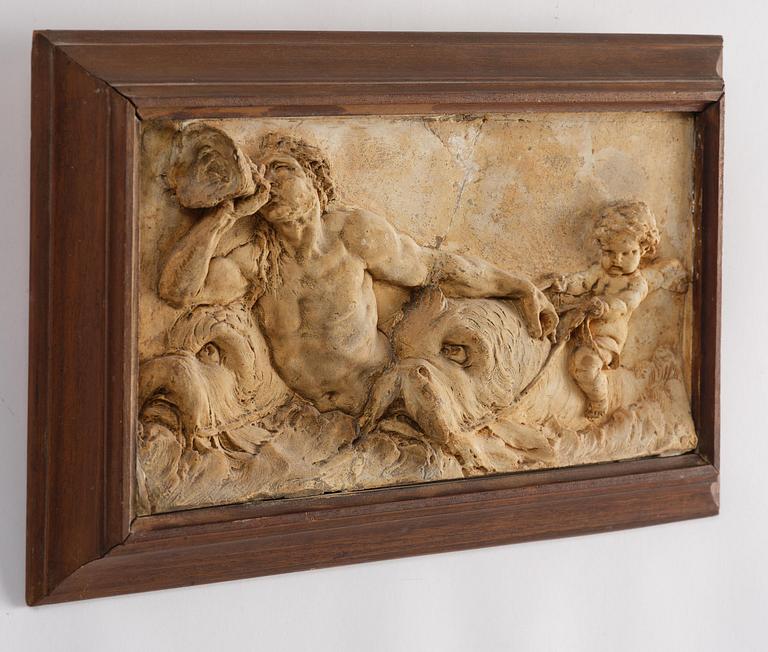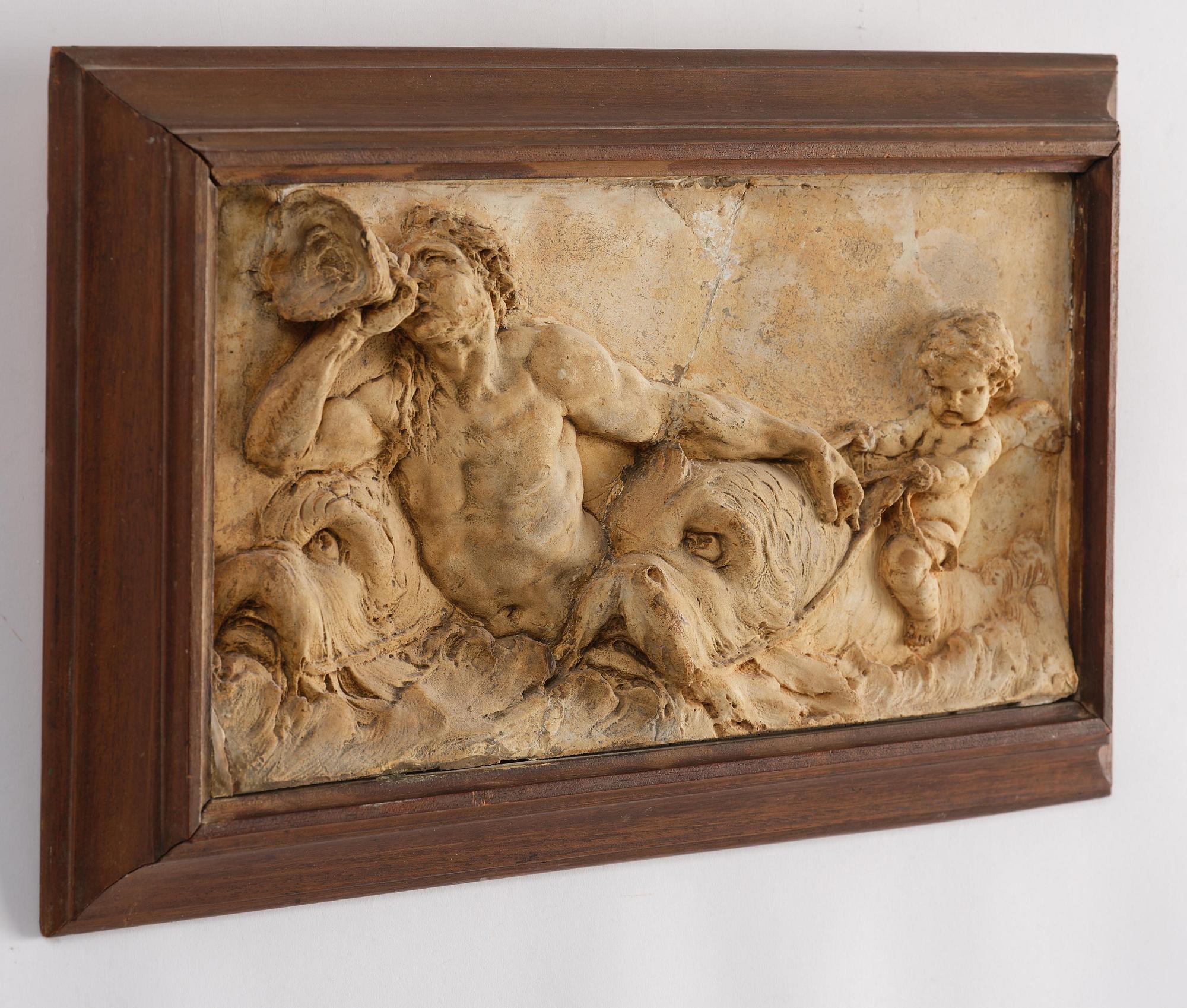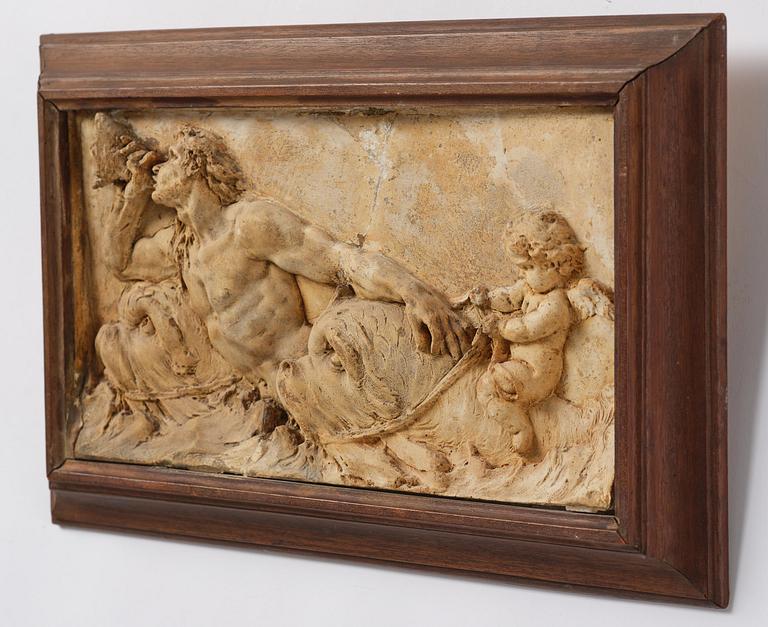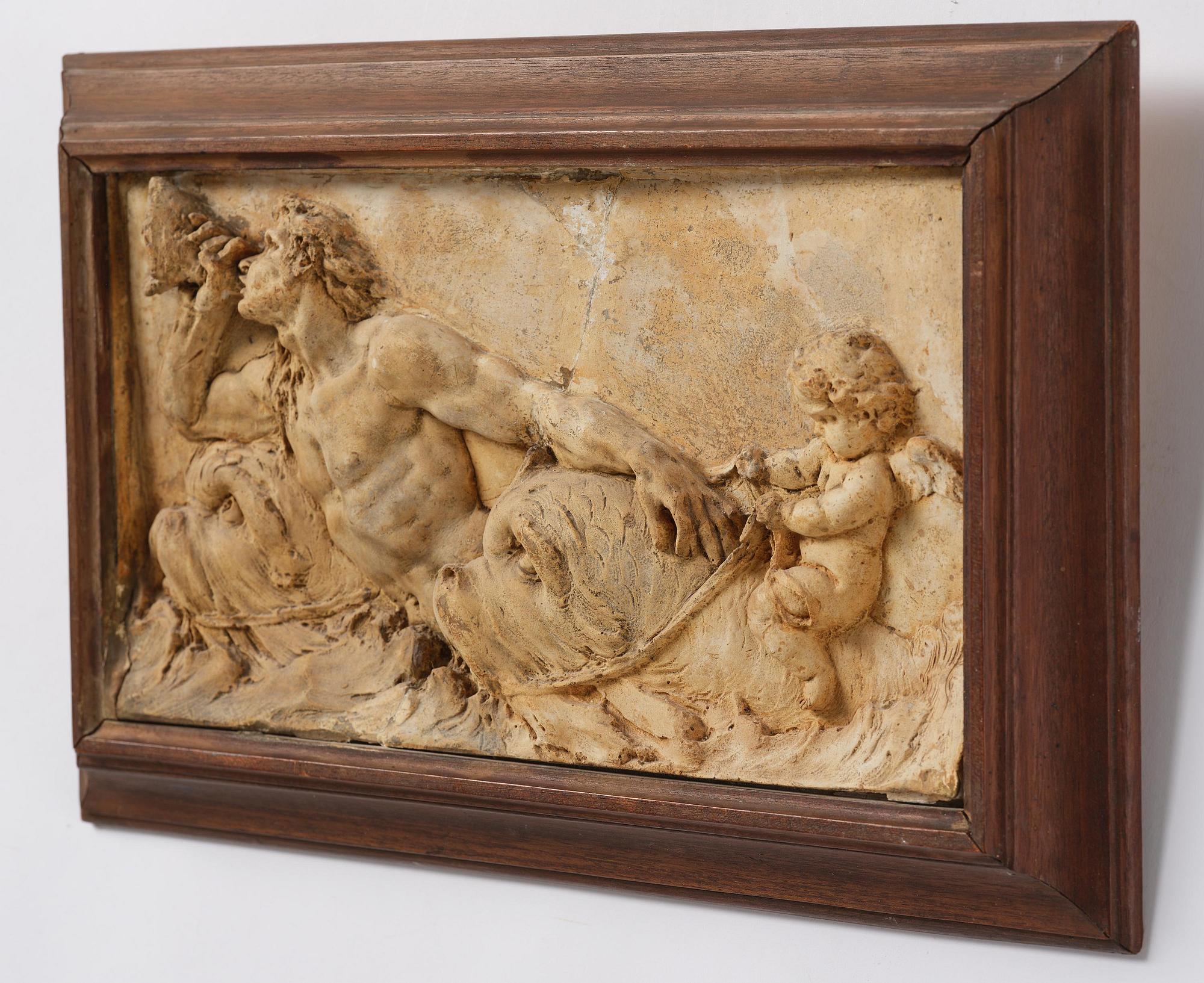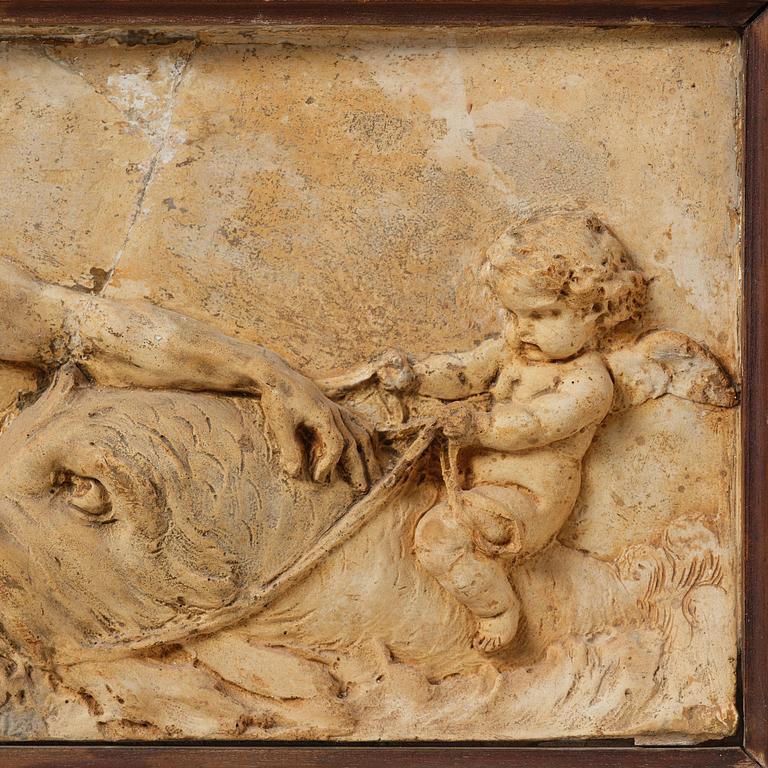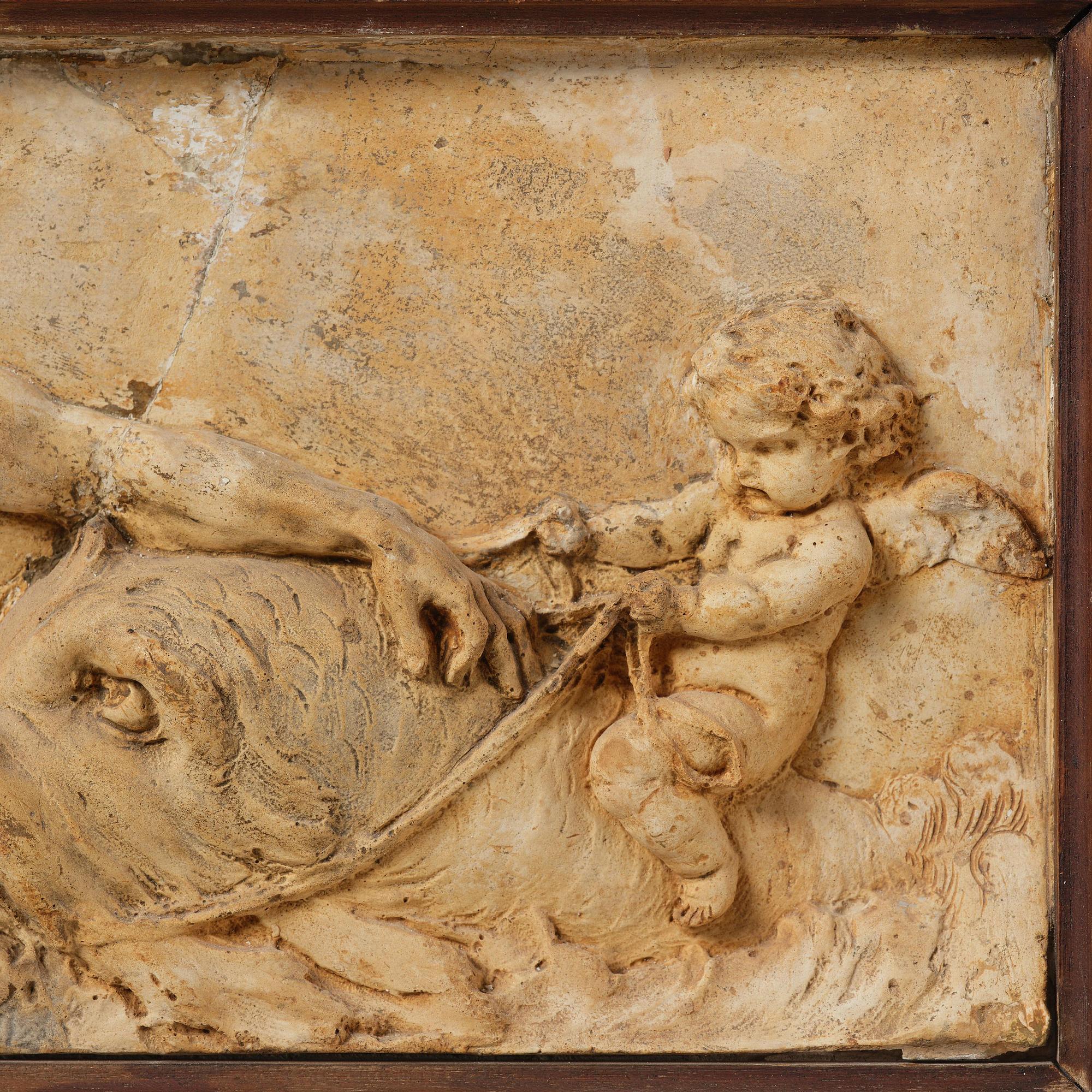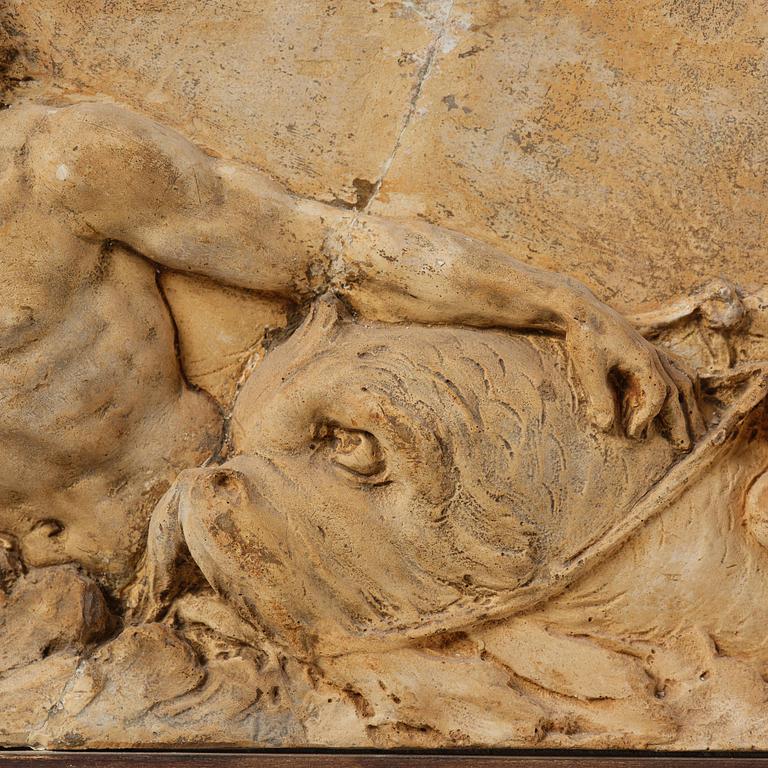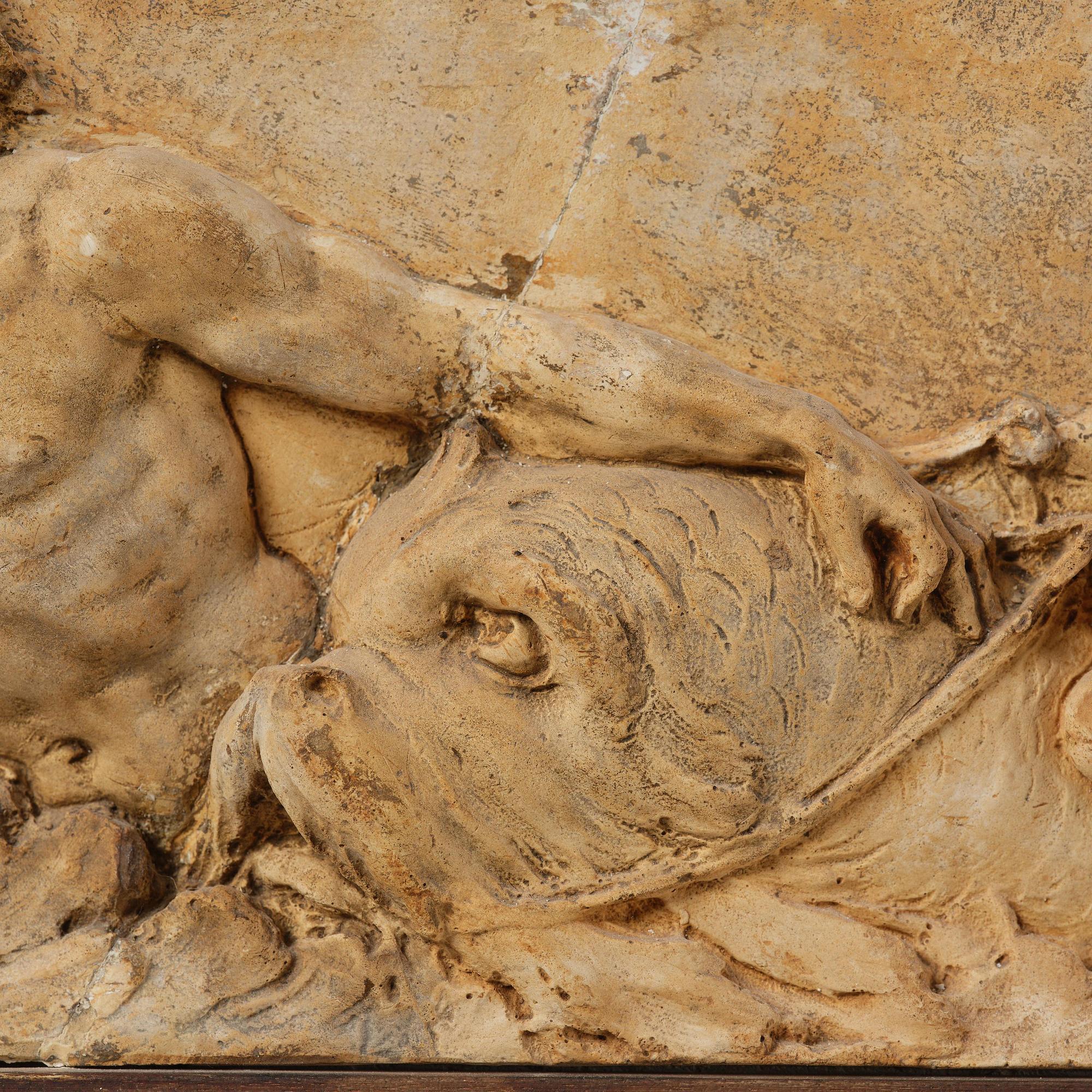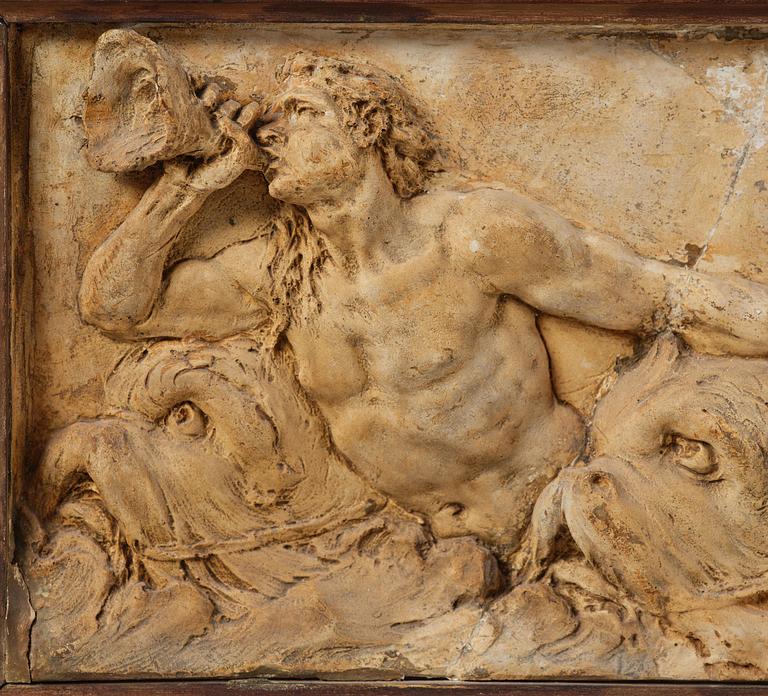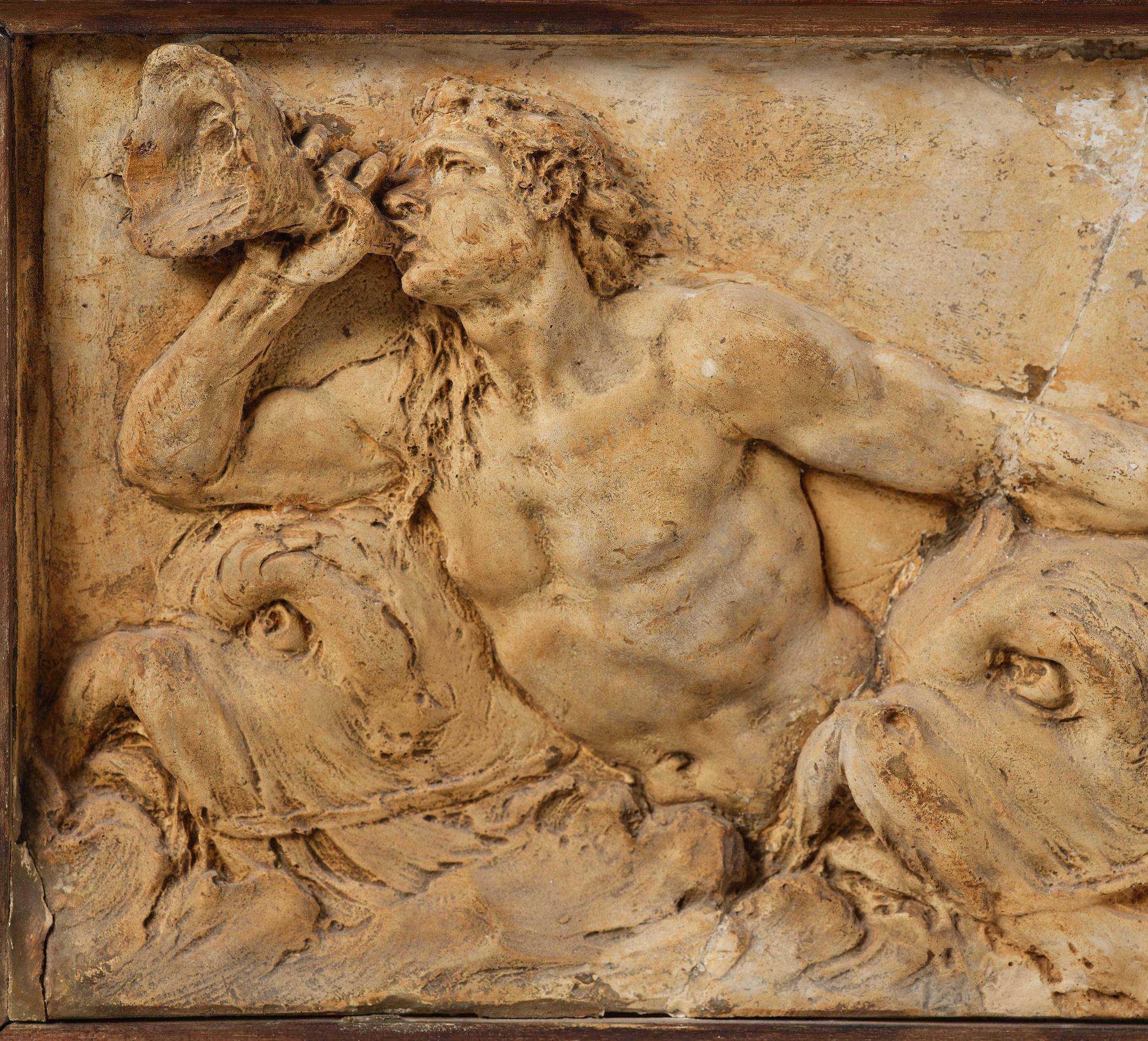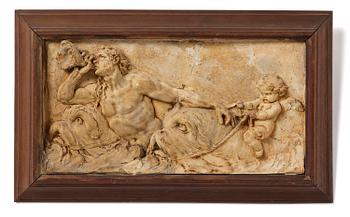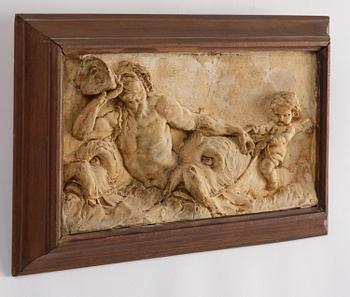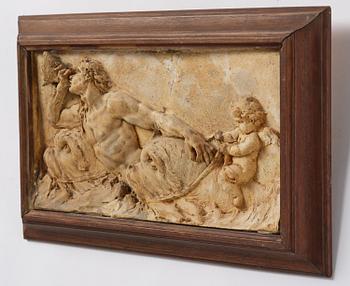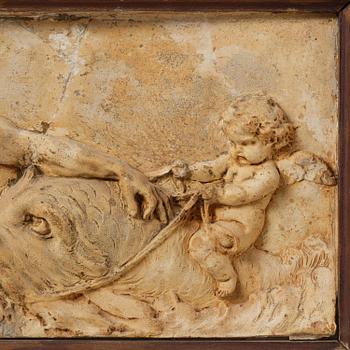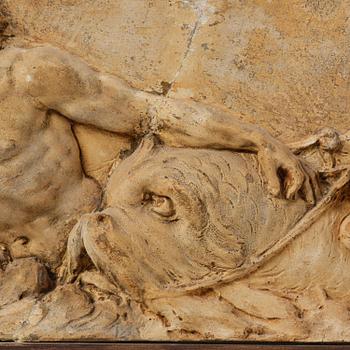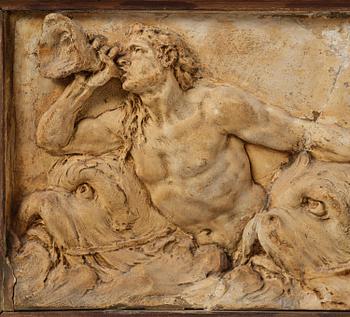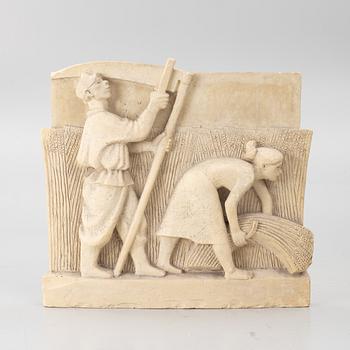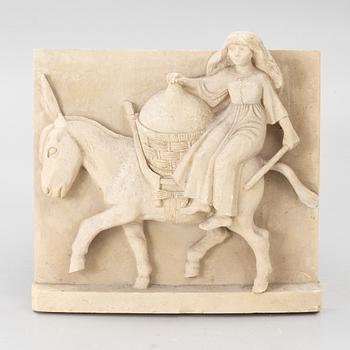
A relief depicting a nereid riding a dolphin alongside a triton blowing into a conch
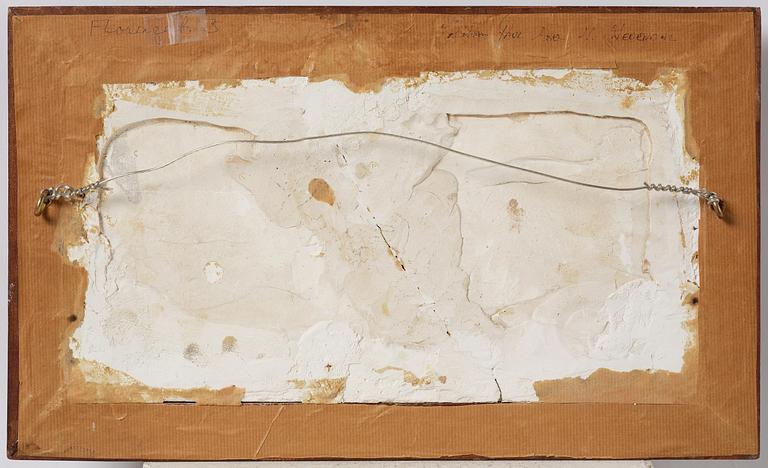
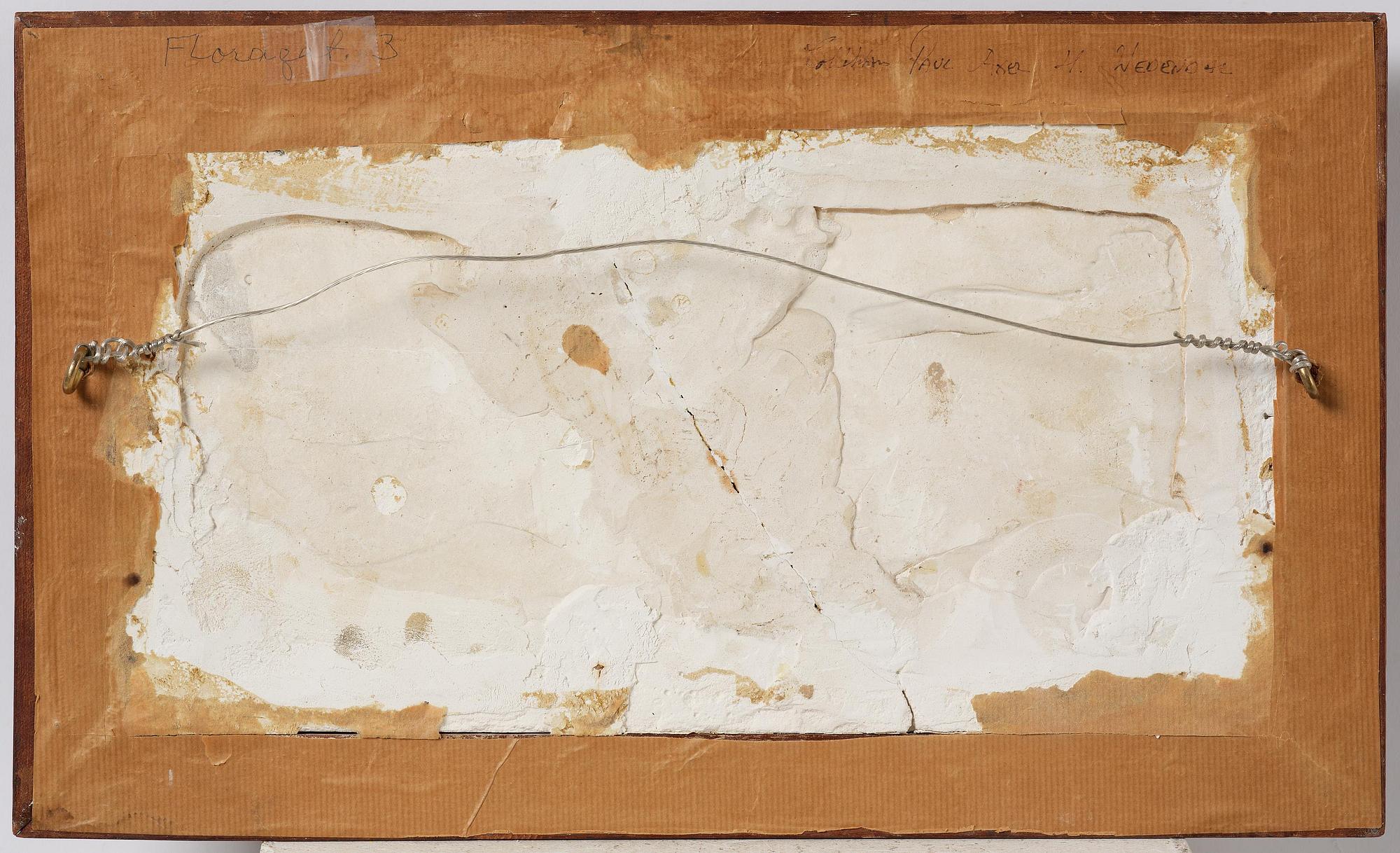
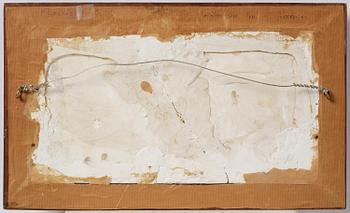
Patinated plaster 20 x 38 cm. Period frane. Inscribed "Floragatan 3” and ”Collection Paul Axel H Wedendal”, on the reverse of the frame.
Provenance
(Probably) Johan Tobias Sergel (1740-1814), in that case likely a gift from Clodion during Sergel's stay in Paris 1778-1779.
Professor Carl Curman (1833-1913), the Curman villa, Floragatan 3, Stockholm.
Archaeologist Paul Axel H Wedendal.
Private collection, Sweden.
Literature
Compare A. Poulet, G. Scherf, Clodion 1738-1814, exh. cat. Musée du Louvre, Paris, 1992, pp. 181-187, cat. 29, fig. 100
More information
This artwork takes up a detail from the monumental frieze of "The Triumph of Galathea", also known as "The Triumph of Amphitrite", created by Claude Michel, known as Clodion (1738-1814) in terracotta for the bathroom in the Swiss general baron Peter Viktor de Besenval’s house on rue de Grenelle in Paris, c. 30 x 161 cm., widely praised and admired when exhibited at the Salon of 1779 (Statens Museum for Kunst in Copenhagen (KMS6099) (see fig): "Le Triomphe de Galathée: C’est aussi le triomphe de M. Clodion. Rien de plus flatteur et de plus séduisant que ce bas-relief et ceux qui l’entourent; il seroit impossible d’y mettre plus de goût, d’estrit et de finesse; le tableau le Mieuxcolorié ne seroit pas plus agréable." ("Encore one critique du Salon", 1779). The French painter Louis Leopold Boilly (1761-1745) made a painted copy after it in grisaille (Legion of Honor, San Francisco). Clodion's marine triumph testifies to the artist's period in Rome, where he was inspired by Roman sarcophagi, such as those of the abbey of Grottaferrata, for this subject. Sergel was in Paris for eight months between August 1777 and spring 1788 on his return from Rome. He there renewed acquaintance with the two French leading neoclassical sculptors Clodion and Jean-Antoine Houdon (1741-1828), both of whom he had come to know during his early Rome period. Sergel most likely saw Clodion’s frieze in Clodion’s studio during his stay in Paris. A plaster of the whole composition remained in Clodion’s studio at the time of his death (sale, Paris 30-31 August 1814).
For condition report contact specialist