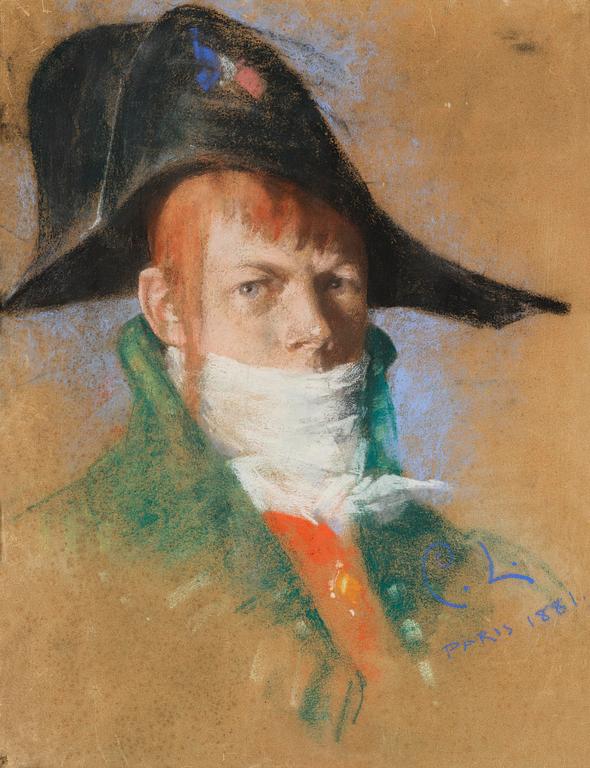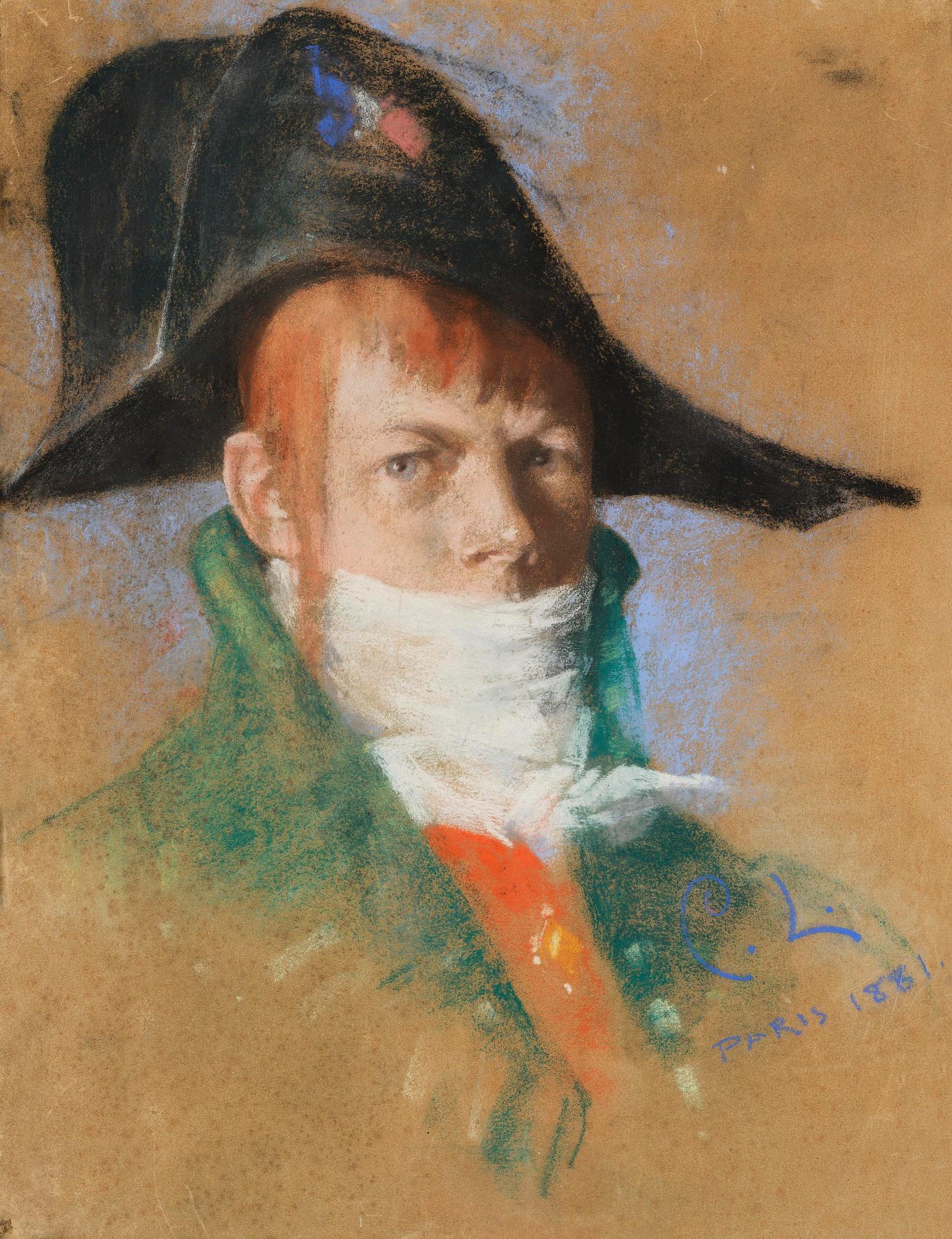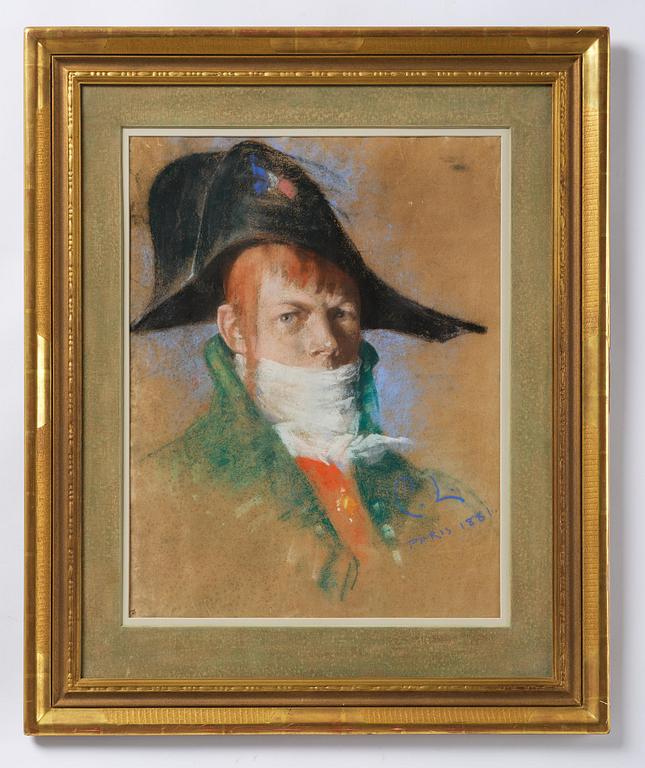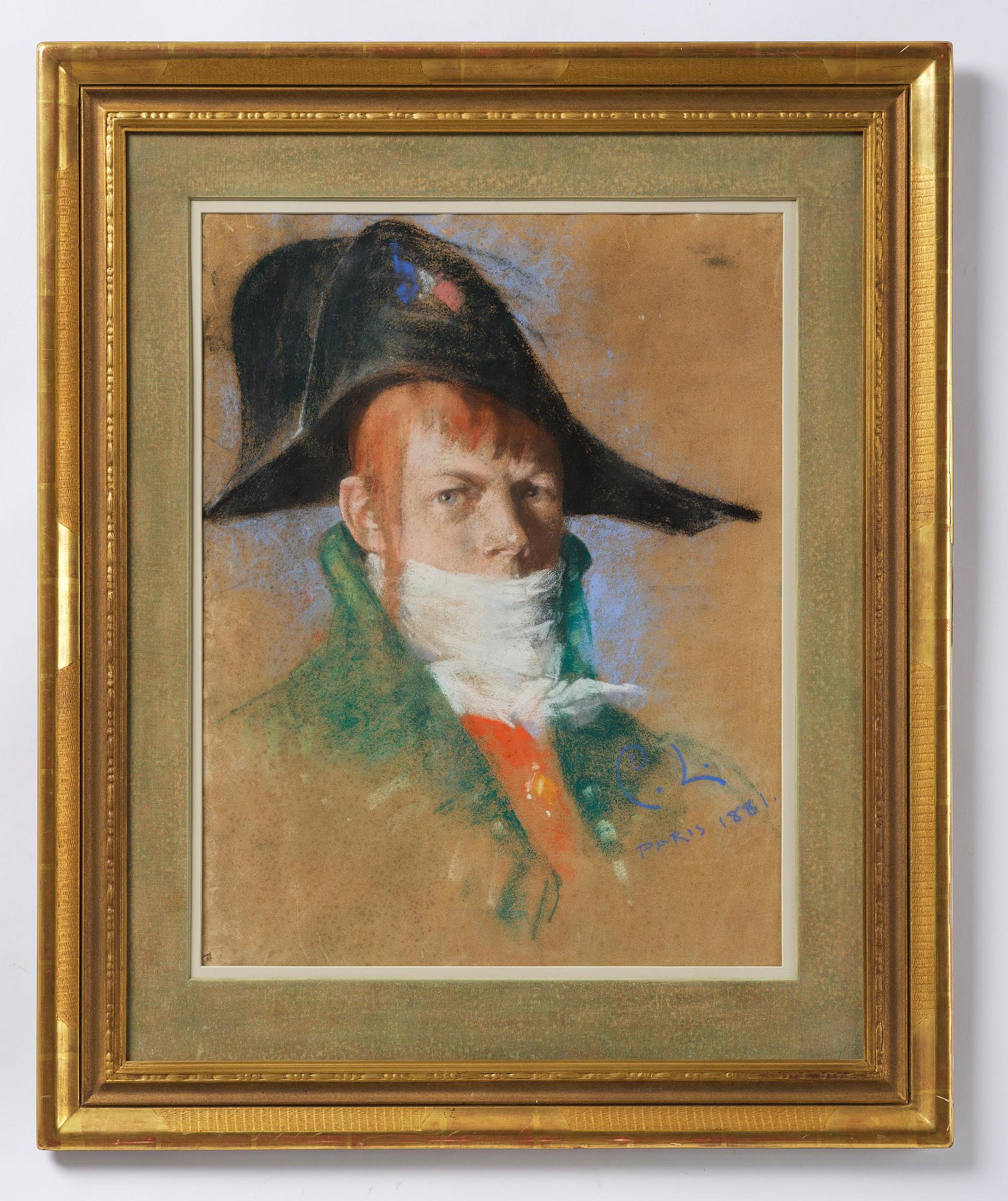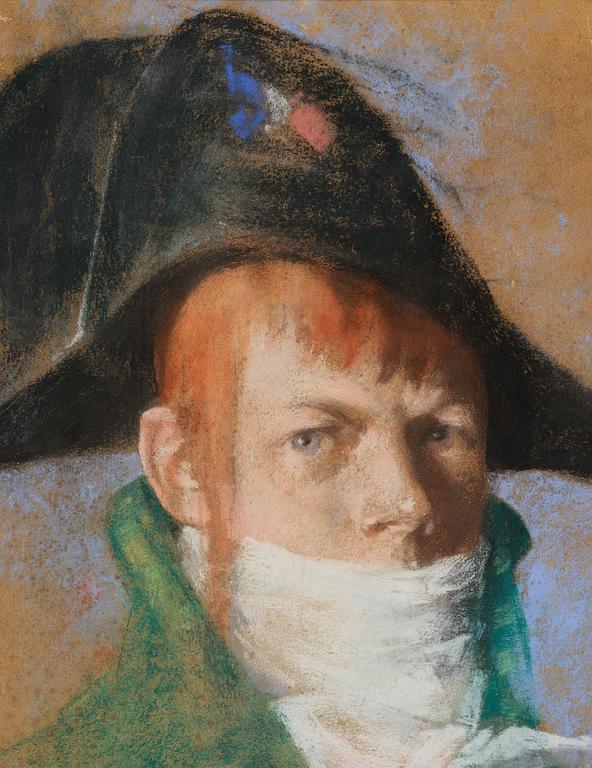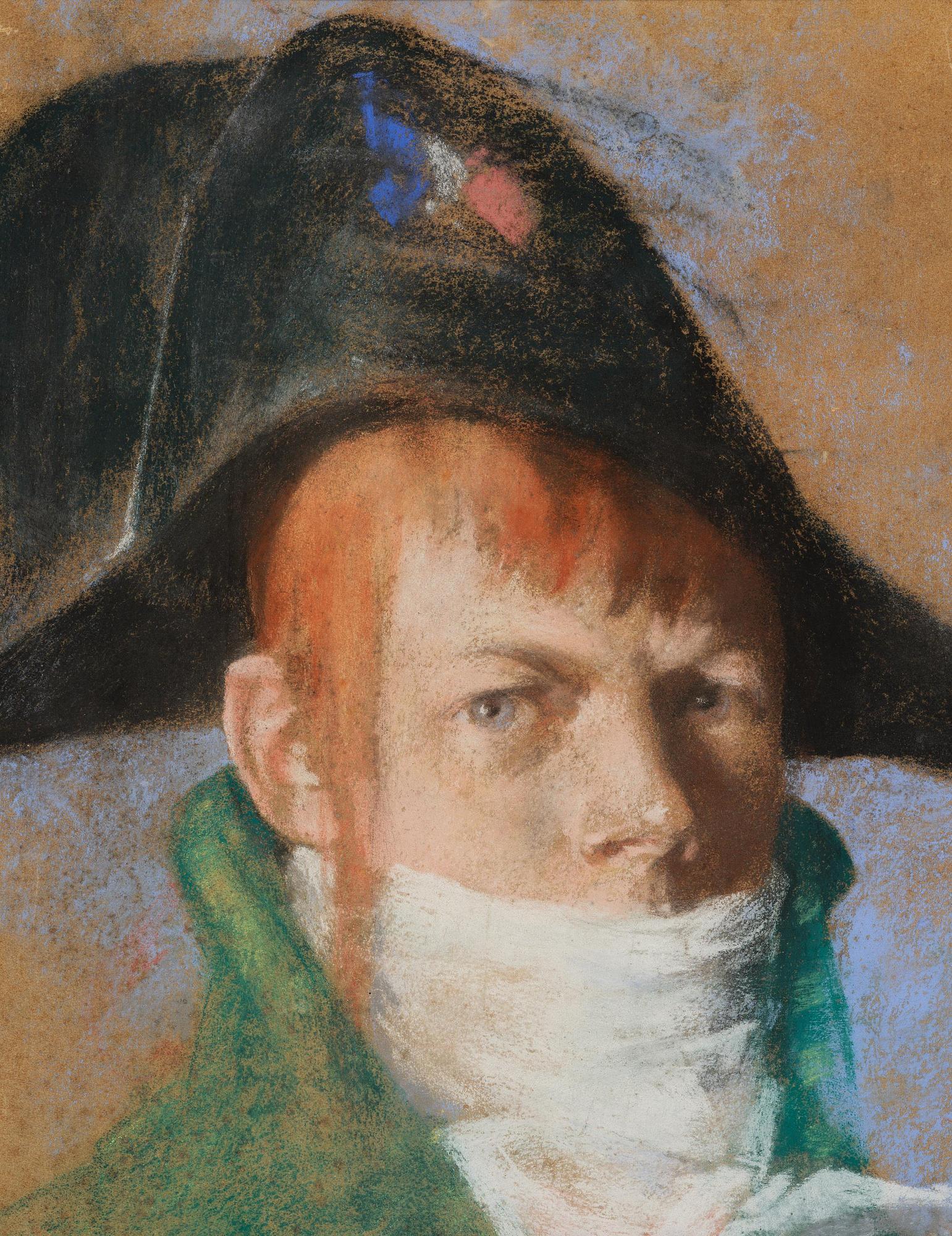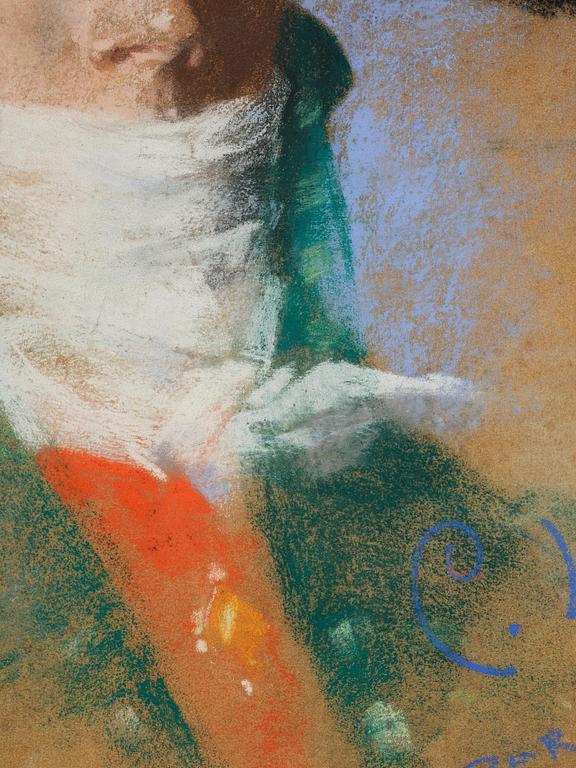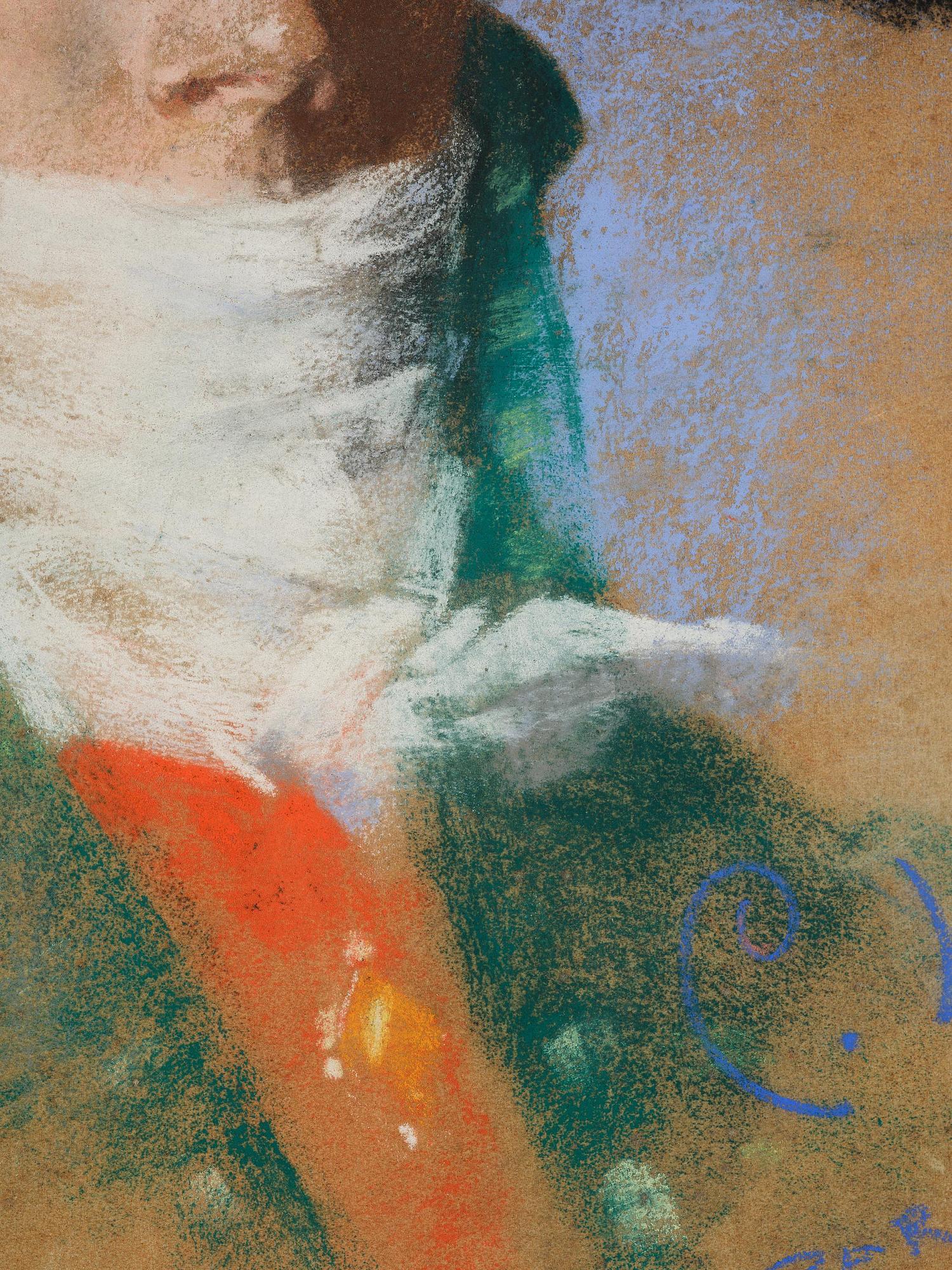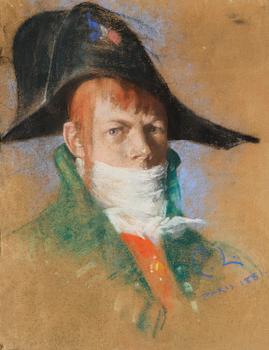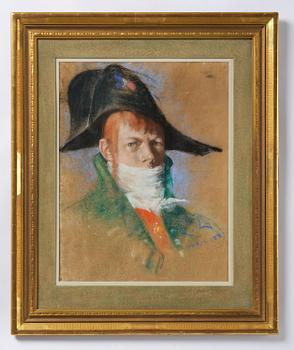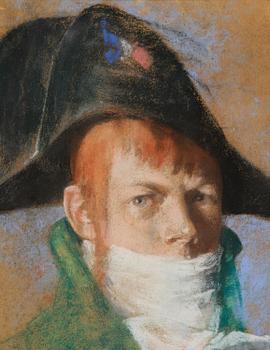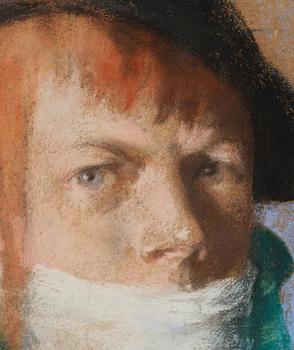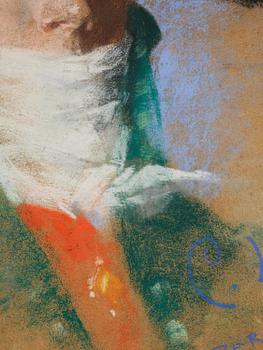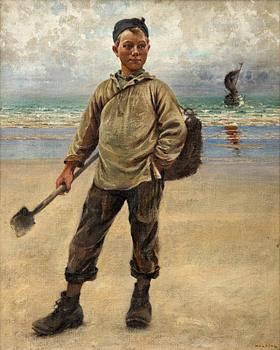
"Tyst protest / Carl Larsson som Napoleon" ("Quiet protest / Carl Larsson as Napoleon")
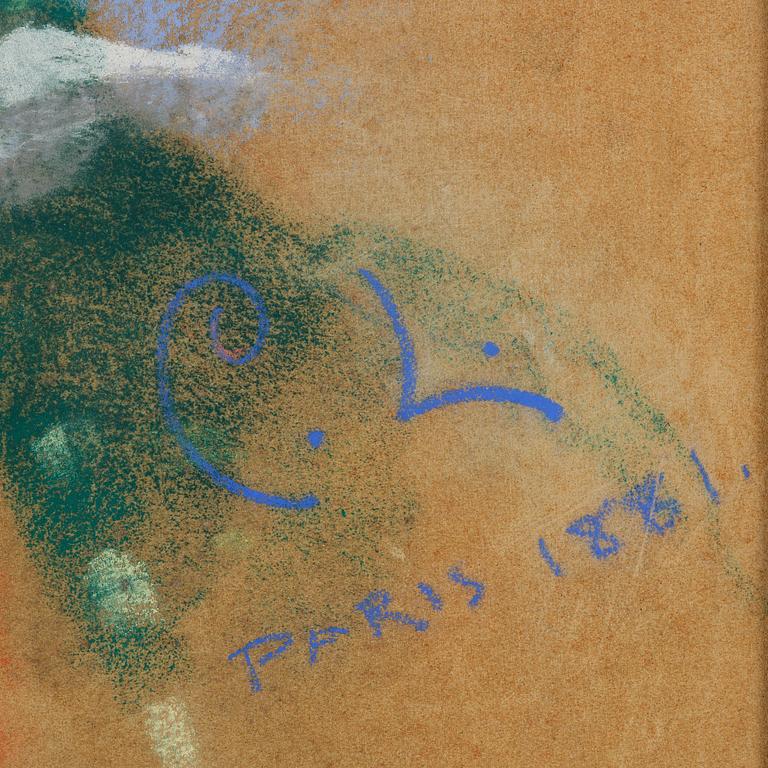
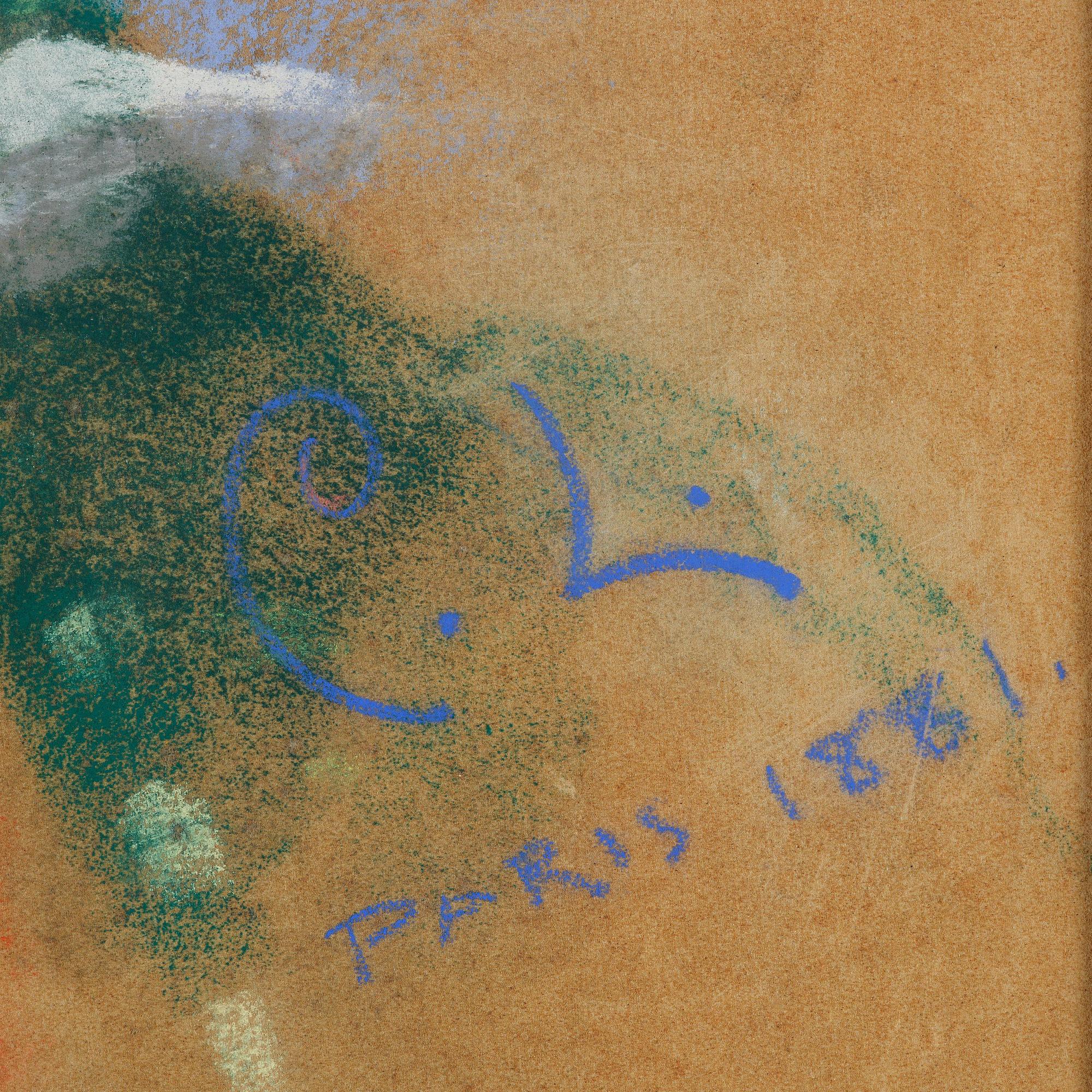
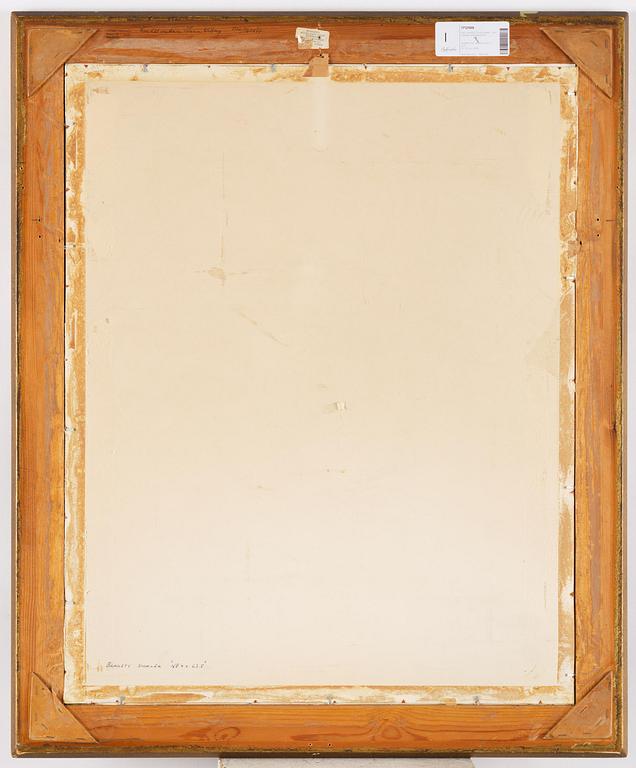
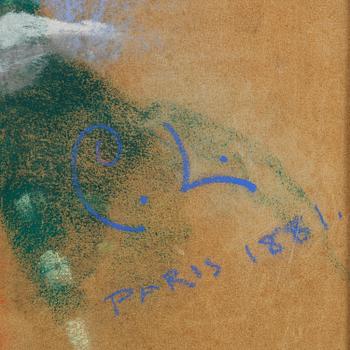
Signed C.L. and dated Paris 1881. Pastel on paper 63 x 48 cm.
Provenance
Ambassador De Geer, acquired directly from the artist.
Gunnar Hagelroth, Stockholm.
Private collection. Purchased in the 1990s.
Exhibitions
Victoria and Albert Museum, London, "Carl and Karin Larsson: Creators of the Swedish Style", 23 October 1997 - 18 January 1998.
Literature
Ulwa Neergaard, "Carl Larsson. Signerat med pensel och penna", 1999, listed in the catalogue section under the year 1881, cat. no. 81.
More information
Carl Larsson created "Tyst protest / Carl Larsson som Napoleon" during his stay in Paris in 1881, and regarding the work, Ulwa Neergaard recounts the following: "Of this pastel, it is said that Doctor Axel Munthe and one of his friends, an ambassador, visited Carl Larsson in his studio in Paris while he was completing this painting. Both were delighted with the painting and wanted to acquire it. Carl Larsson had no objections. To determine which of the two would become the fortunate owner, they tossed a coin. The ambassador won, and the painting accompanied him on his various postings around the world."
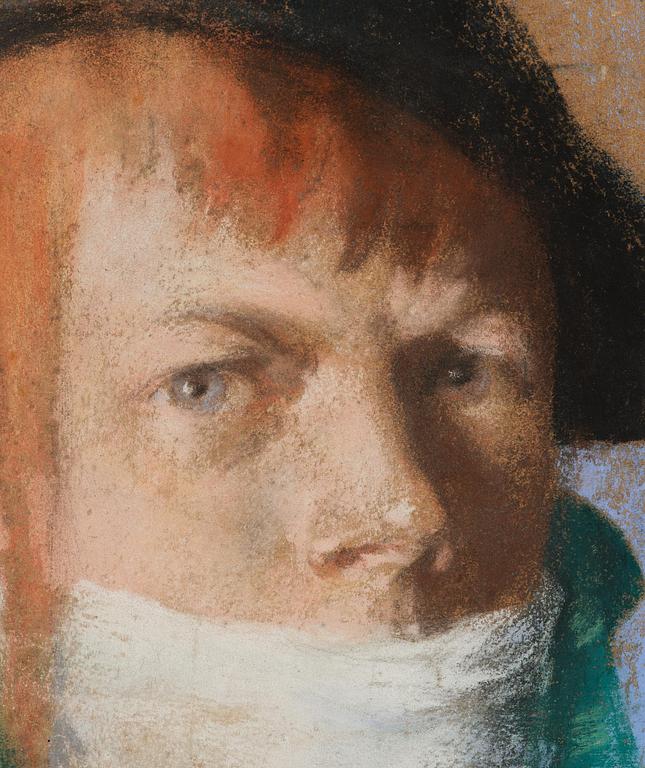
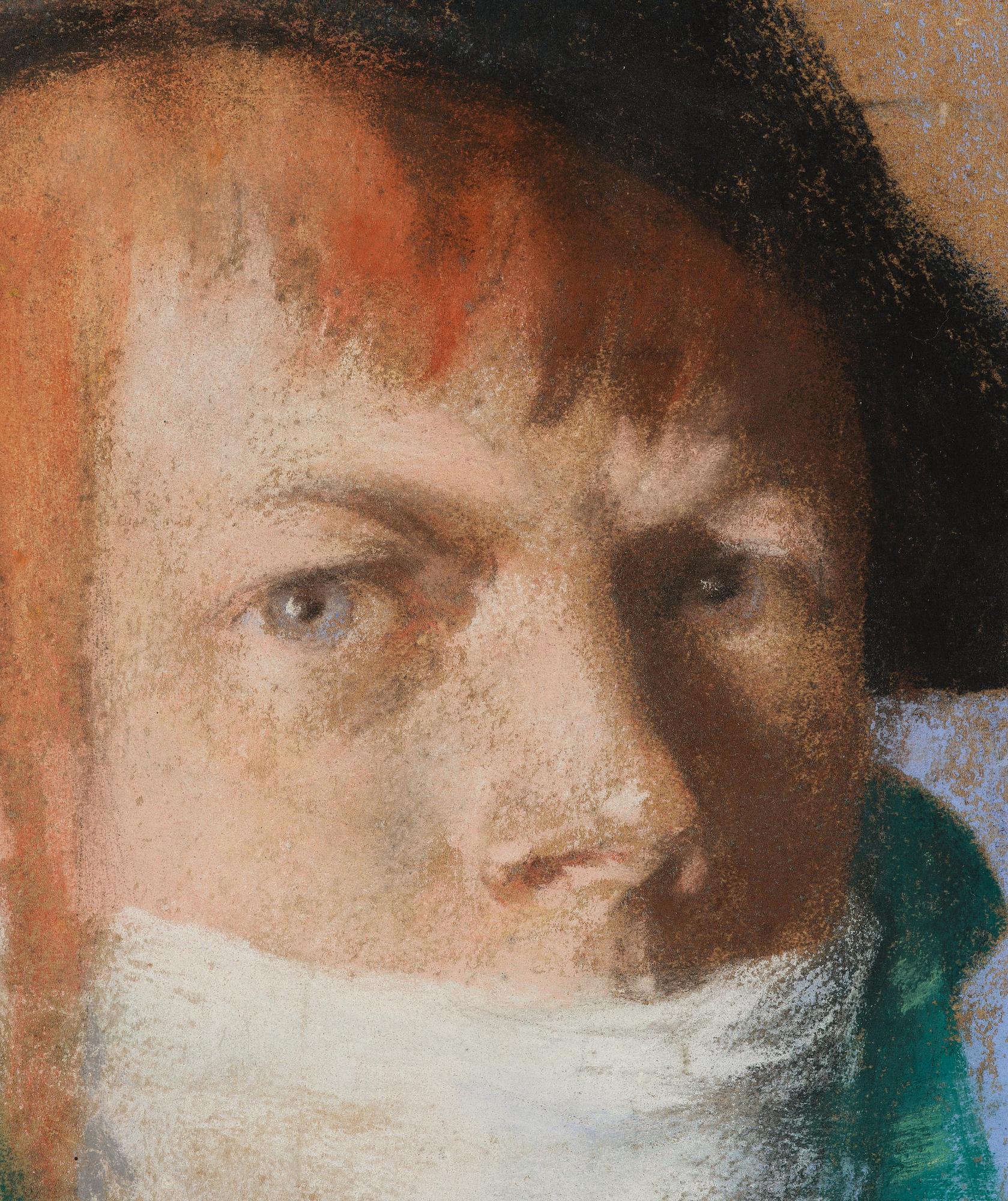
The artist's time in the French capital was turbulent. He was poor and lived in a cheap studio apartment in Montmartre, which during the winter months, according to a letter he wrote to August Strindberg, was terribly cold. He was also rejected at the Salon in 1881, which dealt a heavy blow to his self-confidence. In "Tyst protest / Carl Larsson som Napoleon", he portrays himself as Napoleon with a grim expression.
What is Carl Larsson protesting against in the work? The piece can be interpreted as a resistance against the Royal Academy of Fine Arts, an institution that many young artists at the time considered outdated and conservative. From the 1870s onwards, young artists increasingly chose to pursue their studies abroad in France, unlike their older colleagues who had trained in Germany. At the heart of the new style was plein air painting, where artists left their studios to paint outdoors. New products, such as pre-mixed paint in tubes, enabled artists to leave their studios and move freely through the city and nature with their tools.
In France, Swedish young artists mobilised in the 1880s in a collective resistance against the Royal Academy of Fine Arts in Sweden, whose views and practices on art were deemed stagnant and outdated. They came to be known as the Opponents, and among the central figures was Carl Larsson. In this revolutionary spirit of the times, one can understand how Napoleon became an apt symbol.
More about Carl Larsson
Carl Larsson is considered one of the greatest Swedish artists of all time. He was born in Gamla Stan in Stockholm and studied at the Royal Academy of Arts in the years 1866-76. After his studies in Stockholm, he traveled to France and settled in Grèz-sur-Loing. There he mainly painted garden motifs. In France, he met his future wife Karin Bergöö, who was also an artist and came to mean a lot for his artistry. Already during his student years, he made a living as a photo retoucher and cartoonist in the press. It was also during his studies that Larsson got to know Anders Zorn and Bruno Liljefors, together the three are usually called the ABC artists. At the end of the 1880s, Carl and Karin were given "Lilla Hyttnäs" in Sundborn outside Falun by Karin's father, and this is where Larsson's most famous watercolors depicting his family were created. The motifs often depict sunny landscapes with children, crayfish fishing, meals in the green and interior scenes. Larsson is represented, among other, in the National Museum, where "Gustav Vasas intåg i Stockholm" and "Midvinterblot" fills the stairwell. Represented mainly at the National Museum in Stockholm and at the Gothenburg Art Museum.
Read moreFor condition report contact specialist