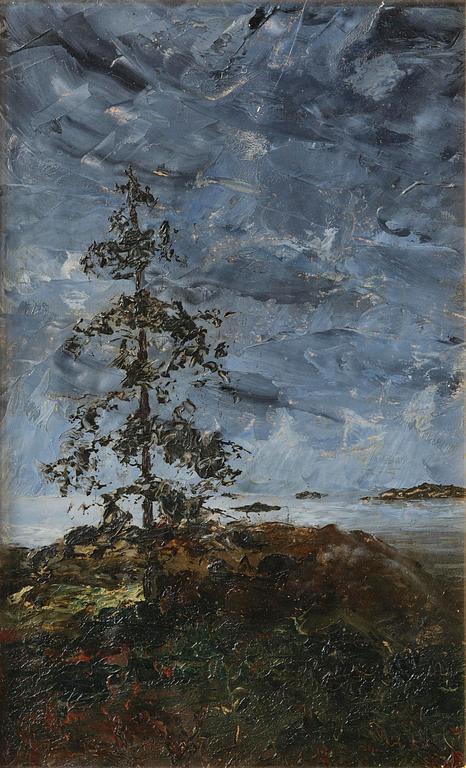
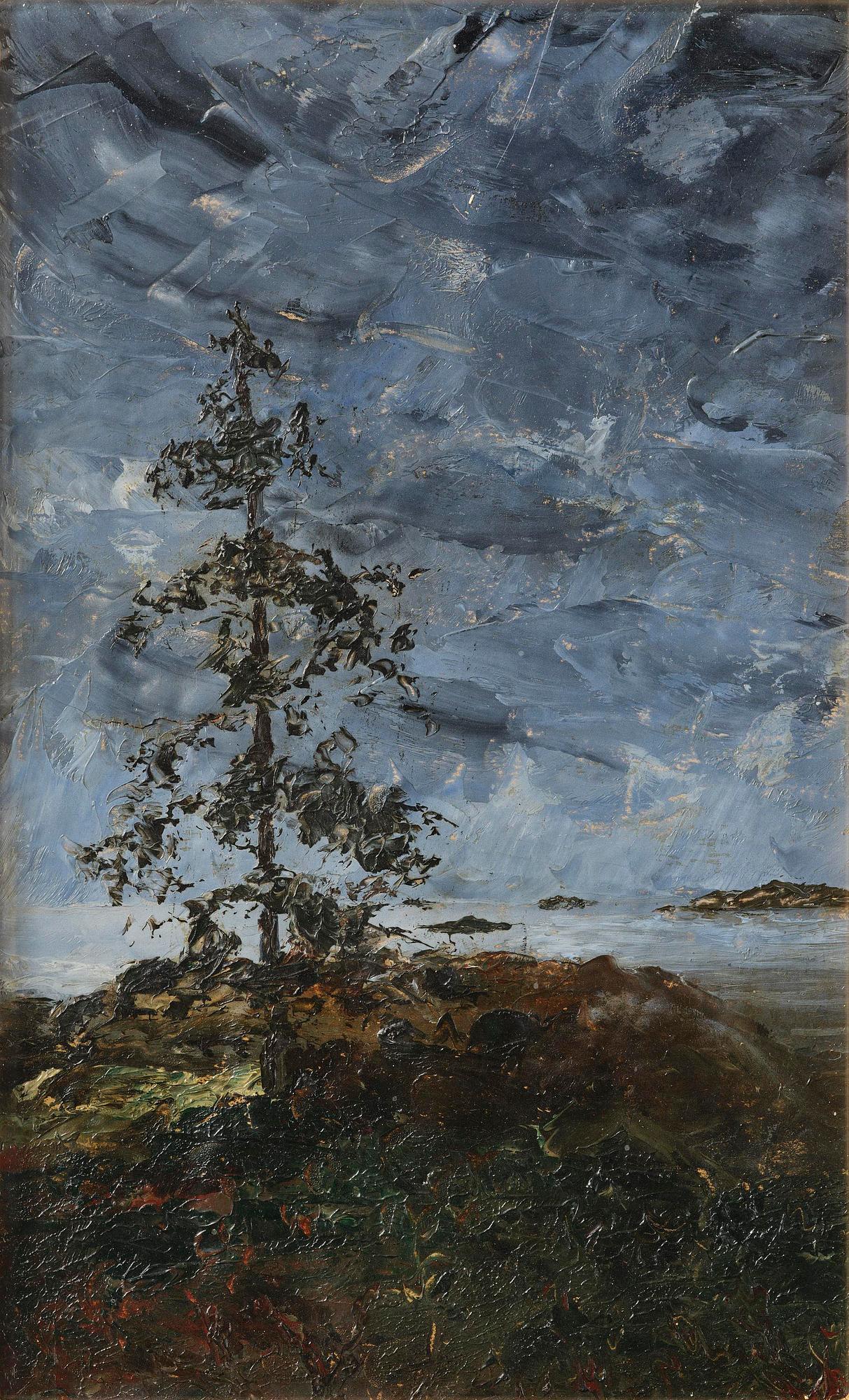
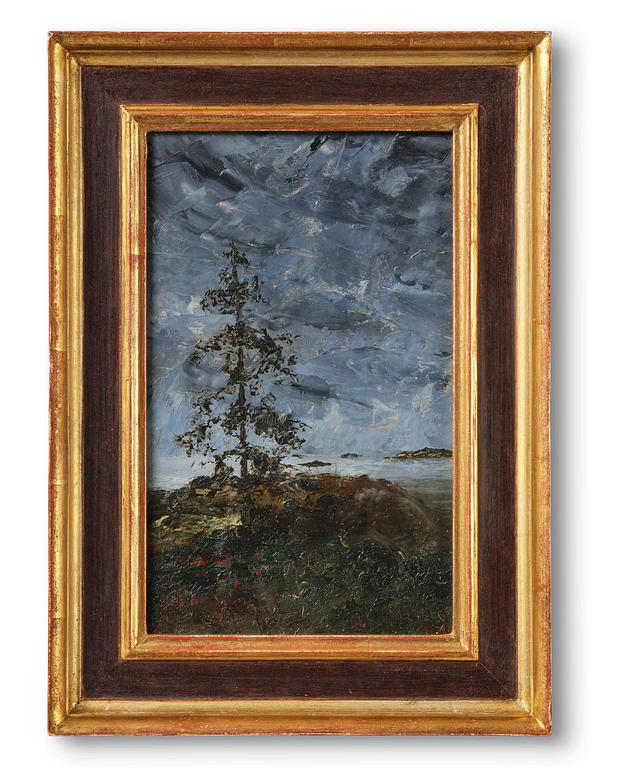
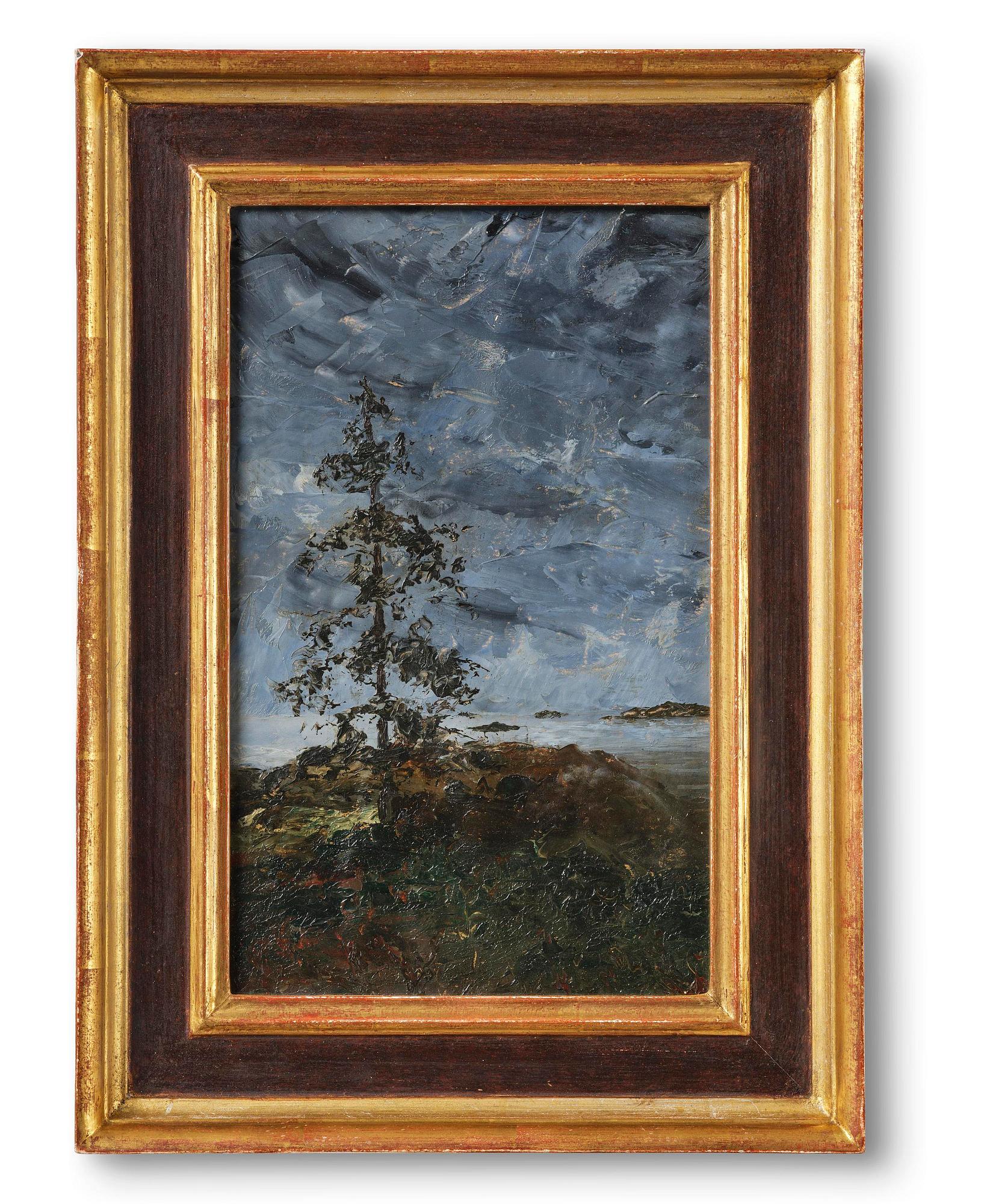
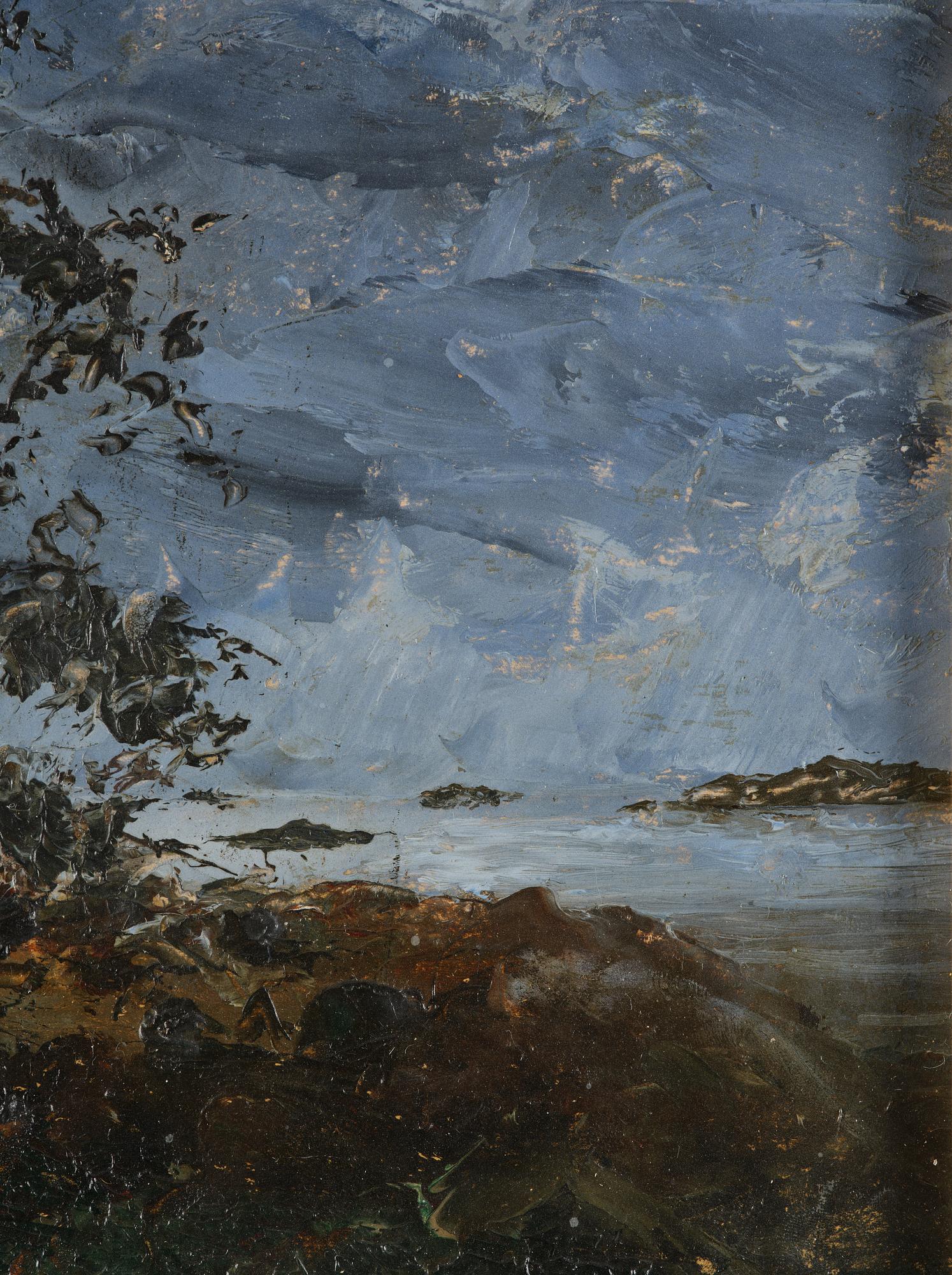
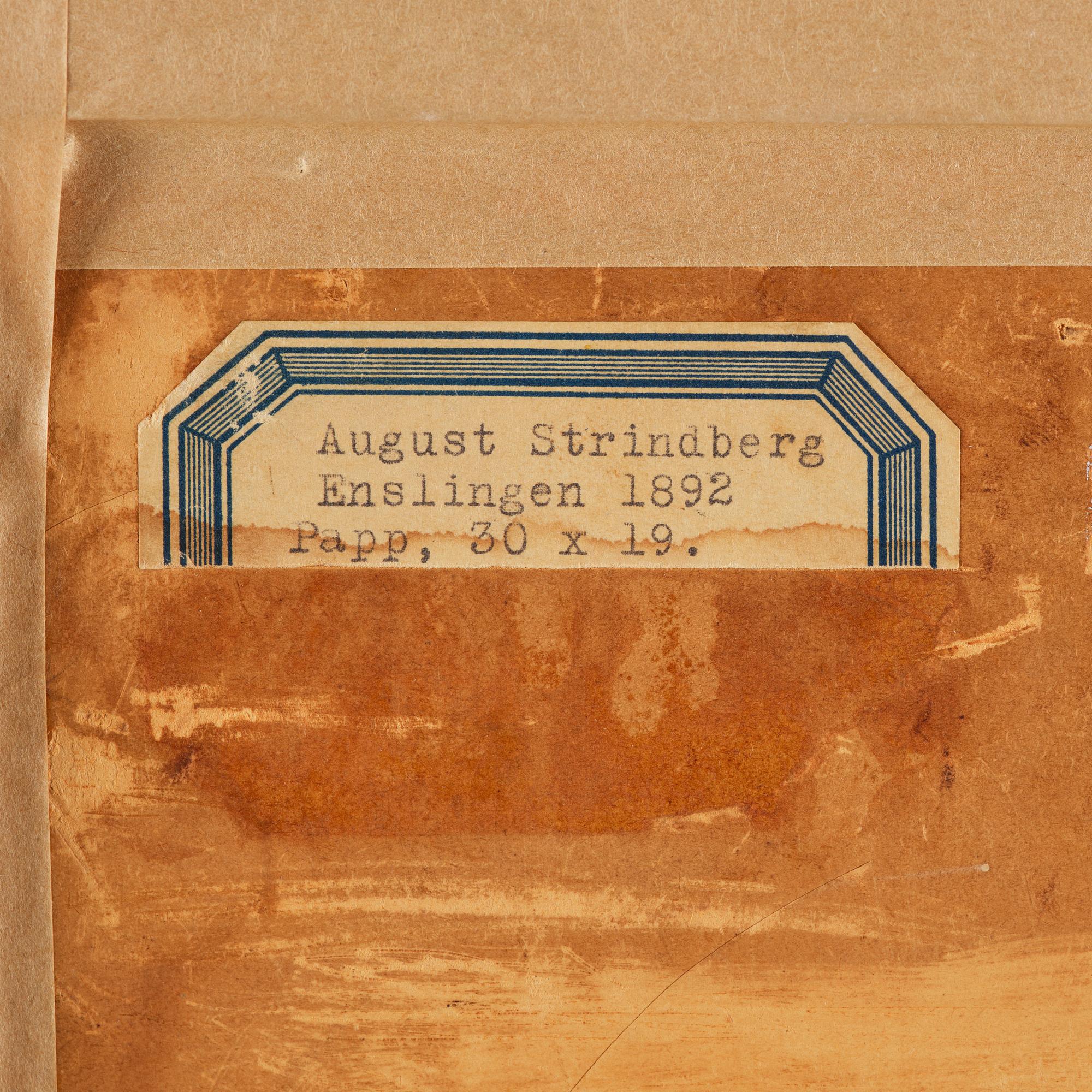
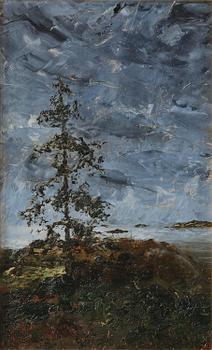
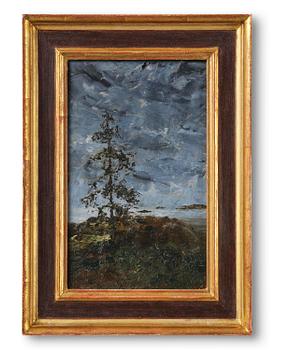
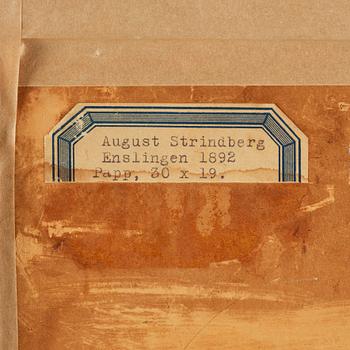
"Enslingen" ("The Solitary One")
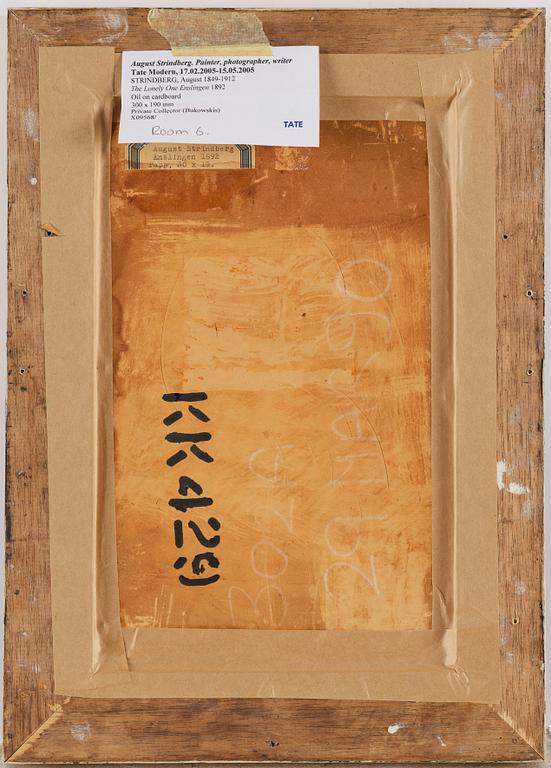
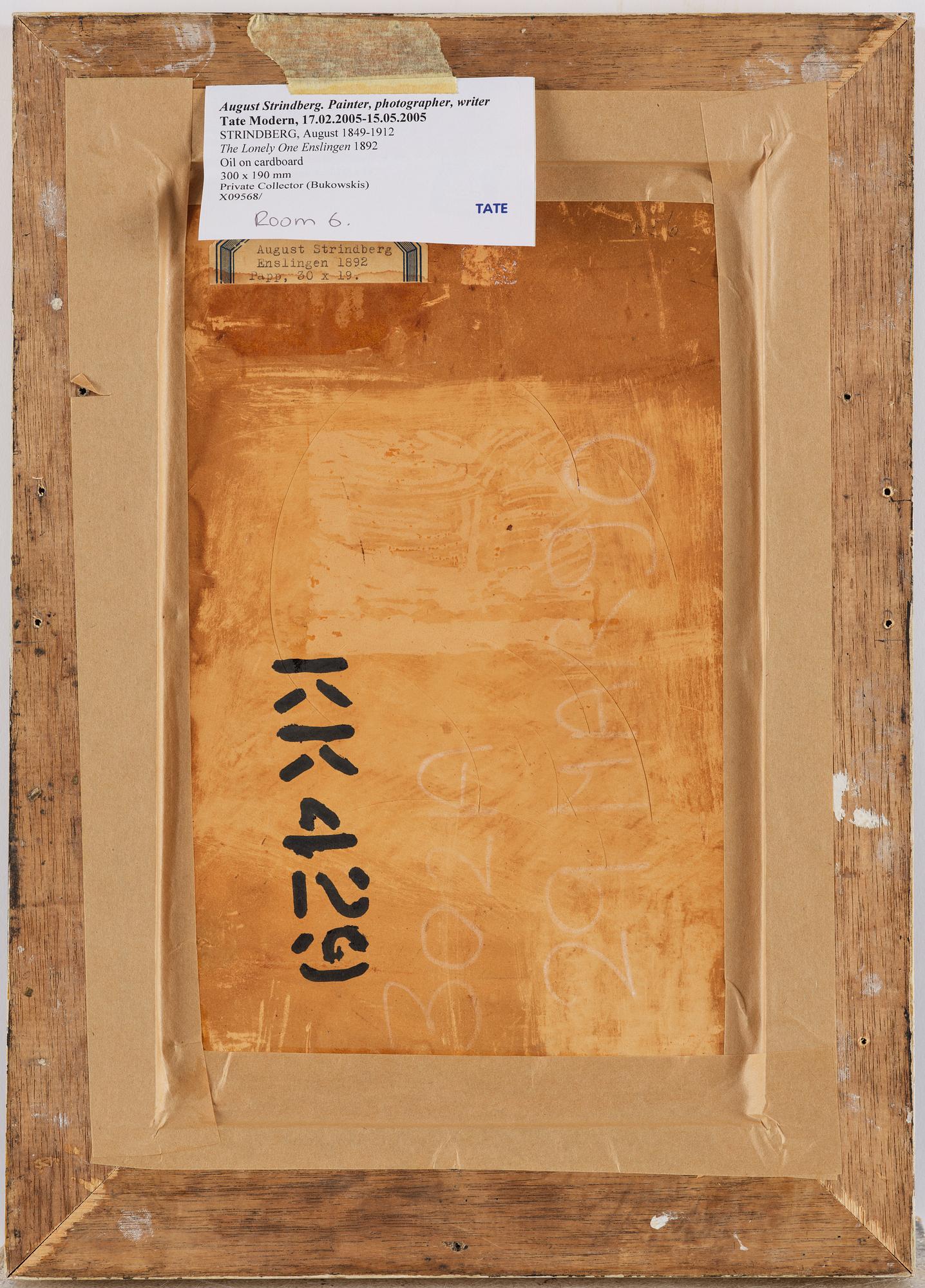
Executed in 1892. Oil on cardboard 30 x 19 cm.
Provenance
The artist's niece Anna-Lisa Wierth (1884-1959, née von Philp), according to family tradition, a gift from the artist in the spring of 1906.
Her sister Märta Fröding (1882-1970, née von Philp).
Thereafter by descent to her sister's son’s daughter Margareta Wierth.
Private Collection, Sweden.
Stockholms Auktionsverk, Stora kvalitén, 27 May 2004, lot no. 2127.
Private Collection, Sweden.
Exhibitions
Gummessons Konsthall, Stockholm, 1924, cat. no. 9.
Nationalmuseum, Stockholm, "Strindberg som målare och modell", January-February 1949, cat. no. 17.
Örebro Centralbibliotek, Rådhuset Örebro, "Strindberg som målare och modell", 24 February-March 1949, cat. no. 17.
Lunds universitets konstmuseum, "Strindberg som målare och modell", 20 mars-april 1949, cat. no. 17.
Malmö konsthall, "August Strindberg - Underlandet", 26 December 1989-4 February 1990.
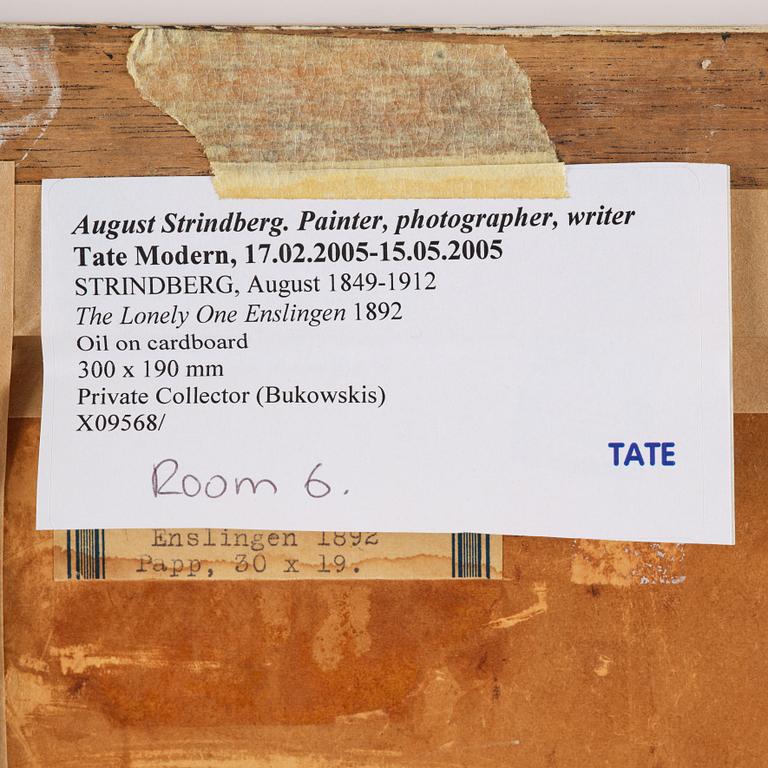
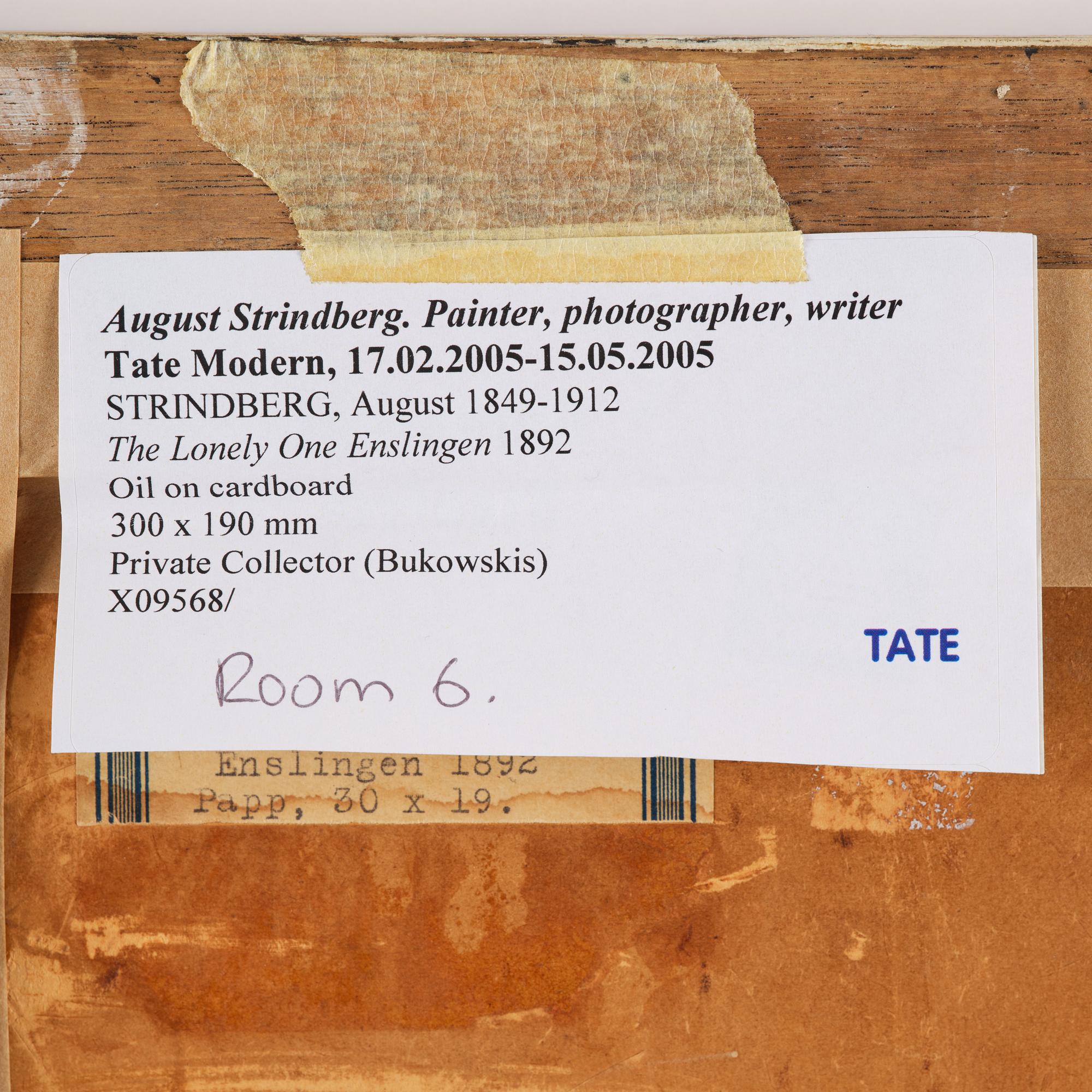
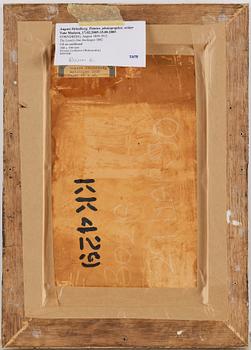
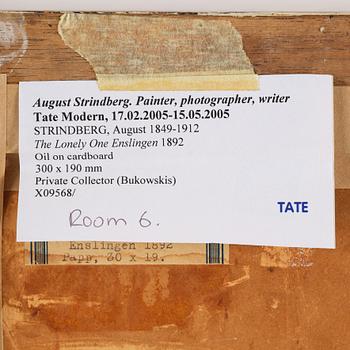
Tate Modern, London, “August Strindberg. Painter, photographer, writer”, 17 February-15 May 2005, cat. no. 54.
Literature
Göran Söderström, "Strindbergs måleri", 1972, listed in the catalogue p. 337, cat. no 33, illustrated full page pl. 20.
Björn Springfeldt och Göran Söderström (ed.), "August Strindberg - Underlandet", Malmö konsthall, 1989, p. 100, illustrated full page in colour p. 101.
Olle Granath (ed.), "August Strindberg. Painter, photographer, writer", 2005, illustrated p. 79.
Göran Söderström, "Strindbergs måleri", 2017, listed in the catalogue p. 424, cat. no 33, illustrated full page p. 124.
More information
In the Nationalmuseum's exhibition catalogue "Strindberg – The Painter and the Photographer" (2001), Per Hedström paints the following picture of August Strindberg's painting during the 1890s:
"Strindberg's 1890s were marked by the deepest crisis of his life up to that point, the so-called Inferno crisis, which reached its peak in Paris in 1896. For almost seven years, Strindberg was largely unproductive as a fiction writer. Instead, he devoted himself to scientific experiments, and during certain periods, he painted. It is now that his painting suddenly becomes something more than the amateur's cautious attempts to depict nature. The first reviews of Strindberg's production as a painter could be read in the summer of 1892. Strindberg had exhibited a small number of new paintings in a venue in Stockholm called Birger Jarl's Bazaar, and the exhibition was noted by several newspapers. In some cases, the reactions were cautiously positive. But one could also read a type of ironically mocking reviews that often, both before and later, afflicted modern art."
During the spring and summer of 1892, August Strindberg's literary creation seems to have hit a dead end. His good friend Per Hasselberg then offered the good advice to resume painting. In May 1892, Strindberg wrote to Richard Bergh to invite him to Dalarö over Whitsun: "I have some painting studies, from imagination, to show you. A 'new direction' that I have invented myself and want to call forest nymphism (ask Bob!)."
Strindberg's good friend Robert Thegerström, "Bob," whom he had met in France, had a summer house on Dalarö. He helped Strindberg rent a cottage on the island in the late summer of 1891, and in the spring of the following year, Strindberg returned to Dalarö and resumed painting and socialising with Thegerström.
Per Hedström continues about the period: "He had struggled to get his plays performed, and the divorce from Siri von Essen was nearing completion. For the first time in nearly 20 years, he began to paint in oil again. [...] The paintings from Dalarö in 1892 can best be characterised as images of memories from the outer archipelago and the sea. Strindberg refined and developed the motif repertoire he had created in the 1870s. It is the open sea, the straight horizon, and the vast skies that dominate the images."
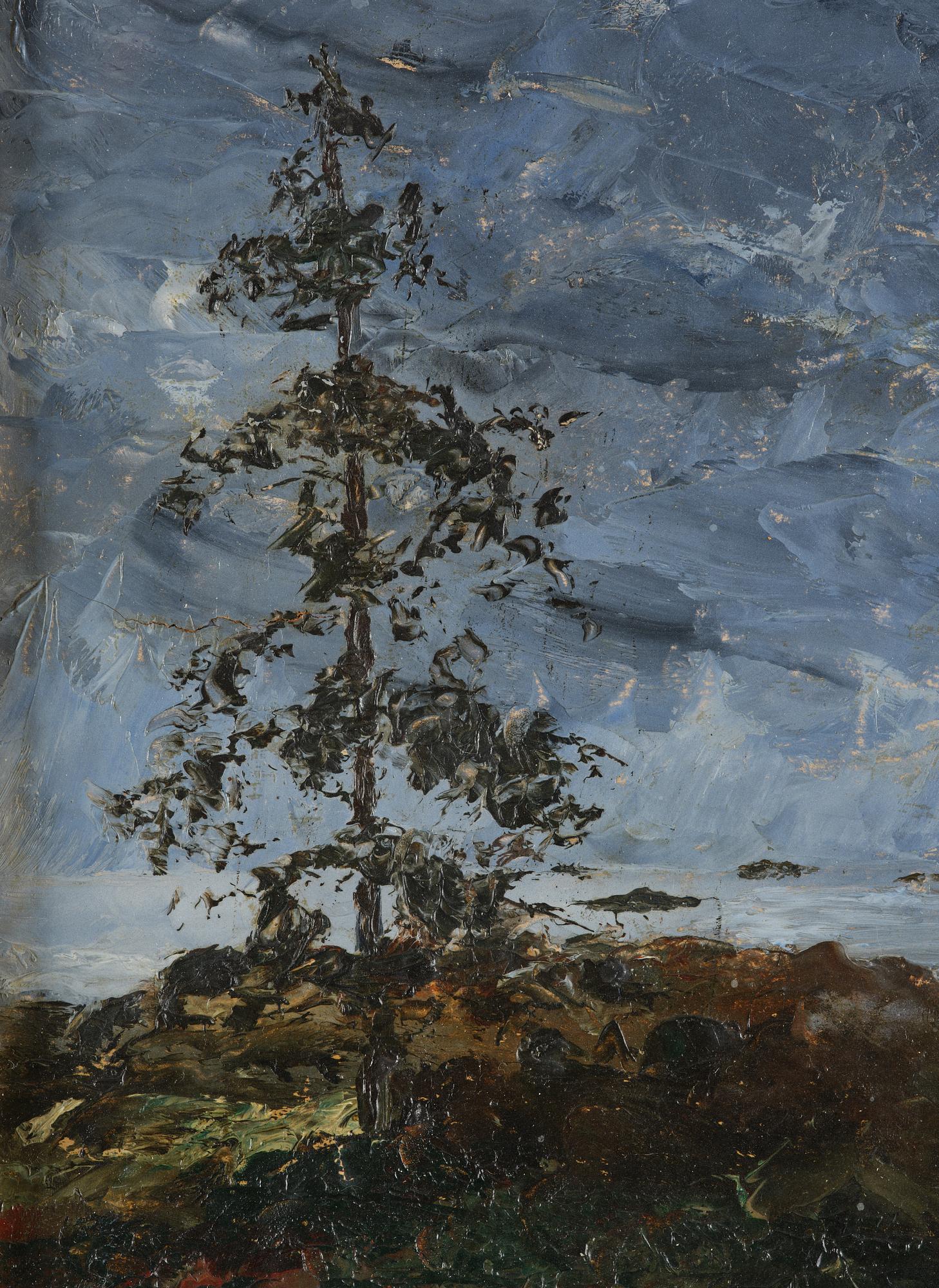
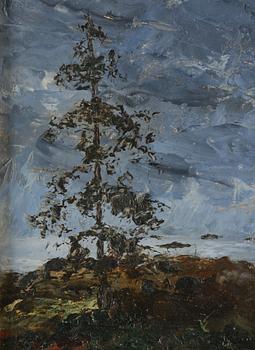
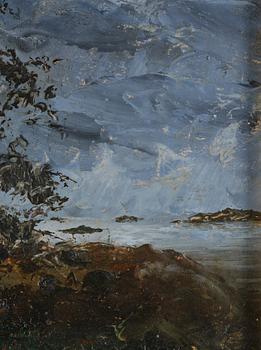
Isolated in a small cottage out on Dalarö point, he embarked on an intense creative period with colour and palette knife. The technique suited Strindberg's restless temperament; the unmixed oil paint is applied directly onto panels of wood, metal, or cardboard. The texture that arises from the movements of the palette knife often becomes as significant as the colours and motifs themselves. The paintings from this period are strikingly free from literary elements. Instead, they are dominated by the harsh nature of the archipelago – stormy seas, dramatic skies, and the sparse vegetation that characterises the rugged landscape.
"Forest nymphism," after the forest nymph, which is a dialect word for skogsrå, that Strindberg writes about to Richard Bergh, was his theory of "automatic" art. Göran Söderström writes: "Strindberg's working method was distinctly spontaneous even in his literary and scientific work. [...] All the paintings from 1892 are, however, pure fantasy compositions, even if the motifs have an experiential background from the archipelago. [...] Initially, 'forest nymphism' likely did not yet imply any conscious striving towards abstraction, but merely a method of allowing the details of the painting to be built up by the inherent form-willingness of the colour spots."
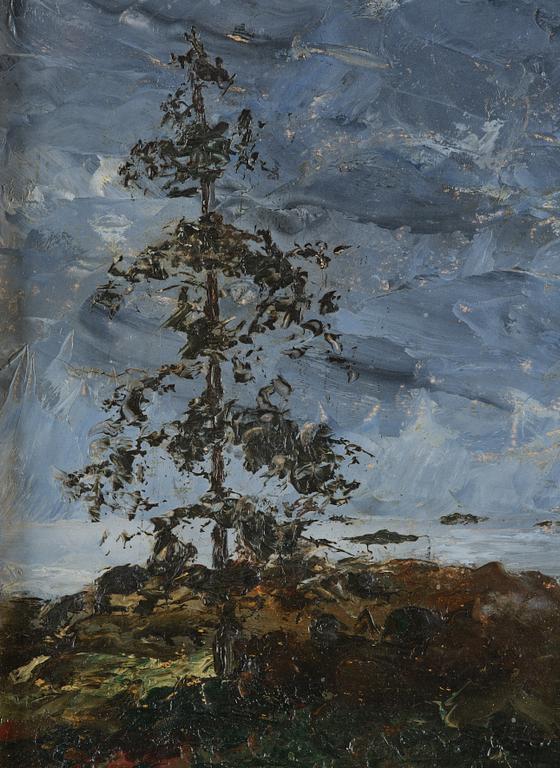
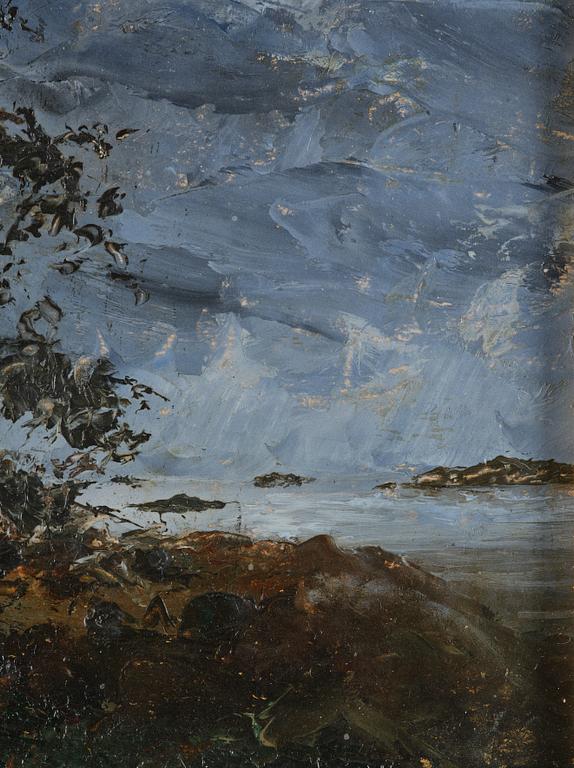
"The Solitary One" is an excellent example of this idiosyncratic landscape in the outer sea, potentially a symbol of untamed nature and the recalcitrant life itself. The solitary spruce stands on a rocky islet with the white-blue sea glimpsing three grey-brown skerries and, closer in the foreground, the scant vegetation. Strindberg has developed the rain-heavy sky in the spontaneous manner he would later describe in his artistic manifesto, "On Chance in Artistic Creation," written in Dornach in 1894: "To reproduce nature approximately, to imitate above all nature's way of creating."
Hugo Fröding described the auction painting in 1912, which he and his wife Märta, August Strindberg's niece, then owned: "He called it 'The Solitary One.' He thought of himself in that regard."
More about August Strindberg
August Strindberg is one of Sweden's most known writers, playwrights and artists. He was a central figure in the cultural life of his time and as a conflict-seeking socially critical person, he was constantly debated. Strindberg started painting as a young man but took a break in the 90s, when he came to spend a lot of time with artists both in Sweden and abroad. He painted more than a hundred paintings of windy seas, stormy skies and landscapes, he painted in dramatic color scale and characterized by the artist's strong temperament. He early became internationally known for his works, thoughts and ideas. Strindberg was constantly productive and pioneering. Represented, among others, at the National Museum, the Nordic Museum and the Thielska Gallery in Stockholm, as well as in many private collections.
Read moreFor condition report contact specialist

Others have also viewed