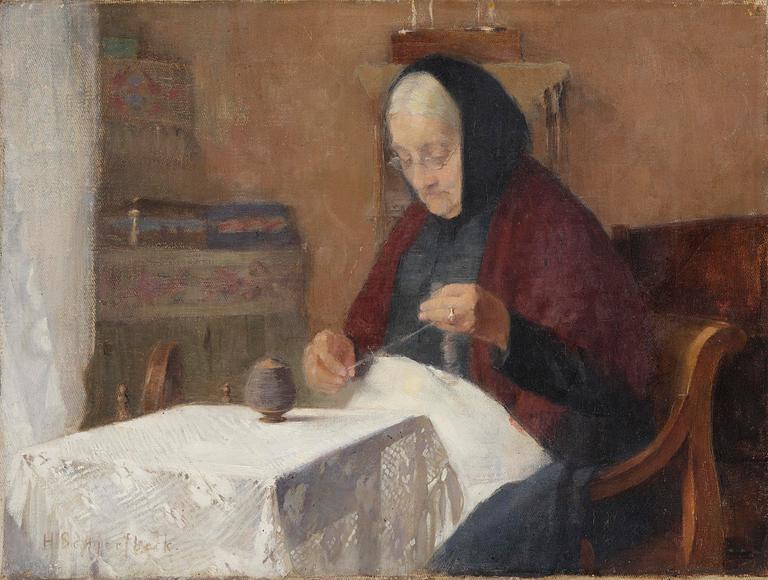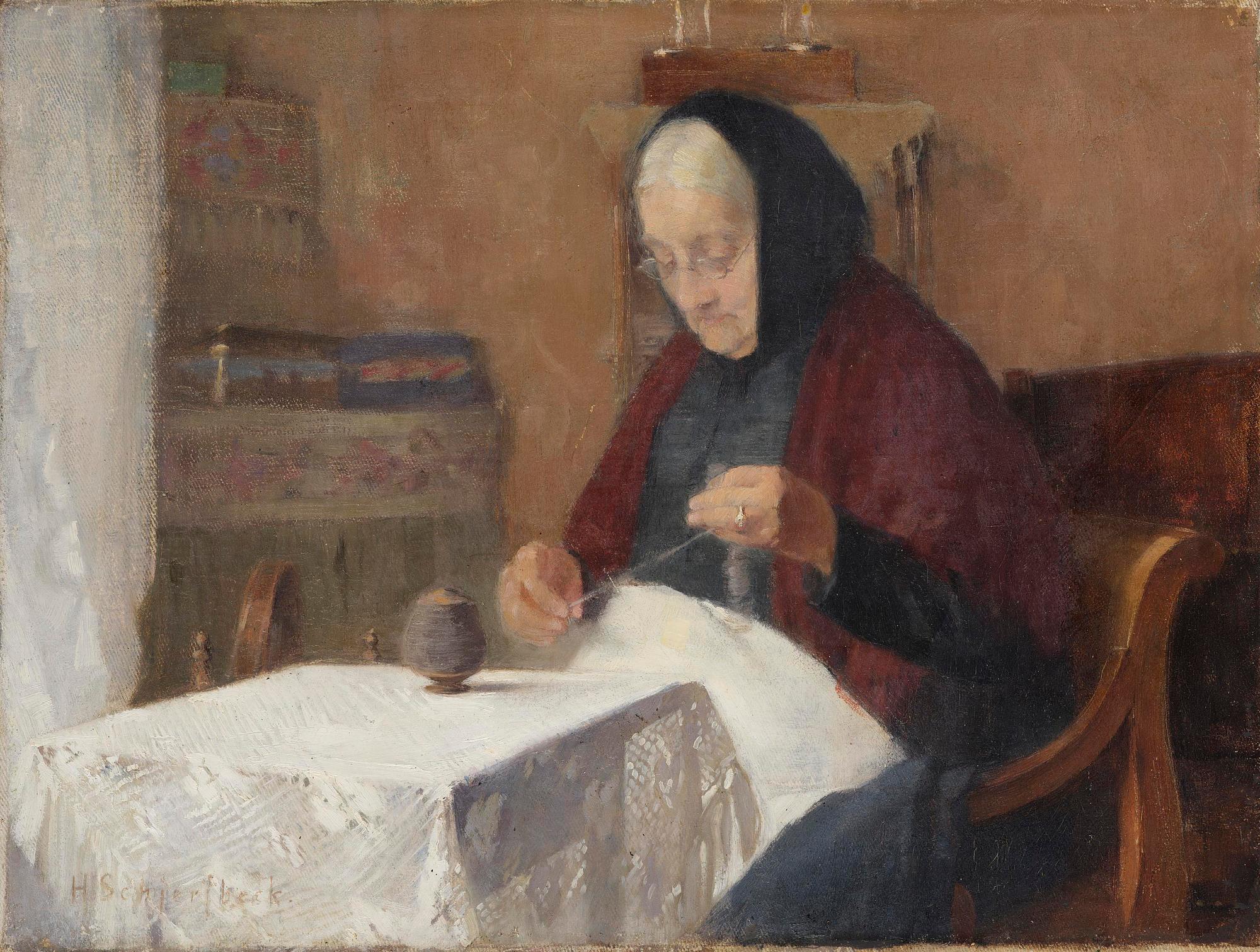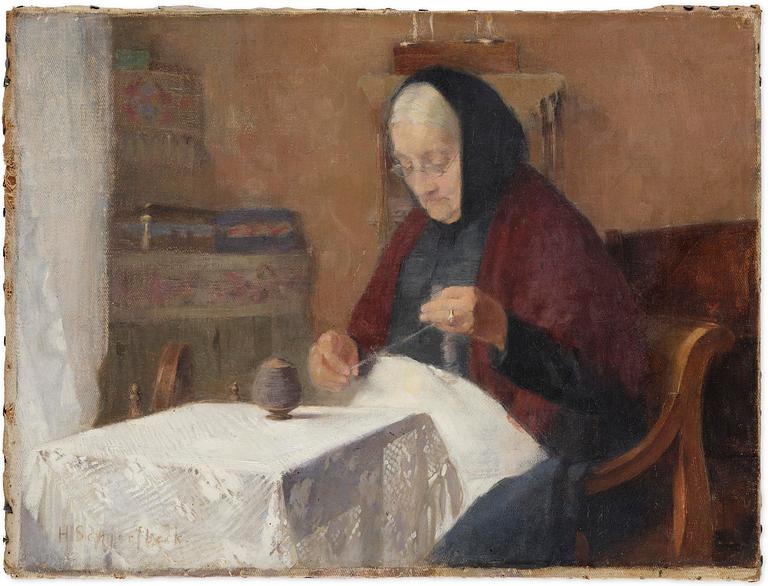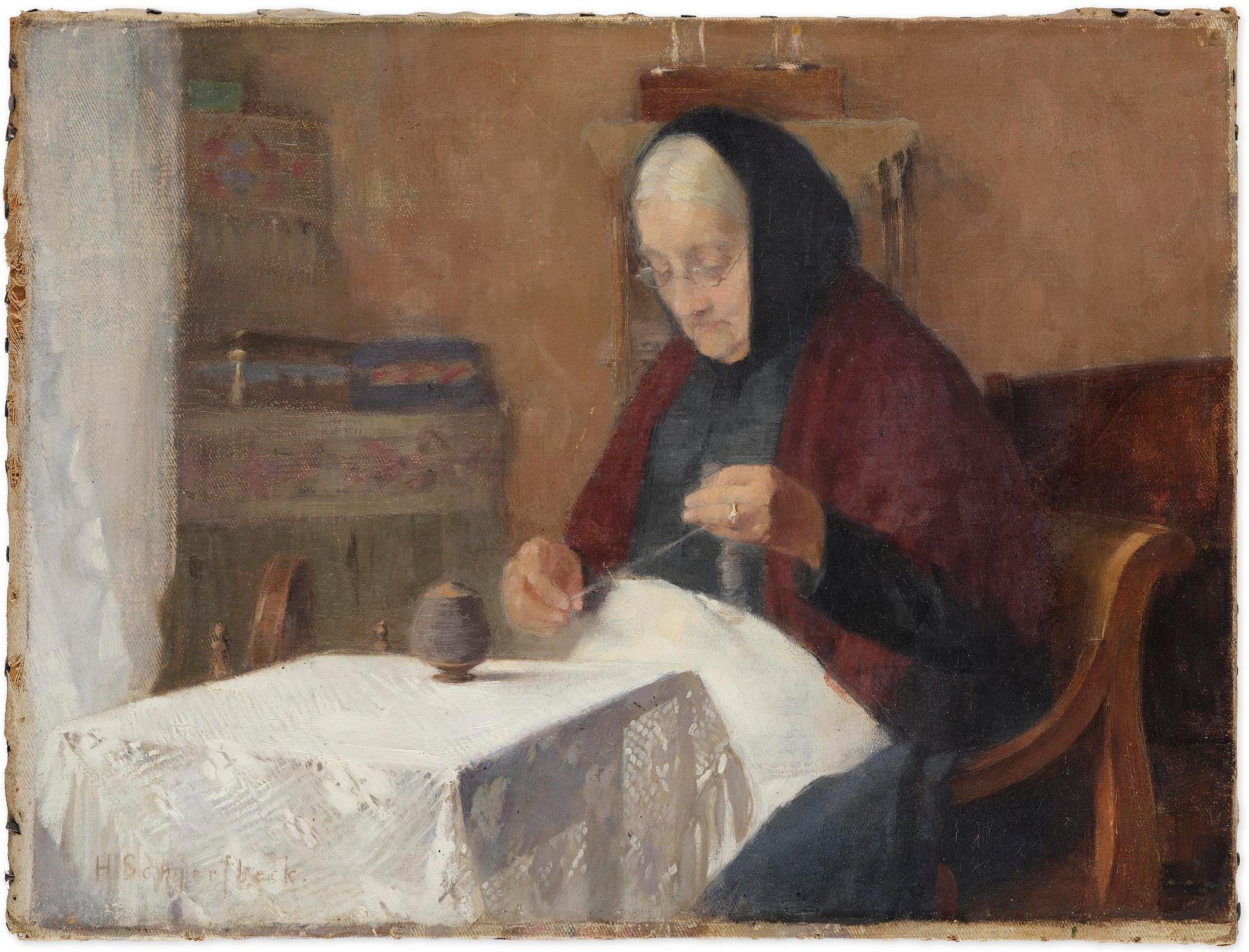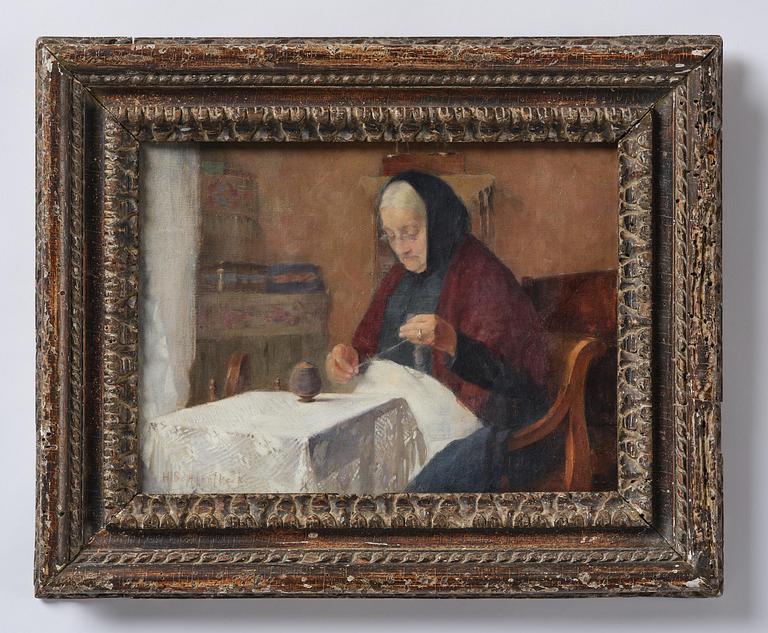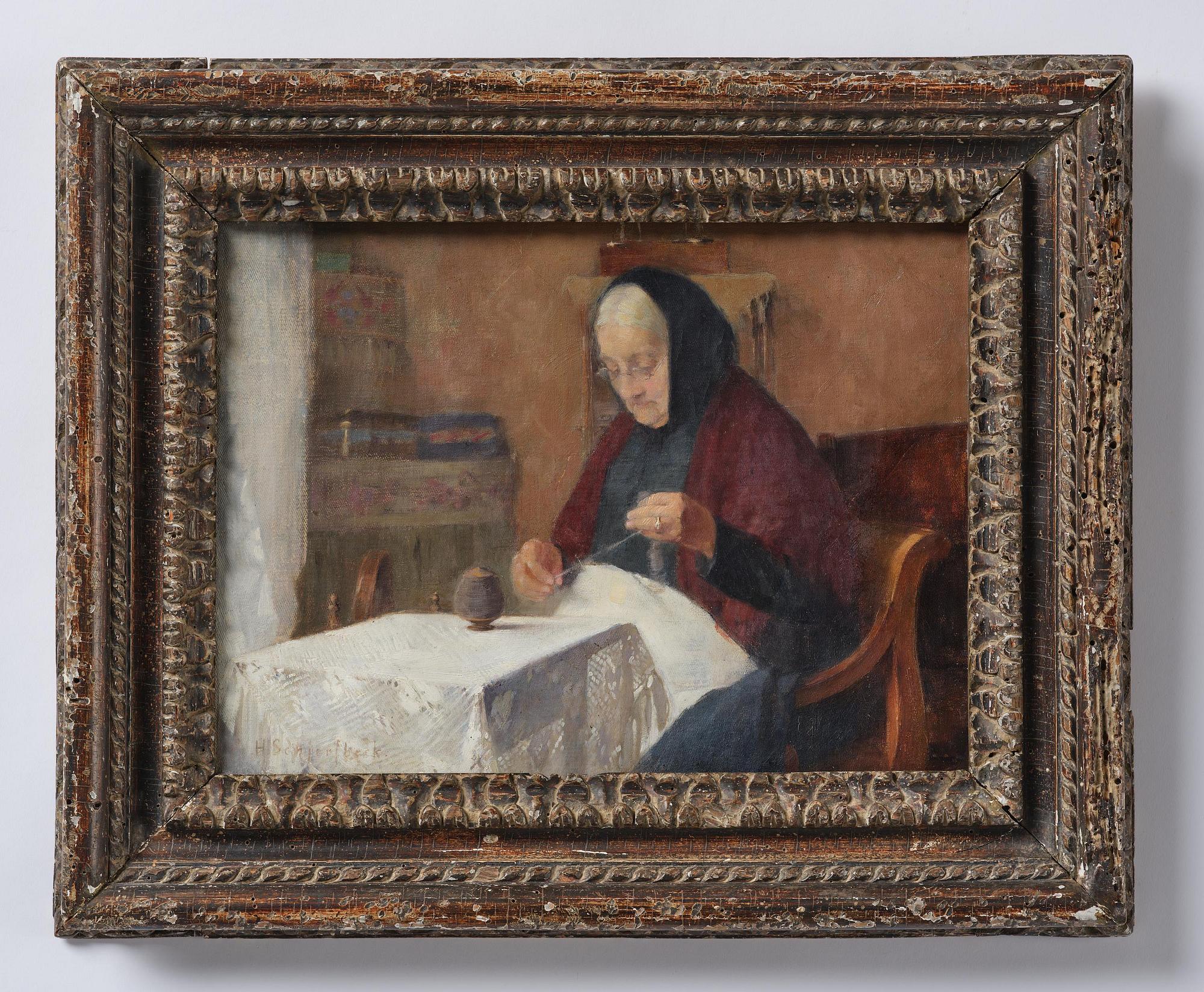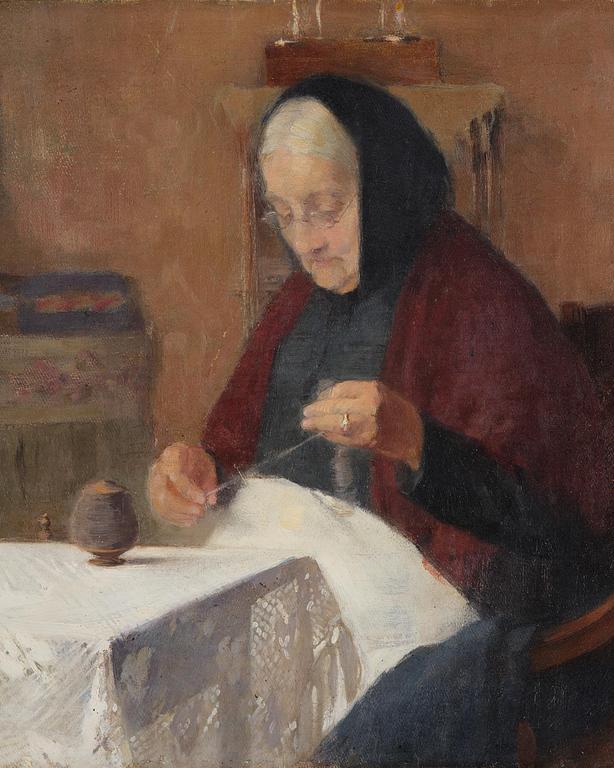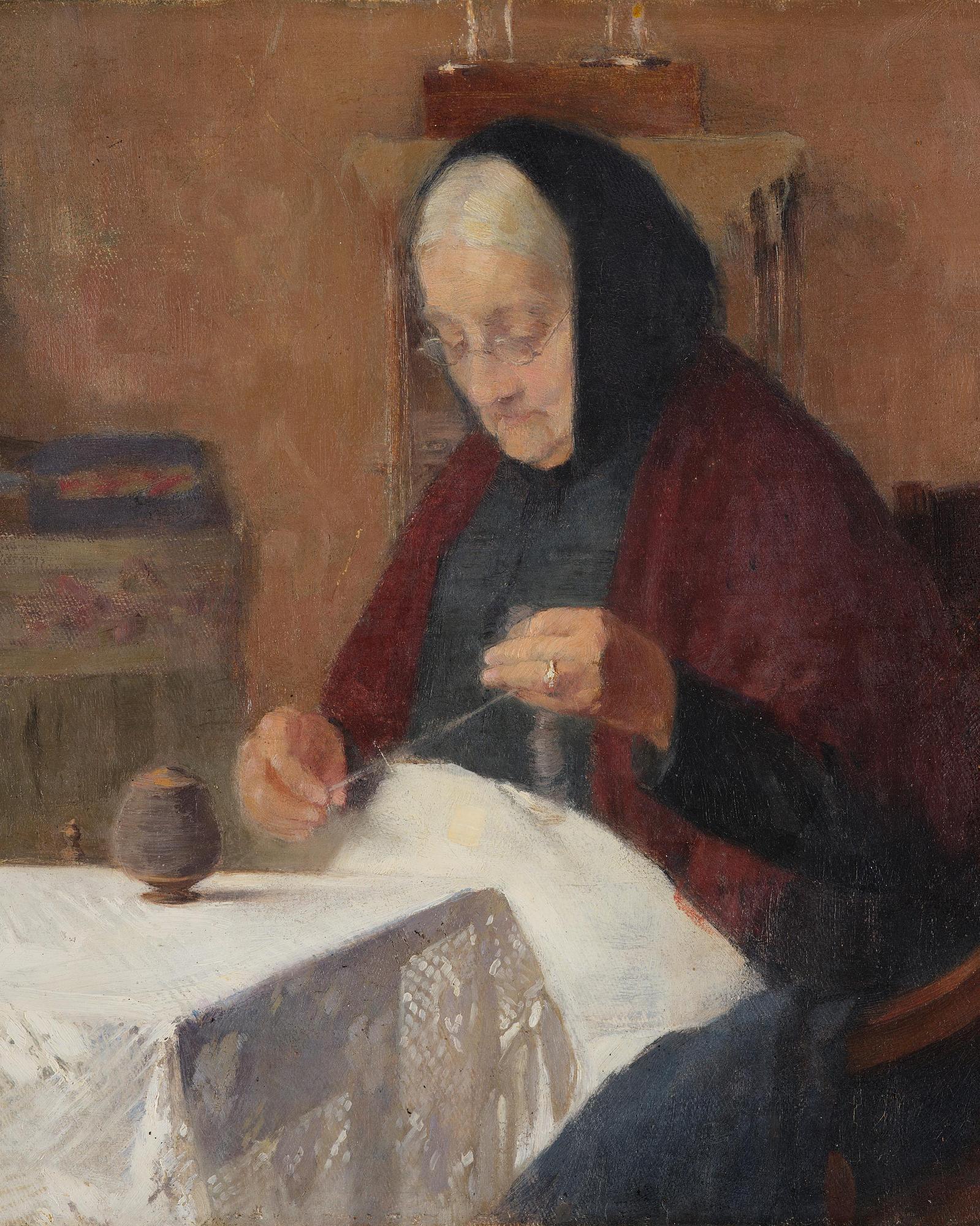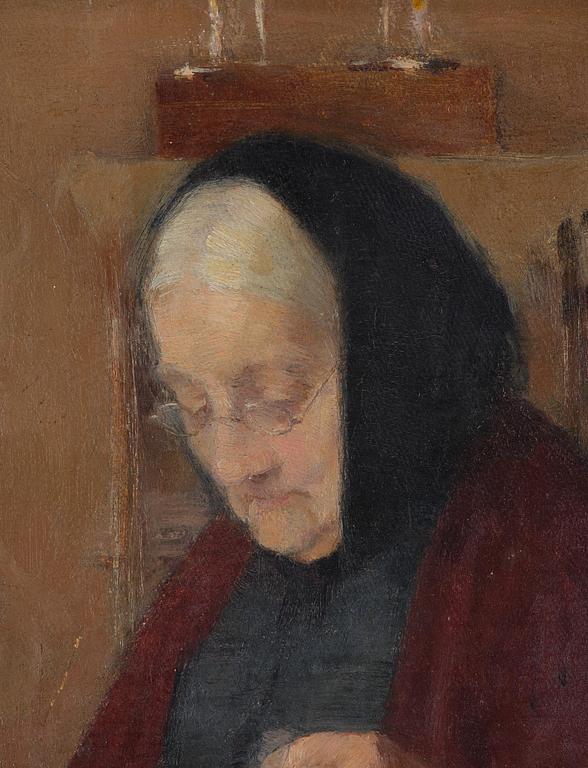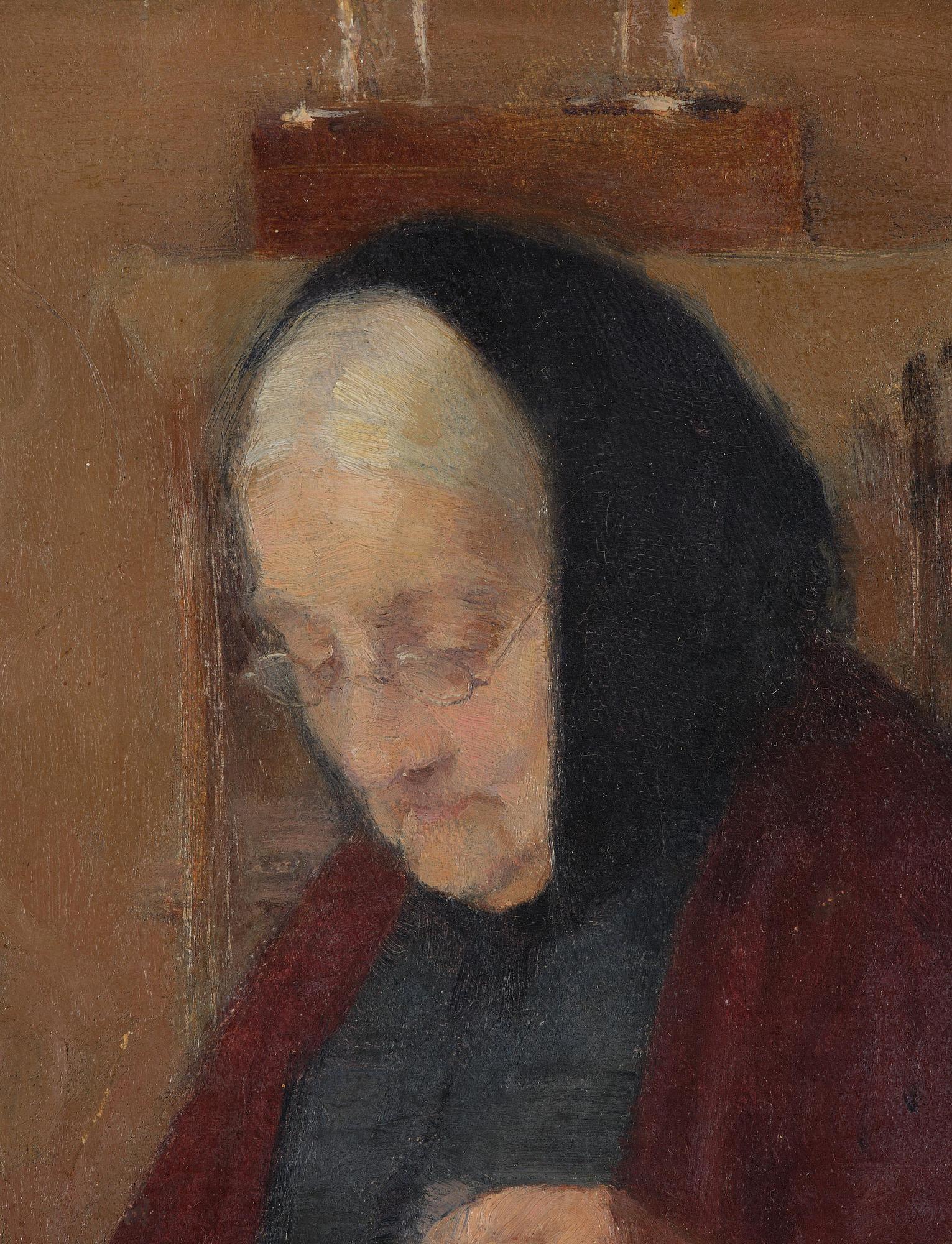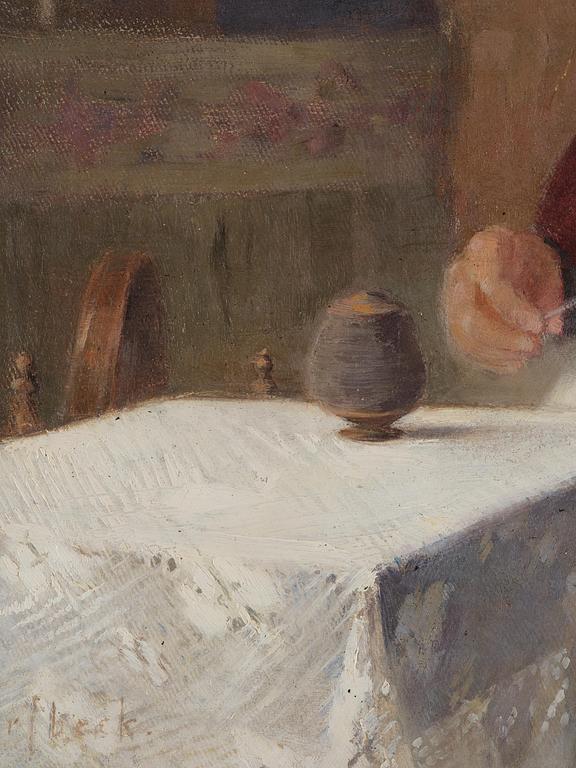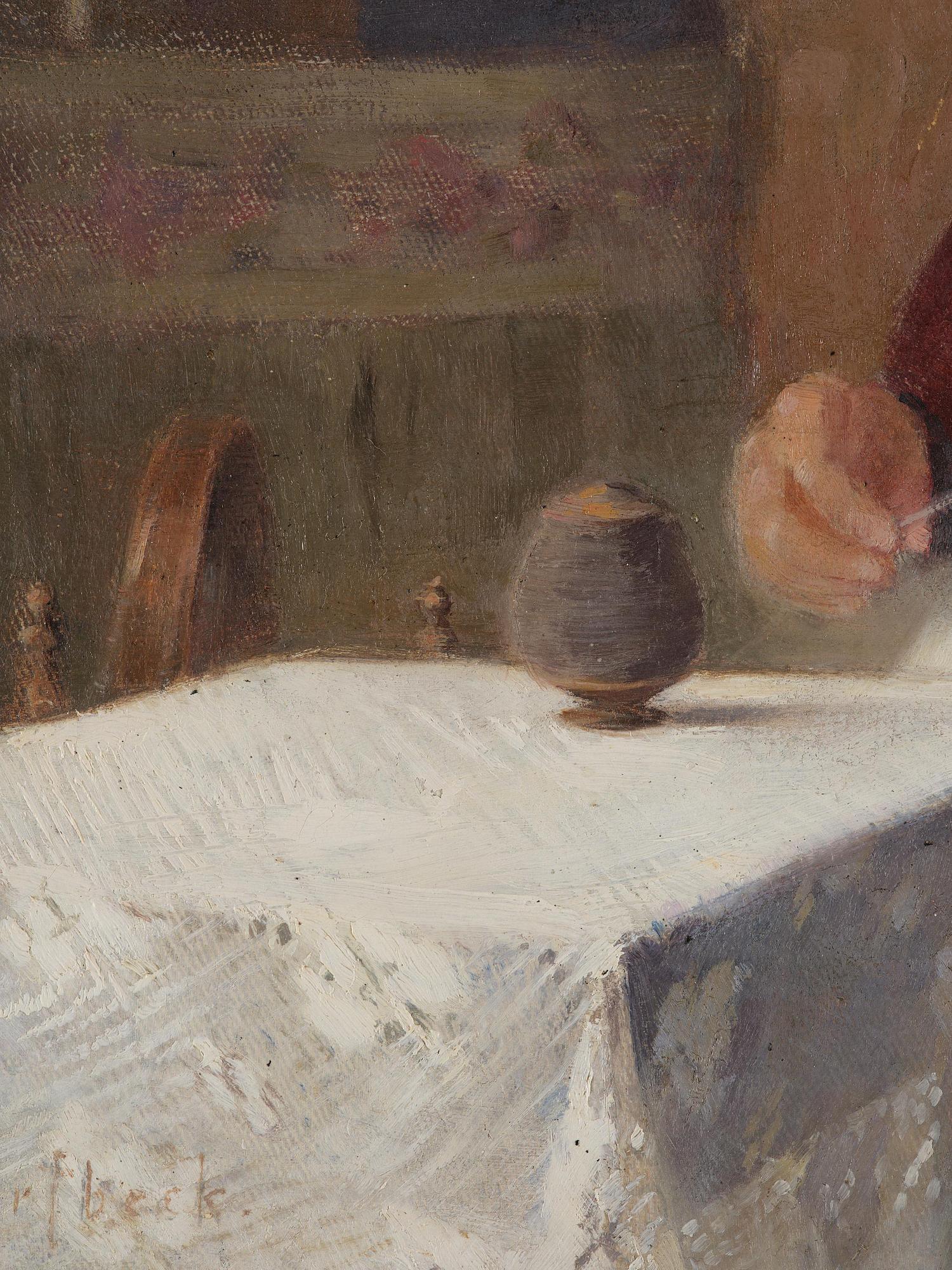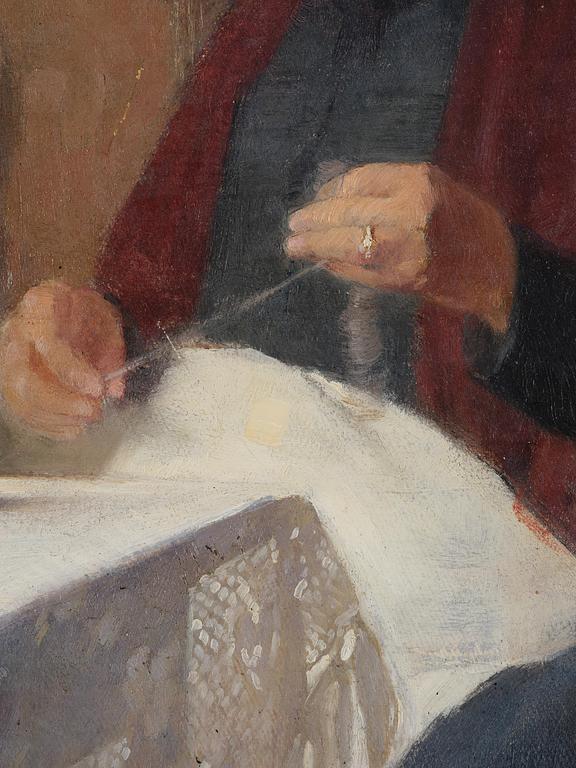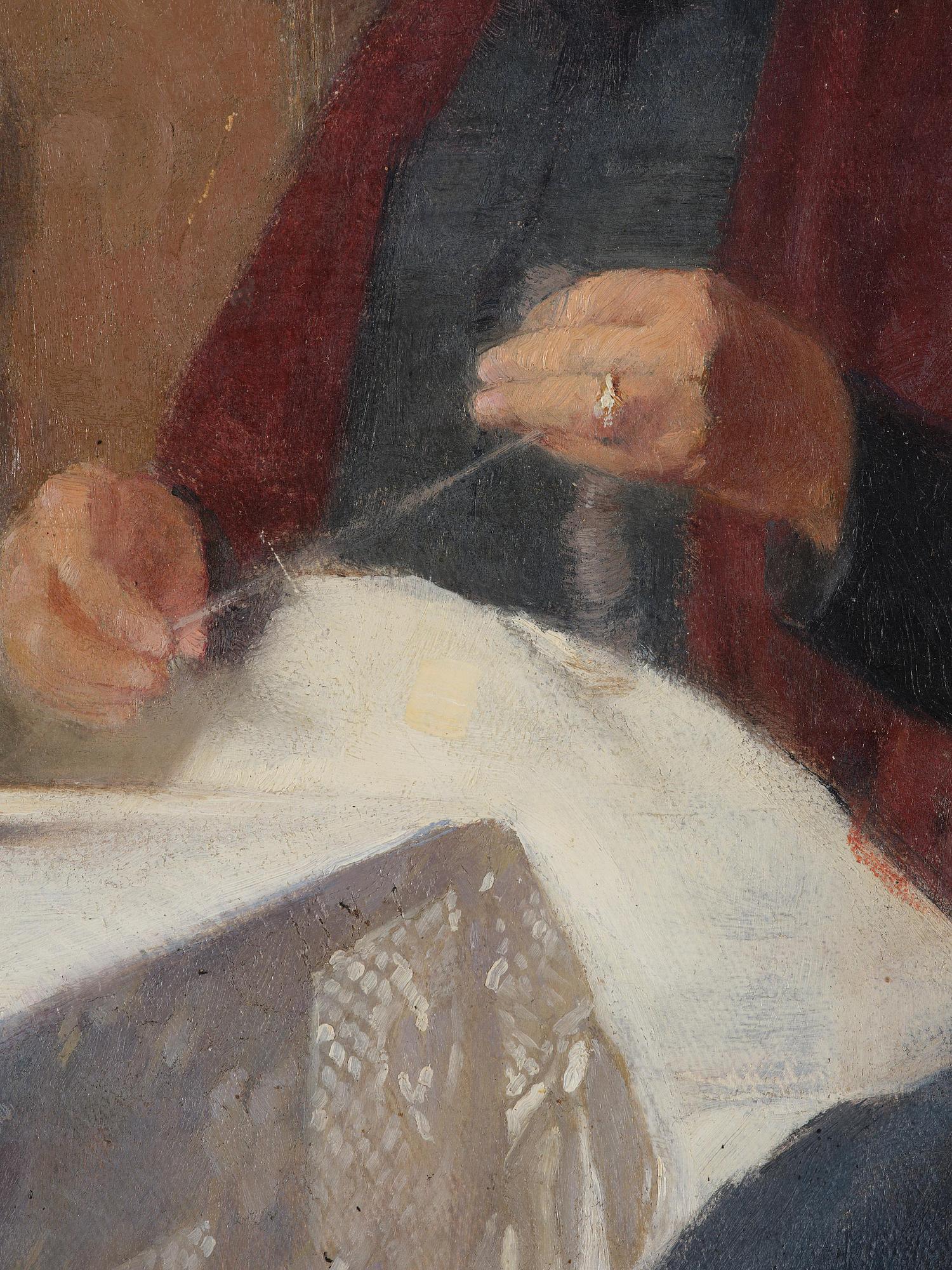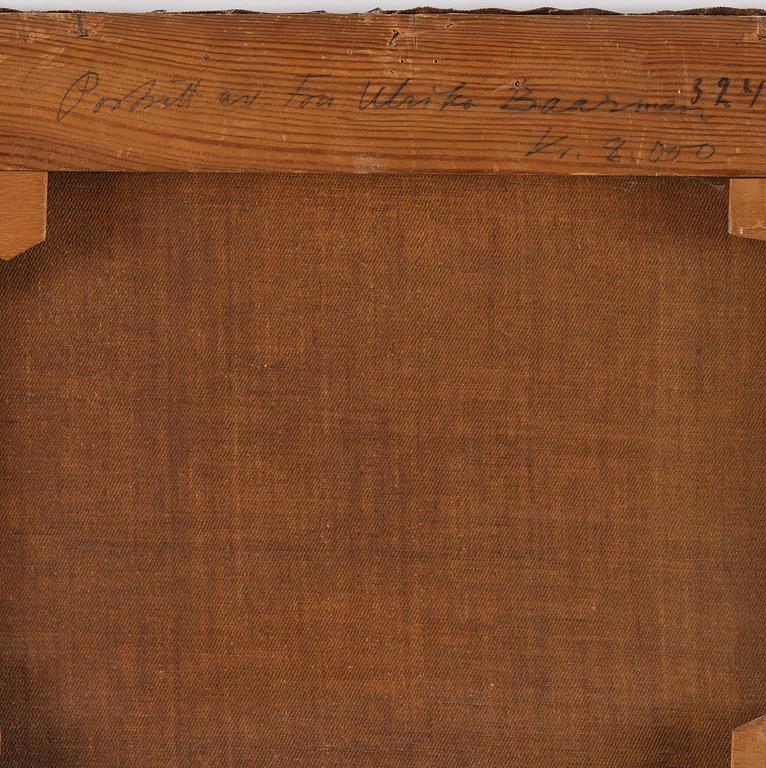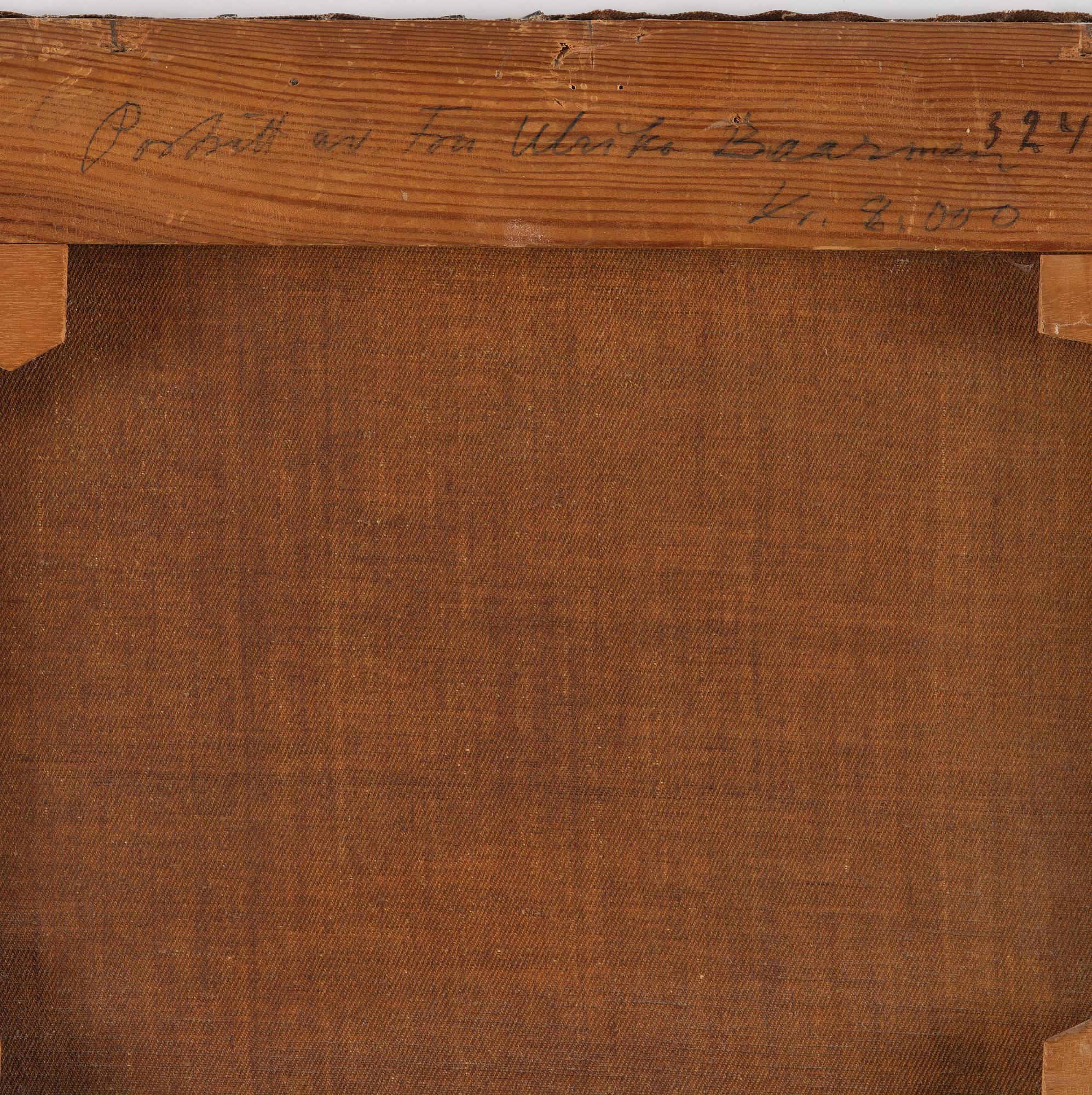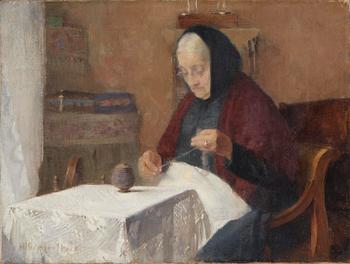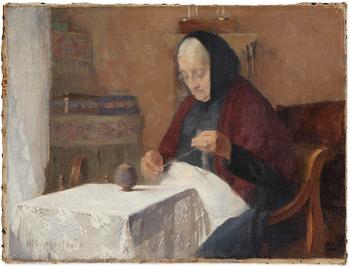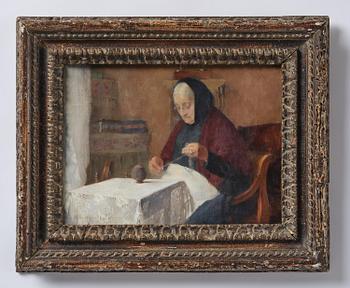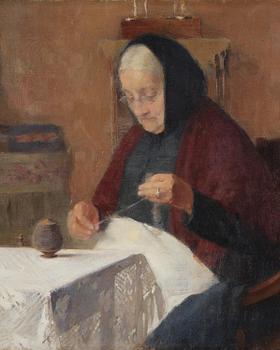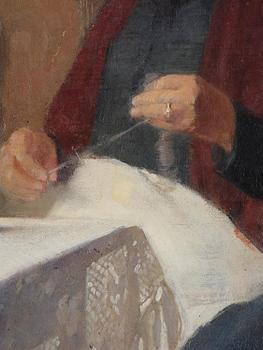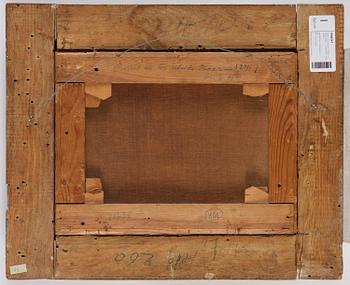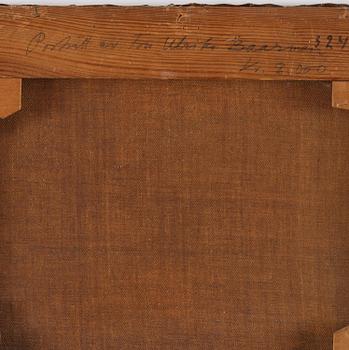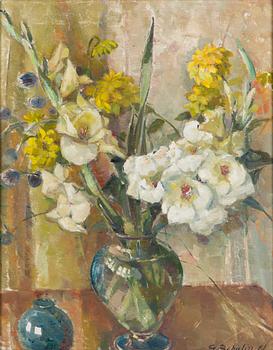
"Dam vid spinnrocken" ("Lady at the spinning wheel", Portrait of Mrs Ulrika Baarman)
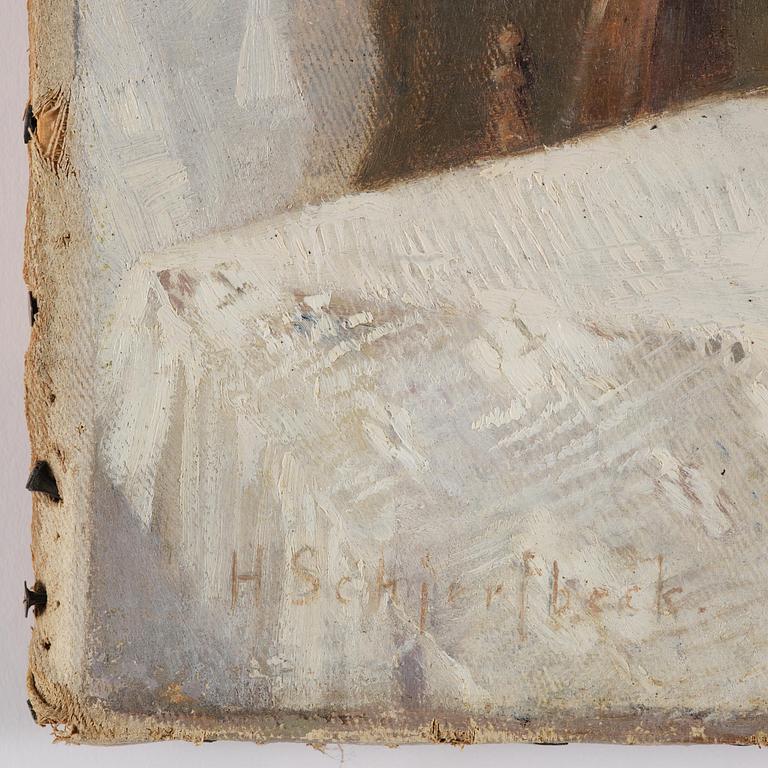
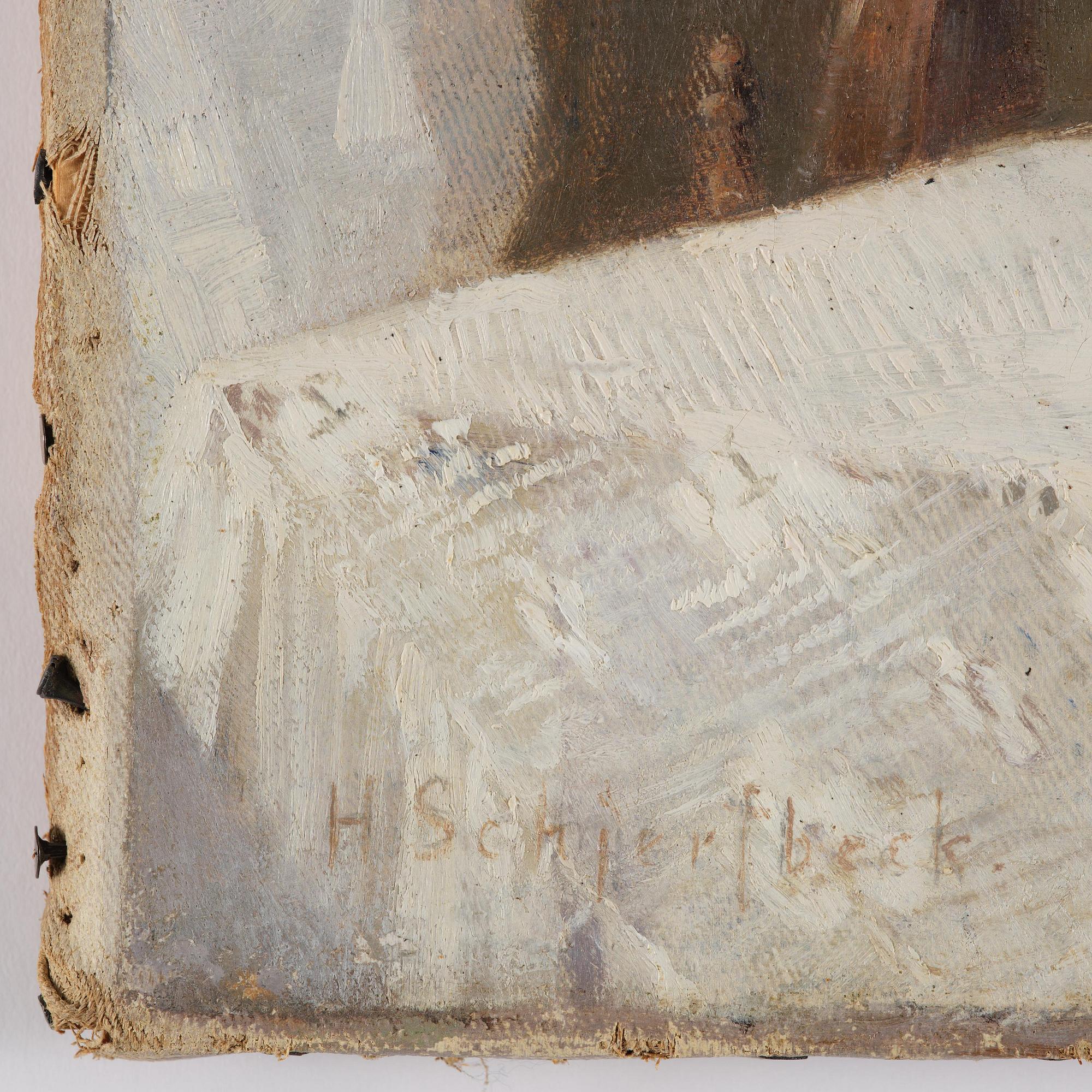
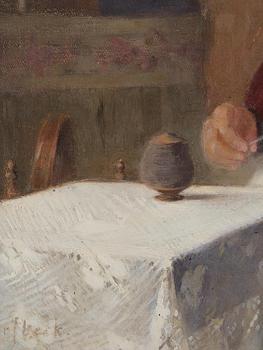
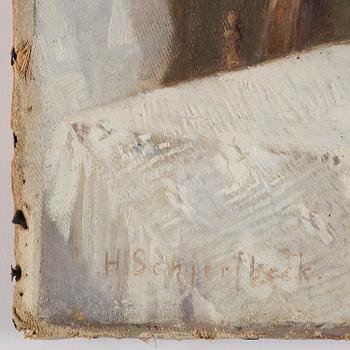
Signed H Schjerfbeck. Executed in 1893. Oil on canvas 29 x 38 cm.
Provenance
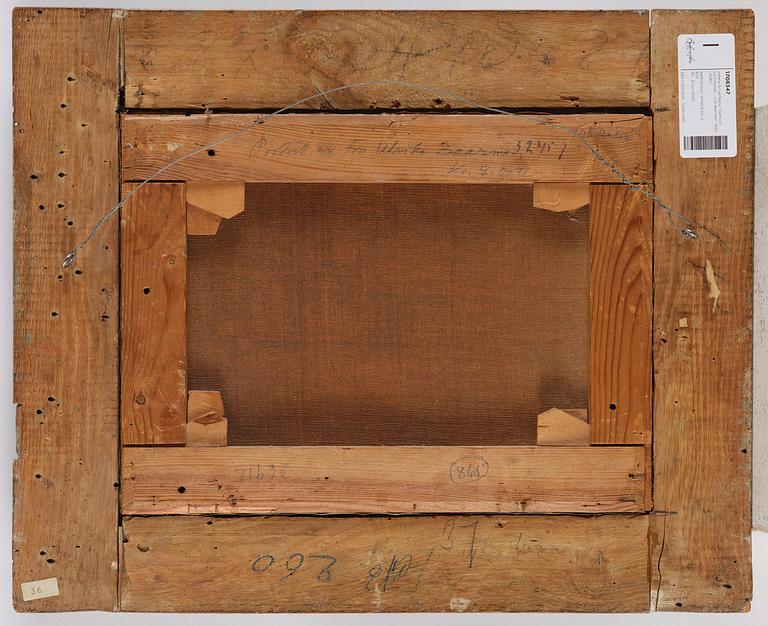
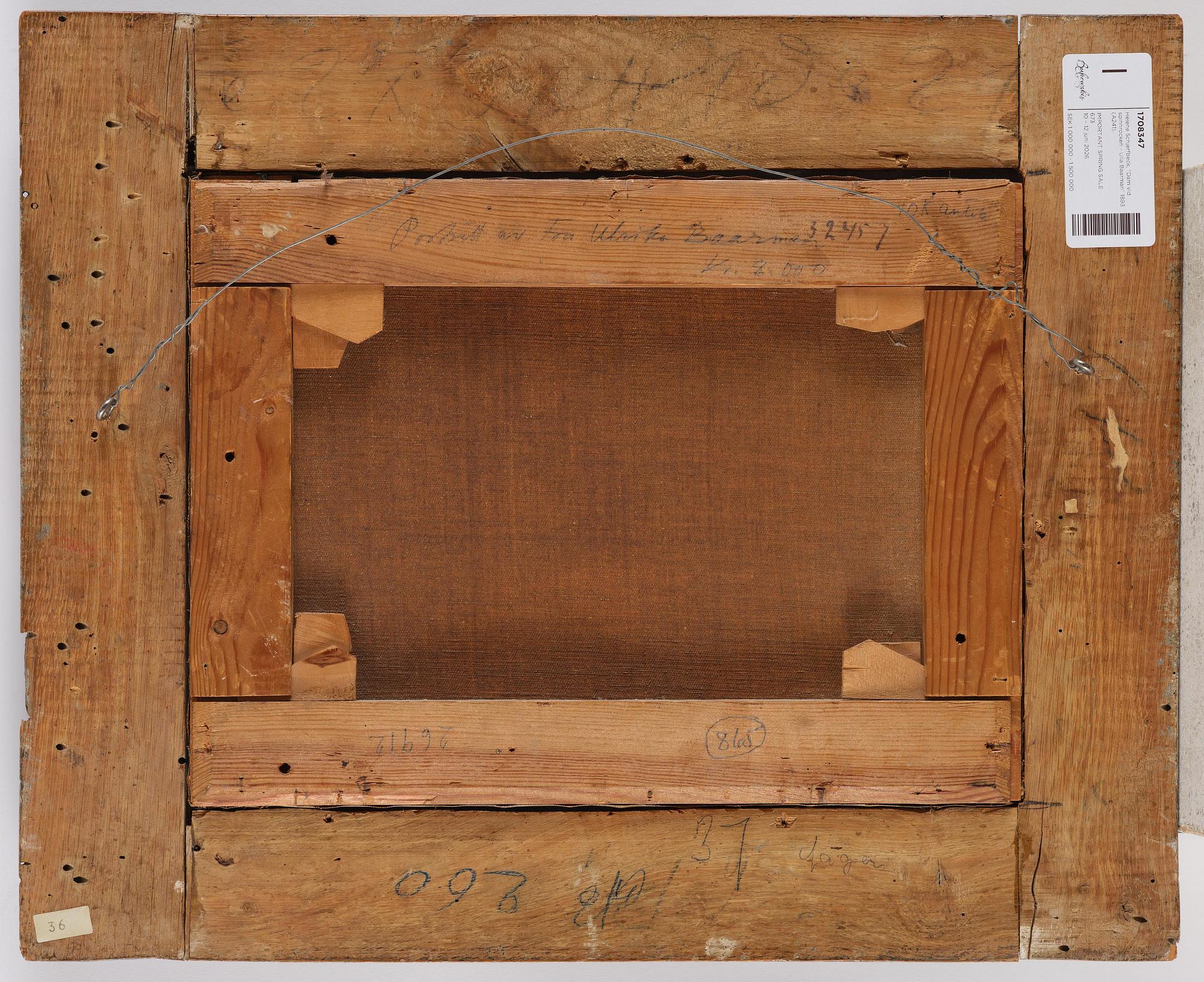
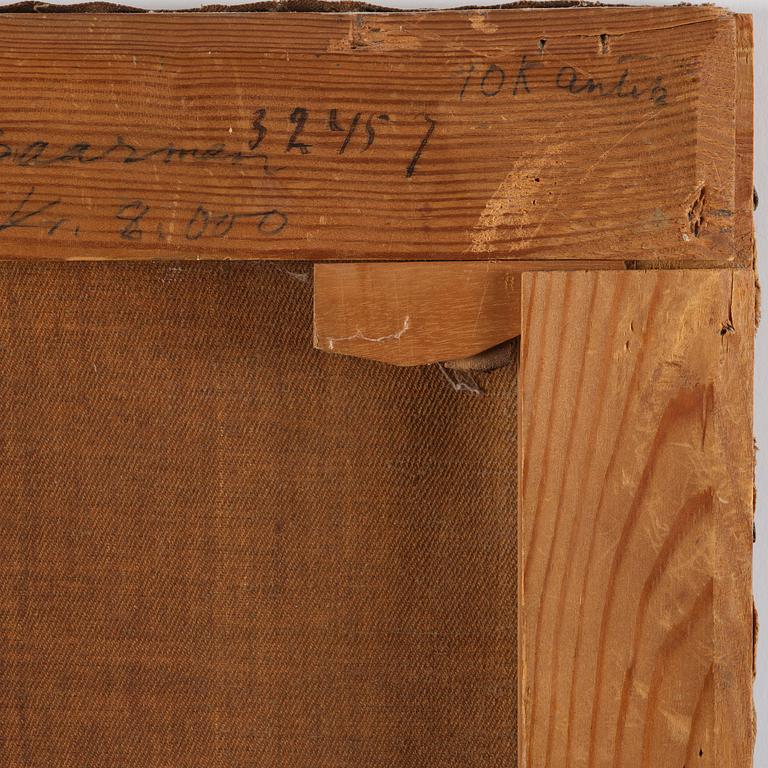
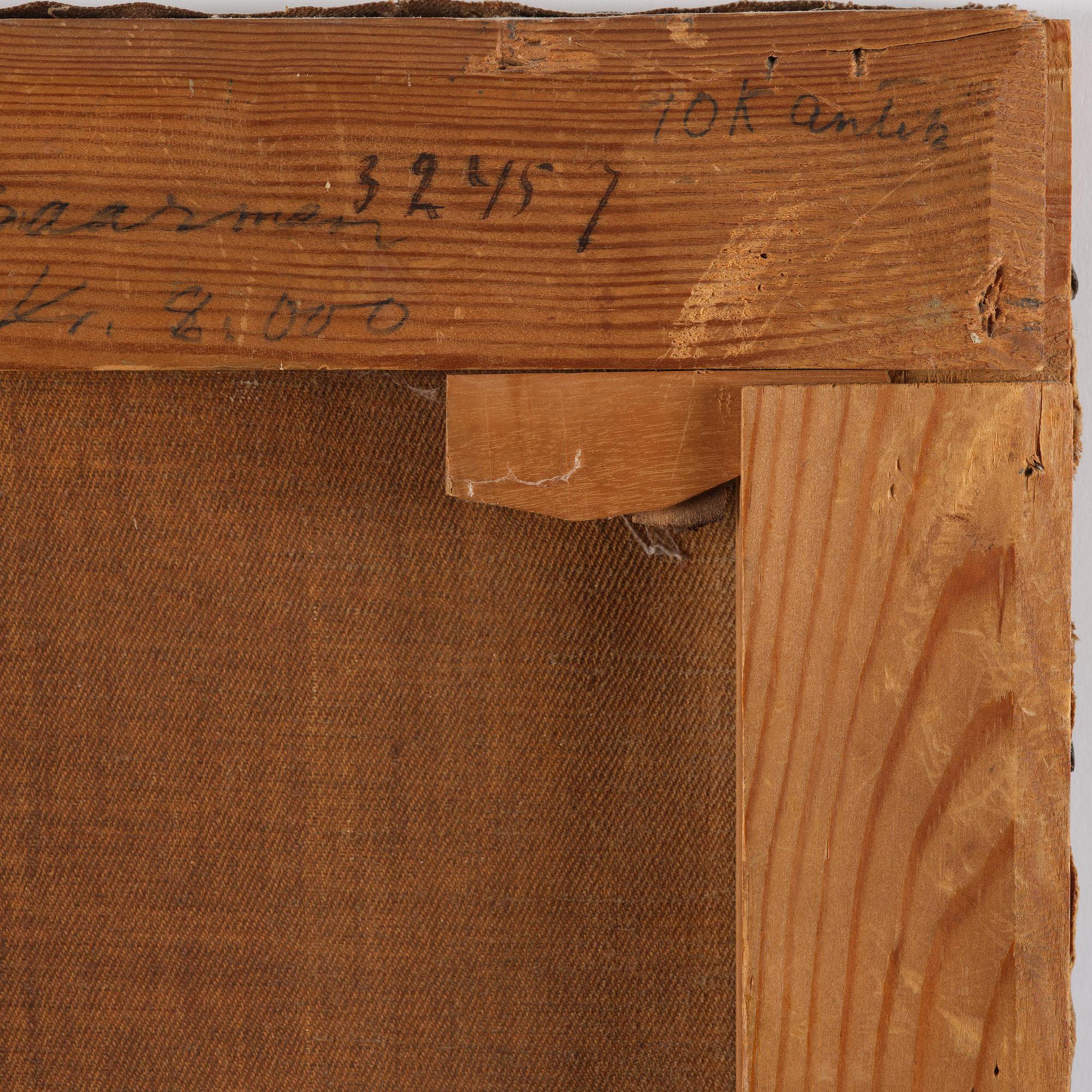
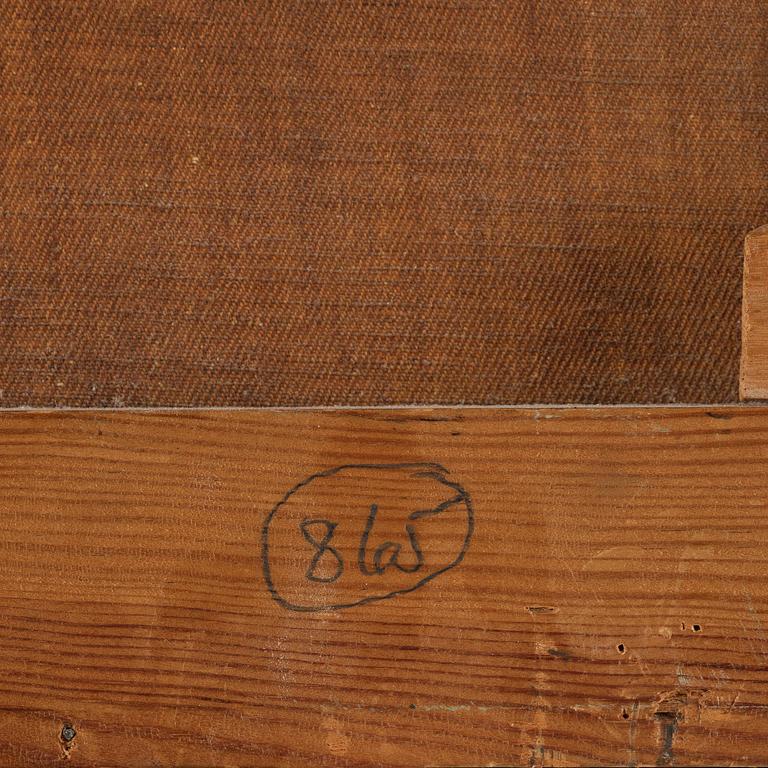
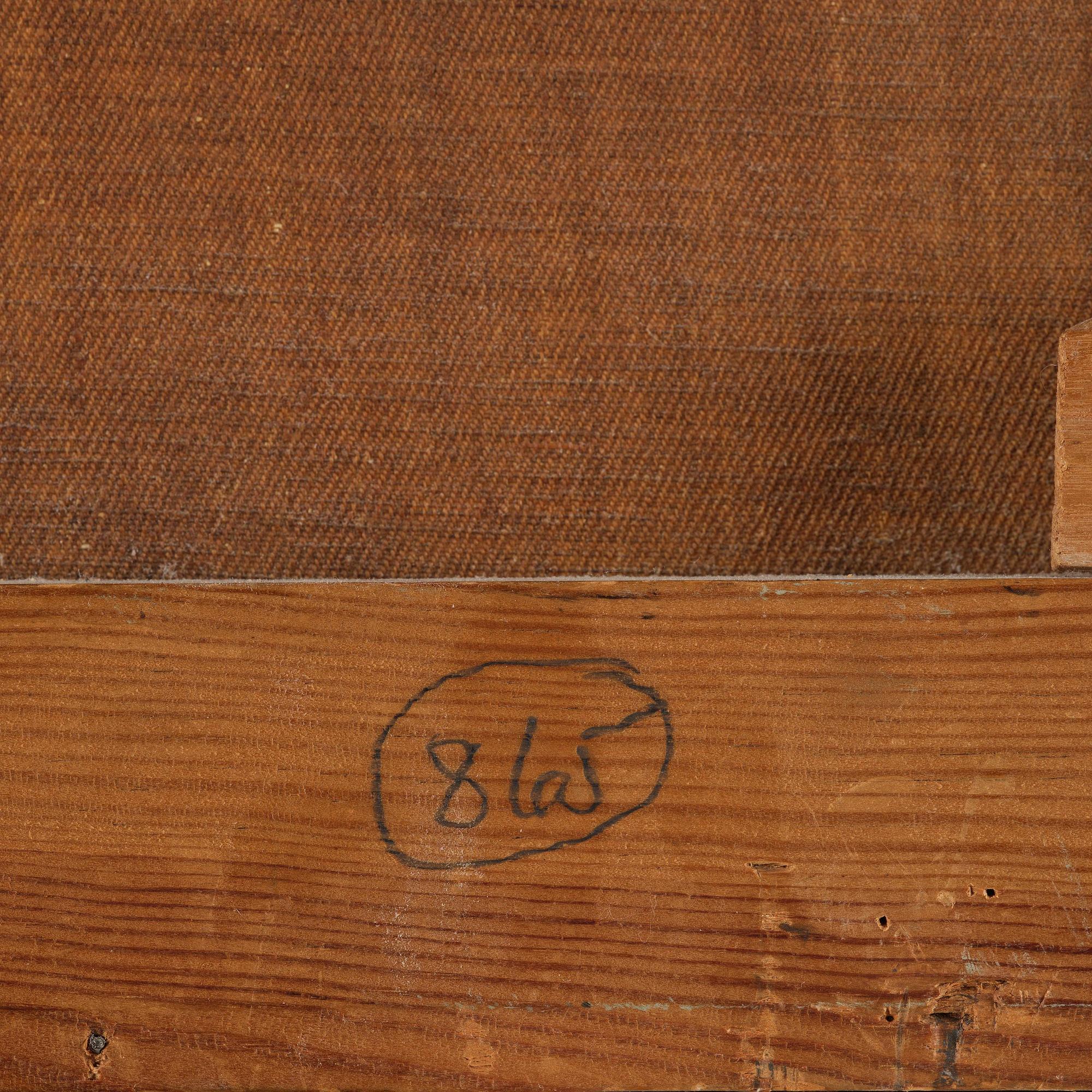
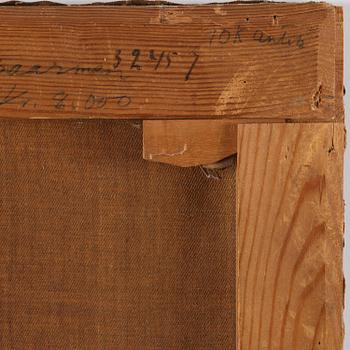
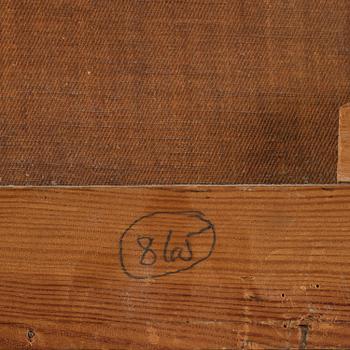
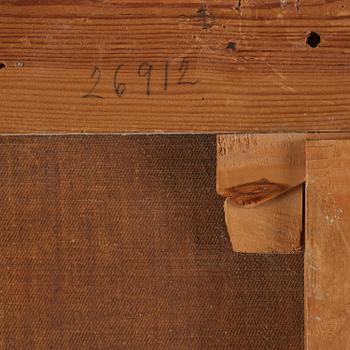
The collection of Art Dealer Gösta Stenman (1888‑1947), Stockholm, inv. no. 865.
Mrs Ellen Husberg, Sweden.
Thence by descent.
Literature
Gotthard Johansson, "Helene Schjerfbecks konst", 1943, illustrated.
H. Ahtela, "Helena Schjerfbeck", 1953, p. 359, no. 241.
More information
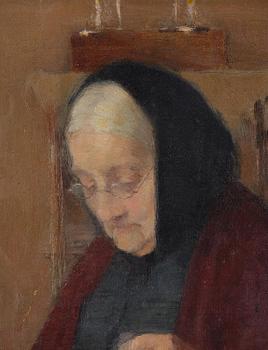
Recently returned from St. Petersburg, Helene Schjerfbeck painted her grandmother's sister sitting by a spinning wheel in Ekenäs. The auction's oil painting depicting Ulrika Baarman at the spinning wheel is the first version of a number of repetitions of the same motif, one of which is in the Turku Art Museum and another was sold at Bukowskis in Helsinki in the autumn of 1997. Schjerfbeck's biographer Einar Reuter (H. Athela) describes how the artist believed that with this motif she would finally convey a sense of homeliness that the audience would appreciate.
With a shimmer of Nordic light over the interior, the focus is on the woman's concentrated work. Just as in the case of Anna Ancher, a woman is captured in the safe environment of the home. In a quiet and calm everyday action, in a moment that stands still, there is movement in the spinning of the yarn and the soft breath of the wind in the fabric of the curtain. Schjerfbeck's works from this period, genre motifs and interior scenes with people, are depicted with warmth and precision. Another work from 1893 is "By the Cradle," executed in Kangasala during the summer when she travelled there with her friends Maria Wiik and Ada Thilén.
Around the time of the creation of "Dam vid spinnrocken", Helene Schjerfbeck was in a decisive phase of her artistic career. After several years of study and work abroad – not least in Paris and Brittany – her style began to undergo a noticeable change. She moved away from the strictly realistic and historical painting that had characterised her early production, towards a more simplified, personal, and atmospheric expression.
During the 1880s, Schjerfbeck had been strongly influenced by French realism and plein air painting. Works such as "The Convalescent" (1888) demonstrate her technical skill and sensitivity to light and everyday subjects. But around the beginning of the 1890s, something began to shift. Her brushwork became freer, the forms more reduced, and the colour palette more subdued. It was as if she was seeking a deeper essence rather than an exact representation of reality. With a sparse visual language that almost hints at the breakthrough of modernism, this period marks the beginning of the development that would later make her one of the most significant artists in the Nordic region.
For condition report contact specialist