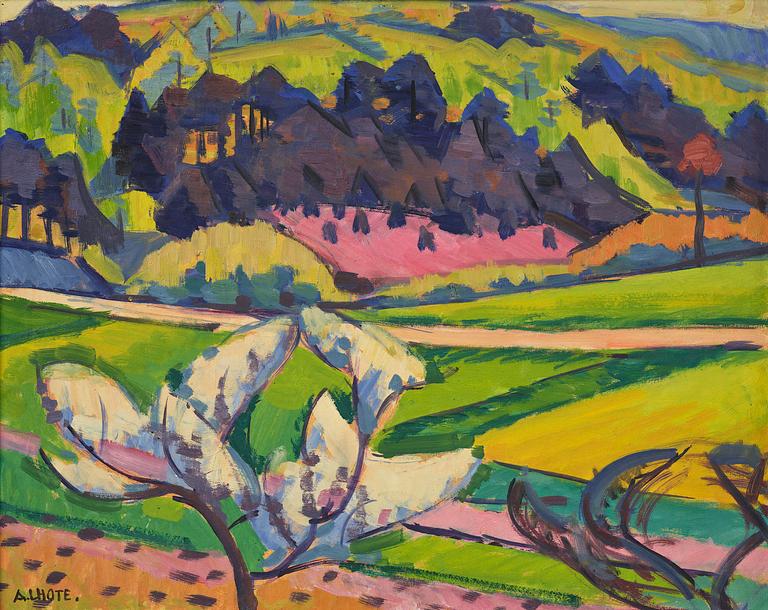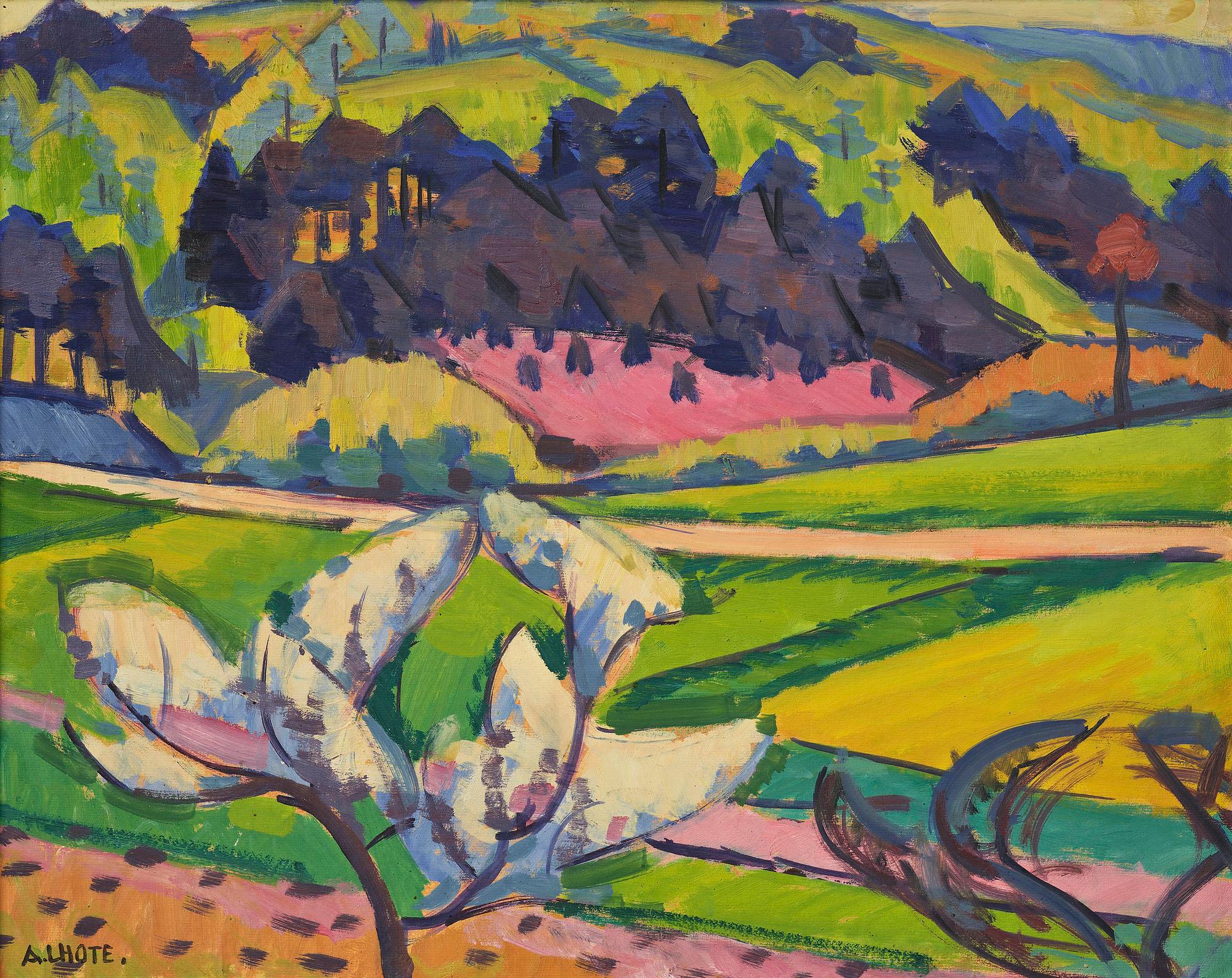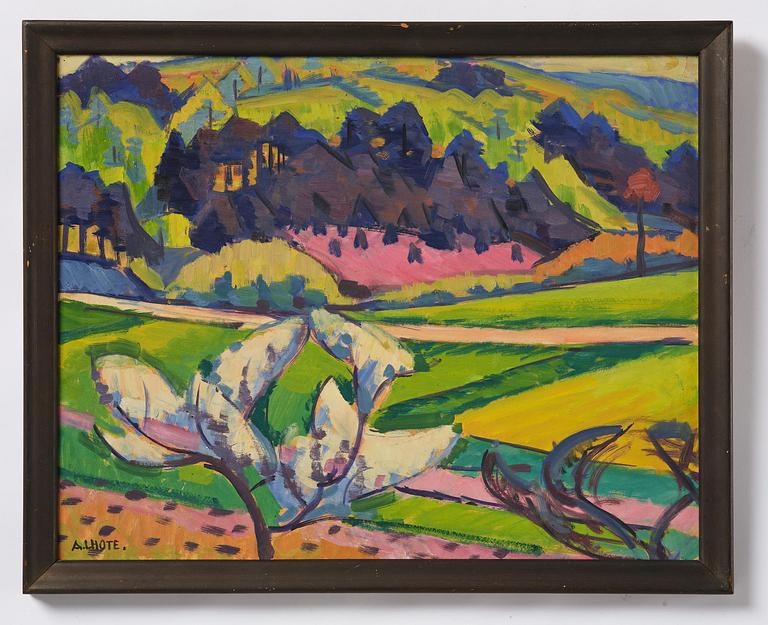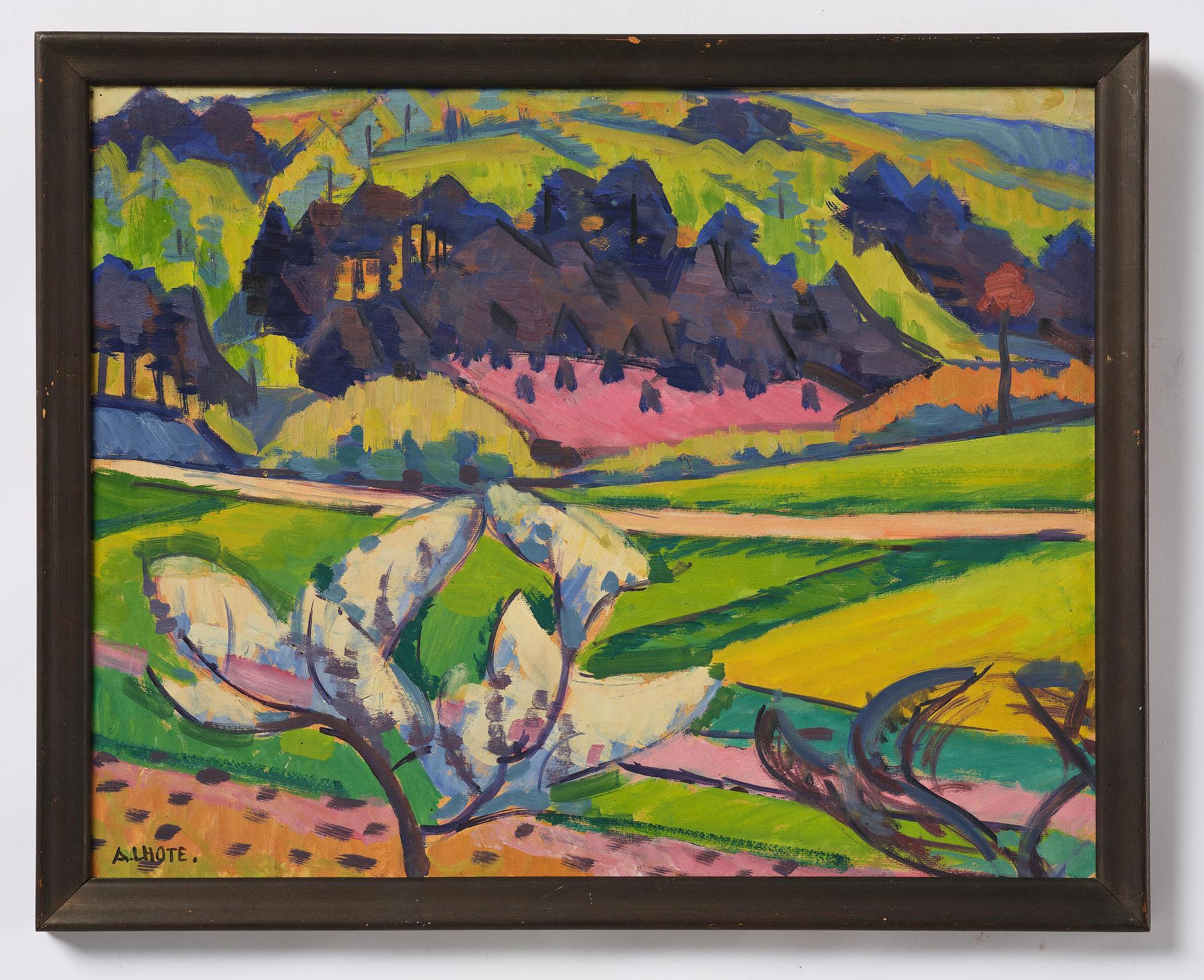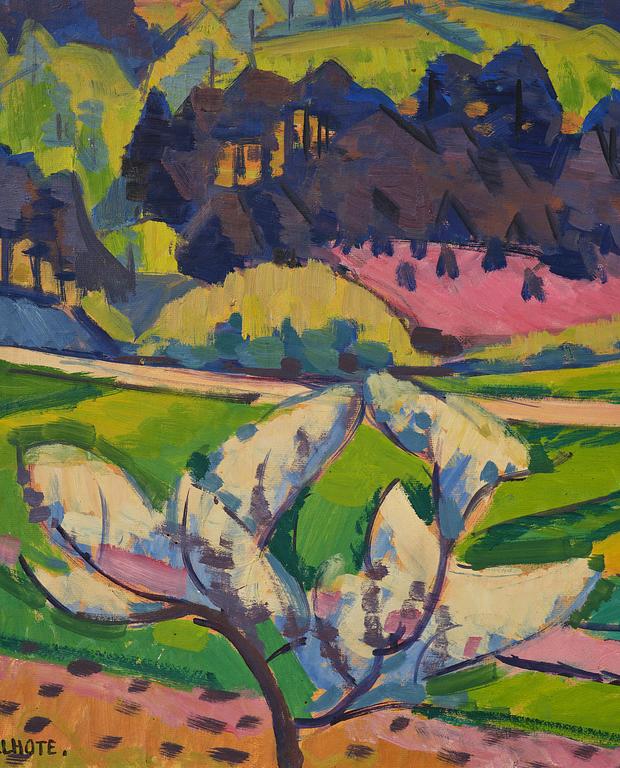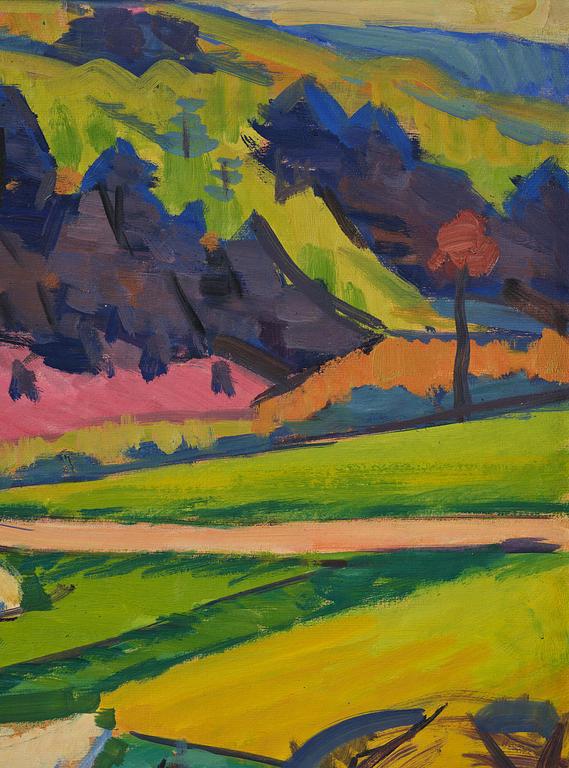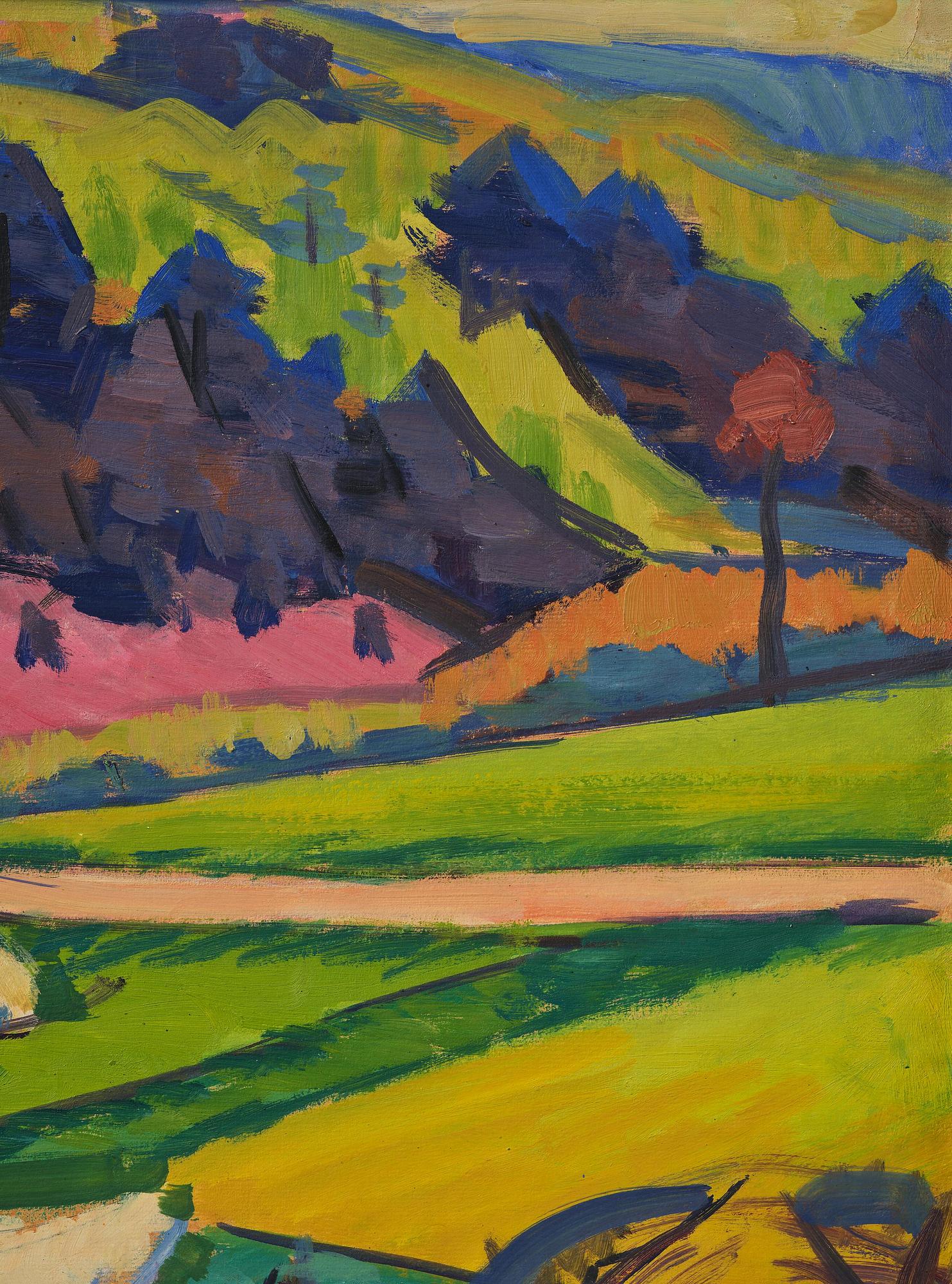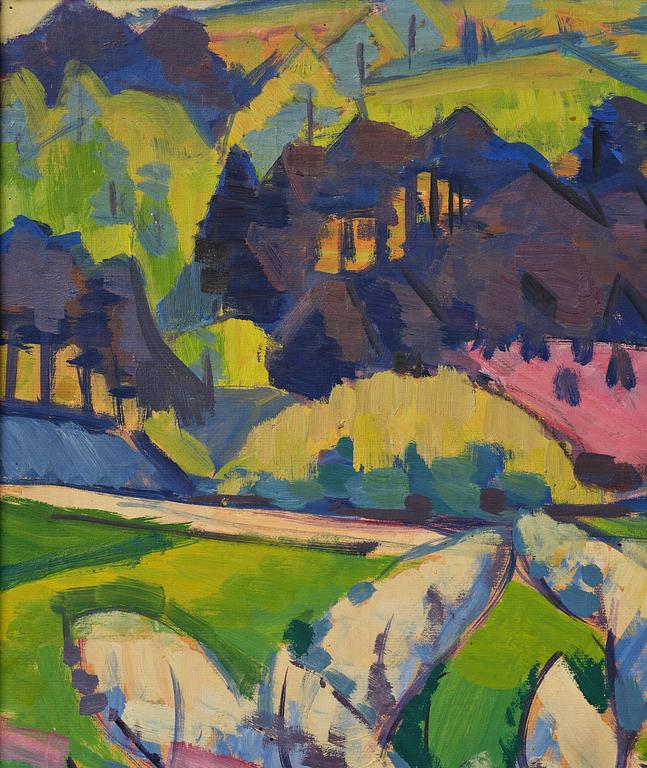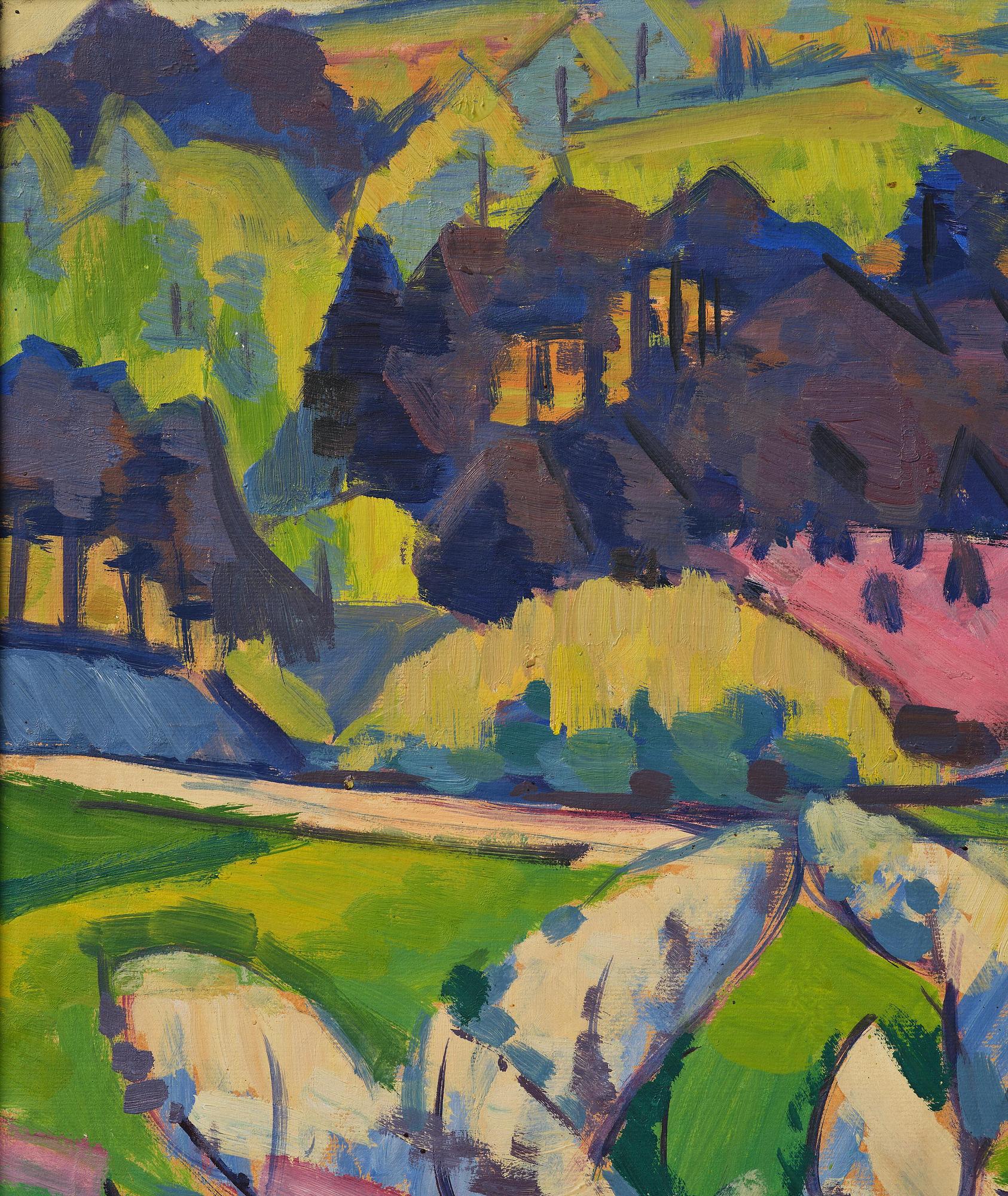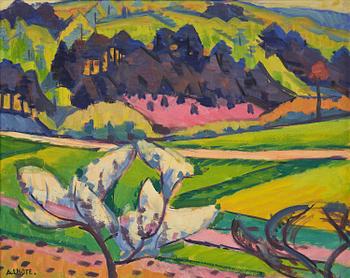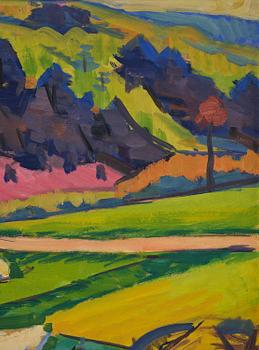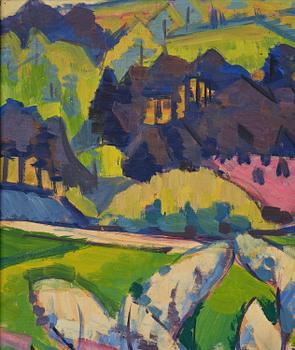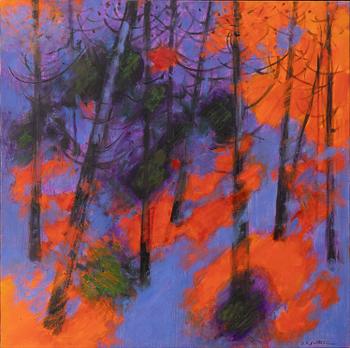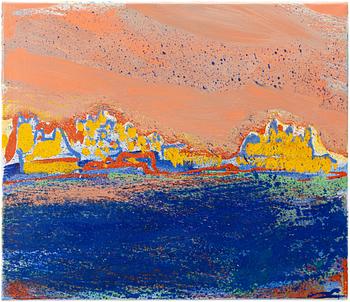
Paysage champêtre
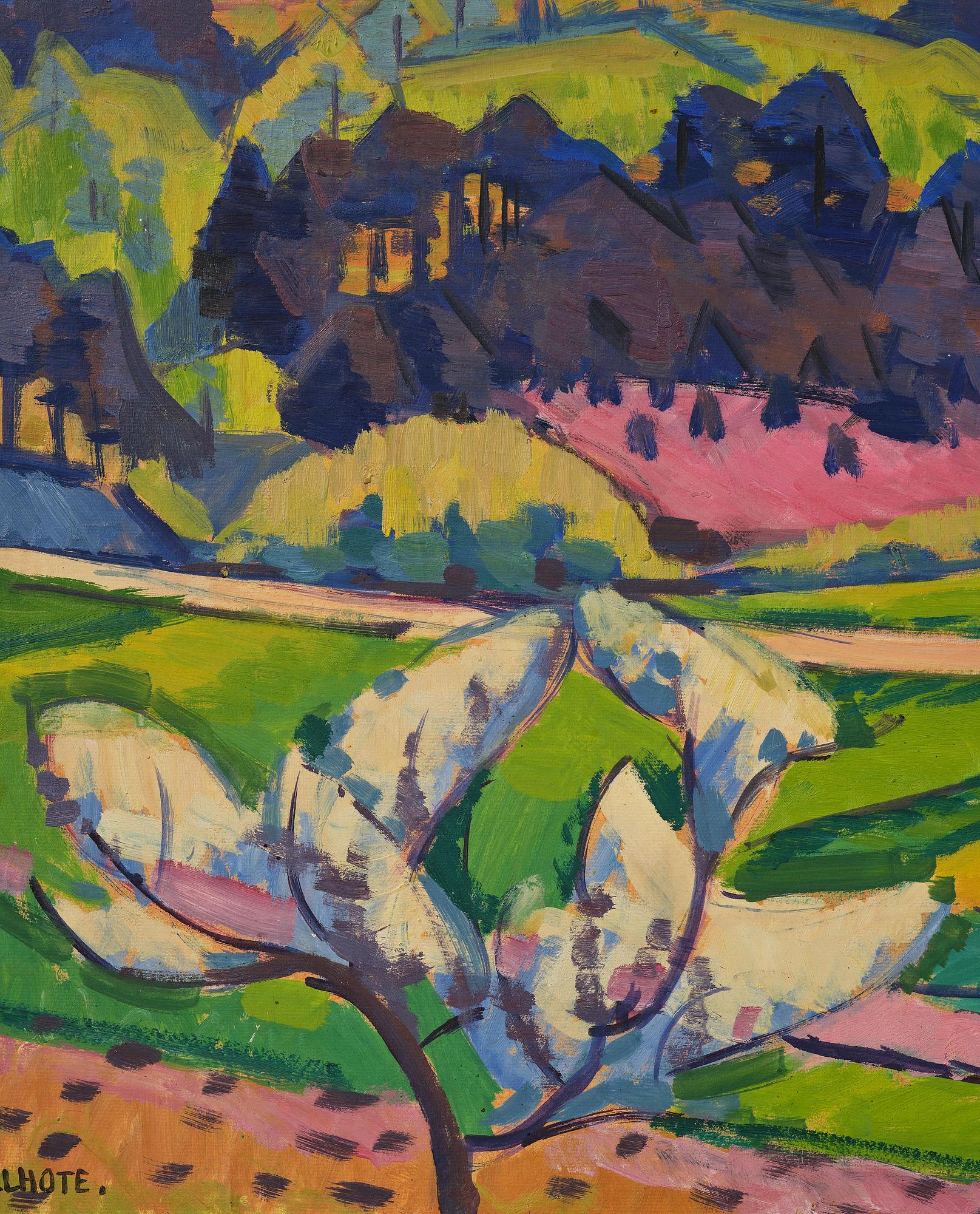
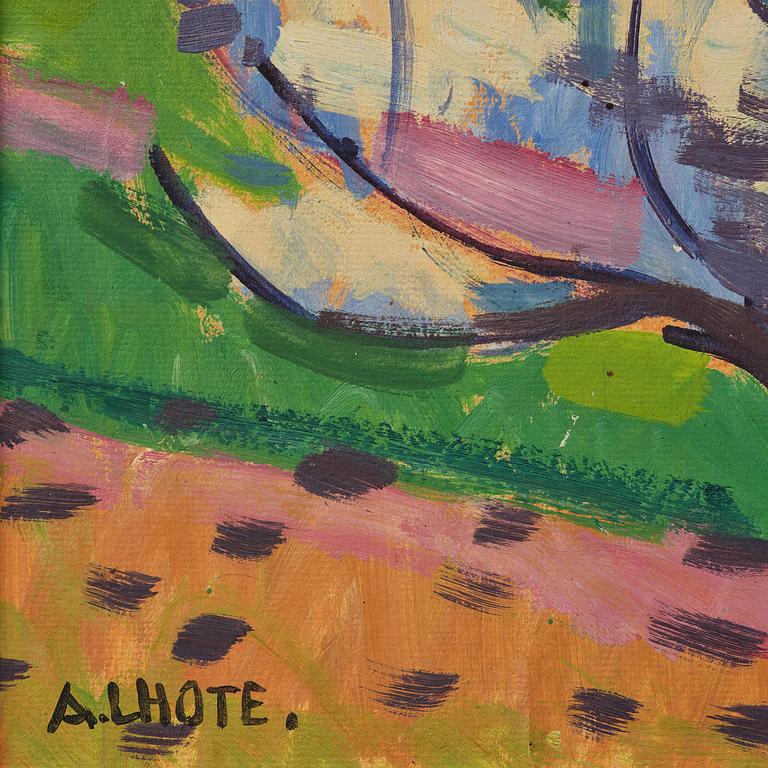
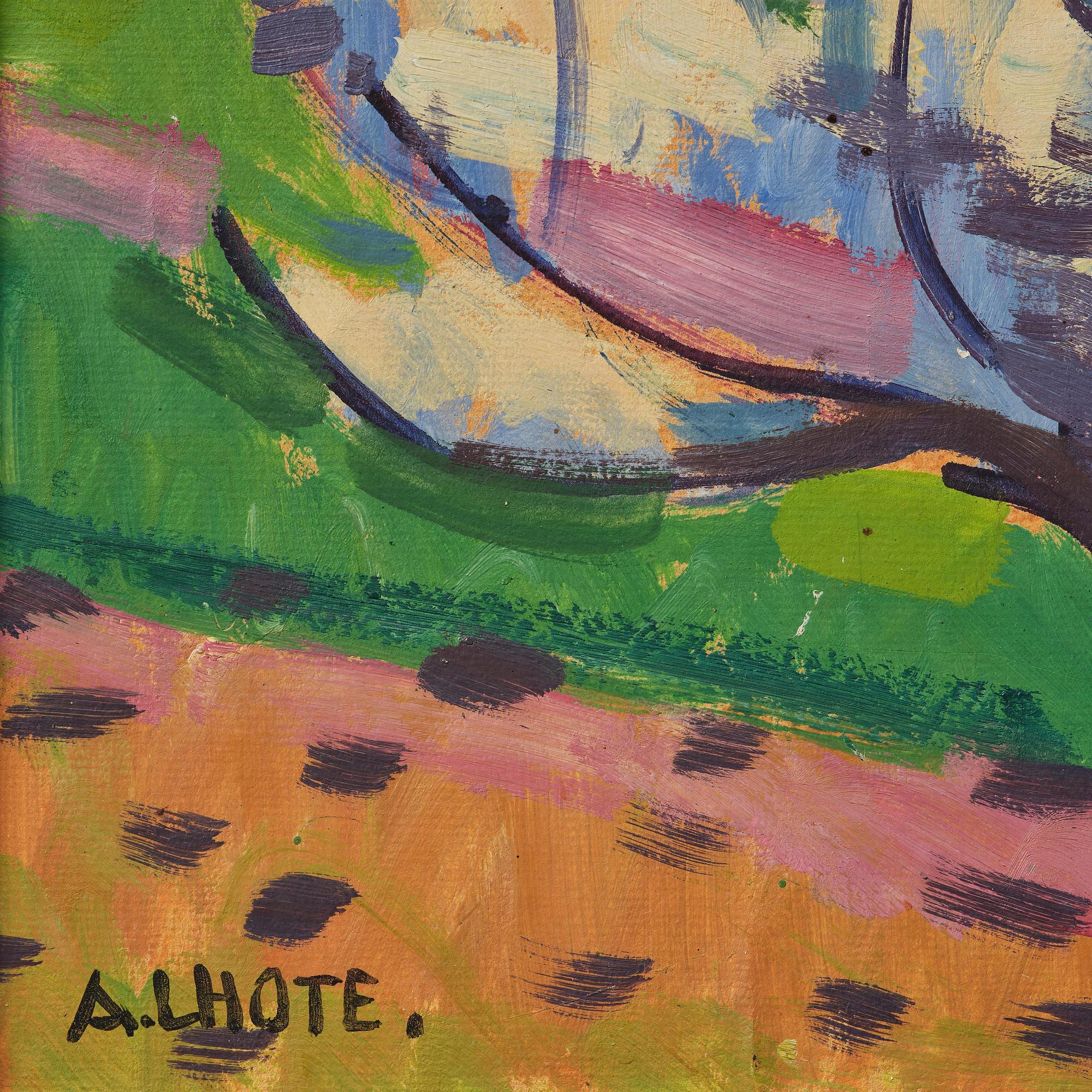
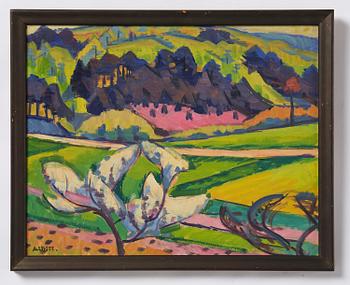
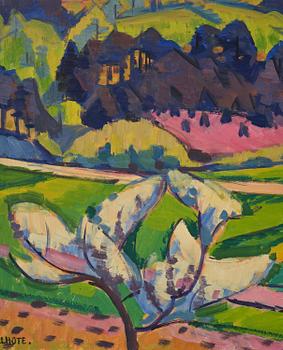
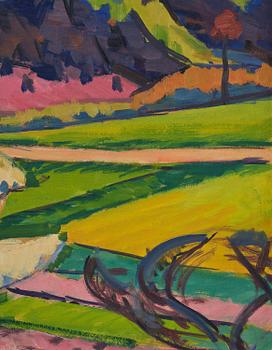
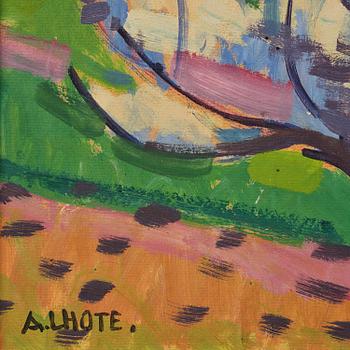
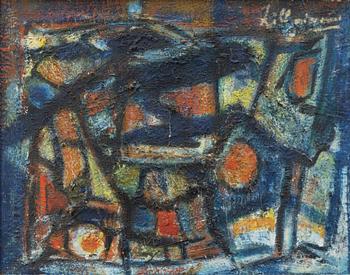
Signed A.Lhote. Executed circa 1908-1909. Oil on paper laid down on cardboard 48 x 60 cm. Bukowskis would like to thank Madame Dominique Bermann Martin for verification and information regarding the current catalog number, the work will be included in Catalogue Raisonné.
Provenance
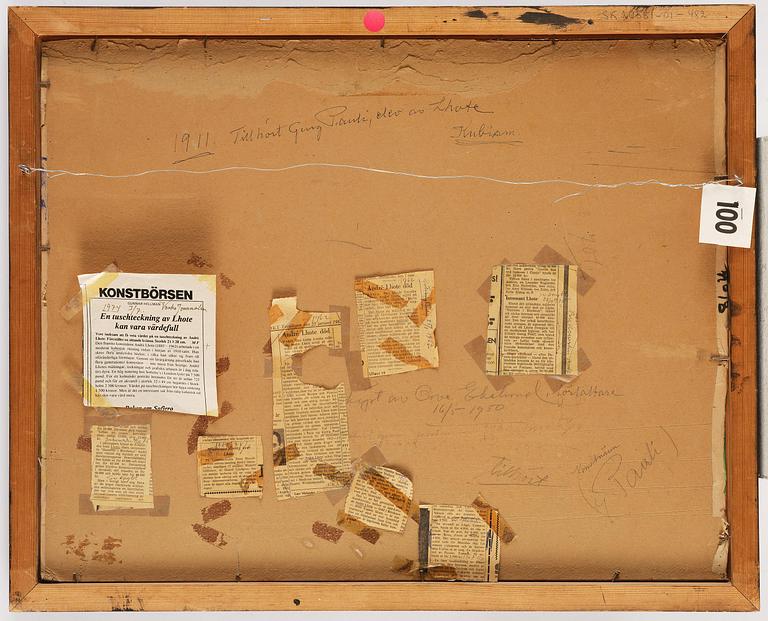
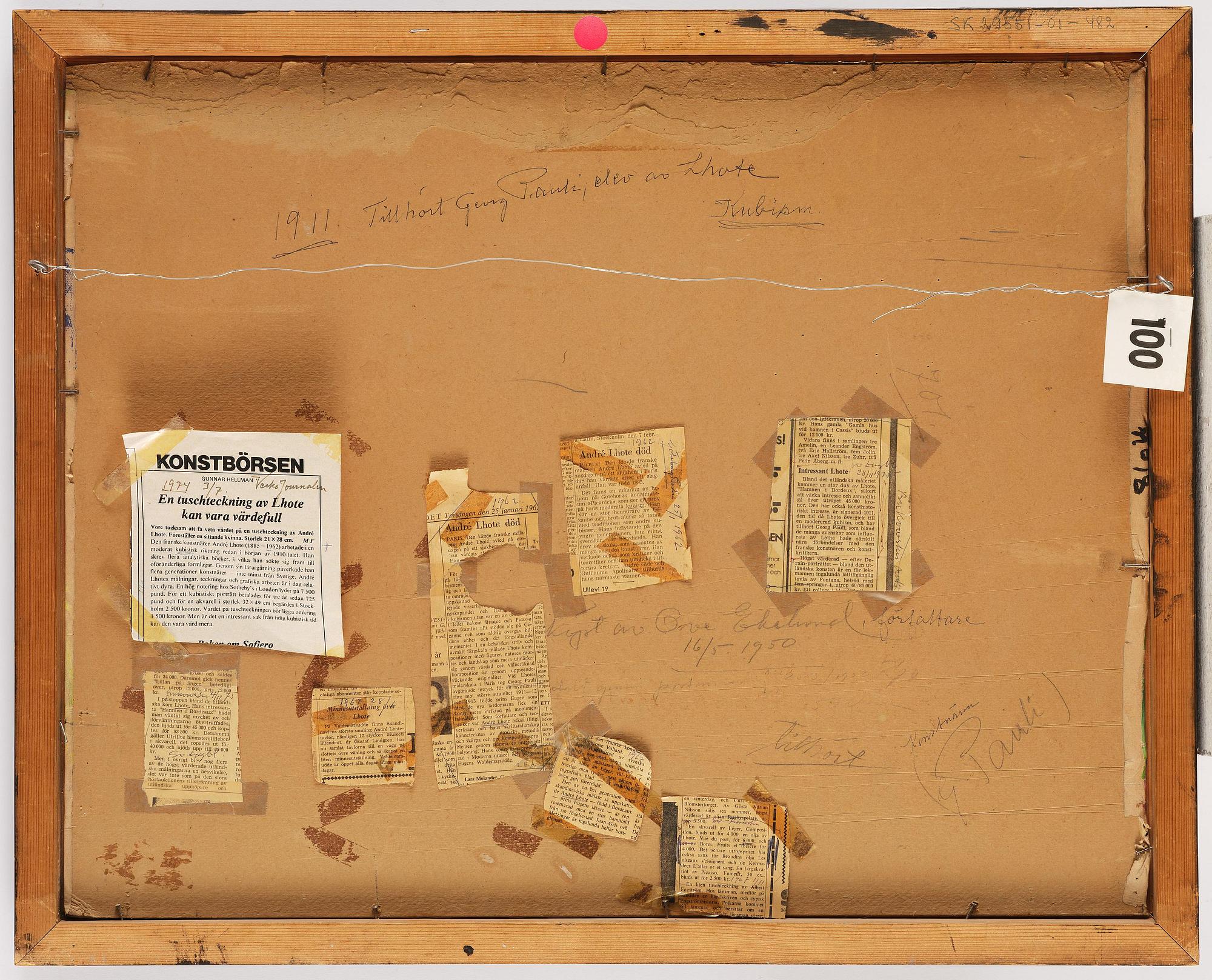
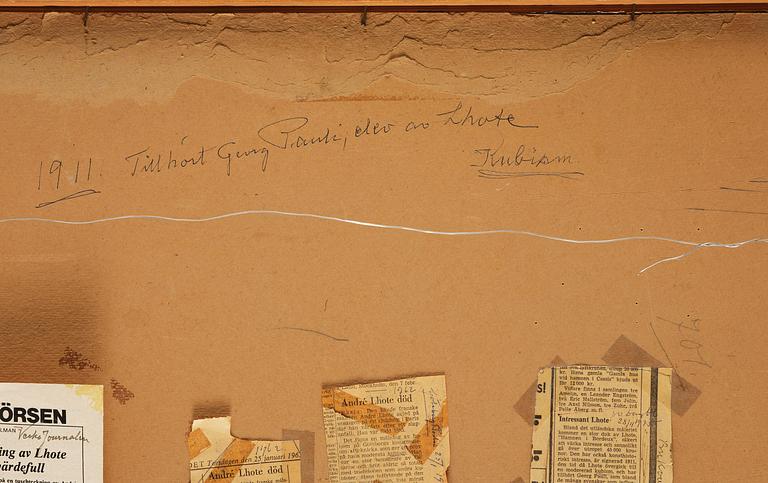
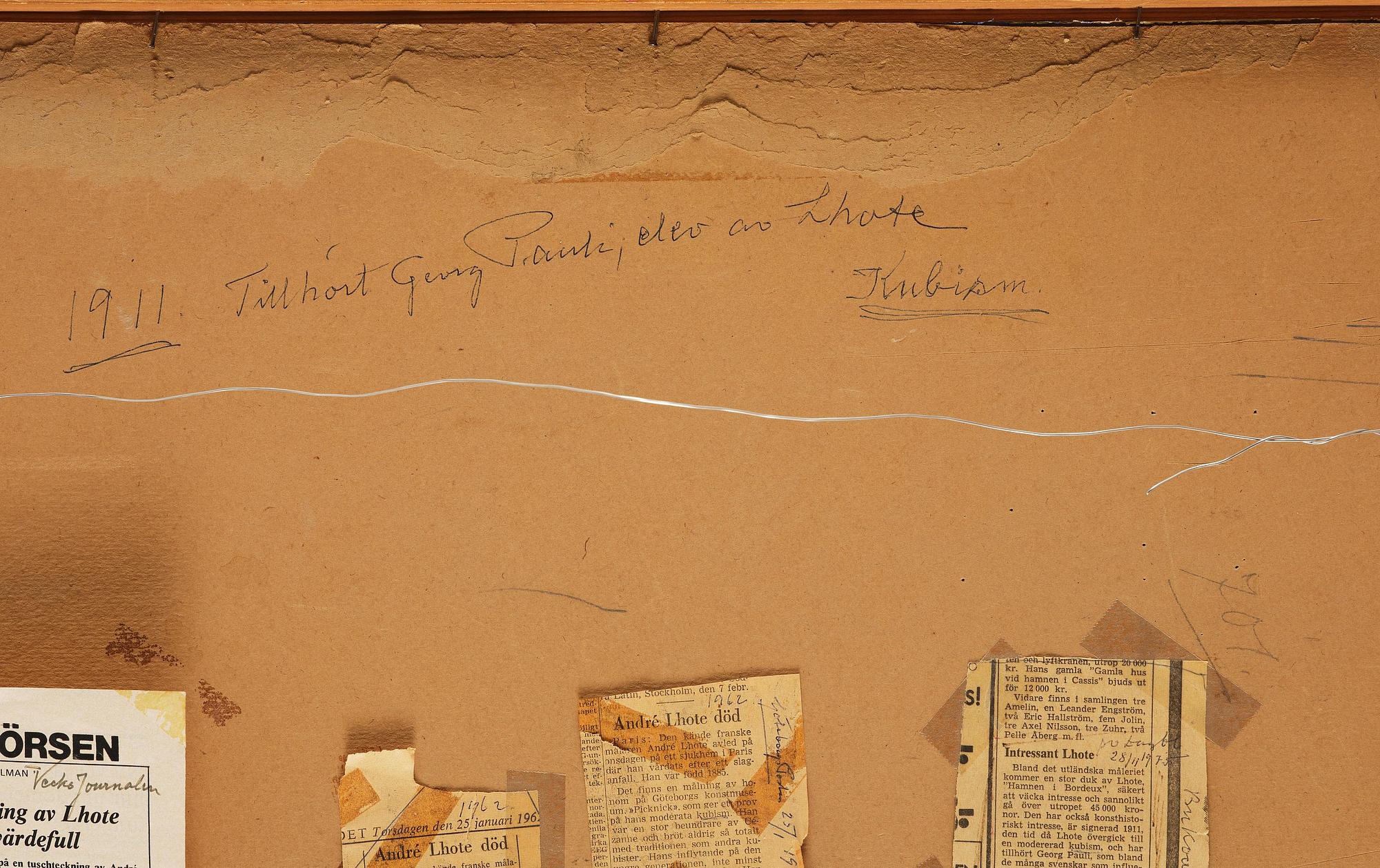
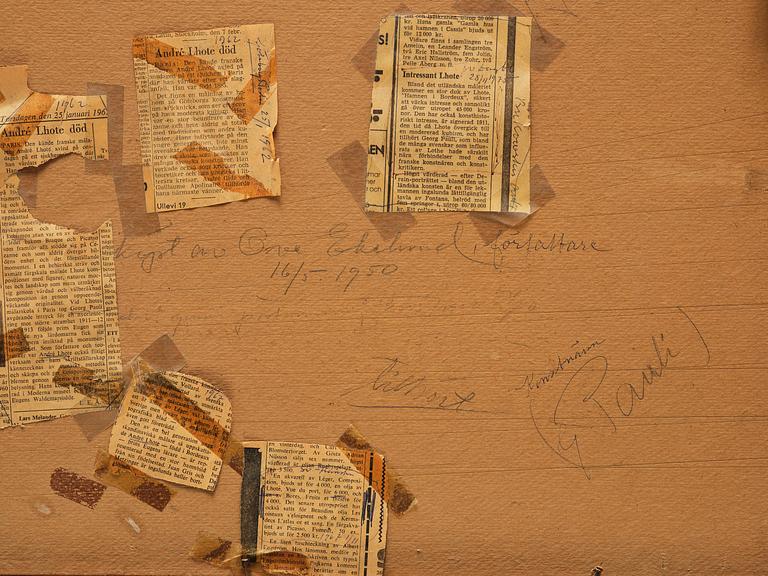
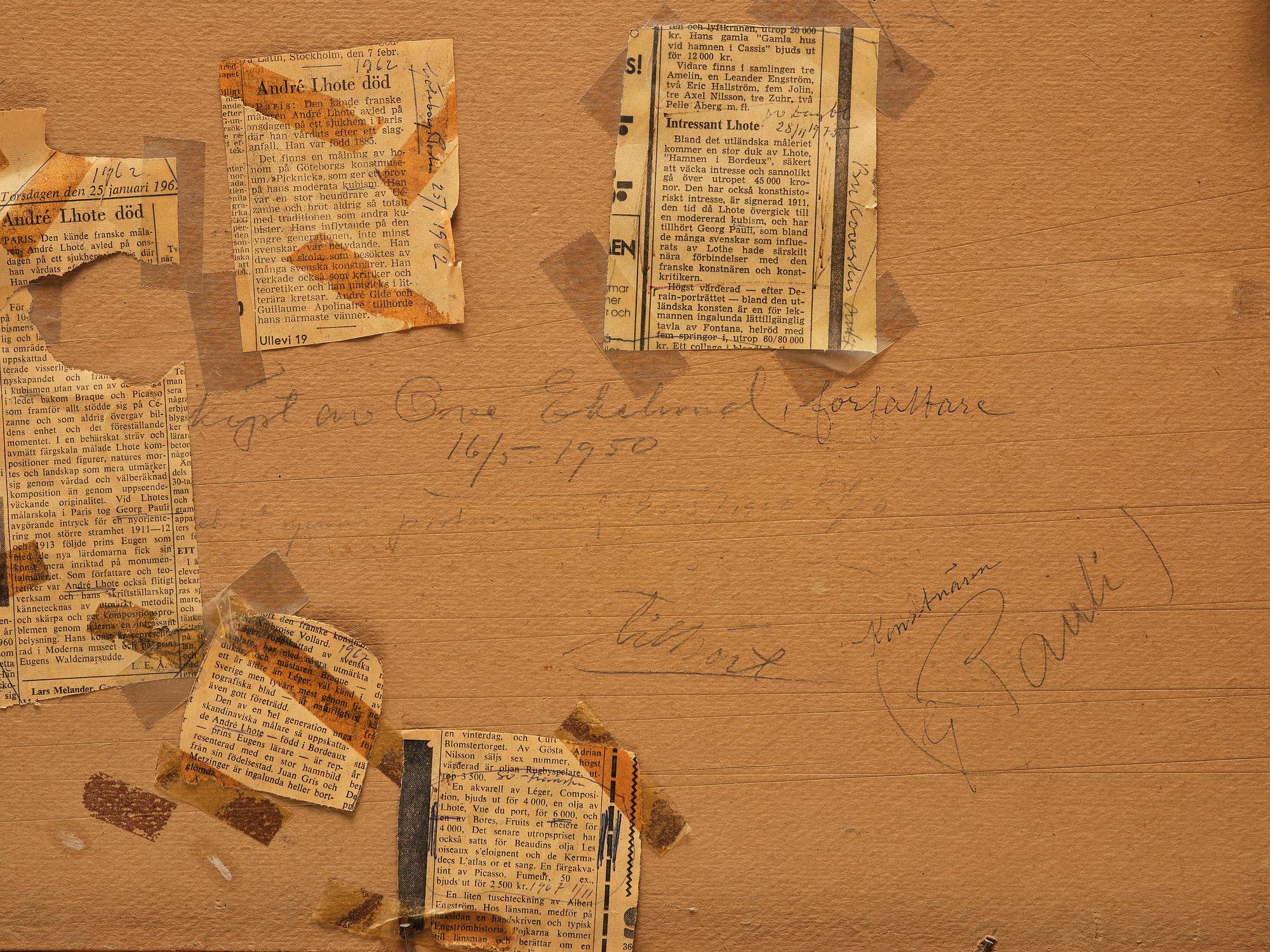
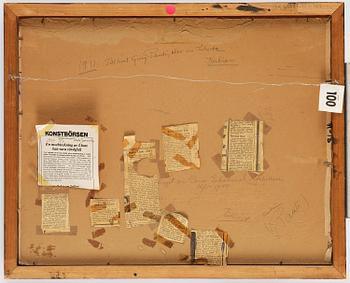
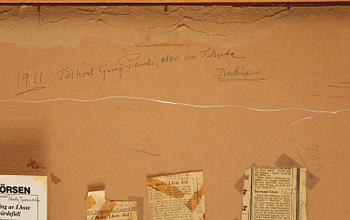
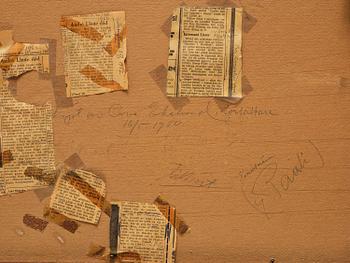
According to the inscription on the reverse, it belonged to the artist Georg Pauli (1855-1935), 1911, thereafter purchased by the author Ove Ekenlund (1894-1961) on 16 May 1950.
Private Collection, Sweden.
Bukowski Auktioner, Internationella Höstauktionen 482, 28 November 1991, cat. no. 100.
Private Collection, Sweden.
More information
Originally inspired by traditional masters such as Leonardo da Vinci, Jean-Auguste-Dominique Ingres, and Eugène Delacroix, the French artist André Lhote encountered his greatest source of inspiration during his first visit to Paris in 1907. At the Salon d’Automne, Paul Cézanne's vibrant works had just been presented to the public, and the young André Lhote was immediately captivated by the colourful and almost luminous compositions. Today, Cézanne is regarded as one of the most influential Post-Impressionist painters, serving as a bridge between the late Impressionism of the 19th century and the early Cubism of the 20th century. André Lhote succeeded in uniting these movements by combining the angular forms of Cubism with the bright colours of Post-Impressionism. Both as an artist and a significant art critic, André Lhote described his own painting as "ambient cubism" and explained: "To use colour well is as difficult as for a fish to go from water to air on land." The work in question from 1908–09 previously belonged to the Swedish artist Georg Pauli, who became acquainted with Lhote in 1912 and became a close friend of André Lhote. Pauli was the one who introduced Prince Eugen to Lhote. Lhote and Pauli painted extensively together, and it was Pauli who organised the first Lhote exhibitions in Sweden.
Born in 1885 in Bordeaux, France, André Lhote learned wood carving from the age of 12 and trained as a sculptor before enrolling at the École des Beaux-Arts in Bordeaux. He painted in his spare time, influenced by Paul Gauguin and Cézanne, and eventually moved to Paris. In the early 1900s, Paris was thriving with life and attracted artists from around the world who sought to educate themselves and draw inspiration from the city's many prominent galleries and museums. Lhote's artistic exploration eventually led him to Cubism, a style he interpreted in his own way, inspired by Roman and primitive art. Unlike contemporary artists such as Pablo Picasso and Georges Braque, who fully devoted themselves to the fragmented forms of Cubism, Lhote retained elements of representational art and classicism in his paintings and continued to do so even in his later works.
For condition report contact specialist

Covered by droit de suite
Image rights
The artworks in this database are protected by copyright and may not be reproduced without the permission of the rights holders. The artworks are reproduced in this database with a license from Bildupphovsrätt.