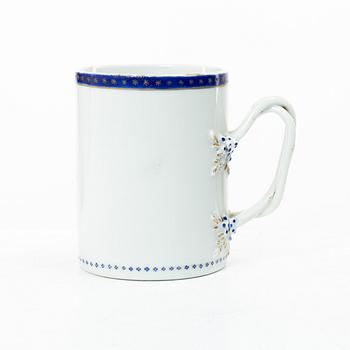
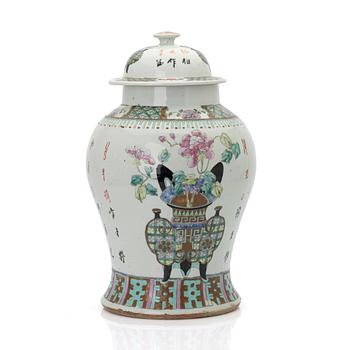
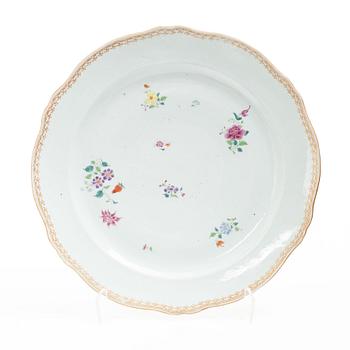
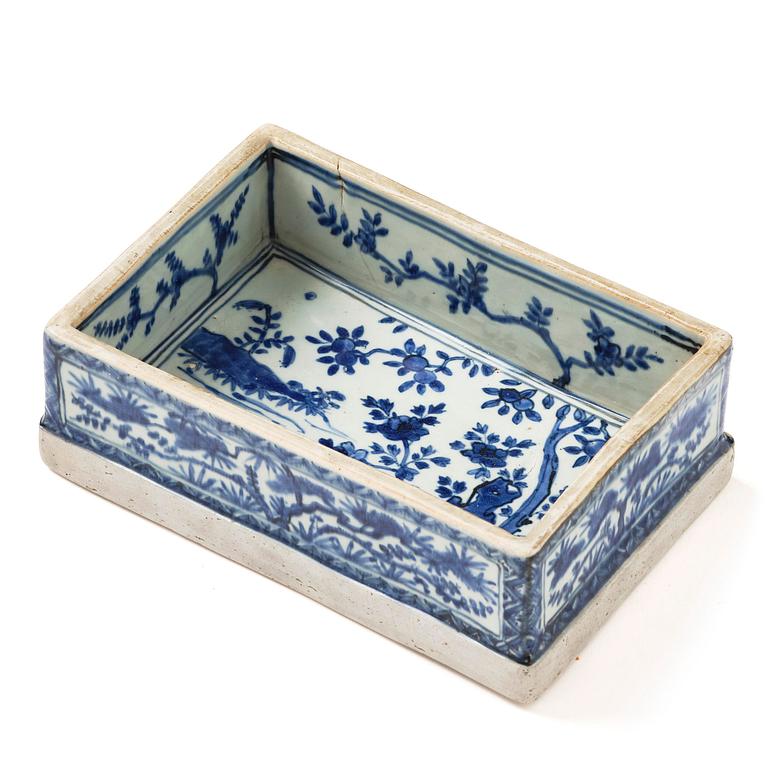
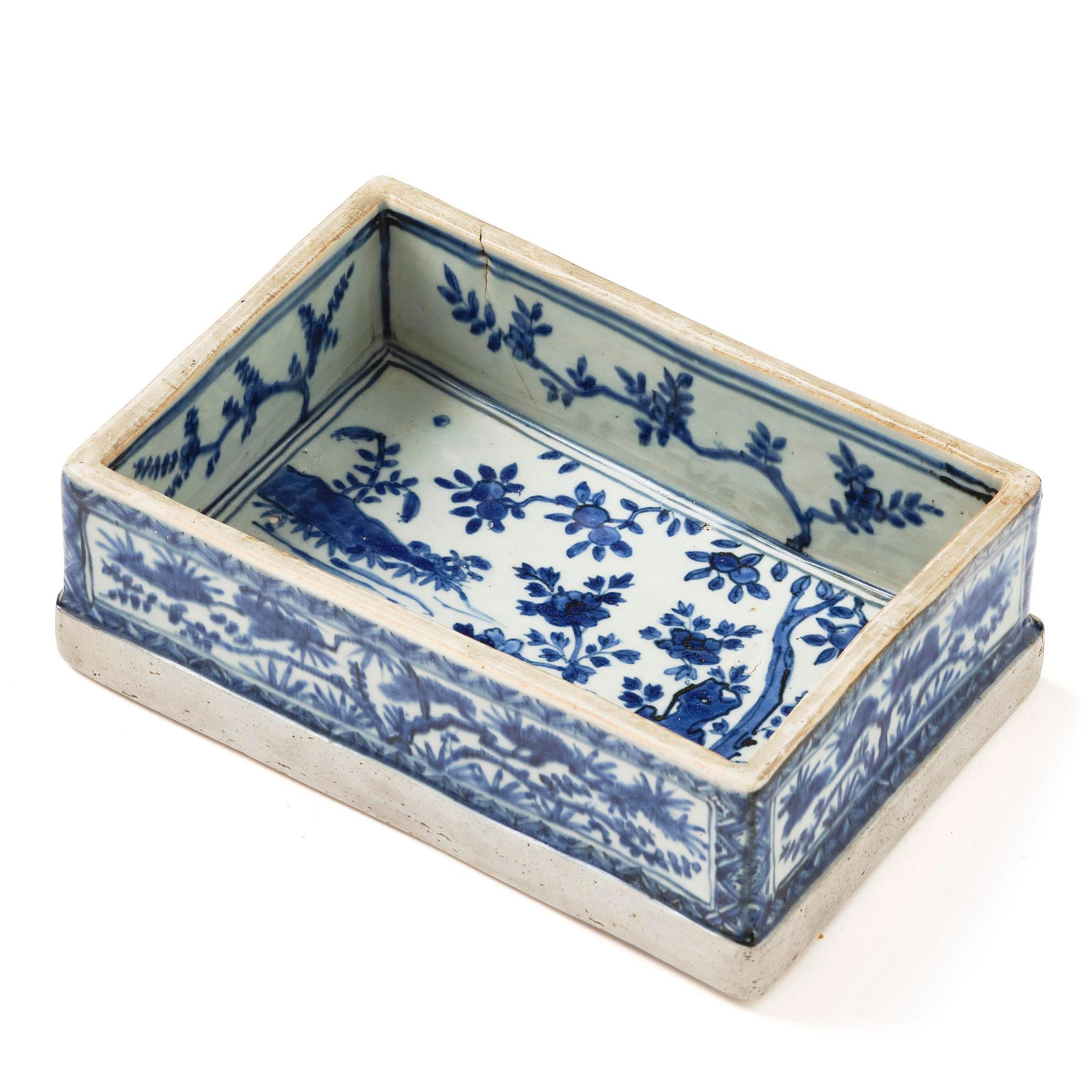
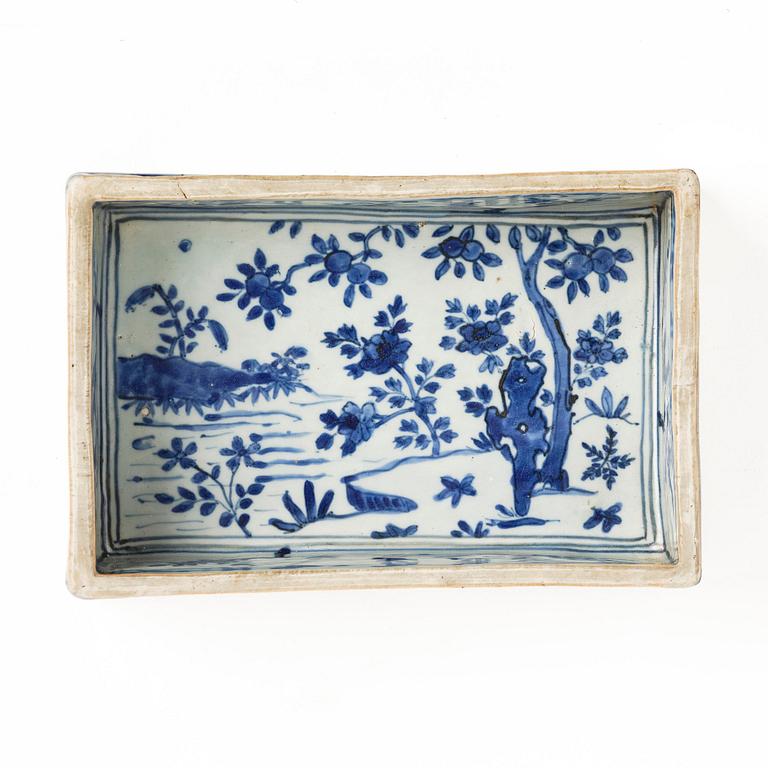
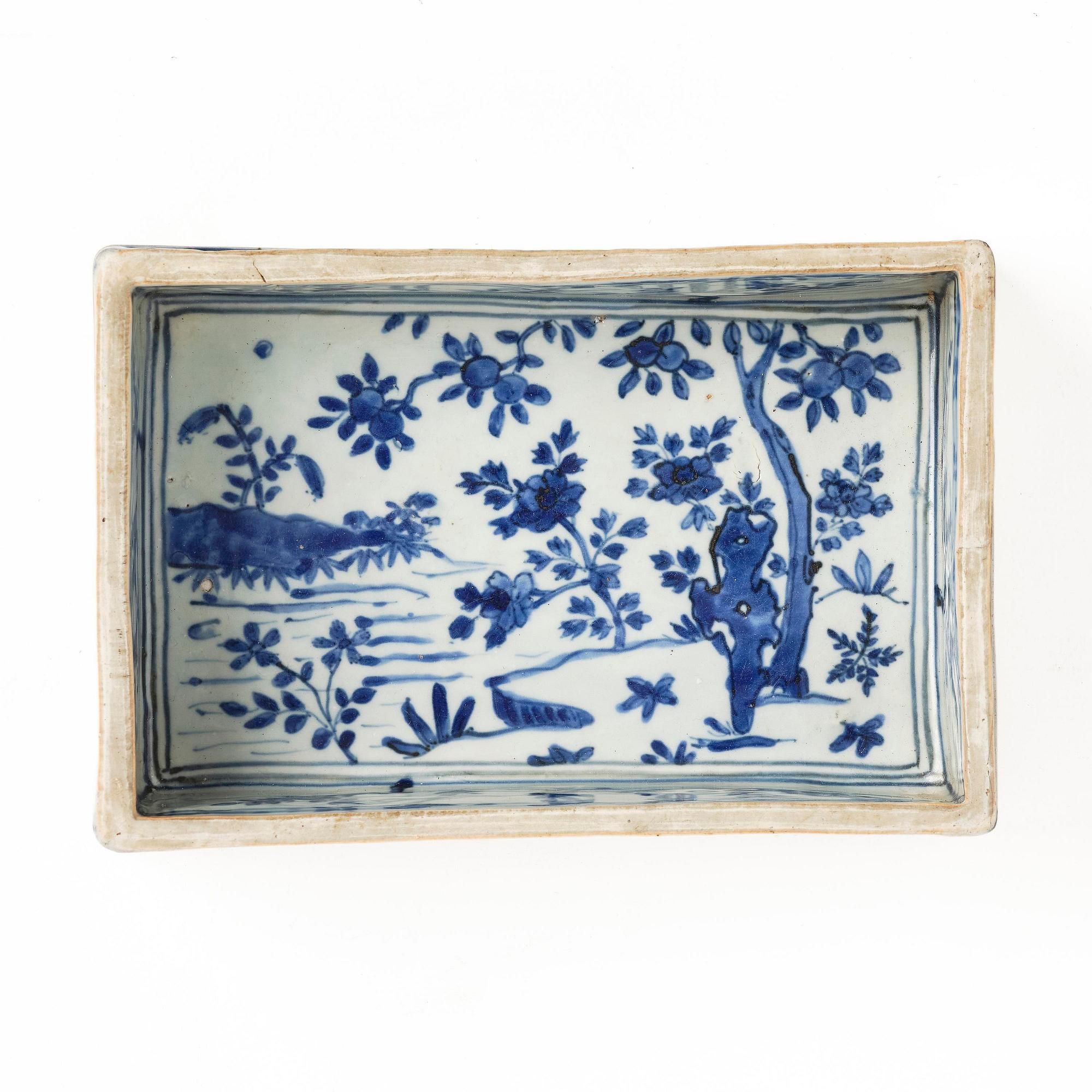
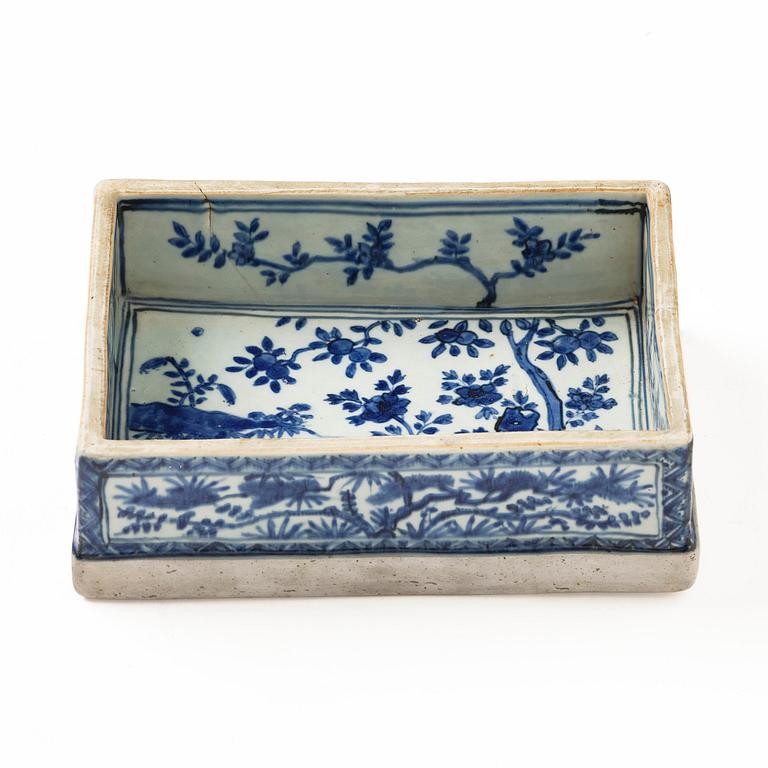
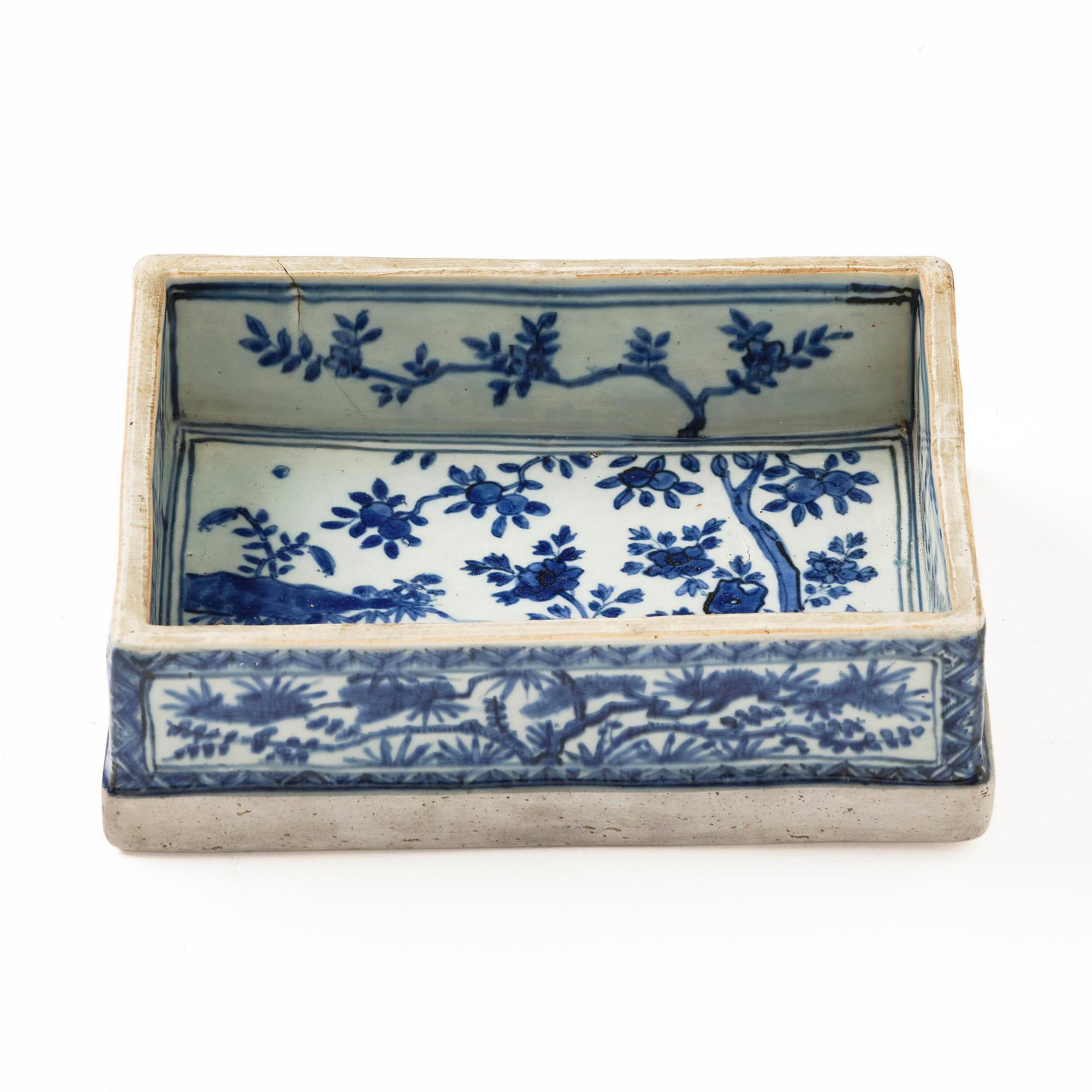
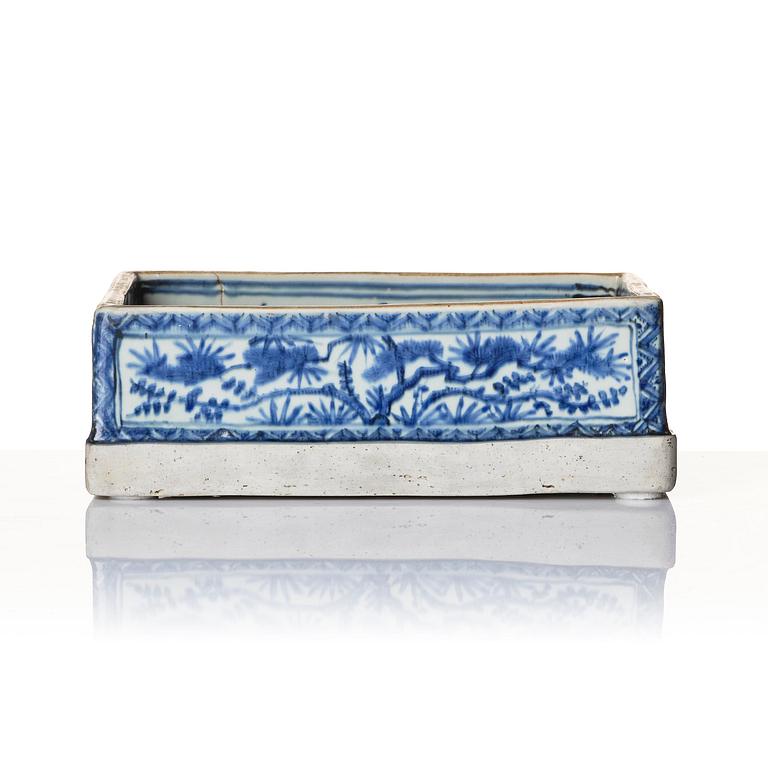
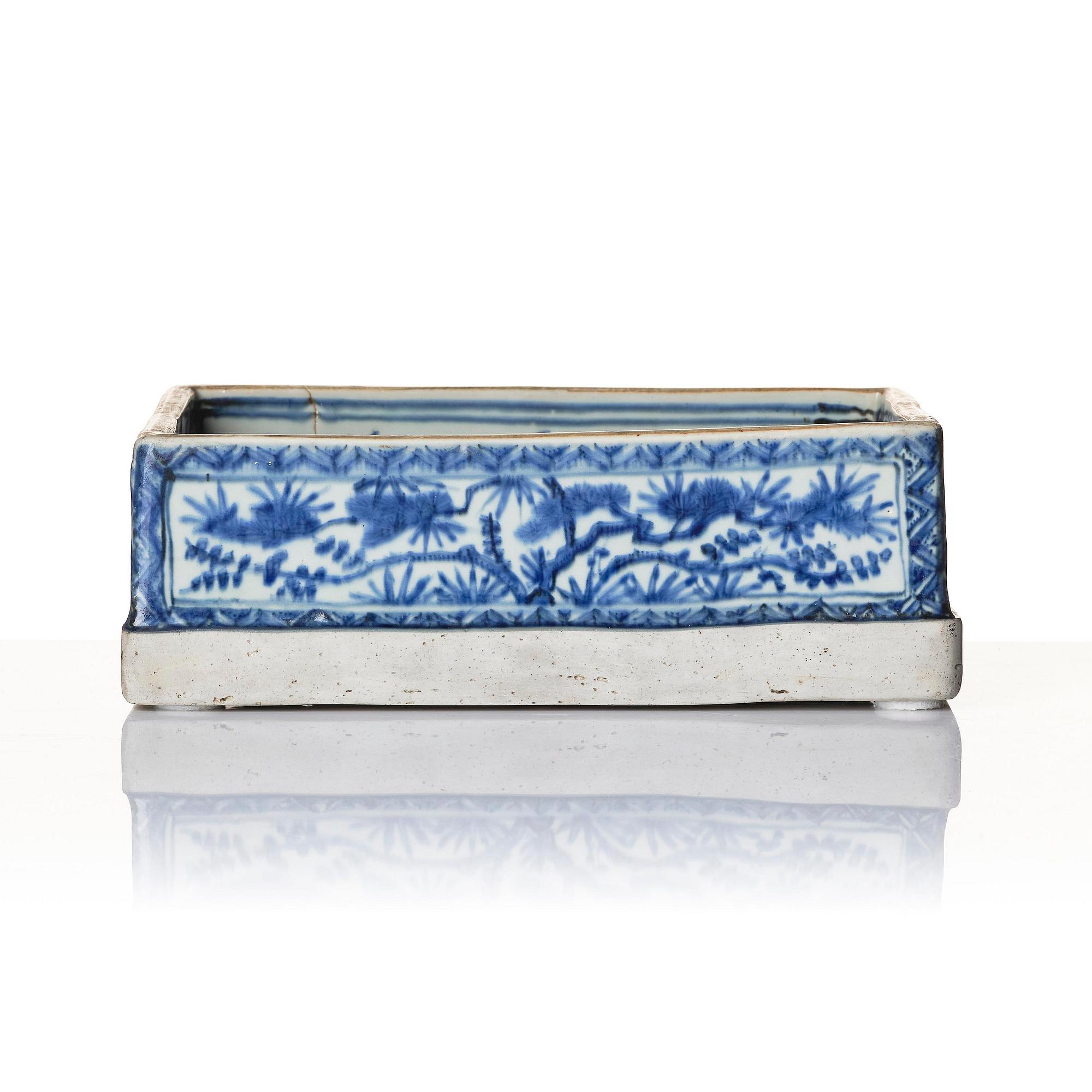
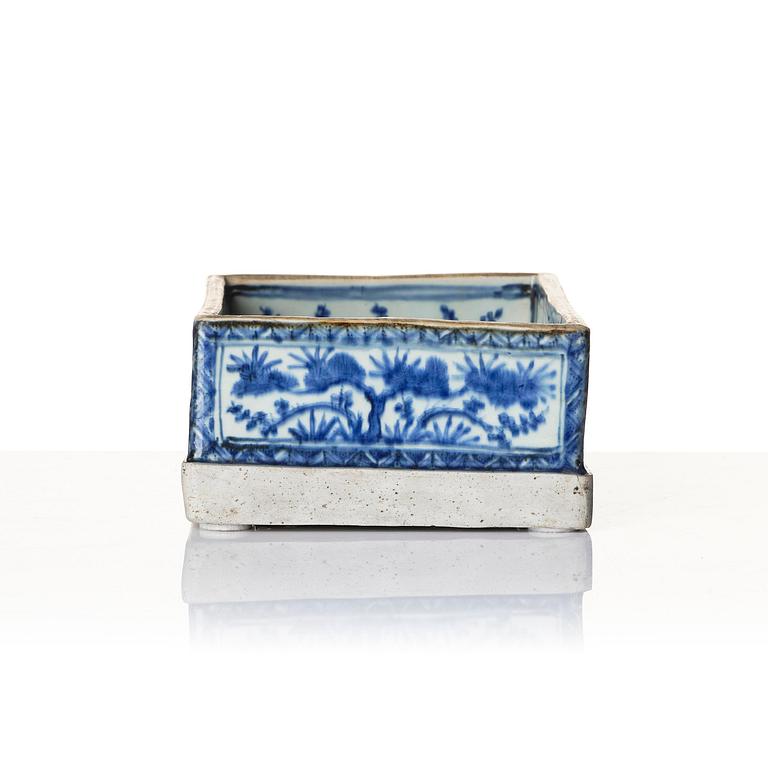
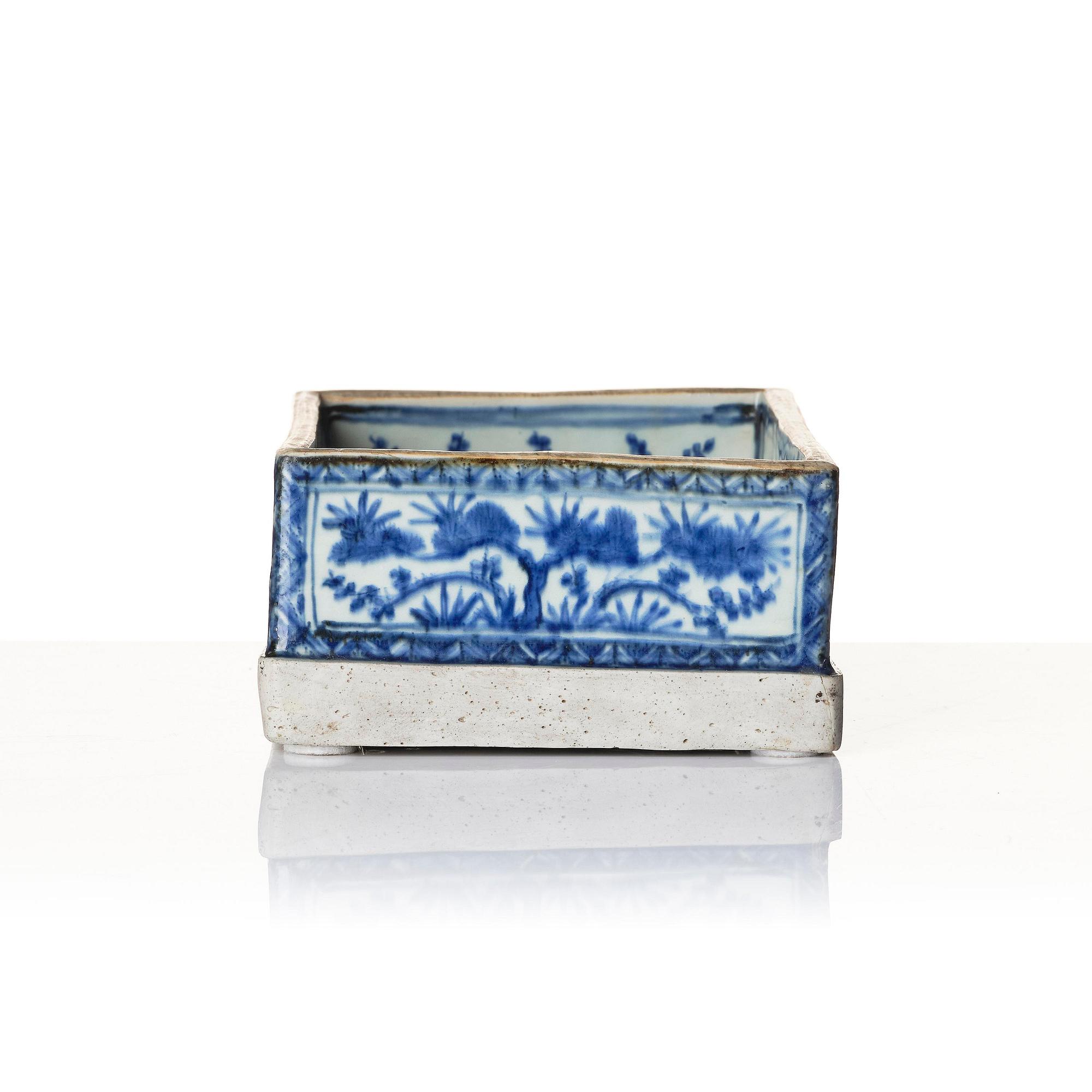
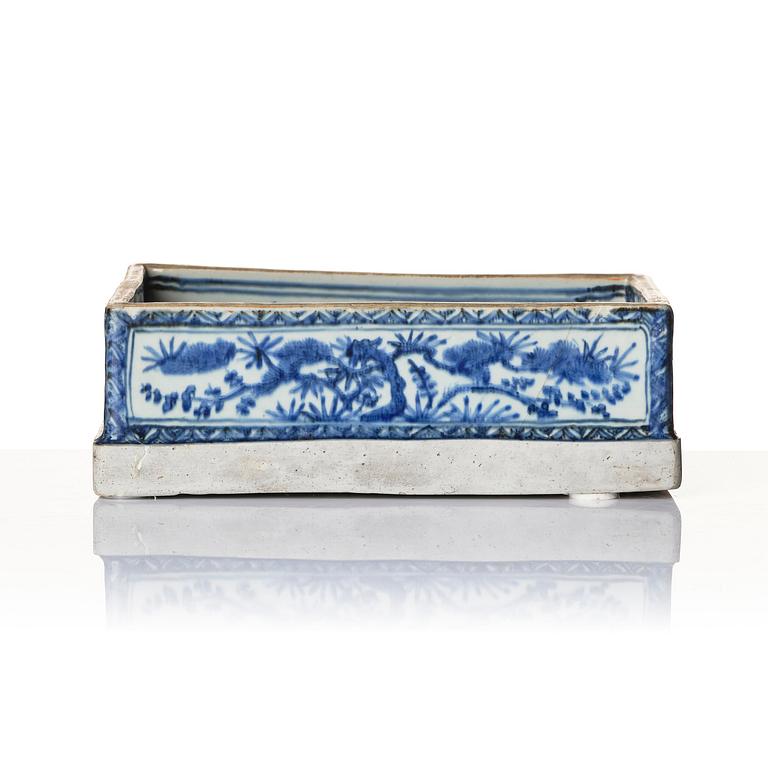
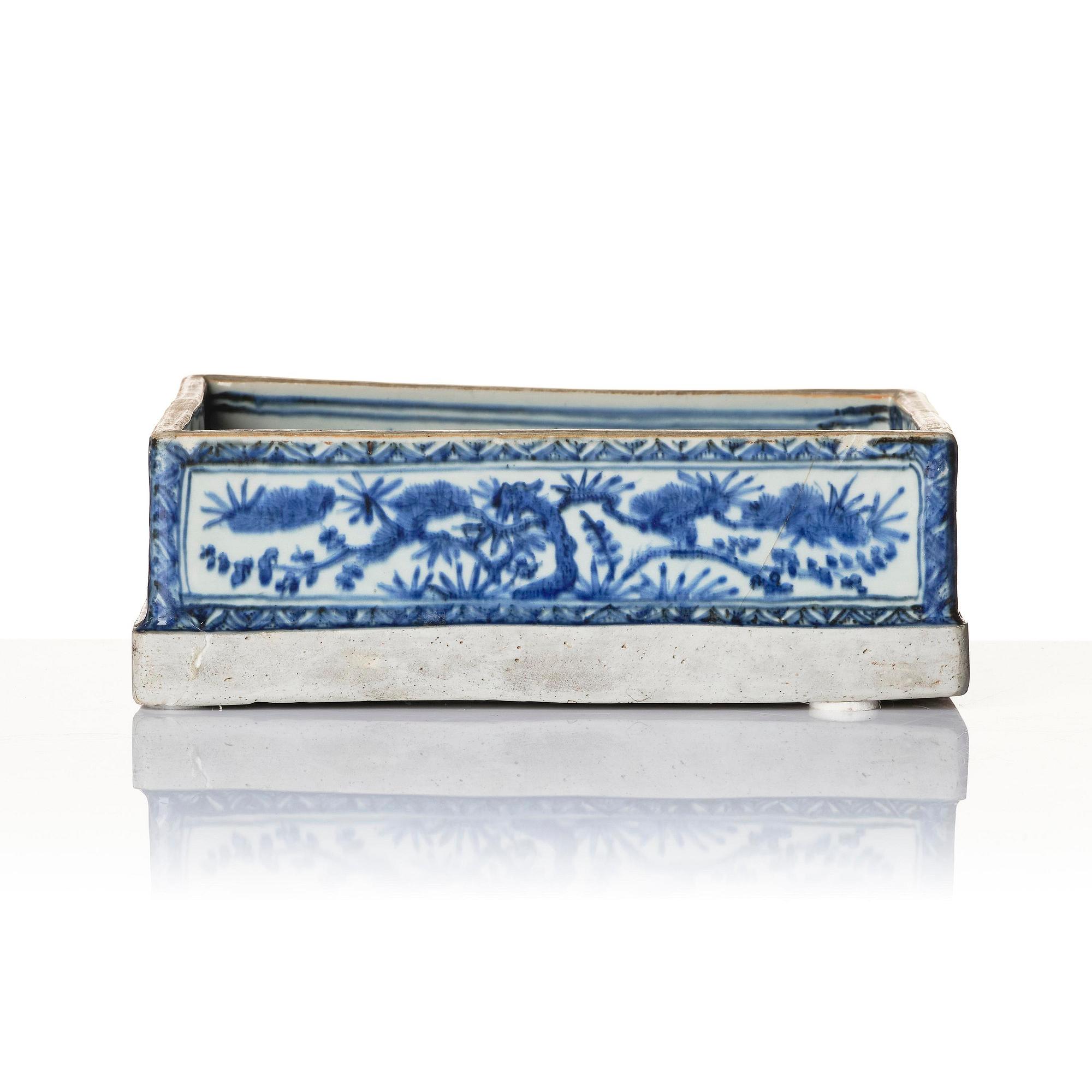
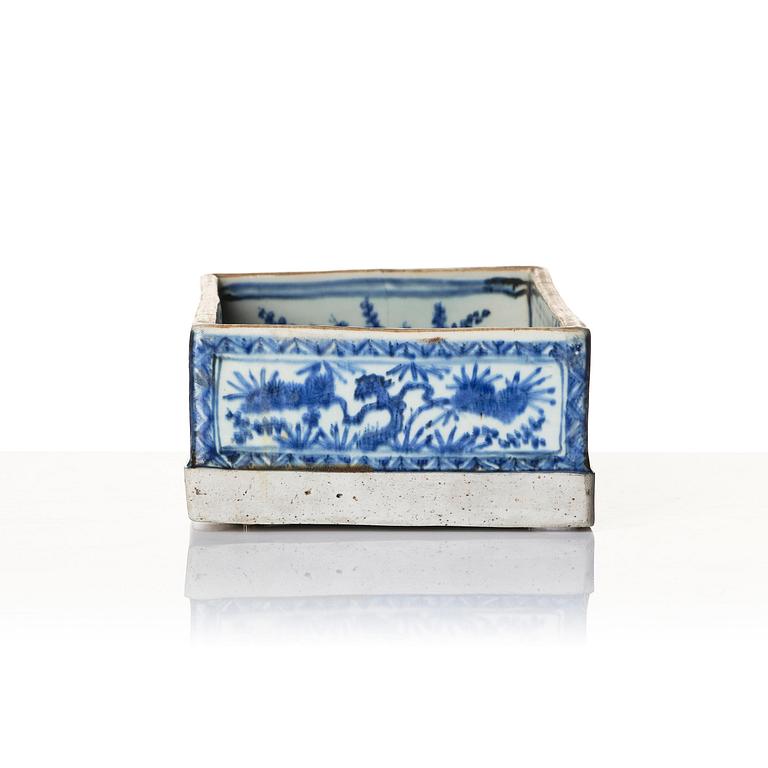
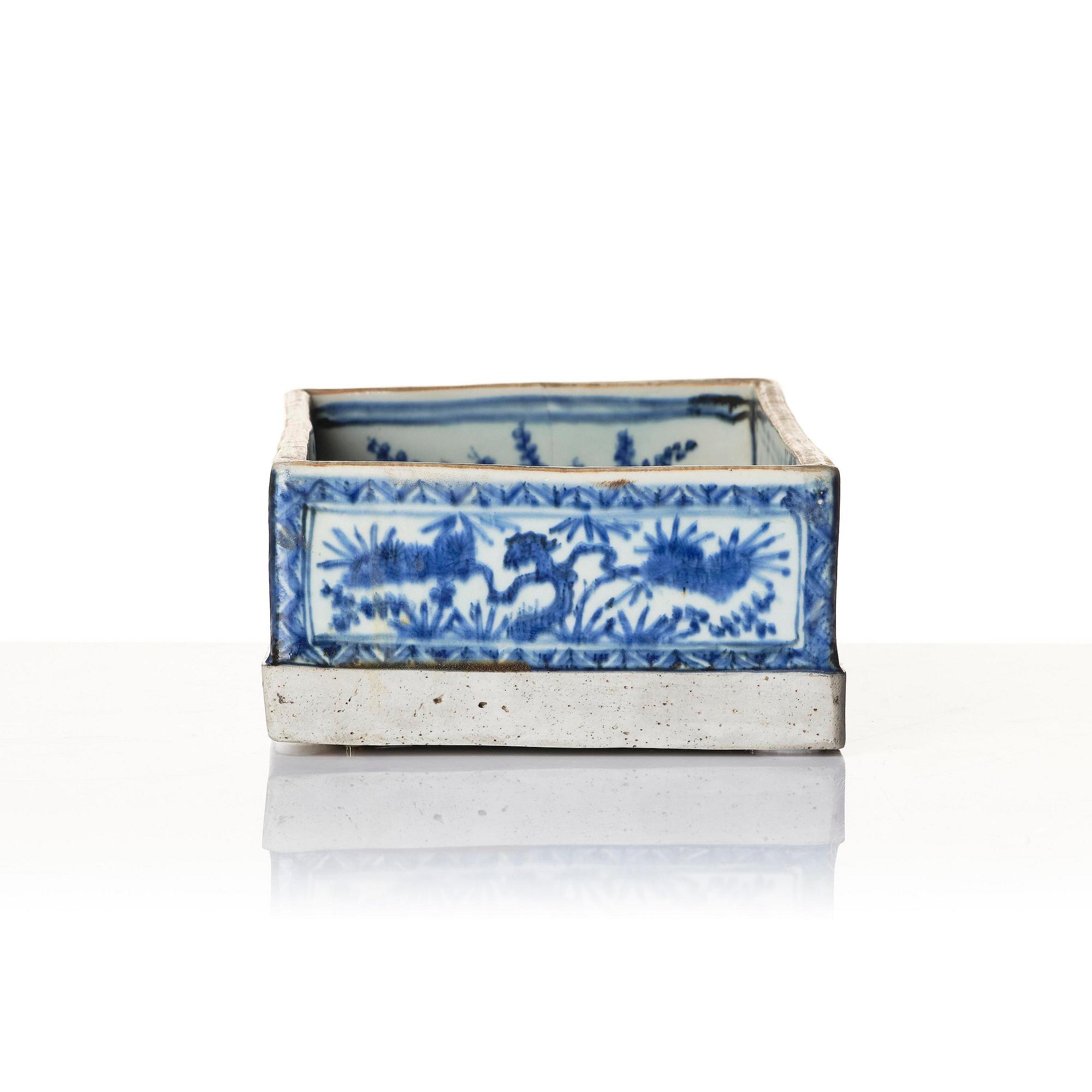
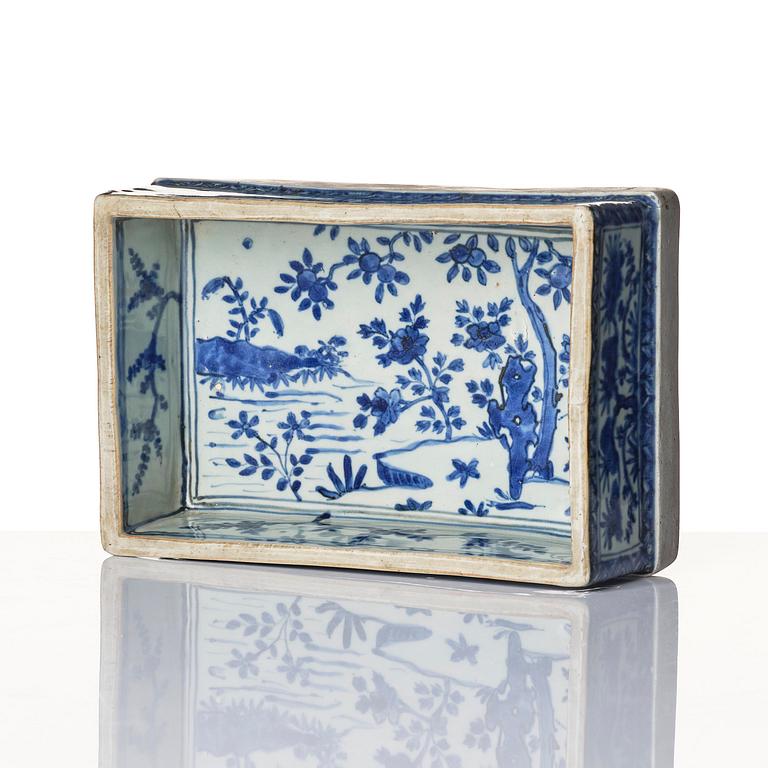
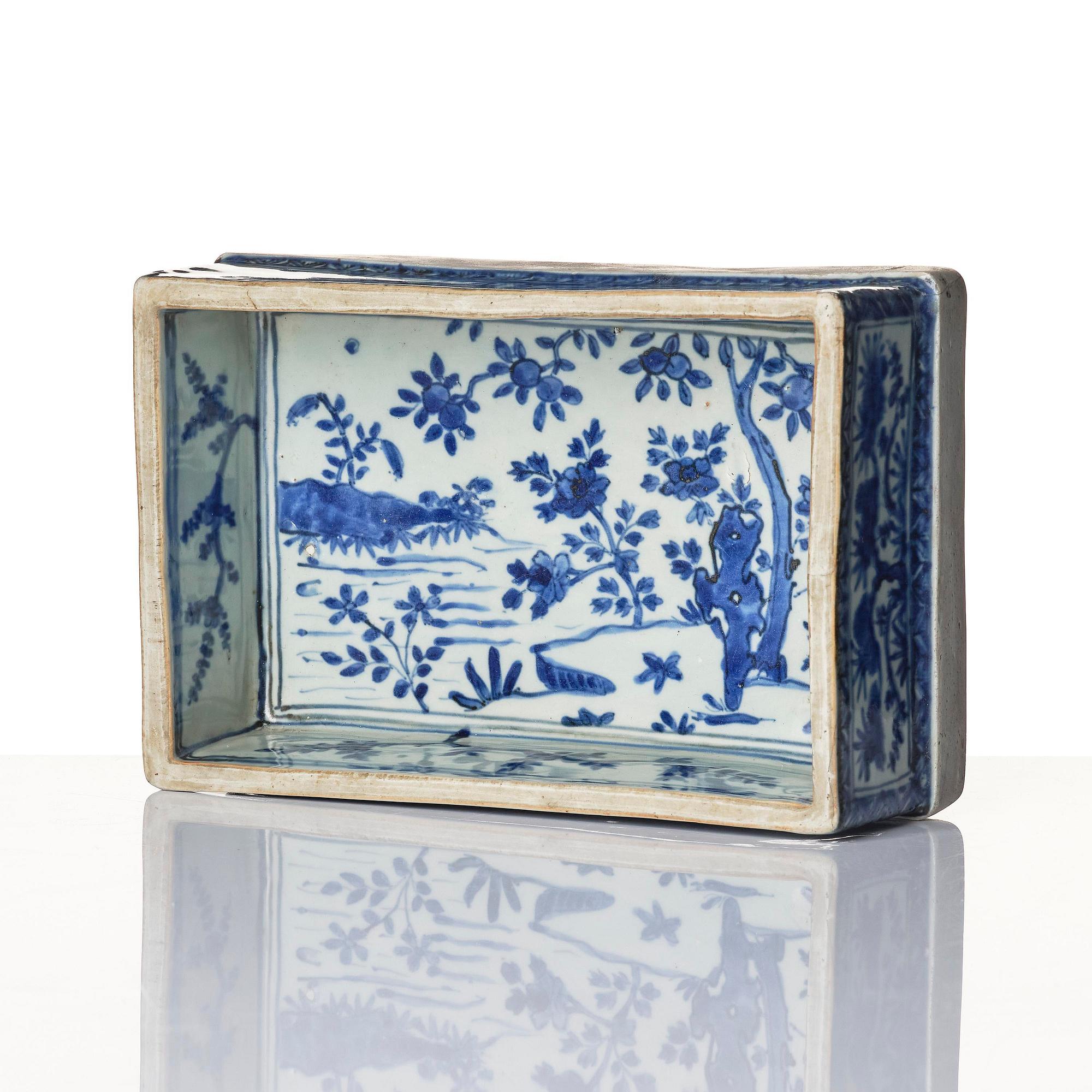
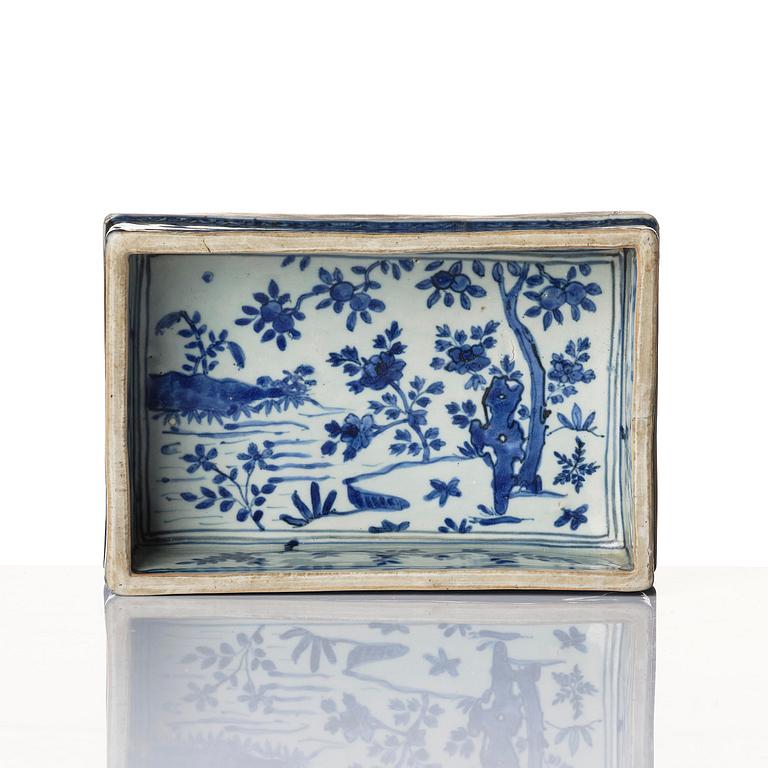
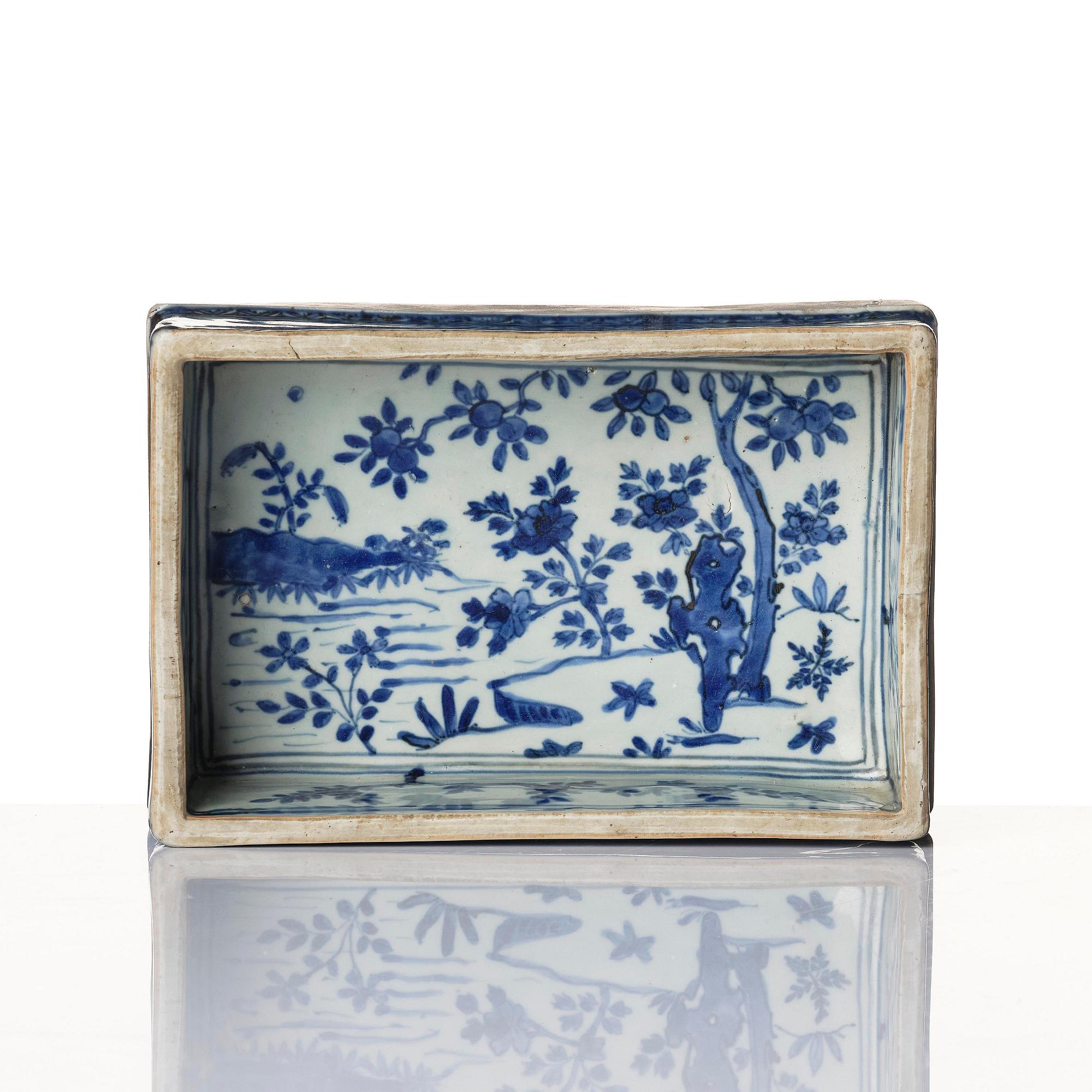
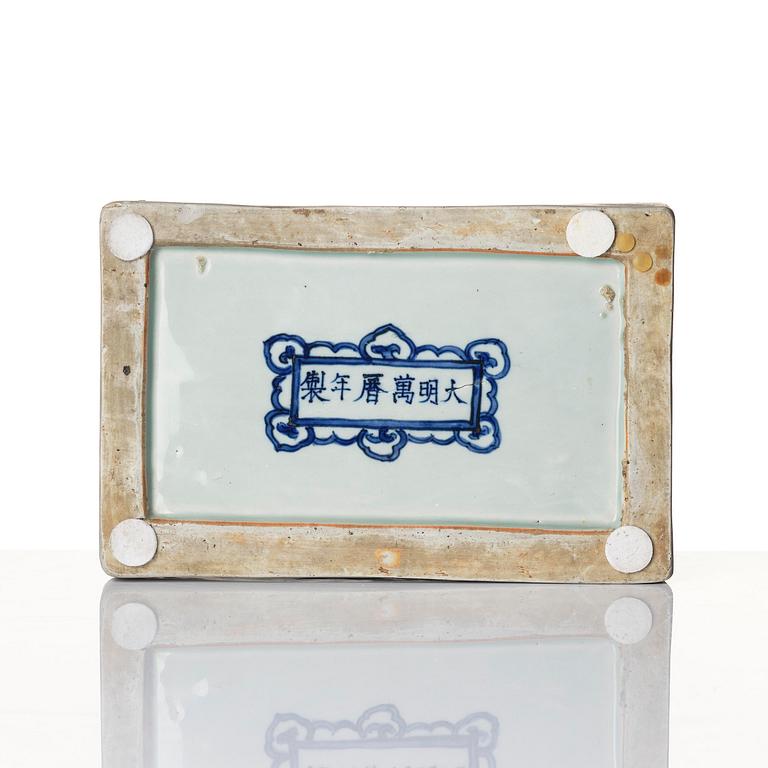
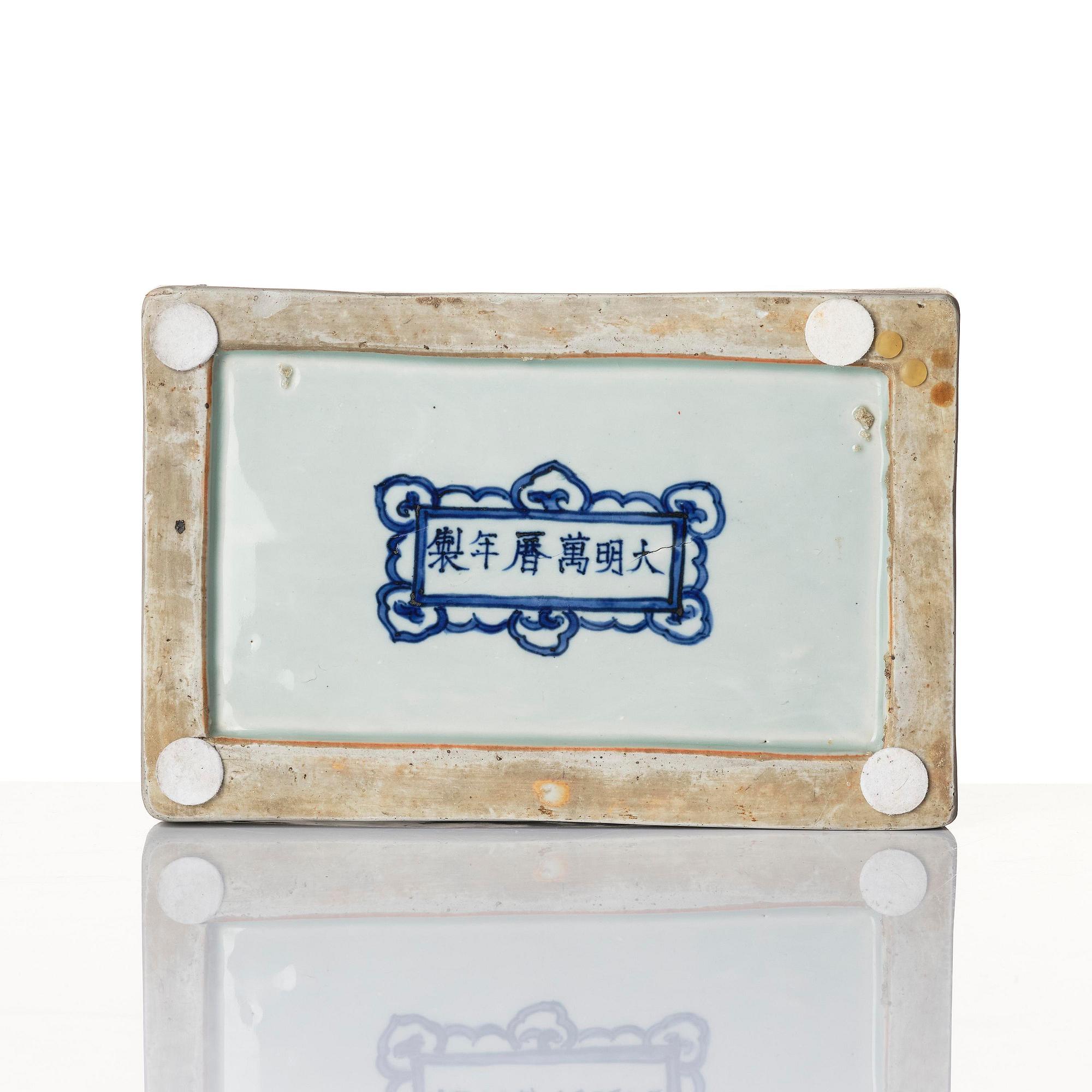
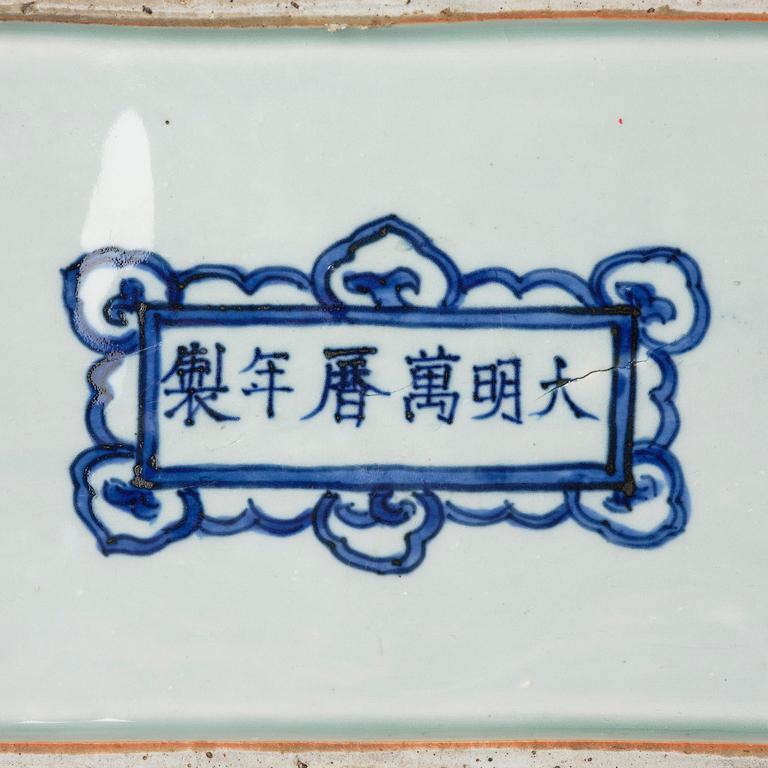
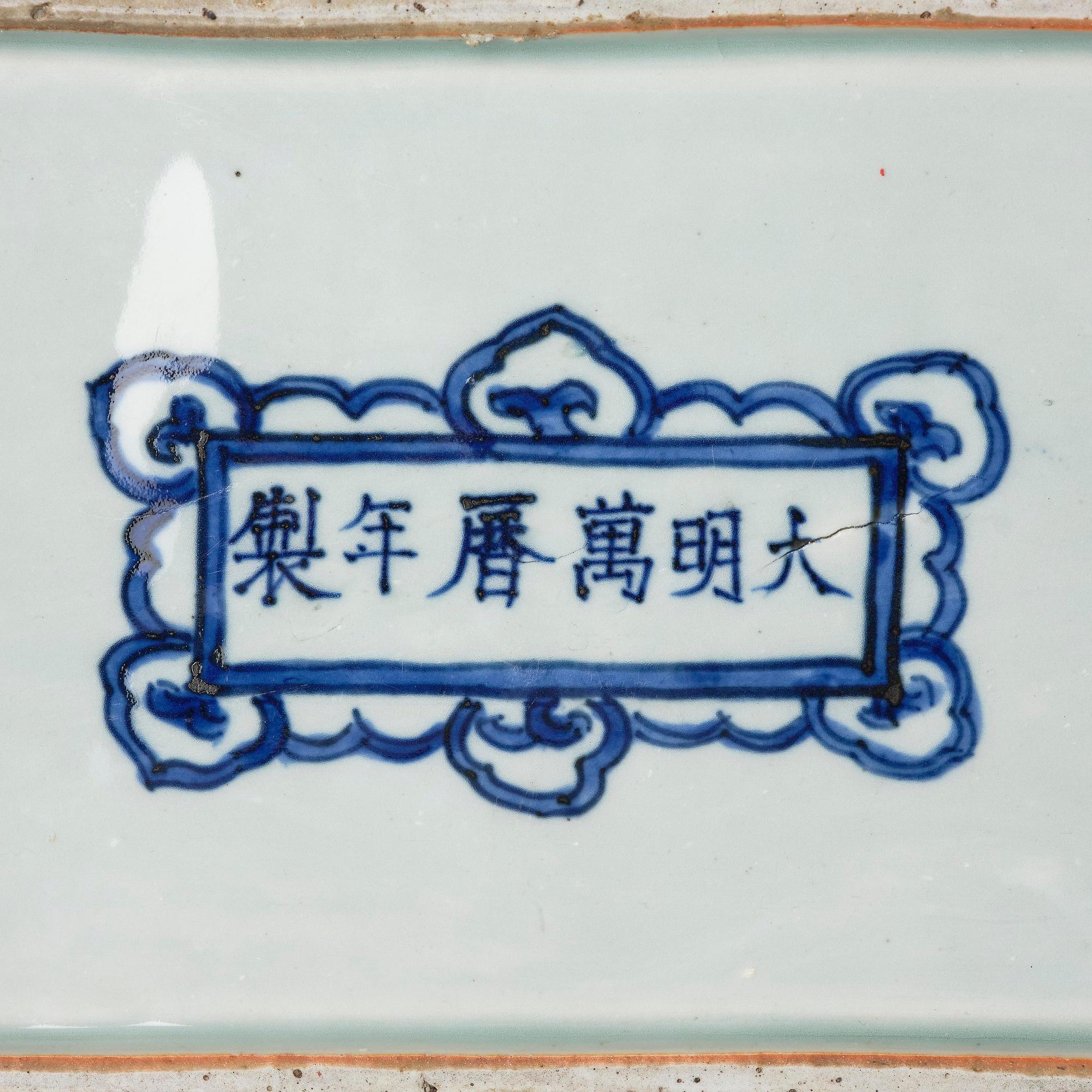
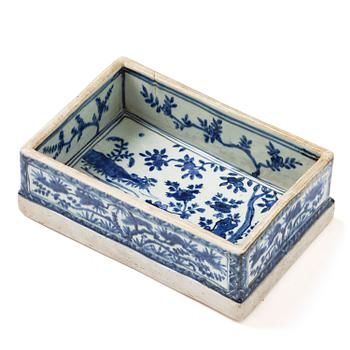
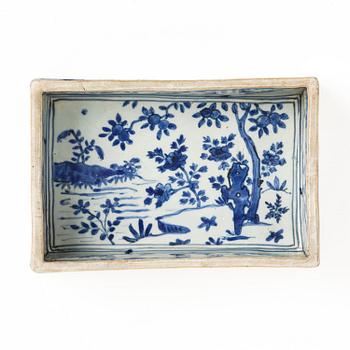
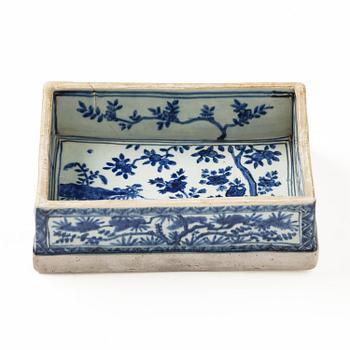
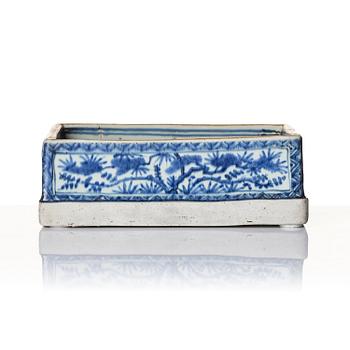
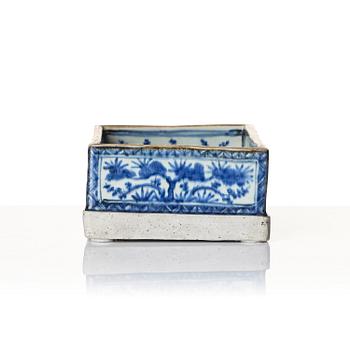
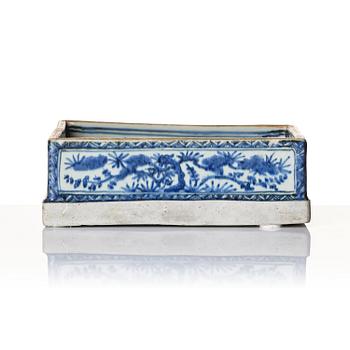
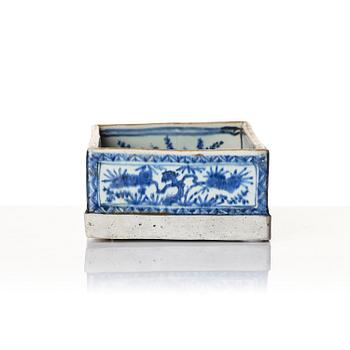
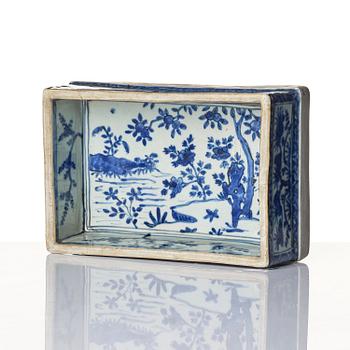
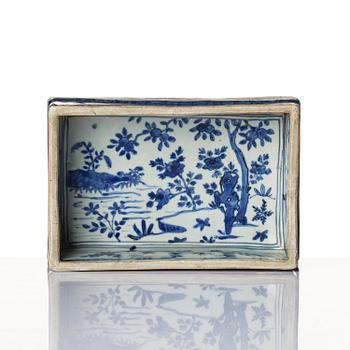
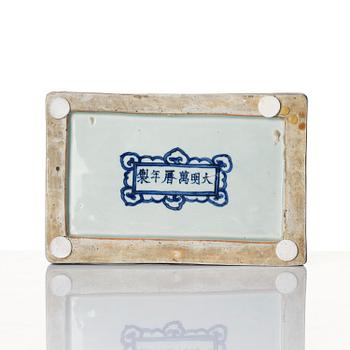
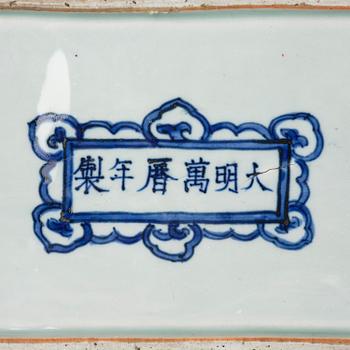
Rectangular, decorated in a good underglaze blue with primary scene of a garden in full bloom. Similar scenes in rectangular panels around sides with gnarly trees and flowers on dense diaper ground. There is a framed inscription on the base that reads 大明萬里年製. Inscription transliteration: Da Ming Wanli Nian Zhi. Measure 23.5x15.5x8 cm.
Crack, chips, one corner with repair, polished rims.
Provenance
Gustaf Oscar Wallenberg (1865-1937), Stockholm, and thence by descent within the family.
Gustaf O. Wallenberg was a Swedish businessman, diplomat, and active politician. He was the son of André Oscar Wallenberg, founder of Stockholm Enskilda Bank (today's Skandinaviska Enskilda Banken, known as SEB). After a career in the Swedish Navy, he turned to the business world and was active in improving the transoceanic shipping industry.
Wallenberg was Sweden's Envoy to Tokyo between 1907-1918. In April 1907 he travelled to Beijing to amend the Treaty of Canton (1847) between Sweden-Norway and China and to establish diplomatic relations between Sweden and the Qing Court. As the Swedish Envoy Extraordinary and Minister Plenipotentiary at the Court of Peking, he successfully negotiated and signed with Lien Fang, the Guangxu Emperor's High Commissioner Plenipotentiary and Senior Vice-President of the Wai Wu Pu, the Treaty of Amity, Commerce and Navigation, between Sweden and China, which was signed in Beijing on 2 July 1908, with an additional article signed on 24 May 1909.
The collection was acquired between 1907 and 1918 when Wallenberg was the Swedish Envoy in Tokyo, and possibly during his diplomatic service in China. Documents preserved at the Museum of Far Eastern Antiquities in Stockholm demonstrate the importance of Gustaf Wallenberg and his extensive connections with the Qing government to the Swedish engineers and businessmen who were in China during this period, such as Johan Gunnar Andersson, Osvald Siren, Orvar Karlbeck, Erik Nordstrom and many more.
Gustaf Wallenberg was the grandfather of Raoul Gustaf Wallenberg (1912-1945), an architect, businessman, and diplomat.
Exhibitions
Compare with a complete box of this type in the British Museum, Percival David, Museum number PDF,B.611.
Literature
Pierson has written about the related box in the British Museum 2004 "Illustrated Catalogue of Underglaze Blue and Copper Red Decorated Porcelains in the Percival David Foundation of Chinese Art", p.78, no. B611, reign mark, p.118.
See also Medley 1976 "Illustrated Catalogue of Underglaze Blue and Copper Red Decorated Porcelains" p.55, no. B611, pl. X.
Pierson 2002 "Percival David Foundation of Chinese Art: A Guide to the Collection" p.69, no.54 (and lid).
For condition report contact specialist
Others have also viewed